Author name: Sani

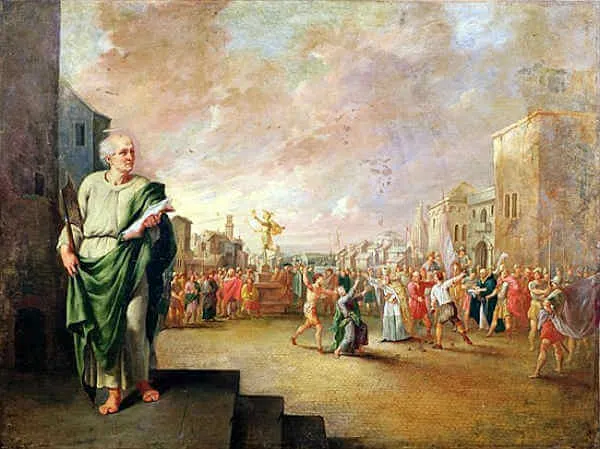
Saint John I, Pope and Martyr

c. Late Fifth Century–526; Invoked against temptations toward false unity and acceptance of heresy; Pre-Congregation canonization

In 451, the Council of Chalcedon taught that Jesus had both a human and divine nature, and those two natures were united in the one Person of Jesus Christ. This doctrine was established in response to the Arian heresy plaguing the Eastern Roman Empire, which taught that Jesus was created by the Father and, therefore, neither co-equal with Him nor divine. After Chalcedon countered this heresy, the Arian clergy and even the Byzantine emperor tried to move closer to acceptance, but many of them didn’t go all the way. Instead, many former Arians fell into other middle-of-the-road heresies that failed to fully accept the two natures of the Son of God. In 482, Byzantine Emperor Zeno issued a document called the Henotikon. This document attempted to find a middle ground between the official Church teaching on the nature of Christ as defined in the Council of Chalcedon, and the Arian view. Emperor Zeno’s successor, Basiliscus, continued in this error of faith.

In 518, Justin I succeeded Emperor Basiliscus as the Eastern Roman Emperor. Shortly afterward, he accepted the position of the pope and the Council of Chalcedon. In 523, Emperor Justin issued an edict mandating the acceptance of the Council of Chalcedon throughout the Eastern Empire, and demanding that all Arians turn their churches over to Catholics. At that time in the West, Rome was under the control of Theodoric the Great, the king of the Ostrogoths. Theodoric was an Arian, which gave rise to ongoing tensions between him and the pope, as well as all orthodox Catholics. Though Theodoric was mostly accommodating of Chalcedon Christians (including the pope), when the Eastern Roman Emperor Justin I issued his edict in 523 against the Arians, Theodoric was outraged. He threatened that if the edict were not rescinded, he would treat all Chalcedon Catholics in the West in the same way that Arians were being treated in the East, even promising bloodshed.

In that same year, a deacon in Rome, Archdeacon John, was elevated to the papacy, becoming Pope John. Shortly after that, the outraged King Theodoric forced Pope John to travel to Constantinople in an effort to convince Emperor Justin to rescind his edict. Pope John reluctantly went, accompanied by a number of bishops and Roman senators. When Pope John arrived in Constantinople, Emperor Justin warmly welcomed him and the two were clearly of the same mind. It is said that the emperor traveled twelve miles outside of the city gate to meet the pope and when they met, the emperor bowed to the ground in homage. On their way into the city, the pope is said to have cured a blind man. Regarding the matter at hand, Pope John might have encouraged the emperor to treat the Arians gently, but in no way did he carry out King Theodoric’s demand to convince the emperor to rescind his edict. Pope John was unwaveringly Catholic and fully accepted the teachings of the Council of Chalcedon.

When word reached King Theodoric that Pope John did not carry out his order, the king was outraged. First, he imprisoned and later executed one of Pope John’s closest friends, the philosopher Boëtius. Then, when Pope John returned to Italy, King Theodoric immediately had him, the other bishops, and senators arrested and jailed in Ravenna, not permitting Pope John to return to Rome. Since Pope John was already quite frail and in ill-health, he did not survive long in the dungeon. Though he was not directly executed by the king, the Church has nonetheless named Pope Saint John I as a martyr for the faith.

If Pope John would have compromised on the faith of the Church, the king would have been grateful and treated him well. But the pope had a duty to proclaim the one true faith, without regard for his own physical well-being. This is what Pope John did, and that is why he is now a saint in the courts of Heaven.

As we honor this holy martyr, consider any ways that you are tempted to compromise your own faith for the sake of “peace at all costs.” The secular world often tempts us to downplay our faith, especially our moral convictions, for the sake of a false unity. There are many objective evils today that are being promoted by the secular world as good: abortion, confusion about sexual identity, materialism, and atheistic socialism to name a few. Allow Pope Saint John I to inspire you so that you will have courage in the face of such temptations. Commit yourself to the truth so that you will be a purer instrument of the saving truths that will lead those most in need to eternal salvation.

Source: https://mycatholic.life/saints/saints-of-the-liturgical-year/may-18—saint-john-i-pope-and-martyr/

Saint John I, Pope and Martyr Read More »
John 13:31-32

Eternal Glory

When Judas had left them, Jesus said, “Now is the Son of Man glorified, and God is glorified in him. If God is glorified in him, God will also glorify him in himself, and God will glorify him at once.”

Reflection:

If the life we live here and now is all we will ever have, then it makes sense to believe that death is our worst enemy. But as we know, this life is but a grain of sand in the ocean in comparison to eternity. For that reason, we must see death as our passing into the glories that await. The death of a loved one is difficult for sure. And when we face our own death, there are many temptations we might experience toward fear of the unknown. But if the Son of God chose to endure death itself, then we must work to see death differently.

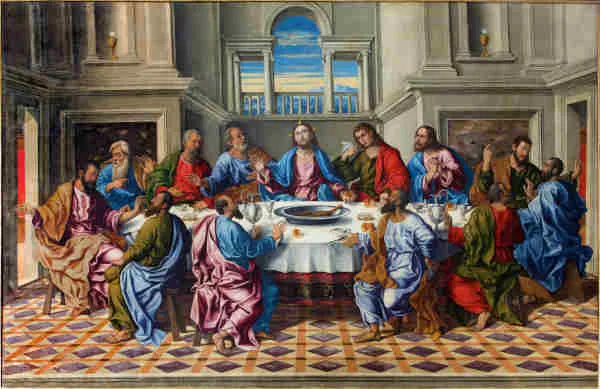
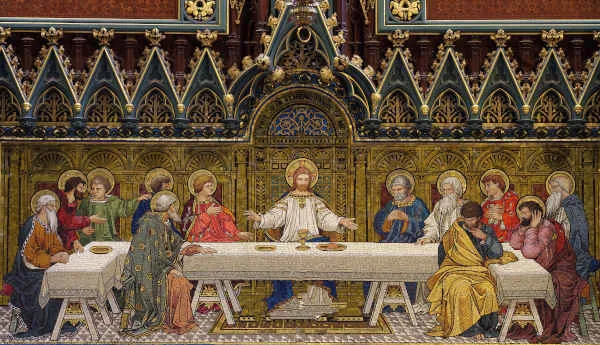
Today’s Gospel passage speaks of Jesus’ coming death as His glorification. “Now is the Son of Man glorified, and God is glorified in him.” Jesus spoke these words right after Judas left the Last Supper to betray Him. From an earthly perspective, it is unlikely that anyone would consider their betrayal and brutal death as the moment when God is glorified. But from a heavenly and eternal perspective, Jesus’ death was the greatest glorification He could offer to the Father. This only makes sense when we put on the mind of God.

As we continue to celebrate our Easter Season, we look beyond the suffering of Christ to see the fruit of His suffering. We see that death was defeated and that Jesus will now forever live in His glorified and resurrected body in Heaven. He will forever carry the marks in His hands, feet and side, and those marks will forever glorify the Father. The Resurrection of Christ changes everything, including death. For that reason, we must continually work to put on the mind of God and see our human lives as He sees them.

What is it that you live for in this life? What are your goals and ambitions? If you find that you focus excessively upon immediate pleasures, material wealth, selfish objectives and passing ambitions, then it is time to ponder the lesson of Jesus’ glorification. By facing His own death as an opportunity to glorify the Father, Jesus made it possible for us to do the same. And though there will always be a healthy sorrow associated with the passing of a loved one, the hope of Heaven and eternal glory must become the lens through which we see all things in this life.

When you look at your life, it is essential to see the cross that God has given to you. That is because your cross is the gateway to this eternal glory. Each person’s cross will be different. A cross is not simply our suffering; it’s our call to live sacrificially. This is love. It’s the calling we are given to lay our lives down for others. To serve others. To forgive every wrong, to love every sinner, to show mercy and compassion toward those in need. And to do all of this in response to God’s perfect will. The crosses in our lives are opportunities for love in its purest form. This is how Jesus saw His Cross and this is how we must see ours.

Reflect, today, upon death, but try to look at it as a calling to give of yourself sacrificially out of love. The best way to prepare yourself for a glorious death is to live in the love of God here and now. To the extent that you can do that, God will be glorified as you share in the glory given to Christ.

Source: https://catholic-daily-reflections.com/2025/05/17/eternal-glory/

John 13:31-32 Read More »

Saint Giulia Salzano

Profile

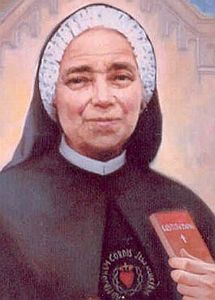
Giulia was the daughter of Adelaide Valentino and Diego Salzano. Her father was a captain in the Lancers of King Ferdinand II of Naples, and died when Giulia was four years old. She was raised and educated by the Sisters of Charity in the Royal Orphanage of Saint Nicola La Strada until age fifteen. She was a school teacher and catechist in Casoria, Naples. She was a friend and co-worker of Blessed Caterina Volpicelli. She was noted for her personal devotion to the Virgin Mary. She encouraged others in devotion to Our Lady and the Sacred Heart of Jesus. She was the foundress of the Congregation of the Catechetical Sisters of the Sacred Heart of Jesus in 1905.

Born

  • 13 October 1846 in Santa Maria Capua Vetere, Caserta, Italy

Died

  • 17 May 1929 in Casoria, Naples, Italy of natural causes

Venerated

  • 23 April 2002 by Pope John Paul II (decree of heroic virtues)

Beatified

  • 27 April 2003 by Pope John Paul II

Canonized

  • 17 October 2010 by Pope Benedict XVI

Source: https://catholicsaints.info/saint-giulia-salzano/

Saint Giulia Salzano Read More »

John 14:12-14

Doing the Greatest Work on Earth

“Amen, amen, I say to you, whoever believes in me will do the works that I do, and will do greater ones than these, because I am going to the Father. And whatever you ask in my name, I will do, so that the Father may be glorified in the Son. If you ask anything of me in my name, I will do it.”

Reflection:

How is it that we are called to do greater works than the works that Jesus Himself did? Of course, it’s true. This is our calling. We know that, because this is what our Lord promised us. This truth should fill us with gratitude for being used so powerfully by God.

Among the “greater” works of which Jesus speaks is, first and foremost, the sharing of the Gospel to the ends of the earth. As Jesus walked the earth, His mission was primarily to the people of Israel. But when He ascended to Heaven and sent the Holy Spirit upon the Church, He also empowered all who would receive the Holy Spirit to share the Gospel to the ends of the earth. Thus, the conversion of hearts is the greatest work that we can cooperate with.

Do you want to do great things? Most children dream of doing so because this desire is written upon our human nature. We want to make a difference. We want to be great. But too often we become confused about true greatness. We attempt to fulfill that innate desire through acts of worldly and passing greatness. We seek recognition, wealth, and other passing rewards that stem from selfish ambitions. None of these ultimately fulfill us, even if we were to achieve them to the greatest extent. For example, imagine if you won the Nobel Peace Prize, or became the leader of a nation, or became the wealthiest person alive. Would the attainment of one of these goals fulfill you? Only if it were the will of God. If not, it would be an empty and meaningless act.

Begin by looking within. Do you see the desire within you to do great things? Hopefully you do. From there, remind yourself that the greatest thing you can do, so as to fulfill the desire within you, is to do that which is the will of God for your life. Jesus says, “If you ask anything of me in my name, I will do it.” Asking in Jesus’ name means asking for the fulfillment of His will. It means asking that God use you to bring His saving grace to others any way He chooses. If you ask our Lord for this grace, He will grant it.

This form of prayer requires humility and a complete detachment from our own will. It requires that we ask the Father only for that which the Son asks the Father for us. But the reward of such a humble prayer is that God will bestow His grace and mercy on others through us. This is His perfect will.

Reflect, today, upon this high calling. Do so by looking at the desire within your own soul for greatness and then unite that desire with God’s will as the only thing that can fulfill you. Pray for this gift every day with humility and detachment and you will become an instrument of acts that give eternal glory to God. In Heaven, this will be your eternal joy.

Source: https://catholic-daily-reflections.com/2025/05/16/doing-the-greatest-work-on-earth-3/

John 14:12-14 Read More »

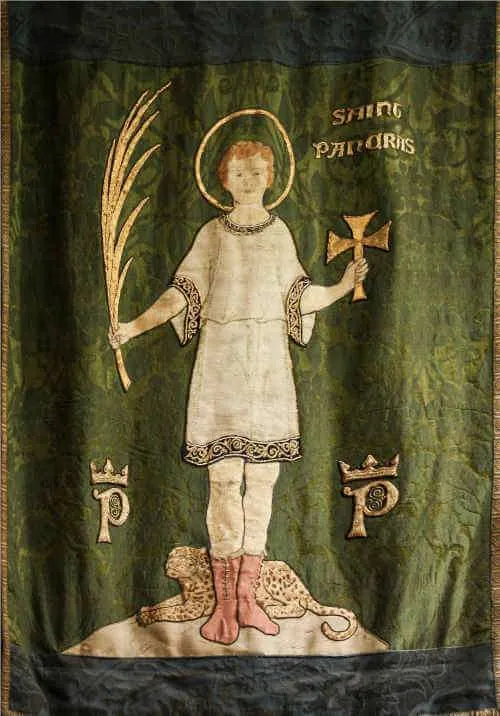
Saint Pancras, Martyr

c. 289–c. 304; Patron Saint of children, jobs, and health; Invoked against cramps, false witnesses, headaches, and perjury; Pre-Congregation canonization

When Saint Pancras was born toward the end of the third-century, Diocletian was the emperor of the Roman Empire, sharing ruling authority with three others. In the years prior to Diocletian’s reign, Christianity began to be tolerated within the empire. Emperor Diocletian slowly reversed that trend, beginning the final wide-reaching persecution of Christians before Emperor Constantine the Great legalized Christianity.

One tradition states that around the year 299, Emperor Diocletian and one of his co-rulers, Galerius, took part in a pagan divinization ceremony. The ceremony to predict the future was judged a failure, and the growing number of Christians in the empire was blamed. In order to appease the Roman gods, the cult of Christianity needed to be purged. The purge began by requiring members of the royal court and army to offer sacrifice to the Roman gods. In 303, after Diocletian and Galerius consulted an oracle, they published an edict that began a great persecution of Christians. Churches were destroyed, Scriptures were burned, and Christians who failed to offer sacrifice to the Roman gods were killed. A fourteen-year-old boy named Pancras was among them.

Pancras was born in Phrygia, Asia Minor, in modern-day Turkey. His mother is believed to have died while giving birth, and his father is believed to have died when Pancras was around the age of eight. Orphaned, Pancras was entrusted to the care of Denis, his uncle, who took him to live in Rome. In Rome, Pancras and Denis converted to Christianity and lived their faith with deep devotion. In 304, Pancras was among the Christians who were routinely being brought before the authorities to renounce their faith and offer sacrifice to the gods. Though it is uncertain that Diocletian was ever in Rome during that year, tradition states that Pancras was brought before Diocletian and refused to offer sacrifice to the gods. Diocletian was impressed with the fourteen year old’s courage. The emperor tried to persuade Pancras, offering him wealth and honor if he only burned incense to the gods. One thirteenth-century legend places these words on the lips of Pancras in response to the emperor: “Though I am a child in body, my heart is old, and by the virtue of my Lord Jesus Christ, your threats and menaces move me no more than does the painting that I see upon the wall. These gods that you want me to worship are but deceivers of creatures…” The emperor was outraged and ordered that he and his uncle, now Saint Denis, be beheaded on May 12 on the Via Aurelia outside of Rome.

Though Pancras’ death could be seen as a tragedy, God used it for good. After his death, devotion to him began to grow. In the sixth century, Pope Symmachus built a basilica over his tomb. At the end of the sixth century, Pope Gregory the Great sent a Roman monk to England to convert King Æthelberht and to become England’s first bishop. After successfully converting the king and his kingdom, the monk-bishop, now known as Saint Augustine of Canterbury, built the first Church in England and named it after Saint Pancras. Pope Gregory even sent relics of the saint to inspire the people. Devotion to Saint Pancras spread widely throughout England from the very beginning of the kingdom’s Christianization. Eventually, miracles were attributed to Saint Pancras’ intercession by those who prayed at his tomb.

It is also said that at the end of the sixth century, the Archbishop of Tours, France, made the claim that anyone who told a lie at the tomb of Saint Pancras would be attacked by demons or even die. As a result, the saint’s relics continued to be distributed to other churches. Oaths made before his relics were thought to be so binding that they were held up in some courts of law.

Little did this fourteen-year-old boy know that his heroic death would inspire kings and popes, laymen and clergy, throughout the ages. As we honor this child martyr, reflect upon his courage at such a young age. Though young in years, he was wise in spirit. Pray for the same wisdom and courage that this saint had so that you will be able to give proper honor and glory to Christ.

Source: https://mycatholic.life/saints/saints-of-the-liturgical-year/may-12—saint-pancras-martyr/

Saint Pancras, Martyr Read More »

John 14:1

Overcoming a Troubled Heart

Jesus said to his disciples: “Do not let your hearts be troubled. You have faith in God; have faith also in me.”

Reflection:

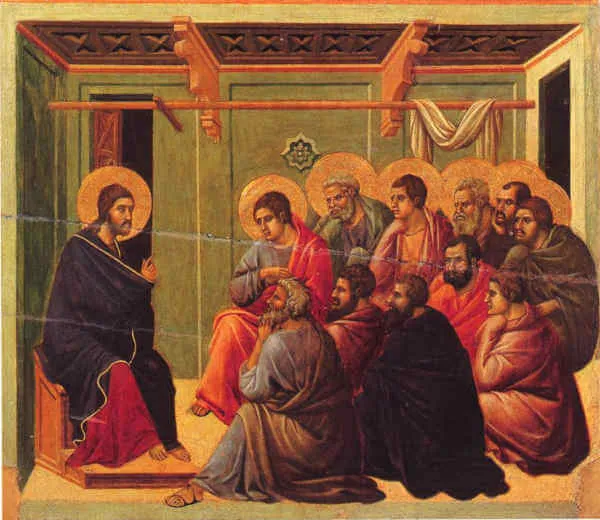
In John’s Gospel, Chapters 14–17 present us with what is referred to as Jesus’ “Last Supper Discourses,” or His “Final Discourses.” These are a series of sermons given by our Lord to the disciples the night He was arrested. These discourses are deep and filled with symbolic imagery. He speaks of the Holy Spirit, the Advocate, the vine and the branches, the world’s hatred, and these discourses conclude with Jesus’ High Priestly Prayer. These discourses begin with today’s Gospel in which Jesus addresses the coming fear, or troubled hearts, that He knows His disciples will experience.

Let’s begin by considering this first line spoken by Jesus above: “Do not let your hearts be troubled.” This is a command. It’s a gentle command but a command nonetheless. Jesus knew that His disciples would soon see Him arrested, falsely accused, mocked, beaten and killed. He knew they would be overwhelmed by what they would soon experience, so He took this opportunity to gently and lovingly rebuke the fear that they would soon face.

Fear can come from many different sources. Some fear is helpful to us, such as the fear present in a dangerous situation. In this case, that fear can heighten our awareness of the danger so that we proceed with caution. But the fear that Jesus was speaking of here was of a different kind. It was a fear that could lead to irrational decisions, confusion, and even despair. This was the kind of fear that our Lord wanted to gently rebuke.

What is it that causes you to fear at times? Many people struggle with anxiety, worry, and fear for many different reasons. If this is something you struggle with, it’s important to allow Jesus’ words to resonate within your mind and heart. The best way to overcome fear is to rebuke it at its source. Hear Jesus say to you, “Do not let your heart be troubled.” Then listen to His second command: “You have faith in God; have faith also in me.” Faith in God is the cure for fear. When we have faith, we are under the control of the voice of God. It is God’s truth that directs us rather than the difficulty we are facing. Fear can lead to irrational thinking, and irrational thinking can lead us deeper and deeper into confusion. Faith pierces through the irrationality we are tempted with, and the truths that faith presents to us bring clarity and strength.

Reflect, today, upon whatever it is that causes you the most anxiety, worry and fear in your life. Allow Jesus to speak to you, to call you to faith and to rebuke those troubles gently but firmly. When you have faith in God, you can endure all things. Jesus endured the Cross. The disciples eventually endured their crosses. God wants to strengthen you, too. Let Him speak to you so that you will overcome whatever is most troublesome to your heart.

Source: https://catholic-daily-reflections.com/2025/05/15/overcoming-a-troubled-heart-4/

John 14:1 Read More »

Saint Isidore

c. 1070–c. 1130; Patron Saint of Madrid, farms, farmers, bricklayers, and rural communities; Invoked against the death of a child; Canonized by Pope Gregory XV, March 12, 1622

Saint Isidore, whom we honor today, is often called Isidore the Laborer, or Isidore the Farmer. He was an ordinary man, husband, and father who lived a humble and simple life working the fields for a landowner. His extraordinary faith, by which he always sought first the Kingdom of God, sets for us an excellent example of achieving extraordinary sanctity in the ordinary grind of daily work.

Isidore was born into material poverty in Madrid. His parents, however, were rich in virtue and fostered in him a deep faith. At his baptism, he was given the name Isidore, after Saint Isidore of Seville, the great Spanish scholar and bishop of Seville who lived about 500 years earlier. Because of the family’s poverty, Isidore the Laborer did not receive an education. Instead, from a young age, Isidore worked as a hired hand for a wealthy landowner. The landowner grew very fond of Isidore and treated him as a son, even entrusting him with the management of his estate. It is believed that Isidore lived for sixty years as a laborer, but other speculation is that he may have died around the age of forty.

What is it that elevated this humble and simple man to the ranks of the saints of the Church? To begin, Isidore is said to have been exceptionally generous to the poor. Though poor himself, he and his wife regularly distributed the little they had to those who were in even greater need. He is also said to have been a man of deep prayer. He would regularly attend daily Mass before work, putting God first every day. And as a result of his intercession, miracles abounded, not only during his life but also after his death.

Isidore and his wife had one son. One legend states that their infant child fell into a large pit. Isidore and his wife prayed fervently, and suddenly, the water in the pit began to rise. Very soon, the water had carried the boy to the surface, and Isidore and his wife were then able to pull him out.

Another legend states that because Isidore attended Mass each morning, he showed up later to work than the other hired hands. When the landowner received complaints that Isidore was late for work, he decided to investigate. Sure enough, the landowner discovered that Isidore was regularly later than the others. When the landowner went to confront Isidore about this, he was met with a great surprise. As he walked toward Isidore plowing in the field, he saw that there were others plowing alongside him who looked like angels, using angelic-looking oxen. Thus, God rewarded Isidore with the help of angels to accomplish even more work than the others because Isidore put God first every day.

Isidore also cared for all of God’s creatures with great concern. According to one legend, on a winter day, when Isidore was carrying a sack of grain to be milled, he saw some hungry birds and shared some grain with them, prompting criticism from a coworker. But after Isidore’s diminished sack of grain was milled and returned to him, he had twice as much flour as the others.

Other legends describe Isidore as bringing his landowner’s daughter back to life, raising a spring of water in a dry place to give drink to the thirsty, and producing a full pot of food to feed poor, hungry visitors. 

Isidore’s wife, Maria, was also believed to be quite saintly. When their only son died at a very young age, the couple made a promise of celibacy and jointly dedicated themselves solely to God. In Spain, Maria is referred to as Santa María de la Cabeza (Saint Mary of the Head). Miracles have been attributed to her, and to this day, the relic of her head is carried in procession. It is believed that, through her intercession on multiple occasions, rain has fallen in the countryside during droughts.

After Isidore’s death, the miracles continued. Alfonso VIII, King of Castile, during a battle with the Muslims, reportedly had a vision of Saint Isidore who directed him and his army down a path of victory in 1212. That same year, after a flood, Saint Isidore’s body was miraculously exhumed from his grave and found to be incorrupt. Centuries later, when Phillip III, King of Spain, touched Saint Isidore’s body, he was miraculously cured of a serious illness. In all, there have been more than 400 miracles attributed to Isidore’s intercession throughout the centuries.

Another great honor given to this simple, poor, and humble farmer came at his canonization by Pope Gregory XV in 1622. He was canonized at the same time, in the same ceremony, with some of the most recognized and beloved saints in the history of the Church: Saints Ignatius of Loyola, Francis Xavier, Teresa of Ávila, and Philip Neri.

Saint Isidore is the patron saint of Madrid, and his feast is widely celebrated in that town and throughout Spain. He is also honored in many rural communities in Chile, Nicaragua, Peru, Philippines, and the United States. Saint Isidore is a saint for the working man. While at work, he prayed continuously, offering his work as an act of love to God. Saint Isidore’s life magnifies the dignity of work, and shows the common laborer the path to sanctity. Daily work and toil have the potential of being a way of honoring God. Saint Isidore put God first in his life. From his faith and love of God, his work, charity, and dignity shone forth.

Source: https://mycatholic.life/saints/saints-of-the-liturgical-year/may-15—saint-isidore—usa-optional-memorial/

Saint Isidore Read More »

John 13:16-17

Are You Blessed?

When Jesus had washed the disciples’ feet, he said to them: “Amen, amen, I say to you, no slave is greater than his master nor any messenger greater than the one who sent him. If you understand this, blessed are you if you do it.”

Reflection:

During this, the Fourth Week of Easter, we return to the Last Supper and will spend a few weeks considering the discourse Jesus gave that Holy Thursday evening to His disciples. The question to ask yourself today is this: “Are you blessed?” Jesus says that you are blessed if you “understand” and “do” what He teaches His disciples. So what did He teach them?

Jesus offers this prophetic action by which He took on the role of a slave by washing the disciples’ feet. His action was much louder than words, as the saying goes. The disciples were humbled by this act, and Peter, at first, refused it. There is little doubt that this humble act of service, by which Jesus lowered Himself before His disciples, made a strong impression upon them.

The worldly view of greatness is much different than the one Jesus taught. Worldly greatness is a process of elevating yourself in the eyes of others, striving to let them know just how good you are. Worldly greatness is often driven by a fear of what others may think of you, and a desire to be honored by all. But Jesus wants to be clear that we will only be great if we serve. We must humble ourselves before others, holding them and their goodness up, honoring them and showing them the deepest love and respect. By washing their feet, Jesus completely abandoned the worldly view of greatness and called His disciples to do the same.

Humility is difficult to understand at times. This is why Jesus said, “If you understand this…” He realized that the disciples, as well as all of us, will struggle with understanding the importance of humbling ourselves before others and serving them. But if you do understand humility, you will be “blessed” when you live it. You will not be blessed in the eyes of the world, but you will be truly blessed in the eyes of God.

Humility is especially accomplished when we purify our desire for honor and prestige, when we overcome all fear of being mistreated, and when, in place of this desire and fear, we desire abundant blessings upon others, even before ourselves. This love and humility is the only way to this mysterious and profound depth of love.

Reflect, today, upon this humble act of the Son of God, the Savior of the World, lowering Himself before His disciples, serving them as if He were a slave. Try to imagine yourself doing this for others. Think about various ways that you can more readily go out of your way to put others and their needs before your own. Seek to eliminate every selfish desire you struggle with and identify any fear that keeps you from humility. Understand this gift of humility and live it. Only then will you be truly blessed.

Source: https://catholic-daily-reflections.com/2025/05/14/are-you-blessed-5/

John 13:16-17 Read More »

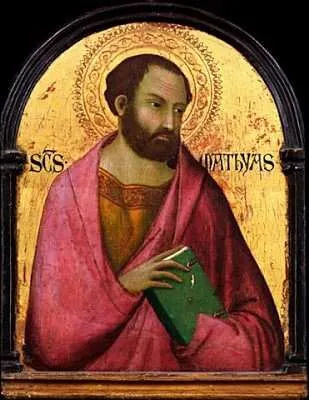
Saint Matthias the Apostle

First Century; Patron Saint of alcoholics, carpenters, and tailors; Invoked against smallpox; Pre-Congregation canonization

Very little is known about Saint Matthias, whom we honor today. He was most likely living in Galilee at the time that Jesus began His public ministry because he fits the description as “…one of the men who accompanied us the whole time the Lord Jesus came and went among us, beginning from the baptism of John until the day on which he was taken up from us…” (Acts 1:21–22). He certainly was among Jesus’ first followers.

After Judas betrayed our Lord, the Gospel of Matthew says that Judas “went off and hanged himself” (Matthew 27:5). In the Acts of the Apostles, the Apostle Peter describes Judas’ death this way: “…falling headlong, he burst open in the middle, and all his insides spilled out” (Acts 1:18). Regardless of how Judas died, he was one of the Twelve. Twelve is an important number in the Bible because there were twelve sons of Jacob (later given the name Israel) and those twelve sons established the twelve tribes that made up the people of Israel. Therefore, when Judas died, Peter recommended that someone be appointed to replace him so that the Apostles would once again number twelve. Peter quoted Psalm 109 that prophesied, “May another take his office” (Acts 1:20).

In order to pick a suitable successor, the approximately 120 disciples who were gathered together at that time in Jerusalem, perhaps in the upper room where the Last Supper had been celebrated, elected two who had been with Jesus from the beginning. Most likely these men were among the seventy-two disciples that Jesus had sent out on a mission of evangelization during His public ministry. The Acts of the Apostles describes it this way: “So they proposed two, Joseph called Barsabbas, who was also known as Justus, and Matthias. Then they prayed, ‘You, Lord, who know the hearts of all, show which one of these two you have chosen to take the place in this apostolic ministry from which Judas turned away to go to his own place.’ Then they gave lots to them, and the lot fell upon Matthias, and he was counted with the eleven apostles” (Acts 1:23–26).

Even though there were about 120 disciples gathered together, the Twelve were singled out as Apostles. This election of Matthias took place prior to Pentecost, so when the Holy Spirit came, it came upon Matthias as an Apostle, and the Twelve as a united body, along with the rest of the disciples.

One significant theological point to consider is that because it was Peter who organized the elevation of a disciple to the responsibility of Apostle, it is clear that the Apostles did not not believe that Jesus intended the role of Apostle to end with the deaths of the Twelve. Jesus intended their ministry to continue and even to expand beyond twelve as the Church expanded beyond Jerusalem. The appointment of Matthias as an Apostle clearly teaches us that the pope, the successor of Saint Peter, has the authority and responsibility to appoint new Apostles—bishops—as needed.

After this mention of Matthias in the Acts of the Apostles, nothing more is said about him. We know nothing for certain about his life and ministry after his becoming one of the first bishops of the Church. According to various traditions, Matthias traveled north to Cappadocia, modern-day central Turkey, and then east to the Caspian Sea, modern-day Georgia. He is believed to have died a martyr by crucifixion or may have even been stoned and then beheaded. Other traditions state that he traveled south to modern-day Sudan and Ethiopia.

The Church Father from a century later, Saint Clement of Alexandria,  quotes Saint Matthias as follows: “It behooves us to combat the flesh, and make use of it, without pampering it by unlawful gratifications. As to the soul, we must develop her power by faith and knowledge.” This quote reveals the deep spiritual knowledge Saint Matthias had regarding the importance of the mortification of the flesh and the spiritual necessity of faith. There is little doubt that the three years he spent as a disciple of Jesus prepared him for his ministry as a bishop. And there is little doubt that his ministry as a bishop brought about the conversion and sanctification of many.

Source: https://mycatholic.life/saints/saints-of-the-liturgical-year/may-14—saint-matthias-the-apostle/

Saint Matthias the Apostle Read More »

John 15:16

Bearing Fruit for the Kingdom

“It was not you who chose me, but I who chose you and appointed you to go and bear fruit that will remain, so that whatever you ask the Father in my name he may give you.”

Reflection:

After Judas betrayed our Lord, the Apostles gathered together to pick someone to succeed him. They decided it should be someone who had been with them from the beginning. They prayed for guidance and cast lots “and the lot fell upon Matthias, and he was counted with the Eleven Apostles” (Acts 1:26).

Little is known about the ministry of Saint Matthias. Being chosen as one of the Twelve makes him a bishop of the early Church. Various traditions state that he preached in the territory of either modern-day Ethiopia, Turkey or Georgia—perhaps all of these territories. He is thought to have been killed for his faith, either by stoning or by beheading or both, which is why he is today honored as a martyr.

As we honor Saint Matthias, we honor more than just a man who became an Apostle and preached the Gospel with His life, we also honor the divine plan by which God has chosen to use weak and humble instruments to further His Kingdom. The Gospel passage above certainly applies to Saint Matthias, as well as to all of us to one extent or another. It was God who “chose” Saint Matthias, as well as each and every one of us, for the purpose of going forth to “bear fruit that will remain.” But this form of good fruit, the fruit that has eternal consequences, can only be produced when we ask for it from the Father in the name of His Son Jesus.

Asking the Father to produce good fruit through us in the name of Jesus His Son does not mean that we get to choose what we ask of the Father. Rather, asking “in Jesus’ name” must be understood to mean that we ask the Father only what the Son has asked. We choose to share in the one eternal prayer of the Son that the will of the Father be fulfilled. And in praying this way, we commit ourselves to unity with His holy will.

Sometimes we can all find ourselves asking God for this favor or that. We can place before Him our preference and our will. But if we want to be used by God, to become an instrument of His grace so as to bear an abundance of good fruit, then we must humbly set aside our own will and allow God to be the one Who chooses our mission and appoints us to His holy task. Detachment from our own will and humble submission to the will of God is the only way to bring forth God’s Kingdom.

Reflect, today, upon God’s choice to call you to share in His divine mission. How He calls is up to God, but you can be certain that He does call you and invites you to share in His mission. Be open to any way that God appoints you to bear good fruit and humbly seek to conform your will to the Father’s plan as you pray in Jesus’ holy name.

Source: https://catholic-daily-reflections.com/2025/05/13/bearing-fruit-for-the-kingdom-3/

John 15:16 Read More »