2026

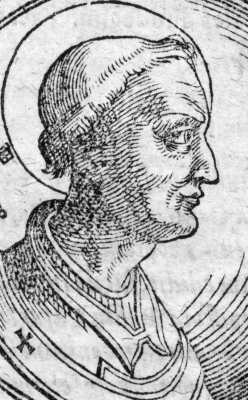
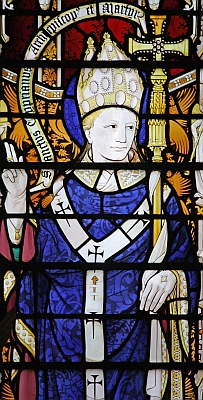
Saint Lidanus of Sezze

Profile

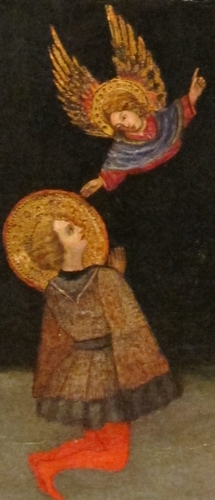
Lidanus was a Benedictine monk and Abbot. He drained the Pontine marshes in Italy. He founded an abbey in Sezze in the Papal States (part of modern Italy).

Born

1026

Died

  • 1118 at Monte Cassino, Italy of natural causes
  • buried at the church at the monastery of Sezze, Italy
  • church destroyed in the early 13th century and relics transferred to the cathedral of Seeze
  • the largest bell in the cathedral was dedicated to him in 1312
  • the city of Seeze began donating silver chalices to the cathedral in his honour in 1473
  • relics re-enshrined in 1606
  • relics re-enshrined in a new altar in 1672

Canonized

  • c.1500 by Pope Leo X (cultus confirmation)
  • 9 April 1791 by Pope Pius VI (cultus confirmation)

Patronage

Sezze, Italy

Source: https://catholicsaints.info/saint-lidanus-of-sezze/

Saint Lidanus of Sezze Read More »

Matthew 9:1–2

Out of the Ordinary

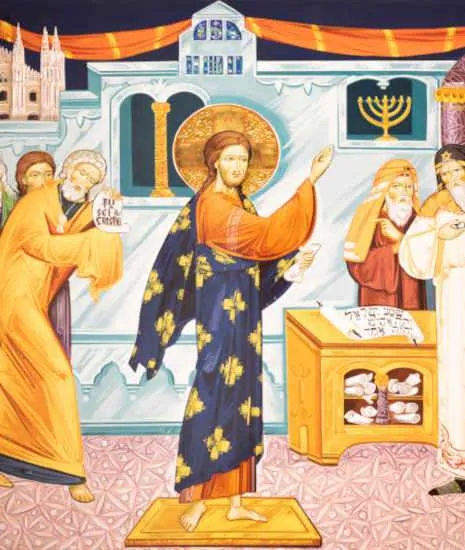
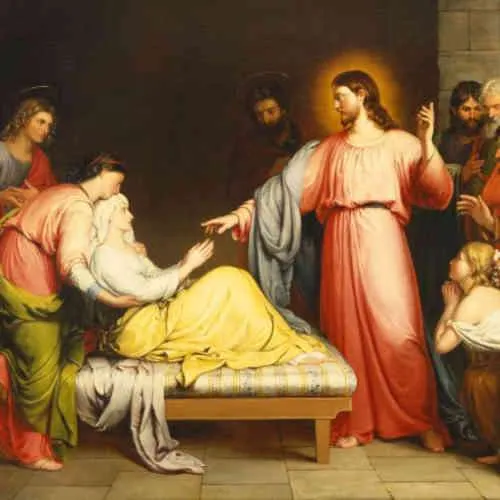
After entering a boat, Jesus made the crossing, and came into his own town. And there people brought to him a paralytic lying on a stretcher. When Jesus saw their faith, he said to the paralytic, “Courage, child, your sins are forgiven.”

Reflection:

After making a quick trip across the Sea of Galilee to deliver two men from demonic possession, Jesus and the disciples return to Jesus’ “own town,” likely Capernaum, the fishing village and hometown of Peter, Andrew, James and John, and probably Matthew, whom Jesus had not yet called to be an Apostle.

Though the Gospels say little about Jesus’ ordinary daily life in Capernaum, it is clear that this small town served as a center for His Galilean ministry, becoming the crossroads where ordinary human lives intersected with extraordinary divine grace. Few in Capernaum could have realized that their village would become the center for the unfolding of God’s promise of salvation, from which the teachings of the Messiah would go forth to the world.

Though Jesus’ act of forgiving the paralytic’s sins in today’s Gospel, followed by his miraculous healing, holds great significance, equally important is the setting in which these actions took place. Capernaum, in many ways, represents our hometowns, homes, daily lives, occupations, communities, and families. The Son of God’s entrance into our world did not take place in a visibly magnificent way; it was humble, hidden, and ordinary. Beginning in Bethlehem, Jesus’ birth took place within a dwelling for animals, and He was laid in a feeding trough. Shortly afterward, He narrowly escaped death from Herod, becoming a refugee in Egypt as an infant. Later, Jesus was raised in Nazareth—a small town viewed as insignificant by the wider Judean and Galilean communities. He learned carpentry from Joseph, made pilgrimages to Jerusalem for the Jewish feasts, and lived like any other child and young man.

Even after Jesus began His public ministry, He continued to live a humble and simple life. He was a wandering preacher, traveling on foot through many towns and villages with a band of disciples. He relied on providence for food and shelter, owned little Himself, and related compassionately with people of every status and background.

To the ordinary eye, Jesus was an ordinary man. To the eyes of the Father, He was the Divine Son, cloaked in humility, whose true glory remained hidden from many eyes.

Jesus’ humble, simple, and ordinary life was significant. The Father could have sent His Son into royal splendor and worldly power, establishing Him as an earthly king admired by all. Yet, He chose humility because by embracing the ordinariness of daily life, Jesus sanctified human existence, transforming everyday tasks and encounters into pathways toward union with Him. When we engage in ordinary things in union with Jesus’ life—with His virtue, diligence, dedication, care, and generosity—our daily activities become infused with extraordinary grace.

By becoming the crossroads where ordinary human lives intersect with extraordinary divine grace, we are invited to see every ordinary part of our lives in the same way the people of Capernaum encountered Jesus’ extraordinary grace. Jesus is waiting for us around every corner, in every conversation, duty, and activity. Like in Capernaum, He remains cloaked in humility, often veiled from immediate recognition. With faith, we must discern Him in the ordinary, recognize His humble presence, love Him, and follow Him.

Reflect today on the people of Capernaum and see yourself among them. How would you have reacted to someone who seemed so ordinary yet taught, forgave, and healed with such grace? That same Lord is present all around us in our daily lives, no matter how ordinary they might appear. Look for Him, invite Him into your “town,” and allow Him to sanctify your daily work, drawing you out of the ordinary into the extraordinary life of grace.

Source: https://catholic-daily-reflections.com/2026/07/01/out-of-the-ordinary/

Matthew 9:1–2 Read More »

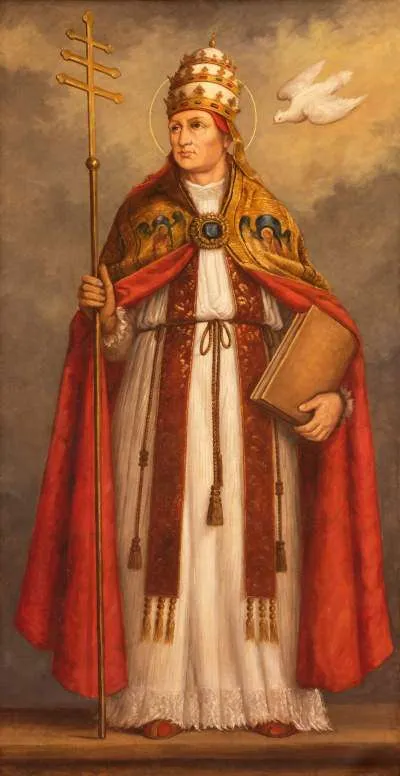
Saint Junípero Serra, Priest

1713–1784; Patron Saint of vocations, Hispanic-Americans, California; Canonized by Pope Francis on September 23, 2015

Miguel José Serra y Ferrer was born as the third of five children in the village of Petra, on the island of Majorca, Spain, in the Mediterranean Sea. In his youth, he worked on the family farm but frequently visited the nearby Franciscan church where he was enrolled in school. The friars were so impressed with him that they encouraged him to join them in their vocation. Around the age of sixteen, Miguel moved to Palma, the capital of Majorca, where he entered the Franciscan order. After taking his vows, he was given the name Junípero, in honor of one of Saint Francis of Assisi’s companions. At the age of twenty-four, Brother Junípero was ordained a priest.

Following his ordination, Father Junípero continued his studies, earning a license in philosophy and a doctorate in theology. Word of his gifts as a brilliant scholar and preacher quickly spread, leading to his appointment as a teacher at the University of Palma. He lived a prayerful, penitential, and simple life as a friar, and enjoyed reading about Franciscan missionaries in his free time. These missionaries so inspired Father Junípero that, in 1748, at the age of thirty-five, he requested permission from his superiors to travel to New Spain, modern-day Mexico, to become a missionary himself. Permission was granted.

In 1749, Father Junípero sailed to the Spanish port city of Cádiz where he and a close companion waited for a Spanish ship to take them to New Spain. While at the port, he wrote a touching letter to his parents, whom he knew he would never see again, encouraging them to rejoice in the mission on which he was being sent. After setting sail on August 30, Father Junípero arrived in Veracruz, modern-day Mexico, on December 7, 1749. He spent the next month walking nearly 300 miles to Mexico City through tropical forests, plains, and high mountain ranges, enduring extreme weather conditions. During the journey, Father Junípero was bitten either by a bug or a snake, leaving him with a serious leg wound that would plague him for the rest of his life. Despite this, in the decades that followed, Father Junípero would travel many thousands of miles on foot, up and down the coast of what are today northern Mexico and southern California.

After arriving in Mexico City, Father Junípero was assigned to the Sierra Gorda Missions, just north of Mexico City, where he worked for the next nine years. During that time, he helped to found five missions among the indigenous Pame people, learning their language, evangelizing, baptizing, and teaching them European skills, such as farming, construction, and governance.

From 1758–1767, Father Junípero served as Guardian of the Convent of San Fernando in Mexico City, where he also taught. During this time, he made frequent trips into the surrounding mission territory to evangelize the natives. In 1767, he was sent to the Baja Peninsula where the Jesuits had founded eighteen missions over the previous seventy years. With the Jesuits suppressed and expelled from all Spanish territories in 1767, the Baja missions were turned over to the Franciscans with Father Junípero put in charge. He oversaw those missions until 1769 when he was sent north into what is modern-day California (Alta California), to assist with Spanish expansion by establishing new missions among those who had never heard the Gospel. This was Father Junípero’s dream. Up until that point, his missionary activity was directed towards those who had already begun to be evangelized. In Alta California, however, he and his companions would be the first to preach Christ to the native people.

At the age of fifty-six, Father Junípero and his companions made a 900-mile journey north into the unknown world of Alta California. In July of 1769, they arrived in the territory of what is now San Diego and founded the Mission of San Diego de Alcalá, named for the fifteenth-century Franciscan missionary Brother Diego of Alcalá. This was the first of twenty-one missions that would be founded along the California coast over the next fifteen years, nine of which Father Junípero founded himself.

Though the establishment of the California missions by Father Junípero and his Franciscan companions was for the purpose of evangelization, the Kingdom of Spain had ulterior motives. Alongside the missions, military forts and civilian towns were established. The Spanish government wanted to colonize California for economic and political reasons. By claiming California for itself and establishing a military presence there, Russia, England, and other nations were deterred from claiming the land. Despite the Spanish government’s ulterior motives, Father Junípero and the Franciscans worked tirelessly to treat the natives as true children of God.

A mission was set up as a self-contained area of land and buildings. When the natives chose to join the mission, they separated themselves from their former community and lived on the mission lands, in housing provided by the Friars. They were not only taught about the faith and instructed in prayer, they were also taught how to raise and harvest crops, tend animals, and European trades such as weaving and construction.

The policies that governed the California missions have drawn modern-day critics. For example, to guard the newly developing faith within the converts, the friars had strict rules about the converts leaving and returning to their native communities, even for visits. Punishment for such unapproved departures often included corporal punishment. Many natives also suffered from exposure to diseases that the European settlers brought with them, to which the natives had not developed immunity. While twenty-first-century anti-Catholic critics tend to overemphasize and misrepresent these aspects of the missions, it is abundantly clear from his diary and many letters that Father Junípero and his friars had a deep love for the native people and sought only to introduce them to the saving grace of Christ, which they did in great numbers. By the time of his death, it is estimated that Father Junípero had personally baptized as many as 6,000 natives, with many more thousands being baptized by the other friars at the missions he established. Father Junípero also succeeded in protecting the natives from the many abuses of the Spanish military and colonizers, one time even walking 1,800 miles to Mexico City to convince the Spanish Viceroy to enact a new bill of rights for the native people. This “Reglamento” was the first of its kind, written more than 150 years before the United States government would guarantee Native Americans similar rights.

As we honor Saint Junípero, we also honor his companion friars, as well as all those who came to receive the gift of eternal salvation through them. Had Saint Junípero chosen to remain in Spain, living a more comfortable and easy life, the evangelization effort in California might have taken a different turn. Today, many souls have been saved on account of his selfless sacrifices, and those souls are honored as much today as is Saint Junípero Serra.

Source: https://mycatholic.life/saints/saints-of-the-liturgical-year/july-1—saint-junipero-serra-priest—usa-optional-memorial/

Saint Junípero Serra, Priest Read More »

Matthew 8:28–29

Being Set Free!

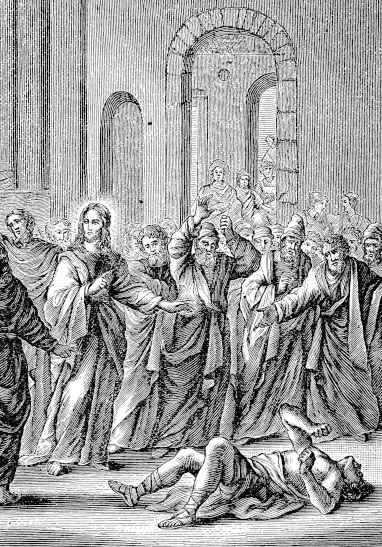
When Jesus came to the territory of the Gadarenes, two demoniacs who were coming from the tombs met him. They were so savage that no one could travel by that road. They cried out, “What have you to do with us, Son of God? Have you come here to torment us before the appointed time?”

Reflection:

After delivering His Sermon on the Mount and performing many miracles among His own people, Jesus intentionally journeys across the Sea of Galilee into Gentile territory—the region of the Gadarenes, near Gadara, a town within the pagan Decapolis. His choice underscores His mission to extend salvation beyond Israel.

The location where Jesus and His disciples arrived was no accident. It was a desolate area filled with tombs, symbols of death, impurity, and spiritual desolation. According to Jewish law, contact with graves rendered one ritually unclean (cf. Numbers 19:16). Spiritually, these tombs vividly illustrate the isolation, emptiness, and lifelessness that sin imposes upon the human soul.

The note that the demoniacs “were so savage that no one could travel by that road” further reveals the effects of grave sin. Evil seeks dominance and destruction; it isolates, destroys relationships, and makes peaceful coexistence impossible. This passage reflects the devastating consequences of allowing evil to reign unchecked within one’s soul: It becomes uncontrollable, violent, and destructive. Evil never leads to peace, but rather to chaos, isolation, and fear.

By entering into this territory, our Lord reveals His willingness to enter the isolation and desolation we all experience due to sin and every evil attack. He comes to us precisely when we are at our worst, most vulnerable, to set us free from the grip of the evil one and from all of his destructive works.

When these two men see Jesus, the demons possessing them immediately recognize Him as the Son of God and acknowledge His authority over them. Their recognition raises an important spiritual question for each of us: Do I also recognize Christ’s presence in my life? Am I aware of His divine authority over sin and evil, and do I trust in His desire and power to set me free?

When the demons ask Jesus, “Have you come here to torment us before the appointed time?”, they reveal their full knowledge of their ultimate fate: eternal damnation. They understood this clearly because, even after their fall, demons retain their natural angelic powers. Among these powers is their exceptional intelligence and their capacity to tempt humans by subtly suggesting deceptive thoughts, drawing us persistently away from God’s truth.

Because demons know their eternal fate with clarity, they seek to use their intellect and suggestive powers to lead us into the very despair they themselves experience. They have no hope of eternal life. Out of their hatred for God and humanity, they attempt to conform us to their hopelessness, convincing us that we cannot escape sin, that hope is lost, and that we are doomed to misery.

Only our Lord can shatter these demonic lies. Only Christ can break the chains of despair, isolation, and sin. By setting these two demoniacs free, Jesus illustrates His deep longing to do the same for us. By demonstrating His authority over the most severe effects of evil, Jesus reveals His absolute authority over every evil we encounter: every sin, temptation, oppressive thought, confusion, and especially despair.

Reflect today on Jesus’ choice to cross the Sea of Galilee for the sole purpose of setting these two demoniacs free from their oppression. Our Lord journeys to you with the same resolve. What is it that oppresses you? What thoughts tempt you to fear or despair? What sins do you habitually struggle with? Jesus wants to enter into every form of isolation and desolation you experience. Look for Him, recognize Him when He comes, profess your faith in His authority, and let Him fulfill His deepest desire by setting you free.

Source: https://catholic-daily-reflections.com/2026/06/30/being-set-free/

Matthew 8:28–29 Read More »

First Martyrs of the Church of Rome

Died c. 64; Pre-Congregation canonizations

Nero Claudius Caesar Augustus Germanicus was the fifth Roman Emperor who reigned from 54–68 A.D. He was known to be extravagant, impulsive, tyrannical, violent, and a madman. He murdered his first wife and even his own mother. In the year 64, when Nero was twenty-seven and had been Roman emperor for ten years, a fire broke out in Rome. The fire burned for nine days, destroying most of the city. Many believe that Nero himself had the fire set to make room for a new palace. When people started to question him, he blamed the Christians for the fire. At that time, Christians were a small minority within Rome and were seen as a menace and disruption to the traditional Roman way of life and the traditional Roman gods. Nero then systematically had as many Christians as he could arrested, tried, and murdered in the most brutal ways. One ancient pagan historian from that time named Tacitus recounts it this way:

Nero fastened the guilt and inflicted the most exquisite tortures on a class hated for their abominations, called Christians by the populace…Accordingly, an arrest was first made of all who pleaded guilty; then, upon their information, an immense multitude was convicted, not so much of the crime of firing the city, as of hatred against mankind. Mockery of every sort was added to their deaths. Covered with the skins of beasts, they were torn by dogs and perished, or were nailed to crosses, or were doomed to the flames and burnt, to serve as a nightly illumination, when daylight had expired.

Nero offered his gardens for the spectacle, and was exhibiting a show in the circus, while he mingled with the people in the dress of a charioteer or stood aloft on a car. Hence, even for criminals who deserved extreme and exemplary punishment, there arose a feeling of compassion; for it was not, as it seemed, for the public good, but to glut one man’s cruelty, that they were being destroyed.

These first Christian martyrs in the city of Rome are remembered and honored by the Church today. Saints Peter and Paul were among them, but numerous unknown others also gave their lives. Some of them were sewn into the bellies of animals while still alive and then fed to wild dogs to be torn to pieces. Others were coated with wax and lit on fire at night as torches in Nero’s gardens while he entertained guests. Still others were crucified like our Lord. These persecutions went beyond mere execution for a crime. They manifested an evil of the most diabolical nature.

Though these martyrdoms were expected to eliminate Christianity from the Roman Empire, those expectations were never realized. Instead, the courageous witness of these men and women planted and watered the seeds of faith that would continue to grow, blossom, and produce an abundance of good fruit.

For nearly three centuries, the persecution of Christians varied under different Roman Emperors. The most severe persecutions within the empire would occur two centuries later during the reigns of Emperors Decius (249–251) and Diocletian (284–305). It was not until the year 313, when Emperor Constantine the Great legalized Christianity with the Edict of Milan, that imperial persecutions ceased.

Today’s feast is strategically placed just one day after the Church honors Saints Peter and Paul, the two most notable martyrs during this Neronian persecution. By celebrating Saints Peter and Paul first, followed by a feast for every other martyr who died alongside them, the Church invites us to place ourselves not only in the shadow of Saints Peter and Paul, but also to join with these many unknown Christians who shed their blood for their faith. Though the physical shedding of one’s blood for Christ is a rare occurrence today, the depth of resolve Christians must have is the same. Every Christian, of every time and circumstance, must be so completely devoted to Christ that nothing, not even martyrdom, must deter us from our resolve.

As we ponder these unnamed heroes of our faith, prayerfully unite yourself to them. Look to Saints Peter and Paul as your chief inspiration and then resolve to become one of these unnamed witnesses who follow behind them. In Heaven, every sacrifice will be known and will become a cause for the glory of God. For now, many of our sacrifices are hidden and known only to us and to God. Rejoice in your own hidden sacrifices and know that those sacrifices unite you with those whom we honor today.

Source: https://mycatholic.life/saints/saints-of-the-liturgical-year/june-30—first-martyrs-of-the-church-of-rome/

First Martyrs of the Church of Rome Read More »

Matthew 8:23–26

Rejecting the Storm of Vengeance

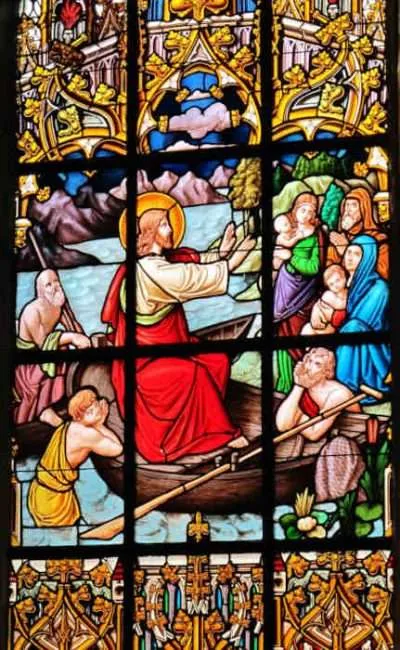
As Jesus got into a boat, his disciples followed him. Suddenly a violent storm came up on the sea, so that the boat was being swamped by waves; but he was asleep. They came and woke him, saying, “Lord, save us! We are perishing!” He said to them, “Why are you terrified, O you of little faith?” Then he got up, rebuked the winds and the sea, and there was great calm.

Reflection:

While we should understand Jesus’ teachings and actions in a literal sense, the Early Church Fathers also point to a deeper, symbolic meaning—what is known as the Spiritual Sense of Scripture. As the inspired Word of God, the Gospels contain limitless depth and wisdom. The message found in Jesus’ words and actions can be applied to any part of our lives and answer any questions we struggle with.

One such question is how we deal with the storms of life. Some storms come upon us externally, through illness, persecution, or unforeseen trials. When a storm sets in, we often react with fear and anxiety. When the storm is of our own making, such as from sin, the trial is often more severe. Though fear and anxiety are often the ill effects of life’s storms, another more deadly fruit can also arise: the anger that leads to vengeance.

In his preaching on this passage, Saint Augustine offers such an insight: “You have heard an insult—it is the wind; you feel anger—it is the wave. When the wind blows and the waves rise, the ship is in danger; so too, when insults stir your heart, your soul is tossed about and put at risk” (Sermon 63 on the New Testament, 2).

Because we live and interact with sinful people every day, we will inevitably experience the “wind” of an insult which can lead to the “wave” of angry feelings. When that happens, the question is: What am I going to do with that angry feeling? Augustine warns that insults, which stir up anger, pose a real spiritual danger. He continues: “If, upon hearing an insult, you desire vengeance, the storm swells within you. And behold, if you take vengeance, you may think you have triumphed—but in rejoicing over another’s harm, you have suffered shipwreck yourself.”

At some point, we have all allowed a storm to swell within us by seeking vengeance, which inevitably leads to our downfall. When anger gives way to irrational arguments, judgment, condemnation, or passive aggression—such as the “silent treatment”—our “boat” begins to sink.

Just as the wind and waves battered the Apostles, leading them to fear, so too does anger batter us, driving us toward vengeance and making things worse. In such moments, there is only one remedy: to cry out with the Apostles, “Lord, save us! We are perishing!”

What a perfect prayer in the midst of a trial that is turning into a storm! Had the Apostles ignored the presence of the Son of God—who was with them, asleep, awaiting their call—the storm would have continued, and they might have been shipwrecked. But they cried out, seeing that things were getting out of control.

When Jesus woke up, He first gently rebuked them, saying, “Why are you terrified, O you of little faith?” Applying this to our analogy of anger and vengeance, we can hear our Lord asking, “Why did you allow anger to take hold of you and swell into a storm?” Though Jesus, in His mercy, can calm the storm caused by our sin, a deep and abiding faith helps us to forgive the initial insult before it takes root, preventing it from growing into anger and vengeance.

Reflect today on any initial “wind” that tempts you toward anger. Choose to forgive and offer mercy in return. If a storm is already brewing in your heart, cry out to Jesus as the Apostles did. Though at times it might seem as if our Lord is asleep, He is always with you. Reject fear and anger the moment they begin to stir; but if they do arise, call upon Him in faith: “Lord, save me! I am perishing!” He will calm the storm.

Source: https://catholic-daily-reflections.com/2026/06/29/rejecting-the-storm-of-vengeance/

Matthew 8:23–26 Read More »

Saints Peter and Paul, Apostles

Saint Peter: c. 1–c. 64; Patron Saint of Rome, bakers, brickmakers, masons, bridge-builders, butchers, clockmakers, cobblers, fishermen, harvesters, watchmakers, locksmiths, netmakers, the papacy, and the Universal Church; Invoked against feet problems, fevers, and frenzy;

Saint Paul: c. 3–c. 64; Patron Saint of Rome, evangelists, theologians, musicians, public relations personnel, writers, publishers, and reporters; rope-, saddle-, and tentmakers; Gentiles; Cursillo movement; and Catholic Action; Invoked against snakes and hailstorms;

Pre-Congregation canonizations

According to ancient Roman mythology, in the seventh century BC, King Numitor was forcefully removed from his throne by his brother, Amulius. Amulius then forced Numitor’s daughter, Rhea Silvia, to become a Vestal Virgin so that she would not have children who could later attempt to reclaim the throne. However, one myth relates that Mars, the god of war, impregnated Rhea Silvia, and she bore twin sons Romulus and Remus. Amulius threw them into the river, but they were rescued by a she-wolf. When they grew up, they killed Amulius and restored their grandfather to his throne. They then decided to found a city but disagreed on its location, so Romulus killed Remus and founded a city, calling it Rome, after his own name. After his death, or ascension, he was said to have been deified as the god Quirinus. To this day, one of the seven hills of Rome is named after him, the Quirinal Hill. This ancient myth helped make up the religious beliefs of the people of Rome at the time when today’s saints, Saints Peter and Paul, entered Rome and preached the Gospel, laying down their lives as martyrs.

Myths that explained a city’s founding were important. These myths were often central aspects to the cultural and historical festivities in ancient times. This was especially true in Rome. Therefore, as the early Church began to take root in Rome, rather than dismissing this cultural practice, the early Church Christianized the story of Romulus and Remus by introducing a new festival for the new founders of Rome, Peter and Paul, on June 29.

Simon was born in Bethsaida, near the Sea of Galilee. He was a fisherman by trade, along with his brother Andrew. Matthew’s Gospel records that Simon and Andrew were the first whom Jesus invited to follow Him. After Jesus was baptized by John the Baptist and completed His forty days of prayer and fasting in the desert, He went to the Sea of Galilee, saw Simon and Andrew fishing and called to them saying, “Come after me, and I will make you fishers of men” (Matthew 4:19). At that, these two brothers dropped everything and became Jesus’ first disciples. John’s Gospel relates a slightly different timeline, stating that Andrew first followed Jesus and brought Simon to Jesus the next day. When Jesus met Simon, He said, “‘You are Simon the son of John; you will be called Cephas (which is translated Peter)” (John 1:42). Matthew’s Gospel relates that Jesus changed Simon’s name to Peter when He said to him, “I say to you, you are Peter, and upon this rock I will build my church, and the gates of the netherworld shall not prevail against it. I will give you the keys to the kingdom of heaven. Whatever you bind on earth shall be bound in heaven; and whatever you loose on earth shall be loosed in heaven” (Matthew 16:18–19).

With his new name and unique spiritual authority in which he held the “keys to the kingdom of heaven,” Peter emerged as the central leader of the Church after Pentecost. He spent about a decade in Jerusalem, preaching powerfully, performing miracles, and converting many. He eventually traveled to Rome where he established the Church there, becoming its first bishop. Around the year 64, he was martyred during the persecutions of Emperor Nero. Tradition states that Peter requested to be crucified upside down because he did not consider himself to be worthy of dying the same way Jesus died. His tomb is located under the main altar of Saint Peter’s Basilica.

Saul was born as a Roman citizen in Tarsus, modern-day Turkey. As a young man, he went to Jerusalem to study at the renowned school of the rabbi Gamaliel. After Jesus’ ascension into Heaven, Saul became one of the fiercest persecutors of the early Church, being partly responsible for the death of the proto-martyr Saint Stephen (Acts 7:58). However, within a few years, as Saul was traveling to Damascus to persecute other Christians, he was knocked to the ground and struck blind. He heard Jesus say to him, “Saul, Saul, why are you persecuting me?” (Acts 9:4). Jesus then directed him to a disciple of the Lord in Damascus named Ananias who baptized Saul. Saul spent about three years in Arabia where he went through an intense time of prayer and study, eventually returning to Damascus and then to Jerusalem where Barnabus introduced him to the other disciples, testifying to the veracity of his conversion.

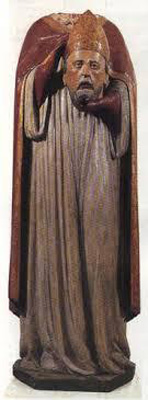
In Jerusalem, Saul began to use his Roman name, Paul, and then spent approximately the next ten years as a missionary throughout the Mediterranean. Back in Jerusalem, he was imprisoned for a couple of years and then was sent to Rome for trial since he was a Roman citizen. In Rome, he met up with Saint Peter. According to tradition, Paul was beheaded just outside the city of Rome. When his head fell to the ground, it bounced three times, each time giving rise to a spring of water. The place is marked today by the Abbey of the Three Fountains.

Saints Peter and Paul are considered the foundational pillars of the Church. Peter represents the stability of the Church and the office of the Vicar of Christ. Paul represents the mission of evangelization that was entrusted to the Church by Jesus Himself. He was also the Church’s first theologian, which is seen in his numerous letters that expound on the Gospels. Though unlikely, one tradition states that they were both martyred on June 29, in Rome, making them twin martyrs. Their twin martyrdom reminds us that the Church must be both stable and mission-oriented. It must remain grounded in the ancient Truth, yet grow and flower with an ongoing understanding of the mysteries of faith.

As we honor these two pillars of the Church, recall the fact that, though they are great saints, they were also ordinary men called to extraordinary vocations. They responded and God used them in ways they could have never imagined. Ponder your own calling in light of theirs and resolve to lay your life down for the Church, joining yourself to these two men so that God can continue their holy mission through you.

Source: https://mycatholic.life/saints/saints-of-the-liturgical-year/june-29—saints-peter-and-paul-apostles–solemnity/

Saints Peter and Paul, Apostles Read More »

Matthew 16:17–19

The Church Shall Prevail

“Blessed are you, Simon son of Jonah. For flesh and blood has not revealed this to you, but my heavenly Father. And so I say to you, you are Peter, and upon this rock I will build my Church, and the gates of the netherworld shall not prevail against it. I will give you the keys to the Kingdom of heaven. Whatever you bind on earth shall be bound in heaven; and whatever you loose on earth shall be loosed in heaven.”

Reflection:

Though the Church will suffer in many ways, She will ultimately overcome all things. As we celebrate the Solemnity of Saints Peter and Paul, we are reminded of this truth by pondering their lives as two of the greatest pillars of the Church. Neither imprisonments, persecutions, nor apparent defeats kept them from fulfilling the mission God gave them. Likewise, the Church will never be overcome, for She remains under the guardianship of divine providence.

The Church shall prevail for one simple reason: Jesus said so. He founded the Church upon the Twelve Apostles, giving unique and supreme authority to Peter: “I will give you the keys to the Kingdom of heaven. Whatever you bind on earth shall be bound in heaven; and whatever you loose on earth shall be loosed in heaven.” Though Peter’s given name was Simon, Jesus changed it to Peter—Petros in Greek and Cephas in Aramaic. Both terms can be used as a man’s name but also mean “rock.” Hence, Peter, and the Apostles in union with him, become the rock and immovable foundation upon which the Church is built.

By giving Peter “the keys to the Kingdom of heaven,” Jesus granted him singular authority to teach, govern, and sanctify with divine authority. This authority did not end with Peter; it is passed on to his successors through the office of bishop. Since Peter died in Rome, Rome remains the see of the Church’s divinely established governance.

Though Peter offers the Church the stability and clarity necessary as the immovable rock foundation, Paul reflects the Church’s missionary role to bring the Gospel to the ends of the earth. This is seen especially in today’s second reading, where Paul, facing the end of his earthly life, proclaims that he has “competed well,” “finished the race,” and “kept the faith.” His life was poured out as a libation for Christ, tirelessly laboring to make the Gospel known to all nations. While Peter ensures the Church’s unity and fidelity to divine truth, Paul embodies her zeal to spread that truth to every corner of the world, calling all people into communion with Christ and His Church.

Peter and Paul remain spiritually alive and active today through the unbroken tradition God established through them. Often at World Youth Day, when the Holy Father is present, young people chant, “You are Peter!” It is a beautiful expression of their faith in this foundational truth Christ established. Though every pope is a sinner like the rest of humanity, faith leads us to look beyond human weakness to see the successor of Saint Peter, the solid rock to whom Christ entrusted the keys to the Kingdom of Heaven. Thus, Peter’s mission remains alive today, not only in the person of the Holy Father, but also in our faith in his divinely given authority.

Saint Paul remains alive today through the ongoing fulfillment of the mission God gave him. His burning zeal to proclaim the Gospel lives on in every missionary endeavor, every act of evangelization, and every effort to spread the Good News to the ends of the earth. His spirit is especially present in those who courageously preach the Word, catechize the young, defend the faith, and labor tirelessly for the salvation of souls. Just as Peter ensures unity and fidelity, Paul inspires action and outreach, so that the Church may extend Christ’s Kingdom to every land and heart.

Reflect today on these pillars of the Church and acknowledge the living witness they gave and continue to give. Renew your faith in Peter, alive in the Holy Father, professing him as the rock foundation. See Paul at work by recognizing the missionary activity of the Church, carried out by countless souls with zeal and courage. Allow their witness to inspire within you a deeper love for the Church, and commit yourself anew to the mission entrusted to you: to remain firmly rooted in the truth and to bring that truth to the world with boldness and charity.

Source: https://catholic-daily-reflections.com/2026/06/28/the-church-shall-prevail/

Matthew 16:17–19 Read More »

Thirteenth Sunday in Ordinary Time

First Reading 2 Kings 4:8-11, 14-16a

One day Elisha came to Shunem,
where there was a woman of influence, who urged him to dine with her. 
Afterward, whenever he passed by, he used to stop there to dine.
So she said to her husband, “I know that Elisha is a holy man of God.
Since he visits us often, let us arrange a little room on the roof
and furnish it for him with a bed, table, chair, and lamp,
so that when he comes to us he can stay there.”
Sometime later Elisha arrived and stayed in the room overnight.

Later Elisha asked, “Can something be done for her?”
His servant Gehazi answered, “Yes!
She has no son, and her husband is getting on in years.”
Elisha said, “Call her.”
When the woman had been called and stood at the door,
Elisha promised, “This time next year
you will be fondling a baby son.”

Responsorial Psalm Psalms 89:2-3, 16-17, 18-19

R. (2a) Forever I will sing the goodness of the Lord.
The promises of the LORD I will sing forever,
through all generations my mouth shall proclaim your faithfulness.
For you have said, “My kindness is established forever;”
in heaven you have confirmed your faithfulness.
R. Forever I will sing the goodness of the Lord.
Blessed the people who know the joyful shout;
in the light of your countenance, O LORD, they walk.
At your name they rejoice all the day,
and through your justice they are exalted.
R. Forever I will sing the goodness of the Lord.
You are the splendor of their strength,
and by your favor our horn is exalted.
For to the LORD belongs our shield,
and the Holy One of Israel, our king.
R. Forever I will sing the goodness of the Lord.

Second Reading Romans 6:3-4, 8-11

Brothers and sisters:
Are you unaware that we who were baptized into Christ Jesus
were baptized into his death?
We were indeed buried with him through baptism into death,
so that, just as Christ was raised from the dead
by the glory of the Father,
we too might live in newness of life.If, then, we have died with Christ,
we believe that we shall also live with him.
We know that Christ, raised from the dead, dies no more;
death no longer has power over him.
As to his death, he died to sin once and for all;
as to his life, he lives for God.
Consequently, you too must think of yourselves as dead to sin
and living for God in Christ Jesus.

Alleluia 1 Peter 2:9

R. Alleluia, alleluia.
You are a chosen race, a royal priesthood, a holy nation;
announce the praises of him who called you out of darkness into his wonderful light.
R. Alleluia, alleluia.

Gospel Matthew 10:37-42

Jesus said to his apostles:
“Whoever loves father or mother more than me is not worthy of me,
and whoever loves son or daughter more than me is not worthy of me;
and whoever does not take up his cross
and follow after me is not worthy of me.
Whoever finds his life will lose it,
and whoever loses his life for my sake will find it.””Whoever receives you receives me,
and whoever receives me receives the one who sent me.
Whoever receives a prophet because he is a prophet
will receive a prophet’s reward,
and whoever receives a righteous man
because he is a righteous man
will receive a righteous man’s reward.
And whoever gives only a cup of cold water
to one of these little ones to drink
because the little one is a disciple—
amen, I say to you, he will surely not lose his reward.”

Source: https://bible.usccb.org/bible/readings/062826.cfm

Thirteenth Sunday in Ordinary Time Read More »

Saint Irenaeus, Bishop and Martyr

c. 135–c. 202; Patron Saint of those who work for the unity of the Eastern and Western Churches; Invoked against Christological heresies, and by apologists and catechists; Pre-Congregation canonization; Declared a Doctor of the Church (Doctor of Unity) by Pope Francis in 2022

After Pentecost, the Apostles preached the Gospel and established the Church in numerous cities. Saint John the Apostle is believed to have preached in Ephesus, modern-day Turkey. It was there that Saint Polycarp learned from him about Christ, was ordained a bishop, and was sent to the town of Smyrna, just fifty miles north, to govern the Church for approximately sixty-five years. In Smyrna, a young man named Irenaeus, raised in a Christian family, became Polycarp’s disciple, learning more about the faith from this disciple of the Apostle John. After his ordination as a priest, Irenaeus ministered in modern-day Lyon, France, under Bishop Pothinus.

Around the year 177, the Christian community of Lyon sent Irenaeus to Rome to assist the pope with a theological dispute over a heretical teaching. The teaching, later referred to as Montanism, claimed that certain individuals possessed superior prophetic insights directly inspired by the Holy Spirit. This mission attests to the respect Irenaeus commanded among the Christians of Lyon and his grasp of vital theological concepts. Providentially, the mission to Rome likely spared Irenaeus’s life. While Irenaeus was in Rome, a severe persecution of the Church broke out in Lyon and roughly fifty Christians were martyred, among them Bishop Pothinus. Upon returning to Lyon, Irenaeus was chosen as the next bishop.

As Bishop of Lyon, Irenaeus was a faithful pastor with a profound understanding of the Gospel as communicated from Jesus through the Apostles, and he articulated the faith with great clarity. He was energetic in his evangelization efforts throughout the region, sending missionaries to convert the many citizens who adhered to pagan beliefs. As the faith began to spread, errors concerning the faith started to emerge alongside Apostolic teachings. Although many of the early heretics might have had good intentions, they were not rooted in the pure faith and required correction to ensure the Church stayed on the straight and narrow path towards salvation. Irenaeus was one of the most influential figures in the early Church to guide the newly formed Christian communities down that safe road. He is especially known for two of his surviving writings: “Against Heresies” and “Demonstration of the Apostolic Teaching.” These two works constitute what is considered the very first catechism of the Catholic faith.

The most prevalent heresy in the early Church was what is now known as Gnosticism. Gnosticism is a broad term for many smaller deviations, all sharing similar premises. Generally, Gnosticism claimed that true knowledge was beyond the grasp of the ordinary person, and that the true intellectuals were privileged to possess a secret knowledge or insight necessary for eternal salvation. This secret knowledge was related to human nature, God, and the universe. 

Irenaeus begins his defense of the faith by highlighting the “absurd ideas” of the heretical group called the Valentinians: “They maintain, then, that in the invisible and ineffable heights above there exists a certain perfect, pre-existent Æon, whom they call Proarche, Propator, and Bythus, and describe as being invisible and incomprehensible. Eternal and unbegotten, he remained throughout innumerable cycles of ages in profound serenity and quiescence.” Irenaeus went on to describe the Valentinians’ fantasy-like view that an offspring of one of these Æons, named the Demiurge, foolishly created the universe. The Valentinians identified this Demiurge as the evil god of the Old Testament. Jesus and His Father, by contrast, were good and were attempting to rescue humanity from their physical natures by helping them to obtain full knowledge of this spiritual history so that the enlightened ones could then enter into a purely spiritual realm, shedding the evil of the material world. After exposing the errors of the Valentinians, Irenaeus went on to expose the errors of others who fell into similar Gnostic camps.

Irenaeus’ approach was first to explain the errors by demonstrating the absurdity of the complex and confusing views of the Gnostics, that they employed poor reasoning in their beliefs, borrowed their ideas from other popular stories, and rejected the Rule of Faith handed down through Tradition from the Apostles. He then took a more positive approach by clearly articulating that the life, sufferings, death, and resurrection of Christ were central to human salvation, and that, in the humanity of Christ, we are all saved and made one with Him, being reunited with the Father. This was achieved by carefully expounding on the Scriptures, both the Old and the New Testaments, and showing that the faith handed down from Jesus to the Apostles to the wider Church was comprehensible by all and easily embraced with simplicity and faith.

In a General Audience, Pope Benedict XVI explained it this way: “Irenaeus tells us, there is no secret doctrine concealed in the Church’s common Creed. There is no superior Christianity for intellectuals. The faith publicly confessed by the Church is the common faith of all. This faith alone is apostolic, it is handed down from the Apostles, that is, from Jesus and from God” (March 28, 2007). Thus, this so-called special “knowledge” that the Gnostics claimed to possess was purely fabricated by them, as it did not originate from the Apostles.

It’s hard to overestimate the importance of Irenaeus’ teachings for two main reasons. First, he aided the early Church in navigating through the initial confusion it encountered as new and erroneous ideas emerged. Second, his writings were among the first comprehensive catechetical instructions of the early Church, and those writings enabled numerous others who came after him to build upon what he had taught. Jesus promised the Apostles that the Holy Spirit would lead the Church into all truth. This happens when holy men and women listen to all that is handed down to them, remain faithful to that sacred Tradition, build upon it, and pass it on to others to develop it further. The Gospels were the first and most important foundation for this ongoing process. Irenaeus’ writings came shortly afterwards and remain an important foundation today. In fact, even in the most recent Church council, the Second Vatican Council, Irenaeus was one of the most quoted of the Church Fathers, showing an unbroken succession of faith from the early Church until today. Interestingly, it was not until 2022 that Saint Irenaeus was declared a Doctor of the Church under the title “Doctor of Unity.” This unique title particularly points Catholics of the East and West to the foundations of faith that we share with every other Apostolic Church, such as the Orthodox, with whom reunification is continuously sought.

As we honor this great Doctor of the Church, ponder the fact that your own faith has been believed and lived since the time of Christ. At times, our modern world seeks to undermine this ancient faith by labeling it as “old-fashioned” or “out-of-date.” Nothing could be further from the truth. The Truth that was revealed by Christ and His Apostles is as true today as it was at that time. Seek to immerse yourself in that unchanging yet ever-deepening deposit of faith, and you will discover that your family of faith includes all Christians of every era, making up the one Body of Christ.

Source: https://mycatholic.life/saints/saints-of-the-liturgical-year/june-28—saint-irenaeus-bishop-and-martyr/

Saint Irenaeus, Bishop and Martyr Read More »