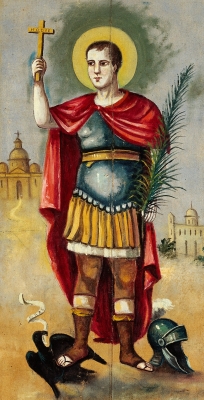
Saint Expeditus of Melitene
Saint Expeditus of Melitene Read More »
Profile
Expeditus is possibly legendary. It is unclear whether his name led to his association with expeditious matters, or the other way around. This association led to his becoming the patron of people who had to deliver things on time.
Canonized
Patronage
Representation
Source: https://catholicsaints.info/saint-expeditus-of-melitene/
Saint Expeditus of Melitene Read More »
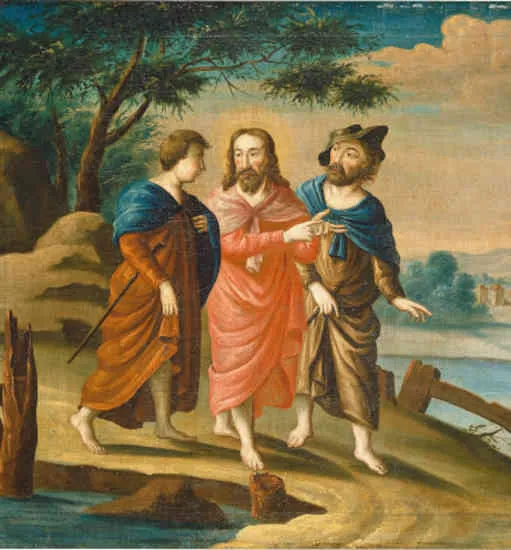
That very day, the first day of the week, two of Jesus’ disciples were going to a village seven miles from Jerusalem called Emmaus, and they were conversing about all the things that had occurred. And it happened that while they were conversing and debating, Jesus himself drew near and walked with them, but their eyes were prevented from recognizing him.
Reflection:
These two disciples were overwhelmed by grief and bewildered by the events that had taken place. As they walked the seven-mile journey from Jerusalem to Emmaus, they expressed their sadness and confusion. Jesus, Whom they had hoped “would be the one to redeem Israel,” was brutally tortured and crucified before their eyes. After His death, He was buried, and that very morning they heard reports from some of the women, as well as Peter and John, that His body was missing from the tomb. What’s more, the burial cloth was neatly rolled up in the tomb, and the women informed the disciples that they saw “a vision of angels who announced that he was alive.” The two did not know what to think.
As the story unfolds, Jesus appeared to them as they walked and conversed with them, “but their eyes were prevented from recognizing him.” Jesus’ hidden presence teaches us that He is often with us, in our midst, yet we do not recognize Him. Distractions, trials, or our own misconceptions can dull our spiritual senses. We often fail to perceive His presence in the Eucharist, the Scriptures, the Church, during our prayer, and in one another.
Jesus’ loving rebuke of these two disciples was intended to wake them up: “Oh, how foolish you are! How slow of heart to believe all that the prophets spoke! Was it not necessary that the Christ should suffer these things and enter into his glory?” Every time we stumble from spiritual blindness, which leads to confusion, our Lord lovingly says the same to us. We must take that rebuke with humility, acknowledging our blindness and inability to perceive His constant presence.
Jesus then “interpreted to them what referred to him in all the Scriptures.” This opening of their minds to the spiritual Gift of Understanding is key. By humbly acknowledging our spiritual blindness and the foolish way we often go about our daily lives, we dispose ourselves to this precious gift. The Gift of Understanding cannot be acquired by our own effort. Only after we honestly humble ourselves before God will He open our minds to all we need to know and understand.
Once they arrived in Emmaus and invited this divine Stranger to stay with them for the night, Jesus agreed. As they dined, “while he was with them at table, he took bread, said the blessing, broke it, and gave it to them.” The Lord Himself, the great High Priest, gave them the Eucharist, and suddenly “their eyes were opened and they recognized him, but he vanished from their sight.”
Though our Lord vanished from their sight, He remained with them, as He does with us today. His presence in the Eucharist is His True Presence, His Divine Essence. By revealing Himself in the Scriptures and the Breaking of the Bread, He teaches us that He is always with us in His Word and in the Sacraments. We consume His Word through daily meditation, study, and the teachings of the Church. His True Presence is with us when we attend Mass and participate in the Sacraments.
Reflect today on the initial confusion of these two disciples, filled with sorrow and bewilderment as they grappled with recent events. Contrast this with the growth in faith they likely experienced in the months and years ahead. Little by little, they grew in understanding and belief, allowing their misconceptions about who the Messiah would be—not a political leader, but the Savior of the World—to be dispelled. Whenever you face confusion, turn to the example of these disciples and learn from the lessons taught through them. Seek Christ in His Word and Sacraments, trusting that He will dispel doubts and guide you to greater faith.
Source: https://catholic-daily-reflections.com/2026/04/18/dispelling-confusion/
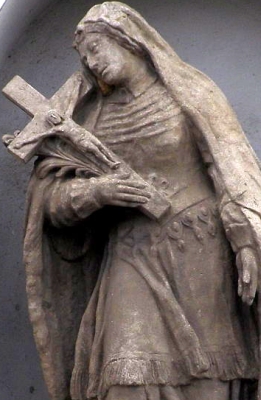
Profile
Agia was the wife of Saint Hidulphus of Hainault. They separated to enter religious life, Agia becoming a Benedictine nun at the abbey at Mons, Belgium. She was a widow. Legend says that she managed to avert an injustice by speaking from the tomb.
Died
Canonized
Patronage
Source: https://catholicsaints.info/saint-agia-of-hainault/
Saint Agia of Hainault Read More »
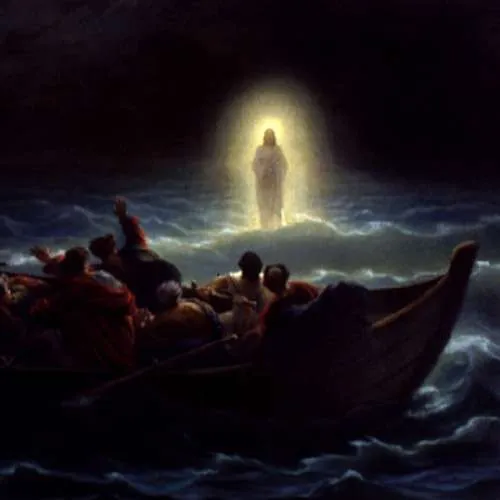
When they had rowed about three or four miles, they saw Jesus walking on the sea and coming near the boat, and they began to be afraid. But he said to them, “It is I. Do not be afraid.”
Reflection:
One of the most consoling things we can hear is our Lord saying to us, “It is I. Do not be afraid.” Every time we encounter His divine presence in our lives, we should hear those words. Though we do not always perceive Him, He is there, and when we reach out to Him in faith, He responds, dispelling the fear that cripples us, replacing it with confidence in His presence.
What causes you to fear? Though some forms of fear are good—such as fear of falling off a cliff while hiking on a narrow ledge—other forms of fear that we struggle with every day are not good. Fear of what people think about us, fear of failure, or fear of being mistreated are all fears that stem from our own weakness and lack of surrender to God’s grace. In today’s Gospel, Jesus’ miraculous act of walking on the water, coming toward the disciples in their boat at night during the storm, teaches us a lesson about unhealthy fear.
Fear ultimately stems from a lack of humility. It’s the fruit of pride, which is rooted in an excessive reliance on oneself rather than on God. Pride seeks control and resists vulnerability, whereas humility acknowledges one’s dependence on God and His providence. This misplaced trust in one’s own abilities or judgments leads to fear when faced with uncertainties or challenges that exceed personal power. This is beautifully presented in the difficult-to-pray Litany of Humility: “From the fear of being humiliated… despised… suffering rebukes… calumniated… being forgotten… being ridiculed… being wronged… being suspected—deliver me, Jesus!”
In today’s Gospel, after Jesus had performed the miracle of the multiplication of the loaves and fishes, He sent His disciples ahead of Him. It was evening when they entered their boat and began rowing across the sea. After they “had rowed about three or four miles” and “it had already grown dark,” a fearful situation arose: “the sea was stirred up because a strong wind was blowing.”
Many Church Fathers look at this passage as a literal story that is filled with symbolism, presenting us with deeper spiritual lessons. John frequently uses the images of light and darkness in his Gospel. Darkness symbolizes the absence of Christ, the Light of the World. The Apostles in the boat at night in the darkness, rowing against the wind and waves, symbolize our journey in life. The sea is the world and the boat is the Church, which enables us to traverse the difficulties we face in the world. Though Jesus is not in the boat during the waves and wind, He is not far away. He is attentive to them from a distance but allows them to endure the storm.
Each of us encounters storms. Though they sometimes lead to confusion, God permits them to help us overcome fear. Humility is the virtue that especially dispels fear because humility enables us to trust in God, rather than in ourselves. By ourselves, we cannot traverse the seas of the world. Not only will we be tossed about, making progress difficult or impossible, we sometimes lose our way and remain in one storm after another.
Reflect today on anything that causes fear or anxiety in your life. What weighs you down and sets you off course toward the freedom and joy God wants to grant you? What is it that is more than you can handle on your own? Whatever it is, humbly admit to yourself and to God that you need Him, because you are incapable of handling it on your own. As you do, listen for His gentle promptings of grace. Hear Him say to you, “It is I. Do not be afraid.” Allow Him to enter your life, calm the waves, and guide you safely to the destination He desires for you. Your humble reliance on our Lord will enable you to traverse any darkness in which you find yourself.
Source: https://catholic-daily-reflections.com/2026/04/17/traversing-the-darkness-of-fear/
Profile
Landericus was the eldest son of Saint Madelgarus and Saint Waldetrudis. He was a soldier and priest. He became the bishop of Meaux, France from 641 to 650. He was a Benedictine abbot in Soignies, Belgium and abbot of Hautmont, France.
Born
Died
Canonized
Patronage
Representation
Source: https://catholicsaints.info/saint-landericus-of-soignies/
Saint Landericus of Soignies Read More »
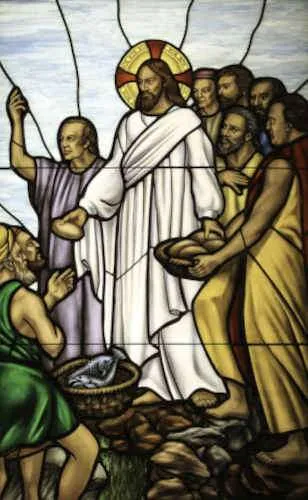
Jesus went up on the mountain, and there he sat down with his disciples. The Jewish feast of Passover was near. When Jesus raised his eyes and saw that a large crowd was coming to him, he said to Philip, “Where can we buy enough food for them to eat?”
Reflection:
Have you ever faced a situation in which you felt desperate? Some people endure severe poverty, unsure of where their next meal will come from. Others struggle with family disunity, leading to deep fear and anxiety. Some battle addiction, uncertain how they will ever break free. Still others face obstacles that seem insurmountable. Today’s Gospel reminds us that nothing is impossible for God.
The story of the multiplication of the loaves and fishes begins with an intriguing exchange between Jesus and two of His disciples. Jesus asked Philip where they could buy food for the crowd, even though He knew they did not have enough money nor a place to buy food. This question was more of a statement, showing us that we must always rely on divine providence, especially when faced with the impossible.
From a human perspective, feeding such a vast crowd on a mountaintop was impossible. Similarly, we all encounter situations in life that, by human means, present insurmountable challenges. If the crowd had numbered only about twenty people, one of the disciples might have managed to meet the need with a practical solution, such as purchasing food from a nearby village. Thus, when a challenge in life has a reasonable solution within our capacity, we should pursue it. When human effort alone is not enough, we must turn to divine providence.
Philip’s response reveals his purely rational perspective: “Two hundred days’ wages worth of food would not be enough for each of them to have a little.” In contrast, Andrew shows a glimmer of faith and hope when he points out, “There is a boy here who has five barley loaves and two fish; but what good are these for so many?” The role of the boy is often overlooked. Although the Gospel says little about him, it is clear that he entrusted everything he had to Jesus. Perhaps it was this small act of trust that allowed Jesus to perform the miracle.
After Jesus had the vast crowd of 5,000 men—not counting women and children—recline in the grass, He did the unimaginable. He transformed the five barley loaves and two fish into more than the crowd could eat. The twelve baskets of food left over symbolize God’s superabundant providence, given to those who are members of His Kingdom—the new Twelve Tribes of Israel, His Church.
We must read this miracle from both a literal and a spiritual point of view. First, Jesus literally fed this vast crowd with a few loaves and fish. In our lives, He promises the same when we entrust all we have to Him. Though we must act responsibly to provide for ourselves and our families, in the end, we must believe that Jesus will provide all we need. His concern extends to our material needs, relieving us of worry and anxiety when we trust in Him.
Spiritually speaking, God’s providence assures us that every desperate situation in which we find ourselves can be transformed by grace if we trust Him. Family disunity, addictions, poverty, and every other human struggle can and will be transformed by His grace if we fully surrender to Him. For example, even if a family relationship is beyond reconciliation, by fully surrendering that relationship to Him, His grace will either heal it or use the suffering as a source of grace in ways we could never imagine. Nothing is beyond the power of God.
Reflect today on this vast crowd coming to Jesus on the mountain. See yourself in that crowd. See yourself as hungry and even desperate, journeying toward Him Who is the answer to every problem. See yourself as that boy who gives all he has to Jesus. Don’t hold anything back. Trust in Him and know that His divine providence will transform anything you bring to Him in superabundance.
Source: https://catholic-daily-reflections.com/2026/04/16/divine-providence-never-fails/
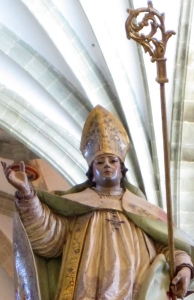
Profile
Tubius was a Bishop of Astorga in northwest Spain. He was known as a stern disciplinarian. He was a fierce opponent of Priscillianism heresy. He was a great supporter of Pope Saint Leo the Great.
Born
Died
Canonized
Patronage
Source: https://catholicsaints.info/saint-turibius-of-astorga/
Saint Turibius of Astorga Read More »
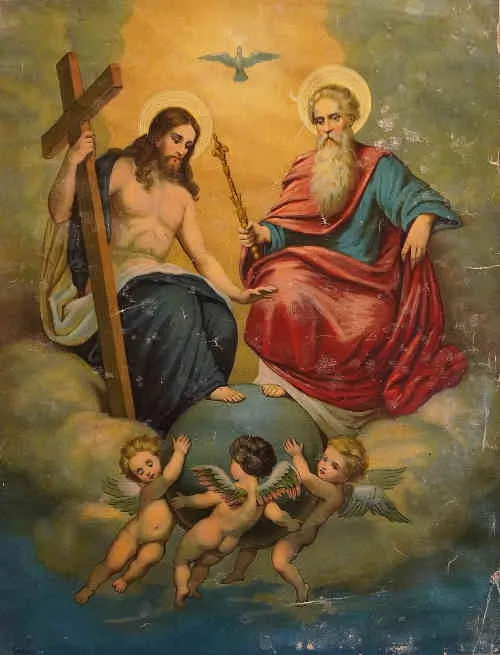
“The Father loves the Son and has given everything over to him. Whoever believes in the Son has eternal life, but whoever disobeys the Son will not see life, but the wrath of God remains upon him.”
Reflection:
A holy fear, one of the seven Gifts of the Holy Spirit, begins with a fear of punishment. We should foster within our minds and hearts a healthy fear of experiencing the “wrath of God.” God’s holy wrath is not an emotional reaction to those who reject Him but rather the necessary consequence of disobeying Him and refusing to receive and foster the transforming gift of faith. God’s wrath is His pure justice. He respects our freedom and will not impose Himself upon us. God will not force the gift of eternal life upon those who reject it by rejecting the means of obtaining it.
What is the means of obtaining eternal life? Believing in the Son. In biblical terms, believing is much more than intellectual assent. Even the demons believe in God intellectually. Their belief, however, lacks the spiritual gift of faith, which is what today’s Gospel addresses.
Faith in God involves listening to Him, understanding His Word, and responding positively in our daily actions. It means we choose to allow ourselves to be changed by God’s Word. True faith cannot be separated from hope and charity. Once our minds perceive God and the Truth that He imparts, the divine gift of hope compels us to act on and in accordance with the truth we understand. Faith and hope together produce charity, which perfects faith and leads to a love of God and others, inspiring us to act according to God’s will.
For these reasons, it is clear that being a Christian is far more than believing a philosophical thesis. Sadly, it seems that there are many who profess to be Christian but do so only in an intellectual way. If that is you sometimes, then prayerfully ponder the phrase “the wrath of God remains upon him.”
Though the gift of Fear of the Lord begins with the fear of losing out on eternal life, it culminates in a burning desire to do all we can to further God’s Kingdom and implement His will in our lives. This higher form of fear drives us away from anything that keeps us from offending God, even slightly, or failing to serve Him with all the powers of our souls. This is the fear of a son or daughter who strives to please God in all things.
As we continue our Easter Season, we are invited to consider all that Jesus revealed in His public ministry through the lens of His final victory over death and restoration of eternal life, promised by the Resurrection. Today, we are especially challenged to examine what we believe and whether that intellectual assent has mixed with the grace of hope to compel us to act.
Reflect today on whether your belief in the Son of God drives your will to action. As you listen to the Word of God, do you allow it to change you? Do you make conscious decisions to move in a new direction because you have listened to and acted upon all that Jesus has revealed? Are you closer to God today than you were last year or in the years before that? Choose to believe in the Son of God today in the way Jesus wants you to believe, and you will be one step closer to the incalculable riches of eternal life.
Source: https://catholic-daily-reflections.com/2026/04/15/a-belief-that-transforms/
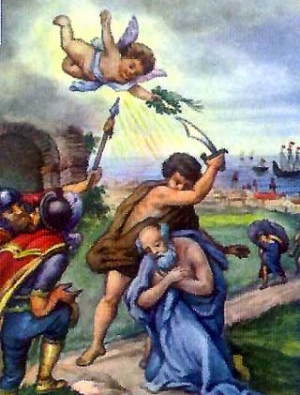
Profile
Maro was a friend of Saint Flavia Domitilla, whom they accompanied in exile to the island of Ponza. He was martyred in the persecutions of Trajan.
Died
Canonized
Patronage
Source: https://catholicsaints.info/saint-maro-of-rome/
Saint Maro of Rome Read More »
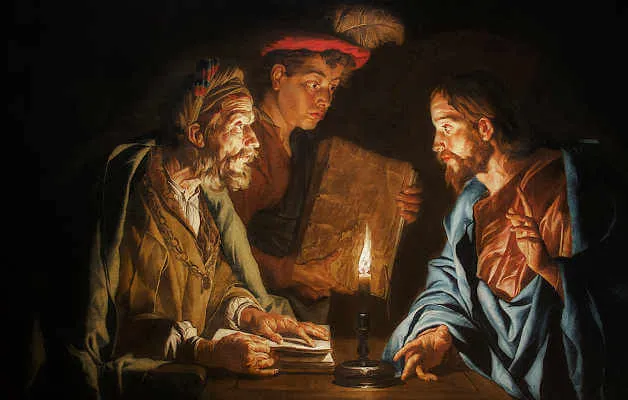
“And this is the verdict, that the light came into the world, but people preferred darkness to light, because their works were evil. For everyone who does wicked things hates the light and does not come toward the light, so that his works might not be exposed. But whoever lives the truth comes to the light, so that his works may be clearly seen as done in God.
Reflection:
The contrast of light and darkness is a beautiful concept to ponder in prayer. They are not two opposing forces. Darkness is simply the absence of light. In the visual spectrum, darkness does not exist. It is nothingness—no light, no color—making it impossible for our eyes to see. Similarly, within the spiritual realm, the absence of God leaves us spiritually blind. Darkness does not remove our capacity for seeing; rather, our sight is rendered useless without the light that reveals truth and guides our way. In this spiritual darkness, we stumble, unable to discern good from evil or to find the path to holiness. Yet, when we invite the divine light of Christ into our souls, the darkness dissipates and we begin to see clearly, walking confidently in God’s grace and truth.
If you’ve ever been in complete darkness, perhaps at home on a cloudy night when the power goes out, you know that even one small candle is enough to find your way around. So it is with the Light of Christ. Even the faintest presence of grace in our souls enables us to begin to find our way back to God.
Today’s Gospel begins with that familiar passage from John 3:16: “God so loved the world that he gave his only-begotten Son, so that everyone who believes in him might not perish but might have eternal life.” This line comes toward the end of Jesus’ conversation with Nicodemus, the Pharisee who came to Jesus at night to converse with Him. Nicodemus was searching. Perhaps after he heard some of Jesus’ teachings and witnessed His miracles, Nicodemus discovered a small flickering flame of faith within his soul. That flame enabled him to find his way to Jesus that night in search of greater light. At the beginning of their conversation, Jesus gently but firmly challenged Nicodemus to move beyond what his human reason alone could comprehend and to walk with the light of faith. As Nicodemus listened and conversed, it seems that his mind and heart were opened, which enabled Jesus to teach him and us the beautiful truth found in today’s Gospel.
Perhaps as a way of softening His initial challenge, which was meant to help Nicodemus open himself further to the gift of faith, Jesus continued, “For God did not send his Son into the world to condemn the world, but that the world might be saved through him” (John 3:17). Though God is a perfectly just Judge, Jesus’ earthly mission was to save us from condemnation, to set us free, to flood our souls with the light of truth, and to enable us to see God through faith in this life and face-to-face in the next.
As with Nicodemus, Jesus is able to see any flickering flame of faith within our souls. When He sees it, He will engage us, challenge us, and seek to shine His light more fully within us. He wants not only a flickering flame of light but a radiant light. The more clearly we see, the more firmly our feet are on the path to holiness and the quicker we are able to journey to the source of all light—Jesus Himself.
Reflect today on the contrast of light and darkness within your soul. How clearly is your spiritual mind able to perceive all that God wants to reveal to you? If you find yourself lost at times or confused about life, turn to Jesus and beg for light. We must not be among those who prefer “darkness to light.” If the light of the Gospel reveals your sin, do not turn away. Believe that Jesus does not want to condemn you; He wants to free you. He wants you to believe in Him, so that you “might not perish but might have eternal life.” Allow the light to shine brightly within you so that you will find your way to all the treasures God wants to bestow on you.
Source: https://catholic-daily-reflections.com/2026/04/14/light-or-darkness/
Add San Jose Filipino Ministry as a new recipient, Send your donation using"donate@dosjfm.org"
Payable to - San Jose Filipino Ministry
Address - Poong Jesus Nazareno Filipino Catholic Center (PJNFCC); 3700 W. Orange Ave., Anaheim CA 92804
Poong Jesus Nazareno Filipino Catholic Center (PJNFCC); 3700 W. Orange Ave., Anaheim CA 92804
Phone: (657) 214-2507
Mobile (657) 208-2038
info@dosjfm.org

Poong Jesus Nazareno Filipino Catholic Center (PJNFCC); 3700 W. Orange Ave., Anaheim CA 92804
Phone: (657) 214-2507
Mobile (657) 208-2038
info@dosjfm.org
Add San Jose Filipino Ministry as a new recipient, Send your donation using"donate@dosjfm.org"
Payable to - San Jose Filipino Ministry
Address - 1235 S Magnolia Ave
Anaheim, CA 92804-5115
San Jose Filipino Ministry. All rights reserved. 2021 © Powered by Phoenix Virtual Solutions
Sponsored by EverClear Hospice and Palliative Care