2026

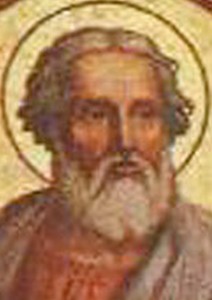
Saint Peter Damian, Bishop and Doctor of the Church

1007–1072; Patron Saint of Faenza and Font-Avellano, Italy; Pre-Congregation canonization; Canonization confirmed and proclaimed a Doctor of the Church by Pope Leo XII in 1823

Orphan, laborer, student, monk, hermit, priest, theologian, teacher, writer, poet, ascetic, penitent, prior, reformer, bishop, cardinal, saint…these are but a few words to describe today’s courageous saint.

Peter was the youngest child born into a poor but noble family in Ravenna, Italy. His parents died when he was young, so he went to live with one of his older brothers who mistreated him and forced him to labor as a swineherd. Eventually, another brother, a priest from Ravenna named Father Damian, took him in and provided him with an excellent education in which he greatly excelled. Peter was so grateful to his priest brother that he added his brother’s name to his own, making him Peter Damian.

Upon the completion of his education, Peter Damian began to teach with much success. However, he soon found that the university setting was not for him, so he withdrew to a monastery in Fonte-Avellana for a forty-day retreat. Upon completing his retreat, he discerned a call to monastic life and received the habit.

As a monk, Peter Damian lived a secluded life of prayer and extreme penance. His penances were so severe that they affected his health more than once. Eventually, his intellectual gifts were used once again when he was asked to teach his fellow monks. For the next few years, he taught in his own and neighboring monasteries and also began to write. One of his first works was the Vita, or “Life” of Saint Romuald, a recently deceased monk from his monastery known for his exceptional holiness.

In 1043, at the age of thirty-five, Brother Peter Damian was named the prior of his monastery. He led the brothers with zeal and fidelity to their rule. He also began founding new hermitages in the surrounding villages.

At that time, Pope Benedict IX was a truly scandalous pope who had obtained the papacy through bribery and lived an immoral life. In 1045, the pope decided to leave the papacy to marry his cousin. Before doing so, he wrote to his godfather, Father John Gratian, for advice. Being a holy man, Father Gratian encouraged him to resign, which Benedict did, leaving the papacy to Father Gratian, who became Pope Gregory VI. Brother Peter Damian was overjoyed at the change and wrote to the new pope, encouraging him to tackle corruption and scandal within the Church. In the years that followed, more than one pope called on Brother Peter Damian to help accomplish that very goal. He wrote many letters in an attempt to bring about reforms of the clergy, fought against simony (the selling of Church offices and spiritual favors), addressed sexual abuses, challenged the bishops, reformed monasteries, and gave a spectacular personal witness of holiness.

In 1057, Brother Damian was made the Cardinal-Bishop of Ostia by the pope, despite his attempts to turn down the position. As a new cardinal, he quickly challenged his brother cardinals and tried to weed out corruption. He would eventually return to his hermitage and resume his life of prayer, but his fervor in fighting against the evils of the time continued. Pope after pope called on him for help, even while other Church leaders opposed him.

In 1072, at the age of sixty-five after battling one corruption after another, Cardinal Peter Damian fell ill. After a week of illness in a monastery near his hometown, the cardinal died while the monks chanted around his bed.

Every age of the Church has different needs. In the eleventh century, the Church needed an unwavering and courageous voice for reform. Saint Peter Damian was that voice. Though his heart was most at home in his monastery doing penance and chanting the psalms, his body was actively eradicating the mold that had covered the Church. Through his valiant efforts, many parts of the Church began to radiate as the Bride of Christ once again.

Each of us is called to be a reformer in one way or another. First, we must seek to reform our own souls by eliminating sin through prayer, penance, and fidelity to God’s Law. From there, God will use us to extend His reform to others. Ponder any ways that you need to reform your own life, and then offer yourself to God’s service so that He can use you to weed out the evils you encounter in your daily life.

Source: https://mycatholic.life/saints/saints-of-the-liturgical-year/february-21-saint-peter-damian-bishop-and-doctor-of-the-church/

Saint Peter Damian, Bishop and Doctor of the Church Read More »

Luke 5:27–29

The Great Banquet

Jesus saw a tax collector named Levi sitting at the customs post. He said to him, “Follow me.” And leaving everything behind, he got up and followed him. Then Levi gave a great banquet for him in his house, and a large crowd of tax collectors and others were at table with them.

Reflection:

Levi’s life changed in an instant. He encountered the Messiah, the Son of God, the Savior of the world, and in response to Jesus’ simple yet profound invitation—“Follow me”—Levi left everything behind and followed Him. This radical decision offers an inspiring witness as we begin our Lenten journeys.

Christ’s call is often twofold. Even those baptized as infants must eventually hear and respond to that call for themselves. There comes a moment after the age of reason when those raised in the faith must choose whether to embrace the call to follow Jesus. For those who did not encounter Christ in their youth or who might have strayed from Him, the call is ever-present, continuously offered by God. Like Levi, once that invitation is heard and internalized, it demands a response—a radical choice to follow Him. And with that choice, life is never the same.

When Levi accepted Jesus’ invitation, his life underwent a complete transformation. He “left everything behind.” While his career as a tax collector was financially lucrative, it likely left him spiritually empty. Tax collectors were viewed with disdain by their fellow Jews because they worked for the Roman oppressors and often took more than what was owed for their own profit. This position, though offering wealth, created a life of moral compromise, guilt, and isolation. It was into this interior emptiness that Jesus entered. Levi, touched by an intuitive grace, recognized that abandoning everything and following Christ was the answer to his deepest longings.

Have you heard Christ’s call in your own life? Have you abandoned everything that stands in the way of fully following Him? This question is especially significant for those who were raised in the faith. While being baptized as a child and growing up in the Church is a great gift, it does not automatically mean that we have internalized the faith or personally responded to Jesus’ invitation. Have you truly heard Jesus call you? Have you left behind everything that hinders your complete “Yes” to Him?

Levi’s transformation didn’t stop with his “Yes.” He wanted to share his newfound joy and faith with others. Levi hosted a “great banquet” for Jesus in his home, inviting a large group of tax collectors and others to meet the One who had changed his life. His encounter with Christ was so profound and life-giving that he couldn’t keep it to himself—he wanted others, especially those whom he knew were also spiritually empty, to encounter the same transformative love. 

If you have responded to Jesus’ call and given your life to Him, your heart will naturally burn with a desire to share that joy with others. As you look at your family, friends, and acquaintances, do you see the same restlessness or emptiness that once filled your heart? How might God be calling you to invite them to encounter Christ? Perhaps, like Levi, you are called to “host a banquet” in your own way, sharing the Good News with those who need it the most.

Reflect today on Levi’s conversion and see your own life in his story. Recognize the restlessness within your heart and listen for Jesus’ call. Identify Him as the answer to your deepest desires. Say “Yes” to His invitation, abandoning everything that competes with His will, and share the treasure of your faith with others. Embracing this twofold path is one of the best ways to ensure a truly fruitful Lent.

Source: https://catholic-daily-reflections.com/2026/02/20/the-great-banquet/

Luke 5:27–29 Read More »

Saint Cumiano of Bobbio

Profile

Cumiano was a monk at the monastery of San Colombano in Bobbio, Italy. He was known for his personal piety, as a peacemaker, and for his devotion to the Rule of his Order; he set a proper example of Christian life, strongly advocated for Roman observances, and served as counselor to many in the region during the time of the Lombard Kingdom.

Born

  • 7th century Ireland

Died

  • c.735 of natural causes
  • buried in the lower church in Bobbio, Italy in a sepulcher built by King Liutprand who greatly admired Cumiano’s piety

Canonized

  • by Pope Leo XII (cultus confirmation and extension to the diocese of Bobbio, Italy)

Source: https://catholicsaints.info/saint-cumiano-of-bobbio/

Saint Cumiano of Bobbio Read More »

Luke 9:23–25

Take Up the Cross This Lent

“If anyone wishes to come after me, he must deny himself and take up his cross daily and follow me. For whoever wishes to save his life will lose it, but whoever loses his life for my sake will save it. What profit is there for one to gain the whole world yet lose or forfeit himself?”

Reflection:

Today’s Gospel presents us with one of the great paradoxes of our faith: the only way to save one’s life is to lose it by taking up Christ’s Cross and following Him. This truth defies human reason; we can only fully grasp it through divine revelation. The wisdom of the Cross is hidden and transformative, revealing a deeper reality that our natural instincts might miss.

Imagine gaining the whole world. What would that look like? From a secular perspective, it could mean possessing immense wealth, enjoying complete freedom, acquiring fame, and holding worldly power. Is it possible to attain all that the world offers and still save your soul? What if you were charitable, giving ten percent to the poor? What if you lived in luxury without being attached to it? Is that truly feasible?

Though some might convince themselves it is, Jesus’ life teaches us otherwise. He wasn’t wealthy by worldly standards. He had no earthly power in the conventional sense. He didn’t seek comfort or luxury. His singular focus was the salvation of souls, and He lived that mission fully.

This raises another question: Was Jesus happy in this life? His earthly existence was marked by hardship. He was born in a cave, escaped Herod’s attempt on His life as an infant, and likely lost Saint Joseph at a young age. He endured 40 days of intense temptation by satan, was rejected by His own people in Nazareth, and, though loved by many, was hated by others. Ultimately, He was betrayed, unjustly condemned, beaten, and crucified.

Is that happiness? Not in a worldly sense. But Jesus’ happiness was in doing the will of His Father. This obedience, this perfect fulfillment of His divine mission, brought a happiness beyond our human comprehension—a deep, abiding joy rooted in perfect love and surrender to God’s plan.

As we begin Lent, a good question to ask ourselves is: “Am I happy?” Many people struggle with this question. Like our Lord, we endure trials, suffering, and disappointment. Jesus wasn’t exempt from these; He faced the full range of human experience. He likely faced rejection as a boy because He was different. He knew the sorrow of losing loved ones and faced the daily demands of work to help support His family.

In the mystery of the Incarnation—God becoming man—the Son of God intimately shares in every human suffering. He understands our struggles and sorrows firsthand. This is why Jesus can look at us with compassion and say, “I understand.” He is not only divine and transcendent, He is also intimately close, having lived through the very trials we face.

It is this reality that makes His words in today’s Gospel so powerful: “Take up your cross daily and follow me.” The Cross is the roadmap to true happiness. Our human nature might seek to avoid suffering, but Jesus invites us to embrace it with grace, uniting it with His own suffering. Through the Cross, we find victory and fulfillment in ways that our natural reasoning could never grasp.

Reflect today on the wisdom of the Cross. Human reason alone will never fully comprehend it or accept it as the path to happiness. Let God’s truth elevate your mind to see beyond the false promises of the world. Embrace the Cross with trust, knowing that it is the gateway to true joy, peace, and eternal life.

Source: https://catholic-daily-reflections.com/2026/02/18/take-up-the-cross-this-lent/

Luke 9:23–25 Read More »

Ash Wednesday

It was a common practice within the early Church that those who were found guilty of grave public sin needed to do public penance before they were admitted back into communion with the Church and admitted to the Most Holy Eucharist. The public sinners came forward in sackcloth forty days before Easter and were sprinkled with ashes, in keeping with many Old Testament examples of public penance. They fasted and prayed for forty days and then, on Easter, were readmitted into full communion with the Church. Eventually, prior to the end of the first millennium, this practice was extended to the entire Church as a way of highlighting everyone’s need for penance. One of the earliest mentions of this practice becoming universal comes from an English Benedictine monk who wrote: 

We read in the books both in the Old Law and in the New that the men who repented of their sins bestrewed themselves with ashes and clothed their bodies with sackcloth. Now let us do this little at the beginning of our Lent that we strew ashes upon our heads to signify that we ought to repent of our sins during the Lenten fast.

Today, as a sign of our ongoing need to repent of our sins and do penance, the faithful are invited to come forward to be marked with ashes as a sign of their commitment to the penitential season of Lent, so as to celebrate with great joy the Solemnity of Easter. Lent is forty-six days long. Forty of those days are penitential days, and six of them are Sundays. Lent begins on Ash Wednesday and concludes with the Easter Vigil. The forty penitential days are an imitation of Jesus’ forty days in the desert.

As we come forward to receive ashes, the minister traditionally says, “Remember that you are dust, and to dust you shall return.” This line is taken from the Book of Genesis when God expelled Adam and Eve from the Garden of Eden. He told Eve that she would suffer the pains of childbirth and be subjected to her husband. God told Adam that he would labor for his food through sweat and toil. To both of them, God said this curse would last “Until you return to the ground, from which you were taken; For you are dust, and to dust you shall return” (Genesis 3:19). Thus, the final curse of original sin is death: “…to dust you shall return.”

As we come forward to receive ashes, we should hear God saying to us, as He said to Adam and Eve, that we also suffer the consequences of original sin and will die. But that curse must be seen in the light of God’s final plan of salvation. Today, we acknowledge that the curse of death will endure but also hold onto the hope of resurrection made possible through Christ. Lent is a time of repentance for our sin and hope in redemption. Ash Wednesday is our liturgical and public statement that we have chosen both repentance and redemption.

As you come forward to receive the ashes today, don’t just go through the motions. Make this act a prayer and one of deep interior devotion. Call to mind your sins and the sins of your whole life, as best you can. Acknowledge the just punishment of eternal death that you deserve for your sins. But then call to mind the infinite and unmerited mercy of God. Remember that even though you are an undeserving sinner, God has reached down from Heaven to offer you the gift of eternal salvation. He has invited you to receive this gift through your repentance and humility. Humble yourself today in “sackcloth and ashes,” and as with those public sinners of old, God will use this Lent to more fully unite your soul with His through His glorious death and resurrection.

Source: https://mycatholic.life/saints/saints-of-the-liturgical-year/ash-wednesday/

Ash Wednesday Read More »

Joel 2:12–13

“Remember that You are Dust…”

Even now, says the LORD, return to me with your whole heart, with fasting, and weeping, and mourning; Rend your hearts, not your garments, and return to the LORD, your God. For gracious and merciful is he, slow to anger, rich in kindness, and relenting in punishment.

Reflection:

Today, as we go forward in procession at Mass to be marked with ashes on our foreheads, we are reminded: “Remember that you are dust, and to dust you will return.” Alternatively, the minister may say, “Repent, and believe in the Gospel.” What humbling words to hear.

Do you desire to be humble? From a worldly perspective, humility is rarely esteemed as a virtue. However, those who are truly humble have a radiance that emanates from their souls. Even those who are deeply worldly often recognize the beauty of authentic humility. Among all the virtues we are called to cultivate, faith, hope, and charity are the greatest. No other virtue helps us grow in these three as effectively as humility.

Humility is nothing other than seeing ourselves from God’s perspective and embracing that truth. It allows us to shed false personas, along with any elevated or distorted images we might have of ourselves. In humility, we come to know who we truly are and live as God created us to be. Humility is the virtue of truth and integrity—seeing ourselves as we are in the mind of God and becoming that person.

Imagine being able to look at your life and fully understand it in the way God does. This is the essence of humility. Moreover, humility enables us to embrace God’s will, as it opens our eyes to the wisdom of His divine plan. It frees us from the deceptive desires that promise only fleeting happiness, dispels the fears that arise from believing lies, and reorders our desires so that we want only what God wills for us.

The Scripture passage from the Prophet Joel is a powerful call to make this Lent a time of humility, repentance, penance, and transformation. As we are reminded of our mortality—“you are dust, and to dust you will return”—we are invited to adopt an eternal perspective, rather than a limited earthly one. Too often, we are tempted to live for the moment, to satisfy every craving, and to enjoy all that this world offers. Humility helps us turn our gaze away from passing earthly pleasures and focus on Heaven and eternal life.

Lent is a time to return to the Lord with our whole hearts, “with fasting, and weeping, and mourning.” Fasting and penance are necessary to ensure that earthly desires do not dominate our ambitions. We must weep and mourn as we confront our sins, addictions, and worldly attachments that promise only fleeting satisfaction. Yet, God is a God of infinite mercy, “slow to anger, rich in kindness, and relenting in punishment.” His justice rightly punishes those who reject His mercy, but when we shed pride, sin, and worldliness, His mercy fulfills all justice and He withholds His punishment.

As we begin our Lenten journey, reflect today on the words of the Prophet Joel as if they were spoken directly to you: “Even now, says the LORD, return to me with your whole heart…” Do not let this Lent pass you by. Enter it with a wholehearted commitment. “Repent, and believe in the Gospel.” Face your soul with humility and confidence in God’s mercy. Identify your sins, turn from them, do penance, pray, and seek holiness. If you do, God, in His great mercy, will transform your life in ways beyond your imagination.

Source: https://catholic-daily-reflections.com/2026/02/17/remember-that-you-are-dust/

Joel 2:12–13 Read More »

Seven Holy Founders of the Servite Order

Thirteenth Century; Invoked to aid in the imitation of the charity and patience of Our Lady of Sorrows; Canonized January 15, 1888 by Pope Leo XIII

Bonfilius, Alexis, Manettus, Amideus, Hugh, Sostene, and Buonagiunta were seven successful cloth merchants from Florence, Italy. As members of a lay organization dedicated to the Blessed Mother, they were each devout in their faith. Their comradery, centered around their faith, not only united them more fully to God, but also to each other with a holy bond and a holy mission.

At that time, Florence was a bustling city wrought with conflicts, due to competition between the noble rulers and the populists who sought to govern by the will of the people. Florence’s economy was also booming, due to the new merchant class whose financial worth was counted in coins rather than in the amount of land and servants they possessed. Within this context, these seven holy men of Florence desired an escape from the lust for money and power, and from the conflict that continued to grow.

Around the year 1233, it is reported that all seven of these devout men individually experienced an apparition of the Blessed Virgin Mary, calling them to withdraw from the world and to devote themselves entirely to the service of God. They obeyed, and on September 8, the Feast of the Birth of the Blessed Virgin Mary, they gave up their careers and property and moved into a dilapidated house outside the city wall. They embraced the mendicant life of begging, poverty, and prayer. Many were drawn to them and found in them men of wisdom and virtue. As a result, they received many requests for spiritual counsel and moral guidance. Though they were drawn to this form of charity, they soon discovered that their first calling was to a life of prayer. Their close proximity to the city of Florence hindered the solitude to which they were called, so they moved to a dwelling eleven miles from the city on Monte Senario.

Around the year 1240, at Monte Senario, the seven received a joint vision of the Blessed Virgin Mary who appeared to them surrounded by angels. She instructed them on their mission, clothed them in their habits, presented them with their rule of life, and personally founded their order.

Central to their mission was to spread devotion to the Seven Sorrows of Mary and to be her servants. Within a decade, the order was tentatively approved by the pope and their numbers began to grow. In addition to new foundations in Italy, they quickly spread to Germany, France, and Spain. By the early thirteenth century, final papal approval was given and the order spread to Hungary, Bohemia, Austria, Poland, and modern-day Belgium. Eventually, missions were established in Crete, the Philippines, and India. Today, the Servite order has expanded to all parts of Europe, Africa, Australia, and the Americas.

These holy men were called together by our Blessed Mother as they worked and lived in a growing city. Once united by their faith, they were set apart and drawn by God to a life of prayer. From that prayer, and their commitment to poverty, chastity, and obedience, God drew many others into their companionship. And through their companions, missionaries went forth to the corners of the earth.

As you ponder the lives of these holy men, especially consider the unity they shared by answering the call to pray and serve together. That unity flowed from their love of God and our Blessed Mother. It also flowed from their united obedience to their calling. United as one in Christ, each individual was strengthened and the fruitfulness of their labors grew exponentially.

You, too, are called to holiness and to a holiness that unites you with others who share your mission. Pray to God that you will be able to follow the example of these holy men by joining with those whom God has put in your life to strengthen your faith and expand the mission you have been given.

Source: https://mycatholic.life/saints/saints-of-the-liturgical-year/february-17-seven-holy-founders-of-the-servite-order/

Seven Holy Founders of the Servite Order Read More »

Mark 8:14–15

Watch Out!

The disciples had forgotten to bring bread, and they had only one loaf with them in the boat. Jesus enjoined them, “Watch out, guard against the leaven of the Pharisees and the leaven of Herod.”

Reflection:

Jesus and the disciples frequently traveled by boat, visiting many towns and villages along the Sea of Galilee. After a fruitful visit to the Gentile territory of the Decapolis, Jesus and His disciples crossed to Dalmanutha. Upon disembarking, some Pharisees, who had likely heard of His miraculous feeding of the 4,000, demanded a sign from Him. Jesus, deeply grieved by their lack of faith, sighed from the depths of His spirit, refused their request, and departed again by boat. It was during this boat ride that today’s Gospel took place.

Jesus’ holy sorrow over the Pharisees’ hardness of heart deeply affected Him. His grief was not one of self-pity over their rejection of Him but stemmed from His divine compassion. He felt the weight of their lack of faith and their refusal to embrace the truth of God’s love. It was this profound sorrow that prompted Jesus to caution His disciples, saying, “Watch out, guard against the leaven of the Pharisees and the leaven of Herod.”

“Leaven,” in this context, symbolizes a hidden yet pervasive influence that governed both the Pharisees and Herod. Just as a small amount of yeast permeates an entire batch of dough, causing it to rise, so too the destructive influence of the Pharisees and Herod spread through their actions and teachings, corrupting others. With His sorrowful encounter with the Pharisees fresh in mind, Jesus used the moment to warn His disciples not to allow such corrupting influences to take root in their own hearts.

The Pharisees’ hidden, pervasive, and destructive quality lay in their excessive focus on external observances of the Law and the traditions derived from it. Their rigid legalism blinded them to the true meaning of God’s Law—mercy and the inner disposition of the heart—leading to their own spiritual ruin and to the misleading of others.

Herod’s “leaven” likely refers to a worldly mindset characterized by a relentless pursuit of power, wealth, and pleasure. Herod chose the fleeting allure of worldly things over God’s eternal truths. Herod’s pride and destructive behavior epitomize this mindset, which ultimately led him to have John the Baptist executed for courageously speaking the truth about Herod’s adulterous relationship with his brother’s wife, Herodias.

Jesus’ admonition to His disciples on the boat is not only a condemnation of the Pharisees’ and Herod’s sins but a warning about the influence such pervasive sins can have on them. Likewise, just as Jesus cautioned His disciples, so too does He caution us today: “Watch out” and “guard against” the influences that do not arise from God’s saving Truth. In our world, it is essential to recognize how pervasive societal ideologies and moralities can subtly shape our thoughts and actions. By remaining vigilant and rooted in Christ, we must discern and reject the leaven of worldliness, hypocrisy, and pride, allowing God’s divine light to guide our lives.

Reflect today on the influences that shape your life. Do you spend countless hours on social media, browsing the Internet, or watching television? If so, take a moment to consider the hidden yet pervasive effects of the content you consume and discern if it is subtly leading you astray. The only true remedy against such worldly influences is found in prayer and the Word of God. The Gospel must permeate our minds and hearts, acting as leaven to transform us from within. This divine leaven is nourished through prayer, the Sacraments, and an ongoing commitment to the Gospel. Heed Jesus’ warning, spoken to His disciples but intended for every generation: Remain vigilant. Guard your heart and mind, ensuring they are firmly rooted in God’s saving grace.

Source: https://catholic-daily-reflections.com/2026/02/16/watch-out/

Mark 8:14–15 Read More »

Our Lady of the Thorns

About

On the eve of the feast of the Annunciation, some shepherds out in the fields at night saw a bright light coming from the area of the chapel of Saint John the Baptist near Chalons-sur-Marne, France. The light was coming from a bush that was engulfed in flames; the plant was unharmed as was a statue of the Blessed Virgin Mary that stood in the middle of the fire. The fire burned through the night and into the next day, the Annunciation, and crowds, including Charles of Poitiers, the Bishop of Chalons, came to see the spectacle.

When the flames finally died down, Bishop Charles carried the statue to the chapel. He then had a church built on the site of the miraculous fire; it was built so fast that the locals says angels would come at night and work on the structure. It quickly became a pilgrimage site; Saint Joan of Arc visited the site in 1429.

During the persecutions of the French Revolution, the statue was hidden, but when the persecutions ended, it was returned to the altar. Healing miracles have been reported in the church. Pope Leo XIII ordered the solemn coronation of the miraculous statue.

Source: https://catholicsaints.info/our-lady-of-the-thorns/

Our Lady of the Thorns Read More »

Mark 8:11-12

The Mercy of Holy Sorrow

The Pharisees came forward and began to argue with Jesus, seeking from him a sign from heaven to test him. He sighed from the depth of his spirit and said, “Why does this generation seek a sign? Amen, I say to you, no sign will be given to this generation.”

Reflection:

The Pharisees struggled with skepticism, resistance, and trickery, reflecting the tragic reality of hearts closed to grace. They should have been the first to rejoice in the coming of the Messiah but became Jesus’ staunchest critics and persecutors. Their rejection shows how pride and hardness of heart can blind even those who are most familiar with the law and the prophets. As religious leaders, their privileged role heightened their responsibility to recognize and guide others toward the Messiah, making their rejection all the more tragic.

Instead of manifesting hearts open to grace, they demanded another sign, despite the countless signs Jesus had already performed: healings, exorcisms, authoritative teachings, and the miraculous feeding of the multitudes. These works were displays of divine power and fulfilled Messianic prophecies, revealing Jesus as the promised Savior.

Jesus’ authoritative teaching resonated deeply within those with faith. His words and works illuminated their hearts and confirmed His divine identity. The Pharisees’ demand for another sign was not an act of faith but a manifestation of their obstinate resistance to the truth standing before them.

How did Jesus respond to the Pharisees? “He sighed from the depth of his spirit…” This is a holy response. His deep sigh was not driven by anger or pride but by love. To “sigh” is to express holy sorrow: “Blessed are those who mourn…” (Matthew 5:4 RSVCE). Though we must have holy sorrow in the face of every sin—both our own and those of others—the sin that should evoke the deepest sorrow is that which is committed in obstinacy. Obstinacy blinds us to our sins, leading to rationalizations or excuses that prevent us from recognizing our need for repentance. When the sin committed in obstinacy is grave, this leaves a soul in the most pitiable state.

By modeling holy sorrow, Jesus teaches us how we are to react to others who manifest a similar hardness of heart. We should not take it personally. Instead, we must feel the pain of their sin with empathy. Doing so is the most loving response we can make because our holy sorrow becomes a mirror of their souls, inviting them to recognize their spiritual need and turn to God for mercy.

In addition to feeling and expressing holy sorrow, Jesus declares that “no sign will be given to this generation.” Jesus is not being stubborn or refusing to provide the necessary revelation that the Pharisees need in order to convert and believe in Him. He is doing the opposite. The Pharisees have already been given everything they need to come to faith in Jesus. By refusing further signs, Jesus was confronting their hardened hearts and inviting them to believe based on the ministry He had already given them. True faith arises from hearts that are receptive to grace.

The fact that Jesus “left them” (Mark 8:13) is another act of mercy. By leaving them, Jesus mirrored the spiritual reality of their souls: God was absent from them due to their hardness of heart. His departure also provided an opportunity for the Pharisees to reflect on their rejection, perhaps planting seeds for future repentance. In leaving them, Jesus respected their freedom to reject Him, even as it grieved His merciful heart. Even in judgment, God’s mercy is always at work, inviting sinners to return to Him.

Reflect today on Jesus’ merciful heart. God’s mercy manifests itself in various ways, depending on our needs. Sometimes, mercy is tender and encouraging, especially when hearts are contrite and humble. At other times, mercy is sorrowful and empathetic, mourning over ours and others’ sins. Seek God’s mercy in your life and then resolve to become an instrument of that mercy to others, in the way that they need it, calling them to repentance and faith.

Source: https://catholic-daily-reflections.com/2026/02/15/the-mercy-of-holy-sorrow/

Mark 8:11-12 Read More »