2026

Matthew 13:31-32

From Humble Beginnings

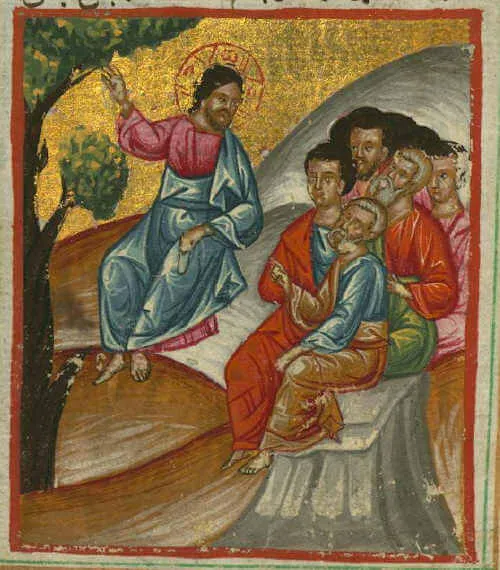
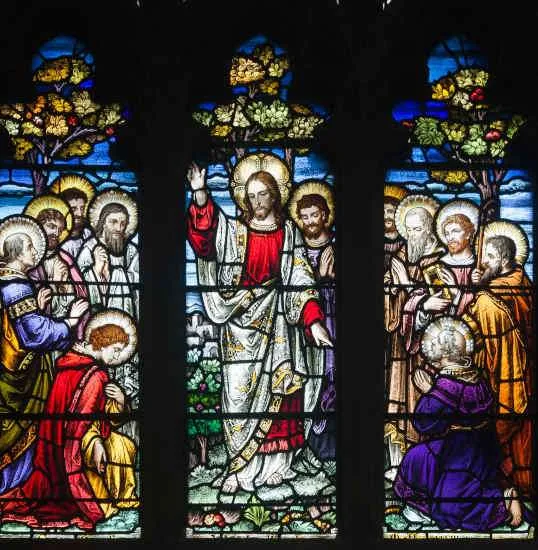
Jesus proposed a parable to the crowds. “The Kingdom of heaven is like a mustard seed that a person took and sowed in a field. It is the smallest of all the seeds, yet when full-grown it is the largest of plants. It becomes a large bush, and the birds of the sky come and dwell in its branches.” 

Reflection:

Today’s Gospel presents two brief yet profoundly rich parables—the mustard seed and the leaven—each revealing distinct dimensions of the mystery of the Kingdom of Heaven. Together, they draw our attention to the Kingdom’s humble beginnings and hidden power, which unfold silently yet irresistibly in the world and within the human soul.

Each parable possesses layers of meaning, and the Church Fathers deeply explored these levels. In the Parable of the Mustard Seed, the seed is frequently interpreted as Christ Himself. As “the smallest of all the seeds,” the mustard seed illustrates the hiddenness and apparent insignificance of Christ’s earthly life, from a worldly point of view. He entered the world in obscurity, born in a cave in Bethlehem, fleeing into exile in Egypt, and growing up in the humble village of Nazareth. His divinity—the Eternal Word through whom all things were made—was veiled beneath the lowliness of His humanity.

Even as He hung upon the Cross, His divine majesty was hidden from the eyes of the world. Yet from this seed of self-emptying love—this total descent into poverty and death—sprang forth the triumph of the Resurrection, shattering the bonds of sin and death. In His risen glory, Christ has become the “largest of plants,” and, as the parable says, “the birds of the sky come and dwell in its branches.” This image is often understood as a symbol of the Church, the Mystical Body of Christ, in which the peoples of the earth find shelter, nourishment, and eternal hope.

The mustard seed also represents Christ planted within each soul. When He is sown in the fertile ground of our hearts—through faith, prayer, and the Sacraments—He takes root and grows, transforming our lives from within. Though His presence may begin in us imperceptibly, it has the power to expand beyond all measure, bearing fruit not only in our lives but in the lives of all those we encounter. Ultimately, this growth finds its consummation in the New Heavens and the New Earth, where the Kingdom of God will be fully revealed.

The second parable—the leaven—expresses a similar truth in another form. The leaven is often interpreted as Christ or His grace, working silently and effectively. Mixed into three measures of flour, it gradually transforms the entire batch—symbolizing the hidden work of grace within the soul. Here, Christ is not only among us, but within us, sanctifying every part of our being from the inside out.

Today’s Gospel concludes with a beautiful citation from “the prophet,” taken from Psalm 78:2: “I will open my mouth in parables, I will announce what has lain hidden from the foundation of the world” (Matthew 13:35). On the surface, the parables appear simple, but they conceal divine truths from those who approach with indifference or pride. Yet for those who receive them in faith and prayerfully ponder them, the Holy Spirit opens the inner meaning. What was hidden from the beginning of creation is now disclosed—not to the wise and learned of this world, but to the humble of heart. In this way, the parables serve as a school of divine wisdom, inviting the soul to move beyond mere appearances into the depths of God’s eternal plan.

Reflect today on the hidden ways in which Christ is at work in your life. Are you attentive to His quiet growth within you? Do you nourish the seed of His presence through prayer and the Sacraments? Trust that, even in small beginnings, God is building His Kingdom—in you, through you, and for His greater glory.

Source: https://catholic-daily-reflections.com/2026/07/26/from-humble-beginnings/

Matthew 13:31-32 Read More »

Seventeenth Sunday in Ordinary Time

First Reading 1 Kings 3:5, 7-12

The LORD appeared to Solomon in a dream at night. 
God said, “Ask something of me and I will give it to you.” 
Solomon answered:
“O LORD, my God, you have made me, your servant, king
to succeed my father David;
but I am a mere youth, not knowing at all how to act. 
I serve you in the midst of the people whom you have chosen,
a people so vast that it cannot be numbered or counted. 
Give your servant, therefore, an understanding heart
to judge your people and to distinguish right from wrong. 
For who is able to govern this vast people of yours?”

The LORD was pleased that Solomon made this request. 
So God said to him:
“Because you have asked for this—
not for a long life for yourself,
nor for riches, 
nor for the life of your enemies,
but for understanding so that you may know what is right—
I do as you requested. 
I give you a heart so wise and understanding
that there has never been anyone like you up to now, 
and after you there will come no one to equal you.”

Responsorial Psalm Psalms 119:57, 72, 76-77, 127-128, 129-130

R. (97a) Lord, I love your commands.
I have said, O LORD, that my part
is to keep your words.
The law of your mouth is to me more precious
than thousands of gold and silver pieces.
R. Lord, I love your commands.
Let your kindness comfort me
according to your promise to your servants.
Let your compassion come to me that I may live,
for your law is my delight.
R. Lord, I love your commands.
For I love your commands
more than gold, however fine.
For in all your precepts I go forward;
every false way I hate.
R. Lord, I love your commands.
Wonderful are your decrees;
therefore I observe them.
The revelation of your words sheds light,
giving understanding to the simple.
R. Lord, I love your commands.

Second Reading Romans 8:28-30

Brothers and sisters:
We know that all things work for good for those who love God,
who are called according to his purpose. 
For those he foreknew he also predestined
to be conformed to the image of his Son,
so that he might be the firstborn
among many brothers and sisters.
And those he predestined he also called;
and those he called he also justified;
and those he justified he also glorified.

Alleluia Cf. Matthew 11:25

R. Alleluia, alleluia.
Blessed are you, Father, Lord of heaven and earth;
for you have revealed to little ones the mysteries of the kingdom.
R. Alleluia, alleluia.

Gospel Matthew 13:44-52

Jesus said to his disciples:
“The kingdom of heaven is like a treasure buried in a field,
which a person finds and hides again,
and out of joy goes and sells all that he has and buys that field. 
Again, the kingdom of heaven is like a merchant
searching for fine pearls. 
When he finds a pearl of great price,
he goes and sells all that he has and buys it. 
Again, the kingdom of heaven is like a net thrown into the sea,
which collects fish of every kind. 
When it is full they haul it ashore
and sit down to put what is good into buckets. 
What is bad they throw away. 
Thus it will be at the end of the age. 
The angels will go out and separate the wicked from the righteous
and throw them into the fiery furnace,
where there will be wailing and grinding of teeth.

“Do you understand all these things?” 
They answered, “Yes.” 
And he replied,
“Then every scribe who has been instructed in the kingdom of heaven
is like the head of a household
who brings from his storeroom both the new and the old.”

Source: https://bible.usccb.org/bible/readings/072626.cfm

Seventeenth Sunday in Ordinary Time Read More »

Saints Joachim and Anne

Late First Century BC–AD Early First Century;

Saint Anne—Patron Saint of grandparents, grandmothers, mothers, roommakers, cabinetmakers, carpenters, dressmakers, equestrians, expectant mothers, homemakers, housewives, lace workers, seamstresses, miners, old-clothes dealers, Canada, and France; Invoked against sterility and poverty and to find lost articles;

Saint Joachim—Patron Saint of grandparents, grandfathers, fathers, married couples, cabinetmakers, and linen traders;
Pre-Congregation canonization

Today we honor the parents of the Blessed Virgin Mary and the grandparents of Jesus. Their names are not recorded in the Gospels but first come to us from a mid-second-century apocryphal document called the Gospel of James. Though this “gospel” has been determined to be inauthentic, it is the earliest record we have of the Blessed Mother’s parents. At the very least, we can presume that their names are correct: Joachim and Anne. Other apocryphal literature, such as the Gospel of the Nativity of Mary and the Gospel of Pseudo-Matthew, also contain uncertain information about these holy parents and grandparents.

According to those traditions, Joachim was a very wealthy and generous man. He and his wife, Anne, however, were childless until they were advanced in years. One day, before Anne conceived the Blessed Virgin Mary, Joachim arrived at the Temple to make an offering. It was rejected by a man named Rubim, most likely a Levitical priest, because Joachim was childless. “It is not right for you first to bring your offerings, because you have not made seed in Israel.” Children were exceedingly important at that time; to be childless was understood as disfavor from God.

Distressed, Joachim left the Temple and studied the Scriptures to see if he could find anyone of importance who, like he and Anne, were childless. When he came upon Abraham, he recalled that Abraham was only given a child in his old age. Rather than returning home to Anne, Joachim embarked on a forty-day period of fasting and praying in the desert, beseeching God for a child.

Anne, for her part, also went to pray, asking God for a child. As she prayed, an angel appeared to her and said, “Anne, Anne, the Lord has heard your prayer, and you shall conceive, and shall bring forth; and your seed shall be spoken of in all the world.” An angel also appeared to Joachim and said, “Joachim, Joachim, the Lord God has heard your prayer. Go down hence; for, behold, your wife Anne shall conceive.” Nine months later, Anne bore a daughter, and the couple named her Mary. Because of a vow they had made, when Mary was only three, Joachim and Anne brought her to the Temple where she took up residence until it was time for her to be married. She was educated by the priests and holy women and spent her days in prayer and union with God.

Though the story of the Blessed Virgin Mary’s birth and presentation in the Temple comes from apocryphal sources, the Presentation of Mary in the Temple is a liturgical feast first celebrated in the Eastern Church as early as the sixth century and the Western Church in the eleventh century, giving credence to a lived faith and liturgical acceptance of her presentation by her parents. Interestingly, in the old city of Jerusalem, there is an ancient church that still stands next to the Temple Mount in which it is believed that the Blessed Virgin Mary was born and might have lived during her early days after being presented in the Temple.

Though not much more is known about Saints Joachim and Anne, devotion to them, especially to Saint Anne, began to grow as early as the sixth century. Churches were built in her honor, prayers were offered for her intercession, devotions were formulated, and patronages were attributed to her. It wasn’t until the sixteenth century that devotion to Saint Joachim began to grow when his feast day was placed on the General Roman Calendar.

Regardless of the authenticity of the legends about Saints Joachim and Anne, we know for certain that the Blessed Virgin Mary, the Immaculate Conception, had parents. They loved her, raised her, and offered her to God. Today they are saints under the names of Joachim and Anne, and the faithful continue to seek their intercession. They are especially called upon for their intercession for grandparents. In fact, on a spiritual level, just as the Blessed Virgin Mary can be seen as our spiritual mother, so also Saint Joachim and Anne can be seen as our spiritual grandparents in the order of grace.

Pray to this holy couple today, especially asking their intercession for your grandparents or your grandchildren. Ponder what it would have been like to give birth to the Mother of the Son of God. Prayerfully imagine what it would have been like to watch their daughter, who was “full of grace,” grow and mature into adulthood. Though these holy parents might not have understood all of the mysteries that surrounded their daughter, they would have known, by a grace of spiritual intuition, that their daughter was chosen by God and given a singular grace that budded forth in an abundance of virtue for all to see, especially for her parents to see.

Source: https://mycatholic.life/saints/saints-of-the-liturgical-year/july-26st-anne/

Saints Joachim and Anne Read More »

Matthew 13:44-46

A Priceless Discovery Awaits!

“The kingdom of heaven is like a treasure buried in a field, which a person finds and hides again, and out of joy goes and sells all that he has and buys that field. Again, the kingdom of heaven is like a merchant searching for fine pearls. When he finds a pearl of great price, he goes and sells all that he has and buys it.”

Reflection:

In the first parable above, a person unexpectedly discovers a treasure buried in a field. Imagine that you take a metal detector with you while on a hike, simply curious about what might lie beneath the soil. Suddenly, the detector gives a strong signal. Expecting perhaps a rusted can or an old nail, you begin to dig. But as your shovel strikes something solid, you uncover an old chest. With growing anticipation, you lift it from the earth and open it—only to find it brimming with ancient and priceless jewels, gold and silver coins, and other precious items of immense worth.

In the second parable, the merchant is actively searching for a valuable pearl. He knows what he seeks and finally discovers one of exceptional worth—one that eclipses all others. In both cases, however, the response is the same: the man and the merchant each go and sell all they possess to obtain the treasure they have found.

These parables pose two fundamental questions for each of us:

  • Have I discovered the priceless treasure of the Kingdom of Heaven?
  • If I have, am I willing to let go of everything else to attain it?

Like the man who stumbles upon the buried treasure, many people encounter God’s grace in surprising ways—through a moment of prayer, a profound experience at Mass, an act of charity, or even during suffering. Maybe those people were not actively seeking divine treasure, yet in a moment of providence, the veil is lifted, and the beauty of God’s Kingdom is revealed. Once they discover the treasure, their souls realize that nothing else compares. From that point on, they are moved to reorient their entire lives to possess that treasure fully.

The path of the merchant, by contrast, is that of the soul who longs for truth, beauty, and goodness, diligently seeking them out. The one who searches might spend years studying, praying, yearning, and pursuing what is of eternal value. And then—finally—the “pearl” is found. Christ is discovered. The Gospel becomes clear. The longing is fulfilled. Again, everything else is willingly surrendered for the sake of that one Pearl of great price—Jesus Christ.

In both parables, the decision to sell all to gain the treasure is an easy choice. The discovery is so great that everything else the person possesses pales in comparison. But how many people have truly made such a discovery?

Many of us are like someone who learns of a buried treasure in a field and, out of curiosity, drives out to look—but spends little or no time searching. Or we are like a merchant who is informed of a rare and valuable pearl for sale far from home. Though interested, we note the length of the journey and abandon the thought.

Though we may have heard about the glory of God’s Kingdom, unless we truly discover it, we will not see the value of attaining it at any cost. We will only be willing to sell all we have—to detach from every hindrance to grace, every sin, obsession, and distraction—if we make the initial discovery of the priceless nature of God’s Kingdom already present on earth and the fullness of His Kingdom that awaits us in Heaven.

Reflect today on this invaluable treasure, waiting to be discovered. Consider where you are on that journey of discovery. Have you heard about the priceless treasure of coming to know, love, and serve God? Have you read about the radical response made by many saints? Have you discovered God for yourself, through prayer and moments of profound enlightenment? If you have not, keep searching—the Kingdom is near. If you have made this discovery, then consider all your attachments, and willingly surrender them to God, acknowledging that nothing is too much to offer to our loving God in exchange for the untold riches of the life of grace to which we are called.

Source: https://catholic-daily-reflections.com/2026/07/25/a-priceless-discovery-awaits/

Matthew 13:44-46 Read More »

Saint James, Apostle

First Century–c. 44; Patron Saint of blacksmiths, druggists, equestrians, hatmakers, laborers, pilgrims, knights, soldiers, tanners, veterinarians, and several countries and cities, including Santiago de Compostela, Spain; Invoked against arthritis and rheumatism; Pre-Congregation canonization

Among the Twelve Apostles were two named James: James, the son of Zebedee and James, the son of Alpheus. The former is traditionally called James the Greater, and the latter is traditionally called James the Lesser, perhaps because the former was taller than the latter, or more likely because of the greater importance James the Greater played in the Gospel narrative.

James the Greater, whom we honor today, was the brother of John, the Gospel writer. Their mother is traditionally believed to be Salome, who is identified as the sister to the Blessed Virgin Mary. Hence, if Salome and Mary were siblings, then James and John were Jesus’ cousins.

In John’s Gospel (John 1:35–51), two of John the Baptist’s disciples were with John when he saw Jesus walking by. The Baptist said of Jesus, “Behold, the Lamb of God.” The two disciples then left the Baptist and followed Jesus. One of the disciples was Andrew, and the other is traditionally believed to be James the Greater. The Gospels of Matthew and Mark record James’ calling a bit differently. “[Jesus] walked along a little farther and saw James, the son of Zebedee, and his brother John. They too were in a boat mending their nets. Then he called them. So they left their father Zebedee in the boat along with the hired men and followed him” (Mark 1:19–20). James and John most likely came from a family of means. Their father, Zebedee, most likely employed other fishermen alongside his sons. Their mother, Salome, is said to have been one of the women who supported Jesus and the disciples out of her own means. And John was entrusted with the care of Jesus’ mother, partly implying that he had the means to do so.

Among the Twelve Apostles, Peter, James, and John are recorded in the Gospels as being present at three special events that the others were not. First, when Jesus cured Jairus’ daughter, Jesus brought these three into the house with Him (see Mark 5:37). Second, it was only these three whom Jesus took with Him when He was transfigured in glory on top of a high mountain (see Matthew 17:1–9, Mark 9:2þ8, Luke 9:28–36). Finally, these three alone accompanied Jesus after the Last Supper during Jesus’ Agony in the Garden (Matthew 26:36–46, Mark 14:32–42). Though they fell asleep three times during our Lord’s agony, they were, nonetheless, privileged to be there with Him.

James and his brother John are also known for boldly asking Jesus that they sit at His left and right when He entered His Kingdom. In Matthew’s Gospel, the request is made on behalf of the brothers by their mother, Salome (see Matthew 20:20–28), and in Mark’s Gospel it is the brothers themselves who make the request (see Mark 10:35–45).

In Luke 9:51–56, we read that Jesus “resolutely determined to journey to Jerusalem” where He knew He would suffer death. On His journey toward Jerusalem, Jesus sent disciples ahead of Him to a Samaritan town to prepare for his arrival. However, the Samaritans would not welcome Jesus and His disciples. As a result, James and John ask Jesus, “Lord, do you want us to call down fire from heaven to consume them?” Jesus rebuked them for this thought and they traveled on. It was on account of this excessive zeal and perhaps the quick tempers and boldness of James and John that they are referred to as the “Sons of Thunder” (see Mark 3:17).

One last mention of James is found in Acts 12:1–3. Herod Agrippa, who ruled Judea from 41–44, martyred James the Greater as a way of appeasing the Pharisaic Jews who were opposed to Jesus and His followers. According to an account by Eusebius, a fourth-century Bishop of Caesarea Maritima, James’ zeal for the faith led to his arrest, but the one who turned James in as his accuser ended up converting to the faith. As a result, his accuser was also martyred with James.

One later tradition states that James traveled to Spain to preach the Gospel before returning to Jerusalem to endure martyrdom. That same tradition states that after his martyrdom, his body was either miraculously transported to Spain, eventually arriving in Compostela where many believe he is buried, or that his body was taken to Spain by his followers. The exact site of his burial was lost for centuries. In the ninth century, a hermit named Pelagius observed a star or a cluster of stars that led him to Saint James’ burial site in Compostela. After the discovery, King Alfonso II ordered the construction of a church over his grave; the site is now referred to as Santiago (Saint James) of Compostela (field of stars). Since that time, the site has been a major pilgrimage site. The Camino de Santiago (Way of Saint James) is a route traveled on foot from various starting points in France, Spain, and Portugal that all lead to the Cathedral of Santiago de Compostela where Saint James is believed to have been buried. The longest route begins on the French side of the Pyrenees and stretches almost 500 miles. Other routes are shorter than 100 miles.

Though not much is known about the life of Saint James with certainty, we do know that he was privileged to witness Jesus’ Transfiguration, His Agony in the Garden, and that Jesus prophesied that James would drink the cup that He drank, and be baptized with Jesus’ baptism (see Mark 10:39). This “cup” and “baptism” are clear references to Saint James’ martyrdom by which he would imitate his Lord. There is little doubt that his witnessing of Jesus being transfigured in glory and his presence with Jesus in the garden infused his natural temperament with grace, giving him courage to be the first of the Apostles to be martyred.

As we honor this holy Apostle, ponder his willingness to stand strong in the face of persecution and death. That courage must inspire us to have hope and strength in the face of anything we endure in life. In the end, courage and fidelity to Christ will radiate from the life of Saint James in Heaven. Pray that his example will also inspire you to have the courage he had so that you can give witness to Christ any way that you are called to do so.

Source: https://mycatholic.life/saints/saints-of-the-liturgical-year/july-25—saint-james-apostle/

Saint James, Apostle Read More »

Matthew 20:20-22

Drinking Christ’s Chalice

The mother of the sons of Zebedee approached Jesus with her sons and did him homage, wishing to ask him for something. He said to her, “What do you wish?” She answered him, “Command that these two sons of mine sit, one at your right and the other at your left, in your Kingdom.” Jesus said in reply, “You do not know what you are asking. Can you drink the chalice that I am going to drink?” They said to him, “We can.”

Reflection:

Among the Twelve Apostles, two were named James: James the Greater, son of Zebedee, and James the Lesser, son of Alpheus. James the Greater, whom we honor today, was likely called “greater” due to his prominence in the Gospel narrative. He was the brother of John the Evangelist, and tradition holds that their mother was Salome, possibly the sister of the Blessed Virgin Mary—making James and John cousins of Jesus.

In today’s Gospel, the mother of James and John expresses her natural affection and ambition for her sons by approaching Jesus with a bold request: that they might sit, one at His right and the other at His left, in His Kingdom. While her petition reveals faith in Jesus and love for her sons, it also highlights a misunderstanding of the nature of Christ’s kingship. Earthly rulers may reign with power, honor, and prestige, but the Kingdom of God is not built on worldly glory; it is built on humble, self-giving love.

Jesus responds with a gentle yet penetrating question: “Can you drink the chalice that I am going to drink?” The “chalice” refers to His suffering—His Passion and Death. It is filled not with comfort or honor, but with humiliation and sacrifice. James and John respond with confident simplicity: “We can.” Their answer, though likely offered without full understanding, reveals a spark of heroic love and loyalty that would, in time, be tested and fulfilled.

Jesus affirms, “My chalice you will indeed drink.” Saint James would become the first of the Apostles to suffer martyrdom, as recorded in Acts 12:2, when he was beheaded by the sword under Herod Agrippa. Herod sought to strike at the newly developing Church and to appease the Jews who opposed Jesus and His followers.

James truly shared in the Passion of Christ, offering his life in union with his Master. His martyrdom was followed by the arrest of Peter, likewise intended to please those persecuting the Church. Yet while Peter was miraculously freed by an angel, James was not. Why?

Like James and Peter, each of us has a unique mission in life. Some, like Peter, are raised to prominence and leadership. Others, like James, are called to a more hidden and radical sacrifice. Both vocations are precious in the eyes of God. James’ early martyrdom was not a failure but a fulfillment—a witness to the glory of drinking deeply from the chalice of Christ.

As we honor Saint James, reflect today on his zeal, faith, and desire to be an active member of Christ’s Kingdom. Though he misunderstood what that entailed at first, he remained faithful until the end. Reflect on your own desire for status or recognition. Do you seek honor among others, whether in the Church or society? If so, turn to Saint James, who ultimately embraced the true mission of discipleship. We, too, must drink Christ’s chalice of selfless and sacrificial love, willingly laying down our lives in countless ways. Resolve to embrace whatever mission God entrusts to you. If He opens the door to leadership and prominence, walk through it humbly. If He leads you through the door of sacrifice and holy suffering, do not hesitate. God has a unique and glorious mission for each of us—different from one another, yet equally glorious when accepted with love and fidelity.

Source: https://catholic-daily-reflections.com/2026/07/24/drinking-christs-chalice/

Matthew 20:20-22 Read More »

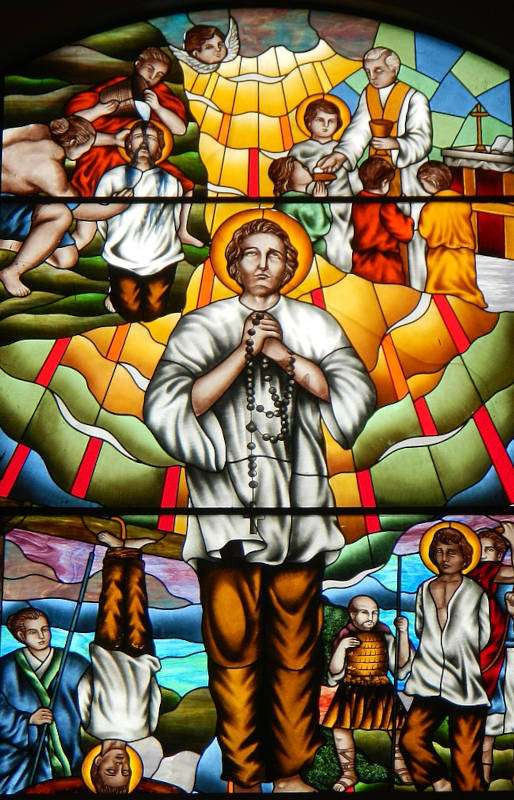
Saint Sharbel (Charbel) Makhlūf, Priest, Hermit

Jousef Antoun Makhlouf was born in the village of Bekaa Kafra, North Lebanon. The youngest of five children, he was baptized into the Maronite Rite of the Catholic Church. The Makhlouf family lived in the highest mountain village in Lebanon and were peasant farmers. His father, who died when Jousef was only three, was a mule driver. After his father’s death, his mother remarried; his stepfather later was ordained a priest where he ministered at the local parish. It is the long-standing custom within the Maronite Catholic Church that married men may become priests.

From a young age, Jousef lived a holy and devout life. Two of his uncles were hermits, and Jousef was inspired by their example. As a youth, he tended the cattle and often spent long periods of prayer in the wilderness while his cattle grazed. He was especially devoted to the Blessed Virgin Mary and set up a shrine to her in a nearby cave. From an early age, he knew God was calling him to the priesthood and the monastic life, especially as a hermit.

In 1851, at the age of twenty-three, Jousef left his family, never to return, and entered the Monastery of Our Lady in Mayfouq, of the Maronite Catholic Church. His mother later wrote to him saying, “If you weren’t to be a good religious, I would say to you: Come back home. But I know now that the Lord wants you in His service. And in my pain at being separated from you, I say to him, resigned: May He bless you, my child.” As a newly professed monk, Jousef took the name Sharbel, after Saint Charbel the Martyr, a second-century military officer who was martyred in Antioch during a persecution by the Roman Emperor Marcus Aurelius.

As a monk, Brother Sharbel longed to be a hermit and made the request to his superiors many times. For the first twenty-four years of his religious life, his superiors required that he live in community with the other monks. He was first transferred to the Monastery of Saint Maroun in Annaya where he professed his vows, was then sent to the Monastery of Saints Cyprian and Justina where he studied theology and philosophy, was ordained a priest in 1859 at the age of thirty-one, and returned to the Monastery of Saint Maroun where he remained for the next sixteen years.

Though some monks lived as hermits, that vocation was reserved for those who proved themselves capable of such solitude and asceticism. In 1875, at the age of forty-seven, Father Sharbel was given permission to enter the Hermitage of Saints Peter and Paul to live as a hermit after a miraculous event took place. Some of his fellow monks decided to play a prank on him, filling his oil lamp with water. When he returned to his cell, he took his water-filled lamp, lit it, and it burned. When the superiors heard about this, they inspected the lamp and found it to be filled with water. Unable to explain the miracle, the superiors saw it as a sign of his sanctity and agreed to permit him to become a hermit, according to his desire. He was sent to the Hermitage of Saints Peter and Paul where he spent the next twenty-three years in solitude, embracing a strict regime of daily prayer, manual work, and severe asceticism. In 1898, at the age of seventy, Brother Sharbel suffered a stroke while offering Mass and died eight days later on Christmas Eve. He was buried in the ground without a coffin, according to the custom of his order.

Though Saint Sharbel lived a life of extraordinary holiness, it wasn’t until after his death that his holiness became well known beyond the walls of the monasteries. After his burial, light was seen shining forth from his grave. This phenomenon drew the attention of many villagers who braved the cold and snow to see this mysterious light. After four months, permission was granted by the Church authorities to exhume his body. To the wonderment of all, his body was found to be completely incorrupt. His skin and joints were like one who was sleeping, soft and flexible. He was cleaned of the dirt and mud from his gravesite and placed in a coffin in the monastery chapel. Then something else began to happen. Blood and sweat appeared to be coming forth from his pores, soaking his habit. It was so pronounced that his clothing needed to be changed twice a week. Finally, in 1927, his body was carefully examined by two physicians from Beiurut, placed in another coffin, and sealed in a tomb inside the monastery wall.

A little more than two decades later, a blood-like liquid was seen coming from the corner of the wall behind which Sharbel was buried. In the 1950’s, his tomb was opened three times. One of those times was broadcast on television and attended by high-ranking state officials, religious officials, medical doctors and scientists. In 1965 his body was found, once again, to be incorrupt and exuding the same blood and sweat. Finally, in 1976, the year before his canonization, his body was found to have finally decayed, only the bones remaining. Interestingly, the decay of Sharbel’s body coincided with the early days of the devastating civil war that broke out in Lebanon in 1975. In 1976, the Damour massacre took place. Palestinians attacked the Maronite Christian town. Many of Damour’s residents were killed in battle, massacred, or forced to flee.

Ever since Sharbel’s burial, those who have visited his grave have attributed many miracles to his intercession. This was especially the case in the 1950’s when he was found incorrupt after fifty years. At that time, the monks started to keep track of miraculous cures that were attributed to Father Sharbel’s intercession. Within two years, they had a list of more than twelve thousand reported cures. Devotion to him and his incorrupt body spread rapidly. The devotion, coupled with reports of numerous miracles, led to a new evangelization across Lebanon.

God uses us all in varied ways. Saint Sharbel was used after his death to evangelize Lebanon and beyond. In life, he was deeply united to God. He responded to his vocation as a hermit, living a life of daily penance, sacrifice, deep prayer, and humble service as a priest. As a result, he became one of the most influential saints of the past century. Saint Sharbel did great things for the simple reason that he prayed and followed the will of God. Each of us is capable of doing the same. Ponder God’s will for your life today and resolve to fulfill that mission without any hesitation. Doing so will enable our divine Lord to do great things through you in ways that you might not ever even know until Heaven.

Source: https://mycatholic.life/saints/saints-of-the-liturgical-year/july-24—saint-sharbel-makhluf-hermit/

Saint Sharbel (Charbel) Makhlūf, Priest, Hermit Read More »

Matthew 13:18-20

Receptive to the Gospel

Jesus said to his disciples: “Hear the parable of the sower. The seed sown on the path is the one who hears the word of the Kingdom without understanding it, and the Evil One comes and steals away what was sown in his heart. The seed sown on rocky ground…”

Reflection:

After preaching the Parable of the Sower to the crowds and then explaining to His close disciples (likely the Twelve) the purpose of parables, Jesus, in today’s Gospel, offers them an interpretation of the parable. He speaks clearly and personally to them because they are open—their hearts are properly disposed to receive the truth.

The parable reveals four kinds of hearts: hardened, shallow, distracted, and receptive. By presenting these four interior dispositions, with only one being ideal, Jesus shows that becoming receptive to the Word of God takes effort, humility, and grace. The first three types reflect a progression of deepening receptivity, but each falls short. The final type, the good soil, represents the goal to which all hearts are called.

The first—represented by seed sown on the path—refers to those whose hearts are so hardened that God’s Word cannot enter. Their ears hear the Word of God—as symbolized by the sower sowing seed on the path—but the soil of their hearts has been trampled by many sins and self-centered habits, so the seed cannot penetrate. As a result, they do not understand the Gospel, nor do they seek to understand. This might even refer to some who attend church, hearing the readings and the homily, yet remain unmoved by the Gospel.

The second—represented by seed sown on rocky ground—refers to those whose hearts are shallow. They receive the Word of God with initial joy and enthusiasm, perhaps even with emotion and spiritual fervor. But that joy is not rooted in deep conviction or sustained by persevering faith. When trials come—when faith demands sacrifice, endurance, or courage—they quickly fall away, disillusioned. The root of divine truth never penetrates the deeper layers of the soul. These are those who like the idea of the Gospel but not the cost that comes with living it fully.

The third—represented by seed sown among thorns—refers to those whose hearts are distracted. They welcome the Word of God and allow it to take root, but they simultaneously cling to worldly anxieties, attachments, and desires. The thorns—symbolizing wealth, comfort, ambition, and the cares of daily life—choke the Word so that it becomes fruitless. These are the souls who try to live both for God and for the world. They desire Heaven, but they also crave control, pleasure, or security on their own terms. In such soil, the Word struggles to grow and cannot bear lasting fruit.

The final—represented by seed sown on rich soil—refers to those whose hearts are truly receptive. They not only hear the Word of God but understand it, welcome it, meditate on it, and allow it to transform their lives. This heart is open, humble, prayerful, and detached from worldly distractions. The Word penetrates deeply and becomes a source of abundant spiritual fruit—thirty, sixty, or a hundredfold. These are the saints-in-the-making: souls who, though not perfect, cooperate with grace and allow God’s truth to sanctify them day by day.

Reflect today on the progression revealed in this parable. How open is your heart to the Word of God? As a spiritual seed, God’s Word is powerful. When received into a mind filled with faith, and a heart filled with hope and charity, the seed is nurtured and grows. As it grows, authentic transformation takes place. Good fruit becomes evident, and God does great things in and through this holy soul. See yourself on this journey, till the soil, and await God’s Word as it is sown. Receive it with joy, and resolve to nourish that seed so that an abundance of good fruit may be borne from your life—thirty, sixty, or a hundredfold.

Source: https://catholic-daily-reflections.com/2026/07/23/receptive-to-the-gospel/

Matthew 13:18-20 Read More »

Saint Bridget of Sweden, Religious

1303–1373; Patron Saint of Europe, Sweden, and widows; Canonized by Pope Boniface IX on October 7, 1391

Saint Bridget was born in Sweden into very comfortable circumstances. Her father was one of the wealthiest landowners in Sweden, and her mother came from a family of rulers, including kings of Sweden. Both were devout Catholics. After the death of her mother when Bridget was an infant, Bridget’s aunt played a central role in raising her. Bridget’s father greatly influenced her with his Friday devotions, by which he fasted and did penance, meditated on the Passion of Christ, received Holy Communion, and confessed his sins of the previous week. Her father’s devotion and her aunt’s faith had a profound impact upon Bridget, and she grew strong in faith from an early age.

It is said that Bridget never spoke a word until she was three years old. Once she began to speak, her words were directed to the praise of God, and never toward sinful conversation. When she was seven, she had a vision of the Blessed Virgin Mary who presented her with a crown. From that time on, Bridget’s seriousness about her spiritual life continued to deepen. At the age of ten, she heard a powerful sermon on the Passion of Christ; the next day she had a vision of Jesus crucified. When she saw Him, Jesus said to her, “Look at me, my daughter.” Bridget responded, “Oh, who has treated You this way?” Jesus responded, “Those who despise Me, and are insensible to My love for them.” As a result of this vision, Bridget became even more devoted to meditating on Christ’s Passion.

As was the custom of that time, when she was a young teenager, Bridget was given in marriage to a young man a few years older than her. Ulf Gudmarsson was a noble lord of Nericia, Sweden and a faith-filled Catholic. The couple’s first year of marriage was lived in prayerful abstinence, and they both might have even become lay Franciscans, making their home like a domestic monastery. Later, they had eight children together, two of whom died as infants. One of their children, Catherine, became a nun and was ultimately canonized a saint. Another one of their children, Charles, turned away from God, remaining indifferent to the faith. After the birth of their eight children, the couple once again lived in abstinence, opened their home to the care of the poor, and built a hospital. Around the year 1341, the holy couple and their children made a pilgrimage to Santiago de Compostela. During the return home, Ulf fell ill. He recovered well enough to return home but died in 1344 while convalescing in a Cistercian monastery.

After her husband’s death, Bridget devoted herself to a life of prayer and penance, and her visions of Jesus and Mary increased. These visions, often referred to as revelations, directed her life, instructed her to found a monastery, and revealed to her various mysteries and prophecies. She renounced her fine clothing, choosing instead a hairshirt and a religious’ outer garment of rough material. She distributed her wealth among her children and built a large monastery. The monastery was different from other monasteries in that it was for both men and women. Being a married woman, now widowed, she well understood the complementarity of men and women. Though the men and women lived in separate buildings, they came together for prayer. After it was built, the monastery had some sixty nuns, thirteen priests, four deacons, and eight lay brothers. They followed the Rule of Saint Augustine and embraced a mission of asceticism, devotion, and scholarship. The order began in 1346 and received final papal approval in 1370, just three years before Bridget died. It was at first called the Order of the Most Holy Savior, and later became known as the Bridgettines.

Shortly after founding the monastery, Bridget traveled to Rome for a pilgrimage and ended up staying there for the rest of her life. In Rome, she worked hard for the reform of the Church and offered counsel to popes and other clergy and nobility. She tirelessly urged the pope to return from Avignon, France, to Rome. Eventually, her influence, along with that of others—such as Saint Catherine of Siena—won out, and the pope returned to Rome in 1377, just a few years after Bridget’s death.

During her time in Rome, Bridget received numerous visions and began recording them. In the end, she filled eight volumes and hundreds of pages with descriptions of these visions and her conversations with Jesus. These writings have become known as “Celestial Revelations” or “Prophecies and Revelations.” They include details about the lives of Christ, the Blessed Mother, and the saints; an understanding of Heaven and hell; the mission of the Church; the Passion of Jesus; moral guidance; and prophecies about future events in both the world and the Church. For example, she foresaw the end of the Papal States and the creation of Vatican City in 1929. Her numerous visions and prophecies were widely disseminated in the Middle Ages in Europe, making Saint Bridget one of the most influential persons at that time. This is one of the reasons that she is one of the six patron saints of Europe. 

Among her writings is a particular revelation and devotion that many continue to use today. Bridget prayed for a long time to learn from Jesus more about His Passion. Among her prayers was a request that Jesus reveal to her how many blows He suffered on His Body. Eventually, Jesus told her, saying, “I received 5,480 blows upon My Body. If you wish to honor them in some way, recite fifteen Our Fathers and fifteen Hail Marys with the following prayers, which I Myself shall teach you, for an entire year. When the year is finished, you will have honored each of My Wounds.” These prayers, which are commonly referred to as the “Fifteen Prayers of Saint Bridget,” have remained a popular daily devotion since the Middle Ages.

As we honor this girl of noble descent, this wife, mother, widow, religious, visionary, mystic, and saint, seek to imitate her by spending time pondering the Passion of our Lord. Our love for Jesus consoles His suffering Heart and wins us countless graces. Ponder Jesus’ Passion with Saint Bridget, especially by praying her fifteen prayers, and consider doing so for an entire year, so that you, too, will honor every blow Jesus’ body endured during His Passion.

Source: https://mycatholic.life/saints/saints-of-the-liturgical-year/july-23—saint-birgitta-religious/

Saint Bridget of Sweden, Religious Read More »

Matthew 13:10-13

Lifting the Sacred Veil

The disciples approached Jesus and said, “Why do you speak to the crowd in parables?” He said to them in reply, “Because knowledge of the mysteries of the Kingdom of heaven has been granted to you, but to them it has not been granted. To anyone who has, more will be given and he will grow rich; from anyone who has not, even what he has will be taken away. This is why I speak to them in parables, because they look but do not see and hear but do not listen or understand.”

Reflection:

Have you ever looked but failed to truly see? Or heard something without really listening or understanding? Jesus’ words teach us that seeing is more than the use of our eyes, and listening is more than the mere act of hearing. The mysteries of the Kingdom are not grasped through sensory perception; they require a deeper interior awareness. Seeing, listening, and understanding demand a receptive heart—a heart attuned to grace.

When the heart is attuned to grace, the mind becomes capable of perceiving life from God’s perspective. This is the gift of Wisdom. Wisdom is the pinnacle of the intellectual gifts, perfecting knowledge, understanding, and counsel by ordering them toward divine truth. Thus, a person who truly sees and listens perceives, not just information, but God’s Eternal Truth. The veil is lifted, and the mysteries of faith come into focus. This interior illumination produces peace, amazement, and a profound sense of gratitude.

Parables are like sacred veils, at once concealing and revealing divine mysteries. For those who are humble, docile to the Holy Spirit, and eager for truth, parables become radiant windows into the heart of God. They are like floodgates, pouring divine light into the soul and drawing it to the very threshold of eternal mysteries. Does the floodgate of divine light pour truth into your mind and grace into your will?

For the proud or indifferent, however, the veil remains drawn—but not without purpose. Jesus does not arbitrarily withhold the divine mysteries from those whose hearts are hardened. Rather, the parable, in veiling the truth, invites the soul to seek more deeply. It stirs a holy curiosity and awakens spiritual desire. It is as if Jesus presents a sacred gift, wrapped in a beautiful veil. He sets it down, says, “This is for you, but don’t peek,” and then smiles and walks away. The hiddenness of the truth is not a rejection; it is an invitation.

Even before this moment, Jesus had already begun to lift the veil. In the Parable of the Sower, just preceding today’s Gospel, He cast seed upon the hearts of His listeners. Some received it attentively, understood it, and were filled with interior consolation as divine light shone within them. Others might have enjoyed the story and found it interesting, but failed to grasp its deeper meaning. Of these, Jesus quotes the prophet Isaiah, saying, in part: “Gross is the heart of this people, they will hardly hear with their ears, they have closed their eyes…” (Matthew 13:15).

“Gross is the heart of this people…”—what a powerful statement. The Greek word translated here as “gross” is not condescending but descriptive. More literally, it means that the heart of the people “has become dull,” “has thickened,” or “has grown insensitive.” Jesus is not condemning; He is lamenting. And even in His lament, He does not give up hope. He continues to teach. He offers the Parable of the Sower, and then, after today’s Gospel, teaches several more parables. Why? Because He is determined to sow the seed of His Word into every heart—no matter how hard the soil may be.

Reflect today on the disposition of your own heart. Are you truly open to the deeper truths of God? Do you seek to understand, or are you content merely to hear? Ask the Lord to lift the sacred veil from your eyes and ears so that you may behold the mysteries of His Kingdom with clarity and awe. Let His Word penetrate your soul like seed falling on rich soil. And if you discover areas of dullness or resistance within, do not be discouraged. Christ continues to sow generously. All He asks is that you receive His Word with humility and allow it to take root.

Source: https://catholic-daily-reflections.com/2026/07/22/lifting-the-sacred-veil/

Matthew 13:10-13 Read More »