2026

Saint Martinian the Hermit

Profile

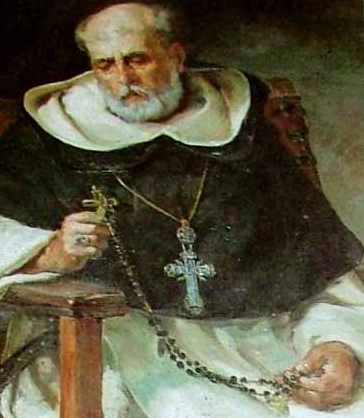
Martinian was a hermit from age 18. He was a miracle worker. There are a couple of stories attached to Martinian; in them the line between fact and a good story probably blurs a little.

Legend says that one day a miserable, bedraggled woman named Zoe showed at his door requesting a traveler‘s hospitality. He took her in, but her true colors soon showed as she cleaned up and showed herself to be a beautiful woman who tried to seduce Martinian. When he realized how tempted he was, he built a fire and put his feet in it; the pain, as you might imagine, was excruciating. Martinian said, “If I cannot stand this fire, how will I tolerate the fires of Hell?” He counseled her while she treated his wounds, converted her, and she became a nun in Bethlehem.

To save himself from his own weakness, the saint moved to a large rock surrounded on all sides by the sea. There, he lived on bread and water brought to him by a Christian sailor who visited three times a year. After six years living exposed on the rock, he had a visitor—a young woman who washed up on the rock after her ship had gone down at sea. Before she could speak, he gave her all his provisions, promised to send his friend the sailor to rescue her when he returned, then threw himself into the sea. He washed up on shore, and two months later had the girl rescued. He then spent the rest of his days in Athens.

Born

  • c.350 at Caesarea, Palestine

Died

  • c.398 at Athens, Greece

Canonized

  • Pre-Congregation

Representation

  • dolphin
  • man standing on a rock in the sea

Source: https://catholicsaints.info/saint-martinian-the-hermit/

Saint Martinian the Hermit Read More »

Mark 7:31-32

The Universality of the Gospel

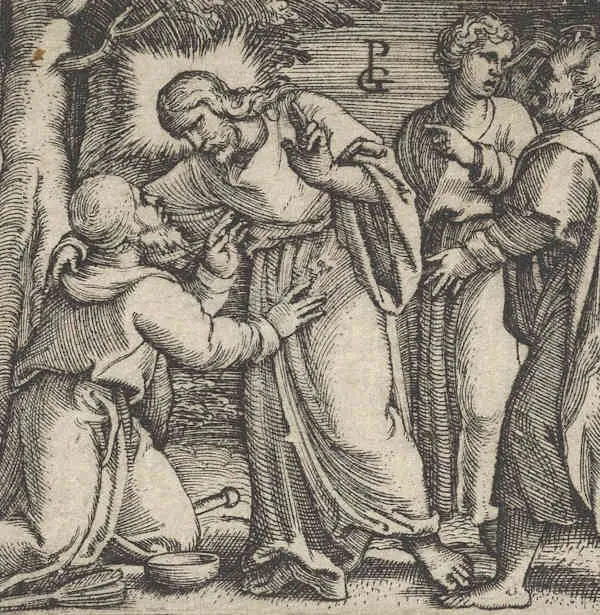
Jesus left the district of Tyre and went by way of Sidon to the Sea of Galilee, into the district of the Decapolis. And people brought to him a deaf man who had a speech impediment and begged him to lay his hand on him.

Reflection:

Throughout Jesus’ public ministry, His actions, while purely charitable, were often deliberate and provocative. His words and deeds testified to the true meaning of the Mosaic Law by exposing the damaging legalism of many Pharisees, whose misinterpretations deeply influenced God’s Chosen People. For example, Jesus healed a man with a withered hand on the Sabbath (cf. Mark 3:1–6) and cured a man who had been lame for thirty-eight years (cf. John 5:1–18). In both cases, Jesus was accused of violating the Sabbath rest as interpreted by the Pharisaic traditions. By challenging these restrictive and erroneous interpretations, Jesus demonstrated that the Sabbath is a day for mercy, healing, and honoring God, not a burdensome observance of human traditions. Jesus boldly lived the Mosaic Law as it was intended, while challenging the erroneous practices and beliefs He encountered.

Another act of deliberate and charitable provocation was Jesus’ ministry among the Gentiles. At that time, observant Jews often avoided direct interactions with Gentiles, considering them ritually unclean and outside the covenant community of Israel. Yet Jesus traveled into Gentile regions such as Tyre, Sidon, and the Decapolis. 

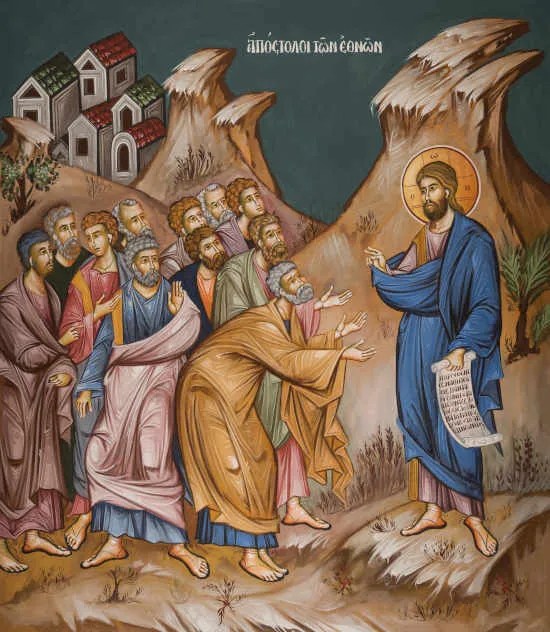
In today’s Gospel, Jesus traveled from Tyre to Sidon and then to the Decapolis, where He healed a deaf and mute man. Being predominantly Gentile regions, they were marked by pagan worship, Hellenistic culture, and lifestyles often incompatible with Jewish religious practices. It is likely that Jesus’ companions—the Twelve—were surprised and uneasy during these visits, but that was precisely the point. Their journey to these territories was itself a lesson Jesus intended to teach. By engaging with Gentiles, Jesus revealed that God’s salvation is not limited to Israel but extends to all nations, fulfilling the promise made to Abraham: “All the families of the earth will find blessing in you” (Genesis 12:3). In doing so, Jesus began preparing His disciples to shed nationalistic biases and embrace the universal scope of God’s covenant of salvation.

The healing of the deaf and mute man carries profound significance. First, by performing the miracle in predominantly Gentile territory, Jesus directed its meaning beyond the Jews to all peoples of every nation. The message is clear: By healing the man’s deafness, Jesus teaches that all must hear the saving message of the Gospel. By healing his speech impediment, Jesus further teaches that all who hear the Gospel are called to proclaim it.

Though the manner of this healing—putting “his finger into the man’s ears and, spitting, touched his tongue”—is rich with symbolism, it also reveals Jesus’ personal and compassionate approach. For a deaf and mute man, spoken words alone would not have conveyed what Jesus was about to do. By using touch and visible gestures, Jesus communicated with the man in a way he could understand, engaging him personally and tenderly. This reflects the boundless compassion of Jesus, Who meets each of us where we are.

Reflect today on the lesson the Twelve learned as they traveled with Jesus through Gentile and pagan regions. As followers of Christ, we must learn not only from His words but also from His actions. The Creed, the Sacraments, and the moral teachings of the Church are not meant for Catholics alone but for all people. At times, sharing the Gospel might require charitable provocation within the social circles in which we live and work. We must strive to do so in ways that people can understand, setting aside artificial or inconsequential traditions that obstruct the message. True compassion leads us to every person, making us instruments of their salvation, knowing that the message we bring is for all, so that “all the families of the earth” may find blessing in God through you.

Source: https://catholic-daily-reflections.com/2026/02/12/the-universality-of-the-gospel/


Mark 7:31-32 Read More »

Saint Eulalia of Barcelona

Profile

Eulalia was a sanctified virgin, the forerunner of professed nun. She was martyred at age 13 or 14 in the persecutions of Diocletian. She was often confused with Saint Eulalia of Merida. Several villages in Guienne and Languedoc are named for her.

Born

  • c.290 in Barcelona, Spain

Died

  • 12 February 304 at Barcelona, Spain
  • interred in the church of Santa Maria del Mar, Barcelona
  • relics translated to the Barcelona cathedral on 23 November 874

Canonized

  • 633

Patronage

  • against drought
  • against dysentery
  • boatmen
  • mariners
  • pregnant women
  • for rain
  • safe sailing
  • safe seafaring
  • sailors
  • travelers
  • watermen
  • Barcelona, Spain
  • Barcelona cathedral

Representation

  • young woman with a palm and cross in her hand
  • young woman with a lily and a book

Source: https://catholicsaints.info/saint-eulalia-of-barcelona/

Saint Eulalia of Barcelona Read More »

Mark 7:24-25

The Irresistible Draw of Divine Mercy

Jesus went to the district of Tyre. He entered a house and wanted no one to know about it, but he could not escape notice. Soon a woman whose daughter had an unclean spirit heard about him. She came and fell at his feet.

Reflection:

The context of today’s Gospel is significant. Jesus traveled to Tyre, in modern-day Lebanon, a Gentile city on the west coast of the Mediterranean Sea. Tyre was an ancient and prosperous city, known for its maritime trade and wealth. As a center of commerce and culture, it played a prominent role in the ancient world but was also frequently associated with idolatry and pagan practices in the Old Testament—practices that often opened the door to increased diabolical influence among its people. By entering Tyre, Jesus symbolically foreshadows the universality of His mission and His intention to invite all people into His Kingdom.

Even though we are Christians and members of the Body of Christ, it is important to see ourselves in this woman. In a sense, we are all Gentiles, meaning that as long as we live in this world, we are exiles—tempted by demons and sin, yet longing for freedom and our true home in Heaven.

Even though Jesus entered a house in Tyre and “wanted no one to know about it,” this desire set the stage for His encounter with this woman. It was not only a moment of grace for her but also a moment of teaching for His disciples—and for us.

First, we read that even though Jesus entered the house secretly, “he could not escape notice.” While He may have gone unnoticed by many in Tyre, this woman recognized Him. She was on a mission, driven by love for her daughter. She did not seek Jesus for selfish reasons but because her heart longed for her daughter’s deliverance from a demon. This reveals the universal and irresistible desire for God’s mercy, present in every soul open to His grace.

Additionally, when our hearts are aflame with charity for others, especially family, Jesus’ divine presence will not escape our notice. Charity sharpens our spiritual sensitivity to God’s grace and truth, enabling us to find Him by following the promptings of spiritual love.

When the woman pleads with Jesus to drive the demon out of her daughter, His response is surprising: “Let the children be fed first. For it is not right to take the food of the children and throw it to the dogs” (Mark 7:27). This was not an insult but a truthful and deliberate statement. No one—neither Gentile, Jew, nor Christian—has a right to God’s power and mercy. By expressing this fact, Jesus gave the woman an opportunity to reveal two qualities that are irresistible to Him: faith and humility.

Her response, “Lord, even the dogs under the table eat the children’s scraps” (Mark 7:28), is a beautiful declaration of both. Faith is the recognition of God’s power and goodness, while humility acknowledges that we are unworthy of His mercy. Though it may seem counterintuitive, admitting our unworthiness does not distance us from God—it draws Him closer. A humble heart, devoid of a sense of entitlement, always moves God to pour out His power and grace. Because this Gentile woman manifested both, her daughter was healed.

Reflect today on the profound union of faith and humility. First, ponder how deeply you believe that God is the ultimate answer to life. Do you seek Him and His will above every other desire? Secondly, as your faith is purified, examine whether you struggle with an entitlement mindset. Do you approach God with the expectation of His blessings, or do you, like the Syrophoenician woman, humbly acknowledge your unworthiness while trusting fully in His mercy? Pray her beautiful prayer today, and trust that our Lord will irresistibly pour forth His grace upon you.

Source: https://catholic-daily-reflections.com/2026/02/11/the-irresistible-draw-of-divine-mercy/

Mark 7:24-25 Read More »

Our Lady of Lourdes

January 11–July 16, 1858; Patron Saint of the sick, asthma sufferers

Bernadette Soubirous was born on January 7, 1844, into a humble and very poor family in Lourdes, France. Her father was a miller and her mother washed laundry. The eldest of nine children, Bernadette received a simple education from the Sisters of Charity and Christian Instruction, but frequent illness hindered her studies. Growing up, she spoke the local dialect of Occitan and learned some French in her teenage years. Her family was so poor that all eleven lived together for free in a relative’s one-room basement that was formerly used as a prison or dungeon.

When Bernadette was fourteen years old, she went with her sister and a friend to gather some firewood to heat their home. Bernadette fell behind as they searched for wood near a naturally occurring rock grotto. She then heard the sound of a rushing wind but saw only a wild rose moving. Then, from within the grotto, she saw a dazzling light and the figure of a small young lady in white with yellow roses on her feet. The other two girls saw nothing. Bernadette asked her sister not to tell anyone, but her sister later told their mother. Bernadette’s mother punished the girls for lying and forbade them to return to the grotto.

Three days later, Bernadette felt drawn to return to the grotto, so she and her two companions begged for permission from her mother who reluctantly agreed. Bernadette brought with her a bottle of holy water. When they arrived at the cave, the three girls knelt to pray the rosary. Before finishing the first decade, the young woman in white appeared. Bernadette sprinkled holy water in her direction, telling her that if she were from God she should stay; if not, she should leave. The woman smiled and stayed for the rest of the rosary and then departed.

By this time, some of the local townspeople began to hear about these encounters. Some were superstitious, thinking it was the souls of dead relatives. Others believed it was the Blessed Virgin Mary. Four days later, Bernadette returned to the cave accompanied by a few grown-ups. When the lady appeared, she spoke to Bernadette for the first time, in Occitan. The lady spoke to Bernadette in a remarkably formal and respectful manner, not the way an adult would normally speak to a poor peasant girl. She asked Bernadette if she was willing to return for the next fourteen days. Bernadette agreed.

Bernadette recounts the following about the next two weeks of visions: “I came back for a fortnight. The vision appeared every day, except one Monday and one Friday. She repeated to me several times that I was to tell the priests they were to build a chapel there, and I was to go to the fountain to wash, and that I was to pray for sinners. During this fortnight, she told me three secrets which she forbade me to tell anyone. I have been faithful until now.”

As word spread, the numbers in attendance grew to 30, 100, 350, 800, 1000, 1,500, culminating with almost 10,000. During the fortnight, the local police got involved and threatened Bernadette and her family. However, Bernadette persevered. The lady asked people to pray for sinners and to do penance. During the ninth vision, the lady asked Bernadette to drink from a spring of water in the cave. She found only a small muddy puddle so she drank from it. This left mud on her face, which caused many of the onlookers to ridicule her, to the embarrassment of her family. Over the next two days, the little mud puddle turned into a flowing spring of clear water. Many began to believe when a woman’s paralyzed arm was cured after bathing it in the new spring of water. Throughout the fourteen days, Bernadette continually asked the lady’s name, because the parish priest had asked her to do so. Each time, the lady only smiled. 

Upon the conclusion of the fourteen days, life returned to normal for the next three weeks. However, on March 25, the Feast of the Annunciation, Bernadette was drawn once again to the grotto. This time, she repeatedly asked the lady’s name. The lady responded, “I am the Immaculate Conception.” Bernadette was a young, simple, and poorly educated peasant girl. She had no idea what the “Immaculate Conception” was. But she repeated the name to herself over and over so she wouldn’t forget. When she told the parish priest, he was stunned. Only four years prior, the pope had issued the Dogma of the Immaculate Conception. This fact, especially, helped convince the Church leaders that the apparitions were authentic.

Since that time, the waters in Lourdes have continued to flow, and over seventy healings have been recorded, studied, and confirmed by a rigorous scientific process. Countless thousands more healings have been professed by the faithful. Millions of people now visit Lourdes every year, making it one of the most frequented pilgrimage sites in the world. The sick flock to this holy grotto to bathe in or drink the miraculous water, seeking a cure for their ailments.

Several years after her visions, Bernadette entered religious life. Of the visions, she would later say, “The Virgin used me as a broom to remove the dust. When the work is done, the broom is put behind the door again.” This “broom” was canonized in 1933. The grotto of Lourdes, however, was much bigger than Bernadette. It was Our Lady’s gift to the people. It was her proclamation that she was the Immaculate Conception and her formal acceptance of the title here on earth.

Source: http://mycatholic.life/saints/saints-of-the-liturgical-year/february-11—our-lady-of-lourdes/

Our Lady of Lourdes Read More »

Mark 7:17-19

From Understanding to Intimacy

When he got home away from the crowd his disciples questioned him about the parable. He said to them, “Are even you likewise without understanding? Do you not realize that everything that goes into a person from outside cannot defile, since it enters not the heart but the stomach and passes out into the latrine?”

Reflection:

We experience varying levels of intimacy in our relationships. Some acquaintances, such as neighbors or colleagues, we only know superficially, while with a spouse, sibling, or close friend, we share a much deeper bond. Yet, even in the most intimate human relationships—such as that of a longtime married couple—we never achieve perfect knowledge of the other person.

Similarly, our relationship with Christ must continually deepen. Unlike human relationships, however, God already knows us perfectly—better than we know ourselves. Still, He invites us to grow in knowledge and love of Him as He gradually reveals Himself to us. This ongoing process will continue not only in this life but even in eternity, as we behold the Beatific Vision. In Heaven, our union with God will be ever-expanding, as we enter more deeply into the infinite mystery of His divine presence.

In today’s Gospel, Jesus revealed Himself more clearly to His closest companions than He did to the crowds. His self-revelation came by way of an intimate teaching about the “parable” He taught to the people. In this context, Jesus’ parable was not a traditional parable but a short and direct statement that used symbolic language to convey a deeper spiritual truth. He taught the crowd: “Hear me, all of you, and understand. Nothing that enters one from outside can defile that person; but the things that come out from within are what defile” (Mark 7:14–15). While seemingly straightforward, this teaching is called a parable because it invites contemplation and requires deeper understanding to grasp its full spiritual significance.

In this parable, Jesus’ teaching challenged the crowd’s preconceived notions regarding purity and holiness. By addressing the heart as the true source of defilement, He invited His listeners to move beyond mere external observance of the law and to focus instead on the inner disposition of their souls. It’s also important to understand that He taught His close disciples in a more intimate way than He taught the crowds.

After teaching the crowds, Jesus and His disciples went “home,” where they questioned Him about the parable. This intimate moment teaches us that personal prayer is our own “home,” where we encounter Christ away from the distractions of the world. It is there that we must approach Him daily with questions—not out of doubt, but from a desire to know Him more deeply. Questions lead to attentive listening, understanding, and intimacy.

At the beginning of our relationship with God, He often speaks in more general terms. For those going through an initial conversion, Jesus’ general teachings are life-changing. As we mature in our faith and seek to deepen our relationship with God, we must see ourselves among Jesus’ close companions as they grew in holy intimacy. Doing so requires daily effort and intentionality. Just as a married couple cannot grow closer without meaningful communication, so too must we open our hearts to God each day, speaking honestly and listening attentively to His voice. Without this, our relationship with Him risks remaining superficial.

Reflect today on the ways you approach your relationship with Christ. Do you seek Him in the quiet of your personal “home,” asking questions and listening attentively? Consider how you can make your prayer life more intentional, opening your heart to deeper understanding and communion with Him. Just as a loving spouse or a close friend takes time to speak and listen, so too must you dedicate time daily to converse with our Lord, allowing Him to lead you into the depths of His divine wisdom and love.

Source: https://catholic-daily-reflections.com/2026/02/10/from-understanding-to-intimacy/

Mark 7:17-19 Read More »

Saint Scholastica, Virgin

c. 480–543; Patron Saint of nuns, school, tests, reading, convulsive children; Invoked against storms and rain; Pre-Congregation canonization

Little is known about the life of Saint Scholastica, yet her influence upon the Church is undeniable. She was born into a wealthy family around the year 480 AD, in the town of Nursia, central Italy, shortly after the fall of the Western Roman emperor. It was a chaotic time, politically speaking, but also a time when God began to manifest His divine stability through her. She had one brother, most likely a twin, by the name of Benedict. Benedict and Scholastica are now honored as great saints. Both had a powerful influence upon monastic life as we have it today, Benedict being the father of Western monasticism and Scholastica its mother.

As a child, Scholastica dedicated herself to the service of God, taking no interest in the things of this world. She lived modestly, despite being raised in a wealthy home. When Benedict left home to become a hermit and to eventually found a monastery with a new monastic rule, she marveled at his hidden life of prayer and work. His vocation called out to her, and she received permission from the local bishop to enter a home of virgins who chose to adopt Benedict’s new monastic rule. Benedict assisted them and made Scholastica the abbess of the home.

Benedict’s new form of monasticism focused on forming permanent, self-contained, and self-supporting monasteries that followed a strict regimen of prayer and work. After aspirants’ callings were tested for a period of time, they made vows, permanently committing themselves to God and the community. Their lives became structured and ordered under the direction of an abbot or abbess to whom the monks and nuns vowed obedience. Soon after Benedict’s humble monastery on Monte Cassino began to bloom, Scholastica received permission to adopt his rule with a group of virgins, making them the first convent of Benedictine nuns. In the centuries to follow, their way of life spread far and wide across the Western world.

In his book Dialogues, Pope Saint Gregory captures the holy love that Benedict and Scholastica shared. Though Scholastica’s convent was only a few miles from Benedict’s monastery, the two would only get together once a year, in keeping with their strict rule of life. Those meetings fanned into flames their shared love for God and the fruits of their prayer and mutual calling to this new way of life. Each year they met at a nearby house and spent the day conversing on the holiest of topics. When these twins were around the age of sixty-three, they met for what would be their final conversation on earth. They spent the day praising God and engaged in spiritual talk. After a light dinner, Benedict announced that he and his companions needed to leave and return to the monastery. Scholastica begged him to stay so that they could continue conversing about God throughout the night. Benedict responded to her, “Sister, what are you saying? I simply cannot stay outside my cell.” Scholastica knew, however, that their holy conversation needed to continue, so she bowed her head in prayer, and God sent forth a lightning storm so powerful that Benedict and his brothers could not leave. Scholastica’s love for Benedict and her desire to continue with the praises of God throughout the night met with God’s approval and God provided the way. They parted the next day, and three days later, Benedict had a vision of his sister’s soul being taken to Heaven in the form of a dove. He had his brothers bring her body to the monastery, and Scholastica was buried in the grave intended for Benedict. Four years later, Benedict died and was buried in the same grave with his sister. The two were united by grace and a shared mission in this life, and they would forever share a grave from which they will rise together on the last day.

Pope Saint Gregory opines that Scholastica’s prayers were answered over Benedict’s objection because her love was great. “She did more which loved more,” he wrote. The witness of these siblings should especially teach us the value of holy friendships that mutually build each other up and give glory to God. We are made not only for communion with God, but for communion with one another. These saintly siblings give witness to this holy fact.

Source: https://mycatholic.life/saints/saints-of-the-liturgical-year/february-10-saint-scholastica-virgin/

Saint Scholastica, Virgin Read More »

Mark 7:5-8

Worship from the Heart

Why do your disciples not follow the tradition of the elders but instead eat a meal with unclean hands?” He responded, “Well did Isaiah prophesy about you hypocrites, as it is written: “This people honors me with their lips, but their hearts are far from me; in vain do they worship me, teaching as doctrines human precepts.”

Reflection:

Isaiah’s prophecy rings as true for us today as it did when Isaiah spoke it and when Jesus quoted it. Worship of God must come from our hearts, from the depths of our beings. Only then is worship authentic.

Humans are complex. We are made up of body and soul. Though we have a physical heart, the “heart” Isaiah and Jesus are speaking of is spiritual in nature, essentially the human will. God created us with a free will, meaning we alone are the source of the decisions we make, though our good choices are always assisted by God’s grace.

When God speaks to us, revealing His Divine Will, He communicates to us through the use of our intellect. The intellect, enlightened by both natural reason and divine grace, identifies the good we must choose and proposes that good to the will. The will, moved by God’s grace, cooperates in freely choosing it or rejecting it. This cooperation reflects the cooperation between God’s action and our freedom.

When we freely choose the good, we open ourselves to the grace of charity which perfects our will. Charity strengthens us and enables us to love with God’s own love, allowing us to live out the divine commandment to love God above all things and our neighbor as ourselves. This alignment of our intellect, will, and actions with God’s will is what makes our worship authentic and our lives holy.

This loving worship was absent from the practices of the Pharisees and scribes, whose devotion had become purely external. Their “worship” was steeped in pride, reducing their religious observance to a display of self-righteousness rather than a freely graced expression of love for God. Jesus’ rebuke, however, was not an act of condemnation but one of love. He sought to challenge their hypocrisy, convict their hearts, and call them into an authentic relationship with God rooted in true worship. Their refusal to respond with humility and repentance led many of them to plot against Him, culminating in His Crucifixion. This rejection of divine love reveals that their worship remained vain, as their hearts were closed to the grace that transforms external observance into a living relationship with God.

When you reflect on your own external acts of worship, do they flow from a heart fully devoted to God? What motivates you when you attend Mass, recite prayers, or perform works of charity? Is your worship a genuine expression of love for God, or is it sometimes reduced to routine or mere obligation? We would all do well to listen attentively to Jesus’ rebuke of the Pharisees and scribes, examining our own hearts to discern whether we, too, are guilty of falling into externalism or prideful worship. True worship requires humility, sincerity, and an openness to God’s transforming grace, which alone can elevate our external actions into a genuine offering of love.

The greatest and purest act of worship is to unite ourselves fully with the sacrifice of Christ in the Holy Mass, offering ourselves—body, mind, and soul—as a living sacrifice to God in loving obedience and complete trust. At Mass, the priest adds a drop of water to the chalice containing the wine. The water and wine are then consecrated into Christ Himself. That one drop of water represents us. Authentic worship will begin with us making that internal offering, united to the external ritual of the Mass, and flow into every other part of our lives.

Reflect today on every external act of devotion and charity you perform, especially your participation in the Mass. Listen to Jesus’ loving rebuke of the Pharisees and scribes, and use His words to examine your life. Where weakness, sin, pride, or empty routine are found, seek to replace them with heartfelt worship so that your entire life becomes an offering of authentic love and worship of God.

Source: https://catholic-daily-reflections.com/2026/02/09/worship-from-the-heart-5/

Mark 7:5-8 Read More »

Saint Josephine Bakhita, Virgin

1869–1947; Patron Saint of Sudan and human-trafficking survivors; Canonized October 1, 2000 by Saint Pope John Paul II

In 1869, a daughter was born into a loving and well-respected family in western Sudan, in a village of the Daju tribe. Until the age of six, she and her three brothers and three sisters lived a happy and carefree life. That would all change around the year 1875 when one sister was abducted by Arab slave traders. Two years later, she also became their victim. When her captor asked her name, she couldn’t remember so she didn’t respond. She might have forgotten her given name due to the trauma she faced. Her captor sarcastically gave her the name “Bakhita,” which means “fortunate,” claiming that he would bring her good luck.

After her captivity, Bakhita was forced to travel hundreds of miles on foot to the city of El-Obeid. On her journey, she was bought and sold more than once, and over the next several years she was bought and sold several more times.

During Bakhita’s captivity, she was forced to convert to Islam and was continually abused. She was beaten most days, one time so severely that she could barely move for more than a month, and she often was bound firmly with chains to prevent her escape. On her deathbed, she would still have painful memories of those chains. One of the worst tortures she endured was the customary scarring of her breasts, belly, and arm with a sharp razor. Once the wound was inflicted, salt was then ground into it, causing permanent scarring and identifying the person as property.

Around the age of thirteen, the city in which she lived, El-Obeid, was threatened by revolutionaries. Bakhita’s owner, a Turkish general, decided to sell his slaves and return to his homeland. Bakhita was sold to an Italian Vice Consul working in the city of Khartoum, named Callisto Legnani. For the next two years, Callisto treated Bakhita well, despite her being his slave. As a result, when the revolutionaries began to make advancements on the city and Callisto made plans to escape to save his life, Bakhita begged him to take her with him, preferring his kindness over a new owner. He did so and, with the help of a friend named Augusto Michieli, they safely arrived in Italy. Upon their arrival, Callisto gifted Bakhita to Augusto and his wife Maria.

In the Michielis’ home, Bakhita continued to be treated well, working as a nanny for their newborn daughter. Three years later, the Michieli family decided to move back to Sudan for business reasons and sold their property in Italy. During the transition, they entrusted Bakhita and their young daughter to the care of the Canossian Sisters in Venice. It was with those loving sisters that Bakhita was introduced to Jesus Christ, her true Master, and began her formation in the Catholic faith.

Within the Catholic faith, Bakhita began to discover the God Whom she had sensed in her heart from childhood. Through the sisters’ teaching and virtuous witness, Bakhita began to understand Who this great God is and to love Him all the more. When the Michielis returned to take their daughter and Bakhita to Sudan, Bakhita refused to go with them. After days of trying to convince her, the Canossian Sisters involved the civil authorities, and in 1889, an Italian court ruled in Bakhita’s favor, declaring her free. She stayed with the sisters and on January 9, 1890, she was baptized, confirmed, and given her First Holy Communion by the Archbishop of Venice (later, Pope Pius X). She was given the baptismal name Josephine Margaret Fortunata, “Fortunata” being the Latin translation of the Arabic name “Bakhita.” Thus, at the age of twenty-one, this fortunate young girl was flooded with God’s grace, and her formerly abused body and soul began a transformation. Josephine stayed with the sisters, entered their novitiate in 1893, and made her vows in 1896, becoming Sister Josephine Margaret Fortunata.

In 1902, Sister Josephine was assigned to the convent in Schio in northern Italy where she spent the rest of her life. In that convent, she was given the responsibilities of welcoming guests as the doorkeeper and worked as a cook and sacristan. She became well known and well loved by the locals for her beautiful and warm smile, kindness, and calm demeanor. Many of the people affectionately referred to her as the “black mother.” She evangelized through her virtues and evident love of God and did not shy away from sharing her story, including her merciful heart that forgave her abusers. She served the people of God and grew in holiness in that convent for forty-two years.

At the end of her life, Sister Josephine suffered again, this time from illness. On her deathbed, she relived the horrors of her captivity but now confronted those horrors with God’s grace. Her last words were cries of love for our Blessed Mother. After her death, her effect upon the people of God was evident as she lay in state for three days while countless faithful came to express their love for her. Shortly after her death, cries for her canonization stirred among the faithful. Twelve years later, her cause for canonization was opened, and she was canonized by Pope John Paul II during the great jubilee year of 2000 in Saint Peter’s Square. Three years after her canonization, Pope John Paul II made an official visit to Khartoum, Sudan, honoring her on her home soil.

Saint Josephine was more than fortunate; she was greatly blessed by God. Later in life she not only forgave her captors, she also expressed her gratitude to them because God used their cruelty to lead her into the Catholic faith and consecrated life. Her witness reveals that God is all-powerful. He is able to take the worst and bring from it the best. He is able to transform tragedy into grace, abuse into mercy, hatred into love.

Ponder any way that you have been mistreated in life. If you find yourself angry or bitter, turn to this great saint and let her witness inspire you. In the end, she never lost hope. That hope led her from the cruelty of earthly masters to a holy slavery in the service of the divine King. If you find yourself bound by earthly masters, sins, or abuses, turn to the One Who promises complete liberation. Jesus must become our Master, and Saint Josephine shows us the way.

Source: https://mycatholic.life/saints/saints-of-the-liturgical-year/february-8-saint-josephine-bakhita-virgin/

Saint Josephine Bakhita, Virgin Read More »

Mark 6:53-54

Recognizing Jesus

After making the crossing to the other side of the sea, Jesus and his disciples came to land at Gennesaret and tied up there. As they were leaving the boat, people immediately recognized him.

Reflection:

As soon as Jesus stepped out of the boat, the people “immediately recognized him.” Jesus and the Twelve had spent the previous day on the northeastern shore of the Sea of Galilee, in the remote territory near Bethsaida where they planned to be alone. When they arrived there, however, the crowds were waiting for them, so Jesus preached to thousands of people and then performed the miraculous feeding of five thousand.

Afterward, Jesus sent the Twelve ahead of Him toward Capernaum, but the wind blew the disciples off course to the agricultural and fishing land of Gennesaret, a few miles south of Capernaum. It was during that nighttime sea voyage that Jesus walked on water and calmed the sea.

Was it by accident that Jesus and the disciples arrived in Gennesaret rather than Capernaum? Likely not. Divine Providence guided everything Jesus did. The Father willed that Jesus minister to the people of that region, which He did with great power. The fact that the people immediately recognized Jesus speaks to their deep faith and spiritual sensitivity. Their recognition went beyond physical familiarity; their faith told them that He was the Messiah. As soon as they saw Him, their hearts were stirred. They gathered in great numbers, bringing many who were sick to Him and quickly sent word to the nearby villages to come quickly, for Jesus was there.

Unlike the people of Nazareth, the people along the shore of the Sea of Galilee quickly manifested faith in Jesus. As a result, Jesus’ miracles were numerous. Another sign that their faith was authentic was that the people did not act selfishly, trying to keep Jesus to themselves. Instead, their attention turned to those who needed Him the most, especially the sick and lame. This demonstrates the connection between faith and charity. True faith inspires an outpouring of love for others. We are not only grateful to God for the grace we receive, but we also immediately think of those in need—both those we know and others God places in our lives—and draw them to Jesus as well.

Significantly, the people begged Jesus to let them “touch only the tassel on his cloak” (Mark 6:56). In the Torah, God commanded Moses to instruct the people to “make tassels for the corners of their garments, fastening a violet cord to each corner.” The tassels were meant to be a constant reminder of the Ten Commandments and their commitment to obey that covenant (cf. Numbers 15:37–41). Therefore, by touching the tassels Jesus wore in obedience to the Torah, the people were touching something sacred to them, worn by Him Who, as God, gave the people the Torah. By touching the tassels, the people not only honored the Torah but also reached out to its fulfillment in Jesus. Though they might not have fully understood what they were doing, their faith compelled them and they responded.

Though today’s Gospel is short, it is packed with faith, revealing numerous people flocking to Jesus with eagerness and divine hope. These people teach us how we must react to God’s presence in our lives.

Reflect today on the people of the land of Gennesaret who, upon recognizing Jesus in faith, “scurried about the surrounding country,” gathering many others who reached out in faith to touch the tassels Jesus wore. Consider whether you recognize Jesus’ presence when you encounter Him. Do you recognize Him in the Eucharist, in your prayer, and in the people you encounter daily? When you do, do you immediately think of ways you can help bring others to Jesus? Do you reach out in faith, touching Jesus’ tassels, believing with all certainty that His divine power will heal your soul and cure your weaknesses? Imitate these good people of Gennesaret, and Jesus’ almighty power will flow generously into your life, just as it did to them.

Source: https://catholic-daily-reflections.com/2026/02/08/recognizing-jesus/

Mark 6:53-54 Read More »