2026

Joel 2:12–13

“Remember that You are Dust…”

Even now, says the LORD, return to me with your whole heart, with fasting, and weeping, and mourning; Rend your hearts, not your garments, and return to the LORD, your God. For gracious and merciful is he, slow to anger, rich in kindness, and relenting in punishment.

Reflection:

Today, as we go forward in procession at Mass to be marked with ashes on our foreheads, we are reminded: “Remember that you are dust, and to dust you will return.” Alternatively, the minister may say, “Repent, and believe in the Gospel.” What humbling words to hear.

Do you desire to be humble? From a worldly perspective, humility is rarely esteemed as a virtue. However, those who are truly humble have a radiance that emanates from their souls. Even those who are deeply worldly often recognize the beauty of authentic humility. Among all the virtues we are called to cultivate, faith, hope, and charity are the greatest. No other virtue helps us grow in these three as effectively as humility.

Humility is nothing other than seeing ourselves from God’s perspective and embracing that truth. It allows us to shed false personas, along with any elevated or distorted images we might have of ourselves. In humility, we come to know who we truly are and live as God created us to be. Humility is the virtue of truth and integrity—seeing ourselves as we are in the mind of God and becoming that person.

Imagine being able to look at your life and fully understand it in the way God does. This is the essence of humility. Moreover, humility enables us to embrace God’s will, as it opens our eyes to the wisdom of His divine plan. It frees us from the deceptive desires that promise only fleeting happiness, dispels the fears that arise from believing lies, and reorders our desires so that we want only what God wills for us.

The Scripture passage from the Prophet Joel is a powerful call to make this Lent a time of humility, repentance, penance, and transformation. As we are reminded of our mortality—“you are dust, and to dust you will return”—we are invited to adopt an eternal perspective, rather than a limited earthly one. Too often, we are tempted to live for the moment, to satisfy every craving, and to enjoy all that this world offers. Humility helps us turn our gaze away from passing earthly pleasures and focus on Heaven and eternal life.

Lent is a time to return to the Lord with our whole hearts, “with fasting, and weeping, and mourning.” Fasting and penance are necessary to ensure that earthly desires do not dominate our ambitions. We must weep and mourn as we confront our sins, addictions, and worldly attachments that promise only fleeting satisfaction. Yet, God is a God of infinite mercy, “slow to anger, rich in kindness, and relenting in punishment.” His justice rightly punishes those who reject His mercy, but when we shed pride, sin, and worldliness, His mercy fulfills all justice and He withholds His punishment.

As we begin our Lenten journey, reflect today on the words of the Prophet Joel as if they were spoken directly to you: “Even now, says the LORD, return to me with your whole heart…” Do not let this Lent pass you by. Enter it with a wholehearted commitment. “Repent, and believe in the Gospel.” Face your soul with humility and confidence in God’s mercy. Identify your sins, turn from them, do penance, pray, and seek holiness. If you do, God, in His great mercy, will transform your life in ways beyond your imagination.

Source: https://catholic-daily-reflections.com/2026/02/17/remember-that-you-are-dust/

Joel 2:12–13 Read More »

Seven Holy Founders of the Servite Order

Thirteenth Century; Invoked to aid in the imitation of the charity and patience of Our Lady of Sorrows; Canonized January 15, 1888 by Pope Leo XIII

Bonfilius, Alexis, Manettus, Amideus, Hugh, Sostene, and Buonagiunta were seven successful cloth merchants from Florence, Italy. As members of a lay organization dedicated to the Blessed Mother, they were each devout in their faith. Their comradery, centered around their faith, not only united them more fully to God, but also to each other with a holy bond and a holy mission.

At that time, Florence was a bustling city wrought with conflicts, due to competition between the noble rulers and the populists who sought to govern by the will of the people. Florence’s economy was also booming, due to the new merchant class whose financial worth was counted in coins rather than in the amount of land and servants they possessed. Within this context, these seven holy men of Florence desired an escape from the lust for money and power, and from the conflict that continued to grow.

Around the year 1233, it is reported that all seven of these devout men individually experienced an apparition of the Blessed Virgin Mary, calling them to withdraw from the world and to devote themselves entirely to the service of God. They obeyed, and on September 8, the Feast of the Birth of the Blessed Virgin Mary, they gave up their careers and property and moved into a dilapidated house outside the city wall. They embraced the mendicant life of begging, poverty, and prayer. Many were drawn to them and found in them men of wisdom and virtue. As a result, they received many requests for spiritual counsel and moral guidance. Though they were drawn to this form of charity, they soon discovered that their first calling was to a life of prayer. Their close proximity to the city of Florence hindered the solitude to which they were called, so they moved to a dwelling eleven miles from the city on Monte Senario.

Around the year 1240, at Monte Senario, the seven received a joint vision of the Blessed Virgin Mary who appeared to them surrounded by angels. She instructed them on their mission, clothed them in their habits, presented them with their rule of life, and personally founded their order.

Central to their mission was to spread devotion to the Seven Sorrows of Mary and to be her servants. Within a decade, the order was tentatively approved by the pope and their numbers began to grow. In addition to new foundations in Italy, they quickly spread to Germany, France, and Spain. By the early thirteenth century, final papal approval was given and the order spread to Hungary, Bohemia, Austria, Poland, and modern-day Belgium. Eventually, missions were established in Crete, the Philippines, and India. Today, the Servite order has expanded to all parts of Europe, Africa, Australia, and the Americas.

These holy men were called together by our Blessed Mother as they worked and lived in a growing city. Once united by their faith, they were set apart and drawn by God to a life of prayer. From that prayer, and their commitment to poverty, chastity, and obedience, God drew many others into their companionship. And through their companions, missionaries went forth to the corners of the earth.

As you ponder the lives of these holy men, especially consider the unity they shared by answering the call to pray and serve together. That unity flowed from their love of God and our Blessed Mother. It also flowed from their united obedience to their calling. United as one in Christ, each individual was strengthened and the fruitfulness of their labors grew exponentially.

You, too, are called to holiness and to a holiness that unites you with others who share your mission. Pray to God that you will be able to follow the example of these holy men by joining with those whom God has put in your life to strengthen your faith and expand the mission you have been given.

Source: https://mycatholic.life/saints/saints-of-the-liturgical-year/february-17-seven-holy-founders-of-the-servite-order/

Seven Holy Founders of the Servite Order Read More »

Mark 8:14–15

Watch Out!

The disciples had forgotten to bring bread, and they had only one loaf with them in the boat. Jesus enjoined them, “Watch out, guard against the leaven of the Pharisees and the leaven of Herod.”

Reflection:

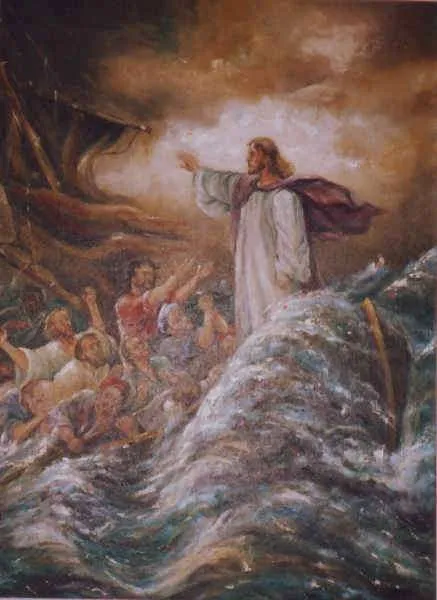
Jesus and the disciples frequently traveled by boat, visiting many towns and villages along the Sea of Galilee. After a fruitful visit to the Gentile territory of the Decapolis, Jesus and His disciples crossed to Dalmanutha. Upon disembarking, some Pharisees, who had likely heard of His miraculous feeding of the 4,000, demanded a sign from Him. Jesus, deeply grieved by their lack of faith, sighed from the depths of His spirit, refused their request, and departed again by boat. It was during this boat ride that today’s Gospel took place.

Jesus’ holy sorrow over the Pharisees’ hardness of heart deeply affected Him. His grief was not one of self-pity over their rejection of Him but stemmed from His divine compassion. He felt the weight of their lack of faith and their refusal to embrace the truth of God’s love. It was this profound sorrow that prompted Jesus to caution His disciples, saying, “Watch out, guard against the leaven of the Pharisees and the leaven of Herod.”

“Leaven,” in this context, symbolizes a hidden yet pervasive influence that governed both the Pharisees and Herod. Just as a small amount of yeast permeates an entire batch of dough, causing it to rise, so too the destructive influence of the Pharisees and Herod spread through their actions and teachings, corrupting others. With His sorrowful encounter with the Pharisees fresh in mind, Jesus used the moment to warn His disciples not to allow such corrupting influences to take root in their own hearts.

The Pharisees’ hidden, pervasive, and destructive quality lay in their excessive focus on external observances of the Law and the traditions derived from it. Their rigid legalism blinded them to the true meaning of God’s Law—mercy and the inner disposition of the heart—leading to their own spiritual ruin and to the misleading of others.

Herod’s “leaven” likely refers to a worldly mindset characterized by a relentless pursuit of power, wealth, and pleasure. Herod chose the fleeting allure of worldly things over God’s eternal truths. Herod’s pride and destructive behavior epitomize this mindset, which ultimately led him to have John the Baptist executed for courageously speaking the truth about Herod’s adulterous relationship with his brother’s wife, Herodias.

Jesus’ admonition to His disciples on the boat is not only a condemnation of the Pharisees’ and Herod’s sins but a warning about the influence such pervasive sins can have on them. Likewise, just as Jesus cautioned His disciples, so too does He caution us today: “Watch out” and “guard against” the influences that do not arise from God’s saving Truth. In our world, it is essential to recognize how pervasive societal ideologies and moralities can subtly shape our thoughts and actions. By remaining vigilant and rooted in Christ, we must discern and reject the leaven of worldliness, hypocrisy, and pride, allowing God’s divine light to guide our lives.

Reflect today on the influences that shape your life. Do you spend countless hours on social media, browsing the Internet, or watching television? If so, take a moment to consider the hidden yet pervasive effects of the content you consume and discern if it is subtly leading you astray. The only true remedy against such worldly influences is found in prayer and the Word of God. The Gospel must permeate our minds and hearts, acting as leaven to transform us from within. This divine leaven is nourished through prayer, the Sacraments, and an ongoing commitment to the Gospel. Heed Jesus’ warning, spoken to His disciples but intended for every generation: Remain vigilant. Guard your heart and mind, ensuring they are firmly rooted in God’s saving grace.

Source: https://catholic-daily-reflections.com/2026/02/16/watch-out/

Mark 8:14–15 Read More »

Our Lady of the Thorns

About

On the eve of the feast of the Annunciation, some shepherds out in the fields at night saw a bright light coming from the area of the chapel of Saint John the Baptist near Chalons-sur-Marne, France. The light was coming from a bush that was engulfed in flames; the plant was unharmed as was a statue of the Blessed Virgin Mary that stood in the middle of the fire. The fire burned through the night and into the next day, the Annunciation, and crowds, including Charles of Poitiers, the Bishop of Chalons, came to see the spectacle.

When the flames finally died down, Bishop Charles carried the statue to the chapel. He then had a church built on the site of the miraculous fire; it was built so fast that the locals says angels would come at night and work on the structure. It quickly became a pilgrimage site; Saint Joan of Arc visited the site in 1429.

During the persecutions of the French Revolution, the statue was hidden, but when the persecutions ended, it was returned to the altar. Healing miracles have been reported in the church. Pope Leo XIII ordered the solemn coronation of the miraculous statue.

Source: https://catholicsaints.info/our-lady-of-the-thorns/

Our Lady of the Thorns Read More »

Mark 8:11-12

The Mercy of Holy Sorrow

The Pharisees came forward and began to argue with Jesus, seeking from him a sign from heaven to test him. He sighed from the depth of his spirit and said, “Why does this generation seek a sign? Amen, I say to you, no sign will be given to this generation.”

Reflection:

The Pharisees struggled with skepticism, resistance, and trickery, reflecting the tragic reality of hearts closed to grace. They should have been the first to rejoice in the coming of the Messiah but became Jesus’ staunchest critics and persecutors. Their rejection shows how pride and hardness of heart can blind even those who are most familiar with the law and the prophets. As religious leaders, their privileged role heightened their responsibility to recognize and guide others toward the Messiah, making their rejection all the more tragic.

Instead of manifesting hearts open to grace, they demanded another sign, despite the countless signs Jesus had already performed: healings, exorcisms, authoritative teachings, and the miraculous feeding of the multitudes. These works were displays of divine power and fulfilled Messianic prophecies, revealing Jesus as the promised Savior.

Jesus’ authoritative teaching resonated deeply within those with faith. His words and works illuminated their hearts and confirmed His divine identity. The Pharisees’ demand for another sign was not an act of faith but a manifestation of their obstinate resistance to the truth standing before them.

How did Jesus respond to the Pharisees? “He sighed from the depth of his spirit…” This is a holy response. His deep sigh was not driven by anger or pride but by love. To “sigh” is to express holy sorrow: “Blessed are those who mourn…” (Matthew 5:4 RSVCE). Though we must have holy sorrow in the face of every sin—both our own and those of others—the sin that should evoke the deepest sorrow is that which is committed in obstinacy. Obstinacy blinds us to our sins, leading to rationalizations or excuses that prevent us from recognizing our need for repentance. When the sin committed in obstinacy is grave, this leaves a soul in the most pitiable state.

By modeling holy sorrow, Jesus teaches us how we are to react to others who manifest a similar hardness of heart. We should not take it personally. Instead, we must feel the pain of their sin with empathy. Doing so is the most loving response we can make because our holy sorrow becomes a mirror of their souls, inviting them to recognize their spiritual need and turn to God for mercy.

In addition to feeling and expressing holy sorrow, Jesus declares that “no sign will be given to this generation.” Jesus is not being stubborn or refusing to provide the necessary revelation that the Pharisees need in order to convert and believe in Him. He is doing the opposite. The Pharisees have already been given everything they need to come to faith in Jesus. By refusing further signs, Jesus was confronting their hardened hearts and inviting them to believe based on the ministry He had already given them. True faith arises from hearts that are receptive to grace.

The fact that Jesus “left them” (Mark 8:13) is another act of mercy. By leaving them, Jesus mirrored the spiritual reality of their souls: God was absent from them due to their hardness of heart. His departure also provided an opportunity for the Pharisees to reflect on their rejection, perhaps planting seeds for future repentance. In leaving them, Jesus respected their freedom to reject Him, even as it grieved His merciful heart. Even in judgment, God’s mercy is always at work, inviting sinners to return to Him.

Reflect today on Jesus’ merciful heart. God’s mercy manifests itself in various ways, depending on our needs. Sometimes, mercy is tender and encouraging, especially when hearts are contrite and humble. At other times, mercy is sorrowful and empathetic, mourning over ours and others’ sins. Seek God’s mercy in your life and then resolve to become an instrument of that mercy to others, in the way that they need it, calling them to repentance and faith.

Source: https://catholic-daily-reflections.com/2026/02/15/the-mercy-of-holy-sorrow/

Mark 8:11-12 Read More »

Sixth Sunday in Ordinary Time

First Reading Sirach 15:15-20

If you choose you can keep the commandments, they will save you;
if you trust in God, you too shall live;
he has set before you fire and water
to whichever you choose, stretch forth your hand.
Before man are life and death, good and evil,
whichever he chooses shall be given him.
Immense is the wisdom of the Lord;
he is mighty in power, and all-seeing.
The eyes of God are on those who fear him;
he understands man’s every deed.
No one does he command to act unjustly,
to none does he give license to sin.

Responsorial Psalm Psalms 119:1-2, 4-5, 17-18, 33-34

R. (1b) Blessed are they who follow the law of the Lord!
Blessed are they whose way is blameless,
who walk in the law of the LORD.
Blessed are they who observe his decrees,
who seek him with all their heart.
R. Blessed are they who follow the law of the Lord!
You have commanded that your precepts
be diligently kept.
Oh, that I might be firm in the ways
of keeping your statutes!
R. Blessed are they who follow the law of the Lord!
Be good to your servant, that I may live
and keep your words.
Open my eyes, that I may consider
the wonders of your law.
R. Blessed are they who follow the law of the Lord!
Instruct me, O LORD, in the way of your statutes,
that I may exactly observe them.
Give me discernment, that I may observe your law
and keep it with all my heart.
R. Blessed are they who follow the law of the Lord!

Second Reading 1 Corinthians 2:6-10

Brothers and sisters:
We speak a wisdom to those who are mature,
not a wisdom of this age,
nor of the rulers of this age who are passing away.
Rather, we speak God’s wisdom, mysterious, hidden,
which God predetermined before the ages for our glory,
and which none of the rulers of this age knew;
for, if they had known it,
they would not have crucified the Lord of glory.
But as it is written:
What eye has not seen, and ear has not heard,
and what has not entered the human heart,
what God has prepared for those who love him, 
this God has revealed to us through the Spirit.

For the Spirit scrutinizes everything, even the depths of God.

Alleluia cf. Matthew 11:25

R. Alleluia, alleluia.
Blessed are you, Father, Lord of heaven and earth;
you have revealed to little ones the mysteries of the kingdom.
R. Alleluia, alleluia.

Gospel Matthew 5:17-37

Jesus said to his disciples:
“Do not think that I have come to abolish the law or the prophets.
I have come not to abolish but to fulfill.
Amen, I say to you, until heaven and earth pass away,
not the smallest letter or the smallest part of a letter
will pass from the law,
until all things have taken place.
Therefore, whoever breaks one of the least of these commandments
and teaches others to do so
will be called least in the kingdom of heaven.
But whoever obeys and teaches these commandments
will be called greatest in the kingdom of heaven.
I tell you, unless your righteousness surpasses
that of the scribes and Pharisees,
you will not enter the kingdom of heaven.

“You have heard that it was said to your ancestors,
You shall not kill; and whoever kills will be liable to judgment.
But I say to you,
whoever is angry with his brother
will be liable to judgment;
and whoever says to his brother, ‘Raqa,’
will be answerable to the Sanhedrin;
and whoever says, ‘You fool,’
will be liable to fiery Gehenna.
Therefore, if you bring your gift to the altar,
and there recall that your brother
has anything against you,
leave your gift there at the altar,
go first and be reconciled with your brother,
and then come and offer your gift.
Settle with your opponent quickly while on the way to court.
Otherwise your opponent will hand you over to the judge,
and the judge will hand you over to the guard,
and you will be thrown into prison.
Amen, I say to you,
you will not be released until you have paid the last penny.

“You have heard that it was said, 
You shall not commit adultery.
But I say to you,
everyone who looks at a woman with lust
has already committed adultery with her in his heart.
If your right eye causes you to sin,
tear it out and throw it away.
It is better for you to lose one of your members
than to have your whole body thrown into Gehenna.
And if your right hand causes you to sin,
cut it off and throw it away.
It is better for you to lose one of your members
than to have your whole body go into Gehenna.

“It was also said,
Whoever divorces his wife must give her a bill of divorce.
But I say to you,
whoever divorces his wife –  unless the marriage is unlawful – 
causes her to commit adultery,
and whoever marries a divorced woman commits adultery.

“Again you have heard that it was said to your ancestors,
Do not take a false oath,
but make good to the Lord all that you vow.
But I say to you, do not swear at all;
not by heaven, for it is God’s throne;
nor by the earth, for it is his footstool;
nor by Jerusalem, for it is the city of the great King.
Do not swear by your head,
for you cannot make a single hair white or black.
Let your ‘Yes’ mean ‘Yes,’ and your ‘No’ mean ‘No.’
Anything more is from the evil one.”

Source: https://bible.usccb.org/bible/readings/021526.cfm

Sixth Sunday in Ordinary Time Read More »

Saint Onesimus

Profile

Onesimus was a slave of the Colossian Christians Saint Philemon and Saint Apphia. He committed theft and fled from punishment to Rome where he hid with Saint Paul the Apostle. Paul converted him, then sent him home carrying the canonical Letter to Philemon. He was freed.

Died

  • c.90

Canonized

  • Pre-Congregation

Name Meaning

  • helpful; profitable

Patronage

  • domestic servants

Source: https://catholicsaints.info/saint-onesimus/

Saint Onesimus Read More »

Matthew 5:17-18

The Law and the Prophets

Jesus said to his disciples: “Do not think that I have come to abolish the law or the prophets. I have come not to abolish but to fulfill. Amen, I say to you, until heaven and earth pass away, not the smallest letter or the smallest part of a letter will pass from the law, until all things have taken place.”

Reflection:

For many, the Old Testament can be confusing, filled with laws, rituals, and prophecies that seem difficult to connect with the New Testament. Yet, Jesus’ words remind us that the Old Testament is not merely a relic of the past but an essential part of God’s divine plan. Furthermore, every law, prophecy, and detail, down to “the smallest letter or the smallest part of a letter,” finds its deepest meaning and completion in Christ.

In a simplified way, the “Law and the Prophets” in the Old Testament can be summarized as moral laws, ceremonial laws, and prophetic teaching. The moral laws reflect God’s eternal truths of right and wrong, the ceremonial laws govern Israel’s worship and rituals, and the prophetic teaching calls the people to repentance, pointing to the coming Messiah. Together, these form the foundation of the Old Covenant, which is fulfilled in Christ, Who established the New and Eternal Covenant. Additionally, the Psalms and Wisdom literature enrich the Law and the Prophets, offering inspired prayers, meditations on God’s faithfulness, and practical guidance for virtuous living.

Though it might be an arduous task to read through the entire Old Testament, those who do so with understanding discover the truth that everything finds its fulfillment in Christ. “Fulfillment” does not mean that Jesus altered or discarded the Old Testament; rather, He revealed its true and hidden meaning, bringing it to perfection. What the Old Testament could only foreshadow, Jesus accomplished, achieving the fullness of God’s plan.

By analogy, consider an artist’s sketch that depicts a beautiful mountain range and sunset. The Old Testament is like that sketch—it provides the framework, details, and foreshadowing of something greater. In Christ, the sketch is brought to life, becoming reality through God’s creative act. While the sketch and the actual mountain range are the same scene, the reality is the perfect and complete expression of what the sketch anticipated. God, as the Divine Artist, first “sketched” what would come to be through the Law, Prophets, and Wisdom literature, and then brought it to fulfillment through Jesus’ Incarnation, Life, Death, and Resurrection.

In today’s Gospel, after declaring that He came to fulfill the Law and the Prophets, Jesus provided three examples of how He brings the Old Testament moral law to its fulfillment. The commandment “You shall not kill” is deepened to include the interior sin of anger; “You shall not commit adultery” is expanded to include lust in the heart; and “Do not take a false oath” is elevated to a call for sincerity, honesty, and integrity in all one says and does. The Messiah then pours forth His grace, enabling the faithful to live in accord with this high calling.

Though not included in today’s Gospel, Jesus also brings the ceremonial laws to fulfillment by becoming the Lamb of God, offering Himself as the definitive High Priest on the new altar of the Cross. Furthermore, our Lord fulfills the prophets by establishing the New Covenant in His blood, as seen in Isaiah’s vision of the Suffering Servant Who bears the sins of many (Isaiah 53), Jeremiah’s promise of the new covenant written on hearts (Jeremiah 31:31–34), and Micah’s prophecy of a ruler born in Bethlehem (Micah 5:2).

Reflect today on God’s Eternal Law, established before the foundation of the world and brought to fulfillment in Christ. The human life of the Son of God is the center of time and eternity. Everything converges on Him, and new life flows from Him. Just as our Lord fulfills the Old Testament, He also is the only source of true fulfillment in our lives. Ponder His mission and renew your choice to accept His New Covenant, written on your heart by grace. Doing so is an exercise in Divine Wisdom, giving you a share in the new life of grace, made possible by His blood.

Source: https://catholic-daily-reflections.com/2026/02/14/the-law-and-the-prophets/

Matthew 5:17-18 Read More »

Saints Cyril, Monk, and Methodius, Bishop

Saint Cyril: c. 827–869; Saint Methodius: c. 815–885; Co-Patrons of Europe, Slavic peoples, unity of Eastern and Western Churches; Pre-Congregation canonization

Imagine what life would be like if you were unable to read because the language you spoke was not even in written form. No alphabet, no books, only a spoken language. This is the context into which our saints today were sent to preach the Gospel.

Their story began in Thessalonica, Greece, a territory first evangelized by Saint Paul. Seven sons were born to a Greek-speaking imperial magistrate and his wife. Two of the boys were named Constantine and Michael. Their mother was most likely of Slavic descent, and the boys learned her unwritten language, along with Greek and Latin. When Constantine was about fourteen years old, he was sent to the great Greek city of Constantinople to study. It was there that he also came to know the young Byzantine Emperor, Michael III, who was only a young child. After completing his education, Constantine decided to become a priest. Shortly after his ordination, he was invited to teach and soon became well known as the “Philosopher.” Constantine’s brother Michael, about twelve years older than Constantine, began his career in civil service in Macedonia but chose to abandon that position to become a monk, taking the name Methodius.

When Constantine was about thirty years old and his brother Methodius was in his early forties, Constantine decided to give up his teaching career and embrace a life of prayer in his brother’s monastery. Within a few years, however, Emperor Michael III, now an adult, asked Constantine to go on a mission to evangelize the Jews and Turks of Khazars, modern-day Russia, Ukraine, and Crimea. Methodius accompanied him on this mission, and they learned both Hebrew and Turkish so as to speak to the people in their native tongues.

Within a couple of years, Prince Rastislav of Moravia asked Emperor Michael III to send missionaries to Great Moravia, today’s Czech Republic. His people had rejected paganism and embraced Christianity, but they didn’t have anyone who could explain the faith to them in their native Slavic language since the Germanic clergy adhered strictly to Latin. It was this mission that would be the beginning of a new era and a new method of evangelization within the Church.

In Great Moravia, Constantine and Methodius began to translate the Bible and liturgical books into the Slavic language. Since there was no written form of the language or even an alphabet, Cyril created one. He translated the various sounds into symbols, which enabled him and his brother to then write down the sacred texts. In addition to their translations, they began to teach the people and future Slavic clerics how to read their new written language. Eventually, the new alphabet developed into what is now known as the Cyrillic alphabet and is the basis of many Eastern European and Asian languages used by more than 250 million people today.

Despite the fact that the Slavic people were overjoyed to hear the Gospel and pray the liturgy in their native language, many of the Germanic clergy took issue with this approach. To solve this problem, the brothers traveled to Rome where they received the approval of Pope Adrian II, who ordained them bishops and sent them back to Great Moravia. Before leaving Rome, however, Constantine fell sick. Before dying, he fully consecrated himself to God as a monk in one of the Greek monasteries, taking the monastic name Cyril. His brother Methodius then returned to Great Moravia to continue his work.

Bishop Methodius spent the next fourteen years evangelizing the people in their native language, forming clergy, and effectively administering the Church. He continued to endure harsh treatment from the Germanic clergy, even being imprisoned by them for a time, but he pressed on, extending his missionary work even beyond the borders of Great Moravia.

It wasn’t until a millennia later that these brothers received the universal honor they deserved when the Western Church added them to its liturgical calendar. A century after that, Pope John Paul II, a Slav himself, honored these two brothers with the title of co-patrons of Europe and Apostles to the Slavs.

These great brothers teach us that the Gospel must be personal and understood through the prism of our own language, culture, and human experience. They also teach us that we must work to share the Gospel with others in ways that they understand and to which they can relate. As we honor these great missionaries, ponder the ways that God wants to use you to reach out to others with His saving message. Though you might not be called to invent a new alphabet to do so, you will be called to step out of your comfort zone. Be courageous, creative, and zealous in this effort in imitation of these Apostles to the Slavs.

Source: https://mycatholic.life/saints/saints-of-the-liturgical-year/february-14-saints-cyril-monk-and-methodius-bishop/

Saints Cyril, Monk, and Methodius, Bishop Read More »

Mark 8:1-3

Watering the Seed

In those days when there again was a great crowd without anything to eat, Jesus summoned the disciples and said, “My heart is moved with pity for the crowd, because they have been with me now for three days and have nothing to eat. If I send them away hungry to their homes, they will collapse on the way, and some of them have come a great distance.”

Reflection:

Early in Jesus’ public ministry, He made a brief trip across the Sea of Galilee to the territory of the Gerasenes—a largely Gentile and pagan town on the outskirts of the Decapolis. This journey was significant, as it demonstrated Jesus’ intention to extend His mission beyond the boundaries of Jewish territory, foreshadowing the universal scope of salvation that would later be fully realized through the Church’s apostolic mission.

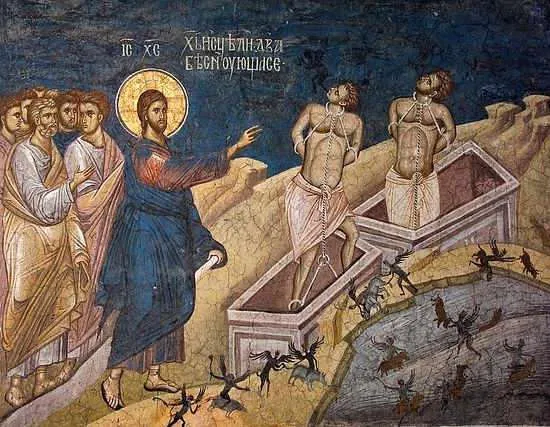
When Jesus arrived on shore in the territory of the Gerasenes, He freed a man possessed by “Legion,” meaning many demons, and sent the demons into a herd of two thousand swine, who drowned themselves in the sea. Although this was the only recorded act Jesus performed during that initial visit, it caused quite a commotion. When the swineherds saw this, they ran and reported the incident to the nearby town, and people came to see it for themselves. Stunned by what had happened, they asked Jesus to leave, and He did. However, “the man went off and began to proclaim in the Decapolis what Jesus had done for him; and all were amazed” (Mark 5:20).

That brief trip into the Gentile and pagan territory of the Decapolis planted a seed. The loss of two thousand swine undoubtedly affected the people, but it also planted the seed more deeply. Which was more important: one man possessed by a legion of demons or two thousand swine? Jesus’ actions reveal the answer. As word spread of His miraculous deliverance and authority over demons, many Gentiles became curious.

That brief miracle set the stage for today’s Gospel when Jesus returned to the Decapolis to nurture the seed He had planted. Upon His return, He cured a deaf and mute man, symbolizing the importance of hearing and proclaiming the Gospel. Afterwards, Jesus drew a great crowd, who remained with Him for three days despite having no food.

After three days, Jesus revealed His compassionate heart to the Twelve: “My heart is moved with pity for the crowd, because they have been with me now for three days and have nothing to eat.” Jesus then tested the Twelve, observing, “If I send them away hungry to their homes, they will collapse on the way, and some of them have come a great distance.” This situation should have been familiar to the Twelve. Earlier in His ministry, while in Jewish territory, Jesus had fed five thousand men with only five loaves and two fish. But now they were in Gentile territory, and instead of understanding that Jesus’ same providence extended to these pagans, the disciples said to Him, “Where can anyone get enough bread to satisfy them here in this deserted place?” Once again, Jesus performed a miracle and fed four thousand.

Reflect today on the universality of Jesus’ mission. His compassionate care transcended cultural and religious boundaries, offering physical and spiritual nourishment to all who sought Him. Jesus’ same mission continues today through us, the members of His Body, the Church. We must never become self-enclosed in our own communities of faith and family. Instead, we are called to go out into the world, to the “pagan” regions where people hunger for God’s Word. Sometimes our mission is to plant a seed; at other times, it is to nurture the seed by helping it grow through the grace of God, so that everyone may come to know and love Him. Ultimately, the feeding of the five thousand Jews and four thousand Gentiles points to the universal call for all to share in the Eucharistic banquet. Learn the lesson Jesus taught the Twelve, and imitate our Lord’s merciful heart, filled with compassion for those who need Him the most.

Source: https://catholic-daily-reflections.com/2026/02/13/watering-the-seed/

Mark 8:1-3 Read More »