September 2025

Luke 6:41

Seeing Through the Eyes of God

“Why do you notice the splinter in your brother’s eye, but do not perceive the wooden beam in your own?”

Reflection:

Saint Teresa of Ávila, one of the greatest spiritual writers and doctors of the Church, explains in her spiritual masterpiece “Interior Castles,” that one of the first steps on the path to holiness is self-knowledge. Self-knowledge produces humility, because humility is simply having a true opinion about yourself. When a person fails to know themself from the true perspective of the mind of God, then they open themselves up to many errors of judgment. One such error is that they can easily become fixated upon their perceived sins of others.

The Gospel passage quoted above depicts a person who gravely lacks self-knowledge. Why? Because they “do not perceive the wooden beam” in their own eye, meaning, they do not see their own sin. As a result, Jesus explains that this person also becomes fixated upon the “splinter” in their brother’s eye.

When you consider your own thoughts, what do you dwell upon the most all day long? Do you honestly look inward, seeking to know yourself as God knows you? Or do you spend excessive time thinking about others, analyzing and judging their actions? This is an important question to ask yourself and to answer with honesty.

The best way to know yourself is to gaze upon Jesus. When He becomes the focus of your attention throughout the day, you will not only come to know Him, but you will also come to know yourself more honestly. Gazing at the beauty and perfection of our Lord will have the double effect of knowing Him and knowing yourself through His eyes. It will also help you to know others as He sees them.

How does Jesus look at those around you? He looks at them with perpetual mercy. True, at the end of every life, when we pass from this world to the next, we will encounter our particular judgment from our Lord. But while here on earth, God continually gazes upon us with mercy. For that reason, mercy must become our daily mission, and we must build a habit of gazing upon everyone in our life with the eyes of mercy.

Reflect, today, upon our Lord. Look at Him, gaze upon Him, seek to know Him and make Him the focus of your attention. As you do, try to dismiss from your thinking process your own perceived judgments of others. Allow your gaze upon our Lord to help you to not only see Him but to also see others through His eyes. Build this habit and you will be on the fast track to the path to holiness.

Source: https://catholic-daily-reflections.com/2025/09/11/seeing-through-the-eyes-of-god-3/

Luke 6:41 Read More »

Saint Jean-Gabriel Perboyre

Profile

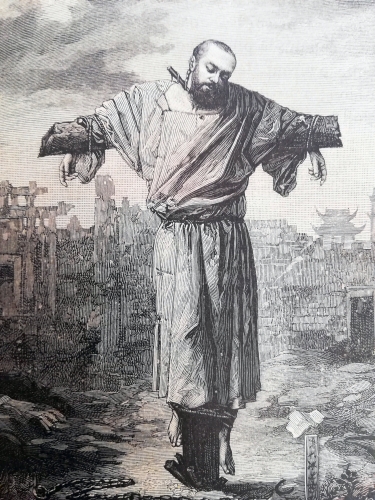
Jean-Gabriel was one of eight children born to Pierre Perboyre and Marie Rigal. At age 16, he followed his brother Louis to the seminary, and joined the Congregation of the Mission of Saint Vincent on Christmas Day 1818. He was ordained in Paris on 23 September 1825. He was a professor of theology, a seminary rector, and an assistant director of novices.

His brother died on a mission to China, and Jean-Gabriel was asked to replace him. In March 1835, he sailed for China, and began his mission in Macao in June, 1836. A widespread persecution of Christians began in 1839, the same year England had attacked China. Father John Gabriel was denounced to the authorities by one of his catachumens, arrested, tried on 16 September 1839. He was tortured by hanging his thumbs and flogging with bamboo rods, and condemned to death on 11 September 1840. He was a martyr and the first saint associated with China.

Born

6 January 1802 at Le Puech, near Mongesty, Cahors diocese, southern France

Died

lashed to a cross on a hill named the “red mountain”, then strangled with a rope on 11 September 1840 at Ou-Tchang-Fou, China

Beatified

10 November 1889 by Pope Leo XIII

Canonized

2 June 1996 by Pope John Paul II

Source: https://dosjfm.com/wp-admin/post.php?post=21333&action=elementor

Saint Jean-Gabriel Perboyre Read More »

Luke 6:29-30

The Most Important Thing in Life

To the person who strikes you on one cheek, offer the other one as well, and from the person who takes your cloak, do not withhold even your tunic. Give to everyone who asks of you, and from the one who takes what is yours do not demand it back. 

Reflection:

This must have been shocking to Jesus’ first disciples. First of all, recall that Jesus taught these words with a spiritual authority that left those with an open heart with a conviction that what Jesus taught was truth. Also recall that Jesus taught these deep spiritual lessons within the context of performing numerous miracles. So, for these reasons, His new followers would have known that what Jesus taught was true. But how could they fully accept such teachings?

Though many commentators will try to point to the deeper spiritual principles that Jesus was teaching, try to first take His words on face value. He really said that you must offer the other cheek to someone who strikes you, to give your tunic to one who steals your cloak, and to give to everyone who asks of you, never demanding back that which someone takes from you. These are not easy lessons to accept!

One thing that these powerful lessons teach us is that there is something far more important in life than the humiliation of being struck on the cheek and having your possessions stolen. What is that more important thing? It’s the salvation of souls.

If we were to go through life demanding earthly justice and retribution for wrongs received, we would not be able to focus upon that which is most important. We would not be able to focus upon the salvation of those who have wronged us. It’s easy to love those who are kind to us. But our love must extend to everyone, and sometimes the form of love we must offer another is the free acceptance of injustices they commit against us. There is great power in this act of love. But we will only be able to love another this way if our deep desire is for their eternal salvation. If all we want is earthly justice and satisfaction for wrongs committed, we may achieve that. But it may come at the expense of their salvation.

Sometimes we can fall into the trap of thinking that every wrong must be righted here and now. But that’s clearly not what Jesus taught. His wisdom is so much deeper. He knew that a profound act of mercy and forgiveness to another, especially when they have hurt us deeply, is one of the greatest gifts we can give. And it’s one of the most transformative actions we can also do for our own souls. When love hurts, in the sense that it costs us our earthly pride, especially by completely letting go of injustice, then our act of love for that person has great power to change them. And if that act changes them, then this will be the cause of your joy for eternity.

Reflect, today, upon any way that this hard teaching of Jesus is difficult for you. Who comes to mind as you ponder this teaching? Do your passions revolt against this command of love from Jesus? If so, then you have discovered the specific area where God wants you to grow. Think about anyone with whom you have a grievance and ponder whether you desire their eternal salvation. Know that God can use you for this mission of love if you will love in the way our Lord commands.

Source: https://catholic-daily-reflections.com/2025/09/10/the-most-important-thing-in-life-3/

Luke 6:29-30 Read More »

Saint Ambrose Edward Barlow

Profile

Ambrose was the fourth son of Sir Alexander Barlow and Mary Brereton. Baptized Catholic on 30 November 1585, he was raised as a Protestant, but as an adult, he returned to Catholicism. He was educated at the College of Saint Gregory, Douai, France, and the Royal College of Saint Alban in Valladolid, Spain. He became a Benedictine in 1616 and was ordained in 1617 in Douai. He returned to England to minister to covert Catholics in south Lancashire for 24 years. Unlike many of his brother priests, Ambrose was very open about his work, and was arrested several times. On 25 April 1631, just as he ended Easter Sunday Mass at Morley Hall near Manchester, England, he was arrested by an armed mob led by the local Anglican vicar. He was charged with the crime of being a priest, and freely admitted it. Ambrose was one of the Forty Martyrs of England and Wales.

Born

  • 1585 in Barlow Hall, England

Died

  • hanged, drawn, and quartered on Friday 10 September 1641 at Lancaster, Lancashire, England
  • skull preserved as a relic at Wardley Hall, sometimes known as the House of the Skull, near Manchester, England
  • his hand is preserved at Stanbrook Abbey, Worcester, England

Venerated

  • 8 December 1929 by Pope Pius XI (decree of martyrdom)

Beatified

  • 15 December 1929 by Pope Pius XI

Canonized

  • 25 October 1970 by Pope Paul VI

Source: https://catholicsaints.info/saint-ambrose-edward-barlow/

Saint Ambrose Edward Barlow Read More »

Luke 6:24-26

A Double Blessing

“But woe to you who are rich, for you have received your consolation. But woe to you who are filled now, for you will be hungry. Woe to you who laugh now, for you will grieve and weep. Woe to you when all speak well of you, for their ancestors treated the false prophets in this way.”

Reflection:

Is it dangerous to be rich, to be filled, to laugh, and to have all speak well of you? According to Jesus, it appears so. Why would Jesus warn against these things? And before that, why would He pronounce it blessed to be poor, hungry, weeping and insulted? Essentially, Jesus was condemning four common sins—greed, gluttony, intemperance, and vainglory—and promoting their opposite virtues.

Poverty, in and of itself, is not sufficient for holiness. But in Luke’s Gospel, Jesus declares it blessed to be poor, literally. This goes further than Matthew’s Gospel which says it is blessed to be “poor in spirit.” To be poor in spirit is to be spiritually detached from the material things of this world so that you can be fully open to the riches of God. One common tendency among those with material wealth is to rationalize that even though they have many things, they are detached from them. Hopefully that is the case. However, in Luke’s version of the Beatitudes, Jesus directly says, “Blessed are you who are poor” and “woe to you who are rich.” In this teaching, we discover a second blessing not found in Matthew’s version. In addition to spiritual detachment (poverty of spirit) being identified as a blessing, literal poverty is proclaimed as the easier way to achieve this spiritual detachment. Material wealth, though not a sin in and of itself, brings with it many temptations toward attachment, self-reliance, and self-indulgence. Thus, spiritually speaking, it is easier to be detached when one is poor, rather than when one is rich. This is a hard truth for both the poor and the rich to accept. The poor often want to be rich, thinking that if they were, they would share their wealth with others and remain detached. The rich often enjoy being rich and believe that they are more spiritually detached than they actually are.

Being “hungry” is also identified as a blessed state, whereas being “filled” is a dangerous state. When you are literally hungry, either from fasting or from lack of an abundance of food, it is easier to turn your hunger and thirst toward God so as to be filled by Him and to more easily trust in His providence. An abundance of food, especially fine food, tempts you with a gluttonous satisfaction that makes it difficult to hunger and thirst for God and His holy will in a complete way. Therefore, if you refrain from indulgence and experience hunger, you will be blessed to be free from gluttony and even the temptation toward it.

“Laughing” and “weeping” in this case are not referring to joy and despair. Rather, they are referring to those who are always seeking fun and an indulgent life. Many people live for fun, entertainment, and momentary pleasures. Weeping refers to those who have discovered that the fleeting pleasures of the world can never satisfy. Constant entertainment, therefore, brings with it a real temptation, whereas the loss of that form of fleeting pleasure helps eliminate that temptation.

Finally, Jesus declares it blessed to be hated, excluded, insulted, and denounced as evil on account of Him rather than being spoken well of by all. In this case, Jesus is referring to the praise that comes from things that mean nothing from an eternal perspective. When all speak well of us, praising qualities and accomplishments that are not true Christian virtues, we will be tempted to rely upon that praise for our satisfaction. But this form of satisfaction is nothing other than vainglory and never truly satisfies in the end. However, when one sees and praises the virtues of God within us, God is praised first and foremost, and we are blessed to share in God’s glory.

Reflect, today, upon whether you prefer to be rich, to indulge in the best of foods, to be constantly entertained and to be the envy of others, or whether you see the temptations this type of life brings. Reflect also upon the concrete spiritual blessings that come to those who are literally poor, hungry, temperate and humble. This is a very demanding teaching from Jesus. If it doesn’t sit well with you, then know that it is a sign that you still have various attachments in life. Reflect, especially, upon the beatitude that is most difficult to embrace, and make that beatitude the source of reflection and prayer. Doing so with honesty and openness will result in you being among those who are truly blessed in the eyes of God.

Source: https://catholic-daily-reflections.com/2025/09/09/a-double-blessing-3/

Luke 6:24-26 Read More »

Saint Peter Claver, Priest

1581–1654; Patron Saint of African missions, African-Americans, black missions, black people, foreign missions, interracial justice, slaves, and Colombia; Invoked against slavery; Canonized by Pope Leo XIII on January 15, 1888

Saint Peter Claver was born to devout, upper-class parents in Verdú, Catalonia, Spain, a small farming village. Not much is known about his early years. At twenty years old, he entered the Jesuit novitiate and was sent to study at the Jesuit college of Montesión on the island of Mallorca, off the coast of Spain. There, he met Brother Alphonsus Rodriguez, the seventy-year-old doorkeeper of the college. Known for his humility, piety, and spiritual insight, Brother Rodriguez served as the college’s doorkeeper for forty-six years. He carried out menial tasks, delivered messages, welcomed guests, and offered a compassionate ear to all who came to the door with needs. Peter sought his advice and their friendship blossomed. Encouraged by Brother Rodriguez, Peter decided to become a missionary in the Spanish colonies in South America. In 1610, he set sail for Cartagena, Colombia.

The Spanish port city of Cartagena, in present-day Colombia, was founded in 1533, over seventy years before Peter Claver arrived. After the establishment of Cartagena and other colonies, the Spanish Crown began granting licenses for the importation of African slaves to meet labor demands. Cartagena quickly became a major hub in the transatlantic slave trade due to its strategic location. By the time Father Claver was ordained, it is estimated that about 10,000 slaves were being transported annually on Spanish ships to Cartagena and subsequently sold.

The conditions the slaves endured on the ships were horrific, leading to the death from disease and malnutrition of an estimated one-third of them during the journey. The Spanish turned to African slaves in part because many of the indigenous people in their colonies had died of diseases brought by the Europeans, to which the indigenous populations had no immunity. When the number of indigenous people dropped, the colonizers looked elsewhere for laborers. With contact already established between Europeans and Africans—including slavery—the Spanish believed that the Africans were more resistant to European diseases and better able to survive the harsh conditions of forced labor. Despite outcries against these abuses from the Church, including from popes, the cruel behavior continued.

After arriving in Cartagena, Peter spent about six years studying in Tunja and Bogotá. He was then ordained a priest in Cartagena, where he committed himself to serving the African slaves for the rest of his life. Though there were other priests in Cartagena, most of them ministered to the colonizers. Father Peter chose to make the slaves his congregation and their salvation his mission. When he made his final profession, Father Claver signed it with these words: “Peter Claver, slave of the slaves, forever.”

During his thirty-eight years as an ordained priest in Cartagena, it is conservatively estimated that Father Claver catechized and baptized over 300,000 slaves. His practice was to wait at the port for a new slave ship to arrive. Each ship often contained as many as 500 slaves who had endured conditions unsuitable for animals for the two-to-three-month journey. They were poorly fed once a day, chained naked to each other, abused, threatened, and forced to sit in their own excrement and vomit. Often, the flesh on their wrists bled and became infected from the metal shackles that held them as the ship tossed in the waves.

Once the ship arrived, Father Claver went door-to-door begging for food for his new flock. He then brought his small band of African interpreters and charitable workers, entered the foul-smelling hull of the ship where he found many dead and others lifeless, filled with fear, and in need of medical treatment and compassion. As a sign of his love for them, he often kissed their sores, sucked out the infectious pus, and washed the wounds with his own handkerchiefs. He would baptize any babies, provide food to the hungry, and demonstrate a depth of compassion that many had never seen. He then helped transport the slaves to a new location, carrying those who could not walk, where they could be well fed and regain their strength before being sold.

Father Claver’s approach to this horrific problem was unique. His primary concern was the salvation of souls. He did not stir up self-pity for their dreadful plight, nor incite the slaves against their oppressors, although he often chastised the oppressors directly, calling them to repentance for their cruelty. Instead, he preached the Gospel to the slaves in ways they could understand, in ways that would benefit them for eternity. He helped them see their innate dignity and restored that dignity, not by railing against the abuses they endured, but by railing against sin and helping the slaves find freedom in Christ. He told them they were sinners in need of repentance and that there was a loving God who died for their sins and wanted to forgive them and fill them with joy. He held up the crucifix, revealing the God Who suffered for them, showing them the way to Heaven and how to avoid hell. As they listened, learned, believed, and converted, they were baptized. The moment of baptism was often a moment of profound tears and rejoicing for these slaves. Though physically bound and abused, they found they were freer than ever before because of the grace that flooded their souls upon repenting, professing faith in Christ, and being baptized.

When Peter learned that the next ship would not be arriving for months, he set off to travel the countryside to meet up with those he had baptized. Upon arriving on a plantation, he avoided spending time with the owners and spent all his time with the slaves, even sleeping and eating in the slaves’ quarters. He gave them further instruction in the Catholic faith, taught them to pray, and offered them hope any way he could. At times, when the converted slaves returned to sinful habits, Father Claver seemed to arrive out of nowhere, chastising them with love and calling them to repentance, thus restoring their Christian dignity.

After more than forty years of dedicated and heartfelt ministry to the slaves, Father Claver himself fell ill. He spent his final days enduring mistreatment from one of his caregivers, who was also a slave. Far from complaining, Father Claver accepted this treatment, uniting it with the suffering of Christ on the Cross. He saw it as a form of penance for any remaining sins of his own and a way to deepen his communion with those he had devoted his life to serving.

“No one has greater love than this, to lay down one’s life for one’s friends” (John 15:13). Saint Peter Claver indeed devoted his life to the slaves. He campaigned for better treatment for them and admonished their abusers, yet he discovered that his most significant act of love was to assist these children of God in becoming sons and daughters of God by grace. By instilling faith in them, he offered them hope. With hope, they cultivated charity, and by growing in charity, they found joy and fulfillment amid their terrible human conditions.

As we pay homage to this “slave of the slaves,” consider your own life priorities. Fighting injustice is not only noble but an essential work of mercy. However, working for the salvation of souls is the greatest act of mercy we can perform. Reflect on any ways you might endure injustice and draw inspiration, not only from Saint Peter Claver but also from the slaves who, despite suffering cruel treatment, dedicated their lives to Christ and found joy in Him alone. They teach us that no circumstance in this world can rob us of our dignity and joy if we surrender our lives to Christ and let His loving mercy encompass us.

Source: https://mycatholic.life/saints/saints-of-the-liturgical-year/september-9-saint-peter-claver/

Saint Peter Claver, Priest Read More »

Luke 6:17-19

Hearing and Healing

And he came down with them and stood on a stretch of level ground. A great crowd of his disciples and a large number of the people from all Judea and Jerusalem and the coastal region of Tyre and Sidon came to hear him and to be healed of their diseases; and even those who were tormented by unclean spirits were cured. Everyone in the crowd sought to touch him because power came forth from him and healed them all.

Reflection:

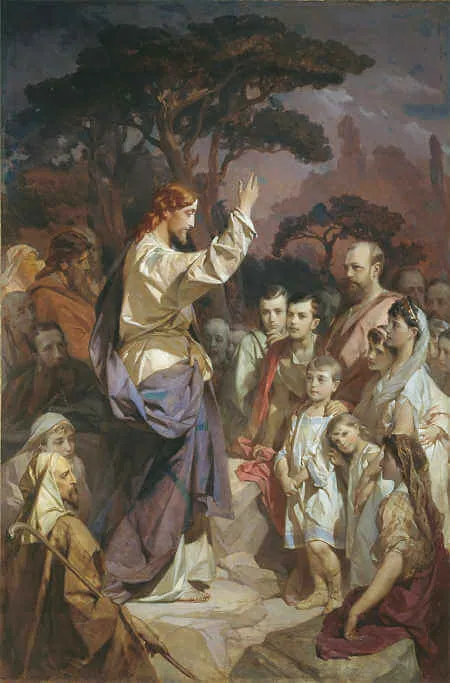
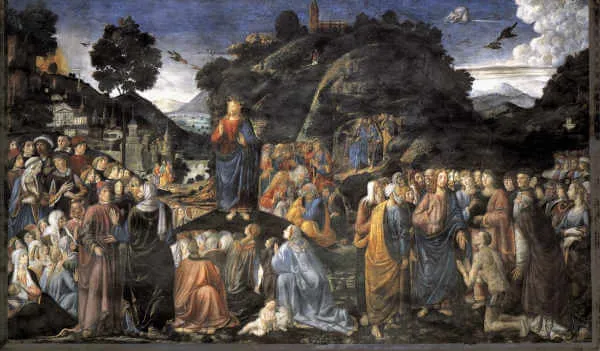
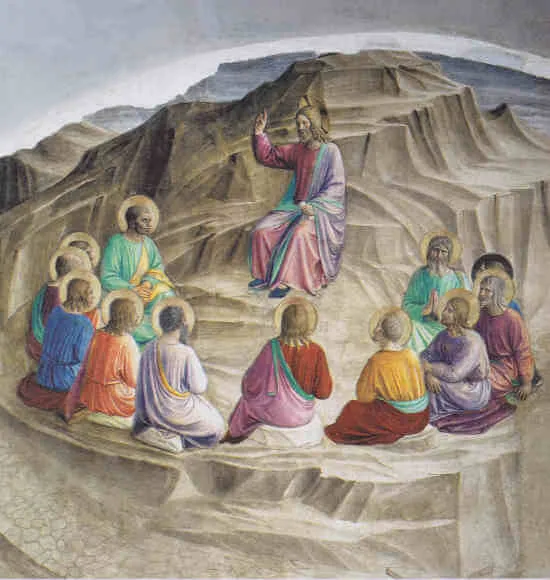
The Gospel of Luke presents us with what is traditionally known as the “Sermon on the Plain.” Almost everything Luke includes in this sermon is also found in Matthew’s “Sermon on the Mount.” Matthew, however, adds some teachings not found in Luke. Matthew’s sermon has three chapters while Luke’s has only one.

In this, the introduction to this “Sermon on the Plain,” from which we will be reading all week, Luke points out that large numbers of people came from far and wide to listen to Jesus. This crowd included many Jews but also included many people from the pagan territory of Tyre and Sidon. And what was it that drew so many of them? They came to “hear” Jesus preach and “to be healed.” They wanted to hear the words of Jesus since He spoke with great authority and in a way that was changing lives. And they were especially amazed by the healing power that Jesus manifested. The last line of the passage above gives great emphasis to this desire for healing. “Everyone in the crowd sought to touch him because power came forth from him and healed them all.”

It’s interesting that Jesus performed so many powerful miracles as He went about His public ministry. This was especially the case as He began His ministry. He became a sort of instant celebrity to many and was the talk of the many surrounding towns. But it’s also interesting to note that, as time went on, Jesus gave more emphasis to His teaching than He did to the miracles.

What is it that draws you to our Lord? Perhaps if there were numerous manifest miracles performed today by God, many people would be amazed. But physical miracles are not the greatest work of our Lord and, therefore, should not be the primary focus of our relationship with Him. The primary reason we should be drawn to our Lord is because His holy Word sinks in deeply, changes us and draws us into communion with Him. This is clearly seen by the fact that now that the Gospel message has been deeply established and the Church formed, physical miracles are rare. They do happen, but not in the same way that they did as Jesus first established His public ministry.

Reflect, today, upon the primary reason you find yourself drawn to our Lord. Seek out His living Word, spoken within the depths of your heart. The most important miracle that takes place today is that of interior transformation. When a person hears God speak, responds to that Word, and allows Him to change their life, this is among the most important miracles of grace that we could ever encounter. And this is the central reason we should be drawn to Him, seek Him out and follow Him wherever He leads.

Source: https://catholic-daily-reflections.com/2025/09/08/hearing-and-healing-4/

Luke 6:17-19 Read More »

Birth of the Blessed Virgin Mary

c. 15 BC; Patron Saint of chefs, cooks, distillers, drapers, fish dealers, goldsmiths, silversmiths, needlemakers, potters, restaurateurs, silkworkers, and tilemakers

On December 8, the Church celebrates the Solemnity of the Immaculate Conception. That solemnity highlights the singular grace bestowed upon the Blessed Virgin Mary at the moment she was conceived. The Church dogma states, “…in the first instance of her conception, by a singular grace and privilege granted by Almighty God, in view of the merits of Jesus Christ, the Savior of the human race, was preserved free from all stain of original sin, is a doctrine revealed by God and therefore to be believed firmly and constantly by all the faithful” (Pope Pius IX, 1954).

Today’s Feast of the Birth of the Blessed Virgin Mary is celebrated exactly nine months after the Solemnity of the Immaculate Conception, just as Christmas is celebrated nine months after the Church remembers the Incarnation of the Son of God on the Solemnity of the Annunciation. The birth of the Blessed Virgin Mary is one of three liturgical feasts in which we celebrate a birth: Christmas, the Birth of Saint John the Baptist, and the Birth of the Blessed Virgin Mary. Only the three most consequential figures in the Bible receive the honor of a liturgical celebration to commemorate their births.

Nothing is known for certain about the birth of the Blessed Virgin Mary or of her upbringing, since the Bible only introduces the Mother of God to us for the first time during the Annunciation. However, an early second-century apocryphal text called the Protoevangelium of James (The Gospel of James), paints a detailed picture of her conception, birth, early years, and betrothal to Saint Joseph. Though the account is not part of the canon of Scripture, it has been a source of reflection throughout the centuries and is the source of the traditional names of the Blessed Mother’s parents, Joachim and Anne.

The actual feast we celebrate today is believed to have been first celebrated in the fifth or sixth century in the East and was tied to the dedication of a Byzantine church near the Pools of Bethesda in the Old City of Jerusalem. The church was built over what was believed to be the birthplace of Mary and the home of Joachim and Anne, just a short distance from the Temple. In the twelfth century, the current Basilica of Saint Anne was built on the same site. Beneath the basilica lie what are believed to be the caves in which the Mother of God was born and lived.

Regardless of whether the apocryphal Gospel of James presents accurate historical truths regarding the conception, birth, and early life of the Blessed Virgin Mary, it is not difficult to prayerfully ponder the importance of her birth and childhood. Saint Andrew of Crete beautifully relates that on this day, the “Creator of the world constructed His temple…” Mary is that temple, that Arc of the New Covenant, the tabernacle and first dwelling place of God Incarnate. Her soul was born pure, spotless, and holy. As she grew, she manifested every virtue perfectly. All who knew her as a child would have been deeply impressed by her sanctity.

Birthdays celebrate people. They are occasions to rejoice in and honor the whole life of that person. The other memorials, feasts, and solemnities of the liturgical year honor various specific aspects of Mary’s life. Today’s feast honors her whole life, her personhood, and the gift of who she was and is.

As we celebrate the birthday of the Mother of God, spend time pondering her soul. Though much of her earthly life has remained hidden from our eyes, she is the greatest saint to ever live and the holiest daughter of God this world has ever known. In Heaven, we will be in awe of her virtues and will forever rejoice in the great things God did in and through her. Begin that rejoicing today by prayerfully honoring her and pondering her, seeking her prayer for your life and for the whole world.

Source: https://mycatholic.life/saints/saints-of-the-liturgical-year/september-8the-nativity-of-the-blessed-virgin/

Birth of the Blessed Virgin Mary Read More »

Matthew 1:20-21

The Birth of the Mother of God

Joseph, son of David, do not be afraid to take Mary your wife into your home. For it is through the Holy Spirit that this child has been conceived in her. She will bear a son and you are to name him Jesus, because he will save his people from their sins.

Reflection:

Today we celebrate one of the most consequential birthdays in the history of the world! Certainly, the only birthday more important is that of our divine Lord Himself. But today we honor His mother, and our mother, too.

The Blessed Virgin Mary was born into our world without the stain of original sin. She was preserved from experiencing fallen human nature through the gift of her Immaculate Conception. Thus, she was the first to be born in the perfection of human nature after the fall, and she continued to experience this grace throughout her life, responding to God with her free will every step of the way.

All of us enjoy celebrating our birthdays. Children especially love it, but most everyone looks forward to that special day each year when family and friends honor them and celebrate them in a special way. For that reason, we can be assured that even our Blessed Mother loved her birthday while here on earth and continues to enjoy this special celebration in Heaven. Of course, she did not enjoy her birthday because she wanted to be pampered or given special attention. She, perhaps more than anyone other than her divine Son, rejoiced on her birthday because of the deep spiritual gratitude she had to God for all that He did in her life.

Try to ponder the heart and soul of our Blessed Mother from her perspective. She would have been intimately united to each person of the Most Holy Trinity throughout her life. She would have known God, living in her soul, and would have been in awe of what God had done to her. She would have pondered these graces with deep humility and exceptional gratitude. She would have seen her soul and mission from the perspective of God, keenly aware of all that He had done for her.

As we honor the birthday of our Blessed Mother, it’s also an important opportunity for each of us to ponder the incredible blessings that God has bestowed upon each one of us. No, we are not Immaculate as Mother Mary was. We were each born into original sin and have sinned throughout our lives. But the blessings of grace, given to each one of us, is exceptionally real. We only need to work to have the eyes to see these graces. Baptism, for example, bestows upon the soul an eternal transformation. Though our sin may cloud that transformation at times, the transformation is eternal. Our souls are changed. We are made new. Grace is poured into our hearts, and we become children of God. And for the soul who is able to perceive the countless other ways that God bestows blessings, gratitude is the only appropriate response.

Reflect, today, upon the glorious celebration of the birthday of the Blessed Virgin Mary, Mother of God. Begin by trying to rejoice in her life through her eyes. Try to imagine what she saw as she looked into her own graced soul. From there, try to rejoice, also, in your soul. Be grateful for all that God has done for you. Work to have eyes that see these countless graces and allow yourself to rejoice in God’s blessings with our Blessed Mother. 

Source: https://catholic-daily-reflections.com/2025/09/07/the-birth-of-the-mother-of-god-3/

Matthew 1:20-21 Read More »

Twenty-Third Sunday in Ordinary Time

First Reading Wisdom 9:13-18b

 Who can know God’s counsel,
 or who can conceive what the LORD intends?
 For the deliberations of mortals are timid,
 and unsure are our plans.
 For the corruptible body burdens the soul
 and the earthen shelter weighs down the mind that has many concerns.
 And scarce do we guess the things on earth,
 and what is within our grasp we find with difficulty;
 but when things are in heaven, who can search them out?
 Or who ever knew your counsel, except you had given wisdom
 and sent your holy spirit from on high?
 And thus were the paths of those on earth made straight.

Responsorial Psalm Psalms 90:3-4, 5-6, 12-13, 14 and 17

R. (1) In every age, O Lord, you have been our refuge.
You turn man back to dust,
saying, “Return, O children of men.”
For a thousand years in your sight
 are as yesterday, now that it is past,
or as a watch of the night.
R. In every age, O Lord, you have been our refuge.
You make an end of them in their sleep;
 the next morning they are like the changing grass,
Which at dawn springs up anew,
 but by evening wilts and fades.
R. In every age, O Lord, you have been our refuge.
Teach us to number our days aright,
 that we may gain wisdom of heart.
Return, O LORD! How long?
Have pity on your servants!
R. In every age, O Lord, you have been our refuge.
Fill us at daybreak with your kindness,
 that we may shout for joy and gladness all our days.
And may the gracious care of the LORD our God be ours;
 prosper the work of our hands for us!
Prosper the work of our hands!
R. In every age, O Lord, you have been our refuge.

Second Reading Philemon 9-10, 12-17

I, Paul, an old man,
and now also a prisoner for Christ Jesus,
urge you on behalf of my child Onesimus,
whose father I have become in my imprisonment;
I am sending him, that is, my own heart, back to you.
I should have liked to retain him for myself,
so that he might serve me on your behalf
in my imprisonment for the gospel,
but I did not want to do anything without your consent,
so that the good you do might not be forced but voluntary.
Perhaps this is why he was away from you for a while,
that you might have him back forever,
no longer as a slave
but more than a slave, a brother,
beloved especially to me, but even more so to you,
as a man and in the Lord.
So if you regard me as a partner, welcome him as you would me.

Alleluia Psalm 119:135

R. Alleluia, alleluia.
Let your face shine upon your servant;
and teach me your laws.
R. Alleluia, alleluia.

Gospel Luke 14:25-33

Great crowds were traveling with Jesus,
and he turned and addressed them,
“If anyone comes to me without hating his father and mother,
wife and children, brothers and sisters,
and even his own life,
he cannot be my disciple.
Whoever does not carry his own cross and come after me
cannot be my disciple.
Which of you wishing to construct a tower
does not first sit down and calculate the cost
to see if there is enough for its completion?
Otherwise, after laying the foundation
and finding himself unable to finish the work
the onlookers should laugh at him and say,
‘This one began to build but did not have the resources to finish.’
Or what king marching into battle would not first sit down
and decide whether with ten thousand troops
he can successfully oppose another king
advancing upon him with twenty thousand troops?
But if not, while he is still far away,
he will send a delegation to ask for peace terms.
In the same way,
anyone of you who does not renounce all his possessions
cannot be my disciple.”

Source: https://bible.usccb.org/bible/readings/090725.cfm

Twenty-Third Sunday in Ordinary Time Read More »