September 2025

Saint Nonnosus of Monte Soratte

Profile

Nonnosus was a Benedictine monk, then prior at the San Silvestre monastery on Monte Soratte north of Rome, Italy. He was known to have suffered great abuse and harassment from his abbot, but he was the only person who could calm the man down and reason with him. Nonnosus became abbot of Soratte himself c.560. Pope Saint Gregory the Great wrote about him.

Born

  • c.500

Died

  • c.575 of natural causes
  • buried on Monte Soratte in the Viterbo, Italy area
  • relics transferred to Castel Sant’Elia, Italy in the 9th century to prevent their destruction by invading Muslims
  • relics enshrined in Freising, Germany in c.1050 by Bishop Nitker, where they became the site of pilgrimages
  • relics re-buried there in a stone coffin in 1161
  • oil from the eternally burning grave lamp is reported to have healing powers
  • some relics taken to Bamberg, Germany in the mid-17th century; his head is known to have been enshrined by 1660
  • his stone coffin in Freising was moved to the cathedral crypt in 1708; it is raised off the floor, and a tradition developed of crawling around it or under it lengthwise while praying for the intercession of Nonnosus, especially for kidney problems
  • some relics enshrined in the church of San Antonio Abate in Castel Sant’Elia, Italy

Canonized

  • Pre-Congregation

Patronage

  • against infirmities or weakness
  • against kidney ailments
  • Diocese of Nepi-Sutri, Italy
  • Castel Sant’Elia, Italy
  • Freising, Germany

Representation

  • oil lamp (legend says that he prayed over a broken oil lamp and it was miraculously reconstructed)
  • large rock or stone (legend says that there a stone that teams of oxen could not remove from the monastery‘s garden; Nonnosus wanted to plant cabbages on the land, so he prayed over the stone and moved it by himself)
  • jars of olive oil (legend says that after a failed olive harvest, Nonnosus filled all the olive oil jars by praying over them)

Source: https://catholicsaints.info/saint-nonnosus/

Saint Nonnosus of Monte Soratte Read More »

Luke 4:36-37

Authority and Power

They were all amazed and said to one another, “What is there about his word? For with authority and power he commands the unclean spirits, and they come out.” And news of him spread everywhere in the surrounding region.

Reflection:

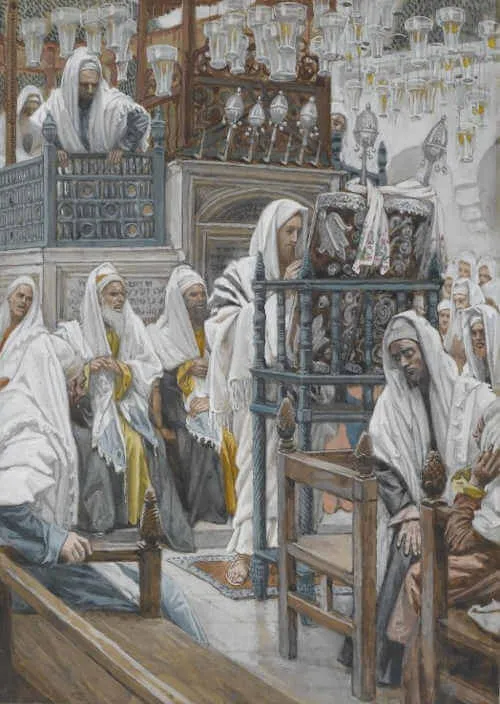
Jesus had just encountered the wrath of many in His hometown of Nazareth, so He left there and traveled about 30 miles to Capernaum, a town just north of the Sea of Galilee. This was to become His new home during His public ministry. The reaction He received in Capernaum was much different than that which He received in Nazareth. As He taught in the Synagogue in Capernaum, a man with a demon came to Him, Jesus rebuked the demon and cast it out, and the people were amazed. Word spread about Jesus quickly. After this, Jesus performed many other miracles, and the people continued to be in awe of Him.

What was it that impressed the people of Capernaum? In part it was the “authority and power” with which Jesus spoke and acted. But it was not only this, since Jesus had done so also in Nazareth where the people failed to believe in Him. In Capernaum it wasn’t that Jesus was different, it seems that the people were different. Jesus won over many hearts in Capernaum because the people were open to the gift of faith. In fact, when Jesus was preparing to leave from Capernaum, the people begged Him to stay. Though eventually Jesus would also encounter resistance from the people there, their initial reaction was one of faith.

Do you want Jesus to act powerfully in your life? Do you want Him to act upon you with authority and power? Many people, from time to time, can feel as though their lives are somewhat out of control. They experience weakness, confusion, a lack of direction and the like. For that reason, true spiritual “authority and power” is very welcome. What sort of authority and power do you need Jesus to exert over your life today?

Think of a small child who is frightened. When this happens, the child turns to a loving parent for comfort and security. The embrace of a parent immediately helps to dispel the fear and worry of the child. So it is with us. We must see Jesus as the source of calm in our lives. He is the only one Who is capable of ordering our lives, freeing us from the attacks of the evil one, bringing peace and calm to our disordered emotions and clarity to our questions and doubts. But this will only be possible if we are open. His power never changes, but it can only enter our lives when we change and when we recognize our weakness and our need for Him to take control.

Reflect, today, upon the infinite spiritual authority and power of our Lord. It is a power beyond anything else we could imagine. He wants to exercise this authority in your life out of love. What is hindering Him from taking greater control of your life? What sin or temptation does Jesus want to rebuke in your life? From what oppression does He want to set you free? Reflect upon yourself being a member of the town of Capernaum who fully welcomes Jesus, is amazed at Him and desires Him in your life. His working in your life depends upon you and your response to Him. Call on Him and let Him in.

Source: https://catholic-daily-reflections.com/2025/09/01/authority-and-power-4/

Luke 4:36-37 Read More »

Saint Giles

Profile

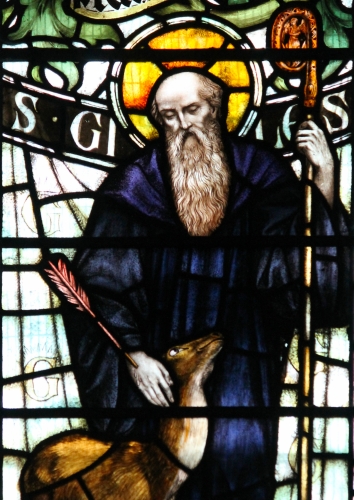
Giles was born to a wealthy noble family. When his parents died, Giles gave his fortune to help the poor. He was known as a miracle worker. To avoid followers and adulation, he left Greece in c.683 for France where he lived as a hermit in a cave in the diocese of Nimes, a cave whose mouth was guarded by a thick thorn bush. He lived a lifestyle so impoverished that, legend says, God sent a deer to Giles to nourish him with her milk.

One day, after he had lived there for several years in meditation, a royal hunting party chased the hind into Giles’ cave. One hunter shot an arrow into the thorn bush, hoping to hit the deer, but instead hit Giles in the leg, crippling him. The king sent doctors to care for the hermit‘s wound, and though Giles begged to be left alone, the king came often to see him.

From this, Giles’ fame as sage and miracle worker spread, and would-be followers gathered near the cave. The French king, because of his admiration, built the monastery of Saint Gilles du Gard for these followers, and Giles became its first abbot, establishing his own discipline there. A small town grew up around the monastery, and upon Giles’ death, his grave became a shrine and place of pilgrimage; the monastery later became a Benedictine house.

The combination of the town, monastery, shrine and pilgrims led to many handicapped beggars hoping for alms; this and Giles’ insistence that he wished to live outside the walls of the city, and his own damaged leg, led to his patronage of beggars, and to cripples since begging was the only source of income for many. Hospitals and safe houses for the poor, crippled, and leprous were constructed in England and Scotland, and were built so cripples could reach them easily. On their passage to Tyburn for execution, convicts were allowed to stop at Saint Giles’ Hospital where they were presented with a bowl of ale called Saint Giles’ Bowl, “thereof to drink at their pleasure, as their last refreshing in this life.”

In Spain, shepherds consider Giles the protector of rams. It was formerly the custom to wash the rams and color their wool a bright shade on Giles’ feast day, tie lighted candles to their horns, and bring the animals down the mountain paths to the chapels and churches to have them blessed. Among the Basques, the shepherds come down from the Pyrenees on 1 September, attired in full costume, sheepskin coats, staves, and crooks. They attended Mass with their best rams, an event that marks the beginning of autumn festivals, marked by processions and dancing in the fields. He was one of the Fourteen Holy Helpers, the only one not to die as a martyr.

Born

  • in Athens, Greece

Died

  • between 710 and 724 in France of natural causes
  • legend says that those who attended his funeral heard choirs of angels singing and then fading away as they carried his soul to heaven
  • his tomb is in the crypt of the abbey church of Saint-Gilles in Gard, France
  • in 1562, Huguenots burned the abbey, murdered the monks, looted the church, and vandalized the tomb; the surviving relics of Saint Giles were distributed to other churches
  • in Scotland in the seventeenth century, his relics were stolen from a church which triggered a great riot

Canonized

  • Pre-Congregation

Patronage

  • abandoned people;
  • against abandonment
  • against breast cancer
  • against epilepsy
  • against fear of night
  • against insanity
  • against leprosy
  • against mental illness
  • against noctiphobia
  • against sterility
  • beggars
  • blacksmiths
  • breast feeding
  • cancer patients
  • cripples
  • disabled people
  • epileptics
  • forests
  • handicapped people
  • hermits
  • horses
  • lepers
  • mentally ill people
  • mothers
  • noctiphobics
  • physically challenged people
  • paupers
  • poor people
  • rams
  • spur makers
  • woods
  • in Austria
    – Graz
    – Klagenfurt

  • in Italy
    – Altavilla Silentina
    – Camerata Nuova
    – Caprarola
    – Cavezzo
    – Latronico
    – Monte San Savino
    – Tolfa
    – Verrès

  • Edinburgh, Scotland

Representation

  • arrow
  • cave
  • crosier
  • deer, hind, doe, roe
  • hermitage
  • Benedictine monk accompanied by a hind
  • lilies growing in the sand (refers to a legend that says three lilies blossomed in dry sand as Giles explained three points to prove the perpetual virginity of Mary to a doubter)

Source: https://catholicsaints.info/saint-giles/

Saint Giles Read More »

Luke 4:28-30

An Emotional Reaction to Jesus

When the people in the synagogue heard this, they were all filled with fury. They rose up, drove him out of the town, and led him to the brow of the hill on which their town had been built, to hurl him down headlong. But he passed through the midst of them and went away.

Reflection:

It’s hard to believe that those people who knew Jesus, those from the town in which He had been raised, reacted in such a severe way to our Lord. Jesus had just entered the Synagogue and read from the Prophet Isaiah who stated that “the Spirit of the Lord” was upon him and that he had come to “proclaim liberty to captives.” Jesus’ mission was clear. He was the Messiah, sent from the Father, in fulfillment of the teachings of the prophets, and yet Jesus was rejected to the point that the people drove Him out of the town and tried to throw Him off a cliff near the town to kill Him. Again, it’s hard to comprehend the extreme emotions that people experienced in regard to Jesus. Some came to love Jesus with the deepest passion, others were outraged at Him and sought His life.

One thing that these extreme emotions experienced by many should tell us is that we cannot remain indifferent to Jesus when we truly listen to His words. Indifference comes when Jesus is ignored. But when He is heard and understood, it is clear that His message demands a response. If we do not fully accept Him as we listen to His message, then we will be tempted to reject Him and all that He speaks.

Jesus wants to do the same with us. He wants a response from us. First, He wants us to hear Him, to understand the radical nature of His message, and then to make a choice. He wants us to follow Him with passion and zeal, to believe in everything He teaches, and to radically change our lives as a result. And if we will not change, then Jesus’ words will challenge us and evoke a response.

One example of this that is common today is the strong response that sometimes comes from a teenager or young adult when a loving parent confronts them when they begin to go astray. When confronted in love and with the truth, emotion is often evoked and stirred up. But that is not always bad. The temptation on the part of the parent is to back off and compromise. But that’s not what Jesus did with the townspeople. He spoke the truth in love and accepted their response. So it is with those in our lives. At times we must speak the hard but loving truth others need to hear even if we know they will lash out. In the end, challenging them with compassion and truth may ultimately win them over. We do not know what ultimately happened to those townspeople who tried to kill Jesus that day out of anger, but it is entirely possible that the extreme emotion they experienced eventually led them to the truth.

Reflect, today, upon the courage and love Jesus had as He directly confronted and challenged His own townspeople for their lack of faith. Try to understand that Jesus’ challenge of them was a mercy He offered them to move them from indifference. In your life, are there ways in which you need to be challenged? Are there things you have reacted strongly to and even with a form of rage? Try to see yourself as one of those townspeople who became enraged by our Lord. Be open to any way that you have reacted negatively to that which Jesus has spoken to you. Consider, also, any ways that Jesus may want to use you to speak His clear message of love to another, even if you know it may not immediately be received. Pray for courage, compassion, clarity and love so that you will be able to imitate Jesus as He sought to move those of His own hometown out of the indifference they were experiencing.

Source: https://catholic-daily-reflections.com/2025/08/31/an-emotional-reaction-to-jesus-4/

Luke 4:28-30 Read More »