September 2025

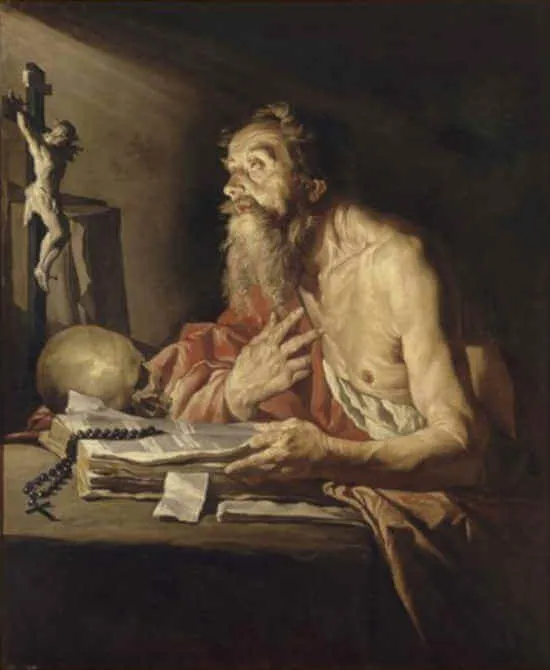
Saint Jerome, Priest and Doctor

c. 340s–420; Patron Saint of archeologists, archivists, Bible scholars, librarians, libraries, schoolchildren, students, and translators; Pre-Congregation canonization; Declared a Doctor of the Church by Pope Benedict XIV in 1724

 Eusebius Sophronius Hieronymus, later known as Jerome, was born in the town of Stridon, somewhere in the Balkans. Thirty years before Jerome’s birth, Emperor Constantine legalized the practice of Christianity in the Roman Empire, but many still clung to Roman and Greek religions and philosophies. Jerome had at least one brother, and the two were raised by good Christian parents who believed in the importance of education. 

While Jerome was in his mid- to late-teens, his parents sent him to Rome to study language, grammar, rhetoric, theology, and philosophy. He learned Greek, in addition to the Latin he had known since childhood, and engrossed himself in the classics: Virgil, Cicero, and Terence. Though Jerome had been raised a Christian, his morals lapsed in Rome, and he fell into sins of the flesh. This left him filled with guilt, and he would spend many Sundays visiting the catacombs to remind himself of death and the possibility of hell. As was the custom of that time, he had not been baptized as a child, so before he departed Rome, he chose to be baptized and began a conversion.

Around the age of thirty, after his baptism, Jerome traveled to various historic Christian sites. He traveled to Aquileia, in modern-day northern Italy where he spent time with a fervent Christian community under the leadership of Bishop Valerian. He then traveled to the Desert of Chalcis, south of modern-day Aleppo and Antioch in Syria, and became a hermit for several years. In the desert, he prayed, studied Greek further, and began to learn Hebrew. He also translated various Christian books into Latin. During this time, he had a vision in which he was “caught up in the spirit and dragged before the judgment seat of the Judge.” The Judge asked him who he was. Jerome replied, “I am a Christian.” Unsatisfied with the answer, the Judge said to him, “You lie, you are a follower of Cicero and not of Christ. For ‘where your treasure is, there will your heart be also.’” This profoundly affected Jerome, for he realized that he was still more attached to pagan literature than he was to Christ and His sacred Word. With that realization, Jerome committed himself more fully to Christ and to a life of celibacy, vowing to devote himself solely to the Word of God and God’s will, and to turn away from his interest in secular literature. After several years in the desert, he returned to Antioch where he was ordained a priest.

Once ordained, Jerome traveled to Constantinople where he spent a few years studying under the future saint, Archbishop Gregory of Nazianzus. In Constantinople, his knowledge of the orthodox faith enshrined in the Nicene Creed grew immensely. He continued translating works into the common Latin language and entered more deeply into the life of prayer.

Around the year 382, Father Jerome was summoned to Rome by Pope Damasus to become the pope’s secretary and counselor. The Holy Father encouraged him to prepare a new translation of the Bible from the Greek and Hebrew translations. At that time, there were many versions of the Bible in Latin that had been translated poorly. The pope wanted one good version, and Father Jerome rose to the occasion. He began with the New Testament, translating it from Greek into Latin.

Father Jerome continued to live a prayerful and ascetical life and was not shy about confronting the corruption he saw within the Roman clergy and society. Some biographers claim he had a fierce temper, but others see it as the passion with which he preached against sin and called people to repentance. He also gathered around himself a group of holy women—noblewomen, widows, and virgins—with whom he shared his knowledge of the Scriptures. Because he spent so much time with these women, others accused him of inappropriate behavior with them, especially some of the Roman clergy who took personal offense at him. When Pope Damasus died, the accusations only got worse and included criticism of Jerome’s translations of the New Testament. As a result of the hostility, Jerome decided it was time to leave Rome, and some of the holy women left with him.

After Rome, Jerome traveled back to Antioch and then to the Holy Land. He arrived in Bethlehem, where he would spend the rest of his life. He became a hermit in the caves near the Church of the Nativity and continued his prayer, study, translations, and numerous other writings. He formed a monastery for men, and the women who accompanied him established a convent nearby.

In Bethlehem, Jerome continued his work of translating the Bible into Latin. He spent about eight years translating the New Testament from the original Greek and then spent about fifteen years translating the Old Testament from the original Hebrew manuscripts, something that had never been done before. The completed work received acceptance from scholars within the Western Church because of its accuracy and clarity. His translation was referred to as the “Vulgate,” meaning the common translation, because it had the goal of presenting the Bible in a way that was easily understood and clear to the common people, in their own language. Over the next millennium, it became more widely used. Finally, after the Protestant Reformation, in 1546, the Council of Trent declared Saint Jerome’s Vulgate to be the official Latin translation of the Church.

With his deep knowledge of Scripture, Father Jerome also wrote commentaries on many books of the Bible, especially offering insights gained from his work of translation. He wrote on the lives of the saints, leaving some of the earliest historical documentation about their heroic lives. He wrote extensively upon the Blessed Virgin Mary, on the value of virginity, combated heresies, and left behind many lengthy letters that reveal deep spiritual and historical insights.

After about thirty-eight years in Bethlehem, Father Jerome died, but his writings continue to live. Shortly after his death, he was recognized as a saint through popular consent, which was the method of canonization in the early Church. Though he has had a profound impact upon the Church ever since, he was not declared a Doctor of the Church until 1724.

Saint Jerome was a devout Christian, theologian, priest, and monk. He preached the truth, even when people objected or took offense. His dedication to the Holy Scriptures is second to none, and the impact of his translations and writings continues to be felt today.

As we honor this early saint, ponder your own commitment to a prayerful reflection on the Word of God. Saint Jerome should inspire us to devote more of our attention to a better love for God’s Word through study, reflection, and prayer. Commit yourself to this ideal, and seek Saint Jerome’s intercession as you do.

Source: https://mycatholic.life/saints/saints-of-the-liturgical-year/september-30–st-jerome-doctor/

Saint Jerome, Priest and Doctor Read More »

Luke 9:51-52

Courage to Conquer Fear

When the days for Jesus to be taken up were fulfilled, he resolutely determined to journey to Jerusalem, and he sent messengers ahead of him.

Reflection:

Shortly after Jesus spoke to His disciples about His pending suffering, death and resurrection, we read that Jesus “resolutely determined to journey to Jerusalem.” There is much to reflect upon in that short statement.

First of all, Jerusalem was the place of the Temple where the animal sacrifices of the Old Testament took place as a prefiguration of the one and ultimate sacrifice to come. Jesus came into this world as the Lamb of God, the Sacrificial Victim Who would die for our sins. He knew His ultimate end in this world, and He knew it would require much suffering. This knowledge of His future suffering is the foundational context of this passage today.

As Jesus’ suffering and death drew close, He became more and more determined in His human will to fulfill the will of the Father by laying down His life. Of course, Jesus always fulfilled the will of the Father, but little by little the human manifestation of Jesus’s determination became more and more pronounced. The specific human virtue that slowly became manifest was courage. Spiritual courage is the supernatural ability to embrace the will of the Father when His will leads a person into a life of sacrifice. Within our fallen human nature, we tend to avoid sacrifice. We often work to avoid conflict and suffering and to embrace the easy way in life. Therefore, to come face-to-face with some future suffering brings forth a temptation to fear—and that fear requires courage to overcome it. As His suffering drew closer, the temptation to fear grew stronger and, as a result, His perfect virtue of courage became more manifest. Note that Jesus not only decided to go to Jerusalem to offer His life sacrificially, He “resolutely determined” to do so. There was no wavering, no doubting the Father’s will, no hesitancy, no fear. His perfect sacrificial love slowly became manifest for all to see.

Another reason Jesus became resolute in His determination to travel to Jerusalem was to witness His love to His disciples. They needed courage themselves.  So, as they listened to Jesus speak about what was coming in Jerusalem and as they witnessed His unwavering determination, they were also encouraged and were strengthened to overcome the temptations to fear. Of course, they only perfected that virtue later in their lives when they also followed in the footsteps of our Lord, laying down their own lives as martyrs.

Reflect, today, upon that which causes fear and anxiety in your own life. If that suffering is of your own making, then seek to rectify it. But if that suffering is a cross that our Lord is calling you to embrace with love, then do so sacrificially and with much determination. Do not be cowed by the heaviness of the cross you are given in life. The crosses we are called to embrace are always able to be transformed into grace. Allow courage to grow within you and allow the witness of our Lord to encourage you as you seek to imitate His sacrificial love.

Source: https://catholic-daily-reflections.com/2025/09/29/courage-to-conquer-fear-4/

Luke 9:51-52 Read More »

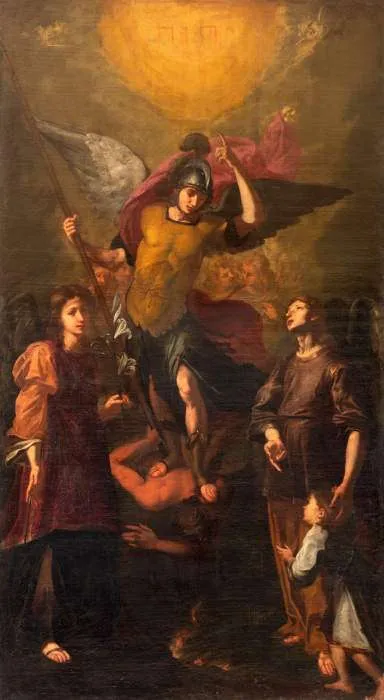
Saints Michael, Gabriel and Raphael, Archangels

Patron Saints of soldiers, police, paramedics, and the sick and dying (Michael);

messengers, postal workers, broadcasters, and expectant mothers (Gabriel);

travelers, the blind, medical workers, and matchmakers (Raphael)

In the fifth or sixth century, an important Church theologian, given the name Pseudo-Dionysius the Areopagite, used the many references in the Sacred Scriptures to clearly articulate what has become the traditional understanding of the hierarchy of angels. In the thirteenth century, Saint Thomas Aquinas built upon that teaching. Both taught that there are nine choirs in the hierarchy. The nine choirs are further divided into three triads. The three highest, comprising the first triad (Seraphim, Cherubim, and Thrones), is devoted exclusively to the service of God, worshiping Him continuously. The second triad (Dominions, Virtues, and Powers) is tasked with the governance of the created world and the entire Universe. The third triad (Principalities, Archangels, and Angels) is closest to humanity, acting as mediators between God and man. It is the Archangels whom we honor today.

Throughout the Old and New Testaments, there are numerous mentions of the heavenly spirits. In the Old Testament, they stood at the entrance to the Garden of Eden, directed Abraham, stayed his hand at the sacrifice of Isaac, destroyed Sodom and protected Lot, spoke to and wrestled with Jacob, went before Moses and the Israelites, and interacted with Israel’s kings and prophets. In the New Testament, the Archangel Gabriel announced the births of John the Baptist and Jesus. Jesus often spoke of the workings of angels in His preaching. They ministered to Him during His agony in the garden, were present at His Resurrection, and helped set Peter free from prison. Saint Paul spoke about the hierarchy of angels several times.

Saint Thomas Aquinas taught that every human being is assigned a guardian angel. The archangels are next in the hierarchy of angelic spirits and serve humanity directly, performing the most important tasks. The three Archangels we honor today are the only three mentioned in the Bible. However, earlier Jewish traditions name seven archangels, and some speculate that there might be a whole host of archangels whom God uses to assist with the most important aspects of our lives. Raphael describes himself as one of the seven who stand before God.

Michael, whose name means “Who is like God?”, is mentioned several times in the Bible. The Book of Daniel speaks of him as the prince who stands up for the people of Israel in a protective way (Daniel 10:1310:21, and 12:1). The Letter of Jude speaks of Michael fighting against Satan in a dispute over the body of Moses, “Yet the archangel Michael, when he argued with the devil in a dispute over the body of Moses, did not venture to pronounce a reviling judgment upon him but said, ‘May the Lord rebuke you!’” (Jude 1:9). The Book of Revelation also reveals Michael’s battle with Satan, casting him from Heaven, “Then war broke out in heaven; Michael and his angels battled against the dragon. The dragon and its angels fought back, but they did not prevail and there was no longer any place for them in heaven” (Revelation 12:7–8). Based on these passages, Michael is seen as the great defender against Satan and his demons, the protector of the Church, and the Prince of the Angels. Though Saint Thomas assigns him to the second lowest level of the hierarchy of the choirs of angels, others (Saints Basil, Robert Bellarmine, and Bonaventure) have speculated that he directs the entire host of angels, taking the former place of Lucifer, the light-bearer, who was a Seraphim of the highest realm. The prayer to Saint Michael, who defends us in battle, was written by Pope Leo XIII and was prayed thereafter at the end of every Mass until the reforms after Vatican II. Today, it is still prayed in many churches and widely in private devotion.

Gabriel, whose name means “God is my strength” or “Strong man of God,” appears several times in the Bible. In the Book of Daniel, Gabriel appears to interpret Daniel’s vision (Daniel 8:15–279:20–27). In the New Testament, Gabriel appears to Zechariah in the Temple to reveal the birth of his son, John the Baptist (Luke 1:5–20), and to the Blessed Virgin Mary to announce the birth of the Messiah (Luke 1:26–38). It might have also been Gabriel who spoke to Saint Joseph in a dream, dispelling his fear about taking Mary as his wife (Matthew 1:18–25). For these reasons, Gabriel often appears in sacred art blowing a trumpet for his role in conveying divine messages, guiding prophets, and participating in significant events that shape human history.

Raphael, whose name means “God has healed,” is mentioned by name only in the Book of Tobit. Tobit was a wealthy and devout Israelite who had been deported from his home to Nineveh by the Assyrian king. While in exile, he suffered from blindness and sent his son, Tobias, to his homeland to gather his money. On the way, Raphael appeared to Tobias in human form, using the name Azariah. Raphael protected him on the journey and led him to a woman named Sarah who lost seven husbands on the night of their weddings, due to a demon’s attack. The archangel united them in marriage, expelled the demon, and accompanied them back to Tobit, whom he healed. He then revealed to them, “I am Raphael, one of the seven angels who stand and serve before the Glory of the Lord” (Tobit 12:15). It is speculated that Raphael is also one of the seven angels in the Book of Revelation who each receives one of the seven trumpets, “And I saw that the seven angels who stood before God were given seven trumpets” (Revelation 8:2).

Though great mystery surrounds the full nature and function of these glorious angelic spirits, what is abundantly clear is that God has used them throughout the course of salvation history. Today, we can confidently assert that God continues to pour forth His grace upon us through the mediation of the angels, especially Michael, Gabriel, and Raphael. For some reason, God specifically revealed the names of these spirits to us, and that invites us to call upon their mediation. As mediators, they do more than pray for us. They are entrusted with the duty of implementing God’s will.

As we honor these three archangels today, call upon their intercession, seek their mediation, and trust that they will accomplish the duties they are given. Through Michael, seek God’s protection. Through Gabriel, seek God’s revelation. And through Raphael, seek God’s healing. They will not let you down.

Source: https://mycatholic.life/saints/saints-of-the-liturgical-year/september-29st-michael-archangel/

Saints Michael, Gabriel and Raphael, Archangels Read More »

John 1:51

The Celestial Hosts of Heaven

“Amen, amen, I say to you, you will see heaven opened and the angels of God ascending and descending on the Son of Man.”

Reflection:

In Heaven, we will see all things as God sees them. That full perspective will be beyond glorious. And among the many things that will amaze us from the perspective of Heaven is the incredibly powerful ways that the celestial beings participate in the bringing forth of the Kingdom of God. The Seraphim, Cherubim, Thrones, Dominions, Virtues, Powers, Principalities, Archangels and Guardian Angels all cooperate with God’s grace in ways similar to how every member of an orchestra works together to produce a single piece of beautiful music. God is the conductor, but these celestial beings participate in the grand fulfillment of the will of God, acting as living instruments of His divine grace.

Today’s feast honors three of the great archangels mentioned in Scripture: Michael, Gabriel and Raphael. The Archangel Michael is described as a protector in the Old Testament Book of Daniel and as one who does battle with satan in the Books of Revelation and Jude. In Revelation, Michael casts satan out of Heaven along with the other fallen angels. The Archangel Gabriel is spoken of also in the Book of Daniel as one who interprets Daniel’s vision. In the New Testament, he is identified as the one who appears to the high priest Zechariah while Zechariah is offering sacrifice in the temple. In that appearance, Gabriel revealed to Zechariah that his wife would have a child, even though she was advanced in years. Gabriel is perhaps best known as the one sent to the Blessed Virgin Mary to reveal to her that she will become the mother of the Savior of the World. Lastly, the Archangel Raphael is referred to in the Old Testament Book of Tobit and is said to have been sent to bring healing to Tobit’s eyes.

As we honor these three archangels, we can be certain that they are three of a countless number of other angelic beings who cooperate with God, bringing forth His grace and His will into our world. Try to imagine that profound truth. Some angelic beings build up the Kingdom of God by devoting their existence to the perpetual worship of God before His throne. The highest of these are the Seraphim. Other angelic beings build up the Kingdom by bringing forth God’s grace and truth to us, intervening in our lives in accord with God’s will. These are especially the guardian angels. The archangels, three of whom we honor today, especially have the task of communicating to us the most important messages and graces from God. 

Reflect, today, upon the glorious reality of the whole host of the celestial beings. Specifically call upon the mediation of these three celestial beings whose names we know, Michael, Gabriel and Raphael, as well as upon the mediation of our guardian angels and all others celestial beings. By doing this, we not only entrust ourselves to their loving care, but we also make an act of faith in God by expressing our belief that God has chosen to use these celestial beings to bring forth His Kingdom. By themselves, angels are powerless to act. But since they act only in unison with the will of God, their mediation is as powerful as the grace of God, since it is God Who works through them. Acknowledge them today, call upon their mediation and profess your faith in the glorious work that they do to build up God’s Kingdom.

Source: https://catholic-daily-reflections.com/2025/09/28/the-celestial-hosts-of-heaven-3/

John 1:51 Read More »

Twenty-Six Sunday in Ordinary Time

First Reading Amos 6:1a, 4-7

Thus says the LORD the God of hosts:
 Woe to the complacent in Zion!
 Lying upon beds of ivory,
 stretched comfortably on their couches,
 they eat lambs taken from the flock,
 and calves from the stall!
 Improvising to the music of the harp,
 like David, they devise their own accompaniment.
 They drink wine from bowls
 and anoint themselves with the best oils;
 yet they are not made ill by the collapse of Joseph!
 Therefore, now they shall be the first to go into exile,
 and their wanton revelry shall be done away with.

Responsorial Psalm Psalms 146:7, 8-9, 9-10

R. (1b) Praise the Lord, my soul!
or:
R. Alleluia.
Blessed is he who keeps faith forever,
 secures justice for the oppressed,
 gives food to the hungry.
The LORD sets captives free.
R. Praise the Lord, my soul!
or:
R. Alleluia.
The LORD gives sight to the blind;
 the LORD raises up those who were bowed down.
The LORD loves the just;
 the LORD protects strangers.
R. Praise the Lord, my soul!
or:
R. Alleluia.
The fatherless and the widow he sustains,
 but the way of the wicked he thwarts.
The LORD shall reign forever;
 your God, O Zion, through all generations. Alleluia.
R. Praise the Lord, my soul!
or:
R. Alleluia.

Second Reading 1 Timothy 6:11-16

But you, man of God, pursue righteousness,
devotion, faith, love, patience, and gentleness.
Compete well for the faith.
Lay hold of eternal life, to which you were called
when you made the noble confession in the presence of many witnesses.
I charge you before God, who gives life to all things,
and before Christ Jesus,
who gave testimony under Pontius Pilate for the noble confession,
to keep the commandment without stain or reproach
until the appearance of our Lord Jesus Christ
that the blessed and only ruler
will make manifest at the proper time,
the King of kings and Lord of lords,
who alone has immortality, who dwells in unapproachable light,
and whom no human being has seen or can see.
To him be honor and eternal power.  Amen.

Alleluia Cf. 2 Corinthians 8:9

R. Alleluia, alleluia.
Though our Lord Jesus Christ was rich, he became poor,
so that by his poverty you might become rich.
R. Alleluia, alleluia.

Gospel Luke 16:19-31

Jesus said to the Pharisees:
“There was a rich man who dressed in purple garments and fine linen
and dined sumptuously each day.
And lying at his door was a poor man named Lazarus, covered with sores,
who would gladly have eaten his fill of the scraps
that fell from the rich man’s table.
Dogs even used to come and lick his sores.
When the poor man died,
he was carried away by angels to the bosom of Abraham.
The rich man also died and was buried,
and from the netherworld, where he was in torment,
he raised his eyes and saw Abraham far off
and Lazarus at his side.
And he cried out, ‘Father Abraham, have pity on me.
Send Lazarus to dip the tip of his finger in water and cool my tongue,
for I am suffering torment in these flames.’
Abraham replied,
‘My child, remember that you received
what was good during your lifetime
while Lazarus likewise received what was bad;
but now he is comforted here, whereas you are tormented.
Moreover, between us and you a great chasm is established
to prevent anyone from crossing who might wish to go
from our side to yours or from your side to ours.’
He said, ‘Then I beg you, father,
send him to my father’s house, for I have five brothers,
so that he may warn them,
lest they too come to this place of torment.’
But Abraham replied, ‘They have Moses and the prophets.
Let them listen to them.’
He said, ‘Oh no, father Abraham,
but if someone from the dead goes to them, they will repent.’
Then Abraham said, ‘If they will not listen to Moses and the prophets,
neither will they be persuaded if someone should rise from the dead.'”

Source: https://bible.usccb.org/bible/readings/092825.cfm

Twenty-Six Sunday in Ordinary Time Read More »

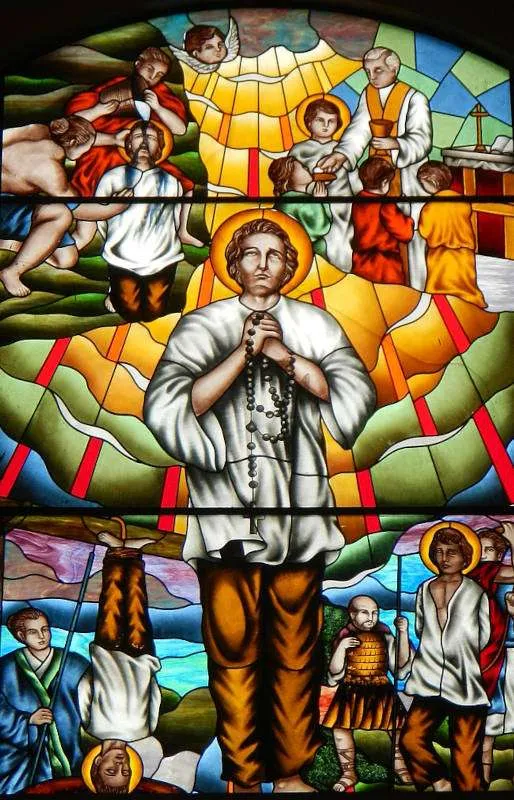
San Lorenzo Ruiz and Companions, Martyrs

c. 1600–1637; Patron Saint of the Philippines, Filipinos, immigrants, the poor, separated families, and altar servers; Canonized by Pope John Paul II on October 18, 1987

In 1549, Saint Francis Xavier and two Jesuit companions first reached Japanese soil with the Gospel. By the end of the century, Japan had an estimated 300,000 converts to the faith. By the 1580s, the Tokugawa shogun had become suspicious of Western Christianity, fearing that its spread could lead to European colonization. As a result, edicts were issued that outlawed Christianity. This led to thousands of martyrdoms between the years 1597 and 1639. Of those martyrs, twenty-six were canonized as saints in 1862, 205 were beatified in 1867, sixteen were canonized in 1987, two were beatified in 1989, and 188 were beatified in 2008. The saints commemorated today, Saints Lawrence Ruiz and Companions, are those sixteen who were canonized in 1987 by Pope John Paul II.

Lorenzo (Lawrence) Ruiz was born to a Chinese father and a Filipino mother in Binondo, Manila. The city of Binondo was established only six years before Lawrence’s birth by the Spanish governor for Chinese settlers who had converted to Catholicism. It soon became a vibrant and multicultural district, marked by many mixed marriages between Chinese and Filipinos, playing an important role in Manila’s commercial and cultural life. As a child, Lawrence learned Chinese from his father and Filipino from his mother, both of whom were Catholics. He was an altar boy at the local Dominican-run church, where he also received an education. Excelling in penmanship, he became employed as a scrivener, writing official documents, recording transactions, and keeping other written records. As he grew, he continued to be involved in parish life, joined the Confraternity of the Most Holy Rosary, and lived a normal life. In his late teens or early twenties, Lawrence married a woman named Rosario, and they had three children: two sons and a daughter.

During Lawrence’s lifetime, Spanish colonizers ruled the Philippines. Although they brought many benefits to the land, including numerous missionaries, the colonizers also often ruled with injustice. For instance, if a native Filipino killed a Spaniard, the crime would be met with swift retribution and severe punishment, disproportionately harsh towards the natives. Although an established legal system existed, it favored the Spaniards, so when a Filipino was accused of a crime, true and equal justice was not always guaranteed.

Unfortunately, Lawrence’s life took a tragic turn when, in 1636, around the age of thirty-six, he was falsely accused of a crime against a Spaniard, most likely murder, though records aren’t definitive. To escape unjust persecution, Lawrence hid from the authorities and boarded a ship with three Dominican priests, a Japanese priest, and a layman. Although the ship might have been initially destined for a peaceful Japanese port, it landed in Okinawa, Japan, where Catholic persecution was intense.

Shortly after the six arrived, the Tokugawa shogun became aware of their presence and had the group arrested. They were interrogated and informed they must leave Japan, to which they agreed. However, the shogun, unsatisfied with merely having them leave, also demanded they renounce their faith. This was a common tactic in Japan, aimed to eradicate the faith from the land. The belief was that if Christians publicly denounced their faith, other Japanese would see this as a sign of weakness and also abandon the faith. The group refused.

For over a year, this group of six remained imprisoned and were eventually transferred to Nagasaki. Throughout their captivity, they endured unimaginable cruelty. Water was poured down their throats, boards were placed on their abdomens, and they were subsequently jumped on, forcing the water out through their mouths, noses, and ears. They were cut and pricked with sharp bamboo, and endured severe psychological torture. One priest died on September 24, 1637. After that, two others considered renouncing their faith but found their resolve and held firm. Lawrence asked the torturers, “I would like to know if, by apostatizing, they will spare my life?” No answer came, and Lawrence remained resolute in his faith. They were then tightly bound to restrict blood flow and hung over pits. With one arm freed, they were told they merely needed to signal apostasy with that arm. They refused, remaining in that state for three days. Lawrence eventually proclaimed, “I am a Catholic and wholeheartedly accept death for God. Had I many thousands of lives, I would offer them all for Him. Never shall I apostatize. You may kill me if that is what you want. To die for God—such is my will.” Lawrence and his lay companion Lazaro died soon after, with the remaining three priests beheaded. They died on September 28 or 29, 1637.

The six martyrs included two laymen: Lawrence Ruiz and Lazaro of Kyoto; two Spanish Dominican priests, Fathers Antonio González and Miguel González de Aozaraza de Leibar; French priest Father Guillaume Courtet; and Japanese Dominican Father Vincentius Shiotsuka. Also honored today are five priests, two religious brothers, and three laypeople who were martyred in 1633 and 1644. The priests were Fathers Dominic Ibáñez de Erquicia Pérez de Lete, Jordan Ansalone, Luke of the Holy Spirit Alonso Gorda, Jacobo Kyushei Gorōbyōe Tomonaga de Santa María, and Thomas Rokuzayemon. The religious brothers were Francis Shōyemon and Matthew Kohioye. The laypeople were Marina of Omura, Magdalene of Nagasaki, and Michael Kurobioye.

As we honor these heroic witnesses to the Catholic faith, ponder the fact that their lives concluded with exceptional pain and suffering. Still, their eternal lives in Heaven are now celebrated with the highest praises. Saint Lawrence Ruiz, memorialized in today’s commemoration, was the first Filipino martyr, making his witness greatly revered among Filipino Catholics who seek his intercession. Saint Lawrence, along with the numerous other Japanese martyrs from the late sixteenth and seventeenth centuries, did more for the faith by courageously sacrificing their lives than they could have by living comfortably. Love is sacrificial, and while we might not be called to be martyrs in blood, we must nurture a faith so profound that it bears the same witness, sacrificially dedicating our lives for Christ and the salvation of souls in whatever ways we are called.

Source: https://mycatholic.life/saints/saints-of-the-liturgical-year/september-28—saint-lawrence-ruiz-and-companions-martyrs/

San Lorenzo Ruiz and Companions, Martyrs Read More »

Luke 16:19-22

Spiritual Riches

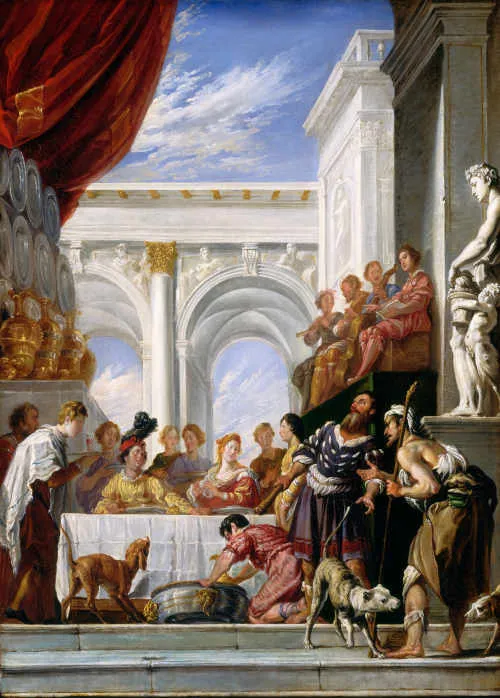
Jesus said to the Pharisees: “There was a rich man who dressed in purple garments and fine linen and dined sumptuously each day. And lying at his door was a poor man named Lazarus, covered with sores, who would gladly have eaten his fill of the scraps that fell from the rich man’s table. Dogs even used to come and lick his sores. When the poor man died, he was carried away by angels to the bosom of Abraham.”

Reflection:

No rational person would want to go to hell. The rich man in this parable certainly did not desire hell, but his actions led him there. Most people, however, do want to be rich in this world. In fact, many people would think it  irrational not to desire wealth. It is very rare to find a person who chooses to live in simplicity as a means to deeper spiritual fulfillment and as a preparation for the riches of Heaven. But one clear message from our Gospel story today is that the life that Lazarus lived on earth was far better than that of the rich man. So which life do you prefer here and now? While it is true that the rich man’s riches were not the exclusive cause of his eternal damnation, it is also true that his riches imposed upon him a temptation toward selfishness and indifference to the needs of others, which ended in his eternal demise.

Imagine that you won many millions of dollars. What would you do with it? As a good Christian, you might immediately profess that you would use that money for good, to help the poor and make a difference in the lives of others. What would the ideal response be to winning many millions of dollars? Would it suffice to give away ten percent and then use the rest for yourself? Probably not.

One thing that this parable teaches is that material wealth not only adds nothing of value to our eternal reward, it also adds much temptation to our lives. True, if you received a lot of money and then used that money exclusively for good in accord with God’s will, that would be a holy act of charity on your part and good for your eternal soul. But doing so would be very difficult. It would be very difficult to resist the temptations that come from material wealth.

Is it good to be rich? It is certainly good to be able to take care of your basic needs in life and those of your family. Having money helps you do that. But once our basic needs have been met, the money left over is far more of a temptation than it is a blessing. We have to believe that. And if you are among those who want to become rich so that you can help others, consider this scenario. If that is your motivation, and if you did win a large amount of money, would it be possible for you to continue living the way you are living now? Imagine staying in the same home, driving the same car, having the same lifestyle, and using all the money you obtained 100% for the glory of God and the good of others. That would be hard to do. But if you could do it, not only would it be good for others, it would be exceptionally good for your own soul. Though this Gospel story has many valuable lessons in it, one of the clearest messages is that earthly poverty benefits a soul far more than earthly wealth. Many people will find that hard to accept.

Reflect, today, upon the stark contrast between Lazarus and the rich man. One dined sumptuously every day, was clothed in fine linen and purple garments and then spent eternity in the netherworld where he was tormented. The other longed to eat the scraps from another’s table, had no home, was covered in sores, but spent eternity in Heaven after being carried away by angels to the bosom of Abraham. Choose to imitate Lazarus rather than the rich man. If you have many material possessions, work hard at being detached from them. Live simply, be generous, and never neglect those in need. If you have very little, do not covet more. Eliminate envy, don’t despair, trust in the providence of God, and rejoice that, like Lazarus, you are able to build up eternal riches within your soul that will remain with you forever.

Source: https://catholic-daily-reflections.com/2025/09/27/spiritual-riches/

Luke 16:19-22 Read More »

Saint Vincent de Paul, Priest

c. 1581–1660; Patron Saint of charitable societies and workers, horses, hospitals and hospital workers, lepers, lost articles, prisoners, spiritual help, and volunteers; Canonized by Pope Clement XII on June 16, 1737

Vincent de Paul was the third of six children born to peasant farmers in the village of Pouy in the Kingdom of France, about 100 miles north of the border with the Kingdom of Spain. As a child, he worked the fields and tended the livestock, but he also showed great intelligence. Although he was quite devout as a child, he was ashamed of his poverty and longed to advance in society. He later shamefully admitted that he was even embarrassed by his father when he was young: “I was ashamed to walk with him and to acknowledge him as my father because he was badly dressed and a little lame.” Vincent’s father, however, was not ashamed of Vincent and saw much promise in him. When Vincent was a young teenager, his father sold an ox so that he could send his son to be formally educated.


Vincent was sent to the seminary in Dax, a town about 100 miles to the west, where he lived with the Franciscan Friars. A few years later, he was sent to the University of Toulouse to study theology and was ordained a priest at the age of nineteen or twenty. (Note: Some historians believe he was born in 1676 rather than 1681, so it’s possible he was ordained at age twenty-four or twenty-five.) Since he might have had to receive a special dispensation for such a young ordination, he remained in Toulouse to complete further studies in theology and canon law. During his time at the university, he paid for his studies by working as a tutor.

In 1604, Father Vincent received an inheritance from a wealthy woman and traveled to Marseilles to sell the property. Marseilles was about 200 miles to the east of Toulouse by foot but could be reached much more quickly by boat. After selling the property, he was invited by a man to accompany him by boat to the port of Narbonne. Traveling by boat was known to be dangerous since many North African Muslim pirates patrolled those waters, looking for men to enslave. Father Vincent decided to sail to Narbonne because the wind was in their favor and the trip should be quick. However, pirates did intercept them, attacked the boat, killed some onboard, and injured everyone else. Father Vincent received an arrow in his shoulder. Once captured, they were taken to the North African port of Tunis, in modern-day Tunisia, where they were humiliated, treated like animals, and sold. Father Vincent reports that over the next two years he was bought and sold multiple times. Finally, he was sold to a master who was a Franciscan priest turned Muslim, having renounced the Catholic faith to win his freedom. Father Vincent won him over, helped him convert back to the faith, and together, they escaped.

Father Vincent’s imprisonment profoundly affected him. One of his motivations for priestly ordination was to escape poverty as a peasant farmer and lead a more comfortable life. Being a slave transformed him. His faith deepened, and his concern for the poor and suffering grew. Perhaps more than the seminary, his captivity molded him into the saint he became.

After returning to France from two years in captivity in 1607, Father Vincent met Monsignor de Berulle (later Cardinal Berulle), and traveled to Rome with him where he continued his studies. Monsignor de Berulle was an influential writer often credited as the founder of what came to be known as the French School of Spirituality, a movement that focused on fostering a deep personal relationship with Christ, apostolic works, deep devotion to the Blessed Virgin Mary, abandonment to the will of God, and reliance on the work of the Holy Spirit. This movement would influence many future saints, including Father Vincent.

In 1609, he was sent back to France to help coordinate almsgiving for Queen Marguerite of Valois. Father Vincent served her briefly, but it was a fruitful period during which he realized the good that the wealthy could do for the poor. In France, he also became a pastor and entered the service of the wealthy and generous Gondi family. In 1617, he became their personal chaplain and tutor to their children. While serving them, he gave missions to the rural populations on their properties. The Gondi family also supervised the prisoners who served as rowers in the galleys of France. This connection allowed Father Vincent to start a ministry for these prisoners, who often had dire spiritual needs. He also formed the Confraternities of Charity, an association of laywomen from various social classes who provided physical and spiritual care to the poor and sick.

In 1625, to address the growing needs he observed, Father Vincent founded the Congregation of the Missions, later known as the Vincentians (or Lazarists). The congregation had begun the prior year when five other priests started assisting Father Vincent with his missions on the Gondi property. The group aimed to minister to the rural poor who, due to poorly trained and neglectful clergy, were spiritually deprived and lacked even a basic understanding of the Catholic faith. The new congregation embarked on a mission of catechesis, sacramental celebrations, and spiritual direction for these peasants. They also worked to meet the physical needs of the sick and poor.

Father Vincent and his fellow priests soon realized that a better long-term solution was to improve clergy formation. Therefore, in line with the recent decrees of the Council of Trent, the Congregation of the Missions began managing seminaries and offering ongoing formation to the clergy. By the time of his death, the congregation was running eleven seminaries. Roughly a century later, the Vincentians controlled about one-third of the seminaries in France.

Also in 1625, Father Vincent became the spiritual director of the widow, and later saint, Louise de Marillac. In 1629, Father Vincent invited Louise to work with the Confraternities of Charity. This collaboration proved fruitful. Over time, Father Vincent and Louise realized that many wealthier women in the confraternity struggled to personally care for the poor. They discerned a need for a congregation to take over this work, allowing the ladies of the confraternity to help in other capacities, such as fundraising. In 1633, they co-founded the Daughters of Charity who dedicated themselves to serving the poor in various capacities, including soup kitchens, hospitals, schools, orphanages, job training, and prison outreach.

For the next twenty-seven years, Father Vincent continued to expand the ministries God had inspired. At the time of his death, the Daughters of Charity, Confraternities of Charity, and Congregation of the Mission were all thriving.

Saint Vincent de Paul was a man of exceptional empathy who acted on that empathy, rather than just feeling it. He was an outstanding organizer who inspired many from every social class to follow him. He inspired seminarians, priests, men, women, the rich, poor, powerful, sick, and everyone else within his circle of influence. Just over 150 years later, Saint Vincent’s ministry continued to inspire, leading to Frédéric Ozanam’s founding of what is today known as the Saint Vincent de Paul Society, an international lay organization providing direct relief and compassion to the poor at local levels. This society inspires many, as do the Vincentians and Daughters of Charity.

As we honor this great saint, ponder the ways that you can put your empathetic heart into action. We are all called to care for the sick, poor, and suffering in various ways. We are all responsible to help share the Gospel with those God puts in our lives. Allow Saint Vincent de Paul to inspire you, as he has so many others, and do not hesitate to respond to that inspiration.

Source: https://mycatholic.life/saints/saints-of-the-liturgical-year/september-27–st-vincent-of-paul/

Saint Vincent de Paul, Priest Read More »

Luke 9:44-45

A Well-Ordered Soul

“Pay attention to what I am telling you. The Son of Man is to be handed over to men.” But they did not understand this saying; its meaning was hidden from them so that they should not understand it, and they were afraid to ask him about this saying. 

Reflection:

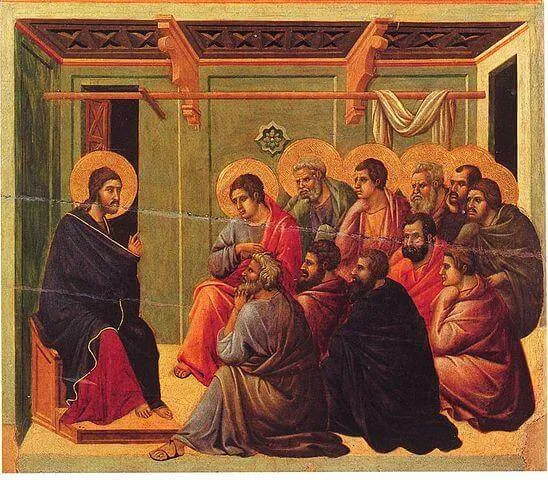
This is the second time that Jesus predicts His coming passion to His Apostles. After telling them that He will be handed over, the Gospel relates that “they did not understand this saying.” It also states that “they were afraid to ask him about this saying.” Why did they not understand, and why were they afraid to ask Jesus about His coming passion?

The Apostles were deeply attached to our Lord, both on a spiritual level and also through their affections. And this is good. But sometimes our affections can cloud our thinking and make it difficult to understand the deeper spiritual realities in life. Though our affections are natural, they must always be directed by the will of God. For example, if we were to try to understand Jesus’ affections, we’d have to conclude that He both spiritually and affectionately desired to lay down His life for the salvation of souls in accord with the will of the Father. He not only chose this with His will, but He also desired it in His affections, because His affections were perfectly ordered.

The Apostles, however, were unable to understand that Jesus had to lay down His life, be rejected, suffer and die, in part because they were very attached to Jesus in an emotional and affectionate way. So in this instance, their human love and attachment to Jesus hindered their ability to understand the greater spiritual good of Jesus laying down His life.

Consider, also, our Blessed Mother. How would she have reacted to Jesus saying that He had to be handed over, be rejected, suffer and die? Though this would have grieved her with a holy sorrow, the perfection of her human nature would have led her to not only understand and accept this deep spiritual truth, but she would have also desired this to happen within her affections because she perfectly desired the fulfillment of the will of the Father. There would have been no conflict within her between the will of the Father and what she desired.

In our own lives, we will often tend to struggle in the same way that the Apostles struggled. When faced with some challenging cross in life, a cross that the Father calls us to embrace freely, we will often find that our affections resist. When this happens, we become confused and even fearful of the future. Thus, the only way to conquer fear is to work to surrender every emotion, every affection and every human attachment over to the will of the Father so that His will is all we desire with every power of our soul.

Reflect, today, upon the interior struggle of these Apostles as they came face-to-face with this the second time Jesus began to prepare them to accept, understand, choose and desire His passion. Consider the interior struggle they went through at that time and even as they saw this unfold. Eventually they understood. Eventually all fear vanished. And eventually they affectionately rejoiced in Jesus’ sacrifice. But it took much time and much surrender. Reflect upon those ways our Lord is inviting you to choose His Cross in your life. Where you see your affections resisting, try to surrender, pray for understanding and seek the courage you need to desire His Cross with all your soul.

Source: https://catholic-daily-reflections.com/2025/09/26/a-well-ordered-soul-7/

Luke 9:44-45 Read More »

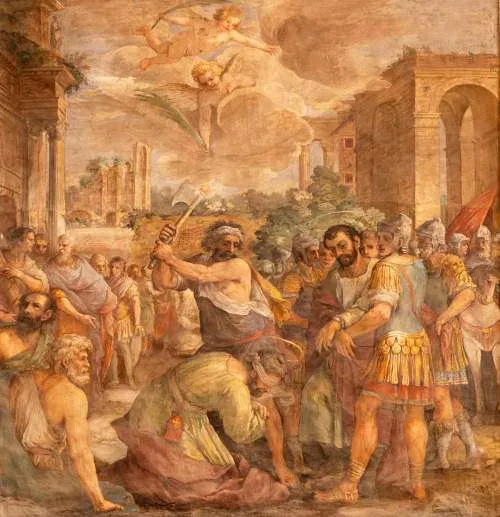
Saints Cosmas and Damian, Martyrs

c. Late Third Century–c. 287 or 303; Patron Saints of apothecaries, barbers, blind people, chemical industry, druggists, midwives, physicians, pharmacists, surgeons; Invoked against blindness, kidney stones, hernias, and pestilence; Pre-Congregation canonizations

Today, the Church honors Saints Cosmas and Damian—twin brothers, physicians, and martyrs who have been widely venerated in the East and West since the time of their deaths. Little is known for certain about these saints. What we do know is that they were martyrs, most likely under Roman Emperor Diocletian. What has come down to us by way of legend, however, offers an inspiring witness of faith and courage from the early Church.

Cosmas and Damian might have been born in Cyrrhus, modern-day Syria, and later moved to the Gulf of Iskenderun in Cilicia, modern-day Turkey, in the mid- to late-third century. They were twins, sons of a Christian mother and possibly a Christian father, who raised them in the faith. They were educated in the science of healing and became physicians.

At that time, physicians were often paid based on their reputations. Those who were highly skilled and successful often catered to the wealthy, receiving regular salaries from them. Others charged for services on a case-by-case basis. Because Cosmas and Damian were Christians, legend holds that they decided to evangelize the largely pagan community in which they lived by doing something extraordinary. They offered their healing services for free! This charitable work earned them the title “Anargyroi,” meaning “without silver.” Their counter-cultural practice caught the attention of their fellow citizens and drew many to the faith. Legends hold that they were excellent physicians who healed many, perhaps more through their prayers than by their science. One legend states that they were the first to transplant a leg to an amputee, which is often depicted in art.

In 284, Diocletian became the Roman emperor and embarked on many reforms within the empire. In 303, he began to issue a series of edicts that led to an empire-wide persecution and death of many Christians. Prior to that, persecutions were more localized and random. Around the year 287 or 303 (records are conflicting), the Roman Prefect Lysias of Cilicia arrested the twins Cosmas and Damian. Christians of prominence were often the first to be targeted.

As was the custom, the brothers were given the opportunity to publicly renounce their faith and honor the Roman gods to save their lives. They refused and were sentenced to death. Various legends surrounding their deaths state that they were first tortured in an attempt to get them to comply with the prefect’s wishes. However, they were miraculously preserved from suffering, sustaining no injuries. Multiple attempts were then made to kill them by drowning, fire, arrows, and stoning, but each attempt failed. Finally, Cosmas and Damian, along with three of their brothers, were beheaded. 

It is believed that Cosmas and Damian were buried in the city of Cyrrhus, their possible birthplace. From that time on, they have been widely venerated. Many miraculous healings have been attributed to their intercession. Within a century of their martyrdom, churches were built in their honor in Jerusalem, Egypt, and Mesopotamia.

In the sixth century, Roman Emperor Justinian I honored these saints by restoring the city of their burial. Shortly after, the emperor received a miraculous cure through their intercession. In gratitude, he brought their relics to Constantinople where he built a Church in their honor that became a popular pilgrimage site. In that church, a custom began where the faithful would remain all night at their tomb in prayer, seeking miraculous cures to their ailments. Many miracles have been reported over the centuries.

Also in the sixth century, Pope Symmachus inserted the names of Cosmas and Damian into the Roman Canon (Eucharistic Prayer I) and Pope Felix IV repurposed a fourth-century pagan temple in Rome, within the Forum of Peace, renaming it the Basilica Santi Cosma e Damiano. Though it has gone through many renovations, the fifth-century mosaics depicting their story are among the most revered pieces of sacred art in Rome.

Though we will never know the exact historical details of the lives and martyrdoms of Saints Cosmas and Damian until we reach the glories of Heaven, the virtues they enshrine should be a source of inspiration and encouragement. Their work of evangelization through free and selfless service in the name of Christ is worthy of imitation. Their heroic martyrdom presents us with the virtues of courage and fidelity to Christ. Their miraculous intercession for those who have been ill should invite us to rely upon their intercession for the sick today.

Source: https://mycatholic.life/saints/saints-of-the-liturgical-year/september-27sts-cosmas-and-damian-martyrs/

Saints Cosmas and Damian, Martyrs Read More »