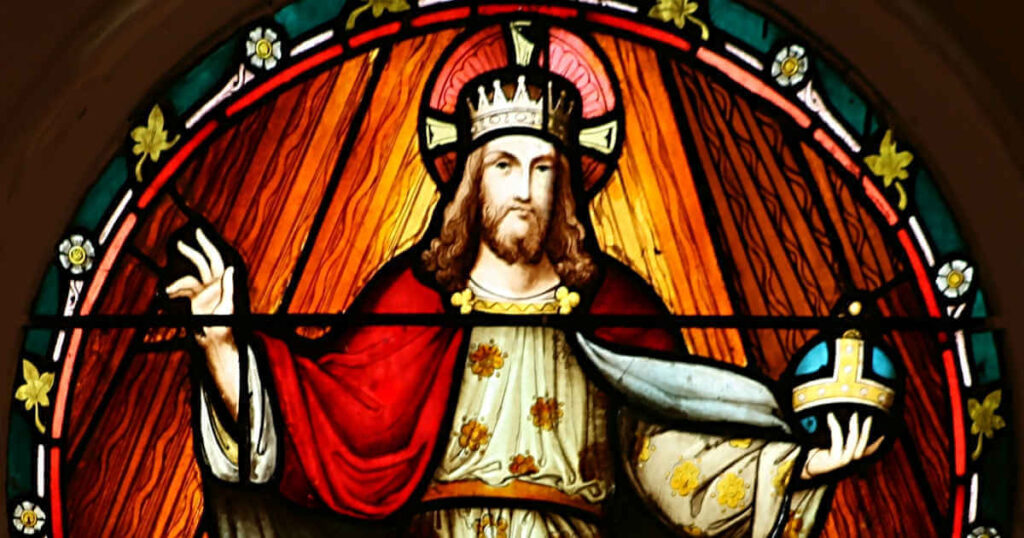
The Solemnity of Our Lord Jesus Christ, King of the Universe
The Solemnity of Our Lord Jesus Christ, King of the Universe Read More »
As the visions during the night continued, I saw
one like a Son of man coming,
on the clouds of heaven;
when he reached the Ancient One
and was presented before him,
the one like a Son of man received dominion, glory, and kingship;
all peoples, nations, and languages serve him.
His dominion is an everlasting dominion
that shall not be taken away,
his kingship shall not be destroyed.
R. (1a) The Lord is king; he is robed in majesty.
The LORD is king, in splendor robed;
robed is the LORD and girt about with strength.
R. The Lord is king; he is robed in majesty.
And he has made the world firm,
not to be moved.
Your throne stands firm from of old;
from everlasting you are, O LORD.
R. The Lord is king; he is robed in majesty.
Your decrees are worthy of trust indeed;
holiness befits your house,
O LORD, for length of days.
R. The Lord is king; he is robed in majesty.
Jesus Christ is the faithful witness,
the firstborn of the dead and ruler of the kings of the earth.
To him who loves us and has freed us from our sins by his blood,
who has made us into a kingdom, priests for his God and Father,
to him be glory and power forever and ever. Amen.
Behold, he is coming amid the clouds,
and every eye will see him,
even those who pierced him.
All the peoples of the earth will lament him.
Yes. Amen.
“I am the Alpha and the Omega, ” says the Lord God,
“the one who is and who was and who is to come, the almighty.”
R. Alleluia, alleluia.
Blessed is he who comes in the name of the Lord!
Blessed is the kingdom of our father David that is to come!
R. Alleluia, alleluia.
Pilate said to Jesus,
“Are you the King of the Jews?”
Jesus answered, “Do you say this on your own
or have others told you about me?”
Pilate answered, “I am not a Jew, am I?
Your own nation and the chief priests handed you over to me.
What have you done?”
Jesus answered, “My kingdom does not belong to this world.
If my kingdom did belong to this world,
my attendants would be fighting
to keep me from being handed over to the Jews.
But as it is, my kingdom is not here.”
So Pilate said to him, “Then you are a king?”
Jesus answered, “You say I am a king.
For this I was born and for this I came into the world,
to testify to the truth.
Everyone who belongs to the truth listens to my voice.”
Source: https://bible.usccb.org/bible/readings/112424.cfm
The Solemnity of Our Lord Jesus Christ, King of the Universe Read More »
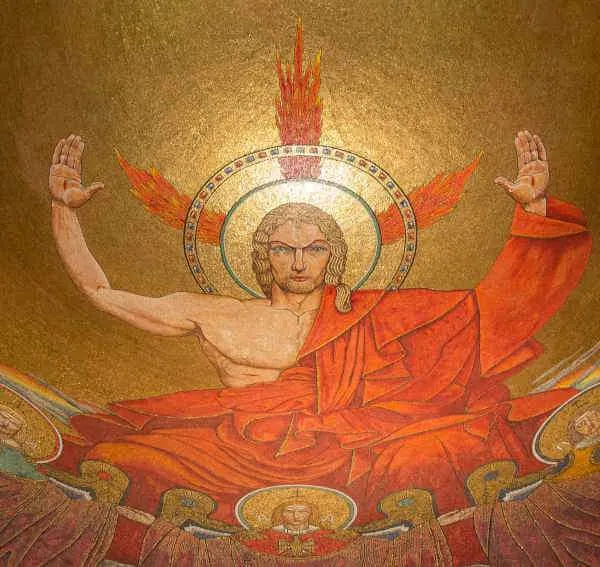
Our liturgical year is ordered in such a way as to lead us through the entire mystery of salvation won for us in Christ. Each liturgical year begins with Advent, when we ponder the Incarnation that leads us to the celebration of Jesus’ birth at Christmas. Following Christmas we enter into the public ministry of Christ during Ordinary Time, which begins with the feast of His Baptism. In the midst of Ordinary Time, we enter the deepest paschal mystery of Lent and Easter, culminating with the Triduum of Holy Thursday, Good Friday, and Easter Sunday. The Easter Season concludes with Christ’s Ascension and Pentecost, the beginning of the Church. Finally, after the rest of Ordinary Time, we come to the great Solemnity of Our Lord Jesus Christ, King of the Universe, commonly referred to as the Feast of Christ the King.
The liturgical feast of Christ the King was added to the Church calendar in 1925, when Pope Pius XI instituted it with his encyclical Quas Primas. The eschatological event it celebrates has been in the mind and heart of the Blessed Trinity from before the beginning of time and was clearly proclaimed by Jesus in His public ministry. At the time Pope Pius XI instituted it, the world was in political and social chaos. After World War I ended in 1918, secularism began to grow worldwide, and communist and fascist ideologies emerged, leading many to question and even abandon their faith. The unity of faith and civil governance, which had been part of the make-up of Europe since the fourth century, slowly crumbled, and God’s sovereignty over the world was readily dismissed. Though the concept of the separation of the Church and State can be helpful to both the Church and the State, if God’s authority and laws are excluded from human governance, man is left to his own designs and inevitably goes astray.
Upon seeing the social and political culture of the 1920s devolve, Pope Pius XI felt that he needed to remind the Church and the world that there is only one King, and that King is not only the King of Catholics, He is the King of humanity, of the entire Universe. In his encyclical letter, Pope Pius quotes Pope Leo XIII who said in his encyclical on the Sacred Heart, Annum Sacrum, “[Christ’s] empire includes not only Catholic nations, not only baptized persons…but also all those who are outside the Christian faith; so that truly the whole of mankind is subject to the power of Jesus Christ.” Pope Pius XI goes on to say, “Nor is there any difference in this matter between the individual and the family or the State; for all men, whether collectively or individually, are under the dominion of Christ. In him is the salvation of the individual, in him is the salvation of society” (Quas Primas #18).
When Jesus walked the earth, He chose not to forcibly impose His divine authority and rule upon nations, even though many of His followers wanted Him to do so. Instead, He instituted the Kingdom of God as a spiritual reality in which we are all called to voluntarily participate, for now. Those who do participate are called to work to establish Christ’s Kingdom on earth, here and now, by governing according to the mind and will of God. The modern-day concept of the separation of Church and State is helpful insofar as the Church must be free from political interference and control. However, this separation should never lead to an exclusion of the King of the Universe from human governance. Rather, human beings must give themselves over to the control and dominion of the Great King, and then govern according to His mind and will. Pope Pius XI goes on to say, “When once men recognize, both in private and in public life, that Christ is King, society will at last receive the great blessings of real liberty, well-ordered discipline, peace and harmony. Our Lord’s regal office invests the human authority of princes and rulers with a religious significance; it ennobles the citizen’s duty of obedience” (#19).
Moving beyond the role Christ has in the governance of the Universe and humanity, this feast also reminds us that in order for Christ to truly reign as King, He must first govern each and every soul. Jesus is not only the Savior of mankind, He is also the model of Christian living. He Himself said, “I came down from heaven not to do my own will but the will of the one who sent me” (John 6:38). Just as the Son of God did His Father’s will while on the earth, so must we. Christ will reign as King of our lives only when we say those words with Him, by the power of grace that He infused into human nature. We cannot do our own will, but the will of the Father in Heaven. God’s governance of our lives requires complete obedience to His commands because His commands are perfect, true, and lead us to the fulfillment of human life. Only in Christ do we find peace, unity, harmony, and true purpose.
Furthermore, the ideal society will only become a reality if every individual is governed by the will of God. The more that happens, the more society as a whole will share in the Kingdom of God. The individual’s or society’s refusal to obey God will lead only to a participation in the kingdom of satan. Hence, we should see the institution of this feast in 1925 as both an invitation to share in God’s Kingdom on earth and as a warning that the secular, communist, and fascist ideologies that were emerging were leading the world toward satan’s kingdom. The same is true of our day and age in another way, especially as we see secularism growing.
The final and most glorious aspect of today’s feast points us to the end of time when Jesus, the great King, will return in all His splendor and glory to establish His unending Kingdom on earth, when He unites Heaven and earth into the new and resurrected Kingdom yet to come. On that day, Christ “will come again in glory to judge the living and the dead and his kingdom will have no end,” and we will all share in “the resurrection of the dead and the life of the world to come” (Nicene Creed). Sadly, this new and eternal Kingdom of Christ is often ignored.
As we celebrate this glorious solemnity, the last Sunday of the Church’s liturgical year, deepen your faith in the mystery it celebrates, and strengthen your resolve to embrace the Kingship of Christ in your life, so that through you, His Kingdom will become all the more present in the world all around you.
Source: https://mycatholic.life/saints/saints-of-the-liturgical-year/our-lord-jesus-christ-king-of-the-universe–solemnity/
Our Lord Jesus Christ, King of the Universe Read More »
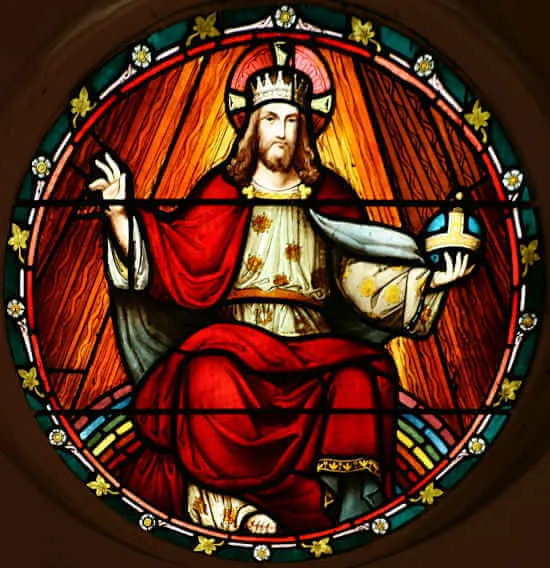
Jesus answered, “My kingdom does not belong to this world. If my kingdom did belong to this world, my attendants would be fighting to keep me from being handed over to the Jews. But as it is, my kingdom is not here.”
Reflection:
Today, on the final Sunday of our Church year, we celebrate the glorious Solemnity of Jesus Christ, King of the Universe. Next Sunday begins Advent. On this day we profess the profound truth that our Lord is King! He is the King of all things. He is King of the Universe. And He is King of Heaven and all spiritual realities. However, in the Gospel passage quoted above, Jesus responds to Pilate who was questioning Him about whether or not He was the King of the Jews. Jesus is clear that He is a King, but that His Kingdom does not belong to this world. So where is His Kingdom?
We can look at Jesus’ statement from two points of view. First of all, if Jesus would have claimed that He were an earthly king, one with civil authority, then Pilate would have judged Him to be guilty of trying to overthrow the Roman authority. This would be unlawful and would be punishable by death. In that case, Jesus could have been found legally guilty of violating civil law.
But Jesus was purely innocent. He was morally perfect in every way, and that included His obedience to all legitimate civil law. But Jesus was a King. He was The King of all Kings! Therefore, so as to exercise His Kingship, He declared that His Kingdom was not of this world. In other words, it was not a Kingdom that was in competition with the Roman authorities or any other civil authority. To that, Pilate did not know how to respond.
Today and always, God desires that His glorious Kingdom reign in every way. God begins by reigning in our souls. He invites us to invite Him to enter in and take control of our lives. He desires to be the ruler of every passion, desire, thought and action that is ours. When this happens, His Kingdom is firmly established within us.
It also needs to be pointed out that Jesus wants His Kingdom to grow. First, it must grow in the minds and wills of all people. But from there, He wants every person to then work to conform every part of our society to the governance of Him as King. This means that as the hearts of civil leaders are converted, they will be called to enact laws that fully support and build up God’s Kingdom on earth. It means that business leaders, as they convert, are called to govern their businesses in accord with the will of God so that their businesses contribute to the establishment of God’s Kingdom here and now. It means that as the leaders of our schools, sports programs, social programs and the like all invite Jesus to reign in their hearts as King, The King of the Universe will then guide them to conform all of their endeavors to His will and to the continued upbuilding of His Kingdom.
The first duty of the Christian, in regard to the governance of every aspect of society, is not to impose God’s law from without, as a ruthless authoritarian would. Rather, it is to convert minds and hearts so that God’s governance comes forth from within. As God’s Kingdom is established in the lives of His people, all objectively grave evils embedded within our earthly laws must be overturned. For example, the legalization of abortion stands out as perhaps the greatest of moral evils, since it involves the taking of a completely innocent life. This and countless other immoral earthly laws must be replaced by the laws of God as hearts and minds are converted to His Truth.
Reflect, today, upon your duty to help bring forth the Kingdom of God here and now. Start by seeing your duty to allow God’s Kingdom to grow within you and your family. From there, be open to the many ways that God wants to use you to help others do the same. As you do, do not be afraid to work toward the external establishment of God’s Kingdom in all that you do and in all that falls within your responsibility. Jesus is King, and He desires to reign everywhere. Cooperate with Him, and His Kingdom will indeed come.
Source: https://catholic-daily-reflections.com/2024/11/23/may-thy-kingdom-come-2/
Catholicism arrived in Mexico with the Spanish conquistadors in the early 1500s and rapidly grew, especially following the apparition of Our Lady of Guadalupe in 1531. By 1810, anti-Catholic sentiments had set in after Mexico’s independence from Spain when the Church became intimately intertwined with civil governance. The new Mexican Constitution in 1857 was the initial attempt by the newly independent state to limit the Church’s influence. Anti-Catholicism and anti-clericalism reached their peak in the 1920s under President Plutarco Elías Calles, leading to the Cristero Wars that took the lives of an estimated 50,000–250,000 Mexicans and brought the martyrdom of at least 40 priests. Of those priests, Blessed Miguel Agustín Pro, whom the Church honors today, was beatified by Pope John Paul II in 1988. Additionally, Saint Christopher Magallanes and his twenty-four companions, whose memorial is on May 21, were canonized by Pope John Paul II in the jubilee year 2000.
José Ramón Miguel Agustín Pro Juárez (Miguel Pro) was born in 1891, just before this painful period of anti-Catholicism in Mexico’s history. He was born in Guadalupe, Zacatecas, Mexico, the third of seven surviving children. When Miguel was still an infant, his family moved to Mexico City and would move around to various towns in the north over the next twenty years. Miguel’s parents were devout Catholics. His father was a respected and experienced mining engineer who often had a heavy workload and employed help from his children at times. As a youth, Miguel had a lively and attractive personality, along with a good sense of humor. He loved to tell stories and entertain others, and had a deep faith from an early age. He was especially close to his sister, María de la Concepción, with whom he made a pact that he would become a Jesuit priest and she a nun. They both fulfilled that pact. Later in life, letters exchanged between the two reveal their deep faith and respect for each other.
At the time of Miguel’s birth, the 1857 anti-Catholic Mexican Constitution had been in place for about twenty-five years. President Porfirio Díaz permitted the Church to operate independently and freely, while leaving the laws on the books. By the time Miguel turned twenty, political instability had risen, leading to Díaz’s resignation and exile in 1911. In that same year, Miguel entered the Jesuit novitiate in El Llano, Michoacán, Mexico. The next three years saw two short-term presidents, and in 1914, Venustiano Carranza seized power and took the title of “First Chief of the Constitutionalist Army.” The Jesuit novitiate in El Llano was closed as part of renewed anti-Catholic persecutions. Brother Miguel fled to the United States, then to Spain, and finally to Belgium. For the next ten years, Brother Miguel studied as he moved, preparing for priestly ordination that took place in Belgium in 1925. Though his formation was fraught with illness, exile, and concern for his homeland, he kept his eyes upon God’s will and embraced the gift of the priesthood with great joy. “I could not hold back the tears on the day of my ordination, above all at the moment when I pronounced, together with the bishop, the words of the consecration.”
During the period that Father Miguel was outside Mexico in formation, things went from bad to worse for the Mexican Church. In 1917, a new Mexican constitution imposed more stringent restrictions on the Church. The education of youth was restricted to secular schools. Religious ceremonies were prohibited from taking place outside of churches. Religious organizations were prohibited from owning any property other than churches, leading to widespread confiscation. Monastic vows were prohibited. Clergy could not inherit property and were stripped of citizenship, the right to vote, and the ability to participate in politics. Finally, only native-born clergy were allowed to minister; foreign clergy were forced to leave.
In 1925, Plutarco Elías Calles was elected president and soon after ushered in a more intense era of anti-Catholic and anti-clerical persecutions. He enforced the 1917 constitution and, in 1926, enacted the “Law for Reforming the Penal Code,” also known as the “Calles Law,” which required stricter enforcement of the Constitution. All forms of public worship were outlawed, the remaining Church property was confiscated, all forms of religious education (even private) were forbidden, and priests were expelled from the country. This led to a peasant revolt called the Cristero Wars, which lasted until 1929. “¡Viva Cristo Rey! ¡Viva la Virgen de Guadalupe!”—“Long live Christ the King! Long live the Virgin of Guadalupe!”—This was the cry of the Cristeros in the face of oppression.
As the 1926 persecution began in earnest, the newly ordained Father Miguel Pro could do nothing from Belgium, except pray. He devised a plan to return to Mexico and live publicly as a well-dressed businessman, mechanic, or even beggar, while at the same time carrying out a clandestine ministry. He had never lived in Mexico as a priest, so he believed he could escape the notice of the civil authorities. He arrived in Mexico on July 8, 1926, and made his way to Mexico City where he began his priestly service. His naturally joyful personality and sense of humor helped inspire many and lifted the heavy burden of the oppression they were experiencing. He conducted Masses in secret, heard confessions, administered the other sacraments in private homes, and moved around to avoid getting caught by the authorities. After a few months of his clandestine ministry, Father Miguel was arrested on suspicion that he wrote pamphlets and attached them to 600 balloons that were released over the city to share the Gospel with the people. After being interrogated, he was released because there was insufficient evidence to hold him. When another arrest warrant was issued for him shortly after, he remained in seclusion but resumed his secret ministry once his superiors gave their consent.
Less than a year later, in November 1927, an assassination attempt resulted in the wounding of the former president Álvaro Obregón. The authorities traced the car that was used to Father Miguel’s brother, who had nothing to do with the plot. Nonetheless, the authorities moved in and not only arrested Father Miguel’s two brothers but also Father Miguel. Another man confessed to the crime, stating that he acted on his own, without any involvement by the Pro brothers. After the brothers were questioned in Mexico City by the Detective Inspector, President Calles himself gave the order to execute Father Pro and his brothers, despite there never having been a trial. President Calles gave further orders that the execution was to be photographed and printed in the papers the following day as a way of deterring the Cristeros in their revolution.
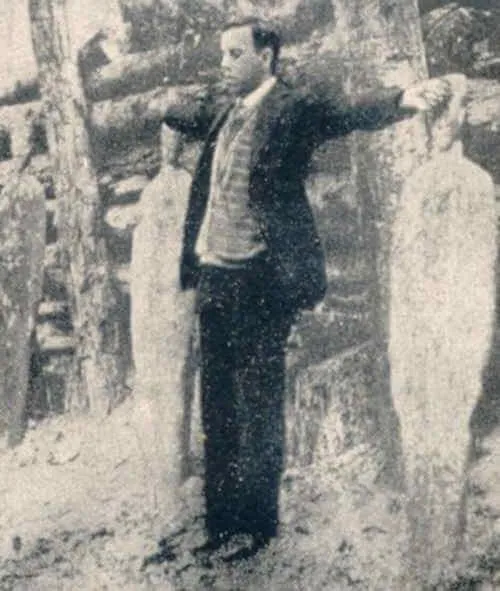
On November 23, 1927, Father Miguel Pro walked from his cell to the courtyard where the firing squad awaited, with the photographer ready at hand. The pictures show a confident and courageous Father Miguel Pro, kneeling before his executioners, facing them without a blindfold, forgiving them, blessing them, holding a rosary in one hand, and a crucifix in the other. He cried out, “May God have mercy on you! May God bless you! Lord, You know that I am innocent! With all my heart I forgive my enemies!” He then rose, faced the firing squad, extended his arms as if on a cross, and prayed in a loud voice, “Viva Cristo Rey!” After the shots rang out, Father Pro was still alive, so one of the soldiers came forward and shot him point-blank.
When the pictures and story appeared the following day, the Mexican people were deeply inspired by their young martyr. Though publication in the papers was meant to be a deterrent to the Cristeros, the pictures and story had the opposite effect. An estimated 40,000 people lined the streets for Father Pro’s funeral procession. Even though neither a Catholic funeral Mass nor the rites of burial were permitted, an estimated 20,000 Cristeros prayed at the cemetery as his body was buried.
Blessed Miguel Pro fell in love with his Lord during a time of extreme persecution. Rather than shying away from his faith, he prayed and fulfilled his priestly ministry with courage and love. His life culminated with a choice either to be bitter or to forgive and hope in his God. He chose the latter. May his life and witness inspire all who are persecuted for their faith, and may his prayers assist you on your own journey when times are rough.
Source: https://mycatholic.life/saints/saints-of-the-liturgical-year/november-23—blessed-miguel-agustn-pro-priest-and-martyr—optional-memorial/
Blessed Miguel Agustín Pro, Priest and Martyr Read More »
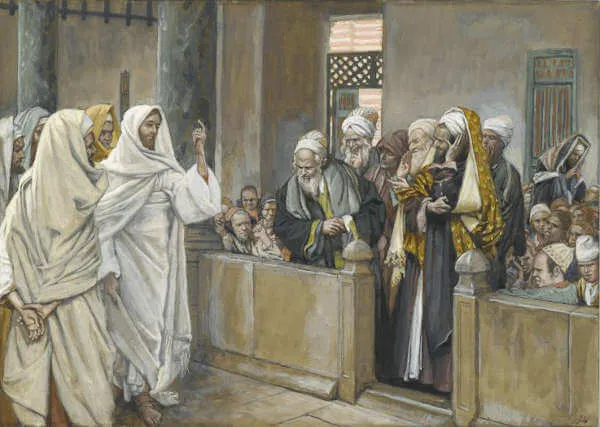
“That the dead will rise even Moses made known in the passage about the bush, when he called ‘Lord’ the God of Abraham, the God of Isaac, and the God of Jacob; and he is not God of the dead, but of the living, for to him all are alive.”
Reflection:
Jesus gives this response to some of the Sadducees who question Him about the resurrection of the dead. The Sadducees did not believe in the resurrection of the body, whereas the Pharisees did. Thus, the Sadducees asked Jesus about the resurrection of the body using an almost unheard of example. They refer to the levirate law found in Deuteronomy 25:5ff which states that if a married man dies before having children, the brother of that man must marry his wife and provide descendants for his brother. Thus, the Sadducees present the scenario where seven brothers die, each one subsequently taking the same wife. The question they posed was, “Now at the resurrection whose wife will that woman be? For all seven had been married to her.” Jesus answers by explaining that marriage is for this life, not the life to come at the resurrection. Therefore, none of the brothers will be married to her when they rise.
Some spouses have a hard time with this teaching, in that they love their spouse and desire to remain married in Heaven and at the time of the final resurrection. For those who feel this way, rest assured that the bonds of love we form on earth will remain and even be strengthened in Heaven. And when the end of the world comes and all of our bodies rise and are reunited with our souls, those bonds of love will remain stronger than ever. However, marriage, in the earthly sense, will be no more. It will be replaced by the pure love of the new life to come.
This teaching gives us reason to ponder further the beautiful teaching of our Lord about His return in glory and, as we say in the Creed, “the resurrection of the dead and the life of the world to come.” We profess this belief every Sunday at Mass. But for many, it can be hard to understand. So what do we actually believe?
Simply put, we believe that when we die, our body is “laid to rest,” but our soul enters a moment of particular judgment. Those who remain in mortal sin are eternally separated from God. But those who die in a state of grace will eternally live with God. Most people who die will most likely die with some lasting venial sins on their soul. Thus, Purgatory is the grace of final purification that the person’s soul encounters upon death. Purgatory is simply the purifying love of God which has the effect of eliminating every last sin and imperfection, and every attachment to sin, so that the purified soul can see God face-to-face in Heaven. But it doesn’t stop there. We also believe that at some definitive time in world history, Jesus will return to earth and transform it. This is His Final Judgment. At that time, every body will rise, and we will live eternally as we were intended to live: body and soul united as one. Those souls who are in mortal sin will also be reunited with their bodies, but their body and soul will live separated from God forever. Thankfully, those who are in a state of grace and have endured their final purification will be resurrected and share in the new Heavens and new Earth forever, body and soul as God intended.
Reflect, today, upon this glorious teaching of our Lord that you profess faith in every time you pray the Creed. Keeping your eyes on Heaven and, especially, on the final and glorious resurrected state in which you will live in the new Heaven and Earth must become your daily practice. The more we live with this holy expectation, the more we will live here and now as a time of preparation for this final existence. Build treasure now in anticipation of this glorious day and believe that it is the eternity to which you are called.
Source: https://catholic-daily-reflections.com/2024/11/22/preparing-for-eternity-3/
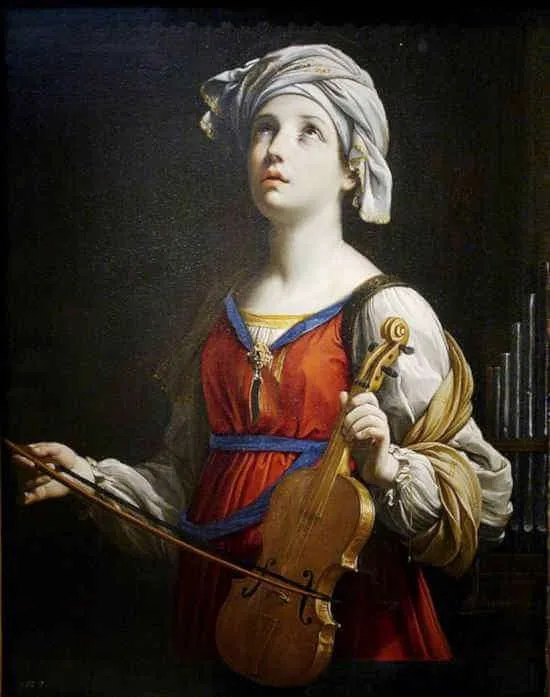
An ancient tradition holds that Pope Urban I, who served as the Holy Father from about 222–230, built a church in Rome over the house of a virgin martyr named Cecilia. By the fifth century, the church of Santa Cecilia in Trastevere had been either rebuilt or expanded, as it was also in the ninth and sixteenth centuries. The fact that today’s martyr had a church built in her honor, over the house in which she lived and died, helps explain how she has become so revered and honored throughout the many centuries since her death, despite the fact that little is known about her.
All we know for certain about Saint Cecilia is that she lived, was a follower of Christ, and died a martyr. Even the year of her death is disputed. Some place it as early as during the rule of Emperor Marcus Aurelius (176–180); others place it later, during the rule of Emperor Alexander Severus (222–235); still others place it somewhere in between. Though we do not have historical facts, we have an inspiring legend that was written down around the fifth century in a book called The Passion of Saint Cecilia. It is from that legend that this reflection on the life of this holy martyr is based.
Cecelia was born into a wealthy and noble family in the city of Rome during a time when Roman emperors and local prefects often persecuted Christians. Cecilia was not only a Christian with a very deep faith, she fasted, performed other penitential acts, and pledged her life to Christ and Him alone as His bride.
As a young woman, Cecilia’s father gave her in marriage to a nobleman named Valerian against her wishes. Young women at that time did not have the final say about whom they would marry. Like most Romans at that time, Valerian adhered to the Roman pagan religious practices. During their wedding, as the music played, Cecilia sang her own hymn in her heart. It was a hymn of praise to God, a beautiful prayer to her true Spouse in Heaven, which is why she later became the patron saint of musicians. After their wedding, before Valerian attempted to sleep with her, Cecilia revealed to her new husband that she was a Christian and that she had made a vow of virginity to her true heavenly Spouse. What’s more, Cecilia told Valerian that an angel of God was sent to her to guard her virginity, and the angel would deal fiercely with anyone who tried to violate it. Valerian asked to see the angel and Cecilia informed him that there was only one way. He had to go see Pope Urban I, receive catechetical instruction, and be baptized. Pope Urban had been in seclusion, living within the catacombs to avoid persecution and death from the Roman prefect. Valerian found him, was instructed in the faith, and baptized. When he returned to Cecilia, Valerian not only saw the angel who guarded her, he also saw her angel place on her head a dual crown of white lilies, symbolizing her purity, and red roses, symbolizing her martyrdom.
As a new Christian, Valerian shared his faith with his brother, Tiburtius, who also converted and was baptized. Valerian and Tiburtius then became very active with the underground Christian community, devoting themselves to good works, such as burying those who were martyred for their faith. Eventually, they came to the attention of the Prefect Almachius who ordered them to offer sacrifice to the Roman god Jupiter. When they refused, a Roman officer named Maximus was commanded to behead them. When Maximus attempted to carry out the command, he had a heavenly vision that led to his instant conversion. Once he professed his faith, he, too, was martyred with Valerian and Tiburtius by beheading, and Cecilia buried them.
Shortly afterward, Cecilia was arrested. The Prefect Almachius tried to convince her to save her life by offering sacrifice to the Roman gods, but she refused. Almachius was afraid that there might be backlash if he killed her publicly, since she was a beloved member of the community, so he ordered the guards to take her to her home, lock her in her bathroom, and boil water so that the steam would suffocate her, and her death could be blamed on an accident of her own making. The plot backfired and Cecilia survived. Outraged, Almachius ordered her beheading in her home. The soldier was dispatched and struck her neck once, twice, and a third time, but she remained alive, though badly injured. Roman law did not permit a fourth attempt at beheading, so the soldiers left her alone to die.
Cecilia remained alive for the next three days, during which time the Christian community flocked to her home. She distributed all of her money and property to the poor, and donated her house to the pope so he could transform it into a place of Christian worship. Toward the end, she was in such great suffering that she could no longer speak. So, to honor God, she held up her thumb and two fingers to represent the Most Holy Trinity, and her index finger on the other hand to represent the one divine nature they shared.
When she died, she was buried in the Catacomb of Saint Callistus, and Pope Urban transformed her house into a church. Centuries later, in 821, Pope Paschal I moved her mortal remains from the catacomb to the church built by Pope Urban and later expanded. In 1599, in preparation for the jubilee year, Cardinal Paolo Emilio Sfrondati had her body exhumed, and she was found miraculously preserved. Her tomb is now under the main altar with a marble sarcophagus on top, made by the artist Stefano Maderno, who is said to have seen her miraculously preserved body in 1599. The sarcophagus depicts what he saw. She is clothed in a silk and gold dress; her face is turned to the ground. On one hand her three fingers honor the Trinity; on the other, her one finger honors Their shared divinity.
Despite the legendary nature of her story, God has used Saint Cecilia to inspire many through the centuries, and there is little doubt that the details of her life were passed down from generation to generation by word of mouth, until they were finally put in writing. Her name was inserted into the Roman Canon (Eucharistic Prayer I), along with other saints and Roman martyrs. The Basilica of Santa Cecilia in Trastevere remains a revered church in Rome to this day, where many enter to pray and beseech her intercession and are inspired as they kneel before the marble sarcophagus depicting her young martyred body awaiting her final resurrection with Christ, her divine Spouse.
Source: https://mycatholic.life/saints/saints-of-the-liturgical-year/november-22—saint-cecilia–memorial/
Saint Cecilia, Virgin and Martyr Read More »
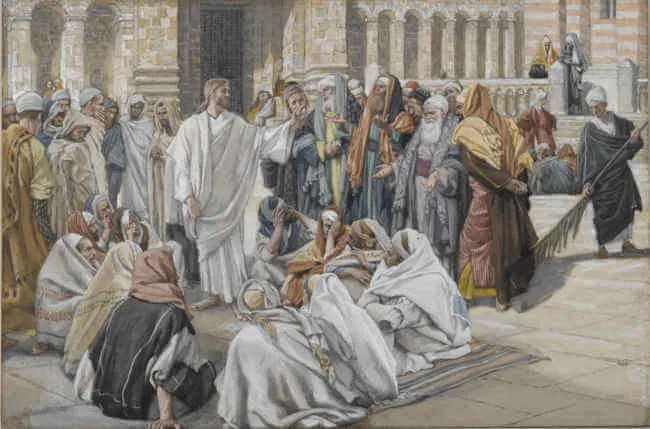
And every day he was teaching in the temple area. The chief priests, the scribes, and the leaders of the people, meanwhile, were seeking to put him to death, but they could find no way to accomplish their purpose because all the people were hanging on his words.
Reflection:
Jesus had just entered Jerusalem for the upcoming Feast of Passover. He arrived in that holy city and then returned again the next day and entered the Temple area. As He witnessed the corruption of those selling animals for the Temple sacrifices, Jesus responded with fervent preaching in an attempt to cleanse the Temple from this corruption. He quoted the Prophet Isaiah and cried out, “It is written, My house shall be a house of prayer, but you have made it a den of thieves.” Luke’s Gospel points out the reaction of the chief priests, the scribes and the leaders of the people. They were “seeking to put him to death.” However, as the Gospel further relates, “they could find no way to accomplish their purpose because all the people were hanging on his words.”
It’s important to consider this passage within its context. The words that Jesus spoke were words that sought to cleanse the Temple of corruption. With the approval of the temple priests, who benefitted from the temple tax, there were many people who were using the practice of divine worship to make a profit for selfish gain, turning the Temple into a marketplace. Jesus could see this clearly, and many of the people would have also sensed the corruption of these practices. Though they needed to purchase animals for the ritual sacrifices and Passover meal, many of them were most likely disturbed by this abuse. Therefore, as Jesus spoke with fervor and condemnation, it angered those who were responsible for the corruption but left the people with consolation. Hence, they were “hanging on his words.”
The Gospel is always consoling, and, for those who are open, it leads them to hang on every word that is spoken. It refreshes and invigorates, clarifies and motivates. Usually when we think of the Gospel, we think of words that are gentle and inviting—words of mercy to the sinner and compassion for those who are struggling. But sometimes the pure Gospel message from our Lord fiercely attacks sin and evil. And though this may be shocking to the evil doers, to those with pure faith, these words also refresh and strengthen.
Today, we need the full Gospel message. Many need to hear Jesus’ gentle invitation to conversion by which their heavy burdens are lifted. But many others need to hear His firm words of condemnation. And the Church as a whole needs both of these messages to be proclaimed if we are to fully participate in the apostolic ministry of our Lord. Only our Lord has the right to condemn, chastise, and call others to repentance. But we are all called to share in this mission of our Lord. And though we do not have the right to judge the hearts of others, when we see objective evil and disorder within our world and even within our Church, we must cry out with our Lord, “My house shall be a house of prayer, but you have made it a den of thieves.” And when we do hear the holy and inspired words of God’s messengers who boldly and courageously proclaim the truth and call others to repentance, it should inspire, invigorate and console us as we find ourselves hanging on their every word.
Reflect, today, upon the Gospel messages that need to be preached in our day and age that are both inspired by God and are also fervently directed at corruption within the world and even within our Church. Allow yourself to support such holy preaching and to be inspired by it. Hang on these holy words of God’s prophets today. As you do, God will protect them and inspire them to continue His holy mission of purification.
Source: https://catholic-daily-reflections.com/2024/11/21/consoled-by-fervent-preaching-3/
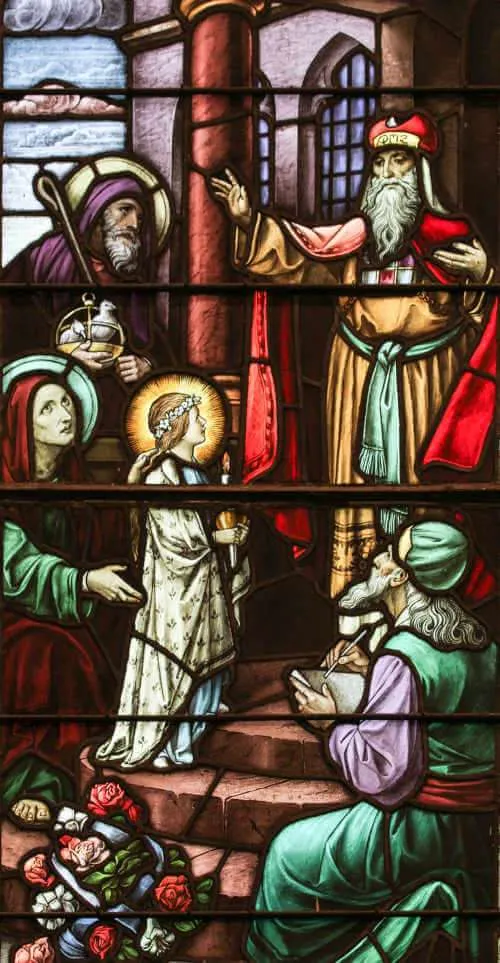
There are three “gospels” which are believed to have heavily influenced today’s memorial—the Protoevangelium of James, the Gospel of Pseudo-Matthew, and the Gospel of the Nativity of Mary. The earliest of these writings was the Protoevangelium of James (also called the “Apocryphal Gospel of James”), which was most likely written sometime in the second century. It is not considered to be part of the inspired word of God, i.e., the canon of Scripture, because it does not appear to have actually been written by the Apostle James. Nonetheless, like many early Christian documents, this apocryphal gospel held great influence in the early Church. It is from this writing that the Church takes the traditional names of the Blessed Virgin Mary’s parents—Saints Joachim and Anne—since that is the only record of their names we have.
The Protoevangelium of James gives a detailed account of the Blessed Virgin Mary’s life. It details her Immaculate Conception, birth, presentation in the Temple, and her life in the Temple where she prayed continuously and was ministered to by angels until the age of twelve. The story continues with her miraculously arranged marriage to Saint Joseph, Jesus’ birth, Herod’s encounter with the Magi, the slaughter of the Holy Innocents, and the martyrdom of Zechariah, Saint John the Baptist’s father. Though the Apocryphal Gospel of James does not contradict anything in the canonical Gospels, many more details are added that could be true.
At the time of the birth of the Blessed Virgin Mary, it was not uncommon for some children to be presented in the Temple at a young age, to be raised there, and to enter into service at the Temple. They assisted the priests and acted as servants of charity. Though every firstborn boy was ritually presented to the priest in the Temple eight days after birth so as to be consecrated to God, sometimes girls were also presented, but for the purpose of entering into the Temple’s service. Saint Alphonsus Liguori, an eighteenth-century Doctor of the Church who wrote extensively on the Blessed Virgin Mary, offers this description of her presentation in the Temple, which mirrors the aforementioned apocryphal gospel accounts:
Having barely reached the age of three years, the holy child Mary entreated her parents that she might be placed in the temple according to the promise they had made. The appointed day having arrived, the immaculate young Virgin left Nazareth with St. Joachim and St. Anne, accompanied by a host of angels attending that holy child destined to become the mother of their Creator…Upon their arrival at the temple in Jerusalem, the holy child turned to her parents. Kneeling, she kissed their hands, asked for their blessing, and then, without looking back, ascended the steps of the temple. There, renouncing the world and all it could offer her, she wholly offered and consecrated herself to God. From then on, Mary’s life in the temple was a continuous exercise of love, offering her entire being to her Lord…As a young virgin in the temple, Mary did nothing but pray, desiring to be the servant of the blessed Virgin chosen to be the mother of God (Glories of Mary, On the Feast of the Presentation of Mary).
It is believed that this feast originated in the Eastern Byzantine liturgy around the sixth century at the time that Byzantine Roman Emperor Justinian I built a church in Jerusalem near the ruins of the Temple called the Basilica of Saint Mary the New. By the ninth century, several monasteries in the Latin Church began to observe this feast, and it was added to the Universal Church calendar in the fifteenth century.
In 1953, Pope Pius XII tied this memorial of the Presentation of Mary to an annual commemoration of the World Day of Cloistered Life. He did so because of the belief that the Blessed Virgin Mary was not only presented in the Temple as a child, she then lived out her childhood in constant prayer and solitude, becoming the most excellent model for those in the cloister.
In 1974, Pope Saint Paul VI wrote a beautiful apostolic exhortation, Marialis Cultus (For the Right Ordering and Development of Devotion to the Blessed Virgin Mary), in which he speaks of the development of Marian devotion in the life of the Church. Regarding feasts like today’s, which come to us in part from apocryphal sources, he says, “There are still others [feasts] which, apart from their apocryphal content, present lofty and exemplary values and carry on venerable traditions having their origin especially in the East.”
As we celebrate the liturgical memorial of the Presentation of Mary in the Temple, we especially honor the fact that, regardless of the lack of certainty of the historical details, the Blessed Virgin Mary lived a life of profound prayer and contemplation from her earliest years and continued to do so throughout her life. She always has been, and continues to be, the Immaculate One, the sinless Spouse of the Holy Spirit, the first contemplative, and one who dedicated her whole life to the service of the will of God. Even if the account of her presentation and childhood service in the Temple is not accurately represented in these early sources, the spiritual reality of her total dedication to the will of God throughout her life is an indisputable dogma of our faith.
As we ponder the early life and dedication of the Blessed Virgin Mary to God’s will today, reflect upon the fact that every child is capable of a profound faith and commitment to God’s will. For those who are entrusted with the guardianship and raising of children, allow your prayerful reflection on the holy life of Blessed Mary as a child to inspire you to help all young people imitate her profound faith and holiness.
Source: https://mycatholic.life/saints/saints-of-the-liturgical-year/november-21—presentation-of-the-blessed-virgin-mary–memorial/
Presentation of the Blessed Virgin Mary Read More »
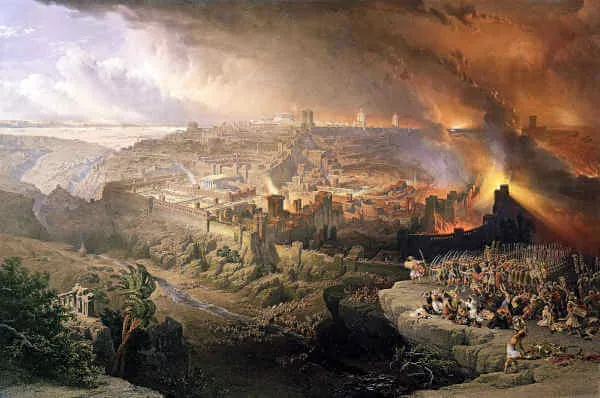
For the days are coming upon you when your enemies will raise a palisade against you; they will encircle you and hem you in on all sides. They will smash you to the ground and your children within you, and they will not leave one stone upon another within you because you did not recognize the time of your visitation.
Reflection:
Jesus spoke these words as He looked at Jerusalem from a distance, preparing to enter that holy city for the last time in preparation for His passion and death. As He spoke these words, the Gospel says that Jesus wept over the city. Of course, it wasn’t primarily tears over the future physical destruction of the Temple and invasion by Roman forces. It was first and foremost tears over the lack of faith of so many which was the true destruction He mourned.
As mentioned above, the city of Jerusalem was indeed sieged by the military commander Titus in the year 70 A.D. Titus was acting under the authority of his father, the emperor, and destroyed not only the Temple but also much of the city itself, as well as the Jewish inhabitants.
As Jesus approached the city of Jerusalem, so as to enter the Temple one last time to offer His life as the definitive Sacrificial Lamb for the salvation of the world, Jesus knew that many within this holy city would not accept His saving sacrifice. He knew that many within that city would become the instruments of His pending death and would have no remorse for killing the Savior of the World. And though this one point can easily be missed, it should be emphasized that Jesus’ reaction was not fear, it was not anger, it was not disgust. Rather, His reaction was holy sorrow. He wept over the city and its inhabitants despite what many of them would soon do to Him.
When you suffer injustice, how do you react? Do you lash out? Condemn? Get defensive? Or do you imitate our Lord and allow your soul to be filled with holy sorrow? Holy sorrow is an act of love and is the appropriate Christian response to persecution and injustice. Too often, however, our response is not holy sorrow but anger. The problem with this is that reacting in unholy anger does not accomplish anything good. It does not help us to imitate Jesus, and it doesn’t help those with whom we are angry. Though the passion of anger can be used for good at times, it becomes a sin when it is selfish and a reaction to some injustice done to us. Instead of this unholy anger, seek to foster holy sorrow in imitation of Jesus. This virtue will not only help your soul grow in love of those who have hurt you, it will also help them to see more clearly what they have done so that they can repent.
Reflect, today, upon your own approach to the evil you face in your life. Consider carefully your interior and exterior reaction. Do you mourn with love over sins you witness and experience? Do you mourn, with a holy sorrow, over your own sins and the sins of others? Work to foster this form of love within you and you will find that it can become a motivation for you to help transform the sins you commit and the sins of others you endure.
Source: https://catholic-daily-reflections.com/2024/11/20/holy-sorrow-3/
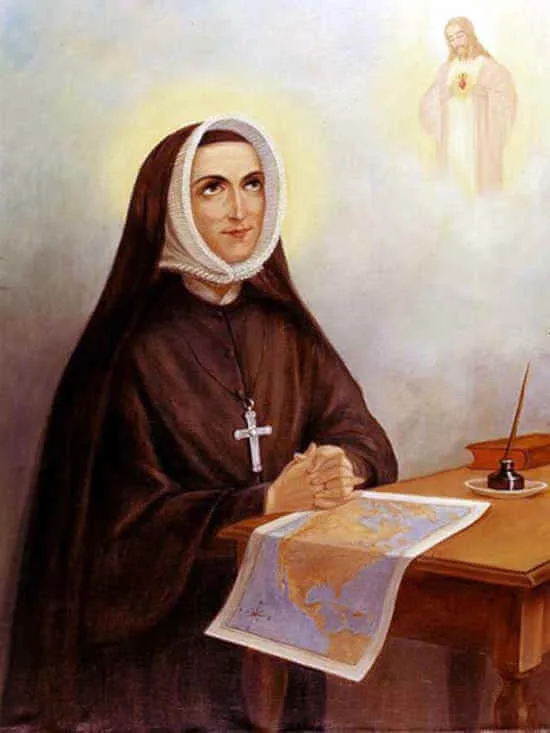
Rose Philippine Duchesne was born into an upper-class family in the city of Grenoble in the Kingdom of France. She was the second of eight children, seven girls and one boy. As a child, Rose’s education took place at home by private tutors. When she was eight, she was inspired by the preaching of a Jesuit missionary who spoke about the ripe new mission field of the Americas. This planted a seed within her heart that began to grow. At the age of twelve, she attended school at a convent of Visitation nuns in Grenoble. While there, she became intimately drawn to their life of contemplation within the walls of the cloister. When she informed her father that she wanted to join the community, he firmly opposed the idea and withdrew her from the school to keep her from considering it further, so she continued her education at home from tutors.
As events unfolded that would lead to the French Revolution, Rose came up with a secret plan to become a nun. In 1788, she asked her aunt to accompany her on a visit to the Visitation sisters. Once there, Rose requested permission to enter the convent. Permission was granted immediately, and Rose entered. Her aunt returned home and informed Rose’s father and the rest of her family what Rose had done. Sister Rose spent the next four years with the sisters, growing deep in prayer and being nurtured through the community and rule of life.
Once the French Revolution entered into full force, the Church became a central target. With the formation of a new National Assembly, church property was seized and clergy were forced to choose between swearing an oath of allegiance to the state or arrest and possible execution. Public worship and monastic vows were outlawed, and chaos ensued. In 1792, the monarchy was abolished, and the First French Republic was proclaimed. In that same year, the Visitation convent in Grenoble was seized by the state and turned into a prison, and the sisters were forced to disband. For the next nine years, Sister Rose lived in her family home where she attempted to continue practicing her religious vocation, along with two aunts who were also Visitation nuns.
In late 1799, Napoleon Bonaparte led a coup and disbanded the revolutionary French government, becoming the First Consul of the new French Consulate. A little more than a year later, Napoleon and Pope Pius VII signed the Concordat of 1801, which acknowledged Catholicism as the religion of the majority of the French and permitted its public practice to continue under certain state regulations. At that time, Sister Rose and some of her disbanded sisters attempted to return to their convent, but it was in disrepair due to its interim use as a military barracks and prison. Nonetheless, some of the sisters moved in with Sister Rose who was made superior. By 1804, due to the difficult living conditions at the convent, only three sisters remained with Sister Rose.
In 1804, Mother Madeleine Sophie Barat (who was canonized in 1925), the founder of a new religious order called the Society of the Sacred Heart, invited the small convent of Visitation sisters into her order. The sisters agreed, and, in November of that year, Mother Barat traveled to Grenoble to receive them. Once the Visitation convent merged with the Society of the Sacred Heart, Sister Rose made her final vows and was made superior of the new convent, known henceforth as Mother Duchesne. For the next eleven years, tensions remained high in France due to the ongoing Napoleonic Wars that lasted until the Battle of Waterloo in 1815, in which Napoleon was defeated and exiled. During this chaotic period, Mother Duchesne managed life at the convent, reopened a school, and founded new convents and schools.
In 1815, Mother Barat invited Mother Duchesne to found a new convent in Paris that would function as the novitiate for the order, as well as operate a school. In 1817, a French missionary named Father William Dubourg returned to Europe from the United States to recruit missionaries for the new territory gained by the Louisiana Purchase. Father Dubourg had been appointed Apostolic Administrator of the territory in 1812, but it lacked priests and religious. Upon his return, Pope Pius VII appointed him as Bishop of Louisiana and the Two Floridas and ordained him in Rome. He then spent the next two years traveling through Europe to recruit missionaries. In Paris, he met Mother Duchesne whose heart was immediately inflamed with a desire to assist. This desire had been in her heart since her childhood, and now it was on the verge of becoming a reality. With the approval and blessing of Mother Barat, the forty-eight-year-old Mother Duchesne and four of her sisters set sail for New Orleans in 1818 to become missionaries on the new frontier of the United States of America.
Upon their arrival, they learned that Bishop Dubourg had moved to Saint Louis out of concern for his safety, and he had not made any arrangements for the newly arrived sisters in New Orleans. The sisters then boarded a steamboat and traveled up the Mississippi to Saint Louis, settling in the nearby town of Saint Charles, where they founded their first convent (a log cabin) in the United States. It was one of the most remote parts of the country at that time and brought with it many hardships, uncertainties, and trials. But the sisters persevered, opened a free school for the poor, established their community life of prayer, and persevered in their work of building the Kingdom of God in mission territory.
Over the next thirty-four years, Mother Duchesne became a tireless founder. The next convent was founded in Florissant, which would become the mother house and novitiate for the congregation in the United States, and also served a free school. She founded new convents and schools in Saint Louis, New Orleans, and other parts of Louisiana as her order continued to grow.
Throughout her first twenty years, Mother Duchesne always had a strong desire to minister to the native tribes but was unable to do so. In 1841, her dream became a reality when she was invited to found a convent to serve the Potawatomi tribe in Sugar Creek, Kansas. Since she was seventy-one at that time, she wasn’t an ideal candidate for the job and further was unable to learn the Potawatomi language. Nonetheless, the Jesuits who were leading the expedition insisted she come for prayer support, which she did to the greatest degree. In fact, she prayed so long and so often that the natives gave her the affectionate name “Quah-kah-ka-num-ad,” which means, “Woman-who-prays-always.” One story relates that the children were so impressed by her prayerfulness that they would often place pebbles on the hem of her garment as she knelt in prayer at night and then return the next morning to see if the pebbles were still in place, and they usually were, giving a powerful witness to the mystical nature of her all-night vigils.
After about a year in Sugar Creek with the Potawatomi, Mother Duchesne’s health took a turn for the worse, compelling her to return to the mother house near Saint Louis to rest and be cared for. Just as she was the “woman who prays always” while among the Potawatomi, so she spent the final decade of her life in continuous prayer, uniting her sufferings to Christ, and spiritually mentoring the younger sisters as the community grew.
This courageous woman gave up all that she knew and all that she had, except for her religious habit and the companionship of a few sisters, so that she could bring the Gospel to the frontier of the United States as the people slowly moved West. Her deepest desire to share the faith with the natives became a reality because of her perseverance and reliance on prayer. As we honor Saint Rose today, we honor her as a true spiritual mother who saw everyone as her children whom she needed to nurture in love by instilling faith and hope. In imitation of her, allow the desire to be a missionary to be enkindled within your heart. Though you might not be called to travel the seas to share the faith, you will certainly be called to share the love of Christ in accord with your own vocation. Submit yourself fully to that mission, and God will use you, as He used Mother Duchesne, for glorious things.
Source: https://mycatholic.life/saints/saints-of-the-liturgical-year/november-18—saint-rose-philippine-duchesne/
Saint Rose Philippine Duchesne, Virgin Read More »
Add San Jose Filipino Ministry as a new recipient, Send your donation using"donate@dosjfm.org"
Payable to - San Jose Filipino Ministry
Address - Poong Jesus Nazareno Filipino Catholic Center (PJNFCC); 3700 W. Orange Ave., Anaheim CA 92804
Poong Jesus Nazareno Filipino Catholic Center (PJNFCC); 3700 W. Orange Ave., Anaheim CA 92804
Phone: (657) 214-2507
Mobile (657) 208-2038
info@dosjfm.org

Poong Jesus Nazareno Filipino Catholic Center (PJNFCC); 3700 W. Orange Ave., Anaheim CA 92804
Phone: (657) 214-2507
Mobile (657) 208-2038
info@dosjfm.org
Add San Jose Filipino Ministry as a new recipient, Send your donation using"donate@dosjfm.org"
Payable to - San Jose Filipino Ministry
Address - 1235 S Magnolia Ave
Anaheim, CA 92804-5115
San Jose Filipino Ministry. All rights reserved. 2021 © Powered by Phoenix Virtual Solutions
Sponsored by EverClear Hospice and Palliative Care