2024

Luke 19:12-14

Your Apostolic Calling

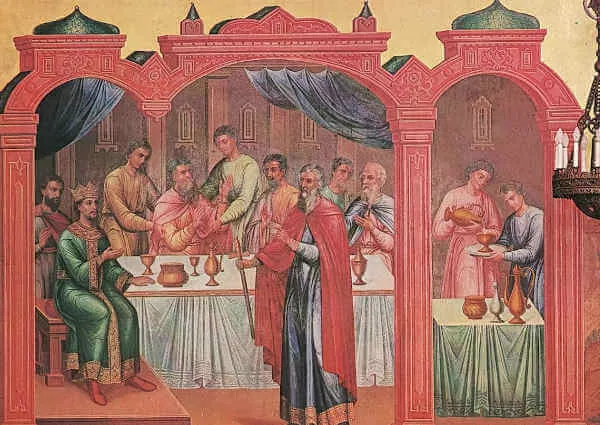
“A nobleman went off to a distant country to obtain the kingship for himself and then to return. He called ten of his servants and gave them ten gold coins and told them, ‘Engage in trade with these until I return.’ His fellow citizens, however, despised him and sent a delegation after him to announce, ‘We do not want this man to be our king.’”

Reflection:

There are three categories of people in this parable. The first includes those who received a gold coin and followed the master’s request to “engage in trade” until he returned. The second has those who received the same command but were lazy and failed to produce any good fruit from that which our Lord has given them. And the third includes those who “despise” our Lord and do not want Him as their King.

Upon the king’s return, this first category of people are represented by the two servants who took the gold coins, engaged in trade, and made five and ten more. These are those who have much apostolic zeal. God not only calls us to use the gifts we have received to expand His Kingdom on earth, He also expects it of us. His expectation is a command of love. For those who understand this command, they see it as a glorious invitation to make an eternal difference in the lives of many. They do not see the apostolic works to which they are called as a burden. Rather, they see them as a joy, and that joy fuels their efforts. The result will have exponential effects for God’s Kingdom.

The second category of people is illustrated by the one servant who kept the one gold coin “stored away in a handkerchief” out of fear. These are the people who avoid evangelizing and furthering the Kingdom of God out of fear. Fear is paralyzing. But giving in to fear is a sin. It’s a lack of faith and trust in God. Serving God will inevitably require courage on our part. It will demand that we step out of our comfort zone and do that which we may not immediately feel comfortable doing. But as that servant in the parable foretold, God is a demanding God. And He will not accept fear as an acceptable excuse not to zealously help to build the Kingdom of God.

The third category of people is the category in which you definitely do not want to fall. These are those who actively work to undermine God’s Kingship and reject Him as God. The world is filled with these people. The only thing we need to say about those who fall into this category is that which our Lord said of them. “Now as for those enemies of mine who did not want me as their king, bring them here and slay them before me.”

Reflect, today, upon which category of people your life most fully resembles. Most likely it is one of the first two. Do you have great zeal for God’s Kingdom? Are you willing to do all that you can to help build His Kingdom? Are you willing to do so even at the cost of great personal sacrifice? If so, then rejoice and know that an abundant reward awaits. But if you are one who struggles with fear, specifically, if you struggle with a fear to evangelize, to share the Gospel and to live your faith openly with humility and love, then spend more time with this parable and the fate of that one servant who hid the coin in the handkerchief. Engage in the apostolate. Commit yourself to the furtherance of God’s Kingdom. Dispel all fear and know that you will never regret putting your whole heart and soul into the service of God and the building of His Kingdom.

Source: https://catholic-daily-reflections.com/2024/11/19/your-apostolic-calling-3/


Luke 19:12-14 Read More »

Saint Margaret of Scotland

c. 1045–1093; Patron Saint of learning, parents of large families, parents who have lost a child, queens, and widows; Canonized by Pope Innocent IV in 1251

Margaret of Wessex was born into English royalty. Her grandfather was King Edmund the Ironside, who reigned as king for less than a year. After King Edmund’s death, Margaret’s father, Edward, might have been sent to the court of the King of Sweden for protection, and later to Kyiv when he was only an infant. For that reason, he is commonly referred to as Edward the Exile. In 1046, Prince Andrew of Hungary became King of Hungary, and Edward the Exile entered into his service, eventually marrying Agatha and having three children: Margaret, Christina, and Edgar Ætheling. Little is known about Agatha, but one theory is that she was the granddaughter of Saint Stephen, King of Hungary, and the daughter of Holy Roman Emperor Henry II. Agatha and Edward the Exile were good parents to their three children, seeing to it that they were well educated and raised in a strong Catholic home.

In 1042, Edward the Confessor became King of England—and was later canonized, the only English king to become a saint. King Edward the Confessor did not have any heirs to whom he could pass on the crown, so he called Edward the Exile (Margaret’s father) and his family back to England where they entered the royal court. Edward the Exile died soon afterward, making Margaret’s brother, Edgar Ætheling, a potential heir to the throne.

In 1066, when King Edward the Confessor died, conflict arose as to who had the right of succession. During the confusion, the nobles quickly chose Harold II and had him crowned as king. However, a distant relative, William of Normandy (also known as William the Conqueror), made a claim to the throne. William offered many reasons, including a claim that Harold had sworn an oath to him to support him as King of England and had sworn the oath over the relics of a saint, making it binding. Even the pope agreed with William’s claim. Shortly after Harold II was crowned as king, William attacked England, and Harold II was killed in battle. The nobles supported Edgar Ætheling, Margaret’s brother, as the next king, but when William rode into London, the nobility surrendered and Edgar relinquished his claim to the throne, never having been crowned.

In 1068, the widowed Agatha decided to protect her children from the Norman conquerors and from potential chaos that might result from a rebellion against them. She boarded a ship with Edgar, Margaret, and Cristina, and set sail for her home, probably Hungary. Legend has it that the ship was tossed off course and wrecked on the shores of Scotland. In Scotland, King Malcolm III welcomed the exiled royal family and provided for their safety.

Since childhood, Margaret had grown in a profound love of God. She lived a very strict and ordered life, studied the Sacred Scriptures and other pious books, and grew in a keen understanding of the things of God. Her earliest biographer described her as another Mary of Bethany, who sat at the feet of Jesus, listening to His Word and pondering it in her heart.

When this royal family arrived in Scotland, the young King Malcom, a widower with two sons, immediately noticed Margaret’s beauty. Her physical beauty was greatly enhanced by the beauty of her soul, manifested in her piety, virtue, and intelligence. It didn’t take long before the two fell in love and were married, making Margaret Queen of Scotland.

Queen Margaret quickly realized that the power and influence she had received ought not be used for her own selfish purposes but for the betterment of Scotland and, especially, for the increase of the Kingdom of God. As queen, Margaret quickly won the love and admiration of the people. As her first biography stated, “Nothing was firmer than her fidelity, steadier than her favor, or juster than her decisions; nothing was more enduring than her patience, graver than her advice, or more pleasant than her conversation.”

Prior to Margaret’s arrival in Scotland, the Scottish Church followed the old Celtic traditions. When the Romans withdrew from Britain in the fifth century, the Scottish Church became isolated from the Roman Empire and the Church’s development. In Scotland, abbots of monasteries provided the main source of Church influence and governance, rather than bishops of dioceses. Liturgical practices differed, including the liturgical calendar and customs.

Queen Margaret had been raised within the Roman tradition through her mother’s influence. She was immediately aware of the differences between the Celtic practices of the Scots and the rest of the Roman Catholic world. Therefore, with loving reverence, strength, and virtue, she began to initiate change in the Church of Scotland. She was said to have had a great influence over her husband on account of her goodness and clarity of thought, so he supported her in the reforms. She was said to have regularly read to him from the Bible, since he was unable to read.

Queen Margaret convened synods to address the different practices of the Celts from the rest of the Roman Catholic Church, such as the time in which Lent and Easter were observed, the way Mass was celebrated, observance of the Lord’s Day, and the laws on marriage. In doing this, she strengthened ties to the pope in Rome, freeing the Scottish from their lengthy isolation. In addition to synods, Queen Margaret refurbished dilapidated churches, built new ones, and introduced Benedictine monks to Scotland by building the renowned Dunfermline Abbey, in which several Scottish monarchs were later buried. She is also known for her exceptional charity by which she fed the hungry, stooped down and washed the feet of the poor, cared for orphans, and organized religious education throughout the kingdom.

King Malcolm and Queen Margaret had eight children together, six sons and two daughters. Three of their sons went on to become kings of Scotland, one became an abbot, and a daughter became the Queen of England. In 1093, King Malcolm and Margaret’s oldest son, Edward, were killed in battle. When the forty-nine year old Margaret, bedridden in Edinburgh Castle due to ill health, heard the news, she died of grief three days later.

Jesus holds those with power and wealth to high standards: “Again I say to you, it is easier for a camel to pass through the eye of a needle than for one who is rich to enter the kingdom of God” (Matthew 19:24). Saint Margaret was as rich as one could be in her day, but she overcame the temptations of earthly wealth and power, and prayerfully devoted her life to the glory of God and the salvation of souls. She was a fitting representation on earth of the Queen of Heaven, the Mother of God, and she especially provides those of wealth and influence with an example they can follow.

Source: https://mycatholic.life/saints/saints-of-the-liturgical-year/november-16–st-margaret-of-scotland/

Saint Margaret of Scotland Read More »

Luke 19:1-3

The Desire of the Heart

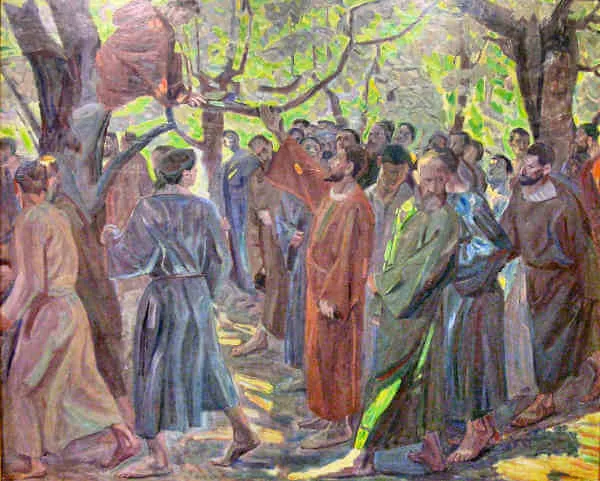
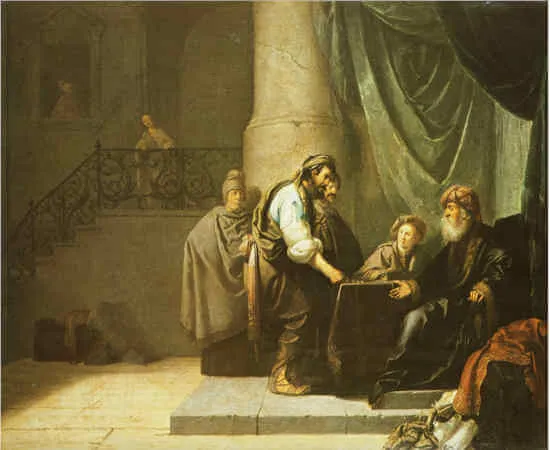
At that time Jesus came to Jericho and intended to pass through the town. Now a man there named Zacchaeus, who was a chief tax collector and also a wealthy man, was seeking to see who Jesus was; but he could not see him because of the crowd, for he was short in stature. So he ran ahead and climbed a sycamore tree in order to see Jesus, who was about to pass that way.

Reflection:

Once again, our Lord reaches out to someone who comes to Him in humility and need. Zaccheaus was a wealthy man, materially speaking. But interiorly he was poor and in need. And it was this spiritual poverty he was experiencing that led him to seek out Jesus with much determination.

Zacchaeus probably never imagined that day that Jesus would offer to come to his home. Clearly, he climbed the tree to get a glimpse of Jesus because he felt a strong desire to know our Lord. Since he was physically wealthy, it seems clear that he no longer was satisfied in life simply because of a comfortable lifestyle. Something was missing, and he couldn’t help but know that Jesus held the answer. So Zacchaeus did what some may have thought unusual. He climbed a tree to be able to see Jesus.

Why did Jesus stop, look up at Zacchaeus, and call him down, stating that He was going to stay at Zacchaeus’ home? It’s because Jesus was able to sense the need within the heart of Zacchaeus. Hearts that are poor, in need, and open are very attractive to Jesus. He never misses the opportunity to come to humble souls like this.

Zacchaeus responds to our Lord immediately by promising to right the wrongs he has done in the past. He promises to give away half of his possessions and to repay anyone he has extorted fourfold. This reveals the authenticity of Zacchaeus’ heart. 

As Jesus passes by you, what does He sense? Is He drawn to your heart? Is He drawn to you because of your interior disposition of humility and need? It is easy for us to go through life acting as if we have it all together. We can put on a facade that portrays an attitude of strength and success. But Jesus rarely comes to the soul who expresses little need. If we want to draw Jesus to ourselves, then we must acknowledge the poverty within ourselves, even if we are materially wealthy and successful in a worldly way. Every one of us must humble ourselves like Zacchaeus by knowing that Jesus is the only answer in life.

Reflect, today, upon the fact that you and you alone have the ability to draw Jesus to yourself. You can do this by looking at your need for Him. Do not hide it. Climb the figurative tree by which you will be able to look for Jesus and, more importantly, by which Jesus can see your manifest desire for Him. As you express your need for Him, know that He will be compelled, by His unshakable love and mercy, to come to you and to stay with you in the house of your soul. And when He does, be ready and willing to abandon all that has been a hindrance to your meeting with Christ in the past.

Source: https://catholic-daily-reflections.com/2024/11/18/the-desire-of-the-heart-3/

Luke 19:1-3 Read More »

Dedication of the Basilicas of Saints Peter and Paul, Apostles

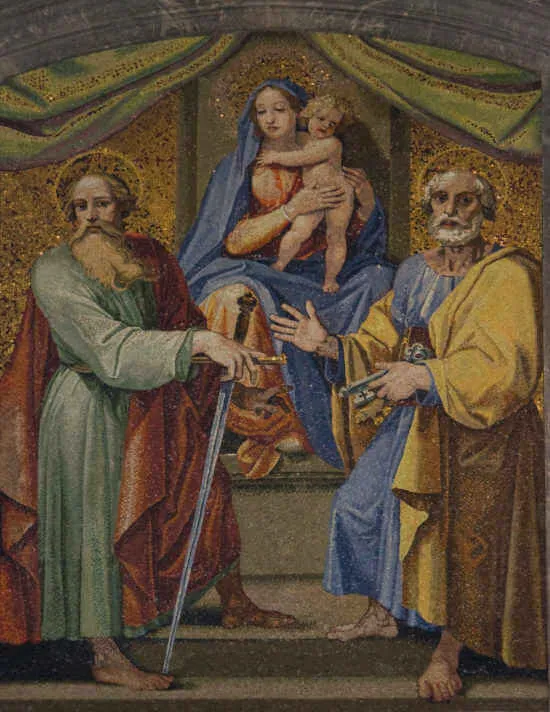
After Emperor Constantine the Great legalized Christianity in the Roman Empire in 313, he began to construct churches, particularly in Rome, Jerusalem, and Constantinople. In Rome, he constructed four basilicas: Saint John Lateran, Saint Peter’s on Vatican Hill, Holy Cross of Jerusalem, and Saint Paul Outside the Walls. Today, the Church celebrates the dedication of two of those basilicas: Saint Peter’s on Vatican Hill and Saint Paul Outside the Walls.

The foundation of these two churches goes back to the first century when Peter and Paul shed their blood and were buried where the basilicas stand today. In 64, a great fire destroyed much of the city of Rome. Many historians believe Emperor Nero set the fires himself so he could have an excuse to rebuild portions of the city as he desired. Nero blamed the fire on the Christians and implemented the first organized persecution of Christians in the Roman Empire.  Among the many who were arrested and martyred were Saints Peter and Paul.

Peter was the Prince of the Apostles and Bishop of Rome. He is believed to have been crucified upside-down in the Circus of Nero near the ancient Egyptian obelisk that now stands in the center of Saint Peter’s Square. He was buried in the nearby cemetery on Vatican Hill, and his grave became a place of pilgrimage for early Christians. After Constantine legalized Christianity, he became aware of the reverence with which this Prince of the Apostles’ grave was held, so he constructed what is now referred to as Old Saint Peter’s Basilica to help foster devotion and encourage pilgrimages to the site. The first basilica was dedicated by Pope Sylvester around the year 324 or 326 and remained for more than a millenia, with additions and reconstructions taking place during that time. 

Until 1305, popes lived at the Basilica of Saint John Lateran, not at Saint Peter’s. When Pope Clement V was elected to the papacy, he moved the entire papal court to Avignon, France in 1309, where it remained until Pope Gregory XI returned to Rome from Avignon in 1377. At the time of the pope’s return to Rome, the Lateran Palace was in disrepair due to two fires, so the pope built a new papal palace next to Old Saint Peter’s on Vatican Hill, where every subsequent pope has resided. By the turn of the sixteenth century, Old Saint Peter’s was in serious disrepair, so in 1505, Pope Julius II ordered its demolition and began a process of reconstruction that spanned twenty-one subsequent papacies and was completed 120 years later. In 1626, the present-day Basilica of Saint Peter’s at the Vatican was dedicated by Pope Urban VIII.

Saint Paul was the tireless evangelist and the Church’s preeminent theologian, spreading the Gospel far and wide, and directly establishing and nourishing numerous Christian communities. He is also recognized as one of the earliest and most important converts to the faith. After an exceptional ministry of evangelization, Paul was arrested in Jerusalem. Because he was a Roman citizen, he appealed to the Roman emperor. He was subsequently imprisoned and two years later transported to Rome for his trial. When Nero’s persecutions were enacted shortly afterwards, Paul was beheaded on or around the same day that Saint Peter was crucified. Paul’s beheading is believed to have taken place just outside the walls of the city on the Ostian Way. He was buried near that spot. 

Like the Old Saint Peter’s Basilica, the Basilica of Saint Paul Outside the Walls was built by Emperor Constantine over the grave of Saint Paul and dedicated by Pope Sylvester in 324. Over the next 1,500 years, successive popes added on to the basilica, renovated it, and decorated it. In 1823, almost the entire basilica was destroyed by a fire. Over the thirty years that followed, the church was redesigned and reconstructed into the church we have today. It was completed and dedicated in 1854 by Pope Pius IX.

As we honor the dedication of these two Roman basilicas, we honor much more than churches; we honor the apostles to whom they are dedicated. On June 29 each year, the Church celebrates the Solemnity of Saints Peter and Paul, honoring their unique and foundational ministries. Today, on November 18, we honor these two saints once again as we commemorate the dedication of the basilicas dedicated to them, which were built upon their graves.

Symbolically, as their graves stand as a foundation for these two churches, so their lives and ministry stand as a foundation for the entire Church. Saint Peter was the first pope and source of unity who was given the keys to the Kingdom of Heaven and of whom Jesus said, “And so I say to you, you are Peter, and upon this rock I will build my church, and the gates of the netherworld shall not prevail against it” (Matthew 16:18). Saint Paul was the great evangelist to the Gentiles and is a symbol of the Church missionary life and theological articulation of the faith, due to his extensive writings that make up most of the New Testament. Though we are centered and unified by Saint Peter the Rock, we must go forth to the ends of the earth, sharing the Gospel with all, like Saint Paul. Because of the significance of these apostles, every bishop throughout the world is obliged to make an “ad limina apostolorum” visit to Rome once  every five years, during which time he gives a report to the pope about his diocese and visits the tombs of these two apostles.

As we honor these two great saints and revere their graves, ponder the fact that we are all called to become foundations on which the Church continues to be built. Our lives must become a source of unity for those who believe and a means by which God sends forth His Word to others. Renew today the dedication of your own life to the mission of Christ so that you more fully imitate the heroic and holy lives of these two men of God.

Source: https://mycatholic.life/saints/saints-of-the-liturgical-year/november-18—dedication-of-the-basilicas-of-saints-peter-and-paul-apostles/

Dedication of the Basilicas of Saints Peter and Paul, Apostles Read More »

Luke 18:35-39

A Model for Prayer

As Jesus approached Jericho a blind man was sitting by the roadside begging, and hearing a crowd going by, he inquired what was happening. They told him, “Jesus of Nazareth is passing by.” He shouted, “Jesus, Son of David, have pity on me!” The people walking in front rebuked him, telling him to be silent, but he kept calling out all the more, “Son of David, have pity on me!”

Reflection:

This beautiful story of the healing of this blind man, named Bartimaeus in the Gospel of Luke, sets for us a model of how we must come to Jesus in prayer. Bartimaeus and his encounter with Christ is an icon upon which we must meditate so as to imitate him in his weakness, openness, confidence and perseverance.

To begin, this “blind man was sitting by the roadside begging.” We must see this as an ideal image of how to begin our prayer. When we start to pray, we must see our littleness, weakness and extreme poverty in our spiritual life. We come to God with nothing. Unable to see. A beggar. And one who is incapable of meeting our own spiritual needs. This is Bartimaeus, and this must be the way we come to our Lord in prayer. Sometimes we can fall into the illusion that our prayers are so elevated and pious that God must be very impressed. If that’s your struggle, then you are more like the Pharisees. This blind man, however, is the ideal to aim for. So when you begin your prayer, come to our Lord as a spiritually poor and needy beggar.

In this state of humility, just as it happened in this Gospel story, you can be certain that “Jesus of Nazareth is passing by.” So as you sit in your humble and needy state, wait and be attentive to Jesus passing by. Wait upon His gentle voice, His quiet inspiration, His calming and unmistakable presence. 

If you can humble yourself this way and then sense our Lord’s divine presence touching you in some way, then further imitate Bartimaeus by calling out interiorly, “Jesus, Son of David, have pity on me!” The cry from the depths of your heart in prayer must come as a result of Jesus “passing by.” It must be a response to Him coming to you on His own. As Jesus passes by, spiritually speaking, He waits for you to call to Him. He desires that you call to Him. And He desires that you do it with firm confidence and perseverance.

Notice that as this blind beggar cried out, there were obstacles put in his way. The people “rebuked him, telling him to be silent.” But even this was a gift, because it enabled Bartimaeus to cry out all the more. So also with us, when obstacles arise in our prayer, such as distractions, temptations, a lack of consolation, or any other challenge to our prayer, we must see these obstacles as hurdles that must be overcome. Doing so will deepen our union with Jesus, turning that apparent obstacle into a source of blessing.

Reflect, today, upon these four aspects of a deep prayer life that are presented to us through the witness of this blind beggar. First, ponder your weakness and poverty as you turn to God in prayer. Second, be attentive to the presence of God as He passes by, waiting for you to call to Him. Third, cry out to Him and beg Him to come closer. And fourth, work to overcome every obstacle to prayer and see those obstacles as opportunities to call out to God all the more.

Source: https://catholic-daily-reflections.com/2024/11/17/a-model-for-prayer-3/

Luke 18:35-39 Read More »

Thirty-third Sunday in Ordinary Time

First Reading Daniel 12:1-3

In those days, I Daniel, 
    heard this word of the Lord:
“At that time there shall arise
    Michael, the great prince,
    guardian of your people;
it shall be a time unsurpassed in distress
    since nations began until that time.
At that time your people shall escape,
    everyone who is found written in the book.

“Many of those who sleep in the dust of the earth shall awake;
    some shall live forever,
    others shall be an everlasting horror and disgrace.

“But the wise shall shine brightly
    like the splendor of the firmament,
and those who lead the many to justice
    shall be like the stars forever.”

Responsorial Psalm Psalms 16:5, 8, 9-10, 11

R. (1) You are my inheritance, O Lord!
O LORD, my allotted portion and my cup,
    you it is who hold fast my lot.
I set the LORD ever before me;
    with him at my right hand I shall not be disturbed.
R. You are my inheritance, O Lord!
Therefore my heart is glad and my soul rejoices,
    my body, too, abides in confidence;
because you will not abandon my soul to the netherworld,
    nor will you suffer your faithful one to undergo corruption.
R. You are my inheritance, O Lord!
You will show me the path to life,
    fullness of joys in your presence,
    the delights at your right hand forever.
R. You are my inheritance, O Lord!

Second Reading Hebrews 10:11-14, 18

Brothers and sisters:
Every priest stands daily at his ministry,
offering frequently those same sacrifices
that can never take away sins. 
But this one offered one sacrifice for sins,
and took his seat forever at the right hand of God;
now he waits until his enemies are made his footstool. 
For by one offering
he has made perfect forever those who are being consecrated.

Where there is forgiveness of these,
there is no longer offering for sin.

Alleluia Luke 21:36

R. Alleluia, alleluia.
Be vigilant at all times
and pray that you have the strength to stand before the Son of Man.
R. Alleluia, alleluia.

Gospel Mark 13:24-32

Jesus said to his disciples:
“In those days after that tribulation
the sun will be darkened,
and the moon will not give its light,
and the stars will be falling from the sky,
and the powers in the heavens will be shaken.

“And then they will see ‘the Son of Man coming in the clouds’
with great power and glory,
and then he will send out the angels
and gather his elect from the four winds,
from the end of the earth to the end of the sky.

“Learn a lesson from the fig tree.
When its branch becomes tender and sprouts leaves,
you know that summer is near.
In the same way, when you see these things happening,
know that he is near, at the gates. 
Amen, I say to you,
this generation will not pass away
until all these things have taken place. 
Heaven and earth will pass away,
but my words will not pass away.

“But of that day or hour, no one knows,
neither the angels in heaven, nor the Son, but only the Father.”

Source: https://bible.usccb.org/bible/readings/111724.cfm

Thirty-third Sunday in Ordinary Time Read More »

Saint Elizabeth of Hungary, Religious

1207–1231; Patron Saint of Third Order Franciscans, bakers, beggars, brides, charitable societies and workers, exiles, falsely accused people, homeless people, hospitals, lacemakers, nursing homes, nursing services, people ridiculed for their piety, widows; Invoked against in-law problems, the death of children, and toothache; Canonized by Pope Gregory IX on May 27, 1235

Elizabeth was born to King Andrew II and Queen Gertrude of Hungary. Her aunt on her mother’s side was Saint Hedwig, Duchess of Silesia. As was the common practice at that time for nobility, marriages were arranged at an early age to secure alliances between powerful ruling families. When Elizabeth was only four, knights arrived to take her to Thuringia, about five hundred miles away, where she was brought up in the court of Hermann I, Landgrave (ruler) of Thuringia. Her upbringing was alongside Hermann I’s eleven-year-old son, Louis IV, to whom Elizabeth was betrothed in marriage, which took place ten years later. Elizabeth’s mother was from the powerful House of Andechs and had similarly married King Andrew for political reasons. Because Queen Gertrude was not from Hungary, she was queen consort, meaning she was queen by virtue of marriage, not enjoying direct authority in Hungary on account of her royal lineage. Nonetheless, Gertrude regularly exerted her influence within Hungary’s royal court, causing conflict among the nobles and royal family. As a result, Queen Gertrude was assassinated when her daughter, Elizabeth, was six years old.

Two years before, a large entourage and dowry from her father had accompanied Elizabeth to the court of the Landgrave of Thuringia. There, she received a Catholic upbringing, an excellent education, and was cared for by attendants (ladies-in-waiting). She learned culture, manners, and royal protocol; attended banquets; wore fine clothing; and witnessed the intrigue and power struggles common in the royal court. The Castle of Wartburg in which she lived was a magnificent castle, and the Landgrave of Thuringia one of the richest in the empire. Life was extravagant, with poets and musicians, fine meals and social gatherings, and the best of what the world at that time had to offer. Behind the scenes, many factions plotted and formed alliances, seeking power and favors. Despite the challenges and worldly temptations she was thrust into at such a young age, Elizabeth grew in faith. She prayed, practiced mortification, and fell deeply in love with her Lord.

During the first ten years in Wartburg Castle, Elizabeth and her future husband, Louis IV, were raised together and formed a deep personal and spiritual bond. Though the marriage was arranged, they put their minds, hearts, and wills into what would soon become their future together. Louis’ father died when he was sixteen years old, and Louis became the Landgrave of Thuringia. Four years later, Elizabeth and Louis were wed.

From the very beginning, Elizabeth did not fit in with the courtly life. She was sensitive to the poor, sought virtue, and preferred simplicity, which made her an object of gossip and slander among the more “refined” members of the court. In Louis, however, she found a strong support. He admired her virtues and goodness and dismissed any criticism that came to his ears, defending her before all.

About two years after their marriage, when Elizabeth was sixteen, Franciscan friars arrived at the castle to care for the spiritual needs of the royal court. The holy Friar Conrad of Marburg became Elizabeth’s spiritual director. Through him, she learned about the saintly life of Saint Francis who probed the highest heights of holiness, even being pierced with the stigmata at the end of his life by a Seraphim, the highest of the choirs of angels, earning him the revered title “the Seraphic Father.” Stories of Saint Francis, the influence of the friars, and her own devotional life drew her deeper into the mysteries of faith. One story relates that one time, while praying in the castle chapel, she took off her royal crown, placed it before the Crucifix, and then lay prostrate before her Lord in prayer. When her mother-in-law saw this, she chastised Elizabeth, telling her such a gesture was beneath her dignity. Elizabeth responded, “How can I, a wretched creature, continue to wear a crown of earthly dignity, when I see my King Jesus Christ crowned with thorns?”

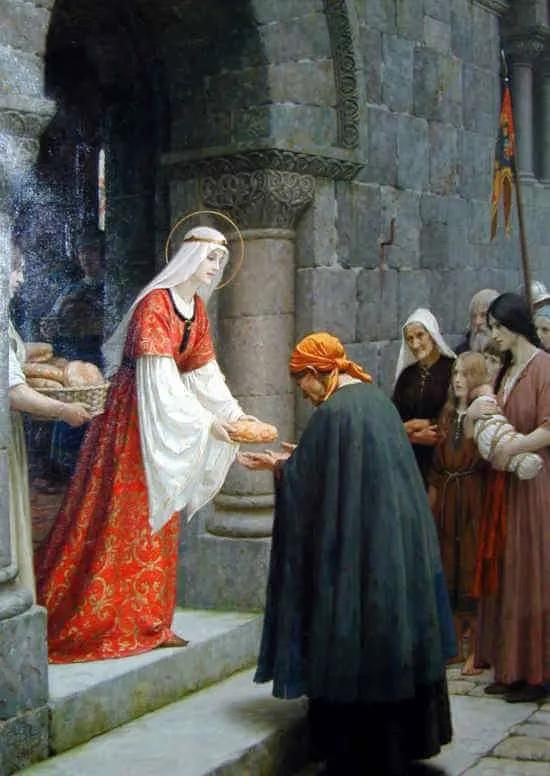
Elizabeth’s heart was inflamed with a desire for charity and justice. If she saw an injustice, she quickly sought to remedy it. Rather than eat food that was unjustly obtained, she preferred to go hungry. If the poor were cheated, she paid the debt owed them out of her own money. She loved to go down to the villagers, especially the poor, and bring them food, clothing, and whatever else they needed. She distributed these goods personally, in the company of her maids. This humility and generosity won her the love and respect of the peasant class, despite the ongoing ridicule of the nobility. When the nobility complained to her husband, he continued to support her and her charitable works.

One day, when Elizabeth was secretly bringing bread from the castle to the poor, she encountered her husband in the street. He had been told that she was stealing from the castle, so he asked her what she was carrying in her apron. When she opened it, beautiful roses appeared, to the delight of Louis who saw that as a sign of divine favor that humbled her detractors. On another occasion, she brought a leper into her own bedroom and laid him on her bed to care for him. Later, when Louis was told what Elizabeth did by her indignant mother-in-law, Louis went to strip the infected sheets from their shared bed. When he did so, he either saw in a vision, or was given an infused spiritual intuition that it was Christ Himself Whom Elizabeth cared for in the person of the leper. This only deepened Louis’ admiration for his young wife.

In 1227, at the age of twenty-six, Louis joined the army of Holy Roman Emperor Frederick II for the sixth crusade against the Muslims to take back the Holy Land which had been lost in 1187. On the way, disease spread through the troops and Louis fell ill, dying shortly afterwards. News of her husband’s death was devastating to the twenty-year-old Elizabeth. She and Louis had previously made vows to each other not to remarry if either of them died, so Elizabeth turned her eyes more fully to Chirst, devoting herself to His mission, no matter where He led.

Elizabeth and Louis had three children together. Their youngest, Gertrude, with whom Elizabeth was still pregnant when Louis died, grew up and became abbess of Altenburg Abbey. Their middle child, Sophie, married Henry II, Duke of Brabant. Their oldest, Hermann, initially succeeded his father as Landgrave of Thuringia when he was only four. Though Elizabeth acted on her son’s behalf in the governance of the Landgrave, Louis’ brother, Henry, seized control as regent for young Hermann and ran Elizabeth and her children out of the castle, causing many of the nobles to reject her. Hermann died unexpectedly several years later before he could make his claim as Landgrave, and Henry assumed full control.

Wandering for a while with two of her handmaids, Elizabeth entrusted her children to the care of some of Louis’ sympathetic family members. Eventually, the family members were able to secure Elizabeth refuge in the Castle of Marburg where, with the guidance of Friar Conrad, she fully dedicated herself to God’s service with private vows, took a gray habit, and formed a small community with other friends. Louis’ family secured for her the remainder of her dowry, which she used to build a hospital for the poor. She spent the next three years caring for the sick in the humblest of ways. In 1231, at the age of twenty-four, Elizabeth came down with a high fever and after days of suffering, offered herself to God. When the people heard of her illness, they flocked to her in prayer. Soon after her death, miracles were attributed to her intercession. People became so devoted to her that only four years after her death, Pope Gregoy IX canonized her and built a church in Marburg in her honor. 

Saint Elizabeth of Hungary was given all the privileges and wealth this world had to offer her at a very young age, yet in her heart, none of that compared to the privilege of serving her Lord, especially as he was present to her in the sick and poor. She chose the better part and will forever rejoice with her God in Heaven.

As we honor this saintly noblewoman, ponder her choice to follow Christ in the midst of so many temptations and trials. As you do, follow her example by making the will of God the greatest treasure of your life.

Source: https://mycatholic.life/saints/saints-of-the-liturgical-year/november-17st-elizabeth-of-hungary/
Saint Elizabeth of Hungary, Religious Read More »

Mark 13:24-25

The Tribulations to Come

Jesus said to his disciples: “In those days after that tribulation the sun will be darkened, and the moon will not give its light, and the stars will be falling from the sky, and the powers in the heavens will be shaken.”

Reflection:

The “tribulation” of which our Lord speaks, refers to a great persecution of the Church and of those with faith. Regarding this tribulation, the Catechism of the Catholic Church states:

Before Christ’s second coming the Church must pass through a final trial that will shake the faith of many believers. The persecution that accompanies her pilgrimage on earth will unveil the “mystery of iniquity” in the form of a religious deception offering men an apparent solution to their problems at the price of apostasy from the truth. (#675).

Is this “final trial” happening today? Though it is impossible to apply Jesus’ prophecy and the Catechism’s teaching to one specific moment in time, the fact remains that this trial and tribulation will take place. That is for certain. But how and when it will take place we do not know. It might be that it already has taken place or that it is taking place right now. Only God can properly interpret these prophetic words.

With that said, this final trial and “mystery of iniquity” does take place in all of our lives in various ways. When we devote ourselves to the love and service of God, we can be certain that our faith will be tested and that persecution will be experienced in one way or another. Knowing this, however, should not frighten us. On the contrary, it was spoken by our Lord to prepare us and to help us endure whatever trials we experience in life. Jesus’ words must instill hope within us when we endure the suffering caused by evil.

Jesus also said that when we see persecutions, trials and tribulation, we must “know that he is near, at the gates.” In other words, the greater the suffering one endures for their faith, the more present God is. He is there, at the gate of your heart, waiting for you to run to Him in trust and hope.

As we approach the end of our current Church year, most of our readings at Mass will focus upon the end times. We will read about Jesus’ glorious return in glory, the end of the world, and the establishment of His permanent Kingdom as Heaven and earth are united as one. It could take place today or tomorrow, or it might not take place for thousands of years. But it will happen. On that day, the day of the final judgment, the only thing that will matter is our fidelity to God. For that reason, we must daily strive to live as if that day were today. We must diligently prepare for that day and live for that glorious moment alone. If life is easy right now, we should work to be more selfless and sacrificial so as to be prepared. If life is challenging right now, we must enter those challenges with hope and trust, uniting every suffering to Christ’s sufferings as a sacrifice of love.

Reflect, today, upon Jesus’ prophecy that “the sun will be darkened, and the moon will not give its light, and the stars will be falling from the sky, and the powers in the heavens will be shaken.” As you do, know that these are words spoken not only to the Church as a whole, but also to you. Jesus wants you to know that any suffering and tribulation you endure, every “darkening of the sun” or any way that you feel “shaken” are opportunities for you to turn to God in trust. Invite our Lord into these experiences and know that they are signs of His closeness to help purify you and prepare you for the glorious day of His return.

Source: https://catholic-daily-reflections.com/2024/11/16/the-tribulations-to-come/

Mark 13:24-25 Read More »

Saint Gertrude the Great, Virgin

1256–1302; Patron Saint of nuns; Invoked for poor souls in Purgatory; Equivalent canonization in 1606; Added to the Universal Roman Calendar by Pope Clement XII in 1677

Saint Gertrude the Great is the only female saint to be given the title “the Great,” which Pope Benedict XIV bestowed on her in the mid-eighteenth century as a way of highlighting her extraordinary contribution to mystical theology. Nothing is known about Gertrude’s early childhood or family origin, other than that she was born in Eisleben, Thuringia, in the Holy Roman Empire, modern-day Germany. At the age of five, she was entrusted to the Monastery of Saint Mary in the neighboring town of Helfta, which was later moved to Hackeborn property. Why she entered the convent at such a young age is not known. Most likely, either her parents offered their daughter to God in this then-customary way, or Gertrude might have been an orphan.

When little Gertrude entered the convent, the abbess was of the same name, Gertrude of Hackeborn (now Blessed Gertrude of Hackeborn). Abbess Gertrude was an outstanding woman who governed the monastery for forty-one years, helping it to flourish and produce much good fruit. It is often called “the crown of German convents.” She was exceptionally devout and saw to it that the sisters regularly contemplated the boundless love of Christ, were serious about their souls’ journey toward divine union, had a profound love for the Sacred Heart of Jesus, and manifested a deep devotion to the Most Holy Eucharist. Daily life at the monastery consisted of singing, praying the Divine Office, celebrating the Mass, and studying Scripture and the Church Fathers. In addition, the sisters engaged in ascetical practices, manual labor, community life, and menial daily duties. When little Gertrude entered the convent, Abbess Gertrude was around twenty-nine years old. Also in the convent was the abbess’s younger sister, Matilda of Hackeborn (now Saint Matilda), who was about twenty, and to whose care the five-year-old Gertrude was entrusted. Sister Matilda went on to become her dearest friend and spiritual mentor.

Sister Matilda had been at the convent since she was very young, and she quickly grew in sanctity and virtue, eventually probing the highest heights of holiness. This had a profound impact upon the community and drew the other sisters into deeper prayer. After young Gertrude had been at the convent for about ten or fifteen years, Sister Matilda began to have visions of Christ, the Blessed Virgin Mary, angels, and saints in which she became intimately aware of the finest and most splendid details of their lives, especially the life and Passion of Christ and the life of the Blessed Mother. She also was infused with profound knowledge and insights into the mysteries of our faith, such as the Sacraments, virtues, and the end of time. Finally, she was the recipient of  many beautiful prayers. Unbeknownst to her, her sisters, under the direction of Abbess Gertrude, began to write down everything Sister Matilda experienced and received.

Around the same time, another Matilda—of Magdeburg—moved into the convent in Hackeborn at the age of sixty-five. Matilda of Magdeburg had lived a solitary life of prayer and charity and was also a mystic. At the age of twelve she had her first vision, a vision of the Holy Spirit, and later began writing these visions down. By the time she moved into the convent in Hackeborn, she had written six volumes. At Hackeborn she completed her seventh book, The Flowing Light of Divinity.

This bigger picture of life at the Monastery of Saint Mary paints the background for Saint Gertrude the Great, whom we honor today. Sister Gertrude was blessed with a holy and disciplined mother abbess. Her mentor and dear friend, Sister Matilda of Hackeborn, was a mystic. When the aged Matilda of Magdeburg moved into the convent (most likely not taking formal vows), she was in the presence of another mystic. What could she do but become a mystic herself? The problem was that up until that point, Sister Gertrude had not yet fully given herself to Christ. She was an excellent student with a strong desire to study all the sciences and other subjects of that time. She excelled in literature, music, and art. She prayed and was also strong-willed and determined in all she did. However, as she aged, she began to see the futility of the things of this world and grieved over her lukewarmness.

In January 1281, when Sister Gertrude was twenty-five years old, she had her first mystical vision. Jesus, in the form of a most beautiful young man about sixteen years old, appeared to her saying, “Your salvation is at hand; why are you consumed with grief?…I will save you, I will deliver you; fear not.” After that, the youthful Jesus placed His hand on her to ratify His promise. Jesus then said to her, “You have licked the dust with My enemies, and you have sucked honey amidst thorns; but return now to Me—I will receive you, and inebriate you with the torrent of My celestial delights.” She then saw a thorny hedge that divided her and Jesus, representing her many sins, and she saw Jesus stretch out His hand, which bore the marks of the nails but communicated to her His promise to draw her to Himself. Of this encounter she later wrote:

By these and other illuminations, You did enlighten and soften my mind, detaching me powerfully, by an interior unction, from an inordinate love of literature and from all my vanities. I only despised those things which had formerly pleased me; and all that was not You, O God of my heart, appeared vile to me. You alone were pleasing to my soul. And I praise, bless, adore, and thank from my inmost soul, as far as I am able, but not as far as I ought, Your wise mercy and Your merciful wisdom. You, my Creator and Redeemer, did endeavor in so loving a manner to submit my unconquerable self-opinionatedness to the sweetness of Your yoke, composing a beverage suitable to my temperament.

For the next twenty-one years, Sister Gertrude lived a life of ongoing mystical prayer, especially during the Divine Office and the Holy Mass. She began to have regular visions and received spiritual knowledge, writing much of it down. She turned from interest in the vain things of this world to the exclusive contemplation of God and experience of mystical prayer, aided by her study of Scripture and the Fathers of the Church.

The legacy of Saint Gertrude the Great is one of the most important ones from the thirteenth-century mystics. During her final twenty-one years of life, she entered into deep union with God and shared those experiences in numerous writings, some of which have been lost. Her most important surviving work is The Herald of Divine Love, consisting of five chapters, the second of which she herself wrote and the rest which were written by other nuns, recording her life, spiritual experiences, and insights as she related them. Her book, Spiritual Exercises, a compilation of prayers, meditations, and spiritual practices, helps the reader grow in devotion, virtue, a love for the Eucharist, and devotion to the Sacred Heart, to which she was especially faithful. Saint Gertrude also learned from Jesus about the importance of praying for the poor souls in Purgatory. He gave her a prayer that we will use to conclude this reflection in honor of Jesus’ command to her.

Saint Gertrude was never formally canonized, and her writings were nearly lost until they were discovered centuries after her death. In the seventeenth century, she was honored by the Church and received an “equivalent” canonization. In the eighteenth century she was placed on the Universal Roman Calendar, and her prayers and revelations began to be more widely known. It might be that God especially wanted to use her to reveal His inner life to the Church today, many centuries after her death. Consider learning more about this mystic and her writings so that God can infuse you with some of the same insights and grace He gave to her.

Source: https://mycatholic.life/saints/saints-of-the-liturgical-year/november-16—saint-gertrude-the-great-virgin/

Saint Gertrude the Great, Virgin Read More »

Luke 18:6-8

Praying for the Will of God

The Lord said, “Pay attention to what the dishonest judge says. Will not God then secure the rights of his chosen ones who call out to him day and night? Will he be slow to answer them? I tell you, he will see to it that justice is done for them speedily.” 

Reflection:

It’s interesting that Jesus uses the example of a dishonest judge to illustrate the importance of praying to God, calling out to Him day and night for justice. As the parable goes, this judge cared little about a widow in his town who continually came to him asking for a just decision. He felt as though she was continually bothering him. Because she was so persistent, the judge thought to himself, “…because this widow keeps bothering me I shall deliver a just decision for her lest she finally come and strike me.” Jesus’ conclusion from this parable is quoted above.

The simple lesson we ought to learn from this parable is that we must be persistent in prayer. God will always answer our prayers, seeing to it that “justice is done” speedily. But many people have prayed and prayed and prayed for some situation, prayed even for justice, and it appeared that God did not answer their prayer. Thus, some may question the promise of Jesus that persistent prayer will always be answered and justice always be rendered.

If this is your experience, it is essential that you remind yourself of two things. First, Jesus’ words are true. When we persevere in prayer and trust in God, He hears us and answers. This is our Lord’s unwavering promise. But secondly, the “justice” that God delivers may often be different than the justice we expect. It may be that we want someone to pay for a wrong they did to us, but after praying fervently, our expectation is not met by our Lord. For this reason, it is essential that we know that God answers every prayer we pray, but in accord with His perfect will and wisdom. Therefore, God’s view of justice at times may be very different than ours. At times, His justice is satisfied by His invitation to us to show mercy in abundance. True mercy always satisfies justice.

Take, for example, the case of someone speaking in a rude manner to you. If you offer that situation to our Lord, He will enter in and provide His grace for you to deal with it in accord with His will. Perhaps He will soften the other person’s heart so that they apologize, or perhaps, if they don’t apologize and their heart is not softened, then God’s answer to your prayer will be to give you the grace of humility so that you can love that person despite their unrepentance. Regardless of the way our Lord intervenes, the fact remains that He will intervene and enable you to fulfill His perfect will. If, however, your prayer is that the person be held accountable and condemned, then you are trying to tell God what to do, and He will not accede to your request. All of our prayer must ultimately be for the fulfillment of God’s perfect will in accord with His wisdom.

Reflect, today, upon how completely you trust in God. Do you know, with certainty, that He will answer every prayer that you fervently pray with faith in accord with His divine will? Believing this is freeing and enables you to live more fully in union with Him. If there is some issue with which you struggle right now, even some apparent injustice, then entrust it to our Lord, day and night without ceasing, and know that His grace will guide you as He answers you in accord with His will.

Source: https://catholic-daily-reflections.com/2024/11/15/praying-for-the-will-of-god-7/

Luke 18:6-8 Read More »