2024

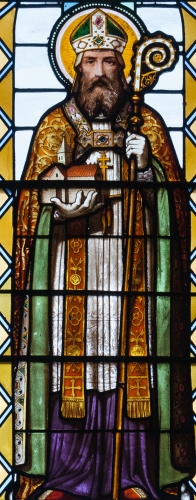
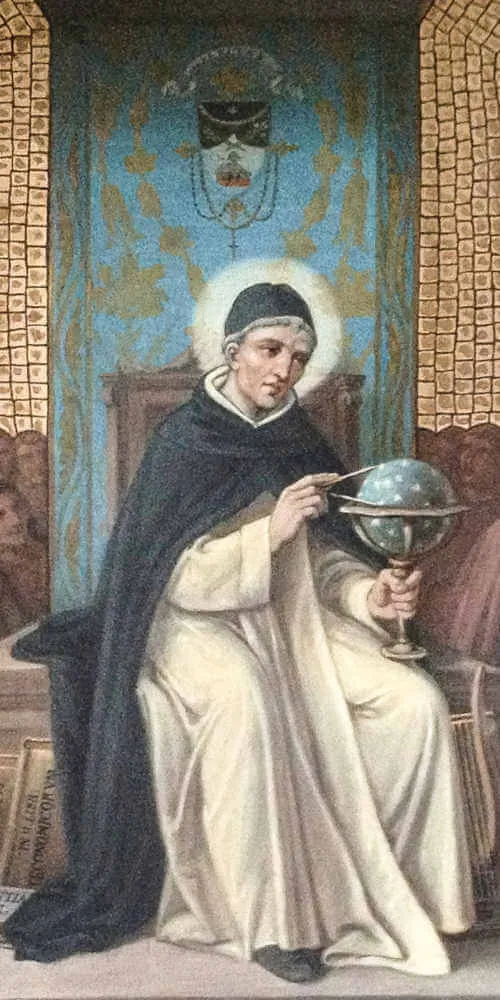
Saint Albert the Great, Bishop and Doctor

c. 1200–1280; Patron Saint of scientists, medical technicians, natural sciences, philosophers, schoolchildren, and theology students; Canonized by Pope Pius XI on December 16, 1931; Declared a Doctor of the Church (Universal Doctor) during his canonization

One of the greatest minds in the history of the Church was born in the Holy Roman Empire around the turn of the thirteenth century in the town of Lauingen, modern-day Germany. Different sources date his birth in various years between 1193 and 1206. He was known as Albert of Lauingen when born, but even before his death he was often referred to as Albert the Great (Albertus Magnus).

Albert was born into a noble family, with some accounts identifying his father as a count. Because of his noble status, he enjoyed the blessing of an excellent education, either at home from private tutors or in a neighboring school. At some point after completing his elementary studies, he was sent to the University of Padua to study the liberal arts and was also introduced to the philosophy of Aristotle that would become foundational for his later writings. Around 1223, Albert joined the Dominican order, possibly as a result of an apparition in which the Blessed Virgin Mary instructed him to do so. He continued his studies in important schools in Padua, Paris, and Cologne to complete his education in philosophy and theology.

Around the time that Brother Albert finished his studies, he was ordained to the sacred priesthood and was assigned to various teaching posts throughout Europe, most notably in Cologne for several years. Around 1245, Father Albert earned the distinction of “Master of  Theology” from the prestigious Saint-Jacques at the University of Paris, where he also was given the Chair of Theology.

It is difficult to know what was taking place within the mind and soul of Father Albert during these first twenty-two years as a Dominican, but it is clear from the abundant good fruit borne from his life that he was intimately united to God. Later biographers describe him as having a voracious appetite for sacred knowledge, with the heavens opening up upon him, filling his mind with divine light. Unique to his thought was the incorporation of Aristotle’s philosophical principles in logic and metaphysics with theology. Before Father Albert, no one had thoroughly incorporated the two strains of thought. This was partly due to the fact that all of Aristotle’s works had only recently been translated into Latin from ancient Greek.

Father Albert was not only a philosopher and theologian, he was a walking encyclopedia who seemed to have mastered all subjects. The compilation of his writings fills thirty-nine encyclopedic volumes and covers a multitude of topics, including logic, metaphysics, rhetoric, theology, botany, geography, astronomy, astrology, mineralogy, alchemy, zoology, physiology, phrenology, justice, law, politics, economics, friendship, and love. One might ask what most of these have to do with theology. Father Albert would reply that they all have to do with theology because they all come from God and are all in perfect harmony with each other. Today some suggest that science and faith contradict each other. Father Albert would be the first to challenge that belief and would thoroughly defend his position. The simple answer is that if God is the source of all the natural sciences, logic, revelation, law, and order, and all that is true, then God cannot contradict Himself. He cannot create the natural sciences with one truth and then reveal in theology another truth. What is true is that which is in the mind of God, no matter the subject, and that which is in the mind of God is perfectly harmonious. All creation reveals and glorifies God in its own perfect way!

Though Father Albert was one of the most prolific and profound writers in the Church, God also used him to help form a man who became the Church’s greatest theologian: Saint Thomas Aquinas, the Angelic Doctor. Father Thomas Aquinas was about twenty-five years younger than Father Albert but died five years before him. It was in Paris that the twenty-year-old Father Thomas became Father Albert’s student. Their teacher-student bond grew into a profound mutual respect and friendship. In many ways, Father Albert laid the foundation for Father Thomas by helping him embrace and “Christianize” Aristotelian logic and metaphysics. Father Albert was the first of the Church’s theologians to write upon every aspect of Aristotle, and Father Thomas soaked it all up, later building upon it to produce what is arguably the most important theological work ever written: the Summa Theologiae (“Summary of Theology” or “Compendium of Theology”). 

Together, these men were among the greatest theologians to show that faith and reason are not exclusive of each other; rather, they are intimately interwoven and inseparable. When pure human reason is used to analyze the content of divine revelation (faith), the mind is able to extrapolate deeper truths and bring them to their logical conclusion, even to the highest degrees of abstraction. The bond and respect between Fathers Albert and Thomas was so deep that when Father Albert was transferred to Cologne in 1248, Father Thomas followed him.

In 1254, Father Albert was made the provincial superior of the Dominican Order, adding administrative duties to his academic pursuits. In 1260, Pope Alexander IV appointed him as the Bishop of Regensburg, where he remained for the next three years. During that time, though Bishop Albert was among the greatest minds in the Church, his humility won the hearts of his people, and he was able to bring healing to divisions that plagued that diocese. After Bishop Albert resigned his position, the pope employed him for diplomatic missions while Bishop Albert continued his academic pursuits.

Because Bishop Albert and Father Thomas Aquinas were groundbreakers in the use of Aristotelian logic and metaphysics, there were some who criticized them. In 1277, two years after Father Thomas died, the Bishop of Paris issued an edict condemning 219 theological propositions that were deduced from Aristotelian logic by various theologians, stating that God’s Almighty Power was so transcendent that the propositions violated God’s Omnipotence. Twenty of those 219 were from Father Thomas. Some stories state that despite his age (about seventy-seven), Bishop Albert traveled to Paris to personally defend his saintly student. In the end, both teacher and student became saints and Doctors of the Church, thus pointing to the true omnipotence of God.

Saint Albert the Great was a man with a mind on fire with the Holy Spirit. Mere human intellectual capacity could never achieve what he achieved. Some saints are filled with the fortitude necessary to die as martyrs, some are mystics whose lives reveal the the holiness of God, some are founders who build up the Church through new charisms and religious communities, and some, like Saints Albert and Thomas, receive the gift of intellect, infused with the highest degree of the virtues of wisdom, knowledge, understanding, and prudence, by which they are able to leave the Church a solid theological foundation upon which it can continue to be built.

As we honor the “Great” Saint Albert, Doctor of the Church, who was designated as Universal Doctor because he mastered every subject, ponder the simple fact that, despite his having one of the greatest minds in the history of thought, his proficiency is but a drop of water in the ocean compared to the mind of God. This humble truth is something Saint Albert would have readily professed, yet it never stopped him from striving to become that one drop, given that it was one small way of comprehending and articulating what God has revealed to us. And that which comes from God, no matter how small in comparison to the Reality, has infinite value. Seek to imitate Saint Albert by renewing your commitment to the study of your faith so that your mind will experience but a drop of the grace given to this greatest of men.

Source: https://mycatholic.life/saints/saints-of-the-liturgical-year/november-15—saint-albert-the-great-bishop-and-doctor/

Saint Albert the Great, Bishop and Doctor Read More »
Luke 17:26-27

Embracing the Present Moment

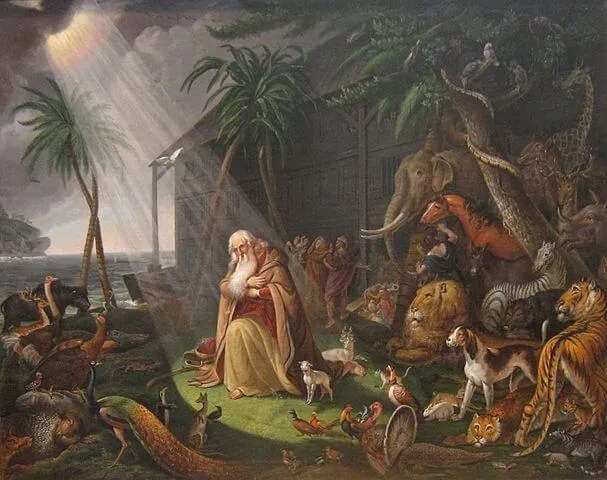
Jesus said to his disciples: “As it was in the days of Noah, so it will be in the days of the Son of Man; they were eating and drinking, marrying and giving in marriage up to the day that Noah entered the ark, and the flood came and destroyed them all.”

Reflection:

As we enter into the final weeks of the liturgical year, we begin to turn our attention to the final coming of Christ. In today’s Gospel, Jesus gives us the example of Noah and Lot. In both of their stories, people were eating, drinking, marrying, buying, selling, planting and building up, until the very day that the floods came to destroy the earth at the time of Noah and fire rained down from the sky at the time of Lot. Both Noah and Lot were saved, but many others alive at that time met with sudden and unexpected destruction.

Jesus says that the “days of the Son of Man” will be similar to these previous two events. At an unexpected time, Jesus will return to earth, and the Final Judgment will ensue. So His message is clear: Be ready at all times.

Though we are familiar with this teaching of our Lord, spoken many times and in various ways in the Gospels, many people do not heed the message. It is easy to believe that you always have tomorrow to change, and so you give into temptation today. And then tomorrow comes, and the temptation is once again embraced with the thought that you will work on it tomorrow, and henceforth. We can easily go about perpetuating our sins and embracing our temptations while we have the ongoing good intention of changing tomorrow. This is a mistake for two reasons.

First of all, it always remains a possibility that our Lord will indeed come today and that today truly will be the end of the world. Or, it always remains a distinct possibility that your life will come to an end today, suddenly and unexpectedly. If that were to happen, would you be fully ready to stand before the judgment seat of Christ? Most people would not, at least not fully ready. Thus, this should be motivation enough to work tirelessly today to be ready now and every moment hereafter.

But we should also see this prophecy of our Lord as applying to every present moment of every day. Jesus is always coming to us, suddenly and without warning, inviting us to serve Him by grace. This Gospel passage states that “Whoever seeks to preserve his life will lose it, but whoever loses it will save it.” This applies to the end of our lives and to the end of the world, but it also applies to every present moment of every day. If we continually seek to lose our lives, meaning, to choose the Heavenly realities over the temporal earthly indulgences we are daily tempted with, then we will also daily experience the grace of salvation, here and now, in every present moment of our lives. 

Reflect, today, upon whether or not you regularly seek to lose your life for the sake of the Kingdom of God. Do you continually choose grace, mercy, Heaven, obedience, love, self-sacrifice, compassion, forgiveness and the like, every moment of every day of your life? If so, then our Lord will continually bestow the gift of His saving grace upon you here and now, preparing you for the ultimate moment of judgment. If not, then you will be more like the people of Noah’s and Lot’s time who met with sudden destruction when they least expected it. Live for God now, today, in this moment, and you will be eternally grateful you did.

Source: https://catholic-daily-reflections.com/2024/11/14/embracing-the-present-moment-3/

Luke 17:26-27 Read More »

Saint Lawrence O’Toole

Profile

Lawrence was the son of the chief of Hy Murray. He was taken as a hostage by King Dermot McMurrogh Leinster in 1138 when he was ten years old; Dermot later married Lawrence’s sister, Mor. He was released in 1140 at age twelve to the Bishop of Glendalough, Ireland. and raised and educated at the monastic school there. He became a monk at Glendalough, and an abbot in 1153. He declined the bishopric of Glendalough in 1160, citing his unworthiness. He ordered to accept the archbishopric of Dublin, Ireland in 1161, and became the first native-born Irishman to hold the see.

Lawrence reformed much of the administration and clerical life in his diocese. He worked to restore and rebuild Christ Church cathedral. As archbishop, he accepted the imposition onto Ireland of the English form of liturgy in 1172. Noted for his personal austerity, he wore a hair shirt under his ecclesiastical robes, made an annual 40 day retreat in Saint Kevin‘s cave, never ate meat, fasted every Friday, and never drank wine – though he would color his water to make it look like wine and not bring attention to himself at table. He acted as peacemaker and mediator at the second seige of Dublin in 1170.

In 1171, Lawrence traveled to Canterbury, England on diocesan business. While preparing for Mass there, he was attacked by a lunatic who wanted to make Lawrence another Saint Thomas Beckett. Everyone in the church thought Lawrence had been killed by the severe blow to the head. Instead, he asked for water, blessed it, and washed the wound; the bleeding stopped, and the archbishop celebrated Mass.

Lawrence negotiated the 1175 Treaty of Windsor which made upstart Irish king Rory O’Connor and vassal of king Henry II of England, but ended in combat. He attended the General Lateran Council in Rome, Italy in 1179. He was the Papal legate to Ireland. He died while travelling with King Henry II, a trip taken as a peacemaker and on behalf of Rory O’Conner. It resulted in his imprisonment and ill-treatment by the king who decided he had had his fill of meddling priests.

Born

  • 1128 at Castledermot, County Kildare, Ireland

Died

  • 14 November 1180 at Eu, diocese of Rouen, Normandy, France of natural causes
  • buried at the abbey church at Eu
  • so many miracles were reported at his tomb that his relics were soon translated a place of honour before the altar
  • his heart was removed and returned to Christ Church Cathedral, Dublin, Ireland

Canonized

  • 1225 by Pope Honorius III

Patronage

  • archdiocese of Dublin, Ireland

Source: https://catholicsaints.info/saint-lawrence-otoole/

Saint Lawrence O’Toole Read More »

Luke 17:20-21

Perceiving the Kingdom of God

Asked by the Pharisees when the Kingdom of God would come, Jesus said in reply, “The coming of the Kingdom of God cannot be observed, and no one will announce, ‘Look, here it is,’ or, ‘There it is.’ For behold, the Kingdom of God is among you.”

Reflection:

Why did the Pharisees ask Jesus this question? Why did they want to know when the Kingdom of God would come? To answer this question, we must first look at the full context of the various communications between Jesus and the Pharisees. When we do this and see the many ways that the Pharisees attempted to trap Jesus in speech and the times in which our Lord firmly rebuked the Pharisees, it seems clear that the Pharisees did not ask Jesus this question in innocence and openness. Instead, they once again were trying to trap Him. They posed a question by which they gave the appearance of believing Jesus’ teachings that the Kingdom of God was coming, but they asked not in faith but in mockery and in an attempt to trip Jesus up in His answer.

Jesus’ answer is mysterious. It leaves little room for the Pharisees to use Jesus’ speech against Him. Perhaps the Pharisees were hoping that Jesus would say that the Kingdom was coming soon, or next month, or within the year. But Jesus’ answer leaves them with confusion in the face of this mystery that “the Kingdom of God is among you.”

Much of what Jesus says can only be fully understood through faith. He often speaks in veiled language intentionally, because the only way to lift the veil to perceive the meaning of His teachings is to rely upon the inspired gift of faith. Faith is like a key to unlock the secrets of the mysteries of God. Faith becomes a lens through which every parable, every figure of speech, and every mystery taught by our Lord is understood. But without this inspired gift of faith, Jesus’ teachings remain mysterious and incomprehensible.

When you ponder these words that “the Kingdom of God is among you,” what do you understand? Are you able to use the gift of faith to unlock the meaning of this sacred teaching? Interestingly, reading Jesus’ words, spoken in a veiled way, offer us the opportunity to test our own faith. If we read these words and are left in confusion, then this is a clear sign that we need to pray for and be open to the gift of faith. But if we do read Jesus’ mysterious teachings and the light of understanding is given to us, then this is a clear reason to rejoice, since this comprehension is only possible through the gift of faith.

Reflect, today, upon this sacred teaching of our Lord: “The Kingdom of God is among you.” Meditate on those words and pray for insight and understanding. Jesus’ words are true. His Kingdom truly is everywhere, all around us and within us. It is alive and well. Do you see it? Do you perceive it? Do you see your role in building it? Use these questions as a test of your own level of faith and know that God wants to reveal to you these mysteries that are only able to be comprehended by His grace.

Source: https://catholic-daily-reflections.com/2024/11/13/perceiving-the-kingdom-of-god-3/

Luke 17:20-21 Read More »

Saint Frances Xavier Cabrini, Virgin

1850–1917; Patron Saint of immigrants, emigrants, hospital administrators, and orphans; Invoked against malaria; Canonized by Pope Pius XII on July 7, 1946

Maria Francesca Cabrini (Frances) was born in the small town of Sant’Angelo Lodigiano, Lombardy, modern-day Italy. At the time of her birth, this culturally Italian town was under the control of the Austrian Empire. She was the youngest of thirteen children, only four of whom survived to maturity. As a child, she listened attentively as her father inspired her with stories about foreign missionaries. Her parents were quite devout and formed their children well in the Catholic faith. Following the example of her mother and older sister Rosa, Frances learned to pray at an early age and grew in devotion to the Sacred Heart of Jesus, especially after Pope Pius IX extended the Feast of the Sacred Heart to the Universal Church when she was six years old. Around the age of eight, Frances received the Sacrament of Confirmation and later remarked of that day, “from that moment I was no longer of the earth.” She sensed she was deeply united with the Holy Spirit.

At the age of thirteen, Frances attended school at the convent of the Daughters of the Sacred Heart in a neighboring town. While with them, her love for the Sacred Heart grew. She wanted to join the sisters and enter the convent, but the mother superior turned her down because she suffered from poor health. After five years of schooling, she graduated with honors, received a teaching certificate, and returned to her hometown to teach in the parish school. Shortly afterward, she transferred to the parish school in the neighboring town of Vidardo. After two years of teaching, when she was twenty, her parents died just months apart. Soon afterward, she suffered through smallpox. When Frances recovered, she took it as a sign that God wanted something more from her, so she applied for acceptance to the Canossian Sisters of Crema, about forty miles away, but was yet again turned away.

In 1874, when Frances was twenty-four years old, the bishop invited her to assist at the House of Providence orphanage for girls about twenty miles away in Codogno. The bishop wanted the orphanage to be run as religious sisters would run it, and he believed Frances could help the two older women who were poorly operating the facility. Frances soon found that some of the girls in the orphanage were also interested in religious life, so in 1877, at the age of twenty-seven, Frances and five of the girls made a religious profession of vows at the hands of the bishop. Frances added Xavier to her name in honor of the great Jesuit missionary Saint Francis Xavier, and the bishop named her as the mother superior. Within three years, Mother Frances Xavier Cabrini’s attempt at religious life in the House of Providence suffered, due to calumnies from the other two women. Mindful of this, in 1880, at the age of thirty, the bishop invited Mother Cabrini and the girls who professed with her to form a new missionary convent in Codogno, which eventually became the Institute of the Missionary Sisters of the Sacred Heart of Jesus. Mother Cabrini remained mother superior for the next thirty-seven years until her death.

Mother Cabrini was humble and prayerful, but also determined, hardworking, well organized, and zealous. She quickly arranged the new convent, despite arriving with very little means. An altar was set up in the chapel with an image of the Sacred Heart, which became the source of meditation and prayer for the young sisters. During the first several years after the order’s founding, the Missionary Sisters of the Sacred Heart experienced rapid growth, with many girls joining. Within a year, an orphanage and day school were established next to the convent. Within two years, another convent was established, and within five years there were seven convents. The sisters made needlework and embroidery to support their work.

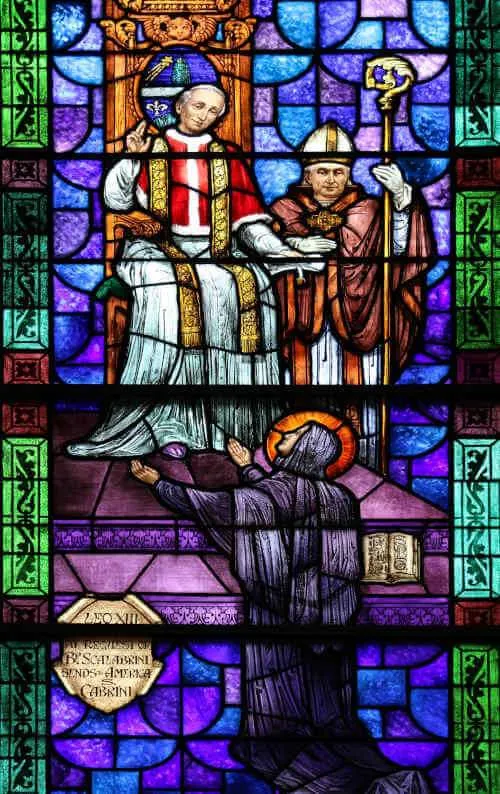
In September 1887, with the permission of her bishop, Mother Cabrini set out for Rome with the hope of founding a convent in the Eternal City and to request the Holy Father’s final approval of her institute. Despite some difficulties in dealing with the Roman Curia, in March 1888, Pope Leo XIII approved her rule and constitutions, and the sisters were invited to establish houses in Rome. Now that they were an institute approved by the pope, they were free to travel wherever the pope would send them. While in Rome, Mother Cabrini met Bishop Scalabrini of the Diocese of Piacenza, who encouraged her to found a convent in the United States to care for the destitute Italian immigrants. Mother Cabrini, however, had her heart set on China, just as her patron saint, Saint Francis Xavier, had done. In the meantime, Bishop Scalabrini sent a letter to the Archbishop Corrigan of New York who replied that he would welcome the sisters. Mother Cabrini decided to ask the Holy Father himself. At an audience, she told the Holy Father of her desire to establish a mission in China. The Holy Father quickly said to her, “You will go not to the East, but to the West!” The matter was settled and almost immediately, Mother Cabrini and her sisters set out by ship to the United States. Though this was a new and unexpected challenge, contrary to her initial desire, she would often remind herself, “I can do all things in Christ Who strengthens me” (Philippians 4:13).

Mother Cabrini and six sisters arrived in New York on March 31, 1889. Upon arrival, the archbishop was surprised they had arrived so soon. The convent wasn’t prepared for them, so he urged them to return to Italy for the time being. Mother Cabrini refused, stating that she was sent by the pope and had to obey him. Without a convent ready, the sisters found hospitality with the Sisters of Charity. Shortly afterward, Mother Cabrini lovingly persuaded the archbishop to permit her and her sisters to move into the convent. He agreed, and the sisters began their work in the poor Italian section of Manhattan. They established a free school, taught in the local parish, and founded an orphanage, which soon had hundreds of children for whom the sisters would beg for alms. Many young Italian girls also joined in the work with the sisters.

Once everything was in working order, Mother Cabrini returned to Italy with some of the postulants who had joined them in America so they could enter the novitiate at the mother house in Codogno. After visiting all of her houses in Italy and with Pope Leo XIII to update him and receive his encouraging blessing, Mother Cabrini returned to the United States in April 1890 with seven more sisters. After founding a new convent and orphanage in West Park, which a year later would also become a novitiate for North America, Mother Cabrini returned to Italy once again to visit all her convents.

Over the next twenty-seven years, Mother Cabrini sailed across the ocean about twenty-three more times, founding over sixty hospitals, orphanages, schools, and convents in New Orleans, Brooklyn, Denver, Newark, Philadelphia, Scranton, Chicago, Seattle, Los Angeles, Argentina, Brazil, Nicaragua, England, France and Spain. During her time at sea, she became accustomed to writing letters to her sisters, amounting to thousands of letters that well document her travels and work. She was a tireless foundress who was directed and empowered by the Holy Spirit. She was compassionate and humble, learning from her continuous meditation on the Sacred Heart. She was an inspiration to all, drawing more than 1,000 young girls to join her mission in her lifetime. Nine years after her death, her sisters established their first home in China, no doubt due to her intercession. In 1946, she became the first United States citizen to be canonized.

Saint Frances Xavier Cabrini knew from an early age that God was calling her to serve Him as a religious sister, but she had no idea what abundant fruit her life would produce. She worked one day at a time, fulfilling the will of God each moment, continually entering into the humility, suffering, compassion, and mercy of Jesus’ Sacred Heart. In His Heart she discovered His love for the poor, sick, abandoned, and destitute, and she ministered to them from His Heart, being His mercy for all.

Honor this holy foundress by honoring the Sacred Heart of Jesus. This devotion is especially relevant for those who suffer. Ponder Jesus’ wounded Heart and the love that pours forth from that wound, and you will become a recipient of the mercy Mother Cabrini discovered and shared.

Source: https://mycatholic.life/saints/saints-of-the-liturgical-year/november-13—saint-frances-xavier-cabrini-virgin—usa-memorial/

Saint Frances Xavier Cabrini, Virgin Read More »

Luke 17:17-19

Thank You, My Lord

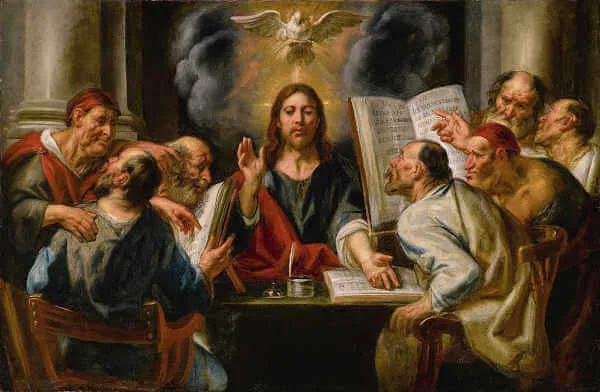
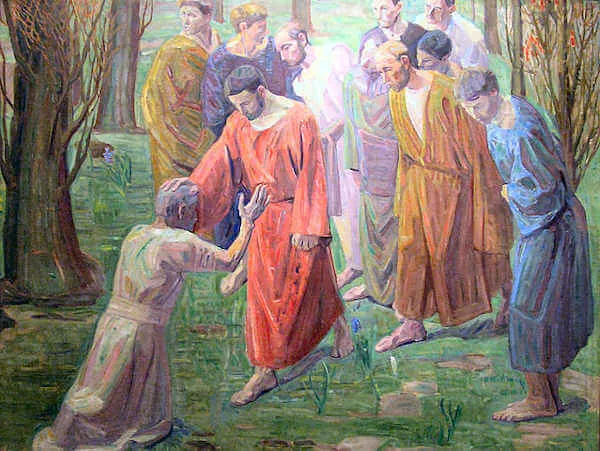
Jesus said in reply, “Ten were cleansed, were they not? Where are the other nine? Has none but this foreigner returned to give thanks to God?” Then he said to him, “Stand up and go; your faith has saved you.”

Reflection:

This reply from our Lord came in response to the one leper who returned to Jesus to thank Him. Ten lepers had come to Jesus, stood at a distance, cried out, “Jesus, Master! Have pity on us!” And with that, Jesus healed them all. But the heart of this healing is not as much the healing itself as it is the gratitude expressed by only one of the ten.

This Gospel relates to us that this one leper did five things to profoundly express his gratitude. He returned, glorified God, did so in a loud voice, fell at the feet of Jesus, and thanked him. What a wonderful witness for us all!

By analogy, children often take the loving care of their parents for granted. That’s why many good parents regularly remind their children to say “thank you.” In our relationship with God, we can also easily take God’s saving actions for granted. We can easily see all the grace we receive as something we deserve rather than as an infinitely merciful gift. When that happens, we become more like the other nine who failed to properly express their gratitude to Jesus.

First of all, it must be noted that expressing gratitude to God is not done because God needs these accolades. He does not depend upon our gratitude to affirm His self-worth. This is obvious. God is God, and He does not need our praise in any way. However, giving profound praise and glory to God is essential. It is essential because we need this virtue of gratitude so as to daily be reminded that all we receive from God is an unmerited gift. We cannot earn His love and grace. We do not deserve it. But He chooses to bestow it anyway out of mercy. And the only appropriate response to mercy is gratitude. Profound gratitude.

Gratitude is essential because it is the truth. We should always return to our Lord after He has graced us. We should glorify Him with much fervor, crying out to Him with passion. We should, literally and interiorly, fall on our face before Him, at His feet, and thank Him, over and over and over again. Doing so will always help us to remember the truth that everything we have and everything we are is a gift from God. An unmerited and undeserved gift of grace.

Reflect, today, upon the depth of gratitude in your own heart. Do you often act more like a spoiled and selfish child, or do you regularly perceive the graciousness of God? If you lack in any way this fullness of gratitude, then ponder this one leper. His gratitude, expressed with the fullness of passion, is the most important part of this story. In the end, he was graced far more than the other nine because his healing produced faith; and it was that faith that saved not only his body but his soul. Seek to save your soul by imitating the faith of this one holy and healed leper.

Source: https://catholic-daily-reflections.com/2024/11/12/thank-you-my-lord-3/

Luke 17:17-19 Read More »

Saint Josaphat, Bishop and Martyr

1580–1623; Patron Saint of Ukraine; Invoked for the reunification of Eastern and Western Christians; Canonized by Pope Pius IX on June 29, 1867

From the time of the Great Schism in 1054, many Christians in the Eastern (Byzantine) Empire have separated from the pope, creating what is generally called the Orthodox Church. The separation continues, although some of the Eastern Churches have reunited with Rome. In 1439, an attempt was made at the Council of Florence to reunite East and West. It was successful for a short time, but when the Turks conquered Constantinople in 1453, the reunion slowly disintegrated. In 1596, after years of discussions, under an agreement known as the Union of Brest, the majority of Ruthenian Orthodox bishops agreed to reunite with Rome under the pope. In that agreement the Ruthenians professed obedience to the pope as the supreme pontiff, but they were able to keep their Slavic liturgical traditions and celebrate the Byzantine Liturgy, retain married priests, maintain their own canon law and church governance, and hold onto certain theological distinctions within the Creed. Though many Orthodox supported this reunification, many others did not. It was into this time in history that Saint Josaphat, whom we honor today, lived and died for this unity within the Church.

At his birth in the town of Volodymyr, in the Polish-Lithuanian Commonwealth, modern-day Ukraine, our saint was given the name John Kuncevyc. He was baptized into the Orthodox Church, not the Catholic Church, and his parents were faith-filled Orthodox Christians. As a youth, he received a good education and learned the faith well. He was often more interested in praying than playing games. He served at church services, loved the Slavic religious traditions, embraced a life of penance and mortification from an early age, and loved the Divine Office, which he diligently prayed. As a young man, in order to assist his family financially, he worked as a merchant in a nearby city.

In 1604, eight years after his local diocese reunited with Rome, John entered religious life as a monk at the Monastery of Holy Trinity of the Order of Saint Basil the Great in Vilnius. Upon entering, he was given the religious name Josaphat. After five years in the monastery, Brother Josaphat was ordained a Catholic priest in the Eastern Rite and remained at the monastery for the next eight years, becoming prior of his and several other monasteries.

As a monk, he diligently studied the history of the Church, the liturgy, and other documents pertaining to the unity of the Church. He practiced extreme mortifications, and his prayer life grew deep. In addition to his love of the Divine Office and Liturgy, he continuously prayed the Jesus Prayer: “Lord Jesus Christ, Son of God, have mercy on me.” It was later reported by some of his brother monks that he prayed it so often that he could even be heard whispering it as he slept.

Father Josaphat’s prayer and study led him to become a firm supporter of the Union of Brest, and he did all he could to encourage his fellow monks and laypeople to embrace full union with Rome. His reputation as a wise and holy monk spread far and wide, and many came to seek his spiritual advice. He also attracted many young men to the monastery who became monks at his encouragement. He was a spiritual leader, a man of prayer, and a man on a mission of unification. He not only convinced many of the Orthodox holdouts to embrace the Catholic faith, he even drew some who had become Calvinists after the Protestant Reformation. He was so successful that he earned the nickname “Soul-snatcher.”

Father Josaphat’s ministry was so impactful that, in 1617, he was ordained as the Bishop of Vitebsk and, one year later, was elevated to the Archbishopric of Polotsk. This was an important see because tensions remained high, and the faithful, monks, and clergy remained divided about the reunification with Rome. Some feared that they would lose their liturgical traditions to more latinized ones, and others disagreed for theological reasons, but Archbishop Josaphat was convinced that full unification with Rome, while retaining their beloved religious traditions, was the will of God. He zealously devoted the next six years of his forty-three years of life to the cause.

As archbishop, he made the education of his clergy a high priority by issuing a catechism that he instructed them to memorize. He imposed discipline for priestly living, had large meetings to discuss pastoral initiatives, renewed the church buildings, and opposed everyone who opposed unification, including the Grand Chancellor of Lithuania who was overly sympathetic to those who opposed unification.

Within two years of Josaphat’s ordination as Archbishop of Polotsk, some Ruthenian Orthodox factions who refused to embrace unity with Rome secretly gathered and, with the help of the Orthodox Patriarch of Jerusalem, ordained new Ruthenian Orthodox bishops, including an archbishop, setting up a second hierarchical Church. The new Orthodox archbishop began to spread rumors that Josaphat was planning on making the Church fully Latin, throwing out their Slavic traditions. Violence ensued over the next few years, and even clergy battled clergy. Archbishop Josaphat predicted his own martyrdom but remained in the fight for unity.

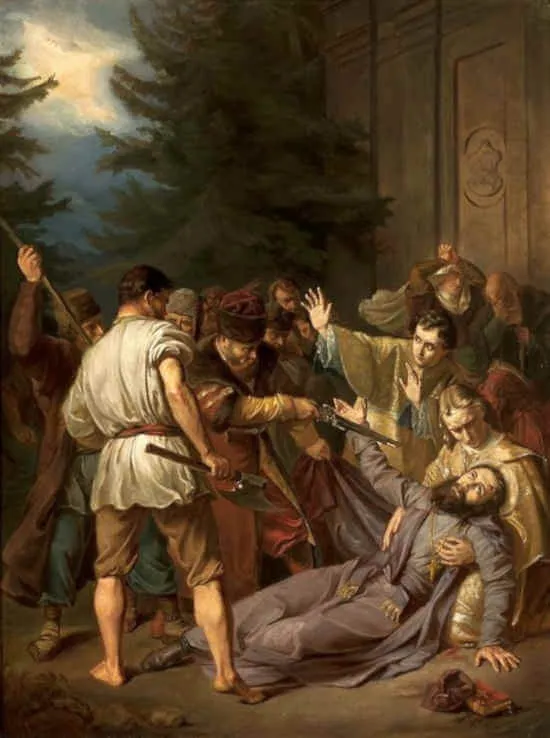
In 1623, an Orthodox priest led a revolt against the archbishop’s house, which included Orthodox men, women, and children. With stones and sticks they attacked the archbishop’s house, broke in, cornered Josaphat in a room, beat him, slit his head with an ax, shot him, dragged his dead body through the town naked, and threw him into the Dvina River.

Though this might at first appear to be a horrible end to a holy life, God, Who is all-powerful, is able to bring good from evil. In many ways, Saint Josaphat’s martyrdom was a turning point for the Ruthenian Catholics. While divisions remained high, those embracing unity found in Saint Josaphat a martyr and an inspiration. A martyr’s blood is a powerful weapon in the hands of God, and God used his death to help solidify unification with Rome in the hearts and minds of those open to divine grace.

As we honor this saint of Christian unity, ponder the sad reality that so many Christians who profess their faith in Christ remain divided. This is even found within the Catholic Church itself. Use this memorial of Saint Josaphat as an opportunity not only to ponder the painful divisions in our churches and world but also as an occasion to pray for oneness in Christ. Seek Saint Josaphat’s intercession today, and, in imitation of his life, offer your own sacrifices, prayers, and mortification to God, begging for the grace of true and lasting Christian unity.

Source: https://mycatholic.life/saints/saints-of-the-liturgical-year/november-12—st-josaphat-bishop-and-martyr/

Saint Josaphat, Bishop and Martyr Read More »

Luke 17:7-9

Servants of the Master

Jesus said to the Apostles: “Who among you would say to your servant who has just come in from plowing or tending sheep in the field, ‘Come here immediately and take your place at table?’ Would he not rather say to him, ‘Prepare something for me to eat. Put on your apron and wait on me while I eat and drink. You may eat and drink when I am finished?’ Is he grateful to that servant because he did what was commanded?”

Reflection:

In most cultures today, the idea of having a servant whom you command to wait on you is far from ideal. Jesus uses this image because the people to whom He was speaking would have easily related. He used it as a way of humbling them because when the illustration is properly understood, He was identifying each one of them as the servant, not the master. Only God is the Master.

When it comes to our service of God, there is no limit to the commands that God will give. At first, that might seem harsh, but it’s not because the commands that God gives to us are dictates of perfect love. We need His commands. We need the order He provides. We need to enter into perfect obedience to Him. We need to listen to everything He tells us and obey it to perfection. Seeing God as our Master and ourselves as His servants will only appear harsh when we fail to understand what sort of Master He is.

Recall the beautiful words of our Blessed Mother when she was given the command from the Archangel Gabriel. The angel said to her, “You will conceive in your womb and bear a son, and you shall name him Jesus.” This was not a question posed to her; it was a command of love. Mary did not hesitate and did not refuse. She said, “Behold, I am the handmaid of the Lord. May it be done to me according to your word.”

At the conclusion of today’s Gospel, Jesus went on to say, “When you have done all you have been commanded, say, ‘We are unprofitable servants; we have done what we were obliged to do.’” In many ways, this is exactly what our Blessed Mother did. She was a servant of God’s perfect commands, and she knew that her love for God obliged her to follow His will.

When you think about your service of the will of God, do you see it as you doing God a favor? Do you see obedience to God’s dictates as an act of generosity on your part and your cooperation with those dictates as above and beyond your natural duties? Hopefully not. Hopefully you understand that you, like our Blessed Mother, are a servant of the one true Master of all. Hopefully you also see the commands of God as the roadmap toward a life of complete fulfillment. When we understand Who the Master is, we will never hesitate in being a servant, or even a slave. We will not hesitate in freely surrendering ourselves over to His will in complete and unwavering obedience. God alone knows what is best for us, and we need to give Him complete control over our lives.

Reflect, today, upon the image of a master and a slave. As you do, try to shed every preconceived image you have that includes harshness, cruelty, dominance and control. Instead, try to see the image of a divine Master Whose only concern is for the servant. Try to see a Master Who perfectly loves the servant. Reflect upon your own need for such a Master in your life. Pray that you will be able to surrender complete control over to God in all things so that He can direct your life into the glorious things He has in store for you.

Source: https://catholic-daily-reflections.com/2024/11/11/servants-of-the-master-2/

Luke 17:7-9 Read More »

Saint Martin of Tours, Bishop

316 or 336–397; Patron Saint of beggars, cavalry, equestrians, geese, horses, innkeepers, Pontifical Swiss Guards, quartermasters, reformed alcoholics, soldiers, tailors, and winemakers; Invoked against alcoholism and poverty; Pre-Congregation canonization

Saint Martin of Tours has been one of the most revered and loved saints in European history for two primary reasons: he lived a life of heroic sanctity, and someone wrote it all down. Sulpicius Severus is believed to have been a wealthy man who converted to Christianity through the ministry of Bishop Martin. He then became a priest, interviewed Bishop Martin before he died, and wrote a book about Martin’s incredible life. The book was copied over and over again and became one of the standard texts for religious and laity alike for many centuries. Numerous churches and monasteries bear Martin’s name as a result of his popularity.

Martin was born in Sabaria in Pannonia, within the Roman Empire, modern-day Szombathely, Hungary. Some early records state he was born in 316, others in 336. When Martin was young, his family moved to Ticinum, modern-day Pavia, northern Italy. He was born in the Roman Empire during an important period of change. In 313, Emperor Constantine issued the Edict of Milan, legalizing Christianity. Constantine then became a Christian himself, and it became known that he favored Christians over those who remained pagans. As a result, many people began converting, some for political and economic reasons.

Martin’s father was a soldier who advanced to the rank of military tribune. As a child, Martin became interested in Christianity, but his parents clung to Roman paganism, dismissing the newly legalized Christianity. Martin, however, was not satisfied with his parents’ choice. So, at the age of ten, he went to the local Catholic Church and asked to become a Christian. He was enrolled as a catechumen and began the lengthy process of preparing for Baptism, which would not take place until ten years later. When he was twelve years old, he asked his parents to permit him to become a hermit, but they refused. At the age of fifteen, in compliance with a state law requiring sons of military officers to enlist in the Roman military, Martin became a soldier. Despite being surrounded by many who lived immoral lives, Martin remained true to his faith and lived quite virtuously. His language was always respectful, he treated others with exceptional kindness, he often gave most of his money and belongings to the poor, he humbled himself by serving those who were supposed to serve him, and he continued his preparation for Baptism.

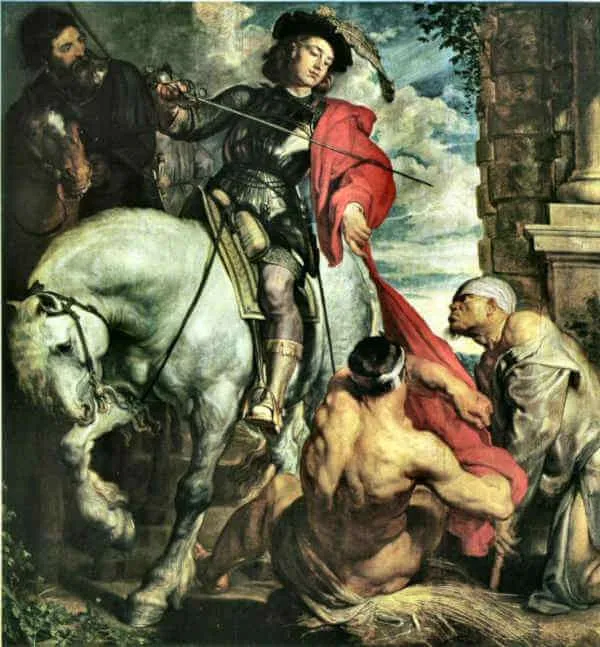
One day, while riding his horse through a town in the middle of winter, Martin came upon a poor man who was poorly dressed and shivering. The man begged people for help, but they ignored him. Martin knew he had to assist, but he had already given his money and other clothing away to the needy. All he had left was the military cloak he wore on his own back, so he dismounted his horse, took out his sword, cut the cloak in two, and gave half to the poor man. His fellow soldiers later laughed at his small funny-looking cloak. That night, Martin had a dream in which Jesus appeared to him wearing the half-cloak and said to a multitude of angels who surrounded them, “Martin, still only a catechumen, has clothed me.” When he awoke, he knew what he needed to do. He sought baptism, which he received at the age of twenty.

Martin remained in the military for two more years at the request of a friend. One day, the commanding officer was passing out bonuses to the soldiers as they prepared for battle the next day. When Martin was called forward, he stated, “I have been your soldier until now. Let me serve God henceforth. Give your bonus to someone who’ll fight for you. I am Christ’s soldier, and it’s not right for me to engage in battle.” Martin was accused of being a coward because they were going into battle the following day. To that accusation he replied, “If you believe I’m acting out of fear, I’ll stand unarmed in front of the enemy lines tomorrow. Shielded only by my faith in Jesus and the sign of the cross, I’ll face them without armor.” Martin was then thrown into prison to wait for the battle, which never happened because the opposing side sought peace. Martin was soon after released from the military.

Having heard of the renowned bishop and future Saint Hilary of Poitiers, Martin traveled to Poitiers in present-day France and stayed with the bishop for some time, learning from him the orthodox faith. He was also ordained a deacon and made an exorcist by Bishop Hilary. After Bishop Hilary was forced into exile for combating Arianism in the imperial court, and after Deacon Martin had a dream about converting his pagan parents, he decided to return to his hometown. On the way, he was attacked by robbers, but upon being asked who he was, he told one of the robbers that he was a Christian. Deacon Martin then shared the Gospel with the man, who repented, let Martin go, and later converted. When Deacon Martin arrived home, he converted his mother to the Christian faith but could not move his father. Others in his hometown also converted.

After encountering the wrath of some Arian priests whom he opposed, and even the Arian Archbishop of Milan, Deacon Martin and a priest spent time living as hermits on the Island of Gallinara. There they lived on herbs and wild roots. One day Martin ate a poisonous root by mistake, but through fervent prayer, God healed him.

Upon hearing that Bishop Hilary’s exile from Poitiers had ended, Deacon Martin moved to a town near the holy bishop and established a monastery. From there, he began preaching throughout the region and performing many miracles. He restored an unbaptized catechumen to life. When the catechumen returned to life, he stated that it was due to Martin’s prayers. On another occasion, Martin brought a slave back to life who had hung himself. 

In 371, Martin was chosen by the consent of the people as the Bishop of Tours. Though he initially opposed it and tried to hide, he was tricked and led to the cathedral where his ordination awaited. Once ordained the Bishop of Tours, Bishop Martin moved outside the city and established hermitages with other clerics where he led a life of prayer. For the next twenty-six years, he lived both an eremitical life and also engaged in an active ministry. He traveled throughout Gaul (France), preaching, converting many, performing miracles, and casting out demons. He opposed heresies, worked with other orthodox bishops—such as the future Saint Ambrose of Milan—destroyed pagan temples, and gained the respect of all. His opponents feared him, and his supporters praised God every time they witnessed his ministry in action.

Though Saint Martin of Tours lived a life of heroic virtue and deep prayer, his life and veneration reveal the importance of sharing the stories of the saints with others. After his death, his life has continued to inspire many. As we honor Saint Martin, ponder any ways that God might want to use you as He used Sulpicius Severus, Saint Martin’s biographer. Though you might not be called to write a book about a saint you know, consider ways in which you can share the Gospel by learning more about the saints and sharing their stories with others.

Source: https://mycatholic.life/saints/saints-of-the-liturgical-year/saint-martin-tours/

Saint Martin of Tours, Bishop Read More »

Luke 17:1-2

Loving Every Sinner

Jesus said to his disciples, “Things that cause sin will inevitably occur, but woe to the one through whom they occur.  It would be better for him if a millstone were put around his neck and he be thrown into the sea than for him to cause one of these little ones to sin.”

Reflection:

Having a millstone placed around your neck and thrown into the sea is very descriptive. Jesus is using very evocative language. A millstone was a large round stone with a hole in the center. If it were placed around someone’s neck and they were thrown into the sea, they would obviously sink to the bottom and die. Thus, Jesus is clearly stating that this awful fate is actually better than the fate of those who cause “one of these little ones to sin.”

First of all, it should be clarified that no one can actually cause us to sin. Sin is our own free choice, and we, and we alone, will be held accountable for our own sin. One thing that Jesus is pointing out here is that even though every person must take responsibility for their own actions and their own sins, we must also take responsibility for the ways that we act as tempters of others. We are all sinners. Therefore, by our sin, we will all tempt others to sin also. Sometimes we will tempt people to sin by provoking them to anger. At other times we will tempt others to sin by setting a poor example. And on the contrary, we also have the ability to “tempt” people to virtue. Or more properly speaking, to inspire and encourage them.

With that said, Jesus explains that the fate of those who act as tempters of others, especially the “little ones,” will suffer consequences graver than an untimely death. The little ones of which Jesus speaks should be understood as those who are weak in faith, overly sensitive, particularly vulnerable at that time in their life, and susceptible to outside influence. This could be a child, or it could be someone who is currently teetering on the edge of despair, confusion, anger, or any serious sin. When you encounter people like this, how do you treat them? Jesus has a deep heart of compassion for these people and wants us to have the same depth of compassion. But sometimes we fail. We may be negligent in our duty to reach out to them. Even this negligence could be a form of causing “one of these little ones to sin.” Of course, it is even far worse if we were to actively agitate them, harshly judge them, provoke their anger, draw them into some sin of weakness and false consolation by our temptation, etc. The simple truth is that Jesus loves those who are weak, vulnerable and sinful, and He wants us to love them with His heart. When we fail to do so, Jesus will hold us accountable for their further fall from grace.

Reflect, today, upon the person or persons in your life that appear especially vulnerable, sinful, confused and lost at this time. Who is it that struggles with anger, or an addiction or some sinful lifestyle? Ponder your attitude toward them. Are you judgmental, condemning, belittling and the like? Do you tempt them to fall further into any sins of weakness they commit in a vulnerable state, thus leading them into further sin? Or, when you encounter someone who is greatly struggling, do you turn to them with the deepest compassion and mercy, forgiving any ways that they may sin against you, and work hard only to be there for them in their need, no matter how hard it is on you? Commit yourself to a profound love of all of God’s “little ones” and seek to serve them with the heart of Christ so that one day they will eternally rejoice with you in Heaven.

Source: https://catholic-daily-reflections.com/2024/11/10/loving-every-sinner-3/

Luke 17:1-2 Read More »