2024

Saint Ansovinus of Camerino

Profile

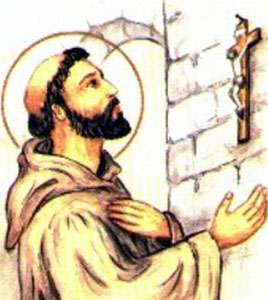
Ansovinus was a priest and a hermit at Castel Raimondo near Torcello, Italy. He became the bishop of Camerino, Italy, and was consecrated by Pope Leo IV; he accepted the vocation on the condition that his parishioners did not have to recruit soldiers, an obligation imposed on most bishops of the time.

Ansovinus was a confessor to Emperor Louis the Pious. He attended the Council of Rome called by Pope Saint Nicholas I in 861. He was a miracle worker. His association with crops come from his work of feeding the poor. Once when the granary was empty, but there were still poor people to feed, he prayed for help; the granary was found to be full, and everyone ate their fill.

Born

  • at Camerino, Italy

Died

  • 868 at Camerino, Italy from a fever contracted at Rome, Italy
  • relics enshrined in a 14th century sarcophagus in the crypt of the cathedral in Camerino, Italy

Canonized

  • Pre-Congregation

Patronage

  • gardeners
  • protection of crops
  • Camerino, Italy, city of
  • Camerino-San Severino
  • Marche, Diocese of Italy

Source: https://catholicsaints.info/saint-ansovinus-of-camerino/

Saint Ansovinus of Camerino Read More »

John 5:19-20

Amazement and Awe

“Amen, amen, I say to you, the Son cannot do anything on his own, but only what he sees the Father doing; for what he does, the Son will do also. For the Father loves the Son and shows him everything that he himself does, and he will show him greater works than these, so that you may be amazed.”

Reflection:

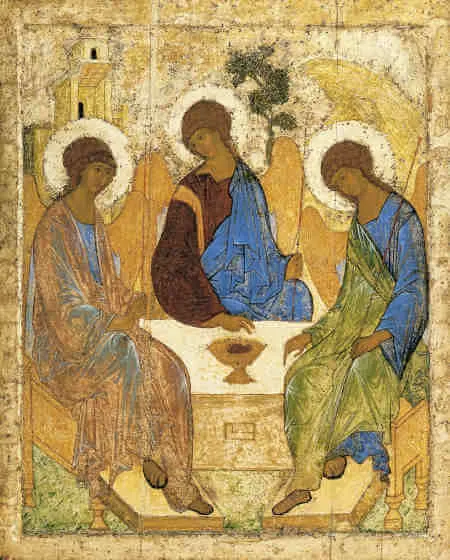
The most central and most glorious mystery of our faith is that of the Most Holy Trinity. God the Father, Son and Holy Spirit are one God yet three distinct Persons. As divine “Persons,” each one is distinct; but as one God, each Person acts in perfect union with the others.

In today’s Gospel, Jesus clearly identifies the Father in Heaven as His Father and clearly states that He and His Father are one. For this reason, there were those who wanted to kill Jesus because He “called God his own father, making himself equal to God.”

The sad reality is that the greatest and most glorious truth of God’s inner life, the mystery of the Most Holy Trinity, was one of the primary reasons that some chose to hate Jesus and sought His life. Clearly, it was their ignorance of this glorious truth that drove them to this hatred.

We call the Holy Trinity a “mystery,” not because they cannot be known but because our knowledge of Who They are can never be fully understood. For eternity, we will enter deeper and deeper into our knowledge of the Trinity and be “amazed” on a continually deepening level.

One additional aspect of the mystery of the Trinity is that each one of us is called to share in Their very life. We will forever remain distinct from God; but, as many of the early Church Fathers liked to say, we must become “divinized,” meaning, we must share in God’s divine life through our union of body and soul with Christ Jesus. That union also unites us with the Father and the Spirit. This truth should also leave us “amazed,” as we read in the passage above.

As we continue to read this week from the Gospel of John and continue to ponder the mysterious and profound teaching of Jesus on His relationship with the Father in Heaven, it is essential that we not simply gloss over the mysterious language Jesus uses. Rather, we must prayerfully enter the mystery and allow our penetration of this mystery to leave us truly amazed.

Amazement and transforming edification is the only good response. We will never fully understand the Trinity, but we must allow the truth of our Triune God to take hold of us and enrichen us, at very least, in a way that knows how much we do not know—and that knowledge leaves us in awe.

Reflect, today, upon the sacred mystery of the Most Holy Trinity. Pray that God reveals Himself more fully to your mind and more completely consume your will. Pray that you will be able to share deeply in the life of the Trinity so that you will be filled with a holy amazement and awe.

Source: https://catholic-daily-reflections.com/2024/03/12/amazement-and-awe-3/

John 5:19-20 Read More »

Saint Luigi Orione

Profile

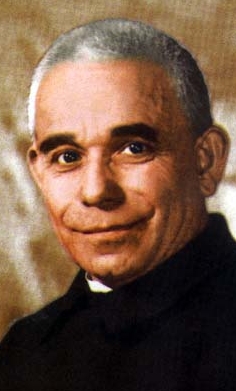
Luigi joined the Franciscans at Voghera, Italy as a young man, but developed severe health problems and returned to his family. He studied under Saint John Bosco at Turin, Italy, was present at Saint John‘s death, and was cured of his illness during Saint John‘s funeral.

Luigi studied at the seminary in Tortona, Italy. While still a layman and student, he opened San Luigi House at San Bernardino in 1893, a home for the poor, homeless and abandoned. He was ordained on 13 April 1895.

Luigi founded the Hermits of Divine Providence congregation, the Ladies of Divine Providence, and an orphanage in Rome, Italy in 1899. Under the patronage of Pope Saint Pius X, he founded the Little Missionaries of Charity.

Luigi constructed the Marian shrine at Tortona, a site that became a rallying point for people during times of political unrest. To administer the houses of his congregations, Luigi travelled the world, visiting houses in Wales, Brazil, the United States, and throughout Italy.

Born

  • 23 June 1872 at Pontecurone, Allessandria, Italy

Died

  • 12 March 1940 at San Remo, Imperia, Italy from heart disease
  • body found intact when exhumed in 1965
  • interred at the shrine of Our Lady of Safe Keeping, Tortona, Italy

Venerated

  • 5 February 1978 by Pope Paul VI (decree of heroic virtues)

Beatified

  • 26 October 1980 by Pope John Paul II

Canonized

  • 16 May 2004 by Pope John Paul II

Source: https://catholicsaints.info/saint-luigi-orione/

Saint Luigi Orione Read More »

John 5:5-6

Patient Endurance

“One man was there who had been ill for thirty-eight years. When Jesus saw him lying there and knew that he had been ill for a long time, he said to him, ‘Do you want to be well?’”

Reflection:

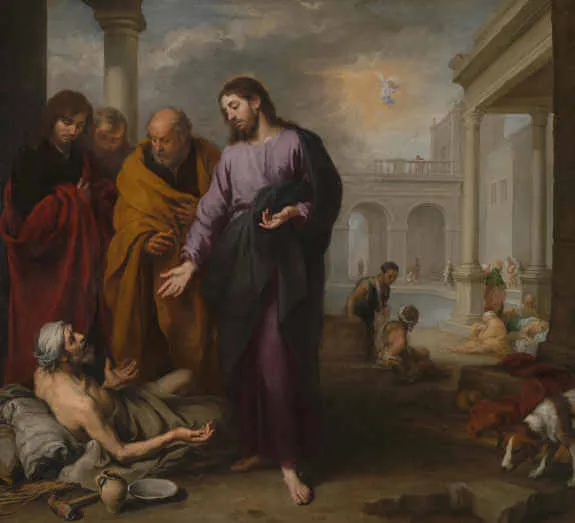
Only those who have been crippled for many years could understand what this man endured in life. He was crippled and unable to walk for thirty-eight years. The pool he was laying next to was believed to have the power of healing. Therefore, many who were sick and crippled would sit by the pool and try to be the first to enter it when the waters were stirred up. From time to time, that person was said to have received healing.

Jesus sees this man and clearly perceives his desire for healing after so many years. Most likely, his desire for healing was the dominant desire in his life. Without the ability to walk, he could not work and provide for himself. He would have had to rely upon begging and the generosity of others. Thinking about this man, his sufferings and his ongoing attempts for healing from this pool should move any heart to compassion. And since Jesus’ heart was one that was full of compassion, He was moved to offer this man not only the healing he so deeply desired but so much more.

One virtue in the heart of this man that would have especially moved Jesus to compassion is the virtue of patient endurance. This virtue is an ability to have hope in the midst of some ongoing and lengthy trial. It is also referred to as “longsuffering” or “longanimity.” Usually, when one faces a difficulty, the immediate reaction is to look for a way out.

As time moves on and that difficulty is not removed, it’s easy to fall into discouragement and even despair. Patient endurance is the cure for this temptation. When one can patiently endure anything and everything they suffer in life, there is a spiritual strength within them that benefits them in numerous ways. Other little challenges are more easily endured. Hope is born within them to a powerful degree. Even joy comes with this virtue despite the ongoing struggle.

When Jesus saw this virtue alive in this man, He was moved to reach out and heal him. And the primary reason Jesus healed this man was not just to help him physically but so that the man would come to believe in Jesus and follow Him.

Reflect, today, upon this beautiful virtue of patient endurance. The trials of life should ideally be seen not in a negative way but as an invitation to patient endurance. Ponder the way you endure your own trials. Is it with deep and ongoing patience, hope and joy? Or is it with anger, bitterness and despair. Pray for the gift of this virtue and seek to imitate this crippled man.

Source: https://catholic-daily-reflections.com/2024/03/11/patient-endurance-3/

John 5:5-6 Read More »

Saint Constantine II

Profile

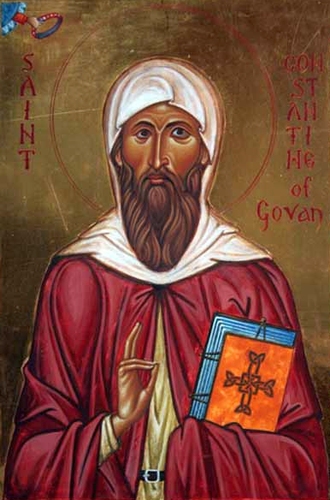
Constantine was born a Scottish prince, the son of King Kenneth II of Strathclyde. Constantine led a life of vice until his conversion, possibly after hearing the evangelizing preaching of Saint Columba and Saint Kentigern.

Constantine was married, and the father of at least one son, and briefly king of Stathclyde. Widowed, he abdicated his position, founded a monastery at Govan on the river Clyde, became a monk there, and evangelized the region.

Constantine became a priest. He was an abbot of a monastery in Govan, Scotland as well. Martyr.

Older martyrologies have entries for Constantines of Strathclyde, of Cornwall, and of Rahan, Ireland; they run the details of their lives together, and they could have been one, two or three people.

Died

  • bled to death in 874 in a cave near Crail after his right arm was cut off by Danish pirates
  • considered a martyr in Scotland for defending his Christian land against pagan invaders

Canonized

  • Pre-Congregation

Source: https://catholicsaints.info/saint-constantine-ii/

Saint Constantine II Read More »

John 4:46-48

Faith in All Things

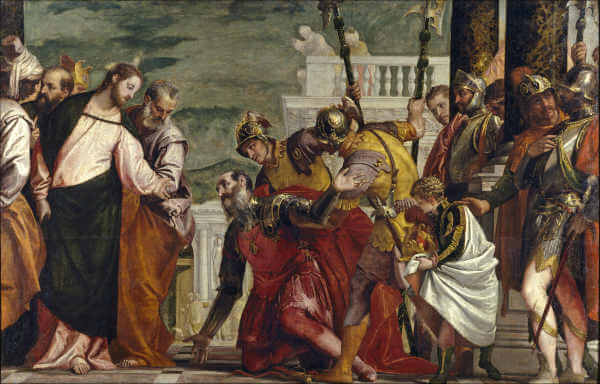
“Now there was a royal official whose son was ill in Capernaum. When he heard that Jesus had arrived in Galilee from Judea, he went to him and asked him to come down and heal his son, who was near death. Jesus said to him, ‘Unless you people see signs and wonders, you will not believe.’”

Reflection:

Jesus did end up healing the royal official’s son. And when the royal official returned to discover his son healed, we are told that “he and his whole household came to believe.” Some came to believe in Jesus only after He performed miracles. There are two lessons we should take from this.

First of all, the fact that Jesus performed miracles is a testimony to Who He is. He is a God of abundant mercy. As God, Jesus could have expected faith from those to whom He ministered without offering them the “proof” of signs and wonders. This is because true faith is not based upon external evidence, such as seeing miracles; rather, authentic faith is based upon an interior revelation from God by which He communicates His very self to us and we believe.

Therefore, the fact that Jesus did signs and wonders shows just how merciful He is. He offered these miracles, not because anyone deserved them but simply because of His abundant generosity to help spark faith in the lives of those who found it hard to believe through the interior gift of faith alone.

With that said, it’s important to understand that we should work to develop our faith without relying upon external signs. Imagine, for example, if Jesus would have never performed any miracles. How many would have come to believe in Him? Perhaps very few. But there would have been some who came to believe, and those who did would have had a faith that was exceptionally deep and authentic. Imagine, for example, if this royal official did not receive a miracle for his son but, nonetheless, chose to believe in Jesus anyway through the transforming interior gift of faith.

In each one of our lives, it is essential that we work to develop our faith, even if God doesn’t seem to act in powerful and evident ways. In fact, the deepest form of faith is born in our lives when we choose to love God and serve Him, even when things are very difficult. Faith in the midst of difficulty is a sign of very authentic faith.

Reflect, today, upon the depth of your own faith. When life is hard, do you love God and serve Him anyway? Even if He doesn’t remove the crosses you carry? Seek to have true faith at all times and in every circumstance and you will be amazed at how real and sustaining your faith becomes.

Source: https://catholic-daily-reflections.com/2024/03/10/faith-in-all-things-2/

John 4:46-48 Read More »

Fourth Sunday of Lent

First Reading 2 Chronicles 36:14-16, 19-23

In those days, all the princes of Judah, the priests, and the people 
added infidelity to infidelity, 
practicing all the abominations of the nations 
and polluting the LORD’s temple 
which he had consecrated in Jerusalem.

Early and often did the LORD, the God of their fathers, 
send his messengers to them, 
for he had compassion on his people and his dwelling place.
But they mocked the messengers of God, 
despised his warnings, and scoffed at his prophets, 
until the anger of the LORD against his people was so inflamed 
that there was no remedy.

Their enemies burnt the house of God,
tore down the walls of Jerusalem, 
set all its palaces afire, 
and destroyed all its precious objects.

Those who escaped the sword were carried captive to Babylon, 
where they became servants of the king of the Chaldeans and his sons
until the kingdom of the Persians came to power.

All this was to fulfill the word of the LORD spoken by Jeremiah: 
“Until the land has retrieved its lost sabbaths, 
during all the time it lies waste it shall have rest 
while seventy years are fulfilled.”

In the first year of Cyrus, king of Persia, 
in order to fulfill the word of the LORD spoken by Jeremiah, 
the LORD inspired King Cyrus of Persia 
to issue this proclamation throughout his kingdom, 
both by word of mouth and in writing: 
“Thus says Cyrus, king of Persia: 
All the kingdoms of the earth
the LORD, the God of heaven, has given to me, 
and he has also charged me to build him a house 
in Jerusalem, which is in Judah.
Whoever, therefore, among you belongs to any part of his people, 
let him go up, and may his God be with him!”

Responsorial Psalm Psalms 137:1-2, 3, 4-5, 6

R. (6ab)  Let my tongue be silenced, if I ever forget you!

By the streams of Babylon
    we sat and wept
    when we remembered Zion.
On the aspens of that land
    we hung up our harps.

R. Let my tongue be silenced, if I ever forget you!

For there our captors asked of us
    the lyrics of our songs,
And our despoilers urged us to be joyous:
    “Sing for us the songs of Zion!”

R. Let my tongue be silenced, if I ever forget you!

How could we sing a song of the LORD
    in a foreign land?
If I forget you, Jerusalem,
    may my right hand be forgotten!

R. Let my tongue be silenced, if I ever forget you!

May my tongue cleave to my palate
    if I remember you not,
If I place not Jerusalem
    ahead of my joy.

R. Let my tongue be silenced, if I ever forget you!

Second Reading Ephesians 2:4-10

Brothers and sisters:
God, who is rich in mercy, 
because of the great love he had for us, 
even when we were dead in our transgressions, 
brought us to life with Christ — by grace you have been saved —, 
raised us up with him, 
and seated us with him in the heavens in Christ Jesus, 
that in the ages to come 
He might show the immeasurable riches of his grace 
in his kindness to us in Christ Jesus.
For by grace you have been saved through faith, 
and this is not from you; it is the gift of God; 
it is not from works, so no one may boast.
For we are his handiwork, created in Christ Jesus for the good works 
that God has prepared in advance,
that we should live in them.

Verse Before the Gospel John 3:16

God so loved the world that he gave his only Son,
so everyone who believes in him might have eternal life.

Gospel John 3:14-21

Jesus said to Nicodemus:
“Just as Moses lifted up the serpent in the desert, 
so must the Son of Man be lifted up, 
so that everyone who believes in him may have eternal life.”

For God so loved the world that he gave his only Son, 
so that everyone who believes in him might not perish 
but might have eternal life.

For God did not send his Son into the world to condemn the world, 
but that the world might be saved through him.
Whoever believes in him will not be condemned, 
but whoever does not believe has already been condemned, 
because he has not believed in the name of the only Son of God.

And this is the verdict,
that the light came into the world, 
but people preferred darkness to light,
because their works were evil.

For everyone who does wicked things hates the light
and does not come toward the light, 
so that his works might not be exposed.
But whoever lives the truth comes to the light, 
so that his works may be clearly seen as done in God.

Source: https://bible.usccb.org/bible/readings/031024-YearB.cfm

Fourth Sunday of Lent Read More »

Saint Attalas of Bobbio

Profile

Attalas was a monk at Lérins, France and Luxeuil Abbey. He helped Columbanus build the abbey in Bobbio, Italy.

Attalas served as its abbot from 615. During Attalas’s abbacy, most of the monks stood out against the severity of the Columbanian Rule. His monks included Saint Valery and Saint Blitmund of Bobbio.

Born

  • in Burgundy, France

Died

  • 627 of natural causes
  • interred next to Saint Colombanus in the church at the abbey of Saint Colombano, Bobbio, Provincia di Piacenza, Emilia-Romagna, Italy
  • re-interred in 1482 in a stone sarcophagus in the crypt of the basilica of Saint Colombano built over the site of the old church
  • altar, crypt and shrine were refurbished and the re-opened to the public in 1910

Canonized

  • Pre-Congregation

Patronage

  • Bobbio, Italy
  • Luxeuil-les-Bains, France

Representation

  • abbot near a mill with his staff in hand
  • abbot with a nearby chair
    with Saint Columbanus

Source: https://catholicsaints.info/saint-attalas-of-bobbio/

Saint Attalas of Bobbio Read More »

John 3:14-15

Seeking the Full Truth

“Jesus said to Nicodemus: ‘Just as Moses lifted up the serpent in the desert, so must the Son of Man be lifted up, so that everyone who believes in him may have eternal life.’”

Reflection:

The line quoted above concludes a dialogue that Jesus had with Nicodemus, a Pharisee and a member of the Sanhedrin. This is the first of three times Nicodemus is mentioned in the Gospel of John. The second time he appears is when he reminds the other members of the Sanhedrin that a man must be first heard before he is condemned. The third time was when Jesus was killed and Nicodemus brought a mixture of myrrh and aloes to prepare Jesus’ body for burial.

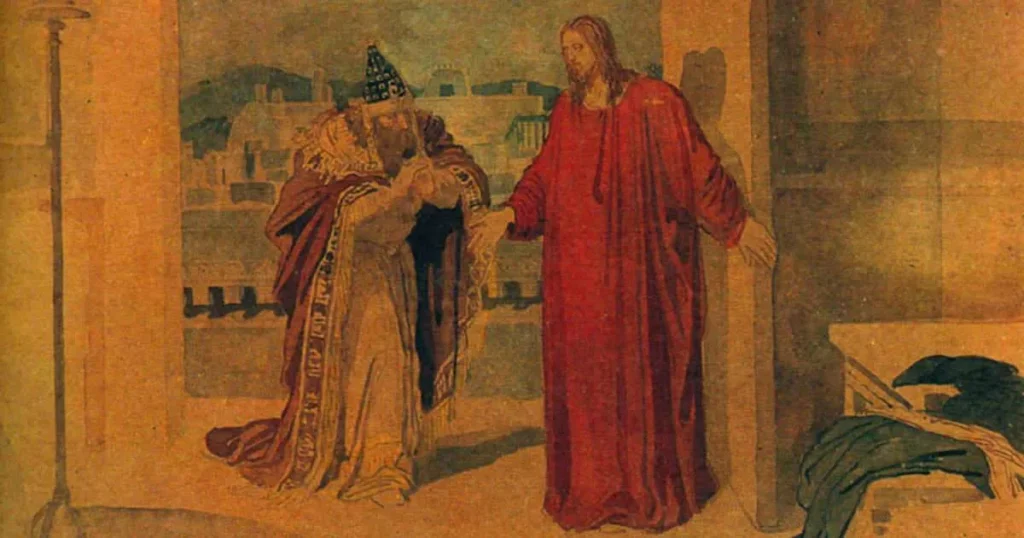
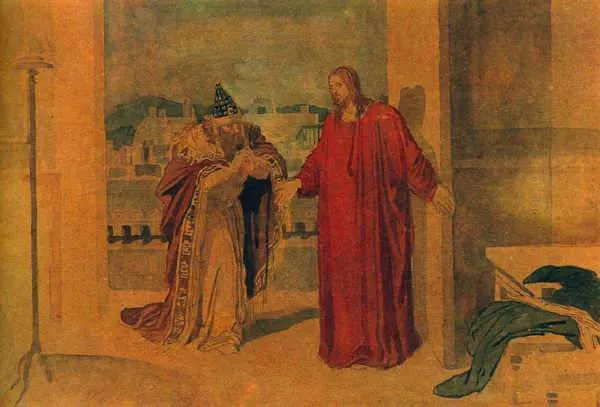
Jesus was not accepted by most of the Pharisees and within the Sanhedrin. For that reason, Nicodemus was taking a risk by going to him at night to talk. But Jesus clearly senses faith in the heart of Nicodemus, which is why when Nicodemus asks Jesus about His teaching, Jesus answers him. Unlike the other Pharisees, Nicodemus was not trying to trap our Lord; he sincerely wanted to understand.

At the beginning of this dialogue between Jesus and Nicodemus, Nicodemus professes the beginning of faith in Jesus when he says, “Rabbi, we know that you are a teacher who has come from God, for no one can do these signs that you are doing unless God is with him” (John 3:2). Interestingly, Jesus then speaks to Nicodemus in figures of speech, saying that one can only enter the Kingdom of God when they are “born from above” and “born from water and the Spirit.”

Nicodemus tries to understand but fails. Jesus then gently rebukes him by saying, “You are the teacher of Israel and you do not understand this?” (John 3:10). Jesus then goes on to speak further in symbolic language and figures of speech, concluding with the beginning of today’s Gospel quoted above when He speaks in a veiled way about His coming crucifixion.

One thing that is important to understand from this dialogue between Jesus and Nicodemus is that Jesus’ language is veiled in symbolic language because, even though Nicodemus was on the right path, he was not yet ready for the full revelation of the Gospel. He could not yet fully comprehend all that our Lord came to reveal. Thus, Jesus spoke in veiled language and invited Nicodemus to keep seeking its hidden meaning.

In our own lives, we can come to God and want Him to speak clearly and definitively to us, revealing His perfect will for our lives. But often He doesn’t. Why? Because God knows we are not yet ready for the full truth. When He speaks to us and when we gain insight in one way or another, this is good and reveals we are on the right path. But the Gospel, in its fullness, is so radical and so demanding that most people are not yet ready for the full truth. Therefore, in His compassion, God gives us only what we can handle at the moment. But this humble truth should encourage us, as it did Nicodemus, not to give up and to continue opening ourselves to the fullness of the Word of God.

Reflect, today, upon how open you are to the fullness of God’s Word. What would happen if God were to reveal to you, by an immediate personal revelation of divine knowledge, all that was in His sacred mind? Would it be too much for you to handle? Yes, it would be. But that humble admission is an important step toward that very goal. Humble yourself, today, more fully before the mysterious Word of God and pray that you will continue to be changed and open so that the clarity of God’s truth will more fully penetrate your soul.

Source: https://catholic-daily-reflections.com/2024/03/09/seeking-the-full-truth/

John 3:14-15 Read More »

Saint Frances of Rome, Religious

Patron Saint of motorists and widows; Invoked against the death of children; Canonized by Pope Paul V on May 29, 1608

Frances was born into an aristocratic family in the Eternal City of Rome near the famed Piazza Navona. From an early age, she was drawn to God and responded with much generosity. At the age of eleven, she told her father that she wanted to become a nun, but her father had other plans for her life. He informed her that he was giving her hand in marriage to Lorenzo Ponziani, a wealthy aristocrat who was a commander in the papal army.

Frances struggled with her father’s decision and brought her concern to a local priest. After listening to her, the priest said to her, “Are you crying because you want to do God’s will or because you want God to do your will?” She quickly responded that she wanted God’s will, and the matter was settled. At the age of twelve, Frances was married.

Soon after her marriage, Frances was expected to assist her mother-in-law with the family’s social calendar. She was to help plan and host parties, engage in frivolities, and attend numerous public meetings. Since all she longed for was a life of solitude and prayer, the social expectations placed on her wore her out and she became gravely ill. The illness lasted for months and left her on her deathbed at a tender age. As she lay dying, she had a vision of Saint Alexis, a holy monk who fled an arranged marriage to pursue his vocation, who told her that she could choose one of two options, to recover or not. She deferred to the will of God and was immediately healed.

For the next forty years, Frances embraced her marriage with her whole heart. She loved her husband and he loved her. Her humble affection and devotion to him were so great that it has been said that during those forty years they never once had an argument.

Though drawn to a life of prayer, Frances often said, “A married woman must, when called upon, leave her devotions to God at the altar to find Him in her household affairs.” One story relates that, while praying the psalms, Frances was called away four times to tend to family affairs before even being able to finish the prayer. Upon returning to begin a fifth time, she found the words of the psalm written in gold as a sign that her fidelity to the duties of her vocation was pleasing to God.

Though Frances was wealthy and of the noble class, she embraced a personal life of simplicity, bodily penance, fasting, and prayer. She abstained from meat except for rare occasions. She would often exchange the delectable food of the nobility for the food of poor beggars, usually receiving from them dry and moldy bread. She dressed in coarse garments, never fine linen, and often wore a hairshirt that irritated her flesh.

Frances and her husband had three children, two boys, and one girl. When a plague afflicted the city of Rome, one of her sons and her only daughter died at an early age. This personal suffering led her to join her sister-in-law to begin an informal outreach to the sick and poor. The women regularly visited hospitals, nursed the sick back to health, distributed food to the hungry, and were ministers of the compassion of Christ.

Frances exhausted all of her own money and possessions to care for those who were suffering. When her money ran out, she began to beg other wealthy families for more. Eventually, some holy noblewomen in Rome were inspired to join Frances and her sister-in-law in their work.

In the year 1413, when Frances was twenty-nine years old, her husband was exiled from Rome by invaders, his property was seized, their home destroyed, and their only living son was detained as a hostage. Through it all, Frances called to mind the sufferings of Job and prayed with him, “The LORD gave and the LORD has taken away; blessed be the name of the LORD!” (Job 1:21).

Within a few years, the situation was resolved, and her husband was able to move back to Rome and regain his possessions. But the chaos led Frances to turn the ruined family home into a hospital to care for the sick. One of those whom she cared for was her husband, who had suffered greatly during his exile. He was broken more in mind than in body, but her loving devotion helped him heal. During this time, it is said that she began having visions of her guardian angel, who frequently spoke to her and gave her advice. These visions continued for the rest of her life.

By 1425, Frances and other holy women in Rome were working hard to care for the poor and infirm. To help this work flourish, Frances organized a lay association of Benedictine Oblates for single and widowed women. The women who joined did not take formal religious vows nor enter a cloister, but lived together, embraced the Benedictine spirituality under the direction of a local monastery, and gave loving service to the poor and ill. Though still married and unable to join the oblates, Frances did receive the consent of her loving husband to live the rest of their marriage in abstinence from intimacy. They lived this way until Lorenzo’s death in 1436.

The next year, now widowed at the age of fifty-two, Francis walked barefoot through the city to the monastery of oblates she had founded and prostrated herself on the ground before the oblates, begging for admission. She was admitted and soon after was named the superior.

The desire for religious life that she felt at the young age of eleven was now realized. For the next three years, she devoted herself to the holy work of her community. When her guardian angel informed her that her mission was complete on earth, she joyfully surrendered herself to death. In 1925, Pope Pius XI declared her to be the patron saint of automobile drivers because it was said that her angel always went before her, lighting the way, as headlights illuminate the way for a car.

Saint Frances loved and served God as a wife, mother, and religious. She learned to embrace God’s will over her own. Her selfless living enabled her to discover God’s will in each evolution of her vocation and to serve Him in the way in which she was called. As we honor this holy woman, ponder your own vocation and commit yourself to serving the will of God in the way that gives Him the greatest glory here and now.

Source: https://mycatholic.life/saints/saints-of-the-liturgical-year/march-9-saint-frances-of-rome-religious/
Saint Frances of Rome, Religious Read More »