2024

John 8:7

Public Sinners

“Let the one among you who is without sin be the first to throw a stone at her.”

Reflection:

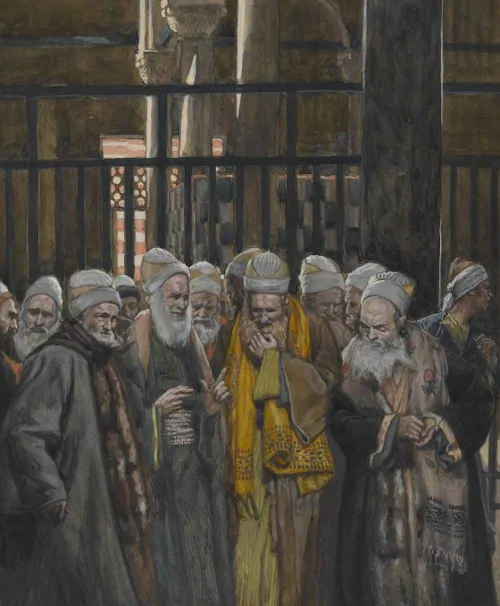
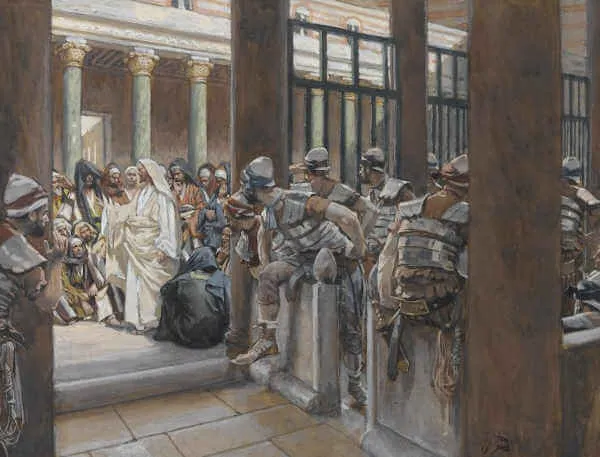
This is a powerful line spoken by Jesus. The judgmental and condemning Pharisees brought a woman to Jesus who had apparently been caught “in the very act of committing adultery.” Was she a sinner? Yes, indeed she was. But this story is not so much about whether or not she was a sinner. It was about the attitude Jesus had toward sinners as compared to that held by the self-righteous, judgmental and condemning Pharisees.

First of all, let’s look at this woman. She was humiliated. She had committed sin, was caught, and was publicly presented to all as a sinner. How did she react? She didn’t resist. She didn’t remain in denial. She didn’t get angry. She didn’t fight back. Instead, she stood there humiliated, awaiting her punishment with a sorrowful heart.

Humiliation over one’s sins is a powerful experience that has the potential to bring forth true repentance. When we encounter someone who has sinned in a manifest way and is humiliated over their sin, we must treat them with compassion. Why? Because the dignity of the person always supersedes their sin.

Every person is made in the image and likeness of God, and every person deserves our compassion. If one is obstinate and refuses to see their sin (such as in the case of the Pharisees), then an act of holy rebuke is necessary to help them repent. But when one experiences sorrow and, in this case, the added experience of humiliation, then they are ready for compassion.

By stating “Let the one among you who is without sin be the first to throw a stone at her,” Jesus is not justifying her sin. Rather, He’s making it clear that no one holds the right of condemnation. No one. Not even the religious leaders. This is a hard teaching to live for many in our world today. It is commonplace for the headlines in the media to almost compulsively present us with the most sensational sins of others.

We are constantly being tempted to be outraged at what this or that person has done. We easily shake our heads, condemn them and treat them as if they were dirt. In fact, it seems that many people today see it as their duty to act as the “watchdogs” against every sin they can dig up on others.

Reflect, today, upon whether you are more like the Pharisees or Jesus. Would you have stood there in the crowd wanting this humiliated woman to be stoned? How about today? When you hear about the manifest sins of others, do you find yourself condemning them? Or do you hope that mercy is shown to them? Seek to imitate the compassionate heart of our divine Lord; and when your time of judgment comes, you also will be shown an abundance of compassion.

Source: https://catholic-daily-reflections.com/2024/03/17/public-sinners-3/

John 8:7 Read More »

Fifth Sunday of Lent

First Reading Jeremiah 31:31-34

The days are coming, says the LORD, 
when I will make a new covenant with the house of Israel 
and the house of Judah.
It will not be like the covenant I made with their fathers
the day I took them by the hand 
to lead them forth from the land of Egypt; 
for they broke my covenant, 
and I had to show myself their master, says the LORD.
But this is the covenant that I will make 
with the house of Israel after those days, says the LORD.
I will place my law within them and write it upon their hearts; 
I will be their God, and they shall be my people.
No longer will they have need to teach their friends and relatives
how to know the LORD.
All, from least to greatest, shall know me, says the LORD, 
for I will forgive their evildoing and remember their sin no more.

Responsorial Psalm 51:3-4, 12-13, 14-15

R. (12a)  Create a clean heart in me, O God.

Have mercy on me, O God, in your goodness;
    in the greatness of your compassion wipe out my offense.
Thoroughly wash me from my guilt
    and of my sin cleanse me.

R. Create a clean heart in me, O God.

A clean heart create for me, O God,
    and a steadfast spirit renew within me.
Cast me not out from your presence,
    and your Holy Spirit take not from me.

R. Create a clean heart in me, O God.

Give me back the joy of your salvation,
    and a willing spirit sustain in me.
I will teach transgressors your ways,
    and sinners shall return to you.

R. Create a clean heart in me, O God.

Second Reading Hebrews 5:7-9

In the days when Christ Jesus was in the flesh, 
he offered prayers and supplications with loud cries and tears 
to the one who was able to save him from death, 
and he was heard because of his reverence.
Son though he was, he learned obedience from what he suffered; 
and when he was made perfect, 
he became the source of eternal salvation for all who obey him.

Verse Before the Gospel John 12:26

Whoever serves me must follow me, says the Lord;
and where I am, there also will my servant be.

Gospel John 12:20-33

Some Greeks who had come to worship at the Passover Feast
came to Philip, who was from Bethsaida in Galilee, 
and asked him, “Sir, we would like to see Jesus.”
Philip went and told Andrew; 
then Andrew and Philip went and told Jesus.
Jesus answered them, 
“The hour has come for the Son of Man to be glorified.
Amen, amen, I say to you, 
unless a grain of wheat falls to the ground and dies, 
it remains just a grain of wheat; 
but if it dies, it produces much fruit.
Whoever loves his life loses it,
and whoever hates his life in this world
will preserve it for eternal life.
Whoever serves me must follow me, 
and where I am, there also will my servant be.
The Father will honor whoever serves me.

“I am troubled now.  Yet what should I say?
‘Father, save me from this hour’?
But it was for this purpose that I came to this hour.
Father, glorify your name.”
Then a voice came from heaven, 
“I have glorified it and will glorify it again.”
The crowd there heard it and said it was thunder; 
but others said, “An angel has spoken to him.”
Jesus answered and said, 
“This voice did not come for my sake but for yours.
Now is the time of judgment on this world; 
now the ruler of this world will be driven out.
And when I am lifted up from the earth, 
I will draw everyone to myself.”
He said this indicating the kind of death he would die.

Source: https://bible.usccb.org/bible/readings/031724-YearB.cfm

Fifth Sunday of Lent Read More »

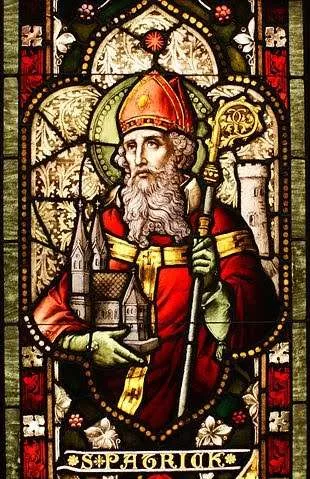
Saint Patrick, Bishop

c. 387–c. 460 or 493 (Actual dates are uncertain); Patron Saint of Ireland; Invoked against snake bites; Pre-Congregation canonization

Patrick was born in Roman-ruled Britain to loving parents, perhaps as an only child. His father was a senator and a deacon, and his grandfather was a married priest. Despite his Christian upbringing and the clerical influences of his father and grandfather, Patrick struggled with his faith, stating later that when he was young he “did not know the true God.” This testimony, and the quotes to follow, come from his own hand, preserved in his Confessio, Saint Patrick’s short autobiographical confession about the workings of God’s grace in his life and ministry.

At the age of sixteen, Patrick’s life took a dramatic turn for the worse; at least, that’s how it first appeared. Gaelic slave traders from Ireland arrived by ship and raided Patrick’s village. Though young women and children were often their preferred targets, a young, healthy boy could also profit them. Patrick was captured and “was taken into captivity in Ireland with many thousands of people.”

At the time of Patrick’s captivity, Ireland was a pagan country made up of more than a hundred small, family-based clans governed by local chiefs. Most clans united with other clans to form several larger kingdoms. Their religious beliefs were a mixture of polytheism, in which gods were honored and called upon, and animism, in which the natural world was believed to contain spirits who could be communicated with. Their druids (priests) engaged in demonic spells, incantations, curses, and dark magic.

It was Patrick’s conviction that, because he and his fellow slaves had drawn away from God and did not keep God’s precepts, the Lord brought down upon them the “fury of his being,” permitting them to be scattered throughout Ireland as slaves. But God’s just punishments are always inflicted upon his children for the purpose of converting their hearts, which is exactly what happened to Patrick. “And there the Lord opened my mind to an awareness of my unbelief, in order that, even so late, I might remember my transgressions and turn with all my heart to the Lord my God, Who had regard for my insignificance and pitied my youth and ignorance.”

While in captivity, Patrick was made a swineherd for one of the clans and spent much of his time in the forests, enduring the snow, ice, and rain. But his time alone, experiencing the suffering and loneliness of captivity, greatly benefited his soul. At first, Patrick didn’t know God. Then, he began to think about God. Then he began to speak to God.

Within six years, he was praying a hundred prayers every day and a hundred prayers every night. As a result, Patrick testified that “the Spirit was burning in me at that time.” After receiving chastisements from God for his lack of faith, Patrick’s heart was changed and filled with gratitude for all that God had done in his soul. He realized that his only “way to repay Him is to exalt Him and confess His wonders before every nation under heaven.”

Once Patrick had converted, God’s plan for his life changed. While asleep one night, Patrick heard a voice say to him, “Soon you will depart for your home country,” and shortly afterward, “Behold, your ship is ready.” By an intuition of grace, Patrick knew what he had to do. He escaped and ran 200 miles (about 184 modern miles). God directed him on the way and led him to a ship where Patrick convinced the captain to let him board. Three days later, they were back in Britain on a remote shore.

Patrick and some pagans disembarked from the ship and began a twenty-eight-day journey through the wilderness to find civilization. On the journey, the pagans mocked Patrick’s faith, but when they ran out of food, Patrick prayed and God miraculously provided them with a herd of pigs. The pagans were impressed and Patrick won their respect. This was the first of many times that God used Patrick to change hardened hearts. Then, Patrick was reunited with his parents at last.

Back in Britain, Patrick continued to pray, study Scripture, and learn the Catholic faith. His prayer led him into deep union with God. He had dreams and visions, including a vision in which he heard the voice of the Irish say to him, “We beg you, holy youth, that you shall come and shall walk again among us.” Patrick knew that he had to return, not as a slave, but as a missionary. Despite opposition from his family, Patrick was determined to answer God’s call.

Since Patrick had learned much about Irish culture and language, he was an ideal candidate for missionary work. After years of study, probably in France, he was ordained a bishop and sent by the Church back to Ireland to convert the pagans, his captors, to Christ. And that he did. It was by the courageous witness of his character, aided perhaps by miraculous signs and unwavering faith, that one of the kings converted. After being successful in one kingdom, Bishop Patrick moved to another. When he arrived in a new territory, he always sought to convert the local king and chiefs first. Once they were open to the Gospel, the people followed.

During the fewer than thirty years that Patrick evangelized the people of Ireland, he endured many hardships, including another short captivity, the constant danger of being killed, and staunch opposition from the druid spiritual leaders. But he also converted countless pagans, baptized and confirmed “so many thousands,” built churches, established religious life, ordained native clergy, and changed pagan Ireland as a whole into one of the greatest Catholic nations on earth.

Saint Patrick’s influence on Ireland was so profound that many later biographers have attributed numerous legends to him. Though most of these legends cannot be verified, the stories highlight the remarkable spiritual transformation of a hostile pagan nation by the faith and courage of one man. God humbled Patrick, changed his heart, set him on fire, and then used that fire to purify many thousands of people. In the centuries that followed, those converts went forth to the ends of the earth, bringing the same Gospel to others that Patrick first preached to them.

As we honor Saint Patrick, seek to imitate him by joining him in his initial humiliation. See your sins and pray that God purifies you by any means necessary. Convert your heart. Increase your daily prayer. Allow your heart to become inflamed by God’s Spirit. Say “Yes” to Him when He calls, and go where He sends you. Like Saint Patrick, God wants to send you on a mission, but He cannot do so until you fully convert your heart to His.

Source: https://mycatholic.life/saints/saints-of-the-liturgical-year/march-17-saint-patrick-bishop/

Saint Patrick, Bishop Read More »

John 12:27-28

Suffering Transformed by Glory

“I am troubled now.  Yet what should I say? ‘Father, save me from this hour’? But it was for this purpose that I came to this hour. Father, glorify your name.” Then a voice came from heaven, “I have glorified it and will glorify it again.”

Reflection:

Our Lord’s human soul was “troubled.” Other translations state that His soul was in agony. After expressing His interior suffering, Jesus identified the human temptation caused by this suffering: to flee from His “hour.” Of course Jesus dismisses this temptation as a way of teaching us a lesson from His human experience.

As God, Jesus had perfect strength and always remained faithful to the mission He received from the Father. But as a human, Jesus permitted Himself to experience temptation and human suffering for many reasons. One reason was so that He could relate to us in every way.

That includes being able to relate to interior human suffering. In doing so, Jesus also made it possible for us to imitate Him and to share in the strength and determination He had as He perfectly fulfilled the will of the Father. Jesus allowed Himself to endure the agony caused by foreseen suffering because we will endure similar temptations through life.

What is it that causes you fear and anxiety as you look into the future? If there is something that immediately comes to mind, try to look at that within the light of Jesus’ own experience above. The first thing Jesus does is identify the temptation to fear. He does this by identifying the interior suffering He experiences and then by looking at the cause: His coming “hour.”

The “hour” of Jesus in the Gospel of John is a reference to His crucifixion and death. This was the reason He came to us. He came to suffer the consequences of our sins and to destroy death itself. But this mission of His was the cause of true human suffering and was also a temptation toward fear. But it was a fear that He perfectly overcame.

As you look at anything that tempts you to give into fear and anxiety, first ask yourself whether it is the will of God that you fulfill that action. If we are fearful of something that is not the will of the Father, then we should reject it. But very often the plan God has for our lives will include acting with courage in the face of some pending cross and suffering. Experiencing fear is normal, but fear will not turn into anxiety if we imitate our Lord and choose the will of God no matter the cost.

Jesus also embraced His Cross by looking at it through the lens of glory. He understood that His suffering and death would glorify the Father in Heaven. Therefore, He allowed Himself to see the Cross as a glorification of the Father. The same must happen in our lives. No matter what we face in life, no matter the cross we are given, if it is the will of God that we embrace it, then we must see it not only as a suffering we must endure but primarily as an act by which God will be glorified in our lives. This truer perspective will bring with it hope, joy and strength which will free us from anxiety caused by fear.

Reflect, today, upon the ways in which God is calling you to the cross. As you do, don’t allow fear to deter you. Instead, look at every pending suffering as an opportunity to glorify God in your life. See your crosses with gratitude and joy, and allow this new perspective to give you the strength you need to fulfill the mission given to you by the Father in Heaven.

Source: https://catholic-daily-reflections.com/2024/03/16/suffering-transformed-by-glory/

John 12:27-28 Read More »

Saint Dentlin of Soignies

Profile

Dentlin was the son of Saint Vincent Madelgarus and Saint Waldetrudis; he was the brother of Saint Landric, Saint Madalbarta and Saint Aldetrudis, and the Nephew of Saint Aldegund. Dentlin was an extraordinarily pious child, he is considered a confessor of the faith. A church in Cleves, Germany, was named for him.

Died

  • at age 7 in 7th century of natural causes
  • buried in Soignies, Belgium
  • relics transferred to the abbey church in Rees, Germany in the 1040’s
  • miracles reported at his tomb

Canonized

  • Pre-Congregation

Patronage

  • in Belgium
    – Hainault
    – Mons
  • in Germany
    – Kleve
    – Rees

Source: https://catholicsaints.info/saint-dentlin-of-soignies/

Saint Dentlin of Soignies Read More »

John 7:46-49

Attacks from the evil one

“The guards answered, ‘Never before has anyone spoken like this man.’ So the Pharisees answered them, ‘Have you also been deceived? Have any of the authorities or the Pharisees believed in him? But this crowd, which does not know the law, is accursed.’”

Reflection:

Hopefully the Pharisees mentioned above went through a deep interior conversion before they died. If they did not, then their day of particular judgment would have been shocking and frightening to them.

The greatest act of love ever known was God becoming one of us, being conceived by the Holy Spirit in the womb of the Blessed Virgin Mary, growing up in the household of Saint Joseph, and eventually beginning His public ministry by which the saving truth of the Gospel was proclaimed so that all may come to know God and be saved. And it was of this act of perfect love given to us by God that the Pharisees attacked and called those who believed in it “deceived” and “accursed.”

Though the Pharisees do not offer us much by way of inspiration, they do provide us with many lessons. In the passage above, the Pharisees model for us one of the most common tactics of the evil one. In his spiritual classic, The Spiritual Exercises, Saint Ignatius of Loyola explains that when a person is moving from a life of sin to a life of holiness, the evil one will attack in various ways.

He will try to unsettle you and cause an undue anxiety about serving God, he will try to sadden you with an unexplained sorrow, put obstacles in your way of virtue causing you to feel overwhelmed and think you are too weak to live a good Christian life of virtue, and he will tempt you to lose your peace of heart by doubting God’s love or His action in your life. It seems clear that this attack by the Pharisees also has these goals.

Again, though this may not appear “inspiring,” it is very useful to understand. The Pharisees were vicious in their attacks, not only to Jesus but also upon anyone who began to believe in Jesus. They said to the guards who were impressed by Jesus, “Have you also been deceived?” This was clearly the evil one at work through them trying to intimidate the guards and anyone who dared believe in Jesus.

But understanding the tactics of the evil one and his messengers is of great value, because it helps us reject the lies and deceptions spewed out at us. Sometimes these lies come from individuals and are directed directly at us, and sometimes the lies are more universal, coming through the media, the culture and even the government, at times.

Reflect, today, upon the distasteful and bitter words of these Pharisees. But do so to help yourself understand the tactics the evil one often takes as you seek greater holiness in life. Be assured that the closer you get to God, the more you will be attacked. But do not be afraid. Identify any personal, social, cultural or even governmental attack for what it is. Have confidence and do not be deterred as you seek to follow Christ more completely every day.

Source: https://catholic-daily-reflections.com/2024/03/15/attacks-from-the-evil-one-2/

John 7:46-49 Read More »

Saint Artemide Zatti

Profile

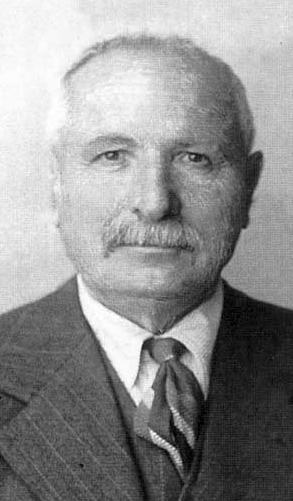
Artemide was one of three sons born to Albino Vecchi and Luigi Zatti. His was a poor family, and the boy had to drop out of school at age nine to work for a wealthy neighbor. The family eventually immigrated to Bahia Blanca, Argentina to find work, arriving in Buenos Aires on 9 February 1897. There Artemide worked in a tile factory, and attended a local parochial school run by the Salesians. He felt drawn to the Salesians, and at age 20 entered their seminary, Casa di Bernal.

Artemide contracted tuberculosis while caring for a young Salesian priest with the disease, a man who died from it in 1902. He was sent to San Josè Hospital for what little treatment there was in that day, but with little hope. With his friend and unofficial doctor, Father Evarisio Garrone, Artemide prayed for the intervention of Our Lady, Help of Christians, offering to dedicate his life to the care of the sick; the young Salesian was miraculously and completely healed.

He kept his promise. He worked in the San Jose pharmacy, and learned about hospital management from Father Garrone. Upon his mentor’s death, Artemide took charge of the hospital, and what time he could spare from his administrative duty was spent caring for patients. Today the hospital is named in his honour.

Born

  • 12 October 1880 at Boretto, Reggio Emilia, in northern Italy

Died

  • 15 March 1951 of cancer at Bahia Blanca, Argentina
  • relics interred in the Salesian chapel at Viedma, Argentina

Venerated

  • 7 July 1997 by Pope John Paul II (decree of heroic virtue)

Beatified

  • 14 April 2002 by Pope John Paul II

    Canonized
  • 9 October 2022 by Pope Francis
  • the canonization miracle involved the 24 August 2016 healing of a man in Tanauan Batangas, Lipa, Philippines who had suffered a “right cerebellar ischemic stroke, complicated by massive hemorrhagic lesion”, and was in such bad shape that medical authorities sent him home so he could die with family

Source: https://catholicsaints.info/saint-artemide-zatti/

Saint Artemide Zatti Read More »

John 7:1-2;10

The New Moses

“Jesus moved about within Galilee; he did not wish to travel in Judea, because the Jews were trying to kill him. But the Jewish feast of Tabernacles was near. But when his brothers had gone up to the feast, he himself also went up, not openly but as it were in secret.”

Reflection:

The Jewish Feast of Tabernacles was one of three great feasts during which the people made a pilgrimage to the Temple in Jerusalem to commemorate God’s saving action in their lives. This particular feast was to commemorate the 40 years that the Israelites traveled through the desert and dwelt in tents, or booths, as they wandered and were led by Moses. Therefore, the feast is also referred to as the “Feast of Booths.” During the seven days of this feast, people would set up tents (booths) around the Temple area and live in them to commemorate the journey of their ancestors.

In the Gospel passage quoted above, we read that Jesus went up to the feast secretly. Saint Augustine explains that this means that though Jesus was present, the full revelation of His divine identity was hidden from many. He was physically there, but many did not know Who He was.

That particular year, when the feast was half over, Jesus appeared in the Temple area and began to teach. Many were amazed at His words, and others thought He was possessed. After teaching the people, there was much disagreement among them about our Lord’s identity. Jesus said to them, “You know me and also know where I am from. Yet I did not come on my own, but the one who sent me, whom you do not know, is true. I know him, because I am from him, and he sent me.”

In that statement, Jesus essentially was saying that among those listening to Him, some had come to faith in Him and discovered His true identity as the Messiah, while others lacked the gift of faith and remained blind to Him. To them, His divine essence remained a secret.

In a symbolic way, Jesus’ presence at the Feast of Tabernacles reveals Him as the new Moses. It was Moses who led the people through the desert for 40 years toward the promised land while they dwelt in tents. Our Lord now took on that role of leading the people who were commemorating this 40-year journey by appearing in the Temple and pointing the people to Heaven, the true Promised Land.

Today, our Lord continues to lead His people through the journey of life by coming to each of us to teach us and to reveal His divine presence. Some listen and believe and continue on the journey. To them, the secrets of our Lord are revealed. Others do not believe and, as a result of their lack of faith, fail to discover the hidden presence of our Lord all around them.

Reflect, today, upon the image of Jesus coming to you during your long journey through the desert of this life. He initially comes to you in secret, veiled in His true essence. As He teaches you, He desires to lift that veil and reveal to You His true glory. He desires that you dwell with Him through prayer and remain attentive to His Word.

As you gaze upon our Lord, reflect upon the question of how clearly you hear Him speak each day. He is here, with you always. But are you with Him? Do you hear Him, believe in Him, follow Him and serve Him? Do you allow Him to lead you every day toward His promises of new life? Allow our Lord to pitch His tent next to yours so that You will daily be attentive to His teaching and be led by Him to the glories of Heaven.

Source: https://catholic-daily-reflections.com/2024/03/14/the-new-moses-2/

John 7:1-2;10 Read More »

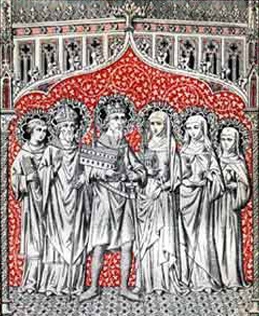
Saint Matilda of Saxony

Profile

Matilda was the daughter of Count Dietrich of Westphalia and Reinhild of Denmark; she was raised by her grandmother, abbess of the Eufurt. In 913, Matilda left the abbey, and married King Henry the Fowler of Saxony (Henry I), who had received an annulment from a previous marriage.

Matilda became the Queen of Germany. She was the mother of Otto, Holy Roman Emperor; Henry the Quarrelsome, Duke of Bavaria; Saint Bruno the Great, Archbishop of Cologne, Germany; Gerberga, wife of King Louis IV of France; Hedwig, mother of Hugh Capet.

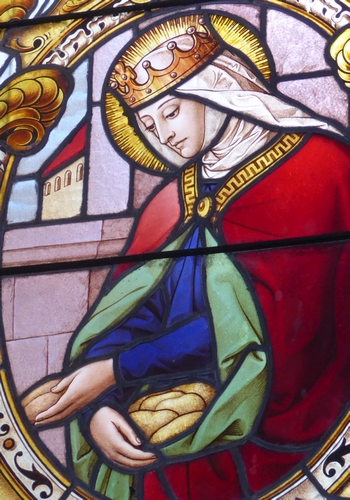
Matilda founded several Benedictine abbeys. She was well known throughout the realm for her generosity. She taught the ignorant, comforted the sick, and visited prisoners.

Matilda was betrayed by Otto after Henry’s death when he falsely accused her of financial mismanagement.

Born

  • c.895 at Engern, Westphalia, Germany

Died

  • 14 March 968 at Quedlinburg, Germany of natural causes
  • buried in the monastery at Quedlinburg

Patronage

  • death of children
  • disappointing children
  • falsely accused people
  • large families
  • people ridiculed for their piety
  • queens
  • second marriages
  • widows

Representation

  • alms
  • bag of money
  • crown
  • orb
  • sceptre
  • purse, indicative of her generosity
  • queen with a whip
  • queen holding a church

Source: https://catholicsaints.info/saint-matilda-of-saxony/

Saint Matilda of Saxony Read More »

John 5:44

Human or Divine Praise

“How can you believe, when you accept praise from one another and do not seek the praise that comes from the only God?”

Reflection:

It’s quite normal and healthy for a parent to praise a young child for the good that they do. This healthy positive reinforcement is a way of teaching them the importance of doing good and avoiding what’s wrong. But human praise is not an infallible guide of what is right and wrong. In fact, when human praise is not based in the truth of God, it does great damage.

This short Scripture quote above comes from a lengthy teaching from Jesus about the difference between human praise and “the praise that comes only from God.” Jesus makes it clear that the only thing that has value is the praise that comes from God alone. In fact, earlier in this Gospel, Jesus says clearly, “I do not accept human praise…” Why is that?

Turning back to the example of a parent praising a child for the good they do, when the praise they offer is truly a praise of their goodness, then this is much more than human praise. It is praise from God given through a parent. A parent’s duty must be to teach right from wrong in accord with the will of God.

As for the “human praise” of which Jesus speaks, this is clearly praise of another that is void of the truthfulness of God. In other words, Jesus is saying that if someone were to praise Him for something that did not originate from the Father in Heaven, He would reject it. For example, if someone were to say of Jesus, “I think He would be a great governor of our nation because he could lead a revolt against the current leadership.” Obviously such “praise” would be rejected.

The bottom line is that we must praise one another, but our praise must only be that which originates from God. Our words must be spoken only in accord with the Truth. Our admiration must only be of that which is the presence of God alive in others. Otherwise, if we praise others based on worldly or self-centered values, we only encourage them in sin.

Reflect, today, upon the praise you give and receive. Do you allow misguided praise of others to misdirect you in life? And when you compliment and praise another, is that praise based on the Truth of God and directed to His glory? Seek to give and receive praise only when it is grounded in the Truth of God and directs all to His glory.

Source: https://catholic-daily-reflections.com/2024/03/13/human-or-divine-praise-3/

John 5:44 Read More »