2024

John 11:47-48

The Effects of Jesus' Ministry

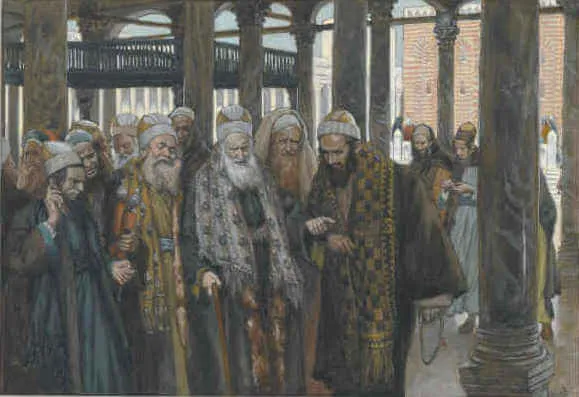
“So the chief priests and the Pharisees convened the Sanhedrin and said, ‘What are we going to do? This man is performing many signs. If we leave him alone, all will believe in him, and the Romans will come and take away both our land and our nation.'”

Reflection:

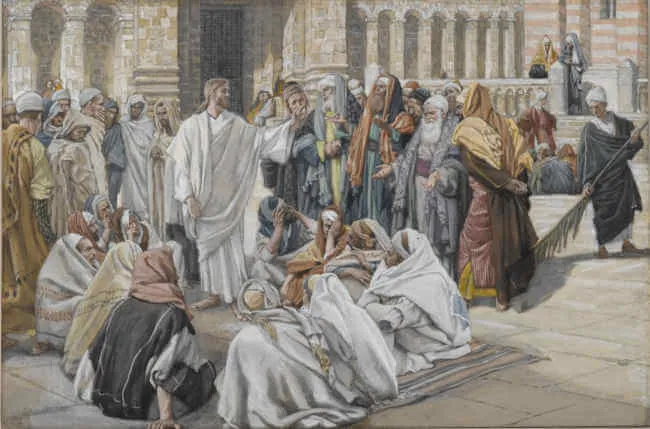
Jesus’ public ministry had two primary effects upon the people. For many, they were coming to believe in Him and were hanging on His every word. They sought Him out and began to understand that He was the promised Messiah. This was the response of faith. But the reaction of the chief priests and the Pharisees was far more worldly. In the passage above, we see a group of religious leaders who are completely consumed with worldly concerns to the point that these concerns drown out all matters of faith.

As the Sanhedrin convened and discussed what they should do, Caiaphas, the high priest that year, spoke up and gave advice that perfectly depicts this worldly vision. He said, “You know nothing, nor do you consider that it is better for you that one man should die instead of the people, so that the whole nation may not perish.” Caiaphas and many other religious leaders at the time appeared to be far more concerned with their worldly status and power than they were with matters of true faith and eternal salvation.

If they were men who deeply loved God and sought only His holy will, then they would have rejoiced that Jesus’ ministry was so fruitful in the lives of the people. They would have offered thanks to God, day and night, for the privilege of seeing the prophecies of old about the Messiah come to fruition before their own eyes. They should have had joy and gratitude, and they should have allowed those spiritual blessings to grow within them and give them the courage they needed to go forth and die with our Lord if necessary. But instead, they chose their comfortable lives and worldly status above the truth, and they decided that Jesus needed to die.

One beautiful truth to reflect upon within this context is that God uses all things for His glory and for the salvation of those who believe. With this meeting of the Sanhedrin, these men began to plot the death of Jesus. Eventually they used deceit, manipulation, intimidation and fear to accomplish their goal. But even though from a worldly perspective these misguided religious leaders “won,” from a divine perspective, God used their evil to bring about the greatest good the world had ever known. Through their malice, Jesus’ passion and death gave way to the new life of the Resurrection.

Source: https://catholic-daily-reflections.com/2024/03/22/the-effects-of-jesus-ministry-3/

John 11:47-48 Read More »

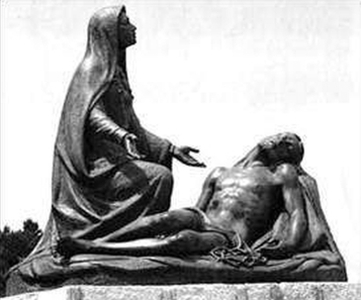
Our Lady of Sorrows of Castelpetroso

Profile

Commemorates of a pair of apparitions of the Blessed Virgin Mary to the shepherdesses Serafina and Bibiana on 22 March and 1 April 1888. In the visions, Mary is kneeling in sorrow before the body of Christ. A sanctuary was built near the site of the apparition; it took 85 years to complete, and has seven sections to commemorate the Seven Sorrows.

Source: https://catholicsaints.info/our-lady-of-sorrows-of-castelpetroso/

Our Lady of Sorrows of Castelpetroso Read More »

John 10:37-39

Entering the Desert

“If I do not perform my Father’s works, do not believe me; but if I perform them, even if you do not believe me, believe the works, so that you may realize and understand that the Father is in me and I am in the Father.”

Reflection:

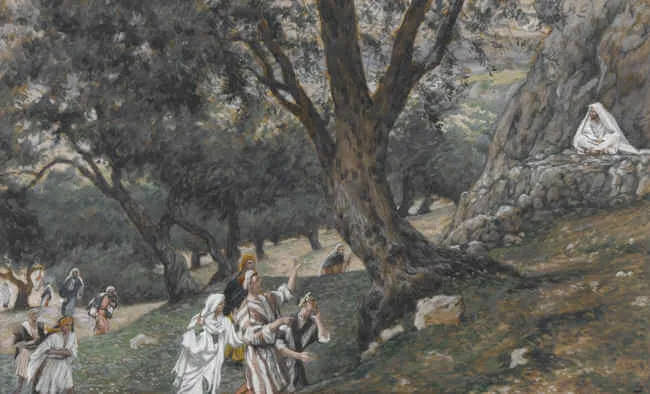
These words spoken by Jesus took place during the feast of the Dedication in Jerusalem. Jesus had been preaching clearly about His relationship with the Father in Heaven, and this was causing some to become outraged to the point of them trying to arrest Him right then and there. But He escaped and went back into the wilderness where He had been baptized by John. As Jesus remained there in the desert, many people came to Him to be with Him and to listen to His words. As they listened, they began to believe.

It’s interesting to note the contrast of reactions. In Jerusalem within the Temple area, among large crowds gathered for the feast of the Dedication, Jesus was increasingly rejected and persecuted. But when He returned to the desert and people had to come to see Him, they listened and believed. This contrast presents us with one way in which we will more easily grow in our faith and help others grow in their faith. Specifically, we are invited to go into the “desert” to encounter our Lord, away from the busyness of life, and we must also invite others to join us in such a journey.

It’s true that, while in Jerusalem, there were people who happened to stumble upon Jesus as He was teaching and were moved by His word and came to believe. But it’s also clear that, when people had to commit to the effort of seeking Him out in a deserted place, His words were even more transformative.

In our own lives, within the ordinary activities of life, such as regular attendance at Mass, we will be given the opportunity to hear the Gospel and deepen our life of faith. But all of us need to take time to seek Jesus out “in the wilderness,” so to speak, so as to be even more disposed to hear Him and believe.

These “desert experiences” come in many forms. Perhaps it’s an experience as simple as going into your room alone to pray and ponder the Word of God. Or perhaps it’s a participation in a Bible study, an online devotional program, or parish catechesis event. Or perhaps it’s the choice to go away for a weekend or longer for a guided retreat where all you do for some time is pray and listen to our Lord.

Throughout history, saint after saint has shown us the value of going off to pray to be with our Lord, in a place where the many other distractions of life and the many voices of the world are silenced, so that God can speak to the heart and so that we can more fully respond.

Reflect, today, upon the invitation Jesus is giving you to go out to meet Him in the wilderness. Where is that place? How can you accomplish this short journey while keeping up with the important duties of life? Do not hesitate to seek out the desert to which our Lord is calling you, so that you will be able to meet Him there, listen to His voice, and respond with complete generosity.

Source: https://catholic-daily-reflections.com/2024/03/21/entering-the-desert-3/

John 10:37-39 Read More »

Saint Benedicta Cambiagio Frassenillo

Profile

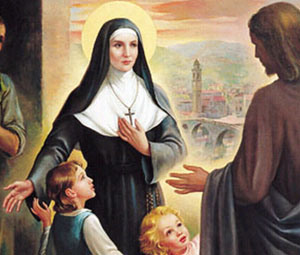
Benedicta was the daughter of Giuseppe and Francesca Cambiagio. She grew up in Pavia, Italy. At the age of 20 she had a profound mystical experience that left her devoted to prayer and desiring a religious life. However, to go along with her family’s wishes, she married Giovanni Battista Frassinello on 7 February 1816. The couple had a normal married life for two years, but Giovanni, impressed with Benedicta’s holiness and desire for religious life, agreed to live continently. The two took care of Benedicta’s little sister Maria until the girl‘s death from intestinal cancer in 1825. Giovanni then joined the Somaschan Fathers, Benedicta became an Ursuline nun.

In 1826, ill health forced Benedicta to return home to Pavia. There she began to work with young women in the area. The work went so well that her husband Giovanni was assigned to help. The schools continued to grow and prosper, and Benedicta was appointed Promoter of Public Instruction in Pavia. However, no matter how chastely they lived, Benedicta and Giovanni’s unusual relationship drew gossip and criticism from civil and Church authorities. To ensure that she did not get in the way of the work, in 1838, Benedicta turned her work over to the bishop of Pavia, and withdrew to live as a nun at Ronco Scrivia, Italy.

Not content to withdraw from the world, Benedicta began all over. With five companions, she founded the Congregation of the Benedictine Sisters of Providence dedicated to teaching, and opened another school. Living alone, the local authorities found no causes for gossip, and Benedicta spent her remaining years in prayer and service.

Born

  • 2 October 1791 at Langasco, Campomorone, Italy as Benedetta Cambiagio

Died

  • 21 March 1858 at Ronco Scrivia, Italy of natural causes

Venerated

  • 6 July 1985 by Pope John Paul II (decree of heroic virtues)

Beatified

  • 10 May 1987 by Pope John Paul II

Canonized

  • 19 May 2002 by Pope John Paul II at Rome, Italy

Patronage

  • Benedictine Sisters of Providence

Source: https://catholicsaints.info/saint-benedicta-cambiagio-frassinello/ 

Saint Benedicta Cambiagio Frassenillo Read More »

John 8:58-59

Living in the Moment

“Jesus said to them, ‘Amen, amen, I say to you, before Abraham came to be, I AM.’ So they picked up stones to throw at him; but Jesus hid and went out of the temple area.”

Reflection:

When Moses encountered God in the burning bush, God revealed His name: I AM. The Catechism of the Catholic Church teaches that this revelation of God’s name “​​is at once a name revealed and something like the refusal of a name.” It expresses that God is “infinitely above everything that we can understand or say.” He is the “hidden God.” He is also a “God who makes himself close to men” at each and every moment of our lives (See CCC #206).

In our Gospel today, Jesus identifies Himself with this hidden God. He states that He alone knows His Father and that the Father glorifies Him because He is the great I AM. To the people of that time, this was a shocking revelation, at least to those who failed to comprehend this truth in faith. But that mysterious name reveals to us not only the essence of God, it also reveals how we ought to relate to this infinite, hidden, exalted and glorious God.

As Jesus revealed His identity, He did not say, “before Abraham came to be, I was.” He says, “I AM.” This reveals that Jesus not only existed before Abraham, but that His existence transcends all time. He always and everywhere IS. Though this might seem overly philosophical to some, it is an important concept to understand for two important reasons. First, it gives us greater insight into God. But, second, it reveals to us how we ought to relate to God every day.

God is not a God of the past. He is not a God of the future. He is a God of the present moment. If we are to enter into a relationship with God, then we must realize that we can only encounter Him in the present moment. He is the Here and Now, so to speak. And we must seek Him here and now, in this present moment alone.

Sometimes we find ourselves dwelling on the past. To the extent that our past has helped or hurt us in this present moment, we need to address it. But the way this is done is by seeking God’s healing grace today, allowing the past to disappear into His abundant mercy. Other times we try to live in the future, becoming anxious about what is to come.

But God does not dwell in the future for, to Him, all time is here and now. Therefore, we ought not to become anxious about the future, worry about it or try to live in it now. All we have is this present moment, and it is in this moment that God comes to meet us. He is here, and we must meet Him here, turning to Him and His grace today.

Reflect, today, upon this deep and mysterious revelation from our Lord. Think about his identity as the great “I AM.” Ponder that name. Ponder its meaning. See it as a way by which Jesus is inviting you to encounter Him in this present moment alone. Live in this moment. The past is gone; the future is not yet here. Live where God exists, here and now, for that is the only place that you will meet our Lord.

Source: https://catholic-daily-reflections.com/2024/03/20/living-in-the-moment-2/

John 8:58-59 Read More »

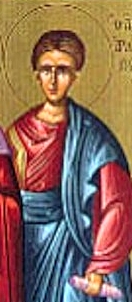
Saint Archippus of Colossi

Profile

Archippus was the companion of Saint Paul the Apostle. Tradition says he was one of the 72 disciples. In the canonical Epistle to the Colossians, Paul bids him “take heed to the ministry which thou hast received in the Lord, that thou fulfill it.”

Born

  • possibly at Colossae or Laodicea; records vary

Died

  • 1st century

Canonized

  • Pre-Congregation

Source: https://mycatholic.life/saints/saints-of-the-liturgical-year/#TOC-March

Saint Archippus of Colossi Read More »

John 8:31-32

The Truth Will Set You Free

“Jesus said to those Jews who believed in him, ‘If you remain in my word, you will truly be my disciples, and you will know the truth, and the truth will set you free.’”

Reflection:

These words have the potential to make a transforming difference in our lives. Note that Jesus spoke these words “to those Jews who believed in him.” That is, those who had accepted His word and were, therefore, His true disciples. We who also believe in Jesus should consider these words carefully. The heart of this teaching is twofold: you must come to “know the truth” so that the truth you come to know “will set you free.” 

This teaching of Jesus is exceptionally helpful on both a psychological and spiritual level. First of all, on a purely psychological level, one of the greatest helps to good mental health is the truth. Most often when one struggles with various forms of depression, it’s because they are seeing aspects of their life with confusion. “Why did this person do this to me?” Or “How will I ever get through this?” Or “My life is a mess and there is no way out.” These and other similar thoughts will inevitably lead to depression for one simple reason: they are based on erroneous thinking.

One of the best forms of psychological counseling is what could be called “truth therapy.” Every despairing question that we have and every depressing conclusion that we have come to in life must be reexamined in the light of the mind of God. What does God think? What is in the mind of God in this regard?

Those truths that are waiting to be discovered are the truth that “will set you free.” Depression is more easily overcome when we look at our life in the way that God looks at our life. This produces hope, and hope brings freedom to the chains of depression and confusion.

On a spiritual level, these principles apply all the more. The truth about sin, forgiveness, salvation and Heaven must be known deeply and embraced fully. When we deny the truth of sin or forgiveness, then we live within a lie and we remain bound by that lie.

True spiritual freedom that leads to salvation and eternity in Heaven is obtained only when we wholeheartedly embrace the holy and perfect spiritual truth given to us by God. We must clearly know our sin, repent of it, seek the forgiveness of God, amend our lives and live the new life of grace to which we are called.

Reflect, today, upon this powerfully transforming teaching of Jesus: “know the truth, and the truth will set you free.” What psychological and spiritual truths do you need to more deeply know? What confusion or blindness remains? Seek the remedy of the Truth as it is in the mind of God and know that freedom awaits.

Source: https://catholic-daily-reflections.com/2024/03/19/the-truth-will-set-you-free-3/ 

John 8:31-32 Read More »

Saint Joseph, Husband of the Blessed Virgin Mary

First Century; Patron Saint of the Universal Church, fathers, carpenters, and a happy death

The Father in Heaven sent His Son into the world to be born of the Virgin Mary. The Father chose her who was the Immaculate Conception to bear His Son in her womb, bring Him into the world, and raise Him from infancy to adulthood. But the Father also needed to choose a foster father for His divine Son.

Of all the men in Israel that He could have chosen, He chose Joseph of Nazareth, a carpenter. Today’s solemnity not only honors him, but it also points us to his marital union with the Blessed Virgin Mary and to the effect that that marriage had not only upon him, Mary and Jesus, but also upon us as members of the Body of Christ.

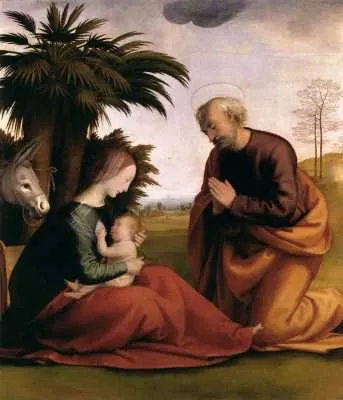
Joseph was likely born in the small town of Bethlehem, where Jesus was also born, but he moved to Nazareth with Mary and Jesus after returning from Egypt in order to keep Jesus safe from Archelaus, the ruler of Judea. Though there are a number of apocryphal writings about him from the first several centuries, nothing is known about him for certain except what is contained in the Gospels. But the Gospels tell us all we need to know about this holy, obedient, and just man, who was given authority over the Son of God and continues to exercise a holy authority over the entire Church.

Saint Joseph was truly the father of Jesus. Of this truth, Saint Augustine writes, “By reason of their faithful marriage, both of them deserve to be called Christ’s parents, not only his mother but also his father, who was a parent in the same way that he was the mother’s spouse: in mind, not in the flesh.” Joseph’s fatherhood is also clearly established by the fact that the angel gave him the responsibility of naming Jesus. “She will bear a son and you are to name him Jesus…” (Matthew 1:21).

Saint Joseph was obedient to the Father in Heaven, and that obedience deepened his union with Mary his spouse, making their marriage the ideal family for the Son of God. Pope Saint John Paul II speaks of this fact in his apostolic exhortation Guardian of the Redeemer, when he says, “One can say that what Joseph did united him in an altogether special way to the faith of Mary. He accepted as truth, coming from God, the very thing that she had already accepted at the Annunciation” (#4).

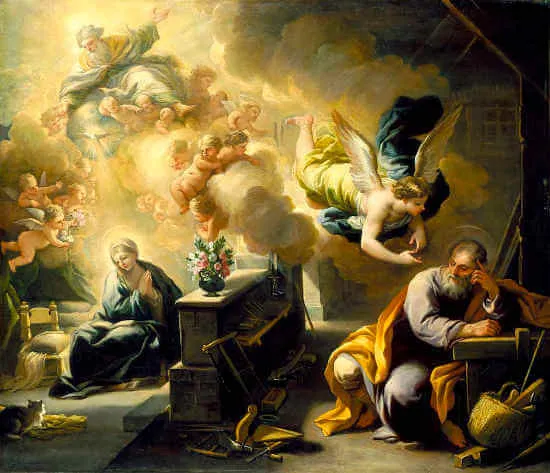
Saint Joseph’s obedience is clearly seen in his response to four dreams by which an angel instructs Joseph how best to guard and protect the Son of God. Joseph acts immediately, in obedience, to the angel’s instructions. The Vatican II document, Dei Verbum states, “‘The obedience of faith’ must be given to God as he reveals himself. By this obedience of faith man freely commits himself entirely to God, making ‘the full submission of his intellect and will to God who reveals,’ and willingly assenting to the revelation given by him” (#5).

Thus, since Saint Joseph’s obedience was absolute, then that obedience fully united him to the Blessed Virgin Mary, in her obedience, and to the Father in Heaven. His obedience to the Father also enables him to become a powerful instrument of the Father’s authority on earth, exercised through him.

Saint Joseph exercised the authority of the Father by protecting the Son of God and expecting obedience from the Son as His earthly father. That Jesus was obedient to Joseph is made clear in the Gospels: “He went down with them and came to Nazareth, and was obedient to them…” (Luke 2:52). The Son of God could only be obedient to the will of His Father. Therefore, in order for Joseph to exercise authority over Jesus, he had to enact nothing other than the will of the Father to which he, himself, was obedient.

On December 8, 1847, Pope Pius IX declared Saint Joseph to be the Universal Patron and Protector of the Catholic Church. This unique title reflects the same truth that Mary is the Mother of God and the Mother of the entire Church. Since she was the mother of the Son of God, and we, the Church, are members of the Body of Christ, then she is our Mother.

And since Joseph was the father of the Son of God, His guardian and protector, over whom he was given authority, and from Whom he received obedience, then we, too, can trust in Joseph’s guardianship over us. We must have confidence in submitting to his spiritual authority in our lives, for we are members of the Body of Christ.

As we honor Saint Joseph as the husband of Mary today, ponder the effect of that unique marriage bond. Saint Joseph was not perfect, but his absolute obedience to the Father’s will and his unity in marriage to the Mother of God makes him our father, just as he was the father of Jesus. As a loving father, he will direct us with the authority of God the Father, will protect us in times of trouble as he did for Jesus and Mary, and must always be seen as one uniquely chosen to be the father of the family to which we belong.

Source: https://mycatholic.life/saints/saints-of-the-liturgical-year/march-19-saint-joseph-husband-of-the-blessed-virgin-mary/

Saint Joseph, Husband of the Blessed Virgin Mary Read More »

Matthew 1:24

The Greatness of St. Joseph

“When Joseph awoke, he did as the angel of the Lord had commanded him and took his wife into his home.”

Reflection:

What is it that made Saint Joseph so great? He wasn’t immaculately conceived as our Blessed Mother was. He was not divine like Jesus. But he was the head of the Holy Family, its guardian and its provider. He became the legal father of the Savior of the World and the spouse of the Mother of God. But Joseph is not great only because he was given such incredible privileges.

First and foremost, he was great because of the choices he made in life. Today’s Gospel refers to him as a “righteous man” and as a man who “did as the angel of the Lord commanded him.” Thus, his greatness is primarily on account of his moral righteousness and obedience to the will of God.

Joseph’s obedience is especially seen in the fact that he obeyed the voice of God given to him in the four dreams recorded in Scripture. In his first dream, Joseph is told “do not be afraid to take Mary your wife into your home. For it is through the Holy Spirit that this child has been conceived in her. She will bear a son and you are to name him Jesus, because he will save his people from their sins” (Matthew 1:20–21).

In his second dream, Joseph is told, “Rise, take the child and his mother, flee to Egypt, and stay there until I tell you. Herod is going to search for the child to destroy him” (Matthew 2:13). In his third dream, Joseph is told, “Rise, take the child and his mother and go to the land of Israel, for those who sought the child’s life are dead” (Matthew 2:20). And in his fourth dream, Joseph is warned to go instead to Galilee rather than Judea (Matthew 2:22).

When these dreams are read in succession, it is clear that Saint Joseph was attentive to the voice of God. We all have dreams, but Joseph’s dreams were different. They were clear communications from God, and they required a willing recipient. Joseph was open to the voice of God and listened in faith as that willing recipient.

Joseph also responded with complete submission and full determination. The commands Joseph received were not insignificant. His obedience required that he and his family travel great distances, take up residence in strange lands and do so all in faith.

It’s also clear that Joseph took his vocation seriously. Pope Saint John Paul II gave him the title “Guardian of the Redeemer.” Over and over, he showed his unwavering commitment to his role as the guardian of his legal Son, Jesus, and of his wife, Mary. His life was spent providing for them, protecting them and offering them a father’s heart.

Reflect, today, upon the unique vocation of Saint Joseph. Ponder, especially, the early years of his marriage and the raising of Jesus. Consider his fatherly commitment to care for, provide for and protect his Son. We all must seek to imitate Saint Joseph’s virtues by protecting the presence of Christ within our own hearts, the hearts of our family and friends and in the world as a whole. Pray to Saint Joseph, asking him to help you follow his example so that the hidden presence of our Lord in our lives will grow and come to full maturation.

Source: https://catholic-daily-reflections.com/2024/03/18/the-greatness-of-saint-joseph-3/

Matthew 1:24 Read More »

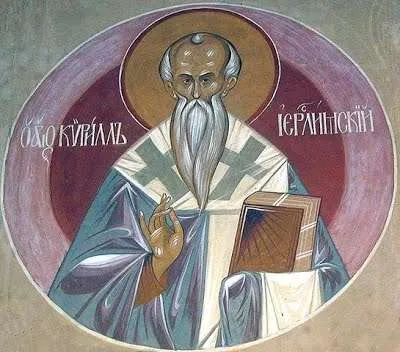
Saint Cyril of Jerusalem, Bishop and Doctor

c. 315–c. 387; Pre-Congregation canonization; Declared a Doctor of the Church by Pope Leo XIII in 1883

When Constantine the Great legalized Christianity throughout the Roman Empire in the year 313, many were hopeful that the sufferings Christians had endured during the first few centuries of the Church had finally come to an end. But the sufferings only changed. Politics entered the Church, emperors inserted themselves into doctrine, and theological and territorial divisions became fierce.

The theological divisions in the fourth century were primarily over the divine and eternal nature of the Son of God. Arius, a priest from Alexandria in North Africa, believed that the Father created the Son, making the Son subordinate to the Father and neither co-eternal nor co-equal with the Father. These teachings came to be known as the Arian Heresy. Others believed that the Son was “begotten of the Father,” meaning He existed from all eternity with the Father and was of the same divine nature.

This theological battle was initially addressed in the year 325 at the Council of Nicaea. However, after the Council of Nicaea, the controversy continued until the confusion was finally settled in 381 by the Council of Constantinople. It was in this fifty-six-year period of Church history and controversy that today’s saint was born, lived, and fought for the true faith.

Cyril was born in or near the city of Jerusalem around the year 315 A.D. Little is known about his early life, other than that he was well educated in the Scriptures and philosophy. It is believed that he was ordained a deacon for the Church of Jerusalem around the age of twenty by Saint Macarius, Bishop of Jerusalem, who was a staunch opponent of the Arian Heresy. After Macarius died, Saint Maximus, another opponent of Arianism, became Bishop of Jerusalem and ordained Cyril a priest when Cyril was about twenty-eight years old.

During his priestly ministry, Cyril became a true shepherd of souls. He was entrusted by Bishop Maximus with the responsibility of assisting him as a preacher and catechist. Cyril preached every Sunday and catechized those preparing for the Sacraments of Initiation. A set of twenty-four of his catechetical instructions have been preserved and are remarkable for their content and clarity.

The lectures begin with a prologue, followed by eighteen lessons that were taught to the catechumens before they were baptized. The lessons explained what they needed to know about baptism, how to change from pagan morals, the meaning of the Creed, and the errors of Arianism. Once baptized, Cyril’s last six lessons led the neophytes through a period of mystagogy in which they were taught how to live the new life they received from the Sacraments of Baptism, Confirmation, and the Most Holy Eucharist, as well as lessons on prayer, especially found in the Lord’s Prayer.

Bishop Maximus either died or was deposed around the year 348, and Cyril was chosen to succeed him. He was ordained a bishop by Archbishop Acacius of Caesarea Maritima, from the metropolitan see just west of Jerusalem. Archbishop Acacius was sympathetic to Arianism, so he and others might have believed that Cyril was also sympathetic to Arianism, which he was not.

Soon after becoming the Bishop of Jerusalem, a miraculous sign, visible to all, appeared over the holy site of Jesus’ crucifixion. A large cross of light, surrounded by a rainbow, appeared in the sky and stretched for about two miles over the city. This sign was initially perceived as God’s affirmation of Bishop Cyril but might have also been a sign of the sufferings Cyril would soon endure.

The suffering began as Cyril fought Acacius on two fronts. Bishop Cyril claimed the right of independent governance from Acacius in the See of Jerusalem. He also opposed the Arian Heresy that Acacius taught. As a result of these tensions, Acacius, other Arian bishops, and emperors persecuted Cyril, leveled false accusations against him, and deposed and exiled him from Jerusalem three times during his almost forty years as a bishop.

Despite suffering through these theological and political Church controversies, Bishop Cyril was a true shepherd of his flock, preaching and catechizing just as he had done as a priest. His gentle, pastoral, conciliatory, and humble approach to his ministry led some more orthodox bishops to suspect him of being sympathetic to the Arians.

For that reason, after Cyril returned from his final exile in 378, the great Saint Gregory of Nazianzens was sent to investigate him. Gregory’s conclusion was that Cyril was orthodox, which ended all doubt. In 381, the Council of Constantinople gave further clarity on the Arian Heresy, further clarified the Creed of Nicaea, and affirmed Bishop Cyril’s office of Bishop of Jerusalem. He returned and remained a holy shepherd of his people until his death six years later.

One eyewitness visiting Jerusalem on pilgrimage wrote in her journal that Bishop Cyril’s catechetical lessons were delivered in the Church of the Holy Sepulchre and were so well received by the people that whenever he completed a lesson, all the people would enthusiastically applaud.

Throughout the history of the Church, bitter divisions and the persecution of the orthodox defenders of the faith have been prevalent. Those who emerged as saints were those who persevered, remained faithful, never despaired, and continued to spread the pure faith of the Church, given to Her by Christ. Saint Cyril was one of those shining examples.

As we honor him, ponder your own commitment to the entire Truth of the Gospel. When challenged, do you shy away, cower, become confused, and give in to despair? Or do you lovingly stand firm in the Truth, retaining hope that, in the end, Christ will be victorious? Seek to imitate this great Doctor of the Church by embracing not only his orthodoxy but also the charity that fueled his zeal for souls.

Source: https://mycatholic.life/saints/saints-of-the-liturgical-year/march-18-saint-cyril-of-jerusalem-bishop-and-doctor/
Saint Cyril of Jerusalem, Bishop and Doctor Read More »