2024

Luke 18:9-10

Being Justified by Mercy

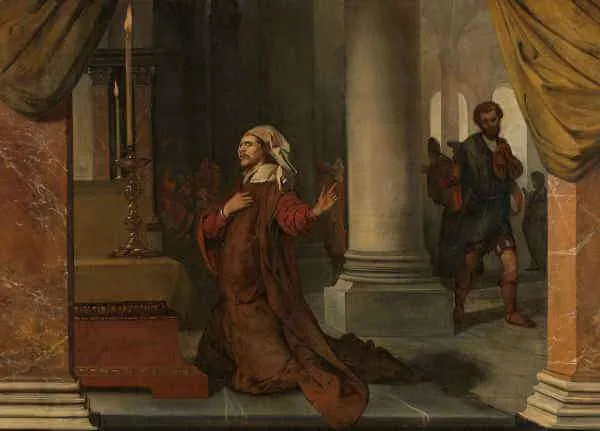
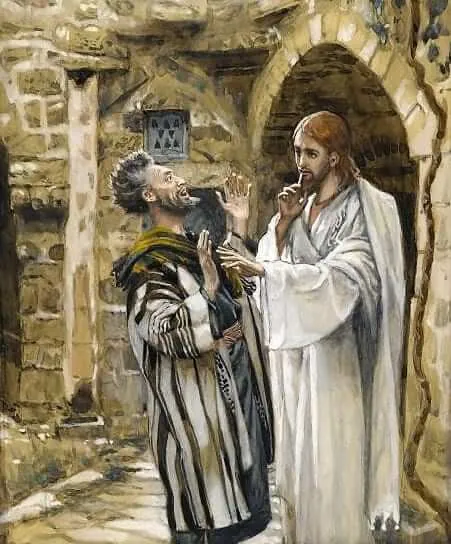
‘”Jesus addressed this parable to those who were convinced of their own righteousness and despised everyone else. ‘Two people went up to the temple area to pray; one was a Pharisee and the other was a tax collector.’” 

Reflection:

This Scripture passage introduces the Parable of the Pharisee and the Tax Collector. They both go to the Temple to pray, but their prayers are very different from each other. The prayer of the Pharisee is very dishonest, whereas the prayer of the tax collector is exceptionally sincere and honest. Jesus concludes by saying that the tax collector went home justified but not the Pharisee. He states, “…for everyone who exalts himself will be humbled, and the one who humbles himself will be exalted.”

True humility is simply being honest. Too often in life we are not honest with ourselves and, therefore, are not honest with God. Thus, for our prayer to be true prayer, it must be honest and humble. And the humble truth for all of our lives is best expressed by the prayer of the tax collector who prayed, “O God, be merciful to me a sinner.”

How easy is it for you to admit your sin? When we understand the mercy of God, this humility is much easier. God is not a God of harshness but is a God of the utmost mercy. When we understand that God’s deepest desire is to forgive us and to reconcile us to Himself, then we will deeply desire honest humility before Him.

Lent is an important time for us to deeply examine our conscience and make new resolutions for the future. Doing so will bring new freedom and grace into our lives. So do not be afraid to honestly examine your conscience so as to see your sin clearly in the way God sees it. Doing so will put you in a position to pray this prayer of the tax collector: “O God, be merciful to me a sinner.”

Reflect, today, upon your sin. What do you struggle with the most right now? Are there sins from your past that you have never confessed? Are there ongoing sins that you justify, ignore and are afraid to face? Take courage and know that honest humility is the road to freedom and the only way to experience justification before God.

Source: https://catholic-daily-reflections.com/2024/03/08/being-justified-by-mercy-3/

Luke 18:9-10 Read More »

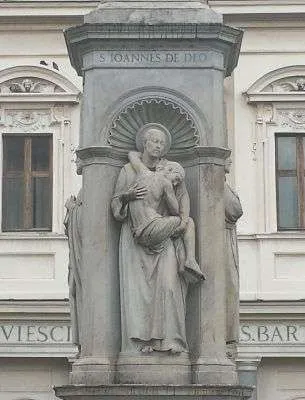
Saint John of God, Religious

Patron Saint of hospitals, nurses, firefighters, booksellers, alcoholics, and the sick; Canonized October 16, 1690 by Pope Alexander VIII

Saint John of God was born in the village of Montemor-o-Novo, Portugal to middle-class, faith-filled parents. According to his early biographer, John was abducted from his home when he was only eight years old and taken to the town of Oropesa, Spain, more than 200 miles away. In Oropesa, John found himself homeless and alone. He met a good man named El Mayoral who gave him a job as a shepherd and a place to live. John worked hard until he was twenty-two years old, never returning to his parents’ home.

El Mayoral wanted John to marry his daughter, but John wanted to see the world. He joined the army of the Holy Roman Emperor and battled the French. During his service, he was assigned to guard some captured clothing that went missing. John was accused of theft and condemned to death, but others intervened and he was released. Frustrated with military life, John returned to El Mayoral’s farm where he worked for another four years before entering the army once again to fight the Turks for the next eighteen years.

Upon the completion of his military service, John decided to return to his home country in Montemor-o-Novo to learn what became of his parents. After much searching, he found one of his elderly uncles who informed him that his mother died of heartbreak after his abduction and that his father joined the Franciscans and advanced in holiness. John said to his uncle, “I no longer wish to stay in this country; but rather to go in search of a way to serve Our Lord beyond my native place, just as my father did. He gave me a good example by doing that. I have been so wicked and sinful and since the Lord has given me life, it is fitting that I should use it to serve him and do penance.”

John began an interior search for the best way he could serve God and decided to journey to Africa, to ransom himself to the Muslims in exchange for their prisoners. On the journey, he met a knight and his family who were destitute and unable to care for themselves. The knight begged for John’s help that John gladly gave by working and giving them his earnings. When one of John’s fellow workers fled to Muslim territory and converted to Islam, John began to despair, thinking he should have done more for his friend. After seeking counsel from a Franciscan monastery, he decided to return to the mainland of Spain for the good of his soul.

Upon his arrival, John threw himself into a life of prayer, made a general confession, and tearfully went from church to church begging God for the forgiveness of his sins. To support himself, he began to buy and sell religious pictures and books as a traveling salesman. He found this to be spiritually rewarding and fruitful for the salvation of souls. Eventually, at the age of forty-six, he set up a small shop of religious items at Granada’s city gate.

Soon after, the great preacher Saint John of Ávila came to town to preach a mission. John was in attendance and was so moved by John of Ávila’s sermons, and so keenly aware of his own sins, that he started running through the streets like a madman, shouting for mercy. He returned to his shop and destroyed every book that was not religious, gave every other religious book and picture away to those passing by, gave away the rest of his possessions, and continued crying out in the streets that he was a sinner. “Mercy! Mercy, Lord God, on this tremendous sinner who has so offended you!”

Many thought John was a lunatic. Some good men brought him to Saint John of Ávila who heard his confession, counseled him, consoled him, and offered his continued guidance. But John was so deeply touched by the priest’s holy help that he wanted everyone in the town to know how sinful he was, so he ran through the streets crying out again and rolled in mud as a sign of his sinfulness. Eventually, two compassionate men took John to the local insane asylum for treatment.

The theory of the day was that those who were insane were best cured by locking them in a dungeon and torturing them continuously until they chose to abandon their insanity, and this is what happened to John. Saint John of Ávila heard of this and began communicating with John, encouraging him, and guiding him. He received every beating in the asylum with joy as penance and offered each sacrificially to God. Throughout, John exhorted the warden and other officers to treat the patients better.

When John began to exude a peaceful disposition, the warden was pleased and permitted him to be freed of his shackles. John showed mercy and compassion to others, performing menial charitable tasks and spreading God’s love. He thought to himself, “May Jesus Christ eventually give me the grace to run a hospice where the abandoned poor and those suffering from mental disorders might have refuge and that I may be able to serve them as I wish.”

After receiving permission to leave the asylum, John made a pilgrimage and had a vision of the Blessed Mother who encouraged him to work for the poor and infirm. Upon his return to Granada, he moved forward with his desire to open a hospital. Through begging, he was able to rent a building, furnish it, and begin seeking out the sick. He worked tirelessly to care for them, begged for food, brought priests to hear their confessions, and nursed them back to health. In the years following, John extended his mission of mercy to the poor, the abandoned, widows, orphans, the unemployed, prostitutes, and all who suffered.

Soon, others were so inspired by the work John was doing that they joined him. His companions in the work made up what would eventually become the Order of Hospitallers. In John’s life, the group would be only an organized group of companions, but twenty-two years after John’s death, the pope would approve this group of men as a new religious order. Among the many miracles that have been reported, the most notable was when John ran in and out of a burning hospital to rescue patients without being burned himself. 

Saint John of God is a shining example of God’s power. He was a sinner and was thought to be mentally ill, but God did incredible things through him. If you ever feel as though you have nothing to offer God, think of Saint John and know that the weaker you may feel, the more God can use you.

Source: https://mycatholic.life/saints/saints-of-the-liturgical-year/march-8-saint-john-of-god-religious/

Saint John of God, Religious Read More »

Mark 12:29-30

Hold Nothing Back

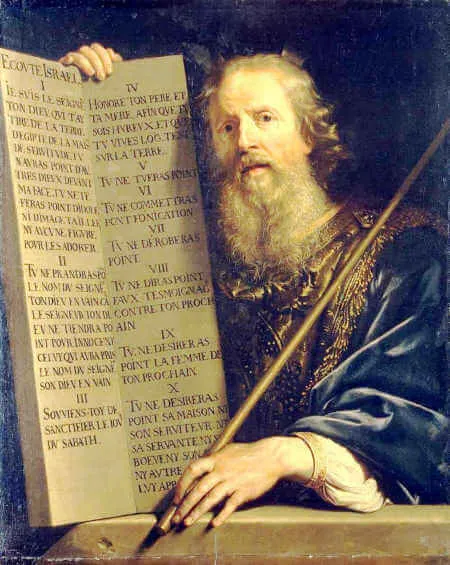
“Hear, O Israel! The Lord our God is Lord alone!  You shall love the Lord your God with all your heart, with all your soul, with all your mind, and with all your strength.”

Reflection:

Why would you choose anything less than to love the Lord your God with ALL your heart, with ALL your soul, with ALL your mind, and with ALL your strength? Why would you choose anything less? Of course, we do choose many other things to love in life, even though Jesus is clear with this commandment.

The truth is that the only way to love others, and even to love ourselves, is to choose to love God with ALL we are. God must be the one and only focus of our love. But what’s amazing is that the more we do this, the more we realize that the love we have in our lives is the kind of love that overflows and overflows in superabundance. And it is this overflowing love of God that then pours forth on others.

On the other hand, if we try to divide our loves by our own effort, giving God only part of our heart, soul, mind and strength, then the love we have for God cannot grow and overflow in the way God wants. We limit our capacity for love, and we fall into selfishness. Love of God is a truly amazing gift when it is total and all-consuming.

Each one of these parts of our lives are worth pondering and examining. Think about your heart and how you are called to love God with your heart. And how does this differ from loving God with your soul? Perhaps your heart is more focused on your feelings, emotions and compassion. Perhaps your soul is more spiritual in nature. Your mind loves God the more it probes the depth of His Truth, and your strength is your passion and drive in life. Regardless of how you understand the various parts of your being, the key is that every part must love God in fullness.

Reflect, today, upon the beautiful commandment of our Lord. It’s a command of love, and it is given to us not so much for God’s sake but for ours. God wants to fill us to the point of overflowing love. Why would we ever choose anything less?

Source: https://catholic-daily-reflections.com/2024/03/07/hold-nothing-back-3/

Mark 12:29-30 Read More »

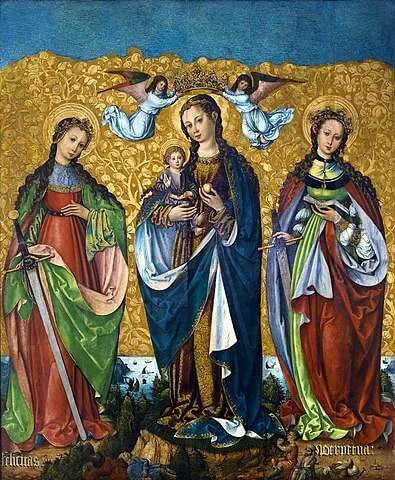
Saints Perpetua and Felicity, Martyrs

Saint Perpetua: c. 182–203; Patron Saint of cattle and martyrs; Invoked against the death of children; Saint Felicity: Unknown–203; Patron Saint of martyrs; help to have male children, and widows; Invoked against sterility and the death of children; Pre-Congregation canonizations

The first records of martyrdom in North Africa took place in 180 when twelve Christians were tried and put to death for their faith. After those first martyrs, the Christian faith in North Africa grew stronger and new converts became commonplace.

In an attempt to slow the growth of Christianity, Roman Emperor Septimius Severus issued a decree forbidding subjects of the Roman Empire to convert. If they did, they were given the opportunity to renounce their faith and honor the Roman gods. If they refused, they were put to death. In 203, five catechumens preparing for baptism were arrested in the Roman city of Carthage (modern-day Tunisia). Among those catechumens were the two martyrs we honor today. 

Vibia Perpetua was a twenty-two-year-old married noblewoman at the time of her arrest. She was also a mother, having recently given birth to a son whom she was still nursing. Her father was a pagan, but her mother and a brother were baptized Christians. A second brother was preparing for baptism alongside Perpetua, and a third brother had already died as a pagan.

Perpetua had been touched by Christ and decided to become a Christian, but she was arrested before her baptism. Her pagan father came to her in prison and pleaded with her to renounce the Christian faith and refuse baptism to save her life so she could raise her son.

Perpetua records that conversation as follows: “‘Father, do you see this vessel lying here to be a little pitcher, or something else? Can it be called by any other name than what it is?’ And he said, ‘No.’ ‘Neither can I call myself anything else than what I am, a Christian’” (Passion of Saints Perpetua and Felicity). A few days later, Perpetua was secretly baptized in prison.

While in prison, Perpetua’s heart yearned for her baby. To her joy, the infant was brought to her so she could nurse him. When that happened, she said, “My prison suddenly became a palace to me and I would rather have been there than anywhere else.”

Felicity, a slave, was also a young woman and pregnant at the time of her arrest. One eyewitness stated, “Felicity had feared that she might not be allowed to suffer with the rest, because pregnant women were not sent into the arena. However, she gave birth in the prison to a daughter whom one of their fellow Christians at once adopted.”

When these brave women stood before their judge, Perpetua’s father showed up with her baby, pleading with her to renounce Christ, save her life, and be there for her son. The judge also encouraged her: “Spare your father’s white hairs. Spare the tender years of your child. Offer sacrifice for the prosperity of the emperors.” Perpetua refused. When asked directly if she were a Christian, she responded, “Yes, I am.”

At that, her father violently inserted himself into the situation but was struck by the guard. When Perpetua saw this, her heart broke. She later recounted, “I felt this as if I myself had been struck, so deeply did I grieve to see my father treated thus in his old age.” The judge passed sentence and all were condemned to death by wild beasts. Still, they were filled with great joy as they returned to their prison. After the sentencing, Perpetua was no longer allowed to see her baby boy.

On the day of their martyrdom, Perpetua and Felicity walked to the arena with heads high and joyful spirits. With them were Revocatus, a fellow slave with Felicity, and two freemen, Saturninus and Secundulus. The men were sent into the arena first to be devoured by a leopard, a wild boar, and a bear. Saturnius was the last standing. When a second leopard attacked and blood poured out, the crowd cried out, “He is well baptized now!”

Perpetua and Felicity were then placed in the arena, and a wild cow was let loose as a way of mocking them as nursing mothers. The beast gravely wounded them but did not kill them, so an executioner was dispatched. Perpetua cried out to her brother, “Stand fast in the faith, and love one another. Do not let our sufferings be a stumbling block to you.” She then noticed the fear in the eyes of the executioner so she guided his sword to her neck and the young women received their eternal reward.

Perpetua and Felicity were both new young mothers at the time of their martyrdom. They loved their newborn babies with tender love. But they also loved their God Whom they had both recently come to know. They were forced to choose. Either reject Christ and be there to raise their babies or remain Christian and leave their babies.

With heroic courage and faith, they remained true to both. They remained faithful to Christ, dying as martyrs, and they fulfilled their greatest motherly duty by giving heroic witnesses of faith to their babies. We can only hope that as their children grew and were told the stories of their mothers’ love of God, those children were inspired and sought to imitate their mothers’ Christian faith.

Place yourself in that same situation. Would you have had the courage to face death? Would you be able to stay true to your profession of faith under such extreme emotional and familial pressures? Pray to these saintly mothers and be reminded that the greatest gift we can pass onto others is the witness of our faith in Christ. Life is empty unless Christ is loved and professed, and death loses its sting when our lives are Christ’s.

Source: https://mycatholic.life/saints/saints-of-the-liturgical-year/march-7-saints-perpetua-and-felicity-martyrs/

Saints Perpetua and Felicity, Martyrs Read More »

Luke 11:20

The Kingdom of God is Upon Us

“But if it is by the finger of God that I drive out demons, then the Kingdom of God has come upon you.”

Reflection:

The Kingdom of God can come upon us in a variety of ways. The line from today’s Gospel above comes in the middle of a story of Jesus casting out a demon from a man who was mute. Once the demon was cast out, the mute man began to speak, and all were amazed. And though some were amazed and grew in faith as a result, others turned their amazement into irrationality. 

The irrationality of some was that they saw what Jesus did, but they didn’t want to accept that His power was divine. Therefore, some of them said, “By the power of Beelzebul, the prince of demons, he drives out demons.” They couldn’t deny that Jesus drove out a demon, since they saw it happen with their own eyes. But they were unwilling to accept Jesus’ divinity, so they jumped to the irrational conclusion that Jesus’ act was done by the power of “the prince of demons.”

This irrational stance of some people is one of the most dangerous stances one can take. It’s the stance of an obstinate heart. They were given the incredible witness of the power of God at work but refused to respond in faith to what they witnessed. For those who are obstinate, when the Kingdom of God comes upon them, as Jesus stated above, the effect is that they react in a violent, angry and irrational way.

This form of reaction is exceptionally prevalent today in the secular world. Many in the secular media, for example, constantly react violently and irrationally to all that is part of the Kingdom of God. As a result, the evil one easily misleads many, causing confusion and chaos.

For those who have eyes to see clearly, this violent and irrational rejection of the Kingdom of God is very clear. And for those with faith and an open heart, the pure message of the Gospel is like water to a dry and parched soul. They soak it up and find great refreshment. For them, when the Kingdom of God comes upon them, they are energized, inspired and driven with a holy passion to further God’s Kingdom. Irrationality disappears, and God’s pure Truth prevails.

Reflect, today, upon your heart. Are you obstinate in any way? Are there teachings from Christ and His Church that you are tempted to reject? Is there some truth that you need to hear in your personal life to which you find it difficult to be open? Pray that the Kingdom of God come upon you today and every day and, as it does, that you will be a powerful instrument of its establishment in this world.

Source: https://catholic-daily-reflections.com/2024/03/06/the-kingdom-of-god-is-upon-us-3/

Luke 11:20 Read More »

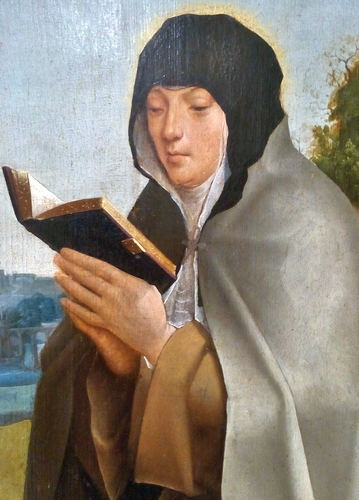
Saint Colette

Profile

Colette was a carpenter‘s daughter whose parents were near 60 at her birth. Colette was orphaned at age 17, and left in the care of a Benedictine abbot. Her guardian wanted her to marry, but Colette was drawn to religious life. She initially tried to join the Beguines and Benedictines, but failed in her vocation. She became a Franciscan tertiary and a hermitess. On 17 September 1402 at age 21, she became an anchoress – walled into a cell whose only opening was a grilled window into a church.

Colette had visions in which Saint Francis of Assisi ordered her to restore the Rule of Saint Clare to its original severity. When she hesitated, she was struck blind for three days and mute for three more; she saw this as a sign to take action.

Colette tried to follow her mission by explaining it, but had no success. Realizing she needed more authority behind her words, she walked to Nice, France, barefoot and clothed in a habit of patches, to meet Peter de Luna, acknowledged by the French as the schismatic Pope Benedict XIII. He professed her a Poor Clare, and was so impressed that he made her superioress of all convents of Minoresses that she might reform or found, and a missioner to Franciscan friars and tertiaries.

Colette travelled from convent to convent, meeting opposition, abuse, slander, and was even accused of sorcery. Eventually she made some progress, especially in Savoy, where her reform gained sympathizers and recruits. This reform passed to Burgundy in France, Flanders in Belgium, and Spain.

Colette helped Saint Vincent Ferrer heal the papal schism. She founded seventeen convents; one branch of the Poor Clares is still known as the Colettines.

Colette was known for a deep devotion to Christ’s Passion with an appreciation and care for animals. She fasted every Friday, meditating on the Passion. After receiving Holy Communion, she would fall into ecstasies for hours. She foretold the date of her own death.

Born

  • 13 January 1381 at Corbie, Picardy, France as Nicolette Boilet, named in honor of Saint Nicholas of Myra

Died

  • 6 March 1447 at Ghent, Belgium of natural causes
  • relics at the Monastère Sainte-Claire, Poligny, France

Beatified

  • 1604 by Pope Clement VIII (grant of liturgical office)
  • 23 January 1740 by Pope Clement XII (beatification)

Canonized

  • 24 May 1807 by Pope Pius VII

Patronage

  • against eye disorders
  • against fever
  • against headaches
  • against infertility
  • against the death of parents
  • carpenters
  • craftsmen
  • Poor Clares
  • servants
  • Corbie, France
  • Ghent, Belgium

Representation

  • birds
  • lamb
  • woman being carried to heaven by an angel
  • woman delivering a soul from purgatory
  • Poor Clare nun holding a crucifix and a hook
  • Poor Clare nun visited by Saint Anne, Saint Francis of Assisi, and/or Saint Clare of Assisi in a vision
  • Poor Clare nun walking on a stream

Source: https://catholicsaints.info/saint-colette/

Saint Colette Read More »

Matthew 5:17-18

The Height of the New Law

“I have come not to abolish but to fulfill. Amen, I say to you, until heaven and earth pass away, not the smallest letter or the smallest part of a letter will pass from the law, until all things have taken place.”

Reflection:

The Old Law, the law from the Old Testament, prescribed various moral precepts, as well as ceremonial precepts for worship. Jesus makes it clear that He is not abolishing all that God taught through Moses and the Prophets. This is because the New Testament is the culmination and completion of the Old Testament. Thus, nothing of old was abolished; it was fulfilled and brought to completion.

The moral precepts of the Old Testament were laws that flowed primarily from human reason. It made sense that one should not kill, steal, commit adultery, lie, etc. It also made sense that God should be honored and respected. The Ten Commandments and the other moral laws still hold today. But Jesus brings us much further. He not only called us to go much deeper in the keeping of these commandments, He also promised the gift of grace so that they could be fulfilled. Thus, “Thou shall not kill” is deepened to the requirement of complete and total forgiveness of those who persecute us. 

It’s interesting to note that the new depth of the moral law Jesus gives actually goes beyond human reason. “Thou shall not kill” makes sense to almost everyone, but “love your enemies and pray for those who persecute you” is a new moral law that makes sense only by the help of grace. But without grace, the natural human mind alone cannot arrive at this new commandment.

This is extremely helpful to understand, because oftentimes we go through life relying upon our human reason alone when it comes to making moral decisions. And though our human reason will always direct us away from the most obvious moral failures, it will be insufficient alone to guide us to the heights of moral perfection. Grace is necessary for this high calling to make sense. Only by grace can we understand and fulfill the call to take up our crosses and follow Christ.

Reflect, today, upon your own calling to perfection. If it doesn’t make sense to you how God can expect perfection of you, then pause and reflect upon the fact that you are right—it doesn’t make sense to human reason alone! Pray that your human reason will be flooded with the light of grace so that you will be able to not only understand your high calling to perfection but that you will also be given the grace you need to achieve it.

Source: https://catholic-daily-reflections.com/2024/03/05/the-height-of-the-new-law-3/

Matthew 5:17-18 Read More »

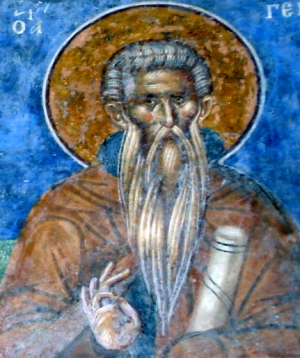
Saint Gerasimus of Palestine

Profile

Gerasimus was a monk at Lycia, Asia Minor. He was a hermit as well.

In c.451, Gerasimus moved to Palestine where he founded a house near the Dead Sea. In c.475, he founded another one on the River Jordan near Jericho that later grew to great importance and spread monasticism throughout the region.

Born

  • Lycia, Asia Minor

Died

  • c.475 of natural causes

Canonized

  • Pre-Congregation

Patronage

  • Cephalonia, Greece

Representation

  • monk healing a lion (early writers may have confused Gerasimus and Saint Hieronymus)

Source: https://catholicsaints.info/saint-gerasimus/

Saint Gerasimus of Palestine Read More »

Matthew 18:21-22

Forgiving From the Heart

“Peter approached Jesus and asked him, ‘Lord, if my brother sins against me, how often must I forgive him? As many as seven times?’ Jesus answered, ‘I say to you, not seven times but seventy-seven times.’”

Reflection:

Forgiveness of another is difficult. It’s much easier to remain angry. This line quoted above is the introduction to the Parable of the Unforgiving Servant. In that parable, Jesus makes it clear that if we want to receive forgiveness from God, then we must forgive others. If we withhold forgiveness, we can be certain that God will withhold it from us.

Peter may have thought that he was being quite generous in his question to Jesus. Clearly Peter had been considering Jesus’ teachings about forgiveness and was ready to take the next step of offering that forgiveness freely. But Jesus’ answer to Peter makes it clear that Peter’s concept of forgiveness greatly paled in comparison to the forgiveness demanded by our Lord.

The parable that Jesus then tells presents us with a man who was forgiven a huge debt. Subsequently, when that man encountered a person who owed him a small debt, he failed to offer the same forgiveness that was given to him. As a result, the master of that man who was forgiven the huge debt becomes outraged and requires once again a full payment of the debt. And then Jesus ends the parable with a shocking statement. He says, “Then in anger his master handed him over to the torturers until he should pay back the whole debt. So will my heavenly Father do to you, unless each of you forgives your brother from your heart.”

Note that the forgiveness God expects us to offer others is one that comes from the heart. And note that a lack of forgiveness on our part will result in us being handed “over to the torturers.” These are serious words. By “torturers,” we should understand that the sin of not forgiving another brings with it much interior pain.

When we hold on to anger, this act “tortures” us in a certain way. Sin always has this effect upon us, and it is for our good. It’s a way in which God constantly challenges us to change. Thus, the only way to freedom from this interior form of torture by our sin is to overcome that sin, and in this case, to overcome the sin of withholding forgiveness.

Reflect, today, upon the calling God has given to you to forgive to the fullest extent. If you still sense anger in your heart toward another, keep working at it. Forgive over and over. Pray for that person. Refrain from judging them or condemning them. Forgive, forgive, forgive, and God’s abundant mercy will also be given to you.

Source: https://catholic-daily-reflections.com/2024/03/04/forgiving-from-the-heart-3/

Matthew 18:21-22 Read More »

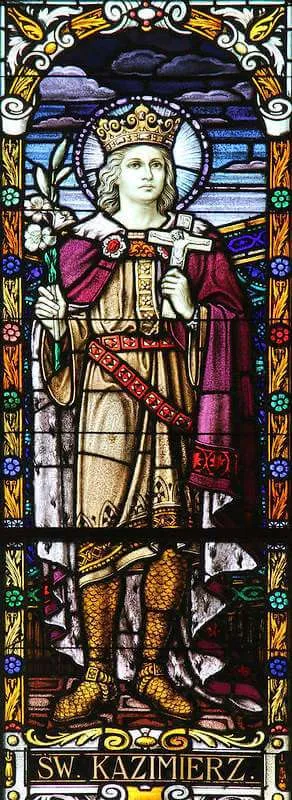
Saint Casimir

Patron Saint of Poland, Lithuania, and Lithuanian youth; Believed to have been canonized by Pope Leo X in 1521 or Pope Adrian VI in 1522; Canonization confirmed by Pope Clement VIII in 1602

King Casimir IV was King of Poland and Grand Duke of Lithuania. His wife, Queen Elizabeth, was the daughter of the Holy Roman Emperor Albert II. Their marriage was arranged primarily for political reasons, giving King Casimir IV greater influence in Bohemia and Hungary, but their marriage also bore great spiritual fruit. They had thirteen children, the third being the saint we honor today, Saint Casimir, named after his father.

Saint Casimir was born on October 3, 1458, the second son and third child in the Polish royal family. King Casimir IV’s father had converted to Catholicism from paganism and introduced Christianity to Lithuania. King Casimir IV was, therefore, raised in a good Catholic home which he also provided to his children. A faithful Catholic herself, Queen Elizabeth was the loving mother of her thirteen children.

As children born into royalty, Casimir and his siblings were well educated. From the age of nine until sixteen, Casimir and his older brother were tutored by a Polish priest named Father Jan Długosz. This good priest taught the boys Latin, German, law, history, rhetoric, and classical literature.

Casimir had no desire for power, war, riches, or nobility. Father Długosz had taught him well, and Casimir had fallen in love with his God and the Blessed Virgin. He prayed frequently, often slept on the floor, engaged in other penitential practices, spent entire nights meditating on the Passion of our Lord, dressed simply, and desired to live a life of chastity. He was charitable to the poor, manifested the virtues, and edified all who encountered him. He especially had a deep devotion to our Blessed Mother and each day sang an ancient hymn called, “Daily, Daily Sing to Mary.”

When Casimir was only thirteen, the King of Bohemia and Hungary died and King Casimir IV asserted his right to name a successor. The Bohemians agreed and accepted Vladislaus, the King’s firstborn son, as their king, but some of the Hungarians did not, preferring a godless tyrant named Matthias Corvinus. With the support of some of the Hungarian nobles, King Casimir IV decided to name his son Casimir to the Hungarian throne by force.

Casimir was sent to lead the Polish army in battle against the Hungarians and take the throne. Casimir agreed out of obedience to his father, but his heart was not in it. He opposed the war, and in time the effort failed and Casimir returned to Poland. His opposition grew even stronger when he heard that Pope Sixtus IV had asked his father not to go to war. Upon Casimir’s arrival home, his father was furious and imprisoned him in a tower for three months. Those three months, however, were just what Casimir longed for.

In the solitude of imprisonment, Casimir was able to return to his life of prayer and deepen his union with God. Afterward, he continued his studies and life of devotion, vowing to remain celibate for the Kingdom of God. His father was not pleased and attempted to arrange a marriage for him, but he refused. After completing his studies at the age of sixteen, Casimir worked closely with his father, but his heart remained with God and the Blessed Mother.

When Casimir was twenty, his father had to be absent from Poland for about five years, tending to matters in Lithuania. During those years, Casimir was put in charge of ruling Poland, which he did with thoughtfulness, justice, and charity. When Casimir was twenty-five, he became ill with a lung disease. His father rushed back to Poland to be with his son, and on March 4, 1484, at the age of twenty-five, Casimir died.

After his death, devotion to Casimir quickly exploded. Many people prayed to him, and many attributed miracles to his intercession. One notable miracle took place in 1519 when the Lithuanian army was engaged in battle with the Russians. It is said that Saint Casimir appeared to the Lithuanian soldiers in a vision and directed them to a place where they could best defend their city, which they successfully did. This might be the reason that Saint Casimir is the patron saint of both Poland and Lithuania.

Shortly after that miracle, it is believed that Pope Leo X carefully examined Casimir’s life and miracles and was prepared to canonize him, but might have died before he was able to do so. Therefore, his successor, Pope Adrian VI, might have been the one to canonize him. Because those questions remained for some time, Pope Clement VIII officially confirmed Casimir’s canonization in 1602, adding him to the Roman liturgical calendar for Poland and Lithuania. In 1620, Saint Casimir was added to the Roman Calendar of the universal Church.

Worldly power, riches, and honors were all within the grasp of this young prince, yet he chose the power, riches, and honors bestowed by the heavenly King instead. His heart was filled with faith from a very early age that only grew as he got older. Even after Casimir’s death, God used him to inspire many. Ponder your own ambitions in life, and seek to imitate this young prince who rejected the lies of this world, preferring only the eternal truths of the Kingdom of God.

Source: https://mycatholic.life/saints/saints-of-the-liturgical-year/march-4-saint-casimir/
Saint Casimir Read More »