2024

Mark 11:29-30

The Danger of Obstinacy

“I shall ask you one question. Answer me, and I will tell you by what authority I do these things. Was John’s baptism of heavenly or of human origin?  Answer me.”

Reflection:

This is Jesus’ response to the chief priests, the scribes, and the elders when they approached Jesus in the Temple area and asked Him by what authority He did the things He did. And what was it that Jesus did? The day before, Jesus had been in the Temple and drove the money changers out, telling them, “Is it not written: ‘My house shall be called a house of prayer for all peoples’? But you have made it a den of thieves.” This outraged the religious leaders, and they immediately began to discuss how they could put Jesus to death.

Consider, first, the tension in the air. They literally were plotting to put Jesus, the Son of God, to death. They were filled with hatred and jealousy and refused to believe in Him. Jesus saw their hardness of heart and put them on the spot to first answer His question before He would answer theirs. Why would Jesus do this?

The question Jesus asked them was actually an act of great mercy on His part. He gave them an opportunity to repent. If they had only answered His question with humble faith and honesty, they could have saved their lives. Instead, they discussed among themselves His question and gave the politically correct answer. If they had said John’s baptism was of human origin, and not from God, they were afraid that the people would turn on them. So they simply said, “We do not know.” But imagine if they would have given the right answer. What if they had discussed it among themselves and concluded that John’s baptism truly was from God and that they should have believed in him? If they would have only humbled themselves, admitted that they had gravely erred in regard to John, then Jesus would have answered their question, and their life of true faith could have begun. But they didn’t. They remained obstinate. They could not admit they were wrong.

Obstinacy is among the most dangerous of sins. It’s a sin that cannot be forgiven, because, in essence, it’s a refusal to change. And when a person refuses to admit their sin, and refuses to change, then God cannot help them. They remain lost in their sin and suffer the consequences.

Do you struggle with obstinacy in your life? Do you find it difficult to admit when you are wrong? Do you find it difficult to apologize to another and seek to change?

Reflect, today, upon anything you remain obstinate about. Are there matters of faith that you refuse to believe? Are there broken relationships that you refuse to humbly restore? Do you justify your sin and refuse to admit your guilt and need to change? Pray to our Lord for the gift of a humble heart. Humility, in many ways, is nothing other than being completely honest with yourself and others before God. Do not follow the example of these religious leaders. Humbly seek to remove all obstinacy from your heart so that Our Lord can enter in and bring His mercy into your life.

Source: https://catholic-daily-reflections.com/2024/05/31/the-danger-of-obstinacy-3/

Mark 11:29-30 Read More »

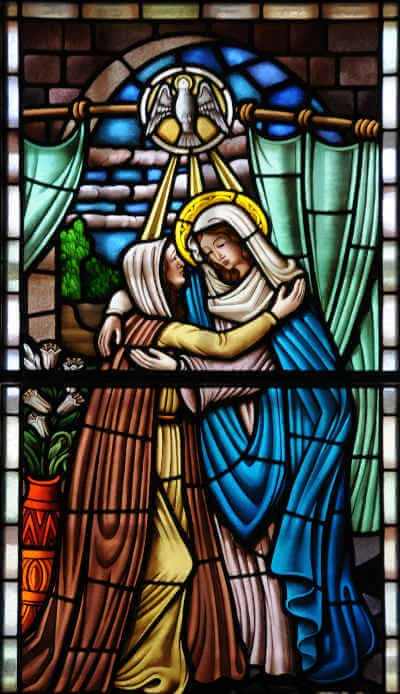
Visitation of the Blessed Virgin Mary

Toward the end of the fourteenth century, the Church suffered from an internal conflict known as the Western Schism. In 1378, two men claimed to be the pope. Pope Urban VI resided in Rome, and the anti-pope Clement VII resided in Avignon, France. This division raged on until 1417 when the Council in Constance resolved the issue once and for all. Pope Urban VI instituted today’s feast, the Visitation of the Blessed Virgin Mary, in 1389 as a way of asking the universal Church to pray to the Blessed Virgin Mary for unity and peace.

Though the immediate reason for the institution of this feast was internal Church conflict, its inspiration is the glorious story that Saint Luke recounts in the first chapter of his Gospel. After the Annunciation, God became man. Divinity united to humanity within the womb of the Blessed Mother. Most likely, Mary traveled to be with Elizabeth, her cousin, within a month of conceiving the Savior of the World. Thus, she traveled as a tabernacle of the Most High. Note that Luke tells us that she traveled “in haste.” On a spiritual level, we can see within this line a twofold action. First, though the Savior was but a tiny child within Mary’s womb, He was also God. He had divine knowledge. Thus, within His divinity, God the Son desired that His virginal mother not only go to Elizabeth to assist her in her pregnancy, but that she also go to her because the Son of God desired to sanctify John the Baptist within his mother’s womb. The first thing we see, therefore, in this journey “in haste” is the revelation of the Son of God’s desire to pour forth His sanctifying grace upon His precursor, John, within the womb. It was Jesus, within the womb, Who inspired His mother to make the journey so as to fulfill His divine will.

The “haste” also affected our Blessed Mother. She was filled with the Holy Spirit and carried the Eternal God within her womb. Therefore, her motherly heart would have sensed the longing of the will of her Divine Son within her womb to bestow His first gift of sanctifying grace upon John. As a result, she was compelled to travel quickly to Elizabeth so that her Son could fulfill His will.

When Mary reached Elizabeth, Elizabeth cried out, “Most blessed are you among women, and blessed is the fruit of your womb.” She went on to call Mary “the mother of my Lord” and to reveal that at the moment Mary greeted her, something amazing and spiritual took place within the child in her womb. John leapt for joy. Spiritual joy is a reaction to grace, and John encountered grace in that moment. Saint Thomas Aquinas holds the position that John the Baptist was delivered from Original Sin at that moment. In fact, he goes so far as to speculate that divine grace may have accelerated his use of human reason within the womb: “Perhaps also in this child the use of reason and will was so far accelerated that while yet in his mother’s womb he was able to acknowledge, believe, and consent, whereas in other children we have to wait for these things till they grow older: this again I count as a miraculous result of the divine power” (Summa Theologica 3.27.6).

In addition to the Visitation being a revelation to us about Saint John the Baptist and the Son of God’s desire to sanctify him in the womb, it also reveals much to us about the Blessed Mother. Immediately after her exchange with Elizabeth, Mary sings her Magnificat, in which she not only glorifies God for His greatness and perfect plan, but she also reveals the beauty of her own soul. The Blessed Mother speaks of her “lowliness” (humility) and the fact that “all ages” will call her blessed. She reveals that God has done “great things” for her because she had the gift of holy fear of the Lord. She goes on to reveal that in her lowly state, God will exalt her, as He will exalt all who humble themselves before Him.

As we celebrate this glorious feast, ponder first the great need the Church has for the intercession of the Blessed Virgin Mary. She is the Mediatrix of Grace, as Vatican II called her. She is the instrument through which grace entered the world in the Person of her Son. Just as Pope Urban VI saw a need to heal the Church through Mary’s intercession in the fourteenth century, so the Church is also in great need of healing today. Call upon her intercession for the Church as we honor her Visitation today.

Ponder, also, the expediency with which Mary traveled to Elizabeth to introduce her cousin and the child in her womb to the Savior. Too often, we take a lackadaisical approach to evangelization. We hesitate, remain uncertain and uncommitted, and lack zeal. Reflect upon the holy drive within Mary’s heart as she traveled to Elizabeth, and seek to imitate that same drive in your life. Allow the Holy Spirit to not only inspire you to share the love of Christ with others, but to also fill you with a sense of holy urgency. God’s Heart burns with a desire to be known, loved, and adored by His people. He wants to use you, as He did Mary, to become the instrument by which this happens in the hearts of those to whom God is sending you.

Source: https://mycatholic.life/saints/saints-of-the-liturgical-year/may-31—visitation-of-the-blessed-virgin-mary/

Visitation of the Blessed Virgin Mary Read More »

Luke 1:39-42

Joy at the Presence of the Lord

Mary set out and traveled to the hill country in haste to a town of Judah, where she entered the house of Zechariah and greeted Elizabeth. When Elizabeth heard Mary’s greeting, the infant leaped in her womb, and Elizabeth, filled with the Holy Spirit, cried out in a loud voice and said, “Most blessed are you among women, and blessed is the fruit of your womb.”

Reflection:

The beautiful feast we celebrate today depicts two miraculous pregnancies. One came about by the overshadowing of the Holy Spirit. The other was the miraculous conception in the womb of a woman who was advanced in years. The Scripture passage quoted above presents us with the initial encounter of Mary and Elizabeth as they greeted each other upon Mary’s arrival. Mary had traveled a long distance to be with her cousin for the last few months of Elizabeth’s pregnancy. And upon greeting Elizabeth, another miraculous event occurred. The baby in the womb of Elizabeth, Saint John the Baptist, “leaped for joy.” Thus, even prior to his birth, John began to fulfill his unique mission of preparing the way for the Lord. He did so at that moment by inspiring his own mother, Elizabeth, with a knowledge of the divine presence of the Savior within the womb of Mary.

Consider, especially, the conversations that these two holy women would have shared during their months together. Though we are given only a small insight into their initial conversation from the Scriptures, we can be certain that this was but a small sampling of what they would have discussed in much prayerful detail. In particular, their conversations would have contained a mutual sharing of the spiritual gift of joy.

Joy is much more than an emotion. It is spiritual in nature. It is not only an experience of something fun, it’s the experience of realizing the action of God in your life. Seeing God at work in wonderful ways leads to gratitude and rejoicing. This joy produces a strength and energy that is contagious and uplifting.

We must all strive to see the hand of God at work in our own lives so that our focus upon His divine actions will produce joy also. We need joy. We need to be strengthened by this gift so that we will be encouraged and strengthened as we daily strive to fulfill His will.

Reflect, today, upon the witness of joy that these two holy women give us. Know that you are called to share in the same joy as you humbly turn your attention to the ways in which God has blessed you. If you find that you lack joy in life, then consider where you allow your mind to wander throughout the day. Do you dwell on the past, on hurts, on problems and the like? If so, these thoughts will undoubtedly lead to depression and possibly even despair. Try to turn your mind to the action of God in your life. See the many blessings you have been given and savor those divine actions. Doing so will lead you to rejoice with Saint Elizabeth and our Blessed Mother.

Source: https://catholic-daily-reflections.com/2024/05/30/joy-at-the-presence-of-the-lord-3/

Luke 1:39-42 Read More »

The Most Holy Body and Blood of Christ

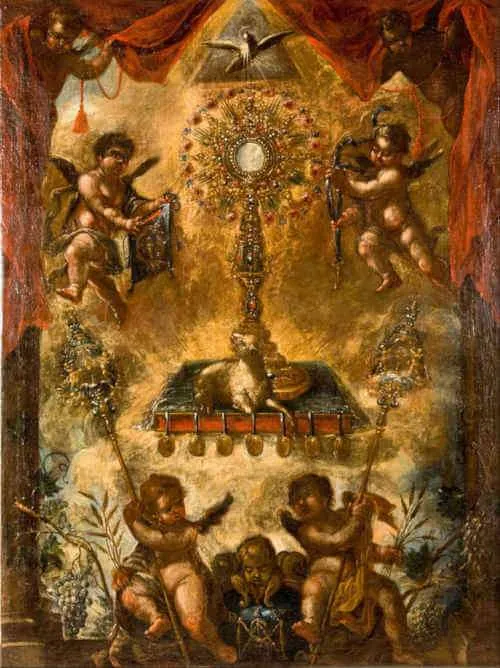
Of the greatest and most valuable treasures one could obtain in this world, nothing is more precious, more sacred, and more valuable than the Most Holy Body and Blood, Soul and Divinity of Jesus Christ, our Sovereign and Eucharistic Lord. Millions, billions, or even hundreds of trillions of dollars do not come close to the infinite value and transforming power of the Body and Blood of Christ. No amount of earthly wealth can buy happiness, but the Eucharist bestows it freely. No amount of money can purchase Heaven, but the Eucharist transforms you into a member of the Body of Christ Whom you consume, leading you to Heaven. At the end of our lives, when we stand before the Just Judge, we will realize the transforming power of this Gift. Those who adored Him and received Him faithfully in Communion will be forever grateful they did.

Human dignity demands that we show respect to one another, reverencing the presence of God in each person as a living tabernacle of the Lord. However, we do not bow down before God’s presence in others, nor do we kneel before them in adoration and worship. In this world, the only One Whom we worship and adore, in hidden yet physical form, is our Lord Who is fully present in the Eucharist. The Eucharist is not only a fraternal meal we share with one another, it’s a communion with God Himself that unites us with Him. It is that union with God that also unites us with every other person who is united to God through the sharing of the Most Holy Eucharist.

The Solemnity of Corpus Christi originated with a mystic named Saint Juliana of Cornillon. She was born near Liège, Belgium around the year 1191. At the age of five, she and her sister were orphaned and entrusted to the care of Augustinian nuns. Within that convent, Juliana grew in her faith, participated in Eucharistic adoration, and frequented Holy Communion. She eventually joined the Augustinians and became a nun herself.

At the age of sixteen, she had a mystical vision during Eucharistic adoration in which she saw the moon with a dark stripe. By divine intuition, she understood that the moon symbolized the Church’s life on earth, and the dark stripe symbolized the absence of a feast that was specifically dedicated to the Body and Blood of Christ. In the convent, she had the same vision several more times but kept it to herself for twenty years.

Around the age of thirty-six, she shared her vision with two friends, one a local hermit and the other a fellow nun. Together, these holy women grew deep in their love of Christ in the Eucharist, especially adoring His hidden presence and receiving Him frequently in Holy Communion. After sharing her vision with the bishop, he reluctantly approved a local annual feast in honor of the Blessed Sacrament, and some other bishops followed. However, as word spread about Juliana’s visions, her superior and some clergy opposed her. She had to leave the convent, taking refuge in various Cistercian monasteries for ten years.

In 1258, around the age of sixty-seven, Juliana was adoring Jesus in the Most Blessed Sacrament in her cell when she died and was taken into the unveiled presence of God in Heaven. Prior to her death, the local Archdeacon in Lièges, Jacques Pantaléon of Troyes, had become familiar with Juliana and believed that her visions were from God and that a universal feast of Corpus Christi was God’s will. In 1261, Archdeacon Jacques Pantaléon was elected pope and took the name Pope Urban IV.

In 1263, a Eucharistic miracle took place in Bolsena, Italy, about ten miles from where Pope Urban was residing in Orvieto in the Papal States, modern-day Italy. A German priest named Father Peter of Prague stopped at the church in Bolsena to offer Mass during a pilgrimage at the tomb of Saint Christina, a fourth-century martyr. By his own admission, he was struggling to believe in the true presence of Christ in the Eucharist. During the consecration, the host he was holding began to bleed and flow onto his hands and the linen corporal on the altar. He immediately went to Orvieto to reveal the miracle and his lack of faith to Pope Urban. Pope Urban absolved him and then sent a delegation to investigate the miracle. They brought the corporal back to the cathedral in Orvieto with great solemnity where it remains enshrined today.

In 1264, Pope Urban instituted the universal Solemnity of Corpus Christi and asked the renowned theologian Father Thomas Aquinas to compose the liturgical texts for the feast. Among the texts the future saint and doctor of the Church composed are the revered and frequently sung hymns, “Pange Lingua,” “Tantum Ergo,” “Panis Angelicus,” and “O Salutaris Hostia.” The Thursday after the Solemnity of the Most Holy Trinity was chosen for the annual feast in honor of the day that the Eucharist was instituted.

After the death of Pope Urban IV, the Solemnity of Corpus Christi was removed from the universal calendar for about fifty-three years until Pope John XXII added it back in 1317. Since that time, the solemnity has grown and become an important annual celebration that often includes Eucharistic processions, adoration, and Mass. In many locations where it is not a holy day of obligation, the solemnity is moved to the following Sunday so as to extend the celebration to the entire people of God. In 1869, Pope Pius IX canonized Saint Juliana of Lièges, adding even greater credence to her miraculous visions and solidifying the importance of this holy solemnity.

As we celebrate the Solemnity of Corpus Christi, spend time pondering the profound mystery of the true presence of Christ in the Eucharist. As we kneel before Him, we truly kneel before His throne in Heaven, despite the reality being veiled from our eyes. As we consume the Blessed Sacrament, we truly consume Christ Himself—Body and Blood, Soul and Divinity—and receive Him into our souls. Though we might not feel Him with our bodily senses, we must allow our spiritual sense of faith to grow so that our love for Him in this Most Precious Gift exponentially increases. Let’s conclude with the “Tantum Ergo,” which is taken from the last two verses of the beautiful hymn of Saint Thomas Aquinas, the “Pange Lingua:”

Down in adoration falling, Lo! the sacred Host we hail; Lo! o’er ancient forms departing, newer rites of grace prevail; faith for all defects supplying, where the feeble senses fail. To the everlasting Father, and the Son who reigns on high, with the Holy Ghost proceeding forth from Each eternally, be salvation, honor, blessing, might and endless majesty. Amen. Alleluia.

Source: https://mycatholic.life/saints/saints-of-the-liturgical-year/corpus-christi—body-and-blood-of-christ–solemnity/
The Most Holy Body and Blood of Christ Read More »

Mark 10:46-47

Crying Out to Jesus

As Jesus was leaving Jericho with his disciples and a sizable crowd, Bartimaeus, a blind man, the son of Timaeus, sat by the roadside begging. On hearing that it was Jesus of Nazareth, he began to cry out and say, “Jesus, son of David, have pity on me.”

Reflection:

How do you pray? Do you ever “cry out” to Jesus with deep conviction and intensity? This blind man, Bartimaeus, sets for us a wonderful example of how we should pray to our Lord. First of all, the blind man was in a state of need. His blindness symbolizes every weakness and need you have in life. So what is it that you struggle with the most in life? What is your greatest habitual sin? Or what causes you the most grief?

Seeing our weakness is the first step. Once we are aware of our greatest needs, we must also “cry out” to our Lord just as Bartimaeus did. Upon hearing that it was Jesus, Bartimaeus somehow sensed within his soul that Jesus wanted to cure him. How did he sense this? He listened to the voice of God within. Yes, he heard the commotion of many speaking about Jesus as He walked by. But this alone could not have compelled him to cry out and to know that Jesus was the source of the mercy he needed. That which compelled him was the clear voice of God, a prompting from the Holy Spirit, within his soul, revealing to him that he needed Jesus and that Jesus wanted to cure him.

At first, those around him rebuked Bartimaeus and told him to be quiet. And if Bartimaeus would have been weak in faith, he may have listened to the crowd and, in despair, remained silent. But it is quite clear that he not only ignored the rebukes of others, he “kept calling out all the more.”

Bartimaeus gives us here a double witness of how we must turn to our Lord. First, we must sense His gentle but clear presence within our soul. We must recognize His voice and His promptings of grace. He wants to heal us, and His presence in our lives must be sensed within. Secondly, we must become intensely fixed upon that voice within. The crowds who rebuked Bartimaeus are symbolic of the many “voices” and temptations we experience in life that try to keep us from faithfully and fervently crying out to the God who speaks to us. Nothing should deter us from our wholehearted determination to call to Jesus with our need.

Reflect, today, upon Bartimaeus being an image of yourself. See yourself in desperate need of our Lord and listen for His clear voice. Do you hear Him? Do you sense Him walking by? As you do, cry out to Him with fervor, intensity, and conviction. And if you find that there are temptations that try to silence your prayer and faith, increase your intensity and cry out “all the more” to our Lord. He will hear you, call you to Himself and give you that grace which He desires to bestow.

Source: https://catholic-daily-reflections.com/2024/05/29/crying-out-to-jesus-3/

Mark 10:46-47 Read More »

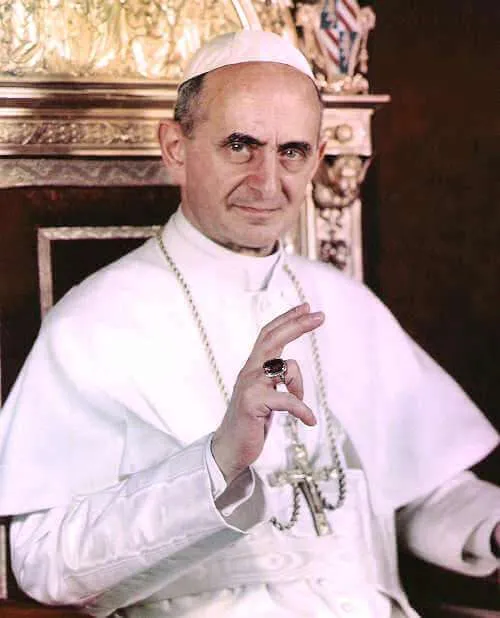
Saint Paul VI, Pope

1897–1978; Patron Saint of Vatican Council II; Canonized by Pope Francis on October 14, 2018

Giovanni Battista Montini was born in northern Italy, about fifty miles east of Milan. He was the second of three boys. His father was an attorney who ran a Catholic newspaper in the Province of Brescia and a member of the Italian Catholic Action, a lay organization that advocated for a greater influence of the Catholic faith within society. His mother was from a wealthy noble family, but her parents’ death when she was young resulted in her spending much of her teenage years in a boarding school in Milan run by French nuns. As a child, Giovanni was called “Battista” by his family. He was educated by Jesuits, and enjoyed sports and playing cards. When he was twelve, Battista was diagnosed with a chronic heart flutter and suffered from intestinal difficulties. He often missed long periods of school, spending time at the family villa and receiving private tutoring.

Though he had long thought of becoming a journalist like his father, Battista entered the seminary at the age of eighteen and was ordained a priest four years later. Shortly after his priestly ordination, Father Montini was sent to Rome to study canon law. Though ill health continued to plague him, he obtained his doctorate in canon law, studied for the Vatican diplomatic corps, briefly served at the Apostolic Nunciature in Warsaw, Poland, and then returned to Rome. In Rome, he began his service as a diplomat in the papal household under Pope Pius XI and assisted at the Supreme Tribunal of the Apostolic Signatura, the Holy Office, and the Secretariat of State. When Pope Pius XII was elected in 1939, Monsignor Montini worked with him daily, eventually acting as the pope’s de facto personal secretary.

In 1939, World War II broke out and Monsignor Montini assisted the pope as he navigated through the chaos. As thousands of refugees fled to Rome, Monsignor Montini organized the Vatican’s efforts to care for them, giving them shelter and food, keeping them hidden, and supporting their mental and spiritual needs. In 1952, Monsignor Montini was appointed Pro-Secretary of State for General Affairs and in 1954, was ordained the Archbishop of Milan and the Secretary of the Italian Bishops’ Conference. In Milan, Archbishop Montini’s organizational skills flourished. He built many new churches, organized diocesan-wide catechesis, and sought new and innovative ways to share the Word of God. In an attempt to confront the rise of Marxisit ideology, he showed great interest in upholding the dignity of the worker with his support of unions and immigrants. His ministry went beyond Catholics, seeking ways to reach out to other Christians, Jews, Muslims, and those without any faith.

When Pope Pius XII died in 1958, many people thought that Archbishop Montini would be a good successor. However, he was not a cardinal. It came to light later that Pope Pius XII had offered to make him a cardinal on at least two occasions, but Monsignor Montini had turned the office down. Therefore, when the college of cardinals entered the conclave to vote, they chose Cardinal Roncalli, the Patriarch of Venice, who took the name Pope John XXIII. Pope John was no stranger to Archbishop Montini and had a great fondness for him. Within a year of his papal election, the pope raised Archbishop Montini to the cardinalate and appointed him to various Vatican posts, in addition to being Archbishop of Milan. With those responsibilities, Cardinal Montini frequented the Vatican, continuing his service as a trusted papal advisor.

From 1958–1960, Cardinal Montini took a special interest in the Universal Church, making visits to several African countries, South America, the United States, and all parts of Europe. In 1961, Pope John XXIII appointed Cardinal Montini to a special commission meant to prepare for Vatican II. The pope had announced his intention to hold an ecumenical council just two years prior, much to the surprise of Cardinal Montini. Though uncertain of the wisdom of such a move, the cardinal was a loyal churchman and assisted in every way he could.

On October 11, 1962, Pope John XXIII formally opened the Second Vatican Council. In less than a year, however, the pope would die of stomach cancer. The pope’s vision for the council was to bring the ancient faith of the Church into closer connection to the modern world. He foresaw a new Pentecost, or a new springtime for the Church. The Holy Father also wanted to reach beyond the Catholic Church to seek greater union with people of all faiths and those with no faith at all. Though the central mission of the Church was to preach the saving message of Jesus Christ, he also saw the Church as a necessary institution sent by God to assist all peoples with the emerging issues of the day, such as modernization, communism, economic progress, war, and poverty. The Church needed to be an active force within every human and societal structure.

After the death of Pope John XXIII, Cardinal Montini was elected pope on June 21, 1963. His lifelong service to the Church prepared him well  for the task. As pope, he re-opened and presided over the remaining sessions of the Second Vatican Council and oversaw the implementation of its schema. He also implemented new liturgical rites for the sacraments and a new liturgical calendar. Pope Paul VI was the first traveling pope, making apostolic journeys to seventeen different countries. In the Holy Land, he met with the Greek Orthodox Patriarch Athenagora of Constantinople; the two mutually lifted the excommunications imposed upon the leaders of each Church since 1054. During the rest of his journeys he exhorted churches and nations to address world peace, social justice, poverty, illiteracy, ecumenism, and world unity.

Perhaps the most difficult decision Pope Paul VI made was the promulgation of the encyclical Humanae Vitae, in which he reiterated the long-standing Church teaching on contraception. Though many bishops and theologians recommended the moral acceptance of contraception, the pope prayerfully followed his conscience, which resulted in outrage among some, especially in the Western World. He stood firm and suffered quietly through it all. His encyclical included various prophecies about what would result from the liberal use of contraception: infidelity, moral decline, diminished respect for women, governmental abuse of power, and an erroneous belief that humans have an unlimited dominion over their own bodies. Those prophecies have all come true.

Pope Saint Paul VI was one of the first popes to face the many challenges and blessings that have come from modernization. He sought to keep the ancient faith of the Church ever ancient while also making it ever new and relevant to a world in need. He sought unity among Christians, peace among nations, and respect for the dignity of all. As we honor this recent saint, ponder the effects that he has directly had upon your life. His prayerful decisions, especially regarding the way we celebrate the liturgy, have led many to engage the sacraments in a more active way, participating more fully in the sacred offering of the Most Holy Body and Blood of Christ to the Father in Heaven. Nothing in life is more important than that.

Source: https://mycatholic.life/saints/saints-of-the-liturgical-year/saint-paul-vi/

Saint Paul VI, Pope Read More »

Mark 10:35-37

Greatness in Holy Servitude

Then James and John, the sons of Zebedee, came to Jesus and said to him, ‘Teacher, we want you to do for us whatever we ask of you.” He replied, ‘What do you wish me to do for you?” They answered him, “Grant that in your glory we may sit one at your right and the other at your left.”

Reflection:

James and John were feeling quite bold. Their boldness may have come, in part, from the fact that they had become very familiar with the goodness of Jesus. He was unlike any other, and His genuineness was very evident to them. Therefore, they allowed themselves to slip into the trap of taking Jesus’ goodness for granted by seeking a selfish favor from our Lord. Jesus’ response is gentle and thoughtful, and, in the end, James and John are somewhat humbled by their attempt to obtain this selfish favor when the other disciples become “indignant” at their request.

Jesus summarizes His response to these disciples this way: “…whoever wishes to be great among you will be your servant; whoever wishes to be first among you will be the slave of all.” Jesus, of course, was especially speaking about Himself. He was the greatest and the first among them. And for that reason, Jesus humbled Himself as their servant and the “slave of all.” Normally, the idea of being a slave has very negative connotations. Slavery is an abuse of the dignity of another. It’s a way of discarding the dignity of the person. But, nonetheless, Jesus says that the ideal way to be truly great is to become a slave of all.

When literal slavery is imposed upon another, this is a grave abuse. But there is another form of holy slavery of which Jesus is speaking. For Jesus, a holy slavery is one in which we give ourselves to another in a sacrificial way out of love. And this is what Jesus did to perfection. His death on the Cross was a true physical death. It was a sacrifice of His earthly life, but it was done freely and for the purpose of setting others free. In referring to Himself, Jesus explains His holy “slavery” when He says, “For the Son of Man did not come to be served but to serve and to give his life as a ransom for many.”

Jesus’ greatness is first found in the simple fact that He is God. But His greatness is made most manifest in His human nature when He gives His life “as a ransom for many.” It is the Cross that becomes the greatest act of loving service ever known. The fruit of His selfless sacrifice is the salvation of all who turn to Him. Thus, Jesus turns slavery and death into the greatest act of love ever known.

Reflect, today, upon your own calling to live a life of holy slavery. How is God calling you to sacrificially give yourself to others out of love? From a purely human point of view, the idea of sacrifice, servitude and even holy slavery is hard to comprehend. But when we use Jesus as the model, it becomes much clearer. Look for ways in which you can give yourself to others selflessly and know that the more you can imitate our Lord in this holy endeavor, the greater your life will be.

Source: https://catholic-daily-reflections.com/2024/05/28/greatness-in-holy-servitude-2/

Mark 10:35-37 Read More »

Saint Gregory VII, Pope, Religious

c. 1020–1085; Invoked against corruption within the Church; Canonized by Pope Benedict XIII on May 24, 1728

In the eleventh century, civil interference within the Church caused many problems. Simony, the unfortunate practice of buying and selling positions of power within the Church, was rampant. Emperors and other nobility claimed the right to appoint bishops, including the pope, usurping the pope’s universal authority. This abuse is referred to as lay investiture. Additionally, many clerics failed to keep the vow of celibacy, due to the fact that many of them were political appointees rather than men responding to the will of God in faith. It was principally these abuses that today’s saint sought to reform.

Pope Saint Gregory VII was born as Hildebrand in the town of Sovana in modern-day Tuscany, central Italy. At a young age, Hildebrand was sent to Rome to study at Saint Mary’s Monastery on the Aventine Hill, where his uncle was abbot. In 1032, when Hildebrand was about twelve years old, a young man named Theophylactus of Tusculum became pope through a bribe by his father. Theophylactus, who was only twenty years old, took the name Pope Benedict IX. Pope Benedict was immoral and corrupt. In 1044, the faithful ran him out of Rome, and Pope Sylvester III was elected. Benedict IX returned just a year later and retook the papacy by force. Benedict’s second reign lasted less than two months—until he wanted to marry his cousin. His uncle, a holy priest named Gratian, encouraged him to resign and even paid him money to do so. As a result, Gratian was elected pope, taking the name Gregory VI. After being pope for less than two years, Gregory VI was deposed by the Holy Roman Emperor, Henry III, based on accusations that he bought the papacy from his nephew, even though he paid his nephew to leave the papacy to protect the Church.

During much of this turmoil, Hildebrand had lived a monk’s life in a Benedictine abbey of Cluny, France. After Pope Gregory VI’s resignation, the confusion around the papacy continued. In 1049, Bishop Bruno of Toul, France, was chosen pope with the support of the Holy Roman Emperor. However, this saintly bishop refused to accept the papacy until his election was properly confirmed in Rome, by the clergy and people. Bishop Bruno brought Hildebrand with him to Rome, received Roman consent, and became Pope (later, Saint) Leo IX. Pope Leo ordained Hildebrand as a deacon and named him papal administrator and papal legate to Tours, France, and then to Germany. Deacon Hildebrand continued to serve in the papal household during the pontificates of Pope Saint Leo IX, Victor II, Stephen IX, Nicholas II, and Alexander II. He was eventually made Archdeacon of Rome and was considered one of the most influential persons within the Church, second only to the popes he served.

Archdeacon Hildebrand was especially committed to reform of the Church, making him both loved and hated. Hildebrand worked tirelessly to enforce priestly celibacy, establish peace between the Holy Roman Empire and the Byzantines, root out simony, and establish Church law that gave the authority to pick the pope exclusively to the College of Cardinals—not to the civil rulers or nobility. In 1073, around the age of fifty-three, after working closely with five popes, Archdeacon Hildebrand was elected pope himself, taking the name Gregory VII.

The Holy Roman Emperor, Henry IV, was about twenty-two years old when Pope Gregory VII became pope. In 1075, the pope declared twenty-seven clear and concise declarations of papal authority, elevating the authority of the papacy above every civil ruler, including the emperor. This caused quite a conflict among the pope, the emperor, and other nobility. The emperor responded by spreading false rumors that the pope practiced necromancy, hired assassins, and destroyed the Eucharist. By 1076, the emperor and his supporters were calling for the pope’s resignation. Pope Gregory VII not only refused to resign, he went so far as to excommunicate the emperor, forbidding the faithful to obey him. Word spread like wildfire. Support for Henry IV quickly dwindled and the princes declared that if the emperor did not receive absolution from the pope, he would be deposed.

In humiliation, Henry IV walked penitentially south, across the Swiss Alps, in the middle of winter, to meet the pope and beg him for forgiveness and absolution. The snowy conditions were treacherous, but he arrived at a castle in Canossa on January 25, 1077 where the pope was waiting. For three days, Henry stood at the gate shoeless, freezing, humbled, and begging for mercy. Eventually, the pope invited him in, absolved him, and restored him to communion with the Church. The pope then celebrated Mass for him and gave him Holy Communion.

Though Henry humbled himself in appearance, firsthand testimony describes him as distracted and angry. While he was able to regain the support of most of the nobility and princes, he soon turned on the pope again and was excommunicated a second time. War broke out between the papal army and the emperor’s. Eventually, Pope Gregory VII had to flee Rome, and Henry’s army burned the city to the ground. One year later, the pope died in exile in Salerno in 1085. His final words were recorded as, “I have loved what is good and hated what is evil, therefore, I die in exile.”

Pope Saint Gregory VII was a courageous defender of the divine authority God entrusted to the Church and vigorously sought to reclaim that authority. Confronting the Holy Roman Emperor was no small task, but even his decrees of excommunication were meant to reform hearts and reestablish God’s will for the Church. As you ponder the Church today, know that the Church has always been, and most likely always will be, in some need of reform. Do not lose hope if you see a need for reform. Instead, seek to imitate the courage of Pope Saint Gregory VII by firmly resolving to do whatever God asks of you to be an instrument of the reform that is needed, beginning with your own soul.

Source: https://mycatholic.life/saints/saints-of-the-liturgical-year/may-25—saint-gregory-vii-pope/

Saint Gregory VII, Pope, Religious Read More »

Mark 10:29-30

An Exchange of Gifts

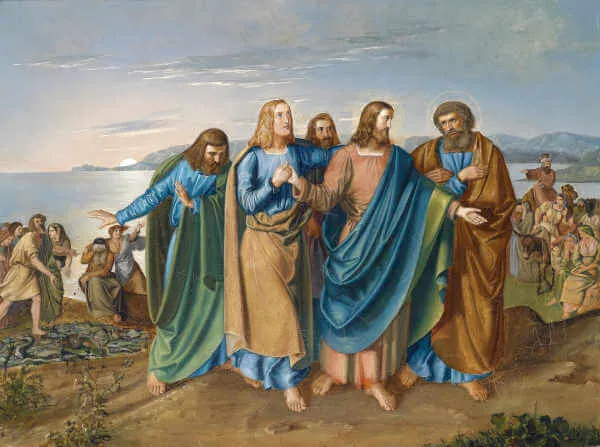
Jesus said, “Amen, I say to you, there is no one who has given up house or brothers or sisters or mother or father or children or lands for my sake and for the sake of the Gospel who will not receive a hundred times more…”

Reflection:

Jesus’ statement above is in response to Peter who said to Him, “We have given up everything and followed you.” It was as if Peter were patting himself on the back, attempting to highlight just how much he and the other disciples had sacrificed to follow Jesus. And it was true, they did give up everything of their former life. They left home, their occupation, their relationships and everything that had been part of their daily established life in response to the call of Jesus. They were truly all in.

In hearing this statement from Peter, Jesus does not give the expected response. He doesn’t say to Peter, “Yes, you have, that’s very impressive Peter. Good job and thank you!” Instead, Jesus immediately explains to Peter that the sacrifice he and the others have made is worth it. Their unwavering commitment to follow Jesus would be repaid with gifts beyond their imagination. Thus, Jesus was saying that the gifts that He would bestow upon them would be exponentially greater than every sacrifice they made.

This was not a belittling of Peter’s self-sacrifice; rather, it was a form of encouragement by Jesus. He was encouraging Peter, and the other disciples, to have full confidence in their decision to follow Him. Their sacrifice would yield a hundredfold return. That is truly a good investment.

It can be tempting for us all, at times, to feel as though God asks too much of us. It’s true that God asks much of us. He asks everything from us. He asks for the complete and total gift of our lives to Him. He calls us to abandon all selfishness and to dedicate ourselves to His holy will without exception. But if we understand the reward of our self-giving, then the sacrifices we make will pale in comparison to the reward.

Reflect, today, upon whether or not you can say those words with the Apostle, Saint Peter: “Lord, I have given up everything to follow You.” Have you truly given your life completely to Christ Jesus? Are there things that you still hold back, not wanting to “sacrifice” for our Lord? Ponder those words of Peter and allow yourself to see the areas of your life you still need to surrender over to Jesus. And as you do so, allow the reward promised by our Lord to motivate you to the point that you truly hold nothing back and truly have given up everything to follow His holy will.

Source: https://catholic-daily-reflections.com/2024/05/27/an-exchange-of-gifts-3/

Mark 10:29-30 Read More »

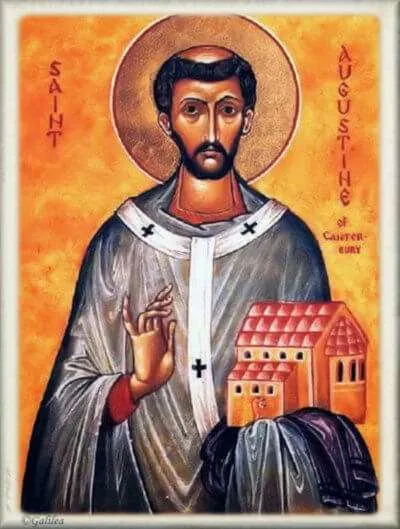
Saint Augustine of Canterbury, Bishop

Early Sixth Century–604; Patron Saint of England Pre-Congregation canonization

Shortly after the death and resurrection of our Lord, the Roman Empire launched its conquest of Britain. As the Romans slowly accepted Christianity, the faith began to trickle into pagan Britain. Once the empire legalized Christianity in the fourth century, the faith put down deeper roots in the conquered territory. In fact, one of the Church’s greatest saints, Saint Patrick of Ireland, was born and raised in Roman-Britain. In 410, Rome was sacked, the Roman Empire began to fall, and Roman troops were withdrawn from Britain. Soon after, the Angles and Saxons conquered the Britons, dividing their lands into nine smaller Anglo-Saxon kingdoms, all of which practiced some form of Germanic paganism. By the end of the sixth century, the young Christian nation had become a pagan one. The remaining British Christians retreated into small communities in the southeast part of what is now England and slowly became isolated from the Roman Church.

Around the year 595, Pope Saint Gregory the Great was said to have been walking through a Roman market when he came upon some young boys being sold as slaves. Out of concern for them, he inquired where the boys were from. “Angles from the isle of England” he was told. “Ah, they are angels!” he exclaimed. Seeing these pagan boys being sold as slaves moved the pope to take action. He wanted them Christian, and he wanted all of Anglo-Saxon England to be Christian. But how?

The pope’s first plan was to buy as many of the boys as possible, send them to monasteries where they could learn the Catholic faith, and if some were found worthy, ordain them as priests and send them back to their homeland to share the faith. However, this was a long-term plan, and the pope began to receive reports that the English were ready to convert if they only had missionaries to teach them the faith. Thus, the pope moved to plan B.

Prior to becoming the pope, Gregory was a Benedictine monk and converted his family home into the Abbey of Saint Andrew. At the time he became pope, Father Augustine was the abbey’s prior. Turning to the monks, Pope Gregory asked them to become missionaries to Anglo-Saxon England. Father Augustine was put in charge of the mission, and thirty to forty other monks were chosen to travel with him. Nothing is known about Augustine before his mission to England, but he was most likely born and raised in Rome in a noble family. Though his date of birth is unknown, he would have been advanced in years when he set out on his mission.

The monks’ objective was to go to King Æthelberht of the Kingdom of Kent, southeast England. King Æthelberht’s wife was a Christian and the daughter of Frankish King Charibert I. Before giving his daughter to Æthelberht in marriage, Charibert obtained Æthelberht’s agreement to allow his daughter to freely practice her Christian faith.   Æthelberht’s wife brought a Catholic bishop to Kent with her to minister to her needs. This arrangement clearly softened King Æthelberht’s heart toward Christians.

Father Augustine and his entourage of monks set out from Rome, first stopping in the Frankish kingdom. They brought letters from the pope which enabled them to attain translators and supplies from the Frankish nobility. Some of the monks became fearful of continuing their journey because of stories they heard about the hostility of the Anglo-Saxons. As a result, Father Augustine returned to Rome to share the monks’ concerns with the pope. Pope Gregory listened to the concerns and reassured Father Augustine that God had willed their mission. The pope then named Father Augustine abbot of the monks, extending his authority over them, and sent him on his way. Encouraged by the pope, Abbot Augustine and the monks set out for the Kingdom of Kent. After the monks crossed the English Channel, King Æthelberht went out to meet them, welcoming them with open arms. He offered them a ruined church and gave them permission to convert as many people as they could. In less than a year, the king himself converted and was baptized. Elated with the news, Pope Gregory named Abbot Augustine as the first Archbishop of Canterbury. After receiving episcopal ordination in Arles, France, Bishop Augustine returned to Kent and enthusiastically continued his mission. On Christmas Day 597, Bishop Augustine baptized nearly 10,000 Anglo-Saxons.

For the next nine years, Bishop Augustine worked tirelessly to establish the Church among the Anglo-Saxons. With the help of the king, dioceses were created and many conversions followed. After wide-ranging consultations with the pope, Bishop Augustine carefully set forth his plan of evangelization. He also tried to reach out to the oppressed Britons who were still Christian but had retreated from formal union with the pope. These British Christians were unhappy that so much attention was given to the evangelization of their Anglo-Saxon conquerors, and Bishop Augustine had little success in gaining their support.

God performed many miracles through Bishop Augustine. When the pope heard about the many miracles, he wrote to Bishop Augustine, warning him not to allow those miracles to feed his pride. “I know, dearly beloved brother, that Almighty God, by means of you, shows forth great miracles…Therefore, you need to rejoice with fear, and fear with joy concerning that heavenly gift; for you will rejoice because the souls of the English are by outward miracles drawn to inward grace; but you will fear, lest, amidst the wonders that are wrought, the weak mind may be puffed up with self-esteem…” After ten years of ministry in England, Bishop Augustine knew his death was near. He prepared for his demise by choosing his successor and ordaining him a bishop. At the time of Augustine’s death, two other kings had received baptism, and after his death, the missionary activity continued. By the end of the seventh century, after a series of ups and downs, the kings of each of the kingdoms of Anglo-Saxon England converted, and their people followed.

Saint Augustine of Caterbury could have never imagined that he would one day become the patron saint of England. He was a holy monk, living a life of stability and prayer. But God called and he responded. Through his generosity and courage, countless conversions took place. Ponder your own generosity toward God. Are you ready and willing to say “Yes” to anything and everything God asks of you? Say “Yes” to Him today, and allow God the freedom to use you as He wills.

Source: https://mycatholic.life/saints/saints-of-the-liturgical-year/may-27—saint-augustine-austin-of-canterbury-bishop/

Saint Augustine of Canterbury, Bishop Read More »