2024

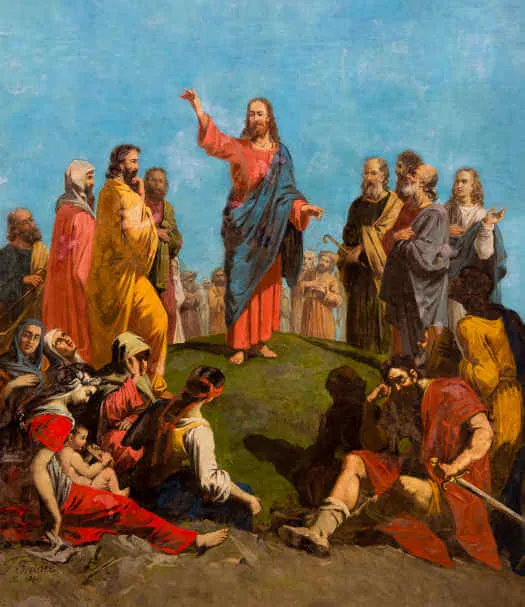
Mark 12:18-20

The Wisdom of God

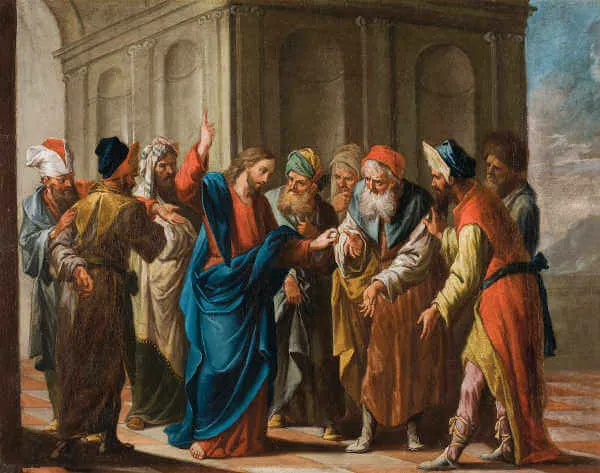
Some Sadducees, who say there is no resurrection, came to Jesus and put this question to him, saying, “Teacher, Moses wrote for us, ‘If someone’s brother dies, leaving a wife but no child, his brother must take the wife and raise up descendants for his brother.’ Now there were seven brothers…”

Reflection:

And these Sadducees then go on to present to Jesus a long and unlikely hypothetical scenario in which this woman eventually married all seven brothers after each one died. And at the conclusion of their hypothetical situation, the Sadducees ask Jesus, “At the resurrection when they arise whose wife will she be?” Of course, Jesus offers them the correct answer and then also states something interesting. He tells the Sadducees that they “are greatly misled.” Just prior to this conversation with the Sadducees, the Pharisees had presented their own question to Jesus in an attempt to trap Him. The difference seems to be that the Sadducees had more sincerity in their pursuit of the truth whereas the Pharisees were more obsessed with their own authority and power.

The Sadducees were considered the more traditional of the religious leaders, in that they accepted only the Torah, the first five books of the Old Testament, as authentically revealed. They also did not accept the afterlife or the resurrection of the dead because they believed that the Torah did not explicitly teach those things. The Pharisees not only accepted the Torah but also the rest of what is contained in the Old Testament. The Pharisees also accepted what was referred to as the “tradition of the elders,” which meant that they paid much attention to the scrupulous multiplication of laws and regulations that other Pharisees devised, and they sought to impose those man-made laws upon the people.

In this Gospel passage, the problem with the Sadducees seems to be scrupulosity and rigidity in their approach to the faith. They clearly relied upon human reason, and they applied their human reason to the Torah. And though human reason and logical deduction are helpful and necessary in life, they attempted to solve every matter of faith by their own effort by narrowly and rigidly interpreting the Torah. They did not allow themselves to be open to the deeper wisdom of God that floods one’s human reason when one is attentive to divine inspiration and revelation. Instead, they were black and white in all of their deductions and practices. This rigidity left them “greatly misled.”

In our own lives, we can also become greatly misled when we use the gift of our human reason in a rigid and narrow way. We must never overly simplify the faith, and we must never think that we will easily be able to arrive at all the answers by our own effort. Our constant goal must be to allow our minds to become fully immersed in the deepest wisdom of God and all that He has revealed. The teachings of the Church will guide us, keeping us on the straight path, but it will be the voice of God, speaking to our minds in a real and personal way, that will help us to understand the depth and breadth of God’s Will, His Truth, and Wisdom.

Reflect, today, upon any tendency you have to be like these Sadducees. Are you rigid? Or narrow minded? Do you allow yourself to be misled into thinking you have all the answers? If so, seek humility. Humble yourself before the awesome mysteries of Heaven. Use your mind to probe the truths that God has revealed and be ready to be drawn deeper and deeper into the life of God Himself.

Source: https://catholic-daily-reflections.com/2024/06/04/the-wisdom-of-god-3/
Mark 12:18-20 Read More »

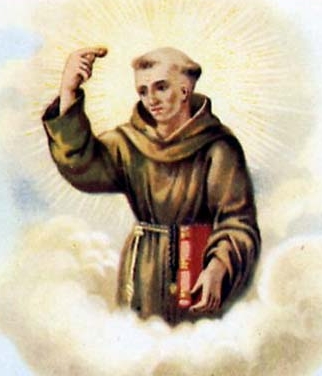
Saint Pacificus of Cerano

Profile

Pacificus was orphaned very young. He was educated at the Benedictine monastery in Novara, Italy. He joined the Franciscan Friars Minor in 1445. He received a doctorate from the Sorbonne in Paris, France, and was considered one of the most learned men of his day. Pacificus was ordained in 1452 and preached missions throughout Italy from 1452 through 1471. He was sent by Pope Sixtus IV to Sardinia as an evangelist and reformer. He founded a monastery in Vigevano, Italy and used it as a base for his teaching and preaching. In 1480, Pacificus was sent to Sardinia to preach the Franciscan Crusade to Turkey.

Born

  • c.1424 at Cerano, Novara, Lombardy, Italy

Died

  • 14 June 1482 in Sassari, Sardinia, Italy of natural causes
    relics at Cerano, Italy

Beatified

  • 7 July 1745 by Pope Benedict XIV (cultus confirmed)

Patronage

  • Cerano, Italy

Source: https://catholicsaints.info/saint-pacificus-of-cerano/ 

Saint Pacificus of Cerano Read More »

Mark 12:14-15

Combating the Deceptions of the World

“Is it lawful to pay the census tax to Caesar or not? Should we pay or should we not pay?” Knowing their hypocrisy he said to them, “Why are you testing me? Bring me a denarius to look at.”

Reflection:

These Pharisees and Herodians were sent to trap Jesus in His speech. These men were very politically minded and loved to pick sides and find fault with others. They were self-righteous and cared little about the salvation of souls. So they came to Jesus with what appeared to be an innocent question. They appear to presume that Jesus would voice opposition to paying the census tax to Caesar, and, if He did, they were ready to report Him to the civil authorities. They didn’t care about the truth; they only cared about trapping our divine Lord. When they brought the Roman coin to Jesus with the image of Caesar on it, Jesus spoke that profoundly wise line, “Repay to Caesar what belongs to Caesar and to God what belongs to God.”

Clearly, if these hypocritical religious leaders would have come to Jesus with humility and sincerity, Jesus would have responded to them much differently. But because they came only to trap, twist and destroy our Lord, Jesus puts them in their place with an act of divine wisdom. He doesn’t show support for paying the census tax, nor does He speak against it. Therefore, this Gospel passage ends with the line: “They were utterly amazed at him.” “Amazement” is the right response. Therefore, in a sense, we can learn from these hypocritical religious leaders. Whenever we come face-to-face with the profound wisdom of God, we should experience awe and holy amazement.

Of course, the amazement they experienced was on account of Jesus thwarting their evil trap. But even though that is the case, we can learn from this that the wisdom of God can never be outdone. God’s wisdom silences the foolishness of the age and reveals the hidden malice behind that evil.

Have you ever been confronted by the trickery of the secular “know-it-alls” of our age. Have you ever been challenged by another, had your faith directly attacked, or your moral convictions called into question? Most likely, if you have chosen to live your faith openly and with confidence, you may have felt the attack of another. For those who lack a deep faith and a clear gift of divine wisdom, such trickery can cause confusion and anxiety. You may find you do not know how to respond and feel trapped by the erroneous “wisdom” of the age. In that case, what do you do? The only answer to the false doctrines and deceptions we will all encounter within the growingly secular and atheist world is the answer that comes from divine wisdom. By ourselves, none of us is wise enough to combat these errors. Therefore, our only recourse is to continually turn to the wisdom of God.

We turn to the wisdom of God through prayer and sacred study. Our prayer opens our minds to the clear voice of God Who speaks pure truth. And sacred study, especially of the Scripture, the teachings of the Church and the lives of the saints, will help to clarify God’s voice and dispel the confusion the world tries to throw at us. In the end, if we are not immersing our minds in the true wisdom of God, we will be unprepared for that which we encounter within the world.

Reflect, today, upon your need to be filled with divine wisdom so as to navigate the trickery and foolishness of the world. Acknowledge that you are not wise enough on your own to cut through the confusion of life. Pray for the gift of wisdom and allow our Lord to bestow it upon you.

Source: https://catholic-daily-reflections.com/2024/06/03/combating-the-deceptions-of-the-world-3/

Mark 12:14-15 Read More »

Saint Charles Lwanga and Companions, Martyrs

1860–1886; Patron Saints of African youth, converts, and torture victims; Canonized by Pope Paul VI on October 18, 1964

Every year, millions of pilgrims from Kenya, Tanzania, Rwanda, Uganda, Nigeria, and other African nations gather at the Namugongo Martyrs’ Shrine in Uganda for what has become one of the largest annual gatherings of Catholics in the world. The celebration is held at the site of the martyrdom of Saint Charles Lwanga and his twenty-one young companions on June 3 each year, the day that most of the boys were killed.

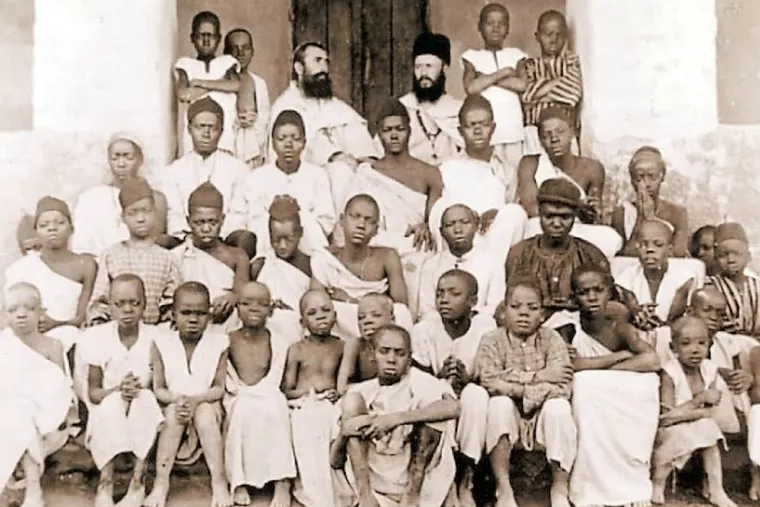
In 1879, the White Fathers, a French Roman Catholic society of apostolic life founded in 1868, arrived at the court of King Mutesa I of Buganda, modern-day Uganda, and received permission to establish a mission to teach the Catholic faith. At that time, Catholics, Protestants, and Muslims were all seeking converts in the Kingdom of Buganda. This was not popular among the native pagan priests. However, King Mutesa, who had eighty-seven wives and ninety-eight children, was tolerant of all three faiths. When King Mutesa died in 1884, one of his sons from his tenth wife, Mwanga II, took up the throne at the age of sixteen. Though initially tolerant, Mwanga eventually became convinced that the Christians were a threat to his throne and his sexually perverted way of life.

It was common practice for the kings of Buganda to have many young boys in their court, known as “pages,” to carry out the daily duties of the king’s household. Among the expectations that King Mwanga had of these young boys, some as young as thirteen, was consent to his sexual advances. When some of the boys refused to consent on the grounds that they were Christian and the king’s requests were immoral, the king became infuriated and feared that Christians would overtake his kingdom and become a threat to his throne.

On October 29, 1885, Anglican bishop James Harrington and some of his companions were murdered by King Mwanga after being accused of plotting against the kingdom. After their martyrdom, twenty-five-year-old Joseph Mukasa Balikuddembe, the head of the king’s household, rebuked the king for his actions. Joseph was a Catholic catechist responsible for teaching many of the boys in the king’s court the Catholic faith. On November 5, 1885, the king beheaded Joseph and had his Catholic followers arrested. He then appointed the catechumen Charles Lwanga as head of his household. Charles knew he might be next, so he sought and received baptism by the White Fathers that same day, along with many of the boys he had been catechizing.

On May 25, 1886, King Mwanga murdered two more Christian members of his court. Catechist Charles Lwanga, fearing for the eternal salvation of the boys who were still catechumens, baptized the rest of the boys himself. Later that day, the king called all the members of his household together and ordered them all to renounce the Christian faith or face torture and death. Charles courageously professed his faith in Christ, and many of the boys did so with him. The outraged king ordered their execution to take place at Namugongo, the traditional site for public executions.

Namugongo was a two-day journey on foot. As the boys traveled under the cruel direction of the executioners, many of them were beaten as they walked, bound together with ropes. Three boys were killed along the way, one being slain by his own father for refusing to renounce the faith. After reaching the site of execution on May 27, the boys waited seven days as the preparations were made. During that time, they were starved, beaten, and bound hand and foot, awaiting their death. Charles was cruelly and painfully killed first. His executioners lit only a small fire under his feet so he would suffer longer. It is reported that Charles said to his executioners, “You’re burning me, but it’s like water you’re pouring to wash me. Please repent and become a Christian like me.” As the flames consumed him, just before he died, Charles cried out in imitation of our Lord, “My God! My God!” Soon after, the rest of the boys were tortured and killed in the same manner. They died praying aloud the Lord’s Prayer. In all, twenty-two young men and boys were martyred and later declared saints in the Roman Catholic Church. Additionally, twenty-three Anglicans were martyred with them.

At the time of their martyrdoms, twenty-six-year-old Charles Lwanga and his young companions never could have imagined that one day, at the place of their execution, millions of people would gather every year to honor them and to seek their intercession. King Mwanga initially thought he could stamp out Christianity by killing one Christian. That only inspired others to convert. After Mwanga killed dozens more, the flames that burned them turned into flames of faith that inspired countless others. Uganda and many other African countries are Christian countries today, thanks in large part to the witness of faith given by these young men and boys. Romans 8:28 says, “We know that all things work for good for those who love God, who are called according to his purpose.“ In the case of the Ugandan Martyrs, their deaths worked for the good. Their burning flesh became a sweet odor that covered that pagan nation, drawing many to faith in Christ.

As we honor these heroic young martyrs, call to mind the truth that God can use every evil and suffering you endure for good when you unite them to the sufferings of Christ. Allow these martyrs, and the aftermath of their deaths, to inspire you and to convince you that all things do work for the good when we love God and embrace His holy will.

Source: https://mycatholic.life/saints/saints-of-the-liturgical-year/june-3—saints-charles-lwanga-and-companions-martyrs/

Saint Charles Lwanga and Companions, Martyrs Read More »

Mark 12:1-3

Exercising Authority

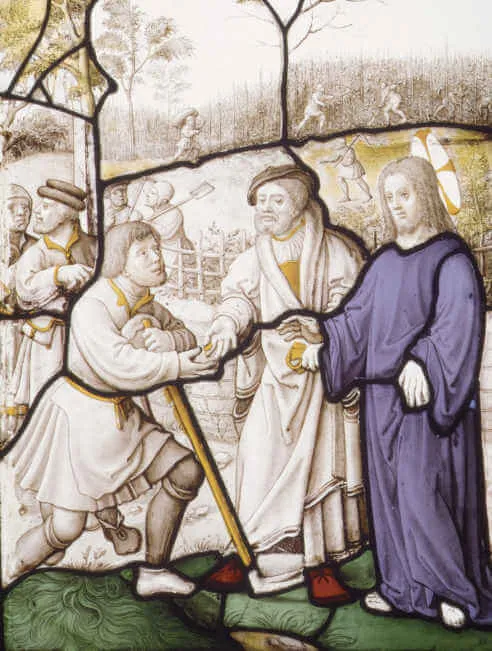
Jesus began to speak to the chief priests, the scribes, and the elders in parables. “A man planted a vineyard, put a hedge around it, dug a wine press, and built a tower. Then he leased it to tenant farmers and left on a journey. At the proper time he sent a servant to the tenants to obtain from them some of the produce of the vineyard. But they seized him, beat him, and sent him away empty-handed.” 

Reflection:

This was the first of “many” servants the owner of the vineyard sent to the tenants to obtain some of the produce of the vineyard. Some of the servants were mistreated, some beaten and others were killed. In the end, the owner sent his son. The tenants killed him, thinking that they would inherit the vineyard if the son were dead.

The context of this parable is important. Jesus had just entered Jerusalem for the beginning of the first Holy Week, which would ultimately end with His death and resurrection. The day before, Jesus had cleansed the Temple of the money changers. The chief priests, scribes and elders were outraged and began to plot His death. Jesus especially addressed this parable to them.

To understand this parable, you need to understand who represents whom. The religious leaders of Israel were the tenants, the vineyard was the Jewish nation, God the Father was the man who planted the vineyard, the many servants sent to gather the produce were the prophets of old, and Jesus was the Beloved Son Who was killed. The parable concludes by saying that the owner of the vineyard (God the Father) will put the tenants to death and give the vineyard to others. In other words, the scribes, Pharisees, chief priests and elders would soon have their religious authority taken away from them, and it would be given to the Apostles and their successors. This parable, therefore, presents us with a summary of the way the Church was formed. 

It’s helpful to note that the religious leaders of the time knew that Jesus addressed this parable to them, but they failed to heed the lesson. Ideally, if they were open to the gift of faith, they would have realized that they were attempting to steal the “vineyard” from God. They were attempting to control and manipulate the Kingdom of Israel, to make it into their own image, and to disregard the will of God Who established it.

This parable is especially important for anyone who exercises some form of holy authority. Parents exercise authority within the home. Bishops and priests exercise authority within the Church. And we all exercise a certain spiritual authority when we seek to fulfill our unique mission in life. The lesson from this parable is simple: don’t abuse your authority. Don’t exercise authority according to your own will; exercise it with humility only in accord with God’s will. Every leader, always and everywhere, must lead according to the mind and will of God. If they fail, they will suffer the consequences.

Reflect, today, upon any way that God has entrusted you with a spiritual duty to fulfill His mission in this world. When a duty of leadership is entrusted to a person, the leader is also entrusted with the spiritual authority to fulfill that duty in accord with the mind and will of God. This requires constant humility so that it is only God’s will that is fulfilled. Seek to exercise all authority in accord with the mind and will of God, and the vineyard entrusted to your care will bear an abundance of good fruit.

Source: https://catholic-daily-reflections.com/2024/06/02/exercising-authority-2/

Mark 12:1-3 Read More »

The Solemnity of the Most Holy Body and Blood of Christ, Corpus Christi

First Reading Exodus 24:3-8

When Moses came to the people
and related all the words and ordinances of the LORD,
they all answered with one voice,
“We will do everything that the LORD has told us.”
Moses then wrote down all the words of the LORD and,
rising early the next day,
he erected at the foot of the mountain an altar
and twelve pillars for the twelve tribes of Israel.
Then, having sent certain young men of the Israelites
to offer holocausts and sacrifice young bulls
as peace offerings to the LORD,
Moses took half of the blood and put it in large bowls;
the other half he splashed on the altar.
Taking the book of the covenant, he read it aloud to the people,
who answered, “All that the LORD has said, we will heed and do.”
Then he took the blood and sprinkled it on the people, saying,
“This is the blood of the covenant
that the LORD has made with you
in accordance with all these words of his.”

Responsorial Psalm Psalms 116:12-13, 15-16, 17-18

R. (13) I will take the cup of salvation, and call on the name of the Lord.
or:
R. Alleluia.

How shall I make a return to the LORD
for all the good he has done for me?
The cup of salvation I will take up,
and I will call upon the name of the LORD.

R. I will take the cup of salvation, and call on the name of the Lord.
or:
R. Alleluia.

Precious in the eyes of the LORD
is the death of his faithful ones.
I am your servant, the son of your handmaid;
you have loosed my bonds.

R. I will take the cup of salvation, and call on the name of the Lord.
or:
R. Alleluia.

To you will I offer sacrifice of thanksgiving,
and I will call upon the name of the LORD.
My vows to the LORD I will pay
in the presence of all his people.

R. I will take the cup of salvation, and call on the name of the Lord.
or:
R. Alleluia.

Reading 2 Hebrews 9:11-15

Brothers and sisters:
When Christ came as high priest
of the good things that have come to be,
passing through the greater and more perfect tabernacle
not made by hands, that is, not belonging to this creation,
he entered once for all into the sanctuary,
not with the blood of goats and calves
but with his own blood, thus obtaining eternal redemption.
For if the blood of goats and bulls
and the sprinkling of a heifer’s ashes
can sanctify those who are defiled
so that their flesh is cleansed,
how much more will the blood of Christ,
who through the eternal Spirit offered himself unblemished to God,
cleanse our consciences from dead works
to worship the living God.

For this reason he is mediator of a new covenant:
since a death has taken place for deliverance
from transgressions under the first covenant,
those who are called may receive the promised eternal inheritance.

Sequence

Lauda Sion

Laud, O Zion, your salvation,
Laud with hymns of exultation,
Christ, your king and shepherd true:

Bring him all the praise you know,
He is more than you bestow.
Never can you reach his due.

Special theme for glad thanksgiving
Is the quick’ning and the living
Bread today before you set:

From his hands of old partaken,
As we know, by faith unshaken,
Where the Twelve at supper met.

Full and clear ring out your chanting,
Joy nor sweetest grace be wanting,
From your heart let praises burst:

For today the feast is holden,
When the institution olden
Of that supper was rehearsed.

Here the new law’s new oblation,
By the new king’s revelation,
Ends the form of ancient rite:

Now the new the old effaces,
Truth away the shadow chases,
Light dispels the gloom of night.

What he did at supper seated,
Christ ordained to be repeated,
His memorial ne’er to cease:

And his rule for guidance taking,
Bread and wine we hallow, making
Thus our sacrifice of peace.

This the truth each Christian learns,
Bread into his flesh he turns,
To his precious blood the wine:

Sight has fail’d, nor thought conceives,
But a dauntless faith believes,
Resting on a pow’r divine.

Here beneath these signs are hidden
Priceless things to sense forbidden;
Signs, not things are all we see:

Blood is poured and flesh is broken,
Yet in either wondrous token
Christ entire we know to be.

Whoso of this food partakes,
Does not rend the Lord nor breaks;
Christ is whole to all that taste:

Thousands are, as one, receivers,
One, as thousands of believers,
Eats of him who cannot waste.

Bad and good the feast are sharing,
Of what divers dooms preparing,
Endless death, or endless life.

Life to these, to those damnation,
See how like participation
Is with unlike issues rife.

When the sacrament is broken,
Doubt not, but believe ‘tis spoken,
That each sever’d outward token
doth the very whole contain.

Nought the precious gift divides,
Breaking but the sign betides
Jesus still the same abides,
still unbroken does remain.

The shorter form of the sequence begins here.

Lo! the angel’s food is given
To the pilgrim who has striven;
see the children’s bread from heaven,
which on dogs may not be spent.

Truth the ancient types fulfilling,
Isaac bound, a victim willing,
Paschal lamb, its lifeblood spilling,
manna to the fathers sent.

Very bread, good shepherd, tend us,
Jesu, of your love befriend us,
You refresh us, you defend us,
Your eternal goodness send us
In the land of life to see.

You who all things can and know,
Who on earth such food bestow,
Grant us with your saints, though lowest,
Where the heav’nly feast you show,
Fellow heirs and guests to be. Amen. Alleluia.

Alleluia John 6:51

R. Alleluia, alleluia.

I am the living bread that came down from heaven,
says the Lord;
whoever eats this bread will live forever.

R. Alleluia, alleluia.

Gospel Mark 14:12-16, 22-26

On the first day of the Feast of Unleavened Bread,
when they sacrificed the Passover lamb,
Jesus’ disciples said to him,
“Where do you want us to go
and prepare for you to eat the Passover?”
He sent two of his disciples and said to them,
“Go into the city and a man will meet you,
carrying a jar of water.
Follow him.
Wherever he enters, say to the master of the house,
‘The Teacher says, “Where is my guest room
where I may eat the Passover with my disciples?”‘
Then he will show you a large upper room furnished and ready.
Make the preparations for us there.”
The disciples then went off, entered the city,
and found it just as he had told them;
and they prepared the Passover.

While they were eating,
he took bread, said the blessing,
broke it, gave it to them, and said,
“Take it; this is my body.”
Then he took a cup, gave thanks, and gave it to them,
and they all drank from it.
He said to them,
“This is my blood of the covenant,
which will be shed for many.
Amen, I say to you,
I shall not drink again the fruit of the vine
until the day when I drink it new in the kingdom of God.”
Then, after singing a hymn,
they went out to the Mount of Olives.

Source: https://bible.usccb.org/bible/readings/060224.cfm

The Solemnity of the Most Holy Body and Blood of Christ, Corpus Christi Read More »

Solemnity of Corpus Christi

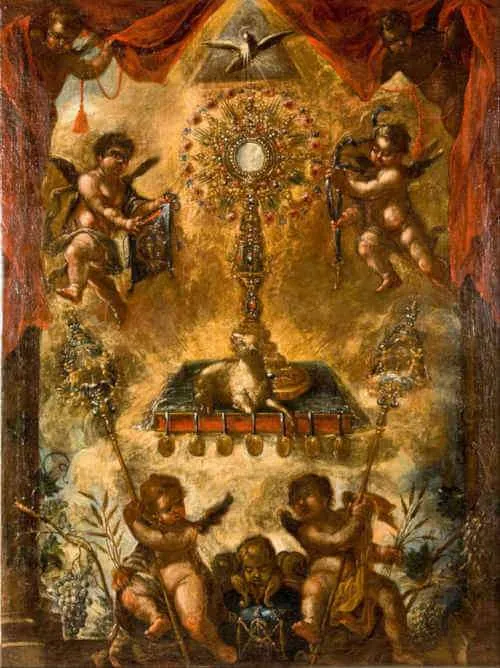
Of the greatest and most valuable treasures one could obtain in this world, nothing is more precious, more sacred, and more valuable than the Most Holy Body and Blood, Soul and Divinity of Jesus Christ, our Sovereign and Eucharistic Lord. Millions, billions, or even hundreds of trillions of dollars do not come close to the infinite value and transforming power of the Body and Blood of Christ. No amount of earthly wealth can buy happiness, but the Eucharist bestows it freely. No amount of money can purchase Heaven, but the Eucharist transforms you into a member of the Body of Christ Whom you consume, leading you to Heaven. At the end of our lives, when we stand before the Just Judge, we will realize the transforming power of this Gift. Those who adored Him and received Him faithfully in Communion will be forever grateful they did.

Human dignity demands that we show respect to one another, reverencing the presence of God in each person as a living tabernacle of the Lord. However, we do not bow down before God’s presence in others, nor do we kneel before them in adoration and worship. In this world, the only One Whom we worship and adore, in hidden yet physical form, is our Lord Who is fully present in the Eucharist. The Eucharist is not only a fraternal meal we share with one another, it’s a communion with God Himself that unites us with Him. It is that union with God that also unites us with every other person who is united to God through the sharing of the Most Holy Eucharist.

The Solemnity of Corpus Christi originated with a mystic named Saint Juliana of Cornillon. She was born near Liège, Belgium around the year 1191. At the age of five, she and her sister were orphaned and entrusted to the care of Augustinian nuns. Within that convent, Juliana grew in her faith, participated in Eucharistic adoration, and frequented Holy Communion. She eventually joined the Augustinians and became a nun herself.

At the age of sixteen, she had a mystical vision during Eucharistic adoration in which she saw the moon with a dark stripe. By divine intuition, she understood that the moon symbolized the Church’s life on earth, and the dark stripe symbolized the absence of a feast that was specifically dedicated to the Body and Blood of Christ. In the convent, she had the same vision several more times but kept it to herself for twenty years.

Around the age of thirty-six, she shared her vision with two friends, one a local hermit and the other a fellow nun. Together, these holy women grew deep in their love of Christ in the Eucharist, especially adoring His hidden presence and receiving Him frequently in Holy Communion. After sharing her vision with the bishop, he reluctantly approved a local annual feast in honor of the Blessed Sacrament, and some other bishops followed. However, as word spread about Juliana’s visions, her superior and some clergy opposed her. She had to leave the convent, taking refuge in various Cistercian monasteries for ten years.

In 1258, around the age of sixty-seven, Juliana was adoring Jesus in the Most Blessed Sacrament in her cell when she died and was taken into the unveiled presence of God in Heaven. Prior to her death, the local Archdeacon in Lièges, Jacques Pantaléon of Troyes, had become familiar with Juliana and believed that her visions were from God and that a universal feast of Corpus Christi was God’s will. In 1261, Archdeacon Jacques Pantaléon was elected pope and took the name Pope Urban IV.

In 1263, a Eucharistic miracle took place in Bolsena, Italy, about ten miles from where Pope Urban was residing in Orvieto in the Papal States, modern-day Italy. A German priest named Father Peter of Prague stopped at the church in Bolsena to offer Mass during a pilgrimage at the tomb of Saint Christina, a fourth-century martyr. By his own admission, he was struggling to believe in the true presence of Christ in the Eucharist. During the consecration, the host he was holding began to bleed and flow onto his hands and the linen corporal on the altar. He immediately went to Orvieto to reveal the miracle and his lack of faith to Pope Urban. Pope Urban absolved him and then sent a delegation to investigate the miracle. They brought the corporal back to the cathedral in Orvieto with great solemnity where it remains enshrined today.

In 1264, Pope Urban instituted the universal Solemnity of Corpus Christi and asked the renowned theologian Father Thomas Aquinas to compose the liturgical texts for the feast. Among the texts the future saint and doctor of the Church composed are the revered and frequently sung hymns, “Pange Lingua,” “Tantum Ergo,” “Panis Angelicus,” and “O Salutaris Hostia.” The Thursday after the Solemnity of the Most Holy Trinity was chosen for the annual feast in honor of the day that the Eucharist was instituted.

After the death of Pope Urban IV, the Solemnity of Corpus Christi was removed from the universal calendar for about fifty-three years until Pope John XXII added it back in 1317. Since that time, the solemnity has grown and become an important annual celebration that often includes Eucharistic processions, adoration, and Mass. In many locations where it is not a holy day of obligation, the solemnity is moved to the following Sunday so as to extend the celebration to the entire people of God. In 1869, Pope Pius IX canonized Saint Juliana of Lièges, adding even greater credence to her miraculous visions and solidifying the importance of this holy solemnity.

As we celebrate the Solemnity of Corpus Christi, spend time pondering the profound mystery of the true presence of Christ in the Eucharist. As we kneel before Him, we truly kneel before His throne in Heaven, despite the reality being veiled from our eyes. As we consume the Blessed Sacrament, we truly consume Christ Himself—Body and Blood, Soul and Divinity—and receive Him into our souls. Though we might not feel Him with our bodily senses, we must allow our spiritual sense of faith to grow so that our love for Him in this Most Precious Gift exponentially increases. Let’s conclude with the “Tantum Ergo,” which is taken from the last two verses of the beautiful hymn of Saint Thomas Aquinas, the “Pange Lingua:”

Down in adoration falling, Lo! the sacred Host we hail; Lo! o’er ancient forms departing, newer rites of grace prevail; faith for all defects supplying, where the feeble senses fail. To the everlasting Father, and the Son who reigns on high, with the Holy Ghost proceeding forth from Each eternally, be salvation, honor, blessing, might and endless majesty. Amen. Alleluia.

Source: https://mycatholic.life/saints/saints-of-the-liturgical-year/corpus-christi—body-and-blood-of-christ–solemnity/

Solemnity of Corpus Christi Read More »

Saints Marcellinus and Peter, Martyrs

Mid-Third Century–c. 304; Invoked by those enduring hardships in life; Pre-Congregation canonization

On February 23, 303, Roman Emperor Diocletian issued an edict that initiated a fierce persecution of Christians. The edict mandated the destruction of Christian churches and scriptures, revoked all legal rights of Christians, and called for the confiscation of their property. In 304, Diocletian ordered the arrest of clergy, forcing them to offer sacrifices to the Roman gods or face imprisonment, torture, and death. These abuses continued under Diocletian and his co-emperors until 311 when Galerius issued an edict of toleration toward Christians. The exact number of Christians who suffered martyrdom during this period is unknown, but it might have been in the thousands. Today’s saints were among the first Christians to receive the crown of martyrdom during that period.

There is very little information available about Marcellinus and Peter. It is believed that both were Roman clergy, with Marcellinus being a priest and Peter an exorcist. Both are included in the Roman Canon of the Mass, alongside other early martyrs and saints.

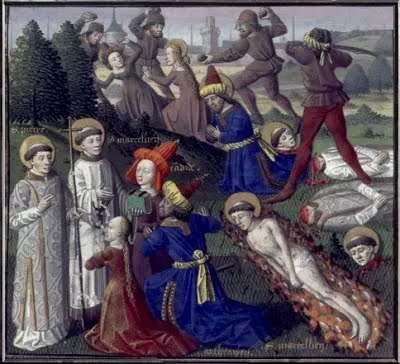
The little we know about these martyrs comes to us from Saint Damasus I, who served as pope from 366–384. As a child, Damasus heard the story of the martyrdom of Saints Marcellinus and Peter from the mouth of one of the executioners who later became a Christian. After their arrest, Marcellinus and Peter were likely given a sham trial, found guilty, and then offered the chance to gain their freedom by burning incense to the Roman gods. They refused. While in prison, the two men preached the Gospel to other prisoners and jailers. To put an end to their evangelization, orders were given to take them to a secret location in a nearby forest, where they were ordered to dig their graves. They did so joyfully, and were then beheaded and buried in that secret location to prevent other Christians from venerating their tombs.

After Marcellinus’ and Peter’s deaths, their stories became well known. Some time later, through divine providence, two holy women named Lucilla and Firmina were directed to the burial site. They took the saints’ bodies and buried them in what is today called the Catacombs of Marcellinus and Peter. These catacombs hold thousands of graves, primarily of Christians, and once also served as a secret place of Christian worship.

In 313, Emperor Constantine the Great issued the Edict of Milan, legalizing Christianity and calling for benevolent treatment of Christians. As part of his efforts to help Christianity grow, Constantine sent his mother, Saint Helena, on a journey to the Holy Land to bring back relics of Christ’s Passion. Constantine also built many churches in various holy places. One of those churches is the Basilica of Saints Marcellinus and Peter, built over their catacombs. When Saint Helena died, Constantine built a mausoleum for her next to the basilica, which became her resting place for centuries. As a result, devotion to Saints Marcillinus and Peter became widespread.

At the start of the ninth century, a German monk named Eginhard, who had previously been a secretary to Emperor Charlemagne, requested relics of martyrs from Pope Gregory IV. In response, Pope Gregory sent the relics of Saints Marcellinus and Peter, and a monastery was constructed in their honor in Seligenstadt. After they were buried there, many miracles were said to have taken place.

Although we know little about the details of their lives, the veneration of these early saints has been widespread, and their names continue to be invoked today every time the Roman Canon is used in the Mass. What is certain is that the courage of these saints in the face of death has inspired countless Christians for many centuries. As Jesus said, “No one has greater love than this, to lay down one’s life for one’s friends” (John 15:13). In many ways, everyone who has been inspired by the martyrdom of Saints Marcellinus and Peter can be considered their friends. Though they died long ago, the “friendship” of their witness endures.

As we honor these martyrs, ponder your own call to lay down your life selflessly for others. Dying to yourself—living sacrificially and selflessly—is no easy task. But when the grace of God is alive in your life, you will discover that you are given the courage you need to be a witness to Christ. Pray for the same courage that Marcellinus and Peter had, so that your sacrificial love will make you friends to others who need your witness.

Source: https://mycatholic.life/saints/saints-of-the-liturgical-year/june-3—saints-marcellinus-and-peter-martyrs/

Saints Marcellinus and Peter, Martyrs Read More »

Mark 14:22-24

Wonder and Awe Before the Eucharist

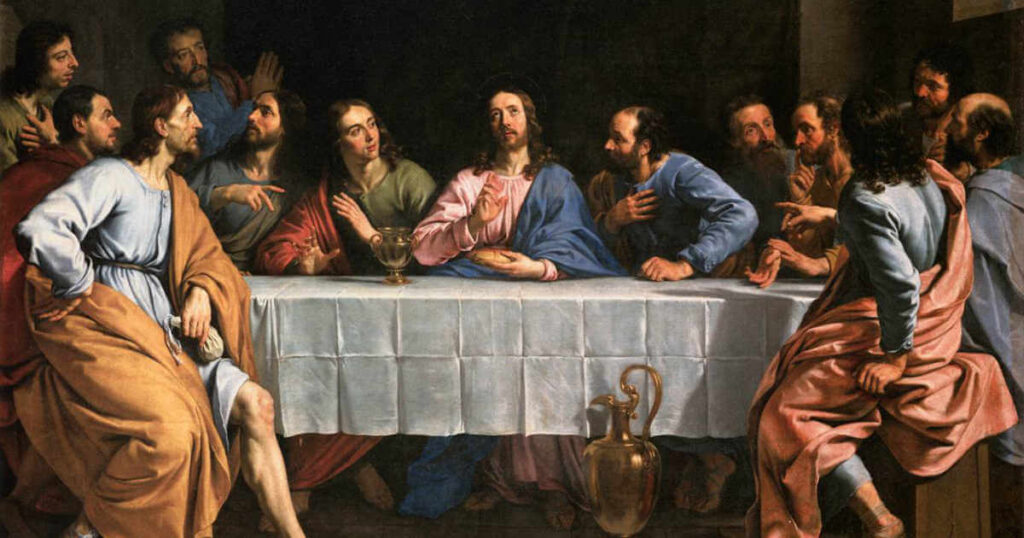
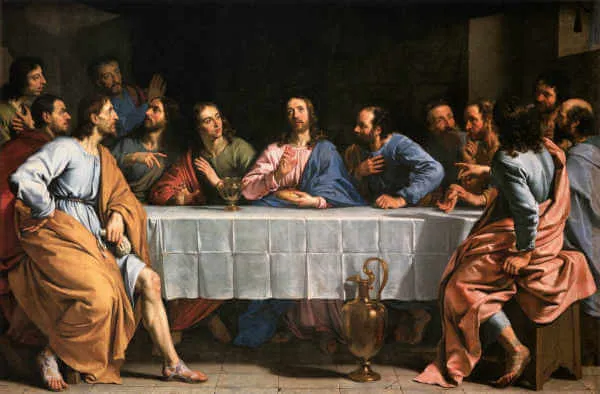
While they were eating, he took bread, said the blessing, broke it, gave it to them, and said, “Take it; this is my body.” Then he took a cup, gave thanks, and gave it to them, and they all drank from it. He said to them, “This is my blood of the covenant, which will be shed for many.”

Reflection: 

At the holy Mass, as soon as the priest pronounces the words of the consecration, transforming the bread and wine into the Body and Blood, Soul and Divinity of Jesus Christ our Lord, he genuflects, rises, and then says, “The mystery of faith.” What is “the mystery of faith?” Oftentimes, when we say that something is a mystery, we mean that the conclusion is hidden but that there are certain clues to help solve the mystery. And once the mystery is solved, everything is clear and it is no longer a mystery.

“The mystery of faith” is much different. Those words are spoken at Mass immediately after the consecration as a way of drawing the faithful into a holy awe and amazement of what just took place. But this mystery can only produce wonder and awe if the reality of what just took place is understood through the gift of faith. Faith is knowing and believing without perceiving the reality before us with our five senses or through logical deduction. In other words, faith produces true knowledge of a spiritual reality that can only be known, understood and believed through spiritual insight. Therefore, if we attend the Mass and have been gifted with the knowledge of faith, then as soon as the consecration of the bread and wine takes place, we will cry out interiorly, “My Lord and my God!” We will know that God the Son is present before us in a veiled way. Our eyes do not perceive, nor do any of our senses reveal to us the great reality before us. We cannot rationally deduce what just took place. Instead, we come to know and believe that the Son of God, the Savior of the World, is now present before us in His fullness, under the veil of mere bread and wine.

In addition to the divine presence of our Lord and our God, the entire Mystery of our Redemption is made present. Saint Pope John Paul II tells us that in this moment there is a “oneness in time” that links the Paschal Mystery, that is, the Life, Death and Resurrection of Jesus, to every moment that the Eucharist is celebrated and made present through the words of consecration. And that unity between each Mass and the Paschal Mystery “leads us to profound amazement and gratitude” (Ecclesia de Eucharistia, #5). Do you sense and experience this profound amazement and gratitude each time you attend the Holy Sacrifice of the Mass? Do you realize as you attend the Mass and as the words of consecration are spoken that the entire Mystery of your redemption is made present before you, hidden from your eyes but visible to your soul by faith? Do you understand that it is God the Second Person of the Most Holy Trinity Who descends to us to dwell with us in that moment of time in this glorious Sacrament?

Reflect, today, upon the hidden but real Mystery of Faith. Allow yourself to be drawn into a wonder and awe at what you are privileged to attend. Let your faith in the Most Holy Eucharist grow by being open to a deepening of this gift of faith through spiritual insight and belief. Behold this great Gift of the Eucharist with the eyes of faith and you will be drawn into the wonder and awe that God wants to bestow upon you.

Source: https://catholic-daily-reflections.com/2024/06/01/wonder-and-awe-before-the-eucharist-3/

Mark 14:22-24 Read More »

Saint Justin Martyr

c. 100–c. 165; Patron Saint of philosophers, lecturers, and apologists; Pre-Congregation canonization

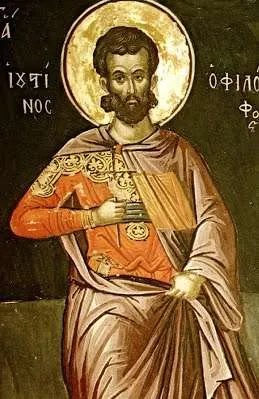
 “Justin, the son of Priscos, son of Baccheios, of Flavia Neapolis, in Palestinian Syria” is the way today’s saint describes himself in his Apologies, or “defenses,” of the faith. His hometown was in Samaritan territory, near Mount Gerizim, where the Samaritans continue to offer sacrifice today. It is also the location of Jacob’s well, where the Gospel story of the Woman at the Well took place. The city was largely populated by Roman pagans, and Justin was most likely raised as a pagan himself, being of Roman descent. He was well educated in Greek philosophy, in which he greatly excelled.

As a student of Greek philosophy, Justin moved from one teacher to another, trying to absorb all the wisdom he could. He took a special interest in Plato’s philosophy.  Plato focused on immaterial “forms” as the basis of reality. Of this philosophy, he stated, “The perception of immaterial things quite overpowered me, and the contemplation of ideas furnished my mind with wings, so that in a little while I supposed that I had become wise; and such was my stupidity, I expected forthwith to look upon God, for this is the end of Plato’s philosophy.” Though he referred to philosophy as “the greatest possession, and most honorable before God,” he also discovered that philosophy alone—without revelation—was insufficient to arrive at the fullness of truth. 

Justin’s conversion to Christianity began one day when he took a long walk to reflect on all he had learned from his philosophical studies. As he walked, an old man came up from behind and surprised him. The two began to converse, and the old man asked him what philosophy and happiness were. Justin responded, “Philosophy, then, is the knowledge of that which really exists, and a clear perception of the truth; and happiness is the reward of such knowledge and wisdom.” The old man then asked about Justin’s understanding of God. Justin replied that God was “That which always maintains the same nature, and in the same manner, and is the cause of all other things…” But the old man pressed him further, asking how philosophers can know God if they have never seen Him. After a lengthy conversation, the old man convinced Justin that his philosophy was insufficient to know God if it did not include revelation. This revelation began with the Old Testament prophets and was fulfilled in the Son of God made flesh. The old man concluded his conversation with Justin by saying, “But pray that, above all things, the gates of light may be opened to you; for these things cannot be perceived or understood by all, but only by the man to whom God and His Christ have imparted wisdom.” The conversation with the old man kindled a flame in Justin’s soul. He resolved to study the prophets and felt as though he had discovered the true reason for philosophy. Philosophy, used in conjunction with the revelation of the prophets and the Christ of God, would help people arrive at truth and come to know God Himself, Who is Truth. In that way, they could achieve eternal salvation, the only true happiness.

After his conversion, Justin used his keen mind to defend Christians against persecution by the Roman authorities. He founded a school of philosophy in Rome and regularly debated with the pagan Roman philosophers in public. Several of his writings still exist and are among the most articulate and valuable theological writings of the early Church.

Justin wrote his “First Apology” directly to Emperor Antoninus Pius. Although Antoninus Pius was relatively tolerant of Christians, persecutions continued on a local level throughout the empire. Since the emperor was the son of a philosopher and a philosopher himself, Justin used his philosophical knowledge to persuade the emperor to put an end to Christian persecution. Justin refuted the accusation that Christians were atheists because they refused to sacrifice to the Roman gods, and he presented Christianity as a noble and true religion with morally upright followers. Additionally, he provided a beautiful description of Christ and why Christians worship Him as God, as well as one of the earliest descriptions of Christian worship. This description is of great importance to the theology of the Mass, as it highlights the unbroken tradition and correlation of liturgical celebration from the early Church to today.

Justin addressed his “Second Apology” to the Roman Senate and continued to defend Christians against false accusations, such as claims of cannibalism and sexual immorality. He attributes those lies to demons. After giving a strong defense, he goes on to proclaim Christianity as the true faith, the practice of worship of the true God, and the way to Heaven.

Several other of Justin’s works have survived, such as his “Dialogue with Trypho.“ Trypho was a Jewish rabbi whom Justin tried to convince to convert to Christianity. He explained that Jesus was the Messiah and the fulfillment of the prophecies in the Hebrew Scriptures. The conversation becomes quite animated, and Justin’s philosophical approach is grounded in sound reasoning and articulate explanations. In all of his writings,  Justin clearly loves the pursuit of truth, finding the fullness of Truth in the Person of Jesus Christ.

Justin’s strong, clear, and bold defense of the Christian faith caused such a commotion that he was arrested and put on trial during the reign of Emperor Marcus Aurelius. Marcus Aurelius had appointed his revered teacher, Junius Rusticus, as prefect of the city of Rome. As prefect, Rusticus fiercely persecuted Christians. Around the year 165, Justin engaged in a public debate with a Greek philosopher named Crescens. Crescens was so outraged by their debate that he reported Justin and six of his companions to Rusticus, who had Justin and his companions arrested and put on trial. An eyewitness beautifully preserved the discourse between Rusticus and Justin. After being interrogated by Rusticus and threatened with torture and death, Justin responded, “We hope to suffer torment for the sake of our Lord Jesus Christ and so be saved. For this will bring us salvation and confidence as we stand before the more terrible and universal judgment-seat of our Lord and Savior.” At that, Rusticus pronounced the sentence on Justin and his companions, “Let those who have refused to sacrifice to the gods and to obey the command of the emperor be scourged and led away to suffer capital punishment according to the ruling of the laws.” With that, Justin and his companions were beheaded.

Saint Justin Martyr heroically defended the Christian faith, using his natural intellectual gifts in conjunction with revealed theological truths. He was bold, articulate, determined, and evangelistic. He did not fear death; he only feared the continuance of ignorance. His burning desire was that everyone would come to the full knowledge of Jesus Christ, his Lord, and God. As we ponder this great saint, let us consider our own depth of commitment to proclaiming the Gospel in a confused world. Let us pray that we will also have the wisdom and courage that Saint Justin had, so that through us, others will know and love the saving message of the Gospel.

Source: https://mycatholic.life/saints/saints-of-the-liturgical-year/june-1—saint-justin-martyr–memorial/

Saint Justin Martyr Read More »