2024

Tenth Sunday in Ordinary Time

First Reading Genesis 3:9-15

After the man, Adam, had eaten of the tree,
the LORD God called to the man and asked him, “Where are you?”
He answered, “I heard you in the garden;
but I was afraid, because I was naked,
so I hid myself.”
Then he asked, “Who told you that you were naked?
You have eaten, then,
from the tree of which I had forbidden you to eat!”
The man replied, “The woman whom you put here with me—
she gave me fruit from the tree, and so I ate it.”
The LORD God then asked the woman,
“Why did you do such a thing?”
The woman answered, “The serpent tricked me into it, so I ate it.”

Then the LORD God said to the serpent:
“Because you have done this, you shall be banned
from all the animals
and from all the wild creatures;
on your belly shall you crawl,
and dirt shall you eat
all the days of your life.
I will put enmity between you and the woman,
and between your offspring and hers;
he will strike at your head,
while you strike at his heel.”

Responsorial Psalm Psalms 130:1-2, 3-4, 5-6, 7-8

R. (7bc) With the Lord there is mercy, and fullness of redemption.

Out of the depths I cry to you, O LORD;
LORD, hear my voice!
Let your ears be attentive
to my voice in supplication.

R. With the Lord there is mercy, and fullness of redemption.

If you, O LORD, mark iniquities,
LORD, who can stand?
But with you is forgiveness,
that you may be revered.

R. With the Lord there is mercy, and fullness of redemption.

I trust in the LORD;
my soul trusts in his word.
More than sentinels wait for the dawn,
let Israel wait for the LORD.

R. With the Lord there is mercy, and fullness of redemption.

For with the LORD is kindness
and with him is plenteous redemption
and he will redeem Israel
from all their iniquities.

R. With the Lord there is mercy, and fullness of redemption.

Second Reading 2 Corinthians 4:13—5:1

Brothers and sisters:
Since we have the same spirit of faith,
according to what is written, I believed, therefore I spoke,
we too believe and therefore we speak,
knowing that the one who raised the Lord Jesus
will raise us also with Jesus
and place us with you in his presence.
Everything indeed is for you,
so that the grace bestowed in abundance on more and more people
may cause the thanksgiving to overflow for the glory of God.
Therefore, we are not discouraged;
rather, although our outer self is wasting away,
our inner self is being renewed day by day.
For this momentary light affliction
is producing for us an eternal weight of glory
beyond all comparison,
as we look not to what is seen but to what is unseen;
for what is seen is transitory, but what is unseen is eternal.
For we know that if our earthly dwelling, a tent,
should be destroyed,
we have a building from God,
a dwelling not made with hands, eternal in heaven.

Alleluia John 12:31b-32

R. Alleluia, alleluia.

Now the ruler of the world will be driven out, says the Lord;
and when I am lifted up from the earth, I will draw everyone to myself.

R. Alleluia, alleluia.

Gospel Mark 3:20-35

Jesus came home with his disciples.
Again the crowd gathered,
making it impossible for them even to eat.
When his relatives heard of this they set out to seize him,
for they said, “He is out of his mind.”
The scribes who had come from Jerusalem said,
“He is possessed by Beelzebul,”
and “By the prince of demons he drives out demons.”

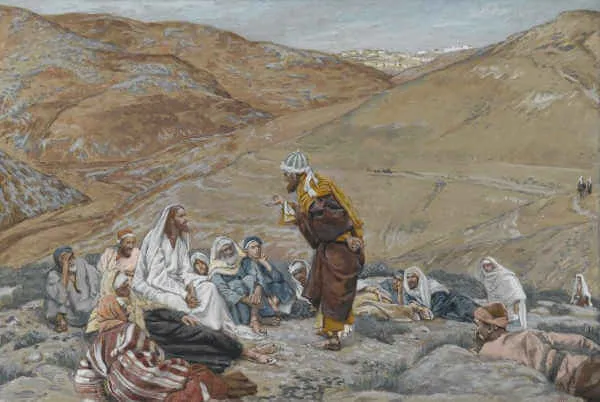
Summoning them, he began to speak to them in parables,
“How can Satan drive out Satan?
If a kingdom is divided against itself,
that kingdom cannot stand.
And if a house is divided against itself,
that house will not be able to stand.
And if Satan has risen up against himself
and is divided, he cannot stand;
that is the end of him.
But no one can enter a strong man’s house to plunder his property
unless he first ties up the strong man.
Then he can plunder the house.
Amen, I say to you,
all sins and all blasphemies that people utter will be
forgiven them.
But whoever blasphemes against the Holy Spirit
will never have forgiveness,
but is guilty of an everlasting sin.”
For they had said, “He has an unclean spirit.”

His mother and his brothers arrived.
Standing outside they sent word to him and called him.
A crowd seated around him told him,
“Your mother and your brothers and your sisters
are outside asking for you.”
But he said to them in reply,
“Who are my mother and my brothers?”
And looking around at those seated in the circle he said,
“Here are my mother and my brothers.
For whoever does the will of God
is my brother and sister and mother.”

Source: https://bible.usccb.org/bible/readings/060924.cfm

Tenth Sunday in Ordinary Time Read More »
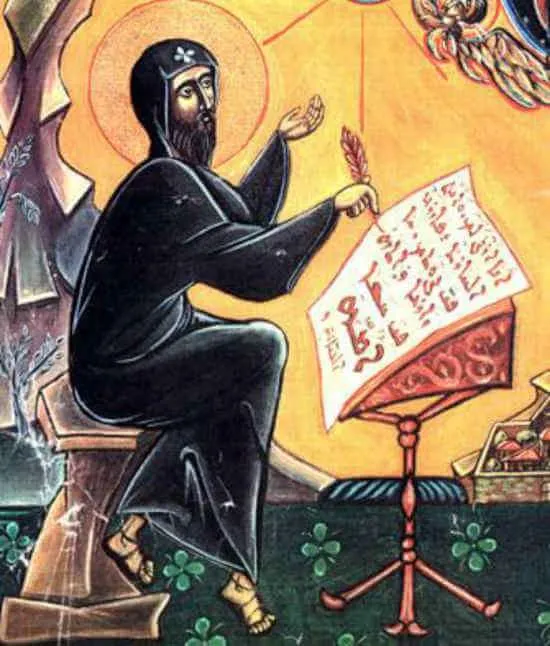
Saint Ephrem, Deacon and Doctor

c. 306–373; Patron Saint of spiritual directors and spiritual leaders; Pre-Congregation canonization; Declared a Doctor of the Church by Pope Benedict XV in 1920

Ephrem was born in the town of Nisibis, near Syria’s border with present-day Turkey. At the time of Ephrem’s birth, Nisibis was part of the Roman Empire. Nisibis was a diverse city of Syrians, Arameans, Arabs, Greeks, Jews, Parthians, Romans, and Iranians. Among the religious beliefs were Judaism, Christianity, and polytheism. Aramaic was commonly spoken, and to a lesser extent, Greek and Latin.

When Ephrem was just a boy, Emperor Constantine the Great issued the Edict of Milan, legalizing Christianity throughout the empire. Ephrem likely learned the faith from his mother at an early age. Stories from his youth, however, suggest that even though he was raised in the Christian faith, he failed to practice it. One story relates that one day when Ephrem was walking through a field and saw a cow, he decided to have fun by throwing rocks at it, forcing the beast to run. Ephrem pursued the cow, pelting it all the more until the poor animal died. When Ephrem later encountered the cow’s owner, he denied ever seeing the animal. He would come to regret his double sin.

Some months later, Ephrem was spending time with a friend who was a shepherd. After the shepherd had too much to drink, he lost the sheep to thieves or wolves. As a result, the shepherd and Ephrem were arrested and imprisoned on the charge that they stole the sheep. Within that prison, something life-changing took place. An angel was sent to chastise Ephrem, explaining that even though he was innocent of the crime against the sheep, he was not innocent of other crimes, such as the death of the cow. The angel’s holy rebukes did wonders in Ephrem’s soul, and he was filled with remorse and repentance as he came face-to-face with Divine Justice. By God’s grace, when the sorrowful Ephrem was released from prison after two months, he vowed to turn his life around.

Some time after his release, Ephrem consulted with the local bishop-monk, Saint James of Nisibis, seeking spiritual direction. Bishop James took Ephrem under his wing and began to teach him in his school, mentoring him in the ways of monastic life. At that time, Syrian monasticism was different from the monastic life that was developing in Egypt. In Egypt, monks would escape into the wilderness, seeking silence and solitude from the Roman Empire and society, so that they could focus exclusively on God. Saint Anthony of the Desert is among the most renowned of these desert fathers. In northern Syria, where Ephrem lived, those who sought out the monastic life did so within the community of believers. They lived as ascetics, doing penance and praying devoutly, but they also remained servants of the local church, serving the community and addressing their needs. This is the life that Ephrem undertook after vowing to live in poverty and celibacy.  As a hermit, he spent time in the solitude of caves and in the wilderness. Within the community, he performed good works.

Over the next forty to fifty years, Ephrem studied under Bishop James and lived an ascetic life of prayer, penance, and service. He used his many gifts for the glory of God. Ephrem’s enduring legacy is his writings. He was a prolific writer of hymns, poems, biblical commentaries, and homilies. It is believed that during his lifetime, he composed as many as 400 hymns and 3,000 poems that were tools for catechetics and worship. They were rich in imagery, theologically precise, insightful, melodic, and covered important topics such as the Incarnation, the Blessed Virgin Mary, the sacraments, and the purpose of the Christian life. His hymns and poems were also apologetical, meaning, a defense of the faith. At that time, numerous heresies abounded, and some heretics sought to push their beliefs on others by composing hymns, since a hymn was easily remembered. Ephrem took the same approach, only with orthodox poems and hymns that sought to dispel the heresies’ errors. Ephrem’s gifts of artistically presenting the deep truths of the faith led many over the centuries to refer to him as the “Harp of the Holy Spirit.” 

Around the year 350, Ephrem’s mentor, Bishop James, formally opened the School of Nisibis, which became an important center for education within the Syriac church. Ephrem assisted the bishop, becoming a respected and influential teacher.

In 363, Roman Emperor Jovian lost a battle to the Persians and had to surrender the Roman town of Nisibis. All Christians were expelled from Nisibis. Ephrem settled in the town of Edessa, about 125 miles to the west, a flourishing Christian city. In Edessa, Ephrem continued to teach, write, and serve the community in any way he could. He founded a school there, which became another important Christian center for learning. In Edessa, Ephrem became known as the saint of daily living because he often came out of his solitude to teach people how to live the faith in a practical way. At some point, he was ordained a deacon, and as a deacon, he became a true servant of others. When famine hit Edessa, he helped distribute food to the poor. When a plague struck, he cared for the sick. During a plague in 373, Ephrem contracted the disease and became a martyr of charity.

Though Saint Ephrem died in the fourth century, he was declared a Doctor of the Church in 1920 by Pope Benedict XV. Saint Ephrem is the only Syrian Doctor of the Church and is not only highly revered in the Eastern Catholic Church but in the Orthodox Church as well. It might be that the 1920 declaration was done in part as a way of further bridging the gap between the Catholic Church and the Orthodox Church.

As we honor this great saint, ponder especially the powerful effect that music has upon the human person. What types of songs do you listen to? Consider following the example of Saint Ephrem by filling your mind with hymns that give praise and glory to God and do so in a clear and theologically rich way. Such a habit will certainly help you grow in holiness.

Source: https://mycatholic.life/saints/saints-of-the-liturgical-year/june-9—saint-ephrem-deacon-and-doctor/

Saint Ephrem, Deacon and Doctor Read More »

Mark 3:28-30

Sincere Repentance

“Amen, I say to you, all sins and all blasphemies that people utter will be forgiven them. But whoever blasphemes against the Holy Spirit will never have forgiveness, but is guilty of an everlasting sin.” For they had said, “He has an unclean spirit.”

Reflection:

Jesus spoke these words to the crowds who had gathered around His home in Capernaum because two groups of people had just spoken very critically of Him in a public way. First, some of His extended family arrived and said to everyone, “He is out of his mind.” And then some of the scribes from Jerusalem said, “He is possessed by Beelzebul.” Thus, Jesus states clearly that their blasphemy is a sin against the Holy Spirit and will have everlasting consequences.

Why is it that certain sins will never be forgiven? What exactly is a sin against the Holy Spirit? Traditionally, our Church has identified this sin in a couple of ways. First, it is a sin of final impenitence, that is, the sin of obstinately persisting in grave sin. Obstinacy, or the refusal to repent, is a sin that cannot be forgiven, simply because the person committing it never seeks forgiveness. They become so entrenched in their sin that they refuse to change. Thus, the mercy of God is incapable of entering into them. Second, it has also been identified as presumption, meaning a person sins while expecting God to forgive. Presumption is more subtle; however, it also has the effect of keeping a person from the sincere repentance that is needed for forgiveness. The presumptuous person never fully repents and amends their life as long as they remain in their sin.

Of all the many sins you struggle with or might struggle with in the future, pay special attention to the sins against the Holy Spirit. Though we should never think we have a right to God’s forgiveness, we must always believe that God’s mercy is so great that the moment we humbly acknowledge our sin and sincerely repent of it, God will forgive. But the key is “sincerity.” In order to be forgiven, the repentance within us must be sincere, authentic, real and complete. We cannot fool God. We can certainly fool ourselves, but not God.

One of the best ways to regularly be certain that you are not guilty of any sin against the Holy Spirit is by going to the Sacrament of Confession and confessing your sins with openness, thoroughness and humility. Own your sin. Acknowledge it. Experience sorrow for it. Resolve to change. Then confess it and trust in God’s mercy.

Reflect, today, upon any way that you lack sincerity and thoroughness in your repentance from sin. Are you honest with yourself about the sins you have committed? Have you taken ownership of those sins? If so, have you also confessed them to God and firmly resolved never to commit them again? Take repentance seriously so that you never even begin to fall down the slippery slope that leads to any sin against the Holy Spirit.

Source: https://catholic-daily-reflections.com/2024/06/08/sincere-repentance/

Mark 3:28-30 Read More »

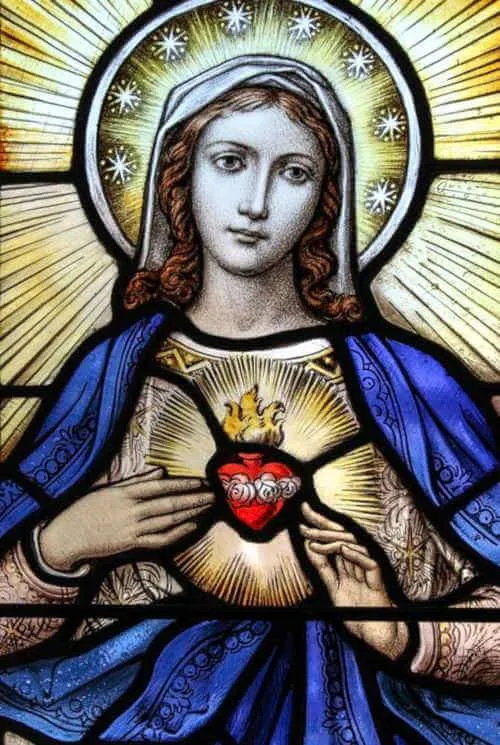
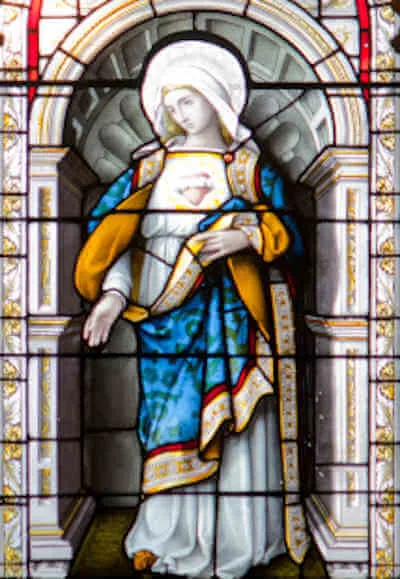
Immaculate Heart of Mary

The Immaculate Heart of Mary was created around 15 BC as a result of the Immaculate Conception, which is a dogma of our faith. As The Immaculate Conception, the Blessed Virgin Mary was preserved from all sin from the first moment of her conception by a singularly unique grace, preemptively bestowed upon her by the merits of her Son’s life, death, and resurrection. From the moment of her Immaculate Conception, Mary remained free from all sin as a result of her own free choice to cooperate with grace. As a result, she was conceived as a suitable instrument for the Incarnation of God, and she remained a suitable instrument throughout her life.

After Jesus’ birth, the Mother of God continued to perfectly cooperate with grace, accompany her Son, stand at the foot of His Cross, jointly offer Him to the Father, experience His Resurrection and His Ascension into Heaven, participate in the full outpouring of the Holy Spirit at Pentecost, and help give birth to the nascent Church through her motherly care. At the completion of her life, she was taken body and soul into Heaven to be with her Son and to be crowned as the Queen of Heaven and Earth, from which she mediates the love and mercy of God, and will do so for all eternity. The immaculate nature and this full view of our Blessed Mother’s life is the “big picture.” Today, we celebrate one specific aspect of that big picture—her Immaculate Heart.

Honoring the Immaculate Heart of Mary leads us to ponder that which she pondered—her own heart filled with perfect love. We first receive a glimpse of her heart in the Gospel of Luke. After the angels appeared to the shepherds in Bethlehem and announced the birth of Christ, they went in haste to where Jesus was born and found Mary, Joseph, and the Child lying in a manger. They told Mary and Joseph about their experience of the angel, “And Mary kept all these things, reflecting on them in her heart” (Luke 2:19). Twelve years later, Mary and Joseph traveled to Jerusalem from Nazareth for the annual feast of Passover. After completing the customary prayers and sacrifice, they began their journey home, thinking Jesus was in the caravan with relatives. When they discovered He was not, they returned to Jerusalem to find twelve-year-old Jesus talking with the teachers in the temple and asking them questions, and “all who heard him were astounded at his understanding and his answers” (Luke 2:47). After inquiring of Jesus why He remained, He told them He had to be in His Father’s house. Though Mary and Joseph did not fully understand the mystery they were witnessing, “his mother kept all these things in her heart” (Luke 2:51).

Every other encounter between Jesus and His mother in Scripture also reveals a sense of mystery and awe that evoked love and pondering. Most notably, as Jesus hung on the Cross, His mother stood before Him, gazing with love. From the Cross, Jesus entrusted Mary to John, and through John, to the whole Church.

Because the Mother of God was and is the Immaculate Conception, free from all sin throughout her life, then every part of who she was and is remained immaculate, including her heart. Mary’s heart, as with every human heart, is a symbol of every relational virtue that enables one to love. The Mother of God’s human love for her Son was perfect. And that is something worth pondering! Prior to the Mother of God and her Son, the perfection of human love did not exist. From the time of Adam and Eve, human love was mixed with selfishness and sin. From the moment of the Incarnation, the perfect exchange of human love was established between the Mother of God and her divine Son. Today we celebrate that perfect love and are invited to ponder it and share in it.

As a result of Jesus entrusting His mother to John and the whole people of God and her subsequent Assumption into Heaven and coronation as Queen, we also ponder the perfection of human love for us, her children, that flows from Heaven. By God’s will, that perfection of love is bestowed upon the Church and all Her members through the Immaculate Heart of Mary. We must not only ponder this glorious reality, we must also do all we can to be receptive sons and daughters of the love of our heavenly mother who loves us with a perfect love and bestows upon us the pure and perfect love of her Son’s divine grace that was instilled in her Immaculate Heart.

Devotion to the Blessed Virgin Mary began in apostolic times and continued through great saints, such as Ephrem the Syrian, Cyril of Alexandria, John Damascene, Gregory of Nazianzus, Ambrose of Milan, Augustine of Hippo, and Jerome. Though they did not make specific reference to the Immaculate Heart, they spoke of the Blessed Mother’s many virtues. These saints especially helped to lay the foundation for proclaiming Mary as the Mother of God (Theotokos) at the Council of Ephesus in 431.

From the twelfth to the fifteenth centuries, a number of saints contributed to the deeping of our understanding of the Blessed Virgin Mary. Among them are Saints Anselm of Canterbury, Bernard of Clairvaux, Mechtilde, Gertrude the Great, Bridget of Sweden, and Bernardino of Siena.

From the sixteenth century to the twentieth centuries, many other saints continued to develop our understanding of the Blessed Virgin Mary. In 1648, Saint John Eudes, a French priest and founder of the Congregation of Jesus and Mary, instituted a local feast in honor of the Holy Heart of Mary, fostering a realization of the love that the Blessed Mother had for her Son and for all people. This was the first liturgical feast approved by a local ordinary specifically honoring the “Holy Heart of Mary.” After him, Saints Louis de Montfort and Alphonsus Liguori wrote extensively on the Blessed Virgin Mary.

In 1854, Pope Pius IX proclaimed the Dogma of the Immaculate Conception, which paved the way for the specific title of the Immaculate Heart, and in the early twentieth century, Saint Maximilian Kolbe wrote extensively on the Immaculata.

In 1916, an angel appeared to three children in Fátima, Portugal, speaking of the “infinite merits of the Most Sacred Heart of Jesus and of the Immaculate Heart of Mary.” The following year, the  Blessed Virgin Mary, under the title of “Our Lady of the Rosary,” appeared six times to the children. During the second apparition, Our Lady said that Jesus “wishes to establish in the world devotion to my Immaculate Heart.” In 1925 and 1929, Our Lady appeared again to Lúcia to ask that her Immaculate Heart be honored on the first Saturday of each month.

In 1944, Pope Pius XII instituted the universal feast of the Immaculate Heart of Mary to be celebrated annually on August 22, and in 1969, Pope Paul VI moved the celebration to the Saturday after the Solemnity of the Sacred Heart.

As we honor the holy, most pure, and Immaculate Heart of Mary, try to ponder that which the Blessed Virgin Mary pondered during her life. Ponder the love she had for her Son. Ponder the mysteries contained within her heart. As you do, especially ponder the love that her heart has for you. Only in Heaven will we fully understand the holiness of Our Lady’s Immaculate Heart. For now, we must foster devotion to all that is contained within it and seek to open ourselves to the ongoing outpouring of God’s grace that dwells in an immaculate way in that holy sanctuary of love.

Source: https://mycatholic.life/saints/saints-of-the-liturgical-year/immaculate-heart-of-mary–memorial/

Immaculate Heart of Mary Read More »

Luke 2:51

The Heart of Perfect Love

He went down with them and came to Nazareth, and was obedient to them; and his mother kept all these things in her heart.

Reflection:

Over and over, the Scriptures reveal to us that the Blessed Virgin Mary “kept all these things in her heart.” What things? She continually pondered the great mystery of the life of her Son as His sacred life unfolded before her eyes.

A mother’s love is strong. Many times, a mother is more aware of the details of her child’s life than even the child itself. She is attentive, consoling, present, tender and loving. This was who Mary was to her divine Son, Jesus.

Mother Mary did not have full knowledge of every divine reality. She did not gaze upon the Most Holy Trinity with her eyes as she walked the earth. She did not have the full knowledge of the plan of the Father. But she did walk through life with the perfection of faith. She also knew the many truths of Heaven and earth through her Immaculate Heart. Her heart was a heart filled with every virtue. She loved with a love that was indescribable. And what she especially pondered in her Immaculate Heart, over and over throughout life, was the pure and perfect love she had for her Son. To her, this love left her in amazement. She was continually in a state of holy awe as she interacted with her Son, gazed upon His sacred life, and watched Him advance in “wisdom and age and favor before God and man” (John 2:52). The love in her heart was a lesson to herself. She continually deepened her knowledge of God through the pondering of the perfect love placed in her heart by her God. And this God, her Savior, was her Son.

We celebrate today the Memorial of the Immaculate Heart of Mary. Though there are many feasts throughout the year in which we honor this holy daughter of God, this celebration is an opportunity for us all to ponder her pondering heart.

A human heart is not just physical, it is also spiritual. It is the spiritual source of our love of God and others. From our heart flows either virtue or vice, love or hate, generosity or selfishness. As we honor the Immaculate Heart today, we are called to look at the ideal of what should live within our own hearts and what should flow forth from them. The perfection of all virtue is what must ideally flow from every human heart throughout time. And it is the heart of our Blessed Mother that will teach us how to internalize those virtues so as to become an instrument of the love of God to others.

Reflect, today, upon the spiritual perfection of the Immaculate Heart of Mary. Perfection is difficult to comprehend in our fallen state. But the more we look to the ideal, the more we will desire that ideal. And the more we desire that ideal, the more we will obtain it. Allow yourself today to ponder the ideal heart as it resided in the Mother of God and ask for her to intercede for you so that you will more fully imitate her.

Source: https://catholic-daily-reflections.com/2024/06/07/the-heart-of-perfect-love-3/

Luke 2:51 Read More »

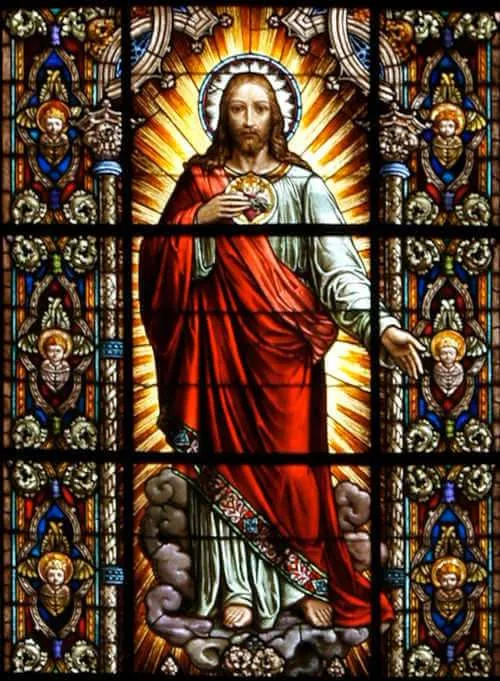
Solemnity of the Most Sacred Heart of Jesus

It could be said that devotion to the Sacred Heart of Jesus was first written about in John’s Gospel when John records that during the Last Supper he leaned back and rested his head on Jesus’ heart. In the thirteenth century, on December 27, the Feast of Saint John the Apostle, the German religious sister and mystic Saint Gertrude the Great had a vision of Saint John with Jesus during which she discussed that moment at the Last Supper. In that vision, Saint John said to Saint Gertrude, “Come, Spouse of my Master, together let us lay our heads on the most tender bosom of the Lord, in which all the treasures of Heaven and earth are enclosed.” As she rested her head on Jesus’ Heart, her soul was deeply stirred with devotion, and she said to Saint John, “…did these harmonious beatings, which rejoice my soul, also rejoice yours when you reposed during the Last Supper on the bosom of the Saviour?” Saint John responded, “Yes, I heard them, and my soul was penetrated with their sweetness even to its very center.” Saint Gertrude inquired, “How come, then, in your Gospel you have spoken so little of the loving secrets of the Heart of Jesus Christ?” Saint John responded, “My ministry, in those early times of the Church, was confined to speaking of the Eternal Word…but to these latter times was reserved the grace of hearing the eloquent voice of the Heart of Jesus. At this voice the time-worn world will renew its youth, be roused from its lethargy, and again be inflamed with the warmth of Divine love” (Revelations of Saint Gertrude the Great).

About 400 years later, on December 27, 1673, the Feast of Saint John the Apostle, a French cloistered Visitation Nun named Sister Margaret Mary Alacoque received the first of four visions that took place over the next eighteen months in which Jesus revealed His Sacred Heart and His desire that a feast be instituted in its honor. Though she had other visions and mystical experiences throughout her life, these visions were directly related to the Sacred Heart.

My Divine Heart is so passionately in love with men that it can no longer contain within itself the flames of its ardent charity. It must pour them out by thy means, and manifest itself to them to enrich them with its precious treasures, which contain all the graces of which they have need to be saved from perdition. I have chosen thee as an abyss of unworthiness and ignorance to accomplish so great a design, so that all may be done by Me (from the first vision).

He was brilliant with glory; His five wounds shone like five suns. Flames darted forth from all parts of His sacred humanity, but especially from His adorable breast, which resembled a furnace, and which, opening, displayed to me His loving and amiable Heart, the living source of these flames (from the second vision).

Behold, this Heart which has so loved men that it has spared nothing, even to exhausting and consuming itself, in order to testify its love. In return, I receive from the greater part only ingratitude, by their irreverence and sacrilege, and by the coldness and contempt they have for Me in this sacrament of love. And what is most painful to Me, is that they are hearts consecrated to Me. It is for this reason I ask thee that the first Friday after the octave of the Blessed Sacrament be appropriated to a special feast, to honor My Heart by communicating on that day, and making reparation for the indignity that it has received. And I promise that My Heart shall dilate to pour out abundantly the influences of its love on all that will render it this honor or procure its being rendered (from the third vision).

In her visions, Jesus also made twelve promises to those who would honor the Sacred Heart:

I will give them all the graces necessary for their state of life. I will establish peace in their families. I will console them in all their troubles. They shall find in My Heart an assured refuge during life and especially at the hour of their death. I will pour abundant blessings on all their undertakings. Sinners shall find in My Heart the source of an infinite ocean of mercy. Tepid souls shall become fervent. Fervent souls shall speedily rise to great perfection. I will bless the homes where an image of My Heart shall be exposed and honored. I will give to priests the power of touching the most hardened hearts. Those who propagate this devotion shall have their names written in My Heart, never to be effaced. The all-powerful love of My Heart will grant to all those who shall receive Communion on the First Friday of nine consecutive months the grace of final repentance; they shall not die under my displeasure, nor without receiving their Sacraments; My heart shall be their assured refuge at that last hour.

When Sister Margaret Mary told her superior about her visions, her superior doubted their authenticity and had her meet with a spiritual director who also doubted them. Eventually, Jesuit Father and future saint Claude de la Colombiere became her confessor and spiritual director. He recognized the authenticity of the visions and devoted much energy to the spreading of this devotion.

Just five years before Saint Margaret Mary’s final vision, in another part of France, the future saint Father John Eudes, founder of the Society of Jesus and Mary, composed a Mass in honor of the Sacred Heart. Father Eudes had spent the previous forty-five years of his priesthood spreading an intimate devotion to the love of God and personal conversion. Twenty-two years earlier, he had written a Mass in honor of the Holy Heart of Mary, and in 1670, with the permission of the local bishop, he began celebrating his newly written Mass and Office of the Sacred Heart and continued to promote this devotion until his death ten years later. Though Father John Eudes and Sister Margaret Mary did not know each other, God knew them both and used them both to promote devotion to the burning love in His Sacred Heart.

Toward the end of Sister Margaret Mary’s life, her community began to celebrate the Feast of the Sacred Heart. In 1756, seventy-five years after Margaret Mary’s death, Pope Clement XIII approved devotion to the Sacred Heart of Jesus, paving the way for various ecclesiastical provinces throughout Europe to celebrate the feast. It wasn’t until 1856 that Pope Pius IX placed the Feast of the Sacred Heart on the universal Roman Calendar, to be celebrated on the Friday after Corpus Christi.

The central message of the devotion to the Sacred Heart of Jesus is the infinite and compassionate love exploding from the Heart of Jesus for all mankind. It emphasizes our Lord’s sacred Sacrifice for our salvation and invites us to respond to His love. The Sacred Heart also calls us to make reparation for sins, especially human indifference and ingratitude toward Him. The nature of our Lord’s love is that it cannot be contained within His Heart and necessarily bursts forth. When His love is received, He is consoled. When it is ignored, the love in His Heart expands and waits to gush forth in superabundance upon anyone who is willing to receive it.

As we honor the Sacred Heart of Jesus, ponder the fact that Jesus’ love must pour forth from His Heart. He needs willing recipients to receive that love. Console His heart by being one of those recipients and by loving Him in return. Doing so will win countless graces for you and for the whole world.

Source: https://mycatholic.life/saints/saints-of-the-liturgical-year/sacred-heart-of-jesus–solemnity/

Solemnity of the Most Sacred Heart of Jesus Read More »

John 19:33-34

The Font of Mercy

But when they came to Jesus and saw that he was already dead, they did not break his legs, but one soldier thrust his lance into his side, and immediately blood and water flowed out.

Reflection:

John’s Gospel is filled with deep spiritual imagery and symbolism. It is clear that this imagery and symbolism was divinely inspired so as to give us spiritual food for reflection and meditation. One such image is given to us today as we celebrate the Solemnity of the Sacred Heart of Jesus.

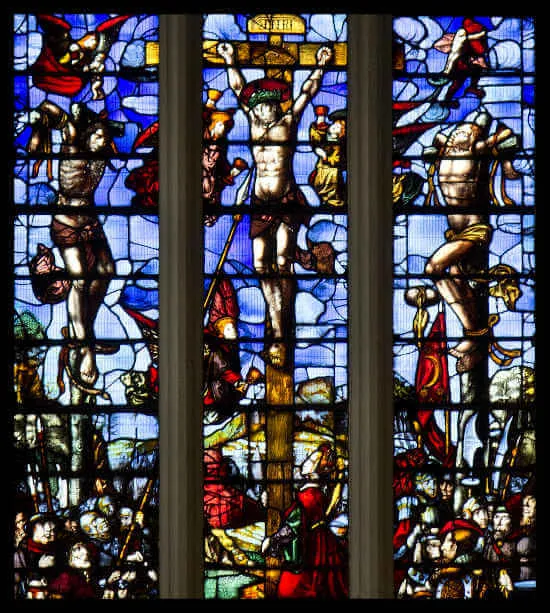
As Jesus and the two criminals on either side of Him hung upon their crosses, the soldiers came to hasten their deaths by breaking their legs to cause them to more quickly suffocate. But when they came to Jesus, He had already died. So one of the soldiers, traditionally known as Longinus, thrust his spear into Jesus’ side, and blood and water flowed forth. Some traditions identify Longinus with the centurion who cried out after Jesus’ death, “Truly, this was the Son of God!” (See Matthew 27:54.) Other traditions state that he converted at that moment, making him the first convert to Christianity. And still other traditions state that Longinus could not see well, and the blood and water from Jesus’ side poured upon his eyes, healing him. Regardless of whether these traditions are true, we know that Jesus’ side was pierced and blood and water flowed forth.

The symbolism of this act was more than a mere human symbol. It was an instrument of the profound spiritual reality that was taking place at that moment. As Jesus’ Sacred Heart was pierced, the blood and water that poured forth was the new sacramental life of the Church. The Blood was the Most Holy Eucharist and the Water was the gift of Baptism. And when Jesus had previously “breathed His last” and “handed over His Spirit,” the Sacrament of Confirmation was bestowed.

When we celebrate those Sacraments today, it is easy to see them as mere symbols of what we partake in. But in our Christian Tradition, the Sacraments are so much more. The symbol is also the reality. It is the instrument of what it symbolizes. Therefore, every time we witness a Baptism or partake in the Holy Eucharist, we are mystically present with Longinus, receiving the grace and mercy of our redemption, pouring forth from Jesus’ wounded side, so as to heal us and make us whole.

The human heart is, physically speaking, a bodily organ responsible for pumping blood throughout. But from a spiritual perspective, given that we are both body and soul, the human heart is also the source of our life. Without it, we physically and spiritually die. So it is with the Sacred Heart of Jesus. It was not only a physical heart that was physically pierced by the lance long ago. It is now also the source of our ongoing spiritual life, and, without Jesus’ Sacred Heart of Mercy, we will die in our sins.

Reflect, today, upon the Most Sacred Heart of Jesus. See His Heart as the ongoing source of your new life in grace. Understand that His Heart is more than a symbol of His grace and mercy, it is the spiritual source and the font of that mercy. Prayerfully place yourself before His Cross, this day, and allow the blood and water, flowing from His wounded side, to cover you so that you, too, may believe.

Source: https://catholic-daily-reflections.com/2024/06/06/the-font-of-mercy-3/

John 19:33-34 Read More »

Saint Norbert, Bishop

c. 1080–1134; Patron Saint of expectant mothers and Bohemia; Canonized by Pope Gregory XIII on July 28, 1582

Saint Norbert did not begin his life as a saint. He was born in the town of Xanten, within the Holy Roman Empire and the Kingdom of Germany, to noble parents. Because of his nobility, he was educated at the Church of Saint Victor in Xanten and later became a canon in that church. Though not ordained, he was considered a cleric, receiving the ministry of subdeacon. In his role as a canon, Norbert prayed the Divine Office each day with the other canons and received a salary for this simple duty—the primary reason he accepted the canonry. However, he soon discovered a way to increase his income. He paid someone to take his place praying the Divine Office each day in Xanten and moved to the court of the Prince-Archbishop of Cologne. Soon after, he became a member of the court of Holy Roman Emperor Henry V and was put in charge of distributing the royal alms. The income from his canonry and his position at the court enabled him to live a very comfortable lifestyle.

In the court of King Henry, Norbert witnessed firsthand an ongoing controversy between the pope and the emperor. In 1111, Henry V traveled to Rome to resolve a dispute called “the lay investiture controversy.” The emperor wanted to retain spiritual authority to appoint and invest bishops, to which the pope was opposed. Once negotiations broke down, Henry apprehended the pope and held him captive until the pope agreed to his terms. The pope finally agreed, but once Henry left, the pope excommunicated Henry. Norbert was sympathetic to the pope’s position and was shaken by this controversy.

Over the next year, Norbert began to have a moral awakening. That awakening came to a head one day as he rode his horse during a violent storm. Lightning struck, knocking him off his horse. In that near-death experience, Norbert sensed God asking him why he was living such a vain life, to which Norbert replied, “Lord, what do you want me to do?” The Lord responded, “Turn from evil and do good; seek peace and pursue it.” This experience initiated a profound conversion. He resigned from the emperor’s court and spent the next three years in prayer and penance in the Abbey of Siegburg, just south of Cologne.

After his three-year-long period of prayer and penance, Norbert approached the Prince-Archbishop of Cologne in 1115 and requested priestly ordination, which was granted. He then returned to his hometown, to the church of Saint Victor in Xanten to celebrate Mass and preach. The newly converted Father Norbert was not well received by the younger and worldly canons of that church. His newfound zeal and opposition to worldly living convicted them. They eventually forced him to leave. After leaving, Father Norbert sold all his property and possessions, distributed the money to the poor, and began walking from town to town across Europe, often barefoot, preaching the Gospel, calling for the reform of the Church, and begging for food as he went.

In 1118, controversy with King Henry V continued under the new pope, Gelasius II. Soon after, the pope had to flee Rome for fear of Henry. While the pope was in exile, Father Norbert met up with him in France and sought his direction for his priestly ministry. The pope encouraged Father Norbert and granted him universal faculties to preach and minister anywhere he felt called.

In 1119, after Pope Gelasius died, Father Norbert sought out the counsel of his successor, Pope Calixtus II, who encouraged him to found a religious order. At the invitation of the bishop of the Diocese of Laon, in northern France, Father Norbert and his one companion decided to found their monastery of priests in a remote part of the diocese called Prémontré, a valley within a forest. Upon arriving, they were joined by twelve others. They built small huts around a chapel and later built a larger monastery. They adopted the rule of Saint Augustine and structured their daily life in such a way that they could become true contemplatives so that they could then bring that contemplative union they enjoyed into their priestly ministry to the people. The order was named Canons Regular of Prémontré, or the Premonstratensians. Later, it would become known as the Norbertines after their founder. Within a few years of its founding, women’s branches were established, and more than a dozen monasteries were erected in France, Germany, and Belgium.

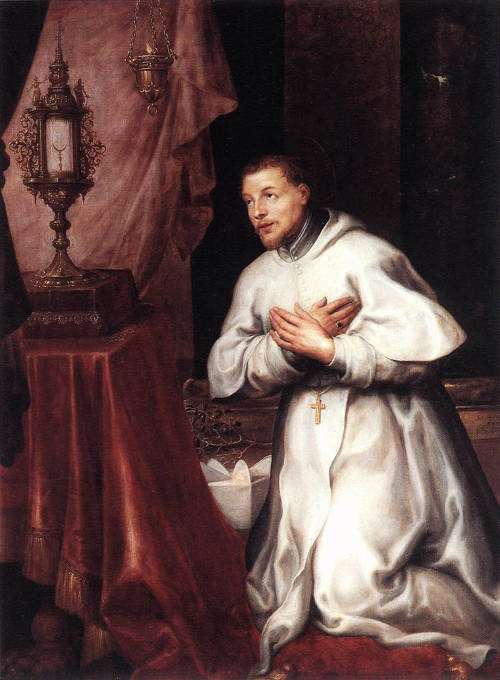
Father Norbert continued his traveling, founding, and preaching. While traveling through the city of Antwerp, in modern-day Belgium, Father Norbert came upon a large group of people who had started following a heretical itinerant preacher named Tanchelm. Among his heretical teachings was a denial of the true presence of Christ in the Eucharist. Tanchelm was so fierce that he even had his followers confiscate, desecrate, and discard the Eucharist in hidden places. To combat that heresy, Father Norbert preached powerfully, won over many of Tanchelm’s followers, and then commissioned them to gather up the desecrated hosts. When they found the hosts, they were discovered to be untouched and unsoiled, despite many of them being thrown into dirt and moisture. The hosts were gathered together, and Father Norbert carried them in procession back to the local church. For this reason, sacred art often depicts him carrying a monstrance or ciboria containing the Blessed Sacrament.

In 1126, Father Norbert and his companions traveled to Rome to obtain final papal approval for his new order from Pope Honorius II. On their way home, they traveled through the city of Würzburg, where Father Norbert cured a blind woman. He also cast out demons and restored peace between feuding noble families. The people were so impressed that they and others from Magdeburg rallied to have him appointed as their bishop. The king of the Germans and the papal legate agreed, and the pope appointed him as Archbishop of Magdeburg, a post Norbert reluctantly accepted.

Bishop Norbert served as archbishop for about eight years until his death. As archbishop, he continued to work on reforming the Church by weeding out immoralities among the clergy, resolving schisms, securing the right of the Church to govern itself without the interference of the civil authority, helping the Premonstratensian Order to grow, and preaching to the people, converting many.

Saint Norbert started his life as a worldly cleric, living a lavish lifestyle. After experiencing a profound encounter with God, he entered a period of deep prayer to more clearly discern God’s will. During this time, God took hold of him and never let go, leading him to great fruitfulness for the Church. If you find yourself pursuing worldly goals, let Saint Norbert’s story inspire you. Choose to focus on that which is eternal, and God will begin to work great spiritual transformations within your soul today.

Source: https://mycatholic.life/saints/saints-of-the-liturgical-year/june-6—saint-norbert-bishop/

Saint Norbert, Bishop Read More »

Mark 12:34

The Gift of Understanding

And when Jesus saw that he answered with understanding, he said to him, “You are not far from the Kingdom of God.” And no one dared to ask him any more questions.

Reflection:

Finally, we have the witness of one of the religious leaders, a scribe, who got it right. The passage above is the conclusion of the interaction with this scribe who asks Jesus which of all the commandments is the first and greatest. Jesus gives the twofold answer that we are to love God above all, with all your heart, mind, soul and strength, and our neighbor as ourselves. The scribe then responds to Jesus’ answer by saying, “Well said, teacher. You are right…” And then Jesus compliments this scribe with the quoted passage above.

Recall that almost all of the Pharisees were continually rebuked by Jesus because of their self-righteous arrogance. The Sadducees were also chastised but often to a lesser degree. And now we have a scribe who outshines them all. The scribes were primarily functionaries who copied or created various liturgical and legal documents. Some of the Pharisees were also scribes. And most of the time, when Jeus condemned the Pharisees, He also condemned the scribes. But this scribe is different. This scribe appears to not only be interested in Jesus’ answer but also manifests “understanding” of what Jesus said to him. Don’t underestimate the importance of this gift of understanding.

In order to truly understand that which our Lord speaks to us, we must be open. And openness requires humility. Humility is a virtue that is contrary to a “know-it-all” attitude. It’s a disposition of mind and heart that listens to God speak, hears what He says, comprehends all truth by the gift of grace, and prayerfully submits to that truth. Humility enables us to look beyond ourselves for the answers to the most difficult questions in life. It enables us to turn to the one and only source of truth, Jesus Christ Himself. And the fruit of this humble openness is the gift of understanding. It’s an understanding of the mysteries of life which is beyond our natural intellectual capacity. The grace of God is able to teach and form the humble soul and fill it with clarity of vision and an acceptance of the deepest truths.

Reflect, today, upon Jesus’ words to this scribe. “You are not far from the Kingdom of God.” Does Jesus also speak these words to you? Have you humbly sought out the answers to the many questions of life by turning to our Lord? More specifically, are you able to look at your life and rejoice in the fact that God has also given you His gift of understanding? If not, then look within and consider which questions you most need to bring to Jesus. Place them before Him and then listen, be open and be ready to respond when He speaks. Hearing and responding to our Lord will result in our Lord saying these same words to you.

Source: https://catholic-daily-reflections.com/2024/06/05/the-gift-of-understanding-4/

Mark 12:34 Read More »

Saint Boniface, Bishop and Martyr

c. 675–754; Patron Saint of Great Germania; Pre-Congregation canonization

Once Christianity was legalized in the Roman Empire in the fourth century, many people in Roman-Britain began to convert. However, in the fifth century, after the fall of the Roman Empire, Britain slowly fell to invasion and conquest by the Angles, Saxons, and Jutes from modern-day Germany, Denmark, and the Netherlands. These people brought with them the religious practice of Germanic paganism, which held a polytheistic belief in both major and minor gods who were invoked for war, governance, fertility, prosperity, and many other aspects of human life. These Germanic pagans also practiced ancestor and nature worship; engaged in rituals, festivals, and magical spells; and had a strong oral tradition. At the end of the sixth century, Saint Augustine of Canterbury began a missionary expedition that marked the beginning of the re-Christianization of the British Isles.

Less than a century later, today’s saint, Saint Boniface, a descendant of the Germanic pagans who had conquered Roman Britain just a couple of centuries earlier, was born into one of those recently Christianized kingdoms of England. Later in life, Saint Boniface would return to the lands of modern-day Germany and the Netherlands, from which his ancestors came, to convert the pagans, help organize the Church, and unite it more closely with the pope in Rome.

Saint Boniface (named Wynfrid at birth) was born into a noble family in the Kingdom of Wessex in southern England. As a youth, Wynfrid was raised in the Catholic faith and received a good education. When missionary monks visited his hometown, Wynfrid was inspired to follow their example. His father initially disapproved but eventually gave his consent. Wynfrid was first sent to a nearby Benedictine monastery for seven years and then to the Abbey of Nursling, about 100 miles away.

At Nursling, Wynfrid excelled in his studies and prayer life, made vows as a Benedictine monk, and was ordained a priest at the age of thirty. As a young priest, Father Wynfrid quickly became known as an excellent preacher and teacher with a profound understanding of Sacred Scripture, as well as an excellent administrator, organizer, and diplomat.

During the first several years of Father Wynfrid’s priestly ministry, he kept sensing a call to evangelize the people of his ancestral homeland. Though he had no personal connection with the people, he did share their language, or at least a dialect of that same language. In 716, after being a priest for about ten years, Father Wynfrid began to realize his missionary calling by obtaining permission from his abbot to travel north to Frisia, modern-day Netherlands, to assist a missionary priest in that territory. At the time, the local pagan king was at war with the Christian Frankish king, which made missionary activity difficult. The pagans were unlikely to convert to the religion of those they were fighting. Father Wynfrid also observed that the Frankish Church needed reform, organization, and stability if it was going to flourish.

After what could be seen as a failed mission to Frisia, Father Wynfrid returned home to his monastery in Nursling. In the fall of 718, he traveled to Rome to consult with the Holy Father regarding his desire to evangelize the Germanic pagans. Pope Gregory II received him, evaluated his motives, and on May 15, 719, sent him north to evangelize the pagans. The pope also changed Wynfrid’s name to Boniface, which means “doer of good.” Despite expected challenges, within three years there was much good fruit, and the pope called Father Boniface to Rome for an update and new orders.

In Rome, in 722, Pope Gregory II was so pleased with Father Boniface that he ordained him a bishop. The pope named Boniface the regional bishop of all of Germany and sent him back with letters to the Frankish king and the clergy of the various dioceses, instructing them that Bishop Boniface was now in charge. With this new authority, Bishop Boniface went to work to better organize the Frankish Church, build new monasteries and churches, and improve relations between the Catholics and pagans.

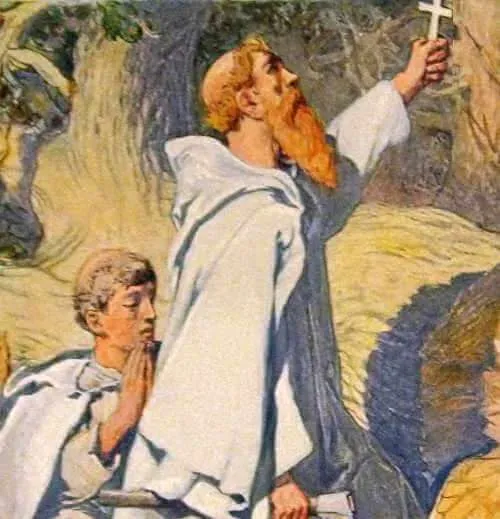
Legend has it that Bishop Boniface won the esteem of many of the pagans one day when he felled a huge oak tree considered sacred by the locals. It is said that after striking the tree with an ax, a powerful wind came and blew it over. The people were so surprised that Thor, the god of thunder, didn’t strike Boniface down that they began to inquire more about the Catholic faith. Bishop Boniface then used the wood of that tree to build a chapel and monastery under the patronage of Saint Peter.

Over the next thirty years, Bishop Boniface was a powerhouse of evangelization, organization, and reform. He built monasteries and churches, called synods in which clear ecclesiastical laws of governance for the Frankish church were established, worked with the Frankish kings and local authorities, served under four popes, and continued to create the foundational framework for the important mission of evangelization of the pagans.

At the age of seventy-nine, after being satisfied with his organization of the various dioceses throughout Germany, Bishop Boniface decided to return to Frisia, where it all had started, to preach and convert the remaining pagans. After much success, while preparing to celebrate the Sacrament of Confirmation for the new converts, Bishop Boniface and dozens of his companions were murdered, most likely by common thieves. When the murderers pillaged through their belongings, they found nothing of value to them, mostly books and letters that they threw in the forest, since they didn’t know how to read. Those books and letters were later found and are preserved, including a Bible believed to have been used as a shield by Bishop Boniface as he was slain by a sword. The bishop and his companions died with courage, not fighting back. The bishop’s last words are recorded as, “Cease, my sons, from fighting, give up warfare, for the witness of Scripture recommends that we do not give an eye for an eye but rather good for evil. Here is the long awaited day, the time of our end has now come; courage in the Lord!”

Saint Boniface is known as the “Apostle of Germany.” Early in his life, he heard God calling him to be a missionary, and he generously responded. As a result, God did powerful things through him for the good of his ancestral home and beyond. His impact was so great that the seeds he planted in Germany greatly contributed to the shaping of modern-day Europe. As you ponder the great fruit born by Saint Boniface’s courage and zeal, prayerfully offer your own life to God, vowing to serve Him and His Church in any way He calls.

Source: https://mycatholic.life/saints/saints-of-the-liturgical-year/june-5—saint-boniface-bishop-and-martyr/

Saint Boniface, Bishop and Martyr Read More »