September 2024

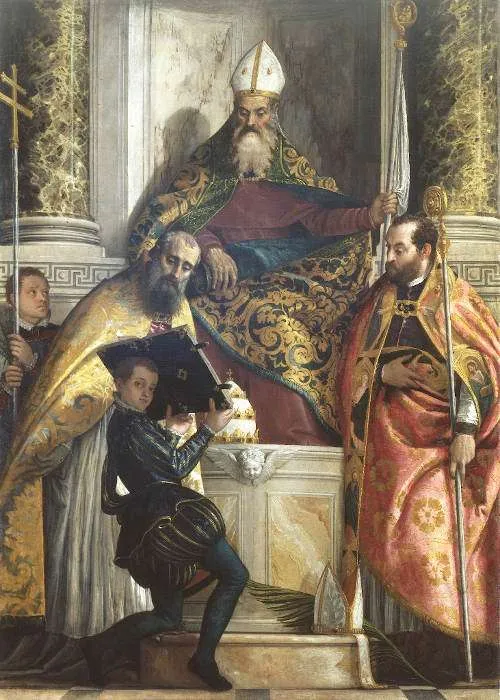
Saint Cornelius, Pope; Saint Cyprian, Bishop; Martyrs

Saint Cornelius: d. 253; Patron Saint of cattle and domestic animals; Invoked against earaches, epilepsy, fevers, and twitching

Saint Cyprian: c. 200–258; Patron Saint of Algeria and North Africa; Pre-Congregation canonizations

Today, we honor Saints Cornelius and Cyprian. Nothing is known about Cornelius’s upbringing and early life. In 251, he was elected as the twenty-first pope, a position he held until his death two years later. Cyprian, born Thascius Caecilius Cyprianus, was the son of wealthy pagan parents in North Africa. Well educated in Greco-Roman literature and rhetoric, he had a successful career as a lawyer and teacher. Around the age of forty-six, he converted to Christianity and gave much of his wealth away, devoting himself to prayer and asceticism. Within three years, he was ordained a deacon, a priest, and finally, the Bishop of Carthage, in modern-day Tunisia, North Africa, around the year 249.

In 250, Roman Emperor Decius implemented the first empire-wide, systematic persecution of Christians. He required all citizens to offer sacrifices to the Roman gods in the presence of Roman officials. Once citizens had performed this sacrilegious act, they received an official certificate of sacrifice confirming their compliance. Those who refused faced threats of property confiscation, torture, prison, and even death. Emperor Decius died in battle the following year, which brought an abrupt, albeit temporary, end to the persecution.

During the Decian persecutions, Pope Fabian had refused to offer sacrifices to the Roman gods and was martyred. Afterward, ongoing and fierce persecutions made it impossible to elect a successor to the Chair of Saint Peter. During that time, various priests in Rome, including a priest named Novatian, helped govern the Church. After fourteen months, once Emperor Decius died and the persecutions ended, a group of bishops gathered in Rome and elected Cornelius as the new pope. Novatian was displeased with this development and had himself ordained as a second bishop of Rome, positioning himself as the first antipope.

By 251, the Church faced internal conflict regarding what should be done with those who had complied with the sacrifices. These individuals were referred to as lapsi for lapsing in their faith. Some bishops supported reconciliation of the lapsi, while others did not. Among the supporters of mercy were Pope Cornelius and Bishop Cyprian.

The rival Bishop of Rome, Novatian, believed that the Church did not have the authority to forgive those who had offered sacrilegious sacrifices to the Roman gods. As a result, he believed that the lapsi could not be restored to full communion with the Church and readmitted to the sacraments. Pope Cornelius firmly disagreed, maintaining that after repentance and a period of public penance, the lapsi could be welcomed back into communion with the Church.

After Novatian became antipope, Pope Cornelius convened a synod of sixty bishops in Rome who supported him and jointly excommunicated Novatian. From there, bishops across the Roman Empire were invited to show their support for the legitimate pope and for the pastoral approach of reconciling the lapsi. One of the most fervent supporters of Pope Cornelius was Bishop Cyprian, who was among the sixty bishops who attended the synod in Rome. Following the synod, he wrote extensively to gain others’ support.

After Emperor Decius died, Gallus became the Roman emperor. Though Gallus did not continue the empire-wide persecution of Christians, he did support the restoration of pagan Roman religious practices. Within a year of becoming emperor, he had Pope Cornelius exiled to Centumcellae (modern-day Civitavecchia), a city just outside Rome, on the Mediterranean coast. A year later, due to harsh conditions, Pope Cornelius died in exile and is considered a martyr.

In 253, Emperor Gallus died in battle, and Valerian became Roman emperor. At first, he was somewhat indifferent to Christians; however, in 257, he initiated his own empire-wide persecution. He first decreed that the clergy had to participate in Roman pagan rituals. A year later, he ordered the death of bishops, priests, and deacons who refused to renounce their faith. Laypeople were stripped of their titles, and their property was confiscated. Bishop Cyprian was among those arrested in 257. In 258, he was put on trial in Carthage, and when he refused to renounce his faith, he was beheaded. When the sentence was pronounced, he exclaimed, “Thanks be to God!” In gratitude, he even gave his executioner a gold coin.

Being a man of exceptional learning, Saint Cyprian left behind a wealth of writings. He wrote many letters, providing us with a clear picture of the historical situation of the Church and the Roman world at that time. He defended the Church against the lapsi heresy, worked to end the Novatian schism, and wrote works on the unity of the Church, the Lord’s Prayer, Christian death, almsgiving, and the Sacraments.

Saints Cornelius and Cyprian lived and served Christ and His Church during a tumultuous time. They faced severe persecution from the state and led the people of God through that suffering by word and example. They also vigorously supported the unity of the Church, were merciful to sinners, and were true shepherds of their flocks.

As we honor these early saints, ponder the impact that they had on the early Church. Their witness affected the people of their time and has had an ongoing effect upon subsequent generations. Honor these holy men of God by imitating their courage and mercy in your own life so that God will use you to influence not only those in your life but also those who will come after you in ways that are known only to God.

Source: https://mycatholic.life/saints/saints-of-the-liturgical-year/saints-cornelius-and-cyprian/

Saint Cornelius, Pope; Saint Cyprian, Bishop; Martyrs Read More »
Luke 7:6-7

The Humility of Intercession

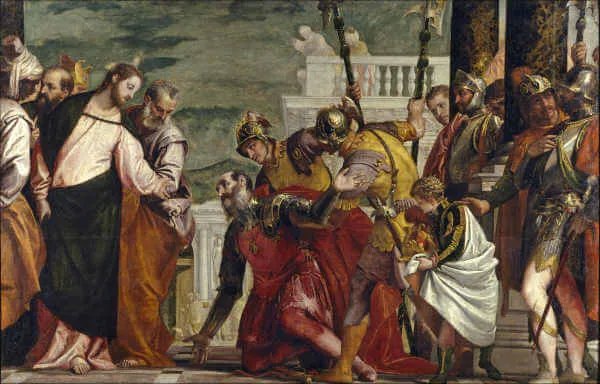
“Lord, do not trouble yourself, for I am not worthy to have you enter under my roof. Therefore, I did not consider myself worthy to come to you; but say the word and let my servant be healed.”

Reflection:

What’s interesting is that these humble words, spoken by a Roman centurion, were not actually spoken by the centurion to Jesus. This is because the centurion did not believe he was even worthy of going to Jesus himself. Therefore, he sent some of his friends to speak these words to Jesus on his behalf. In a real way, the friends of this centurion acted as intercessors before Jesus. Jesus’ response was to express amazement at the centurion’s faith. Jesus said to the crowd who was with Him, “I tell you, not even in Israel have I found such faith.” And at that point, the servant was healed by Jesus from a distance.

Most of the time, if we have an important request to make of another, we do so in person. We go to the person and speak face-to-face. And though we certainly can go to our Lord in prayer, face-to-face, person to Person, there is something very humble about bringing our needs to our Lord through the intercession of another. Specifically, there is something very humble about asking for the intercession of the saints.

Seeking the intercession of the saints before our Lord is not done because we are afraid of our Lord or because He would be offended by us going directly to Him. It is ideally done as an act of the utmost humility. By entrusting our prayer to those who are in Heaven, gazing upon the face of God, we do entrust our prayer to God. But relying upon the intercession of the saints is also a way of acknowledging that we are not worthy, by our own merits, to stand before the Lord and bring Him our request. This humility can be difficult to understand at times, but it’s important to try.

What is it that you need to pray for in your life right now? As you call that to mind, pick a saint to act as your friend and intercessor before God. Turn to that saint in humility and say a prayer to that saint, admitting that you are not worthy of going to our Lord on your own. Then entrust your petition to that saint and ask him or her to present that prayer to our Lord on your behalf. Praying to our Lord, through the intercession of a saint, is a way of also saying that you know Jesus’ response to you is pure mercy on His part. And the good news is that Jesus deeply desires to shower His mercy when we humble ourselves before Him, especially by coming to Him through the mediation of the saints. 

Reflect, today, upon the humility of this well-respected Roman centurion. Try to understand the power of his humble approach by which he sent his friends to Jesus on his behalf. As you do, pick a saint in Heaven and ask them to go to our Lord on your behalf and request that our Lord grant you the same humility and faith as this centurion. Doing so will lead our Lord to be amazed at your faith and humility also.

Source: https://catholic-daily-reflections.com/2024/09/15/the-humility-of-intercession-3/

Luke 7:6-7 Read More »

Twenty-fourth Sunday in Ordinary Time

First Reading Isaiah 50:5-9a

The Lord GOD opens my ear that I may hear;
and I have not rebelled,
have not turned back.
I gave my back to those who beat me,
my cheeks to those who plucked my beard;
my face I did not shield
from buffets and spitting.

The Lord GOD is my help,
therefore I am not disgraced;
I have set my face like flint,
knowing that I shall not be put to shame.
He is near who upholds my right;
if anyone wishes to oppose me,
let us appear together.
Who disputes my right?
Let that man confront me.
See, the Lord GOD is my help;
who will prove me wrong?

Responsorial Psalm Psalms 116:1-2, 3-4, 5-6, 8-9

R. (9) I will walk before the Lord, in the land of the living.

I love the LORD because he has heard
my voice in supplication,
because he has inclined his ear to me
the day I called.

R. I will walk before the Lord, in the land of the living.

The cords of death encompassed me;
the snares of the netherworld seized upon me;
I fell into distress and sorrow,
and I called upon the name of the LORD,
“O LORD, save my life!”

R. I will walk before the Lord, in the land of the living.

Gracious is the LORD and just;
yes, our God is merciful.
The LORD keeps the little ones;
I was brought low, and he saved me.

R. I will walk before the Lord, in the land of the living.

For he has freed my soul from death,
my eyes from tears, my feet from stumbling.
I shall walk before the Lord
in the land of the living.

R. I will walk before the Lord, in the land of the living.

Second Reading James 2:14-18

What good is it, my brothers and sisters,
if someone says he has faith but does not have works?
Can that faith save him?
If a brother or sister has nothing to wear
and has no food for the day,
and one of you says to them,
“Go in peace, keep warm, and eat well, “
but you do not give them the necessities of the body,
what good is it?
So also faith of itself,
if it does not have works, is dead.

Indeed someone might say,
“You have faith and I have works.”
Demonstrate your faith to me without works,
and I will demonstrate my faith to you from my works.

Alleluia Galatians 6:14

R. Alleluia, alleluia.

May I never boast except in the cross of our Lord
through which the world has been crucified to me and I to the world.

R. Alleluia, alleluia.

Gospel Mark 8:27-35

Jesus and his disciples set out
for the villages of Caesarea Philippi.
Along the way he asked his disciples,
“Who do people say that I am?”
They said in reply,
“John the Baptist, others Elijah,
still others one of the prophets.”
And he asked them,
“But who do you say that I am?”
Peter said to him in reply,
“You are the Christ.”
Then he warned them not to tell anyone about him.

He began to teach them
that the Son of Man must suffer greatly
and be rejected by the elders, the chief priests, and the scribes,
and be killed, and rise after three days.
He spoke this openly.
Then Peter took him aside and began to rebuke him.
At this he turned around and, looking at his disciples,
rebuked Peter and said, “Get behind me, Satan.
You are thinking not as God does, but as human beings do.”

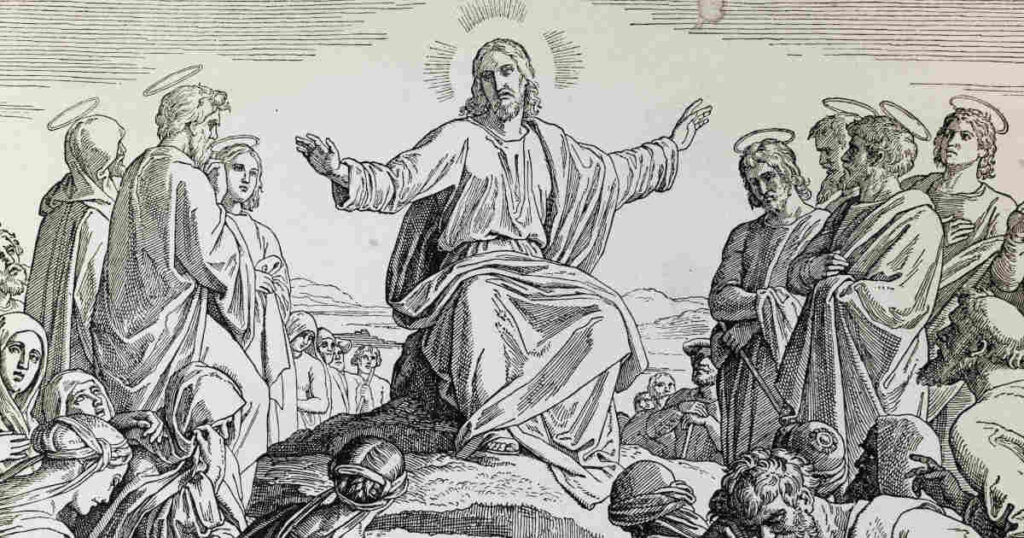
He summoned the crowd with his disciples and said to them,
“Whoever wishes to come after me must deny himself,
take up his cross, and follow me.
For whoever wishes to save his life will lose it,
but whoever loses his life for my sake
and that of the gospel will save it.”

Source: https://bible.usccb.org/bible/readings/091524.cfm

Twenty-fourth Sunday in Ordinary Time Read More »

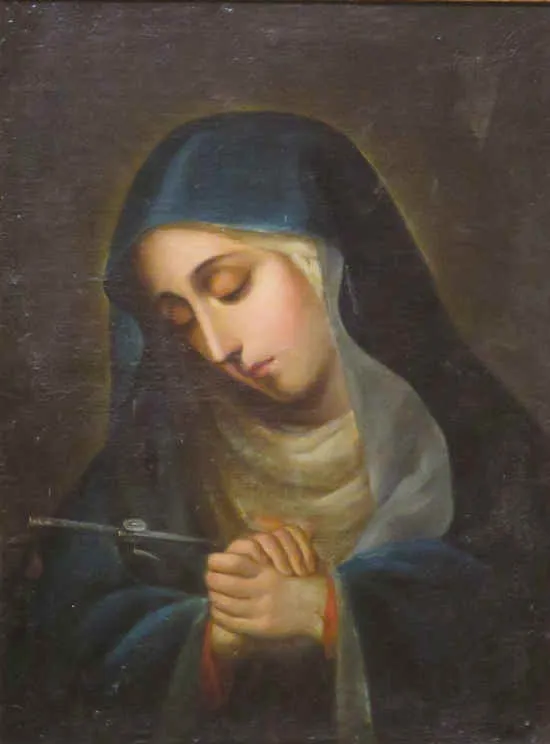
Our Lady of Sorrows

The roots of today’s memorial can be traced back to the New Testament, but the memorial wasn’t celebrated as a universal feast of the Church until 1814. Prior to that, devotion to Our Lady of Sorrows first emerged during local celebrations around the Mediterranean in the eleventh century.

In 1233, seven devout men in Florence each had a vision from the Blessed Virgin Mary, inspiring them to form a religious community that would later be known as the Servites. Around the year 1240, these same men received another vision of the Mother of God, accompanied by angels. She informed them about their mission, provided them with their habits, presented their rule of life, and personally founded their order. In that apparition, they were instructed to spread devotion to the Seven Sorrows of Mary, which became one of their central missions. Through the efforts of the Servite order in the subsequent centuries, the liturgical celebration honoring Our Lady of Sorrows gradually expanded.

In the late thirteenth century, the traditional prayer, Stabat Mater (Standing Mother), was composed and quickly became well known. This prayer emphasizes the deep sorrow in Mary’s Heart as she stood before the Cross with tremendous strength and motherly compassion for her Son.

In 1809, against the Pope’s wishes, Napoleon decided to annex the Papal States to the French empire. After Pope Pius VII excommunicated Napoleon, the emperor arrested the pope and imprisoned him from 1809–1814. After Napoleon’s defeat in 1814, Pope Pius VII was released. In gratitude for the protection granted to him and to the entire Church through the Blessed Mother’s intercession, the pope extended the feast of Our Lady of Sorrows to the entire Latin Church.

Traditionally, the Memorial of Our Lady of Sorrows commemorates the seven sorrows in the Heart of Mary as recorded in Scripture:

  1. The prophecy of Simeon (Luke 2:33–35)
  2. The flight into Egypt (Matthew 2:13–15)
  3. Loss of the Child Jesus for three days (Luke 2:41–50)
  4. Mary meets Jesus on His way to Calvary (Luke 23:27–31John 19:17)
  5. Crucifixion and Death of Jesus (John 19:25–30)
  6. The body of Jesus being taken from the Cross (Luke 23:50–54John 19:31–37)
  7. The burial of Jesus (Isaiah 53:8–9Luke 23:50–56John 19:38–42Mark 15:40–47)

The Blessed Virgin Mary first learned about the sword that would pierce her heart while presenting the Child Jesus in the Temple with Saint Joseph on the eighth day for His naming and circumcision. “Simeon blessed them and said to Mary His mother, ‘Behold, this child is destined for the fall and rise of many in Israel, and to be a sign that will be contradicted (and you yourself a sword will pierce) so that the thoughts of many hearts may be revealed’” (Luke 2:34–35). Simeon’s prophecy was the first piercing of her heart because it is the first scriptural record of Mary knowing that her Son would suffer. The next six traditional sorrows paint the developing picture of the fulfillment of that prophecy.

As we honor the Blessed Mother’s Sorrowful Heart, it’s important to understand that a “sorrowful” heart is not the same as a “sad” heart. Theologically speaking, sadness results from a form of self-pity, or an unhealthy attachment to something that was lost. Sorrow, on the other hand, is one of the Beatitudes, and therefore one of the holiest qualities we can possess. “Blessed are they who mourn, for they will be comforted” (Matthew 5:4). To “mourn” is to have a sorrowful heart. In this context of the Beatitudes, a heart that mourns is a heart that loves. Mourning, or holy sorrow, results from a heart that witnesses sin and grieves over it. In the Blessed Mother’s case, she witnessed the brutal treatment of her Son, His rejection, suffering, and death. She did not despair as she witnessed this. She did not become angry. She did not succumb to confusion and frustration. She did not withdraw into herself in self-pity. Instead, she reacted with the empathetic love that flows from the holiest of hearts. She felt holy sorrow—not so much because she felt bad for her Son, but because she grieved over the sins that inflicted that suffering, and longed to see those sins redeemed.

As we commemorate the Sorrowful Heart of Mary today, it is an important opportunity to reflect upon your own sorrow. Is your sorrow self-centered, dwelling over the wounds you feel? Or is it selfless—meaning, does your sorrow extend to others, grieving in a holy way over the sins you witness? When our sorrow is holy, we are filled with compassion and spiritual empathy. The word “compassion” means “to suffer with.” The Blessed Mother, united with her Son’s Sacred Heart, suffered with her sinful children as she watched their sins crucify her Son. She harbored no hate as she witnessed those sins, only an indescribable longing to see the grace of her Son pour forth upon those who had rejected Him and sinned against Him.

Ponder, today, the holy and Sorrowful Heart of the Blessed Virgin Mary. As you do, try to understand her heart more fully. The only way to comprehend the depth of love in her heart is through prayer. In prayer, God will reveal her immaculate love to you and inspire you to imitate her more fully, turning from all selfishness to more fully embrace selflessness, so as to share in the perfect love shared between this immaculate mother and her divine Son.

Source: https://mycatholic.life/saints/saints-of-the-liturgical-year/september-15-our-lady-of-sorrows/

Our Lady of Sorrows Read More »

Mark 8:34-35

A Spiritual U-Turn

He summoned the crowd with his disciples and said to them, “Whoever wishes to come after me must deny himself, take up his cross, and follow me. For whoever wishes to save his life will lose it, but whoever loses his life for my sake and that of the gospel will save it.”

Reflection:

Practically speaking, how do we follow Jesus and save our souls? Is it enough to profess that we believe in Jesus? If we were to arrive at the conclusion that Jesus is God and the Savior of the World, would we then be saved? Certainly not. Even the demons believe this truth. Jesus is quite clear that salvation requires action on our part. We must deny ourselves, take up our crosses, and follow Him. Furthermore, the road to salvation requires that we lose ourselves for the sake of Christ and the Gospel. What exactly does this mean, practically speaking?

To answer this question, let’s first consider the way that many people live. We tend to desire that which is the easiest in life, the most enjoyable, the greatest, and the most consoling. We often seek out those things that make us feel good and the path of least resistance. For example, if you could choose to fast on bread and water or feast on the most delicious foods, which would you choose? If you could choose between a vacation in the most exotic and luxurious location or a week of very difficult work, which would you choose? If you could choose to drive a brand new, high-end car or a very old beater, which one would you prefer? Most people would quickly pick the nice food, luxurious vacation and fancy new car.

In his spiritual classic, the Ascent to Mount Carmel, Saint John of the Cross outlines a very different path. He gives a series of spiritual maxims to use for prayer and meditation to help purify your soul of every unhealthy attachment so that you can become more fully attached to God and His holy will. St. John says, “Strive always to prefer, not that which is easiest, but that which is most difficult; Not that which is most attractive, but that which is most unpleasant; Not that which gives most pleasure, but rather that which gives least…” These spiritual maxims, when read in their entirety, challenge us to the core of our being. They quickly reveal to those who are honest that they often prefer the easiest, most pleasant and best that this world has to offer. But what is best for your eternal soul?

Jesus’ teaching, that we must deny ourselves, take up our cross, and follow Him, is the road map to saving your eternal soul and to discovering a spiritual fulfillment that far surpasses anything this world or our flesh have to offer. But in order to understand this road map and then to follow it, we often need to make a “spiritual U-turn” so to speak. This U-turn begins with us choosing the Cross on every level of our being and concludes with God stripping away all selfish desires and replacing them with a desire for sacrificial love.

If you were to carefully examine your thoughts throughout the day, you might find that you think about yourself a lot. “I like this, don’t want to do that, am angry about this, and am trying to avoid that…” Very often, our thoughts begin with “I” and end with “me.” Denying yourself, taking up your cross, and losing your life means that you no longer think about yourself. It means that the eyes of your soul have turned away from yourself and focus exclusively upon the will of God and the love of others. But this will never be possible until we are freed of the numerous selfish desires that often direct most of our actions day in and day out.

Reflect, today, upon that which you desire throughout your day. What occupies your thoughts the most? What are you drawn to the most? Do you spend most of your day thinking about how you can better serve God and His holy will? Or do you spend most of your day thinking about yourself? Do the eyes of your soul most often turn to the selfless service of others? Or do they more often think about what you want in a selfish way? Reflect upon these difficult questions and seek to eradicate everything within you that is selfish. Doing so will enable you to make a spiritual U-turn so that you can carry the glorious and transforming Cross of Christ.

Source: https://catholic-daily-reflections.com/2024/09/14/a-spiritual-u-turn/

Mark 8:34-35 Read More »

Exaltation of the Holy Cross

The Feast of the Exaltation of the Holy Cross, also known as the Feast of the Triumph of the Cross, commemorates three historical events: the discovery of the True Cross in 326, its initial exaltation for public veneration in 335, and the recovery of the Cross from the Persians in 628. Nowadays, this feast also celebrates the boundless impact of Christ’s Cross upon all of creation.

The Edict of Milan, issued in 313, granted religious freedom across the Roman Empire. This was a mutual agreement between Roman Emperors Constantine I in the West and Licinius in the East. Before this edict, Christians had endured various state-sponsored persecutions over the prior two and a half centuries.

After the Edict was signed, from 314 to 324, Constantine and Licinius were in continual conflict. The tension escalated when Constantine accused Licinius of plotting against him. In 324, Constantine defeated Licinius in battle and subsequently executed him on charges of conspiracy. This made Constantine the sole ruler of the Roman Empire, including Jerusalem, which had previously been under Licinius’s control.

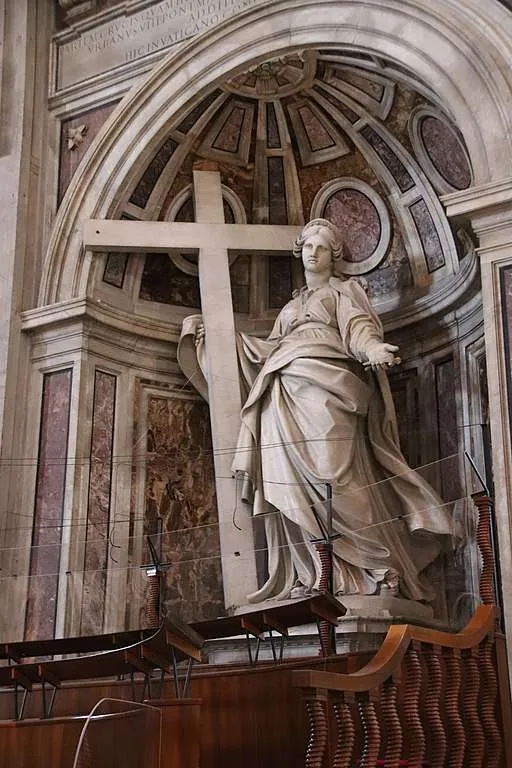
In 326, Constantine’s mother, Saint Helena, a devout Christian, embarked on a pilgrimage to the Holy Land. Her mission was to identify significant sites from Christ’s life and establish churches at those locations. In Jerusalem, she aimed to find the True Cross and to build a church over the sites of Mount Calvary and Jesus’ tomb, known as the Holy Sepulchre. Upon identifying Mount Calvary and the empty tomb, she discovered three discarded and buried crosses. After an investigation, the local bishop confirmed they were the crosses used to crucify Jesus and the two thieves. Since Helena did not know which cross was Christ’s, she arranged for a sick woman to touch all three. The woman was immediately healed upon touching one of them, indicating that it was the True Cross.

Following the discovery of the True Cross, Mount Calvary, and Christ’s tomb, Emperor Constantine ordered the construction of a church to encompass these sites and house the True Cross. The Church of the Holy Sepulchre was erected and dedicated on September 13, 335. As the legend goes, the following day, Christ’s Cross was brought outside the newly built church for the faithful to venerate. Thus, the first showing, or Exaltation of the Holy Cross, might have occurred on September 14, 335. Over the next three centuries, because liturgical celebrations were not widely centralized, the Feast of the Exaltation of the Holy Cross was likely celebrated annually in Jerusalem and varied in other ecclesiastical jurisdictions.

In 614, the Persians invaded Jerusalem and took the True Cross as a trophy. The Persians, primarily followers of the ancient religion of Zoroastrianism, were not Christians. Allowing the Holy Cross to remain in their possession was seen as sacrilegious. Eight years later, in 622, Eastern Roman Emperor Heraclius initiated military campaigns to recapture Jerusalem and the True Cross. Finally, in 628, he triumphed, and the following year, Emperor Heraclius entered Jerusalem with the True Cross, restoring it to the Church of the Holy Sepulchre. After that, the Feast of the Holy Cross became a universal celebration within the Church, starting in Rome and subsequently spreading throughout the entire empire, and has been celebrated annually on September 14 ever since.

Although we commemorate these three historical events today, the core of our celebration is not the physical wood of the Cross or the holy sites where Jesus died and was buried. Our primary focus is the infinite love shown through the selfless and perfect Sacrifice of the Son of God and the boundless mercy that has poured forth upon the world as a result. The Cross itself is a cruel instrument of torture and death. The fact that it is now the symbol of God’s perfect love only further magnifies that love and showcases God’s infinite power to use the worst for the best: to use death to bring life and to transform the greatest act of cruelty ever known into the greatest act of mercy ever bestowed upon the world.

The Cross of Christ must permeate each one of us, transforming us and making us new. First and foremost, this happens when we open ourselves to the infinite mercy of God flowing from that selfless Sacrifice. It also occurs when we allow every one of our sufferings, the injustices we endure, the crosses, hardships, and most undesirable aspects of our lives to share in the redemptive power of Christ. We do this when we embrace Jesus’ commands to share in His sufferings, unite them with His own, and allow Him to bear an abundance of good fruit through us. “Whoever wishes to come after me must deny himself, take up his cross, and follow me. For whoever wishes to save his life will lose it, but whoever loses his life for my sake will find it” (Matthew 16:24–25).

As we commemorate the triumph of Christ’s Cross, call to mind the crosses you bear each day. More often than not, when faced with crosses, we seek a way out, succumb to self-pity, and are often tempted by anger and despair. Instead, try to allow Jesus to enter those crosses, transform them, and use them for His glory, your good, and the good of others. Crosses in life should not be avoided; they must be transformed. Although the suffering may remain, it must become redeemed suffering, thus bearing an abundance of good fruit in ways that only God can accomplish.

Source: https://mycatholic.life/saints/saints-of-the-liturgical-year/september-14the-exaltation-of-the-holy-cross-of-our-lord-jesus-christ/

Exaltation of the Holy Cross Read More »

John 3:16-17

The Transforming Power of the Cross

For God so loved the world that he gave his only Son, so that everyone who believes in him might not perish but might have eternal life. For God did not send his Son into the world to condemn the world, but that the world might be saved through him. 

Reflection:

If Jesus would never have given His life on a cross for the salvation of the world, then a cross would never have been seen in “exultation.” A cross, in and of itself, is an instrument of death, a horrific and violent death. It’s also an instrument of humiliation and torture. Yet, today, the Cross is seen as a holy and blessed object. We hang crosses in our homes, wear them around our neck, keep them in our pocket on the end of the rosary, and spend time in prayer before them. The Cross is now an exalted image by which we turn to God in prayer and surrender. But that is only the case because it was on a cross that we were saved and brought to eternal life.

If you step back and consider the amazing truth that one of the worst instruments of torture and death is now seen as one of the holiest of images on earth, it should be awe inspiring. Comprehending this fact should lead us to the realization that God can do anything and everything. God can use the worst and transform it into the best. He can use death to bring forth life.

Though our celebration today, the “Feast of the Exaltation of the Holy Cross,” is first and foremost a feast by which we give glory to the Father for what He did in the Person of His divine Son, it is also a feast by which we must humbly understand that God can “exalt” every cross we endure in life and bring forth much grace through them.

What is your heaviest cross? What is the source of your greatest suffering? Most likely, as you call this to mind, it is painful to you. Most often, our crosses and sufferings are things we seek to rid ourselves of. We easily point to crosses in life and blame them for a lack of happiness. We can easily think that if only this or that were to change or be removed, then our life would be better. So what is that cross in your life?

The truth is that whatever your heaviest cross is, there is extraordinary potential for that cross to become an actual source of grace in your life and in the world. But this is only possible if you embrace that cross in faith and hope so that our Lord can unite it to His and so that your crosses can also share in the exaltation of Christ’s Cross. Though this is a profoundly deep mystery of faith, it is also a profoundly deep truth of our faith.

Reflect, today, upon your own crosses. As you do, try not to see them as a burden. Instead, realize the potential within those crosses. Prayerfully look at your crosses as invitations to share in Christ’s Cross. Say “Yes” to your crosses. Choose them freely. Unite them to Christ’s Cross. As you do, have hope that God’s glory will come forth in your life and in the world through your free embrace of them. Know that these “burdens” will be transformed and become a source of exaltation in your life by the transforming power of God.

Source: https://catholic-daily-reflections.com/2024/09/13/the-transforming-power-of-the-cross-3/

John 3:16-17 Read More »

Saint John Chrysostom, Bishop and Doctor

c. 347–407; Patron Saint of preachers, orators, lecturers, and public speakers; Invoked against epilepsy; Pre-Congregation canonization

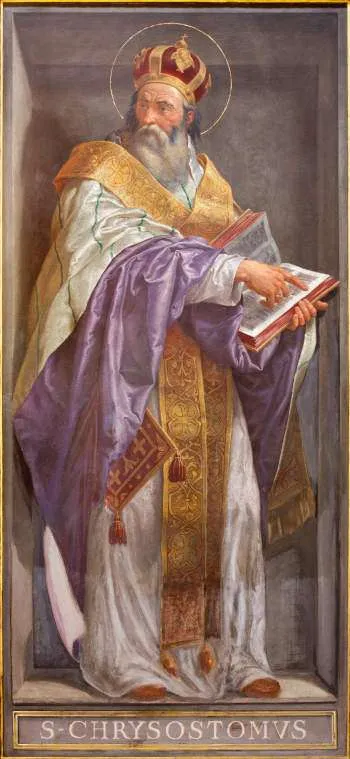
Saint John Chrysostom was born as John of Antioch. “Chrysostom” is a title attributed to him, meaning “Golden Mouth,” an honorific Greek title emphasizing the power of his preaching and writings. He was born in Antioch, modern-day Turkey, to Christian parents. His father was a high-ranking military officer who died shortly after John’s birth. John’s twenty-year-old widowed mother opted not to remarry, choosing instead to devote herself entirely to raising her son and John’s older sister.

Antioch was an important city within the Roman Empire at that time. It was one of the first cities outside of Jerusalem where the Christian Church was established. The Acts of the Apostles tells us that shortly after Christians began preaching in Antioch, Saints Paul and Barnabas arrived and strengthened the Church. Tradition holds that Saint Peter was the first bishop of Antioch before traveling to Rome. The Bible also states that “it was in Antioch that the disciples were first called Christians” (Acts 11:26).

By the time of John’s birth, Christianity had been legalized in the Roman Empire. Although there were many Christians in Antioch, it remained a diverse city with various religious beliefs, including Greek paganism, which significantly influenced its learning and culture. There were also Roman, Syrian, and Jewish populations and influences. The city boasted beautiful temples, theaters, an aqueduct, and a marvelous central street adorned with marble and colonnades.

As a youth, John received a comprehensive Greek education in the classics under Libanius, a pagan rhetorician who was one of the most famous teachers of his time. John studied Greek literature and philosophers, such as Plato and Aristotle, among others. Libanius, firmly rooted in Greco-Roman pagan religion and culture, later said that John would have been one of the greatest pagan orators and philosophers of the time, “if the Christians had not taken him from us.”

Around the age of twenty, John met Bishop Meletius, a man of stellar character and intelligence, and a powerful preacher. Over the next three years, John abandoned his pagan studies and began devoting himself to the study of Scripture, the ascetic life, and prayer. He was baptized, became a lector, and underwent a profound conversion. Feeling drawn to a life of greater solitude and prayer, he became a hermit, living in a cave near Antioch, where he embraced extreme fasting and other ascetic practices, and studied the Bible continuously—allegedly memorizing most of it—for several years. After about eight years as a hermit, John’s health was compromised from extreme fasting and penance, and he returned to Antioch to recover.

In Antioch, around the year 381, when John was about thirty-three years old, he was ordained a deacon. His years of prayer, Scripture study, and penance prepared him well for this time of more public service in the Church. About five years later, he was ordained a priest and spent around eleven years in Antioch in a very fruitful ministry. During this period, he wrote most of his sermons and commentaries, many of which still exist. His writings—containing profound works of dogmatic, moral, and historical teachings from the early Church—reveal a deep understanding of the Sacred Scripture. They are practical, relevant, and bold, never shying away from condemning prevalent sins, while being deeply pastoral in nature. He became well known and highly influential, his fame extending beyond Antioch.

At that time, Bishop Flavian was Bishop of Antioch. Many presumed that Father John would be his successor. However, in 397, the Archbishop of Constantinople died, and soon after, the Roman Emperor—to avoid causing an uproar in Antioch—secretly sent for Father John, appointing him as the archbishop’s successor. He was ordained as Archbishop of Constantinople by the Patriarch of Alexandria in the presence of many other bishops and prominent churchmen.

Constantinople was the capital of the Eastern Roman Empire and the most important archbishopric in the East.  Archbishop John’s powerful position brought with it much wealth, prestige, and power. However, he immediately eliminated many of the extravagances that were commonplace, lived in simplicity, cared for the poor, railed against sin, rooted out abuses among the clergy, and continued his fiery preaching. As the Roman Empire had only recently become Christian, much of the pagan culture and lifestyles remained. The new archbishop sought to create a new civilization and culture based on Scripture. His sermons offered clear moral and spiritual guidance on how to live and what society as a whole should embrace. He especially preached against the materialism and extravagances of the imperial court. He quickly gained the respect of many citizens but also made enemies who felt he was too strict and took offense to him. This was especially true of those living luxurious and immoral lives, including Empress Eudoxia.

In the year 403, through the schemes of the empress, Archbishop John was falsely accused of heresy and cruelty to the empress, deposed, and exiled. However, due to a sudden natural disaster that damaged the imperial palace, along with a revolt among the people, he was recalled for fear of God’s wrath. Before long, however, he was exiled again because he refused to abandon his fearless preaching. While in exile, he remained hopeful he would return and regularly wrote to his people. The pope and the Western Roman Emperor tried to intervene, but to no avail. After three years in exile, he was ordered to be taken to the edge of the Roman Empire where he would be even more isolated. Due to harsh conditions on the journey and the cruelty of the soldiers that exacerbated his already poor health, he died en route.

Saint John Chrysostom was a convert, a holy deacon, an influential priest, an exceptionally consequential archbishop, and a prolific writer. This latter quality ultimately earned him the distinction of being a Doctor of the Church. In addition to his pastoral work, he left behind about 700 sermons, hundreds of letters, commentaries on Scripture, theological treatises—including important teachings on the Eucharist and priesthood—and other writings that remain influential today.

As we honor this “golden-mouth” preacher and teacher of the faith, ponder your own need for clear, relevant, and convincing teachers of the faith. As you do, reflect upon ways that you can better expose yourself to the wealth of catechetical insights within our Church to help you grow in your own faith. By actively seeking out good teachers, preachers, and writings, we allow God to form us and draw us closer to Himself.

Source: https://mycatholic.life/saints/saints-of-the-liturgical-year/september-13st-john-chrysostom/

Saint John Chrysostom, Bishop and Doctor Read More »

Luke 6:41

Seeing Through the Eyes of God

“Why do you notice the splinter in your brother’s eye, but do not perceive the wooden beam in your own?” 

Reflection:

Saint Teresa of Ávila, one of the greatest spiritual writers and doctors of the Church, explains in her spiritual masterpiece “Interior Castles,” that one of the first steps on the path to holiness is self-knowledge. Self-knowledge produces humility, because humility is simply having a true opinion about yourself. When a person fails to know themself from the true perspective of the mind of God, then they open themselves up to many errors of judgment. One such error is that they can easily become fixated upon their perceived sins of others.

The Gospel passage quoted above depicts a person who gravely lacks self-knowledge. Why? Because they “do not perceive the wooden beam” in their own eye, meaning, they do not see their own sin. As a result, Jesus explains that this person also becomes fixated upon the “splinter” in their brother’s eye.

When you consider your own thoughts, what do you dwell upon the most all day long? Do you honestly look inward, seeking to know yourself as God knows you? Or do you spend excessive time thinking about others, analyzing and judging their actions? This is an important question to ask yourself and to answer with honesty.

The best way to know yourself is to gaze upon Jesus. When He becomes the focus of your attention throughout the day, you will not only come to know Him, but you will also come to know yourself more honestly. Gazing at the beauty and perfection of our Lord will have the double effect of knowing Him and knowing yourself through His eyes. It will also help you to know others as He sees them.

How does Jesus look at those around you? He looks at them with perpetual mercy. True, at the end of every life, when we pass from this world to the next, we will encounter our particular judgment from our Lord. But while here on earth, God continually gazes upon us with mercy. For that reason, mercy must become our daily mission, and we must build a habit of gazing upon everyone in our life with the eyes of mercy.

Reflect, today, upon our Lord. Look at Him, gaze upon Him, seek to know Him and make Him the focus of your attention. As you do, try to dismiss from your thinking process your own perceived judgments of others. Allow your gaze upon our Lord to help you to not only see Him but to also see others through His eyes. Build this habit and you will be on the fast track to the path to holiness.

Source: https://catholic-daily-reflections.com/2024/09/12/seeing-through-the-eyes-of-god-2/

Luke 6:41 Read More »

Holy Name of the Blessed Virgin Mary

The Battle of Lepanto on October 7, 1571 was a pivotal naval conflict where the Holy League—a coalition of various Catholic maritime states—successfully defeated the Ottoman fleet. To give thanks for this victory, Pope Pius V instituted the feast of Our Lady of Victory, later known as the feast of Our Lady of the Rosary.

Just over a century later, another critical battle took place. On September 12, 1683, the Battle of Vienna was fought. The Christian forces of the Holy Roman Empire and the Polish-Lithuanian Commonwealth, under the command of Poland’s King John III Sobieski, were victorious against the significantly larger Ottoman Empire’s forces. Prior to this battle, King John III Sobieski had entrusted his troops to the Blessed Virgin Mary, visiting the Shrine of Our Lady of Czestochowa. The victory was attributed to her intercession, and in gratitude, Pope Innocent XI instituted the feast of the Holy Name of the Blessed Virgin Mary into the universal calendar of the Church the following year, 1684.

Of course, reverence for the Holy Name of the Blessed Virgin Mary did not begin in 1684. Prior to that, this feast was celebrated in various localities throughout the Church at various times. Reverence for the name of Mary, however, goes back much further. The Council of Ephesus in 431 taught that the Blessed Virgin Mary was properly called the “Mother of God,” or “God-Bearer” (Theotokos). By the sixth century, the angelic greeting in Luke 1:28 was commonly used as a prayer, “Hail, Mary, full of grace, the Lord is with you!” By the fourteenth century, the second part of the Hail Mary prayer was often used in conjunction, “Holy Mary, Mother of God, pray for us sinners, now and at the hour of our death.” In the sixteenth century, the Council of Trent, in its catechism, formally recommended this entire prayer, as we have it today, to the faithful.

It’s also providential to note that the date of September 12 falls shortly after we celebrate the Feast of the Birth of the Blessed Virgin Mary on September 8. When the Romans ruled Palestine, it was customary that newborn daughters were given their names at birth, or shortly afterwards. Thus, the Church celebrates Mary’s naming day four days after the celebration of her birth. Firstborn male children were traditionally named and circumcised in the Temple on the eighth day after their birth. Hence, we celebrate the Memorial of the Holy Name of Jesus on January 3, shortly after the completion of the Octave of Christmas on January 1. Mary and Jesus are the only two Who have liturgical celebrations honoring their names.

Names bring with them much significance and meaning. When addressing someone formally and directly, it is common to first state their name. A name uniquely identifies and dignifies the person. For this reason, in praying to our Lord it is common practice to call on His name, “Jesus!” So also with Mary. Calling on her by name is a way of seeking her prayers in a personal and intimate way. Hence, the names of Jesus and Mary should be seen and understood as being powerful, compelling us to call upon them personally, with trust in Who they are.

As we honor the Holy Name of the Blessed Virgin Mary today, reflect upon the depth of trust you have in her motherly intercession. Kings and armies called upon her for protection and victory. Sinners have sought her motherly help to overcome their weaknesses. Saints have entrusted themselves to her, knowing that she would elevate them and present them to her divine Son. Popes have sung her praises. Church councils have taught definitively about her role in salvation history. All who call upon her should have certainty that their prayers will be heard. Turn to her today, entrust yourself to her intercession, and have confidence that her prayers will win for you an abundance of grace and mercy from her Son.

Source: https://mycatholic.life/saints/saints-of-the-liturgical-year/september-12—the-holy-name-of-mary/

Holy Name of the Blessed Virgin Mary Read More »