September 2024

Saint Margaret of Louvain

Profile

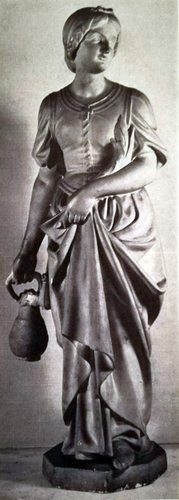
Born to a poor family, in her late teens Margaret began working as a maid at the Sint Joris, an inn in Louvain, Belgium owned by her uncle Aubert. Aubert and his wife eventually sold the inn, each planning to enter religious life; Margaret planned to become a Cistercian nun. On their last night in the inn, thieves broke in and killed the erstwhile owners while Margaret was out. She came home as the killers were leaving, and she was murdered, too. Devotion developed after miracles occurred near her original grave site beside the river.

Born

1207 at Louvain, Brabant, Belgium

Died

  • throat cut on 2 September 1225 at Louvain, Brabant, Belgium
  • body thrown into the river Deel by her killers
  • the body was recovered, and buried along the river bank; legend says that a large fish pushed the body up-stream and an angel hovered over the river, shining a light on
  • the body until some one came to recover it
    the body was later transferred to Saint Peter’s Church in Louvain
  • many miracles reported at her tomb

Beatified

1905 by Pope Saint Pius X (cultus confirmed)

Patronage

  • martyrs

Source: http://catholicsaints.mobi/calendar/2-september.htm

Saint Margaret of Louvain Read More »

Luke 4:28-30

An Emotional Reaction to Jesus

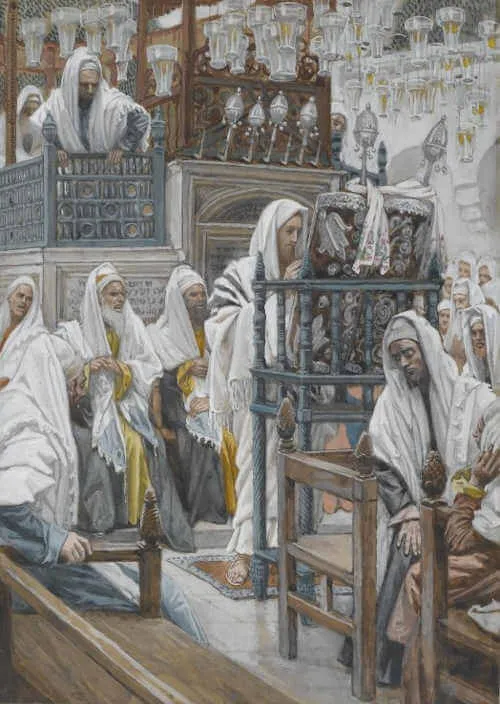
When the people in the synagogue heard this, they were all filled with fury. They rose up, drove him out of the town, and led him to the brow of the hill on which their town had been built, to hurl him down headlong. But he passed through the midst of them and went away.

Reflection:

It’s hard to believe that those people who knew Jesus, those from the town in which He had been raised, reacted in such a severe way to our Lord. Jesus had just entered the Synagogue and read from the Prophet Isaiah who stated that “the Spirit of the Lord” was upon him and that he had come to “proclaim liberty to captives.” Jesus’ mission was clear. He was the Messiah, sent from the Father, in fulfillment of the teachings of the prophets, and yet Jesus was rejected to the point that the people drove Him out of the town and tried to throw Him off a cliff near the town to kill Him. Again, it’s hard to comprehend the extreme emotions that people experienced in regard to Jesus. Some came to love Jesus with the deepest passion, others were outraged at Him and sought His life.

One thing that these extreme emotions experienced by many should tell us is that we cannot remain indifferent to Jesus when we truly listen to His words. Indifference comes when Jesus is ignored. But when He is heard and understood, it is clear that His message demands a response. If we do not fully accept Him as we listen to His message, then we will be tempted to reject Him and all that He speaks.

Jesus wants to do the same with us. He wants a response from us. First, He wants us to hear Him, to understand the radical nature of His message, and then to make a choice. He wants us to follow Him with passion and zeal, to believe in everything He teaches, and to radically change our lives as a result. And if we will not change, then Jesus’ words will challenge us and evoke a response.

One example of this that is common today is the strong response that sometimes comes from a teenager or young adult when a loving parent confronts them when they begin to go astray. When confronted in love and with the truth, emotion is often evoked and stirred up. But that is not always bad. The temptation on the part of the parent is to back off and compromise. But that’s not what Jesus did with the townspeople. He spoke the truth in love and accepted their response. So it is with those in our lives. At times we must speak the hard but loving truth others need to hear even if we know they will lash out. In the end, challenging them with compassion and truth may ultimately win them over. We do not know what ultimately happened to those townspeople who tried to kill Jesus that day out of anger, but it is entirely possible that the extreme emotion they experienced eventually led them to the truth.

Reflect, today, upon the courage and love Jesus had as He directly confronted and challenged His own townspeople for their lack of faith. Try to understand that Jesus’ challenge of them was a mercy He offered them to move them from indifference. In your life, are there ways in which you need to be challenged? Are there things you have reacted strongly to and even with a form of rage? Try to see yourself as one of those townspeople who became enraged by our Lord. Be open to any way that you have reacted negatively to that which Jesus has spoken to you. Consider, also, any ways that Jesus may want to use you to speak His clear message of love to another, even if you know it may not immediately be received. Pray for courage, compassion, clarity and love so that you will be able to imitate Jesus as He sought to move those of His own hometown out of the indifference they were experiencing.

Source: https://catholic-daily-reflections.com/2024/09/01/an-emotional-reaction-to-jesus-3/

Luke 4:28-30 Read More »

Twenty-second Sunday in Ordinary Time

First Reading Deuteronomy 4:1-2, 6-8

Moses said to the people:
“Now, Israel, hear the statutes and decrees
which I am teaching you to observe,
that you may live, and may enter in and take possession of the land
which the LORD, the God of your fathers, is giving you.
In your observance of the commandments of the LORD, your God,
which I enjoin upon you,
you shall not add to what I command you nor subtract from it.
Observe them carefully,
for thus will you give evidence
of your wisdom and intelligence to the nations,
who will hear of all these statutes and say,
‘This great nation is truly a wise and intelligent people.’
For what great nation is there
that has gods so close to it as the LORD, our God, is to us
whenever we call upon him?
Or what great nation has statutes and decrees
that are as just as this whole law
which I am setting before you today?”

Responsorial Psalm Psalms 15:2-3, 3-4, 4-5

R. (1a) The one who does justice will live in the presence of the Lord.

Whoever walks blamelessly and does justice;
who thinks the truth in his heart
and slanders not with his tongue.

R. The one who does justice will live in the presence of the Lord.

Who harms not his fellow man,
nor takes up a reproach against his neighbor;
by whom the reprobate is despised,
while he honors those who fear the LORD.

R. The one who does justice will live in the presence of the Lord.

Who lends not his money at usury
and accepts no bribe against the innocent.
Whoever does these things
shall never be disturbed.

R. The one who does justice will live in the presence of the Lord.

Second Reading James 1:17-18, 21b-22, 27

Dearest brothers and sisters:
All good giving and every perfect gift is from above,
coming down from the Father of lights,
with whom there is no alteration or shadow caused by change.
He willed to give us birth by the word of truth
that we may be a kind of firstfruits of his creatures.

Humbly welcome the word that has been planted in you
and is able to save your souls.

Be doers of the word and not hearers only, deluding yourselves.

Religion that is pure and undefiled before God and the Father is this:
to care for orphans and widows in their affliction
and to keep oneself unstained by the world.

Alleluia James 1:18

R. Alleluia, alleluia.

The Father willed to give us birth by the word of truth
that we may be a kind of firstfruits of his creatures.

R. Alleluia, alleluia.

Gospel Mark 7:1-8, 14-15, 21-23

When the Pharisees with some scribes who had come from Jerusalem
gathered around Jesus,
they observed that some of his disciples ate their meals
with unclean, that is, unwashed, hands.
—For the Pharisees and, in fact, all Jews,
do not eat without carefully washing their hands,
keeping the tradition of the elders.
And on coming from the marketplace
they do not eat without purifying themselves.
And there are many other things that they have traditionally observed,
the purification of cups and jugs and kettles and beds. —
So the Pharisees and scribes questioned him,
“Why do your disciples not follow the tradition of the elders
but instead eat a meal with unclean hands?”
He responded,
“Well did Isaiah prophesy about you hypocrites, as it is written:
This people honors me with their lips,
but their hearts are far from me;
in vain do they worship me,
teaching as doctrines human precepts.

You disregard God’s commandment but cling to human tradition.”

He summoned the crowd again and said to them,
“Hear me, all of you, and understand.
Nothing that enters one from outside can defile that person;
but the things that come out from within are what defile.

“From within people, from their hearts,
come evil thoughts, unchastity, theft, murder,
adultery, greed, malice, deceit,
licentiousness, envy, blasphemy, arrogance, folly.
All these evils come from within and they defile.”

Source: https://bible.usccb.org/bible/readings/090124.cfm

Twenty-second Sunday in Ordinary Time Read More »

Saint Giles

Profile

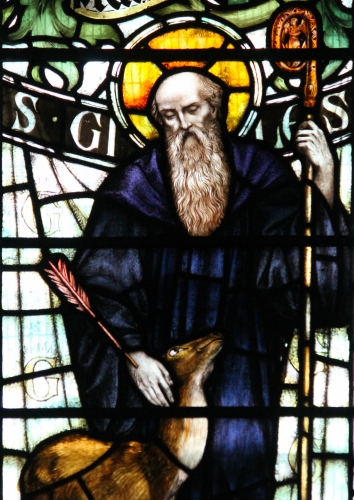
Giles was born to a wealthy noble family. When his parents died, Giles gave his fortune to help the poor. He was known as a miracle worker. To avoid followers and adulation, he left Greece in c.683 for France where he lived as a hermit in a cave in the diocese of Nimes, a cave whose mouth was guarded by a thick thorn bush, and a lifestyle so impoverished that, legend says, God sent a deer to Giles to nourish him with her milk.

One day after he had lived there for several years in meditation, a royal hunting party chased the hind into Giles’ cave. One hunter shot an arrow into the thorn bush, hoping to hit the deer, but instead hit Giles in the leg, crippling him. The king sent doctors to care for the hermit‘s wound, and though Giles begged to be left alone, the king came often to see him.

From this, Gile’s fame as sage and miracle worker spread, and would-be followers gathered near the cave. The French king, because of his admiration, built the monastery of Saint Gilles du Gard for these followers, and Giles became its first abbot, establishing his own discipline there. A small town grew up around the monastery, and upon Giles’ death, his grave became a shrine and place of pilgrimage; the monastery later became a Benedictine house.

The combination of the town, monastery, shrine and pilgrims led to many handicapped beggars hoping for alms; this and Giles’ insistence that he wished to live outside the walls of the city, and his own damaged leg, led to his patronage of beggars, and to cripples since begging was the only source of income for many. Hospitals and safe houses for the poor, crippled, and leprous were constructed in England and Scotland, and were built so cripples could reach them easily. On their passage to Tyburn for execution, convicts were allowed to stop at Saint Giles’ Hospital where they were presented with a bowl of ale called Saint Giles’ Bowl, “thereof to drink at their pleasure, as their last refreshing in this life.”

In Spain, shepherds consider Giles the protector of rams. It was formerly the custom to wash the rams and colour their wool a bright shade on Giles’ feast day, tie lighted candles to their horns, and bring the animals down the mountain paths to the chapels and churches to have them blessed. Among the Basques, the shepherds come down from the Pyrenees on 1 September, attired in full costume, sheepskin coats, staves, and crooks, to attend Mass with their best rams, an event that marks the beginning of autumn festivals, marked by processions and dancing in the fields. He was one of the Fourteen Holy Helpers, the only one not to die as a martyr.

Born

at Athens, Greece

Died

  • between 710 and 724 in France of natural causes
  • legend says that those who attended his funeral heard choirs of angels singing and then fading away as they carried his soul to heaven
  • his tomb is in the crypt of the abbey church of Saint-Gilles in Gard, France
  • in 1562, Huguenots burned the abbey, murdered the monks, looted the church, and vandalized the tomb; the surviving relics of Saint Giles were distributed to other churches
  • in Scotland in the seventeenth century, his relics were stolen from a church which triggered a great riot

Canonized

  • Pre-Congregation

Patronage

  • abandoned people; against abandonment
  • against breast cancer
  • against epilepsy
  • against fear of night
  • against insanity
  • against leprosy
  • against mental illness
  • against noctiphobia
  • against sterility
  • beggars
  • blacksmiths
  • breast feeding
  • cancer patients
  • cripples
  • disabled people
  • epileptics
  • forests
  • handicapped people
  • hermits
  • horses
  • lepers
  • mentally ill people
  • mothers
  • noctiphobics
  • physically challenged people
  • paupers
  • poor people
  • rams
  • spur makers
  • woods
  • in Austria
    – Graz
    – Klagenfurt
  • in Italy
    – Altavilla Silentina
    – Camerata Nuova
    – Caprarola
    – Cavezzo
    – Latronico
    – Monte San Savino
    – Tolfa
    – Verrès
  • Edinburgh, Scotland

Representation

  • arrow
  • cave
  • crosier
  • deer, hind, doe, roe
  • hermitage
  • Benedictine monk accompanied by a hind
  • lilies growing in the sand (refers to a legend that says three lilies blossomed in dry sand as Giles explained three points to prove the perpetual virginity of Mary to a doubter)

Source: https://catholicsaints.info/saint-giles/

Saint Giles Read More »

Mark 7:1-2

Rejecting False Accusations

When the Pharisees with some scribes who had come from Jerusalem gathered around Jesus, they observed that some of his disciples ate their meals with unclean, that is, unwashed, hands.

Reflection:

What a foolish thing for these Pharisees and scribes to be concerned about! They were in the presence of the Son of God, the Savior of the World, a man of perfect virtue and pure goodness, and all they could do was to observe that some of Jesus’ disciples failed to follow the scrupulous teaching on how they should wash their hands before a meal. The reason for this was their pride. These teachers of Israel had devised a large body of detailed, unwritten, human laws that they treated with the same binding force as the Law of Moses that they received from God. But the scribes’ and Pharisees’ human traditions were not from God; they were a body of regulations flowing from their own self-righteous need to act as interpreters of the Law. Therefore, whenever someone failed to follow the traditions the Pharisees and scribes taught as binding, they took it personally and reacted with judgment.

One lesson we can learn from these religious leaders is that we should never take things personally. Allowing ourselves to become personally offended at anything at all is, in fact, an act of our own pride. We do need to have sorrow for the sin we see, but that is different than allowing ourselves to become personally offended. For example, even if we were to teach the very Law of God and someone rejects that teaching, our response must be sorrow for them as we reject their error.

Jesus went on to respond to the Pharisees and scribes by quoting to them the Prophet Isaiah: “This people honors me with their lips, but their hearts are far from me; in vain do they worship me, teaching as doctrines human precepts” (See Isaiah 29:13). What’s interesting is that Jesus didn’t really engage them in conversation about this, defending Himself or His disciples in their eyes. Instead, He rebuked the Pharisees and scribes in a general way so as to dismiss their criticism as false, and then turned away from them and addressed the crowds.

We will all experience unjust condemnation at times. If we are in the wrong, then we must receive the condemnation as if it were from God and repent. But if the condemnation flows from someone’s wounded pride or error, then Jesus set the example on how we ought to respond. The best response is to reject their error and then refuse to become engaged in the conversation further. Too often when we are criticized unjustly, we also take it personally. We tend to fight back and justify ourselves, trying to prove that the other person is wrong. But when we do that, we are most likely acting out of our own wounded pride. This will result in angry sulking feelings and the experience of oppression that the evil one inflicts upon us. Jesus’ model is to reject the lie and then refuse to engage it further. The reason for this is that the unjust condemnation is actually the seed of the evil one. The person delivering it is only the instrument. So we rebuke the lie of the evil one and refuse to get into a personal battle with the person delivering the lie. Doing so brings freedom from oppression and allows our hearts to remain at peace, no matter what we endure.

Reflect, today, upon any ways that you have taken some conversation personally, allowing it to oppress you with anger, becoming defensive or argumentative. Know that whenever that happens, this is an attack from the evil one as he seeks to oppress you. Do not accept that abuse. The guide for each of us is the peace and joy that comes from the Holy Spirit. Even the greatest martyrs remained at peace and felt joy in the midst of their persecution. Reflect upon any ways that you have allowed the evil one to agitate you and leave you upset with your wounded pride. Do not fall into his trap. Hold on to the truth and remain at peace, and that will be all the defense you need to make.

Source: https://catholic-daily-reflections.com/2024/08/31/rejecting-false-accusations/

Mark 7:1-2 Read More »