September 2024

Luke 9:7-8

Courage to Change

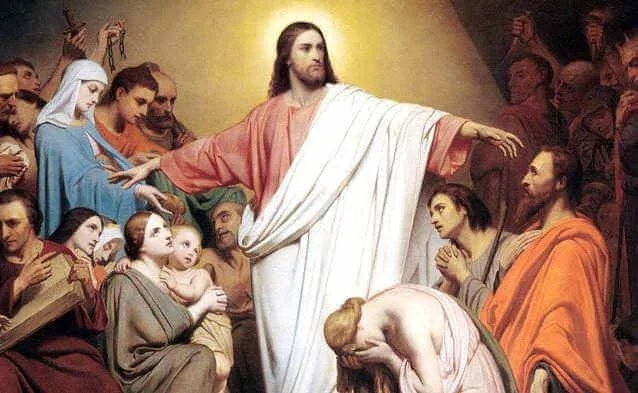
Herod the tetrarch heard about all that was happening, and he was greatly perplexed because some were saying, “John has been raised from the dead”; others were saying, “Elijah has appeared”; still others, “One of the ancient prophets has arisen.”

Reflection:

Herod the tetrarch, also known as Herod Antipas, ruled the Jews of Galilee for some forty-two years. He began his reign in 2 BC and continued to reign until he was exiled by the Roman Emperor in 37 AD. During his reign, he spent much time in Tiberias, one of the main cities on the western edge of the Sea of Galilee. Most of Jesus’ ministry took place within the region of Herod’s domain, all of Galilee, so Herod was very aware of the many stories about Jesus.

Today’s Gospel concludes by saying that Herod kept trying to see Jesus. Of course, Herod, just like anyone living in that region, could have traveled to where Jesus was preaching so as to listen to Him at any time. But he didn’t do that. Instead, he continued to receive reports about Jesus and remained curious about Him, trying to find a way to figure out Who Jesus was.

Try to imagine what would have happened if Herod would have traveled to where Jesus was preaching so as to listen to Him with an open heart. If he would have done that, and truly listened, Herod would have received one of the greatest gifts imaginable. He would have received the gift of faith and conversion and would have begun down the road toward eternal salvation. But Herod was living an immoral life. He was known to be a cruel leader and also an unrepentant adulterer. He loved his power and was quite jealous of it. Herod most likely knew, at least in the back of his mind, that if he were to listen to Jesus, he would have to change. And he most likely didn’t want to change.

This presents us all with a powerful lesson. Each one of us can easily dismiss various communications and invitations from our Lord, because, deep down, we do not want to change. God is speaking to us all day long, every day of our lives. He is constantly offering us His message of the full Gospel. And though you may be open to much of what God says, there are most likely parts of His divine message that you either knowingly or unknowingly do not listen to. The key to being able to hear everything that God wants to speak to you is to be disposed to completely change in any and every way that God wants you to change.

Reflect, today, upon Herod. First, reflect upon his curiosity about Jesus. This is a good quality, in that it’s much better than being indifferent. From there, think also about the fact that Herod never went to Jesus to listen to Him. His first meeting with Jesus was on the night of His arrest, when he interrogated our Lord and made fun of Him. As you consider Herod’s obstinacy, use it as an examination of your own life. Where you see any small reflection of obstinacy, fear of change or a closed heart, seek to remedy that by turning to our Lord telling Him you are open to all He wishes to say and that you are ready and willing to change in any way He calls you to do so. Do not fear the change our Lord wants of you. Embracing that change will land you on the quick and narrow road toward true holiness of life.

Source: https://catholic-daily-reflections.com/2024/09/25/courage-to-change-5/

Luke 9:7-8 Read More »

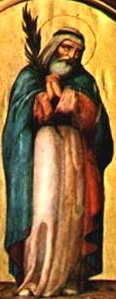
Saint Cleopas

Profile

  • one of the two disciples of the Way to Emmaus
  • martyr

Canonized

  • Pre-Congregation

Readings

Now that very day two of them were going to a village seven miles from Jerusalem called Emmaus, and they were conversing about all the things that had occurred. And it happened that while they were conversing and debating, Jesus himself drew near and walked with them, but their eyes were prevented from recognizing him.

He asked them, “What are you discussing as you walk along?”

They stopped, looking downcast. One of them, named Cleopas, said to him in reply, “Are you the only visitor to Jerusalem who does not know of the things that have taken place there in these days?”

And he replied to them, “What sort of things?”

They said to him, “The things that happened to Jesus the Nazarene, who was a prophet mighty in deed and word before God and all the people, how our chief priests and rulers both handed him over to a sentence of death and crucified him. But we were hoping that he would be the one to redeem Israel; and besides all this, it is now the third day since this took place. Some women from our group, however, have astounded us: they were at the tomb early in the morning and did not find his body; they came back and reported that they had indeed seen a vision of angels who announced that he was alive. Then some of those with us went to the tomb and found things just as the women had described, but him they did not see.”

And he said to them, “Oh, how foolish you are! How slow of heart to believe all that the prophets spoke! Was it not necessary that the Messiah should suffer these things and enter into his glory?” Then beginning with Moses and all the prophets, he interpreted to them what referred to him in all the scriptures.

As they approached the village to which they were going, he gave the impression that he was going on farther. But they urged him, “Stay with us, for it is nearly evening and the day is almost over.” So he went in to stay with them. And it happened that, while he was with them at table, he took bread, said the blessing, broke it, and gave it to them. With that their eyes were opened and they recognized him, but he vanished from their sight.

Then they said to each other, “Were not our hearts burning [within us] while he spoke to us on the way and opened the scriptures to us?” So they set out at once and returned to Jerusalem where they found gathered together the eleven and those with them who were saying, “The Lord has truly been raised and has appeared to Simon!” Then the two recounted what had taken place on the way and how he was made known to them in the breaking of the bread.

– Luke 24:13-35

Source: https://catholicsaints.info/saint-cleopas/

Saint Cleopas Read More »

Luke 9:1-2

Authority Over demons

Jesus summoned the Twelve and gave them power and authority over all demons and to cure diseases, and he sent them to proclaim the Kingdom of God and to heal the sick.

Reflection:

This is the first time that Jesus sends His Apostles out on a mission. On this mission, He is preparing them for their ultimate mission, which will come at the time of Pentecost, after Jesus dies, rises and ascends to Heaven. But for now, Jesus commissions these Apostles to do three things: to cast out demons, heal the sick and proclaim the Kingdom of God.

Just like the Apostles, we are called to combat the devil and his demons. They are fallen angels who retain their natural powers, and they use those natural powers to try to deceive us, oppress us and, in some cases, even possess us. But demons are powerless in the face of God, and God gives us spiritual authority over them. And though there are some who are given the unique ministry of exorcism within the Church, all of us do have spiritual authority over demons, especially over their natural spiritual attacks of temptations.

We combat demons primarily by revealing their lies and bringing them to light. Saint Ignatius of Loyola, in his spiritual classic The Spiritual Exercises, explains to us some of the ordinary tactics these demons use and how we overcome them. He says that for those steeped in a life of serious sin, the demons continually place before their mind the lie that their sins are enjoyable and rewarding, so that they will continue to choose them. And for those who are striving for holiness, these demons try to discourage them in their deepening conversion. They “bite, sadden and put obstacles, disquieting with false reasons, that one may not go on” (Rule 2). The way to overcome these temptations is by turning to the truth. First, by realizing that the false “pleasures” of sin are just that: false, fleeting and ultimately demeaning. Furthermore, we overcome these temptations by receiving from God “courage and strength, consolations, tears, inspirations and quiet, easing, and putting away all obstacles.” In other words, we overcome the demons by allowing God to strengthen us, clear our thinking, dispel all false obstacles on the road to holiness and by receiving the abundant consolations that God bestows as help on the journey.

Reflect, today, upon the fact that our Lord wants to minister to you in this threefold way. If you can work to overcome the obstacles put in your path by these demons, then you are in a good position to share in the other two missions given to the Apostles. You will be able to experience mental, emotional and spiritual healing in your life, and you will be able to allow the Kingdom of God to grow strong and powerful within your own soul. From there, you will be sent on a mission by our Lord to bring these graces to others in need.

Source: https://catholic-daily-reflections.com/2024/09/24/authority-over-demons-3/

Luke 9:1-2 Read More »

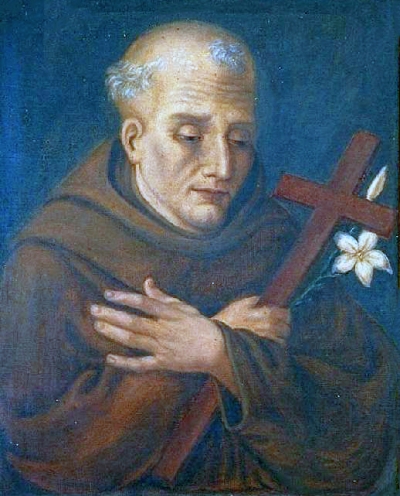
Saint Pacificus of San Severino

Profile

Pacificus was the son of Antonio M Divini and Mariangela Bruni, both of whom died when Pacificus was about 3 years old, leaving him to be raised by an uncle. He joined the Franciscans in December 1670 and was ordained in 1678. He was a professor of philosophy, teaching novices and a parish mission preacher. His health failed and he spent his final 29 years lame, deaf and blind, leading a contemplative life. He received visions and ecstasies. He was a miracle worker.

Born

  • 1 March 1653 at San Severino, Italy

Died

  • 24 September 1721 at San Severino, Italy

Beatified

  • 4 August 1786 by Pope Pius VI

Canonized

  • 26 May 1839 by Pope Gregory XVI

Source: https://catholicsaints.info/saint-pacificus-of-san-severino/

Saint Pacificus of San Severino Read More »

Luke 8:19-21

Becoming Jesus' Mother and Brothers

The mother of Jesus and his brothers came to him but were unable to join him because of the crowd. He was told, “Your mother and your brothers are standing outside and they wish to see you.” He said to them in reply, “My mother and my brothers are those who hear the word of God and act on it.”

Reflection:

The term “brothers” in this passage is obviously not to be understood that Jesus had blood brothers. It is a dogma of our faith that Jesus was the only Child of Mary. At that time, it was common practice to refer to one’s extended family as “brothers.” This would have especially applied to Jesus’ cousins and perhaps even those who were unrelated by blood but were from the same village.

As these relatives of Jesus stood outside and announced their presence, what did they expect Jesus to do? His “brothers” might have been there to try to talk some sense into Him. We know from other passages in the Gospels that some of Jesus’ extended family thought He was out of His mind. Therefore, it is possible that these brothers were there to resolve an extended family conflict that was erupting as Jesus began His public ministry.

Jesus’ response was not a rude response. This is clear from the fact that Jesus lived the perfection of charity. But true charity is always grounded in the truth. Jesus spoke a truth that cut through the merely human ties and conflicts that were driving these brothers. By saying, “My mother and my brothers are those who hear the word of God and act on it,” Jesus was challenging His brothers to stop looking at Him only in an earthly way. Everyone, including His relatives, needed to learn to see Jesus as the Son of the Father in Heaven. It was the act of accepting Jesus’ divine identity and submitting in obedience to the will of the Father that established a much deeper bond with Him. That is the relationship that Jesus desired with His earthly brothers.

The mother of Jesus, on the other hand, was also perfect in every way. She was free from the disorder of sin and even her mind was clear, being filled with perfect wisdom and understanding. Therefore, when it was reported to her what Jesus said, she would have understood and believed.

Saint Bede says that when we hear the word of God and obey it, we become Jesus’ “mother” by bringing Him forth into the world through our words and actions. This also makes us Jesus’ “brothers” because our obedience makes us all children of the Father in Heaven.

By the gift of the fullness of grace, our Blessed Mother would have fully understood that her unity with her Son was primarily the result of their shared obedience to the Father’s will. She not only experienced the Son of God being conceived within her womb, she also had the profound experience of conceiving Him in her heart through her obedience to the will of the Father. That “conception” of Jesus within her Immaculate Heart would have been unmistakably clear to her and the cause of her greatest joy. For that reason, she would have treasured this spiritual motherhood of her Son as the greatest gift of all, even more than the gift of natural motherhood.

Reflect, today, upon the fact that you are also invited to be the “mother” and the “brother” of Jesus. You share in these holy callings through obedience to the will of the Father. The more clearly you hear God speak and the more fully you obey all that He says will determine the depth of spiritual union you have with Him. Our natural selves must give way to the supernatural life of grace. Make the choice, with our Blessed Mother, to pursue the glorious life of grace so that you will conceive the Son of God in your heart, become a true child of the Father in Heaven, and become a spiritual brother or sister of our Lord.

Source: https://catholic-daily-reflections.com/2024/09/23/becoming-jesus-mother-and-brothers-2/

Luke 8:19-21 Read More »

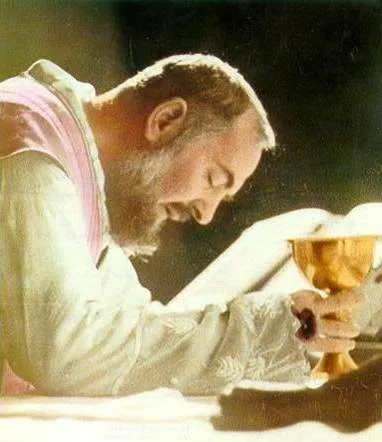
Saint Pio of Pietrelcina (Padre Pio), Priest

1887–1968; Patron Saint of adolescents and civil defense volunteers; Invoked by those in need of stress relief, spiritual healing, and for January blues; Canonized by Pope John Paul II on June 16, 2002

Saint Padre Pio was born Francesco Forgione in Pietrelcina, Italy, a rural town of about 4,000 people. As a child, he was called Franci (Frankie). His parents were peasant farm laborers, and the children assisted with the work. Franci was the third of seven (or eight) children, two (or three) of whom died in infancy, which was quite common at that time. The town centered around the local church of Saint Anna with continuous feasts, Masses, processions, novenas, and parish festivals. The main festival each year was in honor of their patroness, Our Lady of Deliverance, which lasted three days every August. After the day’s work was completed, most evenings were spent with neighbors, eating macaroni, singing, telling stories, and playing in the fields.

The Forgione family was quite devout, and Franci exhibited extraordinary piety from a very early age. The family was especially devoted to the saints and the Blessed Virgin Mary, a love that would remain with Franci throughout his life. As a toddler, Franci often had nightmares. He would later say that he believed the devil was tormenting him at that young age. He also later recalled that, as early as he could remember, he was able to communicate with his guardian angel and had regular visions of the Blessed Mother and Jesus. From the age of five, Franci dedicated himself to God and the Blessed Virgin. He was a good student, even though only three years of public schooling was available in his village. He also suffered from various illnesses throughout his childhood.

At the age of ten, Franci encountered a bearded Capuchin friar who was traveling the countryside begging for food and provisions for his community. Franci was so impressed with him that he informed his parents, “I want to be a friar with a beard!” Though initially amused, his parents took his request seriously and visited the Capuchin friary about thirteen miles north. The friars agreed Franci could join them, but he needed a better preparatory education. Because his parents could not afford to send him to private school or hire a tutor, his father decided to travel to America to earn money for his education. Once in America, his father sent nine American dollars home each week, and Franci received his education. At the age of fifteen, he entered the Capuchins, receiving the name Pio, possibly after Pope Pio I, whose relics were in his hometown church of Saint Anna, or possibly in honor of Pio of Benevento, the provincial.

Just five days before he entered the Capuchins, however, Franci experienced worries about leaving the only life he knew and entering religious life. As he was praying, he had what is known as an “intellectual vision” in which his mind saw what he would later describe as “a majestic Man of rare beauty, resplendent as the sun.” This Man took him by the hand and led him to a “formidable warrior” and “mysterious creature” that he was told to do battle with. He hesitated but the Man encouraged him. He fought and won, and the creature fled. The Man then placed a crown of indescribable beauty on his head and informed him he would have to continually fight the creature but would always win with His help. Three days later, after receiving the Holy Eucharist, Franci realized that his life as a Capuchin would be a continuous battle against the creature from hell, but the Man at his side was Christ Who would never leave him. He had one more vision two days later, the night before his departure, of Jesus and the Blessed Virgin who consoled and strengthened him as he prepared for his new vocation. These visions would come true during his sixty-five years as a friar.

Life as a novice brought with it much structure and discipline. The friars gathered for prayer seven times a day, spent long hours studying, lived in a very simple and small cell, went barefoot, fasted often, and engaged in manual labor. In 1907, at the age of nineteen, Pio took his final vows, and in 1910, at the age of twenty-three, he was ordained a priest. Throughout his seven years of preparation for ordination, Friar Pio was continually in poor health. His fellow friars also reported that he regularly fell into ecstasy in prayer, levitating at times, weeping at others, so immersed that he lost track of time and place. Once ordained, his health was so poor that he was permitted to move to his family home in hopes of recovery. He remained there until 1916 when, at the age of twenty-nine, he was sent to Our Lady of Grace Capuchin Friary, in San Giovanni Rotondo, where he would live the rest of his life, other than a short period of time when he was drafted for military service and quickly discharged for poor health during World War I.

In San Giovanni Rotondo, Padre Pio quickly became known as a mystic. His Masses were exceptionally devout and lengthy due to his prolonged ecstasies. He heard confessions often and gave spiritual counsel to many. His most famous advice was to “pray, hope, and don’t worry.” On September 20, 1918, while praying after Mass, Padre Pio had a vision of a Man, dripping with blood from His hands, feet, and side. Suddenly, Padre Pio’s body was pierced with those wounds as he received the stigmata. He openly carried those wounds for exactly fifty years. They bled up to a cup of blood every day, had a heavenly aroma to them, and caused great pain, especially a wound he had on his shoulder where Christ carried the Cross. Countless doctors examined the wounds over the subsequent fifty years, none of whom was able to give a scientific explanation. Over the next thirteen years, people flocked to see this living saint and mystic. He began to manifest the charisms of healing, bilocation, levitation, prophecy, numerous miracles, and the gift of tongues, in which foreign visitors heard him speak in their own language. He had the ability to read hearts, would spend weeks at a time eating nothing but the Holy Eucharist, and would sleep very little or not at all. Miraculous and profound conversions resulted from his ministry.

To the normal Catholic, these miraculous events were beyond inspiring; to some of the Church authorities they were cause for concern. In 1922, a lengthy investigation began, and restrictions were placed on his priestly ministry. In 1931, the Holy See banned Padre Pio from public ministry and private communications with the people of God. Two years later, Pope Pius XI reversed the restrictions stating, “I have not been badly disposed toward Padre Pio, but I have been badly informed.” Though able to minister publicly, Padre Pio remained under scrutiny and suspicion by various Church authorities for the next thirty years until he was fully exonerated by Pope Paul VI after his papal election in 1963.

In addition to his miraculous ministry consisting of daily Mass, preaching, and countless hours in the confessional, Padre Pio constructed a hospital for those in extreme need. The Holy See granted him special permission to oversee and govern the hospital himself, which was beyond the normal rights and duties for friars.

On September 22, 1968, Padre Pio celebrated a televised solemn Mass attended by thousands to commemorate the fiftieth anniversary of his reception of the stigmata. The following day, his wounds disappeared and he passed to Heaven. An estimated 100,000 people attended his funeral.

In many ways, Saint Padre Pio was a once-in-a-millenium saint. Though other saints have borne the stigmata, no one bore it so openly for so long. He lived continually in divine union, was used by God in the most miraculous of ways, brought about countless conversions, and believed that his real work would take place after his death. Since 1968, that work has continued as his story has been told, his intercession felt, and miracles continue to occur. His body now lies at rest in the Padre Pio Pilgrimage Church in San Giovanni Rotondo, one of the most frequented pilgrimage sites in the world.

As we honor this amazing saint, allow yourself to be inspired by his miraculous life. Ponder even more deeply the life of prayer and union with God that he led. His sanctity went far beyond miracles. It was primarily the result of prayer, penance, virtuous living, and unwavering obedience to the will of God. Every one of us is capable of this same level of sanctity, even if God does not use us in a miraculous and charismatic way. Seek holiness through prayer and penance, and seek Saint Padre Pio’s intercession to help you.

Source: https://mycatholic.life/saints/saints-of-the-liturgical-year/september-23—st-pio-of-pietrelcina-padre-pio-priest/
Saint Pio of Pietrelcina (Padre Pio), Priest Read More »

Luke 8:18

Growth in Understanding

“Take care, then, how you hear. To anyone who has, more will be given, and from the one who has not, even what he seems to have will be taken away.”

Reflection:

Do you have much? Or little? According to Jesus’ words, if you have much, then you will receive much more; but if you have little, then you will lose even what you have. Does this seem fair?

Of course, our Lord is not speaking in worldly terms. He’s not saying that if you have much money, then you will gain more, or if you are poor, then you will become poorer. Instead, Jesus is speaking about the grace that comes from understanding His holy Word. Notice that the passage above begins by saying, “Take care, then, how you hear.”

To “hear” the Word of God implies that you truly receive what Jesus teaches. Hearing is not just hearing the words spoken with your ears. One early Church Father, Saint Bede, explains that truly hearing the Word of God with our minds leads us to love that Word, and loving the Word leads to understanding. This is not accomplished by an intellectual exercise alone, as if our natural gifts are the primary means by which we comprehend all that Jesus teaches. Rather, it comes through spiritual insight gained by the supernatural gift of the Spirit Who teaches us all things.

If you want “more” understanding of the mysteries of God, then commit yourself to engaging the holy Scriptures with your mind. Read the Scriptures, ponder them and pray with them. It’s easy to forget that the Word of God is a Living Word. This means that when we prayerfully immerse ourselves in the Scriptures, we are prayerfully encountering God Himself. God is alive in His holy Word. We meet Him, personally, and this happens only by a special grace that we must be open to receive.

The beautiful aspect of this teaching of Jesus is that the more we understand His Word by this grace, the more we will immerse ourselves in it, and it will continue to grow within us. If, however, we devote little time to engaging the Word of God in prayer, we will begin to “forget,” so to speak, the spiritual depths of the wisdom of God. We will lose the little understanding we have and when this happens, we will be prone to engaging and accepting the many confusions and deceptions alive in our world.

Reflect, today, upon your practice of prayerfully meditating upon the Scriptures. If this is not your current practice, resolve to make it so. Perhaps start with one of the Gospels and commit yourself to prayerfully reading it little by little every day. The goal is not to get through the books of the Bible. The goal is to enter into each book. Every chapter and every line provides us with a depth of spiritual insight and understanding just waiting to be given and received. Commit yourself to this holy practice, and you will be amazed at the spiritual riches our Lord bestows upon you.

Source: https://catholic-daily-reflections.com/2024/09/22/growth-in-understanding-3/

Luke 8:18 Read More »

Twenty-fifth Sunday in Ordinary Time

First Reading Wisdom 2:12, 17-20

The wicked say:
Let us beset the just one, because he is obnoxious to us;
he sets himself against our doings,
reproaches us for transgressions of the law
and charges us with violations of our training.
Let us see whether his words be true;
let us find out what will happen to him.
For if the just one be the son of God, God will defend him
and deliver him from the hand of his foes.
With revilement and torture let us put the just one to the test
that we may have proof of his gentleness
and try his patience.
Let us condemn him to a shameful death;
for according to his own words, God will take care of him.

Responsorial Psalm Psalms 54:3-4, 5, 6 and 8

R. (6b) The Lord upholds my life.

O God, by your name save me,
and by your might defend my cause.
O God, hear my prayer;
hearken to the words of my mouth.

R. The Lord upholds my life.

For the haughty men have risen up against me,
the ruthless seek my life;
they set not God before their eyes.

R. The Lord upholds my life.

Behold, God is my helper;
the Lord sustains my life.
Freely will I offer you sacrifice;
I will praise your name, O LORD, for its goodness.

R. The Lord upholds my life.

Second Reading James 3:16—4:3

Beloved:
Where jealousy and selfish ambition exist,
there is disorder and every foul practice.
But the wisdom from above is first of all pure,
then peaceable, gentle, compliant,
full of mercy and good fruits,
without inconstancy or insincerity.
And the fruit of righteousness is sown in peace
for those who cultivate peace.

Where do the wars
and where do the conflicts among you come from?
Is it not from your passions
that make war within your members?
You covet but do not possess.
You kill and envy but you cannot obtain;
you fight and wage war.
You do not possess because you do not ask.
You ask but do not receive,
because you ask wrongly, to spend it on your passions.

Alleluia Cf. 2 Thessalonians 2:14

R. Alleluia, alleluia.

God has called us through the Gospel
to possess the glory of our Lord Jesus Christ.

R. Alleluia, alleluia.

Gospel Mark 9:30-37

Jesus and his disciples left from there and began a journey through Galilee,
but he did not wish anyone to know about it.
He was teaching his disciples and telling them,
“The Son of Man is to be handed over to men
and they will kill him,
and three days after his death the Son of Man will rise.”
But they did not understand the saying,
and they were afraid to question him.

They came to Capernaum and, once inside the house,
he began to ask them,
“What were you arguing about on the way?”
But they remained silent.
They had been discussing among themselves on the way
who was the greatest.
Then he sat down, called the Twelve, and said to them,
“If anyone wishes to be first,
he shall be the last of all and the servant of all.”
Taking a child, he placed it in their midst,
and putting his arms around it, he said to them,
“Whoever receives one child such as this in my name, receives me;
and whoever receives me,
receives not me but the One who sent me.”

Source: https://bible.usccb.org/bible/readings/092224.cfm

Twenty-fifth Sunday in Ordinary Time Read More »

Saint Maurice

Profile

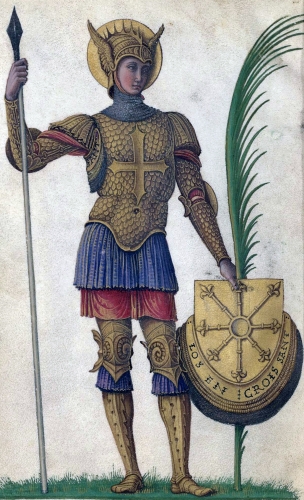
Maurice was a layman, soldier, and an officer in a legion of Christian soldiers from Upper Egypt during the reign of Emperor Maximian Herculeus. His legion, as many as 6600 men, was massacred en masse by their own side when they refused to participate in pagan sacrifices prior to battle. He was one of the martyrs of the Theban Legion.

Died

  • c.287 at Agaunum, an area of modern Switzerland

Canonized

  • Pre-Congregation

Patronage

  • against cramps
  • against gout
  • alpine troops, proclaimed
    – on 22 September 1941 by Pope Pius XII for Italian troops
    – on 25 January 1952 by Pope Pius XII for French troops
    – on 16 February 1961 by Pope John XXIII for Belgian troops
  • armies
  • armourers
  • infantrymen
  • soldiers
  • swordsmiths
  • boxers
  • cloth dyers
  • clothmakers
  • fighters
  • hatters
  • knife grinders
  • pugilists
  • weavers
  • wrestlers
  • Austria
  • Counts of Savoy
  • Dukes of Savoy
  • Pontifical Swiss Guards
  • United States Army Infantry
  • in France
    – Angers, city of
    – Angers, diocese of
    Savoy
  • in Germany
    – Magdeburg, diocese of
    – Niederaltaich Abbey
    – Stadtsulza
  • in Italy
    – Borgofranco d’Ivrea
    – Calasetta
    – Cassano Magnago
    – Castelnuovo di Ceva
    – Pianello Val Tidone
    – Piedmont
    – Sardinia
    – Sarre
  • Manresa, Spain
  • in Switzerland
    – Agaunum
    – Appenzell
    – St Moritz

Representation

  • banner
  • soldier
  • soldier being executed with other soldiers
  • knight (sometimes a Moor) in full armour, bearing a standard and a palm
  • knight in armour with a red cross on his breast, which is the badge of the Sardinian Order of Saint Maurice

Source: https://catholicsaints.info/saint-maurice/

Saint Maurice Read More »

Mark 9:33-34

The Greatness of Holiness

They came to Capernaum and, once inside the house, he began to ask them, “What were you arguing about on the way?” But they remained silent. They had been discussing among themselves on the way who was the greatest. 

Reflection:

One of the desires that we all have is for greatness. This is a good and natural desire. This desire is manifested in competitiveness in sports and games. It becomes a driving force in business and politics. It drives us to do better in life, such as in school, artistic endeavors, and hobbies, working hard to perfect various skills and talents so as to excel. The problem is that every good and natural desire we have is now disordered to a certain degree because of original sin. As a result, the desire we have for greatness can become an obsession, a cause of discouragement when we fail, a source of jealousy when others appear to do better, and can lead us to pursue empty and fleeting goals in life.

Even within the life of faith, we can be affected by both the natural desire for greatness and the fallenness of that desire. The natural desire for greatness, when mingled with faith, will lead us to the desire to be a saint and to do great things for the Kingdom of God. But as a fallen natural quality, we can also fall into the trap of seeing ourselves in competition with others within the Church, and we can become jealous of those who appear to be holy and who are recognized for their good work for Christ.

Just prior to the passage quoted above in which the disciples were discovered to have been arguing among themselves about who was the greatest, Jesus predicted to them, for the second time, that He would suffer and die. Recall that after the first prediction of His passion, Jesus took Peter, James and John up a high mountain and was transfigured before them. Perhaps some of the other disciples became jealous of this apparent special treatment. Then, after Jesus predicted His passion to them for the second time, they might have wondered if some of them would likewise share in a similar experience as the Transfiguration.

Regardless of what motivated the disciples to argue among themselves about who was the greatest, the fact remains that they did so. This was not the result of a holy and purified desire. It was the result of a good desire for greatness that became distorted and turned into an unholy competition based on jealousy and selfishness.

In Heaven, we will all know who is the greatest. Interestingly, the Scriptures, the official Church teachings, and many of the saints reveal to us that there will be levels of glory in Heaven. This is why Jesus said elsewhere, “Store up treasure in Heaven” (Matthew 6:20). In Heaven, each of us will be perfectly happy. But each of us will also share in God’s glory in varying degrees, based upon the merit of our charity on earth. The classic example of this is that if every soul is like a glass of water in Heaven, then every glass will be full. But some glasses will be larger than others and will be able to contain more water (glory). For this reason, we must remember that the natural desire for greatness is good, but it must be properly ordered by grace. That desire must not become as it was among the disciples who saw each other as competitors. Instead, it must be directed to the deepest desire for holiness and charity. In Heaven, we will all be in awe of those holy souls who are filled with the greatest depths of glory forever. Most likely, they will be widely unknown on earth, but loved and admired in Heaven for the greatness of their holiness.

Reflect, today, upon the desire within your own soul for greatness. Pray that this desire will not fall into selfishness or lead you to see others as competitors. Instead, pray that your desire for greatness will lead you to holiness so that you will be able to store up for yourself the most abundant treasures in Heaven and radiate that glory forever.

Source: https://catholic-daily-reflections.com/2024/09/21/the-greatness-of-holiness/

Mark 9:33-34 Read More »