March 2023
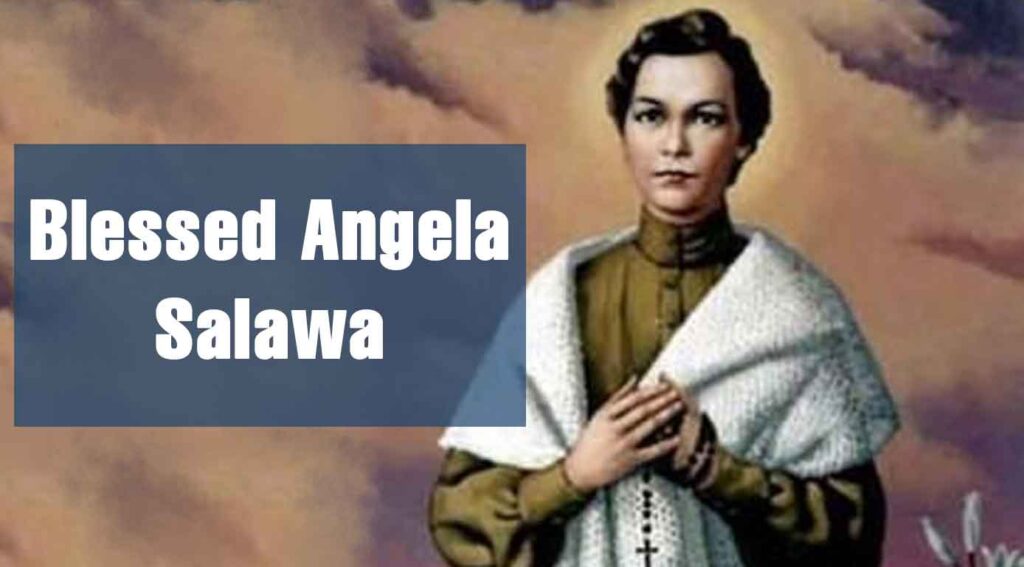
Blessed Angela Salawa
Blessed Angela Salawa served Christ and Christ’s little ones with all her strength. Born in Siepraw, near Kraków, Poland, she was the 11th child of Bartlomiej and Ewa Salawa. In 1897, she moved to Kraków where her older sister Therese lived. Angela immediately began to gather together and instruct young women domestic workers. During World War I, she helped prisoners of war without regard for their nationality or religion. The writings of Teresa of Avila and John of the Cross were a great comfort to her.
Blessed Angela Salawa gave great service in caring for soldiers wounded in World War I. After 1918, her health did not permit her to exercise her customary apostolate. Addressing herself to Christ, she wrote in her diary, “I want you to be adored as much as you were destroyed.” In another place, she wrote, “Lord, I live by your will. I shall die when you desire; save me because you can.”
At her 1991 beatification in Kraków, Pope John Paul II said: “It is in this city that she worked, that she suffered and that her holiness came to maturity. While connected to the spirituality of Saint Francis, she showed an extraordinary responsiveness to the action of the Holy Spirit” (L’Osservatore Romano, volume 34, number 4, 1991).
Sources:
https://www.franciscanmedia.org/saint-of-the-day/blessed-angela-salawa/
Blessed Angela Salawa Read More »
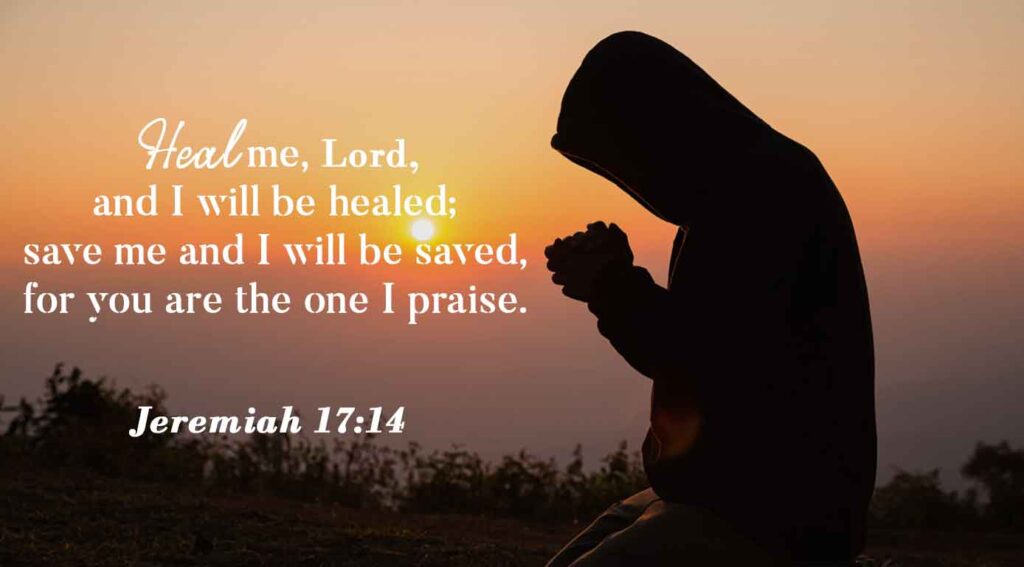
Jeremiah 17:14
Verse:
“Heal me, Lord, and I will be healed; save me and I will be saved, for you are the one I praise.” - Jeremiah 17:14
Prayer For A Friend In Need Of Healing
Father, please forgive me for wanting to give up and turn away from You. I am so tired and so hurt. Please give me the strength to go on. Today, I choose Your healing power to work in my life. I will guard my heart against bitterness and anger. I will not retreat. I choose to believe that the pain of today is the foundation of tomorrow's victory. In Jesus' Name, Amen.
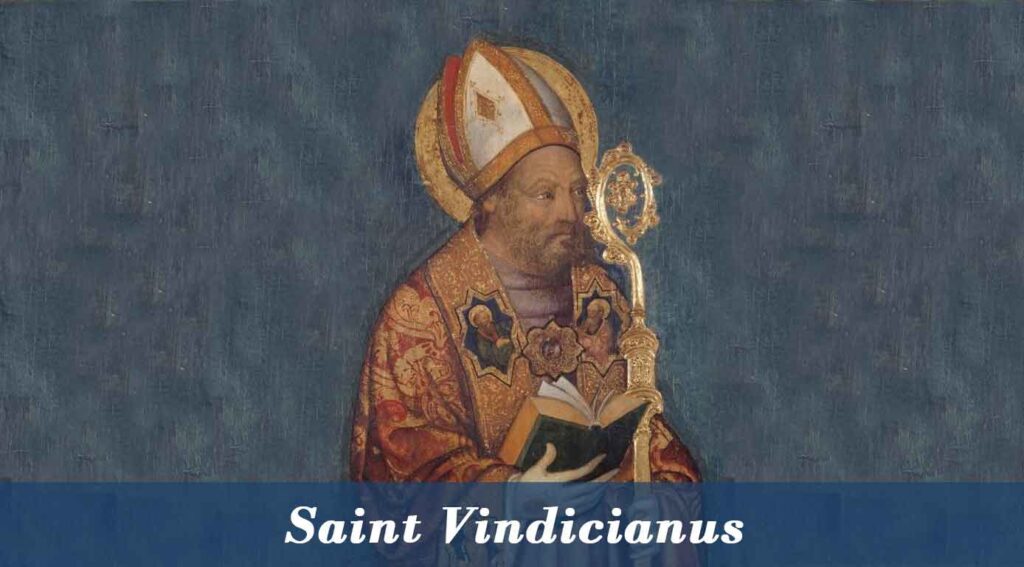
Saint Vindicianus
Saint Vindicianus was a bishop of Cambrai-Arras. He succeeded Bishop Aubert around 668.
The events of his life after this date (686) are unknown. According to legend, In 673 Vindicianus supervised the translation of the body of St. Maxellende to Caudry. In the same year he consecrated the monastery of Honnecourt-sur-Escaut, which was given in 685 to St. Bertin. In 675, he signed a charter of donation in favour of the abbey at Maroilles, rendered illustrious by St. Humbert (Emebertus). In the same year he consecrated the church at Hasnon.
In 681, he claimed for his diocese the honour of possessing the body of St. Léger, the unfortunate victim of the political strife which was then filling Neustria with blood, but he did not succeed, the remains of St. Léger being confided to Ansoald, Bishop of Poitiers.
Sources:
https://en.wikipedia.org/wiki/Vindicianus
Van der Essen, Léon. "St. Vindicianus." The Catholic Encyclopedia Vol. 15. New York: Robert Appleton Company, 1912. 2 December 2021
Decraene, Claire. "Visit Mont-Saint-Eloi", Arras Pays d’Artois Tourisme
Romans 13:7
Verse:
“Give to everyone what you owe them: If you owe taxes, pay taxes; if revenue, then revenue; if respect, then respect; if honor, then honor.” - Romans 13:7
A Prayer for a Lately Deceased Person
“Give to everyone what you owe them: If you owe taxes, pay taxes; if revenue, then revenue; if respect, then respect; if honor, then honor.” - Romans 13:7
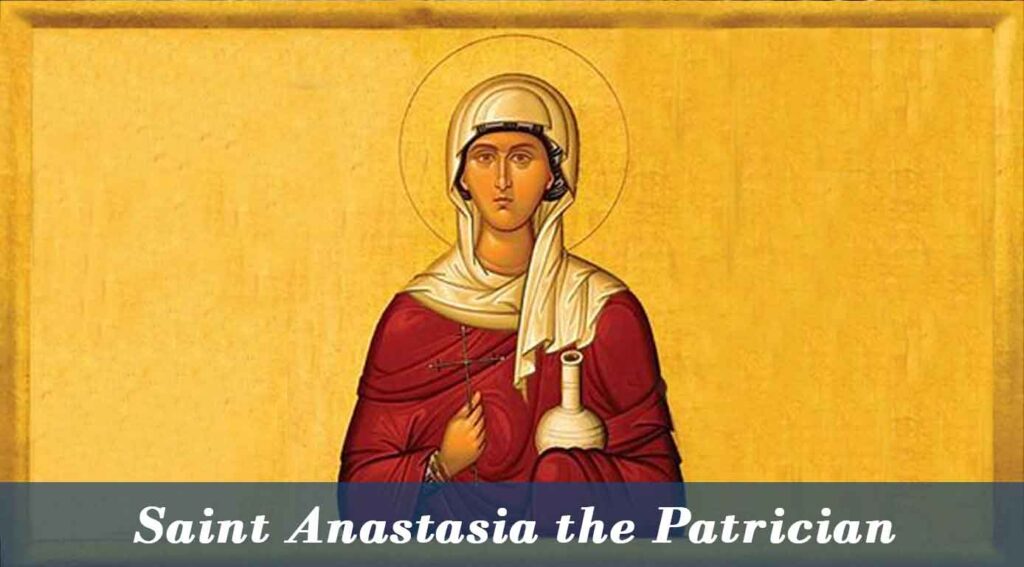
Saint Anastasia the Patrician
Saint Anastasia the Patrician, also referred to as Anastasia Patricia, was a lady-in-waiting to the Byzantine empress. She later on left for Alexandria in Egypt.
She founded a monastery in Pempton. She then left for Scetis, looking for help from Abba Daniel, hegumen of the monastery at that time. She took up the life of a hermit at a time when this was only permitted of men. Abba Daniel visited her every week and ensured that one of his disciples supplied her with jugs of water. Anastasia dwelt in seclusion for twenty-eight years.
In 576, aware of her approaching death, she wrote several words for Abba Daniel on a piece of broken pottery and placed it at the entrance to the cave. The disciple found an ostracon with the words “Bring the spades and come here.” When Daniel heard this, he knew Anastasia was near death. He went to visit her with his disciple and to give her communion and hear her last words. Daniel revealed the full details of her story to his disciple after her death.
Sources:
https://en.wikipedia.org/wiki/Anastasia_the_Patrician
Coptic Orthodox Church Network. 'Commemorations For Toba 26,' Lives Of The Saints.
Laura Swan, The Forgotten Desert Mothers (2001, ISBN 0809140160), pages 72-73
Anne Commire, Deborah Klezmer. Women in World History: A Biographical Encyclopedia (1999, ISBN 0787640808), page 274.
Coquin, Rene Georges. "Anastasia, Saint", The Coptic Encyclopedia, Vol. I, MacMillan (1991)
Saint Anastasia the Patrician Read More »
1 Corinthians 13:3
Verse:
“If I give all I possess to the poor and give over my body to hardship that I may boast, but do not have love, I gain nothing.” - 1 Corinthians 13:3
Prayer For God's Love And Mercy
Christ Jesus, through you, all my sins have been wiped away. You have paid all my debts and I now stand free with no one to point a finger at me. It is your mercy that made you obey your Father that you may save a wretch like me. You gave yourself wholly so that I may live. Thank you, Jesus, for your unending love and mercy. Pour upon me your grace and strength to stand in faith even in trying times. May I be more like you, Amen.

1 Corinthians 13:3 Read More »
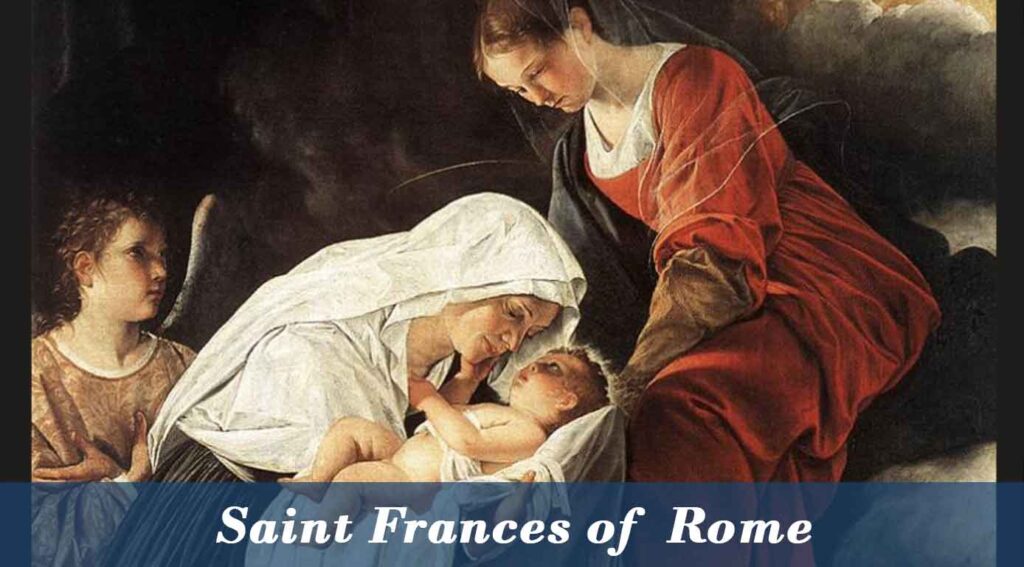
Saint Frances of Rome
Frances’ life combines aspects of secular and religious life. A devoted and loving wife, she longed for a lifestyle of prayer and service, so she organized a group of women to minister to the needs of Rome’s poor.
Born of wealthy parents, Frances found herself attracted to the religious life during her youth. But her parents objected and a young nobleman was selected to be her husband.
As she became acquainted with her new relatives, Frances soon discovered that the wife of her husband’s brother also wished to live a life of service and prayer. So the two, Frances and Vannozza, set out together—with their husbands’ blessings—to help the poor.
Frances fell ill for a time, but this apparently only deepened her commitment to the suffering people she met. The years passed, and Frances gave birth to two sons and a daughter. With the new responsibilities of family life, the young mother turned her attention more to the needs of her own household.
The family flourished under Frances’ care, but within a few years a great plague began to sweep across Italy. It struck Rome with devastating cruelty and left Frances’ second son dead. In an effort to help alleviate some of the suffering, Frances used all her money and sold her possessions to buy whatever the sick might possibly need. When all the resources had been exhausted, Frances and Vannozza went door to door begging. Later, Frances’ daughter died, and the saint opened a section of her house as a hospital.
Frances became more and more convinced that this way of life was so necessary for the world, and it was not long before she requested and was given permission to found a society of women bound by no vows. They simply offered themselves to God and to the service of the poor. Once the society was established, Frances chose not to live at the community residence, but rather at home with her husband. She did this for seven years, until her husband passed away, and then came to live the remainder of her life with the society—serving the poorest of the poor.
Sources:
https://www.franciscanmedia.org/saint-of-the-day/saint-frances-of-rome/
Saint Frances of Rome Read More »
Ecclesiastes 5:15
Verse:
“Everyone comes naked from their mother’s womb, and as everyone comes, so they depart.
They take nothing from their toil that they can carry in their hands.” - Ecclesiastes 5:15
Prayer For Faith Hope And Love
Lord God, give me the faith I need to know your will, the hope I need to accept your will, and the love I need to do your will, even when I don't understand it, knowing that your way is better. I ask this through Christ Our Lord. Amen.
Original version of the prayer:
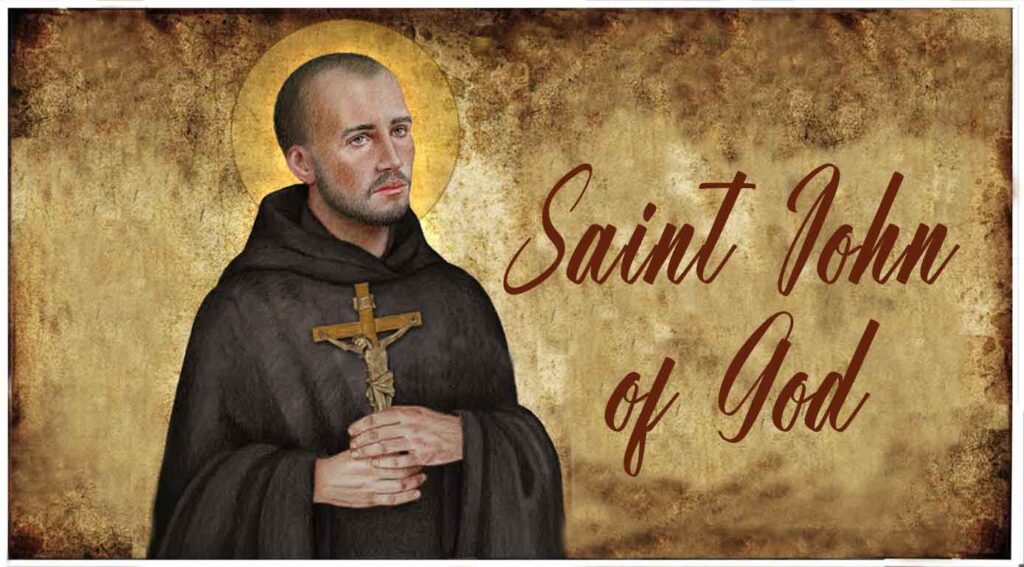
Saint John of God
Having given up active Christian belief while a soldier, John was 40 before the depth of his sinfulness began to dawn on him. He decided to give the rest of his life to God’s service, and headed at once for Africa where he hoped to free captive Christians and, possibly, be martyred.
He was soon advised that his desire for martyrdom was not spiritually well based, and returned to Spain and the relatively prosaic activity of a religious goods store. Yet he was still not settled. Moved initially by a sermon of Saint John of Avila, he one day engaged in a public beating of himself, begging mercy and wildly repenting for his past life.
Committed to a mental hospital for these actions, John was visited by Saint John, who advised him to be more actively involved in tending to the needs of others rather than in enduring personal hardships. John gained peace of heart, and shortly after left the hospital to begin work among the poor.
He established a house where he wisely tended to the needs of the sick poor, at first doing his own begging. But, excited by the saint’s great work and inspired by his devotion, many people began to back him up with money and provisions. Among them were the archbishop and marquis of Tarifa.
Behind John’s outward acts of total concern and love for Christ’s sick poor was a deep interior prayer life which was reflected in his spirit of humility. These qualities attracted helpers who, 20 years after John’s death, formed the Brothers Hospitallers, now a worldwide religious order.
John became ill after 10 years of service, but tried to disguise his ill health. He began to put the hospital’s administrative work into order and appointed a leader for his helpers. He died under the care of a spiritual friend and admirer, Lady Ana Ossorio.
Sources:
https://www.franciscanmedia.org/saint-of-the-day/saint-john-of-god/