March 2023

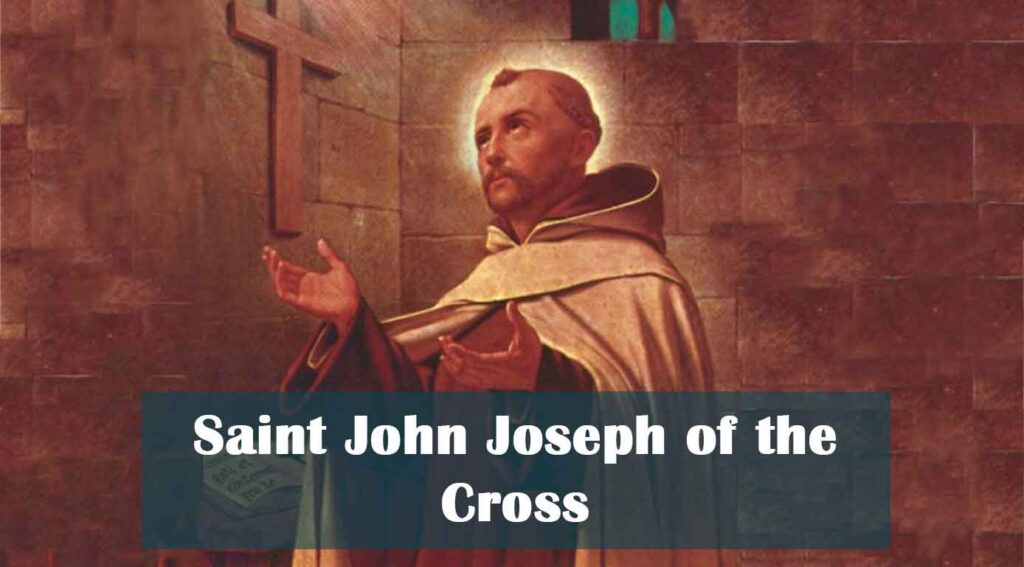
Saint John Joseph of the Cross

Self-denial is never an end in itself but is only a help toward greater charity—as the life of Saint John Joseph shows.

John Joseph was very ascetic even as a young man. At 16, he joined the Franciscans in Naples; he was the first Italian to follow the reform movement of Saint Peter Alcantara. John Joseph’s reputation for holiness prompted his superiors to put him in charge of establishing a new friary even before he was ordained.
Obedience moved John Joseph to accept appointments as novice master, guardian and, finally, provincial. His years of mortification enabled him to offer these services to the friars with great charity. As guardian he was not above working in the kitchen or carrying the wood and water needed by the friars.
When his term as provincial expired, John Joseph dedicated himself to hearing confessions and practicing mortification, two concerns contrary to the spirit of the dawning Age of Enlightenment. John Joseph of the Cross was canonized in 1839.

Sources:

https://www.franciscanmedia.org/saint-of-the-day/saint-john-joseph-of-the-cross/

Saint John Joseph of the Cross Read More »

Proverbs 13:12

Verse:

“Hope deferred makes the heart sick, but a longing fulfilled is a tree of life.” - Proverbs 13:12

A Prayer for Healing

Lord, You invite all who are burdened to come to you. Allow Your healing Hand to heal me. Touch my soul with Your compassion for others; touch my heart with Your courage and infinite Love for all; touch my mind with Your Wisdom, and may my mouth always proclaim Your praise. Teach me to reach out to You in all my needs, and help me to lead others to You by my example.

Most loving Heart of Jesus, bring me health in body and spirit that I may serve You with all my strength. Touch gently this life which you have created, now and forever.

Amen.
Proverbs 13:12 Read More »

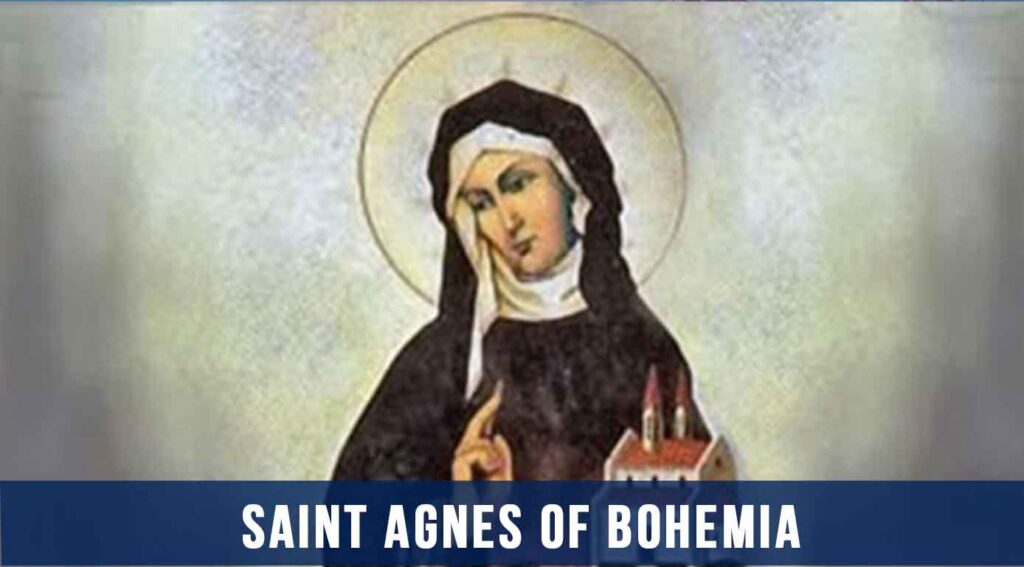
Saint Agnes of Bohemia

Saint Agnes had no children of her own but was certainly life-giving for all who knew her.

Agnes was the daughter of Queen Constance and King Ottokar I of Bohemia. She was betrothed to the Duke of Silesia, who died three years later. As she grew up, she decided she wanted to enter the religious life.

After declining marriages to King Henry VII of Germany and King Henry III of England, Agnes was faced with a proposal from Frederick II, the Holy Roman Emperor. She appealed to Pope Gregory IX for help. The pope was persuasive; Frederick magnanimously said that he could not be offended if Agnes preferred the King of Heaven to him.

After Agnes built a hospital for the poor and a residence for the friars, she financed the construction of a Poor Clare monastery in Prague. In 1236, she and seven other noblewomen entered this monastery. Saint Clare sent five sisters from San Damiano to join them, and wrote Agnes four letters advising her on the beauty of her vocation and her duties as abbess.

Agnes became known for prayer, obedience and mortification. Papal pressure forced her to accept her election as abbess, nevertheless, the title she preferred was “senior sister.” Her position did not prevent her from cooking for the other sisters and mending the clothes of lepers. The sisters found her kind but very strict regarding the observance of poverty; she declined her royal brother’s offer to set up an endowment for the monastery.

Devotion to Agnes arose soon after her death on March 6, 1282. Canonized in 1989, her liturgical feast is celebrated on March 6.

Sources:

https://www.franciscanmedia.org/saint-of-the-day/saint-agnes-of-bohemia/

Saint Agnes of Bohemia Read More »

Romans 1:17

Verse:

“For in the gospel the righteousness of God is revealed—a righteousness that is by faith from first to last, just as it is written: “The righteous will live by faith.” ” - Romans 1:17

A Prayer for Peace Making

Jesus, rightful Advocate of peace, Elegant Champion of reconciliation, Your victories echo harmoniously. You taught me the way towards peace, My assurance of congenial oneness. Teach me to carry the torch of peace, That it may reside within my heart And radiate in my surroundings. Through the Grace of Your power, Transform the world into a Heaven. You are the only hope of mankind: You are the most gracious Peace Maker!

Romans 1:17 Read More »

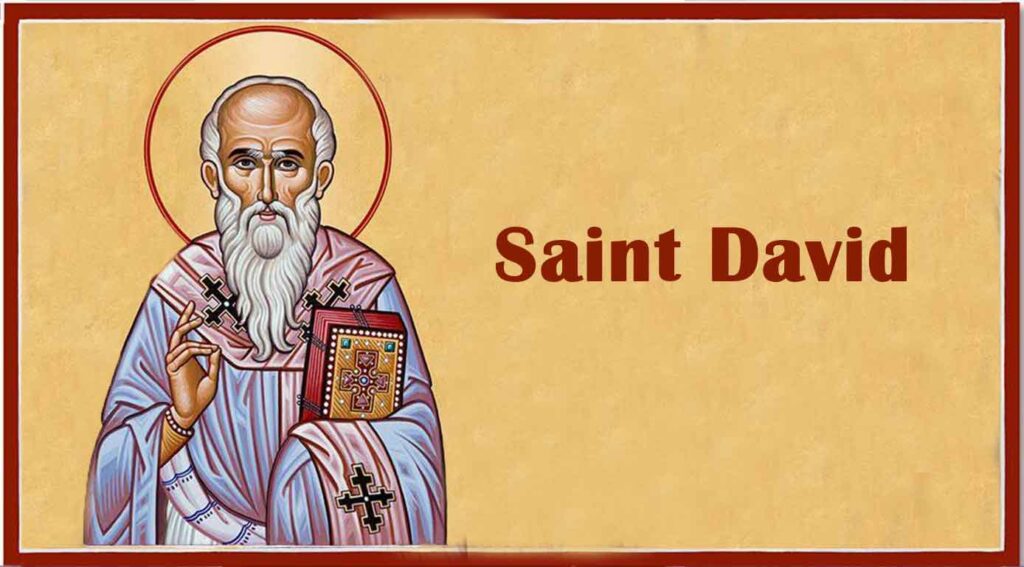
Saint David

Saint David was born in Caerfai, south west Wales into an aristocratic family. He founded a Celtic monastic community at Glyn Rhosyn (The Vale of Roses). His foundation at Glyn Rhosyn became an important Christian shrine. David’s fame as a teacher and his asceticism spread among Celtic Christians, and he helped found about 12 monasteries.

For centuries, 1 March has been a national festival. Saint David was recognised as a national patron saint in the 12th century. Traditional festivities include wearing daffodils and leeks, recognised symbols of Wales and Saint David, respectively, eating traditional Welsh food including cawl and Welsh rarebit, and women wearing traditional Welsh dress. An increasing number of cities and towns across Wales including Cardiff, Swansea and Aberystwyth also put on parades throughout the day.

The date of Saint David’s death is believed to be 1 March 589. His final words to the community of monks were: “Brothers be ye constant. The yoke which with single mind ye have taken, bear ye to the end; and whatsoever ye have seen with me and heard, keep and fulfil.”

Sources:

https://en.wikipedia.org/wiki/Saint_David%27s_Day
St David's Day 2017: everything you need to know about Wales' patron saint". The Daily Telegraph.
"St David (?-589)". BBC News. Archived from the original on 13 March 2017
Jenkins, Simon (2008). Wales: churches, houses, castles. Allen Lane. p. 125.

Saint David Read More »