Verse

John 6:66-67

A "Hard" and Deep Mystery

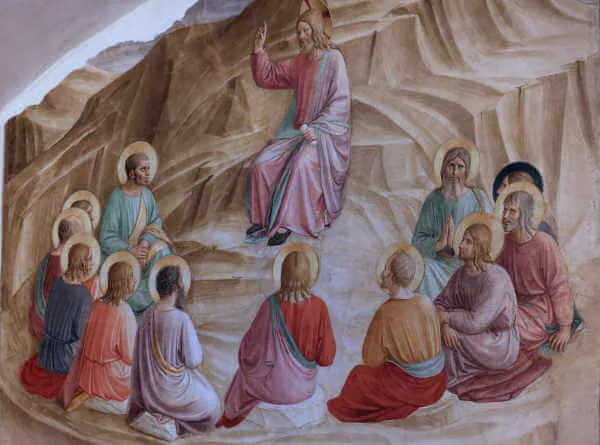
As a result of this, many of his disciples returned to their former way of life and no longer walked with him. Jesus then said to the Twelve, “Do you also want to leave?”

Reflection:

Today’s Gospel concludes the beautiful and profound sermon on the Bread of Life (see John 6:22–71). When you read this sermon from beginning to end, it is noticeable that Jesus moves from more general statements about the Bread of Life that are easier to accept to more specific statements that are challenging. He concludes His teaching just prior to today’s Gospel by saying very directly, “Whoever eats my flesh and drinks my blood remains in me and I in him.” After Jesus said this, many who had been listening to Him left Him and no longer followed Him.

There are generally three common attitudes people have toward the Most Holy Eucharist. One attitude is that of profound faith. Another is that of indifference. And a third is what we find in today’s Gospel: disbelief. Those who walked away from Jesus in today’s Gospel did so because they said, “This saying is hard; who can accept it?” What a great statement and question to ponder.

It is true, in a certain way, that the teaching of Jesus on the Most Holy Eucharist is a hard saying. “Hard,” however, is not bad. It’s hard in the sense that belief in the Eucharist is only possible through a faith that comes from a deep interior revelation from God. In the case of those who walked away from Jesus, they heard His teaching, but their hearts were closed to the gift of faith. They remained stuck on a purely intellectual level, and, thus, the idea of eating the Flesh and Blood of the Son of God was more than they could comprehend. So who could accept such a statement? Only those who listen to our Lord as He speaks to them interiorly. It is only that interior conviction that comes from God that can be proof of the truthfulness of the Holy Eucharist.

Do you believe that when you consume that which appears to be only “bread and wine,” you are actually consuming Christ Himself? Do you understand this teaching of our Lord on the Bread of Life? It is a hard saying and a difficult teaching, which is why it must be taken very seriously. For those who do not flat out reject this teaching, there is also the temptation to be somewhat indifferent to the teaching. It can easily be misunderstood to be just symbolism in the way our Lord talks. But the symbolism is much more than just symbolism. It’s a profound, challenging, and life-changing teaching of how we share in the divine and eternal life our Lord wishes to bestow upon us.

Reflect, today, upon how deeply you believe this hard saying of Jesus. The fact that it is a “hard” saying should make you seriously examine your own faith or lack thereof. What Jesus teaches is life-changing. It’s life-giving. And when clearly understood, you will be challenged to either believe with your whole heart or turn away in disbelief. Allow yourself to believe in the Most Holy Eucharist with your whole heart and you will find that you are believing one of the most profound Mysteries of Faith.

Source: https://catholic-daily-reflections.com/2025/05/09/a-hard-and-deep-mystery-4/
John 6:66-67 Read More »

John 6:53-55

A "Holy Fear"

“Amen, amen, I say to you, unless you eat the Flesh of the Son of Man and drink his Blood, you do not have life within you. Whoever eats my Flesh and drinks my Blood has eternal life, and I will raise him on the last day. For my Flesh is true food, and my Blood is true drink.”

Reflection:

On a philosophical level, it’s useful to consider various things that appear to be “competing forces.” Good appears to be the opposite of evil. Light the opposite of dark. Heat the opposite of cold. And life the opposite of death. But are they truly opposites in the sense of being competing forces? When considered carefully, it is clear that good and evil, light and dark, heat and cold, and life and death are not actually “competing forces;” rather, evil is simply the absence of good, darkness the absence of light, cold the absence of heat, and death the loss of life. And though this philosophical distinction may not seem that interesting to some, and confusing to others, it is a helpful truth to ponder in light of today’s Gospel.

Today’s Gospel tells us that failure to “eat the Flesh of the Son of Man and drink his Blood” results in death. Death is the loss of life, and the Eucharist is the source of life. Jesus says that if you fail to eat His Flesh and drink His Blood, “you do not have life within you.”

This bold teaching of Jesus should cause us to stop and examine our approach to the Most Holy Eucharist. Sometimes we can fall into the trap of thinking that going to Mass and receiving Communion is something we do as a “favor” to our Lord. But in truth, it’s God’s most profound favor to us, because the Eucharist is the gateway to eternal life. And without it, we have no life within us. Our spirits die because we lose the presence of God.

Looking at the negative effect of not receiving the Most Holy Eucharist can be very useful. Sometimes we need to consider the consequences of our actions as a way of motivating us to greater fidelity. For that reason, considering the fact that failure to eat the Flesh of the Son of God results in death should be very motivating. It should fill us with a holy fear of the loss of the life-giving presence of God within us. This “holy fear” is a true gift from God and is, in fact, one of the Seven Gifts of the Holy Spirit.

Reflect, today, upon your interior attitude toward the Most Holy Eucharist. Do you see your participation in the Holy Mass more as a favor you offer to our Lord? Or do you see it as it is: the life-giving source of eternal life? Reflect upon how important this precious gift truly is and recommit yourself to a faithful and devout participation in this most holy Gift.

Source: https://catholic-daily-reflections.com/2025/05/08/a-holy-fear-4/

John 6:53-55 Read More »

John 6:51

The Flesh of Our Lord

I am the living bread that came down from heaven; whoever eats this bread will live forever; and the bread that I will give is my Flesh for the life of the world.”

Reflection:

Jesus was starting to stir up the emotions of some within the crowd. They began to ridicule Him because He had said that He was the “bread that had come down from heaven.” Thus, many of those who had sought Jesus out in hopes of another miraculous free meal began to murmur among themselves and ridicule Him. As a result, Jesus began to speak even more clearly and shockingly. He then went even further and said that He is not only the “living bread that came down from heaven” but that those who want to “live forever” must also eat His “Flesh.”

How would you have reacted to such a statement if you were among those within the crowd? Consider the fact that you would have recently seen, with your own eyes, the miracle of the multiplication of the loaves and fishes. Therefore, you would have realized that Jesus was someone special, to say the least. But how would you have reacted to this statement of Jesus, “and the bread that I will give is my Flesh for the life of the world,” if you had heard it spoken at that time? Most likely, your reaction would have been the same reaction that you have right now to the teaching of the Most Holy Eucharist.

Many who heard Jesus speak this way may have thought it was a bit of an unusual thing to say. Some would have reacted strongly, while others would have reacted with indifference. But some would have had an entirely different reaction. Some would have heard Jesus speak these new and shocking words, would have realized that they did not fully understand what He meant, but would have believed deeply on account of the gift of faith. Somehow they would have known, in the depths of their consciences, that they did indeed need to eat the Flesh of Him Who came down from Heaven since He was indeed the Bread of Life.

Believing in the Eucharist, in the fact that these tangible and visible gifts of the Sacred Host and the Precious Blood are, in fact, the Body and Blood, Soul and Divinity of the Eternal Son of God, can only happen through the interior and transforming gift of faith. How else can you believe such a teaching? How else could you believe that these words in today’s Gospel have come true? And that the reception of the Most Holy Eucharist is the pathway to eternal life? The gift of faith in the Most Holy Eucharist is the one and only way to understand, accept and deeply believe what our Lord has spoken in this Holy Gospel.

Reflect, today, upon Jesus speaking these most holy words for the first time: “…the bread that I will give is my Flesh for the life of the world.” As you prayerfully reflect upon these words, ponder how deeply you believe them. How deep is your faith in the Most Holy Eucharist? The Eucharist is the fulfillment of this passage, and our divine Lord invites you to not only believe in His holy words but to allow this truth to transform you in ways beyond what you could ever imagine.

Source: https://catholic-daily-reflections.com/2025/05/07/the-flesh-of-our-lord-4/

John 6:51 Read More »

John 6:40

Holy Sight

“For this is the will of my Father, that everyone who sees the Son and believes in him may have eternal life, and I shall raise him on the last day.”

Reflection:

Do you believe in Jesus? Unquestionably the answer is “Yes.” However, to believe in our Lord is something that must deepen with every passing day. Therefore, if you do have faith in Jesus, you can also admit that you do not have faith enough. In this Gospel passage in which the “Bread of Life Discourse” is continued, Jesus calls us to do two things. First, we must see Him. Second, we must believe. Let’s start with the first.

When Jesus first spoke these words to the crowd, they did see His physical presence. But many of them did not see beyond the surface. They saw His miracles, heard His teaching, but very few saw the deeper reality of Jesus as the Son of the Eternal Father and the Savior of the World.

If you are to believe in our Lord and all that He is, then you must first see Him. One of the best ways to foster this “holy sight” of our Lord is to gaze at Him in the Most Holy Eucharist. When you attend Mass or spend time in adoration and  look upon the Most Holy Eucharist, what do you see? Do you see the Eternal Son? Do you see His holy divinity? Do you see your God and the Lord of all?

As we stand or kneel before our Lord, present in the Most Holy Eucharist, it’s easy to become distracted. It’s easy to allow our minds to wander to the many other aspects of our daily lives and to fail to see the eternal Son of God as He is present to us.

Reflect, today, upon the way you look at our Lord. If you want to deepen your faith, your belief, then start with your sight. Start by considering how you look at Jesus, present in the Most Holy Eucharist. If you are blessed to be with Him this day at the Holy Mass or in adoration, examine the way to see Him. Gaze at Him. Make an intentional act of faith in His divine presence. Acknowledge His Godhead, His glory, His holiness and His sacred presence. If you can look beyond the surface and lift the veil that covers His glory, then this holy gift of sight will give way, also, to the gift of profound faith.

Source: https://catholic-daily-reflections.com/2025/05/06/holy-sight-4/

John 6:40 Read More »

John 6:34-35

The Bread of Life

So they said to Jesus, “Sir, give us this bread always.” Jesus said to them, “I am the bread of life; whoever comes to me will never hunger, and whoever believes in me will never thirst.”

Reflection:

Imagine if you were to never grow hungry or never thirst again. On a natural level, this would be an interesting reality. Of course, if you never had physical hunger or thirst, then you may never enjoy the delight of good food and drink. So why would anyone want to lose out on such delights?

Of course, Jesus was not speaking of natural food and drink, He was speaking of supernatural hunger and thirst. And He was not saying that the spiritual food and drink He came to give us would eliminate our ability to delight in spiritual fulfillment. On the contrary, Jesus was saying that the spiritual food and drink He was to provide would result in never-ending fulfillment and satisfaction.

Chapter 6 of John’s Gospel will continue to be read throughout this week, the Third Week of Easter. This chapter presents us with what is traditionally called the “Bread of Life Discourse.” It’s John’s deep, mystical and profound teaching on the Most Holy Eucharist.

First of all, it’s useful to look at this Gospel within its context. Recall that on the previous day, Jesus performed the miracle of the multiplication of the loaves and fishes, and a crowd of people who had been fed by Him were now seeking more food. Jesus uses their desire for more food to begin to teach them about the Most Holy Eucharist, and He wants to do the same for you.

Put yourself into this scene. What is it that you hunger and thirst for the most? Perhaps you have plenty of physical food, but perhaps you don’t. If you do, what else do you crave? What do you desire? When you have identified your deepest desires right now, use these desires to allow our Lord to teach you about the Bread of Life. It might be useful to say to our Lord, “Here are my current desires in life…” And then, allow yourself to hear Jesus say to you, “I want to give you so much more. I am what you truly long for. If you come to Me, you will have all your desires fulfilled and more.” This is essentially the conversation Jesus had with this crowd throughout John Chapter 6.

Do you believe that the Most Holy Eucharist is capable of fulfilling you on the deepest level? Too often we approach that Sacrament in a lazy and distracted way. As a result, we often fail to truly receive our Lord on a level that provides this deepest delight and satisfaction.

Reflect, today and throughout this week, upon your approach to Holy Communion. The Eucharist is Christ Himself. It’s a gift that has the potential to not only sustain us in every way but also to draw us into the greatest Heavenly delights. Believe Jesus’ words in this holy chapter of John’s Gospel. For if you deepen your belief in all that Jesus has said, you will begin to realize that all you crave in life will begin to be fulfilled by this precious gift in ways beyond your imagination.

Source: https://catholic-daily-reflections.com/2025/05/05/the-bread-of-life-3/

John 6:34-35 Read More »

John 6:25-27

Food for Eternity

“Rabbi, when did you get here?” Jesus answered them and said, “Amen, amen, I say to you, you are looking for me not because you saw signs but because you ate the loaves and were filled. Do not work for food that perishes but for the food that endures for eternal life, which the Son of Man will give you.”

Reflection:

What do you work for in life? That which ultimately perishes? Or that which is eternal? This is an important question to sincerely answer. Too often we spend most of our lives putting most of our time and energy into those things that have little value for eternity.

The day before the above quoted conversation, Jesus had multiplied the loaves and fishes and fed five thousand households. The people were so impressed that the next day, when they were hungry again, they came looking for Jesus and found Him on the other side of the lake. Jesus, of course, immediately understands the situation. He realizes that the crowd of people who found Him were more interested in another meal than they were in the spiritual food that is eternal. So Jesus gently uses the opportunity to give them this short lesson about what is most important. The “food that endures for eternal life” is ultimately faith in Jesus.

Imagine if you were one of those people who witnessed, first hand, the miracle of the multiplication of the loaves and fishes. What sort of an impact would that have had on you? Would it have drawn you into a deep faith in Jesus, the Son of God? Or would you have been more impressed with the free and miraculous food? What’s interesting is that Jesus feeds the five thousand when they are not expecting it and not desiring it. But when they do come expecting it and desiring it the next day, He refuses. Jesus refuses another miracle because He wants the people to look deeper to the eternal reality. 

In our own lives, living primarily for the deeper and eternal reality is often hard to do. It’s easy to keep our eyes on the superficial and less important aspects of life. How do I make more money? Or buy a new car? Or have a fancier meal? How can I better entertain myself? What new piece of clothing should I buy? And the list goes on. Of course none of these things are evil, but they are all passing and will not have an effect upon our eternal soul. And, in fact, if we give too much attention to the superficial and least important aspects of life, they will have the effect of distracting us from that which is most important.

Reflect, today, upon this challenge from Jesus. Do not work for that which perishes; work for that which is eternal. Look at your priorities in life. Where is your focus? What concerns you the most every day? Hopefully your greatest concern is to grow deeper in faith in the Son of God. Hopefully it is to live the charity that is eternal. If you honestly look at your life and the goals you have and see yourself overly concerned with the things of this world, then allow these words of our Lord to speak to you directly so that you are storing up riches for eternal life.

Source: https://catholic-daily-reflections.com/2025/05/04/food-for-eternity-4/

John 6:25-27 Read More »

John 21:4-6

One Hundred and Fifty-three Large Fish

When it was already dawn, Jesus was standing on the shore; but the disciples did not realize that it was Jesus. Jesus said to them, “Children, have you caught anything to eat?” They answered him, “No.” So he said to them, “Cast the net over the right side of the boat and you will find something.” So they cast it, and were not able to pull it in because of the number of fish.

Reflection:

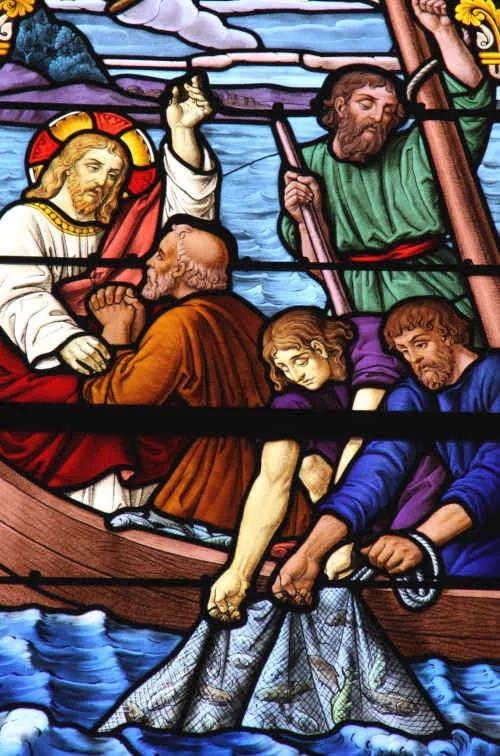
Recall the first time there was a miraculous catch of fish in the Gospels. In Luke 5:1–7, Jesus was preaching to the people on the shore from where He sat in Peter’s boat just a short distance away. After preaching, Jesus told Peter, “Put out into deep water and lower your nets for a catch.” Peter did so and there was such a large catch of fish that the Apostles needed help to haul it in.

In today’s Gospel, some three years later after the Resurrection, Jesus appeared to the disciples from the shore and instructed them to cast their nets “over the right side of the boat.” They did so and caught 153 large fish. In commenting on these two passages, Saint Augustine teaches that the first miraculous catch was a sign that the Gospel would be preached to all people, which is indicated by Jesus simply saying “lower your nets.” But after the Resurrection, Jesus specifically tells the disciples to cast their nets “over the right side” to indicate that grace is now given to those who stand on His right side and are separated from the condemned who are on His left. Thus, this second miraculous catch symbolizes the end of the age when the good and the bad are judged.

Saint Augustine also notes that the 153 large fish, caught off the right side of the boat, are a symbolic representation of those who conform not only to the Ten Commandments but also receive the Seven Gifts of the Holy Spirit by grace. He explains that 10 + 7 = 17 and if you add all the numbers together between 1 and 17 you arrive at 153. Thus, these 153 fish represent everyone who receives His gift of grace and obtains salvation. The boat represents the Church, and the gift of salvation is offered by Christ through His Church.

One clear message we must take from Saint Augustine’s interpretation is that grace and mercy are offered to all, but not received by all. At the end of our lives and at the end of the world, judgment will take place. Those who responded to the offer of grace and mercy, repented of their sins and gave their lives to Christ will eternally share in the Resurrection. But those who refused to follow His Commandments and closed themselves to the transforming power of the Gifts of the Holy Spirit will be separated from eternal joys.

Facing the reality of hell is not pleasant, but it is a message that must not be ignored. It is a message that is real and, therefore, hell is a possibility for us all. Therefore, it is important to remind ourselves from time to time of this spiritual truth. Are you among those 153 large fish found on the right side of the boat? Do you allow the ministers of Christ within the Church, represented by the disciples in the boat, to draw you to Christ through preaching and the Sacraments? Though all of us might quickly answer “Yes” to that question, we should never fail to be attentive to the fact that salvation requires action on our part. It requires that we accept Christ Jesus by following His Commandments and live by the transforming power of the Holy Spirit as it is dispensed by the Church.

Reflect, today, upon the symbolism found in this Resurrection account. Consider the fact that the Gospel has, indeed, been shared with you. Have you listened to the Word of God as it is preached by the Church? Do you immerse yourself in the grace given through the Sacraments? Do you follow the Ten Commandments faithfully? Do you continually open yourself to the Seven Gifts of the Holy Spirit? Seek to be among that catch of fish caught on the “right side.” Never doubt that hell is real and possible. For that reason, never waver from your fidelity to Christ, so that you will remain firmly grounded in His grace and share one day in His Resurrection.

Source: https://catholic-daily-reflections.com/2025/05/03/one-hundred-and-fifty-three-large-fish/

John 21:4-6 Read More »

John 14:8-9

Do You Not Know Me?

Philip said to Jesus, “Master, show us the Father, and that will be enough for us.” Jesus said to him, “Have I been with you for so long a time and you still do not know me, Philip? Whoever has seen me has seen the Father. How can you say, ‘Show us the Father’?”

Reflection:

Today’s liturgical feast is in honor of two of the Apostles, Philip and James the Lesser.  Little is known about James other than that he was chosen by our Lord for the apostolic ministry and that we have one of his letters, which is contained in the New Testament.  James eventually went to Jerusalem and led the Church for a few decades until he was stoned to death as a martyr. Philip preached in Greece, Phrygia and Syria.  He and Saint Bartholomew were thought to have been crucified upside down. Philip preached upside down from the cross until his death.

In the Gospel for today’s Mass, we are presented with an encounter that Philip had with Jesus. Though this encounter appears to be a rebuke of Philip by Jesus, it’s a rebuke that is quite heartfelt. Jesus says, “Have I been with you for so long a time and you still do not know me, Philip?” Jesus did, indeed, spend much time with His disciples. They stayed together, ate together, traveled together and spent much time talking with each other. Therefore, Jesus’ comments to Philip emanated from His real and lived personal relationship with Philip.

Take the first part of that statement to begin with. “Have I been with you so long…” Imagine Jesus saying this to you. Is this something He would be able to say to you? Is it true that you do spend much time with Him? Do you spend time reading the Gospels, speaking to Him from the depths of your heart, conversing with Him, praying to Him and listening to His gentle voice?

But Jesus goes on: “…and you still do not know me…?” This is a humble truth that is important to admit. It is true that even those who have a very deep and transforming life of prayer do not know our Lord deeply enough. There is no limit to the transformation that can take place in our lives when we know Jesus personally.

Jesus’ statement goes on: “Whoever has seen me has seen the Father.” So the next question is this: “Do you know the Father?” Do you know the Father’s love, His care for you, His perfect will? Though the Father and the Son are united as one God, They are still distinct Persons, and we must, therefore, work to establish a relationship of love with each one of them.

As initially mentioned, the comments from Jesus are a gentle rebuke of love to Philip, and He wants to speak this same gentle rebuke to you. But it’s a rebuke of love meant to encourage you to get to know Him better. It’s an invitation to personalize your relationship with Jesus and the Father in a real and concrete way. Do you know Him? Do you know the Son of God? Do you know the Father in Heaven?

Reflect, today, upon these loving questions of our Lord as if they were spoken to you. Let His words encourage you to get to know Him more deeply. Pray for your relationship to become more personal and transforming. And as you get to know our Lord more intimately, know that it is also the Father in Heaven Whom you are getting to know.

Source: https://catholic-daily-reflections.com/2025/05/02/do-you-not-know-me-4/

John 14:8-9 Read More »

John 6:12-13

Superabundance

“Gather the fragments left over, so that nothing will be wasted.” So they collected them, and filled twelve wicker baskets with fragments from the five barley loaves that had been more than they could eat.”

Reflection:

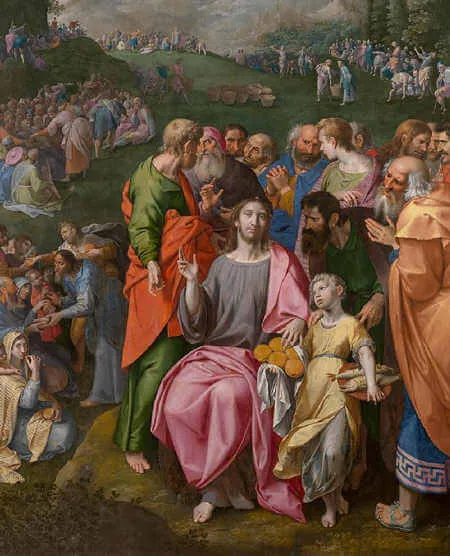
John’s Gospel is filled with much symbolic meaning. The passage above concludes the story of the miracle of the multiplication of the loaves and fishes. After feeding the multitude of people with only five barley loaves and two fish, they were able to fill twelve wicker baskets with what remained. What was the reason for the extra?

Saint Augustine, in commenting upon this passage, explains that Jesus provided more than the people could eat as a way of symbolically representing spiritual truths that were beyond what the vast crowds could comprehend. Thus, Jesus’ teachings spiritually nourished the crowds to the point that they were fully satisfied. But even though the general crowds were satisfied with what Jesus taught them, there was still so much more that He had to teach. These deeper spiritual truths are represented by the extra twelve baskets.

The twelve baskets represent the Twelve Disciples. They were the ones specially chosen by Jesus to receive so much more. Recall the times when Jesus taught the crowds in parables and then, later, would explain the meaning to the Twelve in private. He revealed to them certain truths that most people could not understand and accept.

It is helpful to consider three different groups of people in this miracle and apply those groupings to us today. The first group of people are those who were not even present for the miracle. Those who did not make the journey to be with Jesus in the wilderness. This is the largest group of people within society who go about their daily lives without even seeking minimal nourishment from our Lord.

The second grouping of people is this “large crowd” who followed Jesus to the remote side of the Sea of Galilee to be with Him. These represent those who diligently seek out our Lord every day. These are those who are faithful to the celebration of the Mass, the reading of Scripture, to daily prayer and study. To this grouping of people, our Lord teaches many things, and they are nourished by His holy Word and Sacraments.

The third grouping of people, the Twelve Disciples who are represented by the Twelve wicker baskets left over, are those who are exceptionally faithful to our Lord and continue to be nourished by Him in a superabundant way. These are those who seek to understand and embrace the deepest spiritual truths so as to be nourished and transformed on the deepest level.

Reflect, today, upon the fact that the spiritual food our Lord wishes to offer you is most often far more than you can immediately accept and consume. But understanding that fact is the first step to disposing yourself to receive even more. As you reflect upon this superabundance of spiritual food from our Lord, recommit yourself especially to seek out that remaining “twelve wicker baskets” of spiritual truths. If you do, you will discover that there is truly no end to the transforming depths of the gifts of grace our Lord wishes to bestow upon you.

Source: https://catholic-daily-reflections.com/2025/05/01/superabundance-4/

John 6:12-13 Read More »

John 3:35

The Meaning of Love

It’s interesting to note that the words of today’s Gospel appear to be from Saint John the Baptist, since they come within the context of his testimony to Jesus. Some commentators, however, suggest that they are words that were actually spoken by Jesus and that the Evangelist inserts them here as a continuation of the testimony of the Baptist, attributing them to Saint John. Regardless of who actually spoke these words, the line quoted above gives us much to reflect upon, in that it gives us insight into the very meaning and practice of true love.

What is love? Is it a feeling? An emotion? A drive or a desire for something or someone? Of course, the secular understanding of love is much different than a divine understanding of love. Oftentimes the secular view of love is more self-centered. To “love” someone or something is to want to possess that person or object. “Love” from a secular view focuses upon the attraction and desire. But true love, from a divine perspective, is very different.

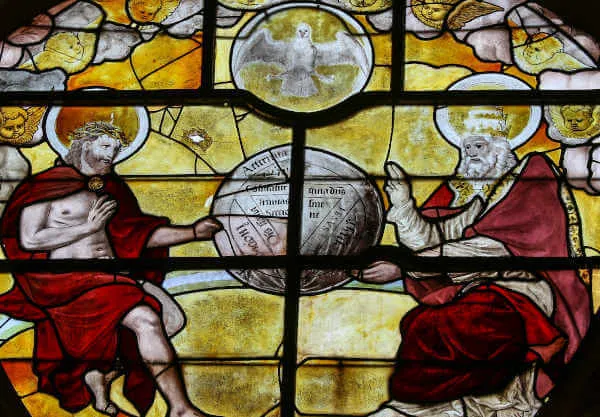
The line quoted above tells us two things: First, we are told that “The Father loves the Son…” But then we are given a definition of that love. We are told that love in this case results in the Father giving “everything over” to the Son. When we consider the word “everything” in this passage, it is clear that this can only refer to the Father giving Himself to the Son in totality. Within the life of the Father, everything means His very essence, His being, His personhood, His whole divine self. The Father does not say, “I want;” rather, the Father says, “I give.” And the Son receives all that the Father is.

Though this is deep and mystical language, it becomes very practical for our lives when we understand that divine love is not about wanting, taking, desiring, feeling, etc. Divine love is about giving. It’s about the giving of oneself to another. And it’s not just about giving some of yourself away, it’s about giving “everything” away.

If the Father gave everything to the Son, does that mean that the Father has nothing left? Certainly not. The beautiful nature of divine love is that it is never ending. The more one gives themself away, the more they have. Thus, the gift of the life of the Father to the Son is infinite and eternal. The Father never ceases to give, and the Son never ceases to receive. And the more the Father gives Himself to the Son, the more the Father becomes the essence of love itself.

The same is true in our lives. It’s easy to fall into the trap of thinking that love should only go so far. But if we are to strive to imitate and participate in the love the Father has for the Son, then we must also understand that love is about giving, not receiving, and that the giving must be a gift of everything, holding nothing back. We must give ourselves away to others without counting the cost and without exception.

Reflect, today, upon your view of love. Look at it from a practical perspective as you think about the people whom you are especially called to love with a divine love. Do you understand your duty to give yourself to them completely? Do you realize that giving yourself away will not result in the loss of your life but in the fulfillment of it? Ponder the divine love that the Father has for the Son and make the radical and holy choice today to strive to imitate and participate in that same love.

Source: https://catholic-daily-reflections.com/2025/04/30/the-meaning-of-love-4/

John 3:35 Read More »