Daily Saints

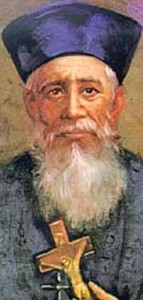
Saint Jean-François-Régis Clet

Profile

Jean-Francois-Regis Clet was the tenth of fifteen children; his father was a farmer and merchant, and the boy was named after Saint John Francis Regis. He was raised in a pious family; one brother became a priest, one sister a nun. He studied at the Jesuit Royal College at Grenoble, France. He joined the Congregation of the Mission (Vincentians) in Lyons, France on 6 March 1769, making his final vows in 1771. He was ordained in 1773. He was a professor of moral theology at the Vincentian seminary in Annecy, France. He was nicknamed “the walking library” due to his encyclopedic knowledge. He became the Rector of Annecy in 1786 and the Director of novices in Paris in 1788. He became the Director of the internal seminary at mother-house of the Congregation of the Lazarists in Paris, France. His community was disbanded, and their house destroyed by the French Revolutionists. He was a missionary to China in 1791. and was assigned to Kiang-si in October 1792, the only European in the area; in 28 years of work, he never mastered the language.

In 1793, Clet moved to Hou-Kouang in the Hopei Province where he served as superior of an international group of Vincentian missioners scattered over a very large territory; his pastoral area covered 270,000 square miles. In 1811, government anti–Christian persecutions intensified; the missionaries were accused of inciting rebellion, and had to pursue their work while on the run, often hiding in the mountains. On 16 June 1819, with a bounty on his head, he was betrayed by a Christian schoolmaster whose behavior the missionary had tried to correct. He was force marched hundreds of miles in chains to trial. On 1 January 1820, he was found guilty of deceiving the Chinese people by preaching Christianity. He became a martyr.

Born

  • 1748 at Grenoble, France

Died

  • slowly strangled to death with a rope while tied on a cross on 18 February 1820 at Au-tshung-fu, China
  • buried on Red Mountain by local Christians
  • re-interred at the Vincentian motherhouse, Paris, France
  • relics moved to Saint Lazare church, Paris

Venerated

  • 25 February 1900 by Pope Leo XIII (decree of martyrdom)

Beatified

  • 27 May 1900 by Pope Leo XIII

Canonized

  • 1 October 2000 by Pope John Paul II

Source: https://catholicsaints.info/saint-jean-francois-regis-clet/

Saint Jean-François-Régis Clet Read More »

Seven Holy Founders of the Servite Order

Thirteenth Century; Invoked to aid in the imitation of the charity and patience of Our Lady of Sorrows; Canonized on January 15, 1888 by Pope Leo XIII

Bonfilius, Alexis, Manettus, Amideus, Hugh, Sostene, and Buonagiunta were seven successful cloth merchants from Florence, Italy. As members of a lay organization dedicated to the Blessed Mother, they were each devout in their faith. Their comradery, centered around their faith, not only united them more fully to God, but also to each other with a holy bond and a holy mission.

At that time, Florence was a bustling city wrought with conflicts, due to competition between the noble rulers and the populists who sought to govern by the will of the people. Florence’s economy was also booming, due to the new merchant class whose financial worth was counted in coins rather than in the amount of land and servants they possessed. Within this context, these seven holy men of Florence desired an escape from the lust for money and power, and from the conflict that continued to grow.

Around the year 1233, it is reported that all seven of these devout men individually experienced an apparition of the Blessed Virgin Mary, calling them to withdraw from the world and to devote themselves entirely to the service of God. They obeyed, and on September 8, the Feast of the Birth of the Blessed Virgin Mary, they gave up their careers and property and moved into a dilapidated house outside the city wall. They embraced the mendicant life of begging, poverty, and prayer. Many were drawn to them and found in them men of wisdom and virtue. As a result, they received many requests for spiritual counsel and moral guidance. Though they were drawn to this form of charity, they soon discovered that their first calling was to a life of prayer. Their close proximity to the city of Florence hindered the solitude to which they were called, so they moved to a dwelling eleven miles from the city on Monte Senario.

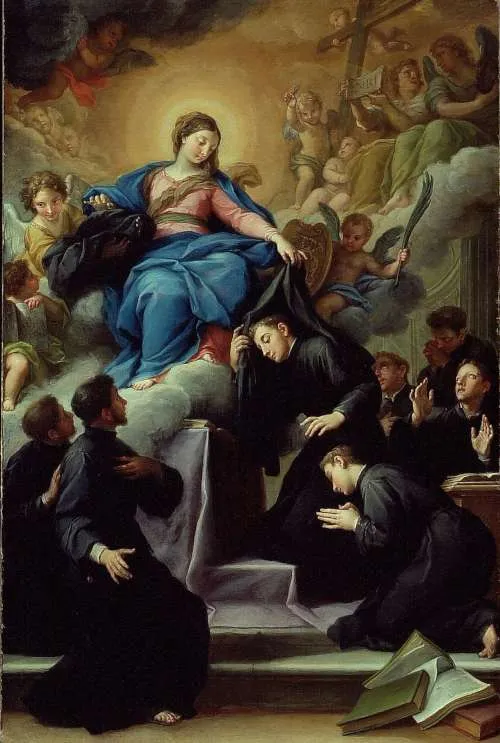
Around the year 1240, at Monte Senario, the seven received a joint vision of the Blessed Virgin Mary who appeared to them surrounded by angels. She instructed them on their mission, clothed them in their habits, presented them with their rule of life, and personally founded their order.

Central to their mission was to spread devotion to the Seven Sorrows of Mary and to be her servants. Within a decade, the order was tentatively approved by the pope and their numbers began to grow. In addition to new foundations in Italy, they quickly spread to Germany, France, and Spain. By the early thirteenth century, final papal approval was given and the order spread to Hungary, Bohemia, Austria, Poland, and modern-day Belgium. Eventually, missions were established in Crete, the Philippines, and India. Today, the Servite order has expanded to all parts of Europe, Africa, Australia, and the Americas.

These holy men were called together by our Blessed Mother as they worked and lived in a growing city. Once united by their faith, they were set apart and drawn by God to a life of prayer. From that prayer, and their commitment to poverty, chastity, and obedience, God drew many others into their companionship. And through their companions, missionaries went forth to the corners of the earth.

As you ponder the lives of these holy men, especially consider the unity they shared by answering the call to pray and serve together. That unity flowed from their love of God and our Blessed Mother. It also flowed from their united obedience to their calling. United as one in Christ, each individual was strengthened and the fruitfulness of their labors grew exponentially.

You, too, are called to holiness and to a holiness that unites you with others who share your mission. Pray to God that you will be able to follow the example of these holy men by joining with those whom God has put in your life to strengthen your faith and expand the mission you have been given.

Source: https://mycatholic.life/saints/saints-of-the-liturgical-year/february-17-seven-holy-founders-of-the-servite-order/

Seven Holy Founders of the Servite Order Read More »

Saint Juliana of Nicomedia

Profile

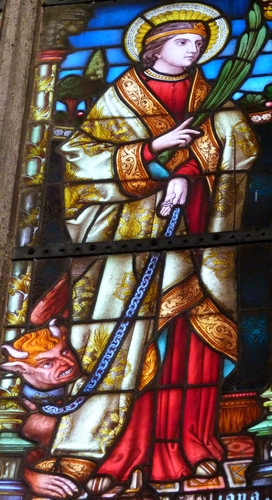
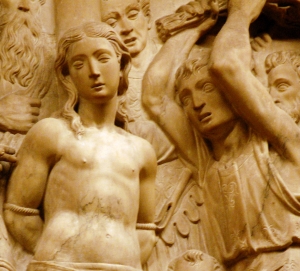
Juliana was the daughter of a pagan named Africanus who promised the girl to a young noble named Evilase. Juliana put him off, first insisting that he should become prefect of Nicomedia. When he became prefect, she insisted he should become a Christian before they could marry, a condition he would never meet. Her father, who hated Christians himself, abused Juliana to get her to change her mind, but she held fast; ancient manuscripts describing these horrors put them in terms of her fighting a dragon, and she is often depicted that way in art. Evilase called her before the tribunal during the persecutions of Maximianus, denounced her as a Christian, and she was martyred. Hers was a favorite story, for telling and creation of stained glass and other art objects, during the Middle Ages.

Died

  • burned, boiled in oil, and beheaded c.305
    relics at Cumae, Naples, Italy

Canonized

  • Pre-Congregation

Patronage

  • bodily ills
  • sick people
  • sickness
  • Pedrosa de Río Úrbel, Spain

Representation

  • young woman battling a winged devil
  • young woman being boiled
  • young woman chaining up a dragon
  • young woman chaining up and/or scourging the Devil
  • young woman in a cauldron
  • young woman leading a chained devil
  • young woman standing or sitting on a dragon
  • young woman wearing a crown on her head and a cross on her breast
    naked young woman hanging by her hair

Source: https://catholicsaints.info/saint-juliana-of-nicomedia/

Saint Juliana of Nicomedia Read More »

Saint Claude de la Colombiere

Profile

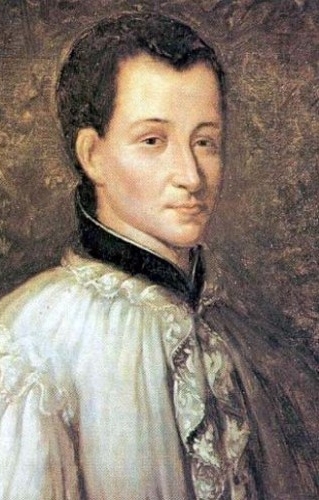
Born to the French nobility, Claude early felt a call to religious life. He was educated at Jesuit college in Lyons, France. He became a priest. He taught humanities at Avignon, France. He continued his studies in Paris, France. He was a tutor. He preached against Jansenism, advocating dedication to the Sacred Heart of Jesus. He joined the Jesuits in 1659. He became the spiritual director of Saint Margaret Mary of Alocoque.

He was the chaplain to Mary Beatrice d’Este, the Duchess of York. He converted many Protestants through the example of his holy life. Due to rumors of “Popish plots” against the king and the re-establishment Catholicism, Claude was imprisoned, accused of being part of the Titus Oates Plot. It was only by the efforts of Louis XIV, who had recommended him for the assignment, that he was not martyred. He was banished from England. His health had been ruined by his time in prison, and he returned to Paray to die. The day after his death, Saint Margaret received supernatural assurance that Claude needed no prayers, as he was already in heaven. He is considered a “dry” martyr, having suffered every abuse for the faith except death.

Born

  • 2 February 1641 at Saint-Symphorien d’Ozon, Rhône, France

Died

  • 15 February 1682 at Paray-le-Monial, Saône-et-Loire, France of hemoptysis (coughing up blood)

Venerated

  • 11 August 1901 by Pope Leo XIII

Beatified

  • 16 June 1929 by Pope Pius XI

Canonized

  • 31 May 1992 by Pope John Paul II in Rome, Italy

Patronage

  • toy makers
  • turners

Source: https://catholicsaints.info/saint-claude-de-la-colombiere/

Saint Claude de la Colombiere Read More »

Saint Cyril, Monk; Saint Methodius, Bishop

Saint Cyril: c. 827–869; Saint Methodius: c. 815–885; Co-Patrons of Europe, Slavic peoples, unity of Eastern and Western Churches; Pre-Congregation canonization

Imagine what life would be like if you were unable to read because the language you spoke was not even in written form. No alphabet, no books, only a spoken language. This is the context into which our saints today were sent to preach the Gospel. 

Their story began in Thessalonica, Greece, a territory first evangelized by Saint Paul. Seven sons were born to a Greek-speaking imperial magistrate and his wife. Two of the boys were named Constantine and Michael. Their mother was most likely of Slavic descent, and the boys learned her unwritten language, along with Greek and Latin. When Constantine was about fourteen years old, he was sent to the great Greek city of Constantinople to study. It was there that he also came to know the young Byzantine Emperor, Michael III, who was only a young child. After completing his education, Constantine decided to become a priest. Shortly after his ordination, he was invited to teach and soon became well known as the “Philosopher.” Constantine’s brother Michael, about twelve years older than Constantine, began his career in civil service in Macedonia but chose to abandon that position to become a monk, taking the name Methodius.

When Constantine was about thirty years old and his brother Methodius was in his early forties, Constantine decided to give up his teaching career and embrace a life of prayer in his brother’s monastery. Within a few years, however, Emperor Michael III, now an adult, asked Constantine to go on a mission to evangelize the Jews and Turks of Khazars, modern-day Russia, Ukraine, and Crimea. Methodius accompanied him on this mission, and they learned both Hebrew and Turkish so as to speak to the people in their native tongues.

Within a couple of years, Prince Rastislav of Moravia asked Emperor Michael III to send missionaries to Great Moravia, today’s Czech Republic. His people had rejected paganism and embraced Christianity, but they didn’t have anyone who could explain the faith to them in their native Slavic language since the Germanic clergy adhered strictly to Latin. It was this mission that would be the beginning of a new era and a new method of evangelization within the Church.

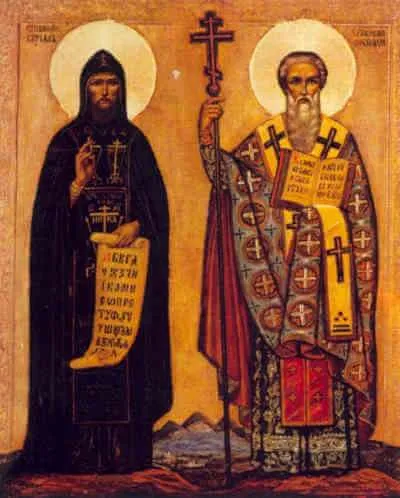
In Great Moravia, Constantine and Methodius began to translate the Bible and liturgical books into the Slavic language. Since there was no written form of the language or even an alphabet, Cyril created one. He translated the various sounds into symbols, which enabled him and his brother to then write down the sacred texts. In addition to their translations, they began to teach the people and future Slavic clerics how to read their new written language. Eventually, the new alphabet developed into what is now known as the Cyrillic alphabet and is the basis of many Eastern European and Asian languages used by more than 250 million people today.

Despite the fact that the Slavic people were overjoyed to hear the Gospel and pray the liturgy in their native language, many of the Germanic clergy took issue with this approach. To solve this problem, the brothers traveled to Rome where they received the approval of Pope Adrian II, who ordained them bishops and sent them back to Great Moravia. Before leaving Rome, however, Constantine fell sick. Before dying, he fully consecrated himself to God as a monk in one of the Greek monasteries, taking the monastic name Cyril. His brother Methodius then returned to Great Moravia to continue his work.

Bishop Methodius spent the next fourteen years evangelizing the people in their native language, forming clergy, and effectively administering the Church. He continued to endure harsh treatment from the Germanic clergy, even being imprisoned by them for a time, but he pressed on, extending his missionary work even beyond the borders of Great Moravia. 

It wasn’t until a millennia later that these brothers received the universal honor they deserved when the Western Church added them to its liturgical calendar. A century after that, Pope John Paul II, a Slav himself, honored these two brothers with the title of co-patrons of Europe and Apostles to the Slavs.

These great brothers teach us that the Gospel must be personal and understood through the prism of our own language, culture, and human experience. They also teach us that we must work to share the Gospel with others in ways that they understand and to which they can relate. As we honor these great missionaries, ponder the ways that God wants to use you to reach out to others with His saving message. Though you might not be called to invent a new alphabet to do so, you will be called to step out of your comfort zone. Be courageous, creative, and zealous in this effort in imitation of these Apostles to the Slavs.

Source: https://mycatholic.life/saints/saints-of-the-liturgical-year/february-14-saints-cyril-monk-and-methodius-bishop/

Saint Cyril, Monk; Saint Methodius, Bishop Read More »

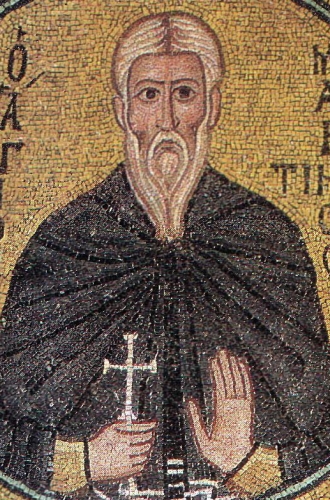
Saint Martinian the Hermit

Profile

Martinian was a hermit at age 18. He was a miracle worker. There are a couple of stories attached to Martinian; in them the line between fact and a good story probably blurs a little.

Legend says that one day, a miserable, bedraggled woman named Zoe showed at his door requesting a traveler‘s hospitality. He took her in, but her true colors soon showed as she cleaned up and showed herself to be a beautiful woman who tried to seduce Martinian. When he realized how tempted he was, he built a fire and put his feet in it; the pain, as you might imagine, was excruciating. Martinian said, “If I cannot stand this fire, how will I tolerate the fires of Hell?” He counseled her while she treated his wounds, converted her, and she became a nun in Bethlehem.

To save himself from his own weakness, the saint moved to a large rock surrounded on all sides by the sea. There he lived on bread and water brought to him by a Christian sailor who visited three times a year. After six years living exposed on the rock, he had a visitor – a young woman who washed up on the rock after her ship had gone down at sea. Before she could speak, he gave her all his provisions, promised to send his friend the sailor to rescue her when he returned, then threw himself into the sea. He washed up on shore, and two months later had the girl rescued. He then spent the rest of his days in Athens.

Born

  • c.350 at Caesarea, Palestine

Died

  • c.398 at Athens, Greece

Canonized

  • Pre-Congregation

Representation

  • dolphin
  • man standing on a rock in the sea

Source: https://catholicsaints.info/saint-martinian-the-hermit/

Saint Martinian the Hermit Read More »

Saint Eulalia of Barcelona

Profile

Eulalia was a sanctified virgin, the forerunner of professed nun. She was martyred at age 13 or 14 in the persecutions of Diocletian. She is often confused with Saint Eulalia of Merida. Several villages in Guienne and Languedoc are named for her.

Born

  • c.290 in Barcelona, Spain

Died

  • 12 February 304 at Barcelona, Spain
  • interred in the church of Santa Maria del Mar, Barcelona
  • relics translated to the Barcelona cathedral on 23 November 874

Canonized

  • 633

Patronage

  • against drought
  • against dysentery
  • boatmen
  • mariners
  • pregnant women
  • for rain
  • safe sailing
  • safe seafaring
  • sailors
  • travellers
  • watermen
  • Barcelona, Spain
  • Barcelona cathedral

Representation

  • young woman with a palm and cross in her hand
  • young woman with a lily and a book

Source: https://catholicsaints.info/saint-eulalia-of-barcelona/

Saint Eulalia of Barcelona Read More »

Our Lady of Lourdes

January 11–July 16, 1858; Patron Saint of the sick, asthma sufferers

Bernadette Soubirous was born on January 7, 1844, into a humble and very poor family in Lourdes, France. Her father was a miller and her mother washed laundry. The eldest of nine children, Bernadette received a simple education from the Sisters of Charity and Christian Instruction, but frequent illness hindered her studies. Growing up, she spoke the local dialect of Occitan and learned some French in her teenage years. Her family was so poor that all eleven lived together for free in a relative’s one-room basement that was formerly used as a prison or dungeon.

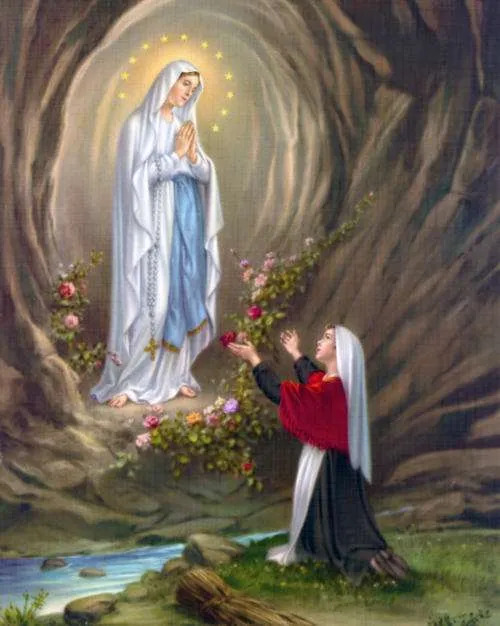
When Bernadette was fourteen years old, she went with her sister and a friend to gather some firewood to heat their home. Bernadette fell behind as they searched for wood near a naturally occurring rock grotto. She then heard the sound of a rushing wind but saw only a wild rose moving. Then, from within the grotto, she saw a dazzling light and the figure of a small young lady in white with yellow roses on her feet. The other two girls saw nothing. Bernadette asked her sister not to tell anyone, but her sister later told their mother. Bernadette’s mother punished the girls for lying and forbade them to return to the grotto.

Three days later, Bernadette felt drawn to return to the grotto, so she and her two companions begged for permission from her mother who reluctantly agreed. Bernadette brought with her a bottle of holy water. When they arrived at the cave, the three girls knelt to pray the rosary. Before finishing the first decade, the young woman in white appeared. Bernadette sprinkled holy water in her direction, telling her that if she were from God she should stay; if not, she should leave. The woman smiled and stayed for the rest of the rosary and then departed.

By this time, some of the local townspeople began to hear about these encounters. Some were superstitious, thinking it was the souls of dead relatives. Others believed it was the Blessed Virgin Mary. Four days later, Bernadette returned to the cave accompanied by a few grown-ups. When the lady appeared, she spoke to Bernadette for the first time, in Occitan. The lady spoke to Bernadette in a remarkably formal and respectful manner, not the way an adult would normally speak to a poor peasant girl. She asked Bernadette if she was willing to return for the next fourteen days. Bernadette agreed.

Bernadette recounts the following about the next two weeks of visions: “I came back for a fortnight. The vision appeared every day, except one Monday and one Friday. She repeated to me several times that I was to tell the priests they were to build a chapel there, and I was to go to the fountain to wash, and that I was to pray for sinners. During this fortnight, she told me three secrets which she forbade me to tell anyone. I have been faithful until now.”

As word spread, the numbers in attendance grew to 30, 100, 350, 800, 1000, 1,500, culminating with almost 10,000. During the fortnight, the local police got involved and threatened Bernadette and her family. However, Bernadette persevered. The lady asked people to pray for sinners and to do penance. During the ninth vision, the lady asked Bernadette to drink from a spring of water in the cave. She found only a small muddy puddle so she drank from it. This left mud on her face, which caused many of the onlookers to ridicule her, to the embarrassment of her family. Over the next two days, the little mud puddle turned into a flowing spring of clear water. Many began to believe when a woman’s paralyzed arm was cured after bathing it in the new spring of water. Throughout the fourteen days, Bernadette continually asked the lady’s name, because the parish priest had asked her to do so. Each time, the lady only smiled. 

Upon the conclusion of the fourteen days, life returned to normal for the next three weeks. However, on March 25, the Feast of the Annunciation, Bernadette was drawn once again to the grotto. This time, she repeatedly asked the lady’s name. The lady responded, “I am the Immaculate Conception.” Bernadette was a young, simple, and poorly educated peasant girl. She had no idea what the “Immaculate Conception” was. But she repeated the name to herself over and over so she wouldn’t forget. When she told the parish priest, he was stunned. Only four years prior, the pope had issued the Dogma of the Immaculate Conception. This fact, especially, helped convince the Church leaders that the apparitions were authentic.

Since that time, the waters in Lourdes have continued to flow, and over seventy healings have been recorded, studied, and confirmed by a rigorous scientific process. Countless thousands more healings have been professed by the faithful. Millions of people now visit Lourdes every year, making it one of the most frequented pilgrimage sites in the world. The sick flock to this holy grotto to bathe in or drink the miraculous water, seeking a cure for their ailments.

Several years after her visions, Bernadette entered religious life. Of the visions, she would later say, “The Virgin used me as a broom to remove the dust. When the work is done, the broom is put behind the door again.” This “broom” was canonized in 1933. The grotto of Lourdes, however, was much bigger than Bernadette. It was Our Lady’s gift to the people. It was her proclamation that she was the Immaculate Conception and her formal acceptance of the title here on earth.

Source: https://mycatholic.life/saints/saints-of-the-liturgical-year/february-11—our-lady-of-lourdes/

Our Lady of Lourdes Read More »

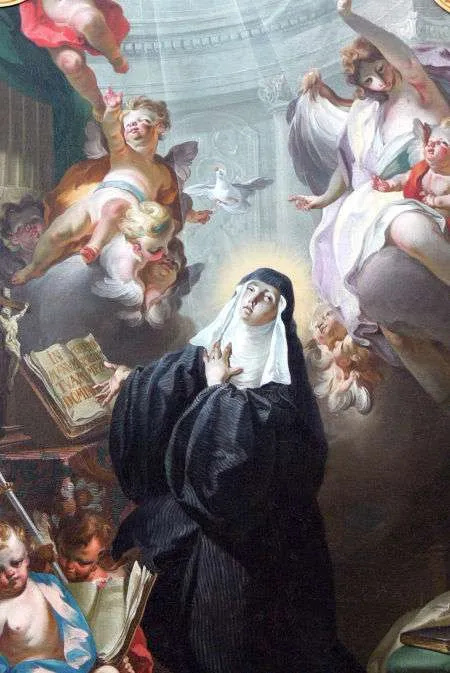
Saint Scholastica, Virgin

c. 480–543; Patron Saint of nuns, school, tests, reading, convulsive children; Invoked against storms and rain; Pre-Congregation canonization

Little is known about the life of Saint Scholastica, yet her influence upon the Church is undeniable. She was born into a wealthy family around the year 480 AD, in the town of Nursia, central Italy, shortly after the fall of the Western Roman emperor. It was a chaotic time, politically speaking, but also a time when God began to manifest His divine stability through her. She had one brother, most likely a twin, by the name of Benedict. Benedict and Scholastica are now honored as great saints. Both had a powerful influence upon monastic life as we have it today, Benedict being the father of Western monasticism and Scholastica its mother.

As a child, Scholastica dedicated herself to the service of God, taking no interest in the things of this world. She lived modestly, despite being raised in a wealthy home. When Benedict left home to become a hermit and to eventually found a monastery with a new monastic rule, she marveled at his hidden life of prayer and work. His vocation called out to her, and she received permission from the local bishop to enter a home of virgins who chose to adopt Benedict’s new monastic rule. Benedict assisted them and made Scholastica the abbess of the home.

Benedict’s new form of monasticism focused on forming permanent, self-contained, and self-supporting monasteries that followed a strict regimen of prayer and work. After aspirants’ callings were tested for a period of time, they made vows, permanently committing themselves to God and the community. Their lives became structured and ordered under the direction of an abbot or abbess to whom the monks and nuns vowed obedience. Soon after Benedict’s humble monastery on Monte Cassino began to bloom, Scholastica received permission to adopt his rule with a group of virgins, making them the first convent of Benedictine nuns. In the centuries to follow, their way of life spread far and wide across the Western world.

In his book Dialogues, Pope Saint Gregory captures the holy love that Benedict and Scholastica shared. Though Scholastica’s convent was only a few miles from Benedict’s monastery, the two would only get together once a year, in keeping with their strict rule of life. Those meetings fanned into flames their shared love for God and the fruits of their prayer and mutual calling to this new way of life. Each year they met at a nearby house and spent the day conversing on the holiest of topics. When these twins were around the age of sixty-three, they met for what would be their final conversation on earth. They spent the day praising God and engaged in spiritual talk. After a light dinner, Benedict announced that he and his companions needed to leave and return to the monastery. Scholastica begged him to stay so that they could continue conversing about God throughout the night. Benedict responded to her, “Sister, what are you saying? I simply cannot stay outside my cell.” Scholastica knew, however, that their holy conversation needed to continue, so she bowed her head in prayer, and God sent forth a lightning storm so powerful that Benedict and his brothers could not leave. Scholastica’s love for Benedict and her desire to continue with the praises of God throughout the night met with God’s approval and God provided the way. They parted the next day, and three days later, Benedict had a vision of his sister’s soul being taken to Heaven in the form of a dove. He had his brothers bring her body to the monastery, and Scholastica was buried in the grave intended for Benedict. Four years later, Benedict died and was buried in the same grave with his sister. The two were united by grace and a shared mission in this life, and they would forever share a grave from which they will rise together on the last day.

Pope Saint Gregory opines that Scholastica’s prayers were answered over Benedict’s objection because her love was great. “She did more which loved more,” he wrote. The witness of these siblings should especially teach us the value of holy friendships that mutually build each other up and give glory to God. We are made not only for communion with God, but for communion with one another. These saintly siblings give witness to this holy fact.

Source: https://mycatholic.life/saints/saints-of-the-liturgical-year/february-10-saint-scholastica-virgin/

Saint Scholastica, Virgin Read More »

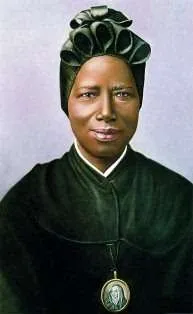
Saint Josephine Bakhita, Virgin

1869–1947; Patron Saint of Sudan and human-trafficking survivors; Canonized on October 1, 2000 by Saint Pope John Paul II

In 1869, a daughter was born into a loving and well-respected family in western Sudan, in a village of the Daju tribe. Until the age of six, she and her three brothers and three sisters lived a happy and carefree life. That would all change around the year 1875 when one sister was abducted by Arab slave traders. Two years later, she also became their victim. When her captor asked her name, she couldn’t remember so she didn’t respond. She might have forgotten her given name due to the trauma she faced. Her captor sarcastically gave her the name “Bakhita,” which means “fortunate,” claiming that he would bring her good luck.

After her captivity, Bakhita was forced to travel hundreds of miles on foot to the city of El-Obeid. On her journey, she was bought and sold more than once, and over the next several years she was bought and sold several more times.

During Bakhita’s captivity, she was forced to convert to Islam and was continually abused. She was beaten most days, one time so severely that she could barely move for more than a month, and she often was bound firmly with chains to prevent her escape. On her deathbed, she would still have painful memories of those chains. One of the worst tortures she endured was the customary scarring of her breasts, belly, and arm with a sharp razor. Once the wound was inflicted, salt was then ground into it, causing permanent scarring and identifying the person as property.

Around the age of thirteen, the city in which she lived, El-Obeid, was threatened by revolutionaries. Bakhita’s owner, a Turkish general, decided to sell his slaves and return to his homeland. Bakhita was sold to an Italian Vice Consul working in the city of Khartoum, named Callisto Legnani. For the next two years, Callisto treated Bakhita well, despite her being his slave. As a result, when the revolutionaries began to make advancements on the city and Callisto made plans to escape to save his life, Bakhita begged him to take her with him, preferring his kindness over a new owner. He did so and, with the help of a friend named Augusto Michieli, they safely arrived in Italy. Upon their arrival, Callisto gifted Bakhita to Augusto and his wife Maria.

In the Michielis’ home, Bakhita continued to be treated well, working as a nanny for their newborn daughter. Three years later, the Michieli family decided to move back to Sudan for business reasons and sold their property in Italy. During the transition, they entrusted Bakhita and their young daughter to the care of the Canossian Sisters in Venice. It was with those loving sisters that Bakhita was introduced to Jesus Christ, her true Master, and began her formation in the Catholic faith.

Within the Catholic faith, Bakhita began to discover the God Whom she had sensed in her heart from childhood. Through the sisters’ teaching and virtuous witness, Bakhita began to understand Who this great God is and to love Him all the more. When the Michielis returned to take their daughter and Bakhita to Sudan, Bakhita refused to go with them. After days of trying to convince her, the Canossian Sisters involved the civil authorities, and in 1889, an Italian court ruled in Bakhita’s favor, declaring her free. She stayed with the sisters and on January 9, 1890, she was baptized, confirmed, and given her First Holy Communion by the Archbishop of Venice (later, Pope Pius X). She was given the baptismal name Josephine Margaret Fortunata, “Fortunata” being the Latin translation of the Arabic name “Bakhita.” Thus, at the age of twenty-one, this fortunate young girl was flooded with God’s grace, and her formerly abused body and soul began a transformation. Josephine stayed with the sisters, entered their novitiate in 1893, and made her vows in 1896, becoming Sister Josephine Margaret Fortunata.

In 1902, Sister Josephine was assigned to the convent in Schio in northern Italy where she spent the rest of her life. In that convent, she was given the responsibilities of welcoming guests as the doorkeeper and worked as a cook and sacristan. She became well known and well loved by the locals for her beautiful and warm smile, kindness, and calm demeanor. Many of the people affectionately referred to her as the “black mother.” She evangelized through her virtues and evident love of God and did not shy away from sharing her story, including her merciful heart that forgave her abusers. She served the people of God and grew in holiness in that convent for forty-two years.

At the end of her life, Sister Josephine suffered again, this time from illness. On her deathbed, she relived the horrors of her captivity but now confronted those horrors with God’s grace. Her last words were cries of love for our Blessed Mother. After her death, her effect upon the people of God was evident as she lay in state for three days while countless faithful came to express their love for her. Shortly after her death, cries for her canonization stirred among the faithful. Twelve years later, her cause for canonization was opened, and she was canonized by Pope John Paul II during the great jubilee year of 2000 in Saint Peter’s Square. Three years after her canonization, Pope John Paul II made an official visit to Khartoum, Sudan, honoring her on her home soil.

Saint Josephine was more than fortunate; she was greatly blessed by God. Later in life she not only forgave her captors, she also expressed her gratitude to them because God used their cruelty to lead her into the Catholic faith and consecrated life. Her witness reveals that God is all-powerful. He is able to take the worst and bring from it the best. He is able to transform tragedy into grace, abuse into mercy, hatred into love.

Ponder any way that you have been mistreated in life. If you find yourself angry or bitter, turn to this great saint and let her witness inspire you. In the end, she never lost hope. That hope led her from the cruelty of earthly masters to a holy slavery in the service of the divine King. If you find yourself bound by earthly masters, sins, or abuses, turn to the One Who promises complete liberation. Jesus must become our Master, and Saint Josephine shows us the way.

Source: https://mycatholic.life/saints/saints-of-the-liturgical-year/february-8-saint-josephine-bakhita-virgin/
Saint Josephine Bakhita, Virgin Read More »