Daily Saints

Blessed Virgin Mary, Mother of the Church

Celebrated the Monday after Pentecost

Little is said about the most glorious Mother of God in the Scriptures. In many ways, she lived a quiet and hidden life. Since her Assumption into Heaven, the Church has prayerfully pondered her life and role in the mystery of salvation. Little by little, saint after saint and pope after pope have shed greater light upon her singularly unique and glorious role in the Father’s eternal plan. As the Church’s understanding of the Blessed Mother has deepened, new titles and new dogmas have been proclaimed about Mary. In 2018, a new liturgical memorial honored her with the title “Blessed Virgin Mary, Mother of the Church.”

To understand the Blessed Virgin Mary’s role as Mother of the Church, we need to begin with Scripture. As Jesus hung on the Cross, John’s Gospel records that the mother of Jesus and two other women stood before Him, alongside John, the disciple whom Jesus loved. From the Cross, Jesus entrusted His mother to John’s care. “When Jesus saw his mother and the disciple there whom he loved, he said to his mother, ‘Woman, behold, your son.’ Then he said to the disciple, ‘Behold, your mother.’ And from that hour the disciple took her into his home” (John 19:26–27).

In 1895, in his encyclical on the rosary, Pope Leo XIII wrote about that Gospel passage:

Now in John, as the Church has constantly taught, Christ designated the whole human race, and in the first rank are they who are joined with Him by faith…She was, in very truth, the Mother of the Church, the Teacher and Queen of the Apostles, to whom, besides, she confided no small part of the divine mysteries which she kept in her heart” (Adiutricem #6).

In 1964, Pope Saint Paul VI promulgated the Vatican II document Lumen Gentium (Dogmatic Constitution on the Church). After presenting a complete picture of the mystery of the Church, the final chapter of that constitution presents “The Blessed Virgin Mary, Mother of God in the Mystery of Christ and the Church.” That chapter highlights her singularly unique and maternal role within the Church. Lumen Gentium did not go so far as to ascribe the title “Mother of the Church” to the Blessed Mother, but it did go into great detail about her maternal role within the Church. Four years later, in a motu proprio letter, Pope Paul VI referenced Lumen Gentium and took it a step further by bestowing upon the Mother of God the title “Mother of the Church.”

…we believe that the Blessed Mother of God, the New Eve, Mother of the Church, continues in heaven her maternal role with regard to Christ’s members, cooperating with the birth and growth of divine life in the souls of the redeemed (Solemni Hac Liturgia #15).

Since that time, Pope John Paul II, Pope Benedict XVI, and Pope Francis have continually referred to the Mother of God as the Mother of the Church. What does the title “Mother of the Church” mean? On September 17, 1997, Pope John Paul II defined it this way in a Wednesday catechesis:

The title “Mother of the Church” thus reflects the deep conviction of the Christian faithful, who see in Mary not only the mother of the person of Christ, but also of the faithful. She who is recognized as mother of salvation, life and grace, mother of the saved and mother of the living, is rightly proclaimed Mother of the Church. (#5).

On March 3, 2018, Pope Francis announced that a new memorial would be added to the General Roman Calendar and celebrated on the Monday after Pentecost Sunday, entitled “The Blessed Virgin Mary, Mother of the Church.”

In the decree instituting this memorial, Cardinal Robert Sarah, Prefect of the Congregation for Divine Worship, said:

This celebration will help us to remember that growth in the Christian life must be anchored to the Mystery of the Cross, to the oblation of Christ in the Eucharistic Banquet and to the Mother of the Redeemer and Mother of the Redeemed, the Virgin who makes her offering to God.

It is significant that the Blessed Virgin Mary, Mother of God, was entrusted to the Church in the person of Saint John the Apostle at the foot of the Cross. From the Cross, the Church was conceived by the outpouring of grace that flowed from Jesus’ Sacred Heart. At Pentecost, our Blessed Mother was present as the Church was born.

Today, the Mother of the Church reigns in Heaven next to her Son; from there, she continues to nurture the Church as a loving mother. She not only intercedes for us but also mediates her Son’s saving grace, making her the ongoing instrument of grace and mother of all.

Because our understanding of the role of the Blessed Virgin Mary has continually unfolded over the centuries, it is fair to say that we do not yet fully understand her glorious role in the Father’s plan of salvation. Some have proposed that she be given the dogmatic titles “Mediatrix of All Grace” and “Co-Redemptrix.” Regardless of what comes next in our ever deepening understanding of the role of the Blessed Mother, we can be certain that those who one day gaze upon the essence of God Himself as he reveals all truth will immediately become aware of the most profound mysteries of Mary’s hidden life.

As we honor the Blessed Virgin Mary, Mother of the Church, know that she is your spiritual mother insofar as you are a member of Christ’s Body, the Church. By giving birth to the Head, she gives birth to the members. As members of that Body, it is essential that we seek spiritual nourishment from the Blessed Virgin Mary. She is our mother and queen. From her, we are born into God’s grace. She is the chosen instrument and mediatrix of grace. Rely upon her motherly intercession and mediation, and entrust yourself more fully to her care.

Source: https://mycatholic.life/saints/saints-of-the-liturgical-year/mary-mother-of-the-church-memorial/

Blessed Virgin Mary, Mother of the Church Read More »

Pentecost Sunday

Today, we celebrate the most glorious Solemnity of Pentecost, the promised Gift of the Father and the Son to Jesus’ disciples. After rising from the dead, Jesus appeared to His disciples for forty days. During those appearances, He offered them proof of His resurrection, continued to teach them, and reminded them of all He had revealed to them about His death and Resurrection, preparing them for the next step of their mission. “While meeting with them, he enjoined them not to depart from Jerusalem, but to wait for ‘the promise of the Father about which you have heard me speak; for John baptized with water, but in a few days you will be baptized with the holy Spirit’” (Acts 1:4–5).

During the ten days after Jesus’ Ascension, the eleven Apostles gathered together in the upper room with the mother of Jesus and many other disciples, totaling 120 in all. The gathering place was most likely the same place that the Apostles ate the Passover meal, the first Eucharist, with Jesus. As they met, the first order of business was to choose a successor to Judas. They cast lots, and Matthias was chosen to be one of the Twelve.

On the fiftieth day after Jesus’ Resurrection, ten days after His Ascension, the 120 disciples were once again gathered in the upper room when they experienced something beyond their imagination. From the sky came a noise like a strong driving wind. It filled the room they were in. Tongues, as of fire, fell upon all gathered, and they were given the gift of tongues, which enabled them to speak in different languages—by the power of the Holy Spirit—to the diverse groups of people in Jerusalem. This is what Jesus had promised them, and suddenly they understood as they received the Gift of God.

After receiving the Holy Spirit, the disciples went out into the community of Jerusalem and began to boldly proclaim the Gospel to all. The inhabitants of Jerusalem were shocked and confused. Some accused the disciples of being drunk and scoffed at them. Some, however, quickly believed. Peter then stood up and gave a stirring and powerful sermon that presented the whole mystery of salvation. He spoke of Jesus as the Savior and the need to repent and be baptized. “Those who accepted his message were baptized, and about three thousand persons were added that day” (Acts 2:41). The new followers then devoted themselves to the teaching of the Apostles and to the celebration of the Eucharist. A strong Christian community was formed in Jerusalem.

As the community continued to grow, learn the teachings of the Apostles, and receive the outpouring of the Holy Spirit, miracles took place. Peter and John cured a blind man. Soon, there were 5,000 converts to Christ who were filled with the Holy Spirit. More miracles took place at the hands of all of the Apostles, people from the surrounding villages came and were converted, and the new believers lived as one, sharing their food and resources with others.

Soon the members of the Sanhedrin became concerned. They thought they had stopped Jesus, but they saw that the Apostles were converting thousands. The Apostles were arrested and jailed, but an angel let them out in the night, and they appeared in the Temple the next day, continuing to preach and heal. The bewildered Sanhedrin members did not know what to do. They hoped that the new excitement would soon subside and everything would go back to normal—but it didn’t.

Recognizing the need to better care for the poor with the money and provisions the thousands of disciples held in common, the Apostles appointed seven men to be deacons for the task, so that the Apostles could continue to preach, heal, and offer the sacraments. Shortly afterward, blood was shed. Stephen, one of the newly ordained deacons, was martyred. “On that day, there broke out a severe persecution of the church in Jerusalem, and all were scattered throughout the countryside of Judea and Samaria, except the apostles” (Acts 8:1).

The above illustrates the role of the Holy Spirit. Pentecost was the birthday of the Church. The Holy Spirit’s mission was to form the Church and empower each baptized member of Christ’s body to fulfill his or her specific duty. Some were to preach, some cared for the poor, some shed their blood for their faith, and others were to be sent to other towns and villages. The scattering of the community of the believers in Jerusalem was clearly permitted by the Holy Spirit as a way of expanding the Church beyond Jerusalem. The newly converted and empowered disciples traveled far and wide to expand the newborn Church that grew at a rapid pace as the new Body of Christ matured and fulfilled its mission.

In the years and centuries ahead, the Holy Spirit continued to form the Church. The Apostles were inspired to write what is today the New Testament so that future believers would have firsthand accounts of the Gospel. From there, the successors to the Apostles, in union with the successor of Saint Peter, helped to form the Sacred Tradition, which is the ongoing deepening revelation of the Word of God to address new questions that arose. Jesus’ promise to Peter and his successors that He would give to him the keys to the Kingdom of Heaven, so that he and his successors could bind and loose on earth as it is in Heaven, evolved and helped the Church to mature. The Holy Spirit enabled the growing communities to continue to take nourishment through the Sacraments. The believers were empowered to pray and to enter into a personal relationship with Him Who rose and is now seated at the right hand of the Father. Other believers were filled with charisms needed to build up the Church. The Gospel continued to be preached to the ends of the earth, and the people of God were drawn into lives of profound holiness and union with God. This is all effected by the Gift of the Holy Spirit first given at Pentecost and continually given today.

In addition to building up the Church and enabling it to fulfill its divine mission, the Holy Spirit also sanctifies every individual believer, especially through the bestowal of the Seven Gifts of the Holy Spirit. According to the Catechism of the Catholic Church, “The seven gifts of the Holy Spirit are wisdom, understanding, counsel, fortitude, knowledge, piety, and fear of the Lord…They complete and perfect the virtues of those who receive them. They make the faithful docile in readily obeying divine inspirations” (#1831). Additionally, the Holy Spirit instills twelve fruits: “The fruits of the Spirit are perfections that the Holy Spirit forms in us as the first fruits of eternal glory. The tradition of the Church lists twelve of them: ‘charity, joy, peace, patience, kindness, goodness, generosity, gentleness, faithfulness, modesty, self-control, chastity’” (#1832). These graces are first given in Baptism and perfected in Confirmation. Each baptized and confirmed member of Christ has the potential to fully realize these graces so as to grow in holiness and fulfill their divine mission.

As we celebrate the great Solemnity of Pentecost, call on the Holy Spirit in your life. Too often we receive Baptism and Confirmation with a closed mind and heart. We fail to allow the Holy Spirit to become fully active in our lives. Pray to the Holy Spirit today, and open yourself more fully to all that God wishes to bestow upon you so that you will become holy and a more active member of His Body, the Church.

Source: https://mycatholic.life/saints/saints-of-the-liturgical-year/pentecost/

Pentecost Sunday Read More »

Saint Deochar

Profile

Deochar is a hermit in the Franconia forests near Fulda, an area in modern Germany. He was a spiritual student of Blessed Alcuin at Aachen, Germany. He became a Benedictine monk and first abbot of Herriedon abbey; he was chosen for the position by Blessed Charlemagne. He was appointed as missus regius (king‘s messenger), a royal office, in 802. He helped translate the relics to Saint Boniface to Fulda in 819. He attended the synod of Mainz, Germany in 829. A famous miracle ascribed to him was healing a young boy‘s blindness by prayer.

Born

  • late 8th century, probably in Bavaria, Germany

Died

  • 847 at the abbey of Herriedon, Germany of natural causes
  • interred in the church of Saint Vitus
  • some relics were moved to Saint Lawrence church, Nuernberg, Germany in 1316
  • these relics were moved to Eichstätt, Germany in 1845

Canonized

  • Pre-Congregation

Patronage

  • blind people
  • eye patients
  • Eichstätt, Germany

Representation

  • man enthroned under Christ among the apostles
  • man giving thanks before an altar while nearby is the boy whose blindness was healed
  • man standing in front of an open tomb, which may be identified as that of Saint Boniface

Source: https://catholicsaints.info/saint-deochar/

Saint Deochar Read More »

Saint Norbert, Bishop

c. 1080–1134; Patron Saint of expectant mothers and Bohemia; Canonized by Pope Gregory XIII on July 28, 1582

Saint Norbert did not begin his life as a saint. He was born in the town of Xanten, within the Holy Roman Empire and the Kingdom of Germany, to noble parents. Because of his nobility, he was educated at the Church of Saint Victor in Xanten and later became a canon in that church. Though not ordained, he was considered a cleric, receiving the ministry of subdeacon. In his role as a canon, Norbert prayed the Divine Office each day with the other canons and received a salary for this simple duty—the primary reason he accepted the canonry. However, he soon discovered a way to increase his income. He paid someone to take his place praying the Divine Office each day in Xanten and moved to the court of the Prince-Archbishop of Cologne. Soon after, he became a member of the court of Holy Roman Emperor Henry V and was put in charge of distributing the royal alms. The income from his canonry and his position at the court enabled him to live a very comfortable lifestyle.

In the court of King Henry, Norbert witnessed firsthand an ongoing controversy between the pope and the emperor. In 1111, Henry V traveled to Rome to resolve a dispute called “the lay investiture controversy.” The emperor wanted to retain spiritual authority to appoint and invest bishops, to which the pope was opposed. Once negotiations broke down, Henry apprehended the pope and held him captive until the pope agreed to his terms. The pope finally agreed, but once Henry left, the pope excommunicated Henry. Norbert was sympathetic to the pope’s position and was shaken by this controversy.

Over the next year, Norbert began to have a moral awakening. That awakening came to a head one day as he rode his horse during a violent storm. Lightning struck, knocking him off his horse. In that near-death experience, Norbert sensed God asking him why he was living such a vain life, to which Norbert replied, “Lord, what do you want me to do?” The Lord responded, “Turn from evil and do good; seek peace and pursue it.” This experience initiated a profound conversion. He resigned from the emperor’s court and spent the next three years in prayer and penance in the Abbey of Siegburg, just south of Cologne.

After his three-year-long period of prayer and penance, Norbert approached the Prince-Archbishop of Cologne in 1115 and requested priestly ordination, which was granted. He then returned to his hometown, to the church of Saint Victor in Xanten to celebrate Mass and preach. The newly converted Father Norbert was not well received by the younger and worldly canons of that church. His newfound zeal and opposition to worldly living convicted them. They eventually forced him to leave. After leaving, Father Norbert sold all his property and possessions, distributed the money to the poor, and began walking from town to town across Europe, often barefoot, preaching the Gospel, calling for the reform of the Church, and begging for food as he went.

In 1118, controversy with King Henry V continued under the new pope, Gelasius II. Soon after, the pope had to flee Rome for fear of Henry. While the pope was in exile, Father Norbert met up with him in France and sought his direction for his priestly ministry. The pope encouraged Father Norbert and granted him universal faculties to preach and minister anywhere he felt called.

In 1119, after Pope Gelasius died, Father Norbert sought out the counsel of his successor, Pope Calixtus II, who encouraged him to found a religious order. At the invitation of the bishop of the Diocese of Laon, in northern France, Father Norbert and his one companion decided to found their monastery of priests in a remote part of the diocese called Prémontré, a valley within a forest. Upon arriving, they were joined by twelve others. They built small huts around a chapel and later built a larger monastery. They adopted the rule of Saint Augustine and structured their daily life in such a way that they could become true contemplatives so that they could then bring that contemplative union they enjoyed into their priestly ministry to the people. The order was named Canons Regular of Prémontré, or the Premonstratensians. Later, it would become known as the Norbertines after their founder. Within a few years of its founding, women’s branches were established, and more than a dozen monasteries were erected in France, Germany, and Belgium.

Father Norbert continued his traveling, founding, and preaching. While traveling through the city of Antwerp, in modern-day Belgium, Father Norbert came upon a large group of people who had started following a heretical itinerant preacher named Tanchelm. Among his heretical teachings was a denial of the true presence of Christ in the Eucharist. Tanchelm was so fierce that he even had his followers confiscate, desecrate, and discard the Eucharist in hidden places. To combat that heresy, Father Norbert preached powerfully, won over many of Tanchelm’s followers, and then commissioned them to gather up the desecrated hosts. When they found the hosts, they were discovered to be untouched and unsoiled, despite many of them being thrown into dirt and moisture. The hosts were gathered together, and Father Norbert carried them in procession back to the local church. For this reason, sacred art often depicts him carrying a monstrance or ciboria containing the Blessed Sacrament.

In 1126, Father Norbert and his companions traveled to Rome to obtain final papal approval for his new order from Pope Honorius II. On their way home, they traveled through the city of Würzburg, where Father Norbert cured a blind woman. He also cast out demons and restored peace between feuding noble families. The people were so impressed that they and others from Magdeburg rallied to have him appointed as their bishop. The king of the Germans and the papal legate agreed, and the pope appointed him as Archbishop of Magdeburg, a post Norbert reluctantly accepted.

Bishop Norbert served as archbishop for about eight years until his death. As archbishop, he continued to work on reforming the Church by weeding out immoralities among the clergy, resolving schisms, securing the right of the Church to govern itself without the interference of the civil authority, helping the Premonstratensian Order to grow, and preaching to the people, converting many.

Saint Norbert started his life as a worldly cleric, living a lavish lifestyle. After experiencing a profound encounter with God, he entered a period of deep prayer to more clearly discern God’s will. During this time, God took hold of him and never let go, leading him to great fruitfulness for the Church. If you find yourself pursuing worldly goals, let Saint Norbert’s story inspire you. Choose to focus on that which is eternal, and God will begin to work great spiritual transformations within your soul today.

Source: https://mycatholic.life/saints/saints-of-the-liturgical-year/june-6—saint-norbert-bishop/

Saint Norbert, Bishop Read More »

John 21:18-19

True Love

“Amen, amen, I say to you, when you were younger, you used to dress yourself and go where you wanted; but when you grow old, you will stretch out your hands, and someone else will dress you and lead you where you do not want to go.” He said this signifying by what kind of death he would glorify God. And when he had said this, he said to him, “Follow me.”

Reflection:

On this, the third time that Jesus appeared to His disciples, Jesus enters into a threefold discourse with Peter. Each time that Jesus asks Peter if he loves Him, Peter responds that he does. And Jesus responds back each time, “Feed my lambs,” “Tend my sheep,” and “Feed my sheep.” The passage quoted above concludes Jesus’ discourse with Peter using very powerful language. Jesus tells Peter that when he grows old, “someone else will dress you and lead you where you do not want to go.” This was Jesus’ way of saying to Peter that he would ultimately express his love of Jesus by dying for Him. As we know, tradition states that Peter was ultimately crucified. And at Peter’s request, he was crucified upside down because he felt unworthy of dying in the exact same way Jesus died.

As we consider this conversation between Jesus and Peter, it is clear that Jesus’ understanding of love is very different from the way many others understand it today. Jesus was not only telling Peter that he would die for Jesus, but Jesus was clearly offering His approval of this act of love Peter would one day offer. Most often when we love someone, we would do all we can to keep them from any such fate. In fact, when a loved one suffers, we often will do all we can to look for a way to relieve them of that suffering. So which approach is most loving?

Clearly, Jesus sees suffering differently than most of us. For Jesus, suffering is not opposed to love when the suffering is freely embraced for a higher purpose. Suffering in and of itself is of no value. But when suffering is embraced sacrificially out of love for another, it is able to take on tremendous power. And when Jesus offered His clear support to Peter who would one day die out of love for Jesus, Jesus was focusing upon the eternal merit that would be won by Peter’s cross. The fact that Jesus did not shy away from Peter’s future sacrificial suffering is one of the clearest signs of Jesus’ more perfect love for Peter.

Reflect, today, upon your attitude toward the sufferings that your loved ones endure. Do you find that your primary goal is to rid them of their sufferings? Or do you understand that even their sufferings have the potential to become a source of their own holiness and the source of grace for others? Strive to see suffering as Jesus sees it. Look at the sacrificial love that is made possible when your loved ones unite their sufferings to the Cross of Christ and try to commit yourself to the mission of helping them embrace that sacred gift of love.

Source: https://catholic-daily-reflections.com/2025/06/05/true-love-4/

John 21:18-19 Read More »

Saint Boniface, Bishop and Martyr

c. 675–754; Patron Saint of Great Germania; Pre-Congregation canonization

Once Christianity was legalized in the Roman Empire in the fourth century, many people in Roman-Britain began to convert. However, in the fifth century, after the fall of the Roman Empire, Britain slowly fell to invasion and conquest by the Angles, Saxons, and Jutes from modern-day Germany, Denmark, and the Netherlands. These people brought with them the religious practice of Germanic paganism, which held a polytheistic belief in both major and minor gods who were invoked for war, governance, fertility, prosperity, and many other aspects of human life. These Germanic pagans also practiced ancestor and nature worship; engaged in rituals, festivals, and magical spells; and had a strong oral tradition. At the end of the sixth century, Saint Augustine of Canterbury began a missionary expedition that marked the beginning of the re-Christianization of the British Isles.

Less than a century later, today’s saint, Saint Boniface, a descendant of the Germanic pagans who had conquered Roman Britain just a couple of centuries earlier, was born into one of those recently Christianized kingdoms of England. Later in life, Saint Boniface would return to the lands of modern-day Germany and the Netherlands, from which his ancestors came, to convert the pagans, help organize the Church, and unite it more closely with the pope in Rome.

Saint Boniface (named Wynfrid at birth) was born into a noble family in the Kingdom of Wessex in southern England. As a youth, Wynfrid was raised in the Catholic faith and received a good education. When missionary monks visited his hometown, Wynfrid was inspired to follow their example. His father initially disapproved but eventually gave his consent. Wynfrid was first sent to a nearby Benedictine monastery for seven years and then to the Abbey of Nursling, about 100 miles away.

At Nursling, Wynfrid excelled in his studies and prayer life, made vows as a Benedictine monk, and was ordained a priest at the age of thirty. As a young priest, Father Wynfrid quickly became known as an excellent preacher and teacher with a profound understanding of Sacred Scripture, as well as an excellent administrator, organizer, and diplomat.

During the first several years of Father Wynfrid’s priestly ministry, he kept sensing a call to evangelize the people of his ancestral homeland. Though he had no personal connection with the people, he did share their language, or at least a dialect of that same language. In 716, after being a priest for about ten years, Father Wynfrid began to realize his missionary calling by obtaining permission from his abbot to travel north to Frisia, modern-day Netherlands, to assist a missionary priest in that territory. At the time, the local pagan king was at war with the Christian Frankish king, which made missionary activity difficult. The pagans were unlikely to convert to the religion of those they were fighting. Father Wynfrid also observed that the Frankish Church needed reform, organization, and stability if it was going to flourish.

After what could be seen as a failed mission to Frisia, Father Wynfrid returned home to his monastery in Nursling. In the fall of 718, he traveled to Rome to consult with the Holy Father regarding his desire to evangelize the Germanic pagans. Pope Gregory II received him, evaluated his motives, and on May 15, 719, sent him north to evangelize the pagans. The pope also changed Wynfrid’s name to Boniface, which means “doer of good.” Despite expected challenges, within three years there was much good fruit, and the pope called Father Boniface to Rome for an update and new orders.

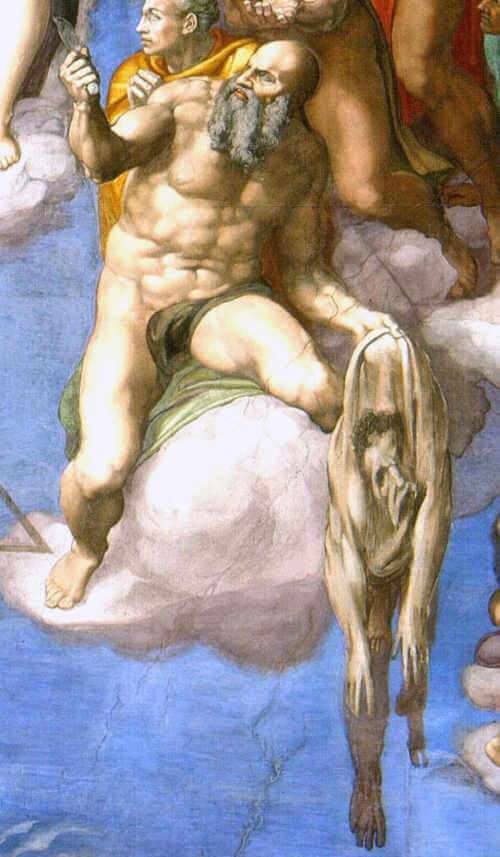
In Rome, in 722, Pope Gregory II was so pleased with Father Boniface that he ordained him a bishop. The pope named Boniface the regional bishop of all of Germany and sent him back with letters to the Frankish king and the clergy of the various dioceses, instructing them that Bishop Boniface was now in charge. With this new authority, Bishop Boniface went to work to better organize the Frankish Church, build new monasteries and churches, and improve relations between the Catholics and pagans.

Legend has it that Bishop Boniface won the esteem of many of the pagans one day when he felled a huge oak tree considered sacred by the locals. It is said that after striking the tree with an ax, a powerful wind came and blew it over. The people were so surprised that Thor, the god of thunder, didn’t strike Boniface down that they began to inquire more about the Catholic faith. Bishop Boniface then used the wood of that tree to build a chapel and monastery under the patronage of Saint Peter.

Over the next thirty years, Bishop Boniface was a powerhouse of evangelization, organization, and reform. He built monasteries and churches, called synods in which clear ecclesiastical laws of governance for the Frankish church were established, worked with the Frankish kings and local authorities, served under four popes, and continued to create the foundational framework for the important mission of evangelization of the pagans.

At the age of seventy-nine, after being satisfied with his organization of the various dioceses throughout Germany, Bishop Boniface decided to return to Frisia, where it all had started, to preach and convert the remaining pagans. After much success, while preparing to celebrate the Sacrament of Confirmation for the new converts, Bishop Boniface and dozens of his companions were murdered, most likely by common thieves. When the murderers pillaged through their belongings, they found nothing of value to them, mostly books and letters that they threw in the forest, since they didn’t know how to read. Those books and letters were later found and are preserved, including a Bible believed to have been used as a shield by Bishop Boniface as he was slain by a sword. The bishop and his companions died with courage, not fighting back. The bishop’s last words are recorded as, “Cease, my sons, from fighting, give up warfare, for the witness of Scripture recommends that we do not give an eye for an eye but rather good for evil. Here is the long awaited day, the time of our end has now come; courage in the Lord!”

Saint Boniface is known as the “Apostle of Germany.” Early in his life, he heard God calling him to be a missionary, and he generously responded. As a result, God did powerful things through him for the good of his ancestral home and beyond. His impact was so great that the seeds he planted in Germany greatly contributed to the shaping of modern-day Europe. As you ponder the great fruit born by Saint Boniface’s courage and zeal, prayerfully offer your own life to God, vowing to serve Him and His Church in any way He calls.

Source: https://mycatholic.life/saints/saints-of-the-liturgical-year/june-5—saint-boniface-bishop-and-martyr/

Saint Boniface, Bishop and Martyr Read More »

Saint Justin Martyr

c. 100–c. 165; Patron Saint of philosophers, lecturers, and apologists; Pre-Congregation canonization

 “Justin, the son of Priscos, son of Baccheios, of Flavia Neapolis, in Palestinian Syria” is the way today’s saint describes himself in his Apologies, or “defenses,” of the faith. His hometown was in Samaritan territory, near Mount Gerizim, where the Samaritans continue to offer sacrifice today. It is also the location of Jacob’s well, where the Gospel story of the Woman at the Well took place. The city was largely populated by Roman pagans, and Justin was most likely raised as a pagan himself, being of Roman descent. He was well educated in Greek philosophy, in which he greatly excelled.

As a student of Greek philosophy, Justin moved from one teacher to another, trying to absorb all the wisdom he could. He took a special interest in Plato’s philosophy.  Plato focused on immaterial “forms” as the basis of reality. Of this philosophy, he stated, “The perception of immaterial things quite overpowered me, and the contemplation of ideas furnished my mind with wings, so that in a little while I supposed that I had become wise; and such was my stupidity, I expected forthwith to look upon God, for this is the end of Plato’s philosophy.” Though he referred to philosophy as “the greatest possession, and most honorable before God,” he also discovered that philosophy alone—without revelation—was insufficient to arrive at the fullness of truth. 

Justin’s conversion to Christianity began one day when he took a long walk to reflect on all he had learned from his philosophical studies. As he walked, an old man came up from behind and surprised him. The two began to converse, and the old man asked him what philosophy and happiness were. Justin responded, “Philosophy, then, is the knowledge of that which really exists, and a clear perception of the truth; and happiness is the reward of such knowledge and wisdom.” The old man then asked about Justin’s understanding of God. Justin replied that God was “That which always maintains the same nature, and in the same manner, and is the cause of all other things…” But the old man pressed him further, asking how philosophers can know God if they have never seen Him. After a lengthy conversation, the old man convinced Justin that his philosophy was insufficient to know God if it did not include revelation. This revelation began with the Old Testament prophets and was fulfilled in the Son of God made flesh. The old man concluded his conversation with Justin by saying, “But pray that, above all things, the gates of light may be opened to you; for these things cannot be perceived or understood by all, but only by the man to whom God and His Christ have imparted wisdom.” The conversation with the old man kindled a flame in Justin’s soul. He resolved to study the prophets and felt as though he had discovered the true reason for philosophy. Philosophy, used in conjunction with the revelation of the prophets and the Christ of God, would help people arrive at truth and come to know God Himself, Who is Truth. In that way, they could achieve eternal salvation, the only true happiness.

After his conversion, Justin used his keen mind to defend Christians against persecution by the Roman authorities. He founded a school of philosophy in Rome and regularly debated with the pagan Roman philosophers in public. Several of his writings still exist and are among the most articulate and valuable theological writings of the early Church.

Justin wrote his “First Apology” directly to Emperor Antoninus Pius. Although Antoninus Pius was relatively tolerant of Christians, persecutions continued on a local level throughout the empire. Since the emperor was the son of a philosopher and a philosopher himself, Justin used his philosophical knowledge to persuade the emperor to put an end to Christian persecution. Justin refuted the accusation that Christians were atheists because they refused to sacrifice to the Roman gods, and he presented Christianity as a noble and true religion with morally upright followers. Additionally, he provided a beautiful description of Christ and why Christians worship Him as God, as well as one of the earliest descriptions of Christian worship. This description is of great importance to the theology of the Mass, as it highlights the unbroken tradition and correlation of liturgical celebration from the early Church to today.

Justin addressed his “Second Apology” to the Roman Senate and continued to defend Christians against false accusations, such as claims of cannibalism and sexual immorality. He attributes those lies to demons. After giving a strong defense, he goes on to proclaim Christianity as the true faith, the practice of worship of the true God, and the way to Heaven.

Several other of Justin’s works have survived, such as his “Dialogue with Trypho.“ Trypho was a Jewish rabbi whom Justin tried to convince to convert to Christianity. He explained that Jesus was the Messiah and the fulfillment of the prophecies in the Hebrew Scriptures. The conversation becomes quite animated, and Justin’s philosophical approach is grounded in sound reasoning and articulate explanations. In all of his writings,  Justin clearly loves the pursuit of truth, finding the fullness of Truth in the Person of Jesus Christ.

Justin’s strong, clear, and bold defense of the Christian faith caused such a commotion that he was arrested and put on trial during the reign of Emperor Marcus Aurelius. Marcus Aurelius had appointed his revered teacher, Junius Rusticus, as prefect of the city of Rome. As prefect, Rusticus fiercely persecuted Christians. Around the year 165, Justin engaged in a public debate with a Greek philosopher named Crescens. Crescens was so outraged by their debate that he reported Justin and six of his companions to Rusticus, who had Justin and his companions arrested and put on trial. An eyewitness beautifully preserved the discourse between Rusticus and Justin. After being interrogated by Rusticus and threatened with torture and death, Justin responded, “We hope to suffer torment for the sake of our Lord Jesus Christ and so be saved. For this will bring us salvation and confidence as we stand before the more terrible and universal judgment-seat of our Lord and Savior.” At that, Rusticus pronounced the sentence on Justin and his companions, “Let those who have refused to sacrifice to the gods and to obey the command of the emperor be scourged and led away to suffer capital punishment according to the ruling of the laws.” With that, Justin and his companions were beheaded.

Saint Justin Martyr heroically defended the Christian faith, using his natural intellectual gifts in conjunction with revealed theological truths. He was bold, articulate, determined, and evangelistic. He did not fear death; he only feared the continuance of ignorance. His burning desire was that everyone would come to the full knowledge of Jesus Christ, his Lord, and God. As we ponder this great saint, let us consider our own depth of commitment to proclaiming the Gospel in a confused world. Let us pray that we will also have the wisdom and courage that Saint Justin had, so that through us, others will know and love the saving message of the Gospel.

Source: https://mycatholic.life/saints/saints-of-the-liturgical-year/june-1—saint-justin-martyr–memorial/

Saint Justin Martyr Read More »

Saints Charles Lwanga and Companions, Martyrs

1860–1886; Patron Saints of African youth, converts, and torture victims; Canonized by Pope Paul VI on October 18, 1964

Every year, millions of pilgrims from Kenya, Tanzania, Rwanda, Uganda, Nigeria, and other African nations gather at the Namugongo Martyrs’ Shrine in Uganda for what has become one of the largest annual gatherings of Catholics in the world. The celebration is held at the site of the martyrdom of Saint Charles Lwanga and his twenty-one young companions on June 3 each year, the day that most of the boys were killed.

In 1879, the White Fathers, a French Roman Catholic society of apostolic life founded in 1868, arrived at the court of King Mutesa I of Buganda, modern-day Uganda, and received permission to establish a mission to teach the Catholic faith. At that time, Catholics, Protestants, and Muslims were all seeking converts in the Kingdom of Buganda. This was not popular among the native pagan priests. However, King Mutesa, who had eighty-seven wives and ninety-eight children, was tolerant of all three faiths. When King Mutesa died in 1884, one of his sons from his tenth wife, Mwanga II, took up the throne at the age of sixteen. Though initially tolerant, Mwanga eventually became convinced that the Christians were a threat to his throne and his sexually perverted way of life.

It was common practice for the kings of Buganda to have many young boys in their court, known as “pages,” to carry out the daily duties of the king’s household. Among the expectations that King Mwanga had of these young boys, some as young as thirteen, was consent to his sexual advances. When some of the boys refused to consent on the grounds that they were Christian and the king’s requests were immoral, the king became infuriated and feared that Christians would overtake his kingdom and become a threat to his throne.

On October 29, 1885, Anglican bishop James Harrington and some of his companions were murdered by King Mwanga after being accused of plotting against the kingdom. After their martyrdom, twenty-five-year-old Joseph Mukasa Balikuddembe, the head of the king’s household, rebuked the king for his actions. Joseph was a Catholic catechist responsible for teaching many of the boys in the king’s court the Catholic faith. On November 5, 1885, the king beheaded Joseph and had his Catholic followers arrested. He then appointed the catechumen Charles Lwanga as head of his household. Charles knew he might be next, so he sought and received baptism by the White Fathers that same day, along with many of the boys he had been catechizing.

On May 25, 1886, King Mwanga murdered two more Christian members of his court. Catechist Charles Lwanga, fearing for the eternal salvation of the boys who were still catechumens, baptized the rest of the boys himself. Later that day, the king called all the members of his household together and ordered them all to renounce the Christian faith or face torture and death. Charles courageously professed his faith in Christ, and many of the boys did so with him. The outraged king ordered their execution to take place at Namugongo, the traditional site for public executions.

Namugongo was a two-day journey on foot. As the boys traveled under the cruel direction of the executioners, many of them were beaten as they walked, bound together with ropes. Three boys were killed along the way, one being slain by his own father for refusing to renounce the faith. After reaching the site of execution on May 27, the boys waited seven days as the preparations were made. During that time, they were starved, beaten, and bound hand and foot, awaiting their death. Charles was cruelly and painfully killed first. His executioners lit only a small fire under his feet so he would suffer longer. It is reported that Charles said to his executioners, “You’re burning me, but it’s like water you’re pouring to wash me. Please repent and become a Christian like me.” As the flames consumed him, just before he died, Charles cried out in imitation of our Lord, “My God! My God!” Soon after, the rest of the boys were tortured and killed in the same manner. They died praying aloud the Lord’s Prayer. In all, twenty-two young men and boys were martyred and later declared saints in the Roman Catholic Church. Additionally, twenty-three Anglicans were martyred with them.

At the time of their martyrdoms, twenty-six-year-old Charles Lwanga and his young companions never could have imagined that one day, at the place of their execution, millions of people would gather every year to honor them and to seek their intercession. King Mwanga initially thought he could stamp out Christianity by killing one Christian. That only inspired others to convert. After Mwanga killed dozens more, the flames that burned them turned into flames of faith that inspired countless others. Uganda and many other African countries are Christian countries today, thanks in large part to the witness of faith given by these young men and boys. Romans 8:28 says, “We know that all things work for good for those who love God, who are called according to his purpose.“ In the case of the Ugandan Martyrs, their deaths worked for the good. Their burning flesh became a sweet odor that covered that pagan nation, drawing many to faith in Christ.

As we honor these heroic young martyrs, call to mind the truth that God can use every evil and suffering you endure for good when you unite them to the sufferings of Christ. Allow these martyrs, and the aftermath of their deaths, to inspire you and to convince you that all things do work for the good when we love God and embrace His holy will.

Source: https://mycatholic.life/saints/saints-of-the-liturgical-year/june-3—saints-charles-lwanga-and-companions-martyrs/

Saints Charles Lwanga and Companions, Martyrs Read More »

Saints Marcellinus and Peter, Martyrs

Mid-Third Century–c. 304; Invoked by those enduring hardships in life; Pre-Congregation canonization

On February 23, 303, Roman Emperor Diocletian issued an edict that initiated a fierce persecution of Christians. The edict mandated the destruction of Christian churches and scriptures, revoked all legal rights of Christians, and called for the confiscation of their property. In 304, Diocletian ordered the arrest of clergy, forcing them to offer sacrifices to the Roman gods or face imprisonment, torture, and death. These abuses continued under Diocletian and his co-emperors until 311 when Galerius issued an edict of toleration toward Christians. The exact number of Christians who suffered martyrdom during this period is unknown, but it might have been in the thousands. Today’s saints were among the first Christians to receive the crown of martyrdom during that period.

There is very little information available about Marcellinus and Peter. It is believed that both were Roman clergy, with Marcellinus being a priest and Peter an exorcist. Both are included in the Roman Canon of the Mass, alongside other early martyrs and saints.

The little we know about these martyrs comes to us from Saint Damasus I, who served as pope from 366–384. As a child, Damasus heard the story of the martyrdom of Saints Marcellinus and Peter from the mouth of one of the executioners who later became a Christian. After their arrest, Marcellinus and Peter were likely given a sham trial, found guilty, and then offered the chance to gain their freedom by burning incense to the Roman gods. They refused. While in prison, the two men preached the Gospel to other prisoners and jailers. To put an end to their evangelization, orders were given to take them to a secret location in a nearby forest, where they were ordered to dig their graves. They did so joyfully, and were then beheaded and buried in that secret location to prevent other Christians from venerating their tombs.

After Marcellinus’ and Peter’s deaths, their stories became well known. Some time later, through divine providence, two holy women named Lucilla and Firmina were directed to the burial site. They took the saints’ bodies and buried them in what is today called the Catacombs of Marcellinus and Peter. These catacombs hold thousands of graves, primarily of Christians, and once also served as a secret place of Christian worship.

In 313, Emperor Constantine the Great issued the Edict of Milan, legalizing Christianity and calling for benevolent treatment of Christians. As part of his efforts to help Christianity grow, Constantine sent his mother, Saint Helena, on a journey to the Holy Land to bring back relics of Christ’s Passion. Constantine also built many churches in various holy places. One of those churches is the Basilica of Saints Marcellinus and Peter, built over their catacombs. When Saint Helena died, Constantine built a mausoleum for her next to the basilica, which became her resting place for centuries. As a result, devotion to Saints Marcillinus and Peter became widespread.

At the start of the ninth century, a German monk named Eginhard, who had previously been a secretary to Emperor Charlemagne, requested relics of martyrs from Pope Gregory IV. In response, Pope Gregory sent the relics of Saints Marcellinus and Peter, and a monastery was constructed in their honor in Seligenstadt. After they were buried there, many miracles were said to have taken place.

Although we know little about the details of their lives, the veneration of these early saints has been widespread, and their names continue to be invoked today every time the Roman Canon is used in the Mass. What is certain is that the courage of these saints in the face of death has inspired countless Christians for many centuries. As Jesus said, “No one has greater love than this, to lay down one’s life for one’s friends” (John 15:13). In many ways, everyone who has been inspired by the martyrdom of Saints Marcellinus and Peter can be considered their friends. Though they died long ago, the “friendship” of their witness endures.

As we honor these martyrs, ponder your own call to lay down your life selflessly for others. Dying to yourself—living sacrificially and selflessly—is no easy task. But when the grace of God is alive in your life, you will discover that you are given the courage you need to be a witness to Christ. Pray for the same courage that Marcellinus and Peter had, so that your sacrificial love will make you friends to others who need your witness.

Source: https://mycatholic.life/saints/saints-of-the-liturgical-year/june-3—saints-marcellinus-and-peter-martyrs/

Saints Marcellinus and Peter, Martyrs Read More »

The Ascension of Our Lord

Seventh Sunday of Easter

The Solemnity of the Ascension of the Lord commemorates the fortieth day after the Resurrection when Jesus ascended body and soul into Heaven and took His seat at the right hand of His Father. Traditionally, the location of the Ascension is believed to be less than a mile east of the Old City of Jerusalem, and that spot is marked by the Chapel of the Ascension, which is said to contain a miraculous imprint of the footprints of Christ before He ascended. The event of the Ascension is found in the Gospels and Acts (Mark 16:19–20Luke 24:50–53Acts 1:6–12). It is also alluded to in various other passages (John 6:62Ephesians 4:7–101 Timothy 3:161 Peter 3:21–22).

Only Jesus and His Blessed Mother have entered into the glories of Heaven, body and soul. Jesus’ Ascension implies that He did so by His own authority and power. The Blessed Virgin Mary’s Assumption implies that she entered Heaven, body and soul, by God’s power, and not her own.

The Ascension marks the completion of Jesus’ earthly mission. He first united His divine nature with human nature through the Incarnation at the moment of the Annunciation. Saint Thomas Aquinas teaches that from that moment on, Jesus, the Son of God, experienced three types of knowledge. First, being God, He had beatific knowledge, that is, a direct knowledge of His essence, the Father’s essence, and the Holy Spirit’s essence. Second, He had the perfection of infused knowledge, that is, a bestowal of all truths given to the angels in Heaven, especially those truths necessary for the completion of His divine mission. Third, He began to acquire learned knowledge, or experiential knowledge. This was the form of knowledge attained through His human nature from the senses and His human reason.

As Jesus fulfilled His mission through life, His learned knowledge continued to grow until it was perfected in human form. It was never imperfect in the sense of sin, but only in the sense of growth through human experience and human love. He experienced all things, allowed the perfection of His beatific and infused knowledge to guide His human experiences and brought those human experiences and knowledge to perfection. His free embrace of the Cross manifested the perfection of divine love in human form, and His Resurrection brought that perfect unity of human and divine love to a new and transformed resurrected state of human existence. But that was not all. Today we commemorate the fact that Jesus took His perfected human nature into the Beatific Vision, enabling humanity itself to follow. The Blessed Virgin Mary was the first to do so given her sinless state.

The final stage of the salvation of humanity will take place when Jesus returns to judge the living and the dead. At that time, every human body will rise, will endure the final purification and transformation, and will share in the new and resurrected state in which the faithful will be able to stand, body and soul, before the Most Holy Trinity and experience the fullness of the Beatific Vision forever. What Jesus has already accomplished in His human form is what we look forward to in hope at the end of time.

The Feast of the Ascension was celebrated annually from as early as apostolic times. Saint John Chrysostom, Saint Gregory of Nyssa, and Saint Augustine all attest to this fact. When the Council of Nicaea set the date for the celebration of the Resurrection in 325, it chose to keep Easter on the first Sunday after the first full moon occurring on or after the vernal equinox in spring. This decision also set the day for the Ascension being forty days after Easter, on a Thursday. Today, many ecclesiastical provinces transfer the Thursday celebration to the following Sunday to provide for a wider celebration.

Though every aspect of Christ’s life is shrouded in mysteries which will only be fully understood by the faithful when they stand before Him and behold the Beatific Vision, today we especially ponder this beautiful and profound mystery of our faith. As we celebrate the Ascension, try to prayerfully meditate upon the perfect unity of Jesus’ human and divine natures. Ponder further the truth that because the Son of God is both God and man, and He beholds His Father and the Holy Spirit as both God and man, He invites each of us to begin to share in that glorious vision. Only after we fully die in and with Him and rise to new life in and with Him will we be able to know Him clearly and share in His glorious resurrected and ascended life. Until that moment comes, it’s important to ponder that which is incomprehensible. We must know that we do not know, believe what is beyond belief, hope in that which is more than we can understand. God is a mystery; the Ascension is a mystery—but they are mysteries that must be penetrated by prayer. Do so today as we commemorate this holy culmination of the earthly life and mission of Christ.

Source: https://mycatholic.life/saints/saints-of-the-liturgical-year/the-ascension-of-the-lord/

The Ascension of Our Lord Read More »