Profile
Died
Canonized
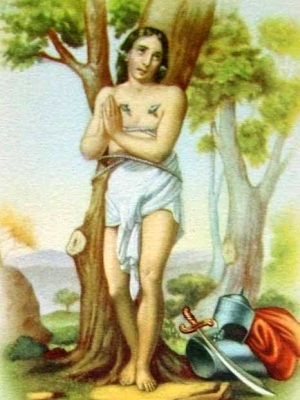
Representation
Source: https://catholicsaints.info/saint-emmanuel/
In the fifth century, bishops engaged in a fierce theological debate over the unity of the divine and human natures of Christ, referred to as the “hypostatic union.” Nestorius, the Archbishop of Constantinople, argued that there were two underlying hypostases, or substances, in Christ, one human and one divine. He believed that the humanity of Christ was born of the Virgin Mary, but not His divinity. Therefore, Nestorius believed Mary should only be called the “Christ-bearer” and not the “God-bearer” (Theotokos). Saint Cyril, the Archbishop of Alexandria, argued that the divine and human natures of Jesus were united in one hypostasis. Divinity and humanity were perfectly united and, therefore, Mary is properly called the Theotokos, or “Mother of God,” not just the “Mother of Christ.” God was born of her, not just His body. Mary conceived a Person in her womb, and that Person was both God and man, perfectly united as one. In 431 the Church held a council at Ephesus at which Cyril’s position was adopted and Nestorius’ position was condemned. Nestorius was then removed as Archbishop of Constantinople.
The Solemnity we celebrate today came into practice around the time of this controversy, possibly as a way of emphasizing the theological teaching that emerged from the Council of Ephesus. Throughout Church history, when a theological truth is defined, that truth is then celebrated liturgically as a lived expression of the Church’s faith.
The date of this celebration is interesting. It is set nine months before Christmas, but most likely, the date of Christmas was set nine months after the Annunciation. Many early Christians believed that Jesus’ death occurred on March 25, and, therefore, His Incarnation must have also taken place on this day. Interestingly, as early as the third century, it has been suggested that March 25 was also the date of the creation of Adam, the fall of Adam, the fall of the angels, the sacrifice of Isaac by Abraham, and the passing of the Israelites through the Red Sea.
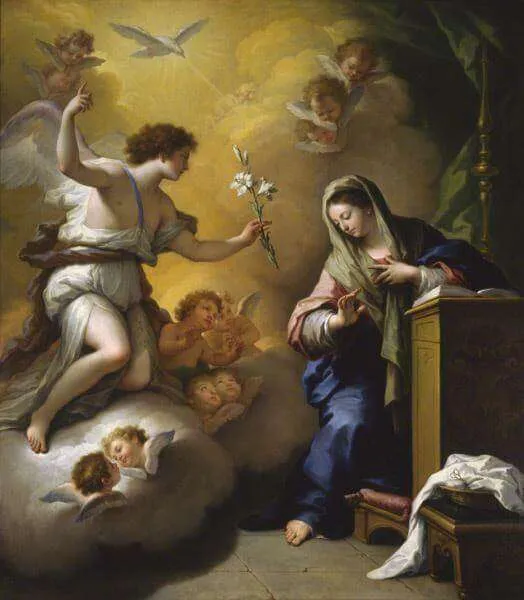
Today’s celebration of the Solemnity of the Annunciation of the Lord recalls the historical event of the Angel Gabriel appearing to the Virgin Mary, as found in Luke 1:26–38. It also celebrates the Church’s faith in the underlying reality that took place at that moment in time. It celebrates the Incarnation, making this solemnity not only a Marian solemnity, but first and foremost a Christological one. Though Christmas commemorates the birth of Christ, the Annunciation commemorates the Incarnation within the womb of the Blessed Virgin Mary.
Most certainly, this solemnity is also a Marian celebration. We celebrate the Virgin Mary’s perfect “Yes” to the plan of the Father. We celebrate her humility, obedience, docility, and especially her motherhood of God and man.
This solemnity is also a celebration of the Father in Heaven because it reveals the beginning of the pinnacle of His perfect plan of salvation. That moment in time, the moment of the Incarnation, holds significance beyond comprehension. This moment was in the mind of the Father in Heaven from all eternity and took place in a hidden way, known only to this lowly and humble virgin.
As we celebrate this glorious solemnity, ponder all these central mysteries of our faith. Faith must be celebrated, not only believed. It must be proclaimed, rejoiced in, loved, and lived. Profess your faith in the Incarnation and seek the intercession of the Virgin Mary. Ask her to pray for you that you may imitate her “Yes” to the will of the Father in Heaven, so that you can continue to bring forth His divine Son in your soul, so that He will continue to be made manifest to the world through you.
Source: https://mycatholic.life/saints/saints-of-the-liturgical-year/march-25-annunciation-of-the-lord/
Annunciation of the Lord Read More »
Profile
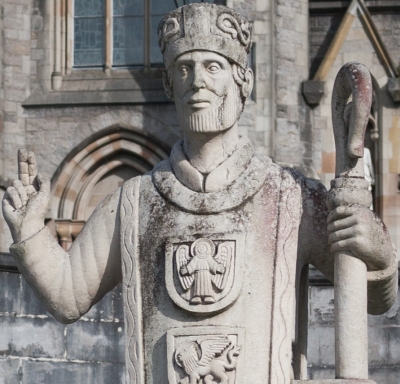
Macartan was a friend and disciple of Saint Patrick. He was the uncle of Saint Brigid. He was a missionary with Patrick through pagan Ireland. He was consecrated as the first bishop of Clogher, Ireland by Patrick in 454. He converted the father of Saint Tigernach of Clogher. He was a miracle worker.
Born
Died
Canonized
Patronage
Source: https://catholicsaints.info/saint-macartan-of-clogher/
Saint Macartan of Clogher Read More »
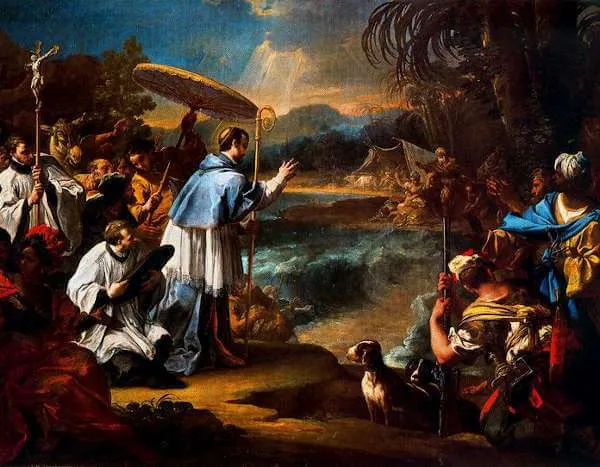
On November 16, 1532, a small group of Spanish conquerors captured the Inca ruler Atahualpa in modern-day Peru. The Spaniards arrived in the New World as explorers but were mostly interested in enriching themselves with silver and gold, of which the Incas had plenty. After receiving a room of gold and two rooms of silver as a ransom for Atahualpa, the Spaniards killed him anyway. Then they continued to conquer others, until 1572, when the last of the indigenous rulers was defeated. Despite their Christian heritage, the Spaniards could be brutal; however, their presence enabled missionaries to arrive and begin the work of sharing the Gospel with the native people. In 1541, Pope Paul III established the Diocese of Lima and appointed its first bishop who served for thirty-six years. Today’s saint, Saint Turibius of Mogrovejo, was born three years before the Diocese of Lima was established (It became an archdiocese in 1546.) and would become Lima’s third archbishop.
Toribio Alfonso de Mogrovejo (Turibius) was born of noble parents in the town of Mayorga, northwest Spain. He was named after a local fifth-century bishop and saint. Turibius was a devout child. He had a strong devotion to the Blessed Virgin Mary, prayed to her daily, and fasted every Saturday in her honor. He had a heart for the poor and was generous in caring for them. When Turibius was twelve, he was sent to study humanities in Valladolid and was later sent to the University of Salamanca to study law. Turibius’ brilliance quickly became known and caught the attention of King Phillip II, who appointed him as the Grand Inquisitor in Granada in 1571. He was only thirty-three and held that post for five years.
During these first thirty-eight years of Turibius’ life, the Spanish conquerors of the newly colonized lands of Peru were in dire need of moral reformation. Many of the generals acted as tyrants and plunderers, oppressing the indigenous peoples with cruelty. They took their lands, forced them into slave labor, and treated them as if they were subhuman. In 1537, shortly after the conquest of Peru, Pope Paul III issued the papal bull Sublimis Deus. In it, he lamented that some of the conquerors believed that the indigenous of the West and the South should be “treated as dumb brutes created for our service, pretending that they are incapable of receiving the Catholic Faith.” The pope corrected this error stating “that the Indians are truly men and that they are not only capable of understanding the Catholic Faith…they desire exceedingly to receive it.” The King of Spain agreed and issued edicts of reformation, but the laws were resisted and enforcement was nearly impossible. These troubles continued for decades.
After the death of the first archbishop of Lima in 1575, another Spanish bishop was sent to Lima, but remained there for only two years. Aware of the moral chaos, King Phillip II knew he needed to send his best bishop to Lima. He needed a saint who knew the law, could bring reform where needed, preach the Gospel with zeal, and establish communion between the settlers and natives. At that time, it was the responsibility of the King of Spain to appoint bishops whom the pope would subsequently approve or reject. King Phillip chose Turibius for the task. There was only one problem: Turibius was not even a priest; he was a layman. Turibius objected to the idea but the king insisted, and the pope approved. Turibius pleaded with the king, pointing out that only a priest could be made a bishop, and arguing that the task was beyond his ability. But his humility was only a clearer sign that he was the man for the job. Turibius finally agreed. Over the next two years, Turibius prepared for the priesthood, was ordained, served as a priest, and then was ordained a bishop. In September of 1580, at the age of forty-three, Archbishop Turibius set sail for Peru with his sister and brother-in-law, arriving several months later. He was installed in Lima on May 24, 1581, and served as the third archbishop of Lima for twenty-five years.
The archdiocese stretched about 400 miles along the coast and included three main cities, many towns and villages, and many more rural homes scattered throughout. The people he now shepherded included Spanish settlers, soldiers, and, of course, the indigenous population. Archbishop Turibius wasted no time. Within a month of his arrival he held an archdiocesan synod and a year later oversaw the Third Provincial Council of Lima, on the instruction of King Philip II. This council lasted for more than a year and addressed various abuses among the clergy and laity, promoted the evangelization of the natives, taught that the Spaniards and indigenous were equal in dignity, and commissioned the first book printed in South America, Doctrina Christiana, y Catecismo para Instrucción de los Indios, a trilingual catechism written in Spanish, Quechua, and Aymara. Other trilingual works were also commissioned to assist the clergy with confession and preaching in the native tongues. Not only did every diocese of his province implement the acts of that council, but after the acts were confirmed by the Holy See in 1588, they were implemented throughout all of South America. In 1590, Archbishop Turibius founded the first seminary in South America and in 1591 and 1601, he held two more provincial councils, as well as numerous synods within his own archdiocese.
In addition to his administrative efforts, Turibius spent seventeen of his twenty-five years as archbishop traveling on foot to every parish and community on three separate occasions. He traveled through difficult terrain, snow-covered mountains, rain, heat, and cold. He went to confession and offered Mass every day, learned the native languages, got to know his people, and made sure that every parish was in order and adhered to Church discipline. He built many churches, baptized and confirmed half a million people, had a passionate zeal for every individual soul, and made sure that both Spaniard and indigenous were equally cared for. From his flock would emerge three saints whom he confirmed: Saint Rose of Lima, Saint Martin de Porres, and Saint Juan Masías. He also became good friends with the great Franciscan missionary Saint Francis Solano, who was said to have had the gift of tongues, by which the indigenous understood him in their native tongue.
Every crisis needs a savior. Jesus is that Savior, but His servants on earth act as His divine instruments. Saint Turibius was that instrument for the early Church of Peru and throughout South America. His humility, zeal for souls, fidelity to the law, gifts of administration, concern for human dignity, and a fatherly heart enabled God to plant the seed of faith in the hearts of many, the fruit still being borne today. Be inspired by this holy shepherd and imitate his example by committing yourself to see the dignity of every person in ways that are creative, empathetic, intuitive, and firm, so that God can use you to reach them where they are.
Source: https://mycatholic.life/saints/saints-of-the-liturgical-year/march-23-saint-turibius-of-mogrovejo-bishop/
Saint Turibius of Mogrovejo, Bishop Read More »

Profile
Basil was a priest in Ancyra, Galatia (in Asia Minor). He fought against the Arian heretics in the reign of emperor Constantius, and against the iconoclast heretics in the persecutions of Julian the Apostate. His defense of orthodox Christianity led to his imprisonment, torture, and execution. He was a martyr.
Died
Canonized
Source: https://catholicsaints.info/saint-basil-of-ancyra/
Saint Basil of Ancyra Read More »
Profile
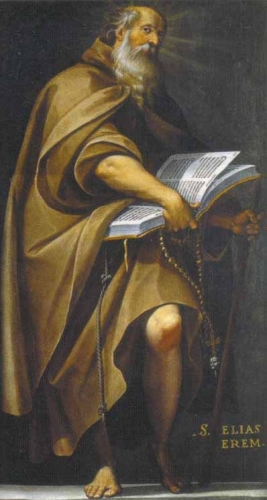
Elias was one of the early evangelists on the island of San Giulio in Lake Orta in the Piedmont region of Italy. He may have been a priest, and lived on the island for a while as a hermit.
Died
Canonized
Source: https://catholicsaints.info/saint-elias-of-orta/
Saint Elias of Orta Read More »
Profile
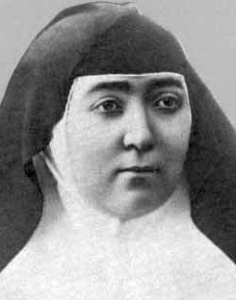
Maria Josefa was a nun who joined the Institute of the Servants of Mary at age 18. She took the name Maria Josefa of the Heart of Mary. She helped found the Institute of the Servants of Jesus in Bilbao, Spain in 1871; the Institute sisters care for the children, the sick, the elderly and the abandoned in hospital and in their homes. By her death, the Institute had 43 houses and 1,000 sisters; they continue their good work today with 100 houses in 16 countries.
Born
Died
Venerated
Beatified
Canonized
Source: https://catholicsaints.info/saint-maria-josefa-sancho-de-guerra/
Saint Maria Josefa Sancho de Guerra Read More »

The Father in Heaven sent His Son into the world to be born of the Virgin Mary. The Father chose her who was the Immaculate Conception to bear His Son in her womb, bring Him into the world, and raise Him from infancy to adulthood. But the Father also needed to choose a foster father for His divine Son. Of all the men in Israel that He could have chosen, He chose Joseph of Nazareth, a carpenter. Today’s solemnity not only honors him, but it also points us to his marital union with the Blessed Virgin Mary and to the effect that that marriage had not only upon him, Mary and Jesus, but also upon us as members of the Body of Christ.
Joseph was likely born in the small town of Bethlehem, where Jesus was also born, but he moved to Nazareth with Mary and Jesus after returning from Egypt in order to keep Jesus safe from Archelaus, the ruler of Judea. Though there are a number of apocryphal writings about him from the first several centuries, nothing is known about him for certain except what is contained in the Gospels. But the Gospels tell us all we need to know about this holy, obedient, and just man, who was given authority over the Son of God and continues to exercise a holy authority over the entire Church.
Saint Joseph was truly the father of Jesus. Of this truth, Saint Augustine writes, “By reason of their faithful marriage, both of them deserve to be called Christ’s parents, not only his mother but also his father, who was a parent in the same way that he was the mother’s spouse: in mind, not in the flesh.” Joseph’s fatherhood is also clearly established by the fact that the angel gave him the responsibility of naming Jesus. “She will bear a son and you are to name him Jesus…” (Matthew 1:21).
Saint Joseph was obedient to the Father in Heaven, and that obedience deepened his union with Mary his spouse, making their marriage the ideal family for the Son of God. Pope Saint John Paul II speaks of this fact in his apostolic exhortation Guardian of the Redeemer, when he says, “One can say that what Joseph did united him in an altogether special way to the faith of Mary. He accepted as truth, coming from God, the very thing that she had already accepted at the Annunciation” (#4). Saint Joseph’s obedience is clearly seen in his response to four dreams by which an angel instructs Joseph how best to guard and protect the Son of God. Joseph acts immediately, in obedience, to the angel’s instructions. The Vatican II document, Dei Verbum states, “‘The obedience of faith’ must be given to God as he reveals himself. By this obedience of faith man freely commits himself entirely to God, making ‘the full submission of his intellect and will to God who reveals,’ and willingly assenting to the revelation given by him” (#5). Thus, since Saint Joseph’s obedience was absolute, then that obedience fully united him to the Blessed Virgin Mary, in her obedience, and to the Father in Heaven. His obedience to the Father also enables him to become a powerful instrument of the Father’s authority on earth, exercised through him.
Saint Joseph exercised the authority of the Father by protecting the Son of God and expecting obedience from the Son as His earthly father. That Jesus was obedient to Joseph is made clear in the Gospels: “He went down with them and came to Nazareth, and was obedient to them…” (Luke 2:52). The Son of God could only be obedient to the will of His Father. Therefore, in order for Joseph to exercise authority over Jesus, he had to enact nothing other than the will of the Father to which he, himself, was obedient.
On December 8, 1847, Pope Pius IX declared Saint Joseph to be the Universal Patron and Protector of the Catholic Church. This unique title reflects the same truth that Mary is the Mother of God and the Mother of the entire Church. Since she was the mother of the Son of God, and we, the Church, are members of the Body of Christ, then she is our Mother. And since Joseph was the father of the Son of God, His guardian and protector, over whom he was given authority, and from Whom he received obedience, then we, too, can trust in Joseph’s guardianship over us. We must have confidence in submitting to his spiritual authority in our lives, for we are members of the Body of Christ.
As we honor Saint Joseph as the husband of Mary today, ponder the effect of that unique marriage bond. Saint Joseph was not perfect, but his absolute obedience to the Father’s will and his unity in marriage to the Mother of God makes him our father, just as he was the father of Jesus. As a loving father, he will direct us with the authority of God the Father, will protect us in times of trouble as he did for Jesus and Mary, and must always be seen as one uniquely chosen to be the father of the family to which we belong.
Source: https://mycatholic.life/saints/saints-of-the-liturgical-year/march-19-saint-joseph-husband-of-the-blessed-virgin-mary/
Saint Joseph, Husband of the Blessed Virgin Mary Read More »
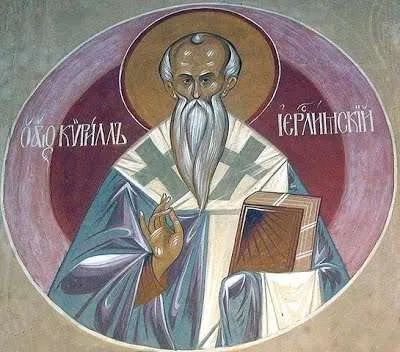
When Constantine the Great legalized Christianity throughout the Roman Empire in the year 313, many were hopeful that the sufferings Christians had endured during the first few centuries of the Church had finally come to an end. But the sufferings only changed. Politics entered the Church, emperors inserted themselves into doctrine, and theological and territorial divisions became fierce. The theological divisions in the fourth century were primarily over the divine and eternal nature of the Son of God. Arius, a priest from Alexandria in North Africa, believed that the Father created the Son, making the Son subordinate to the Father and neither co-eternal nor co-equal with the Father. These teachings came to be known as the Arian Heresy. Others believed that the Son was “begotten of the Father,” meaning He existed from all eternity with the Father and was of the same divine nature. This theological battle was initially addressed in the year 325 at the Council of Nicaea. However, after the Council of Nicaea, the controversy continued until the confusion was finally settled in 381 by the Council of Constantinople. It was in this fifty-six-year period of Church history and controversy that today’s saint was born, lived, and fought for the true faith.
Cyril was born in or near the city of Jerusalem around the year 315 A.D. Little is known about his early life, other than that he was well educated in the Scriptures and philosophy. It is believed that he was ordained a deacon for the Church of Jerusalem around the age of twenty by Saint Macarius, Bishop of Jerusalem, who was a staunch opponent of the Arian Heresy. After Macarius died, Saint Maximus, another opponent of Arianism, became Bishop of Jerusalem and ordained Cyril a priest when Cyril was about twenty-eight years old. During his priestly ministry, Cyril became a true shepherd of souls. He was entrusted by Bishop Maximus with the responsibility of assisting him as a preacher and catechist. Cyril preached every Sunday and catechized those preparing for the Sacraments of Initiation. A set of twenty-four of his catechetical instructions have been preserved and are remarkable for their content and clarity. The lectures begin with a prologue, followed by eighteen lessons that were taught to the catechumens before they were baptized. The lessons explained what they needed to know about baptism, how to change from pagan morals, the meaning of the Creed, and the errors of Arianism. Once baptized, Cyril’s last six lessons led the neophytes through a period of mystagogy in which they were taught how to live the new life they received from the Sacraments of Baptism, Confirmation, and the Most Holy Eucharist, as well as lessons on prayer, especially found in the Lord’s Prayer.
Bishop Maximus either died or was deposed around the year 348, and Cyril was chosen to succeed him. He was ordained a bishop by Archbishop Acacius of Caesarea Maritima, from the metropolitan see just west of Jerusalem. Archbishop Acacius was sympathetic to Arianism, so he and others might have believed that Cyril was also sympathetic to Arianism, which he was not.
Soon after becoming the Bishop of Jerusalem, a miraculous sign, visible to all, appeared over the holy site of Jesus’ crucifixion. A large cross of light, surrounded by a rainbow, appeared in the sky and stretched for about two miles over the city. This sign was initially perceived as God’s affirmation of Bishop Cyril but might have also been a sign of the sufferings Cyril would soon endure. The suffering began as Cyril fought Acacius on two fronts. Bishop Cyril claimed the right of independent governance from Acacius in the See of Jerusalem. He also opposed the Arian Heresy that Acacius taught. As a result of these tensions, Acacius, other Arian bishops, and emperors persecuted Cyril, leveled false accusations against him, and deposed and exiled him from Jerusalem three times during his almost forty years as a bishop.
Despite suffering through these theological and political Church controversies, Bishop Cyril was a true shepherd of his flock, preaching and catechizing just as he had done as a priest. His gentle, pastoral, conciliatory, and humble approach to his ministry led some more orthodox bishops to suspect him of being sympathetic to the Arians. For that reason, after Cyril returned from his final exile in 378, the great Saint Gregory of Nazianzens was sent to investigate him. Gregory’s conclusion was that Cyril was orthodox, which ended all doubt. In 381, the Council of Constantinople gave further clarity on the Arian Heresy, further clarified the Creed of Nicaea, and affirmed Bishop Cyril’s office of Bishop of Jerusalem. He returned and remained a holy shepherd of his people until his death six years later. One eyewitness visiting Jerusalem on pilgrimage wrote in her journal that Bishop Cyril’s catechetical lessons were delivered in the Church of the Holy Sepulchre and were so well received by the people that whenever he completed a lesson, all the people would enthusiastically applaud.
Throughout the history of the Church, bitter divisions and the persecution of the orthodox defenders of the faith have been prevalent. Those who emerged as saints were those who persevered, remained faithful, never despaired, and continued to spread the pure faith of the Church, given to Her by Christ. Saint Cyril was one of those shining examples. As we honor him, ponder your own commitment to the entire Truth of the Gospel. When challenged, do you shy away, cower, become confused, and give in to despair? Or do you lovingly stand firm in the Truth, retaining hope that, in the end, Christ will be victorious? Seek to imitate this great Doctor of the Church by embracing not only his orthodoxy but also the charity that fueled his zeal for souls.
Source: https://mycatholic.life/saints/saints-of-the-liturgical-year/march-18-saint-cyril-of-jerusalem-bishop-and-doctor/
Saint Cyril of Jerusalem, Bishop and Doctor Read More »
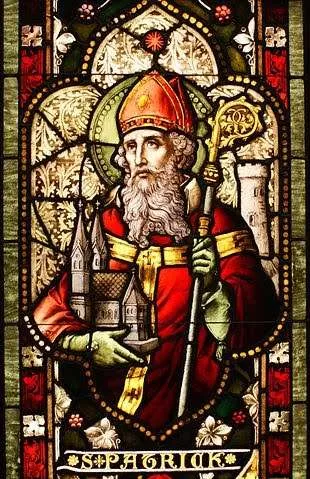
Patrick was born in Roman-ruled Britain to loving parents, perhaps as an only child. His father was a senator and a deacon, and his grandfather was a married priest. Despite his Christian upbringing and the clerical influences of his father and grandfather, Patrick struggled with his faith, stating later that when he was young he “did not know the true God.” This testimony, and the quotes to follow, come from his own hand, preserved in his Confessio, Saint Patrick’s short autobiographical confession about the workings of God’s grace in his life and ministry.
At the age of sixteen, Patrick’s life took a dramatic turn for the worse; at least, that’s how it first appeared. Gaelic slave traders from Ireland arrived by ship and raided Patrick’s village. Though young women and children were often their preferred targets, a young, healthy boy could also profit them. Patrick was captured and “was taken into captivity in Ireland with many thousands of people.”
At the time of Patrick’s captivity, Ireland was a pagan country made up of more than a hundred small, family-based clans governed by local chiefs. Most clans united with other clans to form several larger kingdoms. Their religious beliefs were a mixture of polytheism, in which gods were honored and called upon, and animism, in which the natural world was believed to contain spirits who could be communicated with. Their druids (priests) engaged in demonic spells, incantations, curses, and dark magic.
It was Patrick’s conviction that, because he and his fellow slaves had drawn away from God and did not keep God’s precepts, the Lord brought down upon them the “fury of his being,” permitting them to be scattered throughout Ireland as slaves. But God’s just punishments are always inflicted upon his children for the purpose of converting their hearts, which is exactly what happened to Patrick. “And there the Lord opened my mind to an awareness of my unbelief, in order that, even so late, I might remember my transgressions and turn with all my heart to the Lord my God, Who had regard for my insignificance and pitied my youth and ignorance.”
While in captivity, Patrick was made a swineherd for one of the clans and spent much of his time in the forests, enduring the snow, ice, and rain. But his time alone, experiencing the suffering and loneliness of captivity, greatly benefited his soul. At first, Patrick didn’t know God. Then, he began to think about God. Then he began to speak to God. Within six years, he was praying a hundred prayers every day and a hundred prayers every night. As a result, Patrick testified that “the Spirit was burning in me at that time.” After receiving chastisements from God for his lack of faith, Patrick’s heart was changed and filled with gratitude for all that God had done in his soul. He realized that his only “way to repay Him is to exalt Him and confess His wonders before every nation under heaven.”
Once Patrick had converted, God’s plan for his life changed. While asleep one night, Patrick heard a voice say to him, “Soon you will depart for your home country,” and shortly afterward, “Behold, your ship is ready.” By an intuition of grace, Patrick knew what he had to do. He escaped and ran 200 miles (about 184 modern miles). God directed him on the way and led him to a ship where Patrick convinced the captain to let him board. Three days later, they were back in Britain on a remote shore. Patrick and some pagans disembarked from the ship and began a twenty-eight-day journey through the wilderness to find civilization. On the journey, the pagans mocked Patrick’s faith, but when they ran out of food, Patrick prayed and God miraculously provided them with a herd of pigs. The pagans were impressed and Patrick won their respect. This was the first of many times that God used Patrick to change hardened hearts. Then, Patrick was reunited with his parents at last.
Back in Britain, Patrick continued to pray, study Scripture, and learn the Catholic faith. His prayer led him into deep union with God. He had dreams and visions, including a vision in which he heard the voice of the Irish say to him, “We beg you, holy youth, that you shall come and shall walk again among us.” Patrick knew that he had to return, not as a slave, but as a missionary. Despite opposition from his family, Patrick was determined to answer God’s call.
Since Patrick had learned much about Irish culture and language, he was an ideal candidate for missionary work. After years of study, probably in France, he was ordained a bishop and sent by the Church back to Ireland to convert the pagans, his captors, to Christ. And that he did. It was by the courageous witness of his character, aided perhaps by miraculous signs and unwavering faith, that one of the kings converted. After being successful in one kingdom, Bishop Patrick moved to another. When he arrived in a new territory, he always sought to convert the local king and chiefs first. Once they were open to the Gospel, the people followed.
During the fewer than thirty years that Patrick evangelized the people of Ireland, he endured many hardships, including another short captivity, the constant danger of being killed, and staunch opposition from the druid spiritual leaders. But he also converted countless pagans, baptized and confirmed “so many thousands,” built churches, established religious life, ordained native clergy, and changed pagan Ireland as a whole into one of the greatest Catholic nations on earth.
Saint Patrick’s influence on Ireland was so profound that many later biographers have attributed numerous legends to him. Though most of these legends cannot be verified, the stories highlight the remarkable spiritual transformation of a hostile pagan nation by the faith and courage of one man. God humbled Patrick, changed his heart, set him on fire, and then used that fire to purify many thousands of people. In the centuries that followed, those converts went forth to the ends of the earth, bringing the same Gospel to others that Patrick first preached to them.
As we honor Saint Patrick, seek to imitate him by joining him in his initial humiliation. See your sins and pray that God purifies you by any means necessary. Convert your heart. Increase your daily prayer. Allow your heart to become inflamed by God’s Spirit. Say “Yes” to Him when He calls, and go where He sends you. Like Saint Patrick, God wants to send you on a mission, but He cannot do so until you fully convert your heart to His.
Source: https://mycatholic.life/saints/saints-of-the-liturgical-year/march-17-saint-patrick-bishop/
Saint Patrick, Bishop Read More »
Add San Jose Filipino Ministry as a new recipient, Send your donation using"donate@dosjfm.org"
Payable to - San Jose Filipino Ministry
Address - Poong Jesus Nazareno Filipino Catholic Center (PJNFCC); 3700 W. Orange Ave., Anaheim CA 92804
Poong Jesus Nazareno Filipino Catholic Center (PJNFCC); 3700 W. Orange Ave., Anaheim CA 92804
Phone: (657) 214-2507
Mobile (657) 208-2038
info@dosjfm.org

Poong Jesus Nazareno Filipino Catholic Center (PJNFCC); 3700 W. Orange Ave., Anaheim CA 92804
Phone: (657) 214-2507
Mobile (657) 208-2038
info@dosjfm.org
Add San Jose Filipino Ministry as a new recipient, Send your donation using"donate@dosjfm.org"
Payable to - San Jose Filipino Ministry
Address - 1235 S Magnolia Ave
Anaheim, CA 92804-5115
San Jose Filipino Ministry. All rights reserved. 2021 © Powered by Phoenix Virtual Solutions
Sponsored by EverClear Hospice and Palliative Care