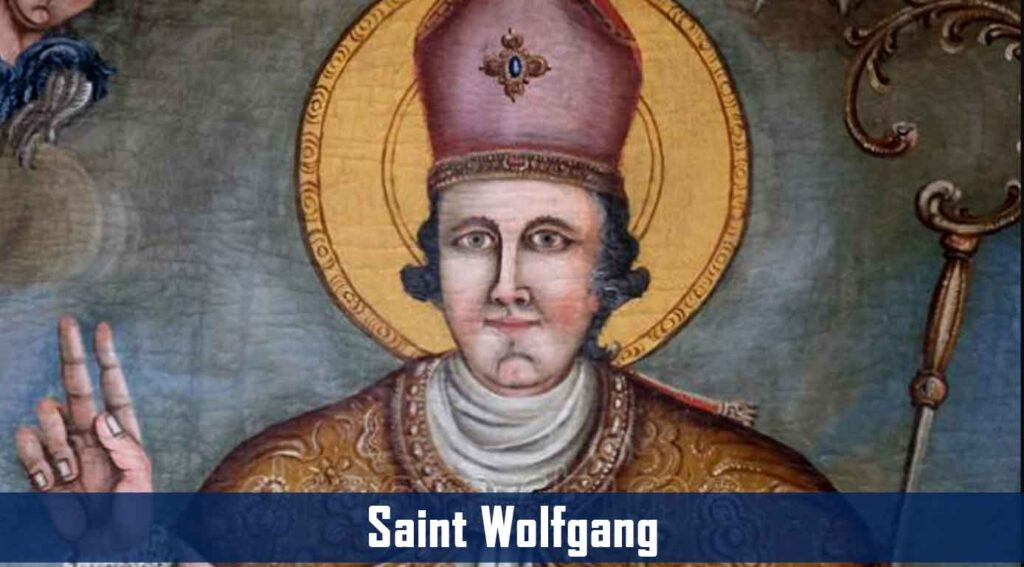
Saint Wolfgang was born in Germany and was educated in a school located at the abbey of Reichenau. There he became close to a young noble named Henry who would eventually become the Archbishop of Trier. They remained close even after their education.
After the death of of the Archbishop, Saint Wolfgang became a Benedictine monk and moved to an abbey. After being ordained as a priest, he got appointed as director of a monastery. When he was appointed as bishop of Regensburg, he initiated reform of the clergy life as well as the religious life. A monastic and solitary life has always drawn him.
Saint Wolfgang fell ill in 994 and died in Austria. He was canonized in 1052.
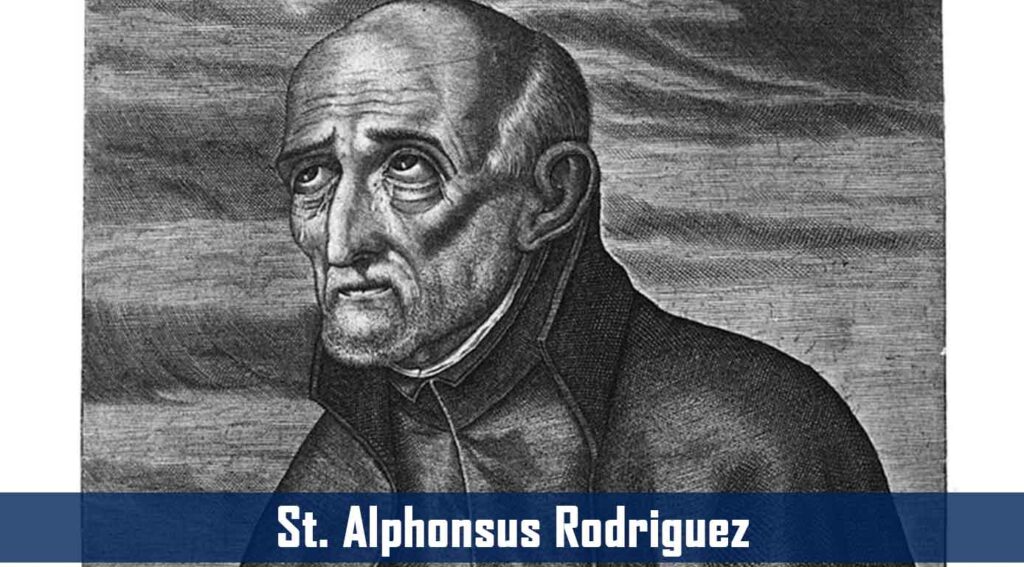
Alphonsus Rodriguez was born in Spain in 1533. He experienced tragedy and challenges early in life. He inherited their family textile business at the age of 23. However, within three years, his mother, his wife, and his daughter passed away. Through acts of service and prayer he found satisfaction and happiness. He took this period in his life to reassess his situation. He eventually sold their family business and moved to his sister’s home along with his son.
He was almost 40 years old when his son died. He then tried to join the Jesuits. After applying for the second time around, he was finally admitted. He held the position of doorkeeper at the Jesuit’s college for 45 years. He was either at his post or at prayer. In 1617, Alphonsus passed away.
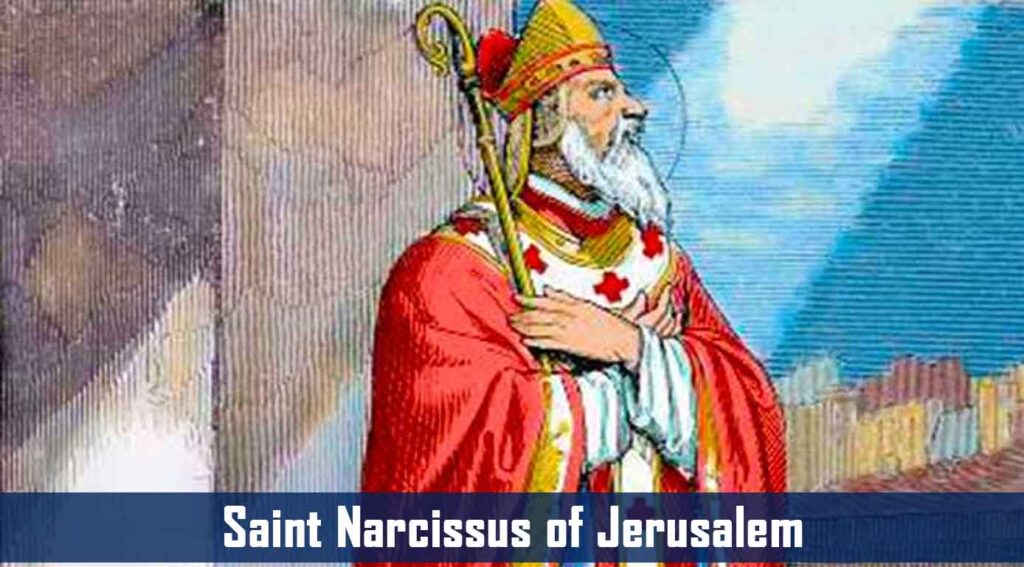
St. Narcissus of Jerusalem Saint Narcissus was placed as bishop when he was almost 80 years old. There are not much details about his life but there are numerous report of the miracles he performed. There was an account of Narcissus turning water into oil to be used in the lamps at Church on Holy Saturday.
Aside from the miracles, Saint Narcissus was also known for his harsh and rigid ways of Church discipline. At one point, he was even accused of serious crimes although that did not hold.
He eventually retired from his role as bishop. He disappeared and lived a life of solitude. While he was gone, many successors were appointed as replacement. However, Narcissus persuade him to resume his duties. Due to his old age, a younger bishop was brought in to assist him until he died.
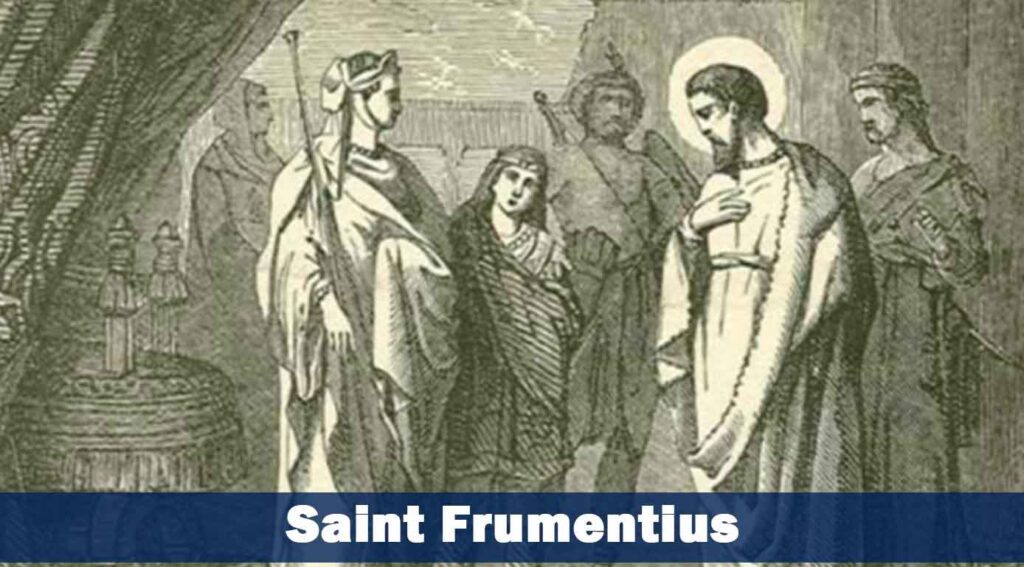
Saint Frumentius was also called Amharic Abba Salama. He was the first bishop of Axum and he brought Christianity throughout Ethiopia.
Saint Frumentius had a brother, Aedesius. They were both captured in 340. They served as civil servants at the court of the King of Axum. When the king passed away, Saint Frumentius became part of the queen’s court. He served as the royal administrator and also tutored the crown prince.
He was eventually ordained as bishop and he initiated the adaptation of Greek Christianity’s biblical-liturgical texts into Ethiopic symbols and language.
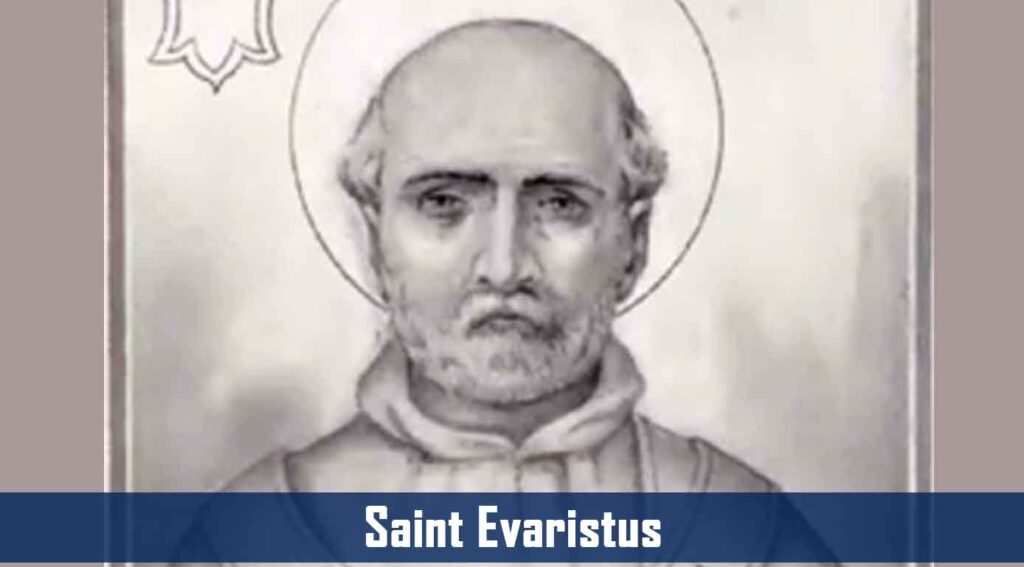
Saint Evaristus was born in Jerusalem and lived there for most of his life. He eventually became a Pope, the fifth one. He succeeded St. Clement, and served from 97-107.
A biography was published centuries ago which mentioned that he divided the districts of Rome to give bishops and leaders more control over their followers. The districts are called parishes. Seven men were nominated to serve as deacons and they would work in every district.
He was usually referred to as a martyr, his martyrdom was not exactly proven.
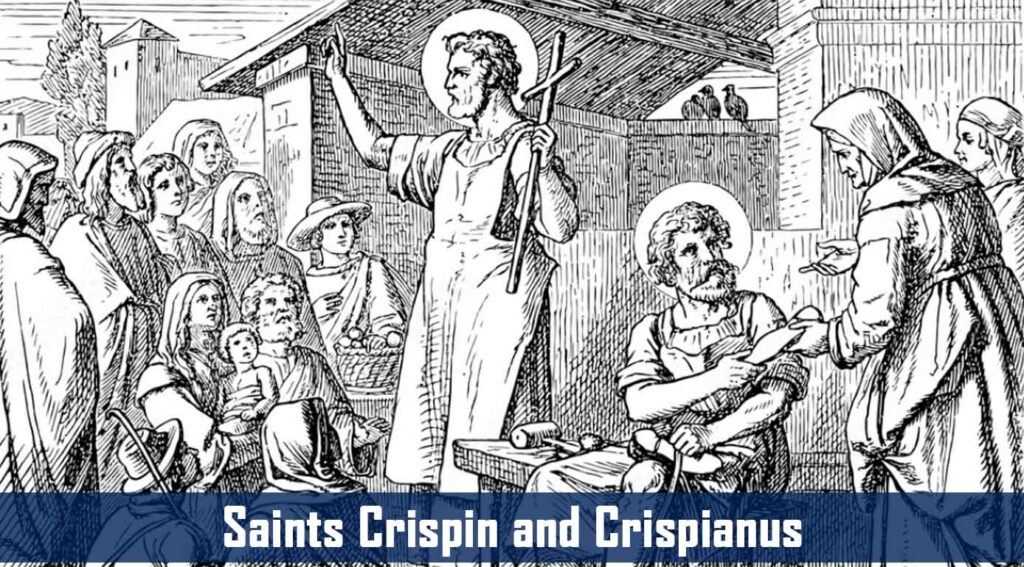
Saints Crispin and Crispianus are brothers born into a noble family. They were able to flee during the persecution. They ended up at Soissons and worked on evangelizing Gaul. They supported themselves while preaching by making shoes at night. Through their earnings, they were able to help the poor as well.
Saints Crispin and Crispianus inspired a lot of people to convert because of their charity and piety. However, their success did not sit well with the governor of Gaul then. They were tortured but they survived. But in 286, they were beheaded, martyred under the Emperor.
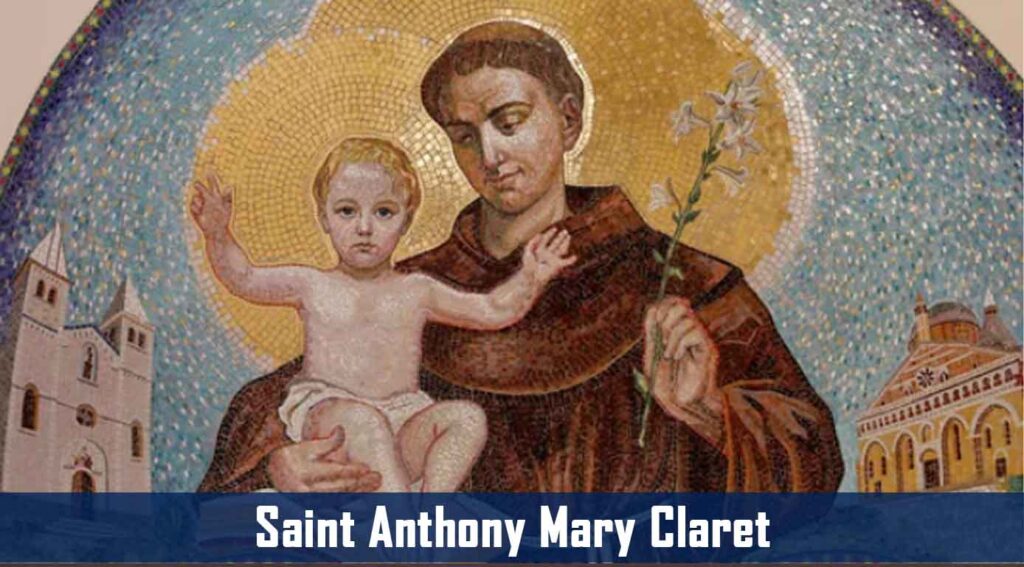
Saint Anthony was born in Catalonia, Spain, in 1807. At the age of 28, he was ordained as a priest. However, due to his health, he was prevented to enter the Order. Despite this, he still became one of the most popular preachers in Spain.
At 42, he founded a religious institute of missionaries which is now known as the Claretians. He also established the Religious Publishing House, since he has always been interested in the Catholic Press.
He died at the age of 63 while in exile near the border of Spain.
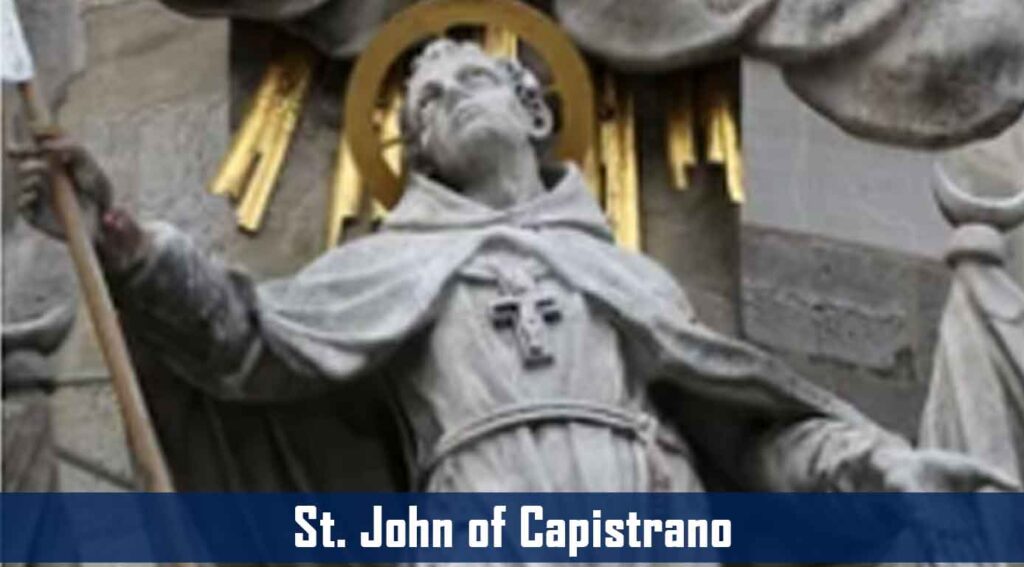
Saint John of Capistrano was considered to be one of the greatest Franciscan preachers of the 15th century. His preachings attracted a great crowd even during the time wherein there is religious apathy and confusion.
At the age of 26, he was made into a governor of Perugia. However, after the battle against Malatestas, he was imprisoned. He was released and at the age of 30, he joined the Franciscan novitiate. Four years later, he was ordained as a priest. He helped in reuniting the Greek and Armenian Churches.
In 1453, Saint John of Capistrano was commissioned to a crusade for the defense of Europe. They finally gained victory under General John Hunyadi, the siege of Belgrade was lifted. In October 23, 1456
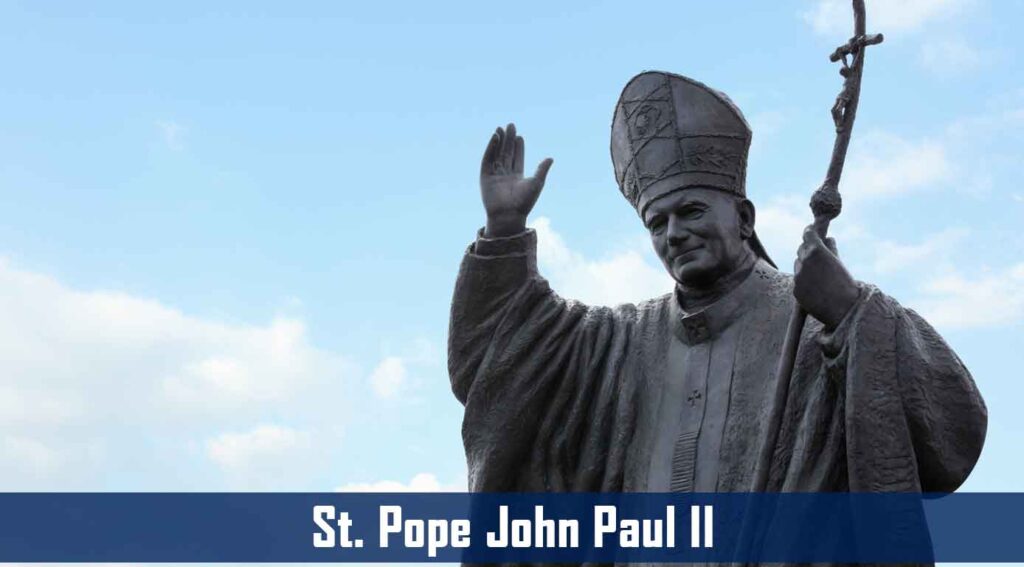
Born as Karol Jozef Wojtyla, St. John Paul II was the first non-Italian Pope in 455 years. He was the bishop and head of the Roman Catholic Church from 1978 to 2005, making his pontificate the third longest in history.
He travelled to many countries as part of his efforts to promote understanding among different nations and religions. He campaigned against political oppression. He also criticized the materialism of the West. He issued to groups that had been wronged by Catholics and emphasized nonviolent activism.
In the last years of his life, he was forced to reduce his activities as Pope due to his illness, Parkinson’s disease.
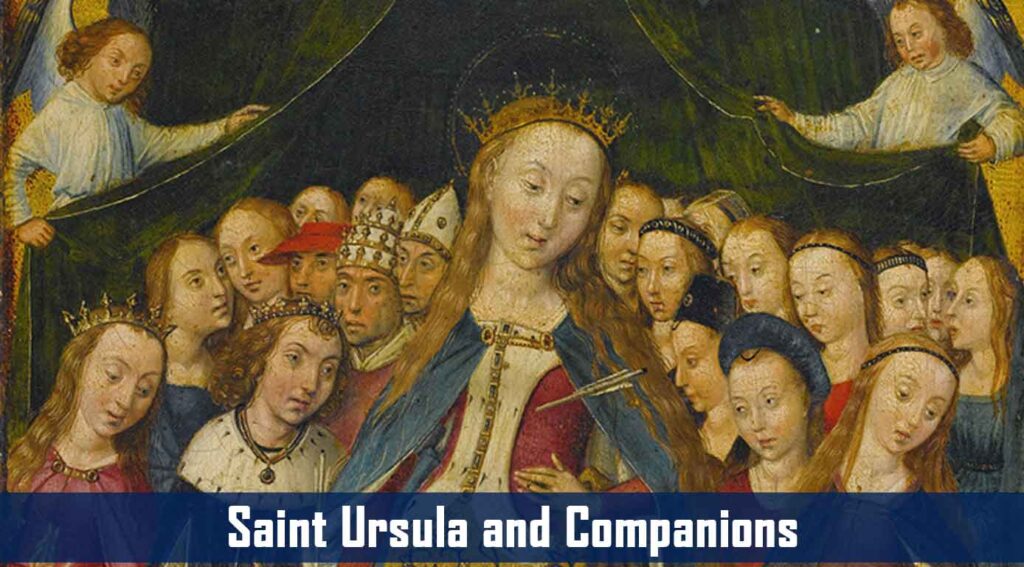
According to a medieval story, Saint Ursula was a Christian princess in Britain. She did not wish to be married to a pagan prince and so the king granted her a period of three years to postpone the marriage. She instead went on a voyage with her ten ladies in waiting and a thousand maidens. They sailed from the North sea, Rhine and then to Rome. Legend says that Saint Ursula and her companions in the voyage were all murdered because she refused to marry the chief of the pagan Huns.
Saint Ursula was considered the leader of the eleven thousand that was brought by the Romans from Britain. The relics of Saint Ursula and her companions were held by many churches. Saint Ursula is the patron saint of young teachers.