Daily Reflections

John 20:11-12

Unwavering Fidelity

Mary stayed outside the tomb weeping. And as she wept, she bent over into the tomb and saw two angels in white sitting there, one at the head and one at the feet where the Body of Jesus had been.

Reflection:

Early in His ministry, Jesus cast seven demons out of Mary of Magdala. As a result, she became an exceptionally faithful follower of Jesus. She was most likely one of His followers who provided for Jesus and the disciples out of her own resources as they traveled. She listened to His teachings, witnessed His miracles, was present when He was condemned, stood at the foot of the Cross with Jesus’ mother, helped to prepare His body for burial and was the first person recorded in Scripture to whom Jesus appeared after His Resurrection.

The Gospel for today’s Mass tells the story of Mary going to the tomb early Sunday morning to complete the anointing of Jesus’ dead body as He laid in the tomb. But much to her surprise, the tomb was empty. Therefore, she ran to tell the Apostles, which makes Mary Magdalene the first of His followers to witness to the Resurrection. After telling the Apostles, she returned to the tomb with Peter and John; and, after Peter and John left, she remained outside the tomb weeping, as is mentioned in the Gospel passage quoted above.

Mary’s tears are beautiful. They are an expression of her deep devotion to her Lord. She did not yet understand that He had risen, but her fidelity to Jesus is a testimony to her love. Jesus had restored her dignity. He freed her from the seven demons who tormented her. She most likely had been a sinful woman in the past, but now she was singly devoted to the Savior of the World.

The witness of Mary of Magdala is one that should inspire us all. Though few people are possessed by seven demons, we are all tormented in one way or another. We all sin. We all are weak. We all have a past we regret. And we all are invited to do better. Mary’s “better” was a life that was given to Jesus with the utmost fidelity. She didn’t care if the authorities saw her at the foot of the Cross. If they were to persecute her as a result, it did not matter. She was faithful. She didn’t care if the soldiers would have harassed her when she went to the tomb to anoint the body of Jesus—she only thought of that last act of love she could offer Him. And when she saw Jesus risen and thought He was the gardener, she didn’t care if He saw her heartbroken and in tears—she only wanted to see the body of her Lord.

As a result of her unwavering fidelity, Jesus gave her a gift beyond imagination. He appeared to her, after being resurrected from the dead, and sent her to be an apostle to the Apostles. He sent her to go to the Apostles to tell them that Jesus had risen and that He was preparing to go to His Father in Heaven.

Reflect, today, upon the holy soul of this woman. She was a repentant sinner who turned her whole life around. She devoted everything to Jesus and, in return, received even more. In Heaven, Mary Magdalene will forever cling to Jesus and adore His Sacred Heart. May we all strive to imitate her by turning from our own life of sin and becoming unwaveringly faithful to our Lord.

Source: https://catholic-daily-reflections.com/2025/07/21/unwavering-fidelity-4/

John 20:11-12 Read More »

Matthew 12:42

The Pursuit of God’s Wisdom

At the judgment the queen of the south will arise with this generation and condemn it, because she came from the ends of the earth to hear the wisdom of Solomon; and there is something greater than Solomon here.

Reflection:

In this passage, Jesus refers to the Queen of Sheba who traveled about 1,400 miles from Southern Arabia, which was most likely located in either modern-day Yemen or Ethiopia, to meet King Solomon. The queen had heard much about Solomon, about his wealth and wisdom, and wanted to find out if all that she heard was true. So she made the long journey and stayed with him for about six months, according to tradition. After spending time with him, she was greatly impressed and bestowed upon him gifts of gold, spices and precious stones. She said to him, “I did not believe the report until I came and saw with my own eyes that not even the half had been told me. Your wisdom and prosperity surpass the report I heard” (1Kings 10:7).

This foreign queen was deeply impressed with Solomon. Her journey, gifts and words illustrate her deep respect for him and her admiration. Jesus uses this story to illustrate the simple fact that Jesus Himself is much greater than Solomon and that He should be treated in a way that far surpasses the way the queen treated Solomon. But Jesus also makes it clear that, at the Final Judgment, this queen will rise and condemn the scribes and Pharisees because they failed to see the wisdom and kingship of Jesus. Instead, they came to Jesus, seeking signs and proof of Who He was.

In our own lives, the witness of the Queen of Sheba should be a source of true inspiration. She was someone who was powerful and wealthy herself, and yet she wanted to learn from Solomon and to benefit from his great wisdom which was given him by God. She should inspire us to do all we can to daily turn to our Lord and to seek His wisdom.

Jesus’s wisdom flows to us in many ways. The Gospels are especially important as a source of the most important lessons for life. Personal prayer, reading about the lives of the saints, and study of the teachings of our Church are also essential ways in which we receive the wisdom given to us by God. As you think about the many ways that are available to you to grow in the wisdom of God, try to use the Queen of Sheba as an inspiration. Do you have her same zeal? Are you willing to devote much time and effort to the pursuit of holy learning? Do you desire to journey to Jesus in the way that she desired to journey to Solomon?

One of the greatest hindrances to this pursuit of holy wisdom is sloth, or laziness. It is becoming increasingly easy to engage our minds in mindless pursuits. Many people can easily spend many hours in front of the television, computer or mobile devices and waste precious time and energy. Zeal for God and the pursuit of the many truths of faith must become the cure for sloth in our lives. We must want to know. And we must do all we can to increase that holy desire within us.

Reflect, today, upon the long journey made by this queen in pursuit of the wisdom of Solomon. As you do, examine whether you exhibit the same zeal that she had and how devoted you are to the pursuit of the wisdom of God. Where you are lacking, let her witness inspire you. Jesus is infinitely greater and wiser than Solomon, and we have been given full access to Him through prayer and holy learning. If you will make that holy journey to our Lord, with much determination, then unlike the scribes and Pharisees, your day of judgment will be a glorious one.

Source: https://catholic-daily-reflections.com/2025/07/20/the-pursuit-of-gods-wisdom-3/

Matthew 12:42 Read More »

Luke 10:38-39

Serving with Generosity

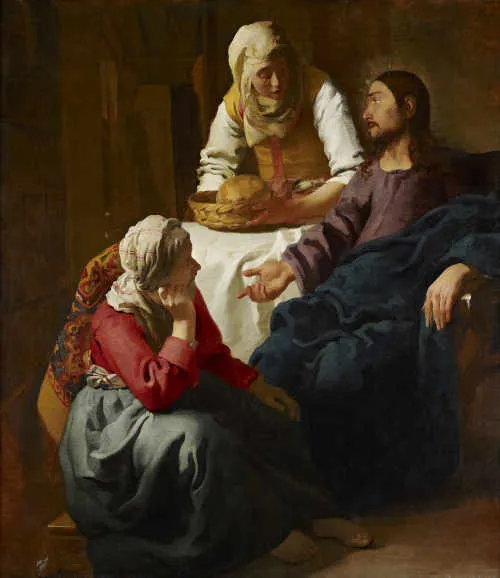
Jesus entered a village where a woman whose name was Martha welcomed him. She had a sister named Mary who sat beside the Lord at his feet listening to him speak.

Reflection:

It’s interesting that it was Martha who welcomed Jesus, but it was Mary who sat at His feet listening to Him. As the story goes on, we discover that Martha took her responsibility of hospitality seriously; she was very busy preparing a meal. But it appears that Mary needed a different form of hospitality from our Lord Himself. As Martha prepared to feed Jesus so as to care for His physical hunger, Mary sought to be fed by our Lord so as to feed her spiritual hunger. And interestingly, it was the generosity of Martha who was diligent in preparing the meal that made it possible for her sister to receive the spiritual food she longed for.

When we read this story, we can easily become critical of Martha because she complained to Jesus about her sister. It is easy to see Martha’s frustration in her words, “Lord, do you not care that my sister has left me by myself to do the serving? Tell her to help me.” And though Martha may have been a little impatient, Jesus’ response to her was gentle and corrective. “Martha, Martha, you are anxious and worried about many things. There is need of only one thing. Mary has chosen the better part and it will not be taken from her.” What was that “better part?” It was Mary’s prayerful attentiveness to Jesus. She was hungry for His teaching, and Jesus offered it to her in a very personal and loving way. And though this image of Mary before Jesus is a beautiful image to ponder and to use as a model of our own prayer, there is also something important to be said about Martha’s role in making Mary’s prayer possible.

Because Martha was diligent in taking care of the duties of hospitality, Mary felt the freedom to sit at Jesus’ feet. Perhaps the ideal response from Martha would have been to notice that Mary was being spiritually fed by our Lord and to rejoice in that fact, giving her the continued freedom to sit at Jesus’ feet. If Martha would have realized this, then she would have continued working in the background so that her sister could continue listening to Jesus. But even though Martha did interrupt this sacred moment for her sister, the fact remains that her initial diligence in taking care of preparing the meal did give Mary some time alone with Jesus.

In a similar way, we will all be given various opportunities in life to take care of the daily mundane tasks that are needed within a family or community. It is easy to fall into the trap of thinking that unless everyone does their equal part, then things are not fair. But being “fair” should not be our focus. True charity, especially within the family, means that, first and foremost, we look for opportunities to better the lives of those around us. For example, spending extra time cleaning a home so that others can enjoy it more adds much to family life. Or spending hours preparing a nice meal for family or friends may afford everyone the opportunity of time well spent together. These are only a couple of the countless ways that our diligence and generosity toward others is fruitful, especially within family life.

Reflect, today, upon these two women and the unique calling they each were given at the time of Jesus’ visit to their house. One was called to be fed by our Lord as she sat at His feet. The other was called to work hard so as to make it easier for her sister to receive that spiritual nourishment. Know that both of these callings are important. For that reason, if God calls you to be more like Martha at times, rejoice in that fact and work hard at serving in many ways. If God calls you to be more like Mary at times, then rejoice in those moments and sit prayerfully at the feet of our Lord, being fed by His holy Words.

Source: https://catholic-daily-reflections.com/2025/07/19/serving-with-generosity/

Luke 10:38-39 Read More »

Matthew 12:14-16

A Different Kind of Messiah

The Pharisees went out and took counsel against Jesus to put him to death. When Jesus realized this, he withdrew from that place. Many people followed him, and he cured them all, but he warned them not to make him known.

Reflection:

This passage goes on to say that Jesus withdrew to a more deserted place to fulfill the prophecy of Isaiah the Prophet (Isaiah 42:1–4). That prophecy is the first of what is referred to as “The Songs of the Suffering Servant.” In these songs or poems of Isaiah, the Messiah is presented to us as one who would be sent on a mission from God, would suffer injustice for the sake of others, would be rejected, and ultimately be vindicated and exalted. The mission of the Suffering Servant was to bring justice and salvation to all, including to the Gentiles.

At that time, the idea of a messianic king was still prominent in the minds of many. They anticipated the coming of a messiah who would be a political leader and would lead the people of Israel out of oppression, making them a free, prosperous and powerful nation. But Jesus acts in the opposite manner. Instead of raising up an army to combat the evil intentions of the Pharisees and to overthrow the Romans, Jesus withdrew from them and invited people to come to Him for healing and to receive His teachings.

Jesus perfectly fulfills the prophecy of Isaiah by becoming the Suffering Servant. And because His messianic role was much different than what many people had anticipated, Saint Matthew points us to the Old Testament prophecy of Isaiah as a way of clearly showing that Jesus truly was the promised Messiah. He was just not the form of messiah that many expected. He was One Who was humble and gentle of heart. He was One Who would redeem people by the Blood of His Cross. And He was One Who would extend salvation to all people, not only the people of Israel.

One lesson this teaches us is that even today we can have false expectations of God. It is easy for us to set forth our own idea of what God should do and what true justice demands. But we also read in Isaiah, “For my thoughts are not your thoughts, neither are your ways my ways, says the Lord. For as the heavens are higher than the earth, so are my ways higher than your ways and my thoughts than your thoughts” (Is. 55:8–9).

Just as it must have been difficult for the people of Israel to come to accept the promised Messiah as a servant Who suffers and Who redeems all people through that suffering, so it is often difficult for us to accept our Lord as He is. It is difficult to shed our own ideas of what we want God to do and this is especially difficult when He calls us to share in His own suffering and servanthood. To serve, suffer, sacrifice our lives, and the like can be difficult to accept. But this is the way of our Lord—it is the way of the Suffering Servant of God.

Reflect, today, upon your own expectations of God. Do you have a long list of things that you think God should do? Do you pray for that list of your ideas, thinking that if you only ask enough, God will grant your requests? If your requests flow from His perfect will, then praying for them in faith will bring them about. But if they flow more from you and your own ideas of what God should do, then all the prayers in the world will not bring them to be. If this is your struggle, then try to start anew by turning your eyes to the Servant Who Suffers for the salvation of all. Reflect upon the fact that God’s thoughts and ways are most often very far above your own thoughts and ways. Try to humble yourself before the Suffering Servant and abandon all ideas that do not flow from His Heart.

Source: https://catholic-daily-reflections.com/2025/07/18/a-different-kind-of-messiah-3/

Matthew 12:14-16 Read More »

Matthew 12:1-2

Freedom From Condemnation

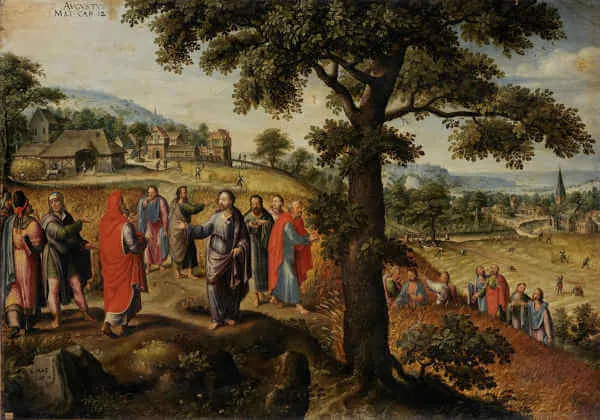
Jesus was going through a field of grain on the sabbath. His disciples were hungry and began to pick the heads of grain and eat them. When the Pharisees saw this, they said to him, “See, your disciples are doing what is unlawful to do on the sabbath.”

Reflection:

When Moses gave the Ten Commandments to the people, there was a prohibition against working on the Sabbath. The Third Commandment said, in part, that “you shall not do any work” on the Sabbath (Exodus 20:10). By the time of Jesus, the Pharisees had added much commentary to this law and expanded it to include as many as 39 different forms of work that they believed was forbidden. Included in their list were the practices of harvesting and milling of grain. For that reason, when the Pharisees saw that the disciples were picking heads of grain and rubbing the grain off the husks so that they could eat it, the Pharisees condemned them for violating what they interpreted to be an offense against the Third Commandment.

The first thing we can note from this passage is that the disciples were hungry. They were exceptionally devoted to Jesus and had been traveling with Him from town to town so that He could preach the Gospel. They had given up occupation, home, family and income so as to be singly devoted to Jesus and His mission. And as a result of this, they were living in poverty and relying upon the generosity of others. It is in this context that they chose to eat the most humble of foods: grain that they picked as they walked. They didn’t complain that there wasn’t a hot meal waiting for them at their destination. They were accepting of the many long journeys by foot that they made. They were okay with the fact that they did not get to sleep in their own bed every night. But they did have the basic human need for food, so they picked this grain as they walked to fulfill this basic need of hunger.

Though there are many lessons we can learn from this passage, one clear lesson is that of the temptation to judge and condemn others. When we fall into the trap of judging others, there are a few things that are common. First, judging and condemning often is based on perceived wrongs that are inflated and exaggerated. The Pharisees clearly inflated and exaggerated this “sin” of the disciples. In our lives, judgmentalness almost always makes the perceived sin of another far more serious than it is, if it is sin at all.

Another common temptation that flows from a judgmental and condemning heart is the failure to even understand the condemned party. In this case above, the Pharisees did not even inquire into the reason the disciples were picking and eating grain. They didn’t ask if they had been without food for some time or how long they had been traveling. It didn’t matter to them that they were hungry, and most likely, very hungry. So also with us, it is common that when we judge and condemn another, we arrive at our verdict without even seeking to understand the situation.

Lastly, it needs to be said that judging others is not our right. Doing so is usually reckless and caused by our own self-centeredness. God did not give the Pharisees the authority to expand the Third Commandment into 39 forbidden practices, nor did He give them the authority to apply those interpretations to the perceived actions of the disciples. And God does not give us the authority to judge others either. If another is clearly caught in a cycle of objectively grave sin, we must do all we can to help draw them out of that sin. But even in that case, we have no right to judge or condemn.

Reflect, today, upon any tendency you have toward being judgmental and condemning of others. If you see this tendency within yourself, spend time thinking about the Pharisees. Their self-righteousness was ugly and damaging. The negative example they set should inspire us to turn away from such acts of condemnation and to reject those temptations the moment they come.

Source: https://catholic-daily-reflections.com/2025/07/17/freedom-from-condemnation-4/

Matthew 12:1-2 Read More »

Matthew 11:29-30

The Yoke of Christ

“Take my yoke upon you and learn from me, for I am meek and humble of heart; and you will find rest for yourselves. For my yoke is easy, and my burden light.”

Reflection:

For those first followers of Jesus, a “yoke” was a familiar term. Many would have worked with oxen and other animals on a regular basis to plow their fields. To do so, they would place a wooden yoke over the oxen, which was a form of harness that was also attached to the plow, making it easier for the oxen to till the soil. To be strapped with a yoke was an indication of servitude, since that was the role of the oxen.

In commenting upon this passage, Saint Augustine (in Sermon 126) analogized the yoke of Christ with the wings of a bird. A bird’s wings are large in comparison to its body. As a result, if someone were to conclude that removing the wings from a bird would make its life easier by ridding it of that excess weight, such an action would have the effect of keeping it bound to the earth. But give its wings back and that “yoke” will enable it to soar through the skies.

So it is with the yoke of our Lord. If we accept the invitation to be a servant of God and we take upon ourselves the yoke of Christ for the fulfillment of our mission of service, we will discover that the act of serving lightens us, refreshes us, invigorates us and energizes us. Service of God is what we are made for, just as a bird is made to have wings. And like the bird, if we remove the yoke of service of God from our lives, then we are weighed down and cannot accomplish the good we are meant to do.

We are also told in this passage that we are not to carry our yoke; rather, we are meant to carry Christ’s yoke. “Take my yoke upon you…,” Jesus said. Carrying Jesus’ yoke means we are called to live our lives with Him and in Him. He came to serve and to give His life for others. It is our duty to do the same by allowing Him to do so within us. It is Christ and His servitude that must be the motivation and foundation of our lives.

Reflect, today, upon your call to be a servant in Christ. How is God calling you to serve? Whom is God calling you to serve? And as you answer that question, how do you see your act of service? Does service seem burdensome to you? Or do you understand that it is what you are made for? If you do see humble service as a burden, then perhaps that is because you have not actually tried to serve with and in Christ Himself. Try to ponder Jesus placing His yoke upon your shoulders. Say “Yes” to that act and to the mission of humble service you are called to fulfill. Doing so wholeheartedly will not only refresh you, it will also give meaning and purpose to your life.

Source: https://catholic-daily-reflections.com/2025/07/16/the-yoke-of-christ-4/

Matthew 11:29-30 Read More »

Matthew 11:25

Rejoicing at the Gift of Faith

At that time Jesus exclaimed: “I give praise to you, Father, Lord of heaven and earth, for although you have hidden these things from the wise and the learned you have revealed them to the childlike.”

Reflection:

This passage is in stark contrast to the passage just before it in which Jesus chastised the towns of Chorazin, Bethsaida and Capernaum for not repenting and believing in Him. And as soon as Jesus issued those rebukes, He turned His eyes to Heaven and offered praise to the Father for revealing the hidden mysteries of the Kingdom of Heaven to those who were “childlike.”

One of the greatest threats to a pure and childlike faith is intellectual pride. Those who consider themselves as “wise and learned” are often tempted to rely upon their own reasoning abilities to come to conclusions and beliefs in life. The problem is that even though the matters of our faith are fully reasonable, they go beyond the conclusions that human reason alone can achieve. We cannot figure out God by ourselves. We need the gift of faith for that, and the gift of faith begins with a spiritual communication from God through which He reveals to us Who He is and what is true. Only the childlike, meaning, those who are humble, are able to hear this form of communication from God and respond.

This passage also reveals to us that Jesus passionately rejoices in this form of humble faith. He gives “praise” to the Father in Heaven for witnessing such faith, because Jesus knows that this form of faith originates from the Father. 

In your life, it is important that you regularly ponder whether you are more like the wise and learned or like those who are childlike. Though God is an infinite and incomprehensible mystery, He must be known. And the only way we can come to know God is if He reveals Himself to us. And the only way God will reveal Himself to us is if we remain humble and childlike.

As we come to childlike faith, we must also imitate the praise that Jesus offered the Father for the faith that He witnessed in the lives of His followers. We, too, must turn our eyes to those who clearly manifest this pure knowledge of God by the gift of faith. As we see this faith lived, we must rejoice and offer praise to the Father. And this act of praise must be given not only when we see faith alive in others, it must also be given when we see the gift of faith grow within our own soul. We must foster a holy awe of what God does within us, and we must rejoice in that experience.

Reflect, today, upon Jesus giving praise to the Father as He witnesses the faith born in the hearts of His followers. When Jesus looks at you, what does He do? Does He issue chastisements? Or does His Sacred Heart rejoice and give praise for what He sees. Give joy to the Heart of Christ by humbling yourself to the point that you, too, are counted among the childlike who truly know and love God. 

Source: https://catholic-daily-reflections.com/2025/07/15/rejoicing-at-the-gift-of-faith-4/

Matthew 11:25 Read More »

Matthew 11:21-22

Becoming Lukewarm

“Woe to you, Chorazin! Woe to you, Bethsaida! For if the mighty deeds done in your midst had been done in Tyre and Sidon, they would long ago have repented in sackcloth and ashes. But I tell you, it will be more tolerable for Tyre and Sidon on the day of judgment than for you.”

Reflection:

Chorazin and Bethsaida were Jewish towns that Jesus visited frequently to preach and to perform many “mighty deeds.” They were located just north of His city of residence, Capernaum. Tyre and Sidon were pagan coastal cities northeast of Chorazin and Bethsaida, in modern-day Lebanon, and were towns known for their immoral living. Though Jesus did not spend much time in those cities, He did visit them at times. During Jesus’ first recorded visit there, recall His encounter with the Syrophoenician woman who begged Him to heal her daughter (Matthew 15:21–28). The Gospel passage quoted above took place prior to Jesus making that journey.

Why was Jesus so harsh toward the towns He spent so much of His time in. Why did He rebuke Chorazin, Bethsaida and Capernaum? To answer this, it’s important to remember that Jesus spent most of His time preaching to the “lost sheep of the house of Israel.” In other words, His primary mission during His public ministry was to share the Gospel with those who were descendants of Abraham and had been entrusted with the Law of Moses, the teachings of the prophets and the liturgical rites. For that reason, Jesus not only preached with perfection to these people, He also did miracle after miracle. And though there were many who did believe in Him and became His disciples, there were many others who were indifferent or who flatly refused to believe in Him.

Today, Chorazin, Bethsaida and Capernaum could be seen as symbols of those Catholics who were born and raised in the faith and were given good formation by their parents and others. Many parents whose children have gone astray from the faith wonder what they did wrong. But the truth is that even Jesus Himself was rejected, despite His perfect preaching, perfect charity and undeniable miracles. And the same happens today. There are many who, despite being raised within the holy faith given to us by Christ Himself, reject that faith and turn a blind eye to the Gospel and the Church.

Jesus’ rebuke of those towns should echo today in the minds of those who, despite being given so much in regard to a good upbringing, have rejected God. Of course, that rejection is not always absolute and total. More often, it is a rejection in degrees. First, the rejection comes in the form of missing Mass. Then moral compromises. Then a lack of faith. And eventually confusion, doubt and a complete loss of faith sets in.

If you are one who has started down the road of becoming more and more lukewarm in your faith, then the rebuke of these towns by Jesus should be understood to also be directed at you in love. “Every one to whom much is given, of him will much be required…” (Luke 12:48). Therefore, to those who have been taught the faith well, much is expected. And when we fail to live up to that which is demanded of us by God out of love, a holy rebuke is exactly what we need.

Reflect, today, upon whether the rebuke Jesus issues toward these towns is also issued toward you. Have you been blessed with a good formation in the faith? If so, have you done all you can to help nourish that faith and grow in your love of God? Or have you allowed your faith to dim, to become lukewarm and to begin to wither and die? If you have been given much, have been raised in the faith and have been privileged with good examples in your life, then know God expects much of you. Answer that high calling that is given to you and respond to God with all your heart.

Source: https://catholic-daily-reflections.com/2025/07/14/becoming-lukewarm-4/

Matthew 11:21-22 Read More »

Matthew 10:37-38

Authentic Love

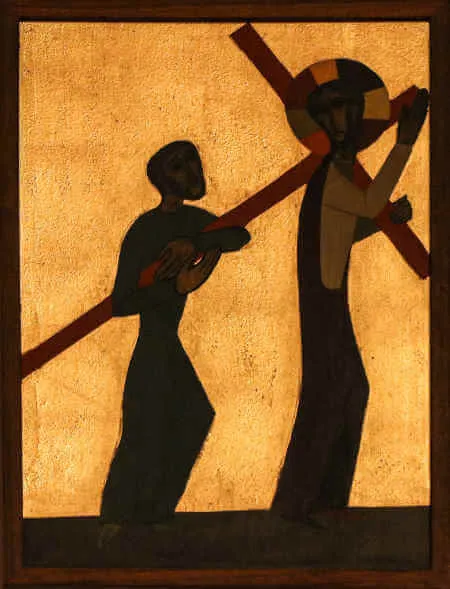
“Whoever loves father or mother more than me is not worthy of me, and whoever loves son or daughter more than me is not worthy of me; and whoever does not take up his cross and follow after me is not worthy of me.”

Reflection:

At first read, this appears to be a difficult teaching of our Lord. But when properly understood, it is clear that it helps us keep our relationships with God and with our family properly ordered in charity and truth. Following this command will never result in a lack of love for family; rather, it will help us to love solely with the heart of Christ.

What does this teaching of Jesus require of us? Simply put, if a family member, or anyone else, imposes expectations on us that are contrary to the will of God, then we must choose the will of God over those other expectations. To understand this more clearly, think about how one might choose to love “father or mother” or “son or daughter” more than God. Say, for example, that a child chooses to go astray in their moral or faith life, and they want their parents to support them in their sin. But the parents remain firm in their moral convictions and, out of love, offer no support for the immoral lifestyle their child has chosen. This would become especially difficult for the parents if the child becomes angry and criticizes the parents, with the claim that the parents are being judgmental and are lacking in love. What the child is actually requesting is “Mom and dad, you must love me more than God and His laws.” And if the parents do not support their child’s misguided lifestyle, the relationship may be deeply wounded. Perhaps that is one of the reasons that Jesus followed this command by saying, “and whoever does not take up his cross and follow after me is not worthy of me.” Love always involves the Cross. At times, it is a cross of personal self-sacrifice and self-giving. And at other times, it’s a cross by which our love is misunderstood, and we are deemed as “unloving” by those we actually love the most. When parents truly love their child, they will care first and foremost for their child’s eternal salvation and moral living, and they will not choose “friendship” with their child over truth.

Of course, this same truth applies to every relationship we will have and even to our “relationship” to society as a whole. More and more, there are those who demand of us all that we support them in behaviors that are objectively disordered and contrary to the will of God. We are told that if we oppose these choices that some make, then we are judgmental and hateful. But this is exactly what Jesus is speaking about. If we choose to “love” others more than God and His holy will, meaning, if our first priority is to make people “feel” supported in the immoral and confused decisions they make, then we are not actually loving them at all. At least not with the love of God. Instead, we are prioritizing their sin over the truth they so deeply need to know so as to be set free and to enter into an authentic relationship of love with the God of Truth.

Reflect, today, upon true love. Love is only true love when it is grounded and centered in God and every moral law He has set forth. Reflect upon your own relationships, especially with family and those closest to you. Do you love them with the pure love of God? Does your love remain firmly rooted in the will of God? Or do you, at times, choose to compromise the truths of faith and morality so as to appease the misguided expectations of others. Kindness, gentleness and compassion must always be present. But moral truth must also be just as present and must be the foundation of every virtue we exercise in our relationships with everyone. Do not be afraid to love others exclusively with the mind and heart of God. Doing so is the only way to have true love for everyone in your life so as to help save their souls.

Source: https://catholic-daily-reflections.com/2025/07/13/authentic-love-5/

Matthew 10:37-38 Read More »

Luke 10:27

The True Nature of Love

“You shall love the Lord, your God, with all your heart, with all your being, with all your strength, and with all your mind, and your neighbor as yourself.”

Reflection:

A scribe asked Jesus what he needed to do to inherit eternal life. Jesus asked the scribe what the Law of Moses taught. The above line was the scribe’s response. He was essentially quoting Deuteronomy 6:4, which was a common prayer prayed by the Jews and seen as a summary of the entire Law of Moses as found in the Ten Commandments.

Notice that this summary of the Law does not present a negative prohibition such as “Thou shalt not…” Instead, it is a positive command stating, “Thou shalt love…” Love is the fulfillment of the Law of the Old Testament, as well as the fulfillment of the New Law of Christ. When we love God with our whole being, that love overflows upon all of God’s creatures, including our neighbor.

In this Gospel, the scribe goes on to ask Jesus who His neighbor is. Jesus responds by telling the Parable of the Good Samaritan. In that parable, there was a man beaten and left for dead on the side of the road. A priest and a Levite passed by and ignored the man. But a Samaritan passed by and took care of the man, bringing him to an inn and vowing to pay for his recovery. The story concludes by the Samaritan being identified as the one who acted as a neighbor to the victim.

Traditionally, the victim of the robbers in this story has been seen as Adam. Adam represents fallen humanity. The Samaritan represents Jesus who cared for fallen humanity, healed us of sin and provided for our every need. Therefore, according to this parable, Jesus has acted as a neighbor to us, and we must love Him as we love ourselves. But Jesus also says, “Go and do likewise.” This is a commission to fallen humanity, now healed of sin, to go forth to others, acting as Jesus Himself, bringing the healing grace they have been given and bestowing it upon others generously.

Sometimes we can see love as a feeling or emotion. Though love is often accompanied by certain emotions and feelings, love is much more. It is an action. In this parable, if the Samaritan simply looked upon the victim and felt sorry for him, had compassion for him but then moved on, he would not have shown love. The love of charity is an action and requires much of us. If we are to fulfill this first and greatest commandment of love of God and neighbor, then we cannot wait until we feel like loving to act. Instead, we must act now and not hesitate. This is love.

Reflect, today, upon the true nature of love. Love, in its most elevated form, is the choice to do what is best for others—to help free them from sin and to be an instrument of God’s providence in their lives. It’s a participation in the very love that God has shown us in Christ Jesus by giving His life for our salvation. We are all called to devote ourselves to this same form of selfless and sacrificial love. Doing so is a requirement for the glorious sharing in eternal life.

Source: https://catholic-daily-reflections.com/2025/07/12/the-true-nature-of-love/

Luke 10:27 Read More »