Daily Reflections

Mark 12:34

Understanding the Law of Charity

And when Jesus saw that he answered with understanding, he said to him, “You are not far from the Kingdom of God.” And no one dared to ask him any more questions.

Reflection:

Among the scribes and Pharisees, the scribe in today’s Gospel stands out. He got it right, and Jesus praised him for his openness and understanding. The scribe began by asking Jesus a question: “Which is the first of all the commandments?” At that time, the scribes and Pharisees often debated the question of which commandments were most important. From the Torah, the first five books of the Old Testament, they derived 613 commandments. Among them were the Ten Commandments and numerous ceremonial and civil laws by which they were to abide. Some religious leaders taught that all 613 of the commandments were equally important. In addition to these commandments, rabbinic traditions also offered detailed commentary on how they were to be fulfilled.

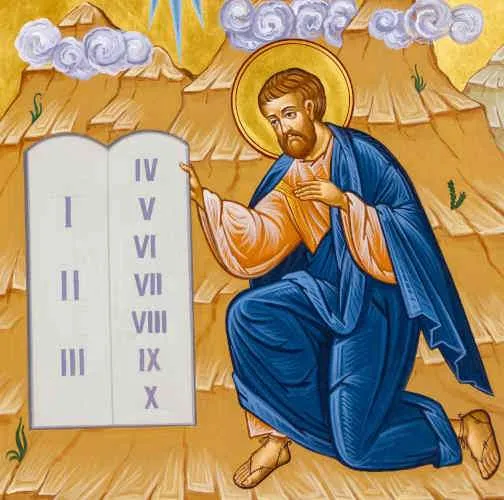
Jesus enters this debate and answers by quoting the Shema from Deuteronomy 6:4–5 and Leviticus 19:18: “Hear, O Israel! The Lord our God is Lord alone! You shall love the Lord your God with all your heart, with all your soul, with all your mind, and with all your strength” and “You shall love your neighbor as yourself.” These two commandments were clear articulations of the most central duties to which we are called—love of God and love of neighbor. Furthermore, they were a twofold summary of the Ten Commandments, the most important of the Old Testament Laws.

While many scribes and Pharisees were scrupulous about keeping the external law in a detailed and ritualistic manner, they often failed to perceive and live its central meaning. Jesus clarifies this meaning in His concise answer. He does not dismiss the importance of God’s many commandments but highlights their central purpose. The ritualistic laws and moral commandments, while essential, are ultimately means to an end; they direct us to love. Jesus shows that love of God and neighbor is the true fulfillment of the Law, uniting both aspects into one comprehensive commandment that sums up everything God asks of us.

Jesus was not rejecting the necessity of the commandments themselves but was emphasizing that their observance must flow from the heart. God’s Law is not just about external compliance but about cultivating a heart transformed by love. The laws and rituals of faith, such as fasting in Lent, attending Sunday Mass, and going to Confession, have their rightful place in our spiritual lives. They shape us and help keep us close to God. However, we must always remember their deeper purpose: They are meant to foster a greater charity for God and others. Without that charity, even the most rigorous external observances can become empty.

Reflect today on how obedient you are to God’s Law. Most importantly, ponder the depth of charity you have. True charity toward God and neighbor will enable us to fulfill all external observance of God’s Law, but it will not stop there. There is no limit to love. We can always increase it. We must increase it. Charity, while requiring our active cooperation, ultimately flows from God’s grace working within us. Without His grace, our efforts to love are incomplete. If we understand this and seek to love with all our heart, soul, mind, and strength, then, like this scribe, Jesus will say to us, “You are not far from the Kingdom of Heaven.”

Source: https://catholic-daily-reflections.com/2026/03/12/understanding-the-law-of-charity/
Mark 12:34 Read More »

Luke 11:23

No Neutrality

Whoever is not with me is against me, and whoever does not gather with me scatters.

Reflection:

It is often easier to remain neutral on controversial topics rather than take a clear stance. Issues such as abortion are among the most divisive in public discourse. However, there are many other areas of life that provoke intense debate, particularly when moral principles are involved. War, politics, contraception, the definition of marriage, and economic policies elicit strong opinions that can lead to discord. As followers of Christ, neutrality is not an option when it comes to clear moral truths.

While not all debated issues are equally straightforward in terms of moral clarity, the Church, through the Gospel and its teachings, provides us with guidance on many critical matters. On fundamental issues—such as the dignity of human life from conception to natural death and the sanctity of marriage—God’s law is clear. In these cases, we must stand with our Lord.

Jesus’ words in today’s Gospel present a direct challenge: “Whoever is not with me is against me, and whoever does not gather with me scatters.” This indicates that failing to uphold and defend God’s law is not a neutral act; it is, in fact, opposing His will. Choosing sides can be difficult because standing with Christ often invites criticism, judgment, or even hostility from those who hold different views. Yet neutrality in these matters is a form of negligence, which Jesus identifies as a sin in today’s Gospel.

The passage begins with Jesus casting out “a demon that was mute, and when the demon had gone out, the mute man spoke, and the crowds were amazed.” The man’s muteness, caused by a demon, symbolizes our own temptation to remain silent in the face of evil. Though the man in the story was physically possessed, we often experience spiritual muteness, caused by fear, intimidation, or confusion—tactics employed by the enemy to silence us. These same demonic forces work tirelessly to prevent us from proclaiming the truth of the Gospel.

Jesus then uses the image of a “strong man fully armed” guarding his palace, which represents satan and his demonic forces. This strong man seems invincible, guarding his domain with power. However, “when one stronger than he attacks and overcomes him, he takes away the armor on which he relied and distributes the spoils.” Jesus is the “one stronger” who has already defeated satan and all his works. No matter how powerful evil may seem, it is powerless before God’s might. Thus, we should never fear standing for the truth, even when opposition arises from society, family, or friends. As followers of Christ, we are called to speak with courage, clarity, and love, trusting in God’s ultimate victory.

That being said, not every situation requires vocal confrontation. We must discern when God calls us to speak and when silence is an act of trust in His timing. There are times when entering heated arguments might not be fruitful or could cause further division. However, silence must come from discernment, not fear or a desire to avoid conflict. If our silence is motivated by demonic lies or intimidation, then it is a failure to stand with our Lord.

Reflect today on situations in which you might be tempted to remain silent or neutral out of fear. While anger and hostility are not the solution, avoidance is equally problematic. Charity demands that we speak the truth with love, even when it is difficult. Seek the guidance of the Holy Spirit, discerning whether your silence is rooted in wisdom or in fear and intimidation. Commit yourself to standing with our Lord in every situation, confident that He is stronger than any evil you might face.

Source: https://catholic-daily-reflections.com/2026/03/11/no-neutrality/

Luke 11:23 Read More »

Matthew 5:17-18

The Journey to Perfection

Jesus said to his disciples: “Do not think that I have come to abolish the law or the prophets. I have come not to abolish but to fulfill. Amen, I say to you, until heaven and earth pass away, not the smallest letter or the smallest part of a letter will pass from the law, until all things have taken place.”

Reflection:

The long history of salvation, through which God gradually revealed His divine plan, began with Adam and Eve, continued with Noah and Abraham, deepened with Moses, became internalized with the prophets, and was fulfilled in Jesus. Though tracing this history in detail is a lengthy process, one simple truth stands out: After the fall of Adam and Eve, God gradually unfolded the perfection of His Divine Law to His people. In the same way, He draws each of us closer as we slowly convert and are purified through our spiritual journey.

At the start, God established what we call the Natural Law. Adam and Eve understood moral truths naturally. However, after their sin, that Law became obscured and remains so today. God then made a covenant with Noah, promising never again to destroy the earth by water. With Abraham, the covenant deepened, as God promised to bless all nations through his descendants. Then came Moses, and with him, the Ten Commandments, a clear moral code for living. Ceremonial laws were introduced to guide the people in worship, and civil laws helped establish the Israelites as God’s distinct people.

Once Israel was established, God sent prophets to call for a deeper, internal transformation of heart. The prophets urged the people to repent, return to God, and prepare for the Messiah, who would fulfill the Covenant in its entirety.

When Jesus arrived, His teaching illuminated a fuller understanding of the Law. In Him, all the promises and precepts of the Law were realized. Through His life, death, and resurrection, Jesus established a New Covenant of grace, bringing about the fullness of redemption.

This overview of salvation history is not only important from a historical perspective but also offers insight into how God relates to each of us personally. In the beginning of our own conversion, God meets us where we are: He calls us to be His children, and we are drawn to follow His commandments, avoiding serious sin. As we progress, our faith practices, including the sacraments, take on new depth. Gradually, we internalize the call to live from the heart, not just through outward observance. We begin to see God as an intimate and personal God, and we work to overcome even small attachments to sin. Ultimately, we are called to turn fully to the Gospel, letting it lead us into a deeper relationship with Christ.

Recognizing this progression is essential for our spiritual journeys. If we fail to see this path, we might become complacent. Everything God revealed at the beginning of your conversion remains true, but the start is not the fulfillment. As you reflect on your life, ask yourself: Can I see how God has drawn me closer to Himself, deepened my faith, and called me into greater union with Him?

God leads us gently, knowing that immediate perfection would be overwhelming. Still, He desires our daily growth. Each day is an opportunity for continued conversion, deeper transformation, and spiritual purification. The great saints have written about this journey, showing us the way to holiness.

Reflect today on the call to be perfect. If that seems impossible, commit to one step at a time. The road to perfection is long, demanding, and difficult—but it is also freeing, transforming, and ultimately glorious. Though you won’t become a saint overnight, you can take the next step toward holiness today. Say “Yes” to this journey and trust that God will lead you.

Source: https://catholic-daily-reflections.com/2026/03/10/the-journey-to-perfection-2/

Matthew 5:17-18 Read More »

Matthew 18:21-22

Unfathomable Mercy, Received and Given

Peter approached Jesus and asked him, “Lord, if my brother sins against me, how often must I forgive him? As many as seven times?” Jesus answered, “I say to you, not seven times but seventy-seven times.”

Reflection:

After replying to Peter, Jesus tells a parable about a servant who owed his master a “huge amount.” The literal translation from the Greek is “ten thousand talents.” One talent alone was a substantial sum, equivalent to about twenty years of wages for a day laborer. Therefore, ten thousand talents would represent an astonishing debt—roughly 200,000 years of wages, or about 24 billion U.S. dollars for a worker making $50 an hour.

It’s difficult to even fathom that much. Jesus uses this immense amount to emphasize His point. When the king in the parable decided to settle accounts with his servants and the one who owed him this enormous debt was brought before him, the king initially decided to have the man and his family sold into slavery. However, the servant pleaded with the king, asking for more time and promising to repay the debt in full. As a result, the king forgave the entire debt. This was undoubtedly a life-changing day for the servant.

Things changed quickly, however. When that servant encountered one of his fellow servants who owed him a much smaller amount—100 denarii in Greek—he immediately demanded repayment. When his fellow servant pleaded for mercy, the man refused and had him thrown into prison. Using the same calculation, 100 denarii would be 100 days’ wages or 40,000 U.S. dollars.

The contrast is stark! The king represents God, and each of us represents the servant forgiven for the enormous debt. When we beg for mercy, God grants it in superabundance. He knows that we are unable to repay the debt of our sins, so He wipes it away with one condition: that we, in turn, forgive everyone who sins against us.

Jesus tells this parable in response to Peter’s question about how often he must forgive his brother who sins against him. Peter suggests, “Seven times?” but Jesus responds with the symbolic number, “Seventy-seven times,” meaning that our forgiveness should have no limits—an infinite number of times. How well do we live out this call?

Overcoming anger is challenging, as we often feel that justice should be served when we are wronged. But perhaps if someone came to us, confessed his or her sin, and begged for mercy, we might offer it. But Jesus teaches that forgiveness must go beyond mere words—it must come from the heart. It must be sincere, complete, and without reservation. Every fiber of our being must forgive. And if someone sins against us and refuses to acknowledge any wrongdoing, the same applies: We must forgive even that unrepentant person from the heart. This is no easy task.

If forgiveness is difficult for you, as it is for most people, consider the consequences of withholding forgiveness. When the king in this parable learned that his servant refused to forgive his fellow servant’s small debt, he “handed him over to the torturers until he should pay back the whole debt.” Jesus concludes the parable with a stark warning: “So will my heavenly Father do to you, unless each of you forgives your brother from your heart.” This should inspire a holy fear in us, often called servile fear—a fear of punishment that helps turn us away from sin. This is a good starting point, but the ideal is to cultivate filial fear, the fear of offending God that springs from love. When we truly love God and experience His infinite mercy, we strive to avoid sin not just out of fear of punishment but because we do not want to hurt or offend our loving Father.

Reflect today on two key things. First, grasp the unfathomable mercy God has given you. Let it fill your heart with deep gratitude. Second, call to mind anyone against whom you harbor anger or resentment. Even the smallest trace of unforgiveness must be confronted. Make an act of your will to forgive, and continue doing so until that forgiveness flows sincerely from your heart.

Source: https://catholic-daily-reflections.com/2026/03/09/unfathomable-mercy-received-and-given/

Matthew 18:21-22 Read More »

Luke 4:24

Provocative Holy Drama

Jesus said to the people in the synagogue at Nazareth: “Amen, I say to you, no prophet is accepted in his own native place.”

Reflection:

Do you recognize Christ’s presence in others? Do you sense His divine presence all around you? In today’s Gospel, the people of Nazareth did not. Jesus, the Son of God, the Second Person of the Most Holy Trinity, stood in their midst, yet they failed to see Him for who He truly was. Many of them had watched Jesus grow up, knew His family, and were familiar with His work as a carpenter. However, they could not look beyond the surface to perceive the divine reality in their midst.

Though our Lord is not present to us today in the same way He was to the people of Nazareth, He is still with us in countless other ways—through grace, within the Sacraments, in the Scriptures, and in the lives of those around us. Yet how often do we fail to notice His presence in these familiar places?

In today’s Gospel, Jesus recognizes the hardness of heart among many in His hometown. He responds by recalling two stories about Elijah and Elisha—prophets who performed miracles for Gentiles rather than Israelites, because the Israelites lacked faith. Jesus’ message was clear: The people of Nazareth also lacked faith, and as a result, He would perform no miracles for them. This message enraged the people so much that they attempted to throw Him off a cliff. However, Jesus “passed through the midst of them and went away.” Imagine how dramatic that scene must have been!

Sometimes, we all need what could be called a “provocative holy drama” in our lives. Just as Jesus challenged the people of Nazareth for their spiritual blindness, we need to be shaken from our complacency. God uses these moments to awaken us to His presence—whether in the Scriptures, the Sacraments, or the people around us. These “holy dramas” are not meant to condemn but to invite us into a deeper awareness of His love and presence.

Try to imagine yourself as a member of Jesus’ hometown. Those of us raised in the Catholic faith, attending Mass regularly, and striving to live as faithful Catholics can sometimes fall into a spiritual routine. The more familiar we become with God’s Church, the easier it can be to overlook His presence in the most ordinary of places. When that happens, God may use moments of “holy drama” to awaken us from our spiritual slumber. These moments are invitations to recognize His presence where we might have taken it for granted.

Reflect today on what it would mean to be in the crowd at Nazareth. Approach this reflection humbly and sincerely. Allow Jesus’ loving challenge to the people of His hometown to resonate in your own heart. Rather than defend yourself, welcome His gentle rebuke, letting it awaken you to His presence in the familiar. Seek Him with renewed attentiveness, and allow Him to lead you more deeply into His love.

Source: https://catholic-daily-reflections.com/2026/03/08/provocative-holy-drama/

Luke 4:24 Read More »

John 4:16-18

Facing the Horror of My Sins

Jesus said to her, “Go call your husband and come back.” The woman answered and said to him, “I do not have a husband.” Jesus answered her, “You are right in saying, ‘I do not have a husband.’ For you have had five husbands, and the one you have now is not your husband. What you have said is true.”

Reflection:

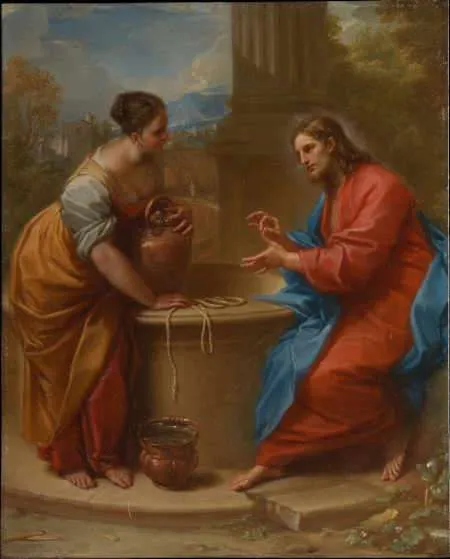
Today, we are given the beautiful story of Jesus’ encounter with the Samaritan woman at Jacob’s Well. The story begins with Jesus resting by the well, for He was “tired from his journey.” A Samaritan woman approaches the well at noon, during the heat of the day, most likely to avoid the scorn of the other women who looked down on her. Jesus then does something that greatly surprises her: He asks her for a drink of water.

Jews used nothing in common with Samaritans, yet Jesus was willing to drink from her utensil. When she questioned Him about this, Jesus responded, “If you knew the gift of God and who is saying to you, ‘Give me a drink,’ you would have asked him and he would have given you living water.”

The “living water” Jesus desired to give her was the spiritual gift of grace to renew and refresh her soul. His divine eyes enabled Him to see her spiritual thirst, and His compassion filled Him with a desire to free her from her many burdens.

The passage above might sound harsh at first: “For you have had five husbands…” Why would Jesus bring up this woman’s humiliating situation? Because she had clearly been searching for fulfillment throughout her life, engaging in one failed marriage after another. Now, she was living with a man who was not her husband, a reality that left her dry and thirsty.

By speaking this way to the woman, Jesus lets her know that He knows all about her, loves her, and longs to fill her with the satiation she has been searching for throughout her life. He does not judge or condemn her; He invites her to experience the freedom He longed to bestow upon her. After the encounter, the woman left the well overjoyed and even left her water jar behind, symbolizing that she was no longer thirsty—spiritually speaking. She then confidently went to the people of the town and said, “Come see a man who told me everything I have done. Could he possibly be the Christ?”

Each of us needs to see ourselves in this woman. Our sins fill us with shame. The guilt of our hidden sins weighs us down, leaving us thirsty. If we can identify with this sinful woman, then we can also expect the same depth of compassion from Jesus. Too often, we hide our sins, even from ourselves, justifying our actions, downplaying them, or ignoring them. That is not the path to freedom. Freedom only comes by allowing our Lord to reveal our sins to us, facing them, and encountering God’s abundant mercy.

Reflect today on the importance of opening your eyes to see the reality of your sins. Don’t run from your past—confront it, understand it, confess it, and receive the living water of mercy. The holier you become, the more clearly you will see even the smallest sins you have committed. That is good. It is necessary if we want to be healed and refreshed by God. Imitate this sinful woman today. God is never ashamed of us. Let the shame and guilt dissipate within God’s abundant mercy so that like this woman, you will know that God knows you through and through and loves you despite your sin.

Source: https://catholic-daily-reflections.com/2026/03/07/facing-the-horror-of-my-sins/

John 4:16-18 Read More »

Luke 15:11-13

The Freedom to Love and to Sin

A man had two sons, and the younger son said to his father, ‘Father, give me the share of your estate that should come to me.’ So the father divided the property between them. After a few days, the younger son collected all his belongings and set off to a distant country where he squandered his inheritance on a life of dissipation.

Reflection:

Why did the father in this parable give his wayward son his inheritance? Very few parents would do such a thing. Essentially, the son treated his father as if he were dead. He showed no interest in remaining part of the family, nor did he care about his father’s potential need for him in old age. The son’s only desire was to take the money, leave for a distant land, and live a sinful life, severing his relationship with his father. So why did the father agree to the son’s premature demand for his inheritance?

The father’s extreme generosity represents God’s deep respect for our free will. This parable was addressed to the scribes and Pharisees, who constantly sought to manipulate and intimidate God’s people into submission. But God doesn’t work that way. He allows us the freedom to sin because, without that freedom, we would be unable to love Him authentically.

The symbolism in this parable is clear: the son represents all who reject God, treat Him as though He were dead, abuse the natural and worldly gifts they’ve been given, and stray deeply into sin—symbolized by the “distant country.” When God’s children reject Him and use their free will to sin, He permits them to experience the consequences of their choices. They soon discover that a life of sin away from Him quickly turns chaotic. While sin might provide temporary satisfaction, it inevitably leads to spiritual hunger and destitution.

It was the responsibility of the religious leaders to treat God’s people with the same respect that the father in this story showed his son. This remains the responsibility of every parent, Church leader, and person in authority today. First and foremost, we must respect the free will of others. Authentic conversion and worship cannot come from intimidation or manipulation. Yet, the scribes and Pharisees, through their self-righteousness and condescension, interfered with this essential quality of faith and worship.

Even worse was their attitude toward those who had gone astray. They were indignant that Jesus welcomed tax collectors and sinners. But that was precisely why He came—to invite sinners to repentance. And repent they did. The scribes and Pharisees, however, were too self-absorbed to even consider extending forgiveness to those they deemed unworthy.

When someone you love sins against you, how do you respond? Do you allow the one you love the freedom to make choices, continuing to love that person even in his or her rejection of you? The scribes and Pharisees couldn’t stomach such mercy. But to God, it is a profound act of respect for human freedom, allowing each person to experience the consequences of his or her decisions. And when a sinner begins to suffer those consequences, do you think to yourself, “I told you so”? Or does your heart fill with compassion, making it easy for the sinner to return to God and to you?

Reflect today on your attitude toward sinners. We are all sinners, and none of us has the right to judge, intimidate, or condemn others. Mercy—abundant mercy—is essential if we are to become like the father of the prodigal son. Only mercy that fully respects others, longs for their conversion, and forgives even before being asked can effectively change hearts. Contemplate the heart of our loving Father in Heaven and strive to imitate His holy virtues.

Source: https://catholic-daily-reflections.com/2026/03/06/the-freedom-to-love-and-to-sin/

Luke 15:11-13 Read More »

Matthew 21:33-34

Rooting Out Our Pride

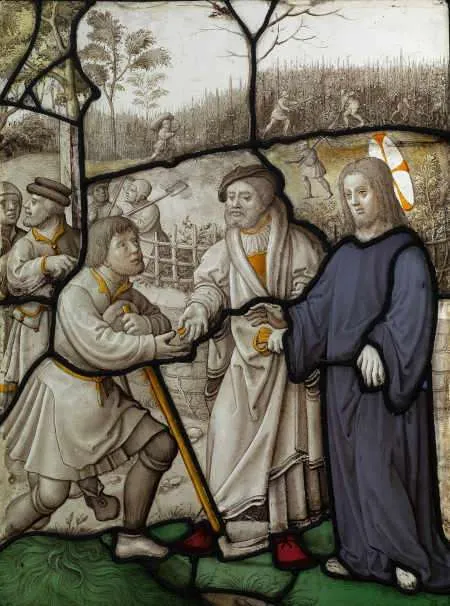
Jesus said to the chief priests and the elders of the people: “Hear another parable. There was a landowner who planted a vineyard, put a hedge around it, dug a wine press in it, and built a tower. Then he leased it to tenants and went on a journey. When vintage time drew near, he sent his servants to the tenants to obtain his produce. But the tenants seized the servants and one they beat, another they killed, and a third they stoned…”

Reflection:

Jesus addressed this parable to the chief priests and elders of the people because He loved them. It concludes with Jesus prophesying the fate of these religious leaders: “He will put those wretched men to a wretched death and lease his vineyard to other tenants who will give him the produce at the proper times.” The religious leaders were deeply rooted in their sins, and this parable was meant to uproot those sins, disturbing the soil of their hearts. Out of hope for their conversion, Jesus, in His mercy, took decisive action in a direct, clear, and bold way.

This vineyard image comes from Isaiah 5:1–7, which identifies Israel as the “vineyard of the LORD of hosts.” The landowner is God, and the people of Judah were His “cherished plant.” God had planted, nurtured, and protected His people. The hedge, the wine press, and the tower all point to the care and providence God had for them, showing that they had been given everything they needed to flourish spiritually.

The problem was the “tenants”—the chief priests and elders of the people who had been entrusted with the care of God’s people. They neglected their duty to bear fruit for God’s glory, perverting His Law and usurping His Kingdom for their own prestige, authority, and comfort. Jesus rebuked them harshly, identifying them as murderers, even of the landowner’s son, a clear reference to Himself. Their attachment to power and outward religiosity blinded them to the deeper demands of justice, mercy, and faithfulness to God’s covenant. This pride led to their rejection of the prophets, John the Baptist, and the Messiah.

Though it might be initially unpleasant to do so, take some time to consider how you struggle with similar sins. Do you forcefully and jealously try to control the people in your life? Are you overly concerned about how people perceive you, elevating your public image dishonestly? Are you greedy, desirous of power for selfish gain, and attached to your own comforts? Or is charity at the forefront of your daily mission with people, especially those most difficult to love, avoiding rejection, rash judgment, and condemnation?

Jesus rebuked the religious leaders of His time so strongly because many of them suffered deeply from these sins. He knew that His rebukes would lead some to anger, but He hoped others would repent—and some did. Every rebuke Jesus made was an act of love, and the more deeply entrenched we are in our sins, the more we need this form of direct, confrontational love from our Lord.

Even if the extreme pride of these chief priests and elders is not a major issue for you, pride is likely present in some form. Pride is often the last sin to be purged from our souls, as it is considered the “mother of all sin.” At its core, pride is selfishness, rather than selfless, sacrificial love.

Reflect today on Jesus’ firm rebuke of the religious leaders and His desire to rebuke you. Don’t take offense at this form of love. Be open to it, be humbled by it, experience freedom from it, and rejoice as you see those sins—be they big or small—that keep you from fully surrendering your life to Christ.

Source: https://catholic-daily-reflections.com/2026/03/05/rooting-out-our-pride/

Matthew 21:33-34 Read More »

Luke 16:22-23

The Danger and Blessing of Riches

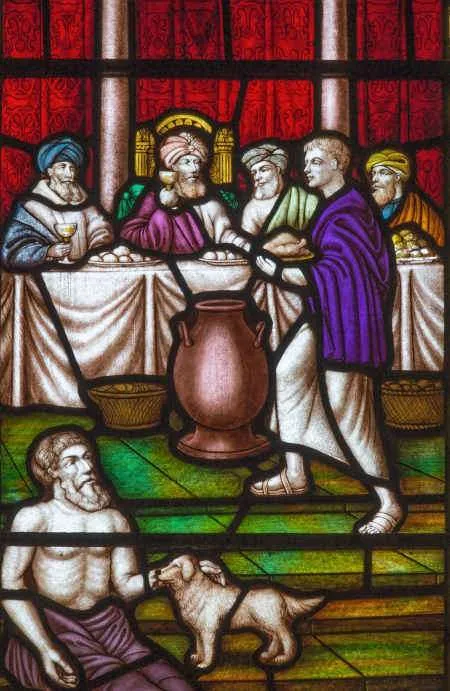
When the poor man died, he was carried away by angels to the bosom of Abraham. The rich man also died and was buried, and from the netherworld, where he was in torment, he raised his eyes and saw Abraham far off and Lazarus at his side.

Reflection:

Money is dangerous, as are power, notoriety, physical beauty, and exceptional talent. All of these are often desired, sought after, and envied. In and of themselves, each has the potential for great good. But because of that, they also have the potential for great sin.

The Gospel passage above presents us with the eternal consequences of a rich man and a poor man named Lazarus. The rich man lived in luxury, dressed in fine clothes, ate sumptuously every day, and hoarded his wealth. Lazarus, in stark contrast, was dirt poor, covered with sores, and longed to eat the scraps of food often given to dogs.

The story’s crux is that their lifestyles were reversed when they died. From the netherworld, a place of great torment, the rich man begged Abraham for relief and to raise Lazarus from the dead to warn the rich man’s five brothers. Abraham replies with perfect truth and justice: “If they will not listen to Moses and the prophets, neither will they be persuaded if someone should rise from the dead.” With that, the story ends.

Which person would you rather be? If we removed everything from the story that took place after their deaths, most people would likely choose the life of the rich man. Only when we add the eternal consequences to the story does the choice become clear.

Is it possible to be rich and still attain Heaven? Or is it possible to have earthly power, beauty, and natural talents that lead to great success and notoriety in this life and still attain Heaven? Certainly it is, but only if the Gospel is embraced, regardless of your state. Whether a person is rich or poor, successful or not, beautiful, talented, or lacking in these, the question is the same for us all: Have I generously and wholeheartedly placed all that I am and all that I have at the service of God? Or have I made a god of passing things?

Even those who lack the “good” things mentioned above run the risk of seeing their lack of them as the source of their earthly misery. This is just as dangerous. The bottom line is that God must be our God, no matter who we are, what we have, how we are perceived, how we look, or what natural gifts we possess. Furthermore, our God-given virtues become the means by which we exercise God’s will in this world, in preparation for the next.

Money, power, notoriety, beauty, and talent are “dangerous” in that they tempt us to make them gods. They become true blessings when they are fully dedicated to the exclusive service of God and His will. Poverty and every worldly misfortune have the same potential for danger and blessing. When poverty or misfortunes in life are embraced and offered to God as a sacrifice for His glory, they produce abundant blessings. When they are disdained and perceived as obstacles to happiness, then we have turned that which we desire into a false god.

Reflect today on how fully you have dedicated your life to God and His holy will. Whether you are more like the rich man or poor Lazarus, hold nothing back from God’s grace. Your entire life, the good and the bad, must be united to Christ for the glory of God the Father. That is the one and only path to true eternal riches.

Source: https://catholic-daily-reflections.com/2026/03/04/the-danger-and-blessing-of-riches/

Luke 16:22-23 Read More »

Matthew 20:20–21

The True Path to Glory

Then the mother of the sons of Zebedee approached Jesus with her sons and did him homage, wishing to ask him for something. He said to her, “What do you wish?” She answered him, “Command that these two sons of mine sit, one at your right and the other at your left, in your kingdom.”

Reflection:

What a bold move by the mother of the sons of Zebedee! A common misconception at that time was that the Messiah would usher in a new political and earthly kingdom and those who held positions of power in this kingdom would bask in earthly glory. However, Jesus’ mission as the Messiah was to establish a far superior Kingdom through His Passion and Resurrection. These two disciples, along with their mother, did not yet understand this.

Just before this passage, Jesus took the Twelve aside and prophesied His Passion and Resurrection: “…the Son of Man will be handed over… they will condemn him to death… be mocked and scourged and crucified, and he will be raised on the third day.” This is the third time in Matthew’s Gospel that Jesus predicts His Passion. It’s surprising that, immediately after this prophecy, the mother of the sons of Zebedee asks Jesus to give her two sons the most prominent positions in His Kingdom. Jesus initially responds, “You do not know what you are asking.”

In many ways, Jesus says the same to us. When we pray and seek to grow closer to God, we don’t always understand what we are truly asking for. Like these two disciples and their mother, we might think that growing in holiness means God will protect us from all illnesses, difficulties, crosses, and problems—replacing them with consolations, a comfortable life, family unity, success at work, notoriety, and even wealth. But that’s not the Gospel. The Gospel always points us to the Cross, while promising God’s grace to carry it, not avoid it.

As Jesus said to these two disciples, He also says to us when we pray for greater holiness: “Can you drink the chalice that I am going to drink?” In other words, the path to holiness is the Cross. It’s the only way. Jesus tells us this in many ways, just as He told His disciples three times. They did not understand or chose not to believe what He was saying. The same is true for us. When we seek holiness, our Lord tells us that we must be willing to be “handed over,” “condemned,” “mocked and scourged and crucified,” so that, with Jesus, we can be raised up. Each person’s path to the Cross will be unique, but we all must accept it if we want to share in Christ’s Kingdom. It is the only way.

Reflect today on Jesus looking at you with love and asking, “Can you drink the chalice that I am going to drink?” Try to understand what that means. What does the Cross look like in your life? Often, when we encounter crosses, we flee from them, presuming they are bad, and even pray for them to go away. Yet our Lord lovingly tells us to carry that cross with His strength, peace, and joy. That is the only way to authentic holiness and the only way to true greatness in the Kingdom of God. Do not fear Christ’s Cross. It is the answer to all you long for in life.

Source: https://catholic-daily-reflections.com/2026/03/03/the-true-path-to-glory/

Matthew 20:20–21 Read More »