Daily Reflections

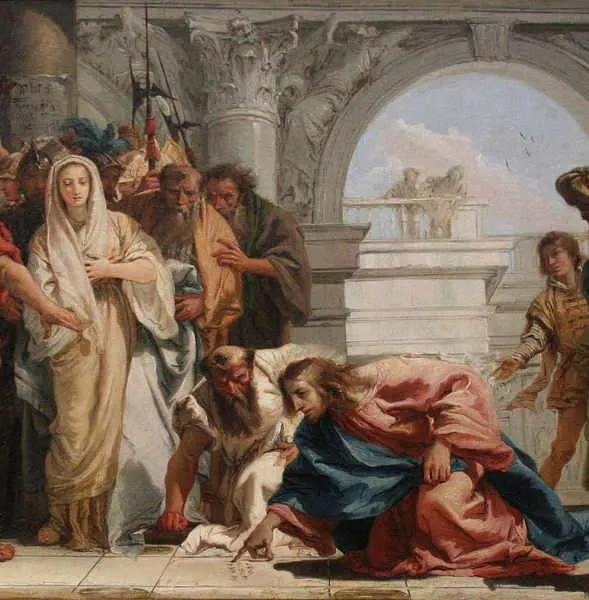
John 8:4-5

Mercy Fulfills All Justice

“Teacher, this woman was caught in the very act of committing adultery. Now in the law, Moses commanded us to stone such women. So what do you say?”

Reflection:

Justice has to be fulfilled. God is perfectly Just. That is why, in the Old Testament, capital punishment was prescribed for serious sins. Sometimes the Old Testament can be difficult to understand, particularly in relation to capital punishment. The Torah, the first five books of the Old Testament, prescribes the death penalty for sins such as adultery, other sexual offenses, blasphemy, idolatry, gravely dishonoring parents, violations of the Sabbath, murder, sacrilege, perjury, and witchcraft. These laws were intended to preserve the holiness of God’s people and to emphasize the gravity of sin, which disrupts their covenantal relationship with God.

Jesus’ approach to these sins appears to be in stark contrast with the Old Testament laws, as is evident in His merciful treatment of the woman caught in adultery. This is because Jesus reveals the fuller meaning behind these laws: to lead sinners to repentance and conversion. Jesus came not to abolish the Old Law but to fulfill it (cf. Matthew 5:17).

Adultery, like other grave violations of God’s Law, demands justice. In today’s Gospel, we see how Jesus fulfills the Old Testament law against adultery, and by extension, every other grave offense against God. He does not downplay the seriousness of the sin; rather, He fulfills justice by offering mercy and forgiveness, while calling the sinner to conversion and repentance. This is the deeper purpose of the Law of Moses—not mere punishment, but the transformation of the heart toward God.

Both the Old Law and the New Law of grace and mercy place high moral demands on believers. Yet, the New Law brings to completion the intent of the Old Law. Jesus’ merciful treatment of sinners does not abolish the need for justice but fulfills it in a new and profound way.

But what about the death penalty? Doesn’t justice still need to be fulfilled, as required by God in the Torah? Indeed, and this is precisely why Jesus died—to fulfill all justice. He took upon Himself the penalty for sin, including the capital punishment that was due for grave offenses, thereby restoring justice on behalf of all humanity. Once justice is fulfilled through His sacrifice and sin is repented of, conversion becomes possible. This is the true intent of God’s every law, both old and new—to lead sinners to repentance, restoration, and ultimately, salvation.

Though the poor woman in today’s Gospel was humiliated and afraid, we must see ourselves—and every other person—in her. We are all guilty of sins deserving of death, but Jesus, in His mercy, has taken that punishment upon Himself. Jesus’ statement to the scribes and Pharisees who wanted to stone her illustrates this fact: “Let the one among you who is without sin be the first to throw a stone at her” (John 8:7). We have no right to condemn another who is sorrowful and repentant because God is merciful and has paid the price for that person’s sins by His own blood. In fact, we have no right to condemn ourselves when God offers mercy, so long as we repent and convert.

Reflect today on this sinful woman and rejoice in Jesus’ mercy that fulfills all justice. Know that this is how He treats you; He calls you to treat others with the same mercy. His sacrifice has already restored justice on your behalf; all He asks of you is your trust, repentance, and willingness to forgive others. Hope is possible for us all, just like it was for this sinful woman, because Jesus paid the price of sin. Be open to that gift of mercy and offer it to others, knowing that Christ’s Passion and death have fulfilled the demand for justice for sin.

Source: https://catholic-daily-reflections.com/2026/03/22/mercy-fulfills-all-justice/

John 8:4-5 Read More »

John 11:32-35

When Mary came to where Jesus was and saw him, she fell at his feet and said to him, “Lord, if you had been here, my brother would not have died.” When Jesus saw her weeping and the Jews who had come with her weeping, he became perturbed and deeply troubled, and said, “Where have you laid him?” They said to him, “Sir, come and see.” And Jesus wept. 

Reflection:

Jesus’ humanity shines clearly in today’s Gospel. In the face of Lazarus’ death, Jesus is deeply moved by the grief around Him. The Gospel says He “became deeply distressed and troubled” and eventually “wept.” The Greek word for “deeply distressed,” embrimaomai, suggests a strong emotional disturbance, even indignation or anger. It could be translated as “He snorted in spirit,” indicating an involuntary, visceral response from the depth of His soul. Some commentators suggest Jesus’ anger wasn’t directed at the people weeping but at the reality of death itself, caused by sin. As God, Jesus knew death was never part of the Father’s original plan for humanity. From a divine perspective, He saw death as a consequence of sin. From this point of view, death provoked righteous indignation and deeply troubled His human heart.

As the passage continues, Jesus’ humanity is powerfully portrayed in the shortest verse in the Bible: “And Jesus wept.” Why did He weep? Saint Paul reminds us in Hebrews: “For we do not have a high priest who is unable to sympathize with our weaknesses, but one who has similarly been tested in every way, yet without sin” (Hebrews 4:15). Jesus’ tears show us that the Holy Trinity knows human pain firsthand. The Incarnate Son allowed Himself to experience sorrow, and the Father and the Holy Spirit shared in this sorrow through Him.

It’s important to note that Jesus’ sorrow was different from the weeping of Lazarus’ sisters and the others present. Jesus’ weeping uses the Greek word edakrysen, which means “to shed tears” or “weep silently.” His tears were personal, controlled, intimate, heartfelt, and full of divine compassion. In contrast, the weeping of the others is described by the Greek word klaió, meaning loud wailing, a typical expression of communal and ritualistic mourning at the time. Jesus’ grief was neither ritualistic nor excessive; it was intimate and heartfelt, born from personal sorrow and divine compassion.

We must never forget Jesus’ deep compassion, empathy, and sorrow. His human heart feels the same emotions we do—He grieves when we grieve, shares in our pain, and is moved by the hold sin has on us. After feeling these emotions at Lazarus’ death, Jesus stood outside the tomb and “cried out in a loud voice, ‘Lazarus, come out!’” (John 11:43). We can imagine the passion behind His command. In our lives, when we are tempted in sin or burdened by human weakness, we must hear Jesus calling us to freedom with the same divine authority and human passion.

Reflect today on Jesus’ humanity and how He perfectly understands everything we experience. His deep empathy for our suffering and His joy when we rise with His grace show us how intimately He knows us. God became one of us in every way, sharing in our human condition—though without sin—so that we might share in His divinity. Ponder His humanity and let His closeness draw you to Him, giving you a share in His divine life.

Source: https://catholic-daily-reflections.com/2026/03/21/jesus-human-and-divine-love/ 

John 11:32-35 Read More »

John 7:40-43

Trusting in God’s Providence

Some in the crowd who heard these words of Jesus said, “This is truly the Prophet.” Others said, “This is the Christ.” But others said, “The Christ will not come from Galilee, will he? Does not Scripture say that the Christ will be of David’s family and come from Bethlehem, the village where David lived?” So a division occurred in the crowd because of him.

Reflection:

Today’s Gospel takes place on the last and greatest day of the Feast of Tabernacles, also known as the Feast of Booths. This annual celebration was one of three major feasts when many Jews made a pilgrimage to the Temple. For seven days, they lived in temporary shelters—booths—as a reminder of God’s providence and protection during their forty years of wandering in the wilderness. It was also a time to give thanks for the year’s harvest, recognizing God’s ongoing provision.

The eighth day, following the seven days of Sukkot, was known as Shemini Atzeret, a solemn assembly focused on prayers, especially for rain for the coming year’s crops—another acknowledgment of dependence on God. It was likely during this festival that “Jesus stood up and exclaimed, ‘Let anyone who thirsts come to me and drink’” (John 7:37). That exclamation comes just prior to today’s Gospel, which shows the varied responses of the people who heard Jesus’ words.

The context of the Feast of Tabernacles and its religious meaning are crucial to understanding the significance of Jesus’ declaration. One of the central rituals of Sukkot was the daily water-drawing ceremony in which water from the Pool of Siloam was carried to the Temple and poured out before the altar. This act symbolized thanksgiving for God’s provision of water during the Israelites’ time in the wilderness and a prayer for rain for the crops. It also evoked messianic hope, recalling prophetic visions of spiritual renewal when living water would flow from the Temple: “I saw water flowing out from under the threshold of the temple” (cf. Ezekiel 47:1–12) and “fresh water will flow from Jerusalem” (Zechariah 14:8).

By this time, many scribes, Pharisees, and religious leaders were already plotting against Jesus. They condemned Him for performing miracles on the Sabbath, speaking with divine authority, and making claims that suggested equality with God. There was much speculation about whether Jesus would attend the festival, and He did, initially in secret (John 7:10). By the middle of the feast, He appeared publicly in the Temple, boldly preaching and teaching. On the final day, He identified Himself as the source of the living water that would quench the spiritual thirst of God’s people, fulfilling the ancient prophecies. This caused an uproar, leading to divided reactions.

Some believed He was “the Prophet” or “the Christ.” Others doubted, knowing Jesus was from Nazareth, and the Messiah was expected to come from Bethlehem. This shows that many were unaware that Jesus was born in Bethlehem and was a descendant of David’s line.

This Feast of Tabernacles occurred about six months before the Feast of Passover, when Jesus would be arrested and crucified. In the intervening months, the controversy surrounding Him deepened as the religious leaders continued plotting, while Jesus performed more miracles and delivered urgent teachings about the need to believe in Him as the Messiah. In some ways, the Feast of Tabernacles marked the beginning of the end.

Reflect today on the controversy Jesus sparked at the Feast of Tabernacles. Each of us must choose a side. There is no room for middle ground. Either Jesus is the Messiah, and we must follow Him wholeheartedly, or He is not. There is no place for complacency or mediocrity. Jesus is the Living Water, the one and only source of divine provision. Stand with Him and be counted among those who boldly proclaim Him as the Christ of God, so that He may provide for you, just as He sustained the Israelites during their forty years in the desert.

Source: https://catholic-daily-reflections.com/2026/03/20/trusting-in-gods-providence/

John 7:40-43 Read More »

John 7:25-27

Dismissing False Expectations

Some of the inhabitants of Jerusalem said, “Is he not the one they are trying to kill? And look, he is speaking openly and they say nothing to him. Could the authorities have realized that he is the Christ? But we know where he is from. When the Christ comes, no one will know where he is from.”

Reflection:

Though Jesus was perfect, His sermons flawless, and His miracles astonishing, many remained hardened in their disbelief. People of the time had various expectations about the Messiah. Some were looking for a mysterious, heavenly figure; others, a political leader; still others envisioned the Messiah would suddenly appear without prior knowledge of His origins. These expectations were all based on an incomplete understanding of the prophets.

The Messiah’s arrival uprooted many of the preconceived ideas about who He would be. He arrived as a poor carpenter, raised in the unimpressive village of Nazareth, and without any ambitions to overthrow the Roman occupation of Israel. Yet, Jesus performed miracles. His sermons penetrated hearts, winning over many humble converts. His mere presence exuded confidence, purpose, and dignity. Could He really be the Messiah?

Just like the people of Jesus’ time, it is easy for us to develop preconceived ideas about Who God is and how our lives should change once we choose to follow Him. If you give your life to Christ, what do you expect from Him? Do you expect that God will bless you with great success in business? Your children will love and obey God? Your family and friends will be perfectly united? Material provisions will enable you to live a comfortable life? Or do you expect rejection, suffering, and death? We must always align our expectations with God’s will, knowing that His ultimate plan is for our salvation.

Some of the Jews rejected Jesus because He did not meet their expectations of Who the Messiah would be. The particular group in today’s Gospel held the belief that the Messiah would arrive on the scene instantaneously, and no one would know where He came from. Their comment, “But we know where He is from,” reflects their disbelief, as they were expecting a more mysterious or sudden appearance. That misunderstanding of the prophets resulted in them rejecting Jesus, the true Messiah.

Similarly, it is easy for us to have certain expectations about God that, when not fulfilled, lead to doubt or confusion. This is our fault for forming false expectations about what should happen once we choose to follow Christ. The remedy is simple—turn to the Gospel and believe what Jesus said.

What did Jesus say? That He would suffer greatly at the hands of the scribes, Pharisees, and elders of the people. That He would be handed over, tortured, and crucified, but that He would also rise on the third day. And that is exactly what happened.

When we choose to follow Christ, does Jesus promise that life will be easy, comfortable, and that we will be loved by all? Certainly not. He tells us that we will suffer the same fate He did, but if we persevere through the crosses of life, we will share in His ultimate victory.

Reflect today on any false notions you might have about being a Christian. Embracing the Gospel—culminating in Christ’s Passion—is difficult. The call to live sacrificially, to lay our lives down for others, to do penance, live selflessly, be generous, repent of every sin, pray continuously, and embrace Christ’s Cross with unwavering determination is difficult at first. Doing so is only possible if we dismiss false expectations about being a Christian, so that the full Gospel and its demands will not shock us but inspire us to follow Christ down the path He has chosen for us.

Source: https://catholic-daily-reflections.com/2026/03/19/dismissing-false-expectations/

John 7:25-27 Read More »

Matthew 1:19-20

Our Call to Righteousness

Joseph her husband, since he was a righteous man, yet unwilling to expose her to shame, decided to divorce her quietly. Such was his intention when, behold, the angel of the Lord appeared to him in a dream and said, “Joseph, son of David, do not be afraid to take Mary your wife into your home…

Reflection:

In Jewish tradition, righteousness meant living in full conformity with God’s covenant. This included keeping the Law of Moses, but also having faith in the Lawgiver—God. One does not become righteous by external observance of the Law alone, but by faith in God. Recall that “Abram put his faith in the LORD, who attributed it to him as an act of righteousness” (Genesis 15:6). Saint Paul explains that Abraham was righteous because “He did not doubt God’s promise in unbelief; rather, he was empowered by faith and gave glory to God and was fully convinced that what he had promised he was also able to do” (Romans 4:20–21). Noah was also identified as righteous, because “Noah walked with God” (Genesis 6:9).

Today, we honor another man Scripture defines as righteous: Saint Joseph. By calling him righteous, the Gospel associates him with these fundamental Old Testament figures who lived by faith, but it also elevates Joseph above them all, given that his faith bore witness not to the Old Testament Covenant, but to the Messiah. His fidelity to God’s call to care for and protect his immaculate spouse and the Christ Child, even at personal cost, is an inspiring witness. It shows us that righteousness is ultimately expressed in sacrificial love and trust in God—trust that brings forth the Savior of the World.

Joseph’s righteousness is expressed not in words but in actions. He listens to God’s angel in a dream and responds with complete trust, taking Mary into his home and embracing his role in the mystery of the Incarnation. Joseph’s faith is especially manifested by the fact that what the angel revealed to him and asked him to do was confounding. He was asked to believe that his spouse became pregnant “through the Holy Spirit” and that her Child “will save his people from their sins” (Matthew 1:21). Joseph’s response manifested faith, courage, and generosity: “When Joseph awoke, he did as the angel of the Lord had commanded him and took his wife into his home” (Matthew 1:24).

Joseph emulates the response we must all make to God. Like Abraham, whose faith was tested when God asked the unthinkable, Joseph’s faith informed and guided his human reason with the mystery of God’s Wisdom. Like Joseph, we are often called to trust God when His plan surpasses our understanding. Whether it involves our vocation, a trial, or an unexpected turn in life, Joseph’s example teaches us that faith allows us to see with God’s eyes, guiding our reason to respond with trust and obedience. Imitating him takes courage, but like Joseph, we must hear God say to us, “Do not be afraid.” Walking by faith, not by sight, takes courage, fidelity, and resolve.

Today’s Solemnity especially highlights Joseph’s vocation as husband of the Blessed Virgin Mary. Though he was a carpenter, the primary way he fulfilled his God-given responsibilities was to care for his wife and Child. He did this by providing for them and protecting them, fleeing to Egypt to escape Herod’s wrath, and later to Nazareth, far from his hometown of Bethlehem. His fidelity to God’s will, especially in taking Mary as his wife, likely brought confusion and misunderstanding from his extended family and associates. Yet Joseph accepted this earthly shame with grace, choosing obedience to God over the opinions of men. For him, God’s will came first, and his faith in action was the source of his righteousness.

Reflect today on the vocation and mission God has given to you. No matter your calling or life’s circumstances, there will always be tests and trials. The true test of our righteousness is not found in the avoidance of trials, but in the way we face them with faith and trust in God. If the Father in Heaven would permit Saint Joseph, the Blessed Virgin Mary, and the Christ Child to face earthly struggles, then we can be assured of the same. Today, Saint Joseph teaches us how to respond to those trials. Ponder those difficulties that you tend to avoid or complain about, and imitate Saint Joseph by seeking God’s mysterious will and following it with all your heart.

Source: https://catholic-daily-reflections.com/2026/03/18/our-call-to-righteousness/

Matthew 1:19-20 Read More »

John 5:17-18

Doing the Father’s Work

Jesus answered the Jews: “My Father is at work until now, so I am at work.” For this reason they tried all the more to kill him, because he not only broke the sabbath but he also called God his own father, making himself equal to God.

Reflection:

The context of today’s Gospel is important. The lines above come at the conclusion of the story of Jesus healing the paralytic at the Pool of Bethesda. The man had been crippled for thirty-eight years, and Jesus healed him, telling the man, “Rise, take up your mat, and walk” (John 5:8). Though the miracle was awe-inspiring, the rigid Pharisees quickly chastised the man for carrying his mat, which they saw as a violation of the Sabbath law.

While God commanded through Moses, “Remember the sabbath day, and keep it holy” (Exodus 20:8), it was the Pharisees who created lengthy and detailed interpretations of that commandment. They identified numerous forms of work they believed were forbidden, including carrying a mat.

When Jesus healed the man and told him to rise and pick up his mat, the Pharisees believed Jesus violated the Law of Moses in two ways. First, they claimed that the healing itself was a form of work and thus a violation of the Sabbath. Second, they saw Jesus’ instruction to the man to pick up his mat as a disregard for the prohibition against work, encouraging the man to break the Sabbath.

To us, these condemnations may seem extreme and legalistic, but to the Pharisees, Jesus acted unlawfully and they began to persecute Him.

What is useful to ponder is Jesus’ response to the criticism. When someone criticizes us, we might become defensive, respond in kind with criticism, or even backtrack in our actions. Criticism and persecution can tempt us to fear, and that fear can pressure us into compliance to avoid consequences. Jesus, however, did not take this approach.

Instead, Jesus reaffirms His divine authority to perform works of mercy on the Sabbath, declaring Himself Lord of the Sabbath. He says, “My Father is at work until now, so I am at work.” In other words, Jesus connects His work of healing with the ongoing work of the Father, the source of the Law. If His act of healing came from the Father—the One who gave the Ten Commandments—then His healing could not be a violation of the Law.

The rest of today’s Gospel is a longer discourse on this point: “The Son cannot do anything on his own, but only what he sees the Father doing; for what he does, the Son will do also.” Jesus declares His oneness with the Father, revealing their perfect unity of being and action. This unity, rooted in their shared divine nature, is central to our understanding of the Trinity—Father, Son, and Holy Spirit—consubstantial and eternally one in being.

Jesus’ goal was not to defend Himself against the Pharisees’ criticism or to resolve the conflict. His goal was to proclaim the truth, even though it would further enrage the Pharisees. He did not fear their judgment, was not intimidated by their condemnation, and did not allow their rigid legalism to stop Him. Instead, He spoke clearly and openly to them about the truth, in love.

Reflect today on how you handle rash judgment, criticism, and false accusations. Do you let criticism lead to fear or anxiety? Do you respond with anger or try to defend yourself? Or do you confront errors with truth, sharing that truth with love and confidence? Fear and anger come in many forms and can deeply affect the way we relate to others. Though they are different emotions, they are often interwoven, emerging together in our hearts. Pray that God will dispel all fear and replace anger with courage and truth. Like Jesus, we must speak and act in communion with the Father’s will, rejecting the intimidation and manipulation of those who falsely accuse us.

Source: https://catholic-daily-reflections.com/2026/03/17/doing-the-fathers-work/

John 5:17-18 Read More »

John 5:6-8

Divine Initiative and Intervention

When Jesus saw him lying there and knew that he had been ill for a long time, he said to him, “Do you want to be well?” The sick man answered him, “Sir, I have no one to put me into the pool when the water is stirred up; while I am on my way, someone else gets down there before me.” Jesus said to him, “Rise, take up your mat, and walk.” Immediately the man became well, took up his mat, and walked.

Reflection:

Let us begin by imagining the overwhelming joy of this man, who was healed after he had been ill for thirty-eight years. He lay on a mat near the Pool of Bethesda, a place where tradition held that the first to enter the water after it was stirred would be healed. Some later traditions associated the stirring of the waters with the Archangel Raphael, whose name means ‘healing of God.’ While Scripture does not link Raphael to this story, his healing nature from other biblical traditions makes the association meaningful for reflection.

When Jesus approaches the paralyzed man and asks, “Do you want to be well?” the question seems almost unnecessary. Who wouldn’t desire healing after suffering for so long? Yet this question points to a deeper reality—one that transcends physical illness. The man’s condition and Jesus’ question symbolize the spiritual paralysis that can afflict any soul trapped in habitual sin. Just as the man could not heal himself, so too are we unable to free ourselves from the weight of sin without divine intervention. Jesus asks us the same question today: Do we truly want to be freed from our spiritual paralysis?

The man’s response to Jesus also reveals an important truth. He says, “Sir, I have no one to put me into the pool when the water is stirred up; while I am on my way, someone else gets down there before me.” This admission reflects a deep hopelessness that those who struggle with habitual sin often experience. Years of failure to overcome sin can lead to discouragement, even resignation. But this very discouragement is where grace begins to work. In acknowledging our inability to heal ourselves, we open the door to Christ’s healing power.

Perhaps Jesus chose this man precisely because he had lost all hope. After thirty-eight years of suffering, he had no one to help him and no expectation of healing. Yet Jesus, in His mercy, intervened. This is a powerful message for all who struggle with sin and despair of overcoming it: There is always hope in Christ. He takes the initiative when we cannot, bringing healing where we least expect it.

Picture Christ coming to you today, asking, “Do you want to be well?” Our response should mirror the man’s humility: Lord, I am powerless to free myself from my sin. In this admission of weakness, we allow Christ to work in us. It is through our humility that we prepare to receive His grace.

Reflect today on any sin—whether venial or grave—that has become a habitual part of your life. Have you grown resigned to these sins, thinking they are impossible to overcome? Are there sins you have become so accustomed to that you no longer recognize their spiritual harm? Christ asks you today: Do you want to be healed? Acknowledge your weakness, confess your inability to heal yourself, and wait on the Lord. Be attentive, and you will see He is already taking divine initiative, working in ways you might not yet realize.

Source: https://catholic-daily-reflections.com/2026/03/16/divine-initiative-and-intervention/

John 5:6-8 Read More »

John 4:48-50

Miracles and Faith

“Unless you people see signs and wonders, you will not believe.” The royal official said to him, “Sir, come down before my child dies.” Jesus said to him, “You may go; your son will live.” The man believed what Jesus said to him and left.

Reflection:

What is the most precious gift our Lord could give to you? If your spouse, child, or close friend were gravely ill, would a miracle be the gift you sought? If your financial situation were dire, would you ask for monetary assistance? If you were suffering from a chronic disease, would your prayer be for a cure?

Though we should entrust these situations to God’s grace, it’s important to understand that the gift of faith far surpasses any immediate miracle, assistance, or relief we might seek. Faith is a most precious gift because it enables us to turn away from our limited assessment of earthly situations and be open to God’s wisdom, which far surpasses anything we could conceive of by ourselves.

Though Jesus performed many miracles, He regularly challenged those whose faith was based on their desire for signs and wonders. In today’s Gospel, a royal official, likely of high rank, traveled from Capernaum to Cana, about twenty miles, because his child was dying. His journey illustrates faith in Jesus’ divine authority, but his faith was imperfect—he believed Jesus had to be physically present to heal his son. Jesus heals the child from a distance, but He also challenges the official and the crowd: “Unless you people see signs and wonders, you will not believe.” Jesus desires a faith that trusts in His word, not one that depends on visible signs.

When we pray with a litany of requests, God in His mercy hears us. Sometimes He grants them, and sometimes He doesn’t. But He wants us to know that such prayers are not the ideal. God already knows our needs better than we do. He knows our struggles within family, finances, health, and every other detail of our lives.

The ideal prayer is one of adoration and trust. It’s a prayer that surrenders everything to God without dictating the outcome. It trusts God’s wisdom more than our own, enabling us to rest in His loving care, unburdened by our difficulties.

The royal official’s faith grew when he believed Jesus’ word without needing Him to be physically present. This is evident when he learned that his son was healed at the exact time Jesus said, “Your son will live.” The official’s faith was deepened, and his whole household came to believe. This shows how true faith, once rooted in trust, grows and spreads to others.

If this man’s faith had not matured, it could have been lost if another crisis arose and no miracle followed. A deeper faith rests in God’s will, whether or not another miracle occurs. The same is true for us. Our faith must not depend on God’s answer to our prayers. If He allows suffering, we must trust Him. If He heals, we must trust Him. Our faith must remain strong, rooted in Who God is, not in what He does.

Reflect today on the depth of your faith and how it shapes your prayers. Believe, worship God for who He is, love Him above all else, and trust His perfect will. Then entrust yourself and your loved ones to His providence, believing that God knows what is best.

Source: https://catholic-daily-reflections.com/2026/03/15/miracles-and-faith-3/

John 4:48-50 Read More »

John 9:1-3

Spiritual Sight Restored

As Jesus passed by he saw a man blind from birth. His disciples asked him, “Rabbi, who sinned, this man or his parents, that he was born blind?” Jesus answered, “Neither he nor his parents sinned; it is so that the works of God might be made visible through him.”

Reflection:

Imagine being blind throughout your life and then suddenly being healed. All of the sounds you had heard from childhood, all that you had touched, tasted, or smelled suddenly took on new form within your imagination as these images registered with sight for the first time. Colors suddenly made sense. Large items, such as trees that you had only heard in the wind and touched with your hands, could be seen from a distance, glimmering in the sunlight. Your mind suddenly perceived in a new way the utensils, clothing, and other items you used daily. Just as the blind man was filled with awe at receiving his sight, so too is the soul overwhelmed when freed from the blindness of sin and brought into the light of God’s grace.

The healed blind man was given a gift that those who can see from birth are not. Perceiving and understanding the physical world only through four of his senses, and then adding the powerful fifth sense of sight later in life, provided immediate wonder and awe, filling him with profound gratitude for something most of us take for granted.

Think of a person who lives a sinful life for many years and understands life only through the distortions of sin and selfishness. Once set free from sin, the person’s spiritual eyes are opened. Those who experience such a conversion are given a blessing that those who have been faithful throughout their lives do not receive in the same way. They understand the contrast between spiritual blindness and sight, and the newfound freedom they receive after conversion provides a greater understanding of the gift of God’s grace and its transforming effects. They will never forget the weight of bondage once caused by their sin.

One reason God permitted this man to be born blind and live that way into adulthood was to illustrate the contrast between spiritual darkness and light. This is part of what Jesus means when He says this man was born blind “so that the works of God might be made visible through him.” The miracle not only illustrated Jesus’ divine power but also symbolized the much deeper spiritual healing He offers to all. Just as the blind man received physical sight, we are offered the gift of spiritual sight through grace.

We are born with poor spiritual sight. Our fallen human nature, which suffers from concupiscence, tends toward selfishness and sin. Although capable of love and affection, a child is prone to selfishness, anger, emotional outbursts, and other “childish” behavior. Over time, with the guidance of good mentors, children begin to understand the value of greater patience and selfless acts of love, kindness, and generosity. Those who are not well-formed as adolescents or who choose to rebel selfishly in their later years never gain a clearer spiritual sight. The world around them remains blurry, and divine wisdom never penetrates their eyes of faith.

The story of the man born blind is an opportunity for each of us to examine how clearly we perceive our lives and the world around us. Just as the man was healed, we need healing from the blindness caused by our fallen nature. God’s grace restores our spiritual sight, allowing His light to illuminate all we encounter in life.

Reflect today on your own need to see more clearly. We need our spiritual sight restored and sharpened if we are to perceive ourselves and our world with divine Wisdom. It takes humility to admit we have poor spiritual sight, and profound humility to admit if we are spiritually blinded by sin. Learn from the wonder and awe that this healed blind man experienced, and know that our Lord wants us to have clearer spiritual vision.

Source: https://catholic-daily-reflections.com/2026/03/14/spiritual-sight-restored/

John 9:1-3 Read More »

Luke 18:9-10

Humility and Wisdom

Jesus addressed this parable to those who were convinced of their own righteousness and despised everyone else. “Two people went up to the temple area to pray; one was a Pharisee and the other was a tax collector…”

Reflection:

Humility is a beautiful virtue. Even the most public sinner, like a tax collector, shines brightly with God’s grace when his heart is purified by humility. On the other hand, pride is an ugly vice. When pride is present in someone’s life, the soul is incapable of reflecting God’s pure and beautiful light.

Today’s parable of the Pharisee and the tax collector, who both go to the temple to pray, teaches us that true holiness comes from within. The interior virtues of the soul allow God’s radiance to shine outwardly. When humility and repentance fill a person’s heart, the soul reflects God’s grace.

We may all encounter people who seem to radiate God’s grace, peace, and joy. Conversely, we may meet others who radiate judgment, self-righteousness, and condemnation. While we must avoid judging others, we cannot help but be inspired by the genuine humility of those whose lives are marked by grace. For example, even if we forget the exact words of Saint Mother Teresa’s many speeches, her radiant charity, fueled by humility, is unforgettable.

The Pharisees were known for their meticulous observance of the external requirements of the Law of Moses. However, their scrupulous adherence to these laws often blinded them to the deeper virtues that God desires. They became focused on appearances, missing the heart of the matter: humility and love of God.

Praying in the temple is a good and pious act. Both the Pharisee and the tax collector did this. However, prayer that is distorted by self-righteousness, pride, and arrogance cannot rise to God as true prayer. Only when prayer is guided by humility and an awareness of our need for God’s mercy does it become a channel of grace.

The tax collector was humble because he recognized his sinfulness and his need for God’s mercy. He prayed, “O God, be merciful to me, a sinner.” The Pharisee, blinded by pride, could not see his own need for God’s forgiveness and instead praised himself for his external observances. The tax collector’s humility opened him to divine wisdom, while the Pharisee’s pride left him in spiritual blindness. Humility is wise; pride is foolish.

Reflect today on how you approach prayer. Are you wise in your prayer? Do you, like the tax collector, acknowledge your need for God’s mercy? Pray the tax collector’s prayer with sincerity and depth: “O God, be merciful to me, a sinner.” If you find yourself thinking, “I’m not that bad of a sinner,” then your prayer is more like that of the Pharisee. Don’t shy away from the truth. Humbly confess your weaknesses and sins before God. He is merciful. Acknowledge your complete dependence on His grace. Only then, like the tax collector, will you go home justified before God.

Source: https://catholic-daily-reflections.com/2026/03/13/humility-and-wisdom/

Luke 18:9-10 Read More »