Daily Reflections

John 14:21

Obedience—the Gateway to Intimate Love

Jesus said to his disciples: “Whoever has my commandments and observes them is the one who loves me. Whoever loves me will be loved by my Father, and I will love him and reveal myself to him.”

Reflection:

Most people would not think of “love” as obedience to commandments. Yet, that is precisely how Jesus defines it. To understand the truthfulness of His teaching, we must first consider the nature of love.

Saint Thomas Aquinas defines love as both an emotion and an action. As an emotion, it is part of our human nature and is the first response of the concupiscible appetite to a good perceived as desirable. This natural love is directed toward goods apprehended through the senses, such as food, people, or enjoyable activities. Since love as an emotion pertains to the sensory appetite and is tied to physical or sensible goods, it plays an essential role in the human experience. However, it’s important to note that just because a good is perceived as desirable does not mean it is truly good for us or in accord with God’s perfect will.

The love that Jesus speaks of in today’s Gospel, however, far transcends natural love. While it does involve desire and emotion when perfected, it is ultimately charity—a supernatural, spiritual love flowing from our union with Him. Charity, infused by grace, elevates love to a higher, rational act of the will, seeking the good of another for the other’s sake and fulfilling God’s commandments as an expression of that love.

This distinction invites us to examine the type of love we have toward God and others. If our love for God is purely emotional, it will be dictated by superficial and sometimes misguided desires. When we feel consolation on an emotional level, we might respond with an emotionally loving sentiment toward God. When something inspires us and we feel His presence, we might desire Him intensely. Yet, while this form of love has its place and will play a role in our relationship with God when our soul is fully perfected, it is initially a poor guide to charity. The same principle applies to our relationships with others.

Sometimes the pure love of charity hurts on a natural level. The demands of charity often call us to act contrary to our immediate desires and to love even when we do not feel like loving. Earlier in Chapter 14 of John’s Gospel, Jesus expresses the ideal of charity even more clearly: “If you love me, you will keep my commandments” (John 14:15). At the very heart of charity toward God is obedience. This obedience involves a three-fold process.

First, with our minds, we must understand God’s will, believe it, and assent to it as the highest good, even if our disordered appetites initially resist His will. Once our minds clearly perceive and understand the highest good to which we are called—God’s perfect commandments—our wills must choose to follow them. When our disordered appetites interfere, we must rely on grace to strengthen our resolve and enable us to choose the higher good.

When this process becomes habitual, and our minds and wills are regularly directed toward God’s will, even our emotions and appetites begin to conform. We come to delight in His commandments, finding refreshment and fulfillment in them. This spiritual delight far surpasses emotional satiation. This is because only God’s will—expressed through His commandments—can make us whole and enable us to become who we are created to be. Though the journey is often challenging, what joy we experience when we delight in God’s will through grace!

Reflect today on Jesus’ clear invitation to love Him through obedience to His will. Because His love for us is perfect, His commands are always for our good. Sometimes we are like children with erratic emotions and desires who need the gentle direction of a loving parent. Don’t see God’s commands as a burden; the opposite is true. God’s commands set us free to love through charity and to experience both spiritual and emotional joy in the process. When we love Jesus with this highest form of love, we will be gifted with a relationship with Him and His Father, Who will reveal themselves to us, satisfying our every desire.

Source: https://catholic-daily-reflections.com/2026/05/03/obedience-the-gateway-to-intimate-love/
John 14:21 Read More »

John 14:4–6

The Way to the Father

“Where I am going you know the way.” Thomas said to him, “Master, we do not know where you are going; how can we know the way?” Jesus said to him, “I am the way and the truth and the life. No one comes to the Father except through me.”

Reflection:

In addition to His parables and moral teachings, Jesus revealed to His disciples deep mysteries in a direct way that they did not immediately comprehend, especially when He spoke to the Twelve in intimate settings, such as the Last Supper, the context for today’s Gospel. In this discourse, Jesus explains, in veiled form, that He will soon ascend into Heaven where He will prepare a place for His followers. He explains that because they know Him, they know the way to where He is going—the way to the Father—because He Himself is that Way. As Jesus spoke these mysterious truths, we can imagine the Twelve listening attentively, yet with confusion.

Everything Jesus taught was true. His words, recorded in the Gospels, reveal to us the deepest divine mysteries. Within the Scriptures, we find all we need to know to attain perfect holiness and the eternal life of Heaven. Yet we cannot quickly digest Jesus’ words as we might an intriguing novel or history book. There are many layers of depth to what He says, and we can only understand those layers through prayer.

As the conversation continued, “Philip said to him, ‘Master, show us the Father, and that will be enough for us.’ Jesus said to him, ‘Have I been with you for so long a time and you still do not know me, Philip? Whoever has seen me has seen the Father. How can you say, ‘Show us the Father’?’” (John 14:8–9).

Jesus’ response likely surprised Philip and the other disciples because they did not understand what He was saying. Their intention was good—they wanted to understand—but Jesus’ words were more than they could comprehend at that moment. Despite this, Jesus gently rebuked Philip as a way of drawing him deeper into the mystery He was revealing.

God often treats us the same way. There are many things that we do not understand. Why do innocent people suffer? Why doesn’t God heal my loved one in answer to my prayers? Why do my children no longer practice the faith? What am I supposed to do with my life?

Just as Philip struggled to understand Jesus’ words, we, too, face moments of confusion when God’s ways seem beyond our grasp. God’s answer to life’s most challenging questions is rarely straightforward or immediate. Why? Because such an approach can never fully satisfy the depth of our hearts. Instead, God reveals a kernel of truth to us and then invites us to ponder it, revealing the divine mystery we seek to understand little by little, to the degree we are open.

The answers we seek come only as we conform our wills to God’s, patiently opening ourselves to His Wisdom. Divine mysteries can only be understood through prayer and deep attentiveness to the truths in God’s mind. Jesus is the Way, the Truth, and the Life. Only by uniting ourselves to Him in prayer will we discover the path we must walk, the truth we need to hear, and the life we are called to live.

Reflect today on anything you struggle to understand. See yourself as one of the Twelve, listening to Jesus speak, but failing to comprehend. Do not be discouraged; instead, allow the fullness of Jesus’ divine Truth to sink in gradually. Spend time in prayer, read the Gospels, be open, and listen from the depths of your heart. Seek out His gentle voice and know that He is your Way, Truth, and Life. Let Him lead you and reveal to you the mysteries of His divine Wisdom so that you, too, know the way to the Father in Heaven.

Source: https://catholic-daily-reflections.com/2026/05/02/the-way-to-the-father/

John 14:4–6 Read More »

John 14:1–2

Hope During the Uncertainties of Life

Jesus said to his disciples: “Do not let your hearts be troubled. You have faith in God; have faith also in me. In my Father’s house there are many dwelling places. If there were not, would I have told you that I am going to prepare a place for you?”

Reflection:

We all need hope, especially in the face of life’s uncertainties. The inspired virtue of hope is much more than wishful thinking. It’s a supernatural gift by which we are strengthened to persevere through challenges, trusting in God’s promises and His fidelity. Hope sustains us, even in the darkest and most painful moments.

In today’s Gospel, Jesus offers His disciples—and us—the antidote to fear and uncertainty: hope rooted in faith. His words at the Last Supper are intended to strengthen the Apostles for the sorrowful events of His Passion. Though they did not yet fully understand what was about to unfold, Jesus gave them this loving command: “Do not let your hearts be troubled. You have faith in God; have faith also in me.”

In the light of the Resurrection, imagine the Apostles reflecting on these words. They would have recalled the confusion and despair they experienced during Jesus’ arrest, crucifixion, and burial. But after encountering the risen Christ, their sorrow turned to joy, and their doubt to unshakable faith. In hindsight, they would have realized they didn’t need to let their hearts be troubled—they should have trusted in His promise.

The Apostles’ journey from fear and guilt to hope and strength is a reminder for us all. We, too, can look back on moments when we failed to trust in God during painful times. Despair, one of the most painful human experiences, extinguishes hope and leaves us feeling abandoned. But even in our failures, God is present, ready to transform our weakness into supernatural hope. By humbly confessing our lack of trust, we open our hearts to His healing grace and allow Him to prepare us for future trials.

Just as the Apostles grew in hope through their encounter with the risen Christ, so too did Mary, the Mother of Hope, model unwavering faith even in the midst of profound sorrow. Standing at the foot of the Cross, her heart was pierced with sorrow, but she remained firm in faith and trust. Her hope was based on her certainty that God’s plan would be fulfilled through her Son’s Passion. In times of trial, turn to Mary, who will guide you in placing your trust in her Son and in the eternal promises of His love.

Reflect today on Jesus’ loving command: “Do not let your hearts be troubled. You have faith in God; have faith also in me.” He has prepared a place for you in His Father’s house—a place where there will be no more sin and suffering. By keeping your eyes fixed on this eternal promise, you can overcome the fears and struggles of this life, trusting that God’s providence will guide you. Trust that He is already preparing a place for you in His Father’s house, and let this hope sustain you, transforming every sorrow into joy and every trial into a step closer to the eternal happiness that awaits you.

Source: https://catholic-daily-reflections.com/2026/04/30/hope-during-the-uncertainties-of-life/

John 14:1–2 Read More »

John 13:16–17

Love Perfected by Humility

When Jesus had washed the disciples’ feet, he said to them: “Amen, amen, I say to you, no slave is greater than his master nor any messenger greater than the one who sent him. If you understand this, blessed are you if you do it.”

Reflection:

Today’s Gospel comes from the Last Supper, just after Jesus washed His disciples’ feet. What an act of humility! By analogy, it would be as if a king knelt before his servants to polish their shoes, setting aside his glory to attend to their most basic needs. This act would teach them that true greatness lies not in power but in love and humble service. Such an act would make quite an impression on those servants, helping them understand their duty within the king’s royal court and their responsibility toward the people of the kingdom.

The Apostles might not have understood the full meaning of Jesus’ act of humility that Holy Thursday evening. As time went on, however, and the Apostles embraced their roles as spiritual leaders of the early Church, Jesus’ actions would have become the foundation of their understanding of servant leadership—one that they themselves were called to imitate as shepherds of Christ’s flock. Leadership in the Kingdom of God is not about seeking honors or recognition but about humbling oneself in selfless service to others. This includes not only leaders within the Church, but also leaders within the community and within families.

Jesus’ example becomes even more impactful when we consider the presence of Judas at this intimate moment. The Gospel goes on to reveal that Jesus acknowledged that one of those whose feet He washed would betray Him. He served Judas anyway. In this one act, Jesus not only demonstrated humility but also showed that His love knows no boundaries, extending even to those who would reject and betray Him.

In our lives, when we encounter those who betray us or sin against us in any way, we are immediately tempted to lash out. Imitating Jesus, however, requires us to humble ourselves even before the worst of sinners, rather than condemn them. Jesus did not approve of Judas’ betrayal. Instead, He identified it by quoting Psalm 41:10: “The one who ate my food has raised his heel against me.” Then, to reassure the remaining disciples of His divine mission, He said: “From now on I am telling you before it happens, so that when it happens you may believe that I AM” (John 13:19).

Jesus was essentially saying that once the other eleven Apostles learned of Judas’ betrayal, they would understand that only God—I AM—is capable of humbly loving and serving those who sin against Him. As the Apostles reflected on Jesus’ act in the days and years to come, they would have recognized that such love transcends human capacity and points to the divine. Jesus’ willingness to serve Judas, knowing full well the betrayal to come, reveals that God’s love is not dependent on human strength but flows unconditionally, offering even sinners the chance for redemption. Each of us is called to participate in that same depth of love.

Reflect today on Jesus’ unconditional humility and love and His call to imitate Him. Consider the relationships in your life: Are there people from whom you have withheld love or forgiveness? Is there anyone whom you refuse to serve with humility? Ask for the grace to love as Jesus loved, to serve even those who have hurt you, and to bear witness to the divine humility of Christ, who loved without limits. Pray for the grace to take a concrete step today to reconcile with someone you struggle to love or forgive, imitating Christ’s humility and boundless love. In doing so, you not only follow His example but also become a living witness to His ongoing presence in the world.

Source: https://catholic-daily-reflections.com/2026/04/29/love-perfected-by-humility/

John 13:16–17 Read More »

John 12:44–46

Truly Seeing God

Jesus cried out and said, “Whoever believes in me believes not only in me but also in the one who sent me, and whoever sees me sees the one who sent me. I came into the world as light, so that everyone who believes in me might not remain in darkness.”

Reflection:

Do you want to see God? Our faith teaches that those who die in a state of grace will enjoy the Beatific Vision, the clearest and most intense perception of God’s essence and glory. For those still in need of purification, God’s mercy provides the gift of Purgatory, preparing them to gaze upon Him for eternity. In Heaven, all will see God face-to-face and experience perfect happiness in communion with Him and all the saints. But the promise of seeing God does not begin only in Heaven. Through faith, we begin to see Him even now. Do you see the Father?

Jesus promises, “Whoever believes in me also believes in the one who sent me, and whoever sees me sees the one who sent me.” On earth, Jesus revealed the Father as “the image of the invisible God” (Colossians 1:15). Though Jesus’ divinity was veiled within His humanity, faith allowed His followers to perceive the Father’s presence through Him. To look upon Jesus was truly to gaze upon God, even if God’s full glory was hidden.

Today, after Jesus’ Ascension, His presence remains with us, especially in the Eucharist. Though our senses perceive only bread and wine, faith reveals that we are gazing upon God. As Saint Thomas Aquinas proclaimed in Tantum Ergo, “Faith for all defects supplying, where the feeble senses fail.” When we approach the Eucharist with faith, we see Jesus, and through Him, we see the Father.

Beyond the Eucharist, we encounter God’s presence every time we are touched by grace, perform an act of charity, receive the Sacraments, or prayerfully read His Word. God reveals Himself in hidden form through these moments, inviting us to recognize Him with the eyes of faith.

Jesus also said, “I came into the world as light, so that everyone who believes in me might not remain in darkness.” The light is perceived in our souls through an interior illumination that assures us of God’s presence and action in our lives. Faith enables us to see His work and know for certain that He is near. Do you see this Light? Do you see the Son, the Father, and the Holy Spirit?

Doubt, the opposite of faith, brings darkness into our lives. While doubt is a common human struggle, God invites us to move beyond it. Authentic faith, bestowed by God, grants certitude more profound than anything we perceive with our physical senses.

Reflect today on Jesus’ promise that when we see Him, we also see the Father. Is your spiritual vision clear? Do you perceive God’s presence daily? If not, seek Him in prayer, the sacraments, and the grace-filled moments of life. The more we form the habit of seeing God, the more attuned we will become to His presence. This habit prepares us for the glorious day when we will see Him face-to-face in Heaven, beholding Him in eternal joy and love.

Source: https://catholic-daily-reflections.com/2026/04/28/truly-seeing-god/

John 12:44–46 Read More »

John 10:22–25

Do We Listen?

The feast of the Dedication was taking place in Jerusalem. It was winter. And Jesus walked about in the temple area on the Portico of Solomon. So the Jews gathered around him and said to him, “How long are you going to keep us in suspense? If you are the Christ, tell us plainly.” Jesus answered them, “I told you and you do not believe…”

Reflection:

How often does the Lord speak to us, yet we fail to listen? Like the Jews in today’s Gospel, we might ask, “Lord, tell me plainly Your will!” Jesus responds, “I told you, and you do not listen.” His voice is constant, but we must become attuned to it.

Jesus speaks first through Scripture, especially the Gospels. As Saint Jerome reminds us, “Ignorance of Scripture is ignorance of Christ.” Through Scripture and the teaching of the Magisterium, which safeguards and interprets God’s Word, we receive clarity and direction for every age. At times, the Holy Spirit even illuminates a particular passage to guide us in a specific way.

God speaks through the Sacraments, especially the Eucharist and Reconciliation, where His grace cleanses, strengthens, and reveals His will. Prayer, too, is essential. Fidelity to daily prayer deepens our ability to hear God, fostering the silence and trust needed for intimacy with Him. Finally, God speaks through daily life—through others, the beauty of creation, and even our crosses.

Despite the abundant ways God speaks to us, distractions, fear, pride, and a lack of trust often prevent us from hearing Him. We may expect God to speak dramatically or on our terms, missing His gentle, consistent voice. But the more we quiet our hearts, immerse ourselves in His Word, and trust in His providence, the more we will hear and follow our divine Shepherd.

Jesus goes on to say, “The works I do in my Father’s name testify to me” (John 10:25). Though He was speaking to the Jews about His miracles, the authority of His sermons, and the witness of His sacred life, He says the same to us. Jesus’ works illuminate His Word and will in our lives.

If we want to be among Jesus’ sheep, we must hear His voice and follow Him. What’s most consoling about today’s Gospel is that Jesus says of His sheep: “No one can take them out of my hand” (John 10:28). If we do our part in listening and following His voice, His promise is to keep us safe, firmly united with Him. When that happens, nothing can harm us, nothing can steal away our peace, and nothing can keep us from God.

Reflect today on how well you listen and are attentive to God’s guiding voice. What distractions or fears prevent you from hearing Him? Begin by removing one barrier and committing to moments of daily silence to grow in prayerful attentiveness. Immerse yourself in the Scriptures, align yourself with the teachings of His Church, participate faithfully in the Sacraments, and foster greater fidelity to daily prayer. Trust in Jesus’ promise that as you strive to hear His voice and follow Him, He will hold you securely in His loving care. Allow His voice to guide you daily, leading you to the peace and joy only He can give.

Source: https://catholic-daily-reflections.com/2026/04/27/do-we-listen/

John 10:22–25 Read More »

John 10:11–13

The Courage of the Good Shepherd

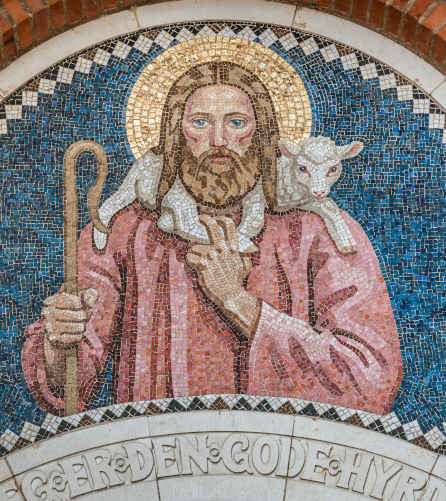
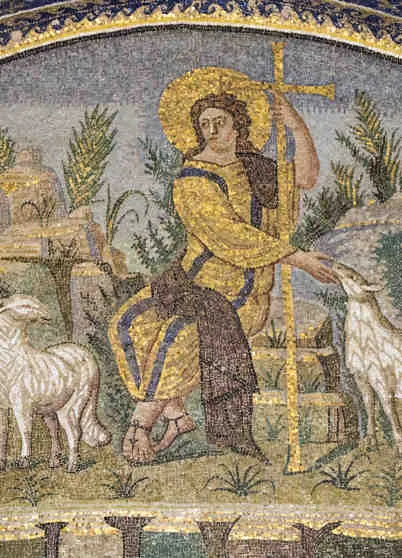
Jesus said: “I am the good shepherd. A good shepherd lays down his life for the sheep. A hired man, who is not a shepherd and whose sheep are not his own, sees a wolf coming and leaves the sheep and runs away, and the wolf catches and scatters them. This is because he works for pay and has no concern for the sheep.”

Reflection:

What is it that makes a shepherd “good?” A shepherd’s duties require great sacrifice and time. Like a mother who is always attentive to her newborn, a shepherd devotes his time and energies to the care of his flock. In biblical times, shepherds often lived in caves on the outskirts of towns, where there were plenty of green pastures, space for the sheep to roam, and water sources. The caves provided a place of safety at night and shelter from the elements. During the day, the shepherd watched over the flock in an almost fatherly way, knowing that if he were to neglect his duties and become inattentive, a sheep could wander off or fall victim to a pack of wolves.

Jesus expands this familiar image to convey an even greater reality of divine love and sacrifice. In today’s Gospel, Jesus takes this image of a shepherd to a whole new level. He says: “A good shepherd lays down his life for the sheep.” Though this might not have been part of the normal job description of a shepherd, perhaps those who were listening would have made a connection. Some might have understood what Jesus taught in a figurative way, calling to mind the time and commitment shepherds make. And though there is a figurative lesson to be learned, Jesus’ teaching was more than that.

Jesus first identified Himself as the Good Shepherd. He then defines what that means: He will lay down His life for His sheep. Though His listeners likely missed His meaning, Saint John, while writing his Gospel, fully understood Jesus’ words to be not only figurative but also literal—Jesus would die on the Cross for the sins of His sheep.

The metaphor continues with Jesus contrasting a hired worker with a true shepherd of his own sheep. In the face of danger, a hired worker flees for his own safety, while the shepherd stands and fights for his sheep, even to death. This clearly depicts what Jesus has done for us, but it also reveals our duty toward all of God’s people, His flock.

As members of Christ’s Body, the Church, we are called to share in His shepherding mission. Our vocations will especially dictate to us ways in which we are called to do so. Parents, for example, must be so devoted to their children that they value their children’s lives more than their own. Priests and religious are called to be shepherds who guide and protect their flocks spiritually. Each of us, however, must participate in Christ’s shepherding mission in the ways we are called. While the way this is lived will vary, the degree to which it is lived must not. We are all called to lead lives that are sacrificial, selfless, and wholly self-giving. Courageously and completely, we must lay our lives down for others, imitating the Good Shepherd’s commitment to His flock.

In communion with the Good Shepherd, we are invited to show this courage in daily acts of charity, fidelity to our commitments, and steadfast love for those entrusted to our care. Through this radical love, we reveal Christ’s presence to the world and share in His mission to gather all into one fold under the divine Shepherd. As we continue to celebrate the joy of the Resurrection, we remember that this joy was won through the courageous love of our Good Shepherd.

Reflect today on Jesus’ perfect fulfillment of His mission to be the Good Shepherd. As you ponder His courage, sacrifice, and selfless love, know that He not only acts as the Good Shepherd to you, but He also invites you to share in His shepherding. How courageous are you when given the opportunity to be selfless for the good of another? How willing are you to seek the others’ salvation, even at great cost to yourself? Charity is at the heart of Jesus’ mission, and that same charity must permeate everything we do as we relate to those whom we are called to love. Honor and thank the Good Shepherd by participating in His mission and laying down your life for God’s flock.

Source: https://catholic-daily-reflections.com/2026/04/26/the-courage-of-the-good-shepherd/

John 10:11–13 Read More »

 John 10:4–5

The Voice of a Stranger

“When he has driven out all his own, he walks ahead of them, and the sheep follow him, because they recognize his voice. But they will not follow a stranger; they will run away from him, because they do not recognize the voice of strangers.”

Reflection:

Young children are often frightened by strangers. Infants, for example, form a strong bond with their mothers who feed them, hold them close, talk to them, and lavish love upon them. It often happens that when other family members, such as grandparents or even the father, attempt to hold the child, tears emerge until the child is placed once again in the familiar and safe arms of his or her mother.

An infant’s reaction to strangers can teach us much about today’s Gospel on Jesus, the Good Shepherd. Like an infant, sheep become familiar with the voice and presence of their shepherd. The shepherd lives with the sheep night and day. He calls to them, speaks to them, keeps them safe, and leads them to green pastures and water. If a stranger were to call to them, they would not listen, similar to how an infant reacts to a stranger.

Jesus’ teaching is in response to the criticism He received from the Pharisees after He healed a man born blind. After healing the man, Jesus said, “I came into this world for judgment, so that those who do not see might see, and those who do see might become blind” (John 9:39). When the Pharisees heard Jesus say that, they inquired whether He was suggesting that they were blind, to which Jesus replied, “If you were blind, you would have no sin; but now you are saying, ‘We see,’ so your sin remains” (John 9:41).

An infant’s unfamiliarity with a stranger is instinctive and innocent, yet it teaches us about the deeper spiritual reality Jesus describes. Just as sheep recognize the voice of their shepherd and follow him because they trust in his care, so too does a soul attuned to God respond to His voice. In contrast, the Pharisees, who prided themselves on their religious knowledge, failed to recognize Jesus as the true Shepherd. This failure was not innocent ignorance; it was willful blindness rooted in their rejection of His divine mission. The healed blind man perceived Jesus’ voice with the simplicity of faith, while the Pharisees, claiming to ‘see’ with their own wisdom, remained in sin because they refused to hear and follow the voice of the Good Shepherd.

The Pharisees saw Jesus as a stranger to their religious beliefs and practices. They labeled Him an imposter. Unlike the innocent reaction of an infant or the natural response of sheep, the Pharisees’ unfamiliarity with Jesus was a sin stemming from pride. It was a blindness of their own making that closed their hearts to the comforting and supernaturally familiar voice of God. To recognize Jesus’ voice is to respond to the call of grace, trust in His teachings, and follow into the fullness of life He offers. Only by humbly admitting our need for His guidance can we, like the sheep, allow Him to lead us to green pastures and salvation.

Reflect today on the fact that God calls out to you day and night. Do you recognize His voice? Or do you, like the Pharisees, turn away from Him? Following the Good Shepherd begins with an intimate familiarity with His divine presence in our lives. We must become as familiar with Him as an infant is with its mother or as sheep are with their faithful shepherd. Failure to recognize the Good Shepherd’s voice leaves us lost and unable to care for ourselves. Jesus desires to lead us, care for us, and bring us to the abundant pastures of new life. Become familiar with Him and listen to His voice alone, and like the blind man, you will begin to see in ways you never have before, through the eyes of faith.

Source: https://catholic-daily-reflections.com/2026/04/25/the-voice-of-a-stranger/

 John 10:4–5 Read More »

John 6:53–55

Certitude of Faith

“Amen, amen, I say to you, unless you eat the Flesh of the Son of Man and drink his Blood, you do not have life within you. Whoever eats my Flesh and drinks my Blood has eternal life, and I will raise him on the last day. For my Flesh is true food, and my Blood is true drink.”

Reflection:

Human reason and free will are the most precious natural gifts God gave us. They are what separate us from every other animal. Human reason enables us to think critically, understand concepts, and arrive at conclusions. Central to our human reason is our free will, which enables us to act upon the conclusions we reach or to reject them, choosing instead to follow our disordered appetites and misguided desires. Though human reason was wounded by Original Sin, it was not completely destroyed. We must diligently strive to act rationally and in accord with our common sense, adhering to the natural law that God has written on our souls. However, even though a rational approach to natural law will bring us a long way toward right living, it is not sufficient to lead us into the deeper truths of eternal salvation, promised to us in Jesus’ discourse on the Bread of Life, on which we have been reflecting.

By natural reason alone, the Eucharist makes no sense. How could that which appears to be a piece of bread be the “Flesh of the Son of Man” and a cup that appears to be wine be His Blood? Yet when we incorporate divine revelation into our reasoning, the Eucharist as the Flesh and Blood of Jesus, the Son of God, makes perfect sense: “…my Flesh is true food, and my Blood is true drink.” The Eucharist makes sense, but only when we listen with faith to the revelation Jesus gave to us. Today’s Gospel provides the clearest teaching we have ever received on this Precious Gift.

Today’s Gospel begins by relating that “The Jews quarreled among themselves, saying, ‘How can this man give us his Flesh to eat?’” (John 6:52). They were quarreling because they were not opening their human reason to the light of Jesus’ revealed truth. In this exchange, the Eternal and Incarnate Son of God was speaking a divine truth to them. Jesus spoke clearly and plainly, but their minds remained closed. They heard His words, but they closed themselves off to the Father’s Voice, which testified on Jesus’ behalf that all He said was true. It seems that some who listened began to understand and believe, prompting the quarrel among them.

When you read our Lord’s words, what do you hear? Do you hear the Father’s Voice in the depths of your conscience, confirming the truthfulness of what you read? Do you hear the Living Word of God echoing within your mind and soul? Do you allow that Word to inform your human reason so that you can conclude that the Eucharist is real, that it is the Flesh and Blood of the Son of God, offered to you so that you can share in eternal life? No amount of human study or intelligence alone will ever convince us of divine truths. God alone can convince us, but only if we listen to His Voice.

Truths of faith, such as our belief in the Eucharist, must be more certain than any other natural truth we believe. No rational person would deny the reality of the physical world we see with our eyes or touch with our hands. The noises we hear, the food we taste, and the aroma we smell are all judged as real because we believe what our five senses perceive. When our consciences perceive divine truths, those truths are more certain than all sensory knowledge. Why? Because God is the one directly communicating to us.

Reflect today on Jesus’ crystal-clear teaching on the Eucharist. We must hear and understand what He said. Our faith in the Eucharist must become certain. Allow the Father’s Voice to resonate within your mind so that you are more certain that the Eucharist is the Flesh and Blood of the Son of God than anything else you believe. Strengthen your faith, knowing that His Flesh and Blood bring you to eternal life.

Source: https://catholic-daily-reflections.com/2026/04/23/certitude-of-faith/

John 6:53–55 Read More »

John 6:44

Drawn by the Father

Jesus said to the crowds: “No one can come to me unless the Father who sent me draw him, and I will raise him on the last day.”

Reflection:

In today’s Gospel, Jesus continues His conversation with the crowd who sought Him out after performing the miracle of the multiplication of the loaves and fishes. As the conversation continues, Jesus deepens His clarity about His relationship with the Father, His divine identity, the Father’s action in our lives, and the gift of Himself as the Bread of Life.

The passage above reveals an essential spiritual principle we must understand as we work to strengthen our relationship with God: Faith is a response to the Father’s call, not something we initiate on our own. This principle is crucial because faith is not primarily a resolution we make to grow closer to God; rather, it begins as a resolution from the Father in Heaven Who draws us to Himself by drawing us to His Son, Jesus, especially in the Eucharist.

Practically speaking, this principle must guide our prayer lives. Though it’s good to make a conscious effort to pray every day, to meditate on the Scriptures, recite devotions, and attend Mass as often as possible, we must always see those efforts as a response to God’s invitation rather than our own good idea. It’s a subtle, though important, distinction.

To illustrate, consider the Gospel story of the contrasting prayer of the Pharisee and the tax collector in Luke 18:9–14. In that parable, the Pharisee offered many prayers each day and fasted regularly, but his prayers went unheard and his fasting was unfruitful. Why? Because his actions were not initiated by God but were works of his own doing. In contrast, the tax collector, aware of his sin and need for God’s mercy, humbled himself and prayed, “O God, be merciful to me a sinner.” That prayer was beautiful and fruitful because it was a response to God Who revealed his sin to him and called him to repent, which he did.

Today’s Gospel lesson comes to us within the context of Jesus’ teaching on the Eucharist. Therefore, we must especially apply His opening words to the way we participate in the Mass. Our choice to attend Mass is not something we do as a favor to God. Instead, our participation in the Mass must be a response to the Father Who offers us the Body and Blood, Soul and Divinity of Jesus, His Son, as the spiritual food we need in order to attain everlasting life. Participation in the Mass is God’s gift to us, and our response must be authentic prayer.

Our participation in the Mass becomes authentic when we recognize that the Father is inviting us to receive the Eucharist as “the living bread that came down from heaven” and Jesus’ “Flesh for the life of the world.” The Mass is about receiving God into our lives, not because we choose to put Him there, but because we say “Yes” to His invitation to be drawn to Him. The word “Eucharist” means “thanksgiving,” and this must be our prayerful response to such a great gift. We must foster an attitude of sincere gratitude for the Father’s invitation to share in the Sacrifice of His Son so as to be given the unmerited gift of eternal life.

Reflect today on your participation in the Mass. If you ever feel that your attendance is a favor to God, pause and listen to the Father’s voice calling you. Try to hear Him invite you to this most precious Feast. Become aware of the Father drawing you to the Mass, to His Son, the source of eternal life. Respond with humble gratitude, knowing that there is no greater gift you can receive.

Source: https://catholic-daily-reflections.com/2026/04/22/drawn-by-the-father/

John 6:44 Read More »