Daily Reflections

Matthew 28:18–20

Evangelizing All Nations—One of the Twelve

“All power in heaven and on earth has been given to me. Go, therefore, and make disciples of all nations, baptizing them in the name of the Father, and of the Son, and of the Holy Spirit, teaching them to observe all that I have commanded you. And behold, I am with you always, until the end of the age.”

Reflection:

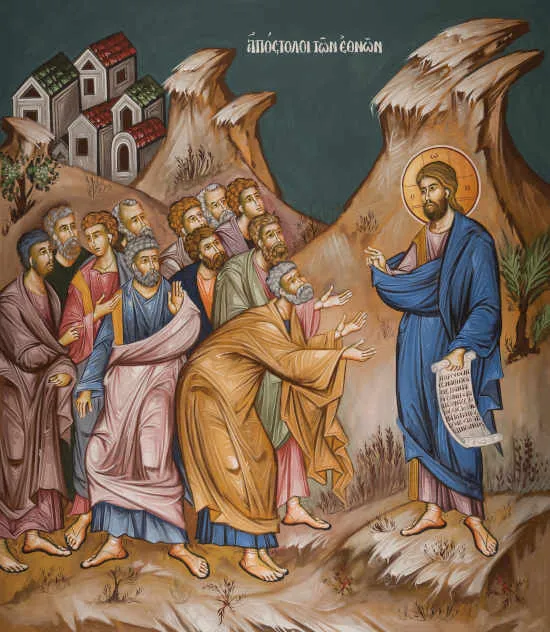
What a monumental task the Apostles were given! These are Jesus’ parting words as He stands on the Mount of the Ascension, the final words recorded in Matthew’s Gospel. They are powerful words by which Jesus entrusts extraordinary responsibility to eleven of His closest companions. Their mission was not merely to gain new followers but to proclaim the Gospel to every nation. Additionally, they were to baptize all nations and teach them everything Jesus had commanded.

This incredible task would have seemed daunting, if not impossible. Yet it is grounded in divine authority: “All power in heaven and on earth has been given to me. Go, therefore…” These are not mere words of encouragement but a divine command, rooted in the authority entrusted to Jesus by the Father. With this declaration, Jesus equips the Apostles with the grace to fulfill their mission, knowing they act under His authority.

The Ascension marks a fundamental transition in salvation history. Before the Incarnation, God established covenants with His people and sent prophets to call them to fidelity and prepare them for the coming of the Messiah. With Jesus’ Incarnation, a new era of salvation history began. Through His Passion and Resurrection, Jesus opened the floodgates of grace and inaugurated the final phase of God’s eternal plan. This phase continues today and will only reach its fulfillment when Christ returns in glory to judge the living and the dead and establish the new Heaven and new Earth.

Because we live in this final phase of salvation history, Jesus’ words to His Apostles also apply to us. We are not only among the “all nations” called to be disciples, but we also share in the Apostles’ mission to evangelize the world. While the Apostles, as the first bishops, had a unique role, every baptized person participates in Christ’s mission through the priestly, prophetic, and kingly offices conferred at baptism.

The recently canonized Saint John Henry Newman beautifully illustrates this shared mission in a prayer he wrote: “God has created me to do Him some definite service. He has committed some work to me which He has not committed to another. I have my mission…I am a link in a chain, a bond of connection between persons….” Each of us has a unique role to play, and we can be certain that God has given us some definite service to act as a link in a chain and a bond of connection between God and others.

Newman continues: “If I am in sickness, my sickness may serve Him, in perplexity, my perplexity may serve Him. If I am in sorrow, my sorrow may serve Him.” This reminds us that Jesus, the all-powerful God who holds “all power in heaven and on earth,” can use every aspect of our lives for His glory and mission—if we let Him.

Reflect today on two truths. First, consider your place among the “all nations” called to become disciples. Second, reflect on your duty as a disciple to share in Christ’s mission to evangelize the world. As we celebrate our Lord’s Ascension, hear His commission spoken to you. Embrace the privilege and responsibility of His command, allowing His authority and presence to guide your life and your mission.

Source: https://catholic-daily-reflections.com/2026/05/13/evangelizing-all-nations/
Matthew 28:18–20 Read More »

John 16:12–13

Bearing All Truth

Jesus said to his disciples: “I have much more to tell you, but you cannot bear it now. But when he comes, the Spirit of truth, he will guide you to all truth.”

Reflection:

Even Jesus’ closest companions, who spent three years with Him during His public ministry, could not bear the fullness of Truth without the Holy Spirit, the Spirit of Truth. This is a significant reminder for us, who did not have the privilege of walking with Jesus during His earthly ministry.

Imagine those three years: the disciples witnessed miracle after miracle, listened to sermon after sermon, and enjoyed intimate conversations with Jesus. Just being in His presence, observing how He interacted with others, must have been profoundly inspiring. Yet, even those formative years did not prepare them to bear all that Jesus wished to reveal.

This shows us that understanding the fullness of Truth goes far beyond human capacity. Only through the supernatural gift of the Holy Spirit can we comprehend the deepest mysteries of faith.

What happens to a soul who receives the Holy Spirit and is guided into “all truth?” That soul is transformed. The natural soul gives way to a supernaturally elevated soul, becoming a new creation in Christ. But this transformation requires something essential: the old self must die. We must surrender our fallen nature to receive the new life Christ offers. This requires great sacrifice because we must let go of our old ways and embrace God’s grace. But every sacrifice that leads to a life transformed by divine truth is worth it.

Recall Jesus’ teaching: “No one pours new wine into old wineskins…New wine must be poured into fresh wineskins” (Luke 5:37–38). For us to become fresh wineskins, ready to receive the new wine of God’s grace, we must allow the Holy Spirit to change us. This transformation might be startling at times. As the Spirit works within us, opening our eyes to truths we could never imagine, we begin to bear those truths that previously seemed unbearable. This leads to wonder, awe, and praise of God.

Consider the example of Saint Stephen, the Church’s first martyr. When Stephen spoke, the corrupt religious leaders “could not withstand the wisdom and the Spirit with which he spoke” (Acts 6:10). He didn’t rely on years of education or human effort to gain knowledge; instead, the Spirit of Truth lived in him and spoke through him. Stephen had become a fresh wineskin, and the new wine of God’s truth poured forth from him in superabundance, even to the point of giving his life for Christ.

Reflect today on the boundless truths that God desires to reveal to you through the Holy Spirit. No amount of human learning can compare to the depth of wisdom available to those who become new creations in Christ. What areas of your life still resist the Spirit’s transformative work? What old wineskins must you cast aside to receive the new wine of divine grace? By surrendering to the Holy Spirit, you allow God to lead you into the fullness of Truth. As this truth fills your heart, it will draw you into deeper awe and praise for the mysteries of faith, preparing you to bear witness to the world as a disciple of Christ.

Source: https://catholic-daily-reflections.com/2026/05/12/bearing-all-truth/

John 16:12–13 Read More »

John 15:26–27

Giving Bold Witness

Jesus said to his disciples: “When the Advocate comes whom I will send you from the Father, the Spirit of truth who proceeds from the Father, he will testify to me. And you also testify, because you have been with me from the beginning.”

Reflection:

The Last Supper Discourse spans from Chapters 13–17 in John’s Gospel, making it Jesus’ longest continuous teaching in the Gospels. While Chapter 13 begins with Jesus washing the disciples’ feet and teaching humility, it also introduces the promise of the Holy Spirit, the Advocate. Today’s Gospel begins a deeper teaching on the role of the Holy Spirit, a theme we will explore further as we approach the Solemnity of Pentecost in less than two weeks.

The role of the Holy Spirit in this passage is twofold. First, the Holy Spirit is identified as the Spirit of Truth Who will testify to the disciples on Jesus’ behalf. To testify is to bear witness to the truth. A witness in a court of law testifies under oath to safeguard the truthfulness of his or her statement. Even more so, the Holy Spirit’s testimony, spoken deep within the conscience of every soul aligned with God’s will, brings with it moral certitude. When the Holy Spirit speaks, we know what He says is true. This is how we arrive at the certitude of faith in Jesus as our Savior and in the truthfulness of all He taught.

Second, Jesus says, “You also testify.” The Holy Spirit not only testifies to Jesus but also equips the disciples to give testimony about Him to the world. This testimony, as Jesus explains, will not be without cost: “They will expel you from the synagogues; in fact, the hour is coming when everyone who kills you will think he is offering worship to God” (John 16:2). Jesus warns His disciples of this coming hostility so they “may not fall away.” The Holy Spirit will enable them to testify courageously, even in the face of persecution. This assurance was essential for the early Church and remains vital for believers today as we navigate a world often resistant to the Gospel.

The testimony we must give as Christians is rooted in proclaiming the Truth: Jesus is the one and only way to the Father. He alone offers the forgiveness of sins and the gift of salvation. Without turning to Him, we cannot be saved.

In addition to this central message, we must testify to the supporting truths of our faith through both word and action. Faithful attendance at Mass is essential. Confession restores us to grace. Daily prayer draws us closer to God. Mortal sin destroys our union with Him, and Hell is a sobering reality. But the hope of Heaven shines brightly for all who embrace God’s mercy and live in His grace. Penance helps us overcome habitual sin. We are called to love our neighbor, pray for those who persecute us, forgive every offense, and show boundless mercy, even to the most unlovable. Ultimately, we are called to lay down our lives for others in imitation of Christ.

Only the Holy Spirit can equip us with understanding and courage to give this testimony wholeheartedly. Without the Spirit, we are incapable of being faithful witnesses to God’s truth and love. Just as Jesus prepared His disciples for their mission, He now calls us to prepare ourselves through prayer and reliance on the Holy Spirit’s guidance.

To be a witness is to be a martyr in the broadest sense, with a willingness to live a life of sacrificial love, imitating Christ’s offering on the Cross. This is the greatest testimony we can give to a world in need of salvation.

Reflect today on the ways the Holy Spirit might be calling you to give witness to Christ. Are there moments when fear or complacency holds you back from testifying to the truth? Pray for the courage and grace to live boldly as His witness. To be used by God is the greatest honor we can receive. Embrace that honor by allowing the Holy Spirit, the Spirit of Truth, to dwell in you and bear witness through you that Jesus is the Savior of the world and the sole path to eternal life.

Source: https://catholic-daily-reflections.com/2026/05/10/giving-bold-witness/

John 15:26–27 Read More »

John 16:5–7

Finding Hope in Grief

Jesus said to his disciples: “Now I am going to the one who sent me, and not one of you asks me, ‘Where are you going?’ But because I told you this, grief has filled your hearts. But I tell you the truth, it is better for you that I go. For if I do not go, the Advocate will not come to you. But if I go, I will send him to you.”

Reflection:

Each of us experiences grief. The death of a loved one, the loss of a job, and a serious illness are a few of many immediate causes of grief. Jesus addresses the grief the disciples were experiencing as they listened to Him explain that He was going to the One Who sent Him, to the Father: “But because I told you this, grief has filled your hearts.”

It’s easy to relate to the disciples’ grief. Imagine that you find out that your best friend is moving to another state. You would have a deep sense of loss upon hearing the news. This is what the disciples were experiencing. The closeness they shared with Jesus was profoundly consoling to them. In Him, they learned so much and began to understand the purity and power of divine love, likely for the first time. The news of His departure filled them with grief.

Emotions are neither good nor bad; they are natural reactions to perceived goods or evils. The disciples’ initial perception of Jesus’ earthly departure was as an undesirable loss, so they felt grief. Jesus, fully understanding human nature, addressed their grief with great empathy. Simply identifying what they were feeling would have been a comfort to them. But Jesus goes further: “But I tell you the truth, it is better for you that I go. For if I do not go, the Advocate will not come to you. But if I go, I will send him to you.”

At Jesus’ words, the disciples might have experienced the beginnings of hope, but they did not fully understand. Only after Jesus left them, ascended to the Father, and sent the Holy Spirit at Pentecost did they begin to understand. And only after living with the presence of the Holy Spirit in their lives for some time did they more fully comprehend the depth of this promise. This reflects our own spiritual journey; it takes time and openness for the wisdom of God’s plan to unfold in our lives.

Whenever we face grief or confusion, we would benefit from pondering this exchange between Jesus and the disciples. Romans 8:28 tells us, “We know that all things work for good for those who love God, who are called according to his purpose.” That means “all things,” not just some things. When we fully commit ourselves to God and His perfect will, everything we encounter has the potential to produce good fruit. Every sorrow, joy, cross, victory, or persecution, as well as all the emotions that accompany these experiences, is able to be used as an instrument of God’s grace in our lives, and through us, in the lives of others.

The reason this is so is because of God’s perfect wisdom. From the divine perspective, Jesus transformed suffering and death through His Cross and Resurrection, and nothing is beyond the reach of God’s power. God can use even something as painful as the tragic and sudden loss of a loved one for good.

Believing this instills hope in our lives, which is among the three most important virtues. Faith is the certain belief that God can work all things for good, and hope is the drive that moves us toward the fulfillment of that belief. Together, faith and hope produce charity, the greatest gift of all, the only gift that endures even in Heaven. Just as the disciples later understood the value of Jesus’ departure—when they received the Holy Spirit and discovered that the Lord they loved now lived within them, never to leave—so we too will come to that same realization when we open ourselves to the indwelling of the Holy Spirit through prayer, trust, and surrender to His guidance.

Reflect today on the moment in your life when you faced grief or loss. Offer that memory to God in prayer, asking Him to reveal how His grace was at work in that situation, bringing growth, healing, or a deeper understanding of His love. Ask the Holy Spirit to fill your heart with faith and hope, trusting that even in the face of sorrow, God’s perfect plan is unfolding for good.

Source: https://catholic-daily-reflections.com/2026/05/11/finding-hope-in-grief/

John 16:5–7 Read More »

John 14:18–20

Members of God’s Family

“I will not leave you orphans; I will come to you. In a little while the world will no longer see me, but you will see me, because I live and you will live. On that day you will realize that I am in my Father and you are in me and I in you.”

Reflection:

The feeling of being an orphan, of longing for belonging, reflects a deeper spiritual reality Jesus addressed with His disciples in today’s Gospel. Those with close families are truly blessed, as a supportive family fosters personal growth and a sense of identity. When one is orphaned, the absence of these natural bonds can leave a lasting sense of loss. Yet even the strongest earthly family relationships point to a greater truth: our ultimate belonging is found in God’s family.

Jesus understood the sense of loss His disciples would feel after His Passion, Resurrection, and Ascension. When He said, “In a little while the world will no longer see me…” He was preparing them for His physical departure through the Ascension. But He reassures them: “I will not leave you orphans; I will come to you…you will see me, because I live and you will live.”

Initially, the disciples struggled to grasp the meaning of these words. Only after the outpouring of the Holy Spirit did they begin to understand. The same promise Jesus made to them applies to us today. Though we were not among those who witnessed His earthly presence, we too have a longing for His nearness—a longing to belong, to be loved, and to find our place within a family. This longing is fulfilled supernaturally through the gift of faith and our incorporation into God’s divine family, the Church.

Faith is the key to this relationship. It is more than intellectual belief; it is the acceptance of a personal revelation from God and a choice to live according to that revelation. Jesus promises that those who love Him and obey His commandments will experience His presence and that of the Father. This experience begins through faith, which is a gift by which God communicates Himself to us, revealing His love and will. It is both certain and mysterious, a knowledge that leads us to divine hope and sustains us in the pursuit of God’s will.

Faith also unites us with one another. Through faith, we are no longer orphans but brothers and sisters in Christ. Our natural longing to belong finds its ultimate fulfillment in God’s glorious family, which begins on earth and is perfected in Heaven.

Reflect today on the desire in your heart to belong, to be loved, and to be part of a family. Recognize that this longing finds its ultimate fulfillment in the family of God. Though we await the fullness of this communion in Heaven, we can experience it even now. Commit yourself to respond to Jesus’ invitation by embracing your place in His family through prayer, the sacraments, and daily acts of love. Recognize that He is in the Father, we are in Him, and He is in us. Embrace this reality, allowing the gift of faith to draw you more deeply into the divine family to which we are called.

Source: https://catholic-daily-reflections.com/2026/05/09/members-of-gods-family/

John 14:18–20 Read More »

John 15:18-19

Chosen Out of the World

Jesus said to his disciples: “If the world hates you, realize that it hated me first. If you belonged to the world, the world would love its own; but because you do not belong to the world, and I have chosen you out of the world, the world hates you.”

Reflection:

No one wants to be hated. Yet our Lord makes it very clear that because He has “chosen you out of the world, the world hates you.” He doesn’t say that the world “might” hate you or that you “might” suffer some injustice. He declares that those whom He has chosen out of the world will be hated by the world. This is one of the paradoxes of our faith: Living in Christ brings love from Him but hatred and persecution from the world. Yet this hatred is a sign of a deeper reality: We are no longer bound by the fleeting values of this fallen world but are participants in God’s eternal Kingdom, where peace and true freedom are found.

The “world” in this context is not Creation itself. All that God created is good. The world represents the fallen spiritual order, caught up in sin. Those who “belong to the world” are those who conform to diabolical values, such as seeking power for power’s sake, wealth as a selfish means to fulfillment, or carnal indulgence in an attempt to satiate oneself. Living in accord with the values of the fallen world is foolishness. It leads to a superficial life that cannot ultimately satisfy our deeper spiritual cravings and shares in the envy and hatred of the demons.

Breaking free of worldly attachments is difficult at first because those who have become worldly are blinded by their disordered desires. Sin is a slippery slope. Compromising even in small ways to gain acceptance risks losing clarity of purpose and rootedness in Christ. The more people sin, the more miserable they become, and the more miserable they become, the more they seek satisfaction from sin. Only when that cycle is broken does peace begin to take hold and freedom is found. Yet, in the midst of this struggle to detach from worldly illusions, Jesus offers a profound truth: “I have chosen you out of the world.”

To be chosen by Christ is to be set apart for a life of divine purpose and eternal fulfillment. This call draws us into communion with Him, transforming suffering into a path to glory. The disciples’ identity is not self-made but rooted in His choice. This divine election sets them apart for a mission that challenges the temptation to worldly ambitions. Their call to holiness and truth inevitably provokes hostility because it shines a light on the darkness of the world’s sin and draws others to conversion. Yet with this call also comes the promise of eternal joy.

This raises an important question for each of us: Does the world love or hate you? Do you fit in or stand in opposition to worldly values? If we try to gain the world’s love, from those who have embraced worldly ambitions and values, then we will find ourselves compromising to gain acceptance. But if we remain steadfast, even when persecuted, we share in Jesus’ victory and the promise of eternal life.

Jesus tells us this sober truth as a way of preparing us for the inevitable: “Remember the word I spoke to you, ‘No slave is greater than his master.’ If they persecuted me, they will also persecute you” (John 15:20). We must remember His word, His warning, so that if we experience persecution, hatred, or any form of judgment or criticism, we will not become discouraged or fearful. Understanding the consequences of living contrary to worldly values will prepare us for the rejection that our Lord Himself experienced.

Reflect today on being chosen by God and the consequences of being called out of the world. Consider any ways that living your faith openly results in criticism or persecution. As you do, recall that you are called to be like Jesus, including being given a share in His sufferings, but also a share in His glory. As Saint Paul reminds us, “I consider that the sufferings of this present time are as nothing compared with the glory to be revealed for us” (Romans 8:18). Do not give in to fear. Remain courageous and confident that along with Jesus’ call comes the grace to respond to and endure whatever comes your way, knowing that the joy of the Resurrection awaits.

Source: https://catholic-daily-reflections.com/2026/05/08/chosen-out-of-the-world/

John 15:18-19 Read More »

John 15:13–15

Increasing Your Capacity to Love

“No one has greater love than this, to lay down one’s life for one’s friends. You are my friends if you do what I command you. I no longer call you slaves, because a slave does not know what his master is doing. I have called you friends, because I have told you everything I have heard from my Father.”

Reflection:

Is it possible to know everything that Jesus knows? Certainly not. Yet, Jesus says in today’s Gospel, “I have told you everything I have heard from my Father.” Jesus Himself is the full revelation of the Father. Therefore, in Him we have been given perfect access to the life of God. Even though God has revealed everything to us, we are limited in our ability to receive it because we are finite creatures. Nonetheless, our imperfect natures do not limit what Jesus has told us from the Father.

By analogy, consider water. When we are thirsty, we drink a glass of water. If we are very thirsty, we might drink several glasses. However, we are limited in how much water we can consume in one sitting. All that Jesus has revealed to us from the Father is like an infinite ocean of grace. He doesn’t offer us only one glass or even several. He offers us the ocean. Though He bestows it on us fully, we are limited in what we can receive by our finite nature and sin.

The goal of the Christian life is not to take one “sip” or “glass” of grace. Our goal is to continuously increase our capacity for receptivity. The greatest of saints spent their lives doing so. The more grace they received, the greater their capacity, and the greater their capacity, the more they received. Saint Teresa of Ávila described this process as progressing through the “mansions” of the interior castle, with each step drawing the soul closer to union with God. Saint John of the Cross taught that detachment from worldly attachments and the purification of the soul increase our receptivity to God’s grace. Saint Thomas Aquinas explained that the theological virtues, especially charity, expand the soul’s capacity for divine love.

The presence of grace in any soul ensures that the soul will attain Heaven upon death. However, the level of glory that each will experience for eternity is determined by how much the soul’s capacity for grace expands in this life. This capacity is built through love. Jesus teaches, “No one has greater love than this, to lay down one’s life for one’s friends.” The love of charity is the process by which we lay down our lives for others. Jesus is not only the source of such love, He is also the Model. His choice to die on the Cross in His human nature exemplifies the kind of sacrificial love we are called to embody.

That form of sacrificial charity can be difficult to comprehend and live. Our fallen human nature tempts us toward selfishness. We can easily become deceived into thinking that taking is better than giving, being served is better than serving, and looking out for ourselves is better than putting others before us. The only way out of such deception is to enter into friendship with Jesus: “You are my friends if you do what I command you.”

The freedom to love is found through obedience to God. Though we cannot arrive at such obedience instantaneously, we can grow into it through prayer, penance, and fidelity to His commands. What does He command us to do? “This is my commandment: love one another as I love you” (John 15:12). Jesus loved us by laying down His life for us. In turn, we are called to lay down our lives for others. This means thinking of others before ourselves, anticipating their true needs, and working for their highest good—the salvation of their souls.

Reflect today on how Christ’s infinite ocean of grace flows into your life. What areas of selfishness or fear prevent you from receiving more of His love? Commit to growing in charity by laying down your life in concrete ways for those whom God has placed in your path. Seek to imitate Jesus who calls you His friend and shares everything with you that He has heard from the Father. Remember His command: “Love one another as I love you.” The more you love, the more your soul will expand, and the more you will share in His eternal glory.

Source: https://catholic-daily-reflections.com/2026/05/07/increasing-your-capacity-to-love/

John 15:13–15 Read More »

John 15:9–10

Eternal Love and Joy

Jesus said to his disciples: “As the Father loves me, so I also love you. Remain in my love. If you keep my commandments, you will remain in my love, just as I have kept my Father’s commandments and remain in his love.”

Reflection:

Imagine being loved by someone with a perfect love. Perfect love has no bounds, and experiencing it would be the source of indescribable joy. Now imagine further that the one who loves you is all-powerful and all-knowing. When combined with being all-loving, there is no limit to what such a relationship can do in your life.

Of course, we do not need to only imagine such a love; we can receive that love from God. Jesus’ words are deep, personal, and intimate: “As the Father loves me, so I also love you.” His love for you is not conditional, limited, or selfish. When He says to you, “I love you,” He means it with every power of His divine soul.

Jesus beautifully describes His love for us: “As the Father loves me…” The love the Father has for the Son is so deep, perfect, and all-consuming that we cannot fully comprehend it, even in Heaven. For all eternity, we will gaze with wonder and awe at this shared love and never tire of contemplating it. What’s more, the love between Father and Son is so strong that it cannot be contained within Themselves. Their love overflows in superabundance, pouring out upon us, inviting us to enjoy perfect fulfillment within it.

Jesus’ next words are both an invitation and a command: “Remain in my love.” God’s love for us is far more than an emotion or affectionate concern. His love is a gift of His very Self, drawing us into communion with Him. To “remain” in His love means to live, move, and exist in His presence. Divine love is transforming, enduring, and life-changing. It unites us to the divine Lover and establishes the life-giving communion for which we were made.

After inviting us to remain in His love, Jesus clarifies how we can receive His ongoing and transformative gift: “If you keep my commandments, you will remain in my love, just as I have kept my Father’s commandments and remain in His love.” At first, these words might seem challenging, especially when we consider our fallen nature and tendency toward pride. Yet they only feel burdensome if we misunderstand His commandments.

In order to fully embrace Jesus’ commandments, we need to see them for what they are: expressions of pure love gushing forth from the shared love of the Father and the Son. Note that Jesus doesn’t ask anything of us that He Himself was unwilling to do. His love for the Father was perfect because He kept the Father’s commandments. What did the Father command the Son to do? He commanded Him to love with a selfless, sacrificial love, culminating in laying down His life for us.

If we want to receive God’s love and share in its perfection, we too must love—just as the Father loves the Son, the Son loves the Father, and they both love us. Like Jesus, we must become an unconditional gift of self for others. This is the nature of true love.

By becoming an unconditional gift of self, we do not become anyone’s savior; rather, we allow the one true Savior to touch others through us. True love is divine. It does not originate within us but flows from God to us and through us. If we attempt to keep that love to ourselves, it is extinguished.

Reflect today on the perfect love within the Most Holy Trinity. Hear Jesus invite you to share in that perfect love on the condition that you become an instrument of it for others. This is His commandment: “Love one another as I love you” (John 15:12). Only in this way will we share in the perfect joy God desires to bestow upon us for all eternity.

Source: https://catholic-daily-reflections.com/2026/05/06/eternal-love-and-joy/

John 15:9–10 Read More »

John 15:4–5

Bearing Fruit

“Remain in me, as I remain in you. Just as a branch cannot bear fruit on its own unless it remains on the vine, so neither can you unless you remain in me. I am the vine, you are the branches. Whoever remains in me and I in him will bear much fruit, because without me you can do nothing.”

Reflection:

Jesus is the source of life and fruitfulness. Yet, too often, we try to bear fruit of our own making. Truly good fruit can only come forth if we remain in Christ, for He is the source of all good fruit in our lives.

Bearing good fruit, meaning performing good works, does not save us by itself. Salvation is a gift of grace through Christ. However, good works, as fruits of grace, reveal the depth of our union with Him and are necessary expressions of a life transformed by God’s love. Just as a healthy vine naturally produces abundant grapes, so too does a soul united to Christ bear abundant spiritual fruit for the glory of God and the good of others. This fruit, above all, is charity—the eternal gift that reflects the presence of Christ in us and draws others to Him.

By analogy, a grapevine produces good grapes when it is healthy and well-nourished. A diseased or poorly nourished vine will produce useless grapes. If we want to make a difference in the world and in the lives of others, we have only one choice: We must remain firmly attached to our Lord, living in Him as He lives in us, so that the spiritual nourishment He provides will produce an abundance of grace in and through us.

Consider the people whom you love. If you could do anything for them, what might it be? You might wish to alleviate all their sufferings, such as a chronic illness, financial struggle, or some heavy cross they bear. While such desires reflect our care for them, even the greatest worldly comforts pale in comparison to the spiritual blessings of faith and divine grace. The greatest good we can do for others is to allow God to use us as instruments of His love, inspiring faith and leading them closer to Him.

The best way to make a difference in others’ lives is to first care for our own souls by ensuring we are united to our Lord. We must pray daily, seeking ways to deepen and extend our time of prayer. We must be faithful to the Commandments, regularly attend Mass, celebrate the Sacrament of Reconciliation, meditate on and read the Scriptures, familiarize ourselves with the lives of the saints, and know the teachings of Christ’s Church. All of this is for two purposes: First, it transforms us and more fully unites us with God. Second, it enables God to produce charity in our lives, which is His way of using us to touch others with His mercy.

In the end, every good we do for another passes away except for the greater good—charity. Charity alone remains throughout our lives and even into the next. In Heaven, the treasure of charity will remain with us and will be our eternal delight, and the recipients of that charity will forever be grateful for the gift God gave them through us.

Reflect today on the charity that is borne from your life and how it affects others. Can you point to concrete ways that God has used you to make a difference in their lives? Especially ponder the works of charity that touch their souls, drawing them closer to our divine Lord. Set your eyes on this goal, for if you do bear good fruit in this way, you will know with certainty that your life is in Christ, and His life is in you.

Source: https://catholic-daily-reflections.com/2026/05/05/bearing-fruit/

John 15:4–5 Read More »

John 14:27

Jesus’ Transforming Peace

Jesus said to his disciples: “Peace I leave with you; my peace I give to you. Not as the world gives do I give it to you. Do not let your hearts be troubled or afraid.”

Reflection:

There are two types of peace we can enjoy. First, there is worldly peace. This peace is the absence of conflict, war, or external turmoil. Civil governments must work to ensure this peace by protecting their societies from outside aggressors, maintaining order within their communities, and assisting with basic human needs, such as economic development, healthcare, and justice. This form of peace aligns with human reason and is based in the natural law, which is written on the consciences of every person.

Though that form of natural peace and justice is good, it is not the highest form of peace we are called to enjoy. The peace that our Lord came to bestow is supernatural, enabling us not only to survive, but to thrive on a moral and spiritual level, even in the absence of worldly peace. Jesus’ spiritual gift of peace enables us to find fulfillment in the midst of every external difficulty.

If we seek only worldly peace, then any difficulty or disorder will trouble and unsettle our hearts. For that reason, Jesus said, “Do not let your hearts be troubled or afraid.” Wars, oppression, crime, poverty, and disease have plagued humanity from the beginning and will persist, in varying degrees, until the end of time. Only when Jesus returns to establish His visible Kingdom as the Universal King will external peace be fully and permanently established. What a glorious day that will be!

For now, until the Second Coming, we must learn not only to survive but to thrive within the world. Given the inevitable challenges every human life will encounter, if we want to live in true peace then we must seek out the peace that our Lord promises in today’s Gospel. This Gospel comes from Jesus’ Last Supper Discourse with His Apostles. As that discourse concludes two chapters later, Jesus prays His High Priestly prayer to the Father: “I do not ask that you take them out of the world but that you keep them from the evil one” (John 17:15). We must live within this fallen world for now, but we do not have to suffer interior afflictions.

The evil one has great influence in this world, yet our Lord promises that if we receive His peace, we will be kept safe from the devil’s attacks. Though we might suffer some form of external oppression, internally we will be at peace, no matter what we face.

The gift of peace that Jesus promises confounds the powers of darkness and is freely given to all who turn to Him and submit to His spiritual governance. The martyrs are the prime example of this interior peace in the midst of exterior persecution. They imitate our Lord, Who permitted the evil one to afflict Him with earthly suffering and death. Jesus confronted that evil with perfect confidence and peace, overcoming it through divine love that won the final victory. In the Eucharist, He continues to share His peace with us, strengthening our hearts against every trial.

Reflect today on Jesus’ words to His disciples at the Last Supper. At that time, they did not realize they were about to witness Jesus’ Passion. Nor did they realize that, in the years to come, they would endure many hardships in their faithful service to God’s will. Similarly, if we listen to Jesus’ discourse and heed His words, we must embrace them as the Apostles eventually did, once they received the Holy Spirit. We must rely on grace to find courage in the face of life’s afflictions—poverty, illness, loss, persecution, and temptation. As you ponder yourself being with the Apostles during this discourse on Holy Thursday, resolve to accept Jesus’ promise so that you are spiritually prepared to live in interior peace, no matter the exterior circumstances you might face.

Source: https://catholic-daily-reflections.com/2026/05/04/jesus-transforming-peace/

John 14:27 Read More »