Author name: sanjose

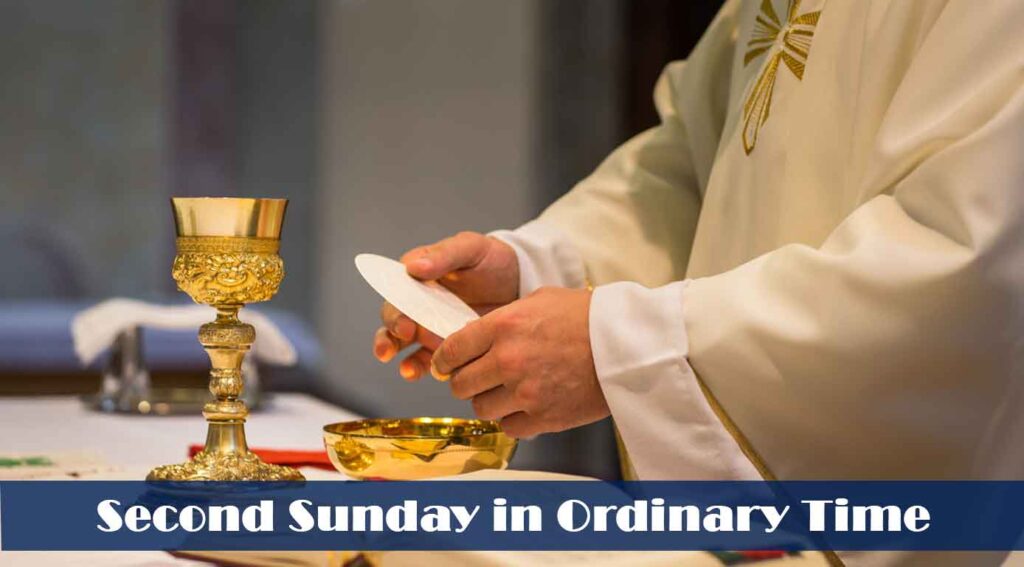
Second Sunday in Ordinary Time

Liturgy of the Word

First Reading: Is 49:3,5-6

The LORD said to me: You are my servant,
Israel, through whom I show my glory.
Now the LORD has spoken
who formed me as his servant from the womb,
that Jacob may be brought back to him
and Israel gathered to him;
and I am made glorious in the sight of the LORD,
and my God is now my strength!
It is too little, the LORD says, for you to be my servant,
to raise up the tribes of Jacob,
and restore the survivors of Israel;
I will make you a light to the nations,
that my salvation may reach to the ends of the earth.

Responsorial Psalm: Psalm 40:2, 4, 7-8,8-9,10

Response– Here am I, Lord; I come to do your will

I have waited, waited for the LORD,
and he stooped toward me and heard my cry.
And he put a new song into my mouth,
a hymn to our God.
R– Here am I, Lord; I come to do your will

Sacrifice or offering you wished not,
but ears open to obedience you gave me.
Holocausts or sin-offerings you sought not;
then said I, "Behold I come."
R– Here am I, Lord; I come to do your will

"In the written scroll it is prescribed for me,
to do your will, O my God, is my delight,
and your law is within my heart!"
R– Here am I, Lord; I come to do your will

I announced your justice in the vast assembly;
I did not restrain my lips, as you, O LORD, know.
R– Here am I, Lord; I come to do your will

Second Reading: 1 Cor 1:1-3

Paul, called to be an apostle of Christ Jesus by the will of God,
and Sosthenes our brother,
to the church of God that is in Corinth,
to you who have been sanctified in Christ Jesus, called to be holy,
with all those everywhere who call upon the name of our Lord Jesus Christ, their Lord and ours.
Grace to you and peace from God our Father
and the Lord Jesus Christ.

Alleluia:

 Alleluia, alleluia. The Word of God became flesh and dwelt among us.
To those who accepted him, he gave power to become children of God. Alleluia, alleluia!

Gospel: Jn 1: 29-34

A reading from the holy Gospel according to John

John the Baptist saw Jesus coming toward him and said,
"Behold, the Lamb of God, who takes away the sin of the world.
He is the one of whom I said,
'A man is coming after me who ranks ahead of me
because he existed before me.'
I did not know him,
but the reason why I came baptizing with water
was that he might be made known to Israel."
John testified further, saying,
"I saw the Spirit come down like a dove from heaven
and remain upon him.
I did not know him,
but the one who sent me to baptize with water told me,
'On whomever you see the Spirit come down and remain,
he is the one who will baptize with the Holy Spirit.'
Now I have seen and testified that he is the Son of God."

The Readings and Gospel were sourced from:

Second Sunday in Ordinary Time Read More »
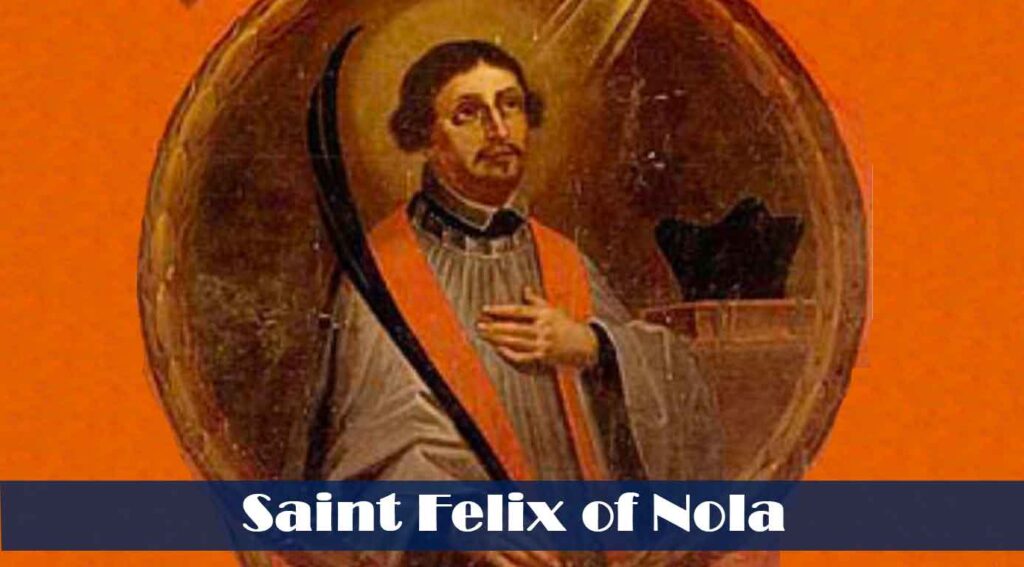
Saint Felix of Nola

Saint Felix of Nola was a Christian presbyter at Nola near Naples in Italy. He sold off his possessions to give to the poor, but was arrested and tortured for his Christian faith during the persecution of Roman Emperor Decius (r. 249–51). He was believed to have died a martyr’s death during the persecution.

When bishop Maximus fled to the mountains to escape the persecution of the Roman emperor Decius, Felix was arrested and beaten for his faith instead. He escaped prison, according to legend being freed by an angel. After Maximus’s death, the people wanted Felix to be the next bishop of Nola, but he declined, favoring Quintus, a “senior” priest who had seven days more experience than Felix. Felix himself continued as a priest. He also continued to farm his remaining land, and gave most of the proceeds to people even poorer than himself.

Much of the little information we have about Felix comes from the letters and poetry of Saint Paulinus of Nola. When at length peace was obtained, he returned home and in poverty lived a withdrawn life until old age, an unconquered confessor of the faith”.

Sources:

https://en.wikipedia.org/wiki/Felix_of_Nola
"Felix of Nola", Orange County Catholic, Roman Catholic Diocese of Orange, January 18, 2018
Calendarium Romanum (Libreria Editrice Vaticana 1969), p. 112
Butler, Alban. "The Lives of the Saints", Vol.I, 1866". Bartleby.com. Retrieved 2014-02-20
https://www.catholic.org/saints/saint.php?saint_id=639

Saint Felix of Nola Read More »

Galatians 6:10

Verse:

“Therefore, as we have opportunity, let us do good to all people, especially to those who belong to the family of believers.” - Galatians 6:10

Prayer for the Dignity of Human Life

Lord and giver of all life, help us to value each person, created in love by you.

In your mercy, guide and assist our efforts to promote the dignity and value of all human life, born and unborn.

We ask this through Christ our Lord.
Amen.

Sources:

Original version of the prayer: https://slife.org/prayers-against-greed/

Galatians 6:10 Read More »

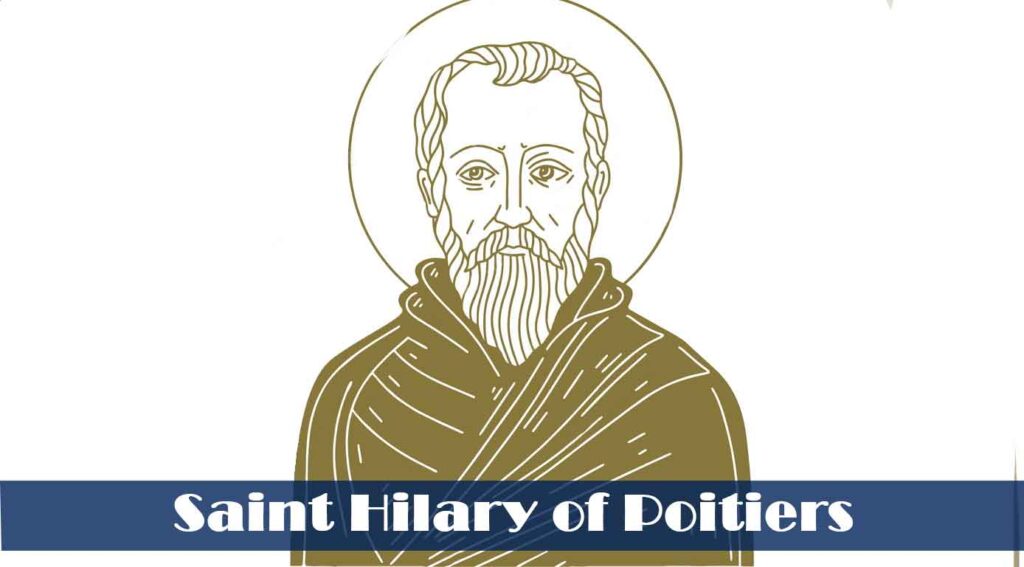
Saint Hilary of Poitiers

This staunch defender of the divinity of Christ was a gentle and courteous man, devoted to writing some of the greatest theology on the Trinity, and was like his Master in being labeled a “disturber of the peace.” In a very troubled period in the Church, his holiness was lived out in both scholarship and controversy. He was bishop of Poitiers in France.

Raised a pagan, he was converted to Christianity when he met his God of nature in the Scriptures. His wife was still living when he was chosen, against his will, to be the bishop of Poitiers in France. He was soon taken up with battling what became the scourge of the fourth century, Arianism, which denied the divinity of Christ.

The heresy spread rapidly. Saint Jerome said “The world groaned and marveled to find that it was Arian.” When Emperor Constantius ordered all the bishops of the West to sign a condemnation of Athanasius, the great defender of the faith in the East, Hilary refused and was banished from France to far off Phrygia. Eventually he was called the “Athanasius of the West.”

While writing in exile, he was invited by some semi-Arians (hoping for reconciliation) to a council the emperor called to counteract the Council of Nicea. But Hilary predictably defended the Church, and when he sought public debate with the heretical bishop who had exiled him, the Arians, dreading the meeting and its outcome, pleaded with the emperor to send this troublemaker back home. Hilary was welcomed by his people.

Sources:

https://www.franciscanmedia.org/saint-of-the-day/saint-hilary-of-poitiers/

Saint Hilary of Poitiers Read More »

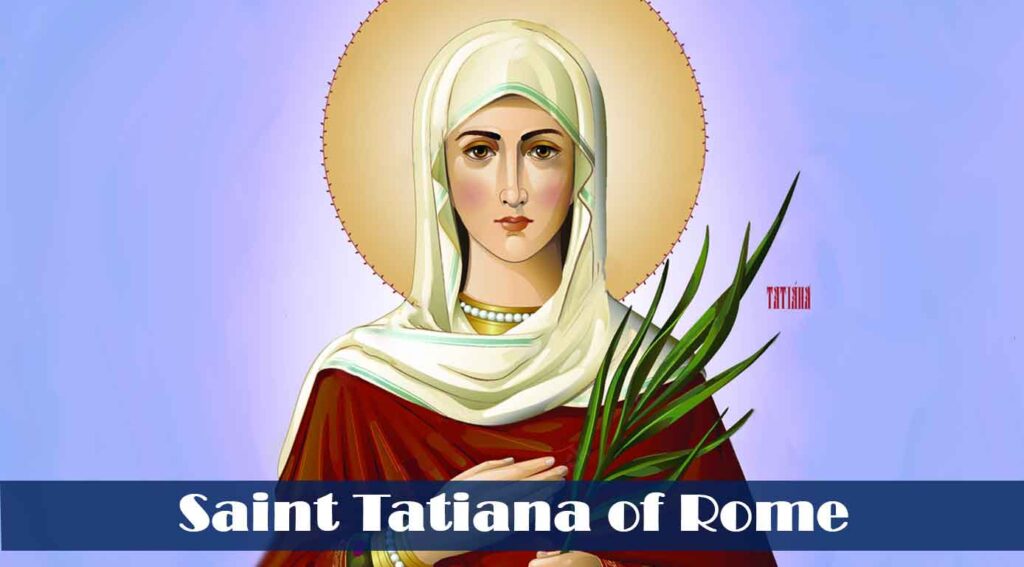
Saint Tatiana of Rome

Saint Tatiana of Rome was the daughter of a Roman civil servant who was secretly Christian, and raised his daughter in the faith. This was dangerous, and one day the jurist Ulpian captured Tatiana and attempted to force her to make a sacrifice to Apollo. She prayed, and miraculously, an earthquake destroyed the Apollo statue and part of the temple.

Tatiana was then blinded, and beaten for two days, before being brought to a circus and thrown into the pit with a hungry lion. But the lion did not touch her and lay at her feet. She was then sentenced to death, and after being tortured, Tatiana was beheaded with a sword on January 12, around AD 225 or 230.

The miracles performed by Saint Tatiana are said to have converted many people to the fledgling religion. Her skull was translated in 1955 from Bistrița Monastery to the Cathedral of Saint Demetrius in Craiova, Romania, and is enshrined with the relics of Saints Sergius and Bacchus and those of Patriach Nephon II of Constantinople.
Saint Tatiana is patron saint of students. In Belarus, Russia, and Ukraine, Tatiana Day is semi-formally celebrated as “Students’ Day.”

Sources:

Attwater, Donald and Catherine Rachel John. The Penguin Dictionary of Saints. 3rd edition. New York: Penguin Books, 1993.
https://www.catholic.org/saints/saint.php?saint_id=2161
https://en.wikipedia.org/wiki/Tatiana_of_Rome

Saint Tatiana of Rome Read More »

Psalm 143:6

Verse:

“I spread out my hands to you; I thirst for you like a parched land.” - Psalm 143:6

A Prayer for Peace Making

Jesus, rightful Advocate of peace, Elegant Champion of reconciliation, Your victories echo harmoniously. You taught me the way towards peace, My assurance of congenial oneness. Teach me to carry the torch of peace, That it may reside within my heart And radiate in my surroundings. Through the Grace of Your power, Transform the world into a Heaven. You are the only hope of mankind: You are the most gracious Peace Maker!

Sources:

Original version of the prayer: https://www.catholic.org/prayers/prayer.php?p=1701

Psalm 143:6 Read More »

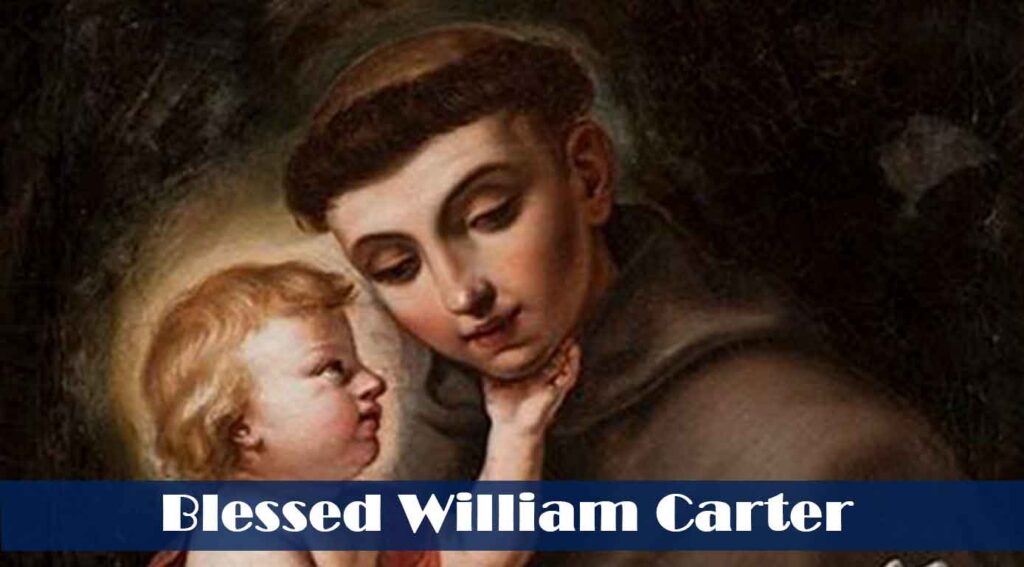
Blessed William Carter

Born in London, William Carter entered the printing business at an early age. For many years he served as apprentice to well-known Catholic printers, one of whom served a prison sentence for persisting in the Catholic faith. William himself served time in prison following his arrest for “printing lewd pamphlets” as well as possessing books upholding Catholicism.

But even more, he offended public officials by publishing works that aimed to keep Catholics firm in their faith. Officials who searched his house found various vestments and suspect books, and even managed to extract information from William’s distraught wife. Over the next 18 months, William remained in prison, suffering torture and learning of his wife’s death.

He was eventually charged with printing and publishing the Treatise of Schisme, which allegedly incited violence by Catholics and which was said to have been written by a traitor and addressed to traitors. While William calmly placed his trust in God, the jury met for only 15 minutes before reaching a verdict of guilty. William, who made his final confession to a priest who was being tried alongside him, was hanged, drawn, and quartered the following day: January 11, 1584.
He was beatified in 1987.

Sources:

https://www.franciscanmedia.org/saint-of-the-day/blessed-william-carter/

Blessed William Carter Read More »

1 John 1:5

Verse:

“This is the message we have heard from him and declare to you: God is light; in him there is no darkness at all.” - 1 John 1:5

Prayer for Our dear Father

we ask you to come to us from heaven and surround us with your goodness and mercy, with your light and life. We are weak, poor, and lost just when we need to stand firm and hold on. But you are faithful. You stay by us and help us. Continue to help and sustain us, we pray. Do not let our lives be lived in vain. May something of eternity be with us in all we have to face in life, so that over and over again we may find courage to start anew. Amen.

Sources:

https://ourdailydevotional24.com/daily-prayer-and-bible-verse-11-january-2023-wednesday/

1 John 1:5 Read More »

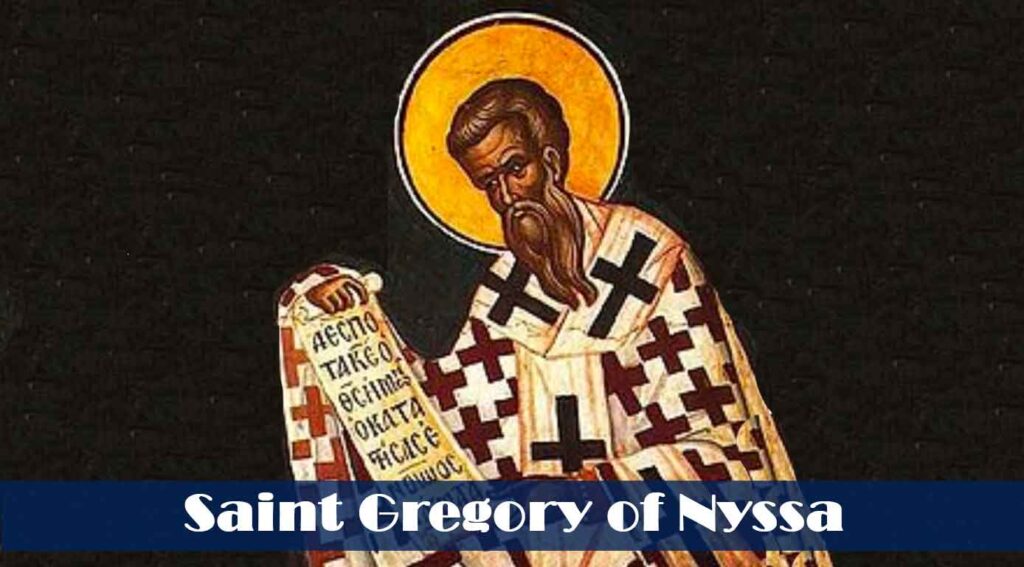
Saint Gregory of Nyssa

The son of two saints, Basil and Emmilia, young Gregory was raised by his older brother, Saint Basil the Great, and his sister, Macrina, in modern-day Turkey. Gregory’s success in his studies suggested great things were ahead for him. After becoming a professor of rhetoric, he was persuaded to devote his learning and efforts to the Church. By then married, Gregory went on to study for the priesthood and become ordained (this at a time when celibacy was not a matter of law for priests).

He was elected Bishop of Nyssa in 372, a period of great tension over the Arian heresy, which denied the divinity of Christ. Briefly arrested after being falsely accused of embezzling Church funds, Gregory was restored to his see in 378, an act met with great joy by his people.

It was after the death of his beloved brother Basil, that Gregory really came into his own. He wrote with great effectiveness against Arianism and other questionable doctrines, gaining a reputation as a defender of orthodoxy. He was sent on missions to counter other heresies and held a position of prominence at the Council of Constantinople. His fine reputation stayed with him for the remainder of his life, but over the centuries it gradually declined as the authorship of his writings became less and less certain. But, thanks to the work of scholars in the 20th century, his stature is once again appreciated. Indeed, Saint Gregory of Nyssa is seen not simply as a pillar of orthodoxy but as one of the great contributors to the mystical tradition in Christian spirituality and to monasticism itself.

Saint Gregory of Nyssa Read More »