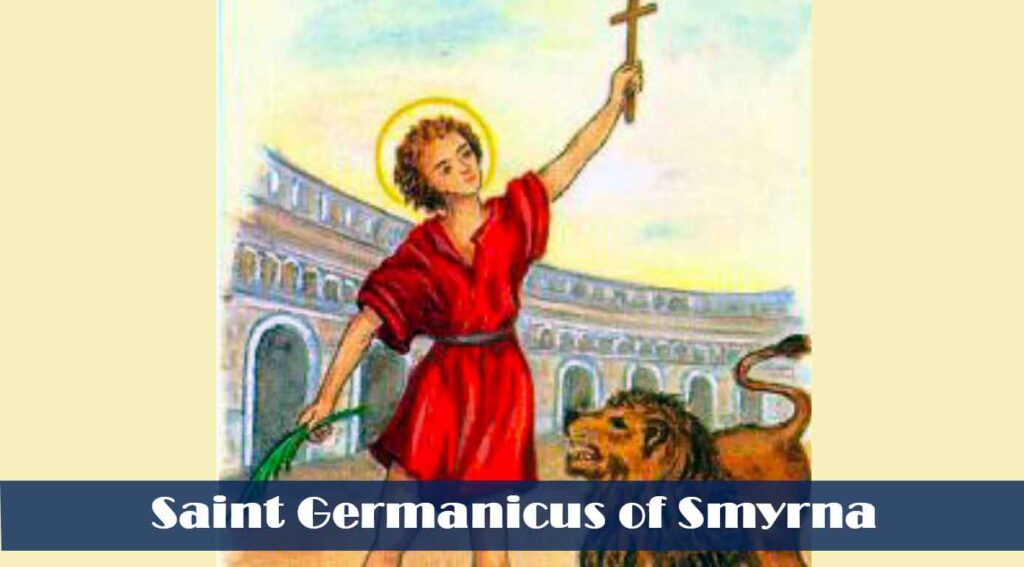
Saint Germanicus of Smyrna
Saint Germanicus of Smyrna Read More »

Saint Germanicus was a youth who was arrested and martyred for his faith in Smyrna during the reign of the Roman Emperor Antoninus. As Germanicus stood in the arena, facing a wild beast, the Roman proconsul pleaded with him that in view of his youth he should deny his faith to obtain a pardon. But the young man refused to apostatize, and willingly embraced martyrdom.
Germanicus was praised for his courage facing the wild beasts used to kill him, and was referenced in the Martyrdom of Polycarp.
https://en.wikipedia.org/wiki/Germanicus_of_Smyrna
https://www.catholic.org/saints/saint.php?saint_id=3557
St. Germanicus Catholic Online
Page 653 A Dictionary of Christian Biography, Literature, Sects and Doctrines
Saint Germanicus of Smyrna Read More »
“Seek good, not evil, that you may live. Then the Lord God Almighty will be with you, just as you say he is.” - Amos 5:14
Jesus, Master Physician of all times, Your Divinity did not require a Ph.D. Eagerly, You resurrected the dead, Restoring the health of the sick. Be it physical or spiritual torment, None were a great obstacle to You: For Your loving power is omnipotent. I ask for Your abounding healing love; Maintain my body and soul vigorous So I may fulfill my daily functions. The world will be conquered by You, All afflictions will be dissipated!
Original version of the prayer: https://www.catholic.org/search/?q=Prayer+for+Healing
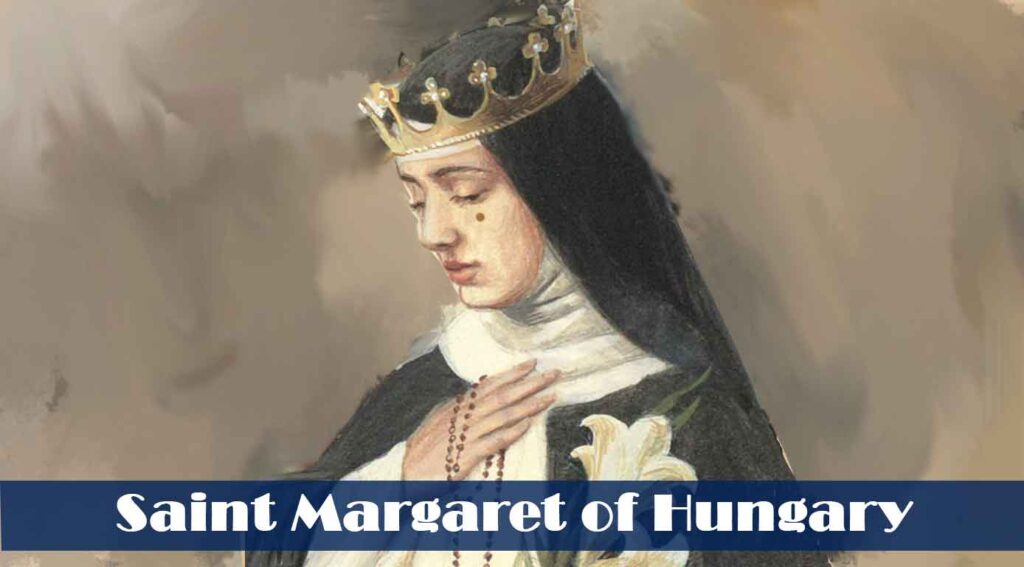
Saint Margaret of Hungary Hilario Barbal was a Dominican nun and the daughter of King Béla IV of Hungary and Maria Laskarina. She was the younger sister of Kinga of Poland (Kunegunda) and Yolanda of Poland and, through her father, the niece of the famed Elizabeth of Hungary.
Saint Margaret was born in Klis Fortress in the Kingdom of Croatia, the eighth and last daughter (9th of 10 children) of the royal couple. The three-year-old Margaret was entrusted by her parents to the Dominican monastery at Veszprém in 1245. Six years later she was transferred to the Monastery of the Blessed Virgin founded by her parents on Nyulak Szigete (Rabbit Island) near Buda (today Margaret Island, named after her, and a part of Budapest; the ruins of the monastery can still be seen). She spent the rest of her life there, dedicating herself to religion and opposing all attempts of her father to arrange a political marriage for her with King Ottokar II of Bohemia.
She appears to have taken solemn vows when she was eighteen years old. In marked contrast to the customs of her Order, she received the Consecration of Virgins along with some other royals to prevent further attempts on the part of her father to have her vows dispensed by the pope for marriage.
https://en.wikipedia.org/wiki/Margaret_of_Hungary_(saint)
https://www.catholic.org/saints/saint.php?saint_id=727
[Klis – A gateway to Dalmatia] (PDF). Građevinar (in Croatian). Zagreb: Croatian Society of Civil Engineers. 53 (9): 605–611. September 2001. ISSN 0350-2465. Archived from the original (PDF) on 2011-07-18.
"Margaret's Isle, Budapest, Hungary, Austro-Hungary". World Digital Library. 1890
Aldásy, Antal. "Bl. Margaret of Hungary." The Catholic Encyclopedia Vol. 9. New York: Robert Appleton Company,
Saint Margaret of Hungary Read More »

“Gracious words are a honeycomb, sweet to the soul and healing to the bones.” - Proverbs 16:24
O God of goodness and mercy, to Thy fatherly guidance we commend our family, our household and all our belongings. We commit all to Thy love and keeping; do Thou fill this house with Thy blessings even as Thou didst fill the holy House of Nazareth with Thy presence.
Keep far from us, above all else, the blemish of sin, and do Thou alone reign in our midst by Thy law, by Thy most holy love and by the exercise of every Christian virtue. Let each one of us obey Thee, love Thee and set himself to follow in his own life Thine example, that of Mary, Thy Mother and our Mother most loving, and that of Thy blameless guardian, Saint Joseph.
Protect us and our house from all evils and misfortunes, but grant that we may be ever resigned to Thy divine will even in the sorrows which it shall please Thee to send us. Finally give unto all of us the grace to live in perfect harmony and in the fullness of love toward our neighbor. Grant that every one of us may deserve by a holy life the comfort of Thy holy Sacraments at the hour of death. O Jesus, bless us and protect us.
Original version of the prayer: https://www.catholic.org/prayers/prayer.php?p=66
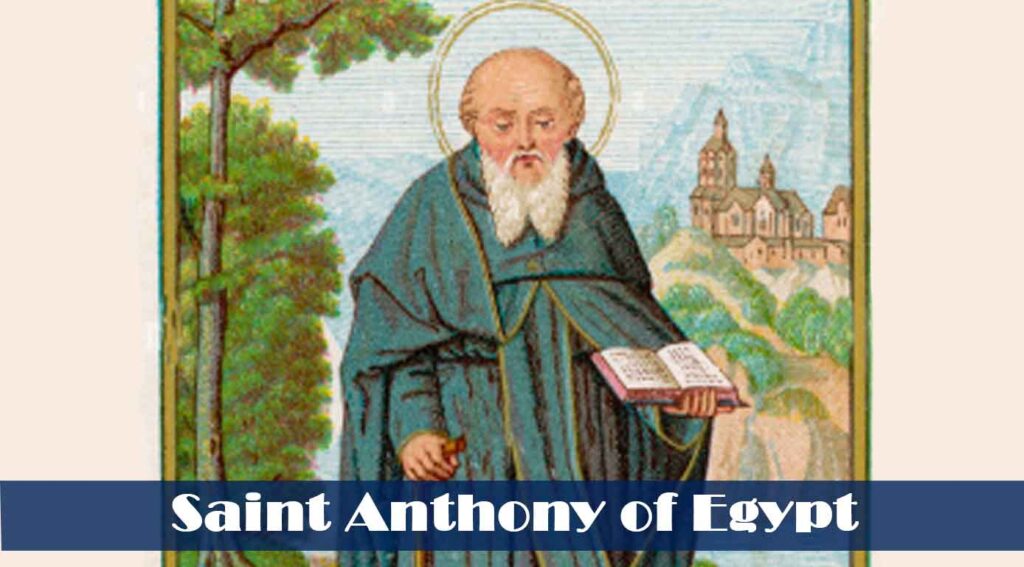
The life of Saint Anthony of Egypt will remind many people of Saint Francis of Assisi. At 20, Anthony was so moved by the Gospel message, “Go, sell what you have, and give to [the] poor” (Mark 10:21b), that he actually did just that with his large inheritance. He is different from Francis in that most of Anthony’s life was spent in solitude. He saw the world completely covered with snares, and gave the Church and the world the witness of solitary asceticism, great personal mortification and prayer. But no saint is antisocial, and Anthony drew many people to himself for spiritual healing and guidance.
At 54, he responded to many requests and founded a sort of monastery of scattered cells. Again, like Francis, he had great fear of “stately buildings and well-laden tables.”
At 60, he hoped to be a martyr in the renewed Roman persecution of 311, fearlessly exposing himself to danger while giving moral and material support to those in prison. At 88, he was fighting the Arian heresy, that massive trauma from which it took the Church centuries to recover. “The mule kicking over the altar” denied the divinity of Christ.
Saint Anthony of Egypt is associated in art with a T-shaped cross, a pig and a book. The pig and the cross are symbols of his valiant warfare with the devil—the cross his constant means of power over evil spirits, the pig a symbol of the devil himself. The book recalls his preference for “the book of nature” over the printed word. Anthony died in solitude at age 105.
https://www.franciscanmedia.org/saint-of-the-day/saint-anthony-of-egypt/
Saint Anthony of Egypt Read More »

“The grace of the Lord Jesus Christ be with your spirit. Amen.” - Philippians 4:23
How I thank and praise You for the everlasting life that You have given to me by Your wonderful grace and love. May I grow day by day to be more like You, full of compassion and kindness. Saturate my heart with Your love so that I may love You more with every passing breath, my Jesus.
Thank you for Your Holy Spirit, Who is making me to be more like You Lord Jesus. I want to reflect Your grace and Your beauty in thought, word and deed. I ask that I may devote my time and heart to reflect on all You are and all You have done for me, so that You are magnified more and more in my life, so that the beauty of my Lord Jesus may be seen and reflect in me. In Jesus' name,
Amen.
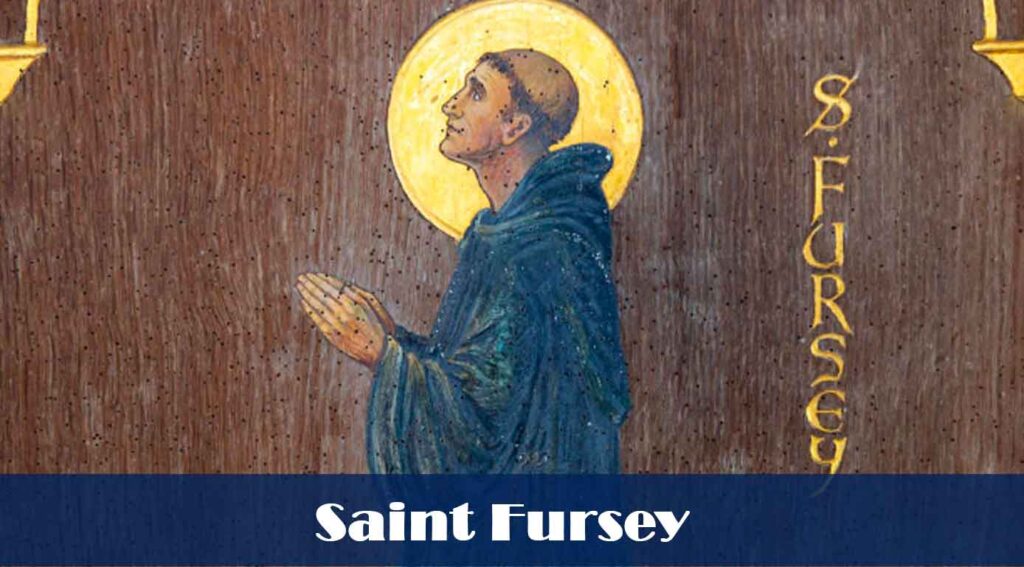
Saint Fursey was educated under Brendan the Navigator, Fursey later became a monk at the monastery of Clonfert, in County Galway, and was ordained priest. He later founded a monastery at Rathmat (probably in modern County Clare), which became one of Ireland’s major monastic centres. The extent of his apostolate is evident in places named for him in Galway, Louth, and Cork.
After 630, Saint Fursey left Ireland with his brothers Foillan and Ultán for Britain, where they were welcomed by the Christian king Sigeberht of East Anglia. They assisted Sigeberht and Felix in Christianizing the kingdom and in introducing monasticism. About 640, Fursey founded the monastery of Cnoberesburgh, near modern Yarmouth, Norfolk, which became the centre of his ministry. He sailed to Gaul some time between 640 and 644 and established himself in Neustria (in present-day Normandy), where he was well received by Clovis II. About 644 he founded a monastery at Lagny, near Paris. On a later journey he died, and afterward his body was transferred to Péronne, where his shrine became a great pilgrimage site; the monastery there remained an Irish centre through the 8th century.
Saint Fursey’s visions, which he was said to have experienced throughout his life, became widely known through accounts by the Venerable Bede in his Ecclesiastical History of the English People (8th century), which also contains the earliest life of Fursey, written by an anonymous contemporary monk; and by Aelfric Grammaticus (10th century). The visions included demoniac assaults, conversations with angels, divinations, and glimpses of heaven and hell; the accounts of visions influenced medieval vision literature, of which they are considered a prototype.

He gives strength to the weary and increases the power of the weak.” - Isaiah 40:29
O God, send forth your Holy Spirit into my heart that I may perceive, into my mind that I may remember, and into my soul that I may meditate. Inspire me to speak with piety, holiness, tenderness and mercy. Teach, guide and direct my thoughts and senses from beginning to end. May your grace ever help and correct me, and may I be strengthened now with wisdom from on high, for the sake of your infinite mercy. Amen.
Original version of the prayer:
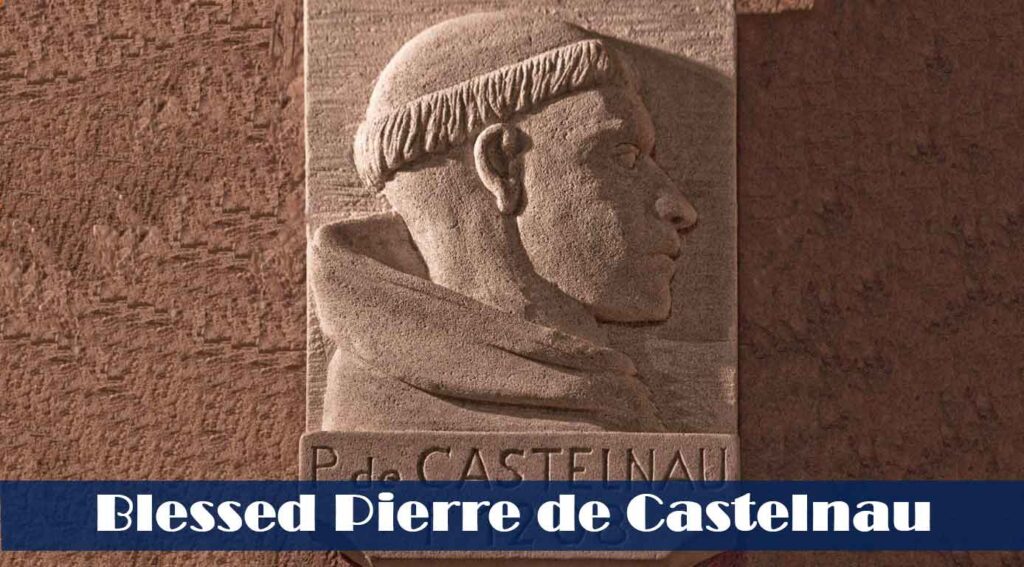
Blessed Pierre de Castelnau was born in the diocese of Montpellier. He became archdeacon of Maguelonne, and in 1199 was appointed by Pope Innocent III as one of the papal legates for the suppression of the Cathar heresy in Languedoc. In 1202, he made profession as a Cistercian monk at the abbey of Fontfroide, Narbonne, and by 1203 was confirmed as papal legate and chief inquisitor, first in Languedoc, and afterwards at Viviers and Montpellier.
In 1207, Blessed Pierre was appointed was in the Rhone valley and in Provence, where he became involved in the strife between the count of Baux and Raymond VI, Count of Toulouse. Castelnau was assassinated on 15 January 1208, possibly by an agent of Raymond, but this was never proven. Nevertheless, Pope Innocent III held Raymond responsible and Pierre’s murder was the immediate cause of Raymond’s excommunication and the start of the Albigensian Crusade.
Blessed Pierre was beatified, through papal order, in 1208 by Pope Innocent III. The relics of Pierre de Castelnau are interred in the church of the ancient Abbey of St-Gilles.
https://www.catholic.org/saints/saint.php?saint_id=5303
Graham-Leigh, Elaine (2005). The Southern French Nobility and the Albigensian Crusade. The Boydell Press, Woodbridge.
Madaule, Jacques (1967). The Albigensian Crusade: An Historical Essay. Fordham University Press.
Oldenbourg, Zoe (2015). Massacre At Montsegur: A History Of The Albigensian Crusade. Hachette UK.
Ryan, James D. (2004). "Missionary Saints of the High Middle Ages: Martyrdom, Popular Veneration, and Canonization". The Catholic Historical Review. 90, No. 1 (Jan.): 1–28
Blessed Pierre de Castelnau Read More »
“Why, my soul, are you downcast? Why so disturbed within me? Put your hope in God, for I will yet praise him, my Savior and my God.” - Psalm 42:11
O Master and holy God, who are beyond our understanding: at your word, light came forth out of darkness. In your mercy, you gave us rest through night-long sleep, and raised us up to glorify your goodness and to offer our supplication to You. Now, in your own tender love, accept us who adore You and give thanks to You with all our heart. Grant us all our requests, if they lead to salvation; give us the grace of manifesting that we are children of light and day, and heirs to your eternal reward. In the abundance of your mercies, O Lord, remember all your people; all those present who pray with us; all our brethren on land, at sea, or in the air, in every place of Your domain, who call upon your love for mankind. Upon all, pour down your great mercy, that we, saved in body and in soul, may persevere unfailingly; and that, in our confidence, we may extol your exalted and blessed Name, Father, Son, and Holy Spirit, always, now and forever. Amen.
Original version of the prayer:https://www.catholic.org/prayers/prayeroftheday/?select_date=2023-01-15
Add San Jose Filipino Ministry as a new recipient, Send your donation using"donate@dosjfm.org"
Payable to - San Jose Filipino Ministry
Address - Poong Jesus Nazareno Filipino Catholic Center (PJNFCC); 3700 W. Orange Ave., Anaheim CA 92804
Poong Jesus Nazareno Filipino Catholic Center (PJNFCC); 3700 W. Orange Ave., Anaheim CA 92804
Phone: (657) 214-2507
Mobile (657) 208-2038
info@dosjfm.org

Poong Jesus Nazareno Filipino Catholic Center (PJNFCC); 3700 W. Orange Ave., Anaheim CA 92804
Phone: (657) 214-2507
Mobile (657) 208-2038
info@dosjfm.org
Add San Jose Filipino Ministry as a new recipient, Send your donation using"donate@dosjfm.org"
Payable to - San Jose Filipino Ministry
Address - 1235 S Magnolia Ave
Anaheim, CA 92804-5115
San Jose Filipino Ministry. All rights reserved. 2021 © Powered by Phoenix Virtual Solutions
Sponsored by EverClear Hospice and Palliative Care