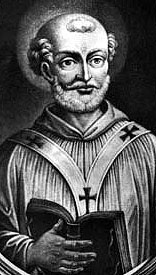
Saint Anastasius I, Pope
Saint Anastasius I, Pope Read More »

Profile
All that is known of his early life is that he was considered pious as a youth, and cared nothing for material things as an adult.
As a pope, he was immediately involved in the turmoil resulting from the heretical writings of Origen. He convened a synod to condemn the works. He fought against the heresy of Donatism.
He was a friend of Saint Augustine of Hippo, Saint Jerome, and Saint Paulinus of Nola.
Born
4th century in Rome, Italy
Papal Ascension
27 November 399
Died
402 of natural causes
Canonized
Pre-Congregation
Source: https://catholicsaints.info/pope-saint-anastasius-i/
Saint Anastasius I, Pope Read More »
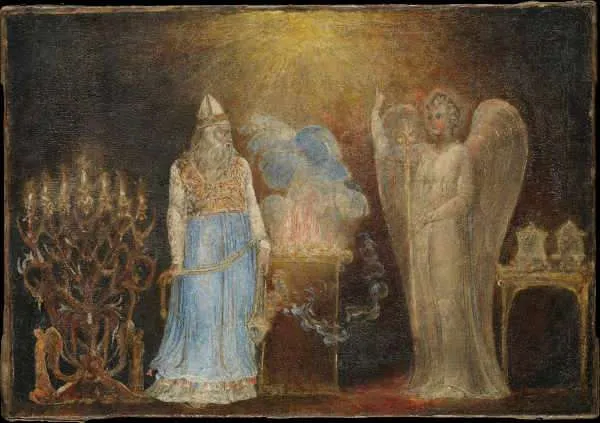
“I am Gabriel, who stand before God. I was sent to speak to you and to announce to you this good news. But now you will be speechless and unable to talk until the day these things take place, because you did not believe my words, which will be fulfilled at their proper time.”
Reflection:
Imagine if the Archangel Gabriel appeared to you. What would that have been like? This particular Archangel stands before the incomprehensible beauty and splendor of the Most Holy Trinity and brings forth messages of the greatest importance. Gabriel is God’s most notable messenger. Take a moment to ponder what such a glorious apparition would have been like.
In the passage above, this glorious Archangel appears to Zechariah as he is fulfilling his priestly duty to burn incense before the Lord within the Holy of Holies.
As Zechariah enters the sanctuary while all the people remain outside praying, he suddenly has a vision of the Archangel telling him that his wife Elizabeth will have a child, even though she is advanced in years. But even though Zechariah hears this message from Gabriel, the Archangel who stands before God, he doubts what he is being told.
Would you have believed the Archangel Gabriel if you were Zechariah? Or would you have doubted? Though there may not be a way to know the answer to that question, it’s helpful to ponder the humble truth that you very well may have doubted. It takes true humility to admit that possibility.
Like Zechariah, we are all weak and sinful. We lack the perfect faith that our Blessed Mother had. And if you can humbly admit this, then you are in a great position to overcome the weakness of faith you struggle with. Zechariah suffered much for his lack of faith, but that suffering led to a renewal of faith when he named his child John in obedience to the Archangel.
Reflect, today, upon how well you listen to all that God says to you. Do you listen, believe and obey? Or do you question and doubt God’s voice. Know that God speaks to you each and every day. Admit the ways that you lack perfect faith and allow that act of humble acknowledgment to strengthen you where you need help the most.
Source: https://catholic-daily-reflections.com/2023/12/18/faith-or-doubt-3/
Article
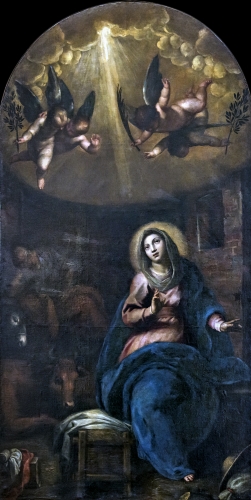
This is a memorial to impress on the faithful the sentiments of the Blessed Virgin as the time of her delivery approached.
The feast originated in Spain. When the feast of the Annunciation (25 March) was transferred to 18 December because of the regulation forbidding feasts in Lent, it remained on this date after the Annunciation was again celebrated on its original date.
Source: https://catholicsaints.info/expectation-of-the-blessed-virgin-mary/
Expectation of the Blessed Virgin Mary Read More »
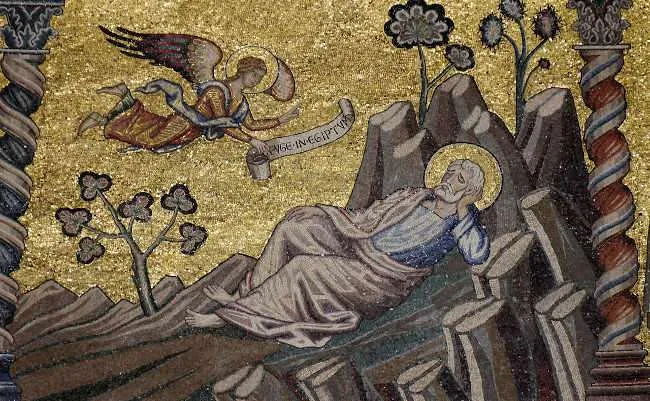
“This is how the birth of Jesus Christ came about. When his mother Mary was betrothed to Joseph, but before they lived together, she was found with child through the Holy Spirit. Joseph her husband, since he was a righteous man, yet unwilling to expose her to shame, decided to divorce her quietly.”
Reflection:
Mary’s pregnancy was truly mysterious. In fact, it was so mysterious that even Saint Joseph initially couldn’t accept it. But, to Joseph’s defense, who could accept such a thing? He was faced with what was a most confusing situation. The woman to whom he was engaged was suddenly with child, and Joseph knew he was not the father. But he also knew that Mary was a holy and pure woman. So, naturally speaking, it makes sense that this situation simply did not make immediate sense.
But that’s the key. “Naturally speaking” this did not make immediate sense. The only way to understand the situation of Mary’s sudden pregnancy was through supernatural means. Thus, an angel of the Lord appeared to Joseph in a dream, and that dream was all he needed to accept this mysterious pregnancy in faith.
It’s amazing to consider the fact that the greatest event to ever take place in human history happened under a cloud of apparent scandal and confusion. The angel revealed the deep spiritual truth to Joseph secretly, in a dream. And though Joseph may have shared his dream with others, it’s most likely the case that many people still assumed the worst.
Most would have presumed that Mary was pregnant either by Joseph or by someone else. The idea that this conception was the working of the Holy Spirit would have been a truth beyond what their friends and relatives could ever comprehend.
But this presents us with a great lesson about judgment and the action of God. There are countless examples in life when God and His perfect will lead to judgment, apparent scandal and confusion. Take, for example, any martyr of old. We now look at the many acts of martyrdom in a heroic way.
But when the martyrdom actually happened, many would have been deeply saddened, angered, scandalized and confused. Many, at the time of a loved one being martyred for the faith, would be tempted to question why God permitted this.
The holy act of forgiving another could also lead some to a form of “scandal” in life. Take, for example, the crucifixion of Jesus. From the Cross, He cried out, “Father, forgive them…” Were not many of His followers confused and scandalized? Why didn’t Jesus defend Himself? How could the promised Messiah have been found guilty by the authorities and killed? Why did God allow this?
Reflect, today, upon the mystery of God’s actions in life. Are there things in your own life that are hard to accept, to embrace, or to understand? Know that you are not alone in this. Even Saint Joseph experienced this. Prayerfully commit yourself to a deeper faith in God’s wisdom in the face of any mystery with which you struggle. And know that this faith will help you to live more fully in accord with the glorious wisdom of God.
Source: https://catholic-daily-reflections.com/2023/12/17/a-mysterious-pregnancy-and-apparent-scandal-2/
The spirit of the Lord GOD is upon me,
because the LORD has anointed me;
he has sent me to bring glad tidings to the poor,
to heal the brokenhearted,
to proclaim liberty to the captives
and release to the prisoners,
to announce a year of favor from the LORD
and a day of vindication by our God.
I rejoice heartily in the LORD,
in my God is the joy of my soul;
for he has clothed me with a robe of salvation
and wrapped me in a mantle of justice,
like a bridegroom adorned with a diadem,
like a bride bedecked with her jewels.
As the earth brings forth its plants,
and a garden makes its growth spring up,
so will the Lord GOD make justice and praise
spring up before all the nations.
R. (Is 61:10b) My soul rejoices in my God.
My soul proclaims the greatness of the Lord;
my spirit rejoices in God my Savior,
for he has looked upon his lowly servant.
From this day all generations will call me blessed:
R. My soul rejoices in my God.
the Almighty has done great things for me,
and holy is his Name.
He has mercy on those who fear him
in every generation.
R. My soul rejoices in my God.
He has filled the hungry with good things,
and the rich he has sent away empty.
He has come to the help of his servant Israel
for he has remembered his promise of mercy,
R. My soul rejoices in my God.
Rejoice always. Pray without ceasing.
In all circumstances give thanks,
for this is the will of God for you in Christ Jesus.
Do not quench the Spirit.
Do not despise prophetic utterances.
Test everything; retain what is good.
Refrain from every kind of evil.
May the God of peace make you perfectly holy
and may you entirely, spirit, soul, and body,
be preserved blameless for the coming of our Lord Jesus Christ.
The one who calls you is faithful,
and he will also accomplish it.
R. Alleluia, alleluia.
The Spirit of the Lord is upon me,
because he has anointed me
to bring glad tidings to the poor.
R. Alleluia, alleluia.
A man named John was sent from God.
He came for testimony, to testify to the light,
so that all might believe through him.
He was not the light,
but came to testify to the light.
And this is the testimony of John.
When the Jews from Jerusalem sent priests
and Levites to him
to ask him, “Who are you?”
He admitted and did not deny it,
but admitted, “I am not the Christ.”
So they asked him,
“What are you then? Are you Elijah?”
And he said, “I am not.”
“Are you the Prophet?”
He answered, “No.”
So they said to him,
“Who are you, so we can give an answer to those who sent us?
What do you have to say for yourself?”
He said:
“I am the voice of one crying out in the desert,
‘make straight the way of the Lord,’”
as Isaiah the prophet said.”
Some Pharisees were also sent.
They asked him,
“Why then do you baptize
if you are not the Christ or Elijah or the Prophet?”
John answered them,
“I baptize with water;
but there is one among you whom you do not recognize,
the one who is coming after me,
whose sandal strap I am not worthy to untie.”
This happened in Bethany across the Jordan,
where John was baptizing.
Source: https://bible.usccb.org/bible/readings/121723.cfm
Third Sunday of Advent Read More »
Profile
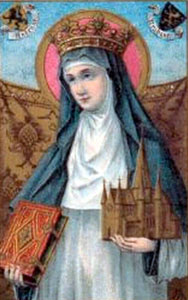
Begga was born to the nobility, the daughter of Saint Pepin of Landen, mayor of the palace, and Saint Ida of Nivelles. She was the sister of Saint Gertrude of Nivelles.
Begga was married to Ansegilius, son of Saint Arnulf of Metz. Her son, Pepin of Herstal, was the founder of the Carolingian dynasty of rulers in France, in 635.
On the death of her husband in 691 in a hunting accident, Begga took the veil, founded seven churches, and built a convent at Andenne on the Meuse River (in modern Belgium) where she spent the rest of her days as abbess.
Died
693 at Andenne on the Meuse River in modern Belgium
Canonized
Pre-Congregation
Patronage
Andenne, Belgium
Source:
Saint Begga of Andenne
https://en.wikipedia.org/wiki/Begga#/media/File:Begga_de_landen.jpg
Saint Begga of Andenne Read More »
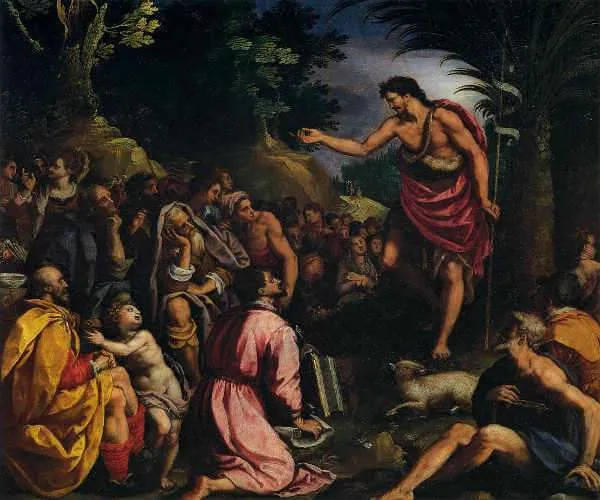
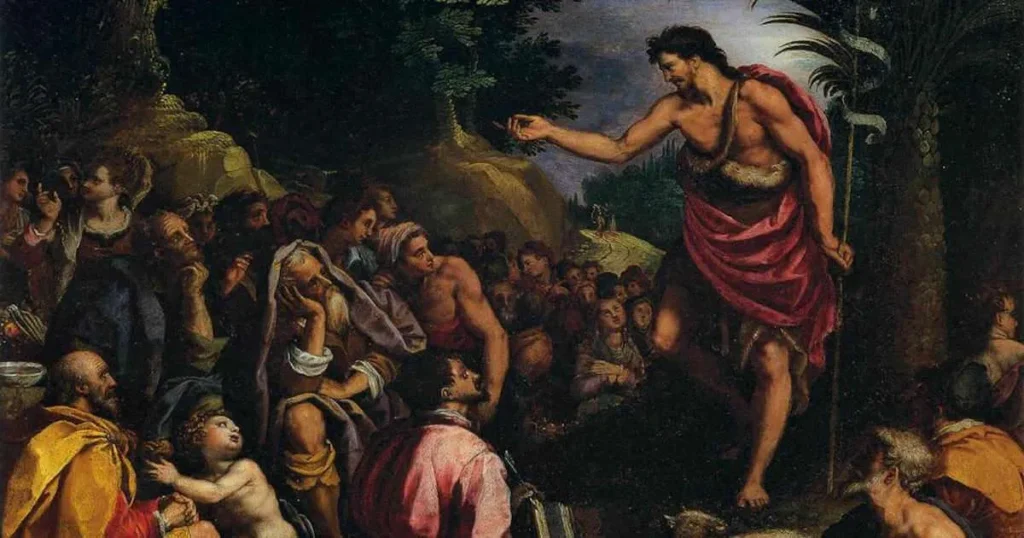
“I am the voice of one crying out in the desert, ‘make straight the way of the Lord,’” as Isaiah the prophet said.”
Reflection:
In the passage above, Saint John the Baptist quotes Isaiah 40:3: “A voice proclaims: In the wilderness prepare the way of the LORD! Make straight in the wasteland a highway for our God!” This was a prophecy of Isaiah who was speaking about the return of the Jewish exiles from Babylon back to Jerusalem.
Normally, people would travel along the well-watered routes from Mesopotamia to Israel. Those routes were safer than the desert and provided the necessary food and water for the journey. But Isaiah prophesied that the Jewish exiles would travel the shortest route—straight across the desert—and that God would provide for their needs during that journey. Such a journey required much trust in the providence of God.
John the Baptist, in quoting Isaiah, applies this prophecy to himself. He was called to cry out in the desert and point people directly to the Messiah. It was in the desert that they would discover their Savior.
First of all, John cries out in the “desert.” His message is for those who experience dryness, destitution, need and loss in life due to sin. His message of repentance is first for those who are without the spiritual nourishment God wants to bestow upon them through grace. The message of John is pointed to those who humbly see the difficult situation they are facing in life and acknowledge their need for the Living Water of the Savior of the World.
Second, this new “straight” way implies that many are not walking the direct path to Christ. Instead, they are taking unnecessary detours in life. John’s message is one that calls everyone to the straight and direct way of repenting of their sins so that they can come to faith in Christ Jesus.
Third, walking through the desert to find Christ requires trust in God’s providence. It takes courage to make such a journey. Trust in the ongoing providence of God, Who promises to meet all of our needs, is key. One would not walk straight through the desert if they did not trust their guide.
Advent is a time to reexamine the road you are on. Are you trying to find your own way to happiness? Are you trusting in your own abilities, your own intelligence and your own plan for the future? If so, then listen to the “voice of one crying out in the wilderness.” Listen to Saint John speak to you, calling you to the simplicity of the desert, to a greater detachment from all things, to an abandonment of all that is not of God, and to a more willing trust in the providence of God to lead you.
Reflect, today, upon this calling from the desert and listen to the message God is speaking to you, personally. Abandon all worldly concerns, repent of sin, trust in Him and go out to meet Him so that you can more quickly and more easily come to a deeper faith in our Lord during this Advent season.
Source: https://catholic-daily-reflections.com/2023/12/16/meeting-christ-in-the-desert/
Profile
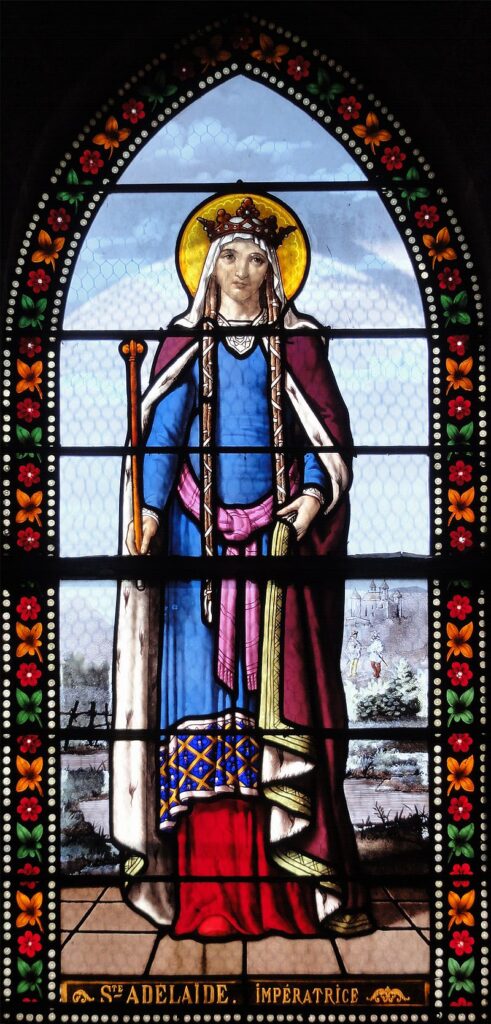
Adelaide was born a princess, the daughter of King Rudolf II (Rupert II) of Upper Burgundy. She was promised at age two in an arranged marriage as part of a treaty between Rudolf and Hugh of Provence. She was married at age 16 to Lothair of Italy, who eventually became king of Italy.
Adelaide was widowed in 950 while still a teenager; Lothair was probably poisoned by his successor to the throne, Berengarius. As part of his attempt to solidify his grip on power, Berengarius ordered Adelaide to marry his son; she refused, and was imprisoned. She was freed soon after when the German king Otto the Great defeated Berengarius.
Adelaide married Otto in Pavia, Italy in 951. He was crowned Emperor in Rome, Italy in 952, and Adelaide reigned with him for 20 years. Widowed in 973, she was ill-treated by her step-son, Emperor Otto II and his wife Theophano, but eventually reconciled with her royal in-laws.
When Otto II died in 983, he was succeeded by his infant son, Otto III. Theophano acted as regent, and since she still did not like Adelaide, used her power to exile her from the royal court. Theophano died in 991, and Adelaide returned once again to the court to act as regent for the child emperor.
Adelaide used her position and power to help the poor, to evangelize, especially among the Slavs, and to build and restore monasteries and churches. When Otto III was old enough, Adelaide retired to the convent of Selta near Cologne, a house she had built. Though she never became a nun, she spent the rest of her days there in prayer.
Born
c. 931 in the kingdom of Burgundy, Holy Roman Empire (modern Burgundy, France)
Died
16 December 999 at the monastery of Selta (Seltz), Alsace of natural causes
Canonized
1097 by Pope Urban II
Patronage
Representation
Source/s:
Saint Adelaide of Burgundy
https://en.wikipedia.org/wiki/Adelaide_of_Italy#/media/File:Sainte-Ad%C3%A9la%C3%AFde_-_%C3%89glise_de_Toury,_vitraux_par_Lorin.jpg
Saint Adelaide of Burgundy Read More »
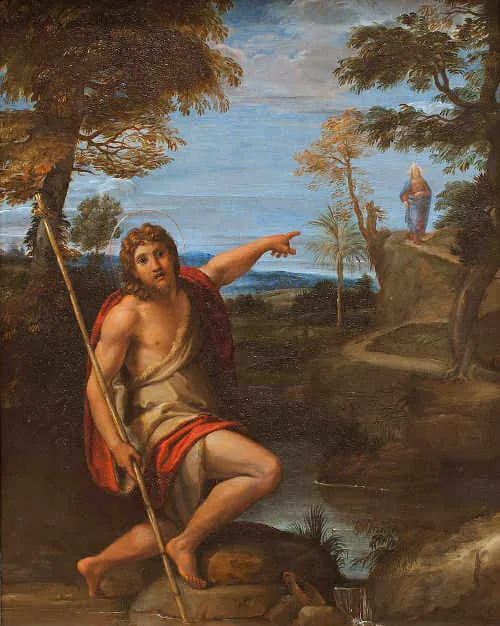
“I tell you that Elijah has already come, and they did not recognize him but did to him whatever they pleased. So also will the Son of Man suffer at their hands.” Then the disciples understood that he was speaking to them of John the Baptist.”
Reflection:
The last of the Old Testament Prophets was Malachi. He concluded his ministry about 400 years prior to the coming of Christ. Malachi prophesied that a “messenger” would come before the Messiah so as to prepare the way before Him. Malachi goes on further to say that “Elijah the Prophet” will come before the day of the Lord (See Malachi 3:1–24).
Many of the people at the time of Jesus did not understand this prophecy and were not even aware of it. Therefore, the scribes used this prophecy to confuse many of the people by claiming that since “Elijah” had not come, then clearly Jesus was not the promised Messiah.
Jesus clarified to the disciples that the “messenger,” who was to be the new Elijah, had already come in the person of John the Baptist. Thus, in clarifying this, Jesus also clarified that the scribes were not accurate in their attempt to interpret the Scriptures and were actively misleading the people on account of their errors.
One thing this tells us is that we must approach the word of God with humility. The pride of the scribes led them to believe that they had some sort of extraordinary wisdom that they did not. Thus, they acted as poor spiritual teachers of the people of God.
Humility before the Word of God is essential if we are to properly understand not only the Old Testament prophecies but also the very words of Jesus Himself. Without humility before the Word of God, we can all easily misinterpret the beautiful and holy words spoken by our Lord.
Everything in the Scriptures is profound, deep and true. And by this holy Word of God we come to meet God Himself. But if we allow pride to seep in, we may find ourselves imitating the scribes and misunderstanding God’s Word.
The result will be a skewed image of God which will become an impediment to our personal encounter with our loving Lord. But if we can always remain humble before all that God has revealed to us, then we will more easily be open to those deepest and most beautiful truths God wants to speak to our hearts.
Reflect, today, upon any way that you have found yourself confused by the Word of God. Try to humbly open your heart more fully to that which our Lord wants to speak to you. Listen with an open mind and heart and allow the pure gift of faith to become your guide so that you will be led to those deepest truths of our faith.
Source: https://catholic-daily-reflections.com/2023/12/15/approaching-the-word-of-god-2/
Profile
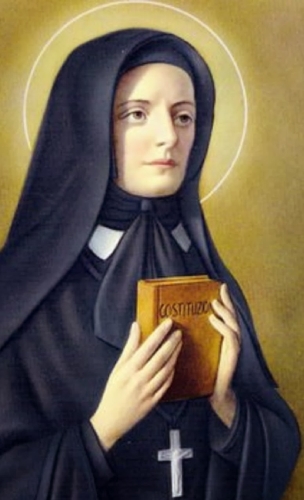
Mary is one of the nine children born to the industrialist Clement di Rosa and Countess Camilla Albani. Her father owned a large spinning mill, and Mary grew up in a happy and pious family. She was educated by Visitandine nuns.
Mary’s mother died when she was seventeen, and she left school to help manage her father‘s estate. Her heart set on a religious life, she turned down many suitors. She worked with young girls in her community, those who worked in her father‘s mills, and the sick in local hospital. She also work tirelessly during the cholera epidemic of 1836.
Mary founded a home dedicated to the spiritual needs of young girls, and a school for deaf children. In 1840, she became the superior of the Handmaids of Charity, nuns who cared for the sick, and she took the name Mary Crucifixa. The community received their bishop‘s approval in 1843 and papal approval in 1850. Mary led them until her death.
Born
6 November 1813 in Brescia, Italy as Paula Frances Mary di Rosa
Died
15 December 1855 in Brescia, Italy of natural causes
Venerated
10 July 1932 by Pope Pius XI (decree of heroic virtues)
Beatified
26 May 1940 by Pope Pius XII
Canonized
12 June 1954 by Pope Pius XII
Source: https://catholicsaints.info/saint-mary-di-rosa/
Saint Mary di Rosa Read More »
Add San Jose Filipino Ministry as a new recipient, Send your donation using"donate@dosjfm.org"
Payable to - San Jose Filipino Ministry
Address - Poong Jesus Nazareno Filipino Catholic Center (PJNFCC); 3700 W. Orange Ave., Anaheim CA 92804
Poong Jesus Nazareno Filipino Catholic Center (PJNFCC); 3700 W. Orange Ave., Anaheim CA 92804
Phone: (657) 214-2507
Mobile (657) 208-2038
info@dosjfm.org

Poong Jesus Nazareno Filipino Catholic Center (PJNFCC); 3700 W. Orange Ave., Anaheim CA 92804
Phone: (657) 214-2507
Mobile (657) 208-2038
info@dosjfm.org
Add San Jose Filipino Ministry as a new recipient, Send your donation using"donate@dosjfm.org"
Payable to - San Jose Filipino Ministry
Address - 1235 S Magnolia Ave
Anaheim, CA 92804-5115
San Jose Filipino Ministry. All rights reserved. 2021 © Powered by Phoenix Virtual Solutions
Sponsored by EverClear Hospice and Palliative Care