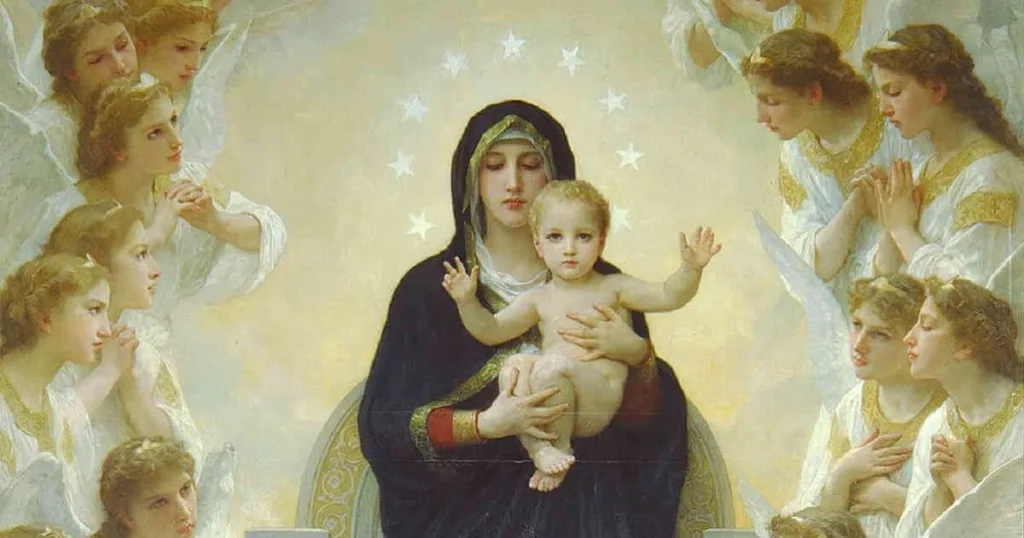
Solemnity of the Blessed Virgin Mary, the Mother of God, The Octave Day of Christmas
Solemnity of the Blessed Virgin Mary, the Mother of God, The Octave Day of Christmas Read More »

The LORD said to Moses:
“Speak to Aaron and his sons and tell them:
This is how you shall bless the Israelites.
Say to them:
The LORD bless you and keep you!
The LORD let his face shine upon
you, and be gracious to you!
The LORD look upon you kindly and
give you peace!
So shall they invoke my name upon the Israelites,
and I will bless them.”
R. (2a) May God bless us in his mercy.
May God have pity on us and bless us;
may he let his face shine upon us.
So may your way be known upon earth;
among all nations, your salvation.
R. May God bless us in his mercy.
May the nations be glad and exult
because you rule the peoples in equity;
the nations on the earth you guide.
R. May God bless us in his mercy.
May the peoples praise you, O God;
may all the peoples praise you!
May God bless us,
and may all the ends of the earth fear him!
R. May God bless us in his mercy.
Brothers and sisters:
When the fullness of time had come, God sent his Son,
born of a woman, born under the law,
to ransom those under the law,
so that we might receive adoption as sons.
As proof that you are sons,
God sent the Spirit of his Son into our hearts,
crying out, “Abba, Father!”
So you are no longer a slave but a son,
and if a son then also an heir, through God.
R. Alleluia, alleluia.
In the past God spoke to our ancestors through the prophets;
in these last days, he has spoken to us through the Son.
R. Alleluia, alleluia.
The shepherds went in haste to Bethlehem and found Mary and Joseph,
and the infant lying in the manger.
When they saw this,
they made known the message
that had been told them about this child.
All who heard it were amazed
by what had been told them by the shepherds.
And Mary kept all these things,
reflecting on them in her heart.
Then the shepherds returned,
glorifying and praising God
for all they had heard and seen,
just as it had been told to them.
When eight days were completed for his circumcision,
he was named Jesus, the name given him by the angel
before he was conceived in the womb.
Source: https://bible.usccb.org/bible/readings/010124.cfm
Solemnity of the Blessed Virgin Mary, the Mother of God, The Octave Day of Christmas Read More »
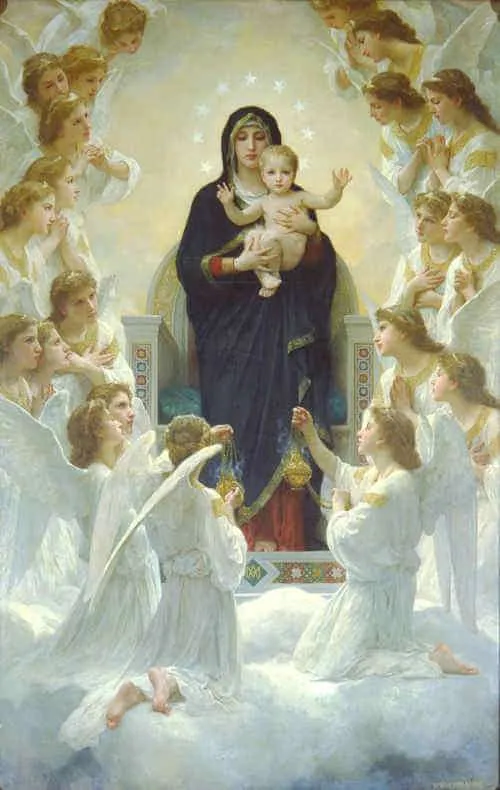
Only a mother could begin to understand the great mystery and beauty of motherhood. But only one mother could begin to understand the unfathomable beauty of being the mother of the Son of God. After the birth of Jesus, the shepherds came to adore her Child and recounted how a multitude of heavenly hosts appeared to them, revealing that Mary’s Child was the Messiah.
As Mary heard those words, she pondered them, reflected upon them, and kept them in her heart. This was but the first time we are told of Mary’s pondering heart after the birth of her Son, but we can be certain that she pondered Him over and over, entering ever more deeply into the mystery of her motherhood of the Son of God.
As the Mother of God, Mary’s prayerful pondering was beyond our comprehension. The bond she shared with her divine Son far surpassed a mere human bond. Jesus was not only her Son, He was also her Savior. Therefore, she adored Him as a mother loves her child, but also as a servant worships her God. The relationship between this unique mother and Son is infinitely awe-inspiring.
Our Blessed Mother is given the unique title of “Mother of God” first and foremost to express our faith in the divinity of Jesus. Jesus was both human and divine, but in Him these two natures were perfectly united. Therefore, one cannot say that Mary was only the mother of the humanity of Jesus, she was the mother of the Person. And that one Person was, at the same time, God and man.
Recall that once Jesus began His public ministry and was teaching, there was a woman in the crowd who cried out, “Blessed is the womb that carried you and the breasts at which you nursed.” Jesus corrected her by saying, “Rather, blessed are those who hear the word of God and observe it” (Luke 11:27). At first read, one could conclude that Jesus was downplaying the role of His own mother, but He was actually doing the opposite. Jesus was actually highlighting the most unifying aspect of His relationship with His mother.
Mary was not His mother only in a biological sense. She wasn’t blessed only because she bore Him in her womb. Rather, her deepest union with her divine Son came from her spiritual union with His will and that of the Father in Heaven. She said, “Behold, I am the handmaid of the Lord. May it be done to me according to your word” (Luke 1:38).
She heard the word of God and observed it perfectly. She did that at the Annunciation, she continued to do so as she raised her Child, and she did it most perfectly as she stood before the Cross, offering her dying Son to the Father for the salvation of the world. Mary’s motherhood was one that encompassed her whole being. It was one that united her to her Son in ways we will never fully comprehend.
Mary is the Mother of God and, therefore, is the mother of all of God’s children, including you. Honor and love your heavenly mother today and rejoice as you reflect upon this glorious queen and holy mother. As we celebrate this greatest saint in the history of the world, ponder the ponderer. Ponder her love for her Son. Ponder her obedience to His divine will. Ponder Him as her Savior. Ponder every human and divine aspect of their loving relationship.
Source: https://mycatholic.life/saints/saints-of-the-liturgical-year/january-1—octave-day-of-christmas-solemnity-of-mary-mother-of-god/
Solemnity of Mary, Mother of God–The Octave Day of the Nativity of the Lord Read More »
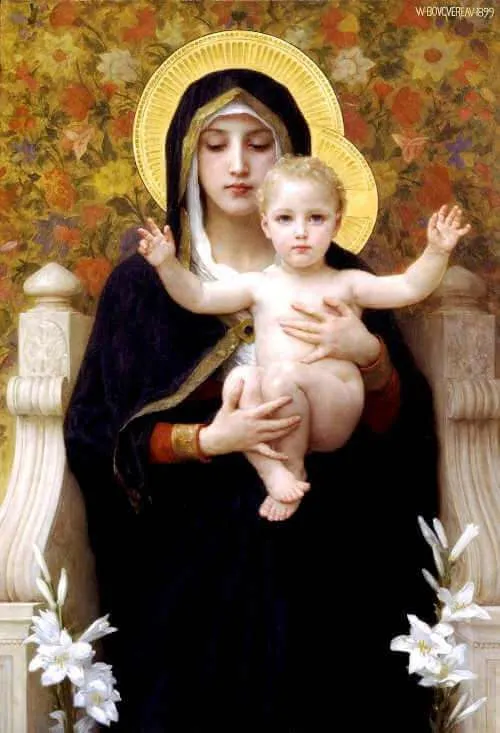
“And Mary kept all these things, reflecting on them in her heart.”
Reflection:
Today, January 1, we complete our octave celebration of Christmas Day. It’s an often overlooked liturgical fact that we celebrate Christmas Day for eight straight days. We do this also with Easter Day, which concludes with the great celebration of Divine Mercy Sunday.
On this, the eighth day of the Octave of Christmas, we turn our focus to the unique and beautiful fact that God chose to enter our world through a human mother. Mary is called the “Mother of God” for the simple fact that her Son is God. She was not the mother of her Son’s flesh alone, nor the mother only of His human nature. This is because the Person of Jesus, the Son of God, is one Person. And that one Person took on flesh within the womb of the Blessed Virgin Mary.
Though becoming the Mother of God was a pure gift from Heaven and not something that Mother Mary merited on her own, there was one particular quality that she had that made her uniquely qualified to fulfill this role. That quality was her immaculate nature.
First, Mother Mary was preserved from all sin when she was conceived within the womb of her mother, Saint Anne. This special grace was a grace that was imparted to her from the future life, death and resurrection of her Son. It was the grace of salvation, but God chose to take that gift of grace and transcend time to impart it to her at the moment of her conception, thus making her the perfect and pure instrument necessary to bring forth God into the world.
Second, Mother Mary remained faithful to this gift of grace throughout her life, never choosing to sin, never wavering, never turning from God. She remained immaculate throughout her life. Interestingly, it is this choice of hers, to forever remain obedient to the will of God in every way, that makes her more fully the Mother of God than the simple act of bearing Him within her womb. Her act of perfect unity with the will of God throughout her life makes her, also, the perfect mother of divine grace and mercy and perpetually the spiritual Mother of God, continually and perfectly bringing Him into our world.
Reflect, today, upon these most solemn mysteries of our faith. This eighth day of the Octave of Christmas is a solemn celebration, a celebration worthy of our pondering. The Scripture above reveals not only how our blessed Mother approached this mystery but also how we are to approach it. She “kept all these things, reflecting on them in her heart.” Ponder these mysteries, also, in your own heart and allow the grace of this holy celebration to fill you with joy and gratitude.
Source: https://catholic-daily-reflections.com/2023/12/31/the-mother-of-jesus-is-the-mother-of-god-3/
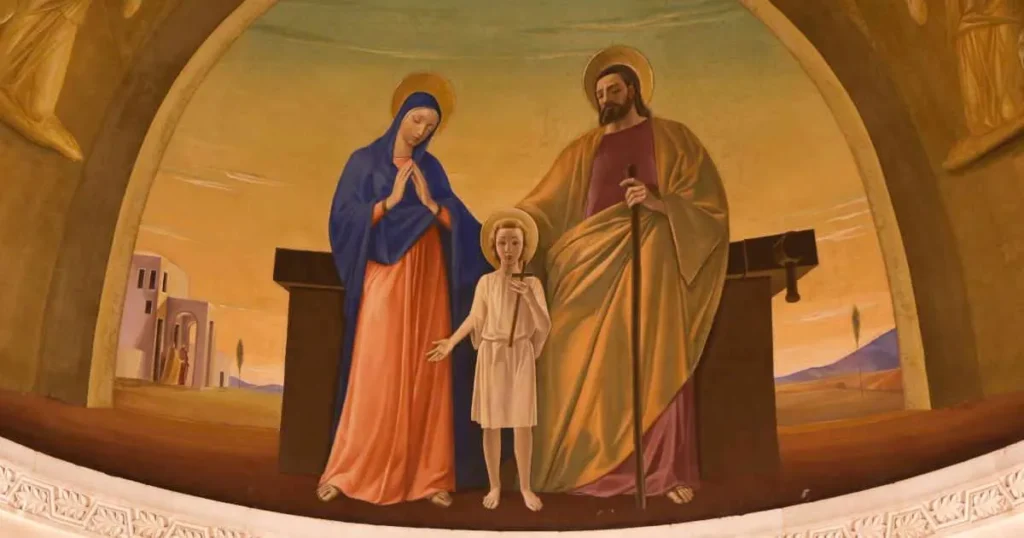
God sets a father in honor over his children;
a mother’s authority he confirms over her sons.
Whoever honors his father atones for sins,
and preserves himself from them.
When he prays, he is heard;
he stores up riches who reveres his mother.
Whoever honors his father is gladdened by children,
and, when he prays, is heard.
Whoever reveres his father will live a long life;
he who obeys his father brings comfort to his mother.
My son, take care of your father when he is old;
grieve him not as long as he lives.
Even if his mind fail, be considerate of him;
revile him not all the days of his life;
kindness to a father will not be forgotten,
firmly planted against the debt of your sins
—a house raised in justice to you.
R. (cf. 1) Blessed are those who fear the Lord and walk in his ways.
Blessed is everyone who fears the LORD,
who walks in his ways!
For you shall eat the fruit of your handiwork;
blessed shall you be, and favored.
R. Blessed are those who fear the Lord and walk in his ways.
Your wife shall be like a fruitful vine
in the recesses of your home;
your children like olive plants
around your table.
R. Blessed are those who fear the Lord and walk in his ways.
Behold, thus is the man blessed
who fears the LORD.
The LORD bless you from Zion:
may you see the prosperity of Jerusalem
all the days of your life.
R. Blessed are those who fear the Lord and walk in his ways.
Brothers and sisters:
Put on, as God’s chosen ones, holy and beloved,
heartfelt compassion, kindness, humility, gentleness, and patience,
bearing with one another and forgiving one another,
if one has a grievance against another;
as the Lord has forgiven you, so must you also do.
And over all these put on love,
that is, the bond of perfection.
And let the peace of Christ control your hearts,
the peace into which you were also called in one body.
And be thankful.
Let the word of Christ dwell in you richly,
as in all wisdom you teach and admonish one another,
singing psalms, hymns, and spiritual songs
with gratitude in your hearts to God.
And whatever you do, in word or in deed,
do everything in the name of the Lord Jesus,
giving thanks to God the Father through him.
Wives, be subordinate to your husbands,
as is proper in the Lord.
Husbands, love your wives,
and avoid any bitterness toward them.
Children, obey your parents in everything,
for this is pleasing to the Lord.
Fathers, do not provoke your children,
so they may not become discouraged.
R. Alleluia, alleluia.
Let the peace of Christ control your hearts;
Let the word of Christ dwell in you richly.
R. Alleluia, alleluia.
When the days were completed for their purification
according to the law of Moses,
They took him up to Jerusalem
to present him to the Lord,
just as it is written in the law of the Lord,
Every male that opens the womb shall be consecrated to the Lord,
and to offer the sacrifice of
a pair of turtledoves or two young pigeons,
in accordance with the dictate in the law of the Lord.
Now there was a man in Jerusalem whose name was Simeon.
This man was righteous and devout,
awaiting the consolation of Israel,
and the Holy Spirit was upon him.
It had been revealed to him by the Holy Spirit
that he should not see death
before he had seen the Christ of the Lord.
He came in the Spirit into the temple;
and when the parents brought in the child Jesus
to perform the custom of the law in regard to him,
He took him into his arms and blessed God, saying:
“Now, Master, you may let your servant go
in peace, according to your word,
for my eyes have seen your salvation,
which you prepared in sight of all the peoples,
a light for revelation to the Gentiles,
and glory for your people Israel.”
The child’s father and mother were amazed at what was said about him;
and Simeon blessed them and said to Mary his mother,
“Behold, this child is destined
for the fall and rise of many in Israel,
and to be a sign that will be contradicted
—and you yourself a sword will pierce—
so that the thoughts of many hearts may be revealed.”
There was also a prophetess, Anna,
the daughter of Phanuel, of the tribe of Asher.
She was advanced in years,
having lived seven years with her husband after her marriage,
and then as a widow until she was eighty-four.
She never left the temple,
but worshiped night and day with fasting and prayer.
And coming forward at that very time,
she gave thanks to God and spoke about the child
to all who were awaiting the redemption of Jerusalem.
When they had fulfilled all the prescriptions
of the law of the Lord,
they returned to Galilee,
to their own town of Nazareth.
The child grew and became strong, filled with wisdom;
and the favor of God was upon him.
Source: https://bible.usccb.org/bible/readings/123123.cfm
Feast of the Holy Family of Jesus, Mary, and Joseph Read More »
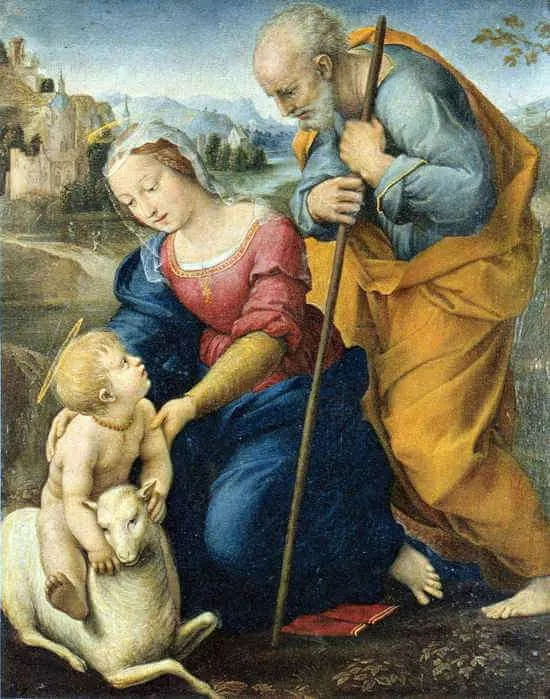
It is amazing that God chose to enter our fallen human condition by becoming Incarnate in the womb of the Blessed Virgin Mary. He was born of her, raised by her and Saint Joseph, acquired human knowledge through their teaching, worked with His hands, experienced the fullness of human society, and did so within the context of an earthly family. Jesus, Mary, and Joseph made up a sacred family, the Holy Family. Today’s feast continues our Christmas Day celebration. This feast falls within the octave of Christmas that culminates January 1 with the Solemnity of the Mother of God.
Though the earthly life shared by Jesus, Mary, and Joseph has always been a source of prayer and inspiration, the feast we celebrate today is relatively new. In 1890, Pope Leo XIII issued his encyclical Sapientiae Christianae (On Christians as Citizens) in which he emphasized the duties of Christians as citizens in a changing world.
At that time, the holy father was concerned about the negative impact that the Industrial Revolution, secularism, and new political ideologies—such as communism—were having upon Christian citizens and the family in particular. He feared that the desire for economic advancement and the communistic separation of God from the political structures would result in the breakdown of the family, the fundamental building block of society. In that encyclical, the Holy Father stated:
“This is a suitable moment for us to exhort especially heads of families to govern their households according to these precepts, and to be solicitous without failing for the right training of their children. The family may be regarded as the cradle of civil society, and it is in great measure within the circle of family life that the destiny of the States Is fostered. Whence it is that they who would break away from Christian Discipline are working to corrupt family life, and to destroy it utterly, root and branch.”
In 1892, Pope Leo XIII issued an apostolic letter, Breve Neminem Fugit, in which he highlighted the importance of the Holy Family for the world as a model for every virtue necessary for human growth.
“To all fathers of families, Joseph is verily the best model of paternal vigilance and care. In the most holy Virgin Mother of God, mothers may find an excellent example of love, modesty, resignation of spirit, and the perfecting of faith. And in Jesus, who was subject to his parents, the children of the family have a divine pattern of obedience which they can admire, reverence, and imitate.”
In 1893, Pope Leo XIII instituted the Feast of the Holy Family as a liturgical celebration to be celebrated in any diocese that requested it. The feast continued to spread, bringing about a renewed appreciation for the sacredness of family life. In 1921, three years after the end of World War I, Pope Benedict XV, sharing the concerns of his predecessor Pope Leo XIII, added the Feast of the Holy Family to the universal Church calendar.
In 1964, while making an apostolic visit to the Holy Land, Pope Paul VI gave a beautiful speech in Nazareth on the Holy Family. This speech is now included in the Office of Readings for the Feast of the Holy Family. He begins by saying, “Nazareth is a kind of school where we may begin to discover what Christ’s life was like and even to understand his Gospel.
Here we can observe and ponder the simple appeal of the way God’s Son came to be known, profound yet full of hidden meaning.” In that speech, the Holy Father wanted to help make Jesus’ family life, culture, and daily interactions as a child tangible and relatable to all so that His childhood, along with the role of His parents, would be a source of reflection for the strengthening of the family.
In 1981, Pope John Paul II, in his apostolic exhortation Familiaris Consortio (The Role of the Christian Family in the Modern World), reinforced the concept of the family as the “domestic church” with its role in fostering prayer, teaching the faith, and nurturing Christian virtues. He highlighted that in the family, the Christian faith is first proclaimed to children, making the family vital to the mission of the Church, and the most fundamental institution in the world.
As we honor the Holy Family, one of the best ways to do so is to prayerfully ponder the daily life that the Holy Family shared. Because Scripture does not record many of their family interactions in Nazareth, much is left to our prayerful imagination. What we do know is that human familial virtue within the Holy Family, especially between mother and Son, was at a level of perfection. The kindness, respect, obedience, unity, charity, and every other Christian virtue that they lived must become the model for Christian living and for family life.
The Holy Family began with apparent scandal when Mary became pregnant while betrothed to Joseph. Mary and Joseph suffered through the gossip and misunderstandings this miraculous pregnancy brought with it. Though Joseph learned of this conception from an angel in a dream, it was his faith and righteousness that empowered him to remain faithful to Mary and love her with a pure heart.
Their family began in Bethlehem, in poverty and rejection. They then fled to Egypt to protect their Child from the paranoia and cruelty of Herod. They later returned to Nazareth and lived faithfully with family and friends. Jesus learned the trade of woodworking from Joseph, grew in wisdom and knowledge, spoke with the elders in the Temple at the age of twelve, and remained obedient to his earthly parents.
Saint Thomas Aquinas teaches us that Jesus had direct knowledge of the Beatific Vision from the moment of His conception and had the fullness of infused knowledge. But He also grew in acquired knowledge, learning with a human mind through sensory experience and conceptual understanding. Mary and Joseph watched this growth, participated in it, grew from it themselves, and Mary “pondered all these things in her heart” (Luke 2:51).
As you ponder their inner family dynamics, relationships, and charity, use them as a model of how best to relate to your own family. Some families more fully imitate those sacred virtues; others fall gravely short. Look into your own heart and ask the Holy Family to teach you how to show greater love to those in your family. Though you will never arrive at perfection, you can receive inspiration from their lives, leading to greater growth and unity, making your own family a greater source of strength for your Christian living.
Source: https://mycatholic.life/saints/saints-of-the-liturgical-year/the-holy-family-of-jesus-mary-and-joseph–feast
The Holy Family of Jesus, Mary, and Joseph Read More »
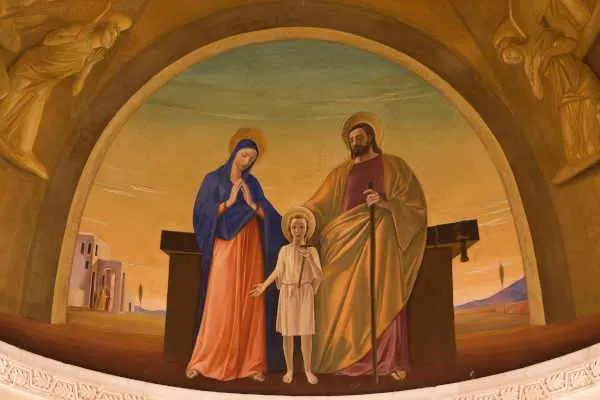
“When they had fulfilled all the prescriptions of the law of the Lord, they returned to Galilee, to their own town of Nazareth. The child grew and became strong, filled with wisdom; and the favor of God was upon him.”
Reflection:
Today we honor family life in general by pausing to ponder the particular and beautiful hidden life within the home of Jesus, Mary and Joseph. In many ways, their daily life together would have been very similar to other families at that time. But in other ways, their life together is entirely unique and provides us with a perfect model for all families.
By God’s providence and design, the family life of Jesus, Mary and Joseph was spoken of in the Scripture very little. We read of the birth of Jesus, the presentation in the Temple, the flight into Egypt and the finding of Jesus in the Temple at age twelve. But other than these stories of their life together, we know very little.
The line from today’s Gospel quoted above does, however, give us some insight worth pondering. First, we see that this family “fulfilled all the prescriptions of the law of the Lord…” Though this is in reference to Jesus being presented in the Temple, it should also be understood to apply to all aspects of their life together. Family life, just like our individual lives, must be ordered by the laws of our Lord.
The primary law of the Lord regarding family life is that it must share in the very unity and “communion of love” found in the life of the Most Holy Trinity. Each person of the Holy Trinity has perfect respect for the other, gives selflessly to each other without reserve, and receives each person in their totality.
It is their love that makes them one and enables them to act together in perfect harmony as a communion of divine Persons. Though Saint Joseph was not immaculate in his nature, the perfection of love did live in his divine Son and in his immaculate wife. This overwhelming gift of their perfect love would have daily drawn him into the perfection of their lives.
Ponder your own closest relationships today. If you are blessed with a close family, ponder them. If not, ponder the persons put into your life who you are called to love with familial love. Who are you to be there for in good times and in bad? Who are you to sacrifice your life for without reserve? Who are you to offer respect, compassion, time, energy, mercy, generosity and every other virtue? And how well do you fulfill this duty of love?
Reflect, today, upon the fact that God wants you to share in a communion of life, not only with the Most Holy Trinity but also with those around you, especially your family. Try to ponder the hidden life of Jesus, Mary and Joseph and seek to make their family relationship the model for how you love others. May their perfect communion of love be a model for us all.
Source: https://catholic-daily-reflections.com/2023/12/30/the-family-as-a-communion-of-love-3/
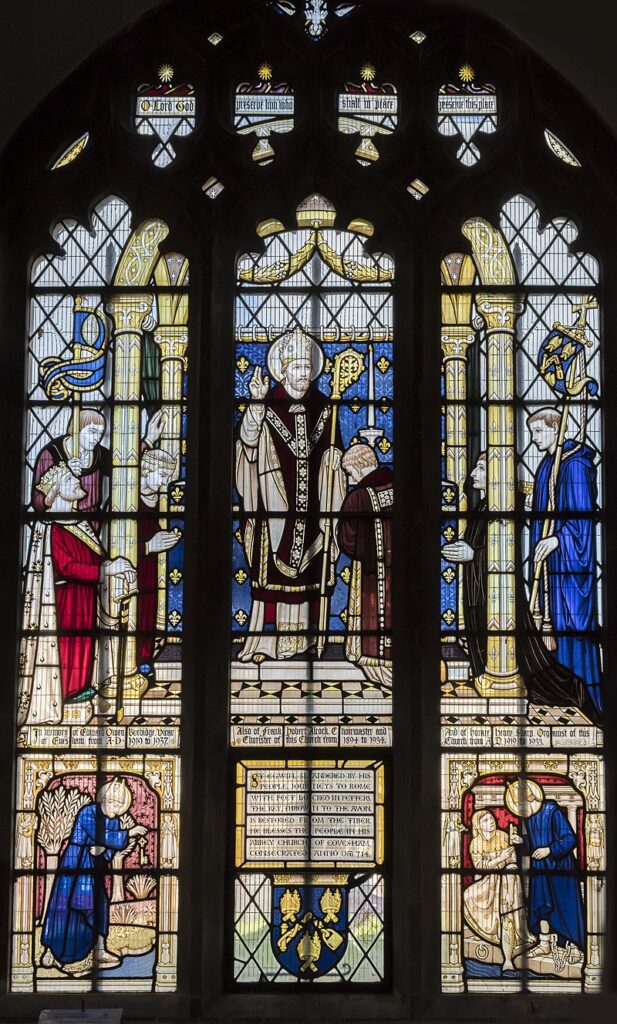
Profile
Egwin came from English nobility, and the descendant of Mercian kings. He was consecrated to God in his youth. He was a Benedictine monk and the Bishop of Worcester, England from 692 to 711.
There was a need in his diocese for some reform, but Egwin let it get out of hand, and he was charged with being too severe with his priests. To answer the charges, and show his repentance for any harm done, he made a penitial pilgrimage to Rome. Legend says that he locked his feet in shackles and threw the key into the River Avon; when he arrived in Rome the key was miraculously found in the belly of a fish he bought in the market.
Egwin founded the Benedictine monastery of Evesham, England; the site was chosen because of an apparition of the Virgin Mary to a local herdsman. It became one of the great Benedictine houses of the Middle Ages.
Born
Died
Canonized
Representation
Source: https://catholicsaints.info/saint-egwin-of-worcester/
https://en.wikipedia.org/wiki/Egwin_of_Evesham#/media/File:Evesham,_St_Lawrence’s_church_window_(38248535402).jpg
Saint Egwin of Worcester Read More »
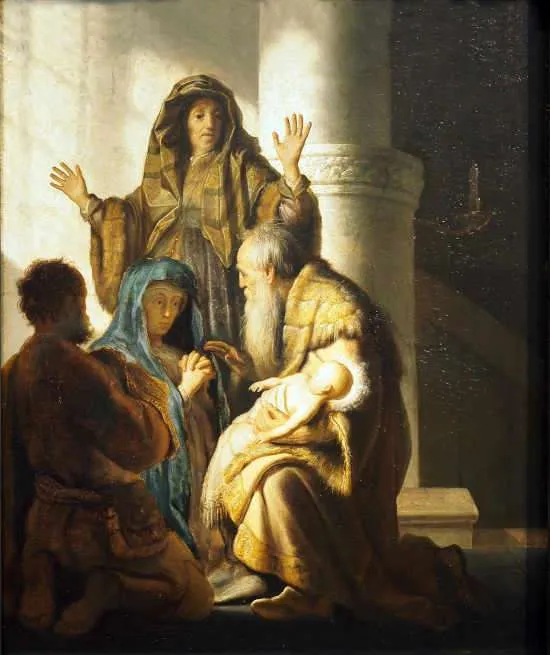
“There was a prophetess, Anna…She never left the temple, but worshiped night and day with fasting and prayer. And coming forward at that very time, she gave thanks to God and spoke about the child to all who were awaiting the redemption of Jerusalem.”
Reflection:
We all have a unique and sacred calling given to us from God. Each one of us is called to fulfill that calling with generosity and wholehearted commitment. As the famous prayer of Saint John Henry Newman puts it:
“God has created me to do Him some definite service. He has committed some work to me which He has not committed to another. I have my mission. I may never know it in this life, but I shall be told it in the next. I am a link in a chain, a bond of connection between persons…”
Anna, the prophetess, was given a very unique, one-of-a-kind mission. When she was young, she was married for seven years. Then after losing her husband, she remained a widow until she was eighty-four. During those decades of her life, the Scripture reveals that “She never left the temple, but worshiped night and day with fasting and prayer.” What an incredible calling from God!
Anna’s unique calling was to be a prophetess. She fulfilled this calling by allowing her whole life to be a symbol of the Christian vocation. Her life was spent in prayer, fasting and, most especially, in anticipation. God called her to wait, year after year, decade after decade, for the one and definitive moment of her life: her encounter with the Christ Child in the Temple.
Anna’s prophetic life tells us that we each must live our lives in such a way that our ultimate goal is to continually prepare for the moment when we meet our divine Lord in the Temple of Heaven. Unlike Anna, most are not called to literal fasting and prayer every day all day within the church buildings.
But like Anna, we must all foster an interior life of ongoing prayer and penance, and we must direct all of our actions in life to the praise and glory of God and the salvation of our souls. Though the way this universal vocation is lived out will be unique to each and every person, Anna’s life is nonetheless a symbolic prophecy of every vocation.
Reflect, today, upon how well you imitate this holy woman in your own life. Do you foster an interior life of prayer and penance and daily seek to devote yourself to the glory of God and the salvation of your soul? Evaluate your life this day in light of the wonderful prophetic life of Anna that we are given to ponder.
Source: https://catholic-daily-reflections.com/2023/12/29/a-unique-and-sacred-calling-2/
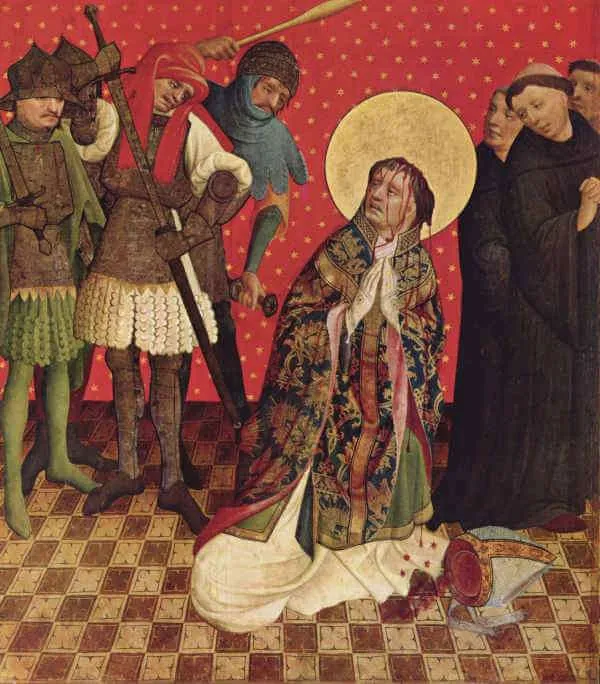
In December 1154, twenty-one-year-old Henry II became King of England. At that time, England and Normandy had just ended a period of civil war, referred to as “The Anarchy.” As a result, England was politically divided and weakened. The new young king urgently needed a capable and strong chancellor to help him as he worked to reunite the kingdom, assert control, and implement legal and administrative reforms.
For this daunting task, Archbishop Theobald of Canterbury recommended his archdeacon, Thomas Becket, for the job. The king accepted his recommendation, and Archdeacon Thomas Becket became the second most powerful civil authority in England.
As chancellor, Thomas oversaw the administration of the royal chancery, including the creation and issuance of official documents. He served as an important legal advisor to the king, held responsibility for the highest court of appeals, was the chief diplomat, represented the king in foreign and Church matters, and assisted in the kingdom’s financial matters.
Chancellor Thomas Becket and King Henry II not only worked well together in the administration and reformation of the kingdom, they also became close friends. They enjoyed riding together, hunting, indulging in a luxurious lifestyle, and every form of comradery. Becket’s administrative skills helped the king reassert his control over the kingdom and even portions of the Church.
The two fought side by side in battles and were said to be of one mind and heart in all that they did. Although Chancellor Becket retained his status as a deacon, his lifestyle was notably secular. Despite this, he was widely recognized as a man of faith and purity, even amidst his indulgences and various excesses.
In 1161, six years after Deacon Thomas became Chancellor of England, Archbishop Theobald of Canterbury died. The Archdiocese of Canterbury was the most important diocese in England, and the archbishop was considered the senior English bishop. Desirous of exerting even more influence and control over the Church in England, King Henry wanted his close friend, Chancellor Thomas Becket, to become archbishop.
Henry presumed that Thomas would continue to act as his chancellor, helping the king to make further inroads into the Church’s governance. Thomas, however, was staunchly opposed to the idea. He knew of Henry’s intentions for the Church, and Becket also knew that if he were the archbishop, he would have to fulfill that role with the same strength as he had fulfilled the role of chancellor.
In other words, he knew he would have to defend the Church against King Henry. The king appointed him anyway, and the pope confirmed his appointment. In June 1162, Becket was first ordained as a priest and, the very next day, consecrated as a bishop, assuming the role of Archbishop of Canterbury.
Within a year of his consecration, Archbishop Thomas began a profound spiritual transformation. He shed the luxuries he was accustomed to, devoted himself to prayer, fasted, and did penance. While the king wanted Thomas to remain as Chancellor of England so as to unite the two roles in one person at the service of the king, the archbishop refused and resigned his chancellorship. This angered the king, and their close friendship immediately began to suffer.
Over the next year and a half, King Henry and Archbishop Thomas began to clash. The archbishop attempted to regain church property that had been seized by the king, asserted the independence of the Church, and argued that clerics who violated the law could only be tried in Church courts, not civil. In response, Henry began to harass the archbishop, impose arbitrary fines on him, and make false accusations of embezzlement.
In January 1164, King Henry issued sixteen decrees, known as the Constitutions of Clarendon, that sought to limit the powers of the Church and expand state authority. He required the bishops to consent to these decrees. While some bishops acquiesced, Archbishop Thomas Becket staunchly opposed them. In October of that same year, the king formalized his accusations and put Archbishop Thomas on trial in Northampton Castle.
In a sham trial, Becket was found guilty of contempt of royal authority and misappropriation of funds during his time as Chancellor. With a guilty verdict, the king demanded Becket resign his archbishopric, which he refused to do. Instead, he hid and sailed to France where he took refuge in the court of King Louis VII. Shortly afterwards, Becket traveled to Sens, France, where Pope Alexander III was living in exile. The pope offered Archbishop Thomas his full support and permitted him to live in the Cistercian Abbey of Pontigny in Burgundy while negotiations took place with King Henry.
Over the next four years, negotiations among King Henry II, Pope Alexander III, and Archbishop Thomas Becket continued but made little progress. The archbishop continued to firmly oppose the Constitutions of Clarendon, and the king continued to insist on them. Archbishop Thomas did make some minor concessions, but it wasn’t until the pope sent a delegation to Henry that Henry finally agreed to permit Becket to return to Canterbury.
The faithful were overjoyed at the return of their archbishop, but soon after, tensions flared when Archbishop Becket excommunicated three bishops. These bishops had crowned King Henry’s son as the future king, an act traditionally reserved for the Archbishop of Canterbury, thus infringing upon his rights. When King Henry learned of the excommunication, he sent four knights to bring the archbishop to Winchester where he was to defend his actions.
One tradition states that as the king gave his orders to the knights, he angrily said, “Will no one rid me of this turbulent priest?” The knights confronted the archbishop in his cathedral, but the archbishop refused to go with them. They then gathered their weapons and charged into the church saying, “Where is Thomas Becket, traitor to the King and country?”
As soon as they reached him, the knights began to split open his skull while he clung to a pillar in the cathedral as the monks sang Vespers. His final words were, “For the name of Jesus and the protection of the church, I am ready to embrace death.” His brains spilled upon the cathedral floor, and a cleric who accompanied the knights then stepped upon Becket’s neck saying, “We can leave this place, knights, he will not get up again.”
Archbishop Becket was immediately praised as a martyr, and veneration of him quickly spread across England. Three years after Thomas Becket’s death, Pope Alexander III declared him a saint. Four years after Thomas Becket’s death, King Henry visited the saint’s tomb and did public penance for the role he played in his death. Saint Thomas Becket’s tomb became a popular place of pilgrimage in Europe, and numerous miracles were attributed to his intercession.
As we honor this heroic archbishop and saint of God, ponder the firm resolve that Saint Thomas had in defense of the Church. Guided by divine inspiration, he knew in his heart the necessity to resist the king’s unjust intrusion into the Church’s governance and administration. Honor Saint Thomas by invoking his intercession, praying fervently for the universal right to worship God freely, and for the Catholic Church’s liberty to spread the Gospel and administer the Sacraments unhindered.
Source: https://mycatholic.life/saints/saints-of-the-liturgical-year/29-december-saint-thomas-becket-bishop-and-martyr–optional-memorial
Saint Thomas Beckett, Bishop and Martyr Read More »
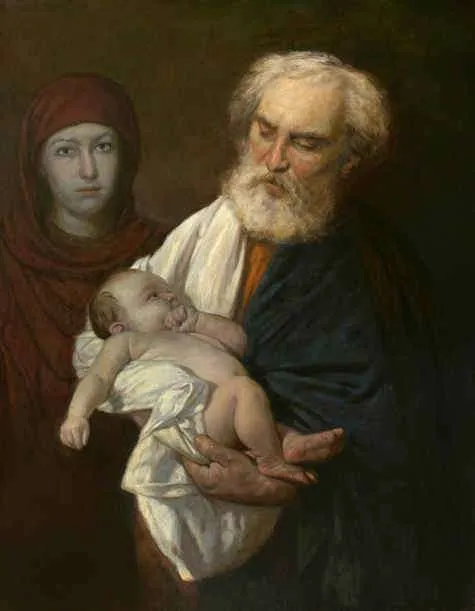
“The child’s father and mother were amazed at what was said about him; and Simeon blessed them and said to Mary his mother, “Behold, this child is destined for the fall and rise of many in Israel, and to be a sign that will be contradicted (and you yourself a sword will pierce) so that the thoughts of many hearts may be revealed.”
Reflection:
When something truly supernatural takes place, the human mind that grasps that supernatural event is filled with wonder and awe. For Mother Mary and Saint Joseph, their minds were continually filled with a holy amazement at what they were witnessing.
First there was the Annunciation to our Blessed Mother. Then the angel appeared to Joseph in a dream. Then the miraculous birth took place. Shepherds came to adore their child and revealed that a multitude of angels had appeared to them. Shortly after this, the Magi from the East showed up to do homage to their child.
And today we are given the story of Simeon in the Temple. He spoke of the supernatural revelation he had received about this Child. Time after time, the miracle of what was taking place was placed before Mother Mary and Saint Joseph, and each time they responded with wonder and awe.
Though we are not blessed to encounter this supernatural event of the Incarnation in the same way that Mary and Joseph did, we are nonetheless able to share in their “amazement” and their “wonder and awe” by prayerfully pondering this supernatural event. The mystery of Christmas, which is a manifestation of God becoming man, is an event that transcends all time and space. It’s a spiritual reality of supernatural origin and is therefore an event that our minds of faith have full access to.
Just like Mother Mary and Saint Joseph, we must hear the angel at the Annunciation, the angel in Joseph’s dream, we must witness the shepherds and Magi and, today, we must rejoice with Simeon as he gazed upon the newborn Messiah, the Savior of the World.
Reflect, today, upon how fully you have allowed your mind to engage the incredible mystery that we celebrate this holy season. Have you taken time to prayerfully read the story once again? Are you able to sense the joy and fulfillment experienced by Simeon and Anna? Have you spent time considering the minds and hearts of Mother Mary and Saint Joseph as they experienced that first Christmas? Let this deep supernatural mystery of our faith touch you this Christmas season in such a way that you, too, are “amazed” at what we celebrate.
Source: https://catholic-daily-reflections.com/2023/12/28/wonder-and-awe-3/
Add San Jose Filipino Ministry as a new recipient, Send your donation using"donate@dosjfm.org"
Payable to - San Jose Filipino Ministry
Address - Poong Jesus Nazareno Filipino Catholic Center (PJNFCC); 3700 W. Orange Ave., Anaheim CA 92804
Poong Jesus Nazareno Filipino Catholic Center (PJNFCC); 3700 W. Orange Ave., Anaheim CA 92804
Phone: (657) 214-2507
Mobile (657) 208-2038
info@dosjfm.org

Poong Jesus Nazareno Filipino Catholic Center (PJNFCC); 3700 W. Orange Ave., Anaheim CA 92804
Phone: (657) 214-2507
Mobile (657) 208-2038
info@dosjfm.org
Add San Jose Filipino Ministry as a new recipient, Send your donation using"donate@dosjfm.org"
Payable to - San Jose Filipino Ministry
Address - 1235 S Magnolia Ave
Anaheim, CA 92804-5115
San Jose Filipino Ministry. All rights reserved. 2021 © Powered by Phoenix Virtual Solutions
Sponsored by EverClear Hospice and Palliative Care