Author name: Sani

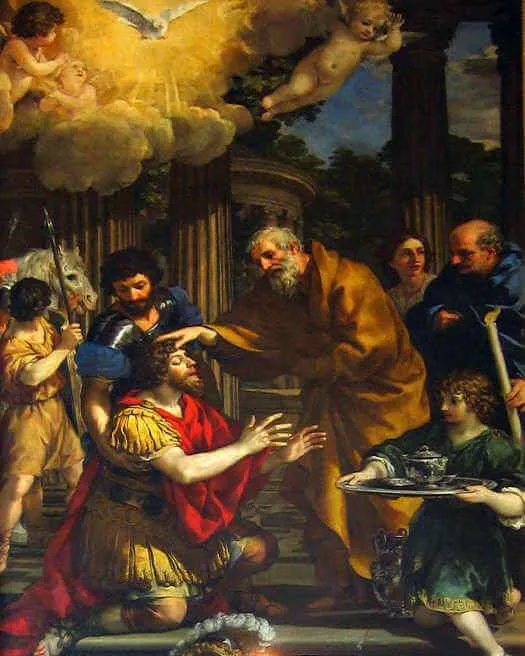
Acts 9:17

Becoming an Evangelist

“Saul, my brother, the Lord has sent me, Jesus who appeared to you on the way by which you came, that you may regain your sight and be filled with the Holy Spirit.”

Reflection:

Saint Paul (who in Hebrew was known as Saul of Tarsus) was a devout Jewish Pharisee who vigorously defended the law. After Jesus’ Ascension into Heaven, the newfound Christian faith began to grow rapidly. As a result, Saul of Tarsus vigorously tried to end this new religion which he perceived as erroneous. He traveled about looking for followers of Jesus to arrest and imprison.

Saul even gave his consent to the stoning of the deacon, Saint Stephen, the first martyr. However, on one of his journeys, Saul had a vision of the risen Christ Who spoke to him gently, saying, “Saul, Saul, why are you persecuting me?” (Acts 9:4). It was in that encounter that Saul was left blinded for three days.

The line quoted above are the words of Ananias, a devout disciple of Jesus. Ananias had also received a vision from Jesus Who told him to go to Saul of Tarsus and to lay his hands on him so that he would be healed. Ananias was also told that Saul was “a chosen instrument” through which the Gospel would be preached to the “Gentiles, kings, and children of Israel.”

Though there are many fascinating aspects to the story of Saint Paul and his conversion, it is also inspiring to reflect upon the way in which God first converted him. Jesus was not harsh with Saul. He was not condemning. Instead, he saw the goodness and vigor of Saul and knew that he would respond if he were given the opportunity. Though Jesus used the powerful action of striking him blind, He did so because He saw so much potential for good within Saul.

This same truth applies to our lives. Each one of us has incredible potential for good, and God does see this. God is aware of all that He can do with us and is seeking to draw us into His mission of sharing the Gospel with those in need. The question to ponder is whether or not you have responded to the ways that God has spoken to you and invited you to serve Him with your life.

Saul’s encounter with Jesus was powerful and transforming not only because he was blinded by this vision—it was powerful and transforming, first and foremost, because Saul wanted to serve God but was trying to do so in an erroneous way. And once that error was corrected, Saul responded in an immediate and complete way. As a result, Saul became one of the greatest evangelists in the history of the Church.

Reflect, today, upon the desire in the heart of Jesus to invite you into His mission. Though you may be unaware of the many ways God can use you, Jesus is fully aware. He sees all of your gifts and knows who He wants to draw to Himself through you. Say “Yes” to Him this day and do so with every fiber of your soul. Doing so will allow God to do great things through you.

Source: https://catholic-daily-reflections.com/2024/01/24/becoming-an-evangelist-3/

Acts 9:17 Read More »

Saint Francis de Sales, Bishop and Doctor

Patron Saint of authors, journalists, writers, deaf persons, educators, Canonized April 8, 1665 by Pope Alexander VII, Declared a Doctor of the Church in 1877 by Pope Pius IX

Saint Francis de Sales was born fifty years after an Augustinian priest named Father Martin Luther ignited the Protestant Reformation, and just twenty-five years after John Calvin’s anti-Catholic teachings spread to Geneva, Switzerland. Francis was born into a noble family in the Duchy of Savoy, modern-day France, not far from Geneva.

Because of his noble family heritage and his father’s influence, Francis was given an excellent education, eventually earning doctorates in civil law and theology. His father had selected a noblewoman for Francis to marry. He also had planned for his gifted son to enter into politics, but Francis was led in a different direction.

In 1586, at the age of nineteen, Francis attended a Calvinist lecture on predestination, which led him to believe he was destined for hell. This greatly affected him, and he struggled with the idea for months. Eventually, through the intercession of our Blessed Mother and the Memorare prayer, Francis was freed from this error and turned his focus to the pure love of God.

After experiencing firsthand the effects that erroneous theology can have on a person, Francis devoted himself to a life of celibacy and began pursuing his God-given desire to be a priest. Though reluctant at first, his father eventually agreed to his son’s ordination and then helped to have him appointed to an important position in the Diocese of Geneva.

Because Geneva was under the control of the Calvinists, Father de Sales preached and resided in a cathedral some twenty miles south of Geneva. As a newly ordained priest, he began to make a name for himself. His sermons were preached with gentlemanlike qualities, showing great respect for those who disagreed with him.

Francis never shied away from the theological truths under attack by the errors of the Reformation. He avoided controversy and criticism, focusing instead on virtues, prayer, holiness, and overcoming sin. Despite his kind nature and charitable approach, he was harshly treated by the many local anti-Catholics, some of whom even threatened his life.

In 1602, at the age of thirty-five, Father de Sales was ordained Bishop of Geneva, and his evangelical fervor moved ahead at full throttle. His intention was to win back the citizens of Geneva to the Catholic Church. So many had left, following the teachings of Calvin. For the first couple of years, Bishop de Sales was ineffective in winning over many converts.

But little by little, one soul at a time, he began to have success. His success especially came in the form of placing written explanations of the faith under people’s doors, inviting them back to the Catholic Church. His preaching was clear, respectful, truthful, and charitable. His motto was “He who preaches with love, preaches effectively.”

Bishop de Sales was a very practical man, especially when it came to his theology. He believed that holiness was not reserved for those in the monastery or convent. He believed that everyone, in every state in life, within every occupation, was called to a life of sanctity. This conviction is most clearly seen in his most famous published book, Introduction to the Devout Life.

This book was a compilation of letters he had sent to his spiritual directees over the years, which began by giving clear and practical advice on the importance of being purged of sin and of attachment to sinful habits. It then taught how to grow in the virtues, especially humility; navigate temptations; and overcome anxiety and sadness. It also provided exercises on how to renew one’s life of devotion, which was nothing other than loving and pleasing God with one’s life.

This book, along with other writings, won many to the faith. In 1610, he assisted one of his spiritual directees, the future Saint Jane de Chantal, to establish the women’s Order of the Visitation of Holy Mary. His inspiring letters to her became a source of spiritual formation for the women of her newly founded order.

After turning down advancements within the Church, Bishop de Sales chose instead to devote his time and energy to the salvation of souls within his local diocese. It is said that Bishop de Sales won back as many as 40,000 Catholics who had become Calvinists. After nine years as a priest and twenty years as a bishop, Bishop de Sales suffered a stroke and died soon after. It is believed that one of the last things he wrote were the words “Humility, humility, humility,” his dying exhortation to his flock.

As we honor this holy bishop, try to imagine what it would have been like had he been your shepherd. He would have taken your call to holiness seriously. He would have exhorted you to overcome sin by fully confessing your sins in the Sacrament, and to then grow in virtue, especially humility. He would have helped you to learn and believe every truth revealed by God through His Catholic Church, and to seek every practical way imaginable by daily prayer and meditation to become a saint. He would have regularly reminded you that holiness is not reserved for the monk alone.

You, within the context of your state in life, are also called. Respond as one of his flock and resolutely determine to follow the path God has in store for you, seeking to love Him and glorify Him with your life.

Source: https://mycatholic.life/saints/saints-of-the-liturgical-year/january-24-saint-francis-de-sales-bishop-and-doctor/

Saint Francis de Sales, Bishop and Doctor Read More »

Mark 4:20

The Deepest Desire of Your Heart

“Those sown among thorns are another sort. They are the people who hear the word, but worldly anxiety, the lure of riches, and the craving for other things intrude and choke the word, and it bears no fruit.”

Reflection:

This description from the Parable of the Sower seems to describe a growing number of people in our world today. The first grouping of people mentioned in this parable have little to no faith and are represented by the seed sown on the path which is quickly consumed by satan.

The second group of people have a little initial faith and are represented by seed sown on rocky ground. The passage above represents the third grouping of people who are like seeds sown in good soil but are also among thorns. The fourth are those who are like rich soil and the Word of God grows deeply in their lives. Let’s consider the third grouping of people in more detail. 

There are three evils that choke off the Word of God in our lives: “worldly anxiety, the lure of riches, and the craving for other things.” In our day and age, there are many who encounter various types of anxieties, are consumed with a desire for material wealth and find themselves craving many other things. In all three cases, these interior temptations have the effect of overwhelming the pure Truth of the Word of God in their lives.

Anxiety is a common problem today. And though this is a psychological struggle much of the time, it also can have spiritual roots. Anxiety is the struggle of worrying excessively, nervousness about many aspects of life and an uneasiness about the future. In this case, when the Person of Jesus and the Truth of the Gospel message does not consume and direct our lives, we are left on our own to “figure it out.” And this loneliness will almost always lead us into a loss of hope, fear and lack of deep peace.

Most people who struggle with anxiety will constantly look for a cure. And one place they often look is the deceptive consolation of material wealth or the “craving for other things.” Imagine if you won a tremendous amount of money. Would this resolve your worries in life? Though you may be tempted to think it would, deep down we all know that this is a lie. Material wealth is never a reliable source of satisfaction in life. The same is true with almost everything else we “crave” in life. One thing and one thing alone can satisfy. And that one thing is God.

Reflect, today, upon those things in your life that seem to occupy your mental energy. What do you worry about, hope for, deeply desire? What do you falsely believe will relieve your interior struggles? What do you crave?

Take time today to remind yourself of the irrefutable truth that God, His holy will and all that He has revealed as True is the only source of satisfaction. Seek to let that Truth sink in deeply in your heart so that the Truths of God will grow and bear the abundant good fruit you so deeply desire.

Source: https://catholic-daily-reflections.com/2024/01/23/the-deepest-desire-of-your-heart-2/

Mark 4:20 Read More »

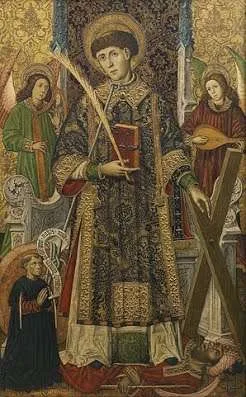
Saint Vincent, Deacon and Martyr

Patron Saint of vinegar makers, wine makers, brickmakers, and sailors; Pre-Congregation canonization

Saint Augustine deeply admired today’s deacon-martyr, Saint Vincent of Saragossa. The above quote comes from one of five existing homilies Augustine delivered on the heroism, faith, and witness of this saintly man, whose martyrdom occurred during Diocelatian’s fierce persecution of the Church in the early 300s.

But the blood of martyrs is a holy sacrifice that extinguishes the fires of the devil and fuels the faith of those who ponder such sacred sacrifices. As Augustine would preach in a subsequent sermon, “the devil suffered greater torments from Vincent not being vanquished than Vincent did from the devil persecuting him.”

Vincent was born in today’s Spain and carries the title of “protomartyr,” indicating he was the first, or “proto,” man to die for Christ on the Iberian Peninsula. Little is known of his life, but the testimony of Saint Augustine sheds light on his character. As with many early saints, many legends are attributed to him.

According to these legends, the Bishop Valerius of Saragossa, Spain, had a speech impediment, which led him to first ordain and then appoint Deacon Vincent, who was well spoken, as his personal preacher. The local Roman governor at the time, Dacian, ruthlessly carried out the edict of the Emperor Diocletian to force Christians to renounce their faith by burning incense to Roman gods.

Both the elderly bishop and his deacon were arrested by Dacian and imprisoned. While in prison, Deacon Vincent said to the bishop, “Father, if you order me, I will speak.” The bishop replied, “Son, as I committed you to dispense the word of God, so I now charge you to answer in vindication of the faith which we defend.” That was all Vincent needed.

At that moment, the words of Holy Scripture were fulfilled in Vincent, “When they hand you over, do not worry about how you are to speak or what you are to say. You will be given at that moment what you are to say. For it will not be you who speak but the Spirit of your Father speaking through you” (Matthew 10:19–20). The deacon gave his “sermon” with serenity in the face of torture and death, and the governor was tormented by his own outrage. 

Legend has it that Vincent was scourged, stretched on the rack, fixed to a fiery grate, lacerated with iron hooks, burned with hot iron, and then thrown onto the prison floor covered with broken glass. Through it all, Vincent remained at peace, for he did not fear “those who kill the body but cannot kill the soul” (Matthew 10:28). The legend concludes that Vincent’s joy in the face of this torture was so great that it caused one of his jailers to immediately convert.

The governor, however, was not yet done. He gave Vincent a soft bed on which to recuperate, hoping to entice him to renounce his God through comfort. But neither threats of violence nor promises of comforts held any appeal for Vincent. No sooner was he laid upon the bed than he died. His body was thrown to vultures, but ravens came to his defense.

Another account, from a sermon by Saint Leo, states that Vincent’s body was cast into the sea, but Providence washed him ashore, and his fellow Christians gave him a dignified burial where a shrine was later erected over his grave. The place in southern Spain where, according to legend, these final events unfolded, is now called Cape Saint Vincent. Flocks of ravens and vultures still hover over this very coast.

Source: https://mycatholic.life/saints/saints-of-the-liturgical-year/january-22-saint-vincent-deacon-and-martyr/

Saint Vincent, Deacon and Martyr Read More »

Mark 3:34-35

Doing the Will of God

“Here are my mother and my brothers.  For whoever does the will of God is my brother and sister and mother.”

Reflection:

Jesus said many things that caused people to pause and think. Today’s Gospel passage is one of those times. Just prior to the passage quoted above, Jesus was told that His mother and brothers were outside looking for Him. After hearing this, instead of going to greet them, He asked those around Him, “Who are my mother and my brothers?” Then He looked around and answered His own question with the above quoted Scripture.

What may have caused some people to pause and think at that time, and even now when this passage is read, is that Jesus’ comments can easily be misunderstood. Some will conclude that He was distancing Himself from His own family and that He was even disowning them to a certain extent. But nothing could be further from the truth.

First of all, we know that Jesus had a perfect love for His dear mother Mary and that she loved Jesus with a perfect reciprocal love. As for His “brothers,” it was common to refer to one’s extended family (such as cousins) as brothers and sisters. Therefore, these brothers who were coming to see Jesus were relatives to one degree or another. And though our Blessed Mother, the mother of Jesus, was perfect in every way, Jesus’ extended family was not. Recall that some of them thought Jesus was out of his mind and tried to prevent His public ministry.

But back to our question: Was Jesus disowning His family members in some way? Certainly not. Instead, He was establishing a deeper context for His new family in grace. Though biological bonds are a gift and must be respected and cherished, the spiritual bonds established by our joint conformity to the will of God is of much greater importance.

Jesus simply pointed to this fact, elevating the spiritual family bond over the purely natural. Of course, it’s also important to point out that Jesus’ mother was first and foremost His mother, not only because she gave physical birth to Jesus, but primarily because she was in perfect conformity to the will of God with Him and, thus, the most intimate member of His family by grace.

And the same can be true for all of us. When we conform our wills to the will of God, we become Jesus’ “mother” in the sense that He enters our world through us. And we become His “brothers and sisters” in that we become intimate members of His eternal family and enjoy a profound and spiritual union with Him.

Reflect, today, upon the fact that you are called to be so much more than just a physical brother or sister of Christ Jesus. You are called to the most intimate and transforming familial union imaginable. And this union is more fully accomplished when you seek to fulfill the will of God with your whole heart, mind, soul and strength.

Source: https://catholic-daily-reflections.com/2024/01/22/doing-the-will-of-god-3/

Mark 3:34-35 Read More »

Day of Prayer for the Legal Protection of Unborn Children

We remember today the tragic United States Supreme Court decision, Roe v. Wade, issued on January 22, 1973, that essentially legalized abortion in all fifty states for almost fifty years. By God’s grace, that decision was finally overturned on June 24, 2022, by the Supreme Court case Dobbs v. Jackson.

Though that latter decision gives us much to be grateful for, the battle for the sanctity of life must continue, since the Dobbs v. Jackson ruling simply deferred the decision on abortion to state legislatures. Thus, abortion remains legal in the majority of states in the United States and continues to be legal in many other countries around the world.

Throughout the world, the World Health Organization (WHO) estimates that there are approximately 40–50 million abortions every year. That translates into about 125,000 abortions every day. Up until the Dobbs v. Jackson decision, the WHO further estimated that twenty-two percent of all pregnancies in the United States ended by abortion, over one million abortions every year. These numbers are conservative estimates, given that the WHO promotes abortion.

Too often, abortion advocates premise their arguments on a woman’s right to do what she wants with her own body. Yet a baby in the womb is a new life, distinct from the mother’s, with as much dignity, beauty, and value as any other life, including the mother’s. The psalmist puts it this way, “You formed my inmost being; you knit me in my mother’s womb. I praise you, because I am wonderfully made; wonderful are your works!” (Psalm 139:13–14).

It is true that an unplanned pregnancy brings with it a myriad of concerns. But no such concern is so grave that it justifies taking an innocent life at its most vulnerable stage of development. “Such attacks strike human life at the time of its greatest frailty, when it lacks any means of self-defense” (Saint John Paul II, Evangelium Vitae, #11).

Much rhetoric has unsuccessfully attempted to justify abortion. Yet while debate over abortion never ceases, eternal truths never change. “Human life must be respected and protected absolutely from the moment of conception. From the first moment of his existence, a human being must be recognized as having the rights of a person—among which is the inviolable right of every innocent being to life.” (Catechism of the Catholic Church #2270).

In response to this ongoing attack against human life, the bishops of the United States have designated today as “a particular day of prayer for the full restoration of the legal guarantee of the right to life and of penance for violations to the dignity of the human person committed through acts of abortion” (GIRM #373).

Note that our bishops wisely call for two distinct actions today. First, they call for prayer so that the innate right to life is legally guaranteed. Without this most fundamental right, no other rights matter. Second, they acknowledge the countless violations that have already been committed against human dignity by abortion, and call us to do penance to help atone for those violations.

Today, call to mind that the weakest, most vulnerable, and most at-risk human beings need you. Statistically speaking, the most dangerous place to live is within the womb. Also call to mind every mother who finds herself in an unplanned pregnancy.

Both child and mother need your prayers and your acts of penance—that every mother makes the choice for life, and that the right to life will be enshrined in every civil law throughout the world. Your acts of penance help atone for every abortion committed, especially for the repentance and healing of everyone involved. Don’t underestimate the power of your prayers and penance. Unite yourself to the Body of Christ, and do your part to bring healing to the past and true hope for the future.

Source: https://mycatholic.life/saints/saints-of-the-liturgical-year/january-22-day-of-prayer-for-the-legal-protection-of-unborn-children-usa-memorial/

Day of Prayer for the Legal Protection of Unborn Children Read More »

Mark 3:22

Daily Humble Repentance

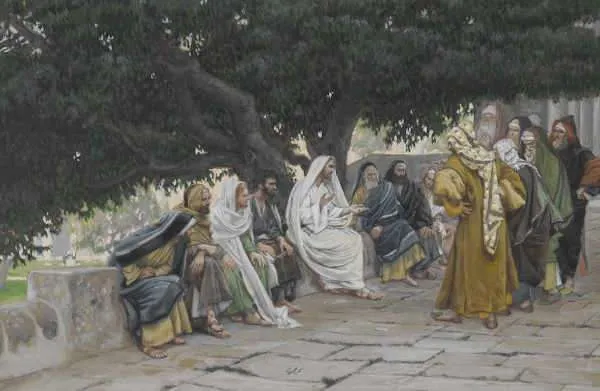
“The scribes who had come from Jerusalem said of Jesus, “He is possessed by Beelzebul,” and “By the prince of demons he drives out demons.”

Reflection:

By this time, Jesus was fully engaged in His public ministry. He had healed the sick and lame, cast out many demons, called the Twelve Apostles and given them authority over evil spirits, and preached the Good News to many. Just prior to this Gospel passage, some of Jesus’ own extended family had criticized Him, claiming that Jesus was out of His mind. Then the scribes began their public condemnation of our Lord.

The scribes were faced with a dilemma. They saw Jesus cast out demons from those who were possessed, so they needed to come up with an explanation. They concluded that Jesus was able to cast out demons by the power of the prince of demons.

Jesus goes on to address the scribes’ criticism by identifying their condemnation as a sin against the Holy Spirit. Jesus explains that every sin can be forgiven except the sin against the Holy Spirit. He says that “whoever blasphemes against the Holy Spirit will never have forgiveness, but is guilty of an everlasting sin.” Why is that?

In this case, the sin against the Holy Spirit is not only the false condemnation spoken by the scribes against Jesus. First and foremost, their sin is one of obstinacy. They spoke falsely about our Lord, which is a grave sin, but what’s worse is that they did so in such a way that they remained firmly grounded in their error. They refused to humble themselves and reconsider their error. And it is this stubbornness that leaves them with an “everlasting sin.”

Perhaps the most important lesson we can learn from this passage is that we must avoid remaining stuck in our pride in an obstinate way. We must always be humble and be ready and willing to reexamine our actions. Humility will help us to perpetually remember that we can easily become misled in life.

And though this will happen from time to time in various ways, if we remain humble and open to change, then we can always receive the mercy of God and find forgiveness. But if we are prideful and continually refuse to admit our errors, then we are also potentially guilty of a sin against the Holy Spirit.

Reflect, today, upon any tendency you have in your life to be stubborn. Stubbornness can be a virtue when the stubbornness is an unwavering commitment to the Gospel and to the will of God. However, you must always intentionally reexamine the path you are on so that you can change when that path begins to deviate from the Truth of God. Humble yourself this day and allow God’s voice to lead you back from any errors with which you now struggle.

Source: https://catholic-daily-reflections.com/2024/01/21/daily-humble-repentance-2/ 

Mark 3:22 Read More »

Mark 1:14-15

True Fulfillment

“After John had been arrested, Jesus came to Galilee proclaiming the gospel of God: “’This is the time of fulfillment. The kingdom of God is at hand. Repent, and believe in the gospel.’”

Reflection:

Jesus begins His public ministry immediately after being tempted by the devil while in the desert for forty days. As He begins His ministry, He declares: “This is the time of fulfillment.” First, the beginning of Jesus’ public ministry was, historically speaking, the “time of fulfillment,” in that the new era of the Gospel and grace had just begun.

But the “time of fulfillment” of which Jesus speaks also refers to each and every time that we hear the Gospel and respond. We do this by sincerely repenting of our sins and by becoming a fuller member of God’s Kingdom. But ponder for a moment the specific word “fulfillment.” What does this mean?

The word “fulfilled” can be contrasted with its opposite “unfulfilled.” To be unfulfilled is always undesirable. In this world, many people find themselves unfulfilled and try to fill this void with many things. Interestingly, the three temptations that Jesus had just experienced in the desert are among the temptations that so many people give into during their search for fulfillment in life.

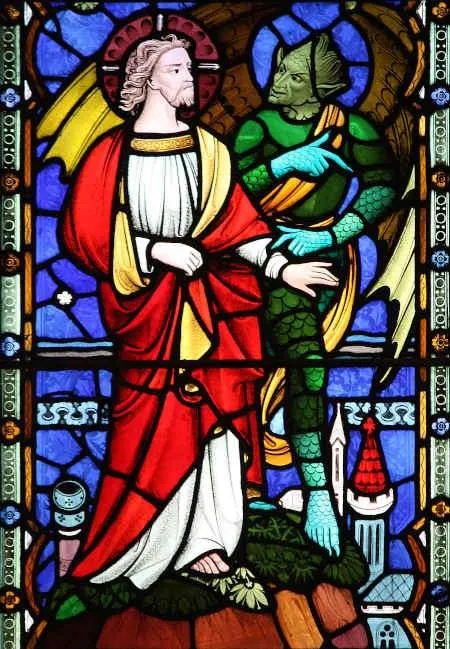
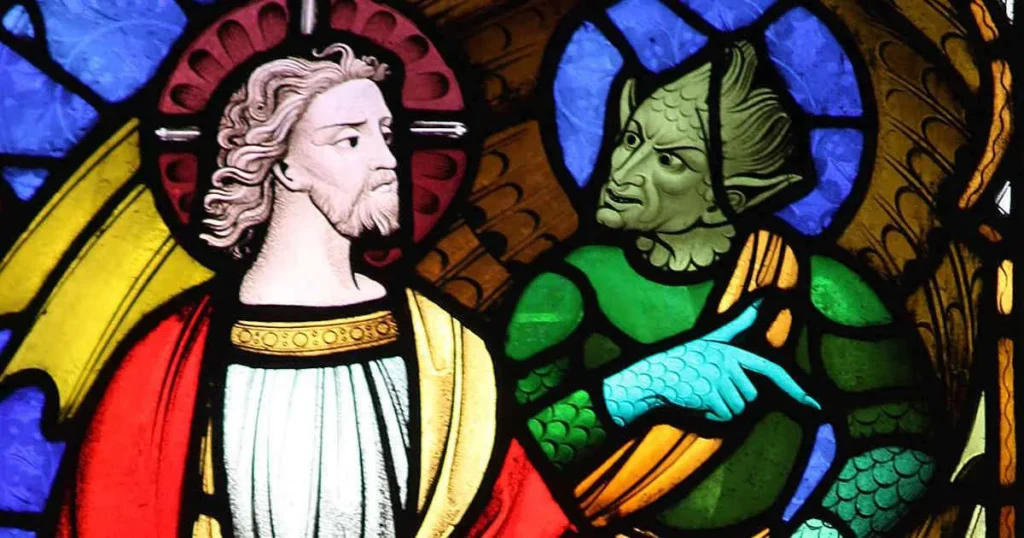
First, Jesus was hungry, and the devil tempted Him to turn stones into bread to satiate that hunger. This is a temptation to fleshly fulfillment. Second, the devil tempted Jesus to throw Himself off the pinnacle of the Temple to prove He was the Son of God. This is a temptation to fulfillment by pride—pride to convince another of one’s importance and identity.

Third, the devil showed Jesus all the nations of the world and promised them to our Lord if Jesus worshiped him. This is a temptation to fulfillment by obtaining earthly wealth and power. Of course, Jesus rejected all three temptations as a way of showing that none of these truly fulfill us. And He did this just prior to the beginning of His public ministry so as to then go forth preaching the true message of fulfillment. “This is the time of fulfillment. The kingdom of God is at hand. Repent, and believe in the gospel.”

True fulfillment is only found in the Gospel, the message of Truth that Jesus shared during His three years of public ministry and then brought to completion by His sacrificial death and resurrection. Only those who heed His words and open themselves to the grace poured forth from the Cross are able to find the fulfillment that they seek.

Reflect, today, upon your own interior desire for fulfillment in life. How do you try to satiate this desire? Do you allow the evil one to trick you into thinking that fleshly desires, pride or wealth are the answer? Reject those temptations with our Lord and then immerse yourself in His Gospel message, which is the only source of fulfillment in life.

Source: https://catholic-daily-reflections.com/2024/01/20/true-fulfillment-2/

Mark 1:14-15 Read More »

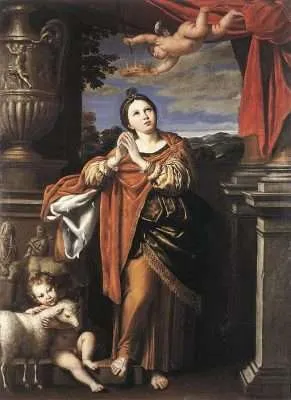
Saint Agnes, Virgin and Martyr

Patron Saint of those seeking chastity and purity, engaged couples, rape victims, gardeners, young girls, and Girl Scouts, Pre-Congregation canonization

According to one tradition, the daughter of Emperor Constantine the Great—the first emperor to convert to Christianity and legalize its practice—contracted leprosy. Her name was Constantina. Seeking a cure, she approached the tomb of today’s young virgin-martyr and tearfully beseeched her intercession.

The tradition further states that Constantina was indeed healed, and, in gratitude, her father commissioned the building of a church over Saint Agnes’ grave. To this day, a church adorns that same spot. To this day, it is named in honor of Saint Agnes. And to this day, the faithful beseech Agnes’ intercession in the same fashion as Constantina in days of old. 

Very little is known about Saint Agnes, except for Saint Ambrose’s brief words written many decades after her death. We do know for certain that she was martyred at the age of twelve or thirteen. Later traditions have supplied what history cannot, including what follows.

Agnes was born into a noble Christian family in Rome. She was said to have been quite beautiful, which, together with her wealth and holiness, caused many young noblemen to seek her as their bride. But Agnes’ eyes beheld One Who was the most beautiful of all—her Lord and Savior, Jesus Christ. After taking in His beauty, she could look upon no one else. She dedicated herself to a life of virginity.

Such self-gift, however, was neither well received nor well understood by the young men of her time. Agnes was reported to the local prefect Sempronius for being a Christian, in an attempt to dissuade her from her vow of chastity.

The prefect first tried to convince Agnes to offer sacrifice to the Roman gods. She refused. Her heart was firm in its devotion to her Beloved. The prefect then tried to frighten her by displaying some instruments of torture in the hands of the cruel executioner himself. Agnes showed no fear and refused to burn incense to false gods. Outraged, the prefect ordered that she be taken to brothels to be violated by immoral men. 

During these ordeals, Agnes knew her Heavenly Spouse would protect her. Evil men could stain their swords with her blood, but they could never profane her body consecrated to Christ. At the brothels, the men looked at her with lust from a distance, but appeared more frightened of her than she was of them. None dared approach her. None dared defile her. It is said that only one young man did approach her, only to be immediately struck blind and brought to the ground. Through a prayer spoken by Agnes, though, his sight was restored.

The prefect, having failed to convert Agnes back to paganism, or to defile her body, then condemned her to a death by beheading. Agnes willingly offered her neck to the executioner, who trembled with fear as he approached, while she was as joyful as a bride waiting to meet her Bridegroom.

Saint Agnes, along with Saint Cecilia, was one of the earliest martyrs whose name was honored by its insertion into the Roman Canon (Eucharistic Prayer I in today’s Mass.) Her name in Latin means “lamb.” As a result, since the sixteenth century, every year on her feast day two lambs are brought to the Roman basilica built over her tomb.

Their wool is shorn and weaved into various pallia, vestments covering the shoulders. These very pallia are later placed on the shoulders of archbishops by the pope himself on the Feast of Saints Peter and Paul. Along with his crozier, or staff, the pallium symbolizes a bishop’s role as shepherd.

Source: https://mycatholic.life/saints/saints-of-the-liturgical-year/january-21-st-agnes-virgin-martyr/

Saint Agnes, Virgin and Martyr Read More »

Third Sunday in Ordinary Time

First Reading Jon 3:1-5, 10

The word of the LORD came to Jonah, saying:
“Set out for the great city of Nineveh,
and announce to it the message that I will tell you.”
So Jonah made ready and went to Nineveh,
according to the LORD’S bidding.

Now Nineveh was an enormously large city;
it took three days to go through it.
Jonah began his journey through the city,
and had gone but a single day’s walk announcing,
“Forty days more and Nineveh shall be destroyed, “
when the people of Nineveh believed God;
they proclaimed a fast
and all of them, great and small, put on sackcloth.

When God saw by their actions how they turned from their evil way,
he repented of the evil that he had threatened to do to them;
he did not carry it out.

Responsorial Psalm Ps 25:4-5, 6-7, 8-9

R. (4a) Teach me your ways, O Lord.

Your ways, O LORD, make known to me;
teach me your paths,
Guide me in your truth and teach me,
for you are God my savior.

R. Teach me your ways, O Lord.

Remember that your compassion, O LORD,
and your love are from of old.
In your kindness remember me,
because of your goodness, O LORD.

R. Teach me your ways, O Lord.

Good and upright is the LORD;
thus he shows sinners the way.
He guides the humble to justice
and teaches the humble his way.

R. Teach me your ways, O Lord.

Second Reading 1 Cor 7:29-31

I tell you, brothers and sisters, the time is running out.
From now on, let those having wives act as not having them,
those weeping as not weeping,
those rejoicing as not rejoicing,
those buying as not owning,
those using the world as not using it fully.
For the world in its present form is passing away.

Alleluia Mk 1:15

R. Alleluia, alleluia.

The kingdom of God is at hand.
Repent and believe in the Gospel.

R. Alleluia, alleluia.

Gospel Mk 1:14-20

After John had been arrested,
Jesus came to Galilee proclaiming the gospel of God:
“This is the time of fulfillment.
The kingdom of God is at hand.
Repent, and believe in the gospel.”

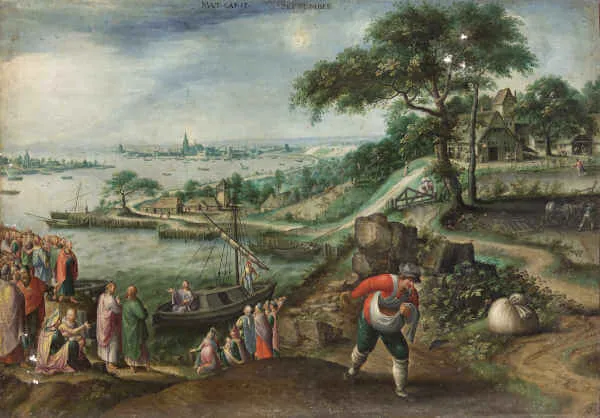
As he passed by the Sea of Galilee,
he saw Simon and his brother Andrew casting their nets into the sea;
they were fishermen.
Jesus said to them,
“Come after me, and I will make you fishers of men.”
Then they abandoned their nets and followed him.
He walked along a little farther
and saw James, the son of Zebedee, and his brother John.
They too were in a boat mending their nets.
Then he called them.
So they left their father Zebedee in the boat
along with the hired men and followed him.

Source: https://bible.usccb.org/bible/readings/012124.cfm

Third Sunday in Ordinary Time Read More »