Author name: Sani

Matthew 25:31-33

The End of Time

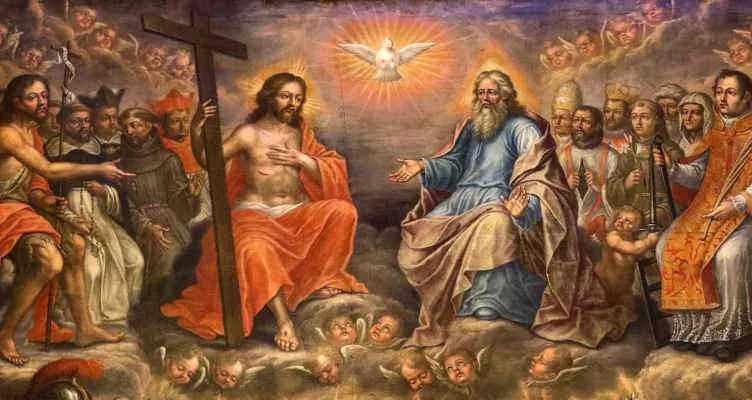
“Jesus said to his disciples: “When the Son of Man comes in his glory, and all the angels with him, he will sit upon his glorious throne, and all the nations will be assembled before him. And he will separate them one from another, as a shepherd separates the sheep from the goats. He will place the sheep on his right and the goats on his left.”

Reflection:

This is the final Sunday of our Church year. Our focus today is the end of time when Jesus will return again to judge the living and the dead and establish His permanent and glorious Kingdom, visible to all. The Catechism of the Catholic Church describes this moment in time this way:

“The Last Judgment will come when Christ returns in glory. Only the Father knows the day and the hour; only he determines the moment of its coming. Then through his Son Jesus Christ he will pronounce the final word on all history. We shall know the ultimate meaning of the whole work of creation and of the entire economy of salvation and understand the marvelous ways by which his Providence led everything towards its final end. The Last Judgment will reveal that God’s justice triumphs over all the injustices committed by his creatures and that God’s love is stronger than death (#1040).”

God is truly a mystery. He is the greatest of mysteries. As a mystery, God is forever the unknown in the sense that He is endless and eternal. He has revealed Himself to us but we will forever enter deeper into our knowledge of Him because of His infinite and endless nature. This is important to understand because when we contemplate the many mysteries God has revealed, we must approach them as both known and unknown. Our solemnity today is one of those mysteries.

Of this great moment in time, we know that the Son of God will return to earth to issue forth His final judgment upon all the living and the dead. It will be the final moment of time as we know it now. The dead will rise and our bodies and souls will be reunited. The just will enter the glorious New Heavens and Earth. Those in mortal sin will be condemned for eternity. The world will no longer be a fallen world. All illness and disorder in nature will be eliminated. Peace will ensue and perfect order will be established. God will be the universal King and will govern this new world forever.

As we celebrate this glorious mystery of our faith, we must accept and believe all that we know about it. But as we do, we must also approach it with deep humility, admitting to ourselves that we will never fully comprehend the awesomeness of that day until it comes. No earthly concept will ever come close to fully describing that moment in time, but we must adhere to our belief in it with a profound and unwavering faith.

Source: https://catholic-daily-reflections.com/2023/11/25/the-end-of-time/

Matthew 25:31-33 Read More »

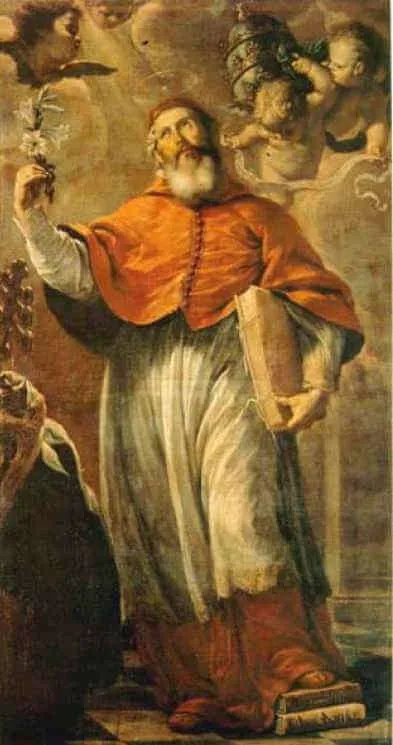
Pope Saint Siricius

Profile

Son of Tiburtius. Lector. Deacon. Friend of Saint Ambrose of Milan. Unanimously elected 38th pope in 384. He was opposed by the anti-pope Ursinus, but the pretender could not get any support, and nothing came of it. Expanded papal power and authority, decreeing that any papal documents should receive widespread distribution. Held a synod at Rome, Italy on 6 January 386 which re-affirmed a variety of canon laws and disciplines for both clergy and laity. A separate synod in 390 to 392 re-affirmed the merits of fasting, good works, and the need for celibate life among the religious and clergy. Opposed the Manicheans. Settled the Meletian schism at Antioch.

Born

  • c.334 at Rome, Italy

Papal Ascension

  • December 384

Died

  • 26 November 399 of natural causes
  • buried in the cemetery of Priscilla on the Via Salaria, Rome, Italy

Canonized

  • by Pope Benedict XIV

Source: https://catholicsaints.info/pope-saint-siricius/

Pope Saint Siricius Read More »

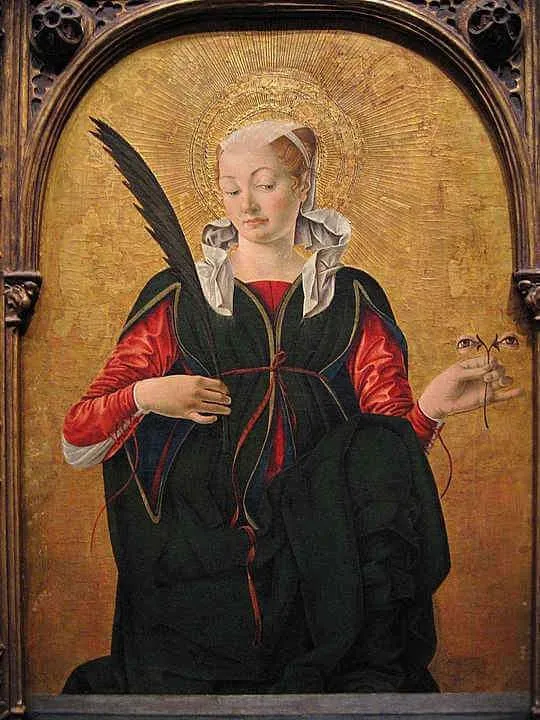
Saint Catherine of Alexandria, Virgin and Martyr

Patron Saint of apologists, apprentice milliners and seamstresses, archivists, attorneys, barbers, potters, spinners, the dying, educators, girls, jurists, knife sharpeners, librarians, maidens, mechanics, millers, nurses, old maids, philosophers, preachers, scholars, schoolchildren, scribes, secretaries, tanners, teachers, theologians, and unmarried girls

As a member of a noble family, Catherine received an excellent education and became well versed in literature, poetry, rhetoric, philosophy, music, mathematics, and medicine. Catherine was also of exceptional physical beauty and high moral virtue. Though many noblemen proposed to her, she rejected them all.Unable to find a suitable mate, she sensed within her soul that she was called to something greater.

One day, Catherine’s mother, who was secretly a Christian, introduced her to a holy Christian monk. This monk, in turn, introduced her to her future husband, her Lord Jesus Christ, the future Bridegroom of her soul. In Him, she discovered a man of the greatest wisdom and beauty, whose moral character was unmatched and whose nobility was above all. After speaking about Jesus in detail, the monk gave Catherine an icon of the Blessed Virgin Mary holding her young Son.

That night, Catherine had a dream in which she beheld the Blessed Mother holding her Son. Catherine tried to see the face of the Child, but He kept turning away. She realized that it was because she was not yet baptized that the Christ Child could not bear to look upon her. Soon after, she returned to the monk who had catechized her, and she received baptism.

After Catherine’s baptism, the holy monk encouraged her to beseech the Blessed Virgin Mary. She spent all night doing so and fell asleep while praying. In her dream, the Blessed Mother appeared to her with her Child who took great delight in Catherine and chose her as His bride, giving her a ring, and calling her to embrace earthly virginity. When she awoke, the ring was still on her finger.

A few years later,  Emperor Maximinus decreed that all citizens had to offer sacrifice to the Roman gods in the temple. Catherine showed up during the sacrifices and was immediately noticed for her beauty and disposition. She sent word to the emperor that she had vital information for him. Once in the emperor’s presence, Catherine chastised him for his heathen practices and for his decree requiring worship of the false gods. The emperor was not only stunned at her beauty and character, he was also struck by the depth of her wisdom and elegant speech.

The emperor was so impressed that he knew her wisdom needed a response in order to justify his continued persecution of Christians. He then gathered fifty of the wisest men from across the empire to debate Catherine and prove her error. Just the opposite happened. Catherine’s wisdom was so great that she prevailed and won over many of the wise men. She cited the best Greek philosophers to prove her points and to support the truth that Jesus was the Savior and that the Trinity was the One God. Many of the wise men converted, and, as a result, the emperor had them killed.

The emperor then took another approach. He tried to seduce Catherine, offering her half of his kingdom and a place within the royal palace. She refused. The emperor then had her scourged until her blood covered the ground, and he imprisoned her.

While in prison, a dove brought food to Catherine, keeping her healthy and strong. The emperor decided to try one more time to convince her to give up her Christian faith and worship the gods. This time, he threatened her with torture on a large wheel meant to stretch her entire body and spin her to the point of death. Before Catherine was tied to the wheel, an angel made it spin out of control and shatter before everyone’s eyes. The empress then came out and chastised her husband, revealing that she had become a Christian after listening to the wisdom of Catherine. The emperor was so enraged that he had his wife beheaded on the spot.

The following day, Catherine was brought before the emperor again, and this time he ordered her execution by beheading. Within an hour of her execution, angels came and took her body away, laying it on the heights of Mount Sinai where it remained undisturbed and undefiled. A few centuries later, a holy monk in the monastery at the base of Mount Sinai, which was built around the burning bush, had a dream that led him to discover Catherine’s relics. He took her body and buried it in the monastery chapel where she lies today.

Source: https://mycatholic.life/saints/saints-of-the-liturgical-year/november-25—saint-catherine-of-alexandria–optional-memorial

Saint Catherine of Alexandria, Virgin and Martyr Read More »

Luke 20:37-38

Preparing for Eternity

“That the dead will rise even Moses made known in the passage about the bush, when he called  ‘Lord’ the God of Abraham, the God of Isaac, and the God of Jacob; and he is not God of the dead, but of the living, for to him all are alive.”

Reflection:

Jesus gives this response to some of the Sadducees who question Him about the resurrection of the dead. The Sadducees did not believe in the resurrection of the body, whereas the Pharisees did. Thus, the Sadducees asked Jesus about the resurrection of the body using an almost unheard of example. They refer to the levirate law found in Deuteronomy 25:5-19 which states that if a married man dies before having children, the brother of that man must marry his wife and provide descendants for his brother.

Thus, the Sadducees present the scenario where seven brothers die, each one subsequently taking the same wife. The question they posed was, “Now at the resurrection whose wife will that woman be? For all seven had been married to her.” Jesus answers by explaining that marriage is for this life, not the life to come at the resurrection. Therefore, none of the brothers will be married to her when they rise.

Some spouses have a hard time with this teaching, in that they love their spouse and desire to remain married in Heaven and at the time of the final resurrection. For those who feel this way, rest assured that the bonds of love we form on earth will remain and even be strengthened in Heaven.

And when the end of the world comes and all of our bodies rise and are reunited with our souls, those bonds of love will remain stronger than ever. However, marriage, in the earthly sense, will be no more. It will be replaced by the pure love of the new life to come.

Simply put, we believe that when we die, our body is “laid to rest,” but our soul enters a moment of particular judgment. Those who remain in mortal sin are eternally separated from God. But those who die in a state of grace will eternally live with God. Most people who die will most likely die with some lasting venial sins on their soul. Thus,

Purgatory is the grace of final purification that the person’s soul encounters upon death. Purgatory is simply the purifying love of God which has the effect of eliminating every last sin and imperfection, and every attachment to sin, so that the purified soul can see God face-to-face in Heaven. But it doesn’t stop there. We also believe that at some definitive time in world history, Jesus will return to earth and transform it. This is His Final Judgment. At that time, every body will rise, and we will live eternally as we were intended to live: body and soul united as one.

Those souls who are in mortal sin will also be reunited with their bodies, but their body and soul will live separated from God forever. Thankfully, those who are in a state of grace and have endured their final purification will be resurrected and share in the new Heavens and new Earth forever, body and soul as God intended.

Source: https://catholic-daily-reflections.com/2023/11/24/preparing-for-eternity-2/

Luke 20:37-38 Read More »

Luke 19:47-48

Consoled by Fervent Preaching

“And every day he was teaching in the temple area. The chief priests, the scribes, and the leaders of the people, meanwhile, were seeking to put him to death, but they could find no way to accomplish their purpose because all the people were hanging on his words.”

Reflection:

Jesus had just entered Jerusalem for the upcoming Feast of Passover. He arrived in that holy city and then returned again the next day and entered the Temple area. 

As He witnessed the corruption of those selling animals for the Temple sacrifices, Jesus responded with fervent preaching in an attempt to cleanse the Temple from this corruption. He quoted the Prophet Isaiah and cried out, “It is written, My house shall be a house of prayer, but you have made it a den of thieves.” 

Luke’s Gospel points out the reaction of the chief priests, the scribes and the leaders of the people. They were “seeking to put him to death.” However, as the Gospel further relates, “they could find no way to accomplish their purpose because all the people were hanging on his words.”

Today, we need the full Gospel message. Many need to hear Jesus’ gentle invitation to conversion by which their heavy burdens are lifted. But many others need to hear His firm words of condemnation. And the Church as a whole needs both of these messages to be proclaimed if we are to fully participate in the apostolic ministry of our Lord.

Only our Lord has the right to condemn, chastise, and call others to repentance. But we are all called to share in this mission of our Lord. And though we do not have the right to judge the hearts of others, when we see objective evil and disorder within our world and even within our Church, we must cry out with our Lord, “My house shall be a house of prayer, but you have made it a den of thieves.

And when we do hear the holy and inspired words of God’s messengers who boldly and courageously proclaim the truth and call others to repentance, it should inspire, invigorate and console us as we find ourselves hanging on their every word.

Source: https://catholic-daily-reflections.com/2023/11/23/consoled-by-fervent-preaching-2/

Luke 19:47-48 Read More »

Saint Andrew Dung-Lac, Priest and his companions, martyrs

From the seventeenth to nineteenth centuries, an estimated 130,000 to 300,000 men, women, and children; bishops, priests, and religious suffered martyrdom in Vietnam because they refused to renounce their Catholic faith. They were arrested, brutally tortured, and killed. Their torture was methodical, diabolical, and orchestrated to impose the maximum pain over the longest period of time possible.

To escape that fate, all those arrested had to do was renounce their faith, step on a crucifix, or blaspheme Christ. If they did, they were granted kindnesses by the imperial courts. If they didn’t, their suffering grew more intense until they died.

Today’s memorial honors 117 martyrs who were initially beatified in separate groups: sixty-four in 1900, eight in 1906, twenty in 1909, and twenty-five in 1951. In 1988, Pope John Paul II canonized all these martyrs together, symbolizing the countless unnamed individuals who also gave their lives for their faith.

Though the communist government of Vietnam failed to send delegates to the canonization of these holy martyrs, many thousands of exiled Vietnamese showed up in Saint Peter’s Square, and the very act of canonization resounded through the hearts and minds of the faithful within Vietnam. The group of 117 was made up of ninety-six Vietnamese, eleven Spaniards, and ten French. It includes eight bishops, fifty priests, and fifty-nine laypeople. Among the laypeople was a nine-year-old child, Saint Agnese Le Thi Thành.

As we honor this huge cloud of witnesses who gave their lives for their faith in a harsh and cruel environment, enduring some of the worst tortures ever committed in the history of the world, we are reminded that no matter how difficult life is, no matter how much we must endure, it is all worth it in the end.

One of the martyrs who died in these persecutions was Father Jean-Théophane Vénard. He first became known through the writings of Saint Thérèse of Lisieux who had a deep devotion to him and was greatly inspired by his letters which were circulating at the time she was in the convent.

Let’s conclude with a quote from Saint Théophane that Saint Thérèse copied and treasured: “I can find nothing on earth that can make me truly happy; the desires of my heart are too vast, and nothing of what the world calls happiness can satisfy it. Time for me will soon be no more, my thoughts are fixed on Eternity. My heart is full of peace, like a tranquil lake or a cloudless sky. I do not regret this life on earth. I thirst for the waters of Life Eternal.”

Source: https://mycatholic.life/saints/saints-of-the-liturgical-year/november-24—saint-andrew-dung-lac-and-his-companions-martyrs–memorial

Saint Andrew Dung-Lac, Priest and his companions, martyrs Read More »

Luke 19:43-44

Holy Sorrow

“For the days are coming upon you when your enemies will raise a palisade against you; they will encircle you and hem you in on all sides. They will smash you to the ground and your children within you, and they will not leave one stone upon another within you because you did not recognize the time of your visitation.”

Reflection:

Jesus spoke these words as He looked at Jerusalem from a distance, preparing to enter that holy city for the last time in preparation for His passion and death. As He spoke these words, the Gospel says that Jesus wept over the city. Of course, it wasn’t primarily tears over the future physical destruction of the Temple and invasion by Roman forces. It was first and foremost tears over the lack of faith of so many which was the true destruction He mourned.

Reflect, today, upon your own approach to the evil you face in your life. Consider carefully your interior and exterior reaction. Do you mourn with love over sins you witness and experience? Do you mourn, with a holy sorrow, over your own sins and the sins of others? Work to foster this form of love within you and you will find that it can become a motivation for you to help transform the sins you commit and the sins of others you endure.

Source: https://catholic-daily-reflections.com/2023/11/22/holy-sorrow-2/

Luke 19:43-44 Read More »

Saint Clement I, Pope and Martyr

Patron Saint of sailors, mariners, sick children, and stonecutters

“Concerning the things pertaining to our religious observance which are most profitable for a life of goodness to those who would pursue a godly and righteous course, we have written to you, men and brethren, at sufficient length.

For concerning faith and repentance and true love and continence and soberness and patience, we have touched upon every passage, putting you in mind that you ought in righteousness and truth and long-suffering to be well-pleasing to Almighty God with holiness, being of one mind—not remembering evil—in love and peace with instant gentleness, even as also our fathers forementioned found favor by the humility of their thoughts towards the Father and God and Creator and all mankind.

And of these things we put you in mind with the greater pleasure, since we were well assured that we were writing to men who were faithful and of highest repute and had peered into the oracles of the instruction of God.”

~Pope Saint Clement, Letter to the Corinthians

Source: https://mycatholic.life/saints/saints-of-the-liturgical-year/november-23—saint-clement-i-pope-and-martyr—optional-memorial

Saint Clement I, Pope and Martyr Read More »

Thanksgiving Day

Gratitude for Immeasurable Blessings

“Ten were cleansed, were they not? Where are the other nine? Has none but this foreigner returned to give thanks to God?” Then he said to him, “Stand up and go; your faith has saved you.” 

Luke 17:17–19

Reflection:

Though Thanksgiving Day is not specifically a Church holy day, gratitude is certainly central to our Christian faith, as is illustrated by today’s Gospel in which ten lepers were healed by Jesus. And their communal reaction is something of which to take note. Nine of them were healed and went about their business, not returning to the source of their healing to thank Him. But one did. This one leper, who was suddenly no longer a leper, returned to Jesus, glorified Him, fell at His feet and thanked Him. This one leper was a foreigner, a Samaritan, but he manifested a faith that we must all strive to imitate. The faith of this Samaritan was evident by the fact that he knew he needed to not only be grateful for the grace of healing but that he also needed to express it.

Reflect, today, upon the attitude that you have toward the many blessings God has bestowed upon you. Begin by considering the central blessings of God’s creation and His saving acts of love. From there, try to ponder the many small ways that God has been with you, guided you, strengthened you, and blessed you abundantly. If you do not see these clearly, then use this day to consciously listen so that God can reveal them to you. As you see your blessings, respond as this one leper. Turn to Jesus, glorify Him, fall at His feet in prayer and thank Him. Doing so will fill you with the same saving faith granted to this one leper.

Source: https://catholic-daily-reflections.com/2023/11/22/gratitude-for-immeasurable-blessings-2/

Thanksgiving Day Read More »

Luke 19:12-14

Your Apostolic Calling

“A nobleman went off to a distant country to obtain the kingship for himself and then to return. He called ten of his servants and gave them ten gold coins and told them, ‘Engage in trade with these until I return.’ His fellow citizens, however, despised him and sent a delegation after him to announce, ‘We do not want this man to be our king.’”

Reflection:

There are three categories of people in this parable. The first includes those who received a gold coin and followed the master’s request to “engage in trade” until he returned. The second has those who received the same command but were lazy and failed to produce any good fruit from that which our Lord has given them. And the third includes those who “despise” our Lord and do not want Him as their King.

Reflect, today, upon which category of people your life most fully resembles. Most likely it is one of the first two. Do you have great zeal for God’s Kingdom? Are you willing to do all that you can to help build His Kingdom? Are you willing to do so even at the cost of great personal sacrifice? If so, then rejoice and know that an abundant reward awaits.

But if you are one who struggles with fear, specifically, if you struggle with a fear to evangelize, to share the Gospel and to live your faith openly with humility and love, then spend more time with this parable and the fate of that one servant who hid the coin in the handkerchief. Engage in the apostolate. Commit yourself to the furtherance of God’s Kingdom. Dispel all fear and know that you will never regret putting your whole heart and soul into the service of God and the building of His Kingdom.

Source: https://catholic-daily-reflections.com/2023/11/21/your-apostolic-calling-2/

Luke 19:12-14 Read More »