Author name: Sani

Saint Ethelbert of Kent

Profile

Son of Eormenric; great-grandson of Hengist, Saxon conqueror of Britain. Ethelbert was raised as a pagan worshipper of Odin. King of Kent (in modern England) in 560. He defeated by Ceawlin of Wessex at the battle of Wimbledon in 568, ending his attempt to rule all of Britain. He married the Christian Bertha, daughter of Charibert, King of the Franks; they had three children, including Saint Ethelburgh of Kent. He converted to Christianity, baptized by Saint Augustine of Canterbury in 597; his example led to the baptism of 10,000 of his countrymen within a few months, and he supported Augustine in his missionary work with land, finances, and influence. He issued the first written laws to the English people in 604.

Born

  • 552

Died

  • 24 February 616 at Canterbury, England of natural causes
  • buried in the side chapel of Saint Martin in the abbey church of Saints Peter and Paul
  • relics later translated to Canterbury

Canonized

  • Pre-Congregation

Source: https://catholicsaints.info/saint-ethelbert-of-kent/

Saint Ethelbert of Kent Read More »

Matthew 6:7–8

How to Pray

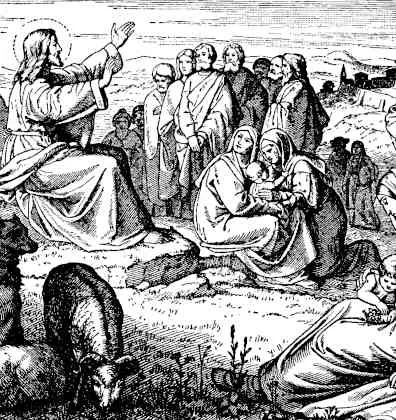
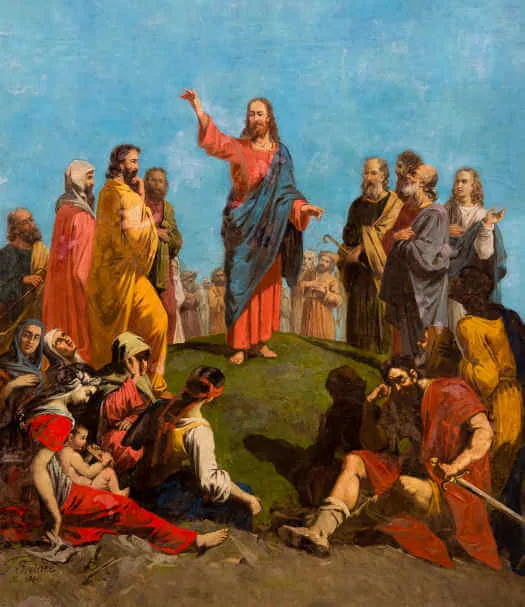
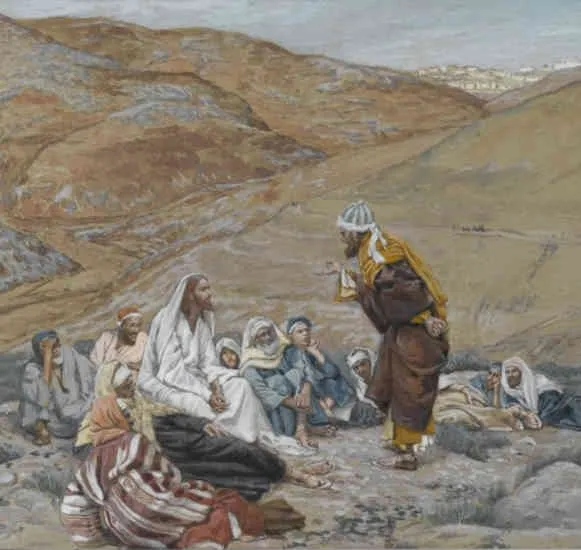
Jesus said to his disciples: “In praying, do not babble like the pagans, who think that they will be heard because of their many words. Do not be like them. Your Father knows what you need before you ask him. This is how you are to pray: Our Father who art in heaven, hallowed be thy name…”

Reflection:

Prayer is so essential to our spiritual lives that we should strive to live in a state of constant prayer, all day, every day. However, saying prayers is very different from truly praying. Jesus begins by teaching that prayer is not about “babbling many words.” We do not pray to change God’s mind or to convince Him to do our will. That is not the essence of prayer. Jesus is very clear: “Your Father knows what you need before you ask him.”

So, how do you pray? Do you come to God with a list of requests, thinking that if you ask enough or in the right way, He will grant your wishes? Consider how a child might plead with a parent until the parent finally gives in. Is this how God wants us to approach Him in prayer? Certainly not.

Prayer must be constant—asking, pleading, and even begging—but for what? Should we beg God to conform to what we think is best? No. True prayer is when we ask, plead, and beg that God change us and conform us to His perfect will.

The Our Father teaches us both the sentiments and content of true prayer. We begin by acknowledging who God is—our loving and intimate Father who dwells in Heaven. Though He is transcendent and beyond us, He is also near, like a father who lovingly watches over His children.

God is holy—wholly other, perfect in every way, the Holy One. For this reason, we adore Him, proclaiming that even His name is holy.

What do we ask of God in prayer? Not that He fulfills our will, but that “Thy will be done!” His will is accomplished when His Kingdom is established in our lives—when He governs us and we live in obedience to His every precept. This requires deep trust and surrender.

We also ask for our “daily bread,” which includes all that we need materially and spiritually. We must trust that God will never forsake us as long as we remain faithful to Him. He always provides. Those who rely on worldly riches rather than on God’s providence may find themselves spiritually impoverished, so we ask God to provide for every need according to His will.

One of our greatest needs is for forgiveness. We all sin and are in need of mercy, which only God can provide. However, God’s forgiveness comes with a condition—we must forgive others as well. If we do not extend forgiveness to others, we cannot fully receive it ourselves. True forgiveness, once received, transforms us so profoundly that it must overflow to others as freely and abundantly as it was given to us.

The Lord’s Prayer concludes by acknowledging the reality of the evil one and the temptations that surround us. Only God’s grace can protect us from these snares. This truth should lead us to complete dependence on God’s grace and on the ministry of His angels to guard and guide us.

Reflect today on how you pray, especially when you recite the Our Father. Do you fully understand what you are saying? Do you believe it with all your heart? Your Father in Heaven knows your needs. Trust Him, turn to Him, acknowledge His holiness, worship Him, rely on His providence, seek and extend forgiveness, and allow Him to protect you from evil. If you do, you will pray as Jesus desires.

Source: https://catholic-daily-reflections.com/2026/02/23/how-to-pray/

Matthew 6:7–8 Read More »

Saint Polycarp, Bishop and Martyr

c. 65–c. 155 (or 166); Invoked against earaches and dysentery; Pre-Congregation canonization

Imagine learning about Christ from someone who knew Jesus personally. What a blessing that would be! This is the blessing today’s saint enjoyed. Saint Polycarp came to know Jesus through the preaching of Saint John the Apostle, the beloved disciple of our Lord.

Saint John’s preaching touched many lives, including that of a young man named Polycarp. It is believed that Saint John ordained Polycarp a bishop and sent him to the town of Smyrna, Asia Minor (modern-day Turkey). Polycarp might have been only a teenager when he was ordained, and he shepherded the Church in Smyrna for more than sixty or seventy years. Saint Irenaeus later wrote that Polycarp “would speak of his familiar intercourse with John, and with the rest of those who had seen the Lord; and he would call their words to remembrance.” Irenaeus was Polycarp’s disciple, being about sixty-five years younger. That the faith passed on from Jesus to John, from John to Polycarp, from Polycarp to Irenaus, and from Irenaeus to his disciples down through the ages well illustrates that the faith we have today is “apostolic,” meaning passed down to us from the Apostles. Polycarp is commonly referred to as one of the three Apostolic Fathers of the Church because he learned from one of the Twelve and because some of his writings still exist. The other two are Saint Ignatius of Antioch and Saint Clement of Rome (the third pope).

As a bishop, Polycarp was a fierce and courageous defender of the faith, especially against early heresies. He also worked closely with other bishops in the early Church, including the pope. One of those bishops was the Apostolic Father Saint Ignatius of Antioch. In 107 A.D. Ignatius was arrested and brought in chains through the city of Smyrna. Polycarp met him on the way and kissed his chains. Ignatius later wrote to Polycarp, asking him to care for his people. Polycarp did so in part by writing a letter to the Church in Philippi in which he beautifully exhorted the people in their faith. This is the only letter from Polycarp that has survived.

Once when traveling through Rome, Polycarp sought out Pope Anicetus to gain his counsel about the many concerns of the Church. On most things they agreed, but they disagreed on the appropriate day of the year to celebrate Easter. The pope preferred it always be on the Sunday after Passover, but Polycarp preferred it to be more closely tied to Passover, no matter on which day of the week it fell. Since they could not agree, the pope permitted Polycarp and his Eastern Churches to continue their practice, while the Roman Church continued its practice. They affectionately concluded their time together by celebrating the Holy Mass.

Though Polycarp collaborated with the pope and other bishops, he was quite harsh with heretics. For example, a heretic named Marcion taught that there were two gods, the Old Testament God and the New Testament God. One day Polycarp encountered Marcion in Rome. Marcion was surprised that Polycarp knew about his teaching and asked, “Do you know me, Polycarp?” Polycarp replied, “Yes, I know you to be the firstborn of the devil!”

Polycarp is perhaps best known for his martyrdom, which is the second earliest written detailed account of a martyr’s death, the first being the account of Saint Stephen’s stoning as recounted in the Acts of the Apostles. According to that account, when the Roman authorities sought to arrest Polycarp, he at first hid for a week at the encouragement of some of his followers. Eventually, he was found but before he was arrested, he asked for an hour to pray and prepare himself. He was then brought before the proconsul in an arena filled with spectators. The proconsul called him an atheist because he rejected the gods of the Roman Empire. He then promised Polycarp would live if he rejected Christianity. The Romans found it more effective to convince Christians to blaspheme Christ than to martyr them. The proconsul threatened him with wild beasts, but Polycarp responded, “Eighty and six years have I served him, and in nothing has he wronged me. How, then, can I blaspheme my King, who saved me?” The proconsul then threatened to burn him to death, but Polycarp said, “You threaten me with fire that burns but for a season, and is soon quenched. For you are ignorant of the fire of the judgment to come, and of the eternal punishment reserved for the wicked.” The proconsul then condemned him to death and people gathered wood for the fire, but when they approached him to fasten him with nails to the wood, Polycarp said, “Leave me as I am, for He Who gives me strength to endure the fire will also allow me, without the security of your nails, to remain on the pyre without moving.” The fire was then lit, and Polycarp remained there by his own will. But to the surprise of all, his flesh did not burn. Instead, there came forth a sweet aroma as the fire surrounded him and protected him. Angered at this spectacular event, one of the soldiers thrust a spear into him, killing him. When he did this, a dove emerged from his chest, and so much blood gushed forth that the flames were extinguished. On seeing Polycarp’s dead body, some of the angry mob feared that his followers would take his sacred body and worship it, so they ignited the fire once again and burned his dead body.

Martyrdom like this takes incredible courage to endure. It requires that one prefer a wholehearted profession of faith in Christ over one’s earthly life. Though you might not be called to such a physical martyrdom, you are called to have Polycarp’s faith and courage. That courage will make you a martyr in spirit, and that faith will lift you to the heights of Heaven. Ponder your own depth of faith and courage today, and allow Polycarp’s witness to strengthen your resolve to become more like him.

Source: https://mycatholic.life/saints/saints-of-the-liturgical-year/february-23-saint-polycarp-bishop-and-martyr/

Saint Polycarp, Bishop and Martyr Read More »

Matthew 25:31–32

Vigilance and Hope

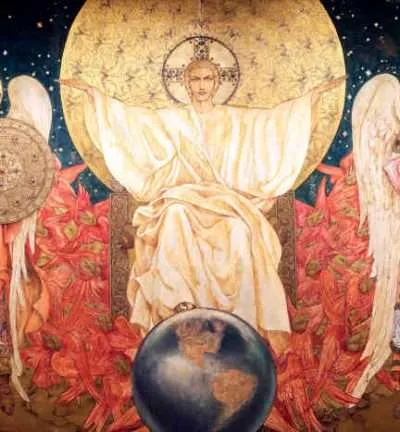
Jesus said to his disciples: “When the Son of Man comes in his glory, and all the angels with him, he will sit upon his glorious throne, and all the nations will be assembled before him. And he will separate them one from another, as a shepherd separates the sheep from the goats.”

Reflection:

Throughout history, rulers have vied for power, and countless wars have been fought over ambitions for political control. Even in modern democracies, there is constant strife over who should lead. Yet, in the end, there will be only one King Who will sit upon His glorious throne forever.

Today’s Gospel reminds us that although civil governance plays an important role in our earthly lives, we must never lose sight of the One Eternal King. When Jesus returns in all His glory, accompanied by the entire Celestial Hierarchy of Heaven, all justice and righteousness will be fully established. Each of us will appear before Him as Judge. At that moment, and for eternity, only one thing will matter: How did I live while on earth?

Too often, the temptation to live as though this life is an end in itself dominates us. When faced with injustice, we may respond with anger. When our preferred political party is not in power, we can become disillusioned, considering it a tragedy. Many are seduced into believing that accumulating more material goods leads to greater happiness, and poverty or simplicity is undesirable, a sign of failure. Yet, in the end, one thing alone will matter and one thing alone will endure—charity.

In the passage above, Jesus uses the image of a shepherd separating sheep from goats. This familiar image to the people of His time depicts the end of the age. During the day, a shepherd often allowed sheep and goats to graze together, just as God permits all people—the righteous and the unrighteous—to live in this world together. But at night, the shepherd would separate the sheep from the goats. Sheep, being more docile, obedient, and faithful, represent those who live according to God’s will. Goats, often more unruly and independent, symbolize those who live selfishly.

The contrast is striking. Faith, hope, and charity are not abstract ideas; they are supernatural virtues that win for us a place in the eternal Kingdom of God. Self-centered living, worldly ambitions, and unruly passions extinguish these virtues, leading to God’s judgment and condemnation at the end of time.

Knowing these truths should instill vigilance and hope in us. Vigilance will help us remain faithful members of God’s true Kingdom, living out charity toward God and others. Hope will inspire us to live with an eternal perspective. Worldly ambitions will pass with this life. But if our hope is set on the eternal Kingdom, it will lead us to holiness and a deeper union with God.

Reflect today on the eternal promises our Lord makes to us. At the end of time, He will separate the sheep from the goats. We must never forget that while God is perfectly merciful, He is also perfectly just. If His mercy is not embraced through repentance and conversion, His justice must be satisfied in the end. But if His mercy is embraced, it perfectly fulfills justice, and we will live with Him as our King and Shepherd forever.

Source: https://catholic-daily-reflections.com/2026/02/22/vigilance-and-hope/

Matthew 25:31–32 Read More »

Chair of Saint Peter, Apostle

In Saint Peter’s Basilica in Rome, visitors are immediately struck by the large alabaster window on the back wall of the apse that depicts the Holy Spirit in the form of a dove. Below the window is an ancient wooden chair, believed to have been used by Saint Peter. In the seventeenth century, that ancient chair was encased in bronze by the famous artist Bernini and then placed above the altar in the apse. Surrounding the chair are statues of four early Doctors of the Church. Two of them represent the Eastern Church: Saint John Chrysostom and St. Athanasius. Two of them represent the Western Church: Saint Ambrose and Saint Augustine. These great saints represent the universality of the Church, both East and West, as well as the unity of their theological teaching with the authority of the Bishop of Rome. Above the chair are two angels jointly holding the triple crown tiara used by the Bishop of Rome, symbolizing that he is the father of kings, governor of the world, and Vicar of Christ. In their other hands, each angel holds a key, symbolizing the authority of the Bishop of Rome in matters of faith and morals.

Today’s feast celebrates not only that chair as a precious relic from the time of Saint Peter, it also celebrates all that this chair represents. This feast was formally celebrated in Rome as early as the fourth century, but honor for the supremacy of Saint Peter and his successors was celebrated from the moment Jesus entrusted Peter with his unique mission.

In the Gospel of Matthew 16:13–20, we have the discourse between Jesus and His disciples, which is the basis of today’s feast and our belief in the unique and universal authority of Saint Peter and his successors. Jesus asked the disciples, “[W]ho do you say that I am?” Simon responded, “You are the Messiah, the Son of the living God.” With that profession of faith, Jesus changed Simon’s name to Peter, saying to him, “And I tell you, you are Peter (Petros), and on this rock (petra) I will build my church.” “Peter” in Greek is Petros. The Greek word petra means a solid rock formation that is fixed, immovable, and enduring. Therefore, Jesus chose to make Peter a solid, fixed, and immovable foundation of rock on which the Church would be built and endure until the end of time. Jesus went on to tell Peter that He would give him the keys to the Kingdom of Heaven and that whatever he bound and loosed on earth would be bound and loosed in Heaven.

It’s interesting to note that immediately after this discourse between Jesus and Peter, Jesus rebukes Peter for giving into fear after Jesus spoke about His impending death. While in the Garden of Gethsemane, on the eve of Jesus’ saving Passion, Peter chooses to sleep rather than stay awake and pray with Jesus. Then, after Jesus is arrested, Peter denies three times that he even knows Jesus. God chose a man of weakness and fear to become the rock foundation for the Church. This shows that God’s power is not limited by the instruments to whom He entrusts His power.

After Jesus’ ascension into Heaven, Peter and the others are filled with the Holy Spirit at Pentecost. After this gift, Peter is more prepared for his mission. He is the first one to go forth courageously to preach the Word of God to the people in Jerusalem. He resolved conflicts within the Church when they arose. He became the first bishop of the newly evangelized city of Antioch and then chose to go to Rome, becoming the first bishop of Rome, where he would die a martyr. However, the death of Saint Peter was not the death of his authority and singular mission. Saint Linus followed him as the second bishop of Rome, and then Saint Cletus, Saint Clement, and so forth until today.

Of the pope’s authority, Vatican Councils I and II affirmed that when the pope speaks Ex Cathedra, meaning, “From the Chair,” he speaks with the authority of Saint Peter who was entrusted with full, supreme, and universal authority to teach and govern. His teaching extends to all matters of faith and morals, and his governance encompasses the entire world. (Lumen Gentium, #22).

As we ponder the authority and infallibility of the one who sits in the Chair of Saint Peter, try to see this sacred power, given to one weak and sinful man after another, as an act of the love of Christ for His Church. It is the power of Christ and His divine love that makes it possible for these men to shepherd the Church, providing stability, longevity, certitude, and hope. When popes are also saints, we are doubly blessed. When they are not, our Lord still works through them, providing the Church with the ongoing rock foundation it needs to endure all things until the end of time. Pray for the pope today. Pledge your obedience to him when he speaks Ex Cathedra, and know that your unity with him ensures your unity with Christ, Who governs through him.

Source: https://mycatholic.life/saints/saints-of-the-liturgical-year/february-22-chair-of-saint-peter-apostle/

Chair of Saint Peter, Apostle Read More »

Matthew 4:1–3

Battling the tempter this Lent

At that time Jesus was led by the Spirit into the desert to be tempted by the devil. He fasted for forty days and forty nights, and afterwards he was hungry. The tempter approached and said to him, “If you are the Son of God, command that these stones become loaves of bread.”

Reflection:

In His great humility and compassion for us, Jesus, the Incarnate Son of God, allowed Himself to endure something that we sinful human beings encounter every day—temptation. God’s glorious plan from the beginning included the creation of both humans and pure spirits—angels—to form one glorious Kingdom of God. Original Sin, the fall of the angels, and our struggle against temptation were not part of God’s original intention, but they became realities due to the misuse of free will, both by angels and by humans. Free will was necessary for both angels and humans to love God freely, which led to a third of the angels and many humans turning away from Him.

Theologians such as Saint Thomas Aquinas and Saint Augustine offer profound insights into God’s original plan for His Kingdom. In that plan, angels were believed to have been tasked with assisting humans in their journey toward perfection through enlightenment and contemplation. Some choirs of angels were tasked with the governance of the cosmos, guiding the physical world in harmony with God’s will.

Tragically, the fall of a third of the angels, along with the sin of our first parents, Adam and Eve, has resulted in a world filled with struggle and sin. The fallen angels—now demons—use their natural gifts to deceive, confuse, and tempt. Those who were once responsible for guiding the cosmos now seek to sow chaos, contributing to the existence of natural disasters, disease, and death. While Catholic angelology is speculative, based on a limited amount of biblical revelation, it is important to recognize the role of angels and demons as we enter this sacred season of Lent.

Today’s Gospel focuses on the activity of the most powerful fallen angel—satan, originally named Lucifer, meaning “Light-Bearer.” Tradition holds that he was among the highest of the angels, possibly a Seraphim. According to Saint Thomas Aquinas, Lucifer’s fall resulted from pride: He desired to be a god unto himself, to create and govern according to his own will, refusing to serve God. This cosmic reality, of which both Jesus and satan were fully aware, sets the stage for and adds profound significance to their encounter in the desert.

In this dramatic confrontation, Jesus, by allowing Himself to be tempted, begins the ultimate defeat of satan, a victory that will culminate in Jesus’ Passion, Death, and Resurrection. This is the only recorded instance in which Jesus permits satan to tempt Him directly. While satan remained active throughout Jesus’ ministry, seeking to disrupt His mission, this moment in the desert addresses temptation specifically. By rejecting each temptation, Jesus not only demonstrates how to overcome the devil but also empowers humanity with the grace needed to resist temptation through His triumph on the Cross.

As we enter into the first full week of Lent, reflect today on the temptations you face in your own life. Though satan is powerful and highly intelligent, he is no match for the grace of God. By uniting ourselves to Christ, we are strengthened to resist all that satan and his demons throw at us. Victory over temptation is not achieved by our own strength but through Christ’s grace, which He freely offers to all who turn to Him.

Source: https://catholic-daily-reflections.com/2026/02/21/battling-the-tempter-this-lent/

Matthew 4:1–3 Read More »

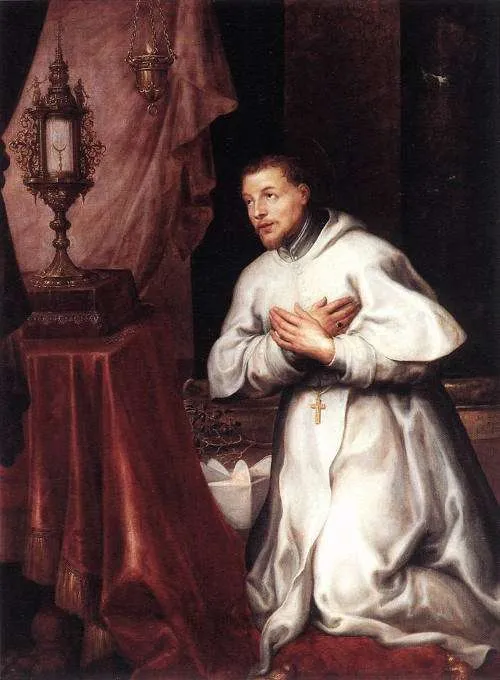
Saint Peter Damian, Bishop and Doctor of the Church

1007–1072; Patron Saint of Faenza and Font-Avellano, Italy; Pre-Congregation canonization; Canonization confirmed and proclaimed a Doctor of the Church by Pope Leo XII in 1823

Orphan, laborer, student, monk, hermit, priest, theologian, teacher, writer, poet, ascetic, penitent, prior, reformer, bishop, cardinal, saint…these are but a few words to describe today’s courageous saint.

Peter was the youngest child born into a poor but noble family in Ravenna, Italy. His parents died when he was young, so he went to live with one of his older brothers who mistreated him and forced him to labor as a swineherd. Eventually, another brother, a priest from Ravenna named Father Damian, took him in and provided him with an excellent education in which he greatly excelled. Peter was so grateful to his priest brother that he added his brother’s name to his own, making him Peter Damian.

Upon the completion of his education, Peter Damian began to teach with much success. However, he soon found that the university setting was not for him, so he withdrew to a monastery in Fonte-Avellana for a forty-day retreat. Upon completing his retreat, he discerned a call to monastic life and received the habit.

As a monk, Peter Damian lived a secluded life of prayer and extreme penance. His penances were so severe that they affected his health more than once. Eventually, his intellectual gifts were used once again when he was asked to teach his fellow monks. For the next few years, he taught in his own and neighboring monasteries and also began to write. One of his first works was the Vita, or “Life” of Saint Romuald, a recently deceased monk from his monastery known for his exceptional holiness.

In 1043, at the age of thirty-five, Brother Peter Damian was named the prior of his monastery. He led the brothers with zeal and fidelity to their rule. He also began founding new hermitages in the surrounding villages.

At that time, Pope Benedict IX was a truly scandalous pope who had obtained the papacy through bribery and lived an immoral life. In 1045, the pope decided to leave the papacy to marry his cousin. Before doing so, he wrote to his godfather, Father John Gratian, for advice. Being a holy man, Father Gratian encouraged him to resign, which Benedict did, leaving the papacy to Father Gratian, who became Pope Gregory VI. Brother Peter Damian was overjoyed at the change and wrote to the new pope, encouraging him to tackle corruption and scandal within the Church. In the years that followed, more than one pope called on Brother Peter Damian to help accomplish that very goal. He wrote many letters in an attempt to bring about reforms of the clergy, fought against simony (the selling of Church offices and spiritual favors), addressed sexual abuses, challenged the bishops, reformed monasteries, and gave a spectacular personal witness of holiness.

In 1057, Brother Damian was made the Cardinal-Bishop of Ostia by the pope, despite his attempts to turn down the position. As a new cardinal, he quickly challenged his brother cardinals and tried to weed out corruption. He would eventually return to his hermitage and resume his life of prayer, but his fervor in fighting against the evils of the time continued. Pope after pope called on him for help, even while other Church leaders opposed him.

In 1072, at the age of sixty-five after battling one corruption after another, Cardinal Peter Damian fell ill. After a week of illness in a monastery near his hometown, the cardinal died while the monks chanted around his bed.

Every age of the Church has different needs. In the eleventh century, the Church needed an unwavering and courageous voice for reform. Saint Peter Damian was that voice. Though his heart was most at home in his monastery doing penance and chanting the psalms, his body was actively eradicating the mold that had covered the Church. Through his valiant efforts, many parts of the Church began to radiate as the Bride of Christ once again.

Each of us is called to be a reformer in one way or another. First, we must seek to reform our own souls by eliminating sin through prayer, penance, and fidelity to God’s Law. From there, God will use us to extend His reform to others. Ponder any ways that you need to reform your own life, and then offer yourself to God’s service so that He can use you to weed out the evils you encounter in your daily life.

Source: https://mycatholic.life/saints/saints-of-the-liturgical-year/february-21-saint-peter-damian-bishop-and-doctor-of-the-church/

Saint Peter Damian, Bishop and Doctor of the Church Read More »

Luke 5:27–29

The Great Banquet

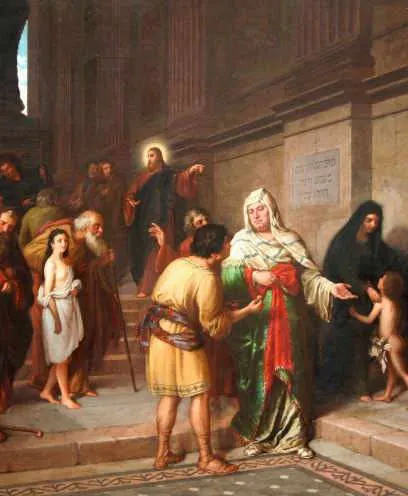
Jesus saw a tax collector named Levi sitting at the customs post. He said to him, “Follow me.” And leaving everything behind, he got up and followed him. Then Levi gave a great banquet for him in his house, and a large crowd of tax collectors and others were at table with them.

Reflection:

Levi’s life changed in an instant. He encountered the Messiah, the Son of God, the Savior of the world, and in response to Jesus’ simple yet profound invitation—“Follow me”—Levi left everything behind and followed Him. This radical decision offers an inspiring witness as we begin our Lenten journeys.

Christ’s call is often twofold. Even those baptized as infants must eventually hear and respond to that call for themselves. There comes a moment after the age of reason when those raised in the faith must choose whether to embrace the call to follow Jesus. For those who did not encounter Christ in their youth or who might have strayed from Him, the call is ever-present, continuously offered by God. Like Levi, once that invitation is heard and internalized, it demands a response—a radical choice to follow Him. And with that choice, life is never the same.

When Levi accepted Jesus’ invitation, his life underwent a complete transformation. He “left everything behind.” While his career as a tax collector was financially lucrative, it likely left him spiritually empty. Tax collectors were viewed with disdain by their fellow Jews because they worked for the Roman oppressors and often took more than what was owed for their own profit. This position, though offering wealth, created a life of moral compromise, guilt, and isolation. It was into this interior emptiness that Jesus entered. Levi, touched by an intuitive grace, recognized that abandoning everything and following Christ was the answer to his deepest longings.

Have you heard Christ’s call in your own life? Have you abandoned everything that stands in the way of fully following Him? This question is especially significant for those who were raised in the faith. While being baptized as a child and growing up in the Church is a great gift, it does not automatically mean that we have internalized the faith or personally responded to Jesus’ invitation. Have you truly heard Jesus call you? Have you left behind everything that hinders your complete “Yes” to Him?

Levi’s transformation didn’t stop with his “Yes.” He wanted to share his newfound joy and faith with others. Levi hosted a “great banquet” for Jesus in his home, inviting a large group of tax collectors and others to meet the One who had changed his life. His encounter with Christ was so profound and life-giving that he couldn’t keep it to himself—he wanted others, especially those whom he knew were also spiritually empty, to encounter the same transformative love. 

If you have responded to Jesus’ call and given your life to Him, your heart will naturally burn with a desire to share that joy with others. As you look at your family, friends, and acquaintances, do you see the same restlessness or emptiness that once filled your heart? How might God be calling you to invite them to encounter Christ? Perhaps, like Levi, you are called to “host a banquet” in your own way, sharing the Good News with those who need it the most.

Reflect today on Levi’s conversion and see your own life in his story. Recognize the restlessness within your heart and listen for Jesus’ call. Identify Him as the answer to your deepest desires. Say “Yes” to His invitation, abandoning everything that competes with His will, and share the treasure of your faith with others. Embracing this twofold path is one of the best ways to ensure a truly fruitful Lent.

Source: https://catholic-daily-reflections.com/2026/02/20/the-great-banquet/

Luke 5:27–29 Read More »

Saint Cumiano of Bobbio

Profile

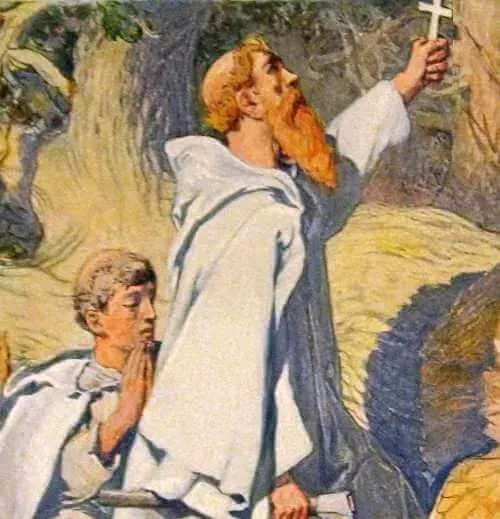
Cumiano was a monk at the monastery of San Colombano in Bobbio, Italy. He was known for his personal piety, as a peacemaker, and for his devotion to the Rule of his Order; he set a proper example of Christian life, strongly advocated for Roman observances, and served as counselor to many in the region during the time of the Lombard Kingdom.

Born

  • 7th century Ireland

Died

  • c.735 of natural causes
  • buried in the lower church in Bobbio, Italy in a sepulcher built by King Liutprand who greatly admired Cumiano’s piety

Canonized

  • by Pope Leo XII (cultus confirmation and extension to the diocese of Bobbio, Italy)

Source: https://catholicsaints.info/saint-cumiano-of-bobbio/

Saint Cumiano of Bobbio Read More »

Luke 9:23–25

Take Up the Cross This Lent

“If anyone wishes to come after me, he must deny himself and take up his cross daily and follow me. For whoever wishes to save his life will lose it, but whoever loses his life for my sake will save it. What profit is there for one to gain the whole world yet lose or forfeit himself?”

Reflection:

Today’s Gospel presents us with one of the great paradoxes of our faith: the only way to save one’s life is to lose it by taking up Christ’s Cross and following Him. This truth defies human reason; we can only fully grasp it through divine revelation. The wisdom of the Cross is hidden and transformative, revealing a deeper reality that our natural instincts might miss.

Imagine gaining the whole world. What would that look like? From a secular perspective, it could mean possessing immense wealth, enjoying complete freedom, acquiring fame, and holding worldly power. Is it possible to attain all that the world offers and still save your soul? What if you were charitable, giving ten percent to the poor? What if you lived in luxury without being attached to it? Is that truly feasible?

Though some might convince themselves it is, Jesus’ life teaches us otherwise. He wasn’t wealthy by worldly standards. He had no earthly power in the conventional sense. He didn’t seek comfort or luxury. His singular focus was the salvation of souls, and He lived that mission fully.

This raises another question: Was Jesus happy in this life? His earthly existence was marked by hardship. He was born in a cave, escaped Herod’s attempt on His life as an infant, and likely lost Saint Joseph at a young age. He endured 40 days of intense temptation by satan, was rejected by His own people in Nazareth, and, though loved by many, was hated by others. Ultimately, He was betrayed, unjustly condemned, beaten, and crucified.

Is that happiness? Not in a worldly sense. But Jesus’ happiness was in doing the will of His Father. This obedience, this perfect fulfillment of His divine mission, brought a happiness beyond our human comprehension—a deep, abiding joy rooted in perfect love and surrender to God’s plan.

As we begin Lent, a good question to ask ourselves is: “Am I happy?” Many people struggle with this question. Like our Lord, we endure trials, suffering, and disappointment. Jesus wasn’t exempt from these; He faced the full range of human experience. He likely faced rejection as a boy because He was different. He knew the sorrow of losing loved ones and faced the daily demands of work to help support His family.

In the mystery of the Incarnation—God becoming man—the Son of God intimately shares in every human suffering. He understands our struggles and sorrows firsthand. This is why Jesus can look at us with compassion and say, “I understand.” He is not only divine and transcendent, He is also intimately close, having lived through the very trials we face.

It is this reality that makes His words in today’s Gospel so powerful: “Take up your cross daily and follow me.” The Cross is the roadmap to true happiness. Our human nature might seek to avoid suffering, but Jesus invites us to embrace it with grace, uniting it with His own suffering. Through the Cross, we find victory and fulfillment in ways that our natural reasoning could never grasp.

Reflect today on the wisdom of the Cross. Human reason alone will never fully comprehend it or accept it as the path to happiness. Let God’s truth elevate your mind to see beyond the false promises of the world. Embrace the Cross with trust, knowing that it is the gateway to true joy, peace, and eternal life.

Source: https://catholic-daily-reflections.com/2026/02/18/take-up-the-cross-this-lent/

Luke 9:23–25 Read More »