Author name: Sani

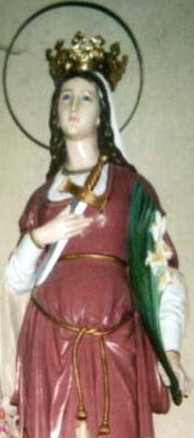
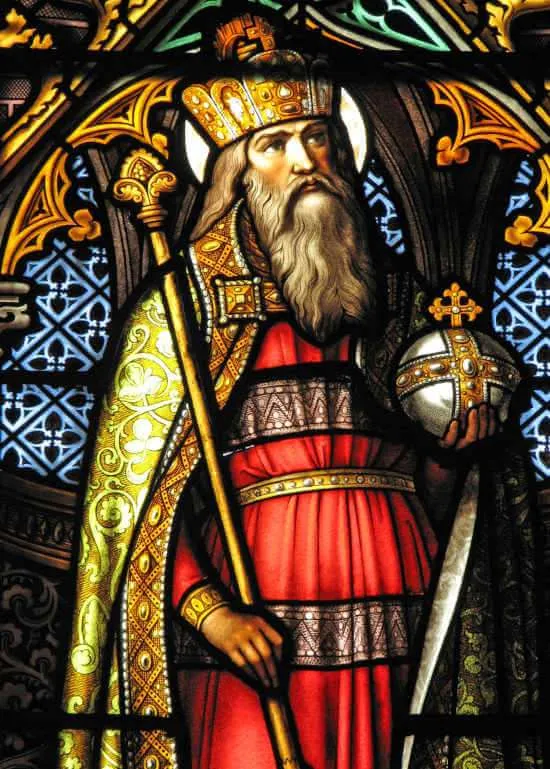
Saint Henry

973–1024; Patron Saint of kings, Benedictine Oblates, handicapped people, and those rejected from religious orders; Invoked against sterility; Canonized by Pope Eugene III in 1146

Born into a royal family in Bavaria, Henry’s father was the Duke of Bavaria, and his paternal grandfather was the King of Germany. His maternal grandfather was the King of Burgundy. His father’s conflict with Holy Roman Emperor Otto II led to the duke’s exile and loss of title. Consequently, Henry was sent to study under the canons of the Cathedral of Hildesheim. Later, he received an exemplary Christian education from Bishop Wolfgang of Regensburg, who was later canonized a saint.

When Henry was ten, Otto II died, and Otto III’s regent restored his father as duke. Twelve years later, after his father’s death, Henry succeeded him as Duke of Bavaria. Shortly afterwards, he married Cunigunde of Luxembourg, who would also be canonized. The two formed a saintly couple who never had children. Some accounts state that they mutually agreed to live in celibacy.

In 1002, Holy Roman Emperor Otto III died suddenly at the age of twenty-one without an heir, leaving the throne vacant.  As Otto’s cousin, Henry made a claim to the throne but failed to gain the full support of the nobility. Regardless, he had himself crowned King of Germany, and then spent the next several years seeking support for his coronation as Holy Roman Emperor. Finally, in 1014, King Henry II was crowned Holy Roman Emperor by Pope Benedict VIII in Rome.

Henry was known as a man of great faith who maintained a close relationship with the Church. He collaborated with the Church to appoint devout and loyal bishops, reform German bishops, create new dioceses, and endow bishops with temporal power alongside their spiritual power. Henry was also a man of great charity. His generosity with his wealth was such that many of his relatives complained he was being irresponsible. Undeterred, Henry felt his primary duty as emperor was to strengthen the Church, spread faith, and exemplify charity. His generosity extended not only to the poor and the Church but also to his enemies. He successfully ended wars and uprisings, pardoning those who rebelled against him, and restoring peace to the kingdom. On a personal level, Henry was fond of prayer, often visiting churches in each city he visited for extended periods of time. He harbored a deep devotion to the Mother of God, regularly received the sacraments, and prayed the Divine Office.

One of Henry’s greatest contributions to the Church was his dedication to monastic life. He constructed monasteries and supported monastic reform. Since the time of Saint Benedict, five centuries earlier, the Rule of Saint Benedict had become the norm guiding most monasteries. However, over time, Benedict’s Rule became neglected and monastic life started to suffer. Politics and ambition entered monastic life and prayer was no longer the central focus. In the early- to mid-tenth century, one of the primary centers of monastic reform was the Abbey of Cluny. Saint Odo of Cluny had helped to spark reform across Europe in the numerous Benedictine monasteries. After Saint Odo’s death in 949, others continued his good work. In 994 Saint Odilo became Abbot of Cluny. Once Henry became king and Holy Roman Emperor, the two worked closely together, Henry regularly seeking the counsel of Saint Odilo. One of Henry’s most important contributions to the Church was the building of a monastery in Bamberg, Germany, which he made a cathedral and a new diocese. He worked to make this monastery the new Rome of Germany and sought to make its spiritual influence felt far and wide.

Of all the Holy Roman Emperors throughout the ages, only King Henry II is recognized as a saint. While many Holy Roman Emperors might have had strong faith and advanced it, Saint Henry stands out. One could argue that when someone is given great power, it often brings with it great temptation. It’s challenging to exercise such power without it going to one’s head. Saint Henry wasn’t like that. Despite his engagement in political battles, warring, his entourage of politically ambitious people, royal treatment, and luxurious lifestyle, Saint Henry loved God and sought to use his power and wealth to further the mission of the Church. For this reason, Saint Henry is an ideal model for all those who govern or are entrusted with wealth or power.

As we honor this saintly king, consider the temptations you might face if granted great riches or power. How would you use those temporal gifts? Would you dedicate them to the service of the Gospel or use them for selfish gain?

Whether you are rich or poor, powerful or lowly in the world, follow Saint Henry’s example by devoting all your energies, gifts, and possessions to the service of the Gospel. Understand that God will take whatever you have to offer, large or small, and use it for the greater good.

Source: https://mycatholic.life/saints/saints-of-the-liturgical-year/july-13—saint-henry/
Saint Henry Read More »

Matthew 10:27

The Whispers of God

“What I say to you in the darkness, speak in the light; what you hear whispered, proclaim on the housetops.”

Reflection:

What is it that our Lord speaks to you in the “darkness” and what is it that you “hear whispered” by Him? This is an important question to consider, since whatever it is that is spoken that way must be spoken “in the light” and proclaimed “on the housetops.”

Recall that when people first came to Jesus, curious about Him, He would often speak in a veiled way, in figures of speech and in parables. This method of teaching is the first step in Jesus’ ongoing deepening revelation to us. His parables and various figures of speech are meant to draw the listener in so that they are attentive to the deeper message.

Recall, also, that Jesus said to His disciples, “I have told you this in figures of speech. The hour is coming when I will no longer speak to you in figures but I will tell you clearly about the Father” (John 16:25). In which way does our Lord speak to you?

As we grow in faith, and become more and more familiar with our Lord, He will begin to “lift the veil,” so to speak, and will begin to whisper His deepest truths to us within the depths of our souls. He will communicate to us in ways that go far beyond the veiled message of His parables and figures of speech and will communicate His very self to us, in ways that are beyond words.

The Gospel passage above, when taken by itself, seems to clearly indicate that there is much God wants to say to us in a clear way. But He wants to speak it to us in the “darkness” of our interior life and with gentle whispers that can only be heard when we give Him our full attention. Saint John of the Cross, for example, speaks much of the “darkness of faith” by which the deepest communications from our Lord are received. These communications are beyond words, concepts and images and can only be communicated in a direct and spiritual way through infused prayer. Infused prayer is not something you can accomplish on your own; it is a gift by which God continually draws you deeper, you respond and are called even deeper, and you continue to respond.

The Gospel passage above also clearly indicates that God wants us to share this most pure faith with others. To share it in the light and to proclaim it on the housetops. This is first done by the witness of our lives, by allowing the transforming grace of God to shine forth through us in ways that He can only do. It is also done by being attentive to those moments when God wants to use you to share His deeper and often veiled truths with others. God must first speak them to you, and then at the promptings of His grace, He will, at times, use you to share Him with others.

Reflect, today, upon this twofold action commanded by our Lord. First listen to Him. Listen to Him in the “darkness of faith.” Let Him draw you into the deepest and most certain convictions about His love and mercy and His very Self. Then, as you savor these hidden and holy communications from our Lord, look for ways by which He wants to speak to others through you. You do not have to initiate this proclamation, you only need to respond when He directs you. By building a deep level of prayer in this way, you will not only come to know our Lord in ways that are beyond words, you will also know how and when He wants to speak to others through you.

Source: https://catholic-daily-reflections.com/2024/07/12/the-whispers-of-god-3/

Matthew 10:27 Read More »

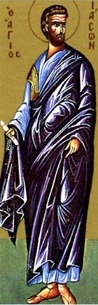
Saint Jason of Tarsus

Profile

Acts 17:5-9 says that Saint Paul the Apostle stayed at Jason’s home in Thessalonica, and he is mentioned in Romans 16:21. Legend says he was bishop of Tarsus in Cilicia, and evangelized the Greek island of Corfu. While imprisoned for preaching the faith, he helped convert the Martyrs of Corfu. He was a martyr.

Died

  • torn apart by wild animals

Canonized

  • Pre-Congregation

Source: https://catholicsaints.info/saint-jason/

Saint Jason of Tarsus Read More »

Matthew 10:19-20

Speaking in the Spirit of the Father

“When they hand you over, do not worry about how you are to speak or what you are to say. You will be given at that moment what you are to say. For it will not be you who speak but the Spirit of your Father speaking through you.”

Reflection:

This is an easy lesson to understand but very hard to live. This teaching of Jesus comes within the context of Him telling His Apostles that as they go forth to preach the Gospel of the Kingdom, they will be handed over to courts, scourged in synagogues, and led before governors and kings. They will be persecuted in one town after another for sharing the Gospel. Though such a “pep-talk” may not at first seem that encouraging, the Gospel passage quoted above should provide much encouragement. Encouragement, that is, if they can follow Jesus’ advice in faith.

When we are condemned, judged, misunderstood and the like, it is very common to begin mounting our defense within our minds right away. We justify our actions, set up a tribunal in our minds by which we act as judge and jury of the other, finding them guilty and issuing them punishments. The sin traditionally referred to as “self-love” is a sin that stems from pride and is not love at all. It tempts us to defend ourselves, using our own human wisdom and counsel.

If we carefully consider Jesus’ teaching above, most people will realize that it is a very hard teaching to embrace. Essentially, when you are condemned or mistreated by another, remain silent in your heart. Do not immediately dwell on the wound they have inflicted. Do not become obsessed with the apparent injustice. Do not worry or become filled with anxiety at the perceived persecution. Instead, turn your eyes to Jesus, consider only His Voice and His Truth. And instead of looking at the wound that was inflicted upon you, look at the person inflicting it. And look at them with love. They are not the enemy, they are the battleground for Truth, and it is your mission to help them hear God’s truth. So how do you do that? Jesus’ answer is straightforward. “You will be given at that moment what you are to say.” Furthermore, Jesus makes it clear that it must be the “Spirit of your Father” who is to speak through you in such a case.

Living such a teaching especially requires two things: humility and trust. Humility will allow the temptation to self-love (pride) to be set aside. This is essential if you are to hear the Voice of God speaking to you and, ultimately, allow Him to speak through you. Second, it is essential that you trust that what Jesus says is true. You must trust that, if you are humble and open to His Voice, that He will give you His words when He wants them spoken. This is difficult, because we often want to say far more than God chooses to say. God often calls us to silence in the face of injustice. A silence that is also imbued with love for the persecutor. This requires much trust in the grace of God, which results in an abundance of charity on your part.

Reflect, today, upon this teaching of our Lord. Consider how you react when someone condemns or judges you. How do you respond to such persecutions? Begin with silence, turn your eyes to the other out of love for them, and then listen and wait on the Lord. Wait until He gives you the words to say. Doing so is not only good for the persecutor, it is also exceptionally good for your own soul and holiness of life.

Source: https://catholic-daily-reflections.com/2024/07/11/speaking-in-the-spirit-of-the-father-3/

Matthew 10:19-20 Read More »

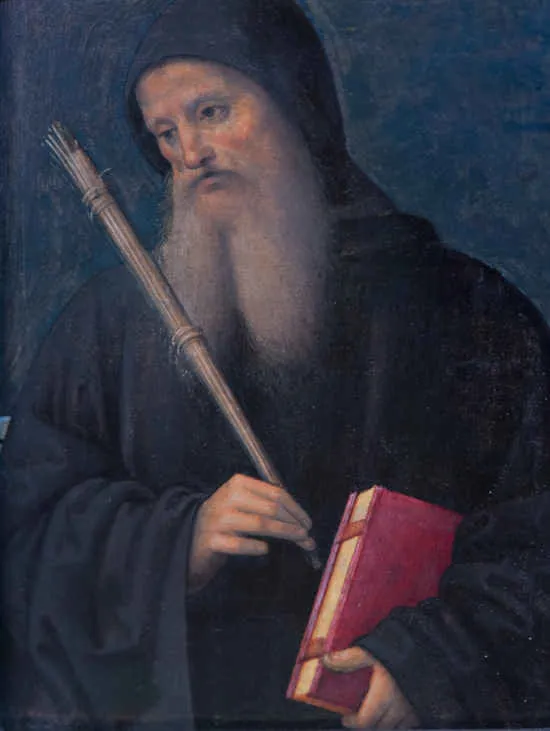
Saint Benedict, Abbot

c. 480–c. 547; Patron Saint of Europe, monks and religious orders, ​​architects, dying people, cave explorers, schoolchildren, agricultural workers, civil engineers, and coppersmiths Invoked against erysipelas, fever, gallstones, inflammatory diseases, kidney disease, nettle rash, poison, temptations, and witchcraft; Canonized by Pope Honorius III in 1220; Declared Patron Saint of Europe by Pope Paul VI in 1964

Benedict was born into Roman nobility in Nursia, central Italy, roughly 100 miles northeast of Rome. His father was a prefect for the Western Roman Empire, which had fallen to the barbarians a decade prior to his birth. He had a twin sister named Scholastica, who also became a saint. As a youth, Benedict was sent to Rome for studies. However, he quickly became disillusioned by the prevalent immorality and disorder, particularly among his classmates. At the age of twenty, to find peace in his soul and avoid the traps that had ensnared many of his peers, he moved to the countryside of the town of Affile, about forty miles from Rome. Accompanying him was his nurse who cared for him like a mother. They moved in with some virtuous men in the Church of Saint Peter. While there, his nurse accidentally broke a dish used to sift wheat and was distraught. Witnessing this, Benedict miraculously mended the dish and returned it to her. News of this miracle spread quickly, and Benedict became the talk of the town.

Benedict wasn’t interested in the praise of men; he sought only holiness. Leaving his nurse behind, he moved closer to the town of Subiaco and took up residence in a cave. Nearby, he met a holy monk, Romanus, whom Benedict consulted for spiritual advice. At Romanus’ encouragement, Benedict took on the monastic habit and lived in the cave for the next three years as a hermit. Romanus visited him frequently, bringing him food as needed. As a hermit, Benedict prayerfully sought to root out all sin in his life, especially the three temptations common to most men: “the temptation of self-affirmation and the desire to put oneself at the center, the temptation of sensuality and, lastly, the temptation of anger and revenge” (Pope Benedict XVI, General Audience, April 9, 2008).

After having conquered these temptations, Benedict was invited by a group of local monks to become their abbot. He reluctantly agreed, recognizing that his form of religious life contrasted sharply with theirs. After a brief time as abbot, the monks so opposed him that, according to legend, they attempted to kill him by poisoning his wine. When Benedict blessed the wine, the glass shattered, and the scheme was revealed. Shortly afterward, Benedict left the monks and returned to his cave before emerging to found monasteries in the area over the following years. Many admired him and were attracted to his radical way of living, while others envied him and sought his life. Numerous miracles are said to have taken place through his intervention, such as raising a monk from the dead, healing a boy, foreseeing future events, multiplying food and wine, expelling demons, and walking across water.

After founding twelve small monasteries in the Subiaco area, Benedict felt it was time for a fresh start. One of the local priests had tried to poison him and was relentless in his persecutions. He even sent a naked woman to one of Benedict’s monasteries to tempt him and the monks. In addition to this persecution, some monks found his way of life challenging, and the locals were more taken with the stories of his miracles than with his devotion to God. Therefore, he moved about sixty miles southeast to the mountaintop of Monte Cassino, where, at the age of fifty, he founded his most famous monastery.

Upon arriving at Monte Cassino, Benedict found a temple built to the Roman god Apollo. He destroyed it, built two chapels in its place, and then constructed a monastery nearby. Before this, most monasteries consisted of loosely associated hermits living independently but also somewhat communally. Having seen the failure of this form of monasticism in Subiaco, Benedict adopted a new approach. Instead of several smaller monasteries, he built one large monastery where numerous monks could live. He wrote a rule, later known as “The Rule of Saint Benedict,” that guided his newly established monastery at Monte Cassino and eventually became the normative rule for Western monasticism for the next 1,500 years. Hence, Saint Benedict is often referred to as the “Father of Western Monasticism.”

The “Rule” consists of seventy-three short chapters that address both the spiritual and administrative aspects of a healthy monastery. The Rule lays out guidelines for monastic living, particularly in areas of stability, conversion of life, obedience, prayer, work, community life, hospitality, and humility. The Rule takes into consideration the fact that most monks governed under the Rule did not engage in extreme penances or other radical charisms. Instead, the Rule fosters a balanced community life in which individual monks can discover a daily rhythm of prayer, work, and study conducive to a deeper and personal calling to holiness.

While Benedict set up his community at Monte Cassino, his sister, Scholastica, helped found a monastery for women. It’s likely that Benedict played a role in this founding and that his Rule guided the nuns’ daily life. Benedict and Scholastica remained close until her death, which he prophesied. Upon her death, Benedict had a vision of Scholastica being taken to Heaven. He brought her body back to Monte Cassino, where she was buried in his future grave, and which they still share.

After fewer than ten years at Monte Cassino, Benedict died, but his influence on the Church and all of Europe was just beginning. Monasteries across Europe, guided by the Rule of Saint Benedict, developed into important centers for education, medicine, culture, and social development. From these monasteries, universities were born. The monasteries helped to preserve ancient texts, stabilize communities, influence nobility, and draw many to Christ. Their liturgies flourished and influenced the wider Church, making many of these monasteries the central teachers of prayer and worship. For these reasons, many have referred to Saint Benedict as not only the father of monasticism but also the father of modern Europe, given the influence that monasteries using his Rule have had on Europe and the world as a whole. For this reason, Pope Paul VI declared Saint Benedict the Patron Saint of Europe in 1964.

As we honor this important figure in Church and world history, reflect on his humble beginnings. He witnessed the immoralities of his day and fled from those temptations to embrace a life of holiness. At that time, it would have been difficult for him to comprehend the influence he would have had on all of Europe and, in fact, upon the whole world for many centuries to come. Reflect on the fact that God also calls you to flee from sin and embrace a life of holiness. When that happens, God can do great things through you in ways you may never comprehend. Follow the example of Saint Benedict and commit yourself to holy daily living, and leave it up to God to use you as He wills.

Source: https://mycatholic.life/saints/saints-of-the-liturgical-year/july-11—saint-benedict-abbot/

Saint Benedict, Abbot Read More »

Matthew 10:14-15

Soften Your Heart

“Whoever will not receive you or listen to your words—go outside that house or town and shake the dust from your feet. Amen, I say to you, it will be more tolerable for the land of Sodom and Gomorrah on the day of judgment than for that town.”

Reflection:

Recall how Jesus harshly condemned the Pharisees for their hardness of heart. In Matthew’s Gospel, Chapter 23, Jesus issues seven “woe to you” condemnations of these Pharisees for being hypocrites and blind guides. These condemnations were acts of love on Jesus’ part, in that they had the goal of calling them to conversion. Similarly, in today’s Gospel, Jesus gives instructions to His Twelve about what they are to do if they preach the Gospel in a town and are rejected. They are to “shake the dust” from their feet.

This instruction was given within the context of Jesus sending the Twelve to the “lost sheep of the house of Israel” with the commission of preaching the Gospel. At that time, they were to go to those who had already been entrusted with the message of the Law of Moses and the prophets but were to now proclaim that the Kingdom of God has arrived. Jesus was the promised Messiah, and He was now here. And for those of the house of Israel who reject Jesus, they were to be condemned by this prophetic act of the wiping of the dust of their town from the Apostles’ feet.

At first, this can seem somewhat harsh. One can think that patience, ongoing discussions, gentleness and the like would be more effective. And though that may be the case in many of our experiences today, the fact remains that Jesus gave the Twelve this command.

Just like the condemnation of the Pharisees, this prophetic action of wiping the dust from their feet was an act of love. Certainly, the Apostles were not to do this out of an irrational anger. They were not to do so because their pride was wounded by rejection or because of their disdain for these people. Rather, the Apostles were to do so as a way of showing the consequences of the townspeople’s actions. When these towns of the chosen people rejected the promised Messiah, they needed to understand the consequences. They needed to know that by rejecting the messengers, they were rejecting the saving grace of the Gospel.

First of all, it’s important to consider those about whom Jesus was speaking. He was speaking about those who “will not receive” nor even “listen” to the message of the Gospel. These are those who have fully rejected God and His saving message. They, by their free choice, have separated themselves from God and His holy Gospel. They are stubborn, obstinate and hard of heart. Thus, it is in this most extreme case, of being completely closed to the Gospel, that Jesus instructs His Apostles to leave with this prophetic act. Perhaps upon seeing this done, some people would experience a certain sense of loss. Perhaps some would realize they made a mistake. Perhaps some would experience a holy sense of guilt and would eventually soften their hearts.

This teaching of Jesus should also open your eyes. How fully do you receive and listen to the message of the Gospel? How attentive are you to the saving proclamation of God’s Kingdom? To the extent that you are open, the floodgates of God’s mercy flows forth. But to the extent that you are not, the experience of loss is encountered.

Reflect, today, upon your being present in one of these towns. Consider the many ways that you have been closed to all that God wants to speak to you. Open your heart wide, listen with the utmost attentiveness, be humble before the message of the Gospel and be ready to receive it and to change your life as you do. Commit to being a member of the Kingdom of God so that all that God speaks to you will have a transforming effect upon your life.

Source: https://catholic-daily-reflections.com/2024/07/10/soften-your-heart-3/

Matthew 10:14-15 Read More »

Saint Victoria

Profile

Victoria was a beautiful Roman Christian noblewoman and the sister of Saint Anatolia. The two sisters were set for arranged marriages to noble Roman pagans, and were hesitant. Victoria argued that it would be all right as the patriarchs in the Old Testament had been married; but Anatolia cited other examples to prove that for the holiest lives, they should devote themselves to God and stay single. Victoria was convinced, sold her jewelry, gave the money to the poor, and refused to go through with the wedding to a fellow named Eugenius.

The two suitors insisted on the weddings, and the sisters refused. The young men denounced the women as Christians, but obtained authority to imprison them their estates, in hopes of breaking their faith and changing their minds. The women converted their servants and guards sent to watch them. Anatolia’s suitor, Titus Aurelius, soon gave up, and handed her back to the authorities. Eugenius stayed at it for years, alternating between good and harsh treatment of Victoria, but eventually even he gave up, and returned her to the authorities. She was martyred by order of Julian, prefect of the Capitol and count of the temples.

Modern research indicates their story is most likely pious fiction that was mistaken for history.

Died

  • stabbed through the heart in 250 by the executioner Liliarcus at Tabulana, Italy
    legend says her murderer was immediately struck with leprosy, and died six days later, eaten by worms

Canonized

  • Pre-Congregation

Patronage

  • against earthquakes
  • against lightning
  • against severe weather
  • in Italy
  • Aggius
  • Anticoli Corrado
  • Carsoli
  • Castilenti
  • Guardiabruna
  • Monteleone Sabino
  • Pietraferrazzana
  • Pisoniano
  • Poggio Sannita
  • Posta Fibreno
  • Santa Vittoria d’Alba
  • Santa Vittoria in Matenano
  • Siligo
  • Spongano
  • Telti
  • Thiesi
  • Tissi
  • Tornareccio

Source: https://catholicsaints.info/saint-victoria/

Saint Victoria Read More »

Matthew 10:5-7

Proclaiming the Kingdom

Jesus sent out these Twelve after instructing them thus, “Do not go into pagan territory or enter a Samaritan town. Go rather to the lost sheep of the house of Israel. As you go, make this proclamation: ‘The Kingdom of heaven is at hand.’”

Reflection:

The very last words of Jesus, just prior to His Ascension into Heaven, expands the mandate we read above that Jesus gave to His Apostles. He later says, “Go, therefore, and make disciples of all nations, baptizing them in the name of the Father, and of the Son, and of the Holy Spirit…” (Matthew 28:19). Eventually, Jesus sends the Twelve and all of His disciples to the ends of the earth to proclaim the Gospel to every creature. But here, prior to the coming of the Holy Spirit, and prior to the completion of Jesus’ earthly mission, He instructs the Twelve to go only “to the lost sheep of the house of Israel.” Thus, Jesus gives a sort of priority to the preaching of the Gospel to those who have already been entrusted with the revelations of the Old Testament—that is, the teachings of the Law of Moses and the prophets.

Though, today, we must all hear the call from our Lord to “make disciples of all nations,” we must also hear this unique commission to first preach to those who are already members of the family of God. And though, today, the Holy Spirit has already come and the Gospel has already gone forth far and wide, there is still an important spiritual lesson to be learned by Jesus’ progressive commission from those of the family of God to those who do not yet know the Gospel.

Start with yourself. By hearing Jesus give special emphasis to His Twelve to go first to the lost sheep of the house of Israel, you should hear our Lord speaking especially about you. You, who were baptized, have been confirmed and have received Holy Communion, now have a special obligation to listen to and respond to the Gospel of Christ. From there, God entrusts you with the sharing of the Gospel in a special way to those who also share your faith. For that reason, parents are uniquely obliged to share the Gospel with their children. Friends within the same faith community are uniquely obliged to reach out to others who share their faith. And pastors of the Church must do the same. The Gospel is now universal and must be proclaimed to all people, but this passage appears to highlight the importance of sharing the Gospel with fellow disciples of Christ.

We know from our daily life that there are many who profess faith in Christ who still are not fully evangelized. There are many who have received the Sacraments but lack the deep faith to which they are called. It can appear that most fail to worship our Lord every day, and many fail in their prayerful worship each and every week. Therefore, it is useful to place yourself into this Gospel passage and to hear our Lord call you to especially devote yourself to the sharing of the Gospel with those who have already become members of His Church, even if it is only in name.

If we begin with ourselves, seeking to daily grow deeper in our life of faith, praying and seeking out the will of God, then God will more easily be able to use us as He wills to share the faith with those who belong to God’s family but whose faith may be weak. And for those who are “all in” and have truly given themselves over to Christ, God will certainly also use you for the proclamation of the Gospel to those who have not yet come to know Christ through the gift of faith.

Reflect, today, upon the invitation Jesus gives to you to be His evangelist. First, look at your own life and do all you can to allow the Gospel to transform you into a fervent follower of Christ. From there, be open to the many ways that God wants to use you every day to inspire others to become followers of our Lord. Start with your family. Pray for them. Be attentive to the promptings of grace God gives to reach out to them. Then turn your eyes, also, to the wider community. Allow the Lord to lead, follow His voice, and He will use you in many ways to help others come to know His burning love for them.

Source: https://catholic-daily-reflections.com/2024/07/09/proclaiming-the-kingdom-3/

Matthew 10:5-7 Read More »

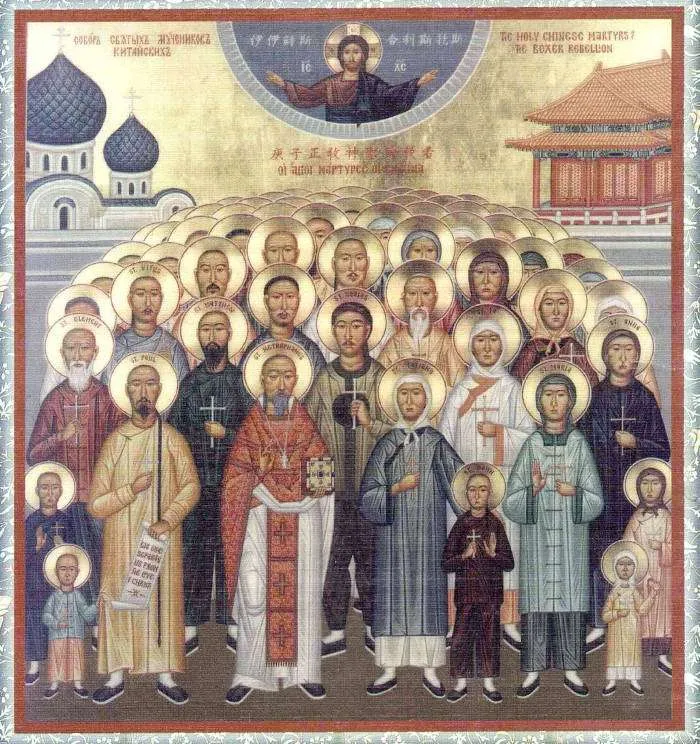
Saint Augustine Zhao Rong and 119 Companions, Martyrs

1648–1930; Invoked for the people of China; Canonized by Pope John Paul II on October 1, 2000

The Syro-Persian Church of the East is believed to have first reached China around the year 630 when two monks arrived to engage in silk trade. Although they were Christians, they followed the Nestorian heresy, which denied the divinity of Christ. The Chinese emperor welcomed them and permitted them to share their faith. Over the next two centuries, some Christian churches were erected and converts were made. However, by the mid-ninth century, Christians were being persecuted. In the year 987, an Arab writer from Baghdad wrote of a conversation he had with a monk who had traveled to China. The monk explained, “Christianity is extinct in China; the native Christians have perished in one way or another; the church which they had has been destroyed and there is only one Christian left in the land.”

In the mid- to late-thirteenth century, Emperor Kublai Khan, the grandson of Genghis Khan, showed greater tolerance of Christianity, especially since his mother was a Nestorian Christian. Franciscan and Dominican friars were permitted to spread the faith, but their efforts yielded little. By the following century, with the rise of the Ming Dynasty, Christianity was once again all but driven out.

In 1552, Saint Francis Xavier began his missionary activity in India, Malaysia, and Japan. Though he never made it to China, his missions paved the way for the Italian Jesuit Matteo Ricci and his companions to help found the Chinese Jesuit Mission on mainland China in 1582. Their approach was to learn the language and culture and try to assimilate as much as possible, winning over hearts and minds with kindness and teaching the people math, science, astronomy, and mapmaking. Ricci and his companions won over some influential converts and managed to translate a catechism into the Chinese language. However, their efforts later drew criticism from the Church hierarchy for blending Confucian religious beliefs with the Catholic faith.

The 120 saints we honor today spilled their blood for the faith during the four centuries that followed. The first to be martyred was Father Francisco Fernández de Capillas, a Spanish Dominican priest. Father de Capillas spent his first two decades as a priest working in the Philippines as a missionary. In 1642, Father de Capillas arrived for his final mission in mainland China. He and his companions worked fervently for the next several years, winning over many converts and even establishing a lay order of Dominicans. In 1644, the less-tolerant Qing Dynasty replaced the Ming Dynasty, immediately threatening the missions. In 1647, Father de Capillas was captured, imprisoned, and tortured. While in prison, he wrote a letter in which he said, “I am here with other prisoners and we have developed a fellowship. They ask me about the Gospel of the Lord. I am not concerned about getting out of here because here I know I am doing the will of God. They do not let me stay up at night to pray, so I pray in bed before dawn. I live here in great joy without any worry, knowing that I am here because of Jesus Christ. The pearls I have found here these days are not always easy to find.” Two months later, he was sentenced to death and immediately decapitated on the charge of teaching false doctrine and opposing the new emperor. He died while praying the sorrowful mysteries of the rosary.

From the martyrdom of Father de Capillas until 1930, 119 other Catholic saints would follow in his footsteps as martyrs in China. Eighty-seven were native Chinese Christians who were lay catechists, merchants, cooks, farmers, and even a young boy. Thirty-three were foreign missionaries from various religious orders, working to spread the Gospel at the risk of their lives.

The next several decades after Father de Capillas’ death were relatively peaceful, as successive emperors tolerated Christians. That all changed, however, when in 1707 the Pope issued a decree forbidding the co-mingling of Confucian religious practices with the Catholic faith, such as ancestor worship. This infuriated the emperor, and over the next fifteen years, most of the Catholic missions were suppressed. In 1724, the new emperor officially banned Christianity and expelled all Catholic priests. Churches were confiscated and turned into public buildings. By the end of the eighteenth century, there remained just a little over 100,000 Catholics in China who practiced their faith in secret.

In 1747–1748, five more Spanish Dominicans were martyred. In 1814, persecutions picked up again as a result of new imperial decrees forbidding the practice of the Christian faith. This time, the persecutions were directed towards native-born Chinese Christians. Among them was Father Augustine Zhao Rong, a priest of the Diocese of Chengdu, China.

Father Augustine, whose name is attached to today’s memorial, was the first native-born Chinese priest and the first Chinese priest to be martyred. He was originally a soldier entrusted with the task of transporting to Beijing French Bishop John Gabriel Taurin Dufresse who had been arrested and would also be martyred. During the long journey, the bishop greatly impressed Zhao Rong with his kindness and peaceful demeanor in the face of persecution. Zhao Rong requested and received baptism after learning about the Catholic faith. Taking the name Augustine, he was later ordained a priest. After his arrest, he was offered the opportunity to renounce the Catholic faith but refused. After horrific tortures, Father Augustine died of his injuries in prison.

Between 1814 and 1862, twenty-six Christians were martyred in China. In the summer of 1900, a fierce persecution of foreigners and Christians broke out. The Boxer Rebellion claimed the lives of eighty-six martyrs, including many religious sisters, priests, catechists, and other laity. In addition to the eighty-six canonized martyrs, thousands of other Christians died. The final two martyrs honored today, an Italian priest and bishop, died in 1930.

As the Church Father Tertullian famously said, “The blood of martyrs is the seed of the Church.” Such is the case in China. The proclamation of the Gospel in this populous land continues today, and much resistance continues. As we honor these Chinese martyrs, pray for the Chinese people, begging God to continue to send holy men and women to that land to share the saving message of Jesus Christ.

Source: https://mycatholic.life/saints/saints-of-the-liturgical-year/july-9—saint-augustine-zhao-rong-and-companions-martyrs/

Saint Augustine Zhao Rong and 119 Companions, Martyrs Read More »

Matthew 9:35-36

Zeal for Souls

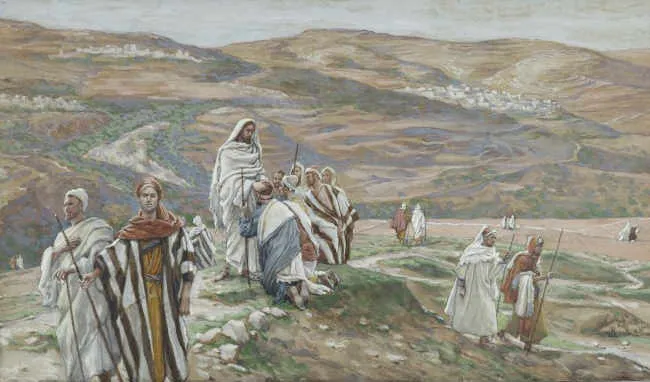
Jesus went around to all the towns and villages, teaching in their synagogues, proclaiming the Gospel of the Kingdom, and curing every disease and illness. At the sight of the crowds, his heart was moved with pity for them because they were troubled and abandoned, like sheep without a shepherd.

Reflection:

Jesus was quite zealous for souls. Zeal is an energy, a passion and a drive to accomplish some task. The task that Jesus was zealous for was the conversion of every heart that He encountered. As He walked from town to town, encountering person after person, Jesus could see into their hearts. He saw that so many people were “troubled and abandoned.” He could see they were like “sheep without a shepherd.” And this moved Him to compassion with a zeal to become their Shepherd, to remove the trouble from their hearts and to let them know they were invited to belong to His new Kingdom.

The image of Jesus encountering numerous people who were troubled and abandoned is a good image to ponder. The reason is that this is us. Each one of us has our own interior troubles. We can feel alone, confused, uncertain and lost at times. The person who doesn’t feel this way is either a perfect saint or is not being honest. Deep holiness and union with God does, of course, cure this interior struggle that many have. In that case, the person clearly knows they belong to the family of God, understands himself or herself as a son or daughter of God, and finds deep peace in this truth. But for those who struggle, this Scripture passage is especially for you.

First of all, to be “troubled” could be caused by many things. For some, they struggle with memories of the past, broken relationships, a lack of direction, serious sin, anger and the like. So the first question to honestly ponder is whether or not you have a troubled heart. Even the greatest of saints will find some areas they struggle with. So what is that for you?

Secondly, feeling “abandoned” is a heavy cross. The reason Jesus came was to enable us to belong to His family. That is accomplished by the gift of eternal salvation which must begin now. By receiving the forgiveness of sins and growing in a life of prayer, we come to know God in a very intimate and personal way. Yes, He is the Almighty God and Creator of all. But He is also deeply personal and intimate, and He wants to form a real relationship of love with you.

If you struggle with either of these, being troubled and/or abandoned, then consider the zeal that Jesus has for you. His tireless and extensive travels, by foot, while He was engaging in His public ministry, should be seen as a sign to you of His zeal to come to you, personally, to become your Shepherd. He wants to lift every burden and clear the way for you to discover your place in His family. The “Gospel of the Kingdom” that Jesus preached was one that invited everyone to become a member of that Kingdom. As He comes to you, know that His heart is filled with compassion for you, just as it was when He traveled the countryside so long ago. He sees you, gazes at your heart with love, and never takes His eyes off of you in your need, weakness and sin.

Reflect, today, upon the zeal that Jesus has for your own eternal salvation and holiness of life. You cannot make it through this world without Him. Let Jesus seek you out, come to you, speak to you and invite you to allow Him to shepherd you. He wants to do so with every fiber of His being; let Jesus fulfill His mission in you.

Source: https://catholic-daily-reflections.com/2024/07/08/zeal-for-souls-3/

Matthew 9:35-36 Read More »