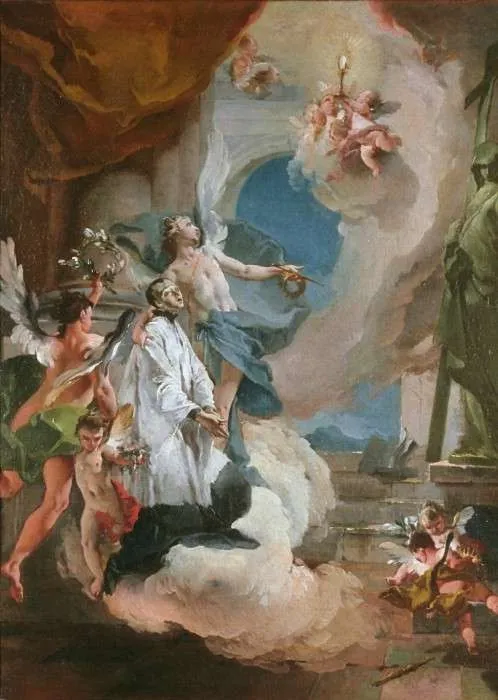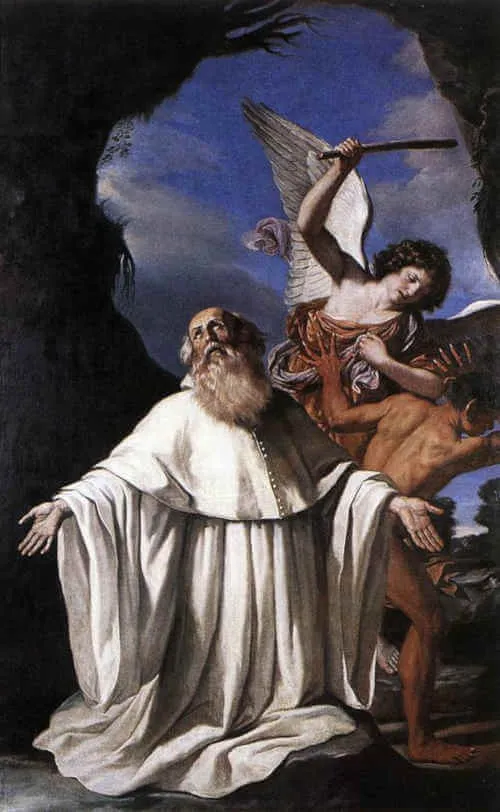

Saint Macarius of Jerusalem
Saint Macarius of Jerusalem Read More »
Profile
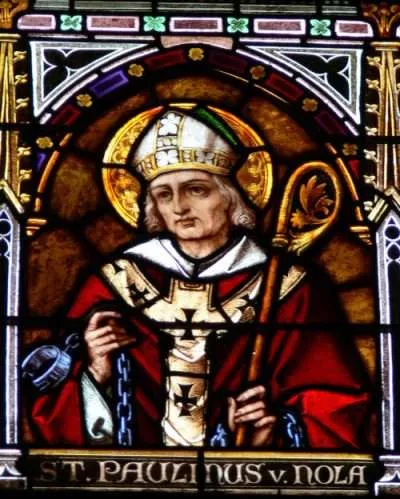
Macarius was the Bishop of Jerusalem in 314. He fought Arianism. He participated in and signed the documents of the Council of Nicaea, and helped formulate the Nicene Creed. When Saint Helena discovered a collection of crosses, one of which was the True Cross, Macarius suggested identifying the real one by touching them to a seriously ill woman, and seeing which one cured her. He supervised the construction of the church of the Holy Sepulcher.
Died
Canonized
Source: https://catholicsaints.info/saint-macarius-of-jerusalem/
Saint Macarius of Jerusalem Read More »
Peter approached Jesus and asked him, “Lord, if my brother sins against me, how often must I forgive him? As many as seven times?” Jesus answered, “I say to you, not seven times but seventy-seven times.”
Reflection:
After replying to Peter, Jesus tells a parable about a servant who owed his master a “huge amount.” The literal translation from the Greek is “ten thousand talents.” One talent alone was a substantial sum, equivalent to about twenty years of wages for a day laborer. Therefore, ten thousand talents would represent an astonishing debt—roughly 200,000 years of wages, or about 24 billion U.S. dollars for a worker making $50 an hour.
It’s difficult to even fathom that much. Jesus uses this immense amount to emphasize His point. When the king in the parable decided to settle accounts with his servants and the one who owed him this enormous debt was brought before him, the king initially decided to have the man and his family sold into slavery. However, the servant pleaded with the king, asking for more time and promising to repay the debt in full. As a result, the king forgave the entire debt. This was undoubtedly a life-changing day for the servant.
Things changed quickly, however. When that servant encountered one of his fellow servants who owed him a much smaller amount—100 denarii in Greek—he immediately demanded repayment. When his fellow servant pleaded for mercy, the man refused and had him thrown into prison. Using the same calculation, 100 denarii would be 100 days’ wages or 40,000 U.S. dollars.
The contrast is stark! The king represents God, and each of us represents the servant forgiven for the enormous debt. When we beg for mercy, God grants it in superabundance. He knows that we are unable to repay the debt of our sins, so He wipes it away with one condition: that we, in turn, forgive everyone who sins against us.
Jesus tells this parable in response to Peter’s question about how often he must forgive his brother who sins against him. Peter suggests, “Seven times?” but Jesus responds with the symbolic number, “Seventy-seven times,” meaning that our forgiveness should have no limits—an infinite number of times. How well do we live out this call?
Overcoming anger is challenging, as we often feel that justice should be served when we are wronged. But perhaps if someone came to us, confessed his or her sin, and begged for mercy, we might offer it. But Jesus teaches that forgiveness must go beyond mere words—it must come from the heart. It must be sincere, complete, and without reservation. Every fiber of our being must forgive. And if someone sins against us and refuses to acknowledge any wrongdoing, the same applies: We must forgive even that unrepentant person from the heart. This is no easy task.
If forgiveness is difficult for you, as it is for most people, consider the consequences of withholding forgiveness. When the king in this parable learned that his servant refused to forgive his fellow servant’s small debt, he “handed him over to the torturers until he should pay back the whole debt.” Jesus concludes the parable with a stark warning: “So will my heavenly Father do to you, unless each of you forgives your brother from your heart.” This should inspire a holy fear in us, often called servile fear—a fear of punishment that helps turn us away from sin. This is a good starting point, but the ideal is to cultivate filial fear, the fear of offending God that springs from love. When we truly love God and experience His infinite mercy, we strive to avoid sin not just out of fear of punishment but because we do not want to hurt or offend our loving Father.
Reflect today on two key things. First, grasp the unfathomable mercy God has given you. Let it fill your heart with deep gratitude. Second, call to mind anyone against whom you harbor anger or resentment. Even the smallest trace of unforgiveness must be confronted. Make an act of your will to forgive, and continue doing so until that forgiveness flows sincerely from your heart.
Source: https://catholic-daily-reflections.com/2026/03/09/unfathomable-mercy-received-and-given/
Frances was born into an aristocratic family in the Eternal City of Rome near the famed Piazza Navona. From an early age, she was drawn to God and responded with much generosity. At the age of eleven, she told her father that she wanted to become a nun, but her father had other plans for her life. He informed her that he was giving her hand in marriage to Lorenzo Ponziani, a wealthy aristocrat who was a commander in the papal army. Frances struggled with her father’s decision and brought her concern to a local priest. After listening to her, the priest said to her, “Are you crying because you want to do God’s will or because you want God to do your will?” She quickly responded that she wanted God’s will, and the matter was settled. At the age of twelve, Frances was married.
Soon after her marriage, Frances was expected to assist her mother-in-law with the family’s social calendar. She was to help plan and host parties, engage in frivolities, and attend numerous public meetings. Since all she longed for was a life of solitude and prayer, the social expectations placed on her wore her out and she became gravely ill. The illness lasted for months and left her on her deathbed at a tender age. As she lay dying, she had a vision of Saint Alexis, a holy monk who fled an arranged marriage to pursue his vocation, who told her that she could choose one of two options, to recover or not. She deferred to the will of God and was immediately healed.
For the next forty years, Frances embraced her marriage with her whole heart. She loved her husband and he loved her. Her humble affection and devotion to him were so great that it has been said that during those forty years they never once had an argument. Though drawn to a life of prayer, Frances often said, “A married woman must, when called upon, leave her devotions to God at the altar to find Him in her household affairs.” One story relates that, while praying the psalms, Frances was called away four times to tend to family affairs before even being able to finish the prayer. Upon returning to begin a fifth time, she found the words of the psalm written in gold as a sign that her fidelity to the duties of her vocation was pleasing to God.
Though Frances was wealthy and of the noble class, she embraced a personal life of simplicity, bodily penance, fasting, and prayer. She abstained from meat except for rare occasions. She would often exchange the delectable food of the nobility for the food of poor beggars, usually receiving from them dry and moldy bread. She dressed in coarse garments, never fine linen, and often wore a hairshirt that irritated her flesh.
Frances and her husband had three children, two boys, and one girl. When a plague afflicted the city of Rome, one of her sons and her only daughter died at an early age. This personal suffering led her to join her sister-in-law to begin an informal outreach to the sick and poor. The women regularly visited hospitals, nursed the sick back to health, distributed food to the hungry, and were ministers of the compassion of Christ. Frances exhausted all of her own money and possessions to care for those who were suffering. When her money ran out, she began to beg other wealthy families for more. Eventually, some holy noblewomen in Rome were inspired to join Frances and her sister-in-law in their work.
In the year 1413, when Frances was twenty-nine years old, her husband was exiled from Rome by invaders, his property was seized, their home destroyed, and their only living son was detained as a hostage. Through it all, Frances called to mind the sufferings of Job and prayed with him, “The LORD gave and the LORD has taken away; blessed be the name of the LORD!” (Job 1:21). Within a few years, the situation was resolved, and her husband was able to move back to Rome and regain his possessions. But the chaos led Frances to turn the ruined family home into a hospital to care for the sick. One of those whom she cared for was her husband, who had suffered greatly during his exile. He was broken more in mind than in body, but her loving devotion helped him heal. During this time, it is said that she began having visions of her guardian angel, who frequently spoke to her and gave her advice. These visions continued for the rest of her life.
By 1425, Frances and other holy women in Rome were working hard to care for the poor and infirm. To help this work flourish, Frances organized a lay association of Benedictine Oblates for single and widowed women. The women who joined did not take formal religious vows nor enter a cloister, but lived together, embraced the Benedictine spirituality under the direction of a local monastery, and gave loving service to the poor and ill. Though still married and unable to join the oblates, Frances did receive the consent of her loving husband to live the rest of their marriage in abstinence from intimacy. They lived this way until Lorenzo’s death in 1436.
The next year, now widowed at the age of fifty-two, Francis walked barefoot through the city to the monastery of oblates she had founded and prostrated herself on the ground before the oblates, begging for admission. She was admitted and soon after was named the superior. The desire for religious life that she felt at the young age of eleven was now realized. For the next three years, she devoted herself to the holy work of her community. When her guardian angel informed her that her mission was complete on earth, she joyfully surrendered herself to death. In 1925, Pope Pius XI declared her to be the patron saint of automobile drivers because it was said that her angel always went before her, lighting the way, as headlights illuminate the way for a car.
Saint Frances loved and served God as a wife, mother, and religious. She learned to embrace God’s will over her own. Her selfless living enabled her to discover God’s will in each evolution of her vocation and to serve Him in the way in which she was called. As we honor this holy woman, ponder your own vocation and commit yourself to serving the will of God in the way that gives Him the greatest glory here and now.
Source: https://mycatholic.life/saints/saints-of-the-liturgical-year/march-9-saint-frances-of-rome-religious/
Saint Frances of Rome, Religious Read More »
Jesus said to the people in the synagogue at Nazareth: “Amen, I say to you, no prophet is accepted in his own native place.”
Reflection:
Do you recognize Christ’s presence in others? Do you sense His divine presence all around you? In today’s Gospel, the people of Nazareth did not. Jesus, the Son of God, the Second Person of the Most Holy Trinity, stood in their midst, yet they failed to see Him for who He truly was. Many of them had watched Jesus grow up, knew His family, and were familiar with His work as a carpenter. However, they could not look beyond the surface to perceive the divine reality in their midst.
Though our Lord is not present to us today in the same way He was to the people of Nazareth, He is still with us in countless other ways—through grace, within the Sacraments, in the Scriptures, and in the lives of those around us. Yet how often do we fail to notice His presence in these familiar places?
In today’s Gospel, Jesus recognizes the hardness of heart among many in His hometown. He responds by recalling two stories about Elijah and Elisha—prophets who performed miracles for Gentiles rather than Israelites, because the Israelites lacked faith. Jesus’ message was clear: The people of Nazareth also lacked faith, and as a result, He would perform no miracles for them. This message enraged the people so much that they attempted to throw Him off a cliff. However, Jesus “passed through the midst of them and went away.” Imagine how dramatic that scene must have been!
Sometimes, we all need what could be called a “provocative holy drama” in our lives. Just as Jesus challenged the people of Nazareth for their spiritual blindness, we need to be shaken from our complacency. God uses these moments to awaken us to His presence—whether in the Scriptures, the Sacraments, or the people around us. These “holy dramas” are not meant to condemn but to invite us into a deeper awareness of His love and presence.
Try to imagine yourself as a member of Jesus’ hometown. Those of us raised in the Catholic faith, attending Mass regularly, and striving to live as faithful Catholics can sometimes fall into a spiritual routine. The more familiar we become with God’s Church, the easier it can be to overlook His presence in the most ordinary of places. When that happens, God may use moments of “holy drama” to awaken us from our spiritual slumber. These moments are invitations to recognize His presence where we might have taken it for granted.
Reflect today on what it would mean to be in the crowd at Nazareth. Approach this reflection humbly and sincerely. Allow Jesus’ loving challenge to the people of His hometown to resonate in your own heart. Rather than defend yourself, welcome His gentle rebuke, letting it awaken you to His presence in the familiar. Seek Him with renewed attentiveness, and allow Him to lead you more deeply into His love.
Source: https://catholic-daily-reflections.com/2026/03/08/provocative-holy-drama/
Saint John of God was born in the village of Montemor-o-Novo, Portugal to middle-class, faith-filled parents. According to his early biographer, John was abducted from his home when he was only eight years old and taken to the town of Oropesa, Spain, more than 200 miles away. In Oropesa, John found himself homeless and alone. He met a good man named El Mayoral who gave him a job as a shepherd and a place to live. John worked hard until he was twenty-two years old, never returning to his parents’ home. El Mayoral wanted John to marry his daughter, but John wanted to see the world. He joined the army of the Holy Roman Emperor and battled the French. During his service, he was assigned to guard some captured clothing that went missing. John was accused of theft and condemned to death, but others intervened and he was released. Frustrated with military life, John returned to El Mayoral’s farm where he worked for another four years before entering the army once again to fight the Turks for the next eighteen years.
Upon the completion of his military service, John decided to return to his home country in Montemor-o-Novo to learn what became of his parents. After much searching, he found one of his elderly uncles who informed him that his mother died of heartbreak after his abduction and that his father joined the Franciscans and advanced in holiness. John said to his uncle, “I no longer wish to stay in this country; but rather to go in search of a way to serve Our Lord beyond my native place, just as my father did. He gave me a good example by doing that. I have been so wicked and sinful and since the Lord has given me life, it is fitting that I should use it to serve him and do penance.”
John began an interior search for the best way he could serve God and decided to journey to Africa, to ransom himself to the Muslims in exchange for their prisoners. On the journey, he met a knight and his family who were destitute and unable to care for themselves. The knight begged for John’s help that John gladly gave by working and giving them his earnings. When one of John’s fellow workers fled to Muslim territory and converted to Islam, John began to despair, thinking he should have done more for his friend. After seeking counsel from a Franciscan monastery, he decided to return to the mainland of Spain for the good of his soul.
Upon his arrival, John threw himself into a life of prayer, made a general confession, and tearfully went from church to church begging God for the forgiveness of his sins. To support himself, he began to buy and sell religious pictures and books as a traveling salesman. He found this to be spiritually rewarding and fruitful for the salvation of souls. Eventually, at the age of forty-six, he set up a small shop of religious items at Granada’s city gate.
Soon after, the great preacher Saint John of Ávila came to town to preach a mission. John was in attendance and was so moved by John of Ávila’s sermons, and so keenly aware of his own sins, that he started running through the streets like a madman, shouting for mercy. He returned to his shop and destroyed every book that was not religious, gave every other religious book and picture away to those passing by, gave away the rest of his possessions, and continued crying out in the streets that he was a sinner. “Mercy! Mercy, Lord God, on this tremendous sinner who has so offended you!” Many thought John was a lunatic. Some good men brought him to Saint John of Ávila who heard his confession, counseled him, consoled him, and offered his continued guidance. But John was so deeply touched by the priest’s holy help that he wanted everyone in the town to know how sinful he was, so he ran through the streets crying out again and rolled in mud as a sign of his sinfulness. Eventually, two compassionate men took John to the local insane asylum for treatment.
The theory of the day was that those who were insane were best cured by locking them in a dungeon and torturing them continuously until they chose to abandon their insanity, and this is what happened to John. Saint John of Ávila heard of this and began communicating with John, encouraging him, and guiding him. He received every beating in the asylum with joy as penance and offered each sacrificially to God. Throughout, John exhorted the warden and other officers to treat the patients better. When John began to exude a peaceful disposition, the warden was pleased and permitted him to be freed of his shackles. John showed mercy and compassion to others, performing menial charitable tasks and spreading God’s love. He thought to himself, “May Jesus Christ eventually give me the grace to run a hospice where the abandoned poor and those suffering from mental disorders might have refuge and that I may be able to serve them as I wish.”
After receiving permission to leave the asylum, John made a pilgrimage and had a vision of the Blessed Mother who encouraged him to work for the poor and infirm. Upon his return to Granada, he moved forward with his desire to open a hospital. Through begging, he was able to rent a building, furnish it, and begin seeking out the sick. He worked tirelessly to care for them, begged for food, brought priests to hear their confessions, and nursed them back to health. In the years following, John extended his mission of mercy to the poor, the abandoned, widows, orphans, the unemployed, prostitutes, and all who suffered. Soon, others were so inspired by the work John was doing that they joined him. His companions in the work made up what would eventually become the Order of Hospitallers. In John’s life, the group would be only an organized group of companions, but twenty-two years after John’s death, the pope would approve this group of men as a new religious order. Among the many miracles that have been reported, the most notable was when John ran in and out of a burning hospital to rescue patients without being burned himself.
Saint John of God is a shining example of God’s power. He was a sinner and was thought to be mentally ill, but God did incredible things through him. If you ever feel as though you have nothing to offer God, think of Saint John and know that the weaker you may feel, the more God can use you.
Source: https://mycatholic.life/saints/saints-of-the-liturgical-year/march-8-saint-john-of-god-religious/
Saint John of God, Religious Read More »
In those days, in their thirst for water,
the people grumbled against Moses,
saying, “Why did you ever make us leave Egypt?
Was it just to have us die here of thirst
with our children and our livestock?”
So Moses cried out to the LORD,
“What shall I do with this people?
a little more and they will stone me!”
The LORD answered Moses,
“Go over there in front of the people,
along with some of the elders of Israel,
holding in your hand, as you go,
the staff with which you struck the river.
I will be standing there in front of you on the rock in Horeb.
Strike the rock, and the water will flow from it
for the people to drink.”
This Moses did, in the presence of the elders of Israel.
The place was called Massah and Meribah,
because the Israelites quarreled there
and tested the LORD, saying,
“Is the LORD in our midst or not?”
R. (8) If today you hear his voice, harden not your hearts.
Come, let us sing joyfully to the LORD;
let us acclaim the Rock of our salvation.
Let us come into his presence with thanksgiving;
let us joyfully sing psalms to him.
R. If today you hear his voice, harden not your hearts.
Come, let us bow down in worship;
let us kneel before the LORD who made us.
For he is our God,
and we are the people he shepherds, the flock he guides.
R. If today you hear his voice, harden not your hearts.
Oh, that today you would hear his voice:
“Harden not your hearts as at Meribah,
as in the day of Massah in the desert,
Where your fathers tempted me;
they tested me though they had seen my works.”
R. If today you hear his voice, harden not your hearts.
Brothers and sisters:
Since we have been justified by faith,
we have peace with God through our Lord Jesus Christ,
through whom we have gained access by faith
to this grace in which we stand,
and we boast in hope of the glory of God.
And hope does not disappoint,
because the love of God has been poured out into our hearts
through the Holy Spirit who has been given to us.
For Christ, while we were still helpless,
died at the appointed time for the ungodly.
Indeed, only with difficulty does one die for a just person,
though perhaps for a good person one might even find courage to die.
But God proves his love for us
in that while we were still sinners Christ died for us.
Lord, you are truly the Savior of the world;
give me living water, that I may never thirst again.
Jesus came to a town of Samaria called Sychar,
near the plot of land that Jacob had given to his son Joseph.
Jacob’s well was there.
Jesus, tired from his journey, sat down there at the well.
It was about noon.
A woman of Samaria came to draw water.
Jesus said to her,
“Give me a drink.”
His disciples had gone into the town to buy food.
The Samaritan woman said to him,
“How can you, a Jew, ask me, a Samaritan woman, for a drink?”
—For Jews use nothing in common with Samaritans.—
Jesus answered and said to her,
“If you knew the gift of God
and who is saying to you, ‘Give me a drink, ‘
you would have asked him
and he would have given you living water.”
The woman said to him,
“Sir, you do not even have a bucket and the cistern is deep;
where then can you get this living water?
Are you greater than our father Jacob,
who gave us this cistern and drank from it himself
with his children and his flocks?”
Jesus answered and said to her,
“Everyone who drinks this water will be thirsty again;
but whoever drinks the water I shall give will never thirst;
the water I shall give will become in him
a spring of water welling up to eternal life.”
The woman said to him,
“Sir, give me this water, so that I may not be thirsty
or have to keep coming here to draw water.”
Jesus said to her,
“Go call your husband and come back.”
The woman answered and said to him,
“I do not have a husband.”
Jesus answered her,
“You are right in saying, ‘I do not have a husband.’
For you have had five husbands,
and the one you have now is not your husband.
What you have said is true.”
The woman said to him,
“Sir, I can see that you are a prophet.
Our ancestors worshiped on this mountain;
but you people say that the place to worship is in Jerusalem.”
Jesus said to her,
“Believe me, woman, the hour is coming
when you will worship the Father
neither on this mountain nor in Jerusalem.
You people worship what you do not understand;
we worship what we understand,
because salvation is from the Jews.
But the hour is coming, and is now here,
when true worshipers will worship the Father in Spirit and truth;
and indeed the Father seeks such people to worship him.
God is Spirit, and those who worship him
must worship in Spirit and truth.”
The woman said to him,
“I know that the Messiah is coming, the one called the Christ;
when he comes, he will tell us everything.”
Jesus said to her,
“I am he, the one speaking with you.”
At that moment his disciples returned,
and were amazed that he was talking with a woman,
but still no one said, “What are you looking for?”
or “Why are you talking with her?”
The woman left her water jar
and went into the town and said to the people,
“Come see a man who told me everything I have done.
Could he possibly be the Christ?”
They went out of the town and came to him.
Meanwhile, the disciples urged him, “Rabbi, eat.”
But he said to them,
“I have food to eat of which you do not know.”
So the disciples said to one another,
“Could someone have brought him something to eat?”
Jesus said to them,
“My food is to do the will of the one who sent me
and to finish his work.
Do you not say, ‘In four months the harvest will be here’?
I tell you, look up and see the fields ripe for the harvest.
The reaper is already receiving payment
and gathering crops for eternal life,
so that the sower and reaper can rejoice together.
For here the saying is verified that ‘One sows and another reaps.’
I sent you to reap what you have not worked for;
others have done the work,
and you are sharing the fruits of their work.”
Many of the Samaritans of that town began to believe in him
because of the word of the woman who testified,
“He told me everything I have done.”
When the Samaritans came to him,
they invited him to stay with them;
and he stayed there two days.
Many more began to believe in him because of his word,
and they said to the woman,
“We no longer believe because of your word;
for we have heard for ourselves,
and we know that this is truly the savior of the world.”
Source: https://bible.usccb.org/bible/readings/030826.cfm
Third Sunday of Lent Read More »
Jesus said to her, “Go call your husband and come back.” The woman answered and said to him, “I do not have a husband.” Jesus answered her, “You are right in saying, ‘I do not have a husband.’ For you have had five husbands, and the one you have now is not your husband. What you have said is true.”
Reflection:
Today, we are given the beautiful story of Jesus’ encounter with the Samaritan woman at Jacob’s Well. The story begins with Jesus resting by the well, for He was “tired from his journey.” A Samaritan woman approaches the well at noon, during the heat of the day, most likely to avoid the scorn of the other women who looked down on her. Jesus then does something that greatly surprises her: He asks her for a drink of water.
Jews used nothing in common with Samaritans, yet Jesus was willing to drink from her utensil. When she questioned Him about this, Jesus responded, “If you knew the gift of God and who is saying to you, ‘Give me a drink,’ you would have asked him and he would have given you living water.”
The “living water” Jesus desired to give her was the spiritual gift of grace to renew and refresh her soul. His divine eyes enabled Him to see her spiritual thirst, and His compassion filled Him with a desire to free her from her many burdens.
The passage above might sound harsh at first: “For you have had five husbands…” Why would Jesus bring up this woman’s humiliating situation? Because she had clearly been searching for fulfillment throughout her life, engaging in one failed marriage after another. Now, she was living with a man who was not her husband, a reality that left her dry and thirsty.
By speaking this way to the woman, Jesus lets her know that He knows all about her, loves her, and longs to fill her with the satiation she has been searching for throughout her life. He does not judge or condemn her; He invites her to experience the freedom He longed to bestow upon her. After the encounter, the woman left the well overjoyed and even left her water jar behind, symbolizing that she was no longer thirsty—spiritually speaking. She then confidently went to the people of the town and said, “Come see a man who told me everything I have done. Could he possibly be the Christ?”
Each of us needs to see ourselves in this woman. Our sins fill us with shame. The guilt of our hidden sins weighs us down, leaving us thirsty. If we can identify with this sinful woman, then we can also expect the same depth of compassion from Jesus. Too often, we hide our sins, even from ourselves, justifying our actions, downplaying them, or ignoring them. That is not the path to freedom. Freedom only comes by allowing our Lord to reveal our sins to us, facing them, and encountering God’s abundant mercy.
Reflect today on the importance of opening your eyes to see the reality of your sins. Don’t run from your past—confront it, understand it, confess it, and receive the living water of mercy. The holier you become, the more clearly you will see even the smallest sins you have committed. That is good. It is necessary if we want to be healed and refreshed by God. Imitate this sinful woman today. God is never ashamed of us. Let the shame and guilt dissipate within God’s abundant mercy so that like this woman, you will know that God knows you through and through and loves you despite your sin.
Source: https://catholic-daily-reflections.com/2026/03/07/facing-the-horror-of-my-sins/
The first records of martyrdom in North Africa took place in 180 when twelve Christians were tried and put to death for their faith. After those first martyrs, the Christian faith in North Africa grew stronger and new converts became commonplace. In an attempt to slow the growth of Christianity, Roman Emperor Septimius Severus issued a decree forbidding subjects of the Roman Empire to convert. If they did, they were given the opportunity to renounce their faith and honor the Roman gods. If they refused, they were put to death. In 203, five catechumens preparing for baptism were arrested in the Roman city of Carthage (modern-day Tunisia). Among those catechumens were the two martyrs we honor today.
Vibia Perpetua was a twenty-two-year-old married noblewoman at the time of her arrest. She was also a mother, having recently given birth to a son whom she was still nursing. Her father was a pagan, but her mother and a brother were baptized Christians. A second brother was preparing for baptism alongside Perpetua, and a third brother had already died as a pagan. Perpetua had been touched by Christ and decided to become a Christian, but she was arrested before her baptism. Her pagan father came to her in prison and pleaded with her to renounce the Christian faith and refuse baptism to save her life so she could raise her son. Perpetua records that conversation as follows: “‘Father, do you see this vessel lying here to be a little pitcher, or something else? Can it be called by any other name than what it is?’ And he said, ‘No.’ ‘Neither can I call myself anything else than what I am, a Christian’” (Passion of Saints Perpetua and Felicity). A few days later, Perpetua was secretly baptized in prison.
While in prison, Perpetua’s heart yearned for her baby. To her joy, the infant was brought to her so she could nurse him. When that happened, she said, “My prison suddenly became a palace to me and I would rather have been there than anywhere else.”
Felicity, a slave, was also a young woman and pregnant at the time of her arrest. One eyewitness stated, “Felicity had feared that she might not be allowed to suffer with the rest, because pregnant women were not sent into the arena. However, she gave birth in the prison to a daughter whom one of their fellow Christians at once adopted.”
When these brave women stood before their judge, Perpetua’s father showed up with her baby, pleading with her to renounce Christ, save her life, and be there for her son. The judge also encouraged her: “Spare your father’s white hairs. Spare the tender years of your child. Offer sacrifice for the prosperity of the emperors.” Perpetua refused. When asked directly if she were a Christian, she responded, “Yes, I am.” At that, her father violently inserted himself into the situation but was struck by the guard. When Perpetua saw this, her heart broke. She later recounted, “I felt this as if I myself had been struck, so deeply did I grieve to see my father treated thus in his old age.” The judge passed sentence and all were condemned to death by wild beasts. Still, they were filled with great joy as they returned to their prison. After the sentencing, Perpetua was no longer allowed to see her baby boy.
On the day of their martyrdom, Perpetua and Felicity walked to the arena with heads high and joyful spirits. With them were Revocatus, a fellow slave with Felicity, and two freemen, Saturninus and Secundulus. The men were sent into the arena first to be devoured by a leopard, a wild boar, and a bear. Saturnius was the last standing. When a second leopard attacked and blood poured out, the crowd cried out, “He is well baptized now!”
Perpetua and Felicity were then placed in the arena, and a wild cow was let loose as a way of mocking them as nursing mothers. The beast gravely wounded them but did not kill them, so an executioner was dispatched. Perpetua cried out to her brother, “Stand fast in the faith, and love one another. Do not let our sufferings be a stumbling block to you.” She then noticed the fear in the eyes of the executioner so she guided his sword to her neck and the young women received their eternal reward.
Perpetua and Felicity were both new young mothers at the time of their martyrdom. They loved their newborn babies with tender love. But they also loved their God Whom they had both recently come to know. They were forced to choose. Either reject Christ and be there to raise their babies or remain Christian and leave their babies. With heroic courage and faith, they remained true to both. They remained faithful to Christ, dying as martyrs, and they fulfilled their greatest motherly duty by giving heroic witnesses of faith to their babies. We can only hope that as their children grew and were told the stories of their mothers’ love of God, those children were inspired and sought to imitate their mothers’ Christian faith.
Place yourself in that same situation. Would you have had the courage to face death? Would you be able to stay true to your profession of faith under such extreme emotional and familial pressures? Pray to these saintly mothers and be reminded that the greatest gift we can pass onto others is the witness of our faith in Christ. Life is empty unless Christ is loved and professed, and death loses its sting when our lives are Christ’s.
Source: https://mycatholic.life/saints/saints-of-the-liturgical-year/march-7-saints-perpetua-and-felicity-martyrs/
Saints Perpetua and Felicity, Martyrs Read More »
A man had two sons, and the younger son said to his father, ‘Father, give me the share of your estate that should come to me.’ So the father divided the property between them. After a few days, the younger son collected all his belongings and set off to a distant country where he squandered his inheritance on a life of dissipation.
Reflection:
Why did the father in this parable give his wayward son his inheritance? Very few parents would do such a thing. Essentially, the son treated his father as if he were dead. He showed no interest in remaining part of the family, nor did he care about his father’s potential need for him in old age. The son’s only desire was to take the money, leave for a distant land, and live a sinful life, severing his relationship with his father. So why did the father agree to the son’s premature demand for his inheritance?
The father’s extreme generosity represents God’s deep respect for our free will. This parable was addressed to the scribes and Pharisees, who constantly sought to manipulate and intimidate God’s people into submission. But God doesn’t work that way. He allows us the freedom to sin because, without that freedom, we would be unable to love Him authentically.
The symbolism in this parable is clear: the son represents all who reject God, treat Him as though He were dead, abuse the natural and worldly gifts they’ve been given, and stray deeply into sin—symbolized by the “distant country.” When God’s children reject Him and use their free will to sin, He permits them to experience the consequences of their choices. They soon discover that a life of sin away from Him quickly turns chaotic. While sin might provide temporary satisfaction, it inevitably leads to spiritual hunger and destitution.
It was the responsibility of the religious leaders to treat God’s people with the same respect that the father in this story showed his son. This remains the responsibility of every parent, Church leader, and person in authority today. First and foremost, we must respect the free will of others. Authentic conversion and worship cannot come from intimidation or manipulation. Yet, the scribes and Pharisees, through their self-righteousness and condescension, interfered with this essential quality of faith and worship.
Even worse was their attitude toward those who had gone astray. They were indignant that Jesus welcomed tax collectors and sinners. But that was precisely why He came—to invite sinners to repentance. And repent they did. The scribes and Pharisees, however, were too self-absorbed to even consider extending forgiveness to those they deemed unworthy.
When someone you love sins against you, how do you respond? Do you allow the one you love the freedom to make choices, continuing to love that person even in his or her rejection of you? The scribes and Pharisees couldn’t stomach such mercy. But to God, it is a profound act of respect for human freedom, allowing each person to experience the consequences of his or her decisions. And when a sinner begins to suffer those consequences, do you think to yourself, “I told you so”? Or does your heart fill with compassion, making it easy for the sinner to return to God and to you?
Reflect today on your attitude toward sinners. We are all sinners, and none of us has the right to judge, intimidate, or condemn others. Mercy—abundant mercy—is essential if we are to become like the father of the prodigal son. Only mercy that fully respects others, longs for their conversion, and forgives even before being asked can effectively change hearts. Contemplate the heart of our loving Father in Heaven and strive to imitate His holy virtues.
Source: https://catholic-daily-reflections.com/2026/03/06/the-freedom-to-love-and-to-sin/
Profile
Rose was a Franciscan tertiary. At age three, she brought a person back from death. She preached in the streets from age ten and led public processions praising Christ. She was a prophetess and subject to visions. She had the friendship of birds. She was repeatedly refused entrance to the Poor Clares, and in 1250 she was exiled for supporting the Pope against Frederick II. After her death, Pope Alexander IV ordered her body laid to rest in the convent that had refused her.
Born
Died
Canonized
Patronage
Source: https://catholicsaints.info/saint-rose-of-viterbo/
Saint Rose of Viterbo Read More »
Add San Jose Filipino Ministry as a new recipient, Send your donation using"donate@dosjfm.org"
Payable to - San Jose Filipino Ministry
Address - Poong Jesus Nazareno Filipino Catholic Center (PJNFCC); 3700 W. Orange Ave., Anaheim CA 92804
Poong Jesus Nazareno Filipino Catholic Center (PJNFCC); 3700 W. Orange Ave., Anaheim CA 92804
Phone: (657) 214-2507
Mobile (657) 208-2038
info@dosjfm.org
Poong Jesus Nazareno Filipino Catholic Center (PJNFCC); 3700 W. Orange Ave., Anaheim CA 92804
Phone: (657) 214-2507
Mobile (657) 208-2038
info@dosjfm.org
Add San Jose Filipino Ministry as a new recipient, Send your donation using"donate@dosjfm.org"
Payable to - San Jose Filipino Ministry
Address - 1235 S Magnolia Ave
Anaheim, CA 92804-5115
San Jose Filipino Ministry. All rights reserved. 2021 © Powered by Phoenix Virtual Solutions
Sponsored by EverClear Hospice and Palliative Care