Author name: Sani

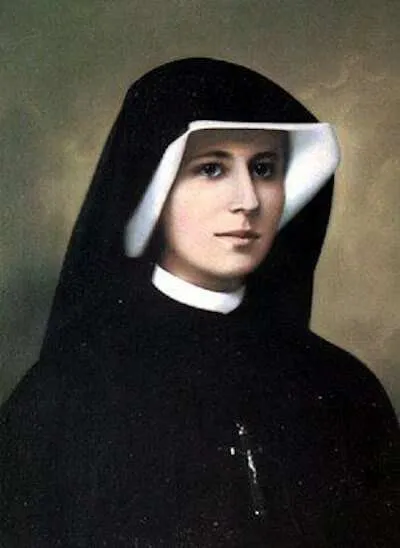
Saint Faustina Kowalska

1905–1938; Patron Saint of The Divine Mercy devotion; Canonized by Pope John Paul II on April 30, 2000

Helen Kowalska was born the third of ten children in the village of Glogowiec, Poland, which was then under the control of the Russian Empire. Poland regained its independence thirteen years later, in 1918, after World War I. The Kowalskas were quite poor, but they had a rich Catholic faith and held onto their vibrant Polish culture in the face of Russian attempts to eliminate it. As a child, Helen received only three years of schooling but loved to pray, was pious, obeyed her parents, and was sensitive to human suffering. She would later write in her Diary, “From the age of seven, I experienced the definite call of God, the grace of a vocation to the religious life.” At that time, she relates that she first heard God speak to her in her soul and sensed “an invitation to a more perfect life.” When she asked her parents about becoming a nun, they repeatedly refused. At the age of fourteen, Helen left her family home and became a housemaid in the nearby city to help financially support her family. After her parents refused her permission to enter religious life again when she was eighteen, she relates “I turned myself over to the vain things of life, paying no attention to the call of grace, although my soul found no satisfaction in any of these things.” Despite her refusals of grace, Jesus was persistent.

One day, in her eighteenth year, she was at a dance with her sisters. Everyone was having fun at the dance, but Helen was experiencing “deep torments.” As she started to dance, she suddenly had a vision of Jesus at her side—bloodied, beaten, racked with pain, and stripped of His clothing. Jesus said to her, “How long shall I put up with you and how long will you keep putting Me off?” Soon after, Helen sneaked away to the Cathedral of Saint Stanislaus Kostka where she fell prostrate before the Blessed Sacrament and begged God for direction. As she prayed, she heard these words, “Go at once to Warsaw; you will enter a convent there.” She went home, told her sister to say goodbye to her parents, and took the train seventy-five miles to Warsaw with only the dress on her back.

Once Helen got off the train, she prayed to the Mother of God who directed her to a small town where she was given lodging for the night. The next day, while praying in a nearby church, she heard Jesus tell her, “Go to that priest and tell him everything; he will tell you what to do next.” The priest arranged for Helen to stay with a holy woman of the parish for the time. During her brief stay, Helen began knocking on the door of every convent she could find, but they all turned her down. Finally, she knocked on the door of the Congregation of the Sisters of Our Lady of Mercy where the mother superior sent her to the chapel to pray and ask Jesus if He accepted her. Helen then went to the chapel to pose the question to Jesus, and He responded, “I do accept; you are in My Heart.” When Mother Michael asked Helen what Jesus’ response was, Helen told her Jesus accepted her. Mother Michael then responded, “If the Lord has accepted, then I also will accept.” To test Helen’s vocation, Mother Michael sent her away for a year to make some money for her wardrobe. Mother Michael later wrote about this encounter in her diary, stating that Helen “was no one special.” After a year of working as a housemaid near Warsaw, Helen returned to the convent on August 1, 1925, and at the age of twenty was accepted into the Congregation of the Sisters of Our Lady of Mercy. Of that day, she later wrote, “I felt immensely happy; it seemed to me that I had stepped into the life of Paradise. A single prayer was bursting forth from my heart, one of thanksgiving.”

Within a few weeks, however, Helen was frustrated with the convent’s busy schedule and lack of prayer time, so she decided to leave. The night before she was going to tell Mother Michael of her decision, Jesus appeared to her in her cell, beaten and bloody. When she asked Jesus who did this to Him, He responded, “It is you who will cause Me this pain if you leave this convent. It is to this place that I called you and nowhere else; and I have prepared many graces for you.” With that, she changed her mind, went to Krakow to finish her novitiate, and on April 30, 1926, she received the habit and was given the name Sister Maria Faustina of the Blessed Sacrament.

Sister Faustina spent the next twelve years of her life in various convents of the Sisters of Our Lady of Mercy in Warsaw, Vilnius, Płock, and Kraków. It was in Kraków where she died on October 5, 1938, at the age of 33. Throughout her time as a religious sister, Sister Faustina worked primarily as a cook, gardener, and doorkeeper. Her daily duties were intertwined with incredible mystical experiences, in which Jesus regularly appeared to her to deliver to her His message of The Divine Mercy. Under obedience to her superiors, beginning in 1934, she diligently wrote down these visions and private revelations in six notebooks. These private revelations are now contained in a single book called The Diary of Saint Maria Faustina Kowalska: Divine Mercy in My Soul. The book and the devotions contained within it are among the most prominent devotions within the Church today.

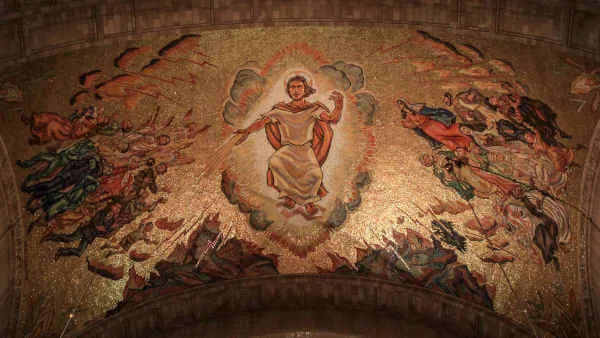
In her diary, Saint Faustina articulates several ways that Jesus wants devotion to His Mercy to spread. The first way is by meditating upon the image of Divine Mercy. This image is of Jesus, with two rays of light shining from His Heart, one blue and one red, signifying the Sacraments of Baptism and the Eucharist. Jesus ordered that this image be painted and honored throughout the world, with the inscription “Jesus, I Trust in You” on the bottom. The second way is by instituting the Solemnity of Divine Mercy on the eighth day of Easter. Pope John Paul II added this solemnity to the universal calendar of the Church in the year 2000, when he canonized Saint Faustina. The third way is by praying the Chaplet of Divine Mercy, which Jesus Himself taught to Saint Faustina. The goal of this chaplet is to obtain mercy, trust in Christ’s mercy, and show mercy to others. The fourth way is by honoring the three o’clock hour every day, the hour in which our Lord died and poured forth His Mercy. Finally, Jesus wanted to raise up many apostles of Mercy, who both live mercifully toward others and help spread devotion to His Mercy.

Within two decades after Sister Faustina’s death, the messages of Divine Mercy spread far and wide. Her spiritual director, Father Michael Sopoćko, played a significant role in the initial spread. New religious congregations were founded to spread devotion to Divine Mercy, the image and prayers in the diary extended to other continents, and her diary became exceptionally popular across Poland. Today, the official biography of Saint Faustina, released by the Vatican at the time of her canonization, states, “The years she had spent at the convent were filled with extraordinary gifts, such as: revelations, visions, hidden stigmata, participation in the Passion of the Lord, the gift of bilocation, the reading of human souls, the gift of prophecy, or the rare gift of mystical engagement and marriage.” However, the Vatican actually banned her diary and every devotion attached to it in 1959, stating it had “serious theological reservations” because the diary had “an excessive focus on Faustina herself.” In 1965, then-Cardinal Karol Wojtyła received permission from the Vatican to open an initial informative process into Kowalska’s life and virtues, and submitted his positive findings two years later. However, it wasn’t until 1978, the year that Cardinal Wojtyła was elected Pope John Paul II, that the Vatican lifted its ban on Saint Faustina’s writings, and the process of her canonization was initiated, culminating in her canonization on the eighth day of Easter, 2000, the first universal Church celebration of Divine Mercy Sunday.

For reasons we will only understand in Heaven, God chose this poor, simple, devout, and humble young woman to deliver a message to the world that would become one of the most central and important messages ever delivered. The Divine Mercy of God must be accepted, pondered, lived, and given to others. Mercy is God’s love; it is everything and all things.

As we honor this great saint, ponder the fact that the message God gave to us through her was not for some previous generation; it is for today. Reflect upon your own devotion to The Divine Mercy. Do you pray the Chaplet, venerate the image, honor the three o’clock hour, participate in Divine Mercy Sunday, and seek to spread this sacred devotion as an apostle of Divine Mercy? Know that this is a universal invitation from God; it is an invitation and exhortation given to you. Commit yourself to the truths of Divine Mercy and allow that abundant Mercy to flood your soul.

Source: https://mycatholic.life/saints/saints-of-the-liturgical-year/saint-faustina-kowalska/

Saint Faustina Kowalska Read More »
Luke 10:23-24

Perceiving the Presence of God

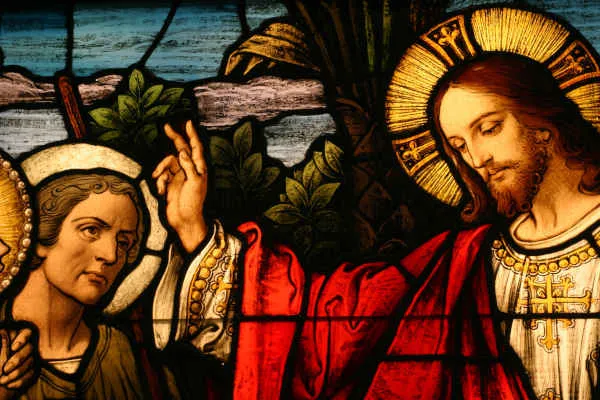
Turning to the disciples in private he said, “Blessed are the eyes that see what you see. For I say to you, many prophets and kings desired to see what you see, but did not see it, and to hear what you hear, but did not hear it.”

Reflection:

Imagine seeing Jesus in person. What would that have been like? What would it have been like to see Him, listen to Him preach, witness His miracles and spend time sitting with Him quietly? The experience of being with Him as He walked the earth would have been determined by the depth of interior sight you had. There were many who saw Jesus but rejected Him, and even killed Him. Clearly, they did not have the interior eyes of faith to see Him for Who He was. Others left everything behind to follow Him. Clearly, they perceived Who He was in His divine soul through the gift of faith.

As Jesus states above, the disciples were blessed to see Him. Many prophets and kings of old desired to see the Messiah. Century after century, the prophecies about the coming of the Messiah would have left many with much anticipation and hope that they would be among those blessed to see Him. Recall, for example, Simeon the prophet who waited his whole life to see the Christ Child. Then, when Mary and Joseph brought the Child Jesus into the Temple to present Him to the Lord, Simeon took the Child into his hands and proclaimed, “Now, Master, you may let your servant go in peace, according to your word, for my eyes have seen your salvation, which you prepared in sight of all the peoples, a light for revelation to the Gentiles, and glory for your people Israel” (Luke 2:29–32). Indeed, Simeon, the disciples, and all who encountered Jesus as He walked the earth were truly blessed. They were blessed to see the Son of God with their own eyes.

Jesus proclaimed the eyes of the disciples to be blessed for seeing Him. However, if He were to speak to us today, He would proclaim us doubly blessed. We do not see Him in physical form, walking the earth. But we are able to perceive Him in a way that even Simeon did not experience in His life. Simeon saw the Savior of the World with his eyes, present in human form. But today, we are able to see Him in an even more profound way. By the gift of grace and the indwelling of God, we are able to look within our own souls and discover the true presence of God living within us.

One might argue that seeing Jesus with your eyes is preferable to seeing His divine presence within your soul. But is it? Certainly not. Again, recall that there were many who saw Jesus with their eyes but did not recognize Him as God. Today, we are privileged to perceive the presence of Christ in our world in the deepest way possible. He came to live within us. He came to possess us. He came to unite Himself with us in a union so deep that it transforms us completely, making us into His very body.

If it took faith to see the divinity of Jesus when He walked the earth, it will also take faith to see His true presence within us. Our sins cloud His presence. Our lack of faith makes it hard to see Him there. But God is alive within every soul that is in a state of grace, and it must be our ongoing duty to discover His indwelling presence and to be with Him within. In her spiritual masterpiece, “Interior Castles,” Saint Teresa of Ávila explains that the infinite God does dwell within us. It is our duty to enter into the most secret core of our being, the most interior castle, navigating through our many sins, so that we will enter the deepest center where the fullness of the great King dwells.

Reflect, today, upon Jesus’ words spoken to the disciples: “Blessed are the eyes that see what you see.” Know that this statement applies even more to you. Seek to have the eyes of faith so that you can perceive the true presence of the Savior of the World living within your own soul. Seek Him out, gaze at Him with love, bask in His divine presence and allow that presence to overshadow you, transforming you into the person God wants you to be.

Source: https://catholic-daily-reflections.com/2024/10/04/perceiving-the-presence-of-god-2/

Luke 10:23-24 Read More »

Saint Francis of Assisi

1182–1226; Patron Saint of animals, ecologists, families, lacemakers, merchants, needleworkers, peace, and zoos; Invoked against dying alone and fire; Canonized by Pope Gregory IX on July 16, 1228

Saint Francis of Assisi is perhaps the most known and loved saint within the Catholic Church. Though many flock to him because of his portrayal as one who loved animals and nature, he became one of the greatest saints in history for one simple reason: he was a true servant of the Most High God.

Francis of Assisi was most likely born in the year 1181 in the small town of Assisi, Italy, about 100 miles north of Rome. He was born into the merchant class, his father being a seller of fine silk. As a youth, Francis was known to be quite lively, often the center of attention among friends. As a teenager, he enjoyed parties and singing and was quite worldly.

His father wanted Francis to join him in the family business, which Francis did with disinterest. He was far more interested in his friends and in having a good time than he was in work. This caused tensions at home on a regular basis.

As a young adult, Francis had dreams of doing great things. However, the “great things” he dreamt of had much more to do with obtaining worldly honors than with honoring God. One of his chief desires was to become a great knight. His family also desired he become a knight so that their societal status would be elevated.

Around the year 1202, Francis’s dream of becoming a great knight began to move forward. He was fitted with fine armor, a sword, and a horse and sent into battle against the neighboring town of Perugia. Success in that battle would prepare him to one day become a Crusader in the pope’s army, hopefully earning him the dignity of a knight. But the battle of Perugia was short and ended in Francis’ capture and imprisonment. As Francis waited a year for his father to pay the ransom for his release, he suffered greatly with the other men who were imprisoned.

After his release, Francis spent months with a serious illness. Both his imprisonment and illness affected him greatly, and he began to reevaluate his life. Despite that, in 1205 he set off for another battle in the army of the Count of Brienne, once again well fitted with a horse, sword, and armor. Before he arrived, however, Francis had a vision that would change his life. In that vision, Francis heard a voice say to him, “Who can do more for you? The master or the servant? The rich man or poor man?” Francis quickly answered, “The rich master!” The voice then asked, “Then why do you leave the Lord for the servant and the God of infinite riches for the poor mortal?” This vision was enough for Francis to turn around and return to Assisi in search of God’s will.

Over the next year, Francis and his father regularly were at odds. Francis began to pray and seek God’s will for his life, while his father continued to insist that Francis become a knight or work in the family business. During that year, Francis grew in his love for the poor and even served the lepers at a nearby hospital. While praying one day in the dilapidated Church of San Damiano, Francis heard a voice from Heaven say to him, “Go, repair my house which, as you see, is falling completely to ruin.” With that, he began to physically repair that church, live in solitude, and pray continually.

The family conflict between Francis and his father came to a head in 1206 when Francis was twenty-five years old. He and his father formally parted ways in the presence of the Bishop of Assisi when Francis renounced his inheritance, choosing only God as his Father. Over the next three years, Francis began to live his new life of poverty, prayer, and service of God.

At first, most of the townspeople thought Francis was out of his mind, and they ridiculed him. But as time passed, Francis began to attract some followers. He and his followers spent much time praying, listening to the voice of God, serving the poor and lepers, and working with their hands to repair abandoned churches.

By the year 1209, Francis and his followers numbered twelve. They decided to write a new Rule for their common life and made a pilgrimage to Rome to get papal approval for their Rule. Once the pope verbally approved their Rule, Francis and his companions returned to Assisi and took up residence in a small church called the Portiuncula. From there, Brother Francis and his Friars Minor began their life of prayer and missionary preaching. Now, instead of rebuilding physical churches, they began to rebuild God’s Church, the spiritual Body of Christ.

Over the next ten years, the Order of Friars Minor grew from only twelve to about five thousand. They took up residence across Europe and began to have a powerful effect upon many people. Francis continued to preach and was also the instrument of countless miracles. In 1223, the pope approved the final and definitive Rule of the Friars Minor in writing, and Francis entered into the final years of his life.

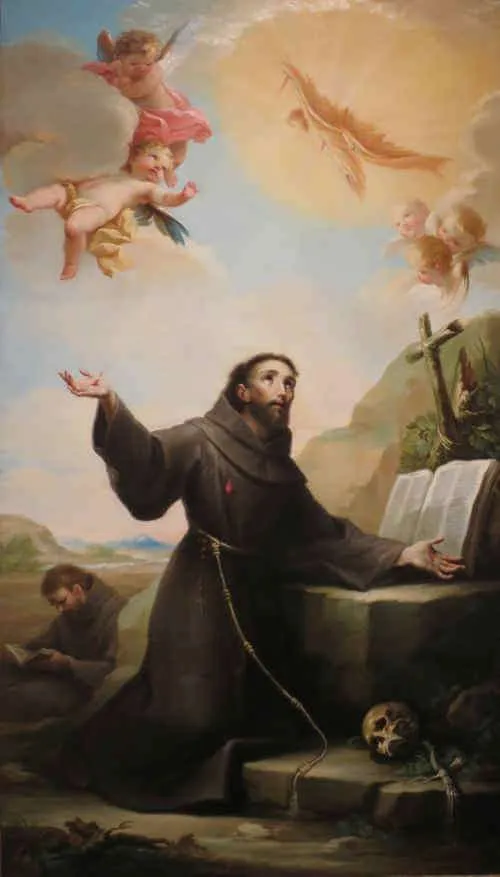
In 1224, while on a forty-day retreat, Francis was gifted with the stigmata, the visible wounds of Christ in his hands, feet, and side. Those final two years were also marked with much suffering from various illnesses and the loss of his sight.

On October 4, 1226, after being unable to find a cure for his many illnesses, Saint Francis died surrounded by his brothers in Assisi at the Portiuncula where his life as a Friar Minor began. Just two years later, Pope Gregory IX canonized him as a saint, and his legacy continued to grow.

Saint Francis was unquestionably one of the greatest saints to ever live. The way he accomplished this greatness is worth studying and imitating. Though it is hard to imagine ourselves ever reaching the heights of sanctity that Saint Francis achieved, know that it is possible for us all. Saint Francis embraced the will of God with a radical abandonment and ongoing zeal. This resulted in his becoming one with Christ and doing great things for God and His Church in a very short period of time.

Source: https://mycatholic.life/saints/saints-of-the-liturgical-year/october-4–st-francis-of-assisi/

Saint Francis of Assisi Read More »

Luke 10:13

Public Repentance

Jesus said to them, “Woe to you, Chorazin! Woe to you, Bethsaida! For if the mighty deeds done in your midst had been done in Tyre and Sidon, they would long ago have repented, sitting in sackcloth and ashes.” 

Reflection:

Have you ever sat in sackcloth and ashes? In the Gospel passage above, Jesus gives clear indication that doing so is a holy sign of responding to His preaching. He states that the pagan towns of Tyre and Sidon would have certainly sat in sackcloth and ashes if they would have been privileged to witness the mighty deeds done in the Jewish towns of Chorazin and Bethsaida.

“Sackcloth and ashes” were a common sign used to indicate interior repentance and sorrow for sin. There are many times throughout the Old Testament when this happened. Recall, for example, that when Jonah preached to the people of Nineveh, everyone from the king down to the common citizen responded by expressing their repentance in this way (Jonah 3:5–7). Sackcloth was a rough and uncomfortable material usually made out of black goats hair, symbolizing the rejection of the false consolation of sin. Ashes symbolized desolation and destruction resulting from purifying fire. Of course, all of us do sit in ashes every Ash Wednesday as an external manifestation of our desire to repent. And though putting on actual sackcloth for clothing today may not be our literal practice, it is good to see the spiritual fruitfulness of these actions and to consider ways in which these actions can still be performed in our day and age. How might you sit in sackcloth and ashes today? What practical action can you take to publicly manifest your desire to turn from sin and toward the Gospel?

First of all, to properly answer this question, it’s important to recognize the fact that turning from sin should not only be a personal and interior act, it must also be exterior and manifest for others to see. Sin not only does harm to us individually, but it also damages others in varying degrees. Therefore, if your sin has done clear harm to others, it’s important to realize that you not only need to repent to God but that you must also repent in such a way that others see your repentance and sorrow.

So how might you repent in sackcloth and ashes today? There are many ways to do this. The essential quality present in such an act will be that it is clear to others that you are sorry for your sin and that you are attempting to change. If the sin you have committed toward another is grave, then your interior repentance must match the seriousness of your sin, and the exterior manifestation of that repentance must also measure up.

Reflect, today, upon some practical ways in which God is calling you to publicly manifest your “sitting in sackcloth and ashes” as a sign of your sorrow toward those against whom you have sinned. For example, if your sin is that of anger and you have regularly harmed another by that sin, then don’t only repent to God, look also for external ways to manifest your sorrow to them. Perhaps do some form of manifest service for them. Or engage in a public act of penance, such as fasting, as a way of showing them you are sorry. Manifest charitable good works, service, prayer, public penance and the like are all ways that you can spiritually and practically sit “in sackcloth and ashes” today.

Source: https://catholic-daily-reflections.com/2024/10/03/public-repentance-4/

Luke 10:13 Read More »

Saint Lawrence Ruiz and Companions, Martyrs

c. 1600–1637; Patron Saint of the Philippines, Filipinos, immigrants, the poor, separated families, and altar servers; Canonized by Pope John Paul II on October 18, 1987

In 1549, Saint Francis Xavier and two Jesuit companions first reached Japanese soil with the Gospel. By the end of the century, Japan had an estimated 300,000 converts to the faith. By the 1580s, the Tokugawa shogun had become suspicious of Western Christianity, fearing that its spread could lead to European colonization. As a result, edicts were issued that outlawed Christianity. This led to thousands of martyrdoms between the years 1597 and 1639. Of those martyrs, twenty-six were canonized as saints in 1862, 205 were beatified in 1867, sixteen were canonized in 1987, two were beatified in 1989, and 188 were beatified in 2008. The saints commemorated today, Saints Lawrence Ruiz and Companions, are those sixteen who were canonized in 1987 by Pope John Paul II.

Lorenzo (Lawrence) Ruiz was born to a Chinese father and a Filipino mother in Binondo, Manila. The city of Binondo was established only six years before Lawrence’s birth by the Spanish governor for Chinese settlers who had converted to Catholicism. It soon became a vibrant and multicultural district, marked by many mixed marriages between Chinese and Filipinos, playing an important role in Manila’s commercial and cultural life. As a child, Lawrence learned Chinese from his father and Filipino from his mother, both of whom were Catholics. He was an altar boy at the local Dominican-run church, where he also received an education. Excelling in penmanship, he became employed as a scrivener, writing official documents, recording transactions, and keeping other written records. As he grew, he continued to be involved in parish life, joined the Confraternity of the Most Holy Rosary, and lived a normal life. In his late teens or early twenties, Lawrence married a woman named Rosario, and they had three children: two sons and a daughter.

During Lawrence’s lifetime, Spanish colonizers ruled the Philippines. Although they brought many benefits to the land, including numerous missionaries, the colonizers also often ruled with injustice. For instance, if a native Filipino killed a Spaniard, the crime would be met with swift retribution and severe punishment, disproportionately harsh towards the natives. Although an established legal system existed, it favored the Spaniards, so when a Filipino was accused of a crime, true and equal justice was not always guaranteed.

Unfortunately, Lawrence’s life took a tragic turn when, in 1636, around the age of thirty-six, he was falsely accused of a crime against a Spaniard, most likely murder, though records aren’t definitive. To escape unjust persecution, Lawrence hid from the authorities and boarded a ship with three Dominican priests, a Japanese priest, and a layman. Although the ship might have been initially destined for a peaceful Japanese port, it landed in Okinawa, Japan, where Catholic persecution was intense.

Shortly after the six arrived, the Tokugawa shogun became aware of their presence and had the group arrested. They were interrogated and informed they must leave Japan, to which they agreed. However, the shogun, unsatisfied with merely having them leave, also demanded they renounce their faith. This was a common tactic in Japan, aimed to eradicate the faith from the land. The belief was that if Christians publicly denounced their faith, other Japanese would see this as a sign of weakness and also abandon the faith. The group refused.

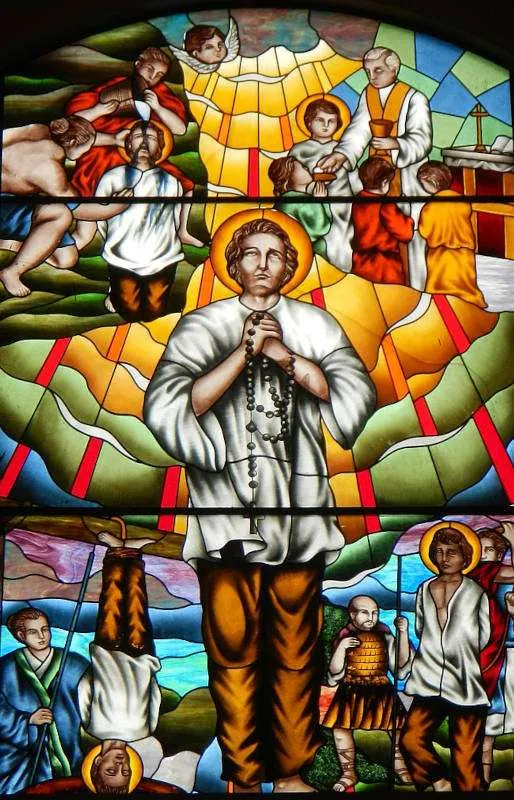
For over a year, this group of six remained imprisoned and were eventually transferred to Nagasaki. Throughout their captivity, they endured unimaginable cruelty. Water was poured down their throats, boards were placed on their abdomens, and they were subsequently jumped on, forcing the water out through their mouths, noses, and ears. They were cut and pricked with sharp bamboo, and endured severe psychological torture. One priest died on September 24, 1637. After that, two others considered renouncing their faith but found their resolve and held firm. Lawrence asked the torturers, “I would like to know if, by apostatizing, they will spare my life?” No answer came, and Lawrence remained resolute in his faith. They were then tightly bound to restrict blood flow and hung over pits. With one arm freed, they were told they merely needed to signal apostasy with that arm. They refused, remaining in that state for three days. Lawrence eventually proclaimed, “I am a Catholic and wholeheartedly accept death for God. Had I many thousands of lives, I would offer them all for Him. Never shall I apostatize. You may kill me if that is what you want. To die for God—such is my will.” Lawrence and his lay companion Lazaro died soon after, with the remaining three priests beheaded. They died on September 28 or 29, 1637.

The six martyrs included two laymen: Lawrence Ruiz and Lazaro of Kyoto; two Spanish Dominican priests, Fathers Antonio González and Miguel González de Aozaraza de Leibar; French priest Father Guillaume Courtet; and Japanese Dominican Father Vincentius Shiotsuka. Also honored today are five priests, two religious brothers, and three laypeople who were martyred in 1633 and 1644. The priests were Fathers Dominic Ibáñez de Erquicia Pérez de Lete, Jordan Ansalone, Luke of the Holy Spirit Alonso Gorda, Jacobo Kyushei Gorōbyōe Tomonaga de Santa María, and Thomas Rokuzayemon. The religious brothers were Francis Shōyemon and Matthew Kohioye. The laypeople were Marina of Omura, Magdalene of Nagasaki, and Michael Kurobioye.

As we honor these heroic witnesses to the Catholic faith, ponder the fact that their lives concluded with exceptional pain and suffering. Still, their eternal lives in Heaven are now celebrated with the highest praises. Saint Lawrence Ruiz, memorialized in today’s commemoration, was the first Filipino martyr, making his witness greatly revered among Filipino Catholics who seek his intercession. Saint Lawrence, along with the numerous other Japanese martyrs from the late sixteenth and seventeenth centuries, did more for the faith by courageously sacrificing their lives than they could have by living comfortably. Love is sacrificial, and while we might not be called to be martyrs in blood, we must nurture a faith so profound that it bears the same witness, sacrificially dedicating our lives for Christ and the salvation of souls in whatever ways we are called.

Source: https://mycatholic.life/saints/saints-of-the-liturgical-year/september-28—saint-lawrence-ruiz-and-companions-martyrs/

Saint Lawrence Ruiz and Companions, Martyrs Read More »

Luke 10:1-3

Protected by the Good Shepherd

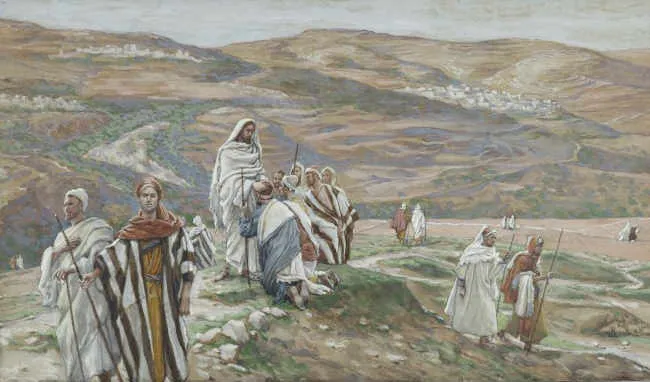
Jesus appointed seventy-two other disciples whom he sent ahead of him in pairs to every town and place he intended to visit. He said to them, “The harvest is abundant but the laborers are few; so ask the master of the harvest to send out laborers for his harvest. Go on your way; behold, I am sending you like lambs among wolves.”

Reflection:

Why would our Lord send His disciples out like lambs among wolves? At first, this might be concerning and cause us to wonder if our Lord were sending them into a situation in which they would encounter harm. Saint Ambrose, in commenting on this, explains that there is no reason for these disciples to fear, since Jesus is the Good Shepherd Who always protects His sheep. It’s helpful to reflect upon what sort of danger these disciples would encounter on this mission and all future missions and to contrast that danger with the only form of danger we should fear.

The “wolves” in this situation are especially some of the cruel religious and civil leaders of that time, as well as those who would reject the disciples and their teaching. When looking at the worldly danger that our Lord encountered, as well as His disciples, we see that it was a danger of persecution. But is that a “danger” that one should fear? Clearly not, since Jesus never cowered in the face of it. In the Acts of the Apostles, we see how this same fate of persecution befell Jesus’ followers. But in the divine perspective, true “danger” is only that which has the potential to do eternal damage to one’s soul: sin. 

Sin and sin alone has the potential to do true damage, not persecution or even death. So when Jesus sent His disciples out “like lambs among wolves,” He was fully aware of the persecution they would receive in this world. But He exhorted them and sent them, because He knew that even if they were to eventually suffer persecution and death, their faith and courage in the midst of it would gain them merit in eternal life and would become an instrument of grace for others in their life of faith. As was commonly said in the early Church, “The blood of martyrs is the seed of Christians.” For that reason, as Jesus sent these sheep out among wolves, He also accompanied their souls as the Good Shepherd, protecting their virtue, strengthening them in their witness to the faith, and keeping them from fear and from sin. He did not want them to fear the death of their body or their worldly reputation—rather, only the death of their souls which He, as the Good Shepherd, vigorously defended.

Reflect, today, upon the glorious truth that our Lord also sends you forth to be like a lamb among wolves. The fulfillment of the will of God in your life will take fortitude and courage as you trust that our Lord will keep you free from the countless temptations of sin. As you go forth, do not be surprised if you encounter harshness from others in the world, judgment and even persecution in various forms. When you do, respond with virtue. Keep faith, hope and charity alive in your life and do not fear those who can harm you in ways that are not eternal. Instead, stay firmly grounded in your mission to love and to share the mercy and truth of God in our world, no matter the consequences. Doing so will bring with it countless interior blessings of grace and will enable God to use you as an instrument of His grace in ways beyond that which you can ever conceive.

Source: https://catholic-daily-reflections.com/2024/10/02/protected-by-the-good-shepherd-3/

Luke 10:1-3 Read More »

Guardian Angels

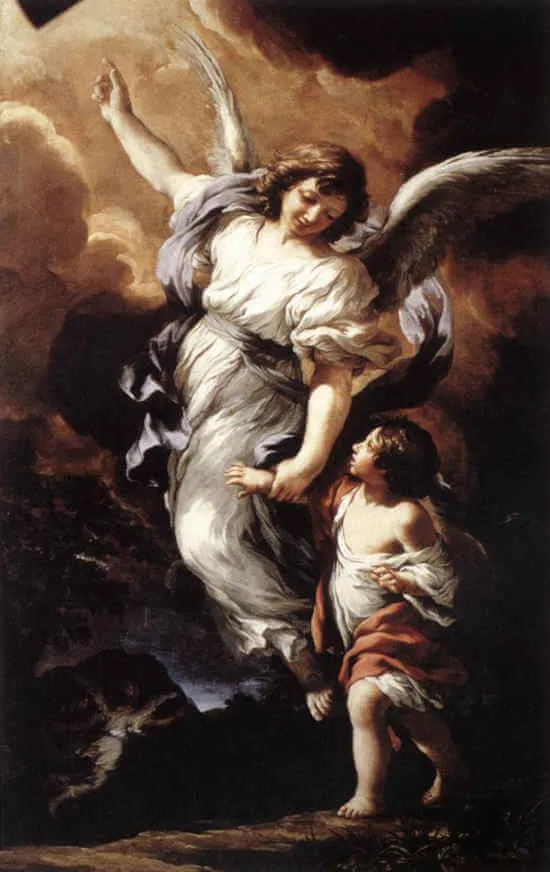
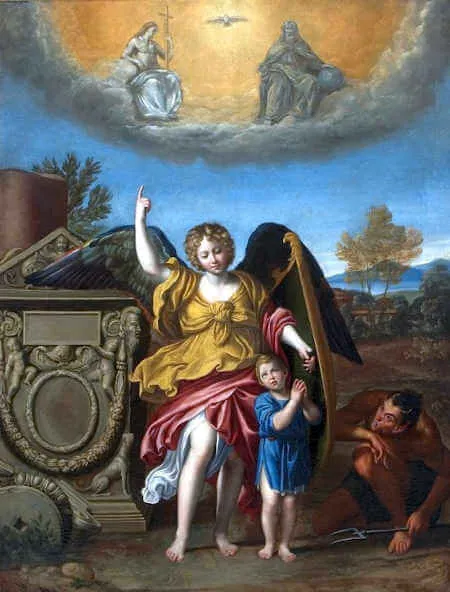
“See that you do not despise one of these little ones, for I say to you that their angels in heaven always look upon the face of my heavenly Father” (Matthew 18:10).  Jesus speaks these words immediately before He teaches the Parable of the Lost Sheep that shows Jesus’ deep love for each and every person, for each of the “little ones.” Not only does He seek out the lost and straying sheep, He also gives them their own guardian angels, who always look upon the face of God, and whose sole task is to care for us, to get us to Heaven. It is these angelic beings whom we honor today.

The fact that every person is assigned a personal guardian angel is deeply rooted not only in Scripture but also in the writings of the saints and the teachings of the Church. In the Psalms we read, “For he commands his angels with regard to you, to guard you wherever you go. With their hands they shall support you, lest you strike your foot against a stone” (Psalm 91:11–12). Saint Jerome, in commenting on the above-mentioned passage from the Gospel of Matthew, says, “The worth of souls is so great that from birth each one has an angel assigned to him for his protection.” Saint Thomas Aquinas says, “Each man has an angel guardian appointed to him. This rests upon the fact that the guardianship of angels belongs to the execution of Divine providence concerning men” (Summa Theologiae 1.113.2). More recently, Pope Saint John Paul II taught, in a General Audience on August 6, 1986, “God has entrusted to the angels a ministry in favor of people. Therefore the Church confesses her faith in the guardian angels, venerating them in the liturgy with an appropriate feast and recommending recourse to their protection by frequent prayer, as in the invocation “Angel of God.” Finally, the Catechism of the Catholic Church, quoting Saint Basil, says, “Beside each believer stands an angel as protector and shepherd leading him to life” (CCC #336).

Though the reality of guardian angels is often spoken of to children as a comfort to them when they face fears, the guardian angels are for all of us, and we ought not forget about our own. Angels are not only intercessors, they are mediators. This means that God entrusts them with His divine power, to act in His name and on His behalf, to deliver His grace, reveal His Truth, direct us down the right path, and protect us from evil. Though God is fully capable of distributing His grace Himself, it is His will that all He bestows upon us come to us through mediators who are instruments, cooperating with His divine plan.

The memorial that we celebrate today did not become a universal feast until the latter part of the seventeenth century, when Pope Clement X placed it on the Roman Calendar. Pope Leo XIII elevated the feast and emphasized its importance in the late nineteenth century. Around the time he did so, he also composed the “Saint Michael the Archangel” prayer and mandated that it be prayed at the end of every Mass. The feast of the Archangels is celebrated September 29, and a few days later, the memorial for all the guardian angels. These two feasts emphasize the fact that God uses some angels for specific purposes that affect all people and that He uses guardian angels to care for each of our specific needs.

Based upon the Old and New Testaments, the teachings of early Church Fathers, and the detailed teaching of Saint Thomas Aquinas, the Church generally accepts that there is a hierarchy of angels consisting of nine choirs that are further divided into three triads. The first triad consists of the Seraphim, Cherubim, and Thrones. Their duty is exclusively the service of God, worshiping Him continuously. The second triad consists of the Dominions, Virtues, and Powers. These three choirs are tasked with the governance of the created Universe. The third triad consists of the Principalities, Archangels, and Angels. These beings are closest to humanity and act as mediators between God and man. Thus, though Saint Thomas defined the guardian angels as the lowest of the choirs of angels, this should only be understood to mean that their direct concern is the care of humanity. Nonetheless, they continually behold the Beatific Vision.

Regarding the function of the guardian angels, Saint Thomas Aquinas gives the most detail (See Summa Theologiae 1.113). As mentioned, he teaches that every person receives an angel at birth. This means that guardian angels are not tied to baptism but to human activity in this world, specifically human activity that begins at birth. These angels are not recycled, so to speak, but are assigned to one person and one person alone. The guardian angels can act upon our senses and imaginations, inspiring us one way or another. They can put ideas before our minds to direct us toward God’s will, but they cannot control our wills. By working upon our senses, they can cause us to feel what is right or wrong and urge us to make the right choices. They act contrary to the fallen angels, or demons, who tempt us through false reasoning and base sensate delights. Finally, in Heaven, the guardian angel’s role of leading us to salvation will be complete. Saint Thomas believed that even in Heaven they will have the role of communicating with us and will continue to enlighten us with God’s never-ending and deepening Truth.

As we honor the celestial hosts of the guardian angels, ponder your own angel today. Saint Ignatius of Loyola, in the Spiritual Exercises, gave us a detailed map for how they communicate with us. Consider reading his wisdom. In Heaven, we will enjoy an eternal face-to-face relationship with our angels. That relationship will be perfectly steeped in the love of God, and our union with them will be unbreakable. While on earth, we often pay little attention to our angels, but they are forever attentive to us. Though we might not always speak prayerfully to our intercessors and mediators, try to do so. Our angels daily communicate to us. Do you listen? Do you hear? Work to discern your angel’s actions in your life, so that this angelic mission can be better fulfilled. Have confidence that you have a mediator who stands before God and does nothing other than plead on your behalf, continuously working to bring you to eternal salvation.

Source: https://mycatholic.life/saints/saints-of-the-liturgical-year/guardian-angels/

Guardian Angels Read More »

Matthew 18:10

Your Protector and Guide

“See that you do not despise one of these little ones, for I say to you that their angels in heaven always look upon the face of my heavenly Father.”

Reflection:

The reality of angels is fascinating to most people, especially to children. The Guardian Angels, in particular, are often pictured in sacred art as walking hand-in-hand with children. And though this is true, they also walk hand-in-hand with each one of us throughout our lives. This is their sacred duty given to them by God. In quoting Saint Basil, the Catechism of the Catholic Church explains the existence of Guardian Angels by saying: “From its beginning until death, human life is surrounded by their watchful care and intercession. ‘Beside each believer stands an angel as protector and shepherd leading him to life’” (#336).

Imagine, in an earthly sense, that you had a personal bodyguard to look after you day and night throughout your life. Perhaps this evokes two different sentiments. First, it would most certainly comfort you when there is imminent danger around. You would know you are not alone and that you would be kept safe from physical harm. Another sentiment it may invoke is that of a loss of personal privacy. If someone were watching over you, day and night, you would always be aware of their watchful eye. Everything you said and did would be noticed. For some, this may not always be welcome. Why? Because this means they see all you do, including your sin. Fear of judgment, the loss of personal privacy and the like may be difficult to accept.

But now imagine that this “bodyguard” is one who offers no judgment, acts with perfect love for you, keeps confidentiality with perfection and cares only for your well-being. Though it may be hard to imagine that such a person could exist, that person does exist in the person of your guardian angel.

Your guardian angel is real, has a keen and powerful intellect, has a will perfectly united with the will of God, and was created for the single purpose of protecting you and leading you into the fulfillment of God’s will. When you sin and stray, your guardian angel’s only concern is to guide you back to God. When you are fearful or in trouble, your guardian angel’s only care is to protect you and fill you with God’s peace and courage. And though God could have provided you with all of these graces directly, without the mediation of an angel, He chose to do so through the mediation of your personal guardian angel. Only in Heaven will we fully understand the profound depth of love, protection, and care given to us by these angelic beings.

Reflect, today, upon the intimate knowledge that your guardian angel has of you. As you ponder this reality, rejoice that someone knows you so well and loves you with a perfect love. This angel of yours not only loves you perfectly but also has been entrusted with great power from God to protect you and shepherd you to the fulfillment of your life mission. Prayerfully acknowledge the great gift that your guardian angel is to you and entrust yourself more fully to this angelic mediation.

Source: https://catholic-daily-reflections.com/2024/10/01/your-protector-and-guide-3/

Matthew 18:10 Read More »

Saint Thérèse of the Child Jesus, Virgin and Doctor

1873–1897; Patron Saint of foreign missions and missionaries, AIDS patients, air crews, florists, flower growers, and sick people Invoked against illness, tuberculosis, and loss of parents; Canonized by Pope Pius XI on May 17, 1925

For more than a century, Saint Thérèse of Lisieux, also known as “The Little Flower,” has captivated countless minds and hearts. Her simple and pure heart burned with a deep love for our Lord, and that love overflowed into the lives of many. She daily inspired those who knew her, and she continues to inspire those who read her story.

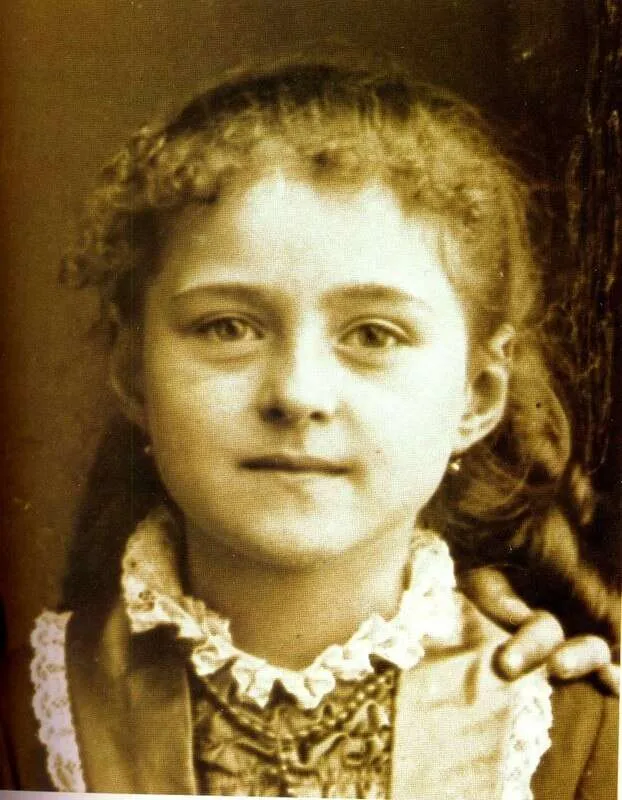
Marie Françoise-Thérèse Martin was born on January 2, 1873, in Rue Saint-Blaise, Alençon, France, to Marie-Azélie Guérin (Zélie), and Louis Martin, a jeweler and watchmaker. Her mother, who often called Thérèse her “little angel,” died from breast cancer only a few months before Thérèse’s fifth birthday. But those early years with her mother had such an impact upon Thérèse that, in many ways, her mother remained with her, in her heart and mind, throughout her life. The love that mother and daughter shared was eternal.

Her father, Louis Martin, who called Thérèse his “little queen,” daily manifested his profound love for her, and she looked up to him as her “king.” As a child, Thérèse would spend hours with her father as he worked in the garden, desiring to be near him as often as she could. She would regularly accompany him on daily walks that always included a visit to the Blessed Sacrament at the nearby convent in Lisieux. She loved being in his presence and found the satisfaction of the love of God in his fatherly embrace. At age sixty-six, Louis suffered from two strokes, resulting in paralysis. He spent the next three years in a hospital and the final two years of his life at home in the care of his family. His daughters Céline and Léonie were his primary caregivers at home until June 24, 1893, when Léonie entered the Visitation Convent in Caen in a second attempt at religious life. Céline faithfully cared for their father during the last year of his life with the help of their uncle, a maid, and a male assistant until his death on July 29, 1894.

Thérèse had four living sisters and four siblings who died at an early age (three as infants and Hélène at age five). Her living sisters all entered religious life, three of them entering the same Carmelite convent in Lisieux as Thérèse. Marie became a Carmelite in Lisieux, taking the name Sister Marie of the Sacred Heart. Pauline became Mother Agnes of Jesus in the Lisieux Carmel. Léonie became Sister Françoise-Thérèse, Visitandine at Caen. Her life of saintly virtue is currently under study for possible canonization. Céline also became a Carmelite in Lisieux, taking the name Sister Geneviève of the Holy Face.

The relationship that Thérèse had with her sisters was both typical and unique. The girls played together and sometimes fought with one another. Yet, the depth of their love and affection for one another transfigured what was otherwise a normal sibling relationship. Thérèse adored her sisters and loved being with them, and her love was reciprocated.

Thérèse’s entire family shared tender, affectionate, and unwavering love for one another. Their home was a true “school of love,” and the lessons of love were learned and lived in their home each and every day. In many ways, Thérèse learned about the love of God first and foremost through the love she experienced within her family.

Just before her fifteenth birthday, after overcoming many obstacles, Thérèse received permission from the Bishop of Bayeux to be received into the Carmelite convent. She formally entered as a postulant on April 9, 1888, at the age of fifteen. She embraced religious life and lived it with fervor and devotion, making her temporary vows on January 10, 1889, and her final vows on September 24, 1890. For the next seven years, Sister Thérèse lived the hidden and holy life of a Carmelite nun.

Just three years before she was to die, Sister Thérèse began to write her autobiography when she was twenty-one years old, under obedience to her sister Pauline who had recently been elected as Mother Superior, Mother Agnes of Jesus. This autobiography, The Story of a Soul, captures the beauty and profundity of her family life, offers beautiful insights into her vocation as a Carmelite nun, and reveals how devoted she was to Jesus, longing to be with Him forever in Heaven, even from the earliest moments of her childhood. 

The first manuscript in The Story of a Soul includes Sister Thérèse’s childhood memories, as well as those from her first years as a religious sister. At age twenty-three, Sister Thérèse contracted tuberculosis and spent more than a year suffering greatly. It was during this time that Sister Thérèse added two more manuscripts to her autobiography. One was written for her sister Marie, Sister Marie of the Sacred Heart, who desired to hear more about Sister Thérèse’s spirituality. The final manuscript detailed her life as a religious sister and was written at the request of Mother Agnes of Jesus. Sister Thérèse wrote the final manuscript during the last year of her life after she contracted tuberculosis. She never finished this manuscript due to her diminishing health, but her sister, Sister Agnes of Jesus, kept a detailed notebook of Sister Thérèse’s last months, which was printed in a separate book called, Her Last Conversations. Also available in print is Letters of Sister Thérèse of Lisieux, much of which was first published under the title, General Correspondence. Lastly, Sister Thérèse was an avid writer of poetry, prayers, and plays, many of which are published in various formats. 

Sister Thérèse died on September 30, 1897, surrounded by three of the Martin sisters as well as all of her religious sisters in the Carmelite convent of Lisieux. Her final words were, “Oh!… I love Him!… My God, I…love…Thee!”

As we honor this saint who has captivated the hearts and minds of so many, ponder the importance of family life. Some families are broken and divided; others are graced as schools of love. Saint Thérèse was blessed to be raised in a family that formed her deeply in the love of God and others. She was widely unknown outside of her family and religious community when she died, but God shared her precious soul with the world through her detailed autobiography and numerous letters. Allow her soul to touch yours by getting to know her through her writings. Seek her intercession so that she can fulfill her promise that her “Heaven will be spent doing good on earth.”

Source: https://mycatholic.life/saints/saints-of-the-liturgical-year/october-1—st-therese-of-lisieux-religious-and-doctor-of-the-church/

Saint Thérèse of the Child Jesus, Virgin and Doctor Read More »

Luke 9:51-52

Courage to Conquer Fear

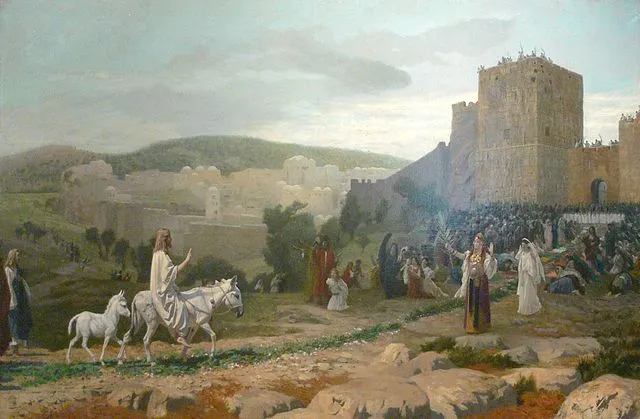
When the days for Jesus to be taken up were fulfilled, he resolutely determined to journey to Jerusalem, and he sent messengers ahead of him.

Reflection:

Shortly after Jesus spoke to His disciples about His pending suffering, death and resurrection, we read that Jesus “resolutely determined to journey to Jerusalem.” There is much to reflect upon in that short statement.

First of all, Jerusalem was the place of the Temple where the animal sacrifices of the Old Testament took place as a prefiguration of the one and ultimate sacrifice to come. Jesus came into this world as the Lamb of God, the Sacrificial Victim Who would die for our sins. He knew His ultimate end in this world, and He knew it would require much suffering. This knowledge of His future suffering is the foundational context of this passage today.

As Jesus’ suffering and death drew close, He became more and more determined in His human will to fulfill the will of the Father by laying down His life. Of course, Jesus always fulfilled the will of the Father, but little by little the human manifestation of Jesus’s determination became more and more pronounced. The specific human virtue that slowly became manifest was courage. Spiritual courage is the supernatural ability to embrace the will of the Father when His will leads a person into a life of sacrifice. Within our fallen human nature, we tend to avoid sacrifice. We often work to avoid conflict and suffering and to embrace the easy way in life. Therefore, to come face-to-face with some future suffering brings forth a temptation to fear—and that fear requires courage to overcome it. As His suffering drew closer, the temptation to fear grew stronger and, as a result, His perfect virtue of courage became more manifest. Note that Jesus not only decided to go to Jerusalem to offer His life sacrificially, He “resolutely determined” to do so. There was no wavering, no doubting the Father’s will, no hesitancy, no fear. His perfect sacrificial love slowly became manifest for all to see.

Another reason Jesus became resolute in His determination to travel to Jerusalem was to witness His love to His disciples. They needed courage themselves.  So, as they listened to Jesus speak about what was coming in Jerusalem and as they witnessed His unwavering determination, they were also encouraged and were strengthened to overcome the temptations to fear. Of course, they only perfected that virtue later in their lives when they also followed in the footsteps of our Lord, laying down their own lives as martyrs.

Reflect, today, upon that which causes fear and anxiety in your own life. If that suffering is of your own making, then seek to rectify it. But if that suffering is a cross that our Lord is calling you to embrace with love, then do so sacrificially and with much determination. Do not be cowed by the heaviness of the cross you are given in life. The crosses we are called to embrace are always able to be transformed into grace. Allow courage to grow within you and allow the witness of our Lord to encourage you as you seek to imitate His sacrificial love.

Source: https://catholic-daily-reflections.com/2024/09/30/courage-to-conquer-fear-3/

Luke 9:51-52 Read More »