Author name: Sani

Matthew 7:9–10

Praying for the Will of God

“Which one of you would hand his son a stone when he asked for a loaf of bread, or a snake when he asked for a fish?”

Reflection:

Clearly this is a rhetorical question by Jesus. No parent would hand their son or daughter a stone or a snake if they asked for food. But that of course is the point. Jesus goes on to say, “…how much more will your heavenly Father give good things to those who ask him.”

When you pray with deep faith, will our Lord give you whatever you ask? Certainly not. Jesus did say, “Ask and it will be given to you; seek and you will find; knock and the door will be opened to you.” But this statement must be carefully read within the whole context of Jesus’ teaching here. The fact of the matter is that when we sincerely ask in faith for “good things,” meaning that which our good God wants to bestow upon us, He will not disappoint. Of course, this does not mean that if we beg Jesus for anything whatsoever that He will give it to us.

What are those “good things” that our Lord will most certainly give to us? First and foremost, it is the forgiveness of our sins. We can be absolutely certain that if we humble ourselves before our good God, especially within the Sacrament of Reconciliation, we will be granted the freely given and transforming gift of forgiveness.

In addition to the forgiveness of our sins, there are many other things we need in life, and there are many other things that our good God wants to bestow upon us. For example, God will always want to give to us the strength we need to overcome temptations in life. He will always want to provide for our most basic needs. He will always want to help us grow in every virtue. And He most certainly wants to bring us to Heaven. It is these things that we must especially pray for every day.

But what about other things, such as a new job, more money, a better house, acceptance into a certain school, a physical healing, etc.? Our prayers for these and other similar things in life should be prayed for but with a caveat. The “caveat” is that we pray that God’s will be done. Not ours. We must humbly acknowledge that we do not see the big picture in life and do not always know what will give God the greatest glory in all things. Therefore, it may be better that you not get that new job, or be accepted at this school, or even that this illness not end in healing. But we can be certain that God always will bestow upon us that which is best for us and that which enables us to give God the greatest glory in life. The crucifixion of our Lord is a perfect example. He prayed that that cup be taken from Him, “but not my will but Yours be done.” And, of course, the Father saw the great eternal value in the death of His Son on the Cross and answered that prayer of His accordingly.

Reflect, today, upon how you pray. Do you pray with detachment from the outcome, knowing that our Lord knows best? Do you humbly admit that only God knows what is truly good for you? Trust this to be the case and pray with complete confidence that God’s will be done in all things and you can be certain that He will answer that prayer.

Source: https://catholic-daily-reflections.com/2025/03/12/praying-for-the-will-of-god-8/
Matthew 7:9–10 Read More »

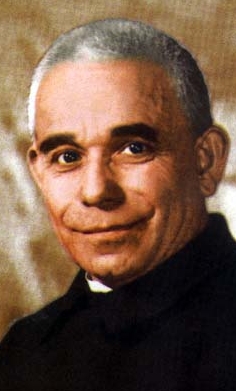
Saint Luigi Orione

Profile

Luigi joined the Franciscans at Voghera, Italy as a young man, but developed severe health problems and returned to his family. He studied under Saint John Bosco at Turin, Italy, was present at Saint John‘s death, and was cured of his illness during Saint John‘s funeral.

Luigi studied at the seminary in Tortona, Italy. While still a layman and student, he opened San Luigi House at San Bernardino in 1893, a home for the poor, homeless and abandoned. He was ordained on 13 April 1895.

He founded the Hermits of Divine Providence congregation, the Ladies of Divine Providence, and an orphanage in Rome, Italy in 1899. Under the patronage of Pope Saint Pius X, he founded the Little Missionaries of Charity. He constructed the Marian shrine at Tortona, a site that became a rallying point for people during times of political unrest. To administer the houses of his congregations, Luigi travelled the world, visiting houses in Wales, Brazil, the United States, and throughout Italy.

Born

  • 23 June 1872 at Pontecurone, Allessandria, Italy

Died

  • 12 March 1940 at San Remo, Imperia, Italy from heart disease
  • body found intact when exhumed in 1965
    interred at the shrine of Our Lady of Safe Keeping, Tortona, Italy

Venerated

  • 5 February 1978 by Pope Paul VI (decree of heroic virtues)

Beatified

  • 26 October 1980 by Pope John Paul II

Canonized

  • 16 May 2004 by Pope John Paul II

Source: https://catholicsaints.info/saint-luigi-orione/

Saint Luigi Orione Read More »

Luke 11:29

The One True Sign of the Cross

While still more people gathered in the crowd, Jesus said to them, “This generation is an evil generation; it seeks a sign, but no sign will be given it, except the sign of Jonah.”

Reflection:

The crowd seemed to be a mixed bunch. First, there were those who wholeheartedly believed in Jesus. The Twelve, for example, left everything behind to follow Him. His mother and various other holy women believed in Him and were His faithful followers. But within the growing crowd, it appeared that there were many who questioned Jesus and wanted some form of proof of Who He was. Thus, they wanted a sign from Heaven.

A sign from Heaven would have been some externally manifest proof of Who Jesus was. Granted, Jesus had already performed numerous miracles. But it seems that this was not enough. They wanted more—and that desire is a clear indication of a stubbornness of heart and a lack of faith. So Jesus could not and would not give them the sign they wanted.

Instead, Jesus says that the only sign they will receive is the sign of Jonah. Recall that the sign of Jonah was not very appealing. He was thrown over the side of a boat and swallowed by a whale, where he remained for three days before being spit up on the shores of Nineveh.

Jesus’ sign would be similar. He would suffer at the hands of the religious leaders and civil authorities, be killed and be placed in a tomb. And then, three days later, He would rise. But His Resurrection was not one in which He came forth with rays of light for all to see; rather, His post-Resurrection appearances were to those who already manifested faith and already believed.

The lesson for us is that God will not convince us of the matters of faith through powerful and Hollywood-like public manifestations of God’s greatness. Instead, the “sign” we are offered is an invitation to die with Christ so that we can personally begin to experience the new life of the Resurrection. This gift of faith is interior, not publicly exterior. Our death to sin is something we personally and interiorly do, and the new life we receive can only be seen by others by the witness of our lives that are changed.

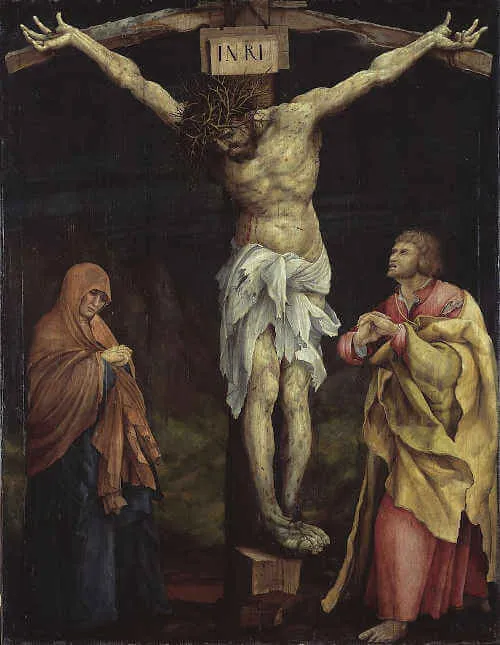
Reflect, today, upon the true sign God has given you. If you are one who seems to be waiting for some manifest sign from our Lord, wait no longer. Look at the crucifix, see Jesus’ suffering and death, and choose to follow Him in a death to all sin and selfishness. Die with Him, enter the tomb with Him and allow Him to bring you forth interiorly renewed this Lent, so that you can be transformed by this one and only sign from Heaven.

Source: https://catholic-daily-reflections.com/2025/03/11/the-one-true-sign-of-the-cross-4/

Luke 11:29 Read More »

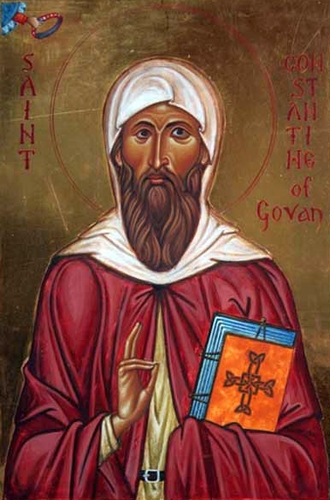
Saint Constantine II

Profile

Born a Scottish prince, the son of King Kenneth II of Strathclyde, Constantine led a life of vice until his conversion, possibly after hearing the evangelizing preaching of Saint Columba and Saint Kentigern.

Constantine was married and the father of at least one son. He became briefly the king of Stathclyde. Widowed, he abdicated his position, founded a monastery at Govan on the river Clyde, became a monk there, and evangelized the region. He became a priest and an abbot of a monastery in Govan, Scotland. He was a martyr.

Older martyrologies have entries for Constantines of Strathclyde, of Cornwall, and of Rahan, Ireland; they run the details of their lives together, and they could have been one, two or three people.

Died

  • bled to death in 874 in a cave near Crail after his right arm was cut off by Danish pirates
  • considered a martyr in Scotland for defending his Christian land against pagan invaders

Canonized

  • Pre-Congregation

Source: https://catholicsaints.info/saint-constantine-ii/

Saint Constantine II Read More »

Matthew 6:7-8

Praying the Our Father

Jesus said to his disciples: “In praying, do not babble like the pagans, who think that they will be heard because of their many words. Do not be like them.

Reflection:

Recall that Jesus used to go off by Himself at times and spend the whole night in prayer. Thus, it’s clear that Jesus is in favor of long and sincere times of prayer, since He gave us His own example as a lesson. But there is clearly a difference between that which our Lord did all night and that which He criticized the pagans for doing when they “babble” with many words. After this criticism of the prayer of the pagans, Jesus gives us the “Our Father” prayer as a model for our personal prayer.

The Our Father prayer begins by addressing God in a deeply personal way. That is, God is not just an all-powerful cosmic being. He is personal, familial—He is our Father. Jesus continues the prayer by instructing us to honor our Father by proclaiming His holiness, His hallowedness. God and God alone is the Holy One from which all holiness of life derives. As we acknowledge the holiness of the Father, we must also acknowledge Him as King and seek His Kingship for our lives and for the world. This is accomplished only when His perfect will is done “on earth as it is in Heaven.” This perfect prayer concludes by acknowledging that God is the source of all of our daily needs, including the forgiveness of our sins and protection from all evil.

Upon the completion of this prayer of perfection, Jesus provides a context in which this and every prayer must be prayed. He says, “If you forgive men their transgressions, your heavenly Father will forgive you. But if you do not forgive men, neither will your Father forgive your transgressions.” Prayer will only be effective if we allow it to change us and make us more like the Father in Heaven. Therefore, if we want our prayer of forgiveness to be effective, then we must live what we pray for. We must also forgive others so that God will forgive us.

Reflect, today, upon this perfect prayer, the Our Father. One temptation is that we can become so familiar with this prayer that we gloss over its true meaning. If that happens, then we will find that we are praying it more like the pagans who simply babble the words. But if we humbly and sincerely understand and mean every word, then we can be certain that our prayer will become more like that of our Lord’s. Saint Ignatius of Loyola recommends pondering every word of that prayer very slowly, one word at a time. Try to pray this way, today, and allow the Our Father to move from babbling to authentic communication with the Father in Heaven.

Source: https://catholic-daily-reflections.com/2025/03/10/praying-the-our-father-4/

Matthew 6:7-8 Read More »

Saint Marie-Eugénie de Jésus

Profile

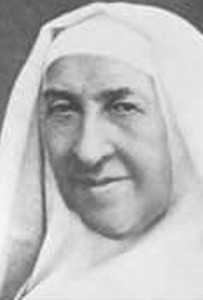
Eugenie was raised in an educated and intellectual family with no faith, but who apparently went through some of the motions since she received her first Communion on Christmas 1829 at age twelve. She had a conversion experience, came to the faith, and felt a call to religious life by hearing the Lenten sermons of the Dominican Henri Lacordaire at the Cathedral of Notre Dame in Paris, France. She made a short novitiate with the Sisters of the Visitation at Cote Saint-Andre, but did not take vows.

During a pilgrimage to the shrine of Sainte-Anne d’Auray in 1825, Eugenie felt called to found a teaching institute that would work in the world, but kept monastic observances. In 1839, she founded the group later named the Congregation of the Assumption (Religious of the Assumption, Sisters of the Assumption) to perform this mission. The Assumptionists received papal approval in 1888, and continue their good work in 34 countries around the world today.

Born

  • 26 August 1817 at Metz, Moselle, France as Eugenie Milleret de Brou (de Bron)

Died

  • 10 March 1898 at Auteuil, Hauts-de-Seine, France of natural causes

Venerated

  • 21 June 1961

Beatified

  • 9 February 1975 by Pope Paul VI

Canonized

  • 3 June 2007 by Pope Benedict XVI

Source: https://catholicsaints.info/saint-marie-eugenie-de-jesus/

Saint Marie-Eugénie de Jésus Read More »

Matthew 25:31-32

The Least Deserving

Jesus said to his disciples: “When the Son of Man comes in his glory, and all the angels with him, he will sit upon his glorious throne, and all the nations will be assembled before him. And he will separate them one from another, as a shepherd separates the sheep from the goats.”

Reflection:

What an image to ponder! Try to imagine this scene. At one definitive moment in the future, the Second Person of the Most Holy Trinity, now also in human form as the “Son of Man,” will return to earth in glory surrounded by all the angels of Heaven and will sit upon His new and glorious throne. In front of that throne, every person of every nation ever to exist will be gathered together, and each person will be judged according to their deeds. Those who served our Lord and treated the least of His brothers and sisters with mercy and compassion will hear Jesus say, “Come, you who are blessed by my Father. Inherit the kingdom prepared for you from the foundation of the world.” Those who did not serve Christ and did not treat the least ones with mercy will be sent off to eternal punishment as Jesus says to them, “Depart from me, you accursed, into the eternal fire prepared for the Devil and his angels.” On that day, only one thing will matter, because eternity will be determined with permanence. All that will matter is whether you will be placed on our Lord’s right so as to inherit eternal life, or on His left and sent into the eternal fires.

Sometimes, as we journey through life, we can lose sight of this glorious day. When we think of God and Heaven, it is easy to fall into the presumption that Heaven is guaranteed to us. God is kind and merciful, and He loves us. Therefore, we presume that Heaven is for certain and only the most horrible people will end in hell. But this is not how Jesus depicts the Day of Judgment.

Jesus explains that at the time of judgment, the righteous will be astonished by the fact that caring for those who are hungry, thirsty, a stranger, naked, ill, or imprisoned was the same as showing love for God. Likewise, those who neglected the same people will be astonished that they failed to love God by failing to love the least of Jesus’ brothers and sisters. Do not take this teaching lightly. Jesus does not mince His words. He is abundantly clear and definitive.

In your life, who are these “least ones” of which Jesus is speaking? The hungry and thirsty are not only those with physical needs but also those who have spiritual longings that need to be satisfied. They are those lost or confused in life who need to be given direction. The stranger might be anyone who is lonely and easily ignored. The naked might be those who cannot manage to care for their needs. The ill could be those who are elderly or suffering in various ways. And the imprisoned could include those bound by sin who need help to be set free. Do not fail to seek out our Lord as He is present in those all around you.

Reflect, today, upon those in your life who seem most lost and most in need of your compassion. Those to whom we do not feel like reaching out are those who most often need our compassion and mercy. The “least ones” are often those we judge, condemn or ignore. Call to mind the person who seems least deserving of your love and know that Jesus is living within them, waiting for you to love Him by loving them.

Source: https://catholic-daily-reflections.com/2025/03/09/the-least-deserving-3/

Matthew 25:31-32 Read More »

First Sunday of Lent

First Reading Deuteronomy 26:4-10

Moses spoke to the people, saying:
“The priest shall receive the basket from you
and shall set it in front of the altar of the LORD, your God.
Then you shall declare before the Lord, your God,
‘My father was a wandering Aramean
who went down to Egypt with a small household
and lived there as an alien.
But there he became a nation
great, strong, and numerous.
When the Egyptians maltreated and oppressed us,
imposing hard labor upon us,
we cried to the LORD, the God of our fathers,
and he heard our cry
and saw our affliction, our toil, and our oppression.
He brought us out of Egypt
with his strong hand and outstretched arm,
with terrifying power, with signs and wonders;
and bringing us into this country,
he gave us this land flowing with milk and honey.
Therefore, I have now brought you the firstfruits
of the products of the soil
which you, O LORD, have given me.’
And having set them before the LORD, your God,
you shall bow down in his presence.”

Responsorial Psalm Psalms 91:1-2, 10-11, 12-13, 14-15

R. (cf. 15b)  Be with me, Lord, when I am in trouble.
You who dwell in the shelter of the Most High,
            who abide in the shadow of the Almighty,
say to the LORD, “My refuge and fortress,
            my God in whom I trust.”
R. Be with me, Lord, when I am in trouble.
No evil shall befall you,
            nor shall affliction come near your tent,
For to his angels he has given command about you,
            that they guard you in all your ways.
R. Be with me, Lord, when I am in trouble.
Upon their hands they shall bear you up,
            lest you dash your foot against a stone.
You shall tread upon the asp and the viper;
            you shall trample down the lion and the dragon.
R. Be with me, Lord, when I am in trouble.
Because he clings to me, I will deliver him;
            I will set him on high because he acknowledges my name.
He shall call upon me, and I will answer him;
            I will be with him in distress;
I will deliver him and glorify him.
R. Be with me, Lord, when I am in trouble.

Second Reading Romans 10:8-13

Brothers and sisters:
What does Scripture say?
            The word is near you,
                        in your mouth and in your heart
—that is, the word of faith that we preach—,
for, if you confess with your mouth that Jesus is Lord
and believe in your heart that God raised him from the dead,
you will be saved.
For one believes with the heart and so is justified,
and one confesses with the mouth and so is saved.
For the Scripture says,
            No one who believes in him will be put to shame.
For there is no distinction between Jew and Greek;
the same Lord is Lord of all,
enriching all who call upon him.
For “everyone who calls on the name of the Lord will be saved.”

Verse Before the Gospel Matthew 4:4b

One does not live on bread alone,
but on every word that comes forth from the mouth of God.

Gospel Luke 4:1-13

Filled with the Holy Spirit, Jesus returned from the Jordan
and was led by the Spirit into the desert for forty days,
to be tempted by the devil.
He ate nothing during those days,
and when they were over he was hungry.
The devil said to him,
“If you are the Son of God,
command this stone to become bread.”
Jesus answered him,
“It is written, One does not live on bread alone.”
Then he took him up and showed him
all the kingdoms of the world in a single instant.
The devil said to him,
“I shall give to you all this power and glory;
for it has been handed over to me,
and I may give it to whomever I wish.
All this will be yours, if you worship me.”
Jesus said to him in reply,
“It is written
            You shall worship the Lord, your God,
                        and him alone shall you serve.
Then he led him to Jerusalem,
made him stand on the parapet of the temple, and said to him,
“If you are the Son of God,
throw yourself down from here, for it is written:
            He will command his angels concerning you, to guard you,
 and:
            With their hands they will support you,
            lest you dash your foot against a stone.
Jesus said to him in reply,
“It also says,
            You shall not put the Lord, your God, to the test.
When the devil had finished every temptation,
he departed from him for a time.

Source: https://bible.usccb.org/bible/readings/030925.cfm

First Sunday of Lent Read More »

Saint Frances of Rome

1384–1440; Patron Saint of motorists and widows; Invoked against the death of children; Canonized by Pope Paul V on May 29, 1608

Frances was born into an aristocratic family in the Eternal City of Rome near the famed Piazza Navona. From an early age, she was drawn to God and responded with much generosity. At the age of eleven, she told her father that she wanted to become a nun, but her father had other plans for her life. He informed her that he was giving her hand in marriage to Lorenzo Ponziani, a wealthy aristocrat who was a commander in the papal army. Frances struggled with her father’s decision and brought her concern to a local priest. After listening to her, the priest said to her, “Are you crying because you want to do God’s will or because you want God to do your will?” She quickly responded that she wanted God’s will, and the matter was settled. At the age of twelve, Frances was married.

Soon after her marriage, Frances was expected to assist her mother-in-law with the family’s social calendar. She was to help plan and host parties, engage in frivolities, and attend numerous public meetings. Since all she longed for was a life of solitude and prayer, the social expectations placed on her wore her out and she became gravely ill. The illness lasted for months and left her on her deathbed at a tender age. As she lay dying, she had a vision of Saint Alexis, a holy monk who fled an arranged marriage to pursue his vocation, who told her that she could choose one of two options, to recover or not. She deferred to the will of God and was immediately healed.

For the next forty years, Frances embraced her marriage with her whole heart. She loved her husband and he loved her. Her humble affection and devotion to him were so great that it has been said that during those forty years they never once had an argument. Though drawn to a life of prayer, Frances often said, “A married woman must, when called upon, leave her devotions to God at the altar to find Him in her household affairs.” One story relates that, while praying the psalms, Frances was called away four times to tend to family affairs before even being able to finish the prayer. Upon returning to begin a fifth time, she found the words of the psalm written in gold as a sign that her fidelity to the duties of her vocation was pleasing to God.

Though Frances was wealthy and of the noble class, she embraced a personal life of simplicity, bodily penance, fasting, and prayer. She abstained from meat except for rare occasions. She would often exchange the delectable food of the nobility for the food of poor beggars, usually receiving from them dry and moldy bread. She dressed in coarse garments, never fine linen, and often wore a hairshirt that irritated her flesh.

Frances and her husband had three children, two boys, and one girl. When a plague afflicted the city of Rome, one of her sons and her only daughter died at an early age. This personal suffering led her to join her sister-in-law to begin an informal outreach to the sick and poor. The women regularly visited hospitals, nursed the sick back to health, distributed food to the hungry, and were ministers of the compassion of Christ. Frances exhausted all of her own money and possessions to care for those who were suffering. When her money ran out, she began to beg other wealthy families for more. Eventually, some holy noblewomen in Rome were inspired to join Frances and her sister-in-law in their work.

In the year 1413, when Frances was twenty-nine years old, her husband was exiled from Rome by invaders, his property was seized, their home destroyed, and their only living son was detained as a hostage. Through it all, Frances called to mind the sufferings of Job and prayed with him, “The LORD gave and the LORD has taken away; blessed be the name of the LORD!” (Job 1:21). Within a few years, the situation was resolved, and her husband was able to move back to Rome and regain his possessions. But the chaos led Frances to turn the ruined family home into a hospital to care for the sick. One of those whom she cared for was her husband, who had suffered greatly during his exile. He was broken more in mind than in body, but her loving devotion helped him heal. During this time, it is said that she began having visions of her guardian angel, who frequently spoke to her and gave her advice. These visions continued for the rest of her life.

By 1425, Frances and other holy women in Rome were working hard to care for the poor and infirm. To help this work flourish, Frances organized a lay association of Benedictine Oblates for single and widowed women. The women who joined did not take formal religious vows nor enter a cloister, but lived together, embraced the Benedictine spirituality under the direction of a local monastery, and gave loving service to the poor and ill. Though still married and unable to join the oblates, Frances did receive the consent of her loving husband to live the rest of their marriage in abstinence from intimacy. They lived this way until Lorenzo’s death in 1436.

The next year, now widowed at the age of fifty-two, Francis walked barefoot through the city to the monastery of oblates she had founded and prostrated herself on the ground before the oblates, begging for admission. She was admitted and soon after was named the superior. The desire for religious life that she felt at the young age of eleven was now realized. For the next three years, she devoted herself to the holy work of her community. When her guardian angel informed her that her mission was complete on earth, she joyfully surrendered herself to death. In 1925, Pope Pius XI declared her to be the patron saint of automobile drivers because it was said that her angel always went before her, lighting the way, as headlights illuminate the way for a car.

Saint Frances loved and served God as a wife, mother, and religious. She learned to embrace God’s will over her own. Her selfless living enabled her to discover God’s will in each evolution of her vocation and to serve Him in the way in which she was called. As we honor this holy woman, ponder your own vocation and commit yourself to serving the will of God in the way that gives Him the greatest glory here and now.

Source: https://mycatholic.life/saints/saints-of-the-liturgical-year/march-9-saint-frances-of-rome-religious/

Saint Frances of Rome Read More »

Luke 4:1-2

Going on the Offensive

Filled with the Holy Spirit, Jesus returned from the Jordan and was led by the Spirit into the desert for forty days, to be tempted by the devil.

Reflection:

If someone is attacked or feels threatened, it is common to be defensive. For example, if soldiers suddenly find themselves under attack from an enemy, they will most likely take up a defensive position. Similarly, when we feel personally attacked by another or are tempted by the devil, we will often try to defend ourselves. However, within the worlds of games, sports and military activity, there is a common adage that says, “the best defense is a good offense.” In other words, the best way to keep the opponent from winning is to go on the offensive rather than to sit back and take up a defensive position.

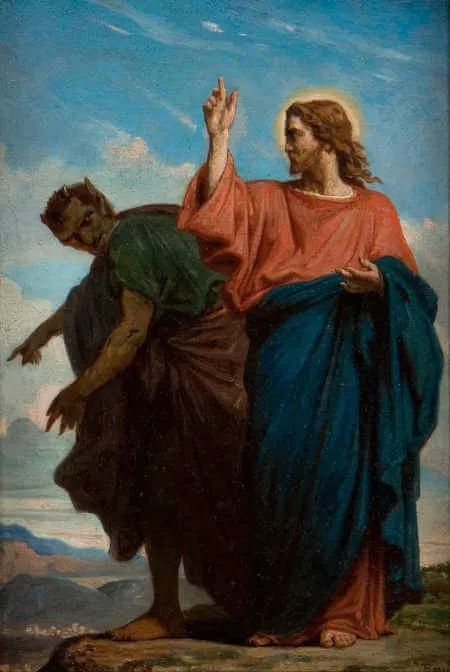
In many ways, this is what Jesus did when He entered the desert. He was aware that the evil one wanted to destroy Him. Therefore, when Jesus entered the desert for 40 days to pray and fast, He did so in a sort of offensive attack upon the devil. Jesus’ temptations in the desert were not primarily difficulties He had to endure and resist. Rather, they were first and foremost ineffective attacks from the evil one, because Jesus had already embraced the opposite virtues.

What temptations and sins are among your greatest struggles? In what ways do you find yourself experiencing defeat? In what ways have you taken up a defensive position to try to overcome your struggles? Too often we approach temptations in the wrong way. We see them as attacks from the evil one that we must resist and defend ourselves against. And though that is true, it is not the full truth. The full truth is that the best way to overcome the struggles we face is to confront them directly in a vigorous and offensive way by choosing the opposite virtue.

Consider the three temptations Jesus overcame in the desert: gluttony, vainglory and greed. Jesus’ entrance into the desert for those 40 days was the way by which He destroyed these temptations before they were even presented to Him. By voluntarily choosing to fast from food for those 40 days, Jesus rendered the temptation toward gluttony ineffective. By choosing the humility of entering into the solitude of the desert to be alone with His Father, Jesus robbed the temptation toward vainglory of its power. By choosing a life of poverty and simplicity, He overcame any temptation toward earthly wealth, even before it was offered to Him.

As we begin this forty-day Lenten journey, reflect, today, upon the sins and temptations in your life that need to be overcome. If you find yourself in an ongoing defensive position toward certain struggles, especially if you find yourself losing the battle at times, it’s time to change your strategy. Embrace the opposite virtue of the sins you are most tempted with this Lent. Embrace those virtues in an offensive manner. Choose kindness if you struggle with anger. Choose fasting if you struggle with gluttony. Choose generosity if you struggle with greed. Whatever your struggle, turn to the virtue you need the most and make it your focus this Lent so that you, too, will be well-prepared to reject the evil one and his lies when temptation comes your way.

Source: https://catholic-daily-reflections.com/2025/03/08/going-on-the-offensive/

Luke 4:1-2 Read More »