Author name: Sani

Saint Nicholas Owen

Profile

Son of a carpenter, Nicholas was raised in a family dedicated to the persecuted Church, and became a carpenter and mason. Two of his brothers became priests, another a printer of underground Catholic books, and Nicholas used his building skills to save the lives of priests and help the Church‘s covert work in England.

Nicholas worked with Saint Edmund Campion, sometimes using the pseudonym John Owen; his short stature led to the nickname Little John. When Father Edmund was martyred, Nicholas spoke out against the atrocity. For his trouble, he was imprisoned.

Father Henry Garnet, Superior of English Jesuits, employed Nicholas to construct hiding places and escape routes in the various mansions used as priest-centers throughout England. By day, he worked at the mansion on regular wood and stone-working jobs so that no one would question his presence; by night he worked alone, digging tunnels, creating hidden passages and rooms in the house. Some of his rooms were large enough to hold cramped, secretive prayer services, but most were a way for single clerics to escape the priest-hunters. As there were no records of his work, there is no way of knowing how many of these hiding places he built, or how many hundreds of priests he saved. The anti–Catholic authorities eventually learned that the hiding places existed, but had no idea who was doing the work, or how many there were.

Due to the work, the danger, and the periodic arrests of the Jesuits, Nicholas never had a formal novitiate, but he did receive instruction, and in 1577 became a Jesuit Brother. On 23 April 1594, he was arrested in London and lodged in the Tower of London for his association with Father John Gerard. Not knowing who they had, the authorities released Nicholas soon after, and he resumed his work.

On 5 November 1605, Brother Nicholas and three other Jesuits were forced to hide in Hinlip Hall, a structure with at least 13 of his hiding places, to escape the priest-hunters. Owen spent four days in one of his secret rooms, but having no food or water, he finally surrendered and was taken to a London prison. There he was endlessly tortured for information on the underground network of priests and their hiding. He was abused so violently that on 1 March 1606, while suspended from a wall, chained by his wrists, with weights on his ankles, his stomach split open, spilling his intestines to the floor; he survived for hours before dying from the wound. Because he was under orders not to kill Nicholas, the torturer spread the lie that Owen had committed suicide. He was one of the Forty Martyrs of England and Wales.

Born

  • 16th century Oxford, England

Died

  • tortured to death on 2 March 1606 in London, England

Venerated

  • 8 December 1929 by Pope Pius XI (decree of martyrdom)

Beatified

  • 15 December 1929 by Pope Pius XI

Canonized

  • 25 October 1970 by Pope Paul VI

Source: https://catholicsaints.info/saint-nicholas-owen/

Saint Nicholas Owen Read More »
Luke 15:22-24

Consolation for the Repentant Sinner

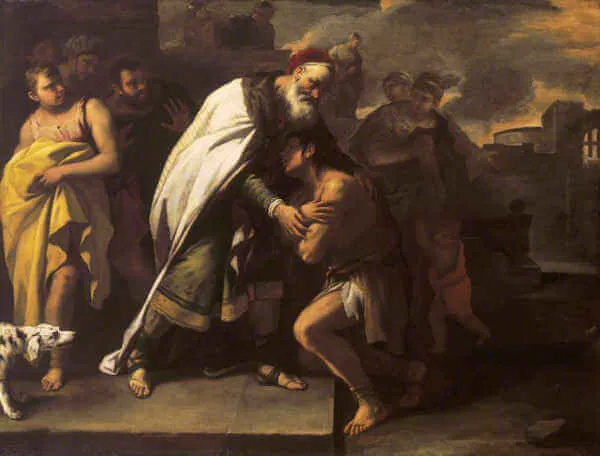
Look, all these years I served you and not once did I disobey your orders; yet you never gave me even a young goat to feast on with my friends. But when your son returns who swallowed up your property with prostitutes, for him you slaughter the fattened calf.

Reflection:

This was the reaction of the faithful son in the Parable of the Prodigal Son. Recall that after squandering his inheritance, the Prodigal Son returns home humiliated and poor, asking his father if he will take him back and treat him as if he were a hired hand. But the father surprises him and throws a huge party for the son to celebrate his return. But the father’s other son, the one who remained with him throughout the years, would not join in the celebration.

Was it fair that the father killed the fatted calf and threw this large party to celebrate his wayward son’s return? Was it fair that that same father apparently never even gave his faithful son a young goat to feast on with his friends? The right answer is that this is the wrong question.

It’s easy for us to live in such a way that we always want things to be “fair.” And when we perceive that another receives more than us, we can get angry and bitter. But asking whether or not this is fair is not the right question. When it comes to the mercy of God, God’s generosity and goodness far exceed what is perceived as fair. And if we are to share in the abundant mercy of God, we too must learn to rejoice in His superabundant mercy.

In this story, the act of mercy given to his wayward son was exactly what that son needed. He needed to know that no matter what he had done in the past, his father loved him and rejoiced in his return. Therefore, this son needed an abundance of mercy, partly to reassure him of his father’s love. He needed this extra consolation so as to become convinced that he made the right choice in returning.

The other son, the one who had remained faithful throughout the years, was not treated unfairly. Rather, his discontent came from the fact that he himself lacked the same abundant mercy present in the heart of his father. He failed to love his brother to the same extent and, therefore, failed to see the need to offer this consolation to his brother as a way of helping him understand he was forgiven and welcomed back. Mercy is very demanding and far exceeds what we may at first perceive as rational and just. But if we desire to receive mercy in abundance, we must be ready and willing to offer it to those who need it the most.

Reflect, today, upon how merciful and generous you are willing to be, especially toward those who do not appear to deserve it. Remind yourself that the life of grace is not about being fair; it’s about being generous to a shocking extent. Commit yourself to this depth of generosity toward all and look for ways that you can console another’s heart with the mercy of God. If you do, that generous love will also bless your heart in abundance.

Source: https://catholic-daily-reflections.com/2025/03/21/consolation-for-the-repentant-sinner-4/

Luke 15:22-24 Read More »

Saint Augustine Tchao

Profile

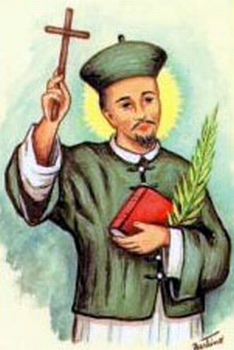
Augustine was a soldier. He escorted Saint Gabriel John Tauin du-Fresse to Beijing, China during his missionary work. He converted to Christianity. He was a priest. He worked in the Sichuan apostolic vicariate. He was arrested for his faith and his work. He died in prison. He was one of the Martyrs of China.

Born

  • c.1746 at Wuchuan, Guizhou, China

Died

  • 27 January 1815 due to poor conditions in prison at Chengdu, Sichuan, China

Beatified

  • 27 May 1900 by Pope Leo XIII

Canonized

  • 1 October 2000 by Pope John Paul II

Source: https://catholicsaints.info/saint-augustine-tchao/

Saint Augustine Tchao Read More »

Matthew 21:42

Building the Kingdom

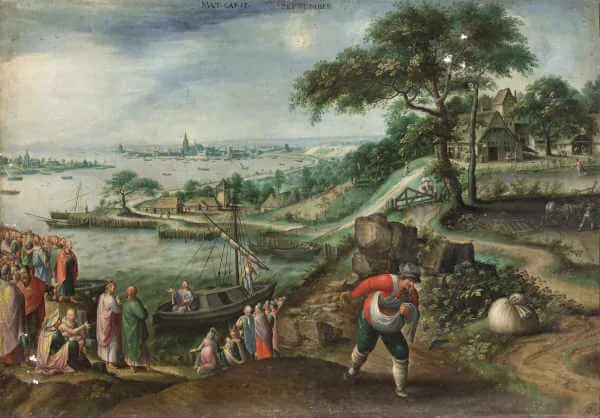
Therefore, I say to you, the Kingdom of God will be taken away from you and given to a people that will produce its fruit.

Reflection:

Are you among those from whom the Kingdom of God will be taken away? Or among those to whom it will be given so as to produce good fruit? This is an important question to sincerely answer.

The first grouping of people, those who will have the Kingdom of God taken away from them, are represented in this parable by the tenants of the vineyard. It is clear that one of their greatest sins is greed. They are selfish. They see the vineyard as a place through which they can enrich themselves and care little about the good of others. Sadly, this mind frame is easy to adopt in our own lives. It’s easy to see life as a series of opportunities for us to “get ahead.” It’s easy to approach life in a way that we are constantly looking out for ourselves rather than sincerely seeking the good of others.

The second grouping of people, those to whom the Kingdom of God will be given so that it will produce good fruit, are those who understand that the central purpose of life is not to simply enrich themselves but to share the love of God with others. These are the people who are constantly looking for ways that they can be a true blessing to others. It’s the difference between selfishness and generosity.

But the generosity to which we are primarily called is to build up the Kingdom of God. This is done through works of charity, but it must be a charity that is motivated by the Gospel and has the Gospel as its ultimate end. Caring for the needy, teaching, serving and the like are all good only when Christ is the motivation and end goal. Our lives must make Jesus more known and loved, more understood and followed. In fact, even if we were to feed a multitude of people in poverty, care for those who were sick, or visit those who were lonely, but did it for reasons other than to ultimately share the Gospel of Jesus Christ, then our work would not produce the good fruit of building up the Kingdom of Heaven. In that case, we would only be philanthropists rather than missionaries of the love of God.

Reflect, today, upon the mission given to you by our Lord to produce an abundance of good fruit for the upbuilding of His Kingdom. Know that this can only be accomplished by prayerfully seeking out the way God is inspiring you to act. Seek to serve His will alone so that all you do will be for God’s glory and the salvation of souls.

Source: https://catholic-daily-reflections.com/2025/03/20/building-the-kingdom-6/

Matthew 21:42 Read More »

Saint John Nepomucene

Profile

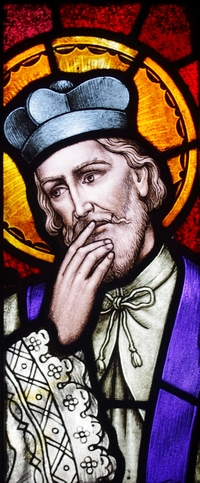
When John was a child, he was cured by the prayers of his parents; they then consecrated him to God. He became a priest. He was known as a great preacher who converted thousands. He was the Vicar-general of Prague (in the modern Czech Republic). He was a counselor and advocate of the poor in the court of King Wenceslaus IV. He refused several bishoprics. Confessor to the queen, he taught her to bear the cross of her ill-tempered husband the king. He was imprisoned for refusing to disclose the queen‘s confession to the king. When he continued to honor the seal of the confessional, he was ordered to be executed. He was the symbol of Bohemian nationalism. His image has been used in art as a symbol of the sacrament of Confession, and many bridges in Europe bear his likeness as their protector.

Born

  • c.1340 at Nepomuk, Bohemia (in modern Czech Republic) as John Wolflin

Died

  • burned, then tied to a wheel and thrown off a bridge into the Moldau River (in the modern Czech Republic) to drown on 20 March 1393
  • on the night of his death, seven stars hovered over the place where he drowned

Beatified

  • 31 May 1721 by Pope Innocent XIII

Canonized

  • 19 March 1729 by Pope Benedict XIII

Patronage

  • against calumnies
  • against floods
  • against indiscretions
  • against slander
  • bridge builders
  • bridges
  • canons
  • confessors
  • for discretion
  • for good confession
  • mariners, sailors, boatmen, watermen
  • running water
  • silence
  • spiritual directors
  • Bohemia
  • Czech Republic
  • Slovakia
  • Prague, Czech Republic, archdiocese of
  • Prague, Czech Republic, city of
  • Venice, Italy

Source: https://catholicsaints.info/saint-john-nepomucene/

Saint John Nepomucene Read More »

Luke 16:19-21

A Powerful Contrast

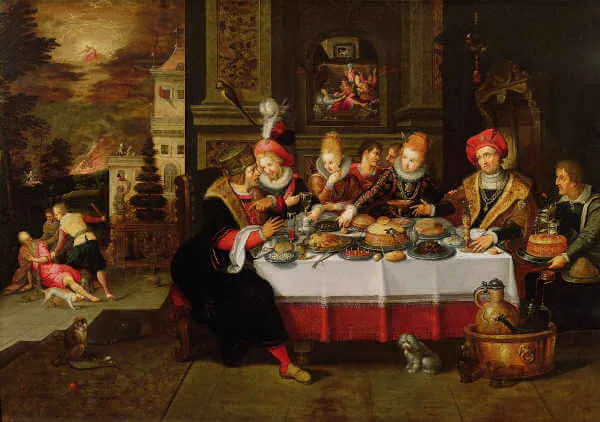
Jesus said to the Pharisees: “There was a rich man who dressed in purple garments and fine linen and dined sumptuously each day. And lying at his door was a poor man named Lazarus, covered with sores, who would gladly have eaten his fill of the scraps that fell from the rich man’s table. Dogs even used to come and lick his sores.”

Reflection:

One of the reasons this story is so powerful is because of the clear descriptive contrast between the rich man and Lazarus. The contrast is not only seen in the passage above, it is also seen in the final outcome of each of their lives.

In the first contrast, the rich man’s life seems much more desirable, at least on the surface. He is rich, has a home to live in, dresses in fine clothing and eats sumptuously every day. By contrast, Lazarus is poor, has no home, has no food, is covered with sores and even endures the humiliation of dogs licking his wounds. Which of these persons would you prefer to be?

Before you answer that question, consider the second contrast. When they both die, they experience very different eternal fates. When the poor man died, he was “carried away by angels.” And when the rich man died, he went to the netherworld, where there was ongoing torment. So again, which of these persons would you prefer to be?

One of the most seductive and deceptive realities in life is the lure of riches, luxury and the fine things in life. Though the material world is not bad in and of itself, there is great temptation that goes along with it. In fact, it is clear from this story and from the many other teachings of Jesus on this topic that the lure of riches and its effect on the soul cannot be ignored. Those who are rich in the things of this world are often tempted to live for themselves rather than living for others. When one has all the comforts this world has to offer, it’s easy to simply enjoy those comforts without concern for others. And that is clearly the unspoken contrast between these two men.

Though poor, it is clear that Lazarus is rich in the things that matter in life. This is evidenced by His eternal reward. It is clear that in his material poverty, he was rich in charity. The man who was rich in the things of this world was clearly poor in charity and, thus, upon losing his physical life, he had nothing to take with him. No eternal merit. No charity. Nothing.

Reflect, today, upon that which you desire in life. Too often, the deceptions of material wealth and worldly possessions dominate our desires. In fact, even those who have little can easily become consumed with these unhealthy desires. Seek, instead, to desire only that which is eternal. Desire love of God and love of neighbor. Make this your only goal in life and you, too, will be carried away by angels when your life is completed.

Source: https://catholic-daily-reflections.com/2025/03/19/a-powerful-contrast-4/

Luke 16:19-21 Read More »

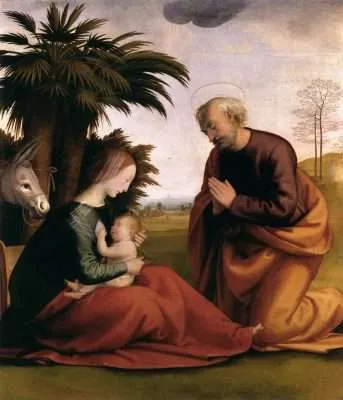
Saint Joseph, Husband of the Blessed Virgin Mary

First Century; Patron Saint of the Universal Church, fathers, carpenters, and a happy death

The Father in Heaven sent His Son into the world to be born of the Virgin Mary. The Father chose her who was the Immaculate Conception to bear His Son in her womb, bring Him into the world, and raise Him from infancy to adulthood. But the Father also needed to choose a foster father for His divine Son. Of all the men in Israel that He could have chosen, He chose Joseph of Nazareth, a carpenter. Today’s solemnity not only honors him, but it also points us to his marital union with the Blessed Virgin Mary and to the effect that that marriage had not only upon him, Mary and Jesus, but also upon us as members of the Body of Christ.

Joseph was likely born in the small town of Bethlehem, where Jesus was also born, but he moved to Nazareth with Mary and Jesus after returning from Egypt in order to keep Jesus safe from Archelaus, the ruler of Judea. Though there are a number of apocryphal writings about him from the first several centuries, nothing is known about him for certain except what is contained in the Gospels. But the Gospels tell us all we need to know about this holy, obedient, and just man, who was given authority over the Son of God and continues to exercise a holy authority over the entire Church.

Saint Joseph was truly the father of Jesus. Of this truth, Saint Augustine writes, “By reason of their faithful marriage, both of them deserve to be called Christ’s parents, not only his mother but also his father, who was a parent in the same way that he was the mother’s spouse: in mind, not in the flesh.” Joseph’s fatherhood is also clearly established by the fact that the angel gave him the responsibility of naming Jesus. “She will bear a son and you are to name him Jesus…” (Matthew 1:21).

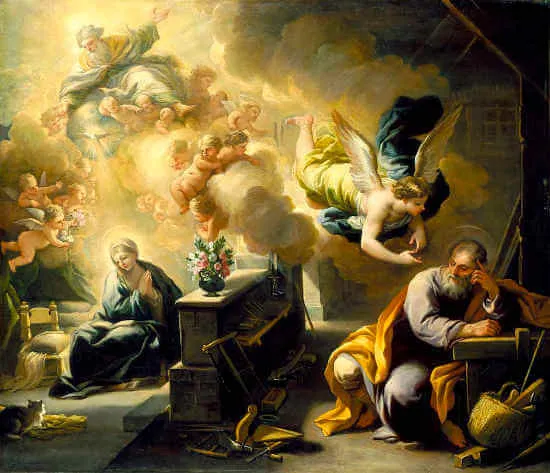
Saint Joseph was obedient to the Father in Heaven, and that obedience deepened his union with Mary his spouse, making their marriage the ideal family for the Son of God. Pope Saint John Paul II speaks of this fact in his apostolic exhortation Guardian of the Redeemer, when he says, “One can say that what Joseph did united him in an altogether special way to the faith of Mary. He accepted as truth, coming from God, the very thing that she had already accepted at the Annunciation” (#4). Saint Joseph’s obedience is clearly seen in his response to four dreams by which an angel instructs Joseph how best to guard and protect the Son of God. Joseph acts immediately, in obedience, to the angel’s instructions. The Vatican II document, Dei Verbum states, “‘The obedience of faith’ must be given to God as he reveals himself. By this obedience of faith man freely commits himself entirely to God, making ‘the full submission of his intellect and will to God who reveals,’ and willingly assenting to the revelation given by him” (#5). Thus, since Saint Joseph’s obedience was absolute, then that obedience fully united him to the Blessed Virgin Mary, in her obedience, and to the Father in Heaven. His obedience to the Father also enables him to become a powerful instrument of the Father’s authority on earth, exercised through him.

Saint Joseph exercised the authority of the Father by protecting the Son of God and expecting obedience from the Son as His earthly father. That Jesus was obedient to Joseph is made clear in the Gospels: “He went down with them and came to Nazareth, and was obedient to them…” (Luke 2:52). The Son of God could only be obedient to the will of His Father. Therefore, in order for Joseph to exercise authority over Jesus, he had to enact nothing other than the will of the Father to which he, himself, was obedient.

On December 8, 1847, Pope Pius IX declared Saint Joseph to be the Universal Patron and Protector of the Catholic Church. This unique title reflects the same truth that Mary is the Mother of God and the Mother of the entire Church. Since she was the mother of the Son of God, and we, the Church, are members of the Body of Christ, then she is our Mother. And since Joseph was the father of the Son of God, His guardian and protector, over whom he was given authority, and from Whom he received obedience, then we, too, can trust in Joseph’s guardianship over us. We must have confidence in submitting to his spiritual authority in our lives, for we are members of the Body of Christ.

As we honor Saint Joseph as the husband of Mary today, ponder the effect of that unique marriage bond. Saint Joseph was not perfect, but his absolute obedience to the Father’s will and his unity in marriage to the Mother of God makes him our father, just as he was the father of Jesus. As a loving father, he will direct us with the authority of God the Father, will protect us in times of trouble as he did for Jesus and Mary, and must always be seen as one uniquely chosen to be the father of the family to which we belong.

Source: https://mycatholic.life/saints/saints-of-the-liturgical-year/march-19-saint-joseph-husband-of-the-blessed-virgin-mary/

Saint Joseph, Husband of the Blessed Virgin Mary Read More »

Matthew 1:24

The Greatness of Saint Joseph

When Joseph awoke, he did as the angel of the Lord had commanded him and took his wife into his home.

Reflection:

What is it that made Saint Joseph so great? He wasn’t immaculately conceived as our Blessed Mother was. He was not divine like Jesus. But he was the head of the Holy Family, its guardian and its provider. He became the legal father of the Savior of the World and the spouse of the Mother of God. But Joseph is not great only because he was given such incredible privileges. First and foremost, he was great because of the choices he made in life. Today’s Gospel refers to him as a “righteous man” and as a man who “did as the angel of the Lord commanded him.” Thus, his greatness is primarily on account of his moral righteousness and obedience to the will of God.

Joseph’s obedience is especially seen in the fact that he obeyed the voice of God given to him in the four dreams recorded in Scripture. In his first dream, Joseph is told “do not be afraid to take Mary your wife into your home. For it is through the Holy Spirit that this child has been conceived in her. She will bear a son and you are to name him Jesus, because he will save his people from their sins” (Matthew 1:20–21). In his second dream, Joseph is told, “Rise, take the child and his mother, flee to Egypt, and stay there until I tell you. Herod is going to search for the child to destroy him” (Matthew 2:13). In his third dream, Joseph is told, “Rise, take the child and his mother and go to the land of Israel, for those who sought the child’s life are dead” (Matthew 2:20). And in his fourth dream, Joseph is warned to go instead to Galilee rather than Judea (Matthew 2:22).

When these dreams are read in succession, it is clear that Saint Joseph was attentive to the voice of God. We all have dreams, but Joseph’s dreams were different. They were clear communications from God, and they required a willing recipient. Joseph was open to the voice of God and listened in faith as that willing recipient.

Joseph also responded with complete submission and full determination. The commands Joseph received were not insignificant. His obedience required that he and his family travel great distances, take up residence in strange lands and do so all in faith.

It’s also clear that Joseph took his vocation seriously. Pope Saint John Paul II gave him the title “Guardian of the Redeemer.” Over and over, he showed his unwavering commitment to his role as the guardian of his legal Son, Jesus, and of his wife, Mary. His life was spent providing for them, protecting them and offering them a father’s heart.

Reflect, today, upon the unique vocation of Saint Joseph. Ponder, especially, the early years of his marriage and the raising of Jesus. Consider his fatherly commitment to care for, provide for and protect his Son. We all must seek to imitate Saint Joseph’s virtues by protecting the presence of Christ within our own hearts, the hearts of our family and friends and in the world as a whole. Pray to Saint Joseph, asking him to help you follow his example so that the hidden presence of our Lord in our lives will grow and come to full maturation.

Source: https://catholic-daily-reflections.com/2025/03/18/the-greatness-of-saint-joseph-4/

Matthew 1:24 Read More »

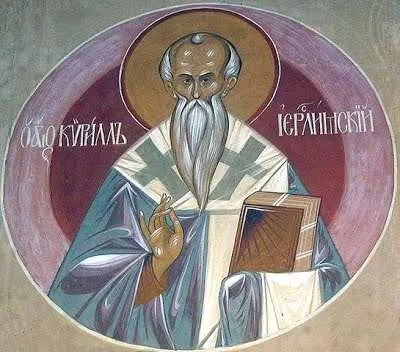
Saint Cyril of Jerusalem, Bishop and Doctor

c. 315–c. 387; Pre-Congregation canonization; Declared a Doctor of the Church by Pope Leo XIII in 1883

When Constantine the Great legalized Christianity throughout the Roman Empire in the year 313, many were hopeful that the sufferings Christians had endured during the first few centuries of the Church had finally come to an end. But the sufferings only changed. Politics entered the Church, emperors inserted themselves into doctrine, and theological and territorial divisions became fierce. The theological divisions in the fourth century were primarily over the divine and eternal nature of the Son of God. Arius, a priest from Alexandria in North Africa, believed that the Father created the Son, making the Son subordinate to the Father and neither co-eternal nor co-equal with the Father. These teachings came to be known as the Arian Heresy. Others believed that the Son was “begotten of the Father,” meaning He existed from all eternity with the Father and was of the same divine nature. This theological battle was initially addressed in the year 325 at the Council of Nicaea. However, after the Council of Nicaea, the controversy continued until the confusion was finally settled in 381 by the Council of Constantinople. It was in this fifty-six-year period of Church history and controversy that today’s saint was born, lived, and fought for the true faith.

Cyril was born in or near the city of Jerusalem around the year 315 A.D. Little is known about his early life, other than that he was well educated in the Scriptures and philosophy. It is believed that he was ordained a deacon for the Church of Jerusalem around the age of twenty by Saint Macarius, Bishop of Jerusalem, who was a staunch opponent of the Arian Heresy. After Macarius died, Saint Maximus, another opponent of Arianism, became Bishop of Jerusalem and ordained Cyril a priest when Cyril was about twenty-eight years old. During his priestly ministry, Cyril became a true shepherd of souls. He was entrusted by Bishop Maximus with the responsibility of assisting him as a preacher and catechist. Cyril preached every Sunday and catechized those preparing for the Sacraments of Initiation. A set of twenty-four of his catechetical instructions have been preserved and are remarkable for their content and clarity. The lectures begin with a prologue, followed by eighteen lessons that were taught to the catechumens before they were baptized. The lessons explained what they needed to know about baptism, how to change from pagan morals, the meaning of the Creed, and the errors of Arianism. Once baptized, Cyril’s last six lessons led the neophytes through a period of mystagogy in which they were taught how to live the new life they received from the Sacraments of Baptism, Confirmation, and the Most Holy Eucharist, as well as lessons on prayer, especially found in the Lord’s Prayer.

Bishop Maximus either died or was deposed around the year 348, and Cyril was chosen to succeed him. He was ordained a bishop by Archbishop Acacius of Caesarea Maritima, from the metropolitan see just west of Jerusalem. Archbishop Acacius was sympathetic to Arianism, so he and others might have believed that Cyril was also sympathetic to Arianism, which he was not.

Soon after becoming the Bishop of Jerusalem, a miraculous sign, visible to all, appeared over the holy site of Jesus’ crucifixion. A large cross of light, surrounded by a rainbow, appeared in the sky and stretched for about two miles over the city. This sign was initially perceived as God’s affirmation of Bishop Cyril but might have also been a sign of the sufferings Cyril would soon endure. The suffering began as Cyril fought Acacius on two fronts. Bishop Cyril claimed the right of independent governance from Acacius in the See of Jerusalem. He also opposed the Arian Heresy that Acacius taught. As a result of these tensions, Acacius, other Arian bishops, and emperors persecuted Cyril, leveled false accusations against him, and deposed and exiled him from Jerusalem three times during his almost forty years as a bishop.

Despite suffering through these theological and political Church controversies, Bishop Cyril was a true shepherd of his flock, preaching and catechizing just as he had done as a priest. His gentle, pastoral, conciliatory, and humble approach to his ministry led some more orthodox bishops to suspect him of being sympathetic to the Arians. For that reason, after Cyril returned from his final exile in 378, the great Saint Gregory of Nazianzens was sent to investigate him. Gregory’s conclusion was that Cyril was orthodox, which ended all doubt. In 381, the Council of Constantinople gave further clarity on the Arian Heresy, further clarified the Creed of Nicaea, and affirmed Bishop Cyril’s office of Bishop of Jerusalem. He returned and remained a holy shepherd of his people until his death six years later. One eyewitness visiting Jerusalem on pilgrimage wrote in her journal that Bishop Cyril’s catechetical lessons were delivered in the Church of the Holy Sepulchre and were so well received by the people that whenever he completed a lesson, all the people would enthusiastically applaud.

Throughout the history of the Church, bitter divisions and the persecution of the orthodox defenders of the faith have been prevalent. Those who emerged as saints were those who persevered, remained faithful, never despaired, and continued to spread the pure faith of the Church, given to Her by Christ. Saint Cyril was one of those shining examples. As we honor him, ponder your own commitment to the entire Truth of the Gospel. When challenged, do you shy away, cower, become confused, and give in to despair? Or do you lovingly stand firm in the Truth, retaining hope that, in the end, Christ will be victorious? Seek to imitate this great Doctor of the Church by embracing not only his orthodoxy but also the charity that fueled his zeal for souls.

Source: https://mycatholic.life/saints/saints-of-the-liturgical-year/march-18-saint-cyril-of-jerusalem-bishop-and-doctor/

Saint Cyril of Jerusalem, Bishop and Doctor Read More »

Matthew 23:11-12

True Greatness

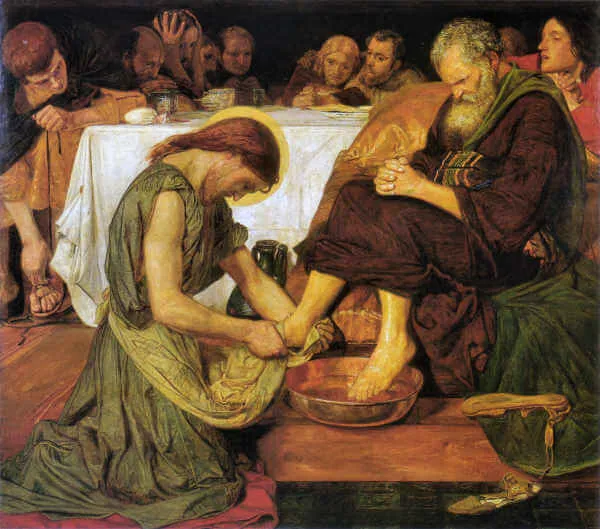
The greatest among you must be your servant. Whoever exalts himself will be humbled; but whoever humbles himself will be exalted.

Reflection:

Do you want to be truly great? Do you want your life to truly make a difference in the lives of others? Deep down this desire for greatness is placed within us by our Lord, and it will never go away. Even those who live eternally in hell will hold on to this innate desire, which for them will be the cause of eternal pain, since that desire will never be fulfilled. And sometimes it’s useful to ponder that reality as a motivation to make sure that this is not the fate we encounter.

In today’s Gospel, Jesus gives us one of the keys to greatness. “The greatest among you must be your servant.” Being a servant means that you put others before yourself. You elevate their needs rather than trying to get them to be attentive to your needs. And this is difficult to do.

It’s very easy in life to think of ourselves first. But the key is that we do put ourselves “first,” in a sense, when we practically put others before us. This is because the choice to put others first is not only good for them, it’s also exactly what is best for us. We were made for love. We were made to serve others. We were made for the purpose of giving of ourselves to others without counting the cost. But when we do this, we do not lose ourselves. On the contrary, it is in the act of giving of ourselves and seeing the other first that we actually discover who we are and become what we were created to be. We become love itself. And a person who loves is a person who is great…and a person who is great is a person whom God exalts.

Reflect, today, upon the great mystery and calling of humility. If you find it difficult to put others first and to act as their servant, do it anyway. Make the choice to humble yourself before everyone else. Elevate their concerns. Be attentive to their needs. Listen to what they say. Show them compassion and be ready and willing to do so to the fullest extent. If you do, that desire for greatness that lives deep within your heart will be fulfilled.

Source: https://catholic-daily-reflections.com/2025/03/17/true-greatness-4/

Matthew 23:11-12 Read More »