2026

Mark 3:7-8

God’s Timing and Perfect Plan

Jesus withdrew toward the sea with his disciples. A large number of people followed from Galilee and from Judea. Hearing what he was doing, a large number of people came to him also from Jerusalem, from Idumea, from beyond the Jordan, and from the neighborhood of Tyre and Sidon.

Reflection:

Jesus was amassing quite a following, with people flocking to Him from territories that include modern-day Israel, Lebanon, Syria, and Jordan. Among them were traditional Hebraic Jews, Greek-speaking Jews, Syro-Phoenician Gentiles, and Edomites. This diverse crowd reveals how Jesus’ ministry transcended cultural, religious, and national boundaries, foreshadowing the universal call of the Gospel. While some were drawn to Him through authentic faith, others came out of curiosity, eager to witness His miracles.

Just prior to today’s Gospel, the Pharisees and Herodians began to plot Jesus’ death because they saw Him as a threat. In response, Jesus “withdrew toward the sea with his disciples.” His timing was perfect; the hour of His Passion had not yet come. This withdrawal was not an act of fear but a deliberate step forward in preparing for the next phase of His mission. There was still much to accomplish—gathering followers, performing works of mercy, and preparing the Twelve for their mission to proclaim the Kingdom of God.

While Jesus acted in accordance with divine wisdom, those who flocked to Him could only see the immediate. They were captivated by His teachings and miraculous works but often misunderstood the full scope of His mission. As Ecclesiastes reminds us, “There is an appointed time for everything, and a time for every affair under the heavens. A time to give birth, and a time to die; a time to plant, and a time to uproot the plant. A time to kill, and a time to heal; a time to tear down, and a time to build…” (Ecclesiastes 3:1–3). For Jesus, this “time” in His public ministry was a time to build up His earthly flock, teaching them, inspiring faith, and forming them for their mission.

As we consider the many and diverse people who flocked to Jesus at this time in His ministry, it’s important to see ourselves in them. Those who came to Him could have never imagined all that would follow. While some might have foreseen the possibility of His death due to the hostility of religious and political leaders, few, if any, could have predicted that Jesus’ Passion and Death were something He would freely welcome and embrace. At that time, they could never have understood that Jesus had to suffer and die for the salvation of souls. Moreover, everything that followed His death would have been foreign to them: His Resurrection, establishment of the Church, Ascension, bestowal of the Holy Spirit, and future coming as the Universal King.

We all go through countless experiences, some good, some bad. When we encounter something good, we often want to hold onto it, yet those experiences often fade with time. When we encounter something bad, we long for that situation to be removed or resolved, yet it sometimes stays longer than we hoped. 

Jesus’ life clearly teaches us that “There is an appointed time for everything, and a time for every affair under the heavens.” As we journey through life, we ought not dismiss the difficult times and try to cling to the good ones. We must enter and live each moment as it comes and goes, seeking to use everything as God intends it, preparing us for the glory that awaits us if we remain faithful until the end.

Reflect today on the seasons of your life, both the joys and the trials. How is God calling you to trust in His timing and use each moment to grow in faith and love? Consider whether you view your challenges as obstacles or as opportunities to deepen your trust in God’s perfect plan. Embrace the good and the difficult, growing in grace and virtue as you do, and your life will unfold in beautiful ways, giving glory to God. In doing so, you will reflect the trust and fidelity of Jesus Himself, whose perfect obedience to the Father brought about the salvation of the world.

Source: http://catholic-daily-reflections.com/2026/01/21/gods-timing-and-perfect-plan/

Mark 3:7-8 Read More »

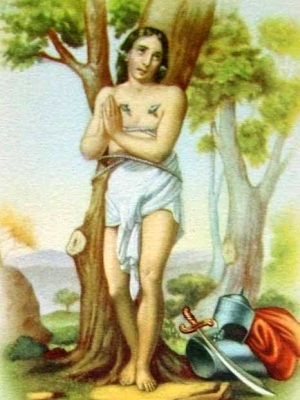
Saint Agnes, Virgin and Martyr

c. 291–c. 304; Patron Saint of those seeking chastity and purity, engaged couples, rape victims, gardeners, young girls, and Girl Scouts; Pre-Congregation canonization

According to one tradition, the daughter of Emperor Constantine the Great—the first emperor to convert to Christianity and legalize its practice—contracted leprosy. Her name was Constantina. Seeking a cure, she approached the tomb of today’s young virgin-martyr and tearfully beseeched her intercession. The tradition further states that Constantina was indeed healed, and, in gratitude, her father commissioned the building of a church over Saint Agnes’ grave. To this day, a church adorns that same spot. To this day, it is named in honor of Saint Agnes. And to this day, the faithful beseech Agnes’ intercession in the same fashion as Constantina in days of old. 

Very little is known about Saint Agnes, except for Saint Ambrose’s brief words written many decades after her death. We do know for certain that she was martyred at the age of twelve or thirteen. Later traditions have supplied what history cannot, including what follows.

Agnes was born into a noble Christian family in Rome. She was said to have been quite beautiful, which, together with her wealth and holiness, caused many young noblemen to seek her as their bride. But Agnes’ eyes beheld One Who was the most beautiful of all—her Lord and Savior, Jesus Christ. After taking in His beauty, she could look upon no one else. She dedicated herself to a life of virginity.

Such self-gift, however, was neither well received nor well understood by the young men of her time. Agnes was reported to the local prefect Sempronius for being a Christian, in an attempt to dissuade her from her vow of chastity. The prefect first tried to convince Agnes to offer sacrifice to the Roman gods. She refused. Her heart was firm in its devotion to her Beloved. The prefect then tried to frighten her by displaying some instruments of torture in the hands of the cruel executioner himself. Agnes showed no fear and refused to burn incense to false gods. Outraged, the prefect ordered that she be taken to brothels to be violated by immoral men. 

During these ordeals, Agnes knew her Heavenly Spouse would protect her. Evil men could stain their swords with her blood, but they could never profane her body consecrated to Christ. At the brothels, the men looked at her with lust from a distance, but appeared more frightened of her than she was of them. None dared approach her. None dared defile her. It is said that only one young man did approach her, only to be immediately struck blind and brought to the ground. Through a prayer spoken by Agnes, though, his sight was restored.

The prefect, having failed to convert Agnes back to paganism, or to defile her body, then condemned her to a death by beheading. Agnes willingly offered her neck to the executioner, who trembled with fear as he approached, while she was as joyful as a bride waiting to meet her Bridegroom.

Saint Agnes, along with Saint Cecilia, was one of the earliest martyrs whose name was honored by its insertion into the Roman Canon (Eucharistic Prayer I in today’s Mass.) Her name in Latin means “lamb.” As a result, since the sixteenth century, every year on her feast day two lambs are brought to the Roman basilica built over her tomb. Their wool is shorn and weaved into various pallia, vestments covering the shoulders. These very pallia are later placed on the shoulders of archbishops by the pope himself on the Feast of Saints Peter and Paul. Along with his crozier, or staff, the pallium symbolizes a bishop’s role as shepherd.

Source: https://mycatholic.life/saints/saints-of-the-liturgical-year/january-21-st-agnes-virgin-martyr/

Saint Agnes, Virgin and Martyr Read More »

Mark 3:4-5

Righteous Anger and Holy Grief

Then he said to the Pharisees, “Is it lawful to do good on the sabbath rather than to do evil, to save life rather than to destroy it?” But they remained silent. Looking around at them with anger and grieved at their hardness of heart, Jesus said to the man, “Stretch out your hand.” He stretched it out and his hand was restored.

Reflection:

How would you answer this question? “Is it lawful to do good on the sabbath rather than to do evil, to save life rather than to destroy it?” Objectively speaking, the answer is easy: “Yes!” But subjectively speaking, when we consider the person performing the good deed, it’s easy to let our thoughts, feelings, and past experiences of that person affect our judgment. If we have a grievance toward someone—resulting in anger, jealousy, or envy—our answer might differ from the ideal, as it did with the Pharisees toward Jesus.

Anger is a strong emotional reaction to perceived injustice or injury that, when disordered, can lead to resentment, bitterness, or a desire for vengeance. Jealousy is a fear of losing what we have to another and is rooted in insecurity or pride, leading to a protective but distorted attachment to our own status, relationships, or achievements. Envy is a sadness or sorrow over the blessings or successes of another, often accompanied by a refusal to celebrate their good fortune and a desire that they be deprived of it. These are ugly sins. Sins that filled Jesus’ Sacred Heart with righteous anger and holy grief.

In this Gospel passage, the Pharisees appear to suffer from all three sins. Their anger is evident in their hostile reaction to Jesus’ words and actions, as they see Him as a threat to their authority and influence. Their jealousy manifests in their fear of losing their power and status among the people to Jesus, whose teachings and miracles overshadow their own ministry. Their envy becomes apparent in their inability to rejoice in the man’s healing, resenting instead Jesus’ authority and the attention he attracts. These sins harden their hearts, blinding them to God’s mercy and love that Jesus embodies, and lead them down a path of malice and conspiracy.

When we consider the Pharisees’ negative and sinful reactions, it’s easy to condemn them, thinking we would never react that way. Yet, before we jump to that conclusion, it’s important to examine all the relationships and encounters we have with others.

Jesus embodies every virtue and spiritual gift—mercy and justice, compassion and strength, diligence and docility, humility and majesty, patience and zeal, wisdom and prudence, faith and fortitude, hope and charity. For which of these did the Pharisees manifest their anger, jealousy, and envy? It’s impossible to answer that question because these sins are always rooted in irrationality. The same is true in our lives.

Considering the people we encounter on a regular basis, it’s important to examine whether we struggle with anger, jealousy, or envy. This is often difficult to do because these sins blind us to the truth. When we are angry, we irrationally blame others as the cause of our anger. When jealous, our insecurity leads us to justify our reaction and condemn the one whom we feel is a threat. When envious, our self-concern distorts our ability to see the good in another, preventing us from rejoicing in their success or goodness.

Jesus came to set us free from these heavy burdens. The Pharisees were not happy because these sins dominated their lives. Similarly, we will never find the peace, joy, and happiness we desire until we turn anger into love and forgiveness, jealousy into gratitude, and envy into admiration and rejoicing in the blessings of others.

Reflect today on those people you encounter on a regular basis. Where these sins enter into those relationships, accept responsibility for them, confess them, and pray for virtue to replace them. Our Lord wants us to rejoice with Him, participate in His glorious virtues and spiritual gifts, and receive the overflowing rewards that they bestow.

Source: https://catholic-daily-reflections.com/2026/01/20/righteous-anger-and-holy-grief/

Mark 3:4-5 Read More »

Saint Fabian, Pope and Martyr

Died 250; Patron Saint of Rome; Pre-Congregation canonization; Elected pope 236

It wasn’t until 313 that Christianity was legalized by the emperor, Constantine the Great. Up until that time, Christians were widely persecuted by various emperors trying to please their gods. Fabianus (Fabian) was born into this Roman culture, most likely around the year 200. Although we know nothing about his early life, we do know that he served as pope for fourteen years.

Fabian’s election to the papacy took place in a divinely inspired way. After the death of Pope Anterus, who served for only one year, Fabian, a layman, traveled from his farm to the city of Rome to attend the election of the new Bishop of Rome with the people and clergy. It is not known what status Fabian held in the Church as he traveled to Rome. Yet no one present even considered Fabian as a possible pope, since other far more noble churchmen were being considered. During the public discussions, however, all that changed. The fourth century Church historian, Eusebius, explains what happened next. “All of a sudden…a dove flew down from above and settled on his head as clear imitation of the descent of the Holy Ghost in the form of a dove upon the Savior; whereupon the whole people, as if moved by one divine inspiration, with all eagerness and with one soul cried out ‘worthy,’ and without more ado took him and placed him on the episcopal throne” (Ecclesiastical History). Just as the Holy Spirit descended upon Jesus in the form of a dove at His Baptism, it appears that the Father chose an unsuspecting farmer as His Son’s new vicar on Earth.

Fabian’s reign as pope began during a relatively peaceful period in Rome. Prior to that, from the time of the Apostles, there had been only sporadic persecutions of Christians in the Roman Empire. Hatred of Christians first began with Nero in 64 and continued in various forms under successive emperors until the Emperor Decius rose to power in 249, thirteen years after Fabian became pope. Within a year of Decius’ ascension to the emperor’s throne, he issued an edict that required everyone in the empire to offer sacrifice both to the Roman gods and for the good of the emperor himself. What’s more, the sacrifices had to be confirmed by the magistrate who, after witnessing the sacrifice, would issue a certificate verifying the sacrilegious deed had been completed. Those who refused could be imprisoned or killed.

In the face of persecution and the threat of death, some Christians went through the motions of offering sacrifice to save their lives. Others fled and hid. Pope Fabian was among those who looked persecution and death in the face and accepted them. Pope Fabian and many other Christians died as martyrs for the faith.

In addition to his martyrdom and his divine election as pope, Saint Fabian is also known for being a good administrator of the Church, organizing the Church into various districts with appointed leaders. He had a heart for evangelization and sent several bishops as missionaries to Christianize Gaul (present-day France). Lastly, like many other saints of his time, he stomped out heresy, working to preserve the pure and orthodox faith.

Source: https://mycatholic.life/saints/saints-of-the-liturgical-year/january-20-saint-fabian-pope-and-martyr/

Saint Fabian, Pope and Martyr Read More »

Mark 2:27-28

Following God’s Law

“The sabbath was made for man, not man for the sabbath. That is why the Son of Man is lord even of the sabbath”

Reflection:

Today’s Gospel should console those who struggle with a legalistic and scrupulous mindset. This is an easy trap to fall into for those who desire to keep God’s commandments and remain faithful to His holy will. Despite the best intentions, it’s easy for those who are deeply sincere in their fidelity to God to misunderstand how best to please and glorify Him. One common trap is to think that meticulous observance of the external Law is sufficient. While obedience to God’s Law is essential, it is equally important to understand the authentic requirements of His Law—what it truly demands and what it does not.

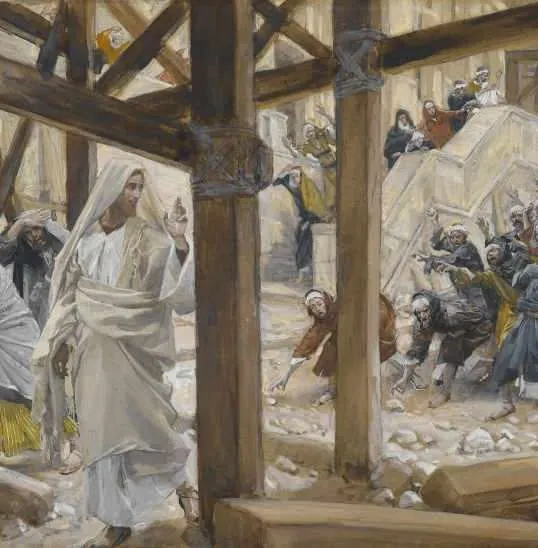
Today’s Gospel takes place toward the beginning of Jesus’ public ministry, after He had named His Twelve Apostles and begun preaching and healing. As they walked to another town on the Sabbath so Jesus could continue His mission, they passed through a field. The Apostles, being hungry, forged a path through the grain and picked some of it to eat. When the Pharisees saw them doing this, they seized the opportunity to condemn them, saying, “Look, why are they doing what is unlawful on the sabbath?” (Mark 2:24).

Without getting too philosophical, it’s important to understand what we call God’s Eternal Law. The Eternal Law encompasses reality—physical, moral, and spiritual truths. All that God has established as true must be our guide through life. The goal of the evil one is to deceive us by leading us into a false understanding of that reality.

Traditionally, the Eternal Law has been divided into two distinct aspects: the Natural and Divine Laws. The Divine Law is all that is known only through divine revelation—all that the Scriptures reveal, especially through Christ’s humanity and mission. The Natural Law, on the other hand, is written upon creation itself, including our own human nature. Natural Law is written on our consciences and discerned through reason. For example, we instinctively know it is wrong to lie, steal, and murder. Though God’s Divine Law confirms this through the Ten Commandments, these basic moral truths are already evident to us when we reflect clearly.

In today’s Gospel, the Apostles’ actions were perfectly aligned with right reason—the Natural Law—showing how their choices reflected God’s design for human flourishing. They were eating grain as they journeyed with Jesus so He could continue His mission. Their need for sustenance, especially while in service to Christ, took precedence over rigid legalistic interpretations of the Sabbath. The Pharisees, however, mistook the Sabbath for an end in itself. They focused solely on external observance and failed to understand that the Sabbath was instituted as a gift for humanity—a day for rest, worship, and renewal in communion with God.

What’s freeing and beautiful to note is that the Natural Law, written on our human reason, and the Divine Law, revealed through the Scriptures, are in perfect harmony. Both flow from God. Through His mission, Jesus shows us how the Divine Law elevates and perfects the Natural Law, orienting both toward love and mercy. The Pharisees’ legalism obscured this harmony, reducing the Law to a burdensome set of rules rather than as a pathway to life and freedom.

Reflect today on your own approach to God’s Law. If you find it burdensome, reevaluate your thinking. Properly understood and embraced, God’s Law is not a weight; it’s the source of freedom. The Sabbath, in particular, invites us to rest and trust in God’s providence. When we live according to the Eternal Law—both Natural and Divine—we discover harmony within our souls that refreshes and elevates us. Resolve to follow God’s Law with love, avoiding both scrupulosity and laxity, and you will find the freedom and joy for which you were created.

Source: https://catholic-daily-reflections.com/2026/01/19/following-gods-law/

Mark 2:27-28 Read More »

Saint Liberata of Como

Profile

Liberata was born to the wealthy, Italian nobility; sister of Saint Faustina of Como. Their mother died when the girls were very small, and they were raised by a guardian. Their father tried to arrange marriages for them, but both girls were drawn to religious life and fled their homes for Como, Italy, where they became Benedictine nuns. They founded the Santa Margarita convent in Como; it lasted over 1,000 years.

In Como, the sisters came across a woman dying on a cross, having been crucified by her husband for unknown reasons; Liberata took her down from the cross and miraculously healed her wounds by praying over her.

Born

  • Rocca d’Olgisio, Italy

Died

  • 580 of natural causes
  • buried at the cemetery of the convent of Santa Margarita at Como, Italy
  • relics in the cathedral of Como

Canonized

  • Pre-Congregation

Patronage

  • babies
  • Cerreto Guidi, Italy

Representation

  • with Saint Faustina of Como (her sister)
  • with Saint Margaret (the patron of the convent Liberata founded)
  • Benedictine nun holding a lily
  • holding two babies in swaddling clothes; they represent two young saints, traditionally Saint Vital and Saint Valeria, the sisters met as infants; this image led to her tradition of patronage of babies, for safe childbirth and related matters

Source: https://catholicsaints.info/saint-liberata-of-como/

Saint Liberata of Como Read More »

Mark 2:18-19

The Value of Fasting

The disciples of John and of the Pharisees were accustomed to fast. People came to Jesus and objected, “Why do the disciples of John and the disciples of the Pharisees fast, but your disciples do not fast?” Jesus answered them, “Can the wedding guests fast while the bridegroom is with them?”

Reflection:

Fasting was common in Old Testament times. Its purpose was to express repentance, mourning, or preparation for divine intervention. This was especially true among John the Baptist’s disciples who fasted in response to John’s call to repentance and preparation for the coming of the Messiah.

Though the Pharisees fasted, their fasting was often for show, to illustrate a false piety. Recall the Pharisee’s prayer in the Parable of the Pharisee and the Tax Collector: “The Pharisee took up his position and spoke this prayer to himself, ‘O God, I thank you that I am not like the rest of humanity—greedy, dishonest, adulterous—or even like this tax collector. I fast twice a week, and I pay tithes on my whole income’” (Luke 18:11–12).

In today’s Gospel, Jesus explains that His disciples do not fast now, but that a day is coming when they will need to fast. Jesus explains this within the context of revealing His divine identity as the Bridegroom of God’s people.

Through the prophets, God often described His relationship with His people in terms of a marriage covenant. Isaiah said, “For your husband is your Maker; the LORD of hosts is his name, Your redeemer, the Holy One of Israel, called God of all the earth” (Isaiah 54:5). Hosea prophesied, “I will betroth you to me forever: I will betroth you to me with justice and with judgment, with loyalty and with compassion…” (Hosea 2:22–23).

While Jesus, the Bridegroom, was with them physically, His disciples were at their wedding banquet, celebrating the new marriage covenant God was establishing with them. It was inappropriate to fast at such a banquet. However, “the days will come when the bridegroom is taken away from them, and then they will fast on that day” (Mark 2:20). This is a reference to Jesus’ Passion, Death, and Ascension. He prophesied that once the New Marital Covenant was sealed in His Blood and His earthly mission completed, “they will fast on that day.” That day is today!

In the early Church, fasting was also common: “While they were worshiping the Lord and fasting, the holy Spirit said, ‘Set apart for me Barnabas and Saul for the work to which I have called them.’ Then, completing their fasting and prayer, they laid hands on them and sent them off” (Acts 13:2–3). In this instance, fasting helped the teachers and prophets in Antioch discern Saul and Barnabas’ mission in preparation for sending them forth.

Today, Jesus not only calls us to regular forms of fasting and mortification, doing so is an essential part of our spiritual journey. This teaching is clear in the New Testament. For example, at the beginning of Jesus’ ministry He entered the desert and “fasted for forty days and forty nights” (Matthew 4:2). This models for us the value of fasting as we attempt to fulfill our missions and overcome the temptations of the evil one.

If we want to imitate our Lord, deepen our covenantal bond with Him, and further His mission, then we must regularly fast. Though fasting is only required twice a year—on Ash Wednesday and Good Friday—we are encouraged to do so weekly, especially on Fridays, uniting this practice to our prayer life.

Reflect today on your practice of fasting and other forms of regular mortification. Fasting is an interior discipline that unites us to the suffering Christ and prepares our hearts to receive His abundant grace. By helping us overcome the enticements of the flesh and distractions of this world, fasting refocuses our souls on the eternal wedding feast that awaits us in Heaven. Embrace fasting not as a burden, but as a joyful opportunity to grow in holiness, deepen your covenantal relationship with the Bridegroom, and prepare more fully for the mission on which He sends you.

Source: https://catholic-daily-reflections.com/2026/01/18/the-value-of-fasting/

Mark 2:18-19 Read More »

Saint Margaret of Hungary

Profile

Margaret was the daughter of King Bela IV of Hungary and Marie Laskaris; grand-daughter of the Byzantine emperor. When Hungary was freed from the Tatars, her parents had pledged their next child to God. To keep this promise, Margaret was placed in a Dominican convent at Veszprem, Hungary at age 3; Blessed Helen of Hungary served as her novice mistress. She transferred at age ten to the convent of the Blessed Virgin founded by her parents on the Hasen Insel near Buda, where she lived the rest of her life. At one point, her father arranged a marriage for her to King Ottokar II of Bohemia, but she adamantly refused. She took vows at age 18. Known for severe self-imposed penances, and for kindness to those of lower social station. The investigation for her canonization lists 27 miracles including healings and a case of awakening from death.

Born

  • 1242

Died

  • 18 January 1271 at Budapest, Hungary
  • relics given to the Poor Clares at Pozsony (modern Bratislava, Slovak Republic) when the Dominican Order in the area was dissolved
  • most of her relics were destroyed in 1789, but some are still preserved at Gran, Gyor, Pannonhalma, Hungary

Beatified

  • 28 July 1789 by Pope Pius VI

Canonized

  • 19 November 1943 by Pope Pius XII

Patronage

  • against flood

Representation

  • Dominican holding a lily and a book
  • princess with a lily
  • Dominican in prayer with a globe of fire over her head

Source: https://catholicsaints.info/saint-margaret-of-hungary/

Saint Margaret of Hungary Read More »

Second Sunday in Ordinary Time

First Reading Isaiah 49:3, 5-6

The LORD said to me: You are my servant,
Israel, through whom I show my glory.
Now the LORD has spoken
who formed me as his servant from the womb,
that Jacob may be brought back to him
and Israel gathered to him;
and I am made glorious in the sight of the LORD,
and my God is now my strength!
It is too little, the LORD says, for you to be my servant,
to raise up the tribes of Jacob,
and restore the survivors of Israel;
I will make you a light to the nations,
that my salvation may reach to the ends of the earth.

Responsorial Psalm Psalms 40:2, 4, 7-8, 8-9, 10

R/ (8a and 9a) Here am I, Lord; I come to do your will.
I have waited, waited for the LORD,
and he stooped toward me and heard my cry.
And he put a new song into my mouth,
a hymn to our God.
R/ Here am I, Lord; I come to do your will.
Sacrifice or offering you wished not,
but ears open to obedience you gave me.
Holocausts or sin-offerings you sought not;
then said I, “Behold I come.”
R/ Here am I, Lord; I come to do your will.
“In the written scroll it is prescribed for me,
to do your will, O my God, is my delight,
and your law is within my heart!”
R/ Here am I, Lord; I come to do your will.
I announced your justice in the vast assembly;
I did not restrain my lips, as you, O LORD, know.
R/ Here am I, Lord; I come to do your will.

Second Reading 1 Corinthians 1:1-3

Paul, called to be an apostle of Christ Jesus by the will of God,
and Sosthenes our brother,
to the church of God that is in Corinth,
to you who have been sanctified in Christ Jesus, called to be holy,
with all those everywhere who call upon the name of our Lord Jesus Christ, their Lord and ours.
Grace to you and peace from God our Father
and the Lord Jesus Christ.

Alleluia John 1:14a, 12a

R. Alleluia, alleluia.
The Word of God became flesh and dwelt among us.
To those who accepted him,
he gave power to become children of God.
R. Alleluia, alleluia.

Gospel John 1:29-34

John the Baptist saw Jesus coming toward him and said,
“Behold, the Lamb of God, who takes away the sin of the world.
He is the one of whom I said,
‘A man is coming after me who ranks ahead of me
because he existed before me.’
I did not know him,
but the reason why I came baptizing with water
was that he might be made known to Israel.”
John testified further, saying,
“I saw the Spirit come down like a dove from heaven
and remain upon him.
I did not know him,
but the one who sent me to baptize with water told me,
‘On whomever you see the Spirit come down and remain,
he is the one who will baptize with the Holy Spirit.’
Now I have seen and testified that he is the Son of God.”

Source: https://bible.usccb.org/bible/readings/011826.cfm

Second Sunday in Ordinary Time Read More »

John 1:29-30

The New Paschal Lamb

John the Baptist saw Jesus coming toward him and said, “Behold, the Lamb of God, who takes away the sin of the world. He is the one of whom I said, ‘A man is coming after me who ranks ahead of me because he existed before me.’”

Reflection:

Central to the Jewish faith was the Feast of Passover, the commemoration of God’s deliverance of His people from slavery in Egypt (Exodus 12). In Jesus’ time, Passover was one of three major annual feasts during which the Jews made a pilgrimage to the Temple in Jerusalem. Additionally, the Feast of Weeks celebrated the giving of the Law on Mount Sinai and the first fruits of the harvest (Leviticus 23:15-22), and the Feast of Tabernacles recalled the Israelites’ wandering in the desert and celebrated God’s providence (Leviticus 23:33-43).

Recall the first Passover meal. Moses instructed the people to sacrifice an unblemished lamb, mark the doorposts of their homes with its blood, and eat the lamb with unleavened bread and bitter herbs in haste, ready to depart. This act of faith and obedience protected them from the angel of death who passed over the marked houses, sparing the firstborn of Israel, while striking down the firstborn of Egypt. The Passover thus became a perpetual memorial of God’s saving power and His covenantal faithfulness to His people.

Because of the Passover, the idea of a sacrificial lamb was intimately familiar to the Jewish people. The Jews were also familiar with the prophecy in Isaiah 53—often referred to as the Suffering Servant—in which the servant of the Lord is described as “a lamb led to the slaughter,” who bears the sins of many (Isaiah 53:710–12). Additionally, each morning and evening, a lamb was sacrificed in the temple as a continual offering for sin (Exodus 29:38–42).

As Jesus began His public ministry, the first thing said of Him came from John the Baptist: “Behold, the Lamb of God, who takes away the sin of the world.” His words would have resonated within the minds and hearts of John’s disciples. His disciples believed that John was a great prophet and the forerunner of the Messiah, sent to prepare the way for the Lord. They saw him as a holy man who called for repentance and renewal, and some even wondered if he himself might be the Christ, though John consistently denied this.

Because John’s ministry was one of preparation for the Messiah, his disciples would have anticipated the Messiah’s imminent arrival. Imagine the excitement, surprise, questions, uncertainty, and hope that would have filled their minds and hearts as they listened to John’s prophecy about Jesus. John continued, “He is the one of whom I said, ‘A man is coming after me who ranks ahead of me because he existed before me.’”

Though John’s proclamation about Jesus took on a powerful significance for his disciples that first moment that he revealed Jesus as the Lamb of God, John’s words must resonate within each of us today. Now that the Christmas Season is complete and we enter into Ordinary Time, we are invited to embrace Jesus’ public ministry, with all His teachings and Paschal Sacrifice, as something extraordinary in our lives. We must approach His ministry with the same hope, enthusiasm, excitement, and anticipation that John’s disciples experienced.

Reflect today on the moment when John the Baptist’s disciples heard him proclaim, “Behold, the Lamb of God!” Like them, strive to see Jesus with new eyes and hopeful anticipation as we begin Ordinary Time. This liturgical season marks the beginning of Jesus’ public ministry, and it must also be a renewed beginning of His works in your life. Follow Him without reserve, allowing Him to take away your sins and share in His life and love.

Source: https://catholic-daily-reflections.com/2026/01/17/the-new-paschal-lamb/

John 1:29-30 Read More »