2026

Mark 1:35-39

The Priority of Prayer

Rising very early before dawn, he left and went off to a deserted place, where he prayed. Simon and those who were with him pursued him and on finding him said, “Everyone is looking for you.” He told them, “Let us go on to the nearby villages that I may preach there also. For this purpose have I come.” So he went into their synagogues, preaching and driving out demons throughout the whole of Galilee.

Reflection:

Jesus’ prayer was unique. He did not pray because He needed God in His life—He was and is God. Yet, in His human nature, He regularly withdrew to be alone and to pray to His Father. Jesus’ prayer teaches us two primary lessons.

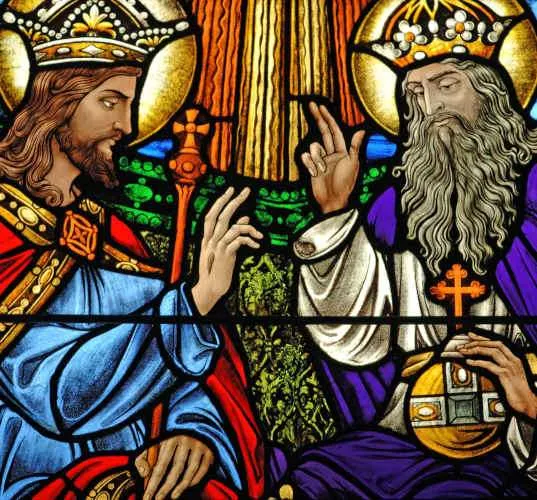
First, Jesus’ prayer reveals Who He is. He is the Second Person of the Most Holy Trinity. As a member of the Trinity, Jesus prayed in solitude, not to become closer to the Father, for He and the Father are eternally one in essence; rather, His prayer expressed and revealed that perfect union to us. Unity with and love of the Father are at the center of Who He is.

Though we are not God, we are made for oneness with God. This is not an external invitation but an essential part of who we are and who we must become. In Heaven, our lives will be one ongoing and eternal expression of prayer—a perfect union with God. That union must begin now, and the foundation of its growth is prayer.

By going off alone to pray to the Father, Jesus also models for us the way to the Father. His action is prophetic, calling us to set aside moments each day for nothing other than prayer. While we are called to pray continually throughout the day, this habit is nourished by intentional moments of silence in which we immerse ourselves in God’s presence. In our fallen nature, daily moments of focused prayer are necessary for clearing the distractions of life, overcoming sin, and allowing God’s grace to draw us into deeper union with Him.

Jesus’ prayer invites us to examine our own daily prayer life. How often do you pray each day? How do you pray? Does your prayer change you, transforming you into who God made you to be? Most people easily find time every day for less important things, such as entertainment, idle conversations, and daily work. Though these things have their place, they must never overshadow that which is most important. We must learn to pray and be faithful to prayer every day.

One of the best ways to pray is to participate in the Mass. In the Mass, we most fully share in Christ’s human life, sacrifice, and divine presence. The Mass is the summit of prayer and the foundation of our spiritual life. We receive Him into our lives as we consume His Body and Blood, Soul and Divinity. To participate in the Mass well, daily moments of prayer are essential. At times, we must silence every other thought and actively offer our praise to God. Meditation on the Word of God is also essential. Taking time to read the Gospel, in particular, and meditating on those passages disposes us to hear God’s voice. His Word counters the many lies and temptations we face during our daily activities, preparing us to live more fully as God’s sons and daughters.

Reflect today on your commitment to daily prayer by following Jesus’ example. Resolve to find a moment of solitude in which you silence your heart and simply dwell in God’s presence. Let this time of prayer become the cornerstone of your day and a foretaste of the union with God in Heaven for which you were created. Prayer is not an option; it is the very path to becoming who we are meant to be—united with God in love, now and for all eternity.

Source: https://catholic-daily-reflections.com/2026/01/13/the-priority-of-prayer/

Mark 1:35-39 Read More »

Saint Hilary of Poitiers, Bishop and Doctor

c. 315–367; Patron Saint of children academically behind, children learning to walk, mothers, and the sick; Invoked against rheumatism and snakebites; Pre-Congregation canonization; Proclaimed a Doctor of the Church in 1851 by Pope Pius IX

Born into a wealthy pagan family in Poitiers, France, Hilary was well educated in the classics. As he looked into his own soul, however, he knew that he did not exist for the sole purpose of seeking pleasure, enjoying leisure, obtaining wealth, or merely satisfying his fleshly desires. Hilary reasoned that the human soul did not exist simply to die. Instead, it must exist for something more, something eternal, something glorious. When his pagan culture did not suffice and philosophy fell short, Hilary finally found what he was searching for when he stumbled upon the Scriptures.

Hilary was first struck by the mysterious name of God in the Old Testament: “I AM WHO I AM.” God had revealed Himself as eternal, without beginning or end—Existence itself. Then Hilary discovered the Son of God in the Gospel of John 1:1–14. Of this discovery, Hilary said, “My soul measured the mighty workings of God, wrought on the scale of His eternal omnipotence . . .by a boundless faith . . .that God was in the beginning with God, and that the Word became flesh and dwelt among us . . .” (De Trinitate 1.12).

Hilary had the will to believe, and in the years that followed he was given the power and gift to understand the beauty, mystery, omnipotence, and nature of the Most Holy Trinity. Shortly after these discoveries of faith, Hilary was baptized a Christian and went on to defend the doctrine of the Trinity against the “insanity and ignorance of men.” He so impressed the faithful that they chose him to be their bishop, a dignity to which he reluctantly agreed.

Among those who shared in the “insanity and ignorance” of that time were a group of bishops and laity who followed the heresy of Arianism, which denied the divinity of Christ, instead holding that the Son was inferior to the Father. This heresy was especially strong in the Eastern Church but was starting to spread throughout France. After Hilary was a bishop for only about five years, the emperor, an Arian himself, ordered every bishop to pledge their support for this heresy. Hilary refused. Instead, he vigorously defended the truth, and for his brave stance was exiled to Phrygia, in modern-day Turkey. In His love and providence, God used Hilary’s time of exile in powerful ways.

While in Phrygia, Bishop Hilary spent much time studying and writing. He had already composed a marvelous commentary on the Gospel of Matthew while in Poitiers, and now he set his mind to his greatest work, De Trinitate (On the Trinity). Drawing from his classical education, his knowledge of Greek, his love of the Scriptures, and from the “insanity” and “ignorance” of Arianism itself, Bishop Hilary composed a comprehensive defense of the doctrine of the Trinity as it was taught in the Nicene Creed. Bishop Hilary caused so much trouble for the Arians in Phrygia that the Arian bishops pleaded with the emperor to send him back home, a request the emperor honored.

On his return to Poitiers, Bishop Hilary took the long way home through Greece and Italy, preaching all the way, weeding out the beginnings of Arianism in the Western Church. His effectiveness came not only from his clear teaching, but also from his conciliatory approach and resolute determination. Back in Poitiers, he continued to preach, write, attend councils, and even to compose hymns. The hymns were his way of introducing the doctrines of the faith to the people of God in song. He was a true pastor who burned with a desire that everyone come to a deeper knowledge of the One God—Father, Son, and Holy Spirit.

Source: https://mycatholic.life/saints/saints-of-the-liturgical-year/january-13-saint-hilary-of-poitiers-bishop-and-doctor/

Saint Hilary of Poitiers, Bishop and Doctor Read More »

Mark 1:21-22

The Author and Teacher

Jesus came to Capernaum with his followers, and on the sabbath he entered the synagogue and taught. The people were astonished at his teaching, for he taught them as one having authority and not as the scribes.

Reflection:

Imagine attending a book study for a profound and challenging book. The group leader has read it thoroughly and consulted reviews; he shares various interpretations, offering valuable insights. You leave with a deeper understanding and gratitude for the leader’s guidance. Now imagine years later you attend another study on the same book, but this time the author leads it. The author alone can speak with absolute authority—explaining the backstory, the intent behind the words, and the true meaning of the text. Nothing compares to hearing from the one who wrote the book.

Jesus, as the eternal Son of God, is not just a teacher of Truth, but is its Co-Author, together with the Father and the Holy Spirit. From the beginning of time, God’s Truth—His Eternal Word—has been gradually revealed through creation, the covenants, the Law, and the prophets. Yet only the Word Made Flesh could reveal Himself fully.

When Jesus entered the synagogue in Capernaum, His teaching astonished the people. The scribes, though learned and revered, taught by relying on the traditions of their ancestors and the interpretations of others. Jesus, however, spoke with divine authority. His words were not secondhand interpretations but the living, authoritative proclamation of Truth. Those who were open to faith recognized something far greater than human wisdom; they encountered the very voice of God.

The people’s astonishment reveals the transformative nature of the Word of God. Jesus did not merely interpret the Scriptures for the people; He fulfilled them and identified Himself with them. As the Author of all Truth, His words—and His very Person—carried the power to liberate and transform. This power was immediately demonstrated when He cast out the unclean spirit in the verses that follow, revealing that His word does not simply teach—it acts, healing and restoring those in bondage.

The question of Truth remains as relevant today as it was when Jesus walked the earth. In a world flooded with opinions, interpretations, and ideologies, only one thing ultimately matters: that which God speaks. We desperately need Christ’s authoritative voice in our lives today. We need Him to cut through the confusion caused by our fallen and disordered human nature and the countless erroneous ideologies that permeate our world.

Reflect today on whether you recognize the Voice of God. Are you familiar with His definitive and authoritative Word that sheds light on your life and the world around you? Do you allow yourself to be regularly astounded by God’s revelation? As we begin Ordinary Time, we enter a season during which we must hear and internalize Jesus’ many authoritative teachings during His public ministry. When properly encountered, His Word is alive and transformative. Place yourself in the synagogue in Capernaum as Jesus begins to reveal the Truth established from the foundation of the world. Allow that Truth to affect you, change you, and set you on the path that leads to eternal glory.

Source: https://catholic-daily-reflections.com/2026/01/12/the-author-and-teacher/

Mark 1:21-22 Read More »

Saint Benedict Biscop

Profile

Benedict was an Anglo-Saxon nobility. He grew up around the court of King Oswy of Northumbria, and held court offices. Following a pilgrimage to Rome, he renounced his wealth and position, and dedicated himself to prayer and scripture study. He was a monk at the monastery of Saint-Honorat near Cannes, France in 666, taking the name Benedict.

In 668, Pope Saint Vitalian sent him and the monk Adrian to advise Theodore, Archbishop of Canterbury until 671. Traditionally, he introduced the construction of stone churches and glass church windows to England, and brought in many foreign craftsman to do the work and teach the English. He tried to introduce more Roman rituals to English worship. He founded the monasteries of Wearmouth and Jarrow. He built a large library and scriptorium at Wearmouth.

In late life, Benedict suffered a painful paralysis, and was confined to his bed for his last three years. He continued to work from his bed, buying books, establishing the Benedictine Rule.

Born

  • c.628 in Northumbria, England as Benet Biscop

Died

  • 12 January 690 of natural causes at Wearmouth, England
  • relics at Thorney abbey and Glastonbury, England

Canonized

  • Pre-Congregation

Patronage

  • musicians
  • painters
  • in England
    – English Benedictines
    – Jarrow
    – Monkwearmouth
    – Sunderland

Representation

  • Benedictine abbot dressed as a bishop standing by the Tyne with two monasteries nearby
  • with the Venerable Bede

Source: https://catholicsaints.info/saint-benedict-biscop/

Saint Benedict Biscop Read More »

Mark 1:15-17

Do Not Hesitate

Jesus came to Galilee proclaiming the Gospel of God: “This is the time of fulfillment. The Kingdom of God is at hand. Repent, and believe in the Gospel.” As he passed by the Sea of Galilee, he saw Simon and his brother Andrew casting their nets into the sea; they were fishermen. Jesus said to them, “Come after me, and I will make you fishers of men.” 

Reflection:

Today, as we enter into Ordinary Time, we hear Jesus’ first proclamation of the Gospel as recorded by Mark: “This is the time of fulfillment. The Kingdom of God is at hand. Repent, and believe in the Gospel.” Those words rang true as Jesus began His public ministry, and they ring true for us today.

Imagine the scene. The Eternal Son of God took on flesh in the womb of the Blessed Virgin Mary. He grew up in Nazareth with His parents and learned the trade of carpentry from Joseph. At the age of thirty, He was baptized by John in the Jordan River and spent forty days in the desert—fasting, praying, and overcoming the devil’s temptations. Afterward, He traveled to the Sea of Galilee and began His public ministry.

Though every moment of Jesus’ life was sacred, the first words of His public ministry stand out. The long-awaited “time of fulfillment” had arrived, and He began to proclaim, “Repent, and believe in the Gospel.” All that had been planned from the foundation of the world and all that was revealed in the Old Testament pointed to that moment. All of God’s promises were about to be fulfilled.

It would be fascinating to go back in time to that moment, knowing everything we know now about Jesus’ life and mission, and observe the humble beginnings of the most important activity ever to take place. The ordinary people whom He called and prepared for such an extraordinary task are exceptionally inspiring. The many people who walked by Jesus, not knowing Who He was, magnify Jesus’ humility. He hid His glory, relying on the power of His preaching and the workings of grace in the hearts of His disciples—and He continues to do so today.

Though we cannot travel back to that historical moment, we should understand that it is a moment that transcends time. Just as Jesus spoke those words long ago at the Sea of Galilee, He speaks them anew today. He says to you, “Today is the time of fulfillment for you!” “Today” is the present moment every day of our lives.

We often miss Jesus’ proclamation to us because we fail to recognize the extraordinary significance of the Word of God and the immediacy of God’s call to repentance. We must respond to that call in the same way that the first Apostles did. Jesus first encounters Peter and Andrew as they are fishing and says, “Come after me, and I will make you fishers of men,” and they follow. He then calls James and John, who also follow. They do not hesitate. Though Jesus had performed no miracles yet, He had no followers, and was unknown, these men knew they had to follow Jesus. They did so, leaving everything else behind.

Reflect today on the very beginning of Jesus’ ministry. Like the Apostles, do you make an immediate and complete response to Jesus every time He calls within every moment of your day? What “nets” in your life hold you back from following Him completely? Are there attachments, comforts, or distractions that hinder your response? Do you spend time with the Word of God and in prayer, listening for His proclamation to you to repent and believe in the Gospel? Just as He spoke to Peter, Andrew, James, and John, Jesus speaks to you today: “Come after me.” Do not hesitate to follow where He leads. Do not let this moment pass by—for He is calling you now.

Source: https://catholic-daily-reflections.com/2026/01/11/do-not-hesitate/

Mark 1:15-17 Read More »

Baptism of the Lord

Sunday after Epiphany Or, if Epiphany is celebrated on January 7 or 8, the following Monday

The Feast of the Baptism of the Lord is a liturgical bridge that connects the Christmas season to Ordinary Time. During the Christmas season we pondered the Incarnation, Nativity, Presentation in the Temple, and Epiphany. Today, we see Jesus manifesting Himself to the world as He began His three years of public ministry.

Jesus begins His ministry through an act of deep solidarity with the fallen human race. John the Baptist had been preaching in the desert and offering a baptism of repentance. John’s baptism was not the same as our baptism today. Instead, it was only a sign of one’s willingness to turn away from sin and turn toward God. Jesus, of course, had nothing to repent of. He was sinless in every way. But that didn’t stop Him from freely choosing to receive the baptism of repentance. Why would He do that?

Simply put, Jesus chose to unite Himself with fallen humanity, taking upon Himself our own sins and suffering their consequences. He humbly allowed Himself to be identified as a sinner in need of repentance. This was done out of love for us and out of His longing to become one with us so that we could become one with Him.

By bowing His sacred head to receive the baptism of repentance, Jesus united Himself and His divinity to everyone who had already chosen to repent. And He gave power to every forthcoming act of repentance others would make, even until today. When we repent today, we meet Jesus in that same water of repentance.

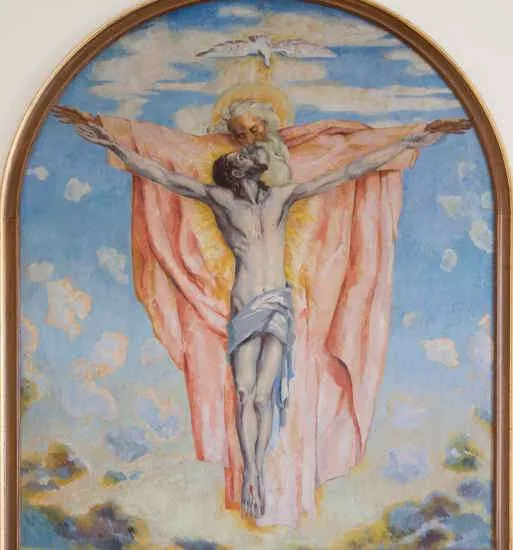
It was not only the Eternal Son Who was present at that baptism of repentance, but the Father and the Holy Spirit as well. The Spirit descended upon Jesus in the form of a dove, and the Father’s Voice spoke to acknowledge His oneness with His Son. Therefore, every time we make a humble act of repentance, such as when we combine the crucifixion, the Trinity, and holy water upon entering a church and blessing ourselves, we not only meet our Lord but also receive the outpouring of the Holy Spirit and share more fully in our adoption as sons and daughters of the Father in Heaven.

As we commemorate Jesus’ baptism liturgically, we celebrate the fact that our Christian baptism was the beginning of this new unity with the Holy Trinity. But we also celebrate our oneness with God, which is renewed every time we make an interior act of repentance for our sins. If we fully understood what happens every time we acknowledge our sins and repent of them, we would never grow tired of repenting. Every time we acknowledge and repent of our sin, we meet Christ anew, receive a greater outpouring of the Holy Spirit, and affirm and deepen our adoption by the Father in Heaven.

Source: https://mycatholic.life/saints/saints-of-the-liturgical-year/baptism-of-the-lord-feast/

Baptism of the Lord Read More »

Matthew 3:13-15

An Indelible Spiritual Mark

Jesus came from Galilee to John at the Jordan to be baptized by him. John tried to prevent him, saying, “I need to be baptized by you, and yet you are coming to me?” Jesus said to him in reply, “Allow it now, for thus it is fitting for us to fulfill all righteousness.” Then he allowed him. 

Reflection:

John the Baptist was the last of the Old Testament prophets, entrusted with the mission to immediately prepare the way for the Messiah. Today’s feast marks a pivotal transition from the Old Law to the New. Prior to Jesus’ baptism, John’s mission was in full motion. With Jesus’ baptism, the mission of the Old Testament prophets is fulfilled, and the New Law of grace begins.

Why did Jesus enter the waters of baptism? He was sinless and had no need of repentance. Yet, in His divine wisdom, Jesus chose to be baptized to sanctify the waters, opening the gateway of grace for all who would follow. By entering the waters of baptism, Jesus set a precedent. Every Christian who enters the waters of baptism meets our Lord there, sharing in His life of grace.

As we reflect on Christ’s baptism today, we are invited to consider our own. Most of us were baptized as infants and have no memory of the event. Others came to baptism later in life, fully aware of the grace they were receiving. Regardless of when it occurred, baptism’s effects are profound and enduring. That singular moment of sanctification forever changed us, and its transformative power remains active within us.

Through baptism, Jesus meets us under the waters. When baptism is performed by full immersion, it powerfully symbolizes the reality of this encounter. We enter the waters of repentance, as John offered, but we emerge united with Christ. Just as the Father’s voice declared at Jesus’ baptism, “You are my beloved Son…,” so too does the Father continually speak to us after our baptism, affirming our identity as His beloved children. The Holy Spirit descends upon us, and we are offered every gift of the Spirit, provided our hearts remain open.

Baptism occurs only once in our lives and imprints on our souls an “indelible spiritual mark (character)” (see Catechism of the Catholic Church #1272 and 1274). This mark configures us to Christ and signifies our permanent belonging to Him and His Church. It cannot be lost or removed, even by mortal sin. However, while this character endures forever, the state of sanctifying grace within our souls can be lost through mortal sin. In such cases, the grace of baptism is restored through the Sacrament of Reconciliation in which our souls are once again cleansed and brought back into full communion with God. Marked as members of Christ’s Body, we are continually disposed to receive sanctifying grace through the other sacraments, as long as we remain in a state of grace. Baptism accomplishes this disposition, enabling us to participate fully in the life of grace that flows from Christ.

As we celebrate the Feast of the Baptism of the Lord, reflect today on your own baptism. You are forever marked as a child of God. You encountered our Lord under the waters of baptism, were cleansed of all sin, and were filled with sanctifying grace. Though sin diminishes or even extinguishes that grace when it is mortal, the Sacrament of Reconciliation restores it, and the Eucharist and other sacraments increase it. Always return to your baptismal grace, seeking to live out your identity as God’s son or daughter, as this sacred mark intends.

Source: https://catholic-daily-reflections.com/2026/01/10/an-indelible-spiritual-mark/

Matthew 3:13-15 Read More »

Saint Francisca Salesia

Profile

Francisca was the daughter of Theodore Aviat, a shopkeeper, and Emilie Caillot. She was baptized on 17 September 1844 and confirmed on 2 July 1856. She was educated at the Visitation School in Troyes, France from age eleven to sixteen. With Father Louis Brisson and Mother Marie Therese de Sales Chappuis, she founded the Sister Oblates of Saint Francis de Sales in Troyes, dedicated to helping young women who poured into the cities during the Industrial Revolution. She took the Salesian Rule for the congregation. She entered religious life on 11 April 1866, took the veil on 30 October 1868, taking the name Sister Frances de Sales, and made her final vows on 11 October 1871. She was superior of the Institute in 1872. She opened homes and schools for working class girls. She was exiled from France on 11 April 1904 due to religious persecution and anti-religious legislation. She rebuilt her congregation from Perugia, Italy, and the Order was approved by Pope Saint Pius X in 1911.

Born

  • 16 September 1844 at Sezanne, France as Leonia Aviat

Died

  • 10 January 1914 at Perugia, Italy of natural causes

Venerated

  • 1 December 1978 by Pope John Paul II

Beatified

  • 27 September 1992 by Pope John Paul II

Canonized

  • 25 November 2001 by Pope John Paul II
    her canonization miracle involved the healing of the paralyzing spinal disease of a 14 year old girl from Philadelphia, Pennsylvania

Source: https://mycatholic.life/saints/saints-of-the-liturgical-year/#TOC-January

Saint Francisca Salesia Read More »

John 3:26-30

He Must Increase in Your Soul

“Rabbi, the one who was with you across the Jordan, to whom you testified, here he is baptizing and everyone is coming to him.” John answered and said, “No one can receive anything except what has been given from heaven. You yourselves can testify that I said that I am not the Christ, but that I was sent before him. The one who has the bride is the bridegroom; the best man, who stands and listens for him, rejoices greatly at the bridegroom’s voice. So this joy of mine has been made complete. He must increase; I must decrease.”

Reflection:

John the Baptist’s words are filled with humility and truth. Imagine the scene. John had acquired quite a following. His ministry was flourishing, and many people were coming to him to receive his baptism of repentance. Then, suddenly, Jesus appeared and began to gather His own followers, including some of John’s disciples.

Human weakness and sin led some of John’s remaining disciples to feel envious and jealous as Jesus’ ministry grew. They perceived Jesus’ success as surpassing their own, leading them to desire what Jesus and His disciples had and feel discontented with their own circumstances. They were also jealous of the potential loss of their status within what seemed to be John’s diminishing ministry.

John, however, felt no envy or jealousy. He rejoiced greatly at Jesus’ arrival because he knew that his ministry existed solely to point people to Jesus. The fulfillment of John’s ministry was, in fact, its completion, as it gave way to the establishment and growth of Jesus’ ministry. His final words to his disciples must continuously echo within our own minds and hearts: “He must increase; I must decrease.”

We can apply John’s humble words to our own souls by acknowledging that every good thing in our lives is a gift from God, not the result of our own efforts. For this reason, God’s influence in our lives must increase while our control decreases. This is humbling because the closer we become united to Christ, the less we can take credit for our own actions. If God uses us, He deserves the glory, not us. Envy may tempt us to take credit for our own goodness and to feel discontent when others do not praise us. Jealousy may tempt us to hold on to self-righteousness, honors, and spiritual consolations when we are called to live more sacrificially and selflessly.

Like John, as our Lord increases within us, exercising His sacred ministry within our souls, we must see ourselves as the best man at a wedding, rejoicing that the Groom has arrived, and pointing only to Him, rather than to ourselves. Just as John’s mission was to prepare the way for Christ and then step aside, our efforts at conversion and repentance should culminate in Christ taking over. We must become His Body: His hands, His feet, and His heart. He must take over, and our will must become His will; our charity, His charity; our lives, His life. With Saint Paul, we must long for the day when we can cry out, “I have been crucified with Christ; it is no longer I who live, but Christ who lives in me…” (Galatians 2:20).

Reflect today on the conclusion of John’s ministry as the beginning of Jesus’ ministry. See John’s decrease and Christ’s increase as a model for your own soul. Consider all the effort you have put into repenting, turning from sin, and turning to God. See that effort as preparation for Jesus to take over. Let Him take over, and give Him all the credit and glory. Pray that He increases in your life to the point that it is no longer you who lives, but Christ Who lives in you.

Source: https://catholic-daily-reflections.com/2026/01/09/he-must-increase-in-your-soul/

John 3:26-30 Read More »

Black Nazarene

Profile

The Black Nazarene is a blackened, life-sized wooden icon of Jesus Christ carrying a cross. It was constructed in Mexico in the early 17th century by an Aztec carpenter. Spanish Augustinian Recollect friar missionaries to Manila, Philippines originally brought the icon to Manila in 1606. The transport ship caught fire, burning the icon, but the locals kept the charred statue. Miracles, especially healings, have been reported in its presence. The church in which it stood burned down around it in 1791 and 1929, was destroyed by earthquakes in 1645 and 1863, and was damaged during bombing in 1945. It used to be carried through the streets every January, and Christians would rub cloths on it to make healing relics, but centuries of this treatment have left the statue in bad shape, and since 1998 a replica is paraded at the feast day celebrations. In 1650, Pope Innocent X issued a papal bull which canonically established the Cofradia de Jesús Nazareno to encourage devotion; in the 19th century Pope Pius VII granted indulgences to those who piously pray before the image.

Patronage

  • Quiapo, Philippines

Source: https://catholicsaints.info/black-nazarene/

Black Nazarene Read More »