2026

Mark 6:4-6

Does Familiarity Breed Contempt?

Jesus said to them, “A prophet is not without honor except in his native place and among his own kin and in his own house.” So he was not able to perform any mighty deed there, apart from curing a few sick people by laying his hands on them. He was amazed at their lack of faith.

Reflection:

It’s an old expression that “familiarity breeds contempt.” It is often easier to harbor contempt for those closest to us than to offer admiration. This dynamic frequently manifests itself among relatives, neighbors, and friends. The “contempt” might remain subtle, without clear outward expression. Yet, when those close to us are honored, it is often easier to call to mind their faults than to join in their praise. These feelings, if left unchecked, not only harm human relationships but also blinds us to the workings of grace in those closest to us.

Today’s Gospel tells the story of Jesus returning to His hometown of Nazareth after beginning His public ministry. Soon after He was baptized and emerged from the desert, Jesus began gathering disciples, preaching authoritatively, and performing miracles. Though His ministry began in Capernaum, about twenty miles northeast of Nazareth, word spread quickly about Him, leaving the people of Nazareth uncertain about what to think.

When Jesus returned to Nazareth for the first time, He entered the Synagogue and read from the Prophet Isaiah, declaring that the “Spirit of the Lord” was upon Him (cf. Luke 4:18). Mark’s version of the event, which we read today, tells us that “many who heard him were astonished.” They asked one another, “‘Is he not the carpenter, the son of Mary…?’ And they took offense at him” (Mark 6:2–3).

Their refusal to believe stemmed not from Jesus but from their inability to reconcile the Jesus they thought they knew—a carpenter, a local boy—with the Jesus who now spoke with divine wisdom and authority. The reaction of the people of Nazareth reveals the danger of clinging to preconceived notions about others, which blinds us to God’s presence in the ordinary.

When you consider the people with whom you are familiar, do you exhibit a similar tendency? Do you struggle to recognize Christ at work in family members, friends, or even within yourself? Familiarity can make us dismissive, but it also invites us to look more deeply for the divine, even in what appears humble and mundane. We must approach everyone we know with eyes of faith, searching for the presence of Christ, despite their weaknesses and sins. As Jesus reminds us, “Seek and you will find” (Matthew 7:7). This exhortation extends to seeking Christ in the people around us, especially those closest to us.

This can be difficult. We are often tempted to focus on faults rather than goodness in others. The tendency is well illustrated in social media. Sensational and shocking posts draw our attention far more than uplifting and inspiring ones. This reveals the fallen human inclination, much like the people of Nazareth, to reject goodness and the deeper truth we are called to see. We often want others to fail as a way of feeling better about ourselves. Among the people of Nazareth, despite Jesus’ perfection, those who knew Him allowed their preconceived judgments to blind them, leading to their rejection of Him as the Messiah. This reaction challenges us to examine our own hearts. How often do we fail to recognize Christ’s presence in those closest to us?

Reflect today on those closest to you and ponder how easily you seek and find Christ in them. Everyone you know—including yourself—is a sinner. It’s easy to find fault and dwell on it, even sometimes when there is no fault to be found—such as with Jesus at Nazareth. Prayerfully reject that fallen human tendency and embrace the mission of seeking Christ in others, for “the one who seeks, finds.” Seek Jesus everywhere and celebrate the Good News of His ongoing presence in our world, especially in the lives of those with whom you are most familiar.

Source: https://catholic-daily-reflections.com/2026/02/03/does-familiarity-breed-contempt/

Mark 6:4-6 Read More »

Saint Blaise, Bishop and Martyr

Died c. 316; Patron Saint of illnesses of the throat and other illnesses, wool workers, animals, bricklayers, bakers, farm workers; Pre-Congregation canonization

From 1346 to 1353, a bubonic plague commonly referred to as “Black Death” ravaged Europe, Asia, and North Africa. It was the most deadly pandemic in human history, with conservative estimates of its deadly toll reaching higher than 25 million people. Almost half of the people in Europe died in this pandemic. During that plague, many Catholics prayed fervently. Out of that chaos, a new devotion to the “Fourteen Holy Helpers” emerged. Those holy helpers were fourteen saints who were believed to be powerful intercessors, especially to cure illness. Among those fourteen is today’s saint.

Very little is known about Saint Blaise. The earliest mention of his life was not written until about 200 years after his death, by the medical writer Aëtius Amidenus, who spoke of the intercessory power of Saint Blaise to help unlodge objects stuck in the throat. The slightly more detailed Acts of Saint Blaise was written about 400 years after his death. Whether or not the stories written of him are true, what is certain is that the faithful have devoutly sought his intercession for centuries, and that practice continues today in the form of the blessing of throats on his feast day.

Legend has it that Blaise was an excellent physician in his hometown of Sebaste, Armenia, modern-day Silvas, Turkey. As a youth, he studied many of the great philosophers. When the Bishop of Sebaste died, Blaise was chosen as the new bishop by the popular acclaim “of all the people.” He was said to be a man of great faith and virtue, caring for his people in both body and soul. Many came to him for physical healing as a physician but also received many miracles. Many others came to him for spiritual healing, which was imparted by his deep faith. According to that same legend, even animals would listen to him and obey his commands, and he would heal them of ailments.

In the year 313, the co-ruling Roman Emperors, Constantine I and Licinius, jointly issued the Edict of Milan which established religious toleration throughout the Roman Empire. However, the Acts of Saint Blaise states that in 316, the Governor of Cappadocia, acting on an order by Licinius, began to arrest and kill Christians. Bishop Blaise is reported to have been among those arrested.

While on Blaise’s way to jail, the legend continues that a boy was choking on a fishbone, and the boy’s mother sent her son to Blaise for his prayers. Bishop Blaise miraculously cured him on the spot. Another story relates that on that journey to jail, a woman begged him to save her pig who had been seized by a wolf. Bishop Blaise ordered the wolf to release the pig and the wolf obeyed. Out of gratitude, the woman brought Blaise two wax candles to give light to his prison cell.

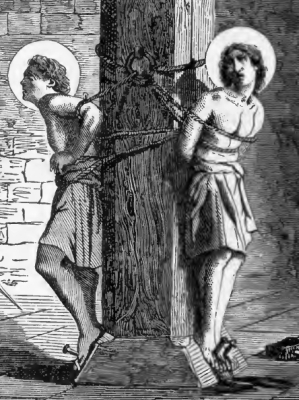
Despite these miracles, the governor insisted that Bishop Blaise renounce his Christian faith, which Blaise refused to do. Therefore, at the governor’s order, Blaise was ripped apart by metal combs used to comb wool and then beheaded.

Today, Saint Blaise is the patron saint of wool combers because of the legend of his torture and death by the metal combs. He is patron saint of animals because of his alleged authority over them. He is the patron saint of diseases of the throat and other illnesses because of the story that he healed the boy with a fishbone stuck in his throat, was a physician, and miraculously healed many others of their ailments. Two wax candles are used to bless throats today because of the legend of the candles brought to him in jail by the grateful woman.

As we reflect upon these stories that have been passed down through the years, perhaps the most important story to reflect upon is the story of faith that so many people have had for many centuries in the intercession of Saint Blaise. From the people who might have sought his prayers at the time of his ministry, to those who sought his intercession during the Black Death centuries ago, to the priestly blessings today at Mass using candles to bless throats, God has used Saint Blaise in ways that he could have never foretold. This should reassure us that God wants us to turn to the intercession of the saints in our time of need. Though God is fully capable of directly answering our prayers, He often chooses to use the mediation of others to impart His grace. Reflect upon your own devotion to Saint Blaise and all the saints. Seek out your special patron. Entrust your prayers to him or her and know that when you do, your patron offers you and your needs to God.

Source: https://mycatholic.life/saints/saints-of-the-liturgical-year/february-3-saint-blase-bishop-and-martyr/

Saint Blaise, Bishop and Martyr Read More »

Mark 5:25-29

Hope in the Face of Suffering

There was a woman afflicted with hemorrhages for twelve years. She had suffered greatly at the hands of many doctors and had spent all that she had. Yet she was not helped but only grew worse. She had heard about Jesus and came up behind him in the crowd and touched his cloak. She said, “If I but touch his clothes, I shall be cured.” Immediately her flow of blood dried up.

Reflection:

According to Jewish law, the condition from which this woman suffered rendered her ritually unclean, which excluded her from both religious and social life, causing her to endure not only physical suffering but also psychological and emotional isolation (cf. Leviticus 15:25–27). This isolation, while difficult, reflected the Mosaic Law’s intent to teach Israel about the holiness of God and the need for purification to approach Him.

Her condition symbolically reflects the spiritual affliction of sin—an incurable state that separates humanity from God and others. By permitting her suffering, God prepared the way for His glory to be revealed through her healing. Her humble yet bold act of faith—reaching out to touch the cloak of Christ—teaches us to trust in God’s power and mercy. Her suffering was permitted, not as punishment, but as an opportunity for God to manifest His saving power. Through her faith, she not only received physical healing, but also restoration to her community and a share in God’s glory.

This Gospel invites us to see ourselves in this woman. Spiritually speaking, her condition mirrors our state when burdened by sin, which causes an interior isolation and separates us from God’s family. Sin ultimately leaves us dissatisfied and alienated. Like the woman’s healing, our restoration requires a humble act of faith, reaching out to Christ in the sacraments, where His grace heals and restores us.

Beyond sin, we all face various afflictions—physical, emotional, or relational—that can weigh us down. In these moments, it is natural to seek immediate relief. Yet this Gospel reminds us that God’s plan for our lives often includes permitting suffering for a time to bring about a greater good. The woman’s twelve years of affliction were not in vain; they became the means through which God revealed His glory and brought her into deeper communion with Him. Similarly, our sufferings—whether caused by sin, physical ailments, or rejection—are opportunities for God to manifest His saving power, if we approach Him with trust and humility.

Believing these truths can indeed be difficult, especially when we are in the midst of suffering. In such moments, we must rely on the gift of supernatural hope, which is borne of grace and sustains us when human strength falters. Hope is rooted in the certitude of faith, and faith opens our hearts to truths that transcend the limitations of human reason (cf. Hebrews 11:1). This humble woman exemplifies both faith and hope in the face of suffering. Her unwavering belief in Jesus’ power to heal not only inspired her to hope but also moved her to act. Her hope compelled her to reach out and touch His garment, trusting that even the slightest connection to Christ could bring her healing. By this simple yet profound act of faith, she received far more than physical healing—she encountered the transformative power of God’s mercy and love, which restored her fully and brought her into deeper communion with Him.

Reflect today on the example of this holy and humble woman. Her act of faith inspires us to approach Christ with humble confidence, especially in moments of suffering and need. Like her, we are called to humble ourselves, reach out to Jesus in prayer, and trust in His power to spiritually heal and restore. In the sacraments, particularly Reconciliation and the Eucharist, we touch the hem of Christ’s garment and encounter the transformative power of His mercy. Pray for the grace to trust in God’s providence, knowing that He lovingly permits even our trials to lead us to deeper communion with Him and to reveal His glory in our lives.

Source: https://catholic-daily-reflections.com/2026/02/02/hope-in-the-face-of-suffering/

Mark 5:25-29 Read More »

Presentation of the Lord

Mary and Joseph were faithful Jews who obeyed the Law of Moses. Jewish Law prescribed that two ritual acts needed to take place for a firstborn son. First, the mother of a newborn son was ritually unclean for seven days, and then she was to “spend thirty-three more days in a state of blood purity” (Leviticus 12:2–8). During these forty days she was not to “touch anything sacred nor enter the sanctuary till the days of her purification are fulfilled.” For this reason, today’s feast has at times been called the “Purification of Mary.” Second, the father of the firstborn son was to “redeem” the child by making an offering to the priest of five shekels so that the priest would then present the child to the Lord (see Numbers 18:16). Recall that the firstborn male of all the Egyptians, animals and children, was killed during the tenth plague, but the firstborn males of the Israelites were spared. Thus, this offering made for the firstborn son in the Temple was a way of ritually redeeming him in commemoration of protection during that plague. Since Jesus was presented in the Temple for this redemption, today’s feast is now referred to as the “Presentation in the Temple.”

“Candlemass” is also a traditional name given to today’s feast because as early as the fifth century, the custom of celebrating this feast with lighted candles had developed. The lit candles symbolized Simeon’s prophecy that Jesus would be “a light for revelation to the Gentiles.” Lastly, this Feast has been referred to as the “Feast of the Holy Encounter” because God, in the Person of Jesus, encountered Simeon and Anna in the Temple.

Today’s feast is celebrated in our Church forty days after Christmas, marking the day that Mary and Joseph would have brought Jesus into the Temple. Though Mary was pure and free from sin from the moment of her conception, and though the Son of God did not need to be redeemed, Mary and Joseph fulfilled these ritual obligations.

At the heart of this celebration is the encounter of Simeon and Anna with the Christ Child in the Temple. It is in that holy encounter that Jesus’ divinity is manifested by a human prophet for the first time. At His birth, the angels proclaimed His divinity to the shepherds, but in the Temple, Simeon was the first to understand and proclaim Jesus as the Savior of the World. He also prophesied that this salvation would be accomplished by a sword of sorrow that would pierce the Immaculate Heart of Mary. Anna, a prophetess, also came forward and “gave thanks to God and spoke about the child to all who were awaiting the redemption of Jerusalem” (Luke 2:38). Thus, these ritual acts were also a moment in which Jesus’ divine mission was made manifest to the world.

As we celebrate Mary’s ritual purification and Jesus’ ritual redemption, we should see them as acts in which we are called to participate. First, each of us is unworthy of entering the true Temple of the Lord in Heaven. Yet we are invited to enter that Temple in union with Mary, our Blessed Mother. It was her consent to the will of God that opened the door of God’s grace to us all, enabling us to spiritually become Jesus’ “mother” by allowing Him to be born in our hearts by grace. With her, we are now able to appear before God, purified and holy in His sight.

We must also see Saint Joseph redeeming us as he presented Jesus in the Temple. In offering Christ Jesus to the priest to offer Him to the Father, Saint Joseph also presents all who strive to live in union with Jesus. The hope is that, like Simeon and Anna, others will see God alive within us and experience the Savior of the World through us.

Ponder, today, your soul being the new temple of the Lord, and acknowledge your need to be purified and offered to the Father in Heaven. As Christ continues to enter into the temple of your soul, pray that He will shine forth for others to see so that, like Simeon and Anna, they will encounter our Lord within you.

Source: https://mycatholic.life/saints/saints-of-the-liturgical-year/february-2-presentation-of-the-lord-feast/

Presentation of the Lord Read More »

Luke 2:22-24

Humility Leads to Glory

When the days were completed for their purification according to the law of Moses, Mary and Joseph took Jesus up to Jerusalem to present him to the Lord, just as it is written in the law of the Lord, “Every male that opens the womb shall be consecrated to the Lord,” and to offer the sacrifice of “a pair of turtledoves or two young pigeons,” in accordance with the dictate in the law of the Lord.

Reflection:

The Presentation of the Lord reveals two beautiful paradoxes: the purification of the Blessed Virgin Mary and the ritual redemption of Jesus, her firstborn Son. Both actions follow the Law of Moses, yet each unveils a deeper mystery about Christ and His Mother, offering us a mystery to enter and an example to follow.

First, we ponder the Blessed Virgin Mary’s purification. The Law stated that a woman who gave birth to a son needed ritual purification (cf. Leviticus 12). Yet Mary, being immaculately conceived and preserved entirely from all stain of sin, had no need for purification. Nevertheless, she fulfilled the Law, setting before us a model of perfect humility and obedience. Knowing her own interior purity, she could have objected, but she did not, because she valued obedience to God’s law above her own justification. She teaches us that true holiness embraces humble submission over self-assertion. Humility, in its beauty and holiness, always conquers pride’s selfishness and self-elevation. Our Blessed Mother knew and lived that.

The second paradox is found in Jesus’ presentation. The Law required every firstborn son to be presented to the Lord and redeemed in remembrance of the Passover (cf. Exodus 13; Numbers 3 and 18). Yet Jesus is the eternal Son of God, the true High Priest and Spotless Lamb who takes away the sins of the world. He needed no redemption, for He is God Himself. Still, Christ was presented in the Temple so that we might be presented with Him to the Father. In His humility, He united Himself to our human nature—without sin—so that we might be truly consecrated to God through Him. Again, virtue wins out, as Christ invites us to share in His humility.

The Presentation also foreshadows the other ways Jesus would redeem us through His human life. In His Baptism, though sinless, He submits to a rite of repentance so we might be sanctified through baptism ourselves. In His Passion, though innocent, He suffers for us, paying our debt—a debt we must humbly admit that we cannot repay on our own. In His Resurrection, His humility is crowned with eternal glory, opening the way for us to share in His divine life—if we humble ourselves with Him.

Like our Blessed Mother, we are called to submit obediently to God’s will, rejecting the pride that tempts us to think we are above certain duties or sacrifices. True holiness embraces sacrifice freely out of love, rather than seeking exemption from it. Even undeserved hardships bear fruit when endured with Christ. True holiness also perceives the beauty of joyful obedience to God’s will, rather than asserting our own.

Like Jesus, we are called to offer ourselves completely to the Father. As Jesus was ritually offered in the Temple, we must see ourselves in that offering. He was offered for us. By uniting ourselves with Him in His humility, we are redeemed through His offering to the Father. We become children in the Son, received by the Father who accepted Christ’s perfect offering. In Him, our offering becomes perfect, and we find our eternal home with the Father.

Reflect today on the hidden ways God invites you to imitate these paradoxes. Are there areas where you resist humble obedience, preferring your own will over God’s? Are there sacrifices you are tempted to avoid, forgetting that true love embraces the Cross? Offer yourself to the Father with Mary’s obedience and Christ’s perfect humility so that your life, like theirs, may become a pure offering of love.

Source: https://catholic-daily-reflections.com/2026/02/01/humility-leads-to-glory/

Luke 2:22-24 Read More »

Saint Francis de Sales, Bishop and Doctor

1567–1622; Patron Saint of authors, journalists, writers, deaf persons, educators; Canonized April 8, 1665, by Pope Alexander VII; Declared a Doctor of the Church in 1877 by Pope Pius IX

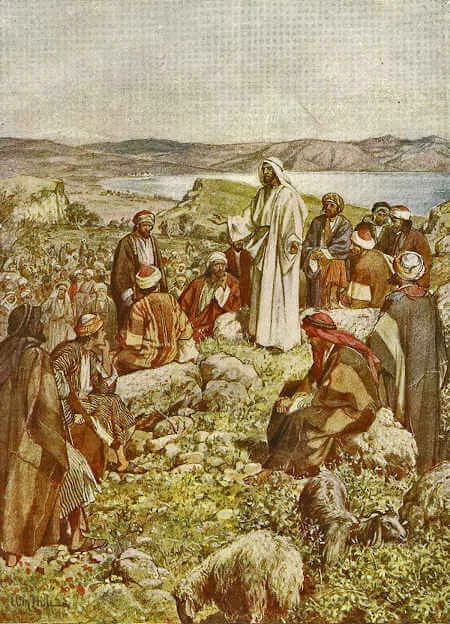
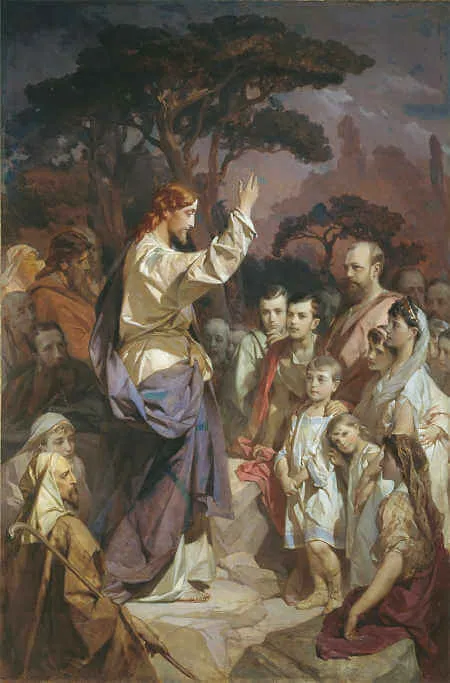
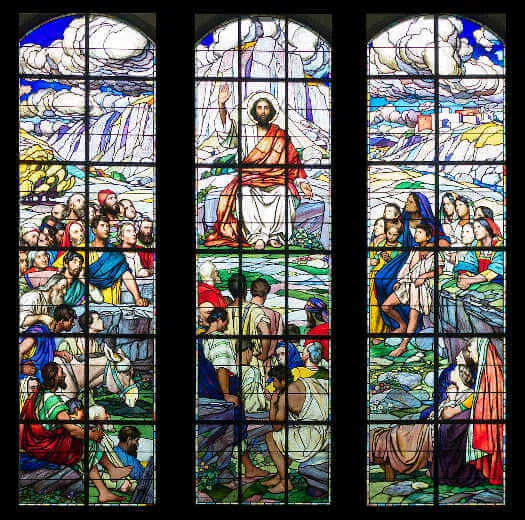
When Jesus saw the crowds, he went up the mountain, and after he had sat down, his disciples came to him. He began to teach them, saying: “Blessed are the poor in spirit, for theirs is the kingdom of heaven.

Reflection:

The Beatitudes call us to the heights of morality and holiness. Those who live according to these divine precepts are blessed beyond measure. The promises to those who live this high calling are great: They become children of God and inherit the Kingdom of Heaven. Furthermore, they receive comfort, satisfaction, mercy, purity, and peace. Though the rewards are great, so are the requirements: spiritual poverty, holy sorrow, meekness, longing for righteousness, a merciful heart, purity, peacemaking, and patient endurance during persecution.

The Beatitudes reveal the culmination of God’s moral teaching and the highest revelation of the Christian life. To fully appreciate their significance, it is helpful to understand the history of moral revelation. Doing so is more than a history lesson on God’s deepening revelation, it also reveals the path for our spiritual journey toward perfection.

Morality begins with the Natural Law—the innate understanding of right and wrong written on the human heart. This Law is from God and is often described as living in accord with right reason or common sense. All people have access to this moral law within their own consciences, enabling them to recognize God as the Creator, honor Him, respect human dignity and the common good, and refrain from acts such as murder, theft, and deception. Though universally present in all people, sin and our fallen human nature cloud our ability to clearly see and follow that law.

In the Old Testament, God slowly revealed Himself and called His people to greater holiness and moral living by adding to the Natural Law through revelation. From Abraham and his descendants, God raised up Moses through whom He revealed the Ten Commandments—a concise moral code rooted in Natural Law but explicitly revealed by God that called His chosen people to right worship, justice, and love for one’s neighbor.

Through the prophets—such as Isaiah, Jeremiah, and Ezekiel—God called Israel to move beyond mere external observance of the law to an interior conversion of heart. Isaiah emphasized the virtues of justice and mercy, Jeremiah prophesied a new covenant in which God’s law would be written on the hearts of His people, and Ezekiel promised that God would give His people a new heart and a new spirit, enabling them to follow His statutes.

The wisdom literature—Psalms, Proverbs, Ecclesiastes, Wisdom, Sirach—deepened the understanding of moral life by revealing moral gifts, such as the Fear of the Lord, the blessedness of righteousness, and the call to trust in God’s providence and live a virtuous life.

The Beatitudes elevate all laws of the Old Covenant. Jesus not only calls us to profound holiness, He also provides the means to achieve it through His Sacrifice, transmitted through the grace of the Sacraments. To live the Beatitudes is to live in imitation of Christ, who perfectly embodied all virtues in His life, Passion, and Resurrection. Hence, the Beatitudes are not only a moral code we must follow, they are a participation in and union with the Son of God, Who lived the Beatitudes to perfection.

Saint Francis de Sales was born fifty years after an Augustinian priest named Father Martin Luther ignited the Protestant Reformation, and just twenty-five years after John Calvin’s anti-Catholic teachings spread to Geneva, Switzerland. Francis was born into a noble family in the Duchy of Savoy, modern-day France, not far from Geneva. Because of his noble family heritage and his father’s influence, Francis was given an excellent education, eventually earning doctorates in civil law and theology. His father had selected a noblewoman for Francis to marry. He also had planned for his gifted son to enter into politics, but Francis was led in a different direction.

In 1586, at the age of nineteen, Francis attended a Calvinist lecture on predestination, which led him to believe he was destined for hell. This greatly affected him, and he struggled with the idea for months. Eventually, through the intercession of our Blessed Mother and the Memorare prayer, Francis was freed from this error and turned his focus to the pure love of God. After experiencing firsthand the effects that erroneous theology can have on a person, Francis devoted himself to a life of celibacy and began pursuing his God-given desire to be a priest. Though reluctant at first, his father eventually agreed to his son’s ordination and then helped to have him appointed to an important position in the Diocese of Geneva.

Because Geneva was under the control of the Calvinists, Father de Sales preached and resided in a cathedral some twenty miles south of Geneva. As a newly ordained priest, he began to make a name for himself. His sermons were preached with gentlemanlike qualities, showing great respect for those who disagreed with him. He never shied away from the theological truths under attack by the errors of the Reformation. He avoided controversy and criticism, focusing instead on virtues, prayer, holiness, and overcoming sin. Despite his kind nature and charitable approach, he was harshly treated by the many local anti-Catholics, some of whom even threatened his life.

In 1602, at the age of thirty-five, Father de Sales was ordained Bishop of Geneva, and his evangelical fervor moved ahead at full throttle. His intention was to win back the citizens of Geneva to the Catholic Church. So many had left, following the teachings of Calvin. For the first couple of years, Bishop de Sales was ineffective in winning over many converts. But little by little, one soul at a time, he began to have success. His success especially came in the form of placing written explanations of the faith under people’s doors, inviting them back to the Catholic Church. His preaching was clear, respectful, truthful, and charitable. His motto was “He who preaches with love, preaches effectively.”

Bishop de Sales was a very practical man, especially when it came to his theology. He believed that holiness was not reserved for those in the monastery or convent. He believed that everyone, in every state in life, within every occupation, was called to a life of sanctity. This conviction is most clearly seen in his most famous published book, Introduction to the Devout Life. This book was a compilation of letters he had sent to his spiritual directees over the years, which began by giving clear and practical advice on the importance of being purged of sin and of attachment to sinful habits. It then taught how to grow in the virtues, especially humility; navigate temptations; and overcome anxiety and sadness. It also provided exercises on how to renew one’s life of devotion, which was nothing other than loving and pleasing God with one’s life. This book, along with other writings, won many to the faith. In 1610, he assisted one of his spiritual directees, the future Saint Jane de Chantal, to establish the women’s Order of the Visitation of Holy Mary. His inspiring letters to her became a source of spiritual formation for the women of her newly founded order.

After turning down advancements within the Church, Bishop de Sales chose instead to devote his time and energy to the salvation of souls within his local diocese. It is said that Bishop de Sales won back as many as 40,000 Catholics who had become Calvinists. After nine years as a priest and twenty years as a bishop, Bishop de Sales suffered a stroke and died soon after. It is believed that one of the last things he wrote were the words “Humility, humility, humility,” his dying exhortation to his flock.

As we honor this holy bishop, try to imagine what it would have been like had he been your shepherd. He would have taken your call to holiness seriously. He would have exhorted you to overcome sin by fully confessing your sins in the Sacrament, and to then grow in virtue, especially humility. He would have helped you to learn and believe every truth revealed by God through His Catholic Church, and to seek every practical way imaginable by daily prayer and meditation to become a saint. He would have regularly reminded you that holiness is not reserved for the monk alone. You, within the context of your state in life, are also called. Respond as one of his flock and resolutely determine to follow the path God has in store for you, seeking to love Him and glorify Him with your life.

Source: https://mycatholic.life/saints/saints-of-the-liturgical-year/january-24-saint-francis-de-sales-bishop-and-doctor/

Saint Francis de Sales, Bishop and Doctor Read More »

Matthew 5:1-3

The Call to Beatitude

When Jesus saw the crowds, he went up the mountain, and after he had sat down, his disciples came to him. He began to teach them, saying: “Blessed are the poor in spirit, for theirs is the kingdom of heaven.”

Reflection:

The Beatitudes call us to the heights of morality and holiness. Those who live according to these divine precepts are blessed beyond measure. The promises to those who live this high calling are great: They become children of God and inherit the Kingdom of Heaven. Furthermore, they receive comfort, satisfaction, mercy, purity, and peace. Though the rewards are great, so are the requirements: spiritual poverty, holy sorrow, meekness, longing for righteousness, a merciful heart, purity, peacemaking, and patient endurance during persecution.

The Beatitudes reveal the culmination of God’s moral teaching and the highest revelation of the Christian life. To fully appreciate their significance, it is helpful to understand the history of moral revelation. Doing so is more than a history lesson on God’s deepening revelation, it also reveals the path for our spiritual journey toward perfection.

Morality begins with the Natural Law—the innate understanding of right and wrong written on the human heart. This Law is from God and is often described as living in accord with right reason or common sense. All people have access to this moral law within their own consciences, enabling them to recognize God as the Creator, honor Him, respect human dignity and the common good, and refrain from acts such as murder, theft, and deception. Though universally present in all people, sin and our fallen human nature cloud our ability to clearly see and follow that law.

In the Old Testament, God slowly revealed Himself and called His people to greater holiness and moral living by adding to the Natural Law through revelation. From Abraham and his descendants, God raised up Moses through whom He revealed the Ten Commandments—a concise moral code rooted in Natural Law but explicitly revealed by God that called His chosen people to right worship, justice, and love for one’s neighbor.

Through the prophets—such as Isaiah, Jeremiah, and Ezekiel—God called Israel to move beyond mere external observance of the law to an interior conversion of heart. Isaiah emphasized the virtues of justice and mercy, Jeremiah prophesied a new covenant in which God’s law would be written on the hearts of His people, and Ezekiel promised that God would give His people a new heart and a new spirit, enabling them to follow His statutes.

The wisdom literature—Psalms, Proverbs, Ecclesiastes, Wisdom, Sirach—deepened the understanding of moral life by revealing moral gifts, such as the Fear of the Lord, the blessedness of righteousness, and the call to trust in God’s providence and live a virtuous life.

The Beatitudes elevate all laws of the Old Covenant. Jesus not only calls us to profound holiness, He also provides the means to achieve it through His Sacrifice, transmitted through the grace of the Sacraments. To live the Beatitudes is to live in imitation of Christ, who perfectly embodied all virtues in His life, Passion, and Resurrection. Hence, the Beatitudes are not only a moral code we must follow, they are a participation in and union with the Son of God, Who lived the Beatitudes to perfection.

As we ponder the Beatitudes, reflect today on their high and glorious calling, as well as their rewards. Sometimes, reading the Beatitudes can leave us discouraged, as we are aware of how far we are away from perfecting them. Dispel discouragement and know that these new divine precepts are attainable by grace. Set your eyes on the heights of perfection and open yourself to the abundant grace offered. Doing so will not only result in glorious spiritual rewards in this life, it will also result in the greatest eternal rewards in Heaven.

Source: https://catholic-daily-reflections.com/2026/01/31/the-call-to-beatitude/

Matthew 5:1-3 Read More »

Saint John Bosco, Priest

1815–1888; Patron Saint of apprentices, boys, editors, laborers, magicians, students; Canonized by Pope Pius XI on April 1, 1934

The youngest of three sons, John Bosco was born into a poor family in northwest Italy in the rural hamlet of Becchi. His father, a farmhand for a neighboring family, died when John was only two. His mother continued to raise her sons with much love and affection.

Until the age of twelve, John spent most of his time trying to support the family by working as a shepherd and farmhand like his father. His family’s poverty made it difficult for him to obtain a good education. His learning came from his lived experience, homelife, and the sermons at church that he listened to attentively.

At the age of nine, John had the first of many dreams that would greatly influence him. In his dream, he came across a group of rough boys who were talking and cursing. John became angry with them and raised his fists to threaten them for their cursing. Suddenly, a man appeared in his dream who was radiant like the sun. The man said to John, “Conquer the hearts of these, your friends, not with violence but with charity. Begin at once. Teach them the evil of vice and the excellence of virtue.” When John asked the man who he was, the man replied, “​​I am the Son of the lady I will send to be your teacher.” With that, the Blessed Mother appeared in the dream and began to teach John about his future mission of caring for boys with kindness.

John began his “ministry” when he was only ten. He would attend the shows of entertainers who performed juggling, magic tricks, and acrobatics. John studied their shows and then attempted to imitate them for other boys, always including prayers within the show and lessons he learned from Sunday sermons.

As was typical with many boys, John and his brother were always fighting with each other. This was one of the reasons that John decided to leave home at age twelve to look for work. A few years later, John caught the attention of a newly ordained priest and future saint, Father Joseph Cafasso, who saw his intellectual gifts and assisted him with his education. By the time John was twenty, Father Cafasso, with the help of some money from John’s mother, helped him enroll in the seminary. After six years of study, at the age of twenty-six, John was ordained a priest.

After ordination, Father John joined his mentor, Father Cafasso, in Turin to continue his studies at the Institute of Saint Francis where Father Cafasso was in charge. The two also engaged in ministry to the poor and imprisoned, cared for girls at a boarding school, and assisted in country parishes. It was in the prisons that Father John became aware of the number of boys who needed help. Of this experience, he later wrote in his Memoirs, “I saw large numbers of young lads aged from 12 to 18, fine healthy youngsters, alert of mind, but seeing them idle there, infested with lice, lacking food for body and soul, horrified me. Public disgrace, family dishonor, and personal shame were personified in those unfortunates.” He thought to himself, “Who knows?…if these youngsters had a friend outside who would take care of them, help them, teach them religion…they could be steered away from ruin…” Many of them were repeat offenders, and Father John’s heart was drawn to help them. His dream from when he was nine years old began to come to fruition as he sought to teach them, encourage them, listen to them, and befriend them as a mentor and spiritual father.

Father John’s plan was to found an oratory to provide structure and purpose for these boys. He helped them get jobs by teaching trades. At the same time, he provided them with food and shelter, taught them catechism, and gave them moral guidance and hope. Within ten years, Father John was assisting as many as 800 boys in need.

Less than a decade later, in 1861, some of the boys Father John mentored wanted to follow in his footsteps and assist other boys. Therefore, Father John founded the Society of St. Francis de Sales with a priest, seminarians, and a high school boy. The Salesian Order was formally approved by the Vatican in 1869. In 1871 Father John expanded his mission by founding a Salesian religious order of women called the Daughters of Mary Help of Christians to care for girls. Finally, in 1874 he founded the Salesian Cooperators, a lay organization that worked with the male and female Salesian Orders.

Saint John Bosco saw a need as he encountered troubled, imprisoned, poor, orphaned, but good-hearted young boys. He followed his inspiration not to be harsh with them, but to offer them loving discipline, friendship, education, skills to support themselves, and a family within his oratory. This loving concern for these young boys overflowed into the hearts of many others, and God used this saintly man to save the souls of many by raising up an army of workers to care for them.

Ponder those in your life who are troubled, abandoned, disgraced, or struggling in other ways. Strive to imitate Saint John Bosco by seeing the good in them and helping to draw that goodness out so that they will find hope in the midst of their struggles with despair.

Source: https://mycatholic.life/saints/saints-of-the-liturgical-year/january-31-saint-john-bosco-priest/

Saint John Bosco, Priest Read More »

Mark 4:35-38

Overcoming Unfamiliarity and Fear

Let us cross to the other side.” Leaving the crowd, they took Jesus with them in the boat just as he was. And other boats were with him. A violent squall came up and waves were breaking over the boat, so that it was already filling up. Jesus was in the stern, asleep on a cushion.

Reflection:

Our Lord’s words were prophetic, but so were His actions. Today’s Gospel begins after a long day of Jesus teaching parables to the people by the Sea of Galilee. One might think that, after a long day, Jesus and His disciples would have remained in Capernaum for the night, getting a good night’s sleep. Instead, Jesus invites His disciples to join Him for a long night on a boat, crossing to the other side of the sea to the territory of the Gerasenes.

The Gerasenes were a predominantly Gentile population living in a region that formed part of the Decapolis—a group of ten cities heavily influenced by Greco-Roman culture and pagan practices. The area was culturally distinct from the Jewish territories around the Sea of Galilee, characterized by its Hellenistic architecture, customs, and beliefs. Jesus’ invitation to cross the sea was not only an invitation to a long night, but also an invitation to spend the next day within a culturally distinct and perhaps an uneasy setting different from their Jewish hometown.

This dual invitation should be seen as a prophetic action by which Jesus invited His disciples—and us—to leave our comfort zone and travel into the challenging and unfamiliar. This lesson has numerous practical implications for our lives. There are many things we do not feel like doing and many ways God calls us out of our comfort zone into the unfamiliar. Fear must never deter us from answering the call, even when we are tired and prefer to rest. When God calls, we must respond.

The journey across the Sea of Galilee is also packed with prophetic lessons. The journey by boat from Capernaum to the territory of the Gerasenes was about five to six miles. Under calm conditions, the journey might have taken one to two hours. However, the storm likely extended this time, possibly making the trip several hours long, especially if the disciples had to work against the wind and waves.

One important aspect of the journey is that Jesus is asleep during the storm. Because it would have been difficult for anyone to sleep while “waves were breaking over the boat, so that it was already filling up,” we should see our Lord’s sleep as intentional, to reveal a spiritual lesson. Though God might seem distant at times, or asleep during our time of need, He is there, waiting for us to turn to Him, wake Him, and call on Him.

Though these were experienced fishermen and boatmen, they were terrified. Jesus permitted them to experience this terror to reveal their need for faith and trust in Him. His calm presence, even as He slept, was a reminder that no storm—whether physical or spiritual—can overpower the One who created the seas. His rebuke of the wind and waves, “Quiet! Be still!” not only restored peace to the sea but also revealed His divine authority, revealing Himself as God: “LORD, God of hosts, who is like you? Mighty LORD, your faithfulness surrounds you. You rule the raging sea; you still its swelling waves” (Psalm 89:9–10).

Reflect today on Jesus’ invitation to the disciples to make the journey across the sea after a tiring day. Similarly, God sometimes calls us to enter the chaos of this world to bring His grace where it is not found. Though rest is important, sometimes we must deny ourselves and enter into the sea toward the unfamiliar—reaching out to neighbors or others with whom we feel hesitant, volunteering in ministries, or embracing new challenges that call us out of our comfort zone. As you ponder this scene, let the words of Christ echo in your heart, bringing peace to your soul: “Quiet! Be still!” Do not fear. Have faith. Trust that His command will calm every storm, and hold on to the knowledge that He is always with you, guiding you safely to the other side.

Source: https://catholic-daily-reflections.com/2026/01/30/overcoming-unfamiliarity-and-fear/

Mark 4:35-38 Read More »

Saint Marianne Cope, Virgin

1838–1918; Patron Saint of lepers, outcasts, those with HIV/AIDS, Hawaii; Canonized October 21, 2012, by Pope Benedict XVI

Born in Germany, Barbara Koob was brought to the United States by her parents before the age of one. The immigrant family settled in Utica, New York, and joined Saint Joseph Parish where Barbara later attended grade school. After grade school, Barbara began working in a textile factory to support the family after her father became too ill to work. Despite her longing to enter religious life, Barbara continued to financially support her family for the next nine years.

In 1862, at the age of twenty-four, Barbara finally realized her desire for religious life by entering the Sisters of Saint Francis in Syracuse, New York. Upon receiving the religious habit, she took the name Sister Marianne. For the next twenty-one years, she served as a teacher, principal, mother superior, provincial superior, hospital founder, and administrator. She was a trailblazer who specialized in caring for the outcasts of society with love and affection. Although this caused some to look down on her, Barbara’s care for society’s outcasts also won her much love and admiration from the German-speaking Catholics of central New York.

In 1883, now the Mother Provincial of her order, Mother Marianne’s life would change forever. She received a request from the government in Hawaii asking her to send sisters to care for those suffering from the dreaded disease of leprosy. With joy and enthusiasm that would have delighted Saint Francis, her order’s founder, she responded “Yes!” “I am hungry for the work…” Her heart was flooded with desire as she saw the great privilege of leaving home and family to care for these poor souls who suffered so greatly. At that time, more than fifty religious orders had already turned down the same request out of fear of their members contracting the disease. Mother Marianne responded in haste, going herself with six of her sisters. Though she did not realize it at the time, she would never return to New York. Instead, she spent the next thirty-five years exercising the great privilege of caring for the bodies, minds, and souls of God’s precious outcasts with Hansen’s Disease (leprosy).

Upon arriving in Hawaii, Mother Marianne and her sisters went right to work, cooperating with the Church and the government to better the lives of these poor ones of God. Mother Marianne and her sisters helped those with leprosy, despite their fatal condition, to live dignified lives—teaching them, having fun with them, praying with them, and caring for their physical needs. Mother Marianne’s administrative skills were of great use when she was called upon to open new homes, establish a residence and school for the children of those with leprosy, correct government abuses of her poor ones, and consolidate facilities as needed.

In 1884, Mother Marianne met the future Saint Damien de Veuster who devoted his life to the care of those with leprosy on the isolated island of Molokai. Two years after their meeting, Father Damien contracted leprosy himself. In 1888, Mother Marianne went to Molokai to care for him during his last year of life, since he was now an outcast too. She pledged to continue his good work, and with his passing, took over the home for boys he had established.

For twenty-seven more years after Father Damien’s death, Mother Marianne cared for the outcasts and their families. She often said to her sisters that it was their duty and privilege “to make life as pleasant and as comfortable as possible for those of our fellow creatures whom God has chosen to afflict with this terrible disease…” Mother Marianne died of natural causes at the age of eighty, never contracting the disease herself.

Two days after her death, one Honolulu newspaper wrote, “Throughout the Islands, the memory of Mother Marianne is revered, particularly among the Hawaiians in whose cause she has shown such martyr-like devotion…she was a woman of splendid accomplishments, and had fine executive ability. She impressed everyone as a real ‘mother’ to those who stood so sorely in need of ‘mothering.’”

As we honor Saint Marianne Cope, consider the quality of your affection and sincere concern toward society’s “outcasts.” The alcoholic, addict, criminal, impoverished, foreigner, and sinner are all images of Jesus waiting for your love. Allow this holy woman to inspire you to always see it as a privilege to love those most in need.

Source: https://mycatholic.life/saints/saints-of-the-liturgical-year/january-23-saint-marianne-cope-virgin-usa-optional-memorial/

Saint Marianne Cope, Virgin Read More »